
1.1: PROBLEM DEFINITION
No solution provided because student answers will vary.
1.2: PROBLEM DEFINITION
No solution provided because student answers will vary..
1
1.5: PROBLEM DEFINITION
Situation:
Many engineering students believe that fixing a washing machine is an example of
engineering because it involves solving a problem. Write a brief essay in which you
address the following questions: Is fixing a washing machine an example of engineer-
ing? Why or why not? How do your ideas align or misalign with the definition of
engineering given in §1.1?
SOLUTION
Answers will vary. A possible argument is that simply fixing a washing machine
2

1.6: PROBLEM DEFINITION
No solution provided; answers will vary. Possible answers could be determined by
1.7: PROBLEM DEFINITION
Situation:
Based on molecular mechanisms, explain why aluminum melts at 660 ◦Cwhereasice
will melt at 0 ◦C.
SOLUTION
When a solid melts, sufficient energy must be added to overcome the strong intermole-
4

1.8: PROBLEM DEFINITION
Situation:
The continuum assumption (select all that apply)
a. applies in a vacuum such as in outer space
b. assumes that fluids are infinitely divisible into smaller and smaller parts
c. is a bad assumption when the length scale of the problem or design is similar to
the spacing of the molecules
d. means that density can idealized as a continuous function of position
e. only applies to gases
SOLUTION
5

1.9: PROBLEM DEFINITION
Situation:
Afluid particle
a. is defined as one molecule
b. is small given the scale of the problem being considered
c. is so small that the continuum assumption does not apply
SOLUTION
6
1.10: PROBLEM DEFINITION
Find: List three common units for each variable:
a. Volume flow rate (Q),massflow rate (˙m), and pressure (p).
b. Force, energy, power.
c. Viscosity, surface tension.
PLAN
Use Table F.1 to find common units
SOLUTION
a. Volume flow rate, mass flow rate, and pressure.
•Volume flow rate, m3/s,ft3/sor cfs, cfm or ft3/m.
7
1.11: PROBLEM DEFINITION
Situation: The hydrostatic equation has three common forms:
p1
γ+z1=p2
γ+z2=constant
pz=p1+γz1=p2+γz2=constant
∆p=−γ∆z
Find: For each variable in these equations, list the name, symbol, and primary di-
mensions of each variable.
PLAN
Look up variables in Table A.6. Organize results using a table.
SOLUTION
Name Symbol Primary dimensions
pressure pM/LT
2
8
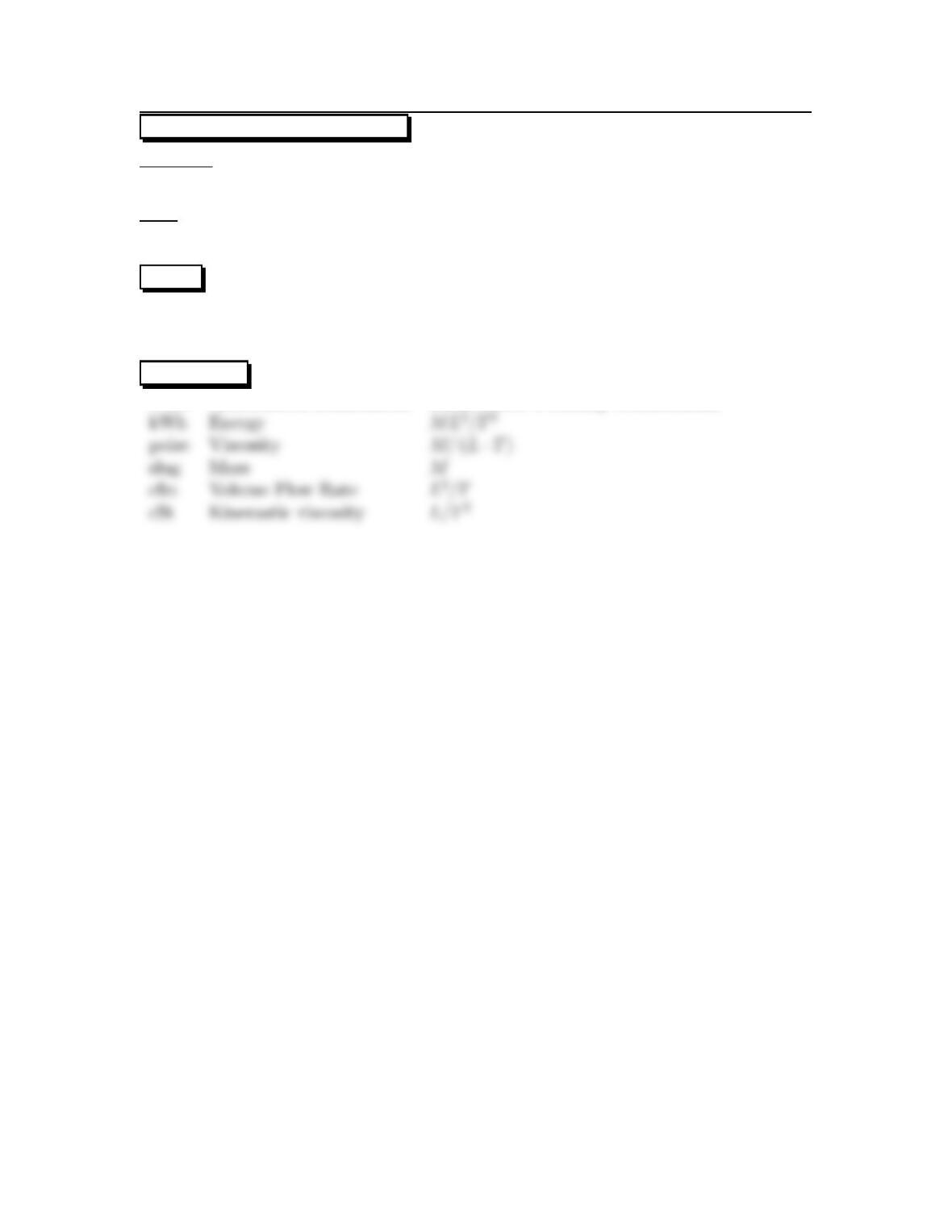
1.12: PROBLEM DEFINITION
Situation:
Five units are specified.
Find:
Primary dimensions for each given unit: kWh, poise, slug, cfm, CSt.
PLAN
1. Find each primary dimension by using Table F.1.
2. Organize results using a table.
SOLUTION
Unit Associated Dimension Associated Primary Dimensions
9

1.13: PROBLEM DEFINITION
Situation:
In the context of measurement, a dimension is:
a. a category for measurement
b. a standard of measurement for size or magnitude
c. an increment for measuring “how much”
SOLUTION
10
1.14: PROBLEM DEFINITION
Situation:
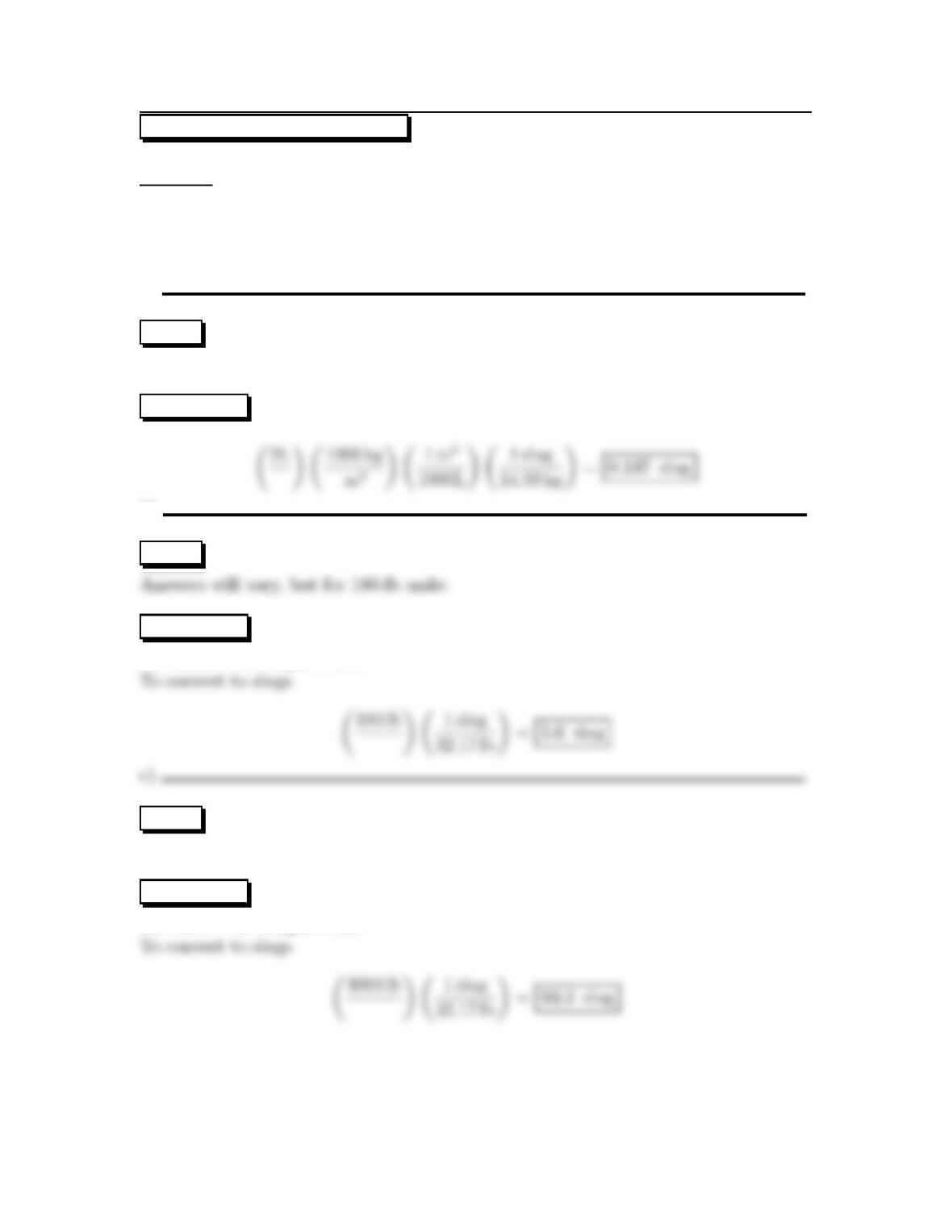
What is the approximate mass in units of slugs for
a. A 2-liter bottle of water?
b. A typical adult male?
c. A typical automobile?
a)
PLAN
Mass in slugs for: 2-L bottle of water
SOLUTION
b)
PLAN
SOLUTION
On earth 1 lbf weighs 1 lbm
PLAN
Answers will vary, but for 3000-lb automobile:
SOLUTION
On earth 1 lbf weighs 1 lbm
11
1.15: PROBLEM DEFINITION
Situation:
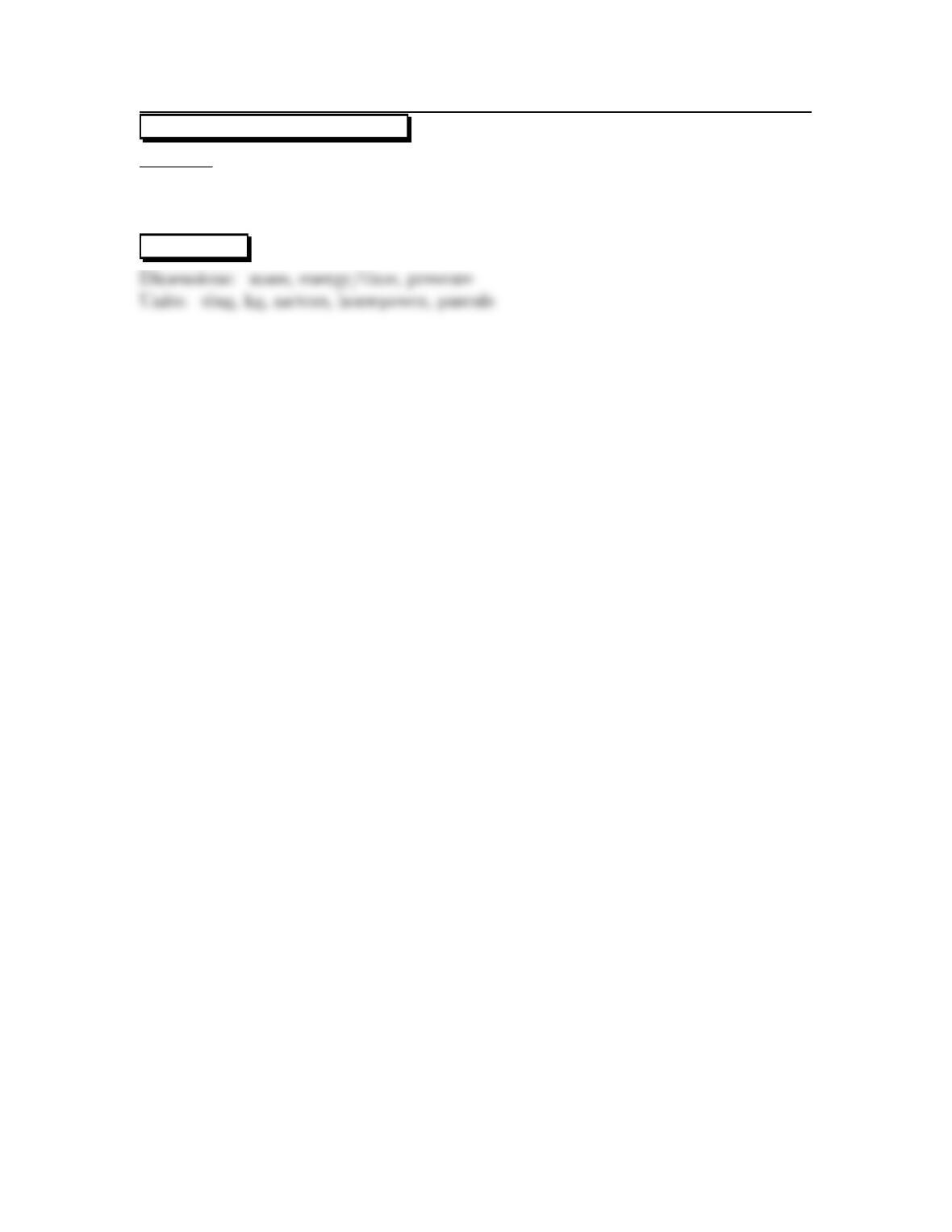
In the list below, identify which parameters are dimensions and which paramenters
are units: slug, mass, kg, energy/time, meters, horsepower, pressure, and pascals.
SOLUTION
12

1.16: PROBLEM DEFINITION
Situation:
Of the 3 lists below, which sets of units are consistent? Select all that Apply.
a. pounds-mass, pounds-force, feet, and seconds.
b. slugs, pounds-force, feet, and seconds
c. kilograms, newtons, meters, and seconds.
SOLUTION
13

Problem 1.17
14

1.18: PROBLEM DEFINITION
Situation:
Which of these is a correct conversion ratio?
SOLUTION
15
1.19: PROBLEM DEFINITION
Situation:
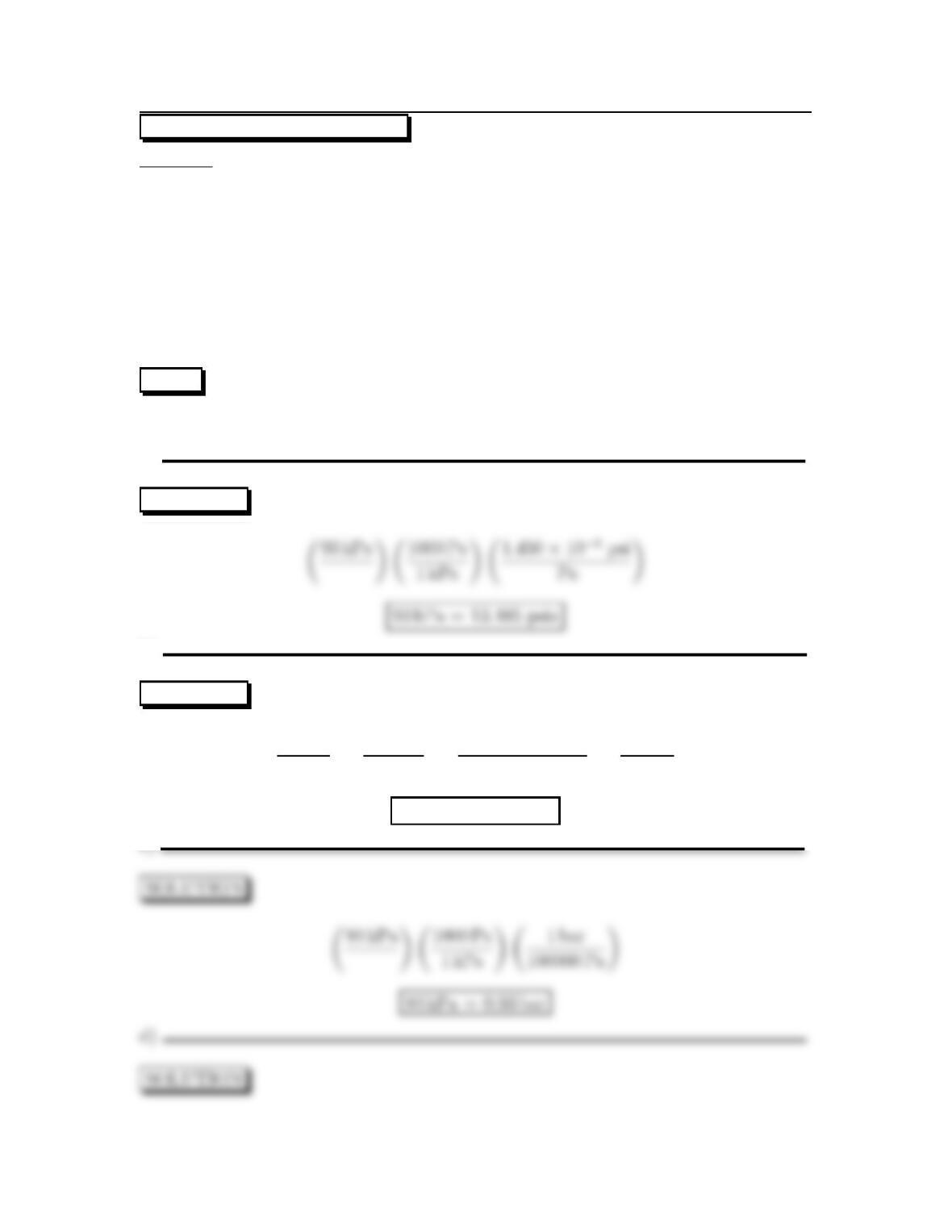
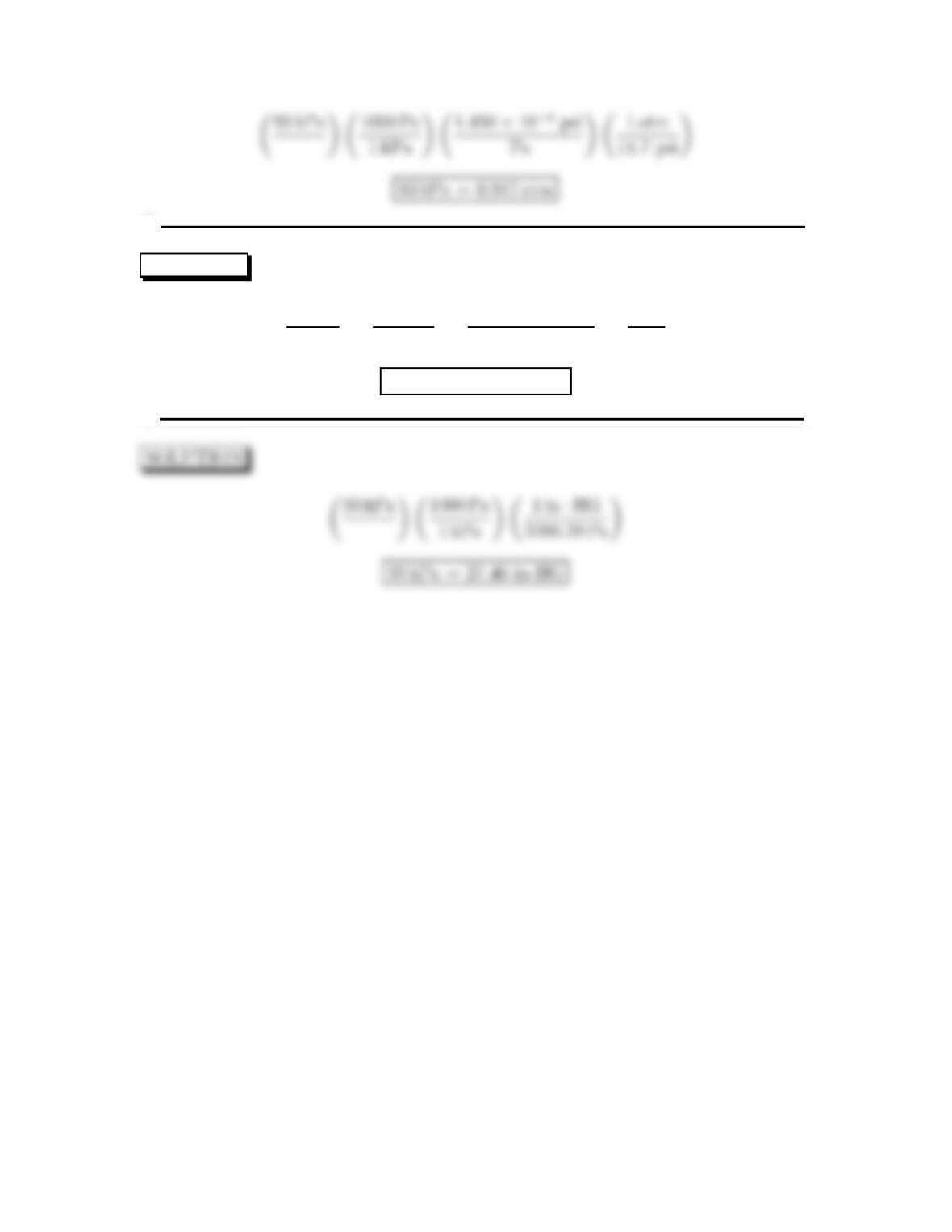
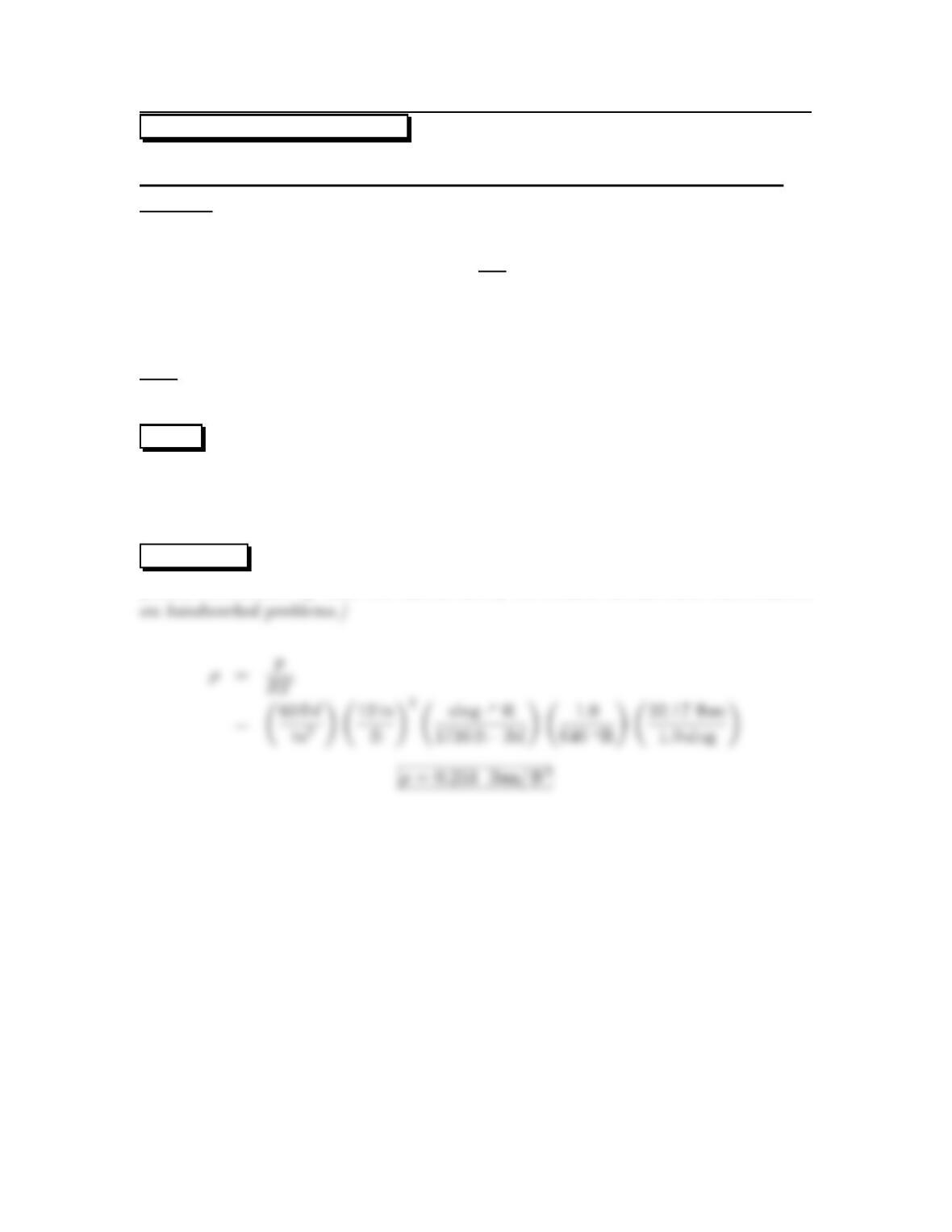
If the local atmospheric pressure is 93 kPa, use the grid method to find the pressure
in units of
a. psia
b. psf
c. bar
d. atmospheres
e. feet of water
f. inches of mercury
PLAN
Follow the process given in the text. Look up conversion ratios in Table F.1 (EFM
10e).
a)
SOLUTION
b)
SOLUTION
µ93 kPa¶µ1000 Pa
1kPa ¶µ1.450 ×10⁻⁴psi
Pa ¶µ144 in2
1ft
2¶
93 kPa = 1941.8 psf
16
e)
SOLUTION
µ93 kPa¶µ1000 Pa
1kPa ¶µ0.004019 in-H20
Pa ¶µ1ft
12 in¶
93 kPa =31.15ft–H
2O
f)
17
1.20: PROBLEM DEFINITION
Apply the grid method.
Situation:
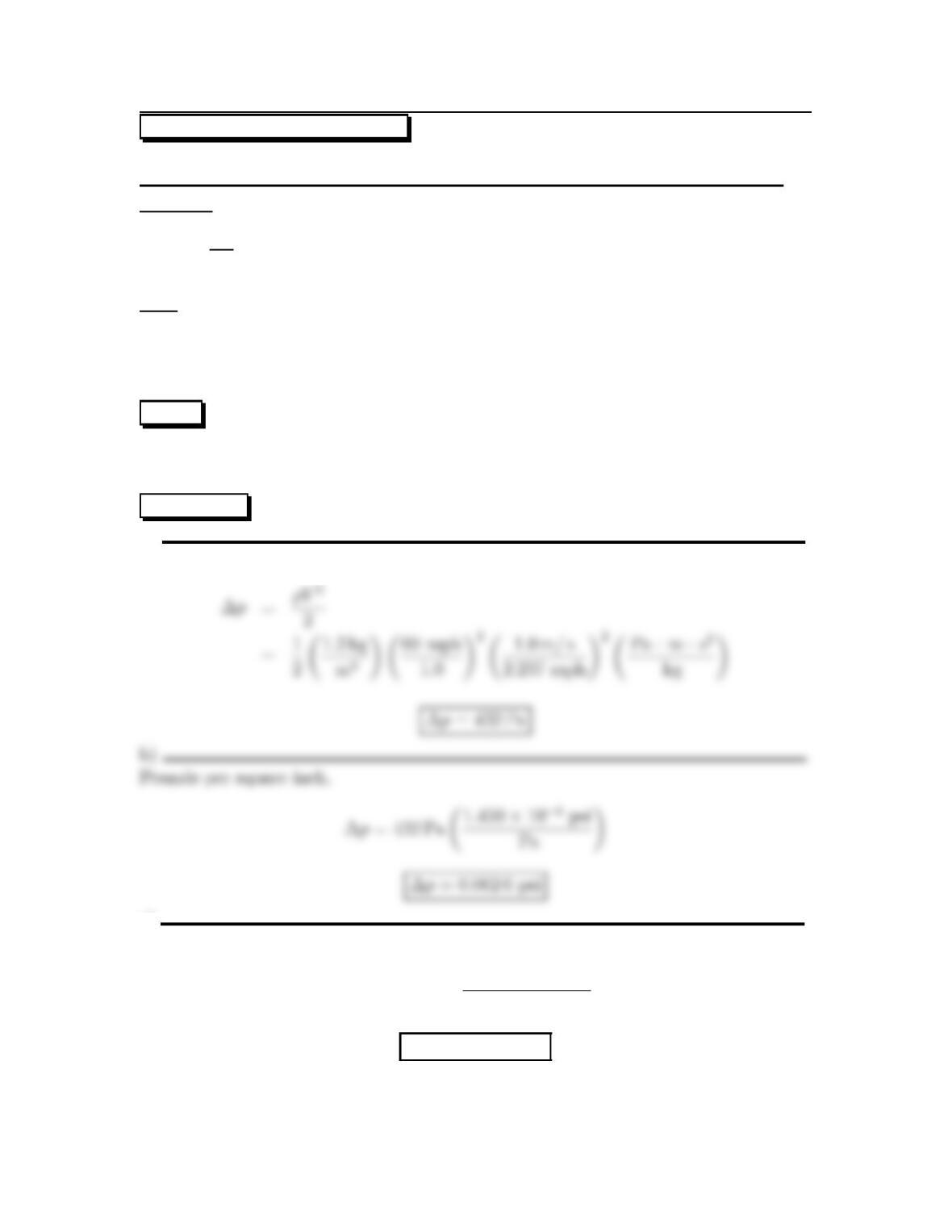
Densityofidealgasisgivenby:
ρ=p
RT
p=60psi, R= 1716 ft–lbf/slug–◦R.
T=180◦F=640 ◦R.
Find:
Calculate density (in lbm/ft3).
PLAN
Use the definition of density.
Follow the process for the grid method given in the text.
Look up conversion formulas in Table F.1 (EFM 10e).
SOLUTION
(Note, cancellation of units not shown below, but student should show cancellations
18
1.21: PROBLEM DEFINITION
Apply the grid method.
Situation:
Wind is hitting a window of building.
∆p=ρV 2
2.
ρ=1.2kg/m3,V=60mph.
Find:
a. Express the answer in pascals.
b. Express the answer in pounds force per square inch (psi).
c. Express the answer in inches of water column (inch H20).
PLAN
Follow the process for the grid method given in the text. Look up conversion ratios
in Table F.1.
SOLUTION
a)
Pascals.
c)
Inches of water column
∆p= 432 Pa µ0.004019 in-H20
Pa ¶
∆p=1.74 in-H20
19
1.22: PROBLEM DEFINITION
Apply the grid method.
Situation:
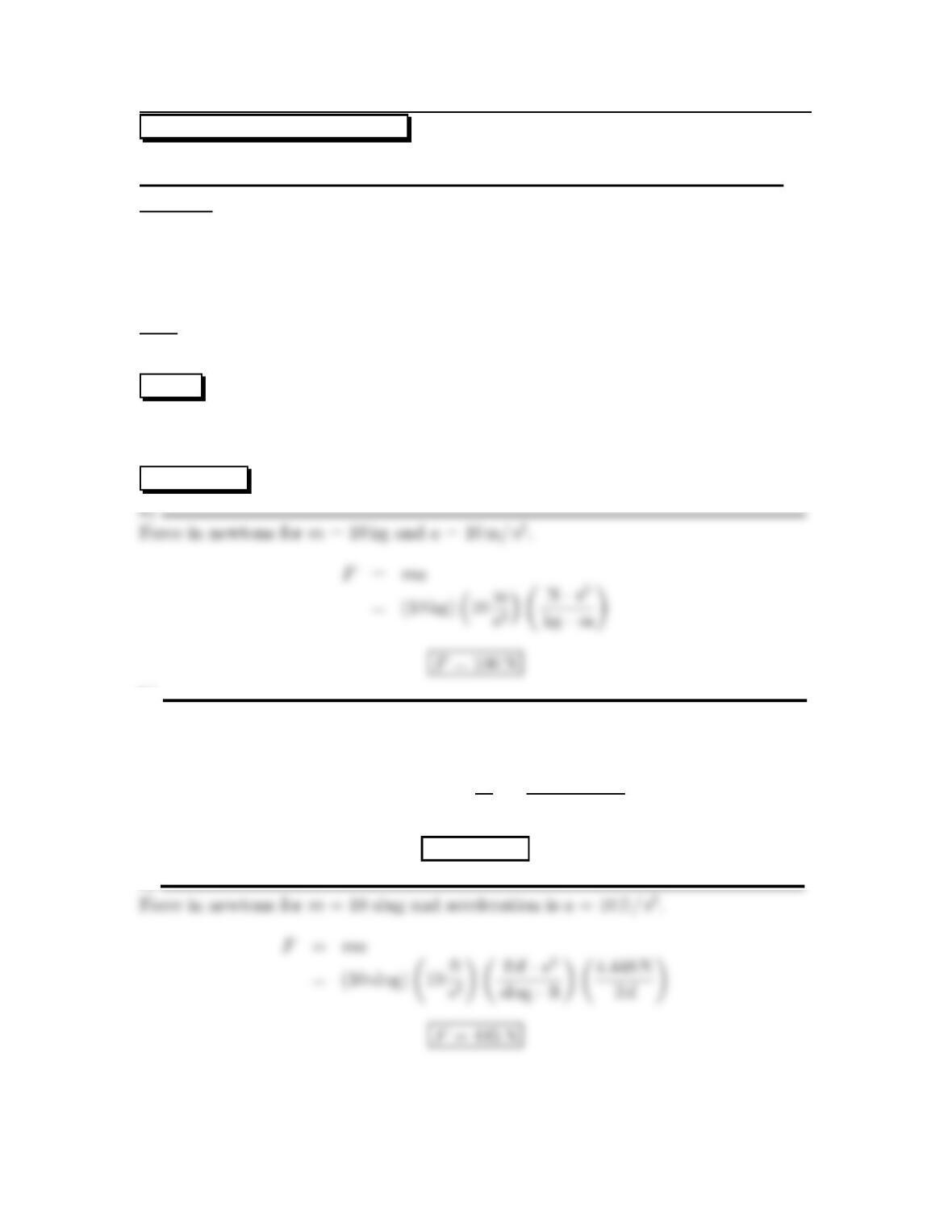
ForceisgivenbyF=ma.
a) m=10kg,a=10m/s2.
b) m=10lb,a=10ft/s2.
c) m=10slug,a=10ft/s2.
Find:
Calculate force.
PLAN
Follow the process for the grid method given in the text. Look up conversion ratios
in Table F.1.
SOLUTION
b)
Force in lbf for m=10lbm and a=10ft/s2.
F=ma
=(10lbm)µ10 ft
s2¶µ lbf ·s2
32.2lbm ·ft¶
F=3.11 lbf
c)
20