Problem 1.45
Nitrogen is compressed to a density of 3
4 kg/m under an absolute pressure of
4
00 kPa.
Determine the temperature in degrees Celsius.
Solution 1.45
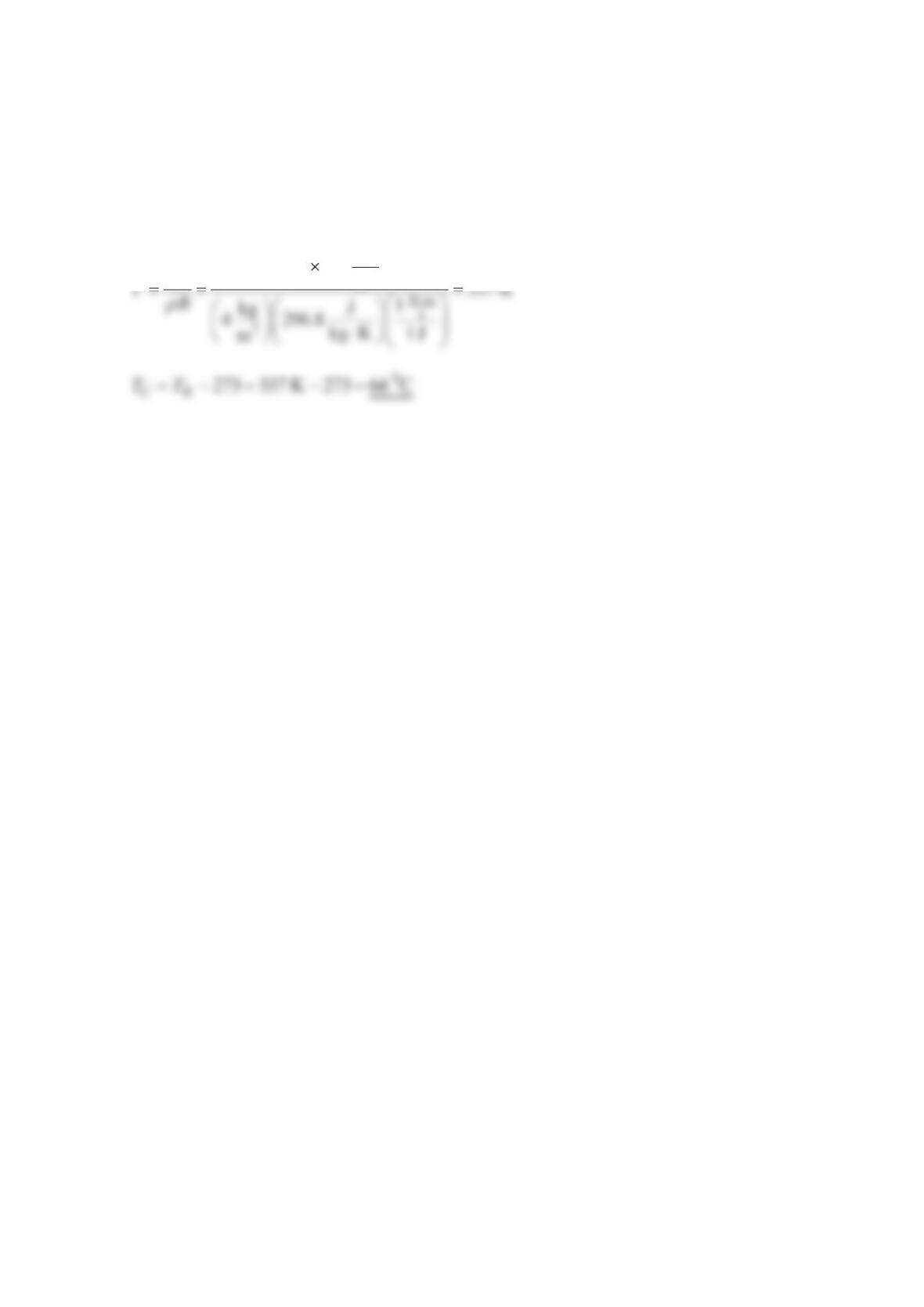
3
2
N
400 10 m337 K
p
Problem 1.46
The temperature and pressure at the surface of Mars during a Martian spring day were de-
termined to be 50 C and 900 Pa, respectively. (a) Determine the density of the Martian
atmosphere for these conditions if the gas constant for the Martian atmosphere is assumed
to be equivalent to that of carbon dioxide. (b) Compare the answer from part (a) with the
density of the Earth’s atmosphere during a spring day when the temperature is 18 C and
the pressure
1
01.6 kPa (abs).
Solution 1.46
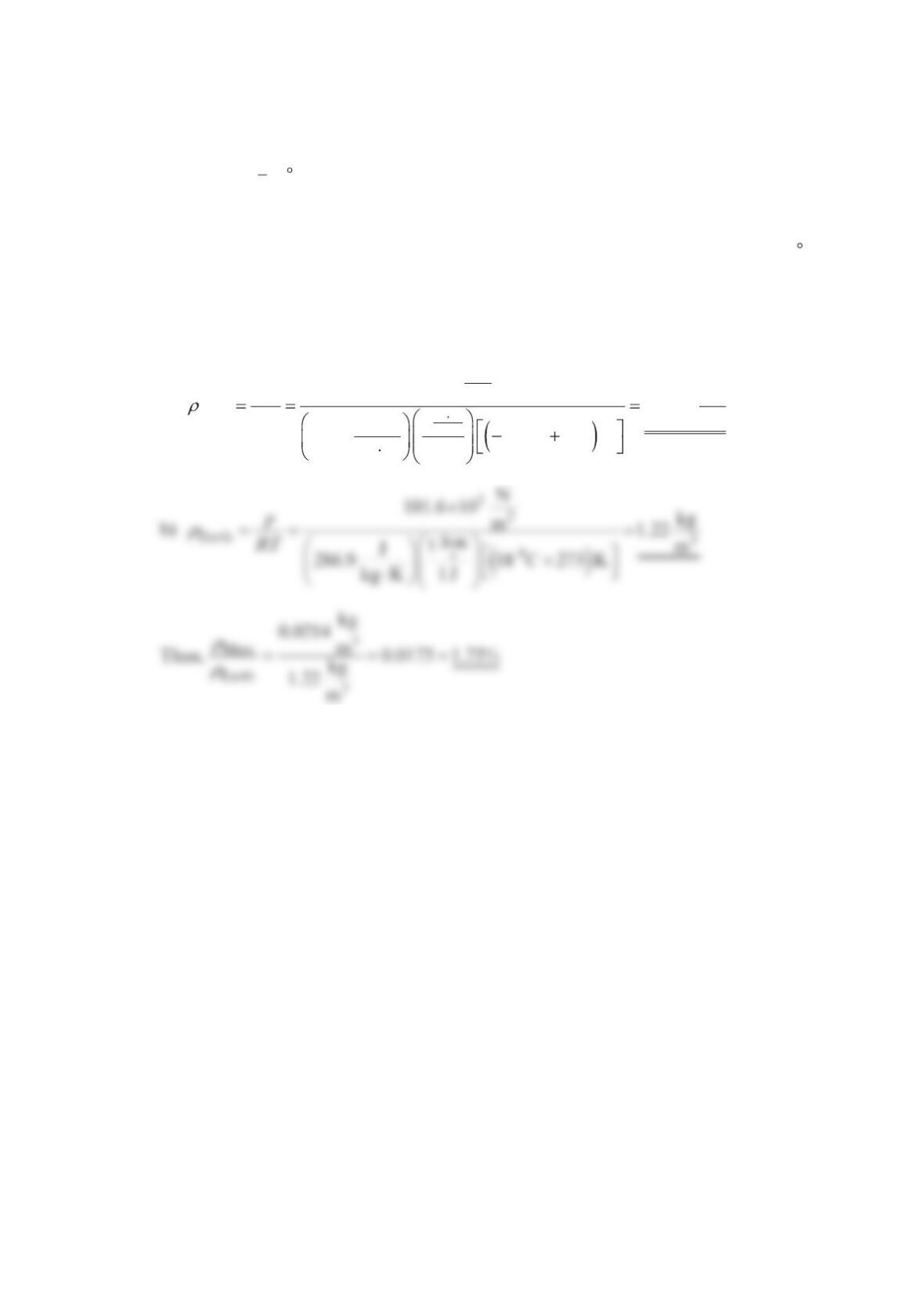
a) 2
Mars 3
Nm 0
s
N
900 kg
m0.0214
1m
J
188.9 50 273 K
kg K 1 J
p
RT C
Problem 1.47
A closed tank having a volume of 3
2
ft is filled with
0
.30 lb of a gas. A pressure gage attached
to the tank reads
1
2 psi when the gas temperature is
8
0 F. There is some question as to
whether the gas in the tank is oxygen or helium. Which do you think it is? Explain how you
arrived at your answer.
Solution 1.47
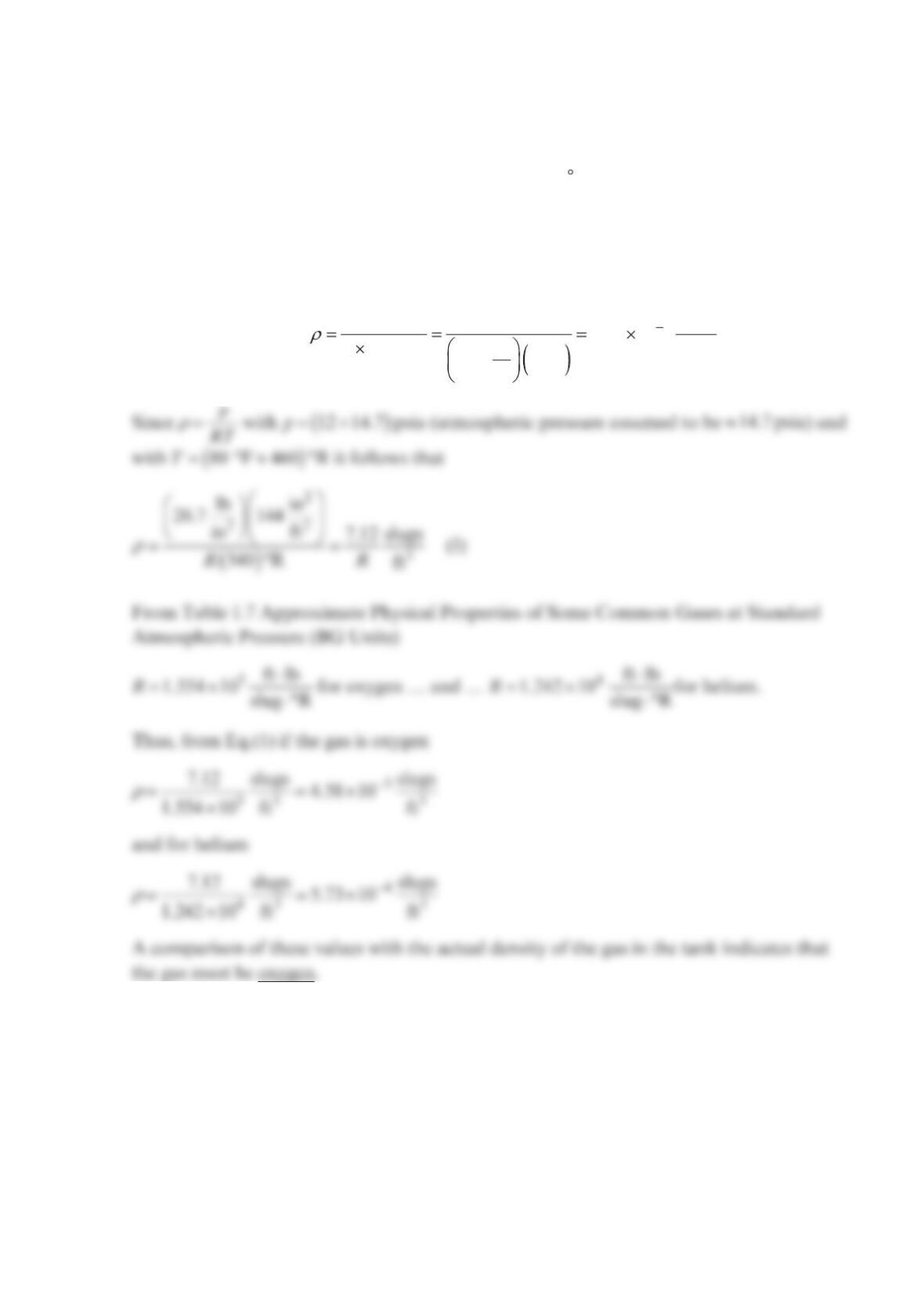
Density of gas in tank 3
3
3
2
weight 0.30 lb slugs
4.66 10
ft
volume ft
32.2 2 ft
s
g
h
h
= 13 cm
d
1
=
z
r
1
= 33 cm
d
2
=
z
r
2
= 52 cm
r
2
r
1
Problem 1.48
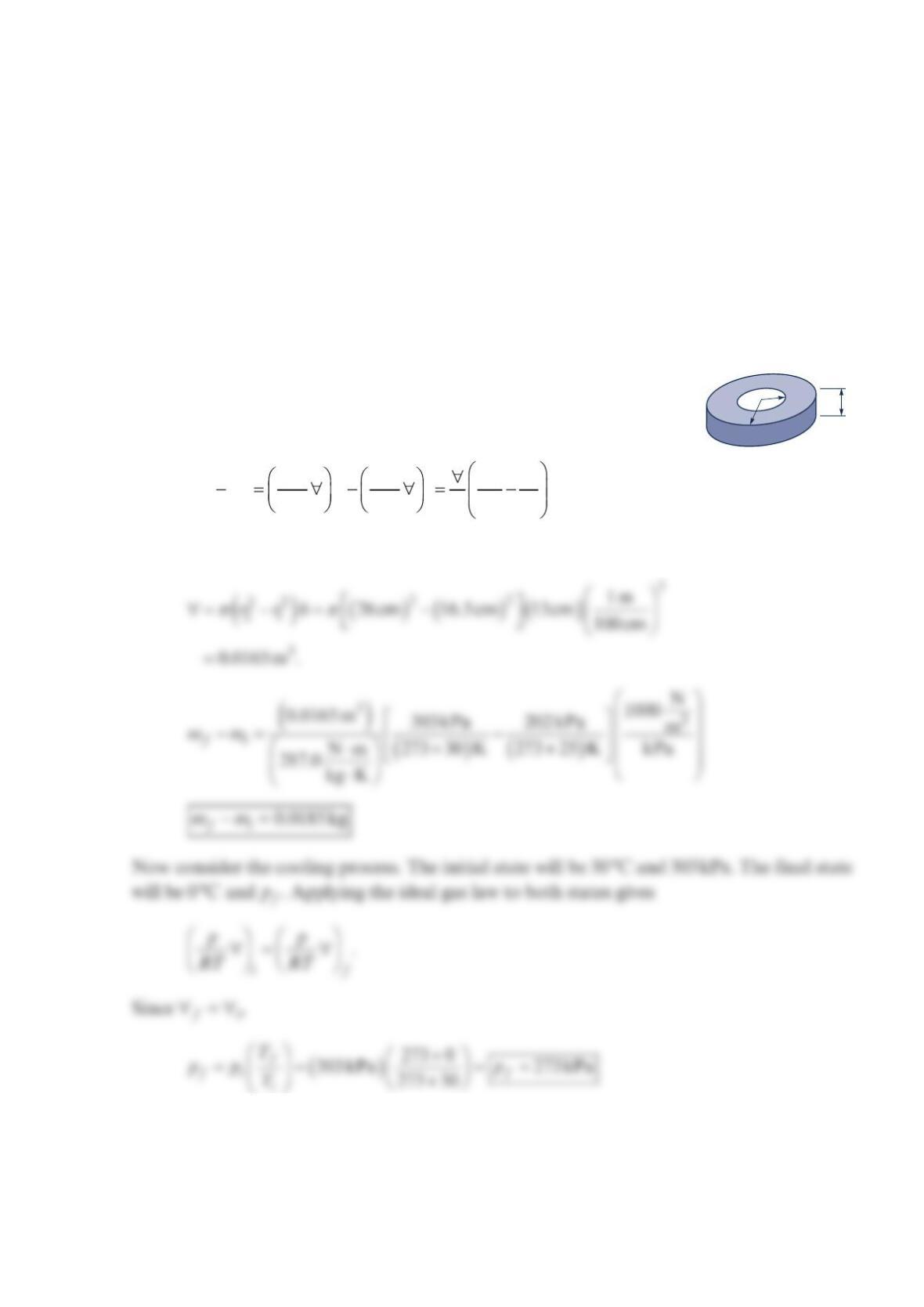
Assume that the air volume in a small automobile tire is constant and equal to the volume
between two concentric cylinders
1
3 cm high with diameters of
3
3 cm and
5
2 cm. The air in
the tire is initially at 25°C and
2
02 kPa. Immediately after air is pumped into the tire, the
temperature is 30°C and the pressure is
3
03 kPa. What mass of air was added to the tire?
What would be the air pressure after the air has cooled to a temperature of
0
°C?
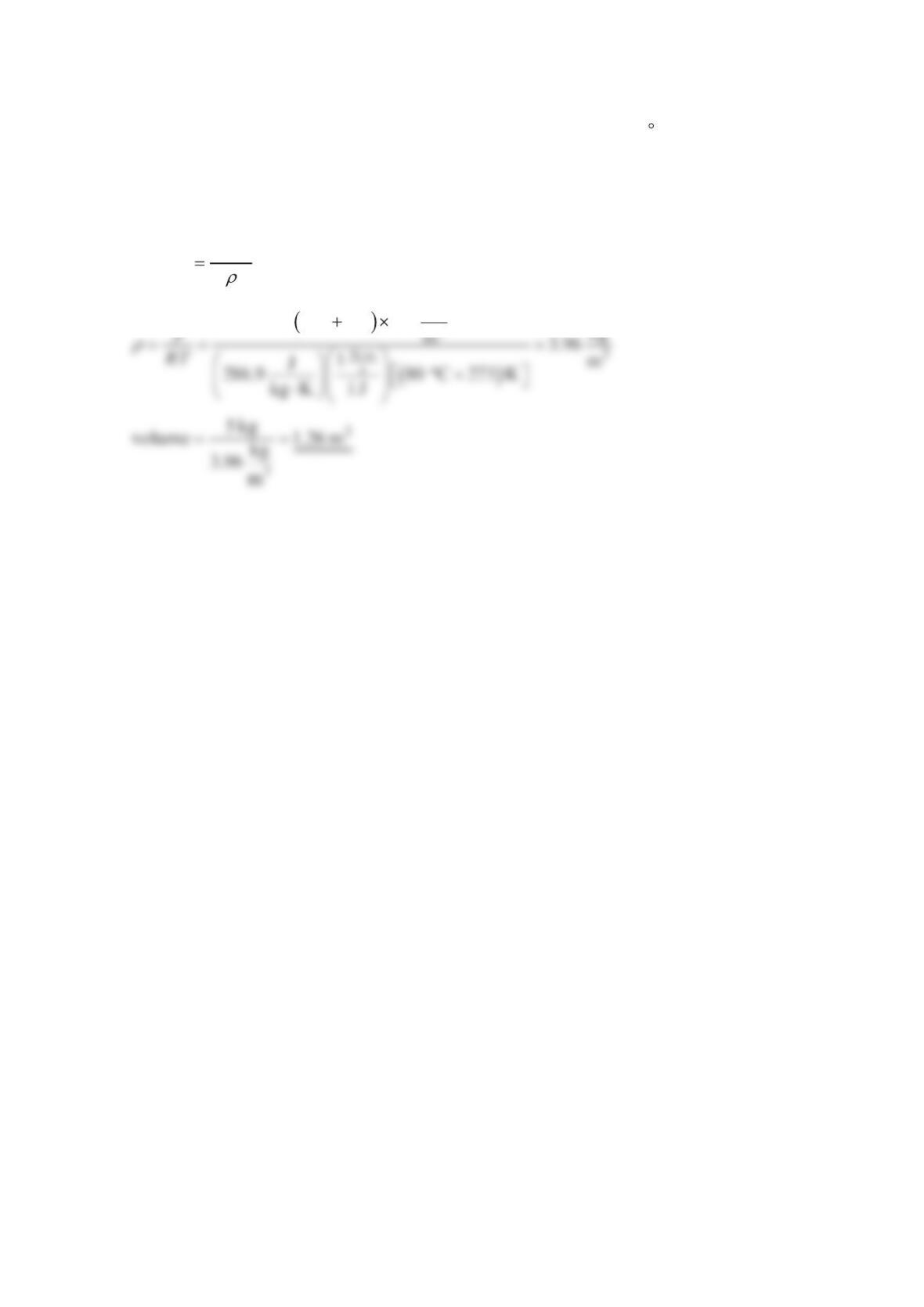
Solution 1.48
The mass of air added to the tire is the difference of the final mass of
air
f
m and the initial mass i
m. Assuming air is an ideal gas,
fi
fi
f
i
fi
p
p
pp
mm RT RT R T T .
Now
Problem 1.49
A compressed air tank contains
5
k
g
of air at a temperature of 80 C . A gage on the tank
reads
3
00 kPa. Determine the volume of the tank.
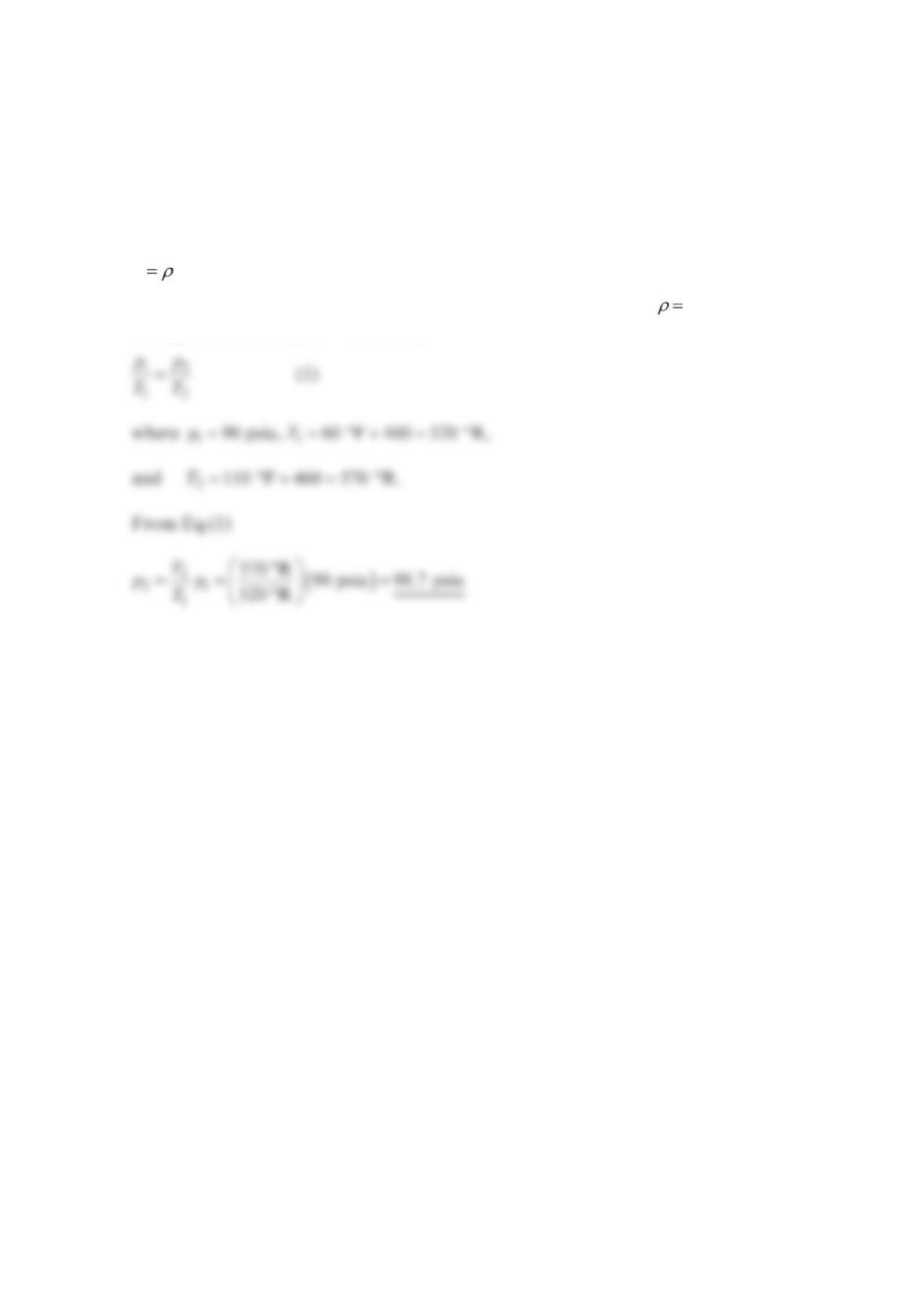
Solution 1.49
mass
v
olume
3
3
N
300 101 10 kg
Problem 1.50
A rigid tank contains air at pressure of 90
p
sia and a temperature of 60
°
F. By how much
will the pressure increase as the temperature is increased to 110
°
F?
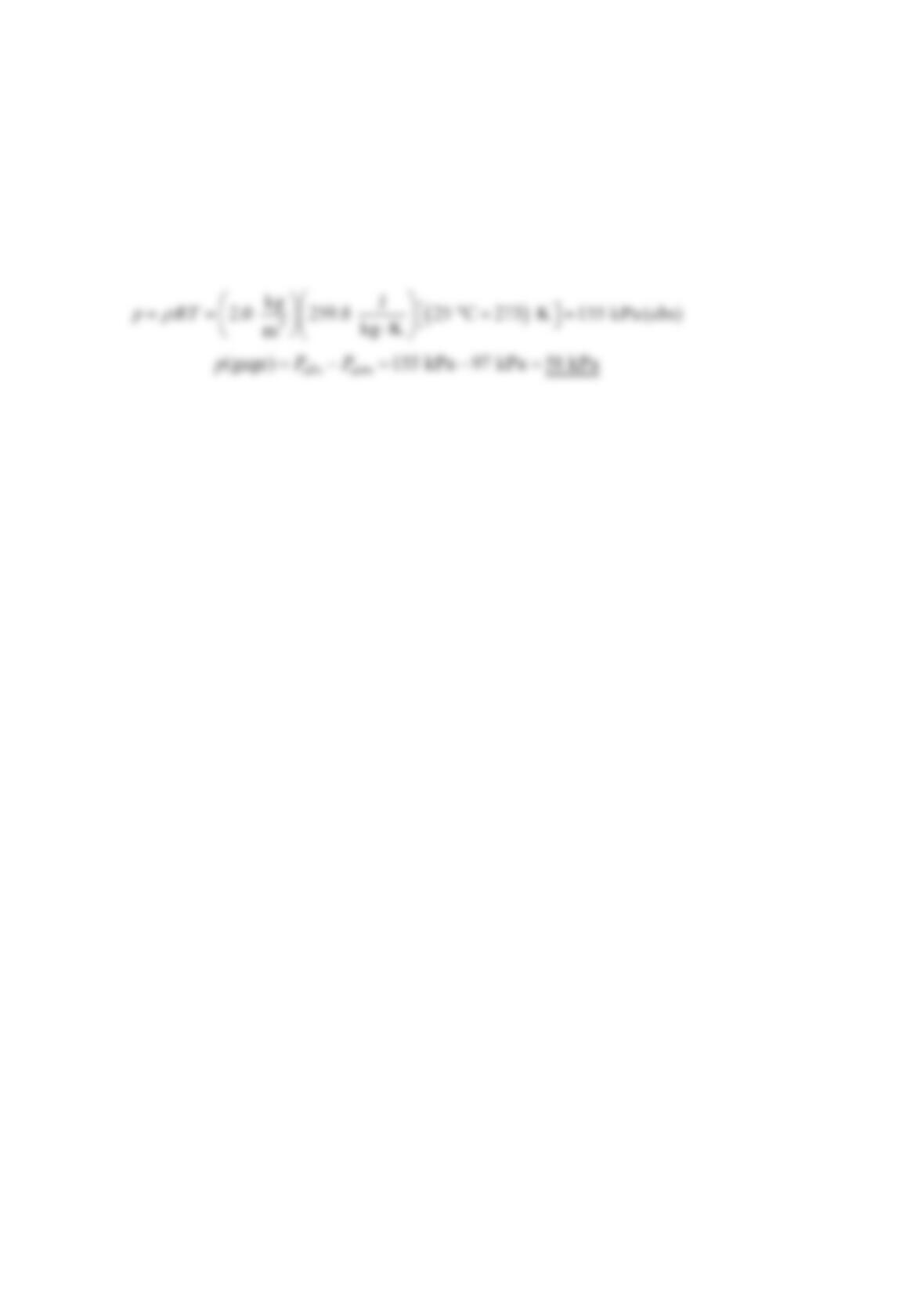
Solution 1.50
p
R
T
For a rigid closed tank, the air mass and volume are constant so constant. Thus, from
the equation above (with
R
constant)
Problem 1.51
The density of oxygen contained in a tank is 2.0 3
k
g/m when the temperature is 25
°
C.
Determine the gage pressure of the gas if the atmospheric pressure is 97
k
Pa.
Solution 1.51
Problem 1.52
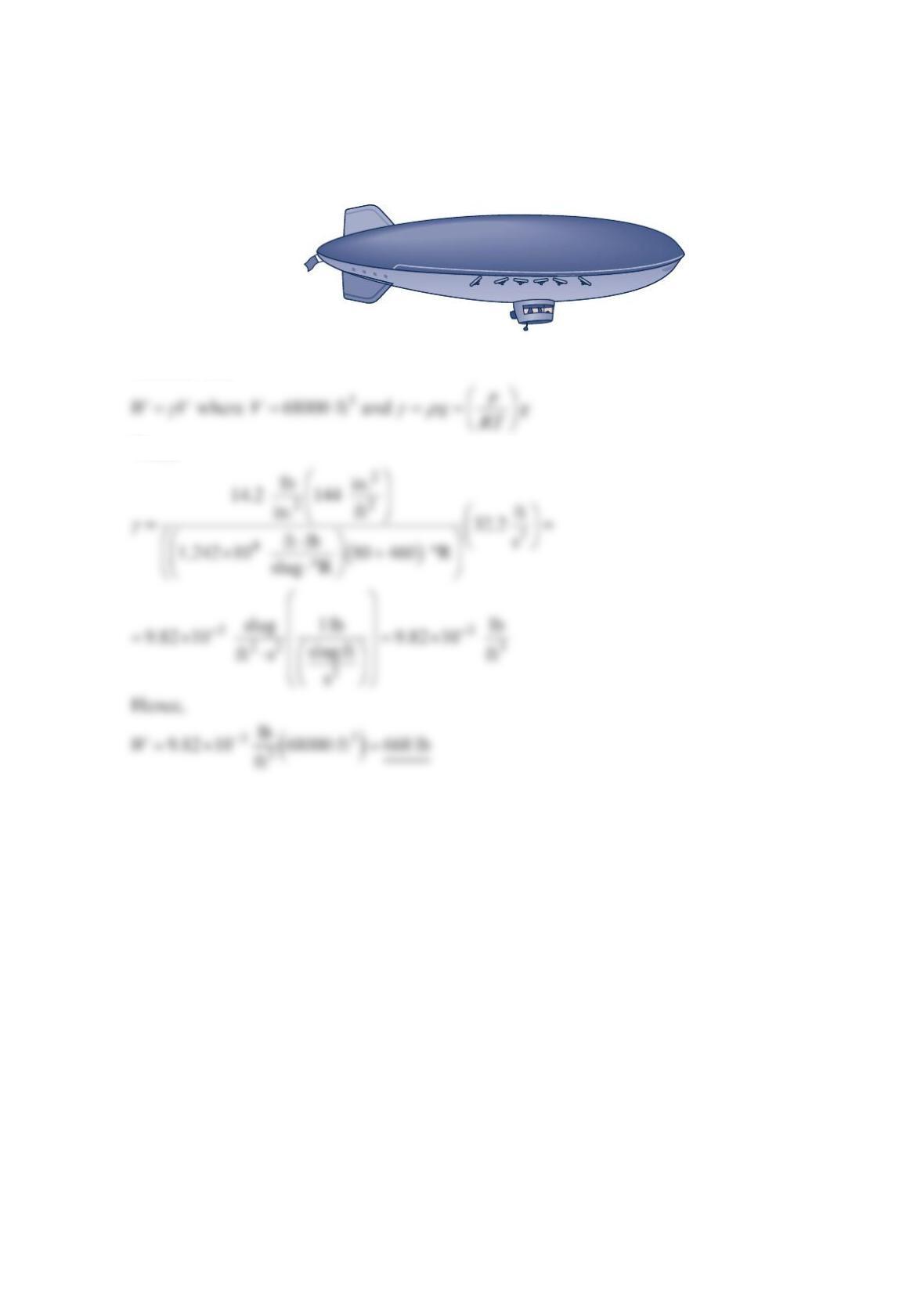
The helium-filled blimp shown in the figure below is used at various athletic events. Deter-
mine the number of pounds of helium within it if its volume is 68,000 3
f
t and the tempera-
ture and pressure are 80
°
F and 14.2
p
sia, respectively.
Solution 1.52
H
T
hus,
Problem 1.53
Develop a computer program for calculating the density of an ideal gas when the gas pres-
sure in Pascals (abs), the temperature in degrees Celsius, and the gas constant in
J
/kg K are
specified. Plot the density of helium as a function of temperature from 0
°
C to 200
°
C and
pressures of 50, 100, 150, and 200
k
Pa (abs).
Solution 1.53
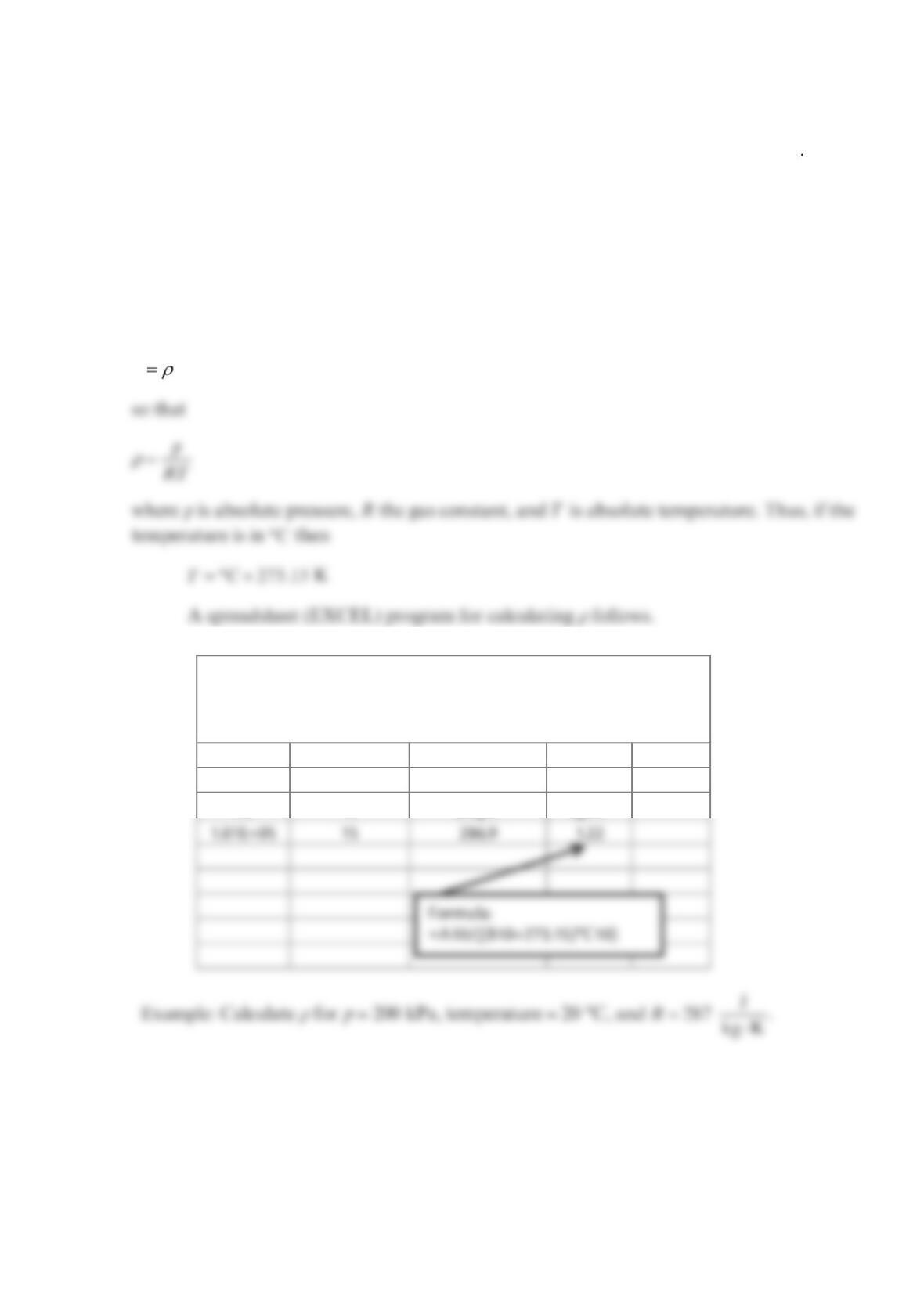
For an ideal gas
p
R
T
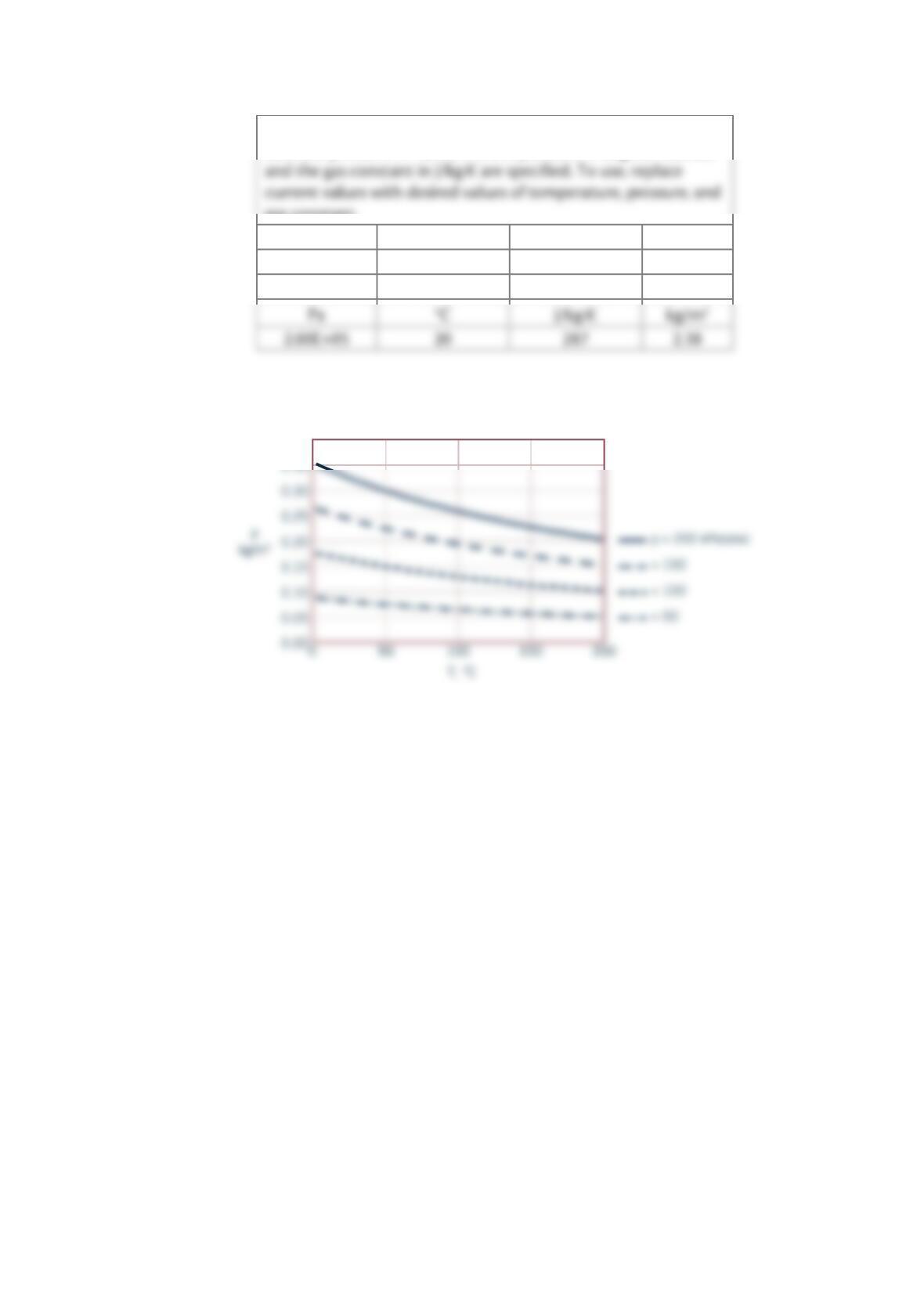
This program calculates the density of an ideal gas when the absolute
pressure in Pascal, the temperature in degrees C, and the gas
constant in J/kg·K are specified. To use, replace current values with
desired values of temperature, pressure, and gas constant.
A B C D
Pressure Temperature Gas constant Destiny
Pa °C J/kg·K kg/m3
p
t
°
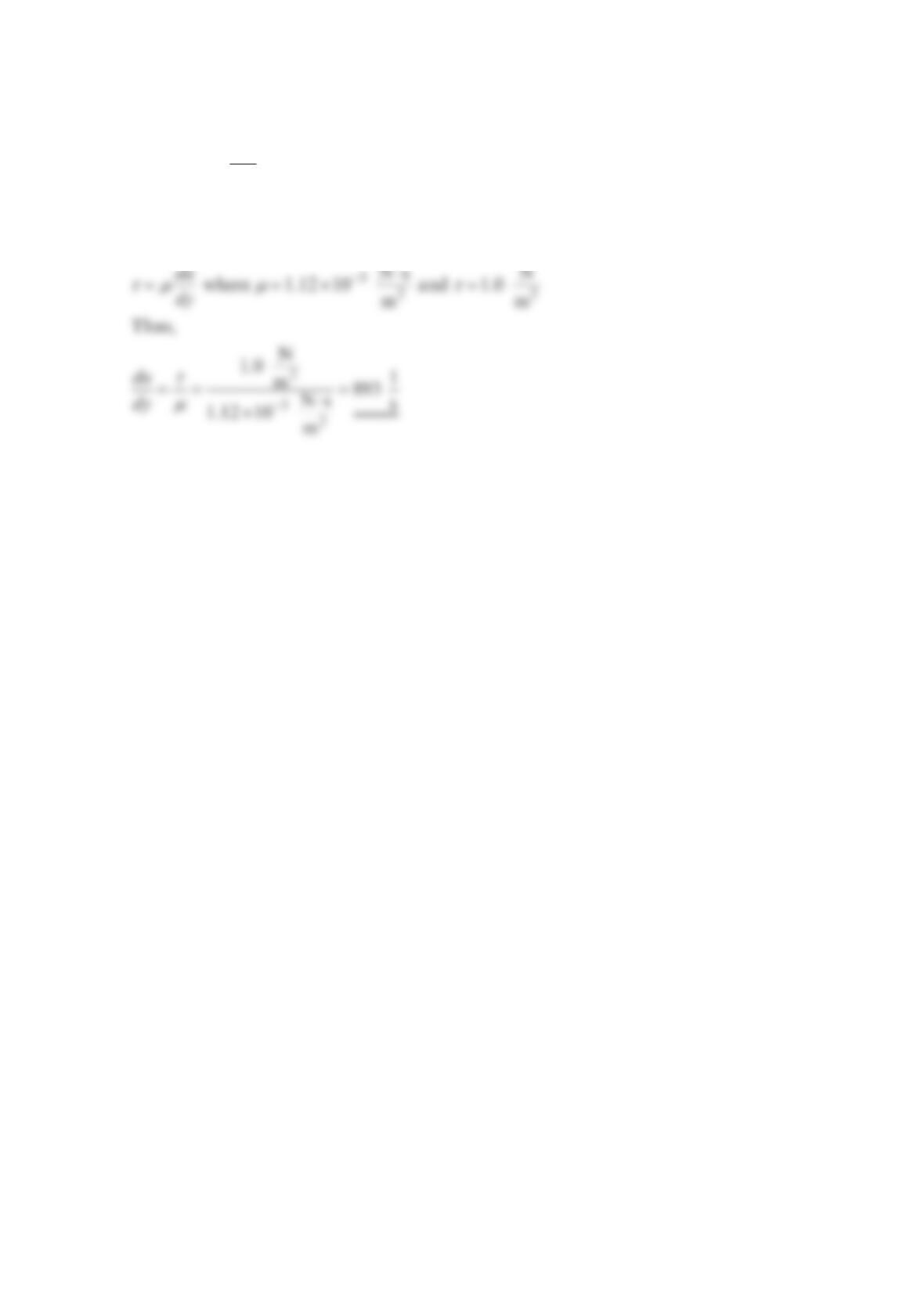
The density of helium is plotted in the graph below.
0.40
Density of Helium
This program calculates the density of an ideal gas when the
absolute pressure in Pascal, the temperature in degrees Celsius,
gas constant.
A B C D
Pressure Temperature Gas constant Destiny
Problem 1.55
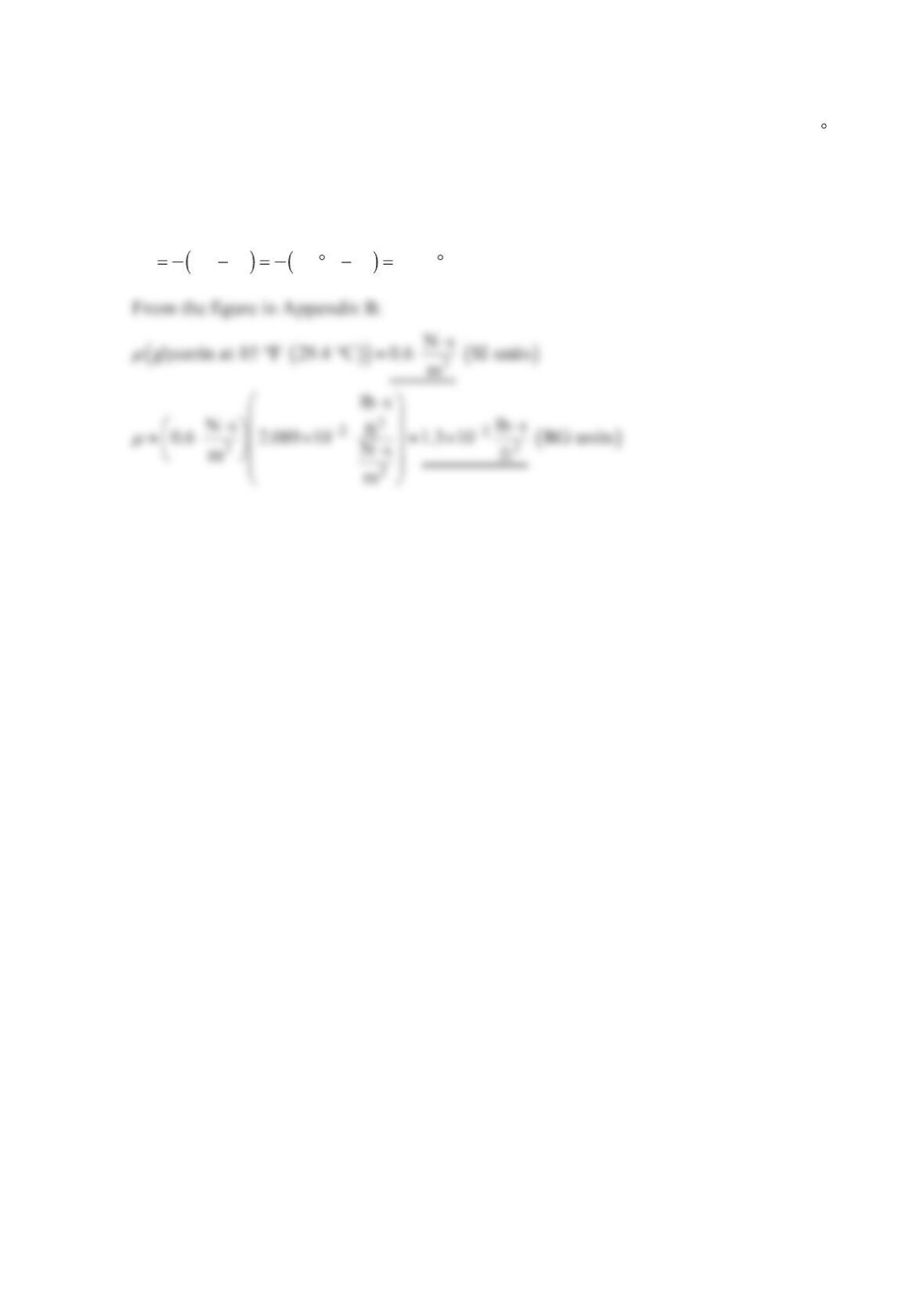
For flowing water, what is the magnitude of the velocity gradient needed to produce a shear
stress of 2
1
.0 m
N?
Solution 1.55
Problem 1.56
Make use of the data in Appendix B to determine the dynamic viscosity of glycerin at
8
5 F.
Express your answer in both SI and BG units.
Solution 1.56
55
32 85 F 32 29.4 C
99
CF
TT

Problem 1.57
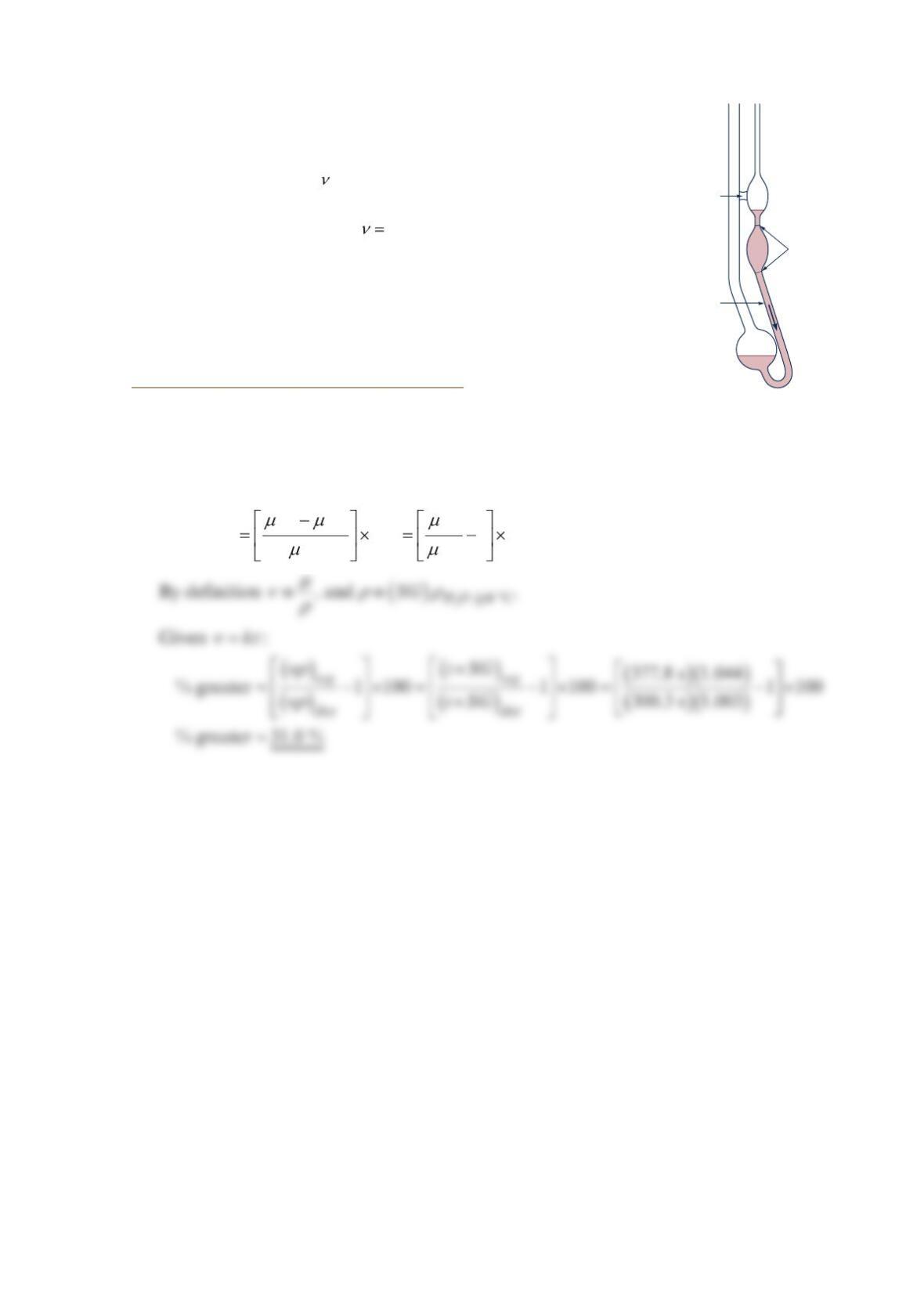
One type of capillary-tube viscometer is shown in the figure be-
low. For this device the liquid to be tested is drawn into the
tube to a level above the top etched line. The time is then ob-
tained for the liquid to drain to the bottom etched line. The
kinematic viscosity, , in 2
m
/s is then obtained from the equa-
tion 4
KR t where
K
is a constant,
R
is the radius of the ca-
pillary tube in
m
m, and t is the drain time in seconds. When
glycerin at
2
0 is used as a calibration fluid in a particular
viscometer, the drain time is
1
430 s. When a liquid having a
density of
3
9
70 kg/m is tested in the same viscometer the drain
time is
9
00 s. What is the dynamic viscosity of this liquid?
Solution 1.57
4
2
34
2
m
F
or glycerin @ 20 C 1.19 10 1430 s
s
KR t
KR
Etched lines
Glass
strengthening
bridge
Capillary
tube
Problem 1.58
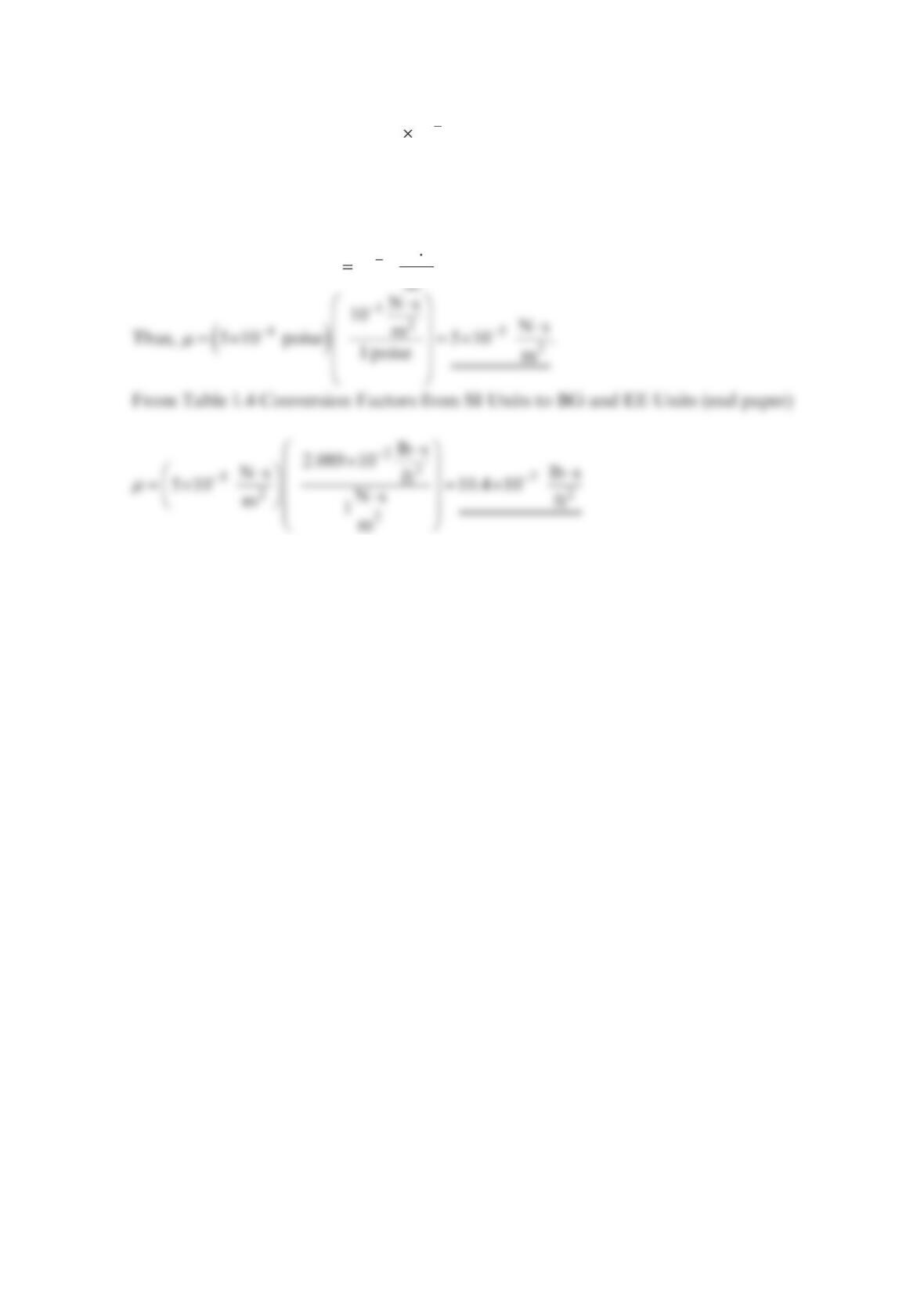
The viscosity of a soft drink was determined by using a
capillary tube viscometer shown in the figure. For this device
the kinematic viscosity, , is directly proportional to the time, t,
that it takes for a given amount of liquid to flow through a
small capillary tube. That is, Kt. The following data were
obtained from regular pop and diet pop. The corresponding
measured specific gravities are also given. Based on these data,
by what percent is the absolute viscosity, μ, of regular pop
greater than that of diet pop?
Regular pop Diet pop
t(s) 377.8 300.3
SG 1.044 1.003
Solution 1.58
% greater 100 1 100
reg diet reg
diet diet
Etched lines
Glass
strengthening
bridge
Capillary
tube
Problem 1.59
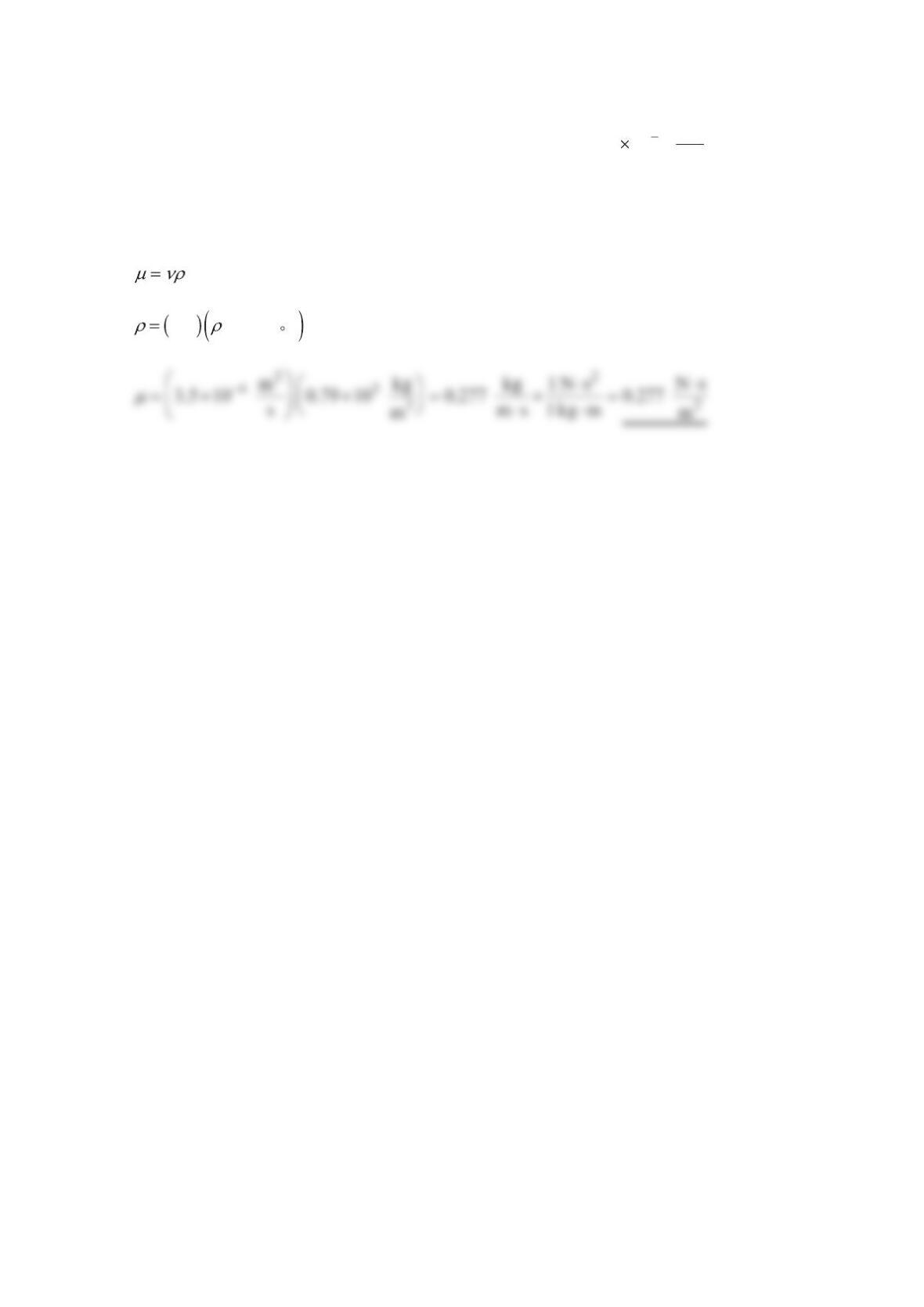
The viscosity of a certain fluid is 4
510 poise
. Determine its viscosity in both SI and BG
units.
Solution 1.59
From Appendix E, 1
2
Ns
1
poise 10 m.
Problem 1.60
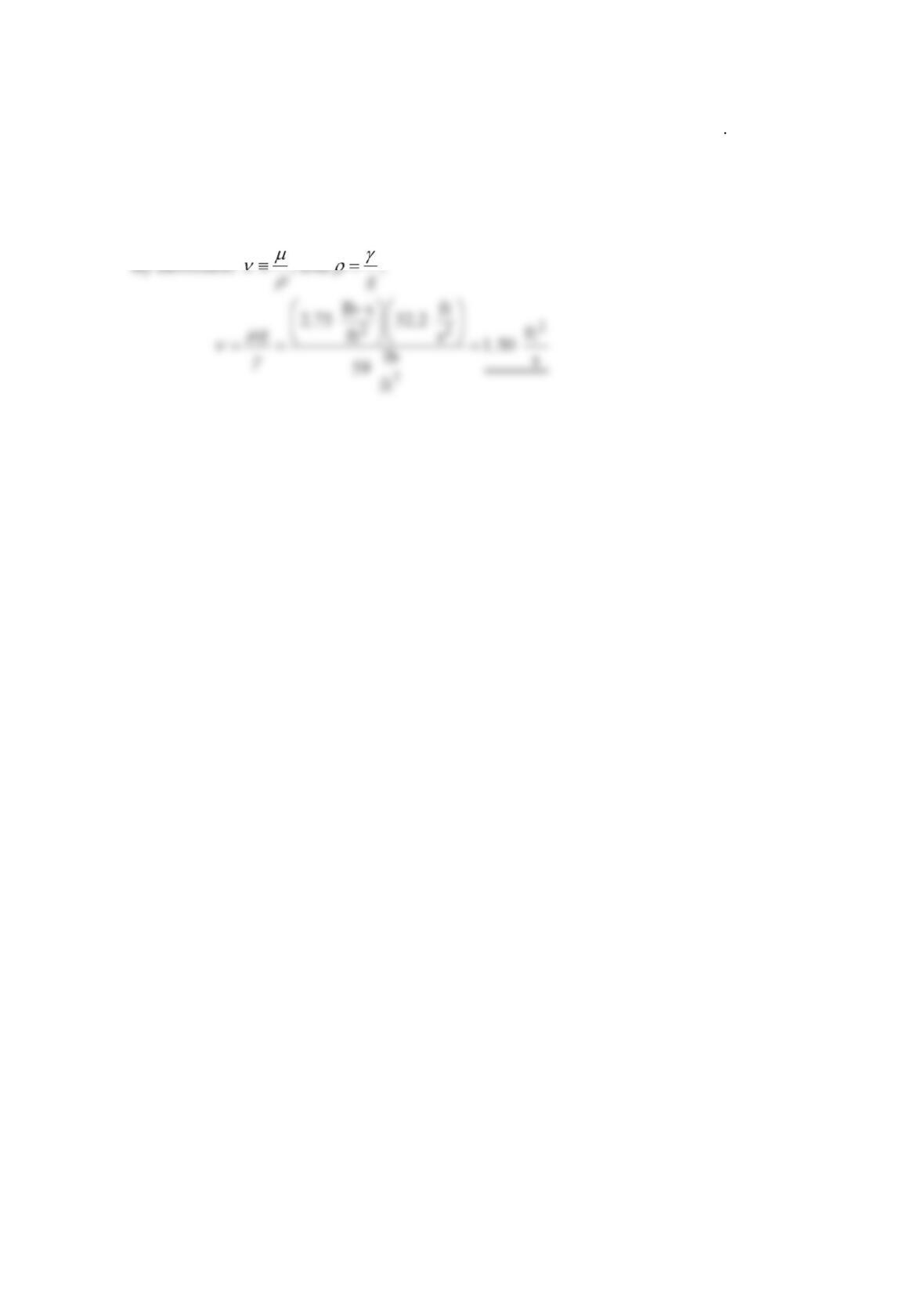
The kinematic viscosity and specific gravity of a liquid are
2
4m
3
.5 10 s and
0
.79, respec-
tively. What is the dynamic viscosity of the liquid in SI units?
Solution 1.60
2 @ 4 C
HO
SG
Problem 1.61
A liquid has a specific weight of 3
5
9 lb/ft and a dynamic viscosity of 2
2
.75 lb s/ft . Determine
its kinematic viscosity.
Solution 1.61
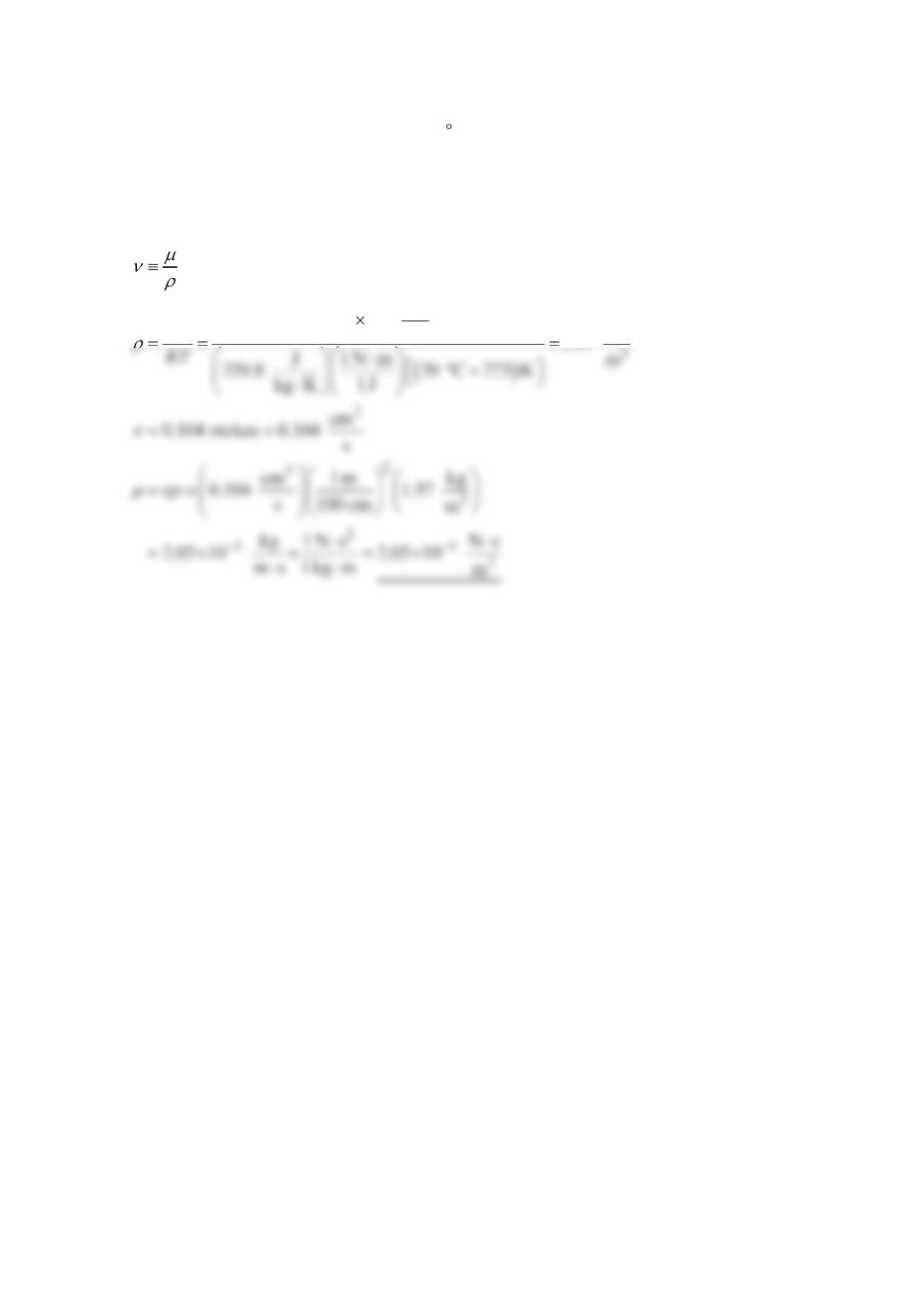
Problem 1.62
The kinematic viscosity of oxygen at 20 C and a pressure of 150kPa (abs) is 0.104 stokes .
Determine the dynamic viscosity of oxygen at this temperature and pressure.
Solution 1.62
3
2
N
150 10 kg
m1.97
p
30
40
= 0.0008
2
+ 0.0035
τγ
⋅
γ
⋅
Problem 1.63
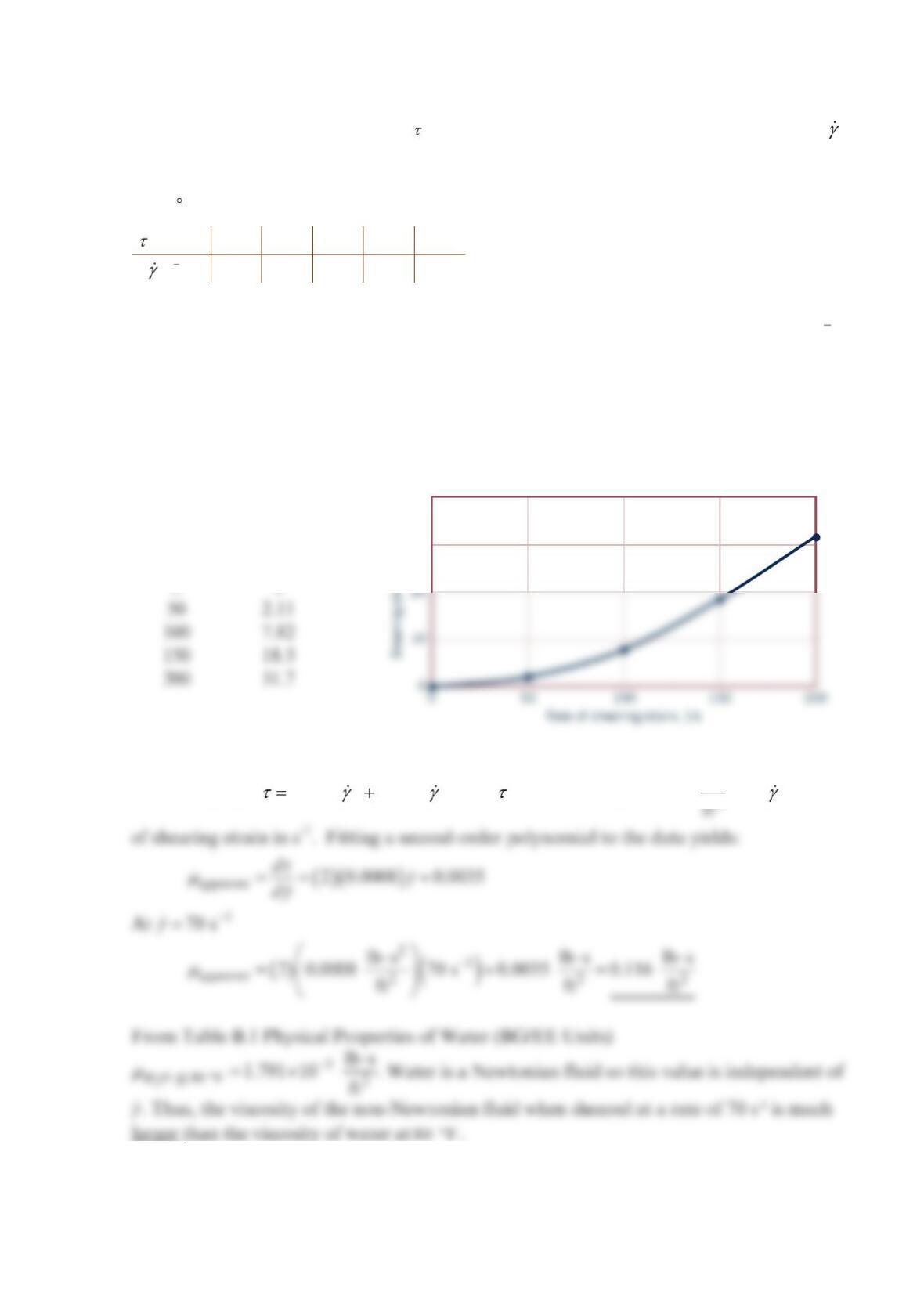
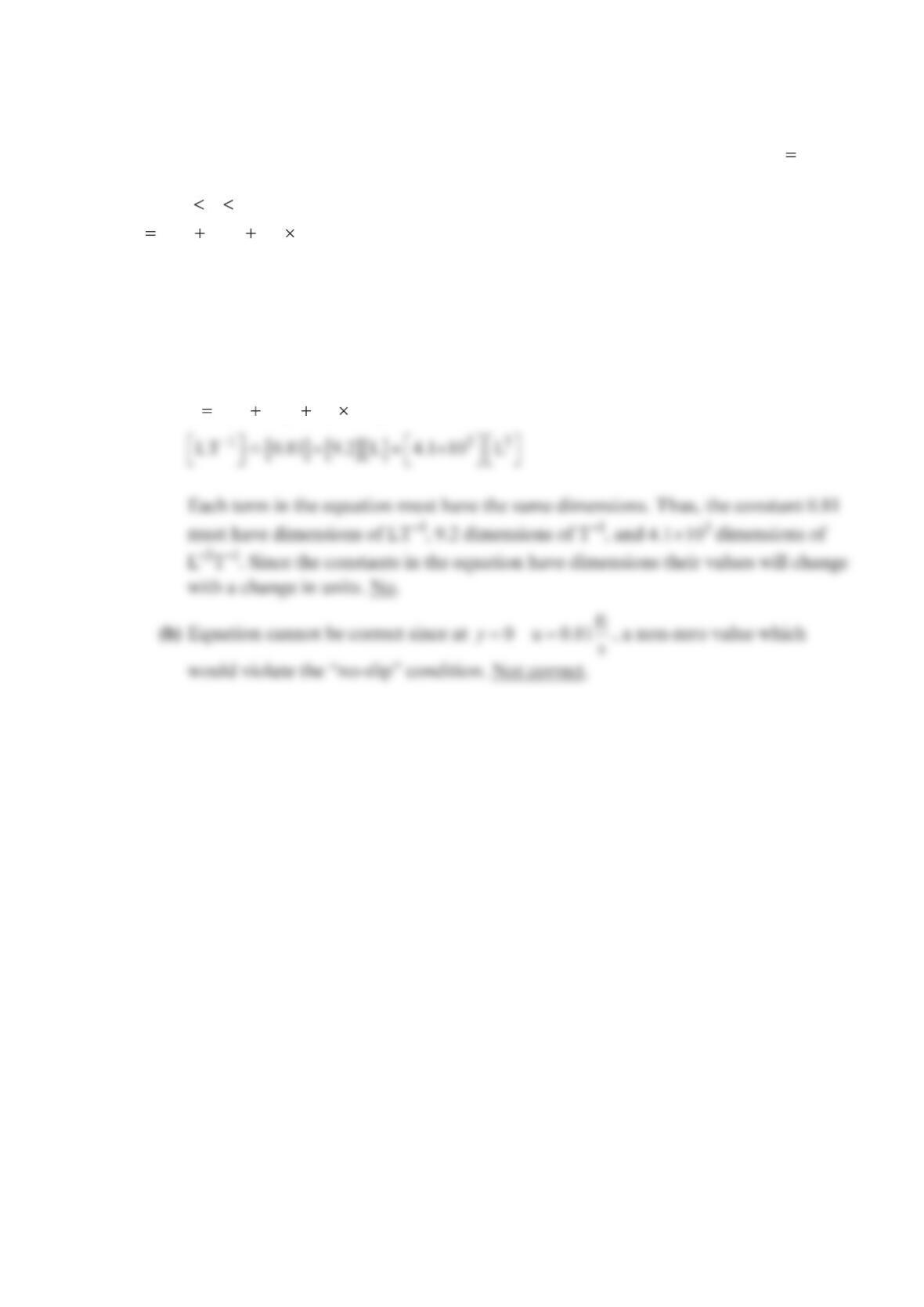
Fluids for which the shearing stress, , is not linearly related to the rate of shearing strain, ,
are designated as non-Newtonian fluids. Such fluids are commonplace and can exhibit
unusual behavior. Some experimental data obtained for a particular non-Newtonian fluid
at
8
0 F are shown below.
2
(lb/ft ) 0 2.11 7.82 18.5 31.7
1
()s0 50 100 150 200
Plot these data and fit a second-order polynomial to the data using a suitable graphing pro-
gram. What is the apparent viscosity of this fluid when the rate of shearing strain is 1
7
0 s ?
Is this apparent viscosity larger or smaller than that for water at the same temperature?
Solution 1.63
2
2
o
8
lb
F
rom the graph 0.0008 0.0035 where is the shearing stress in and is the rate
Rate of
shearing
strain, 1/s
Shearing
stress,
lb/sq ft
0 0
Problem 1.64
Water flows near a flat surface and some measurements of the water velocity,
u
, parallel to
the surface, at different heights,
y
, above the surface are obtained. At the surface 0
y
.
After an analysis of the data, the lab technician reports that the velocity distribution in the
range 00.1 ft
y
is given by the equation
33
0.81 9.2 4.1 10
uyy
with u in
f
t/s when
y
is in
f
t. (a) Do you think that this equation would be valid in any sys-
tem of units? Explain. (b) Do you think this equation is correct? Explain.
Solution 1.64
(a)
33
u
0.81 9.2 4.1 10
yy