
1
Case #4
“Loctite Corporation: Industrial Products Group”
Harvard Business School Case: #9-581-066 (Rev. July 15, 1991)
ABSTRACT
The Industrial Products Group (IPG) of Loctite Corporation
manufactures adhesives and adhesive dispensing equipment. The
TEACHING OBJECTIVES
The teaching objective of this case is to explore marketing
issues of industrial products, specifically marketing planning,
product line strategy, product life cycle, communications,
SUGGESTED QUESTIONS FOR CLASSROOM DISCUSSION
1. Should IPG introduce BAM (Bond-A-Matic)? Why or why not?
2. Examine the product/market and product/company fit of the BAM.
What is your assessment?
3. If IPG is to introduce BAM, what marketing program should it
use: (a) product strategy, (b) pricing strategy, (c) distribution
strategy, and (d) promotion strategy? Be specific.
ANALYSIS
1. Should IPG introduce BAM (Bond-A-Matic)? Why or why not?
The reasons for introduction of BAM include (1) being
2
The cascaded demand refers to the demand for a secondary
product induced by the sales of a primary product. For example,
Gillette March3 Razor generates sales of razor blades; Kodak
Advantage cameras bring about more film sales; Rockefeller
donated millions of lamps to China in WW II, causing the Chinese
to import kerosene fuel from Rockfeller’s company.
However, the introduction of BAM has a few drawbacks. These
drawbacks include: (1) possible cannibalization of existing
equipment products, (2) selling low priced equipment by a company
2. Examine the product/market and product/company fit of the BAM.
What is your assessment?
A. Background Information
Before examining the fit between product, market and company,
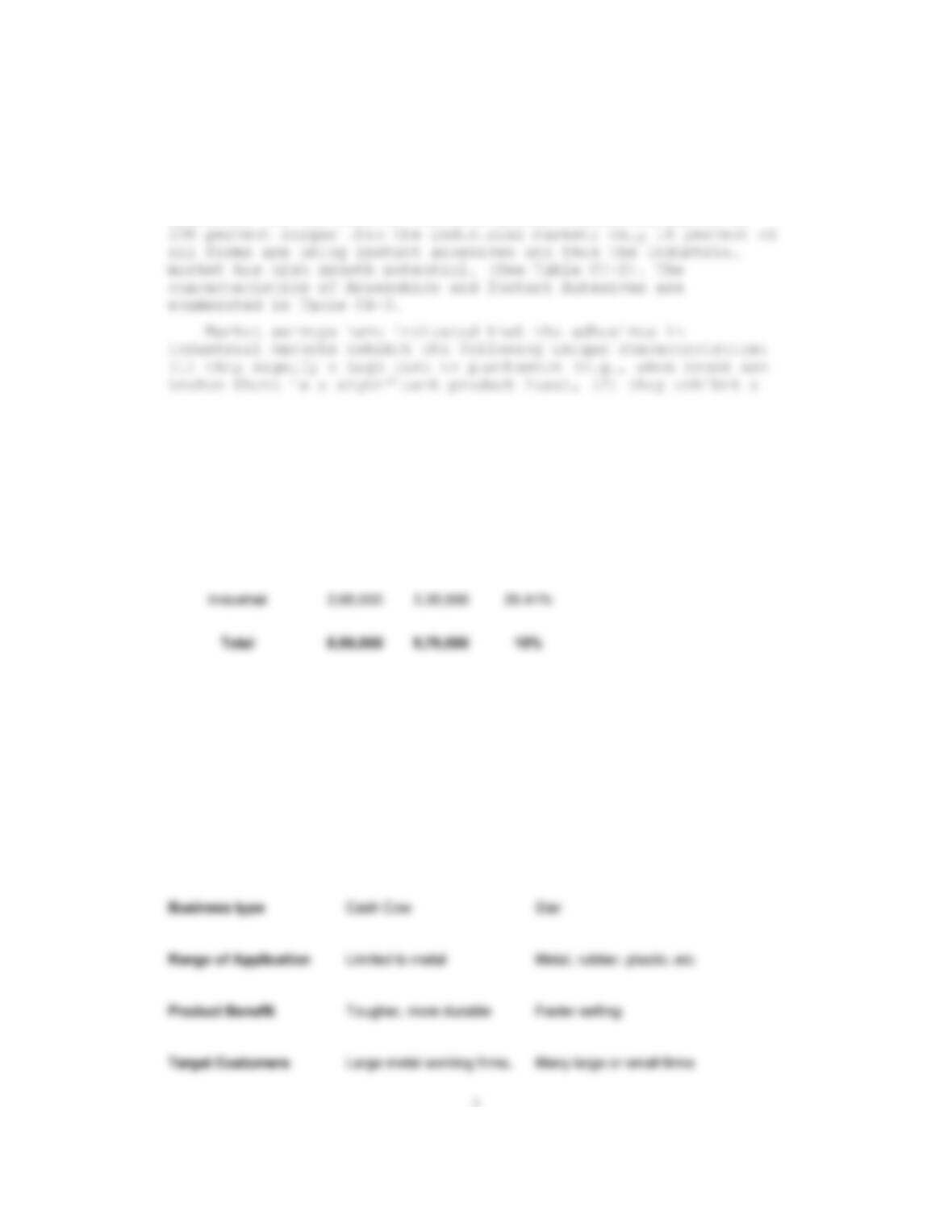
it is useful to review some background information. Table C4-1
exhibits the current sales and market share position of IPG.
TABLE C4-1. CURRENT IPG SALES AND MARKET SHARE
IPG Sales ($MM) Market Share (%)
Anaerobics $17.20 85%
3
to increase from $3.44 MM to $4.5 MM (+31 percent) with no or
little protection by patents; (3) evidence of low-price entries
from Japan; 3M may also be competitor and thus timing is
critical; (4) the size of consumer instant adhesives market is
TABLE C4-2. INDUSTRIAL MARKET
Instant Adhesives – SuperBonder (lbs)
1978 1979 Change (%)
Consumer 6,25,000 6,44,000 3.04%
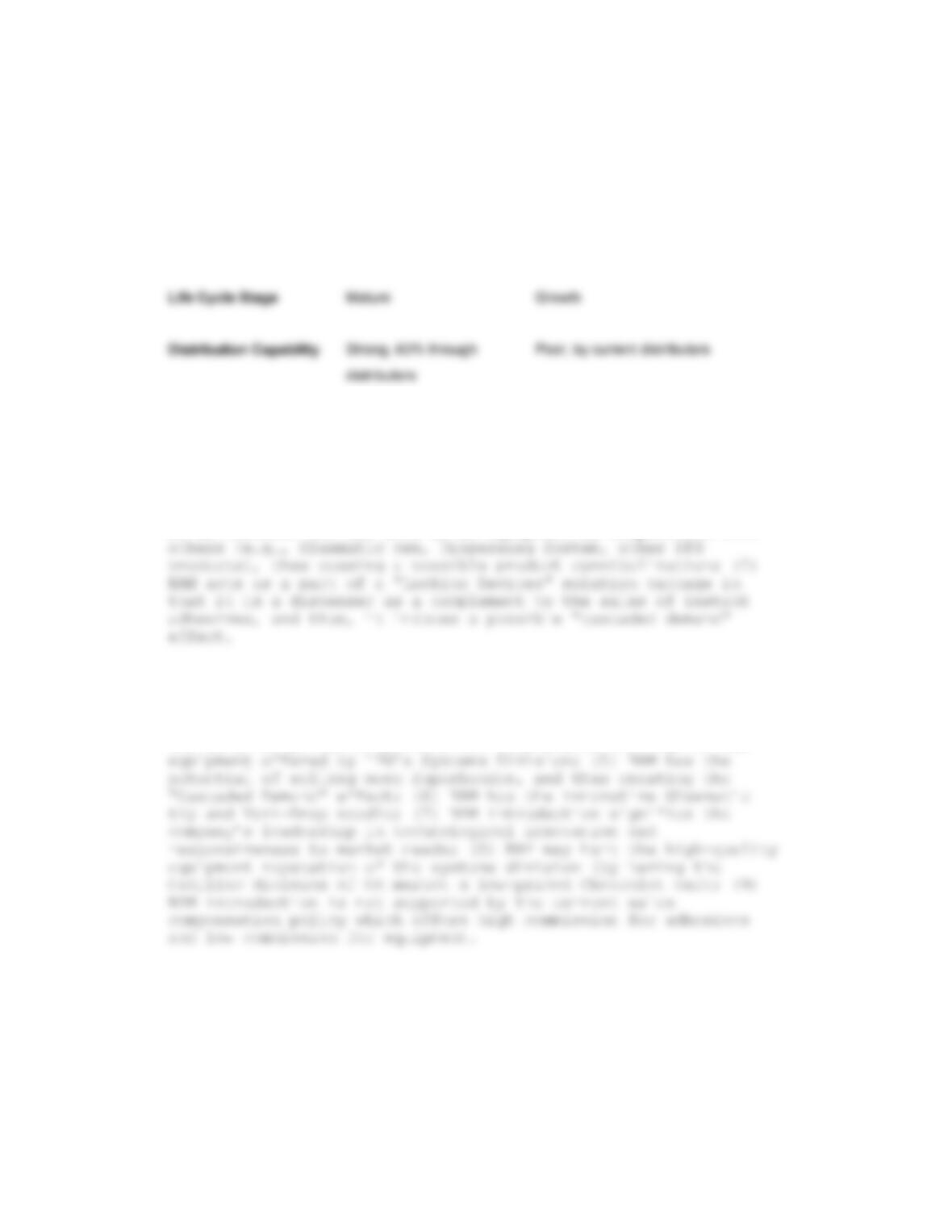
TABLE C4-3. CHARACTERISTICS OF ANAEROBICS AND INSTANT ADHESIVES
Anaerobics Instant Adhesives
Market Share 85% 50%
Annual Growth 10% 20% or faster
4
easily identifiable
Market Served Industrial market only, Industrial 290k lbs; consumer
homogeneous market: 600k lbs, fragmented
low sensitivity to price, (3) they make few purchases by the
purchasing agents, (4) they use the product in only one application
(e.g., adopting a very conservative approach to avoid risks), and (5)
their fostering of customer education is critical to their success
(e.g., brand and company name, product features, reliability).
The role played by BAM in the company’s product line planning
is as follows: (1) BAM acts as an equipment in competition with
There are some specific issues related to BAM: (1) BAM is
appropriate for companies with assembly line operations, i.e.,
heavy users of instant adhesives; (2) BAM has no direct
competitors in the market place; (3) BAM is good for small firms;
(4) as a low-priced dispenser, BAM complements the high-priced
B. Reaction from Various Stakeholder Organizations
The following is a summary of the reactions from three
different groups regarding BAM:

5
(a) System division executives have the following reactions:
“not invented here” which causes negative feelings. the low cost
“Chevrolet” will jeopardize the “Cadillac” image, it may
cannibalize current equipment products, there is a lack of
(b) Wooodhill Permatex Group has the following reactions: (1)
BAM would upstage its “Gluematic Pen” which is for both the
(c) Distributor sales force has the following reactions: (1)
the company has no experience in selling dispenser equipment, (2)
sales commission is lower on equipment than on adhesives, (3)
3. If IPG is to introduce BAM, what marketing program should it
use: (a) product strategy, (b) pricing strategy, (c) distribution
strategy, and (d) promotion strategy? Be specific.
A. Product Strategy
The product strategy should take care of four aspects, namely,
product name, assembly, needles, and warranty/trial offers.

6
(a) Product Name – Bond-A-Matic implies an automatic time-
saving device (better than Model 206) that links with instant
(b) Assembly – outsource assembly work (e.g., lower cost, no
disruption to the system division’s current operations) to
minimize internal resistance.
B. Pricing
Before the product price can be set, it is useful to define
its unit cost. The product’s variable costs are $92.50 and
$122.50 for low and high pressure BAM, respectively. The company
has spent $30,000 for capital investment and $18,000 for R&D. If
When setting the product price, several factors are to be
considered. If the marketing objective is to induce SuperBonder
sales, the product price should be low. A low product price
induces repeat purchase by consumers. On the other hand, the
product price should not be too low in order not to imply poor
reasonable margin contribution to the company.

7
At a price of $245, the net price to the distributor is
$183.75. The contribution margins are $58.17 and $23.67 for the
low and high pressure BAM, respectively.
This is the basis for the “cascaded demand” paradigm.
C. Distribution
The distribution may be handled indirectly through
distributors or directly by IPG salespeople. The company engages
285 distributors with 1400 outlets, 60 percent of which are
bearings distributors who are not familiar with dispensing
systems.
There are advantages and disadvantages with the indirect
distribution. Distributors know the customers as 62 percent of
instant adhesives sales are derived from their efforts.
By adopting direct distribution, the company can gain
customer information on BAM usage.
8
D. Market Segmentation
The market is broad based and hence somewhat difficulty to
reach. There are at least three options to segment the market.
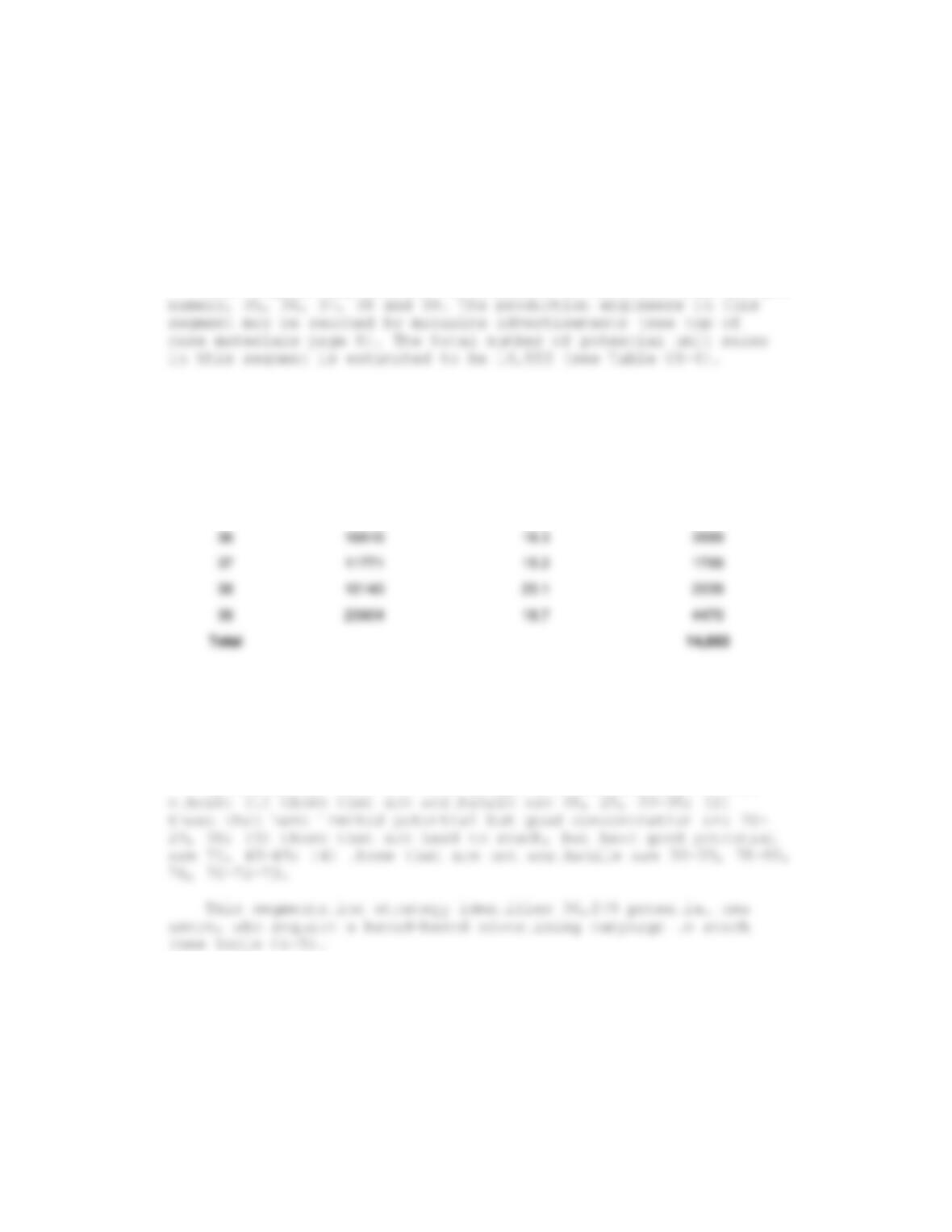
(a) Advertising Agency Proposal: SIC 35 – 39 group
This segment may consist of consumers in five SIC code groups,
TABLE C4-4. SEGMENTATION BASED ON SIC C0DES
SIC Code Number of % Additional Potential Projected New User
Establishments User Establishments Establishments
35 34174 (=102,523/3) 7.8 2666
(b) Segmentation based on Usage and Potential Demand
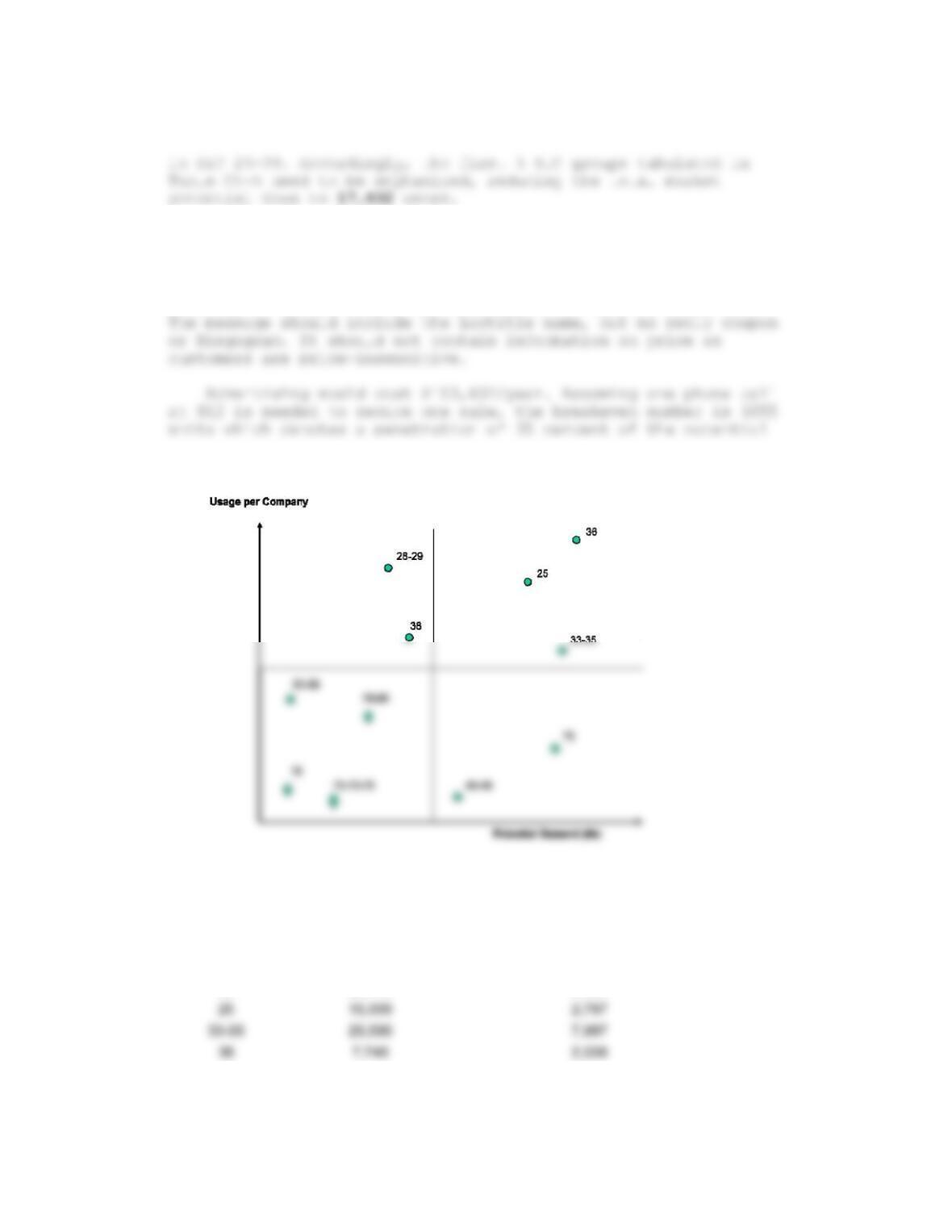
The segmentation based on usage and potential demand is
displayed in Figure C4-1.
Specifically, some SIC code groups are more attractive than
(c) Segmentation Based on Marketing Position Desired by the
Company
It is pointed out in the case (page 4, third paragraph) that
the company management wants to achieve 35 percent market share
9
E. Promotion
The objectives of product promotion are to create awareness
of the product, generate sales by implementing the pulling
strategy to induce sales, and strengthen the Loctite brand name.
FIGURE C4-1. SEGMENTATION BY USAGE AND POTENTIAL DEMAND
TABLE C4-5. ESTIMATION OF NEW USER ESTABLISHMENTS
SIC Code Current Demand (#s) Potential New User Establishments
36 28,784 3,589

10
28-29 7,611 1,210
75 16,497 9,015
40-49 9,632 9,632
Total 1,11,861 36,279
4. Epilog
This case offers a considerable amount of issues and
numerical data for deliberation and analysis. Marketing of