1
Case #20
“Peterson Industries: Louis Friedman”
Harvard Business School Case #9-396-182(Rev. February 12, 1996)
Academic instructors who are registered with the publishers’
website (http://www.hbsp.harvard.edu) may download the Teaching
Note #5-300-047 (December 10, 1999) for this case free of charge.
ABSTRACT
Peterson Industries is a family-owned company located in
Greenville, Wisconsin. The company specializes in producing
custom-designed plastic-based products for original equipment
TEACHING OBJECTIVES
The objectives of this case are to highlight the conflicting
concerns related to the problem of allocating critical resources
raised by managers at different levels (e.g., corporate, senior,
and middle). The specific resources allocation process practiced
SUGGESTED QUESTIONS FOR CLASSROOM DISCUSSION
1. What are the relationships among Peterson’s strategy, the
design of the organization, and the Rosegrant family’s role in
the management of the company?
2
ANALYSIS
1. What are the relationships among Peterson’s strategy, the
design of the organization, and the Rosegrant family’s role in
the management of the company?
The strategy of Peterson Industries is to continue offering
customized products to OEMs in a dynamic global market based on
its core competencies in engineering and production. The company
is family owned and is organized in a hybrid form which allows
2. How effective is Peterson’s resources allocation process?
What are its strengths and weaknesses?
The process of allocating engineers, a critical resource of
the company, requires detailed documentation of the long-term
goals along with the quantities needed. The justification must
3
3. In what ways is the resource allocation process helped or
hindered by the (a) divisional performance measurement system and
(b) incentive compensation system?
Peterson Industries uses compensation and an incentive plan
to manage the politics related to resource allocation. Before
1993, the company focused on its division operating margin (DOM).
When deciding on resource allocation, all division managers
naturally favored options which maximized the operation margins
of their specific divisions. Then the incentive plan was
4
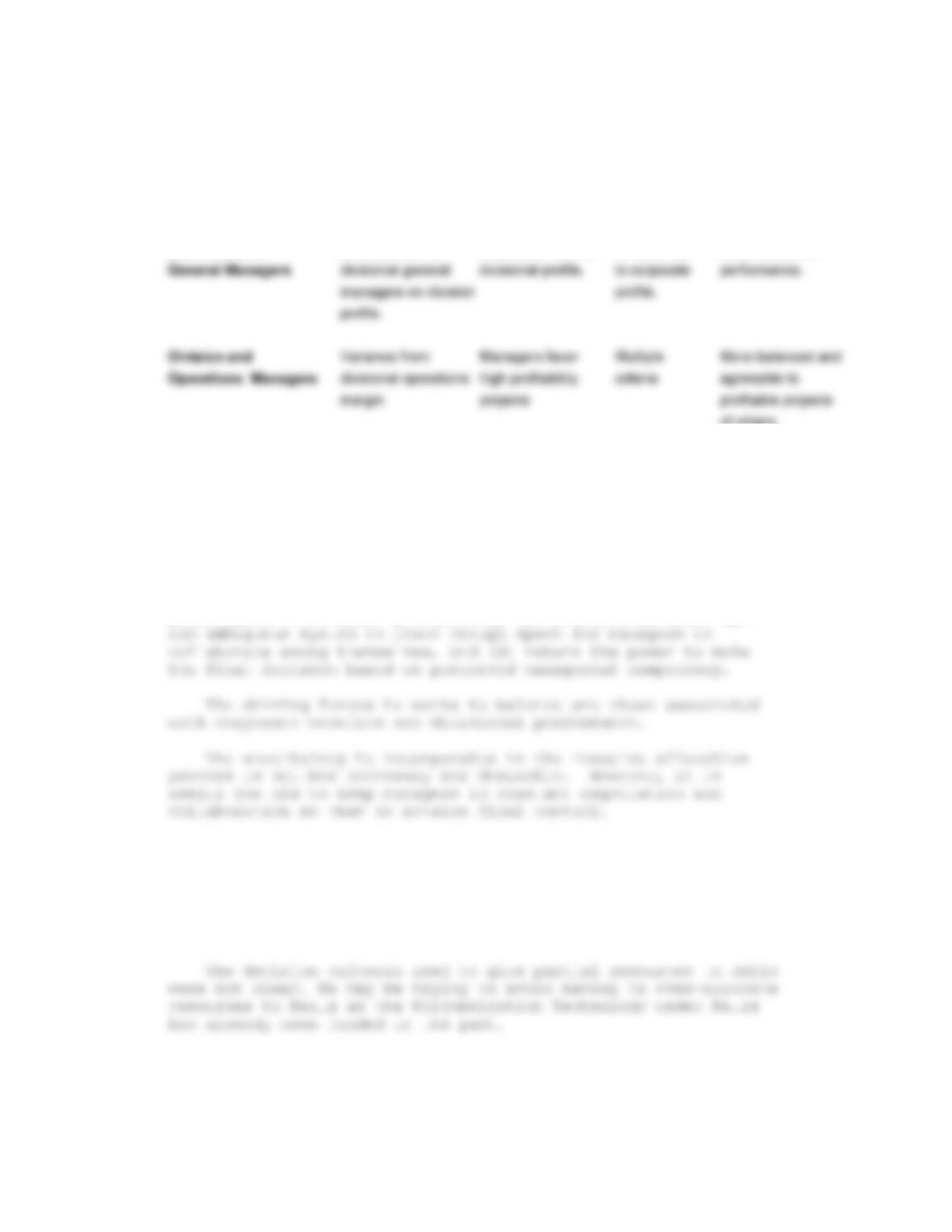
TABLE C20-1. IMPACT OF REWARD SYSTEMS ON RESOURCES DECISIONS
Prior to 1993 Impact on Priority Since 1993 Impact on Priority
Corporate Officers Bonus partially on Low interest in Bonus more Show more care
and Divisional corporate profits; corporate, more on directly links about corporate
of others.
4. What role does Louis Friedman play in Peterson’s resource
allocation process? (a) What are his goals? (b) What forces is he
trying to keep in balance? (c) Why the ambiguity? Are
uncertainty and ambiguity necessary and desirable?
The goals of Louis Friedman, company president, are to (a)
set the corporate direction to guide the resource allocation
process, (b) allow divisional general managers to actively
participate in allocating resources, (c) devise a somewhat open
5. What is your assessment of Friedman’s handling of the two
projects involving Kells?
Friedman assigned only part of the resources requested by
Kells while signaling his approval of Kells’ two projects and his
confidence in Kells’ competency in accomplishing these projects.
6. Would the resource allocation process be improved if Jenkins’
two proposals were adopted? Why or why not?
As the corporate assistant controller, Jenkins recommends
that the evaluation criteria for allocating resources should: (a)
emphasize objective numbers, such as Net Present Value, Return on
Investment, Divisional Operations Margin, etc.; (b) consider
TABLE C20-2. PROPOSED EVALUATION CRITERIA
Evaluation Criteria Weight Project A Project B Project C
Net Present Value of Project 10
Contribution to Company’s Strategic Objectives 10