
1
Case #11
“Saturn Corporation’s Module II Decision”
Harvard Business School Case #9-795-011 (August 18, 1994)
Academic instructors who are registered with the publisher’s
website (http://www.hbsp.harvard.edu) may download the Teaching
Note #5-795-088 (Rev. February 5, 1999) for this case free of
charge.
ABSTRACT
This case focuses on the formulation of a business growth
strategy for the Saturn Corporation of General Motors. The
consideration of these diverse interests.
TEACHING OBJECTIVES
The specific teaching objective of this case is to illustrate
the complex nature of the corporate decision-making process for
Saturn Corporation to implement added production capacities. The
decision to expand capacity needs General Motors Corporation to
The specific approach outlined in the analysis section of
this case is first to agree on a set of evaluation criteria which
SUGGESTED QUESTIONS FOR CLASSROOM DISCUSSION
1. What is this case about?
2. Review the GM corporate strategy and answer the following
questions:
2
(a) For what purposes did GM create Saturn? (b) How was Saturn
able to perform as of 1993? (c) Should Saturn be spun off from
General Motors and established as a separate car company or not?
Why? (d) How urgent was the need for General Motors to become
“Saturnized?”
3. Discuss the GM expansion decision by answering the following
4. What are the lessons learned from this case?
1. What is this case about?
This case is about the corporate decision-making process related
to the expansion of the production facility of Saturn Corporation.
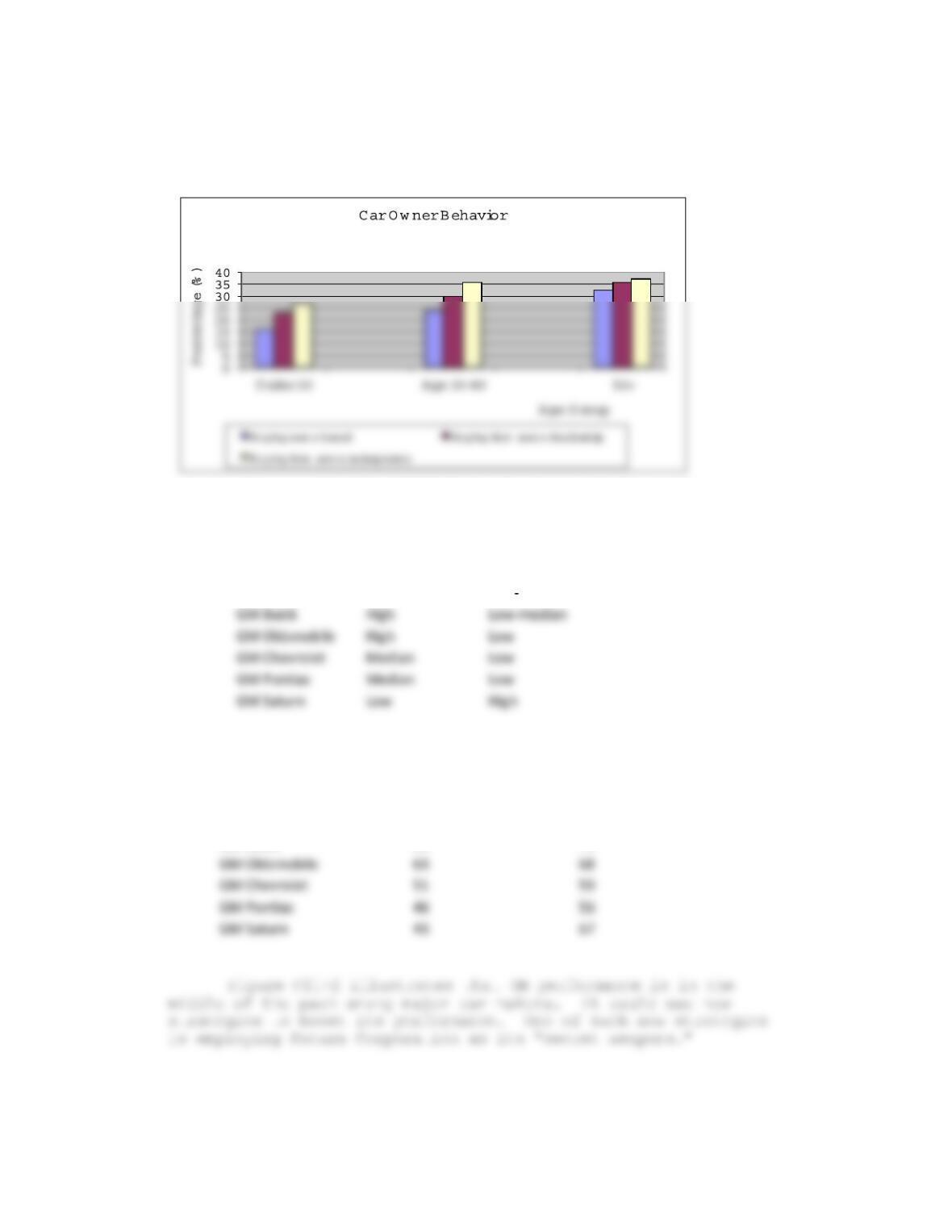
The average age of the owners of Saturn cars is 43, the lowest
among all GM divisions. GM hopes that customer loyalty will spur
3
FIGURE C11-1. RESULTS OF MARKET STUDY
TABLE C11-1. QUALITY REPUTATION AND GROSS MARGIN AMONG
GM DIVISIONS
Car Divisions Gross Margin Quality Reputation
GM Cadillac High Low median
TABLE C11-2. MEDIAN AGE OF CAR OWNERS
Car Divisions Median Age of Percent Likely to
Car Owners Buy Brand
GM Cadillac 65 71
GM Buick 65 70
4
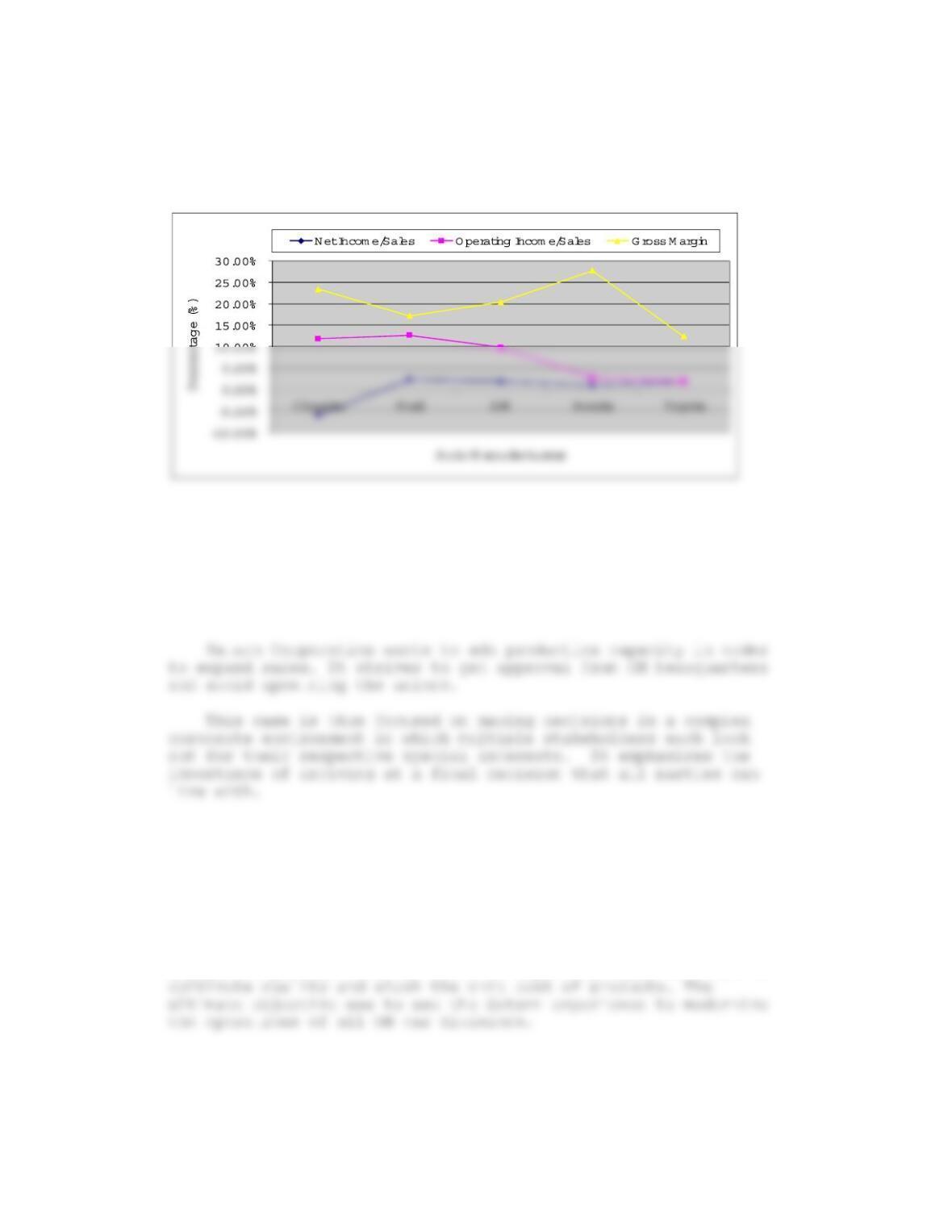
FIGURE C11-2. GM PERFORMANCE
The national union is interested in preserving as much say as
it can regarding national labor issues such as the recall of
laid-off workers and the reduction of relocation needs for its
rehired workers. The local union is focused on expanding its
membership at the plant levels and on maintaining its autonomy
from the national union in negotiating future plant-based labor
contracts with Saturn Corporation.
2. Review the GM corporate strategy and answer the following
questions: (a) For what purposes did GM create Saturn? (b) How
was Saturn able to perform as of 1993? (c) Should Saturn be spun
off from General Motors and established as a separate car company
or not? Why? (d) How urgent was the need for General Motors to
become “Saturnized?”
A. Saturn Corporation was created by GM to test out the
management process that was based on empowered teams in order to

5
B. As of 1993, Saturn Corporation was able to demonstrate a
break-even financial performance in a low-margin small car
C. There are three reasons why Saturn Corporation should not be
break away from GM as a separate car company: (1) Saturn
D. To become “Saturnized” means that Saturn Corporation
transfers learning to all GM divisions in order to make them
increasingly competitive in the marketplace. The Saturn
experience consists of two parts: (1) team-based management
process to foster product quality and minimize cost, and (2)
marketing know-how of Saturn to promote favorable customer
relationships.
3. Discuss the GM expansion decision by answering the following
questions: (a) What are the critical issues which must be taken
in account in making decisions regarding the Saturn Module II
A. To decide on Saturn Module II expansion, the following
critical issues must be considered:
(1) The needs of GM – to transfer the Saturn experience to
all GM divisions while not offending the national office of the
union, and to cost-effectively expand production plants.
(4) The needs of Saturn Management – to expand production
capacity while maintaining operational efficiency and to
effectively transfer knowledge to other GM sites.
B. The following decision criteria are recommended:
(1) GM concerns – (A) cost-effectiveness of the expansion
plan, (B) transposing the Saturn learning to other GM sites or
products (e.g., technology, team management process, and
marketing know-how).
C. The following weights are suggested to reflect the relative
importance of the issues at hand: 10 for (A), 10 for (B), 8 for
(C), 8 for (D), 6 for (E), 6 for (F), and 4 for (G).
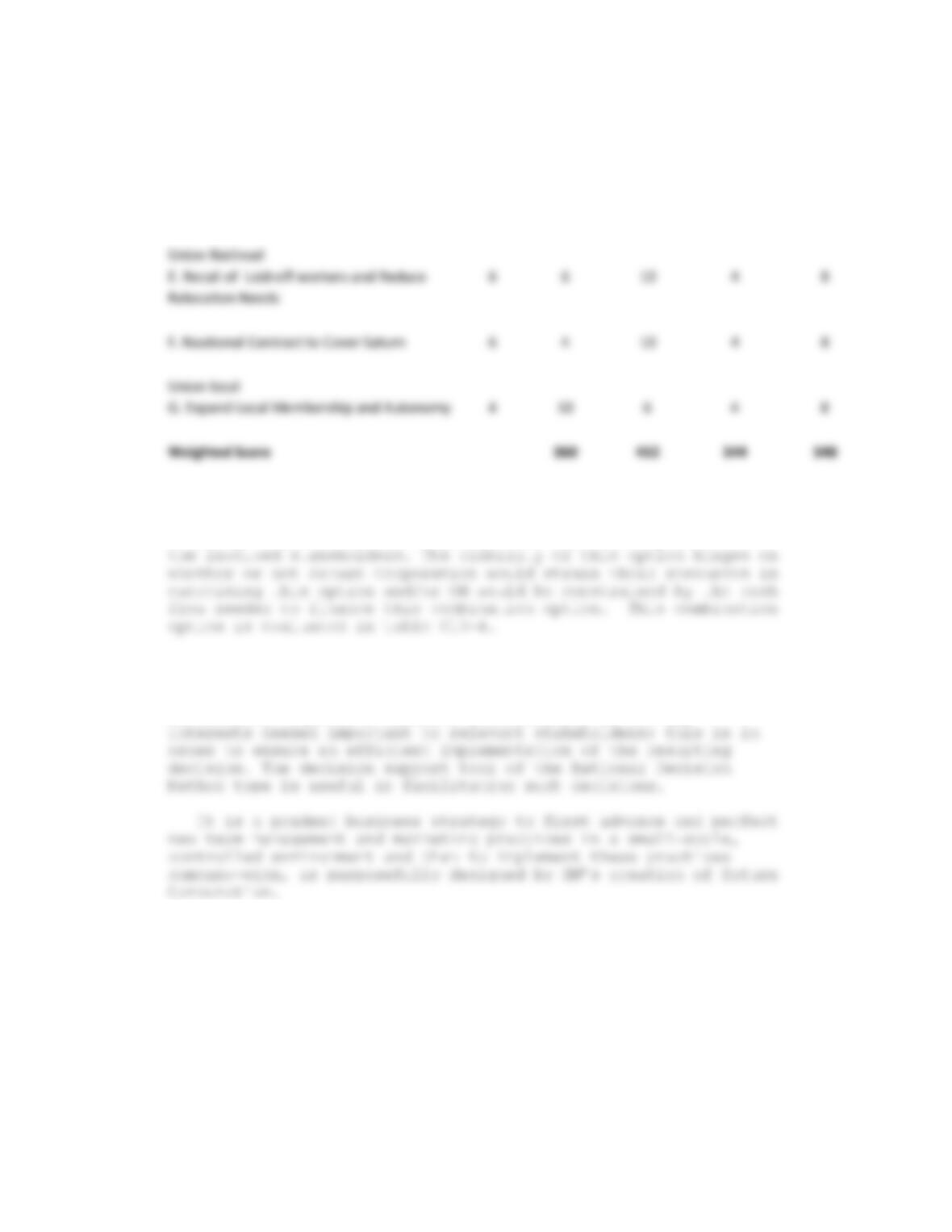
TABLE C11-3. APPLICATION OF Rational Decision METHOD
Weight Option 1 Opion 2 Option 3 Option 4
Add Convert Badge Delay
GM Conserns
7
C Increased output 8 10 8 6 4
D. Operations Efficiency 8 10 8 4 6
A still better option is the combination of converting a
nearby GM plant and badging the mid-size Opel car to accelerate
knowledge transfer without raising other concerns important to
4. What are the lessons learned from this case?
The key lesson is that decision-making in a complex business
environment requires a balanced consideration of all key
8
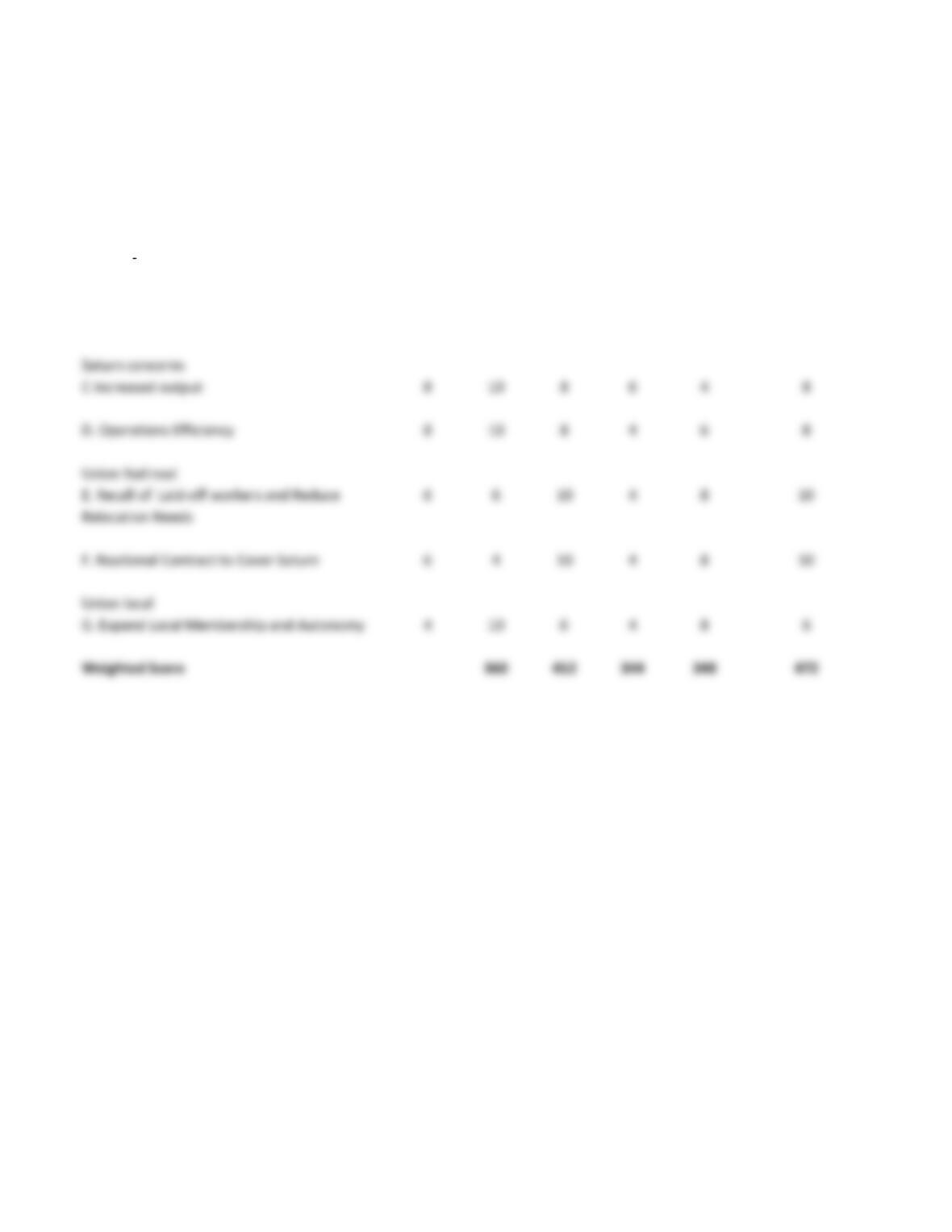
TABLE C11-4. EVALUATION TO INCLUDE THE COMBINED OPTION
Weight Option 1 Opion 2 Option 3 Option 4 Opion 5
Add Convert Badge Delay Convert and Badge
GM Conserns
A. Cosst effectivness of Expansion 10 6 6 10 8 10
B. Apply Saturn leaarning 10 4 8 10 6 10
(Technology. Team management, marketing)