239
C A S E T E A C H I N G N O T E S
Manchester United FC: still successful despite
new threats
Steve Pyle
1. Introduction
This case study examines recent developments at Manchester United following the controversial
takeover of the club by the Glazer family. The debt faced by the club (and its owners) has
caused potentially damaging problems and yet the team remains very successful but is this
business model sustainable? The current case develops themes introduced in earlier cases
featuring Manchester United in previous editions of this text. Manchester United is one of the
The case gives a brief background and history including the club becoming a publicly listed
company. It focuses in particular on the period from 2005 onwards and chronicles the hostile
takeover by the Glazers and some of the financial repercussions of this. The takeover
culminated in the organisation being de-listed and taken into private ownership but it was also
saddled with a large amount of debt. In the last few years, MUFCs position has been
240
2. Position Of the Case
This case study provides an ideal context for many of the issues raised in Chapter 4 (and
Chapter 5) of Exploring Strategy. The case study should be used to:
show the importance of identifying stakeholder groups (and there are many within the
case);
analyse the expectations of the stakeholders in the organisation;
3. Learning objectives
The main focus of the case is centred on strategic purpose and students should be able to:
understand key issues in governance and how they might relate to a football club;
4. Teaching scheme
The teaching approach clearly depends upon the nature and size of the group, the time available
and the specific questions to be focused on.
241
5. Questions for discussion
Main questions
1. Identify the different forms of ownership that might be adopted by MUFC and how these
might lead to different expectations.
Additional questions
5. Do you feel that the various aspects of corporate governance (indicated in Section 4.3) are
appropriate for a football club? What changes in governance would you like to see?
6. How has Manchester United aligned itself to the external environmental factors in the
242
6. Case analysis
Main questions
1. Identify the different forms of ownership that might be adopted by MUFC and how these
might lead to different advantages and disadvantages.
There are a variety of ownership forms that football clubs can adopt. The majority of British
clubs are private companies owned by very rich individuals (such as Chelsea or Manchester
City) or groups of rich individuals (such as Manchester United, Liverpool or Arsenal). An
There are a wide range of issues that can be covered in a debate about the advantages and
disadvantages of each form of ownership most students are likely to see this from a
supporters perspective but it is important to also focus on the business perspective a
shareholder has every right and expectation to receive dividends. The situation can be
complicated by the personal objectives of the owners are they in it for enjoyment and a sense
Table 1 below gives a few points that can be expected to come out of the debate:
Ownership Type Advantages Disadvantages
Private ownership 1. Easy to make quick
decisions.
2. Owners can finance
growth without making
1. Limited funds for
investment unless the
owners are especially rich.
2. Club may run up large

243
Public limited company (PLC) 1. Access to capital
markets for investment
funds.
1. Shareholders expect
dividends whatever the
success of the club.
Fans ownership 1. The legacy and
continuation of the club
is the over-riding
objective.
2. More democratic
governance.
1. Limited funding unless
there are enough rich (and
generous) fans.
2. Can lead to poor business
decisions over ambitious
fans.
Notes:
a. A rather perceptive quote made before the Glazer takeover:
Alan Flitcroft, the head of sports at Ernst & Young, said: Football clubs are not suited to
PLC status. For a start, promotion and relegation create too much uncertainty. The possible
exception is Manchester United, which has a sustainable business model. But theres a
problem with Manchester United as an investment. Why does Malcolm Glazer (the US
244
2. Identify the main stakeholder groups involved in MUFC and using Figure 4.5 map their
power and level of interest. How might the expectations of the various stakeholder groups
differ and potentially come into conflict?
There are a wide variety of stakeholders in Manchester United and it is useful to start by
compiling a list of these to show both the range and type (both internal and external) of
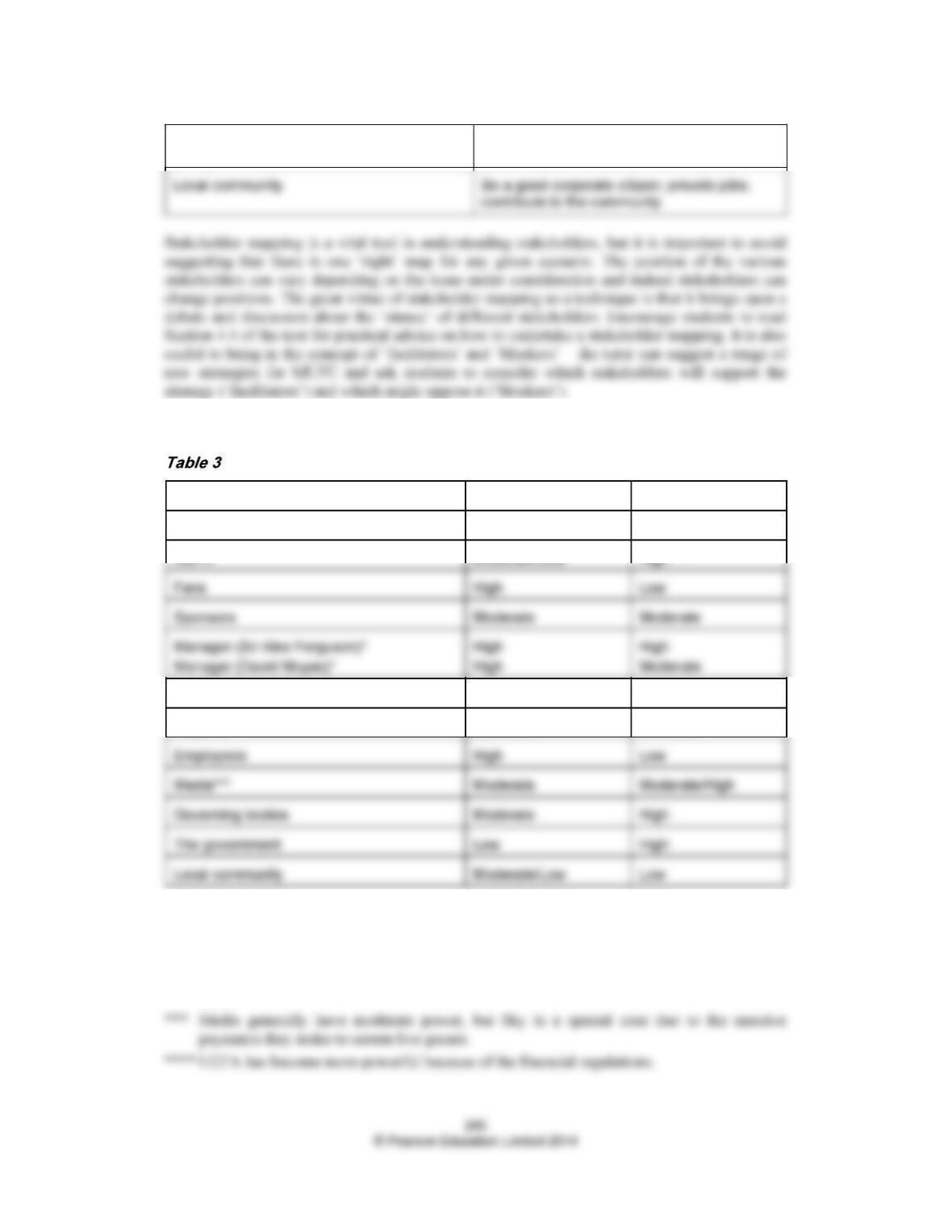
Table 2 gives a summary of some (but not all) the stakeholders and their expectations:
Stakeholders Expectations/criteria for success
The Glazer family (owners) Profits/return on capital invested: reduced
debt; growth potential; brand development
Occasional supporters
(possibly distant to Manchester, infrequent
visits)
Winning matches/trophies; regular TV
coverage; glory, quality branded merchandise
Sponsors, corporate clients Maximum media exposure; enhanced image;
association with successful club
Manager (Sir Alex Ferguson/David Moyes)
and staff
Playing success/winning trophies; working
with top players bigger budget for transfers
and wages; good facilities
Johnson, Whittington, Scholes, Angwin and Regnér, Exploring Strategy, 10th edition,
Instructors Manual on the Web
Government Act legally; pay taxes; act ethically and show
corporate responsibility
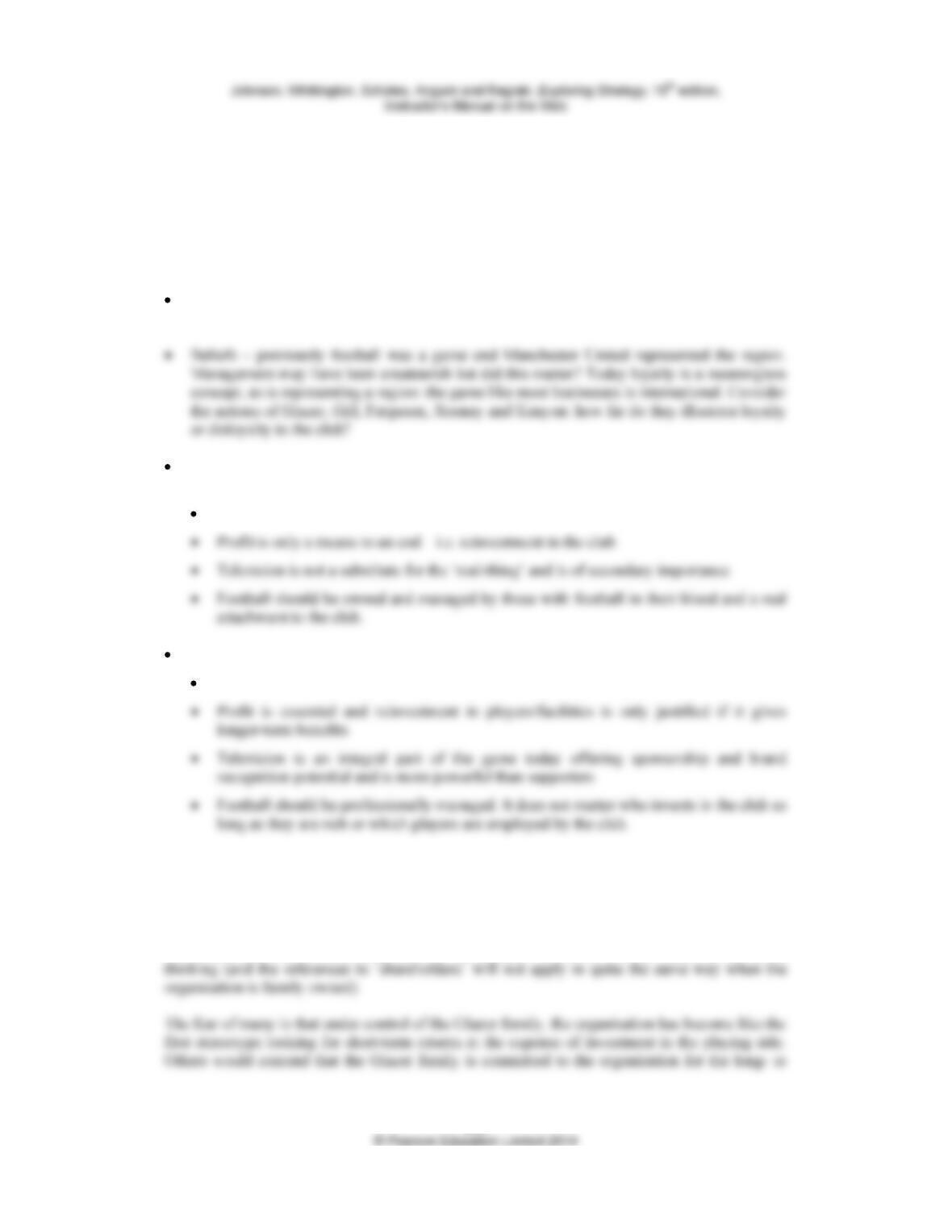
One suggested (general) map which assesses stakeholder positions is shown in Table 3 below.
Stakeholder Level of interest Power
The Glazer family High High
CEO High Moderate/High
Players** Moderate Moderate
Notes:
* Generally, managers are not very powerful (note how often they get sacked) but Sir Alex
could be a special case. His replacement, David Moyes will have less power.
** Players move around clubs (few are loyal) and dont have much power except the real
stars.
246
3. Refer to Section 5.3 and decide what you feel are the key cultural characteristics of
Manchester United in terms of values, beliefs and taken-for-granted assumptions: (a) pre-
1990 and (b) today. What are the implications of these changes to current and future
strategies?
Get students to identify the key changes in values, beliefs and assumptions between 1990 and
the present. Some of these might have emerged from the previous questions but other issues
should also surface. For example:
Values have clearly shifted towards a more commercial agenda. The Glazer family clearly
want to make money from the deal.
Assumptions get students to list assumptions in 1990 and whether they still hold. For
example:
Professional football is played primarily for the benefit of supporters
A reasonable set of alternative assumptions for today could reasonably be postured:
Professional football is played because it is a core product in a global business
4. Reflect on Table 4.3 and explain how the organisations ethical stance and corporate social
responsibility stance has shifted.
This should produce a heated debate!
Remember that the exhibits depiction of stereotypes extremes is only meant to stimulate
247
medium-term because (a) it will take this long to recoup their original outlay and (b) they
believe in the long-term potential of the organisation to make money. There is also evidence that
the family has taken large sums out of the business in the form of directors remuneration.
Many stakeholders including supporter groups believe that the stance of the club should be
either multiple stakeholder obligations or the fourth stereotype (shaper of society) and that in
previous strategic eras the club were nearer these extremes. However, this may be rather
unrealistic in the increasingly commercial orientation of football across Europe and especially in
England.
Additional questions
5. Do you feel that the various aspects of corporate governance are appropriate for a football
club? What changes in governance would you like to see?
Many will feel that big business and a financially driven ethos are undermining the beautiful
game. Manchester United are undeniably both big and a business. Is football and a big business
ethos fundamentally incompatible, or can they have the same ends? This question is designed to
248
transfer fee kitty sufficient to attract and keep top players but some are beginning to doubt
whether this can be sustained with such a mountain of existing debt. In contrast, some clubs,
with apparently supportive owners and the best of intentions have been forced into
administration. Administration (i.e. when a club is virtually bankrupt) is itself a controversial
issue there have been several examples of clubs reforming immediately after administration
but with many creditors having taken a big cut in their return.
6. How has Manchester United aligned itself to the external environmental factors in the
football industry? Identify key opportunities and threats, commenting on how well placed
the club is to exploit the opportunities and deal with the threats
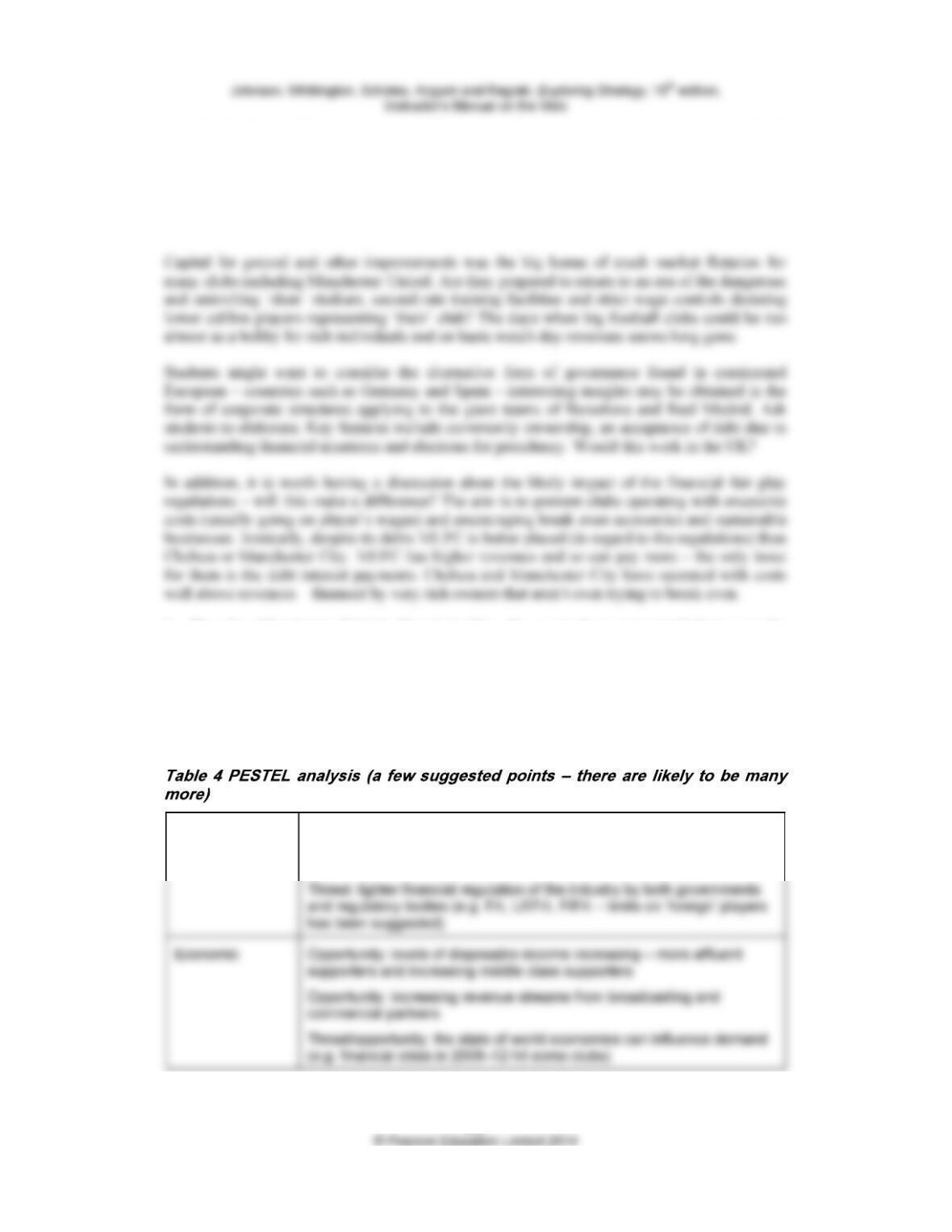
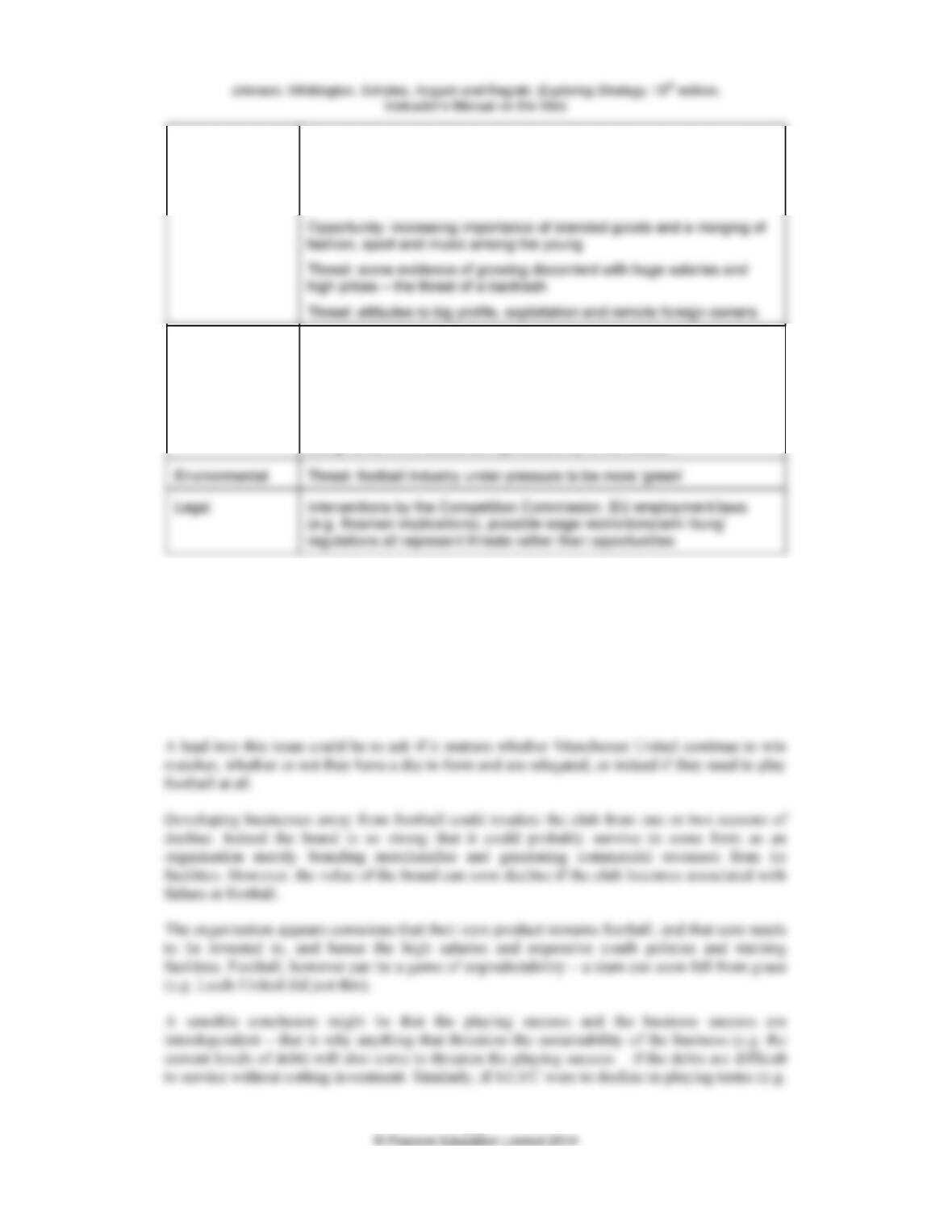
This isnt a main theme in the case, but if the class needs to put the football industry in a wider
environmental context, then it is possible to get students to develop a brief PESTEL analysis
and in doing so, identify some key opportunities and threats.
Political Opportunity: encouragements by some governments to bring business
and glamour to the country as a response to popular appeal (e.g.
support for World Cup bid)
249
Socio-cultural Opportunity: levels of leisure time increasing but tastes may change
will football remain so popular?
Opportunity: profile of football as the new rock n roll (positive) and
Manchester United as a market leader
Technological Opportunity: internet and mobile technology potential new revenue
streams
Opportunity: subscription and pay per view expansion. Clubs such as
MUFC can exploit their own TV channels completely
Threat: can the virtual experience replace the live experience and in so
doing remove the excitement generated by a live crowd?
7. Consider the role of football within the business. Does it matter whether Manchester United
continue to win matches, whether they have a dip in form and are relegated, or indeed if
they need to play football at all?
It is interesting to start with a debate about what industry is MUFC in? The diversity of
operations and the corporate profile should allow students to reach a wider interpretation of
purpose. Is Manchester United in the football business or the entertainment business or is it a
multi-brand conglomerate business?

Note:
The case was written in 2013 just before MUFC clinched the title and Sir Alex Ferguson retired.
Everyone will be interested to see how the new manager deals with such a legacy. He could do
well after all he is inheriting a fantastic position. However, if things go wrong the finances
of the club are fragile it is only sustainable if the success continues unabated.