349
C A S E T E A C H I N G N O T E
FeedHenry innovating in the cloud
James Cunningham and Clare Gately
1. Introduction
The case focuses on the innovation and strategic dilemmas faced by a small technology start-up
firm that is competing internationally in emerging technology arenas of cloud computing and
mobile apps for business and enterprise users. The case explores, the decisions management
2. Position of the case
This case fits with the core themes of Chapter 9, Innovation and Entrepreneurship. It highlights
innovation and entrepreneurship as integral to organisational processes and business strategy in
a small firm context. The case addresses particularly the innovation dilemmas faced by a
3. Learning objectives
From reading the case, students should be able to:
350
describe and analyse the business environment faced by FeedHenry and understand the
opportunities and threats posed by the environment to a small technology firm;
identify and describe the stages of entrepreneurial growth and challenges faced by
FeedHenry as it grows;
demonstrate a clear understanding of the different types of innovation and analyse what
types have occurred in FeedHenry. Specifically students should be able to:
i. evaluate FeedHenrys activities as a market push or demand pull innovator;
4. Teaching scheme
This case study can be taught as a class discussion orchestrated by the instructor around the
analysis of strategic development of the organisation. A brief plenary discussion of the business
5. Questions for discussion
1. Analyse using appropriate strategy tools, the external environmental challenges faced by
FeedHenry. Discuss their implications for FeedHenrys management team in making
strategic decisions to guide the companys growth and innovation strategy.
351
6. Case analysis
The case analysis is built up around five core questions that collectively address the key
concepts and learning objectives of the case. Guidelines, including suggested board work (see
Tables 14) to stimulate student interaction and discussion are set out to follow.
1. Analyse using appropriate strategy tools, the external environmental challenges faced by
FeedHenry. Discuss their implications for FeedHenrys management team in making
strategic decisions to guide the companys growth and innovation strategy.
This question relates to an analysis of the strategic position of FeedHenry with regard to its
external environment. Learning objectives one and to a lesser extent, seven are addressed in this
question. Students could use a variety of strategy tools to aid external analysis including
Political:
Use of mobile apps to influence public
opinion or rally public support
Economic:
Currency fluctuations
Emerging markets (e.g. BRIC economies)
economic prosperity, instability
Social:
Rise in use and application of apps to every
sphere of life
Technological:
Exploding market for web-enabled mobile
devices
352
Ecological:
Clean industry, with low environmental
impact
Legal:
Emerging regulations and standards for apps
development
Students should be reminded that PESTEL is only a tool to aid analysis and that they should
make subjective decisions on the key environmental challenges influencing FeedHenry.
To broaden the class discussion, students could be asked to identify the key drivers for change
from the PESTEL analysis (based on Table 1 above) such as:
Exploding market for web enabled mobile devices (Technological)
Part II: This question extends Part I by drawing in the complexities of decision making under
uncertainty. Students should recognise that most external influences are beyond organisational
control, especially for small or start-up enterprises with little market clout. Based on the key
2. Assess the business strategy of FeedHenry, its stage of entrepreneurial growth and discuss
their alignment with the business environment and overall strategic objectives.
This question draws on a number of concepts from the Innovation and Entrepreneurship chapter
and links them with the strategic choices FeedHenry must make in advancing the enterprise.
The question addresses learning objective two and to a lesser extent objective five. It is not a
straight forward question and students will appreciate the diverse strategy concepts that need to
353
FeedHenry need to continue to develop and exploit existing technology and IP.
Strong R&D and innovation to protect against market ambivalence or slowdown in market
demand for existing platform technology.
A strong marketing effort to build the FeedHenry brand with its strategic customers is
needed to fend off new entrants and/or increasing competition for existing players.
3. Analyse and evaluate the key innovation dilemmas faced by FeedHenry and recommend
where they should concentrate their limited resources to compete effectively in international
markets.
This question relates to the innovation and entrepreneurship chapter and provides an opportunity
for students to develop their learning around objective 3 and objective 5. Students should be
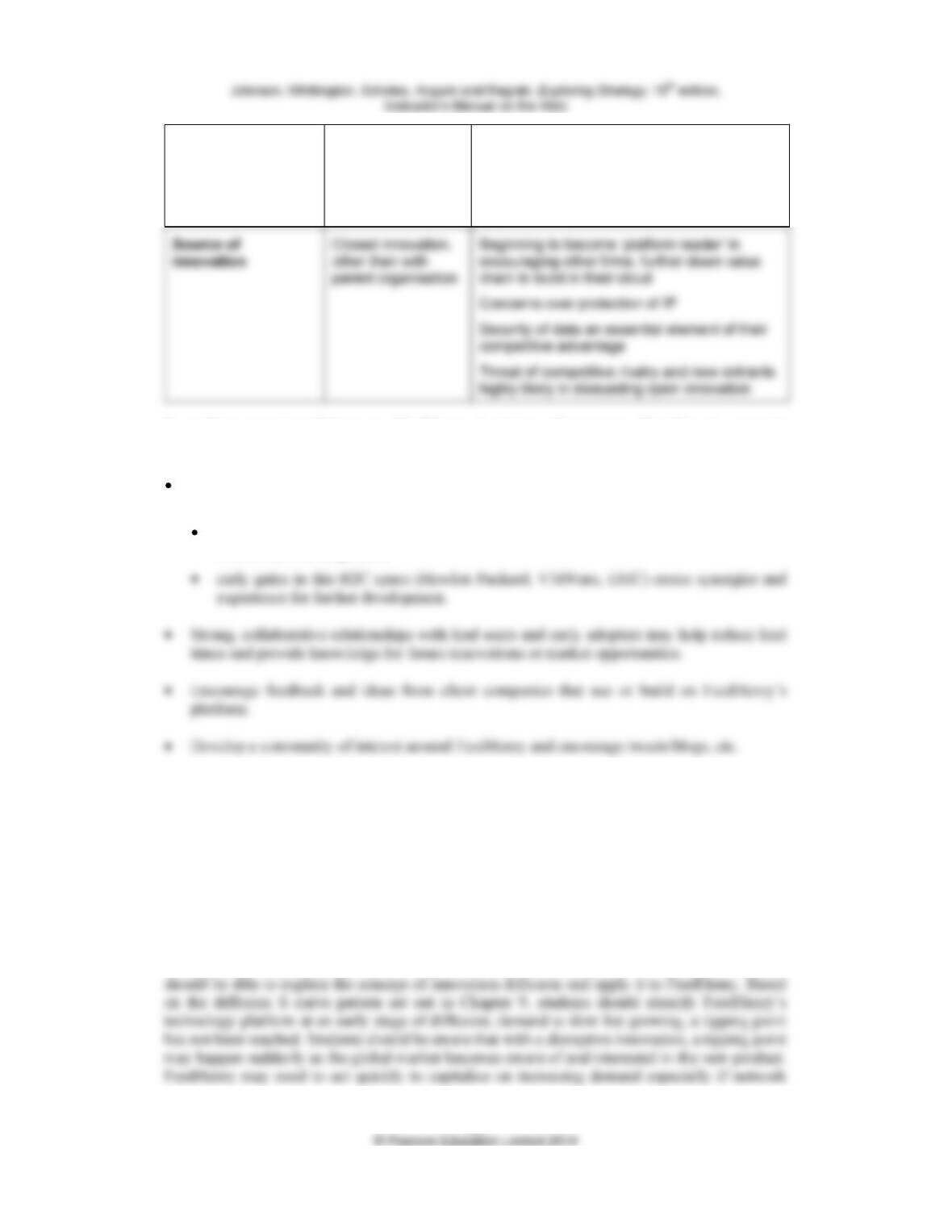
FeedHenry Key dilemmas faced
Focus of innovation Predominantly
technologypush
Need to find balance between technology
push and market pull
When to integrate market/user feedback and
involvement at stages of innovation process
354
Develop appropriate processes to match their
innovation and business model
Other components of the business model may
provide innovatory opportunities or process
improvements
In making recommendations to FeedHenry in terms of resource allocation to compete
internationally, the following points are relevant:
Continue to develop business to business (B2B) partnerships with global technology leaders
to build reputation and exposure in international markets
less resource intensive than business to consumer (B2C) and can build solid base of
worldwide clients quicker;
Finally, students should consider the management team, the appropriate organisational structure
that supports adaptive responses to market opportunities, which ensures it executes flawlessly
and consistently with blue chip brands and their strategic customers. From 2010, an
experienced team has been hired which have capabilities in technology and international market
development.
4. Assess the pace of innovation diffusion of FeedHenry and discuss the implications for their
technology platform and business model.
This question relates to the innovation and entrepreneurship chapter with regard to business
model design. Key learning objectives four and five are developed in this question. Students
effects from usage of FeedHenrys technology become evident. Students should identify supply
and demand side factors that affect FeedHenrys pace of diffusion such as:
Use of their telecommunications partners and lead adopters to build customer awareness
and stimulate network effects
Having identified FeedHenrys business model, students should critically discuss the logic of
their activities, given the pace and extent of innovation diffusion and external market pressures
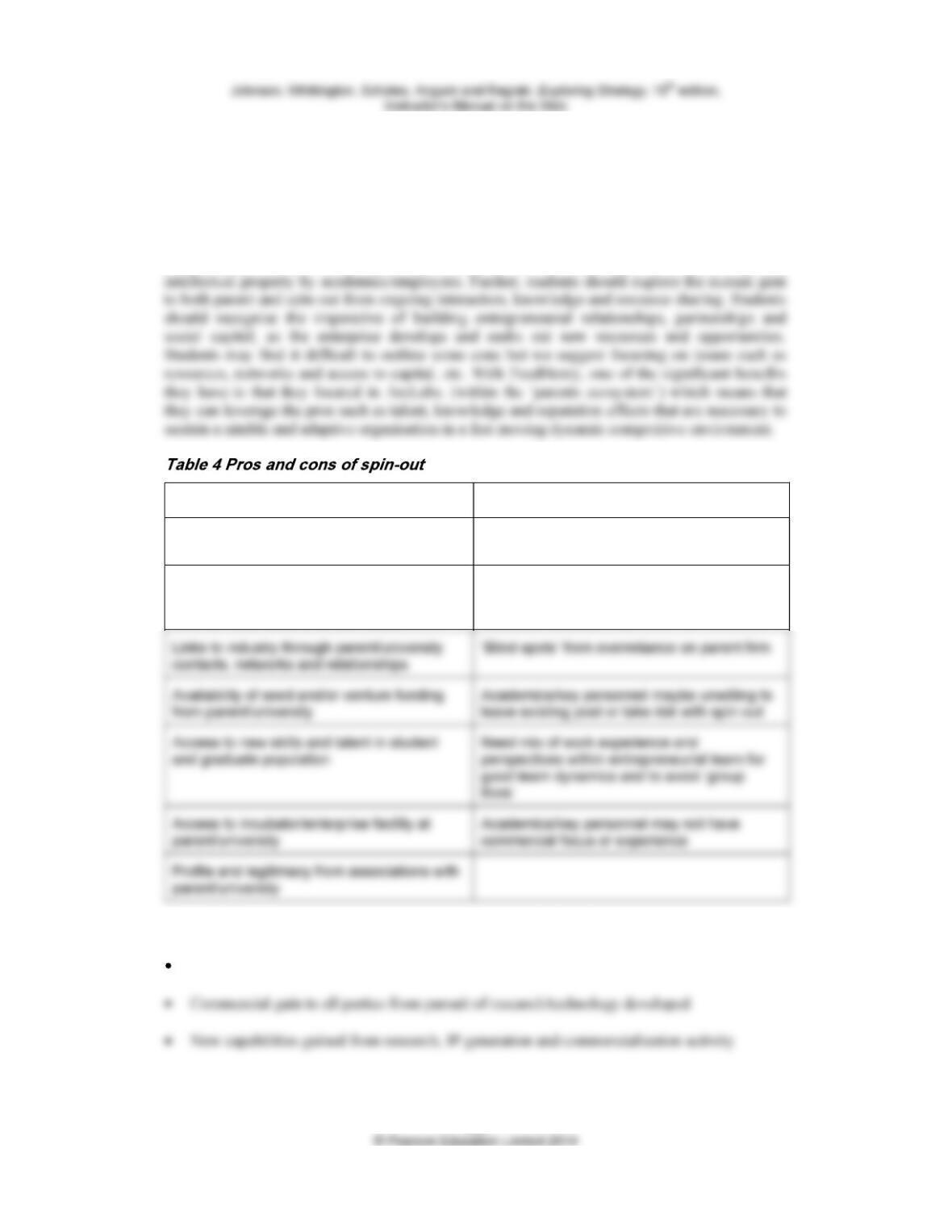
faced. Students may identify the following implications (Table 3 below) for FeedHenry; they
have yet to reach a tipping point, demand is slow but growing. The discussion could be
extended to include other diffusion scenarios, i.e. fast diffusion or stalled diffusion, with
consequent implications for FeedHenry.
Pace of diffusion Implications
Slow pace Demand is slow, cashflow needs to be managed carefully
Slow pace Additional revenue streams may need to be considered to boost
sales and revenue
356
5. Outline the pros and cons of being a spin-out firm from a larger parent organisation.
Analyse how FeedHenry has managed this relationship and suggest how this relationship
can be mutually beneficial with a disruptive technology.
This question addresses learning outcomes 6 and 7. Having completed this question, students
should be able to understand the concept and added complexities of spin-out firms. They should
recognise the role of the parent organisation (University/Higher Education Institute/commercial
organisation) makes in fostering the development and commercialisation of knowledge and
Pros to spin-out Cons to spin-out
Intellectual property and/or knowledge
transferred to spin-out
Cultural norms in parent organisation maybe
inappropriate in new firm
On-going links and access to
parent/university (knowledge, resources,
laboratories, research and contacts)
Systems and style of leadership and
management in parent organisation maybe
inappropriate in spin-out
The following point to how the relationship can be mutually beneficial:
Increased technological capacity within parent firm/spin-out and region
Technology transfer and potential financial gain to parent/university from equity stake in
spin-out
Build up of knowledge of commercialisation process within parent and spin-out firm
To extend the discussion, students could be encouraged to point to some concerns or problems
the parent organisation may experience from spin-out activity such as:
Talent drain to spin-out