Ch 8, Instructor’s Manual, Business & Society, Carroll 10e
Chapter 8
Managerial and Organizational Ethics
LEARNING OUTCOMES
After studying this chapter, you should be able to:
1. Identify and explain the different levels at which business ethics may be addressed.
3. In terms of managing organizational ethics, identify the factors affecting an organization’s
ethical culture and provide examples of these factors at work.
5. Identify and explain concepts from “behavioral ethics” that affect ethical decision-making
and behavior in organizations.
6. Explain the cascading effect of moral decisions, moral managers, and moral organizations.
TEACHING SUGGESTIONS
INTRODUCTION – Chapter 8 has two primary purposes, the first of which is to explore some
of the various ways to make judgments about ethical dilemmas. The authors present two
approaches to making moral judgments, the principles approach and the ethical tests approach.
The second purpose is to discuss ways in which managers can improve the moral culture and
behavior of their organizations.
KEY TALKING POINTS – This chapter gets into what many philosophers consider the heart of
ethics—how to make judgments about ethical dilemmas and come to justifiable decisions about
them. As students will quickly note, there is a bewildering collection of ways to make moral
judgments. The authors introduce and discuss eight different principles and seven different
Most people rely on their instincts to make moral judgments, as pointed out in the text. The
students in your class will be no different, and so they will likely become somewhat frustrated
trying to learn all of these different approaches. One way to help overcome this frustration and
simultaneously help cement the concepts in their minds is to provide a number of ethical
dilemmas for them to debate in class discussions (moral philosophy textbooks typically have a
plethora of such cases and a hypothetical ethical dilemma is available in the group project for
ethical tests matrix as this device enables students to visualize the differences in the various
principles and tests. A sample matrix is included at the end of this chapter. Instructors also may
want to assign students to read “Sorrow and Guilt: An Ethical Analysis of Layoffs” from SAM
Advanced Management Journal, Spring 2000, pp. 4-13. This article reviews the different ethical
principles utilized by managers when making decisions regarding job layoffs and shows students
that the ethical principles and tests are relevant. The article also illustrates that the principles
actually serve as the basis for many decisions made by management.
Even Lawrence Kohlberg, the pioneer of the cognitive moral development field, recognized the
influence of group forces over the individual’s ethical decision making, stating, “Individual
moral action usually takes place in a social or group context and that . . . context usually has a
profound influence on the moral decision making of individuals.” If we recognize the strong
influence of organizational climate in conjunction with Kohlberg’s observation that most adults
make moral judgments at his level 2, we can see why organizational members are so compliant
with their bosses’ demands or even mere suggestions. Instructors will do well to emphasize the
influence of organizational climate, because the prevailing assumption among Americans is that
individuals make individual choices, largely unaffected by “outside” influences.
PEDAGOGICAL DEVICES – In this chapter, instructors may utilize a combination of:
Cases:
5-Engineered Billing
6-The Waiter Rule: What Makes for a Good CEO?
7-Using Ex-Cons to Teach Business Ethics
8-To Hire or Not to Hire
11-Family Business
13-Location, Location, Location
17-Chiquita – An Excruciating Dilemma
31-Moral Dilemma – Head vs. Heart
32-Walmart Labor Practices
33-Case of the Fired Waitress
35-Looksism at A&F
Ethics in Practice Cases:
More Sales, Lower Ethics?
Fired for Cheating on Employer Tests
The New Ethics Code—Sign or Resign
Sometimes Ethics Hotlines Don’t Work
Spotlight on Sustainability:
The Keys to Successful Transparency
LECTURE OUTLINE
I. ETHICS ISSUES ARISE AT DIFFERENT LEVELS
A. Personal Level
B. Managerial and Organizational Levels
C. Industry or Profession Level
D. Societal and Global Levels
II. MANAGERIAL ETHICS AND ETHICAL PRINCIPLES
A. Principles Approach to Ethics
1. What is an Ethics Principle?
2. Types of Ethical Principles or Theories
5. Principle of Rights
6. Principle of Justice
7. Ethical Due Process
11. Servant Leadership
12. The Golden Rule
B. Ethical Tests Approach to Decision Making
5. Test of Purified Idea
6. Test of the Big Four
7. Gag Test
III. MANAGING ORGANIZATIONAL ETHICS
A. Factors Affecting the Organization’s Moral Climate
IV. BEST PRACTICES FOR IMPROVING AN ORGANIZATION’S ETHICS
A. Top Management Leadership (Moral Management)
1. Weak Ethical Leadership
2. Strong Ethical Leadership
3. Two Pillars of Leadership
B. Effective Communication of Ethical Messages
C. Ethics and Compliance Programs and Officers
1. Ethics and Compliance Officers
D. Setting Realistic Objectives
F. Codes of Ethics or Conduct
1. Metaphors for Perceiving Codes
G. Disciplining Violators of Ethics Standards
H. Ethics “Hotlines” and Whistle-Blowing Mechanisms
I. Business Ethics Training
L. Board of Director Leadership and Oversight
V. BEHAVIORAL ETHICS—TOWARD A DEEPER UNDERSTANDING
VI. MORAL DECISIONS, MANAGERS, AND ORGANIZATIONS
SUGGESTED ANSWERS TO DISCUSSION QUESTIONS
Students should recognize that their answers to these discussion questions should be well
reasoned and supported with evidence. Although some answers will be more correct than others,
students should be aware that simplistic answers to complex questions, problems, or issues such
as these will never be “good” answers.
1. Question: From your personal experience, give two examples of ethical dilemmas you
have experienced as a member of an organization.
Answer: Students will have many different answers to this question. They may range from
decisions related to underreporting time spent at work, to taking company property (pens,
damaged goods, petty cash), to reporting the unethical / illegal conduct of others. One that
I faced in an organization was whether to tell the managing partner at a law firm where I
did not work that associates were padding their hours on their time sheets. The law firm
made more money from the additional hours, and I was friends with some of the attorneys
the bank slim.
2. Question: Using the examples you provided for question 1, identify one or more of the
guides to personal decision making or ethical tests you think would have helped you
resolve your dilemmas. Describe how it would have helped.
Answer: In the first example I could have used any one of the guides presented in this
chapter to help me with my decision. I could have weighed the consequences of my
decision, both on the client’s business and on my family; I could have thought about how I
3. Question: Which is most important in ethics principles – consequences or duty? Discuss.
Answer: Obviously, students will have different answers to this question. After all,
philosophers have been debating this very question for hundreds of years with no
4. Question: Assume that you are in your first managerial position. Identify five ways in
which you might provide ethical leadership. Rank them in terms of importance, and be
prepared to explain your ranking.
Answer: Because ethical leadership is built upon management that embodies the
characteristics of a moral manager and a moral person, I would focus on these aspects of
ethical leadership. A moral person exhibits (1) ethical traits (such as honesty,
trustworthiness, etc. – the foundation of virtue ethics), (2) ethical behaviors and (3) ethical
decision-making. A moral manager (1) serves as an ethical role model, (2) effectively
communicates ethical choices, and (3) uses effective rewards and discipline. Since
5. Question: What do you think about codes of conduct? Give three reasons why an
organization ought to have a code of conduct and three reasons why an organization
should not have a code of conduct. On balance, how do you assess the value of codes of
conduct?
Answer: Codes of conduct, if embedded in the culture of a company, can provide effective
guidance to employees. Collins and Porras, in Built to Last, talk about the effects of “cult-
like cultures.” These cultures provide ideological control (assuring that employees look at
the world in similar ways) and simultaneous operational autonomy. An effective code of
conduct can provide a like result. In addition, the Sarbanes-Oxley Act of 2002 requires
public companies to have a code of conduct for senior financial officers or to publicly
6. Question: An ongoing debate concerns whether business ethics can and should be taught
in business schools. Do you think ethics can be taught in B-school? Substantiate your
point with reasons. Can top managers and board members be taught business ethics?
Answer: In my opinion, this question does not address the critical issue. Business ethics
can be taught. The subject matter is no more difficult to grasp than any other academic
subject. People have been making judgments about right and wrong all of their lives, using
some type of criteria (or maybe just instinct, as the authors point out). People can learn
how to use different ethical criteria. The more important, and much more relevant question
is one of motivation—Rest’s third component. Because of this, effective ethics training
must focus on the organization’s ethical climate, providing an atmosphere that is
7. Question: Identify and prioritize the best practices for improving the organization’s
ethical climate. What are the strengths and weaknesses of each?
Answer: The single most important factor in establishing a strong ethical climate is the
commitment and behavior of senior managers. These are the people in the organization
who set the standards of behavior for everyone else. If the senior managers authentically
believe in ethical behavior, and act that way themselves, there will be little difficulty in
8. Question: Which three of the concepts under the field of behavioral ethics appear to be the
most powerful? Explain why and give examples.
Answer: Students will undoubtedly have different answers for the top three concepts, and
will likely rank them differently. Perhaps the concept with the most impact would be
conformity bias. Not only do people take cues from their peers about how to proceed, but
this phenomenon is exacerbated in organizations where people work for a living, and are
GROUP ACTIVITY
Divide students into groups of four to five students. Instruct them to read the following scenario:
“Alex Smith is preparing a sales presentation for his company, Phones4Kids, which
manufactures and sells cell phones that are specifically designed for children. Phones4Kids
employs several hundred workers in Mooray, Missouri, a small town with only two other large
employers in addition to Phones4Kids. Alex hopes to sell specialty phones for boys and girls
aged 6-10 to a retailer in Hooptown, Missouri. This sale would represent approximately 25% of
the projected revenue for the current year for Phones4Kids. The phones are not specifically
designed for internet access; however, about eight percent of the time the phones can pick up a
wireless internet connection and the user can access the internet. There is a 48% chance that once
Each group should determine how Alex should handle this situation in a written memo.
Specifically, the group should use the ethical decision-making process to reach a resolution to
the hypothetical. The group’s ethics screen should include an analysis of several ethical
principles and tests.
Instructors may want to have students use the following additional ethical decision-making
process, which builds on the process provided by the text but incorporates an economic and legal
analysis of proposed courses of action:
Step 1: State the Problem / Analyze the Problem
D. Would the proposed course of action meet the firm’s economic responsibilities?
E. Would the proposed course of action meet the firm’s legal responsibilities?
1. Note the ethical principles / tests employed by top management.
2. Note the ethical principles / tests required by the code of conduct.
Step 4: Evaluate New Alternative (Repeat Step 3)
INDIVIDUAL ASSIGNMENT
Distribute the following instructions to each student:
Describe an ethical dilemma that you faced in the workplace. Analyze how you would resolve
the dilemma using (1) utilitarianism, (2) the principle of rights, (3) the principle of justice, (4)
virtue ethics and (5) the Golden Rule. Based on your analysis of these principles, what course of
action would result in the most ethical outcome? Determine what ethical principle(s) or tests(s),
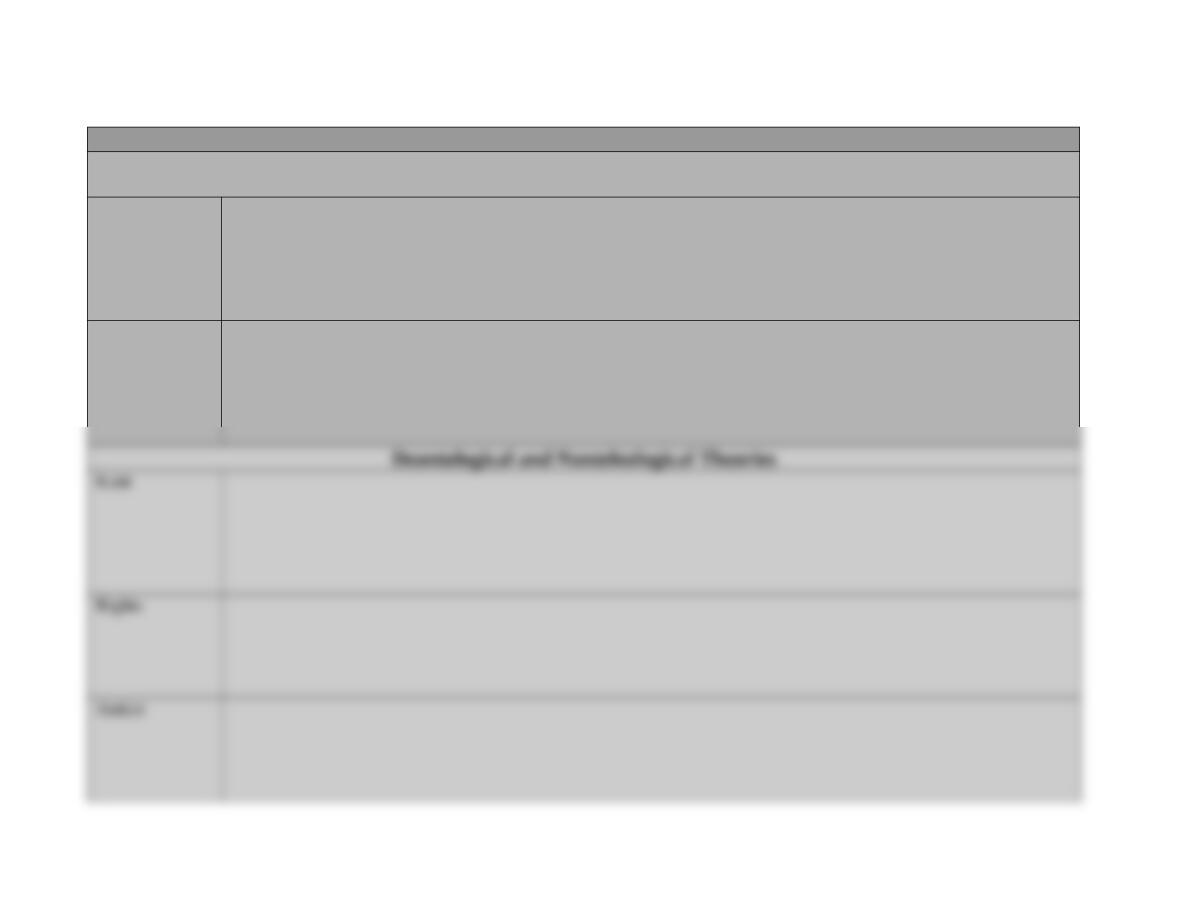
Principles Approach to Ethics
Teleological Theories
Egoism
Utilitarianism
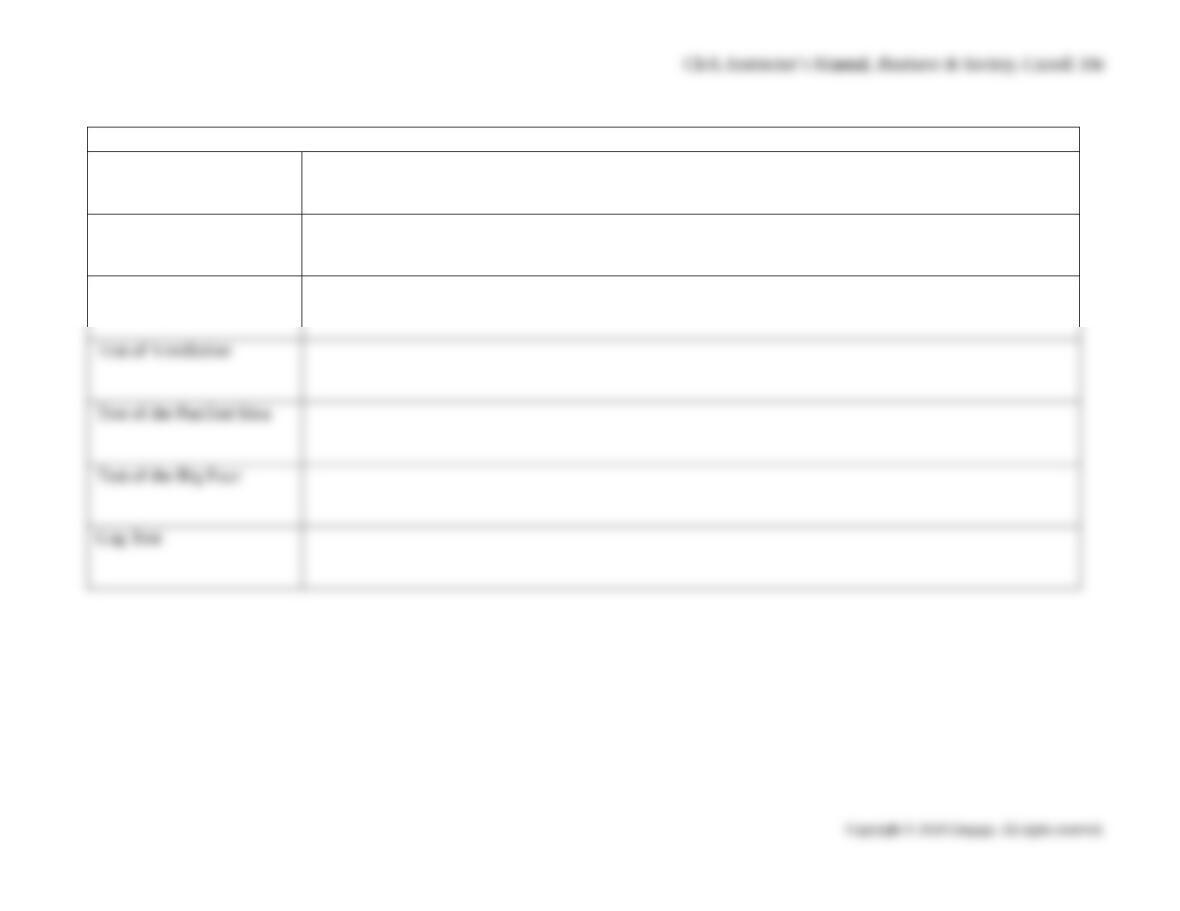
Ethical Tests Approach
Test of Common Sense
Test of One’s Best Self
Test of Making
Something Public