Case Synopsis, Uses, Discussion Questions, and Answers
37
CASE 15 Tiffany and TJX: Comparing Financial Performance
Synopsis: Tiffany & Co. operates as a high-end specialty retailer worldwide. It is mostly known for
its exquisite jewelry, but also has additional luxury items in its product assortment. TJX
Corporation, on the other hand, consists of a mix of stores under the names of TJ Maxx,
Case Synopsis, Uses, Discussion Questions, and Answers
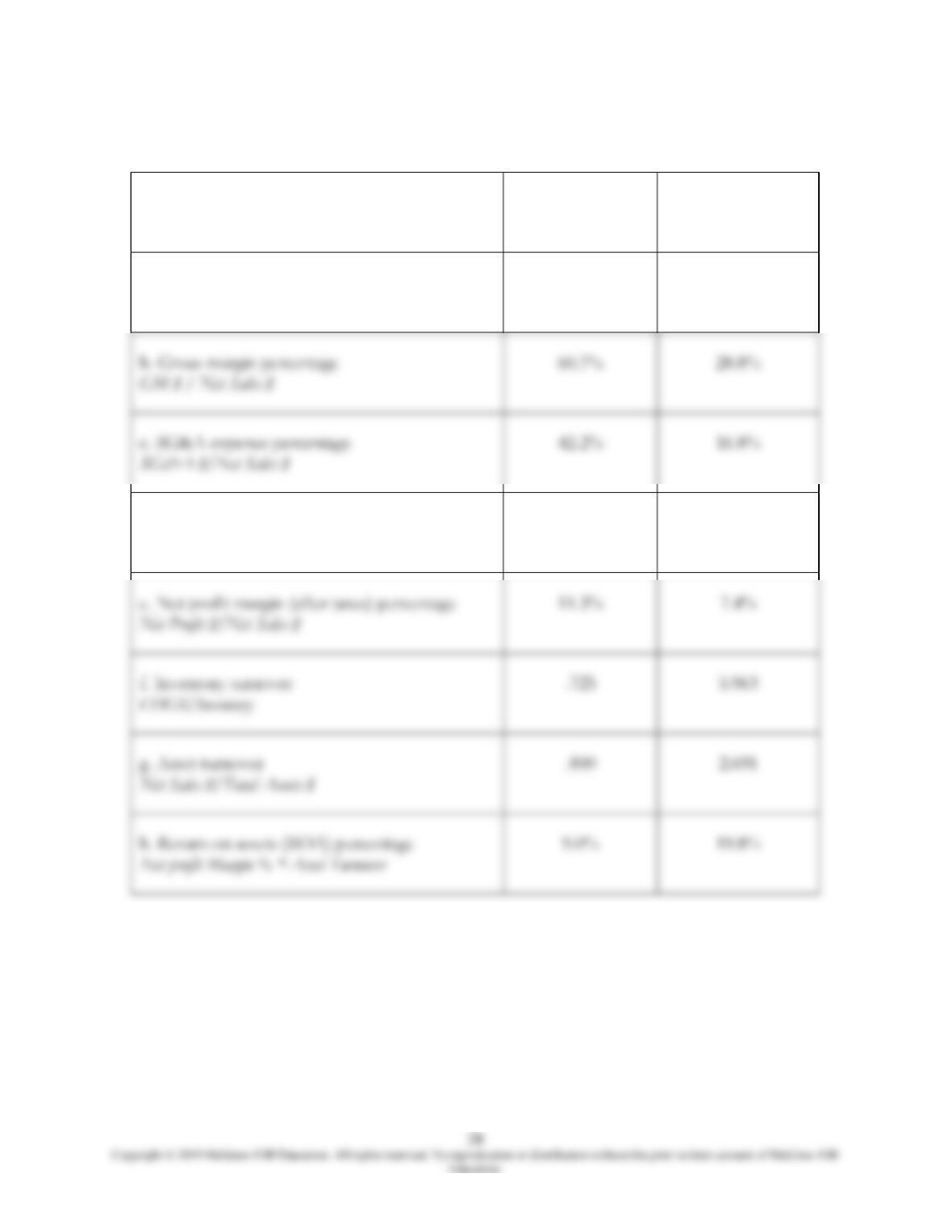
1. Calculate the following for both Tiffany & Co. and TJX using data from the abbreviated
income statements and balance sheets in Exhibit 1.
Financial Indicator
Formula Reference
Tiffany & Co. TJX
a. Cost of goods percentage
COGS $/ Net Sales $
39.3% 71.2%
d. Operating profit margin percentage
(Op.Profit $/Net Sales $) or (GM% – SG&A%)
18.5% 12.0%
2. For a-h, compare and contrast the calculated financial figures for Tiffany & Co. and
TJX, then analyze and discuss why the percentages and ratios differ for the two retailers.
Case Synopsis, Uses, Discussion Questions, and Answers
39
a. Cost of Goods Sold (COGS) is the amount retailers paid for the products sold including
b. Gross Margin is the profit that retailers make on the merchandise they sell. Tiffany & Co.
has a 60.7% Gross Margin and TJX had a 28.8% Gross Margin. Therefore Tiffany had a
significantly higher percentage gross margin (profit on the merchandise) that they sold. Retailers
like TJX and other off-price retailers like Ross Stores and other discount retailers, like Walmart,
Target, etc.,. typically have lower gross margins than most specialty stores including Tiffany.
This is because the strategy for discount stores is to offer merchandise at lower prices with less
c. SG&A Expense % The largest SG&A expenses for retailers typically is salary and wages.
SG&A also includes rent, utilities, advertising, and supplies. In looking at Tiffany & Co., one
can see how its SG&A expense (42.2%) would be much higher than TJX stores (16.8%). Tiffany
stores are typically in very high rent locations,
d. Operating Profit Margin is Gross Margin percent less SG&A percent. Tiffany
%) because Tiffany
significantly higher gross margin more than offsets Tiffany much higher SG&A expense
percent.
e. Net Profit Margin (after taxes): Net Income after Taxes) is
Case Synopsis, Uses, Discussion Questions, and Answers
40
f. Inventory Turnover:
.963) is eight times faster than 5). This means that
o the nature
of its fashion merchandise. Trendy apparel and home goods by their very nature have a short
lifespan. TJX brings in frequent smaller amounts of fashion merchandise that sell very quickly,
g. Asset Turnover
sales or revenues generated to the value of its
h. ROA
Return on assets (ROA) n to all of the resources it
has available. It tells an investor how much after-tax profit a company generated for each dollar
3. Determine which retailer had the better overall financial performance.
Tiffany & Co. outperformed TJX in terms of Gross Margin, Operating Profit Margin, and Net