Leadership Communication
Deborah J. Barrett
Self-Assessment 1
Appendix A – Self-Assessment of Leadership Communication Capabilities
Leadership Communication, 4th edition.
Part I – Assessment of the Core Capabilities
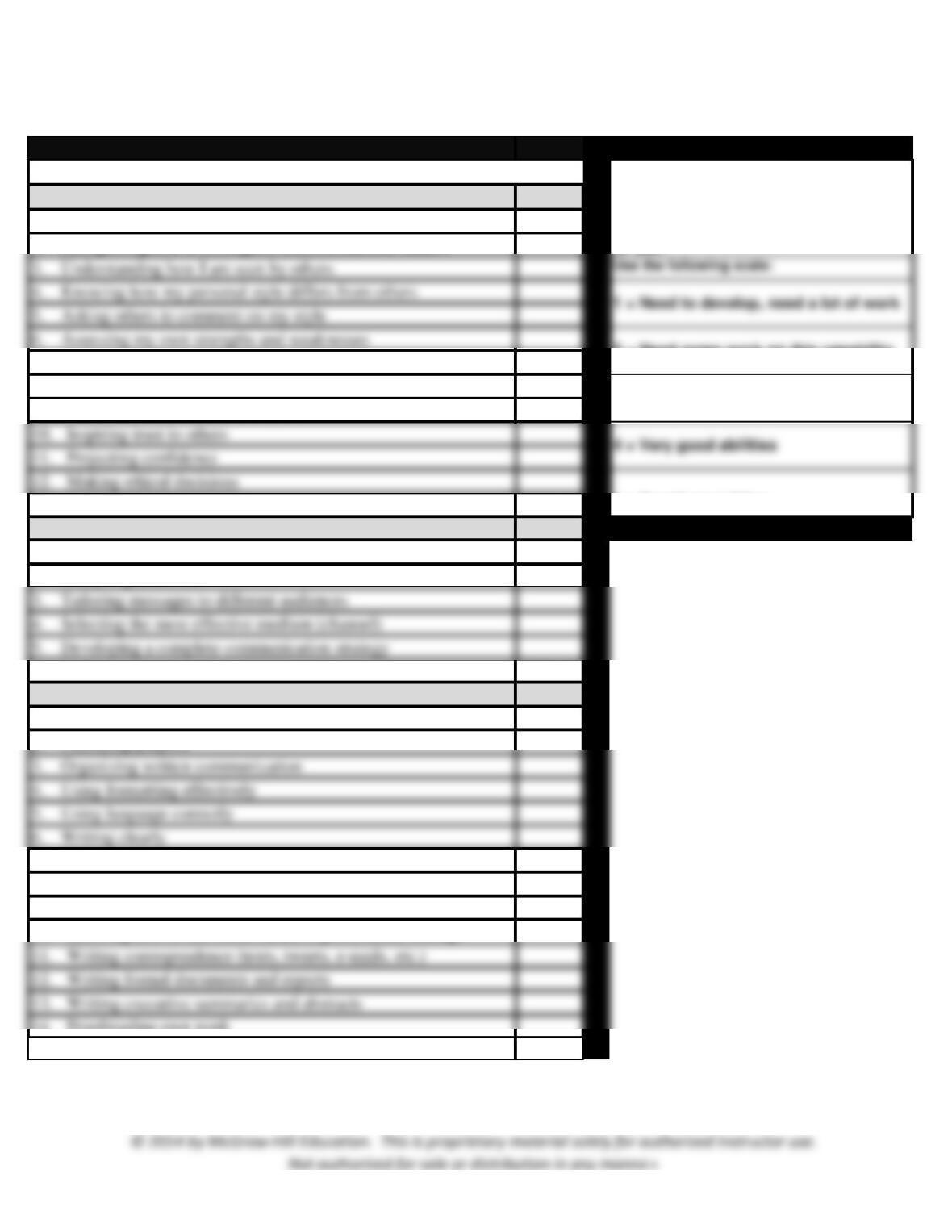
Area and Capability
Leadership Communication Ethos/Image Scale #
1. Understanding characteristics of leadership communication
2. Recognizing/able to distinguish transformational leaders
3. Understanding how I am seen by others
4. Knowing how my personal style differs from others
5. Asking others to comment on my style
6. Assessing my own strengths and weaknesses
1 = Need to develop, need a lot of work
7. Setting goals for personal change
8. Willing to work on improving personal effectiveness
9. Influencing the behavior of others
10. Inspiring trust in others
11. Projecting confidence
12. Making ethical decisions
4 = Very good abilities
Average #DIV/0!
Audience Analysis and Strategy
1. Analyzing the context for communication
2. Analyzing audiences
3. Tailoring messages to different audiences
4. Selecting the most effective medium (channel)
5. Developing a complete communication strategy
Average #DIV/0!
Social Media and Other Written Communication
1. Deciding on communication purpose
2. Clarifying purpose
3. Organizing written communication
4. Using formatting effectively
5. Using language correctly
6. Writing clearly
7. Writing concisely
8. Writing confidently
9. Using an appropriate style and tone
10. Knowing how to use social media in professional settings
11. Writing correspondence (texts, tweets, e-mails, etc.)
12. Writing formal documents and reports
13. Writing executive summaries and abstracts
14. Proofreading own work
Average #DIV/0!
Scoring Instructions:
Assess your abilities on each of the topics
under Area and Capability using the scale
of 1-5 provided below ; a formula is already
in place to tally the average in each section
5 = Excellent abilities
3 = Acceptable, but could be stronger
2 = Need some work on this capability
Leadership Communication
Deborah J. Barrett
Self-Assessment 2
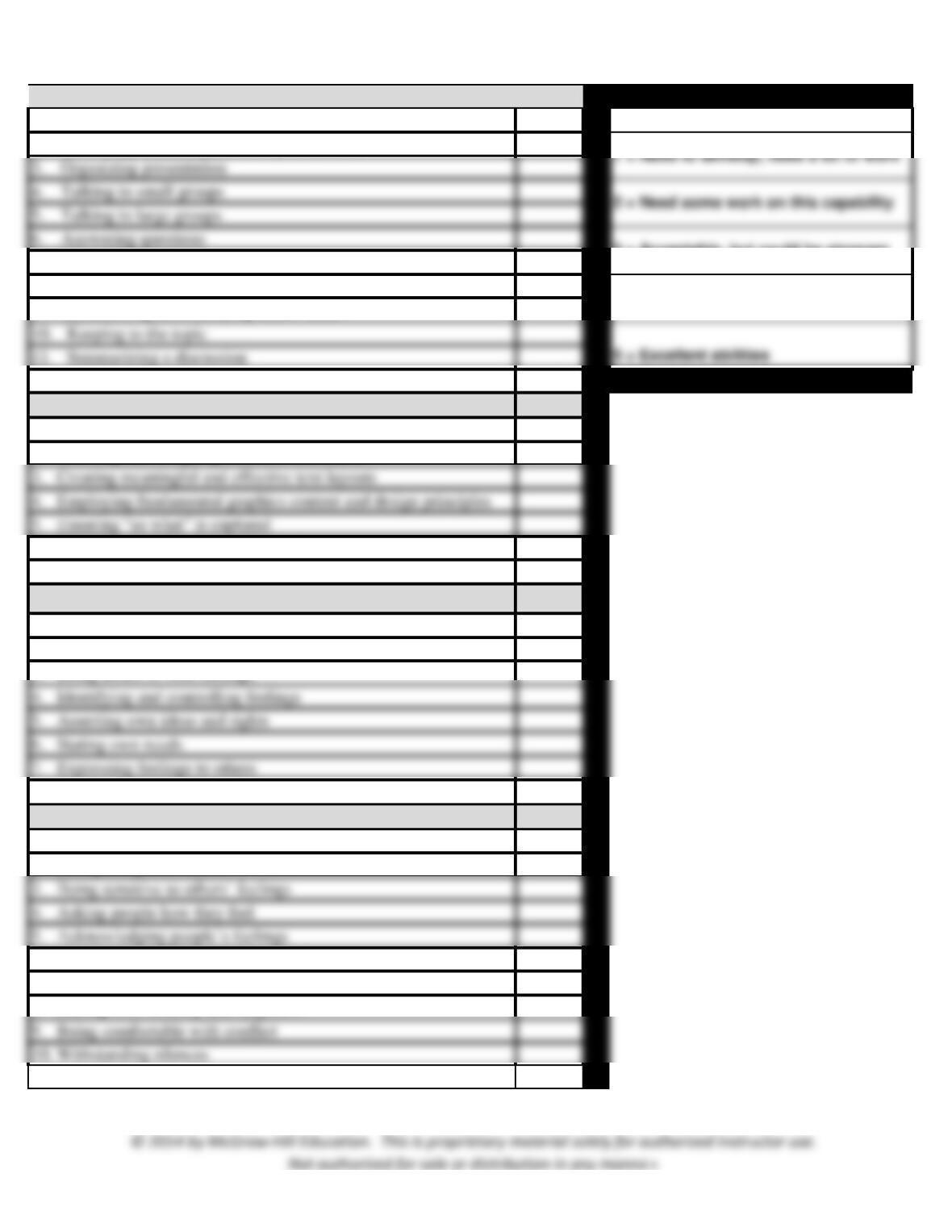
Oral Communication
1. Delivering an impromptu presentation
2. Delivering an extemporaneous presentation
3. Organizing presentation
4. Talking in small groups
5. Talking in large groups
6. Answering questions
1 = Need to develop, need a lot of work
2 = Need some work on this capability
7. Asking questions
8. Drawing others out
9. Summarizing and clarifying others’ ideas
10. Keeping to the topic
11. Summarizing a discussion
Average #DIV/0!
Visual Communication
1. Recognizing when to use graphics
2. Selecting and designing effective data charts
3. Creating meaningful and effective text layouts
4. Employing fundamental graphics content and design principles
6. Creating presentation visuals and slides
Average #DIV/0!
Emotional Intelligence 1: Dealing with Own Feelings
1. Knowing own personality type
2. Recognizing other types and their effect on behaviors
3. Being aware of own feelings
4. Identifying and controlling feelings
5. Asserting own ideas and rights
6. Stating own needs
7. Expressing feelings to others
Average ######
Emotional Intelligence 2: Dealing with Others
1. Listening
2. Recognizing non-verbals
4. Asking people how they feel
6. Helping others express their feelings
7. Dealing with anger
8. Dealing with hostility and suspicion
9. Being comfortable with conflict
Average ######
Use the following scale:
3 = Acceptable, but could be stronger
4 = Very good abilities
Leadership Communication
Deborah J. Barrett
Self-Assessment 3
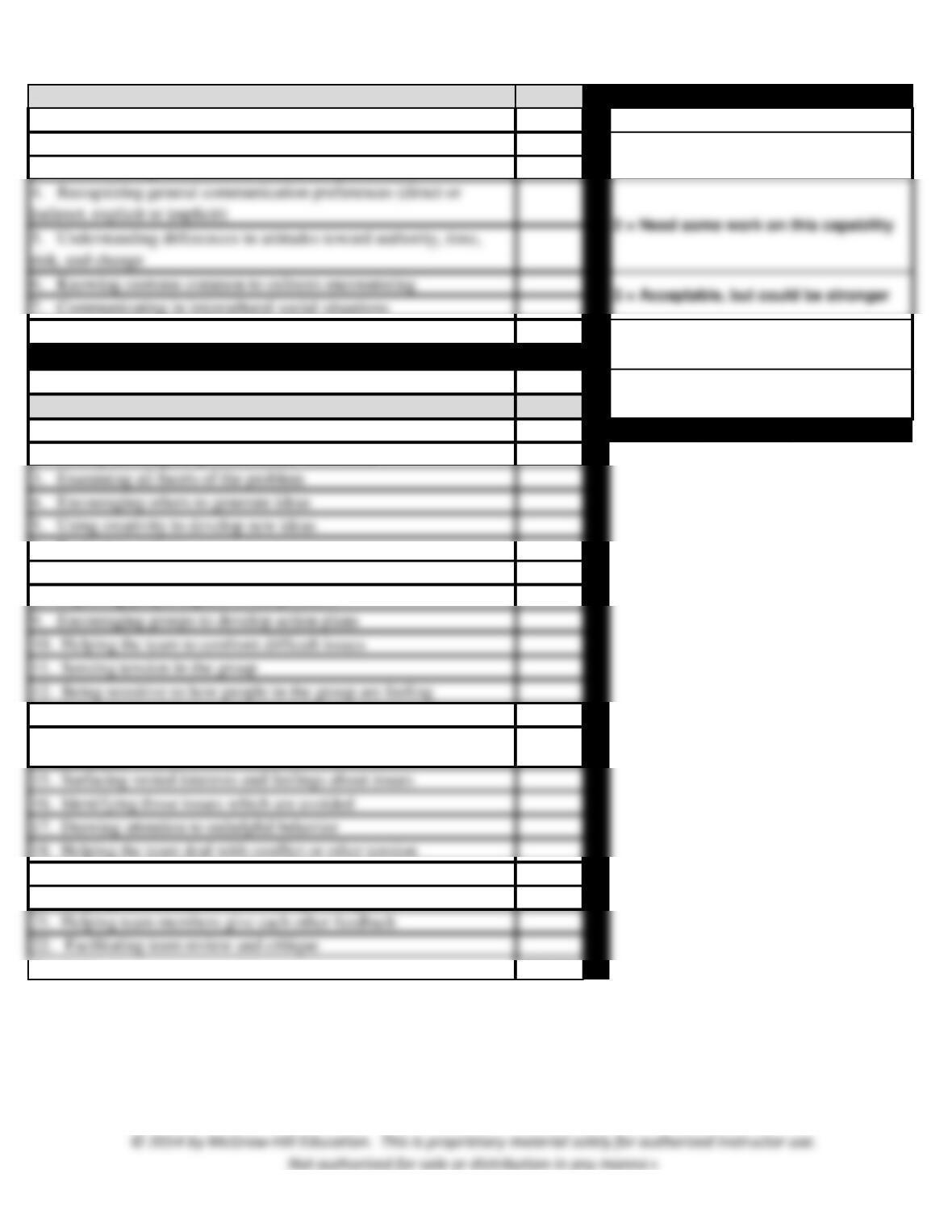
Diversity and Intercultural Communication
1. Realizing the value of diversity
2. Defining and appreciating cultural differences
3. Understanding differences is values and preferences
6. Knowing customs common to cultures encountering
7. Communicating in intercultural social situations
3 = Acceptable, but could be stronger
Average ######
Part 2 Group and Organizational Communication
Area and Capability
Group and Team Communication and Dynamics
1. Identifying and clarifying goals and objectives
2. Clearly defining the problem under discussion
3. Examining all facets of the problem
4. Encouraging others to generate ideas
5. Using creativity to develop new ideas
6. Evaluating options
7. Helping groups make decisions
8. Exploring people aspects of the problem
9. Encouraging groups to develop action plans
10. Helping the team to confront difficult issues
11. Sensing tension in the group
12. Being sensitive to how people in the group are feeling
13. Being aware of how open or closed the group is
14. Helping groups explore their commitment to group decisions and
or agreements
15. Surfacing vested interests and feelings about issues
16. Identifying those issues which are avoided
17. Drawing attention to unhelpful behavior
18. Helping the team deal with conflict or other tension
19. Supporting individuals against group pressure
20. Helping team members acknowledge strengths
21. Helping team members give each other feedback
Average ######
Use the following scale:
1 = Need to develop, need a lot of work
4 = Very good abilities
5 = Excellent abilities
Leadership Communication
Deborah J. Barrett
Self-Assessment 4
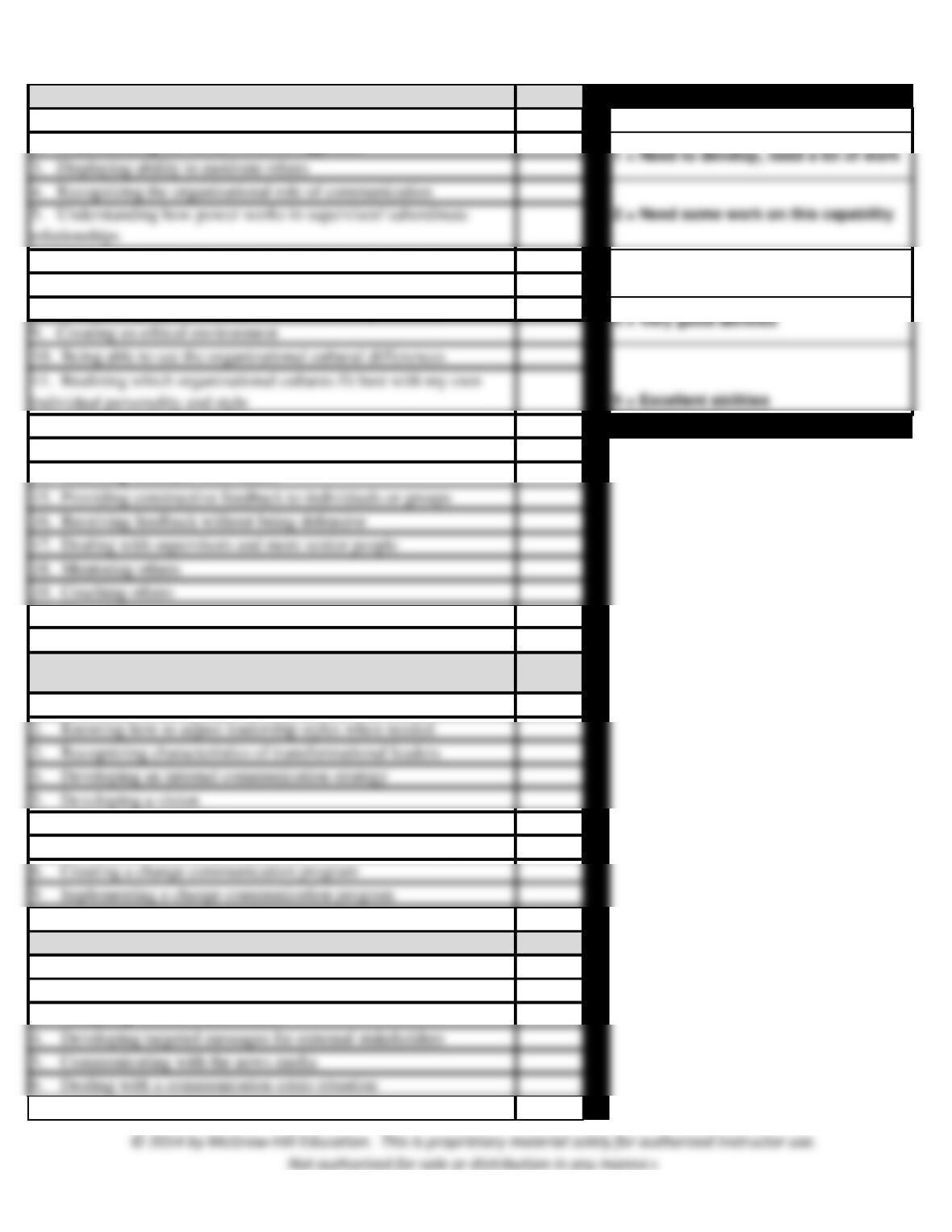
Organizational Communication
1. Recognizing different organizational structures
2. Understanding the human relations approach
3. Displaying ability to motivate others
4. Recognizing the organizational role of communication
1 = Need to develop, need a lot of work
6. Knowing how to build trust in supervisor/subordinate
relationships
7. Establishing communication protocols with supervisors
8. Recognizing the ethical expectations in an organization
9. Creating an ethical environment
10. Being able to see the organizational cultural differences
4 = Very good abilities
12. Giving praise and appreciation to peers and supervisors
13. Recognizing who talks to whom
14. Soliciting feedback from others
15. Providing constructive feedback to individuals or groups
16. Receiving feedback without being defensive
17. Dealing with supervisors and more senior people
18. Mentoring others
19. Coaching others
20. Networking
Average ######
Transformational Leadership and Internal Communication
1. Selecting the most appropriate leadership style
2. Knowing how to adjust leadership styles when needed
3. Recognizing characteristics of transformational leaders
4. Developing an internal communication strategy
5. Developing a vision
6. Communicating a vision
7. Targeting messages to different levels in an organization
8. Creating a change communication program
Average ######
External Corporate Communication
1. Developing an external communication strategy
2. Managing reputation
3. Analyzing external stakeholders
4. Developing targeted messages for external stakeholders
5. Communicating with the news media
Average ######
Use the following scale:
3 = Acceptable, but could be stronger
Leadership Communication
Deborah J. Barrett
Self-Assessment 5
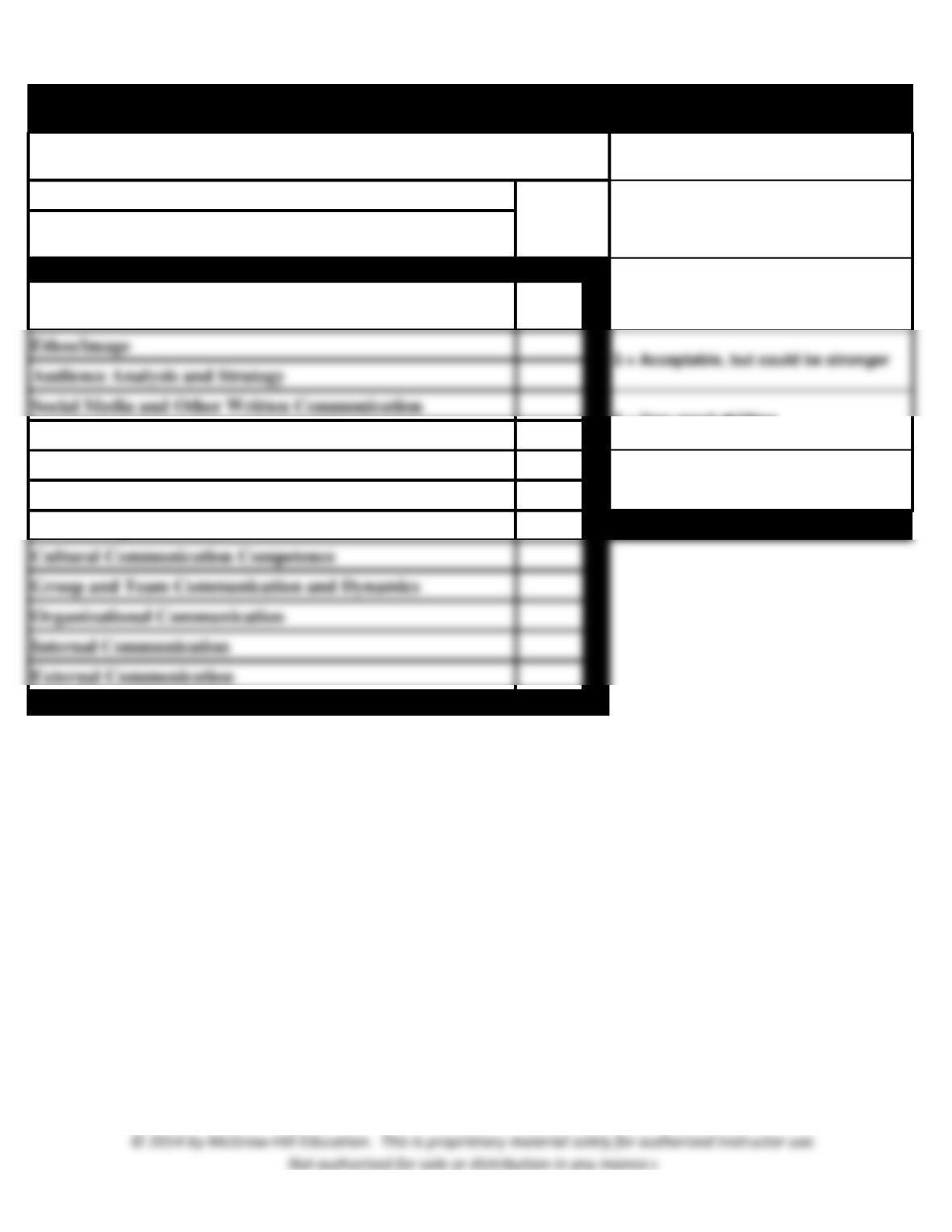
Leadership Communication Self-Assessment Final Scores
Name:
Transfer the average from each capability section above to
the scoring column below.
Capability area Score
Ethos/image
Social Media and Other Written Communication
Oral Communication
Visual Communication
EI – Dealing with own feelings
EI – Dealing with Others
Cultural Communication Competence
Group and Team Communication and Dynamics
Organizational Communication
Internal Communication
External Communication
Date:
5 = Excellent abilities
4 = Very good abilities
Scale:
1 = Need to develop, need a lot of work
2 = Need some work on this capability