LABORATORY MANUAL AND WORKBOOK FOR BIOLOGICAL
ANTHROPOLOGY INSTRUCTOR’S MANUAL
Lab 3: Inheritance
ANSWERS TO LAB 3 CONCEPT REVIEW QUESTIONS
1. Pea plant traits studied by Mendel include flower position, flower color, stem/plant
4. A pea plant heterozygous for plant height is tall because the dominant allele masks the
8. C. Skin color is a polygenic trait in humans (not hitchhiker’s thumb, earlobe attachment,
or freckles).
IM3-2
9. AA and AO are the possible genotypes for a person who has the A blood type.
GUIDE & ANSWERS TO LAB 3 EXERCISES
Exercise 1: Creating Punnett Squares (10 to 15 minutes)
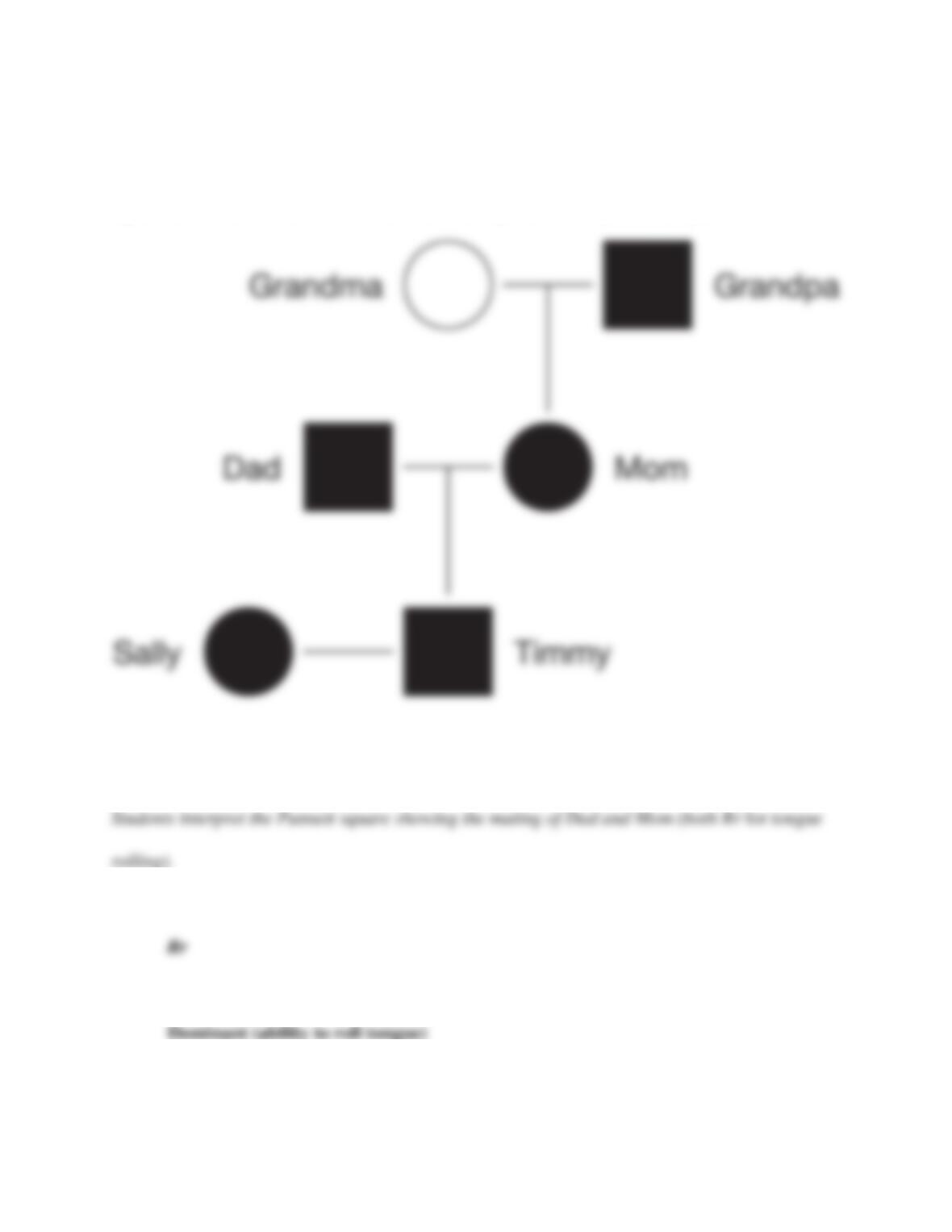
Students are asked to complete the blank Punnett squares given genotypes for six people:
Timmy is homozygous dominant for freckles (FF)
Sally is heterozygous (Ff)
Mom is heterozygous (Ff)
Dad is heterozygous (Ff)
Grandma is homozygous recessive (ff)
Grandpa is homozygous dominant (FF)
Exercise 2: Creating Pedigree Diagrams (10 to 15 minutes)
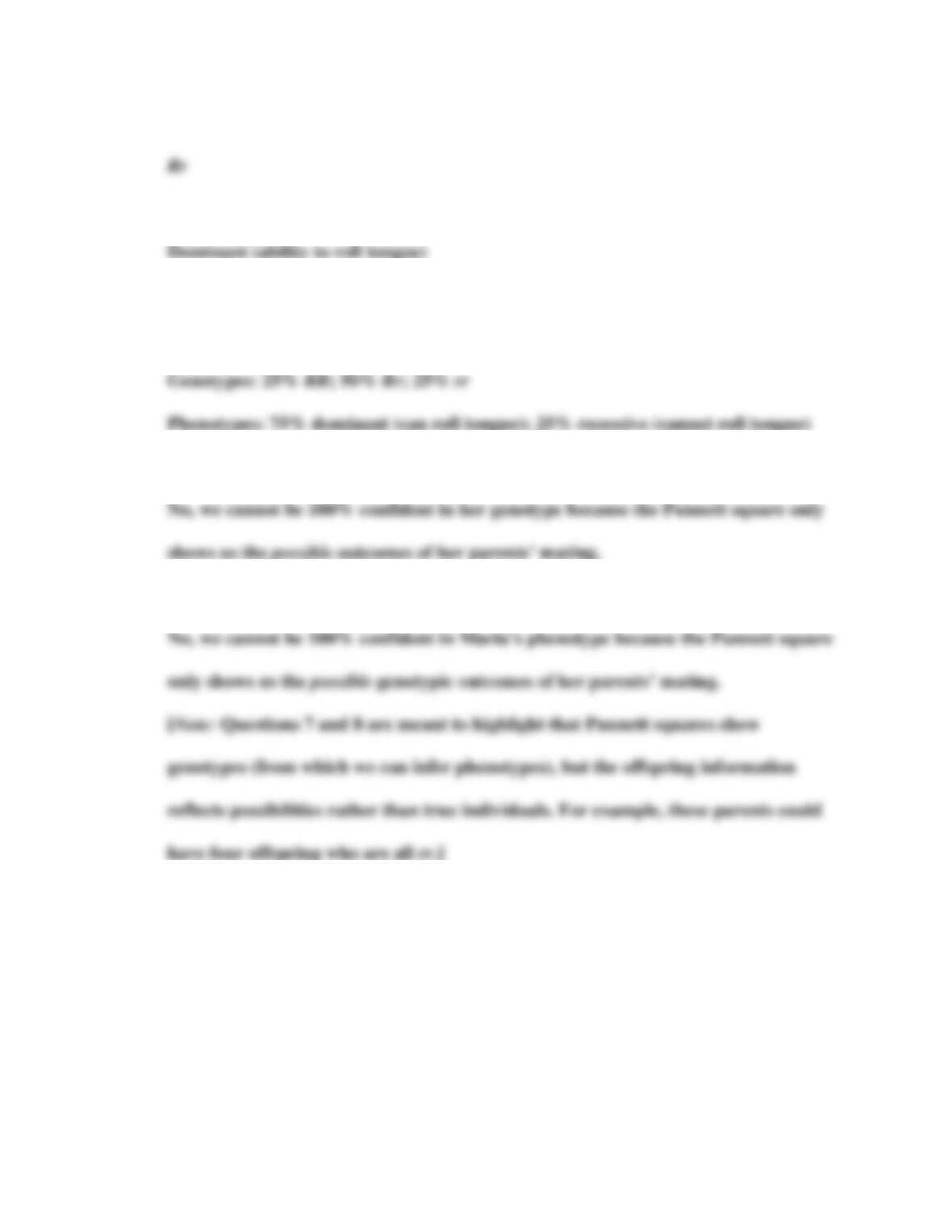
Students use the family from Exercise 1 to make a pedigree diagram, with males denoted as
squares, females as circles, matings as horizontal lines, and offspring as vertical lines.
Expression of the trait in question is indicated by filled symbols, here indicating freckles being
IM3-3
dominant over no freckles (Mendelian inheritance at the F locus). Note that mating partners can
be reversed. For example, in the pedigree shown Grandma is on the left and Grandpa on the
right. This could be written with Grandma on the right and Grandpa on the left.
Exercise 3: Interpreting Punnett Squares (10 to 15 minutes)
1. Looking at the Punnett square above, what is the mother’s genotype?
2. What is the mother’s phenotype?
IM3-4
3. What is the father’s genotype?
4. What is the father’s phenotype?
5. What is the probability of their daughter Maria having each of the possible genotypes and
phenotypes?
6. Are you 100% sure of Maria’s genotype? Why or why not?
7. Are you 100% sure of Maria’s phenotype? Why or why not?
Exercise 4: Interpreting Pedigree Diagrams (10 to 15 minutes)
The completed chart is based on the pedigree diagram for the tongue-rolling trait given in the
lab manual.
IM3-5
Person
Genotype
Phenotype
A
rr
Recessive
B
rr
Recessive
C
Rr
Dominant
D
RR or Rr
Dominant
E
Rr
Dominant
F
rr
Recessive
G
RR or Rr
Dominant
1. Are you 100% sure each person’s phenotype? If not, which are problematic? Why?
2. Are you 100% sure each person’s genotype? If not, which are problematic? Why?
IM3-6
Exercise 5: Mendelian Traits in Humans 1 (10 to 15 minutes)
For this exercise, we encourage you to have your students use letters that are appropriate for
each of the five traits, such as S for straight thumb (hitchhiker’s is recessive), C for cleft chin
(dominant), F for freckles (dominant), U for unattached earlobes (attached earlobes are
recessive), and W for widow’s peak (dominant). For reference, see the table of these Mendelian
traits on p. 62 of the lab manual.
Exercise 6: Mendelian Traits in Humans 2 (10 to 15 minutes)
For this exercise, which like all exercises is optional for the instructor, you will need to purchase
phenylthiocarbamide (PTC) taste strips, which are widely available from scientific supply
companies. Be sure to order and provide students with an equal number of PTC strips and
control strips.
[Note: If your class is small enough, you may want to have students report their results to the
class. You can track their answers on the board and then ask students to see how they compare
to the class as a whole. In order to facilitate comparisons in a larger class, you may want to
have students work in groups. Each student will conduct their own test, and they will compare
their results within their group.]
1. Are you a PTC taster? Do you have the dominant phenotype or the recessive phenotype?
2. What is (are) your possible genotype(s)?
3. How do you compare with your classmates?
Exercise 7: Using the Scientific Method to Investigate Mendelian Traits in Humans (40
minutes)
As scientists study Mendelian traits more closely in humans, we are discovering that many of our
so-called Mendelian traits are not truly Mendelian. This exercise is designed to help students
explore one aspect of this: phenotypic variation within Mendelian traits. The exercise also
reinforces the data collection and interpretation stages of the scientific method. Students will
need protractors to effectively collect the necessary measurements for this exercise. (This
exercise could be assigned to students working outside the classroom, but they would need
access to a protractor and to at least nine other people to collect the 10 required measurements.)
STEP 1: Collect thumb angle data.
Using a protractor, students should measure the angle of at least 10 people’s thumbs. (This
should generate enough data for determining basic patterns, but if available, data could be
collected from more than 10 individuals).
STEP 2: Tabulate the data.
Students compile the measurements in a table. The actual measurements will vary, but they
should represent a range of angles between 0° and 90°.
STEP 3: Interpretation
IM3-8
1. Look for patterns in the data. Describe any patterns you find.
2. Based on the data you collected, is the hypothesis supported or rejected?
STEP 4: Reflection
3. After investigating this trait more closely, what have you learned about variation in
Mendelian traits?
4. Why might this variation exist?
Exercise 8: Sex-linked Traits (10 to 15 minutes)
Students review the scenario provided and answer the questions identifying the father of the
kittens and explaining why one kitten has an unusual trait. You may want to encourage students
to use some of the diagramming techniques from this lab to help support their answers (for
example, creating Punnett squares for both mating options to determine if one potential father
can be eliminated).
1. Who is the father of these kittens? [Note: All of the kittens have the same father.]
2. How do you know this? Be sure to provide evidence from the scenario and from what
you know about patterns of inheritance.
3. Why does only one kitten have the unusual tortoiseshell coat? Be sure to provide
evidence from the scenario and what you know about patterns of inheritance.
The mother (Emeline) can only pass on the black fur allele to all of her offspring
Exercise 9: The ABO Blood System (5 to 10 minutes)
Students are to answer the questions about the ABO blood system and blood type compatibility.
IM3-10
1. Can a person with type A blood successfully receive a transfusion from a person who has
type O? Why or why not?
2. Can a person with type A blood successfully receive a transfusion from a person who has
type B? Why or why not?
3. Can a person with type O blood successfully donate their blood to a person who has type
AB? Why or why not?
4. Can a person with type B blood successfully donate their blood to a person who has type
O? Why or why not?
5. Can a person with type AB blood successfully donate their blood to a person who has
type A? Why or why not?
Exercise 10: Dihybrid Cross (10 to 15 minutes)
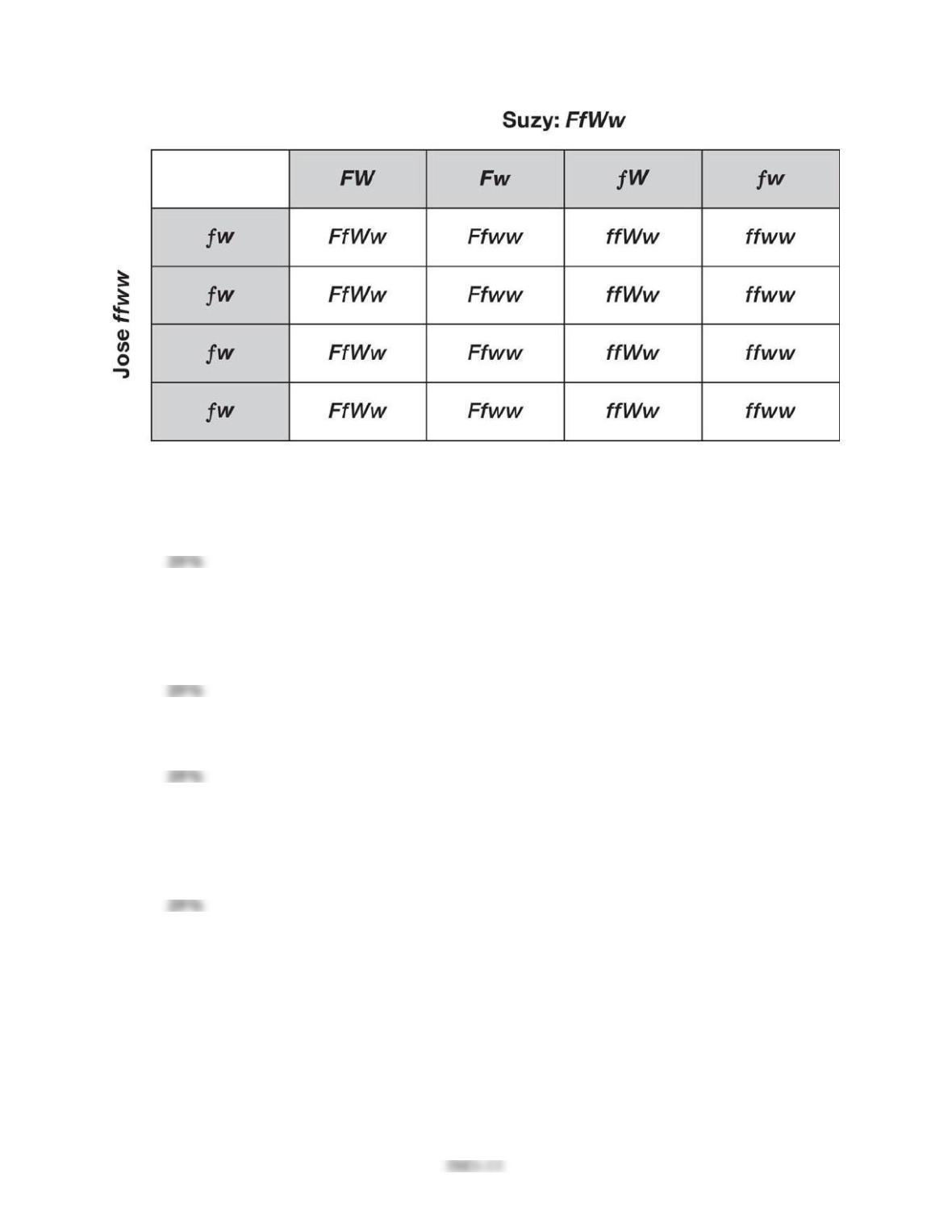
In this exercise, students read through Scenario A to learn how to use Punnett squares for
diagramming the inheritance of two traits simultaneously (pea plant height and flower color).
Scenario B involves estimating the inheritance of the two Mendelian traits freckles (dominant)
and widow’s peak (recessive) in humans. Suzy is heterozygous for both traits, and José is
homozygous recessive for both. Students should complete the Punnett square for Scenario B.
1. What is the likelihood that Suzy and José’s child will have freckles but will not have a
widow’s peak?
2. What is the likelihood that Suzy and José’s child will not have freckles but will have a
widow’s peak?
3. What is the likelihood that Suzy and José’s child will have freckles and a widow’s peak?
4. What is the likelihood that Suzy and José’s child will not have freckles or a widow’s
peak?
IM3-12
ANSWERS TO LAB 3 CRITICAL THINKING QUESTIONS
1. Law of segregation: Mendel recognized that traits are controlled by distinct units. Our
modern understanding of sexual reproduction and meiosis confirms that genes appear
separately in the sex cells of the parents and are brought together in the offspring.
Law of independent assortment: Mendel noticed that the pea plant traits were often
inherited separately from one another. Our modern understanding of meiosis confirms
that genes on nonhomologous chromosomes are sorted independently in gametes.
2. Timmy was homozygous dominant for the freckles trait. Looking at the Punnett square
for his parents’ mating (Mom and Dad both Ff), what was the probability of Timmy
having a different genotype? What was the probability of Timmy having a different
phenotype?
Different genotype = 75% chance (50% chance of Ff; 25% chance of ff)
Different phenotype = 25% chance (25% chance of recessive phenotype)
Timmy’s mother was heterozygous for the freckles trait. Looking at the Punnett square
for the grandparents’ mating (Grandpa FF and Grandma ff), what was the probability of
Timmy’s mother having a different genotype? What was the probability of Timmy’s
mother having a different phenotype?
Different genotype = 0% chance; different phenotype = 0% chance
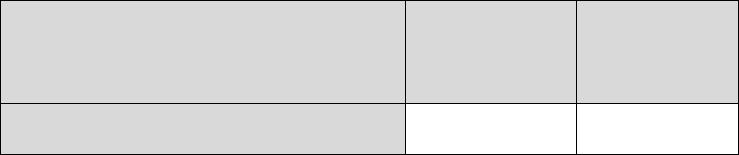
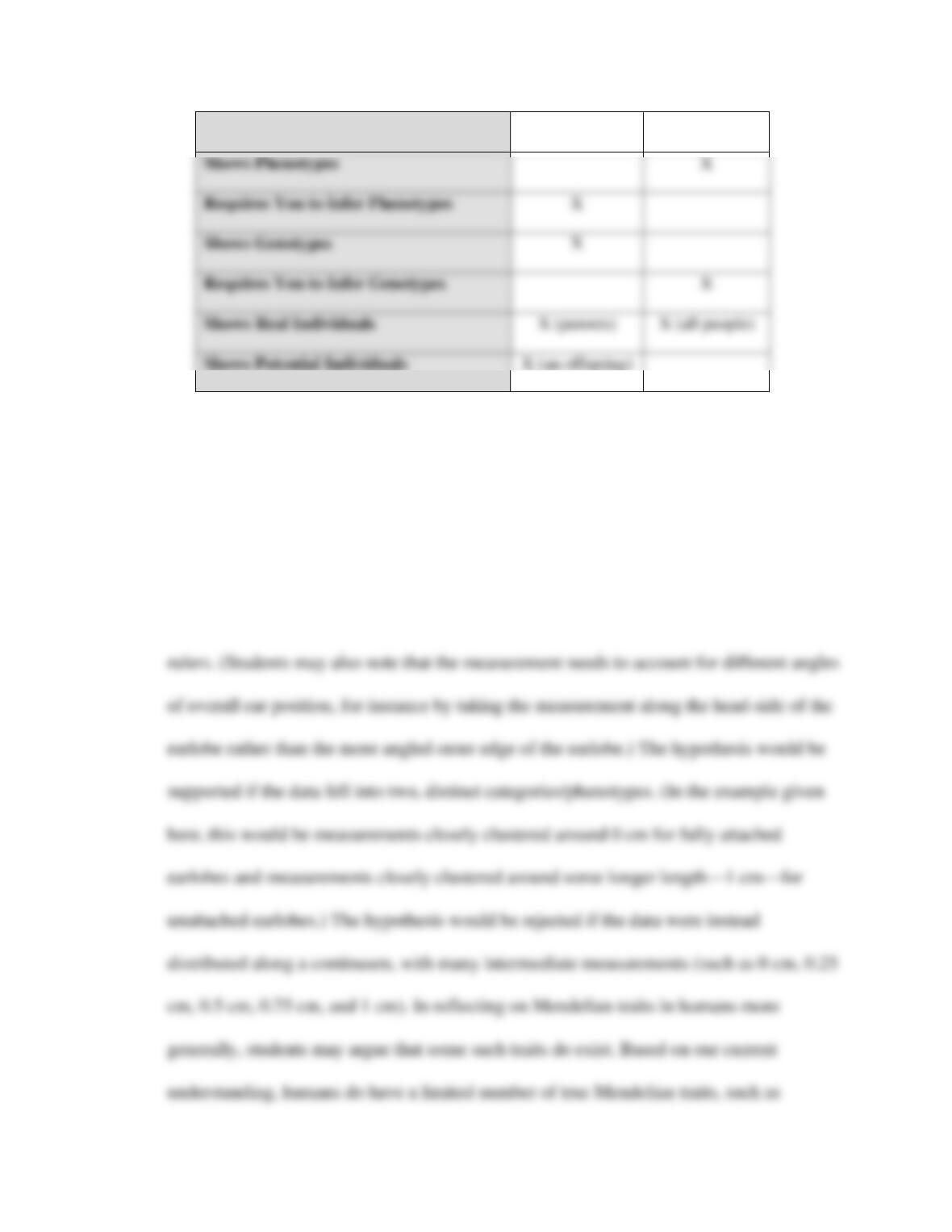
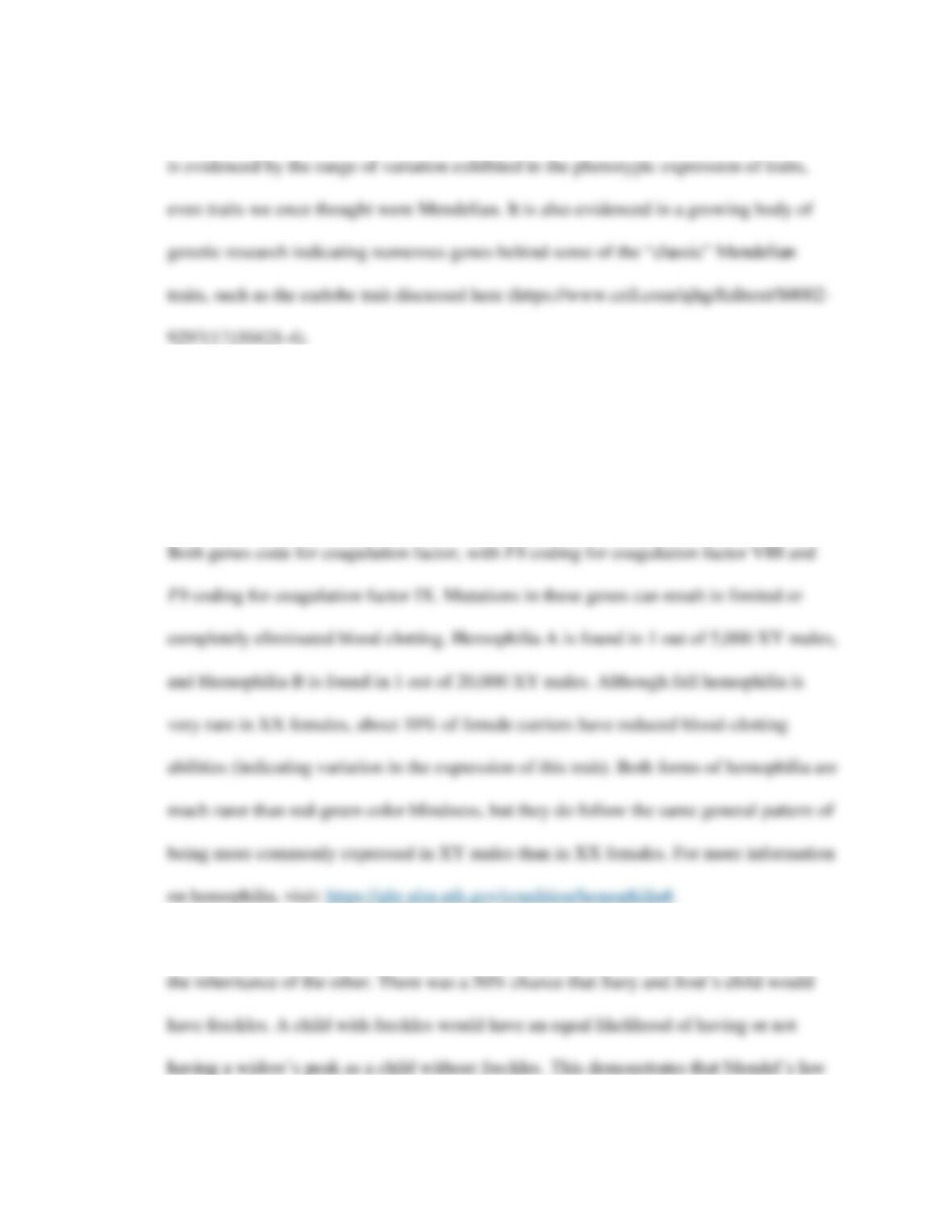
3. The complete chart is as follows:
Punnett
Square
Pedigree
Diagram
Shows One Mating at a Time
X
IM3-13
Shows Multiple Generations at a Time
X
4. Students may propose different specific methods for data collection, but they should all
describe a technique for quantifying the amount of earlobe attachment. Students should
also indicate any tools needed for this method of data collection. For example, students
may propose measuring the amount (length) of earlobe that extends beyond the lowest
point of earlobe attachment to the head. This would require measuring tools such as
Shows Phenotypes
X
Requires You to Infer Phenotypes
Requires You to Infer Genotypes
X
Shows Real Individuals
IM3-14
wetness of ear wax. Other students may argue that our traits are primarily polygenic. This
5. Answers will vary, depending on the trait chosen. As an example here, we track the
commonly discussed sex-linked trait of hemophilia. Hemophilia A (the more common
form) is the result of variations in the F8 gene, and Hemophilia B (the rarer form and the
one recently tied to Queen Victoria’s lineage) is the result of variations in the F9 gene.
6. No, in the dihybrid cross in Exercise 10, inheriting one trait did not necessarily impact
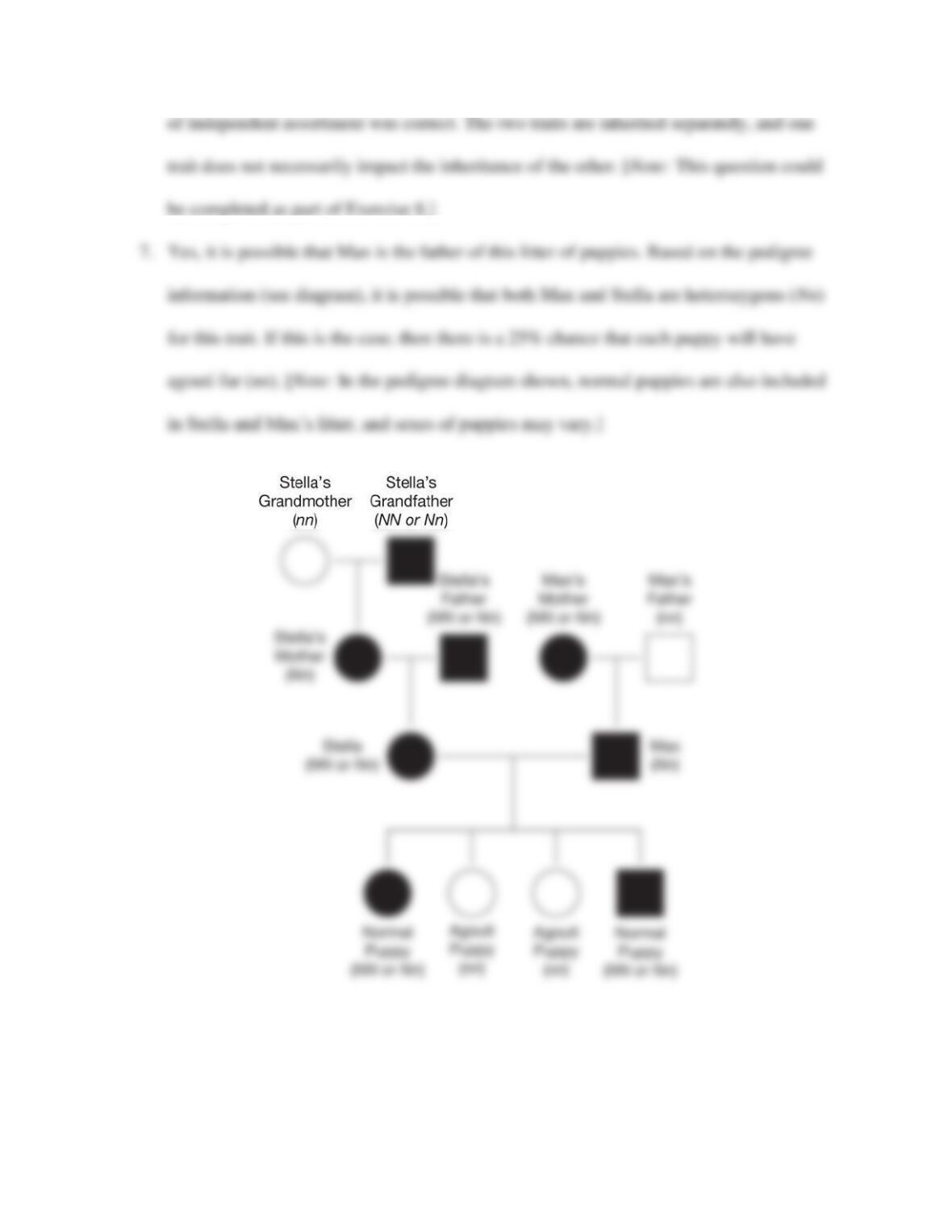
IM3-15