As with all the cases in this book, please read the preface if you have not
already done so. In the preface you will find suggestions for using Investigative
The Donor’s Dilemma accompanies Unit Three: Genetics in Campbell Biology,
10th edition. The case, which is about the West Nile virus, emphasizes mate–
rial in Chapter 17: From Gene to Protein, Chapter 19: Viruses, and Chapter 20:
Biotechnology. Students are provided with cues to refer to a few other se–
lected sections in Unit 3. Students begin this investigative case by reading a
narrative about a young man who, while donating blood, expresses a fear that
he may have come in contact with West Nile virus. There are five strands in
thecase:
• WNVtransmission
• MutationsinWNV
• ThelifecyclesofWNVandHIV
• UsingRT-PCRtotestforWNVinblooddonations
Chapter 3:
The Donor’s Dilemma
InstruCtor’s GuIde
b 31
M03_REEC4164_04_IE_CH03.indd 31 24/01/14 6:15 PM
32 a BIoloGICal InquIry: A Workbook of Investigative Cases
table IG3.1 the donor’s dilemma Case overview.
Investigation learning Goals Inquiry skills used
Core Investigations
I. Transmission of WNV Students read about the various • analysis and application of
ways that WNV can be transmitted. transmission cycle to the person
They learn vocabulary words such as in the case
titer, reservoir host, and incidental
host. Then they relate various scenarios
to a model of the transmission cycle.
• classification of mutations
III. West Nile Virus: Viral Students compare the WNV life • classification of viruses
Structure and Life Cycle cycle to a diagram of the HIV life • applications of visual information
cycle in the text. They learn more
about the viral variations from gene
to protein.
additional Investigation
V. Tracking WNV Studentsanalyzea“boxshade” • critical analysis of maps and other
presentation of aligned WNV tools as visual data sets
sequences.Studentsanalyzethe
differences in these data and propose
explanations of likely sources of WNV
in the United States.
table IG3.2 Campbell-related resources.
resource Chapter/activity topics Covered/activity titles
Critical Reading from Chapter 17: From Gene to Protein Protein synthesis
Campbell Biology, (Concepts 17.1–17.4); point
10th edition mutations (Concept 17.5)
Case narrative
Students were asked to underline terms or phrases
in the introductory narrative that they think are
important to understanding the case. Suggested
terms and phrases that students might have cho-
sen are in bold type.
Russellinterruptedthelonglistof“Haveyou
ever?” questions with a question of his own.
“WhatifIhaveWest Nile virus?”
Is there a reason that you think you might
haveit?”
“No, but I’ve heard that sometimes people
don’t have any symptoms,”Russellresponded.
“I just got back from a hiking trip in Boulder,
Colorado, over the Fourth of July weekend.
can only be transmitted through blood transfu-
sions if there are virus particles in the donated
blood.IntheU.S.,only a tiny fraction of blood
Chapter 3: The Donor’s Dilemma b 33
34 a BIoloGICal InquIry: A Workbook of Investigative Cases
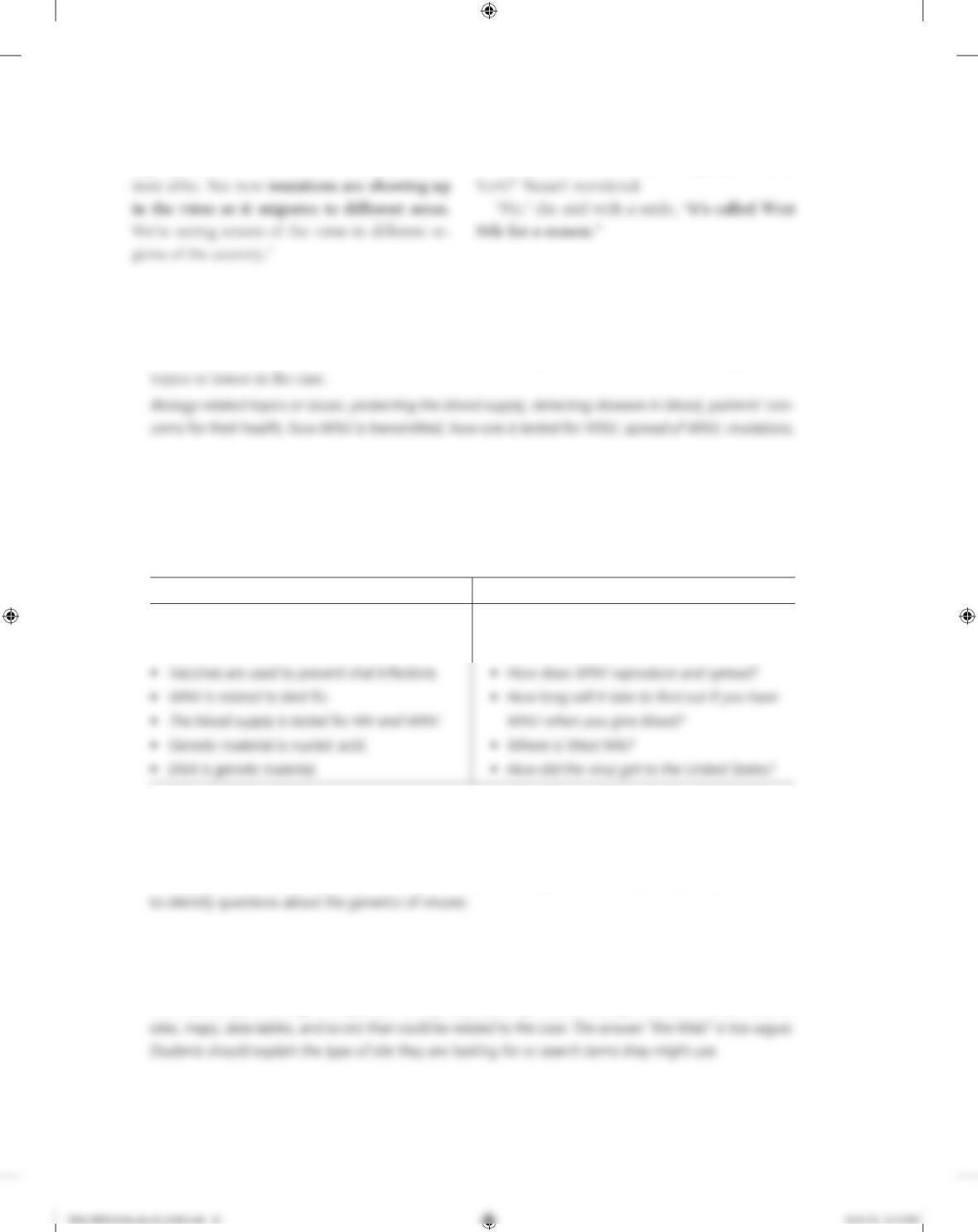
What do I Know? What do I need to Know?
• Viruses cause fevers. • Does Russell have it?
• There are no cures for viruses. • How does the blood test work?
appeared in New York in 1999, all the samples
“So did West Nile virus originate in New
3.Putacheckmarkby1–3questionsorissuesinthe“WhatDoINeedtoKnow?”listthatyouthink
are most important to explore.
Most students will use the contextual clues of being in a biology class and beginning the genetics unit
4. What kinds of references or resources would help you answer or explore these questions?
Identifytwodifferentresourcesandexplainwhatinformationeachresourceislikelytogivethatwill
helpyouanswerthequestion(s).Choosespecificresources.
You should expect a range of responses. Accept any reasonable resource (e.g., text, other book, Internet
suggested answers for Case analysis
1. Recognize potential issues and major topics in the case. What is this case about? Underline
terms or phrases that seem to be important to understanding this case. Then list 3–4 biology-related
2. What specific questions do you have about these topics? By yourself, or better yet, in a group,
makealistofwhatyoualreadyknowaboutthiscaseinthe“WhatDoIKnow?”column.Listques–
tionsyouwouldliketolearnmoreaboutinthe“WhatDoINeedtoKnow?”column.
There are many possible answers, depending on the experience of your students. Following are some
likely responses:
suggested answers for Core Investigations
I. Transmission of West Nile Virus (WNV)
West Nile virus is an arbovirus (arthropod borne) that infects birds, humans, and other animals.
Although the virus was first detected in Uganda in 1937, the first bird and human cases of West Nile
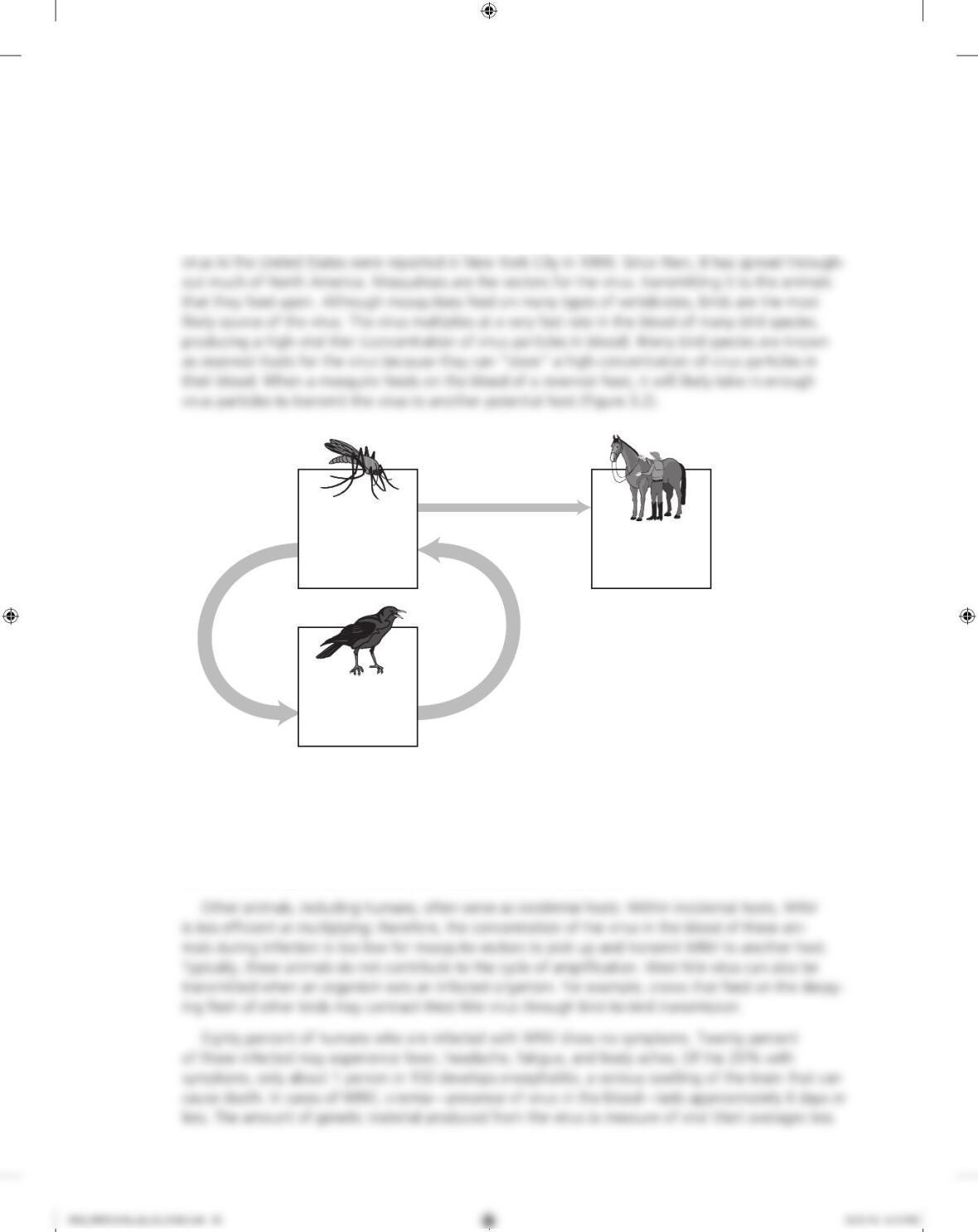
Incidental
hosts
(humans, horses,
for examples)
West
Nile virus West
Nile virus
West
Nile virus West
Nile virus
Vector
(mosquito)
Reservoir host
(several bird
species)
Figure 3.2 West Nile virus transmission cycle.
The interactions between infected birds and mosquitoes can quickly increase the incidence of
WNV in a particular location, resulting in a cycle of viral amplification. The more mosquitoes there
are, the more the virus is spread. The more birds that are present to be infected, the greater the
number of virus particles that will be available to more mosquitoes.
Chapter 3: The Donor’s Dilemma b 35
36 a BIoloGICal InquIry: A Workbook of Investigative Cases
than 5,000 copies of the virus per mL of blood. By comparison, other forms of viral encephalitis can
result in a titer of 25,000,000 copies per mL of blood.
Human-to-human transmission of WNV through blood and organ donation, as well as during
particles have been destroyed.
1. Several alligator farms in the southeastern United States reported an unusually high number
of alligator deaths between 2001 and 2003. WNV was determined to be responsible for many
of these deaths. Blood samples from infected alligators revealed high titers (some of which
werehigherthanthetitersinreservoirhostbirdspecies)forWNV.Consideringthatanadult
alligator’shideistoothickformosquitoestopenetrate(exceptforafewareasofsofttissue,
suchasinsidethemouthandaroundtheeyes),whataresomeotherwaysinwhichthealliga–
tors might have acquired WNV?
One possible way that alligators could have contracted West Nile virus is from feeding on infected
2. HowwouldyouaddalligatorstothetransmissioncycleshowninFigure3.2?
Alligators would be considered incidental hosts or in some cases reservoir hosts contributing to the
3. Although humans produce low titers of WNV particles in their blood and don’t serve as reser voirs for
this vector-disseminated disease, human-to-human transmission of WNV is possible. Explain how a
transfusion of infected blood can result in the dissemination of WNV.
In order for West Nile virus to be spread from human to human through a blood transfusion, the donor
II. Critical Reading
Before delving further into this investigative case, you first should read Concepts 17.1, 17.2, and 17.4;
“TypesofSmall-ScaleMutations”inConcept17.5;andConcepts19.1and19.3.Youmightalsowant
to do two Chapter 17 Activities on MasteringBiology: Overview of Protein Synthesis and Translation.
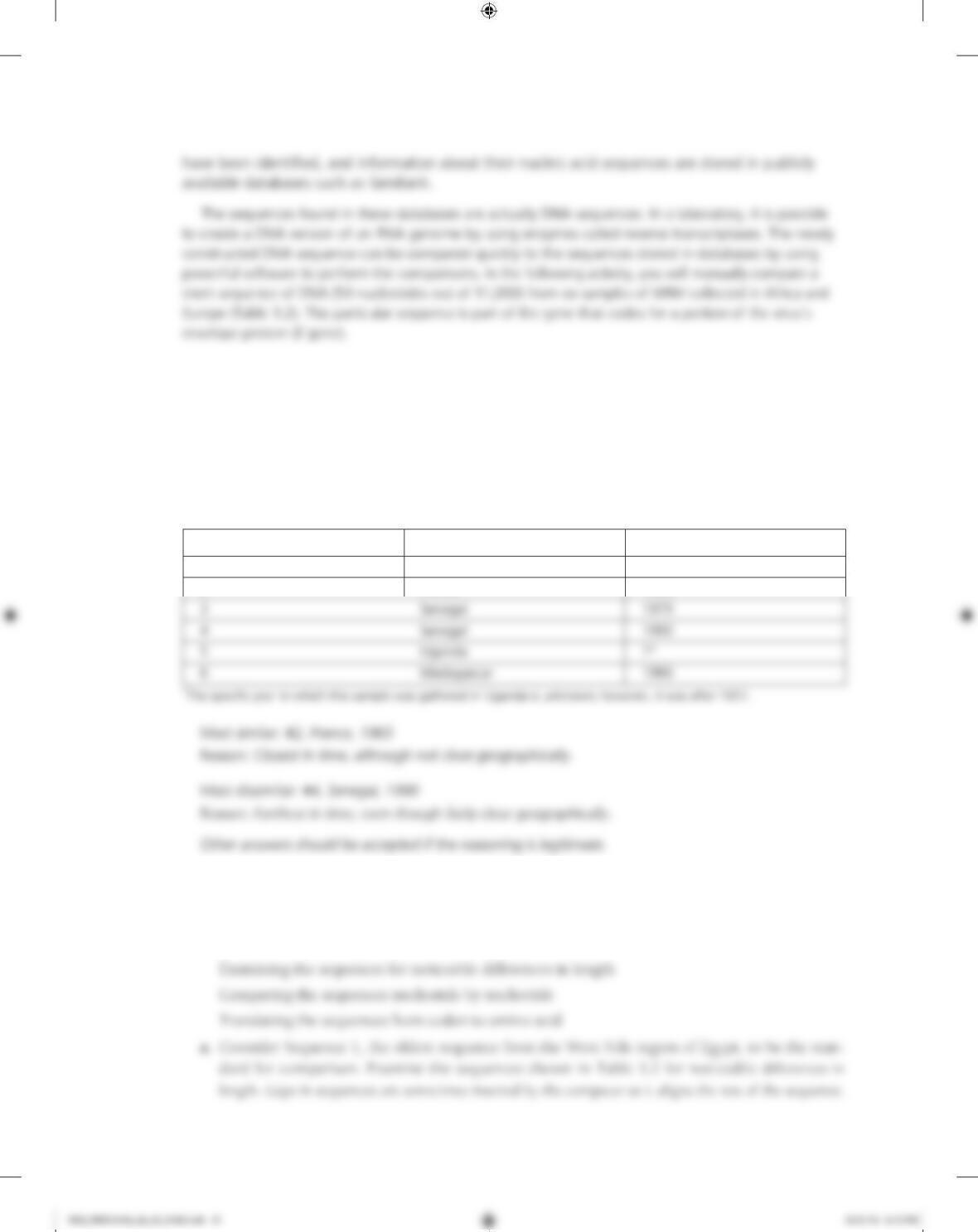
1. Beforeyoubeginyouranalysisofthenucleotidesequences,usethedatainTable3.1tomakea
prediction about the sequence that you would expect to be most similar to the one from Egypt.
Makeasecondpredictionabouttheoneyouwouldexpecttobemostdissimilar.Includenumber,
country, and year.
table 3.1 Identification of dna samples for a portion
of the envelope (E) Gene of WnV. (Berthet et al., 1997)
no. Country year
1 Egypt 1951
2 France 1965
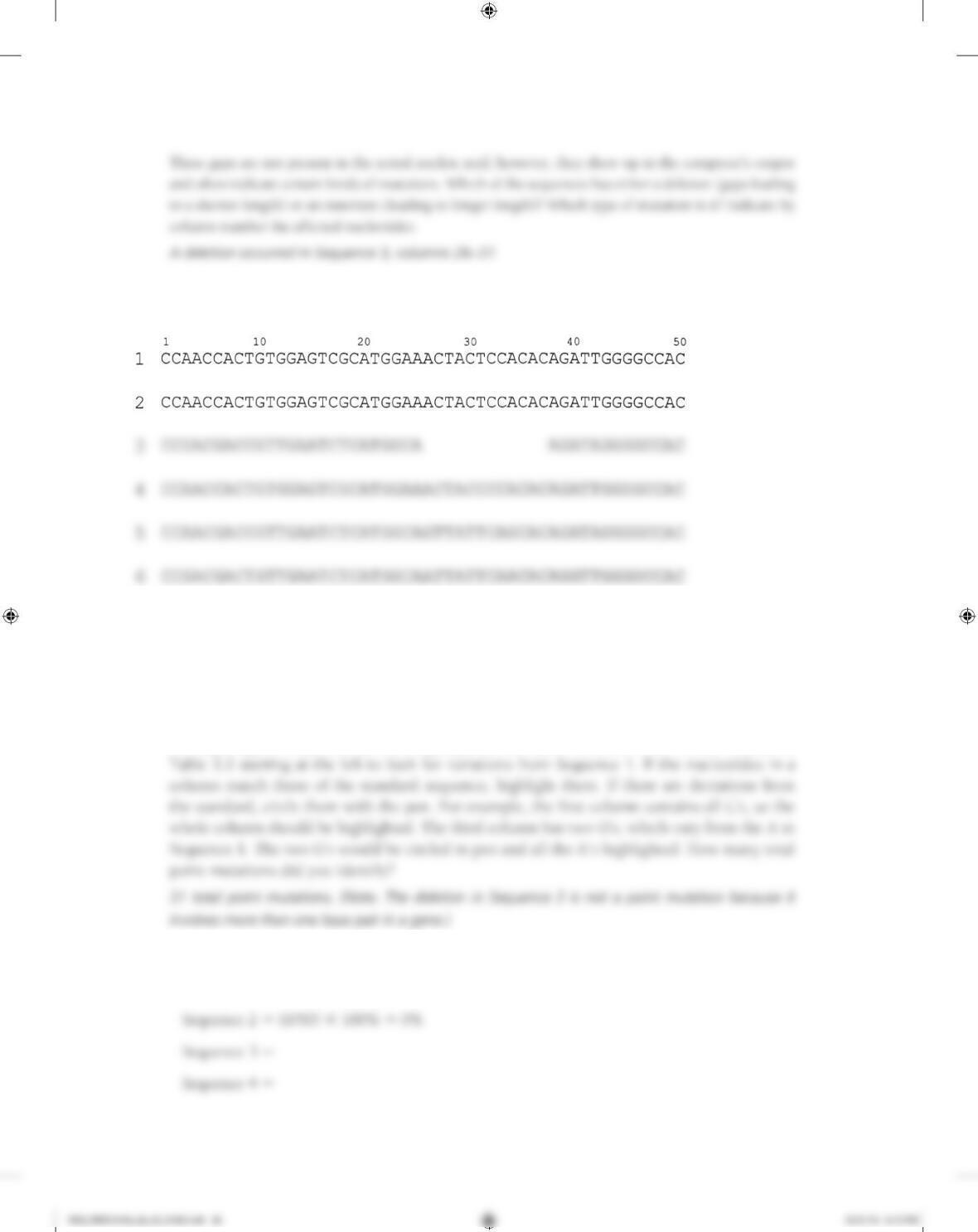
2. ToanalyzethesequencesinTable3.2(seethenextpage),youwillusemanualmethodsthatwere
usedby geneticists until the development of computer-based methods. However, to makeyour
comparison easier, a software program has been used to align the sequences in the table. The basic
technique for comparing sequences has three steps:
Chapter 3: The Donor’s Dilemma b 37
38 a BIoloGICal InquIry: A Workbook of Investigative Cases
table 3.2 alignment of six sequences of part of a WnV Gene for
envelope protein (see “note” in references).
(Note that published DNA sequences, such as those shown here, are always the nontemplate strand of
DNA;thus,itisdirectlycomparabletomRNA.ByreplacingtheT’swithU’s,thesesequencescanbedirectly
translated using Figure 17.5 in your text. These are only fragments of the E gene sequence shown with the
59 end to the left. The WNV genome is an open reading frame that starts before these first 50 nucleotides
of the E gene.)
b. Next, analyze the differences in the columns of nucleotides to identify point mutations. Use
astraightedgetokeepyourplace,ahighlighter,andapen.Examineeachverticalcolumnin
c. Determine the percentage of point mutations in sequences 2 through 6 (number of point muta-
tions/number of nucleotides in sample 3100%).Sequence2isdoneforyouasanexample.
(Note:ForSequence3,countonlythenucleotidespresentinthesequence.)
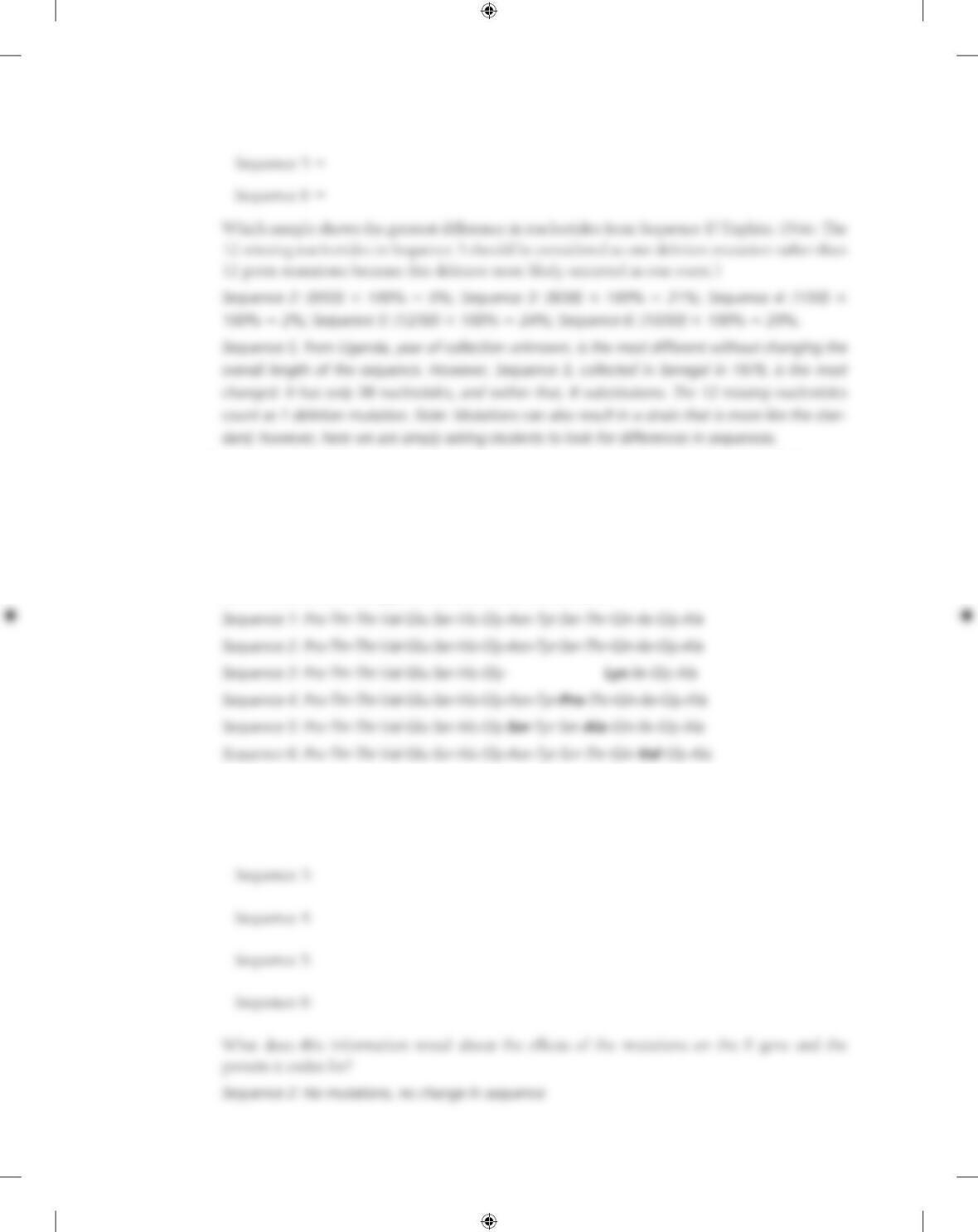
d. In the third and final step in comparing sequences, you need to translate each of the 6se–
quencesfromcodontoaminoacid,usingFigure17.5inyourtextbook.Thenyouwillbeable
to observe the consequences of the different mutations on the resulting polypeptides. Normally,
youwouldexpecttoseeastartcodon(AUG),butassumeinsteadthatthereadingframebegins
with the first nucleotide at the 59 end. Write in the appropriate amino acids under the DNA
sequences in Table 3.2.
Amino acids in boldface type are different from the standard.
e. Examine each sequence. How many amino acids differed from the standard in sequences
2 through 6? Which amino acids changed?
Sequence 2:
Chapter 3: The Donor’s Dilemma b 39
M03_REEC4164_04_IE_CH03.indd 39 24/01/14 6:15 PM
40 a BIoloGICal InquIry: A Workbook of Investigative Cases
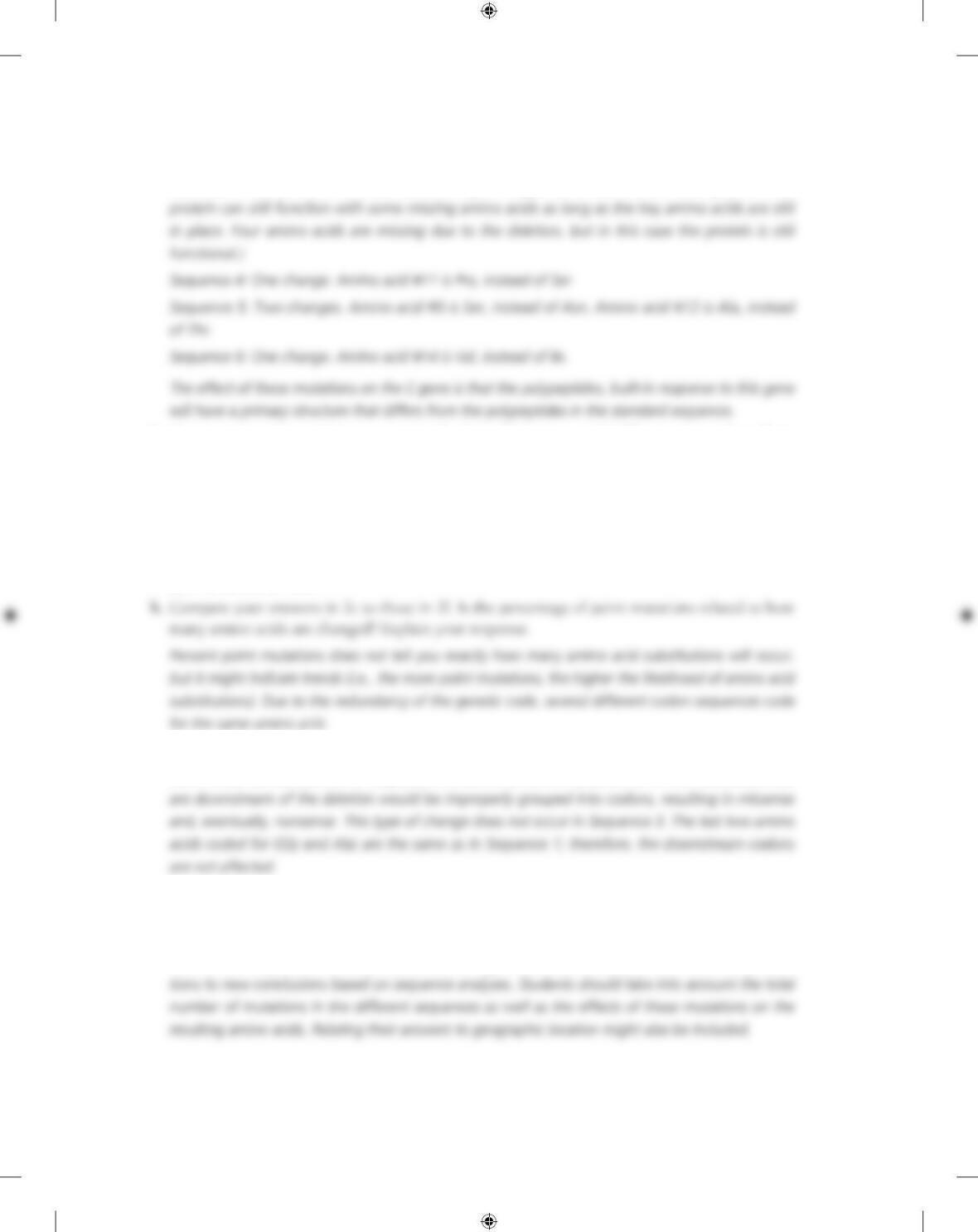
Sequence 3: There were five changes in amino acid sequence. The codons for four amino acids
were lost in the deletion. Amino acid #13 is Lys in Sequence 3, but it is Gln in Sequence 1. (A
f. How many point mutations were involved in the amino acid differences you found? In
Table3.2,drawanasteriskbythosenucleotidesthatmadethesedifferences.
Four point mutations made the difference. Students should have placed an asterisk above
nucleotide 30 in Sequence 4; above nucleotides 26 and 34 in Sequence 5; and above nucleotide
40 in Sequence 6.
g. Howmanyofthepointmutationswerenonsensemutations?Howmanyweresilentmutations?
Zero nonsense, 27 silent
i. Isitlikelythatthedeletionmutationisalsoaframeshiftmutation?Explain.
No. In order for the deletion in Sequence 3 to be a frameshift mutation, all of the nucleotides that
j. Now that you have identified, categorized, and determined the consequences of the various
mutations in these sequences of WNV, how do these results compare to your predictions in
question 1?
Answers will vary based on student predictions. A good answer, however, would relate the predic–
M03_REEC4164_04_IE_CH03.indd 40 24/01/14 6:15 PM
III. West Nile Virus: Viral Structure and Life Cycle
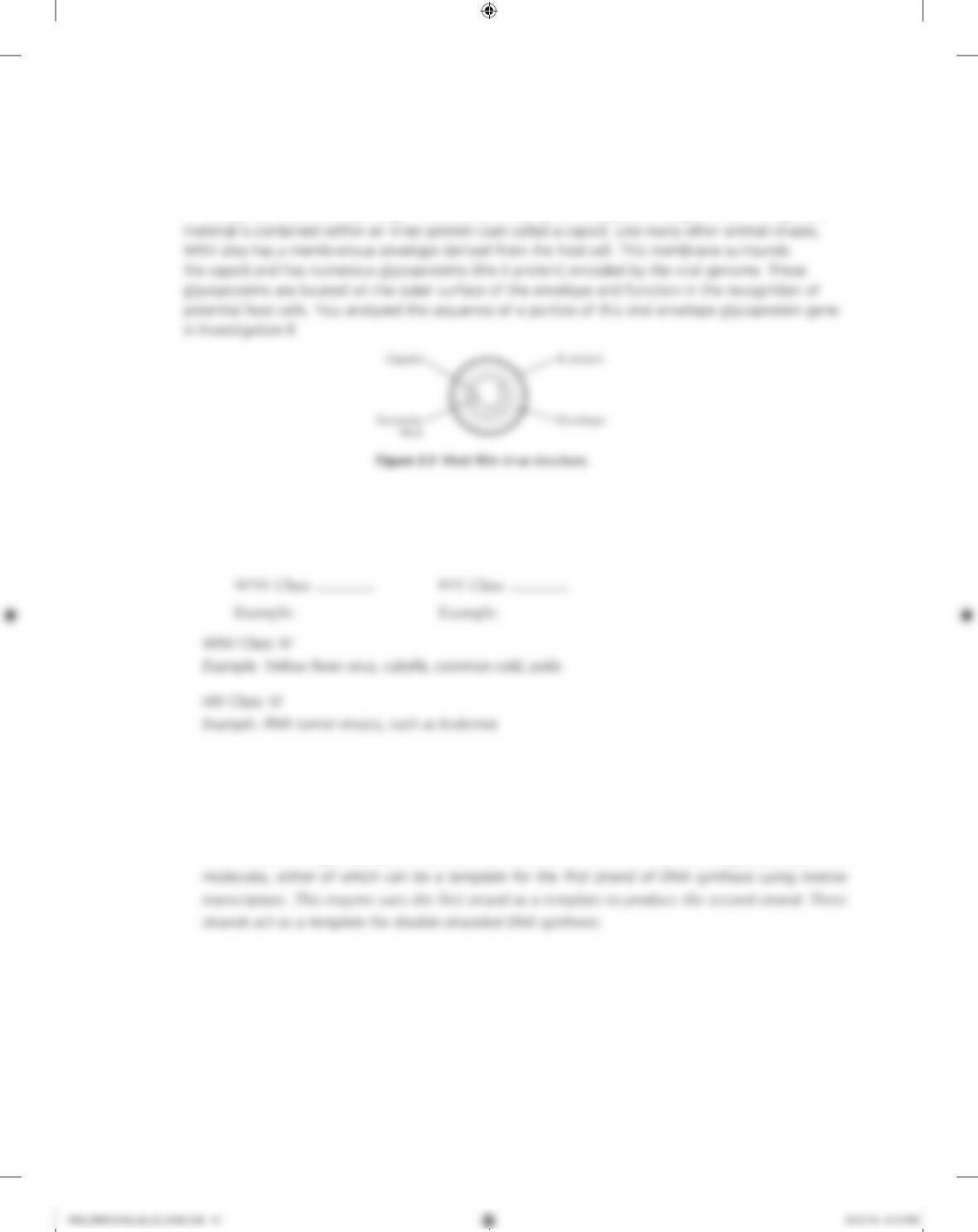
West Nile virus is a relatively small, spherical virus whose genome is single-stranded RNA (ssRNA),
which also serves as the messenger RNA (mRNA) coding for viral proteins (Figure 3.3). This genetic
1. Animal viruses are classified by the type of nucleic acid found within the capsid. Using Table 19.1
inyourtextbookandthecluesprovidedinthepassageabove,identifytheclassesforWNVand
HIV.Provideanexampleofanothervirusfromthesameclassforeach.
2. ComparethestructureofWNVtothatofHIV(seeFigure19.8inyourtext).
Both viruses have envelopes that include glycoproteins. Each has a capsid with ssRNA inside.
3. How do the RNA molecules of these two viruses differ in number and function? In your
response,considertheroleofbothintheformationofmRNA.
WNV has one single-stranded RNA that can serve as mRNA. HIV has two single-stranded RNA
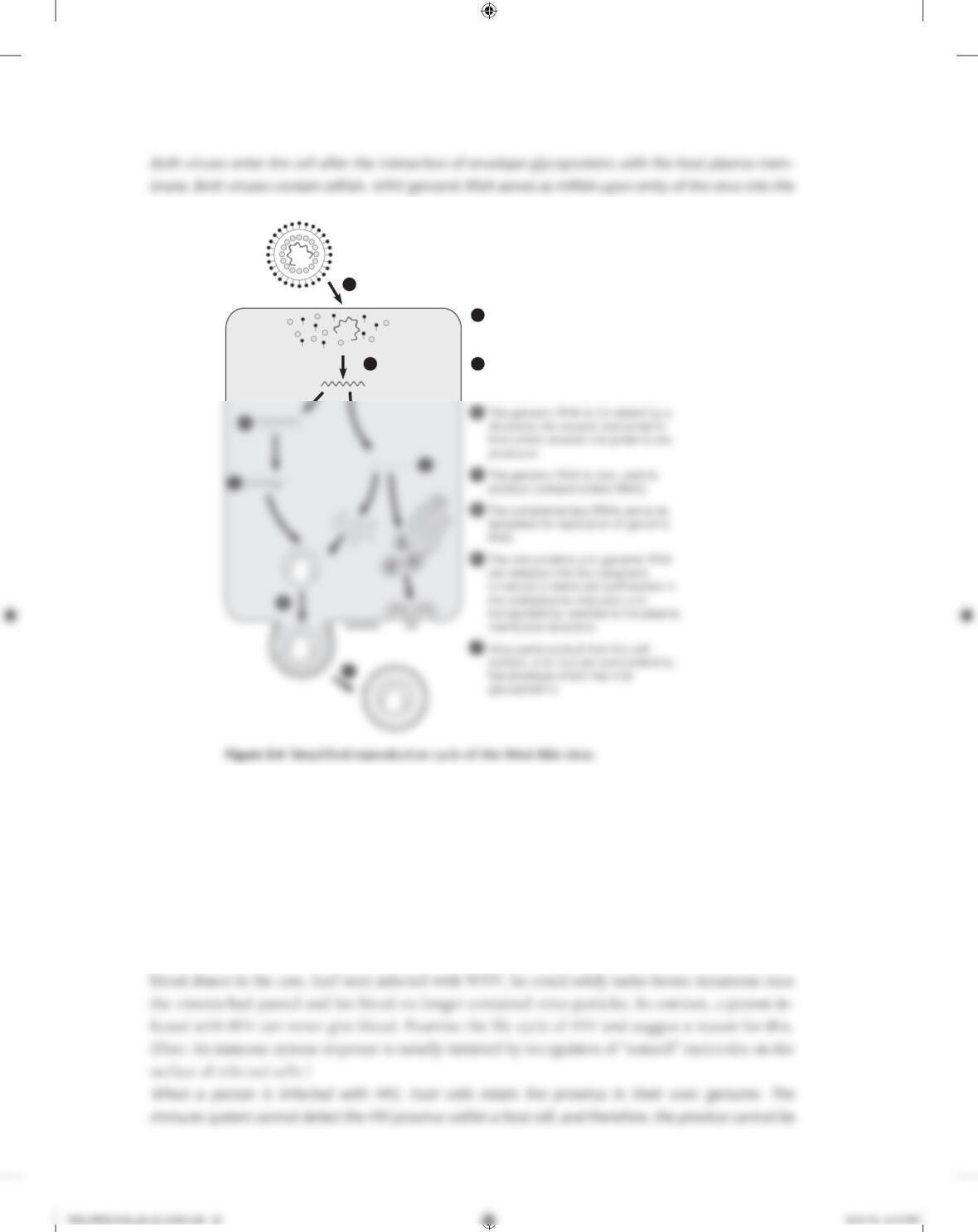
4. Compare and contrast the reproductive life cycle of WNV (Figure 3.4) to that of HIV (see
Figure19.8inyourtext).
Chapter 3: The Donor’s Dilemma b 41
42 a BIoloGICal InquIry: A Workbook of Investigative Cases
cell. In the host cell’s cytoplasm, WNV transcribes a complementary strand of RNA to act as a template
for producing more genomic RNA strands. HIV ssRNA is reverse transcribed, producing DNA that is
complementary to the viral RNA. A second DNA strand is catalyzed, and the double-stranded DNA is
incorporated into the host cell’s DNA as a provirus. The life cycle of WNV does not involve the nucleus
of the host cell.
5. Manyviruses,includingWNV,coldviruses,andfluviruses,reproduceinthehostforashortperiod
of time before being destroyed by the host’s immune system. This production of new virus particles
occursduringaperiodinwhichvirusparticlesarepresentintheblood(viremia).IfRussell,the
1
2
1 The virus binds to a protein on the
surface of a cell (not shown here) and
enters the cell.
2 The genomic RNA and capsid
proteins are released into the
cytoplasm of the cell for translation.
1
2
eradicated from the body. At any time, these provirus genes can produce mRNA that results in the
formation of new HIV particles and their release into body fluids.
IV. Testing Blood Donations for WNV
To prevent human blood-to-blood transmission of WNV, all blood donations since June 2003 have been
tested for the presence of WNV particles. The test used is called reverse transcription–polymerase chain
reaction (RT-PCR).
Primers specific for WNV cDNA are used in the PCR test referred to in this case. If WNV is present in
the blood sample, then the cDNA will be amplified successfully. The primers ensure that a fragment will
be amplified from this cDNA only. (For more information, see Khanna et al., cited in the references at
the end of this investigative case.)
1. WhyareprimersneededforinitiationofDNAsynthesisusingPCR?HowdoPCRprimersdiffer
fromtheprimersincells?(Hint:SeeFigure16.16.)
2. ThefollowingcDNAsequences(A–D)wereobtainedbyreversetranscriptionofRNAsamplesfrom
donatedblood.OneoftheWNVprimersusedinRT-PCRhasthefollowingsequence:
39 GGCTGCTGGCAACTT 59
3. Explain how primers control which cDNA is being amplified.
Only those cDNAs that have sequences matching this primer and the other primers (not shown) would
Chapter 3: The Donor’s Dilemma b 43
44 a BIoloGICal InquIry: A Workbook of Investigative Cases
4. ThedayafterRussell’sbloodsamplewastestedforWNV,hewastoldthattheresultswerepositive.
WhatorganismswerelikelyinvolvedinRussell’sinfectionwithWNV?Isitlikelyhewillpassonthe
disease?
Most likely, a mosquito that feeds on birds and mammals bit an infected bird and then bit Russell. As
suggested answers for additional Investigations
V. Tracking West Nile Virus
a. origin of the West nile Virus in the united states. WNV was first isolated in Uganda in 1937
and has since spread throughout Africa and other parts of the world. As an emerging disease, WNV
continues to generate both public and scientific interest. Researchers are exploring questions about
its origin, evolution, transmission by multiple vectors and host tissues, replication in multiple hosts,
detection, and vaccine potential. Central to these investigations are the use of molecular data, includ-
ing nucleic acid sequences, and the use of bioinformatics (the application of computer science and
mathematics to genetic and other biological information).
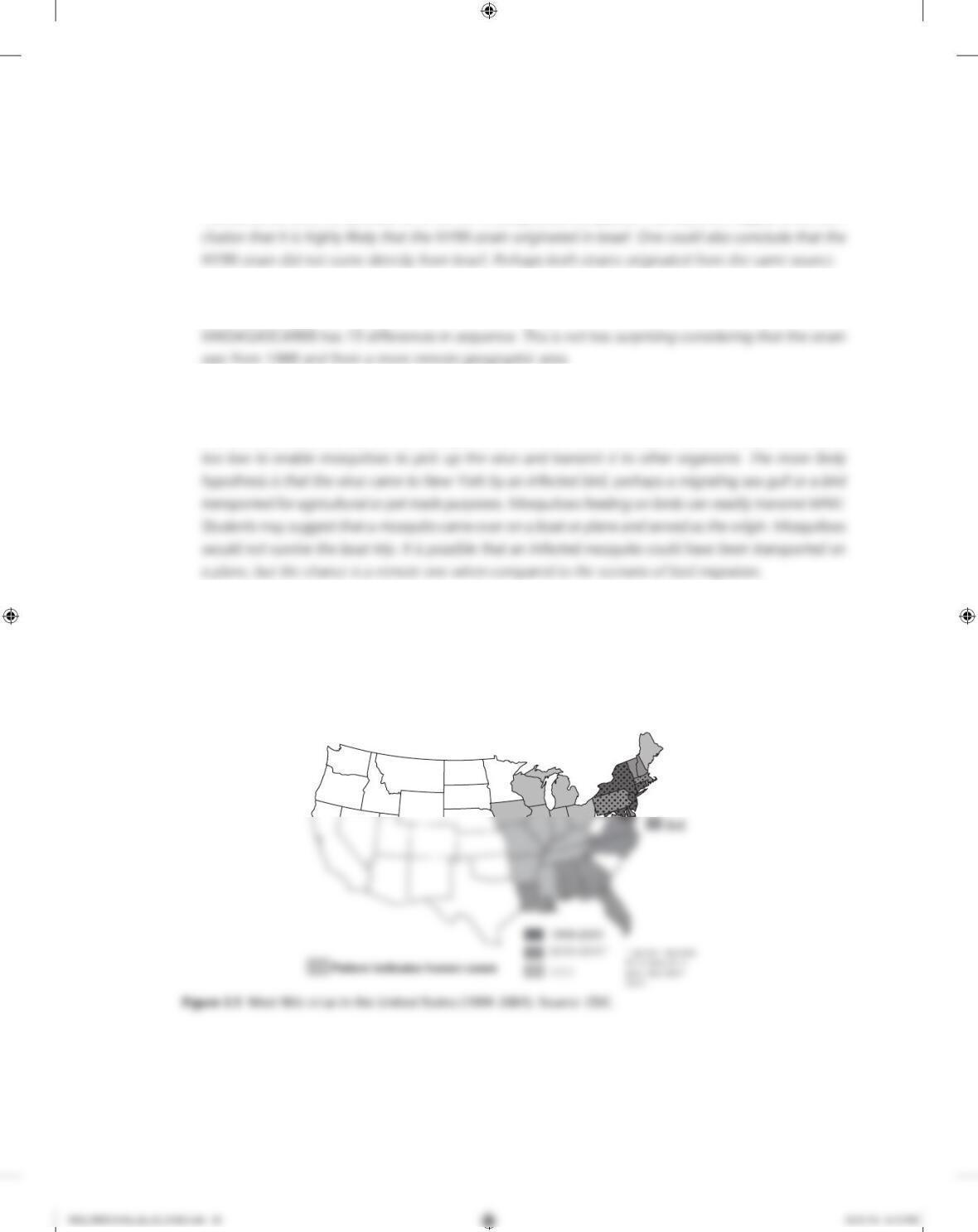
1. ScientistsattheCentersforDiseaseControlandPrevention(CDC)concludedthatNY99most
likelywastransportedtoNewYorkfromIsrael.DoestheinformationinTable3.3supportthis
table 3.3 BoXshade plot of aligned WnV
E Gene sequences from Various strains
The BOXSHADE program automatically generates several colors to indicate properties of nucleic acids.
To learn more, go to the Biology WorkBench website (see References).
NY99
ISRAEL98
MOROCCO 96
Chapter 3: The Donor’s Dilemma b 45
conclusion?Howmanydifferencesinsequencearetherebetweenthetwosamples?Whatother
conclusioncouldyoudrawfromcomparingtheNY99andISRAEL98strains?
The ISRAEL98 strain is identical to NY99 for the sequences compared. Yes, Table 3.3 supports the con–
2. WhichstrainisthemostdissimilartoNY99?Howmanydifferencesdidyoufindbetweenthisstrain
andNY99?Doyoufindthisresultsurprising?Explain.
3. HowdoyouthinkWNVarrivedinNewYorkCity?Considerwhatyou’velearnedpreviously
about transmission of this disease.
It is unlikely that a human traveler brought WNV to New York. We know that a human’s viral titer is
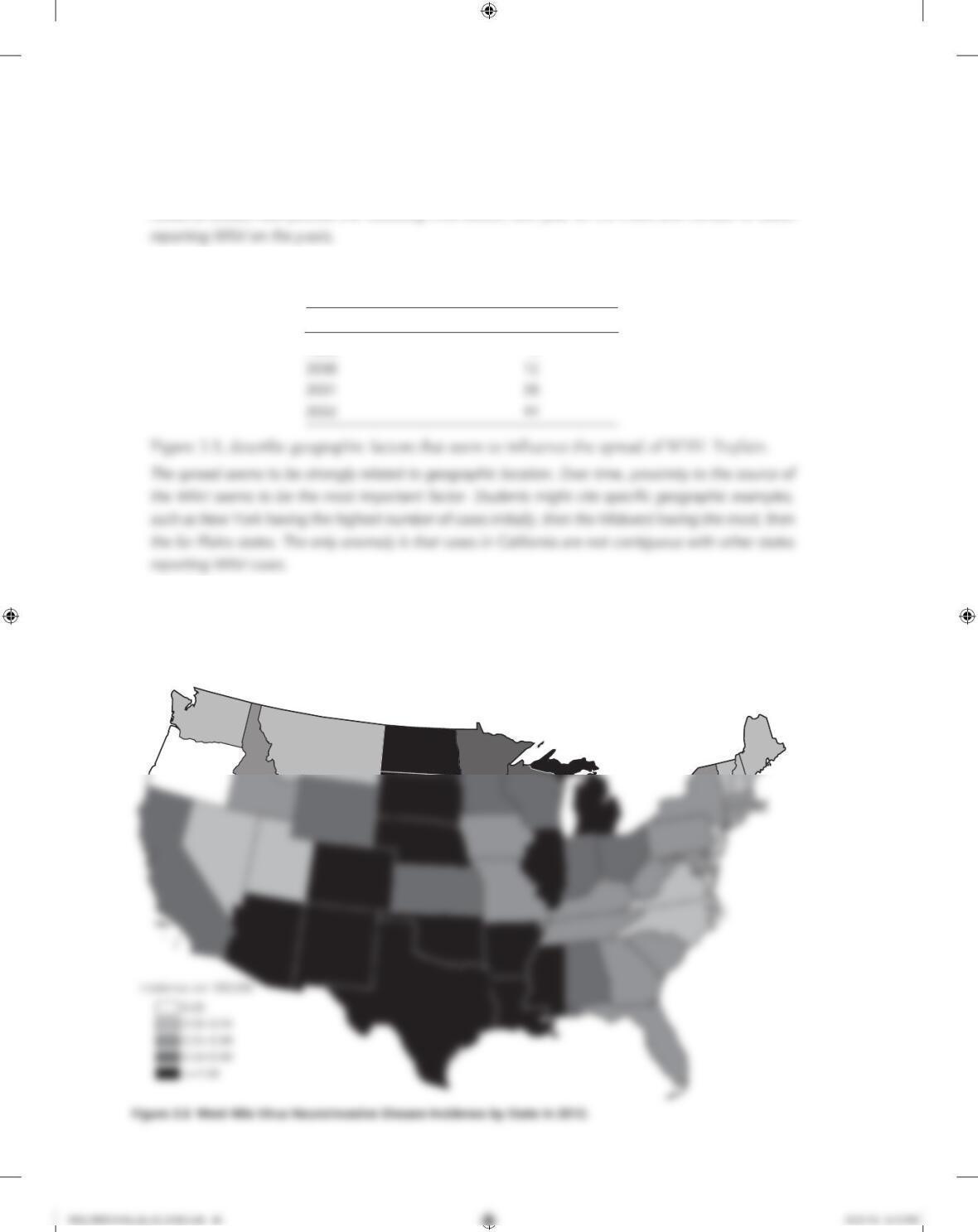
B. spread of WnV in the united states. Since 1999, WNV has been carefully monitored. The CDC
maintains resources including regional data and maps to track the spread of WNV in the United
States. For example, the map in Figure 3.5 reflects both vector (mosquito) and host (birds, horses,
humans, and so on) data collected by the CDC. Human cases reported in any state from 1999
through 2002 are distinguished by cross-hatching.
West nile virus in the united states, 1999-2001
46 a BIoloGICal InquIry: A Workbook of Investigative Cases
1. Construct a line graph that shows the number of states reporting the presence of WNV from
1999 through 2001.
Students should have plotted the following information, with year on the x-axis and number of states
2. Is proximity to known outbreaks of WNV a factor in its spread? Looking at the map in
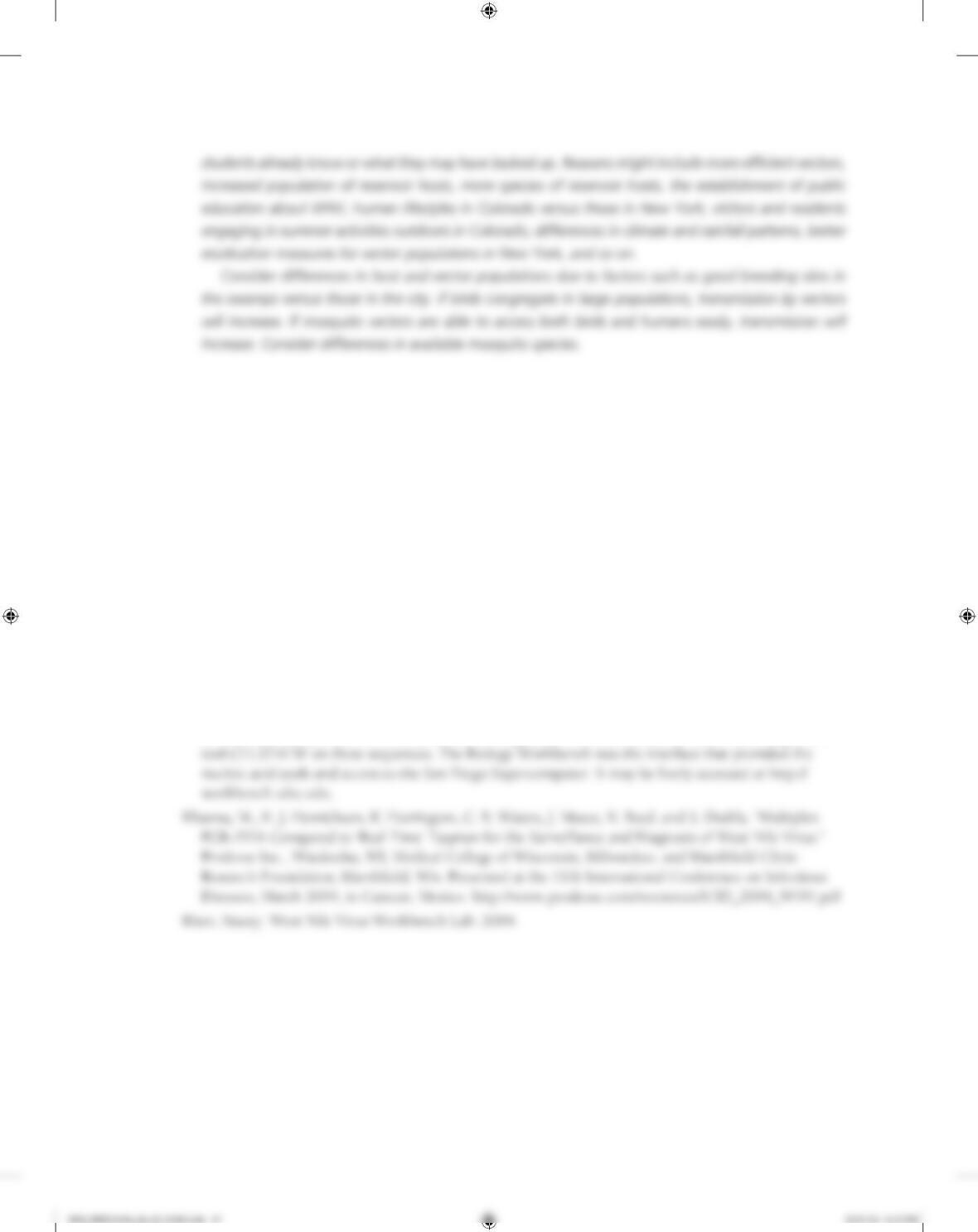
West nile virus neuroinvasive disease incidence reported to ArboNET, by
state, united states, 2012
3. Examine the map in Figure 3.6 and compare it to that shown in Figure 3.5. In 3–4
sentences, describe the extent of spread of WNV in the US from 1999 to 2012.
There are many appropriate answers to this question, and they may vary depending on what the
year states reporting WnV
1999 4
VI. Open-Ended Investigations
YoumaywishtovisittheWestNileVirusProblemSpacetousetools,methods,anddatato
explore the global spread and evolution of WNV.
TheWestNileVirusWorkbenchLab(Kiser,2004)providesinstructiononusingthedataand
bioinformatics tools.
References
Berthet,F.-X.,H.G.Zeller,M.-T.Drouet,J.Rauzier,J.-P.Digoutte,andV.Deubel.Extensivenucleotide
changes and deletions within the envelope glycoprotein gene of Euro-African West Nile viruses.
Journal of General Virology,1997,vol.78(9),pp.2293–2297,1997.
Note: Table 3.2 presents an alignment of published DNA sequences of WNV, edited for length.
WeobtainedthesesequencesfromGenBankusingidentifiersprovidedbyBerthetetal.(seereference
above).Thesequenceidentifiersare:EGY-HEg101/51,FRA-PaH651/65,SEN-AnD27875/79,
SEN-ArD78016/90,UGA-MP22/?,andMAD-ArMg956/86.Wethenusedthenucleicacidalignment
Chapter 3: The Donor’s Dilemma b 47