IM2-13
Exercise 9: Principles of Making Proteins (15 to 20 minutes)
In this exercise, students experience the often-used analogy that protein synthesis is like copying
and reading letters to form sentences. The activity is set up as a jigsaw-style task, where
individual students are given pieces of the finished product, and they must work together to
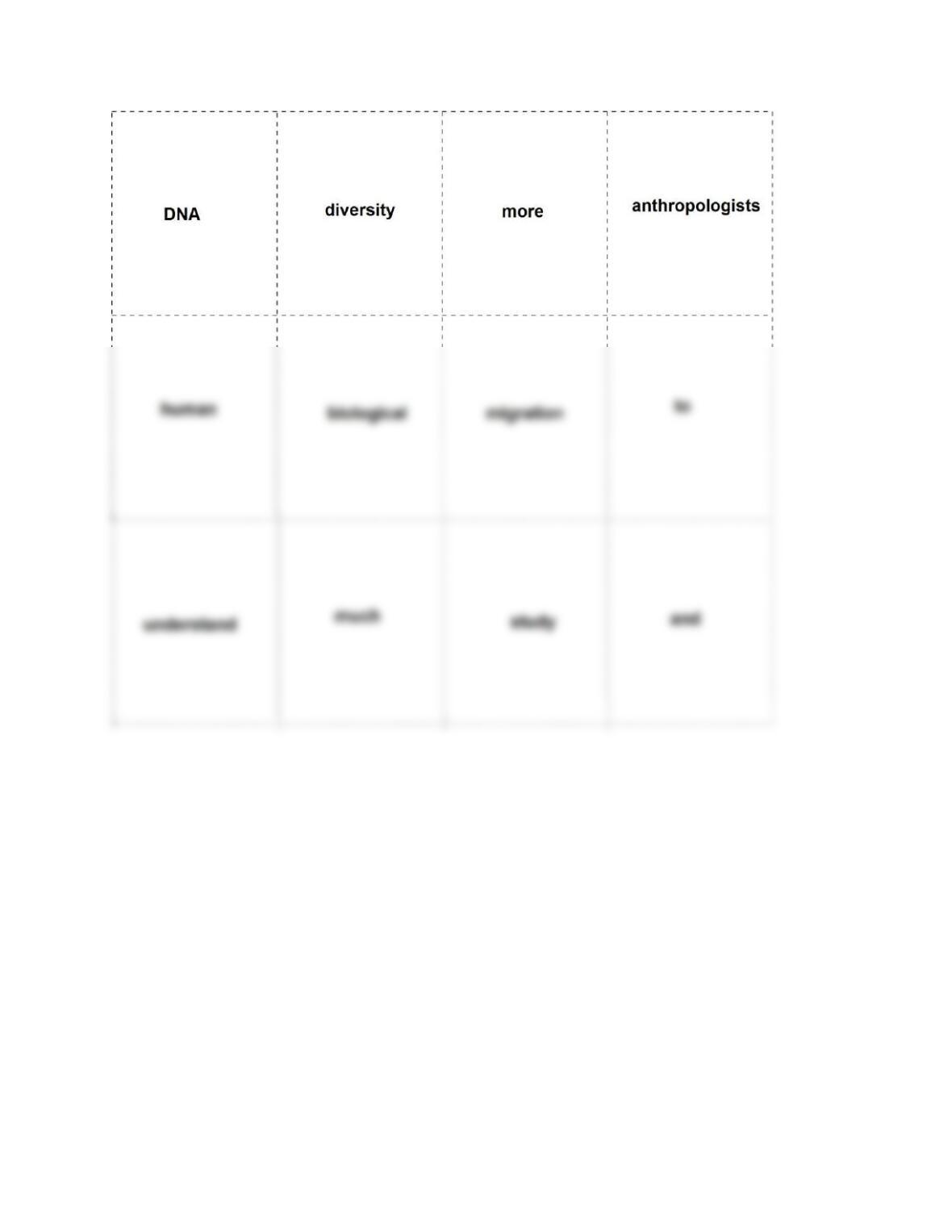
arrive at the final answer. To set up: Print the RNA codon flashcards provided at the end of this
instructor’s manual chapter. Be sure to print them double-sided so the codon appears on one
side and the word appears on the back. Then, cut them apart on the dotted lines. You will need
one set of cards for every 12 students in the class. Distribute the cards so that each student
receives one card. (If your enrollment/attendance is not an even multiplier of 12, you will still
print the complete sets of 12 and then have students double-up on cards. For example, if you
have 45 students, print 4 sets of cards (48 total cards), and distribute the cards so that three
students receive 2 cards instead of just 1.)
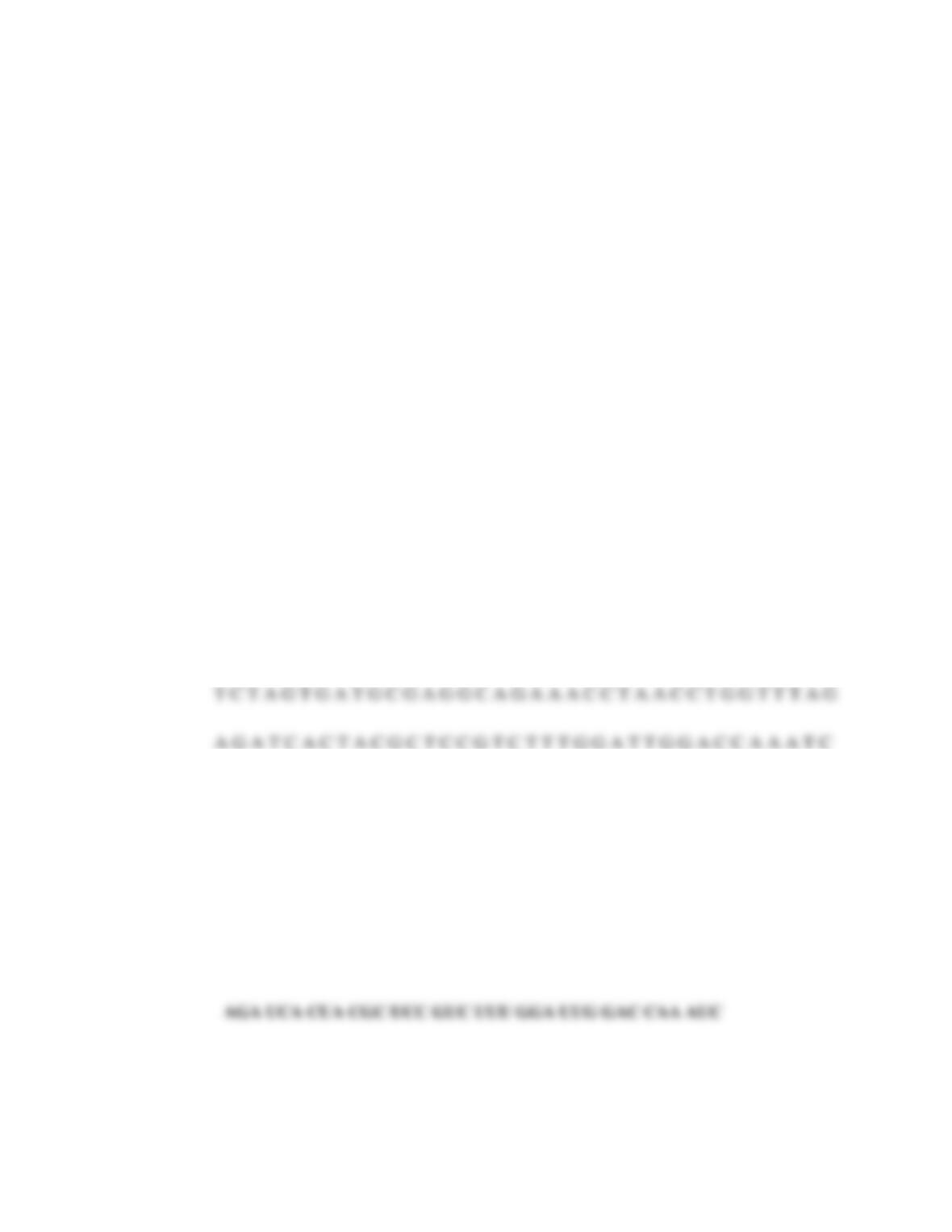
STEP 1. Review the DNA strand seen here. Note the complementary bases.
STEP 2. Remember, in protein synthesis, only one side of the DNA strand is copied by
mRNA and used in translation. Here, we will use the top side of the DNA strand
depicted. Review the top side of the DNA strand and list the corresponding mRNA
codons in order (be sure to follow the rules of complementary base pairing and to
account for the special RNA base, uracil):
STEP 3. Your instructor has distributed a flash card to each student that corresponds to
one of the mRNA codons on your list. For each codon, find a classmate that has
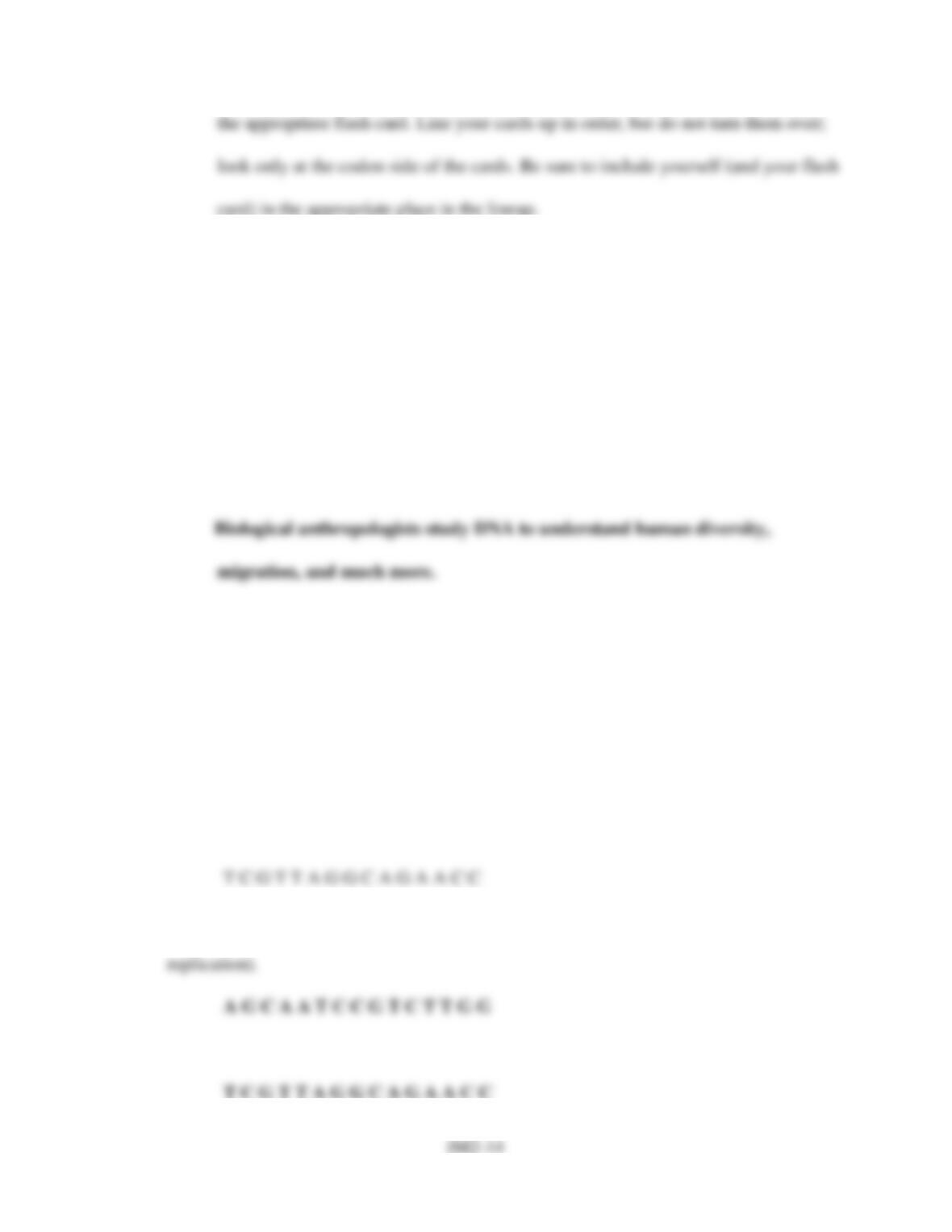
STEP 4. Once you think you have all the codon cards laid out in the correct order, check
to see if you were right. Turn them over (in order), and review the words for which
they code. If your sentence makes sense, you successfully coded for a protein! If
your sentence has gaps, or the words seem out of place, check your codon
sequence and try again.
Write your finished sentence here:
Exercise 10: Protein Synthesis (20 to 25 minutes)
This exercise uses the DNA strand from Exercise 8 to make the protein for which it codes.
STEP 1. Review the imaginary strand of DNA below. Note the complementary base
pairs.
A G C A A T C C G T C T T G G
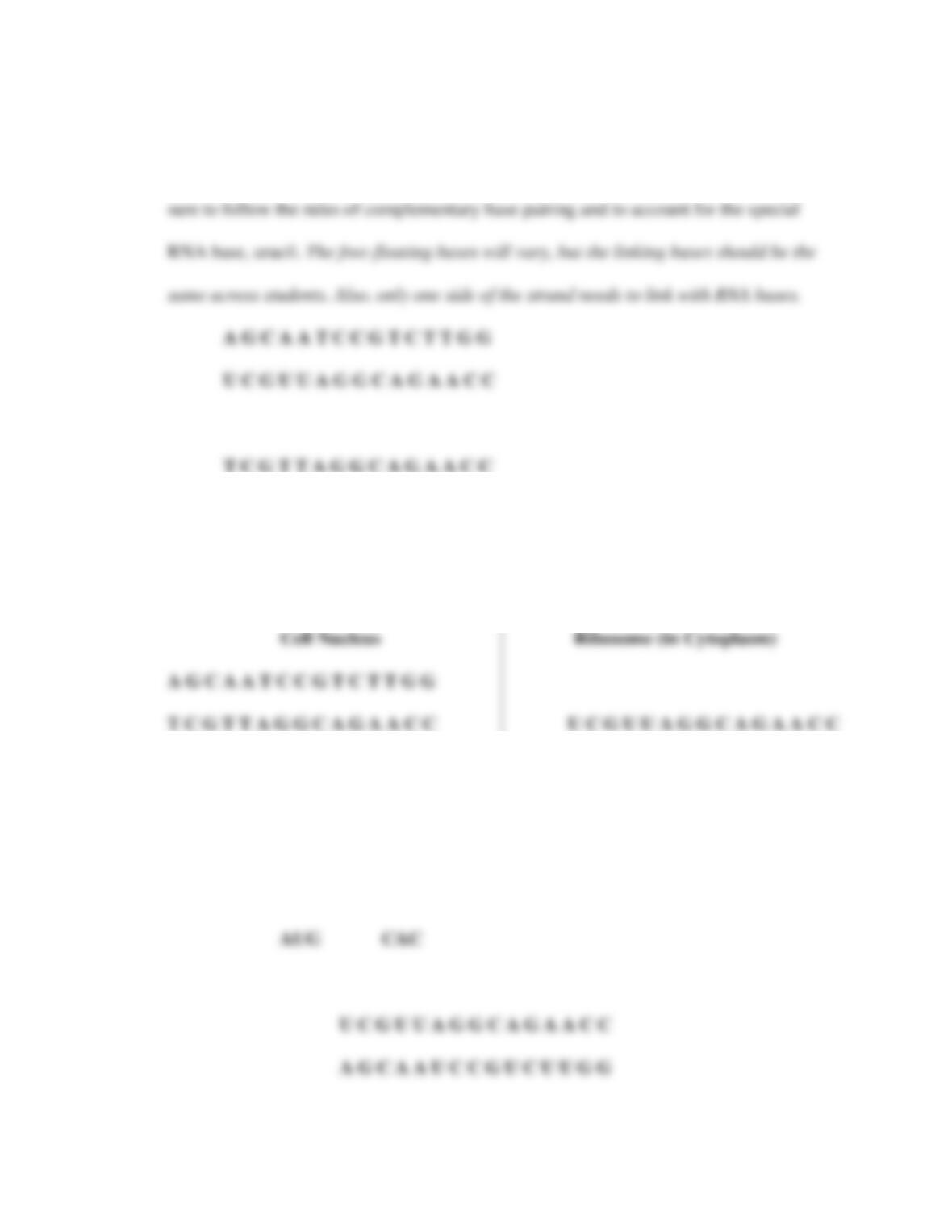
STEP 2. Draw the DNA strand separating down the middle (as in the beginning of DNA
IM2-15
STEP 3. Draw the free-floating RNA bases linking up with the top side of the DNA
strand. (Remember, in protein synthesis only one side of the DNA strand is used.) Be
STEP 4. Draw the new mRNA strand and the rezipped DNA strand. Indicate which
strand stays in the nucleus and which strand moves to the ribosome.
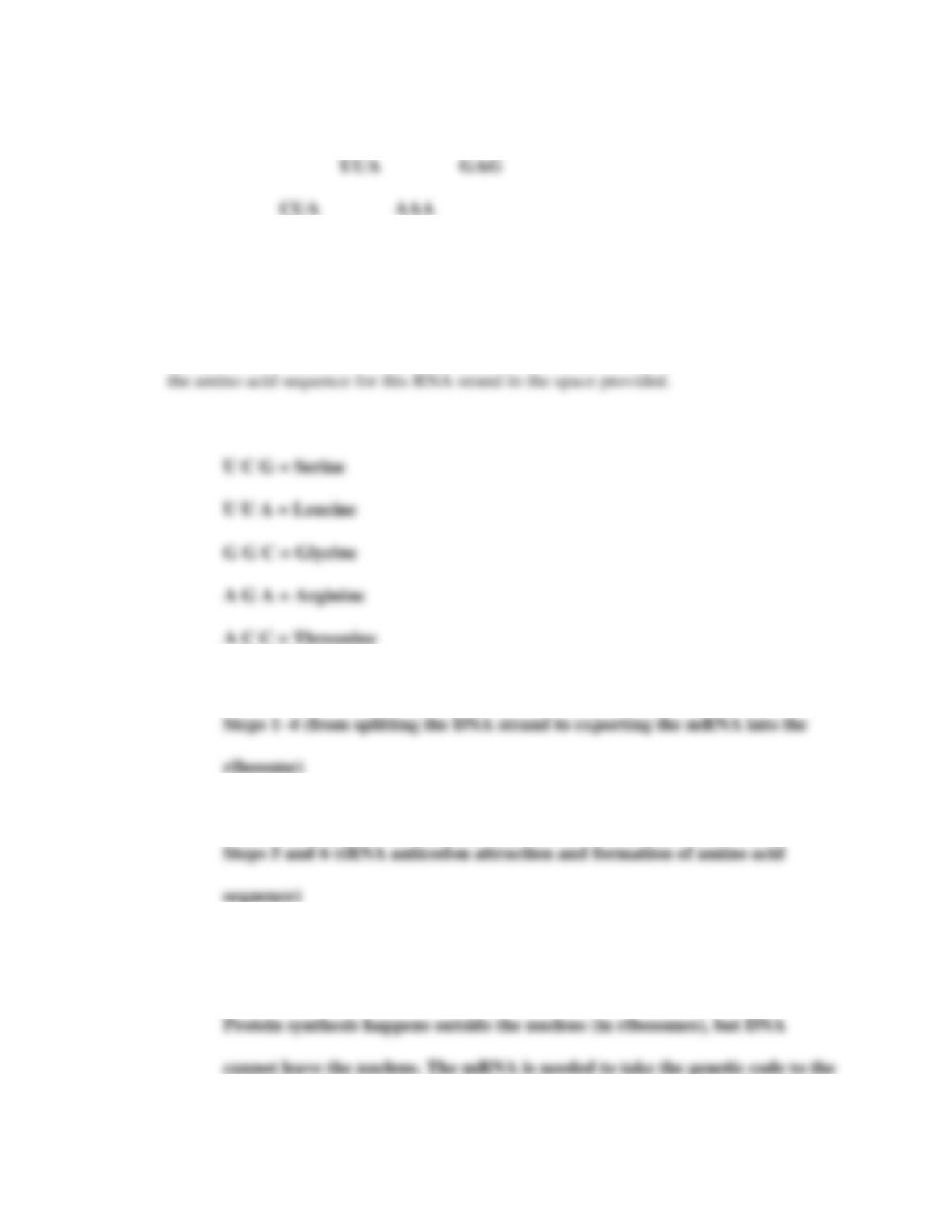
Step 5. Draw the free-floating tRNA anticodons attracted by the mRNA codons in the
ribosome. Be sure to follow the rules of complementary base pairing. The free-floating
anticodons will vary, but the linking anticodons should be the same across students.
IM2-16
STEP 6. Review the mRNA codons and tRNA anticodons in your drawing above.
Remember, each tRNA anticodon will bring a specific amino acid, as indicated by the
mRNA codon sequence. Use the mRNA codons and the amino acid table below to write
1. Which steps in the exercise re-created the transcription stage of protein synthesis?
2. Which steps in the exercise re-created the translation stage of protein synthesis?
3. Why is it necessary for RNA to be involved in protein synthesis? In other words, why
is DNA unable to synthesize proteins on its own?
IM2-17
ANSWERS TO LAB 2 CRITICAL THINKING QUESTIONS
1. Answers for high and low chromosome numbers will vary, depending on the organisms
2. The X and Y chromosomes are not true homologous partners because they are different
lengths and have different types of information. The tips of the X and Y chromosome are
3. This question about the phenotype of an XXY individual is meant to get students thinking
about the complexity of sex chromosomes and the biological sexes. A person who is XXY
IM2-18
in the United States has an extra X chromosome. Other variants (with even more copies of
the X chromosome, such as XXXY) are even rarer. The exact prevalence of XXY syndrome
4. The cells formed by mitosis will be replacing body cells, so it is important that they be
complete copies. The cells formed by meiosis are designed to work together with the gametes
5. Similarities of RNA and DNA include similar basic structure of a sugar, a phosphate, and a
6. The new sentence formed is: Anthropologists study human diversity. This is different from the
original sentence because it eliminates a lot of the specifics (biological anthropologists) and
IM2-19
7. Difference between transcription and translation steps of protein synthesis: Transcription
involves DNA and mRNA; it occurs primarily in the cell nucleus; it is a copying process,
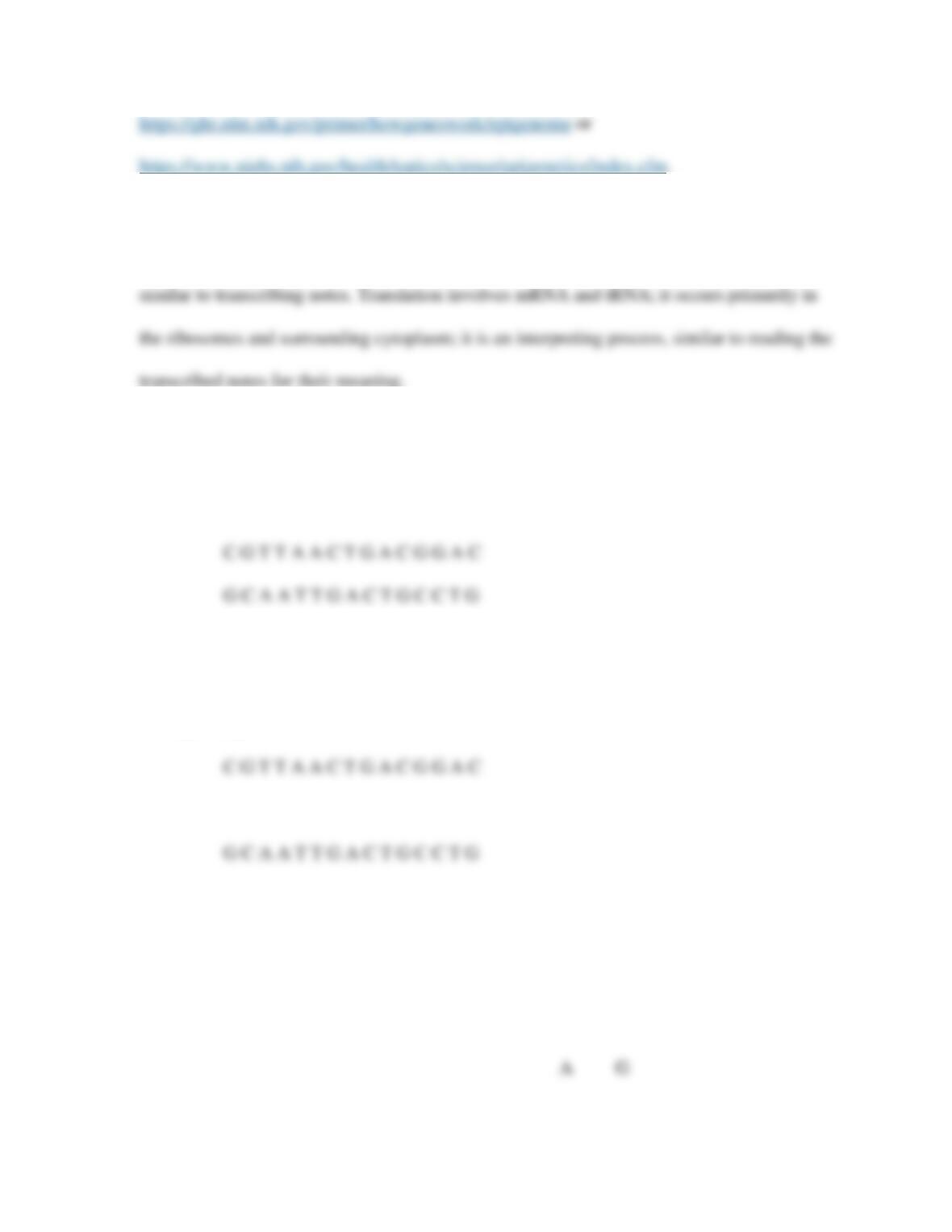
8. Repeating Exercise 8 with a new DNA strand:
STEP 1. Review the imaginary strand of DNA below. Note the complementary base
pairs.
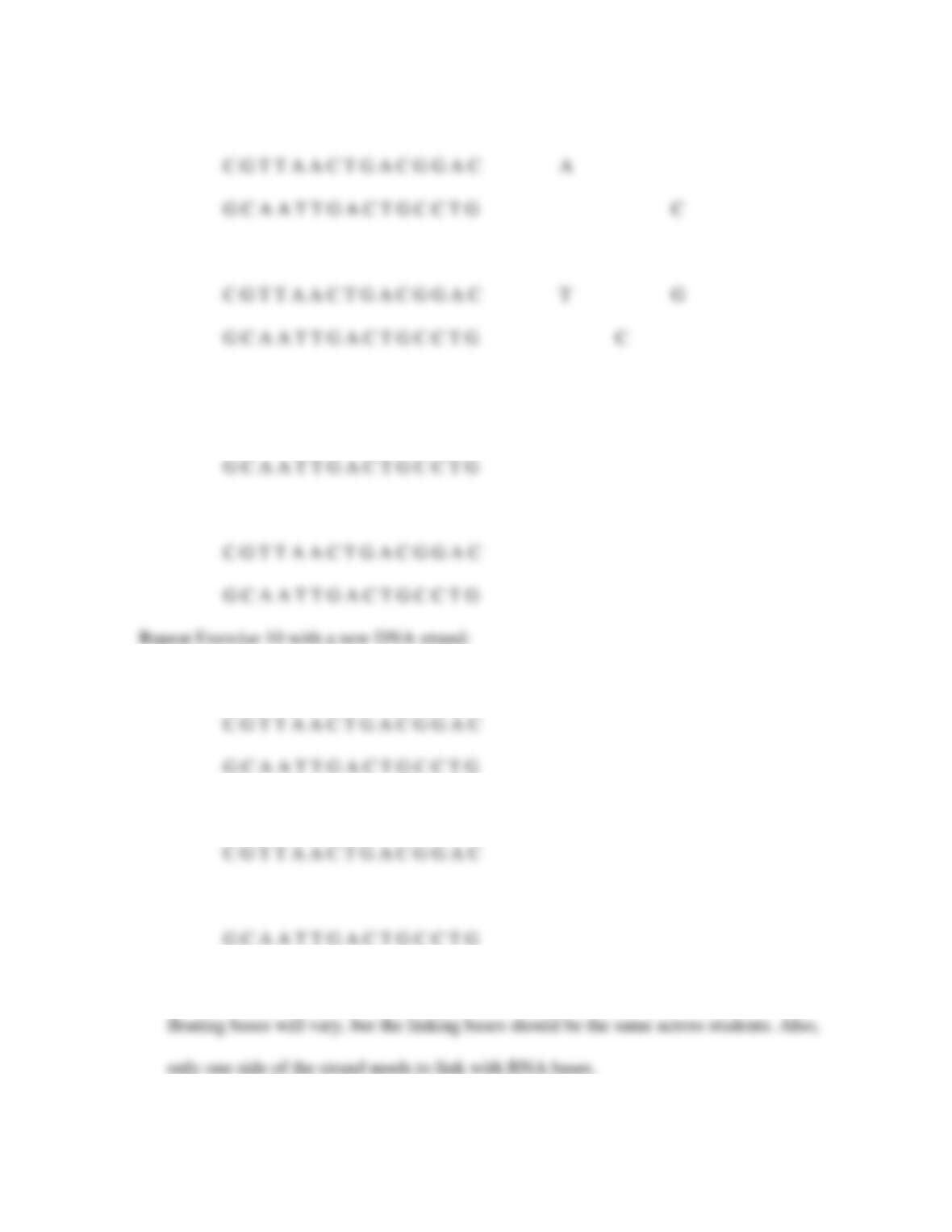
STEP 2. To begin replicating this strand of DNA, draw the two sides of the strand
separating.
STEP 3. Now, draw the free-floating bases linking up with the separate sides. Remember
to follow the rules of complementary base pairing.
The free-floating bases will vary, but the bases linking up with the strands should be the
same across students.
IM2-20
STEP 4. Draw the two resulting DNA strands.
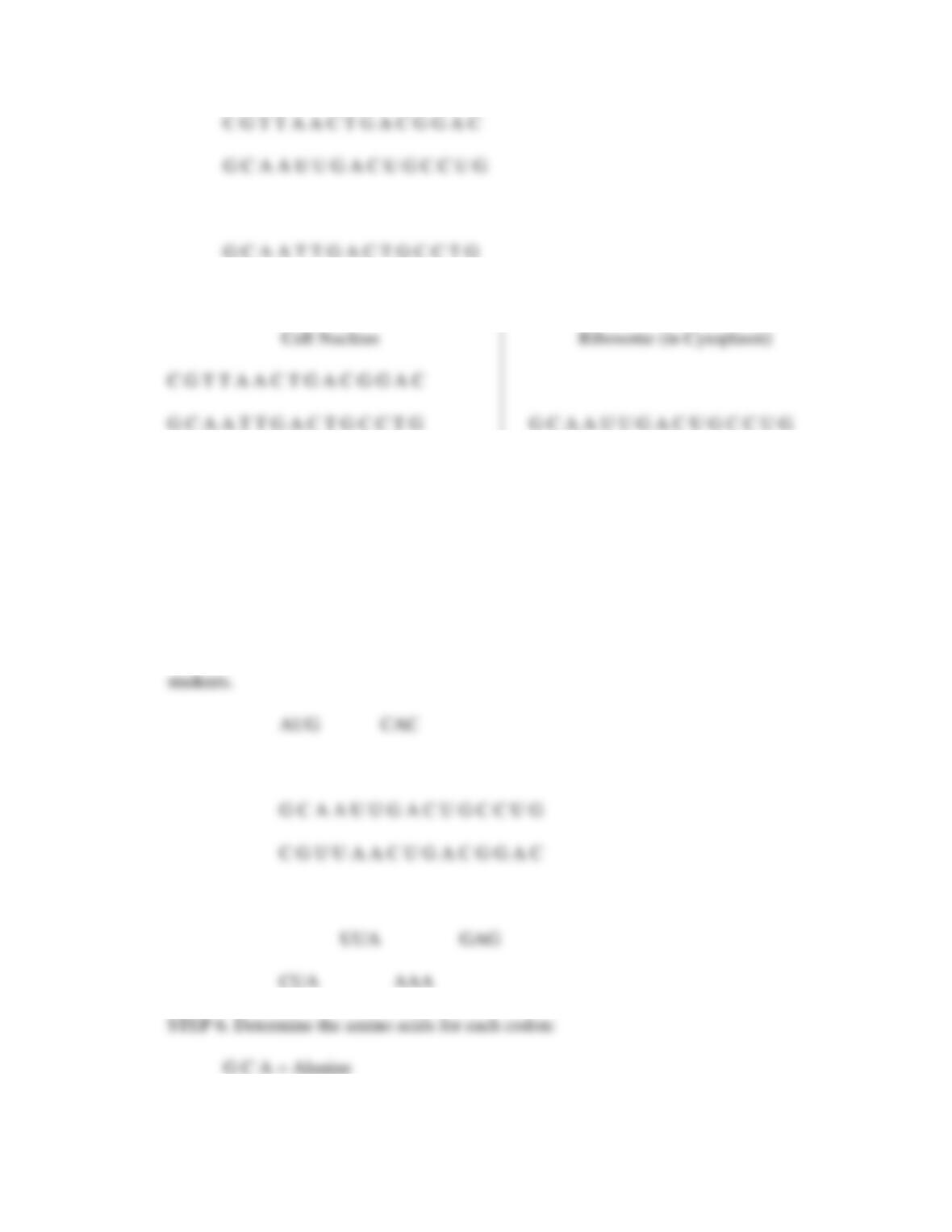
C G T T A A C T G A C G G A C
STEP 1. Write the DNA sequence:
STEP 2. Show the DNA strands separating:
STEP 3. Show free-floating RNA bases linking up with the top DNA strand: The free-
IM2-21
STEP 4. Draw the mRNA and rezipped DNA, and label their destinations:
STEP 5. Draw the free-floating tRNA anticodons attracted by the mRNA codons: The
free-floating anticodons will vary, but the linking anticodons should be the same across
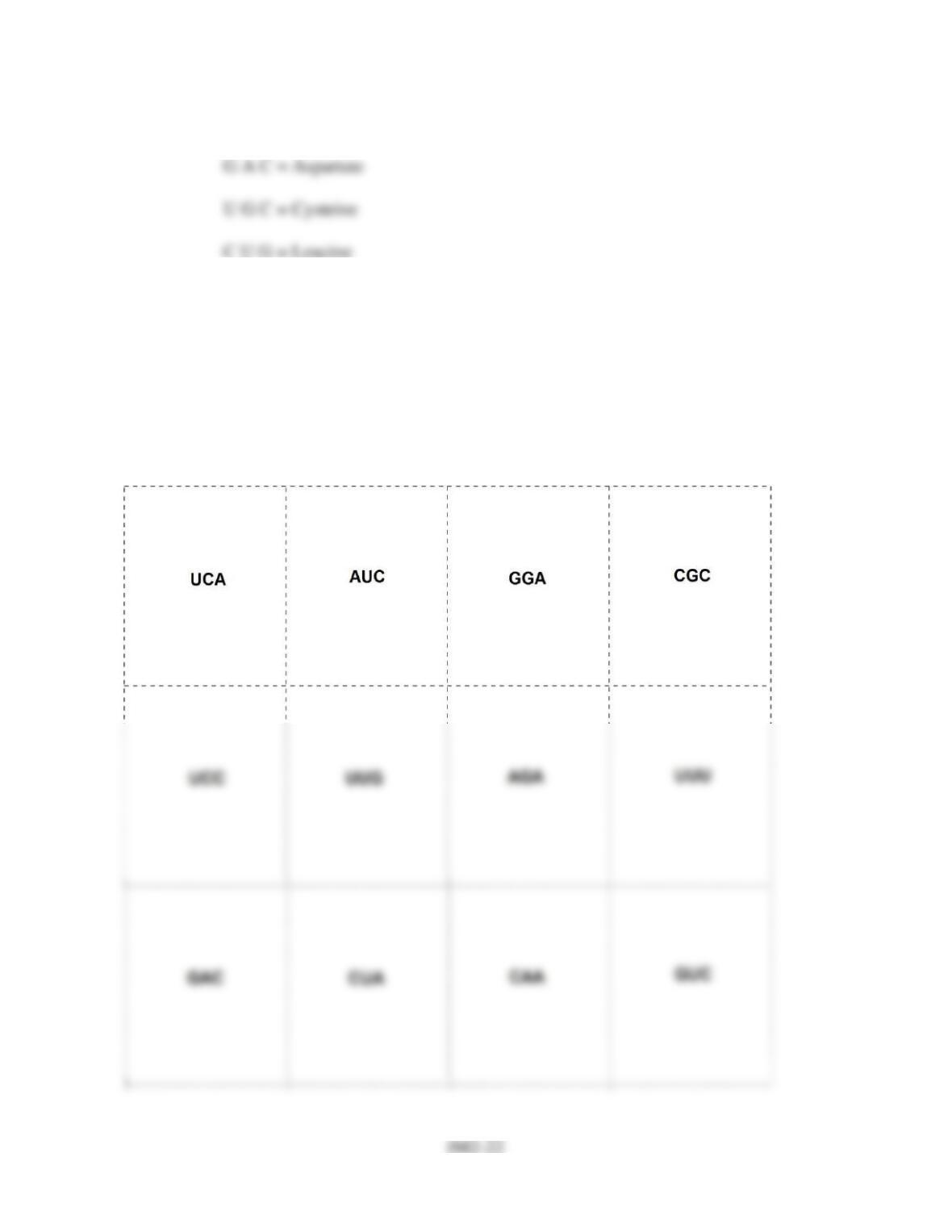
A U U = Isoleucine
EXERCISE 9 FLASHCARDS
Cut along the dotted lines to separate the cards.
IM2-23