IM2-1
LABORATORY MANUAL & WORKBOOK FOR BIOLOGICAL
ANTHROPOLOGY INSTRUCTOR’S MANUAL
Lab 2: Genetics
ANSWERS TO LAB 2 CONCEPT REVIEW QUESTIONS
1. Difference: Prokaryote cells lack a nucleus, and are often one-celled organisms;
7. Somatic cells are where mitosis occurs.

IM2-2
GUIDE & ANSWERS TO LAB 2 EXERCISES
Exercise 1: Extract Your Own DNA (15 to 20 minutes)
This exercise is a brief lab activity that allows students to extract their own DNA from cheek
cells. It does require specific supplies, but they are materials readily available in most
households. The actual extraction of the DNA takes about 10 minutes, but extra time should be
allowed for distribution of supplies and discussion of the steps and outcome. If enough supplies
are available, each student may complete their own DNA extraction. If supplies are limited,
students may work in groups, sharing a set of supplies and extracting only one student’s DNA.
For best results, students should avoid eating or chewing anything for 30 minutes before
conducting the activity.
Materials needed for each DNA extraction (per individual or group):
• 3 large cups or beakers (clear cups are best, so students can see inside)
• 1 stir stick (wooden coffee stirrers or bamboo skewers are sufficient)
• Measuring cups with metric measurements (or a graduated cylinder or beaker)
• Measuring spoons (like those found in a kitchen)
The instructions provided in the text also give some tips and context for the chemical reactions
happening during the extraction process. Although there are no formal answers to this activity,
some takeaway points are highlighted here. The DNA extracted in the activity is significantly
1. In humans, our DNA has two types of chromosomes. What are these two types, and how
do they differ from each other? Would you expect both types to appear in the DNA you
extracted?
Autosomes are non-sex chromosomes that appear in truly homologous pairs; sex
2. In this exercise, you extracted DNA from your cheek cells. If you could magnify the
extracted material, how many individual chromosomes from each of these cheek cells
would you expect to see? How would this number differ from the number of
chromosomes in each of your gametes?
IM2-4
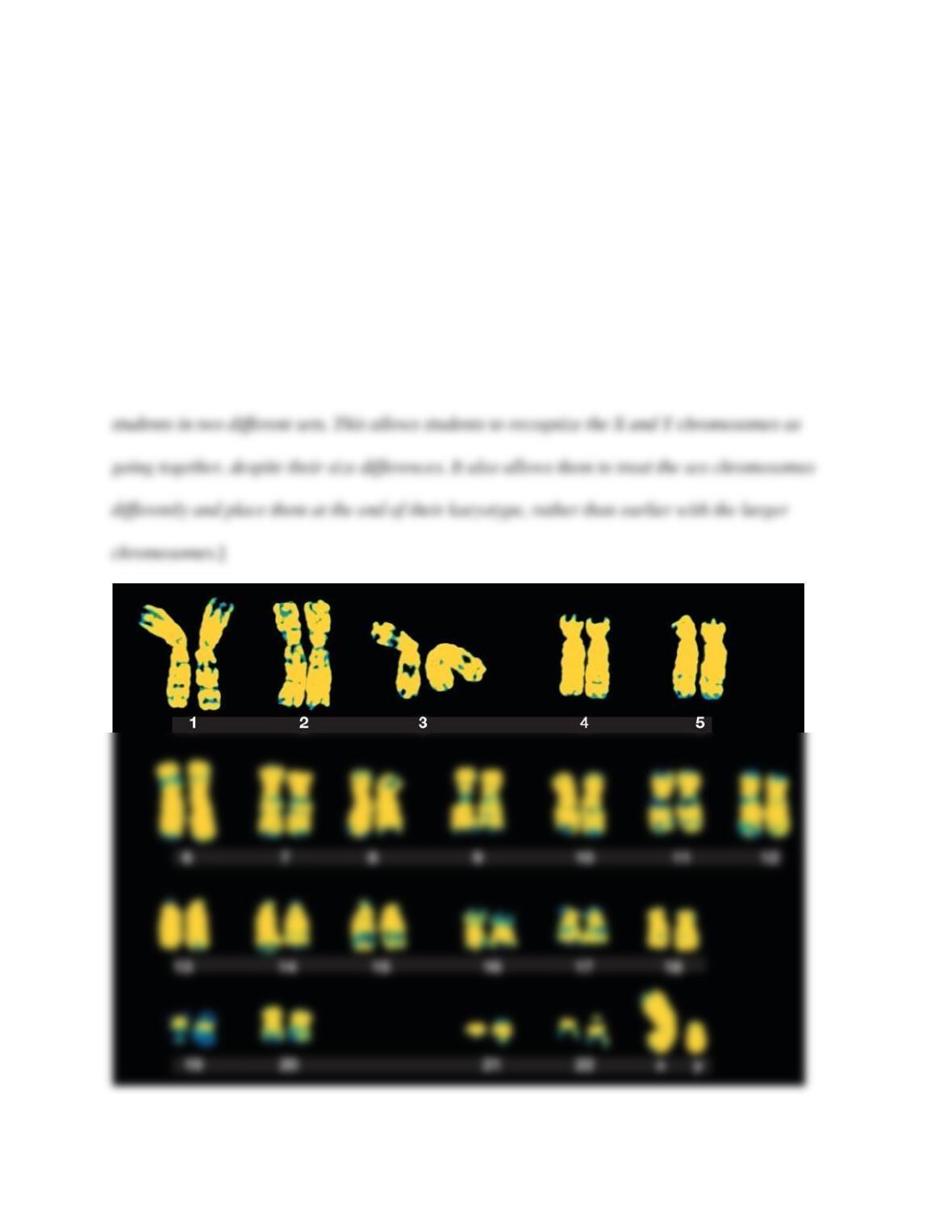
Exercise 2: Creating and Interpreting Karyotypes (10 to 15 minutes)
For this exercise, you will need to prepare flashcards of the karyotype provided here. Photocopy
the karyotype image provided (you can increase the copy size), cut the chromosomes apart (be
sure to separate the individual chromosomes, not just the homologous pairs, and omit numbers),
and attach them to individual index cards. Prepare one set of flashcards for each group of
students and have students use the cards to complete the exercise.
[Note: We suggest separating the sex chromosomes from the autosomes and providing them to
IM2-5
1. How many autosomes does person Z have? How many sex chromosomes?
2. Is person Z male or female? Why?
Exercise 3: Comparing Karyotypes (10 to 15 minutes)
This exercise is designed to be completed with students working together in small groups. Note
that the karyotypes provided depict single chromosomes, rather than homologous pairs, of
autosomes (22+1 in animal 1 and 22 in animal 2) along with X and Y sex chromosomes.
1. Describe two things the two karyotypes have in common.
There are numerous possible answers, including these: Both karyotypes include
2. Describe two things that differ between the karyotypes.
Again, there are numerous possible answers, including these: The chimpanzee
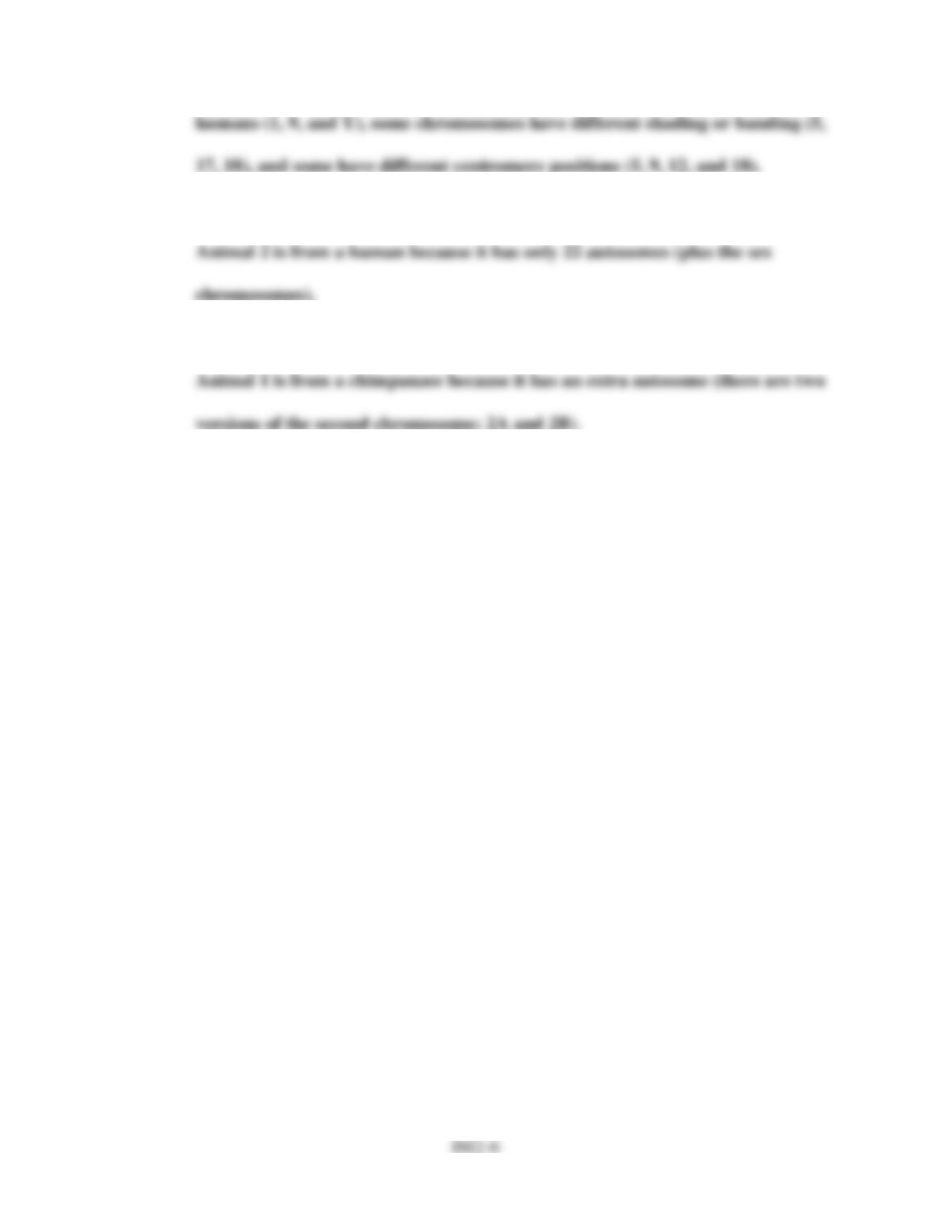
3. Which karyotype is from a human? How do you know this?
4. Which karyotype is from a chimpanzee? How do you know this?
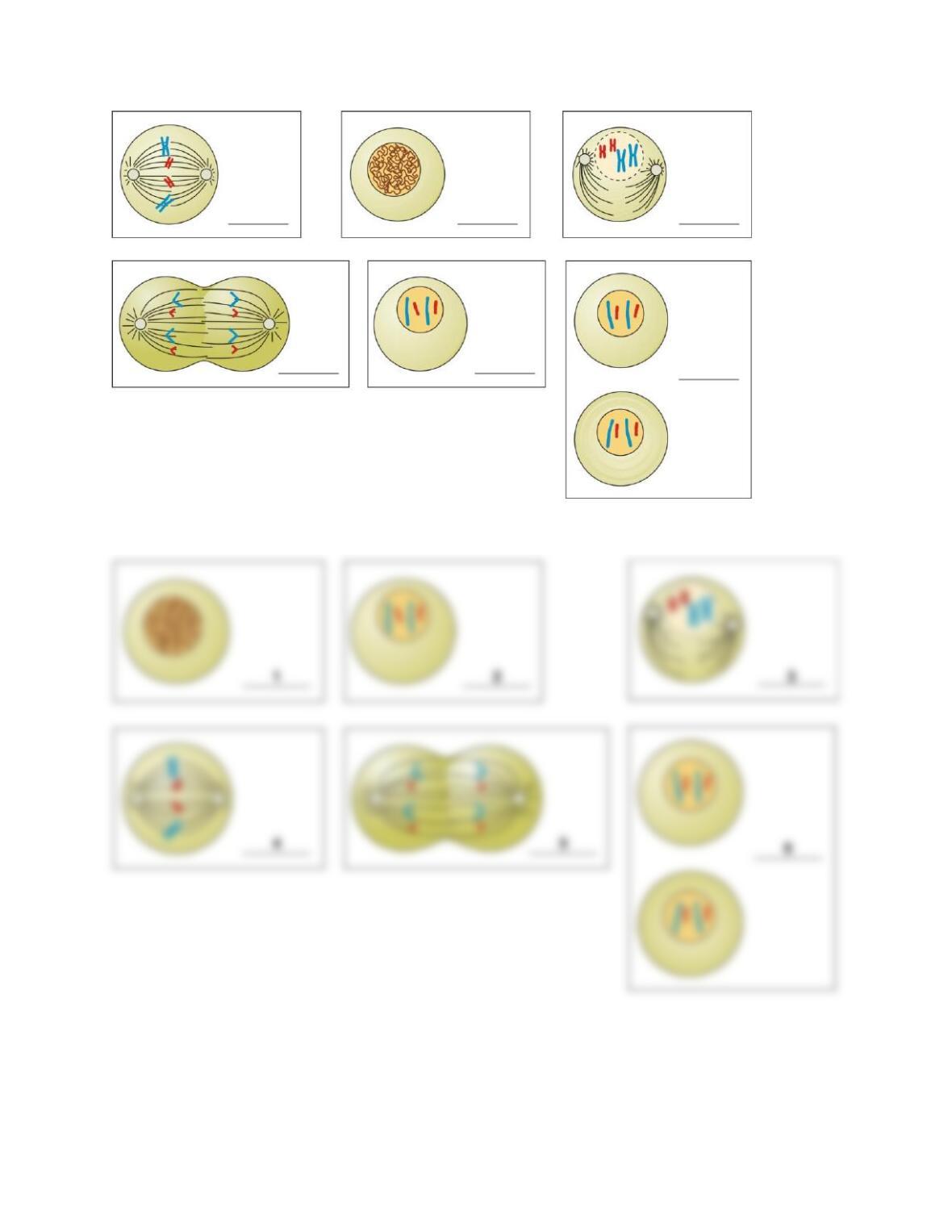
Exercise 4: Phases of Mitosis (10 to 15 minutes)
An alternate option for this exercise is to have students put flashcards of the mitosis phases in
order. To prepare flashcards, copy the mitosis phases provided in the lab manual (without the
number answers), cut the phases into separate pieces, and attach them to individual index cards.
Prepare one set of flashcards for each group of students, and have students put the phases of
mitosis in order without using their book for help. [Note: Be sure to mix up the order of the cards
before handing them out to students.]
Blank version given to students:
IM2-7
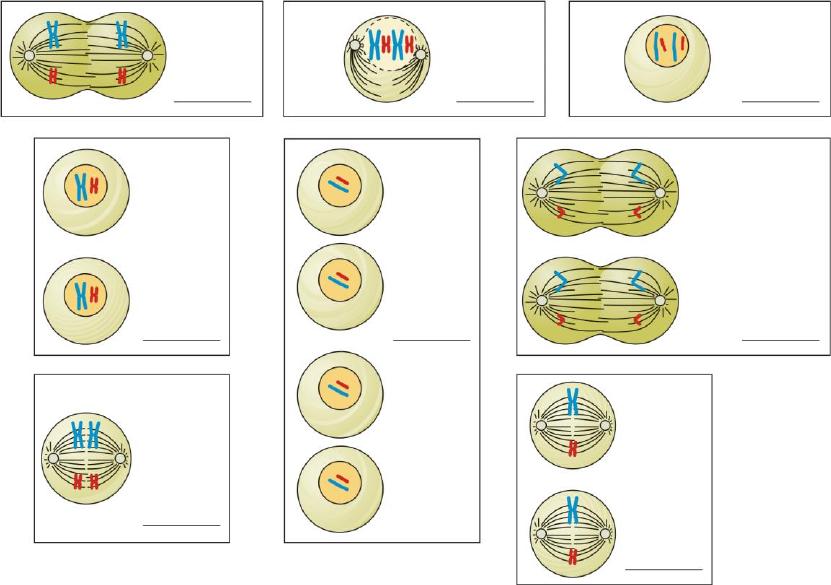
Answers in order:
IM2-8
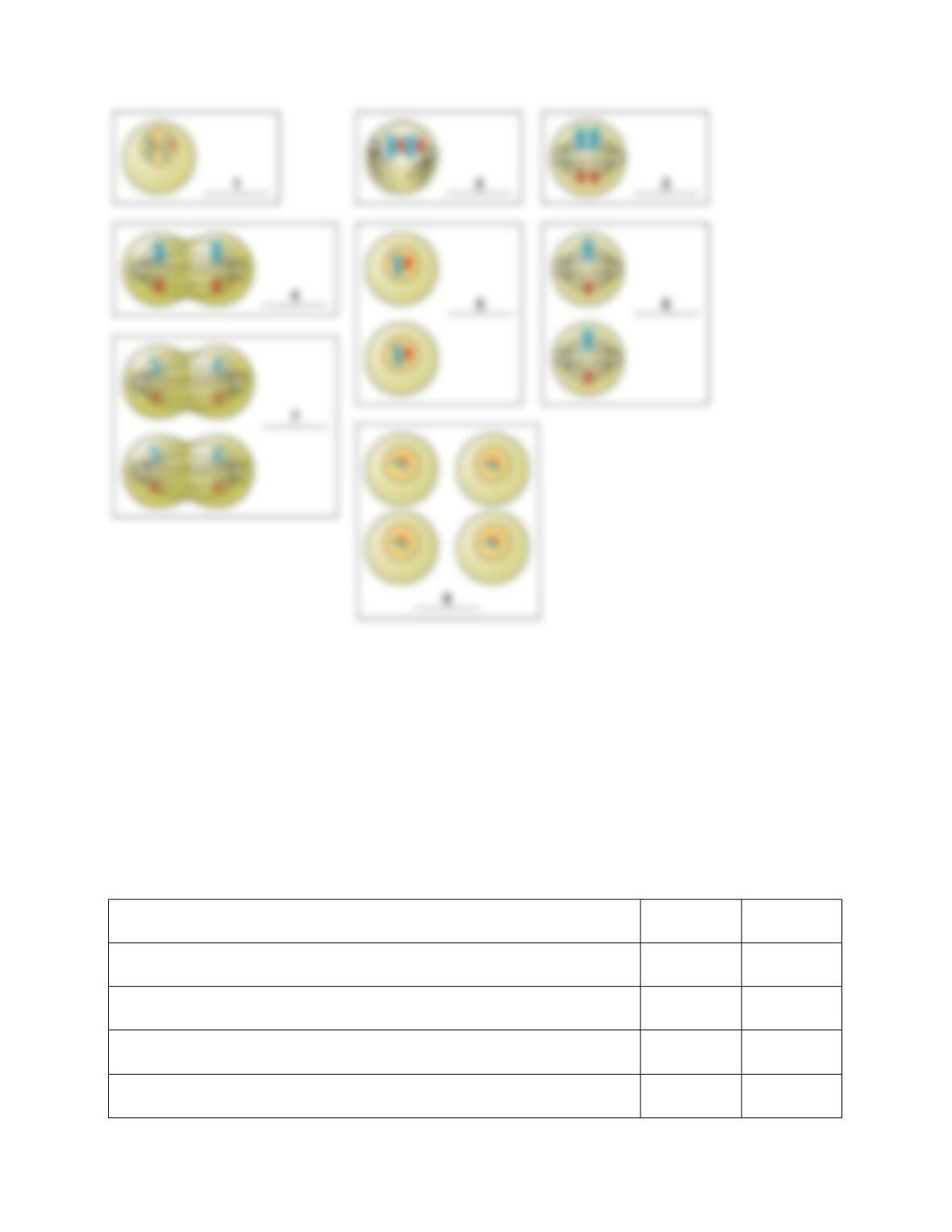
Exercise 5: Phases of Meiosis (10 to 15 minutes)
An alternate option for this exercise is to have students put flashcards of the meiosis phases in
order. To prepare flashcards, copy the meiosis phases provided in the lab manual (without the
number answers), cut the phases into separate pieces, and attach them to individual index cards.
Prepare one set of flashcards for each group of students, and have students put the phases of
meiosis in order without using their book for help. [Note: Be sure to mix up the order of the
cards before handing them out to students.]
Blank version given to students:
Answers in order:
IM2-9
Exercise 6: Comparing Mitosis and Meiosis (10 to 15 minutes)
This exercise is designed to be completed with students working together in small groups,
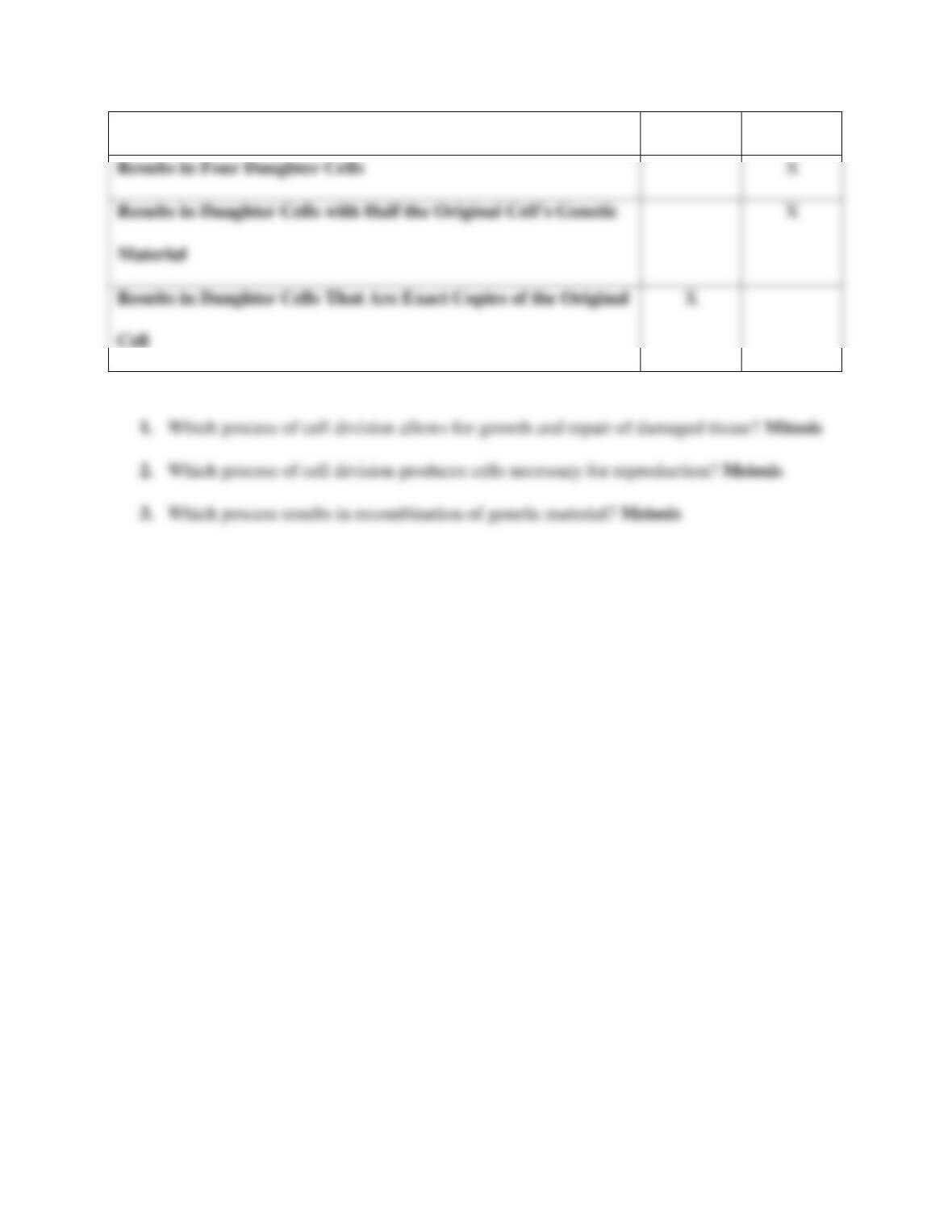
especially if it is used as an extension of the earlier group exercises. The completed chart is
given here.
Mitosis
Meiosis
Occurs in Gamete-Forming Cells
X
Occurs in Somatic Cells
X
Has One Cell Division
X
Has Two Cell Divisions
X
IM2-10
Results in Two Daughter Cells
X
Exercise 7: Recombination (20 minutes)
This exercise is best completed with students working together in small groups and calls for
creating only 5 offspring. If time permits, the number of offspring could be increased to 10.
For this exercise, you will need to provide scissors for each group so that students can cut out
the cards provided in the lab appendix:
• 1 blue card labeled Parental and 1 blue card labeled Recombinant
• 1 red card labeled Parental and 1 red card labeled Recombinant
• 1 yellow card labeled Parental and 1 yellow card labeled Recombinant
• 1 green card labeled Parental and 1 green card labeled Recombinant
• 1 white card labeled Parental and 1 white card labeled Recombinant
Results in Four Daughter Cells
X
Material
Cell
IM2-11
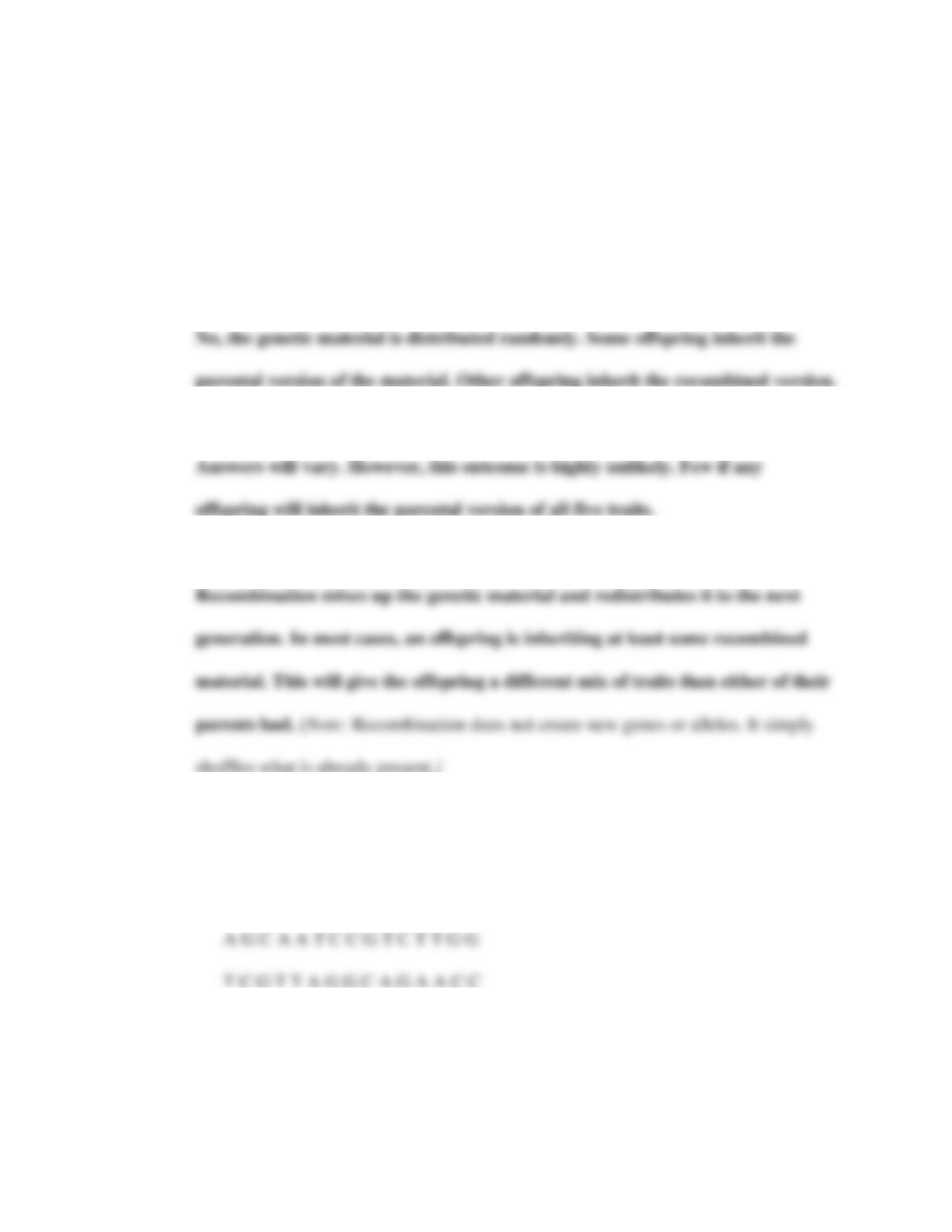
Answers will vary in the chart of chromosome type (P or R) for each chromosome (=color: 4 =
blue, 7 = red, 10 = yellow, 15 = green, and 20 = white) for each offspring. Total percentage
recombinant is calculated as 1/5 = 20%, 2/5 = 40%, 3/5 = 60%, 4/5 = 80%, 5/5 = 100%.
1. Do all offspring from the same parents inherit the same versions of the available genetic
material? Why or why not?
2. How many offspring inherited all 100% of their parent’s original DNA?
3. How does recombination impact genetic variation in future generations?
Exercise 8: DNA Replication (10 to 15 minutes)
Step 1. Review the imaginary strand of DNA below. Note the complementary base pairs.
Step 2. To begin replicating this strand of DNA, draw the two sides of the strand
separating.
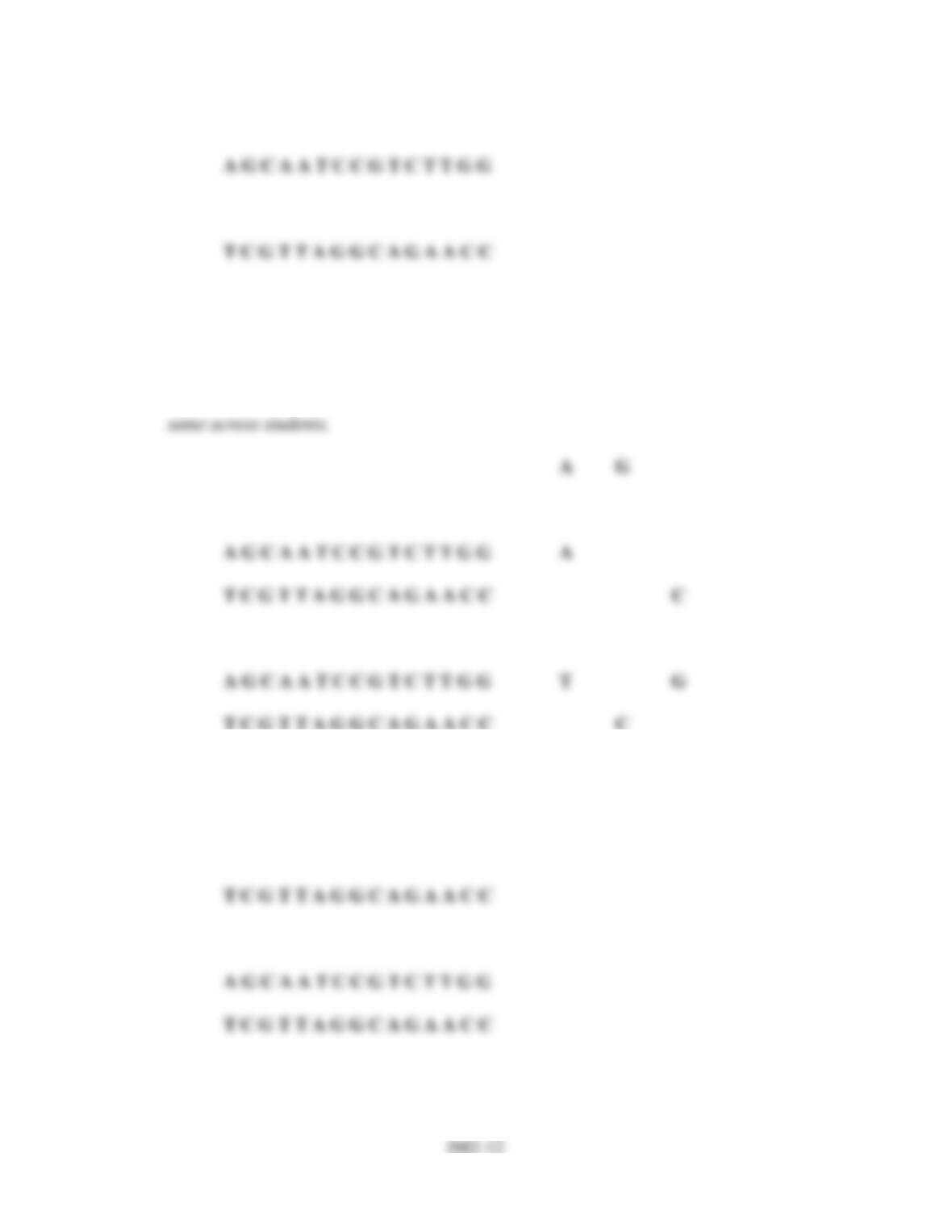
The correct answer will show more space between the sides of the strand:
Step 3. Now, draw the free-floating bases linking up with the separate sides. Remember
to follow the rules of complementary base pairing.
The free-floating bases will vary, but the bases linking up with the strands should be the
Step 4. Draw the two resulting DNA strands.
A G C A A T C C G T C T T G G