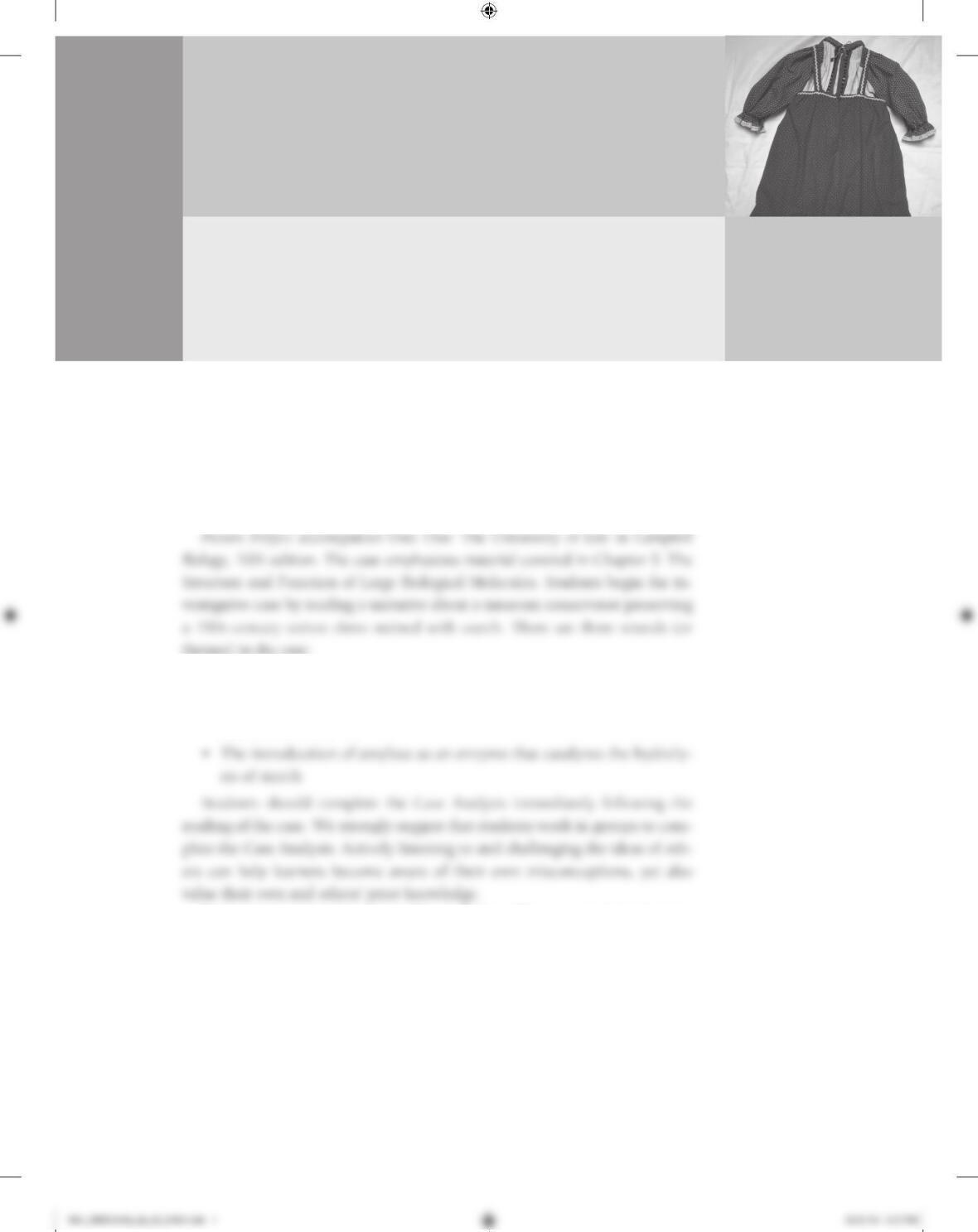
b 1
As with all the cases in this book, please read the preface if you have not already
done so. In the preface you will nd suggestions for using Investigative Case Based
Learning (ICBL) in different instructional situations such as starting a new lecture
topic, assessing what students already know, setting a context for lab activities, and so
on. The preface also describes ways to use cases in a variety of classroom settings and
suggests multiple ways to assess learning with cases.
themes) in the case:
• Theuseofscientificthinkinginpreservationwork
• Thestructureandfunctionofpolysaccharides,withanemphasison
starch and cellulose
Five investigations accompany Picture Perfect. Three are “core” investiga-
tionsrelatingdirectlytothefactsofthecase,andtwoareadditionalinvestiga–
tions that extend the case to other applications. Table IG1.1 describes what
studentswillgainfromeachinvestigation.SeetheCaseBookwebsiteforan
additional investigation on plants used as food starch globally.
Chapter 1:
Picture Perfect
InstruCtor’s GuIde
2 a BIoloGICal InquIry: A Workbook of Investigative Cases
table IG1.1 Picture Perfect Case overview.
Investigation learning Goals Inquiry skills used
Core Investigations
I. Critical Reading
II. Analyze and De-
sign an Experiment
A. Analyzing an
Experiment
B. Designing an
Experiment
Students read parts of Chapter 5 cover-
specific to starch.
Using data generated by simulation
software in the Chapter 41, Investigation:
What Role Does Amylase Play in
Digestion? found on the lab media
Students use the same experimental
methods employed in II.A. to test a variable
of their choice. They design experimental
and control treatments and predict results.
• identifyinginformationrelevant
• analyzingexperimentalsetups
and data
• explainingoutcomesof
experiments
• writingquestions
• writinghypotheses
• identifyingvariables
• designingtreatments
chemistry
additional Investigations
IV. Structure and
Function of Starch
A. Kinds of Starch
Students examine micrographs of starch
granules from different plants. They infer
the kind of starch Rob removed from the
dress in the case.
• makingobservations
• usingevidencetosolve
problems
ChaPter 1: Picture Perfect b 3
Table IG1.2 contains several resources related to Campbell Biology,10thedition,thatwillhelpyour
students further their understanding of this case. Note that chapter readings and activities are listed in
order of importance.
table IG1.2 Campbell-related resources.
resource Chapter/activity topics Covered/activity titles
Critical Reading
from Campbell
Biology, 10th edition
MasteringBiology
Study Area
Chapter 5: Structure and Function of
Large Biological Molecules
Chapter 5 activities
Chapter 8 activity
Chapter 2 activity
Chapter 41 Investigation
Formation and breakdown of
macromolecules; carbohydrates
and proteins (Concepts 5.1–5.4)
Models of Glucose
How Enzymes Work
Hydrogen Bonds
What Role Does Amylase Play in
Starch Digestion?
4 a BIoloGICal InquIry: A Workbook of Investigative Cases
Case narrative
Students were asked to underline terms or phrases
in the introductory narrative that they think are
important to understanding the case. Suggested
terms and phrases that students might have cho-
sen are in bold type.
Onceshearrived, Brynwenttothecurators’
workroomtogivethedresstoRob,themuseum’s
textile conservator.SeeingRobworkingintent–
ly, she quietly knocked on the half-open door.
Heputdownhistoolsandlookedup.
“Rob,”shesaidexcitedly.“Hereitis!Thedress
I told you about from the painting! The donor
it flat on a clean table to examine it. He saw
that the cotton dress was slightly yellowed and
there was a small, stiff stainneartheneckline.
He wondered if that spot might prove trouble–
some. “This is terrific, Bryn. I’ll do my magic,
and with luck these discolorations and spots
line and placed the sample on a microscope
slide. Rob examined the slide with the micro–
scope,noticingseveral granules mixed in with
afewlongerfibers.Hewasnotsurprisedtosee
long cellulose fibers, which he knew to be cot-
ton.Thegranules,though, which were smooth
and oval-shaped with a diameter of about 75µm
ChaPter 1: Picture Perfect b 5
suggested answers for Case analysis
1. Recognize potential issues and major topics in the case. What is this case about? Underline
terms or phrases that seem to be important to understanding this case. Then list 3 or 4 biology-
2. What specific questions do you have about these topics?Byyourself,orbetteryet,inagroup,
makealistofwhatyoualreadyknowaboutthiscaseinthe“WhatDoIKnow?”column.Listques–
tionsyouwouldliketolearnmoreaboutinthe“WhatDoINeedtoKnow?”column.
There are many possible answers, depending on the experiences of your students. Below are some
likely responses:
What do I need to Know?
• What do the granules and fibers look
3.Putacheckmarkby1–3questionsorissuesinthe“WhatDoINeedtoKnow?”listthatyouthink
are most important to explore.
4. What kinds of references or resources would help you answer or explore these questions?
Identifytwodifferentresourcesandexplainwhatinformationeachresourceislikelytogivethatwill
helpyouanswerthequestion(s).Choosespecificresources.
Accept any reasonable resource (e.g., text, other book, Internet sites, data tables, and so on) that could
What do I Know?
• Iodine turns starch granules blue.
6 a BIoloGICal InquIry: A Workbook of Investigative Cases
suggested answers for Core Investigations
I. Critical Reading
To complete this investigation, you should have already read Concepts 5.1–5.4 in Chapter 5. In
Concept 8.4, you should also read the text under the headings “Substrate Specificity of Enzymes” and
“Effects of Local Conditions on Enzyme Activity.” Then answer the following questions.
1.Inthecasenarrative,Roblearnedthatthestainnearthenecklineofthedresscontainedstarch.
Whatspecifictypesofmacromoleculearestarchandcellulose?
2. What monomer is found in starch and cellulose?
3. Contrast the structure and function of starch with those of cellulose in plant cells.
Starch is a storage carbohydrate made of glucose monomers that are used for cellular fuel. The glucose
monomers in amylose are joined by 1–4 linkages. Amylopectin, a branched polymer, has 1–4 linkages
4. What is an enzyme?
5.Toremovethestainfromthedress,Robtreatedthestainwithacleanercontainingthehydrolytic
enzyme amylase. Explain what happens to starch at the molecular level when it is acted upon by
the 1–4 glycosidic linkages. A hydrogen atom is added to one monomer and an OH molecule to
6.Undertherightconditions,amylasebreaksdownamyloseefficiently;however,theenzymeisnot
veryeffectiveinbreakingdownamylopectin.ExamineFigure5.6andreadtherelatedtextinyour
textbook.Useyourobservationstoproposeahypothesisforwhyamylasebreaksdownamylose
ChaPter 1: Picture Perfect b 7
7.ExplainwhyRobdidnothavetoworrythattheamylasecleaningsolutionwoulddamagethedress.
Amylase is specific for a configuration, 1–4 glycosidic linkages. Cellulose consists of b linkages; there-
II. Analyze and Design an Experiment
To further investigate starch and its components, first you will analyze an experiment. Then you will
a. analyze an experiment. In the following controlled experiment, we used both iodine solution (IKI)
and Benedict’s solution as indicators to test the effect of amylase on starch. As you may recall, Rob
used the indicator iodine to test the dress stain for the presence of starch.
the experiment: Four test tubes were set up. To find out which substances were placed in each tube,
8 a BIoloGICal InquIry: A Workbook of Investigative Cases
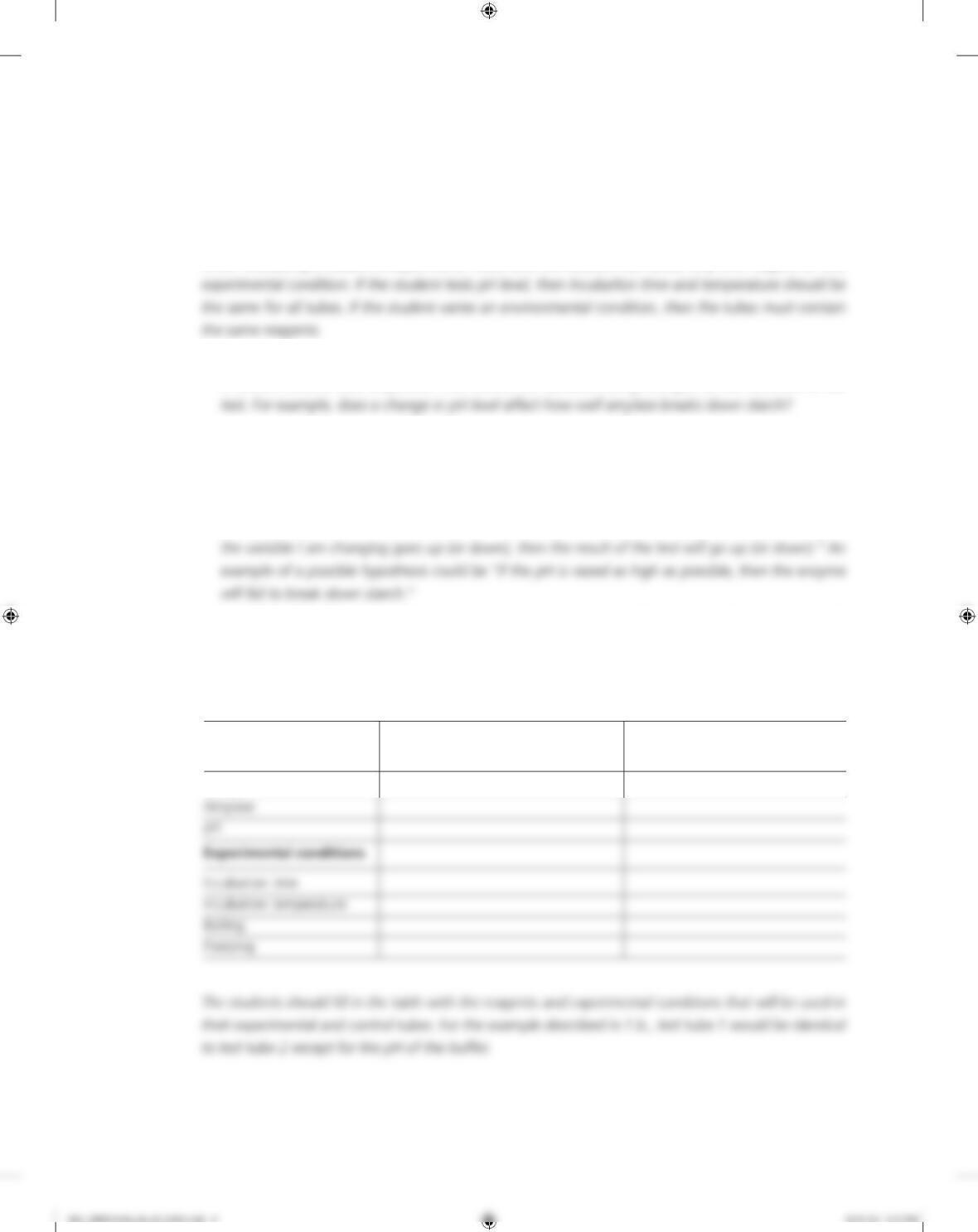
1.ReviewFigure1.2andnotewhichofthereagentswereusedineachofthefourtesttubes.InTable
1.1,checkoffthereagentsfoundineachtube.
Students should have placed check marks in the areas indicated in Table IG1.3.
table IG1.3 answers to student table 1.1.
reagent test tube
1 2 3 4
2.Notethetest-tuberesultsfortheuseofIKI.Thecolorchangeinthecontentsofeachtesttubeisalso
showninthetest-tuberackattheupperleftcornerofthefigure.Adarkshadeindicatesapositive
iodinereaction(theactualcolorisdarkblue)andalightshadeindicatesanegativereaction(theac–
tualcolorisyellow).BecauseRobusediodineinthiscase,youknowthatiodineisatestforstarch.
Why,then,wastheiodinetestnegativefortesttube2A?
3. What is the purpose of adding iodine to test tubes 1A and 3A?
Iodine is added to test tube 1A to test the effectiveness of the iodine solution. Because the tube
4.Now examine the results for the Benedict’s solution test. Color changes are shown in the rack
containingtubes1–4atthemiddleright.Adarkshadeindicatesapositivetest(theactualcolor
isreddishbrown).Alightshadeindicatesanegativetest(theactualcolorisblue).Doyouthink
Benedict’ssolutionisatestforstarch,amylase,ormaltose?Explain.
Benedict’s solution must be a test for maltose. The tests with starch alone and amylase alone produced
ChaPter 1: Picture Perfect b 9
B. design your own experiment
1. Using eithertheiodinetestortheBenedict’stest,designanexperimenttoexamineotherfactorsin
the action of amylase on starch. Your experiment should test only oneofthefollowingvariables:pH,
incubationtemperature,incubationtime,boiling,orfreezing.
When evaluating a student’s experiment, make sure the student has varied only one reagent or one
a. Whatquestionwillyouinvestigateinyourexperiment?
A student should state a question that relates the variables being changed to the outcome of the
b. Restatethequestionasahypothesis(seeChapter1inyourtextbookforanexplanationofforming
hypotheses):
If________________________________________________________________,
then ______________________________________________________________.
The question should be restated as an “If . . . then” statement. Usually a hypothesis is written as “If
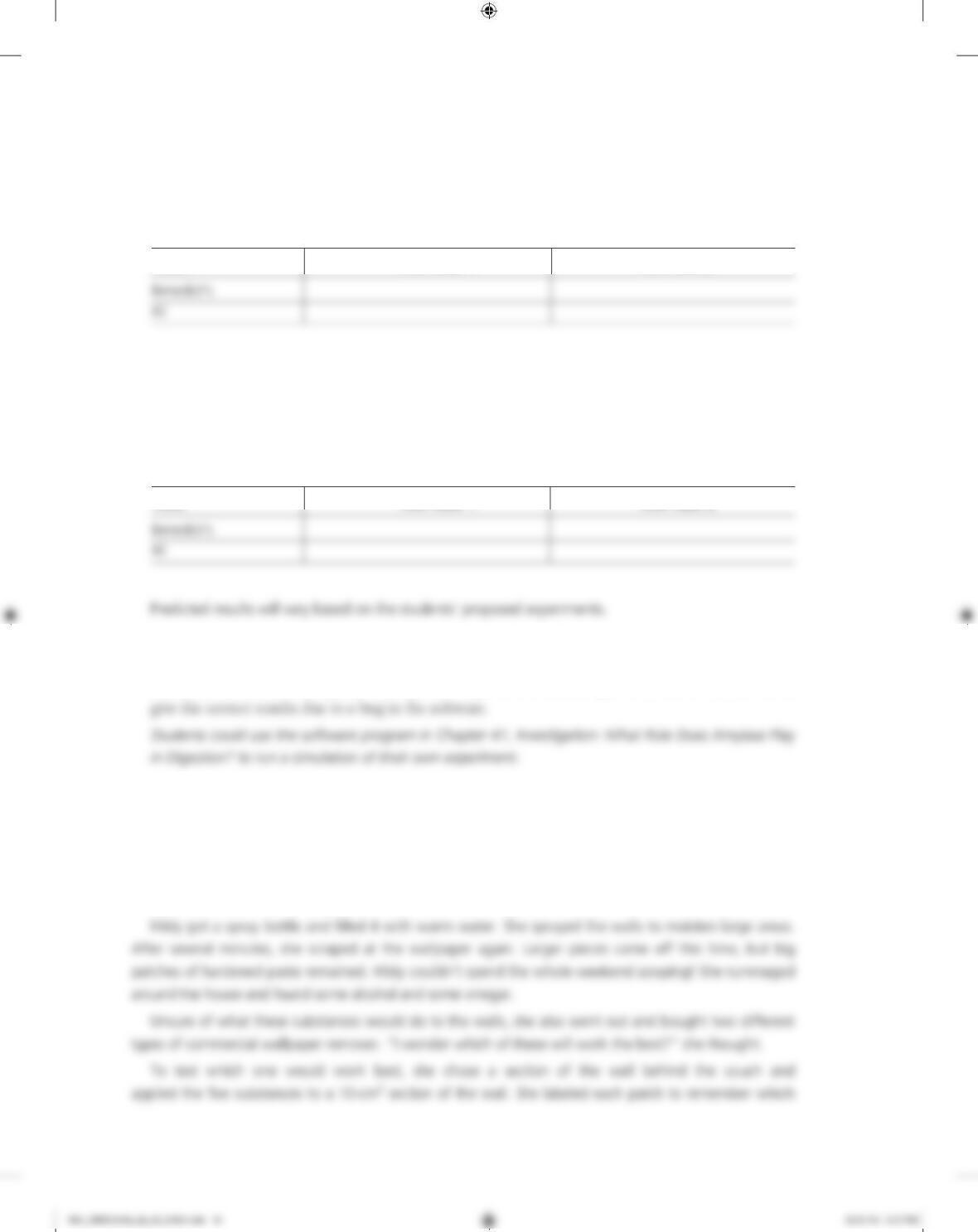
2. InTable1.2,describeyourexperimentaltreatmentintesttube1.Althoughitislikelythatyouwill
havemorethanonecontroltube,describejustoneofyourcontrolsfortesttube2.
table 1.2 test tube Contents and Conditions.
test tube 1 test tube 2
reagents (experimental) (control)
Starch
10 a BIoloGICal InquIry: A Workbook of Investigative Cases
3.InTable1.3,indicatetheresultsyouwouldexpectifyourhypothesisweresupported(use“1”
and “2” for the test indicator that you chose).
table 1.3 Predicted results, supporting hypothesis.
tests test tube 1 test tube 2
Predicted results will vary based on the students’ proposed experiments.
4.InTable1.4,indicatetheresultsyouwouldexpectifyourhypothesiswerenot supported (use “1”
and “2” for the test indicator that you chose).
table 1.4 Predicted results, not supporting hypothesis.
tests test tube 1 test tube 2
5. Optional. Conduct the experiment you designed using the software provided in Chapter41, Inves-
tigation: What Role Does Amylase Play in Digestion? found on MasteringBiology. Turn in a screen
captureofthetableshowingyourresults.Note:ExperimentsinvolvingIKItestsofcellulosewillnot
III. Off the Wall: Starch Degradation Investigation
Hildy planned to surprise her parents by remodeling their living room while they were away for the week-
end. First she had to remove the wallpaper so that she could paint. When she started scraping at the edge
of the dry wallpaper, only a few small pieces came off. “What’s up with this wallpaper?” Hildy asked
herself. “It’s just not coming off!”
ChaPter 1: Picture Perfect b 11
❀
❀
❀
❀
❀
❀
❀
❀
❀
❀
❀
❀
❀
❀
❀
❀
❀
❀
❀
❀
❀
❀
❀
❀
❀
❀
❀
❀
❀
❀
❀
❀
❀
❀
❀
❀
❀
❀
❀
❀
❀
❀
❀
❀
❀
❀
❀
❀
❀
❀
❀
❀
❀
❀
❀
❀
❀
❀
❀
❀
❀
❀
❀
❀
❀
❀
❀
❀
❀
❀
❀
❀
❀
❀
❀
❀
❀
❀
❀
❀
❀
❀
❀
❀
❀
❀
❀
❀
❀
❀
❀
❀
❀
❀
❀
❀
❀
❀
❀
❀
❀
❀
❀
❀
❀
❀
❀
❀
❀
❀
❀
❀
A
B
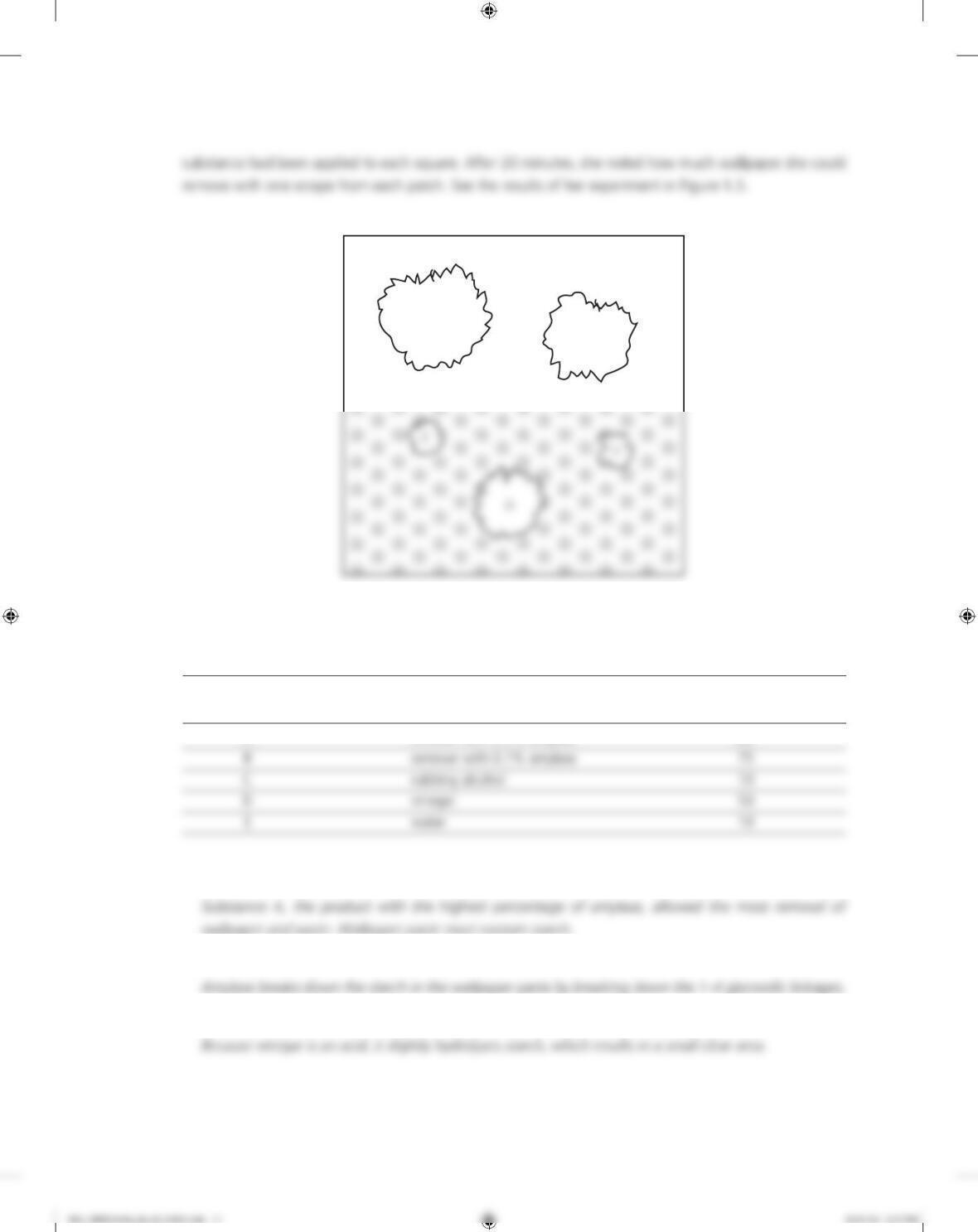
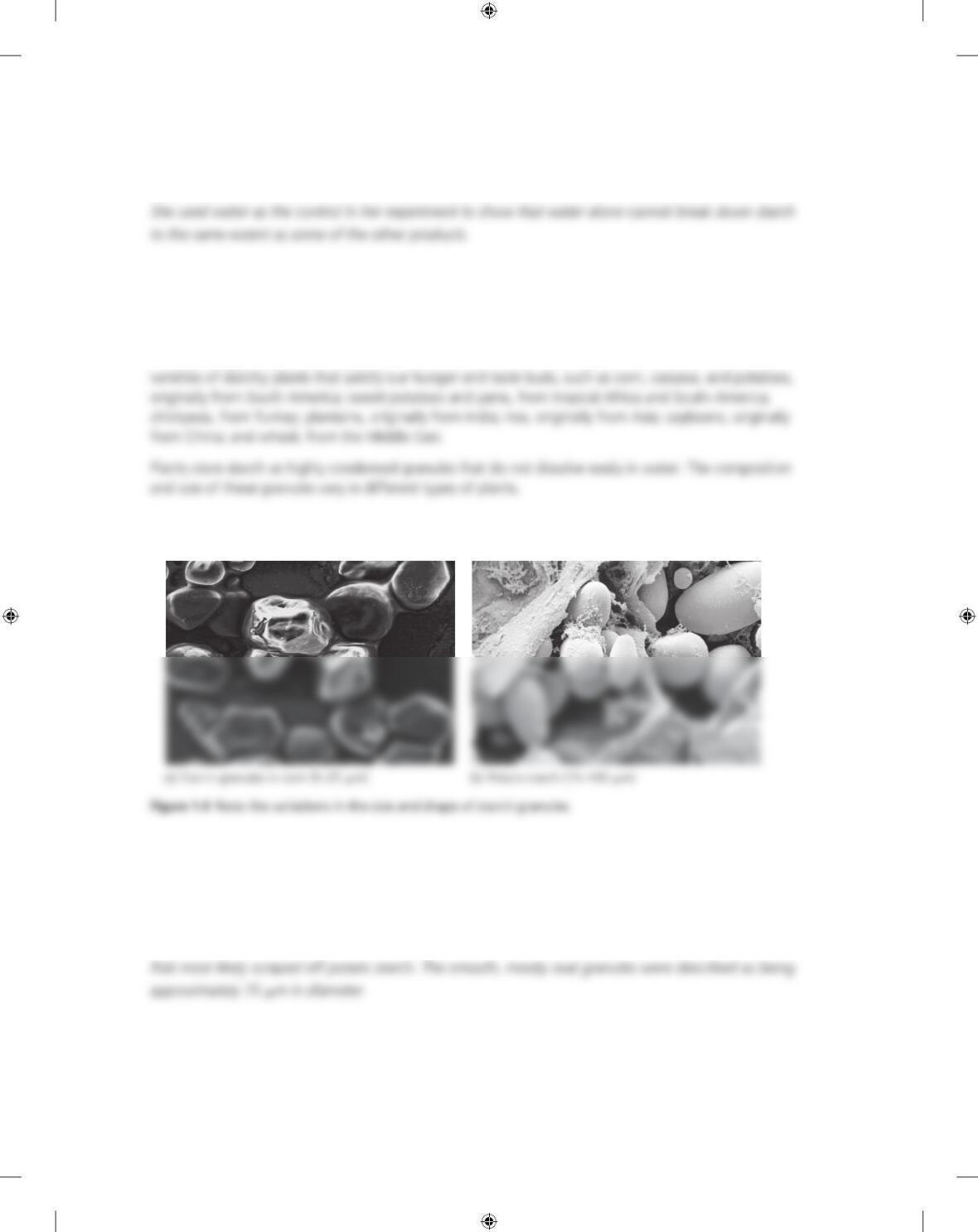
Figure 1.3 The above figure shows a section of Hildy’s parents’ living room wall after her experiment.
The table below is a key containing her results.
1.Whichsubstanceworkedbest?Whatdoesthistellyouaboutthecompositionofwallpaperpaste?
2.Describehowthemosteffectivesubstanceworkedtoremovethepaste.
3.Consideringthatvinegarisanacid,explaintheresultsseenwiththevinegar.
label on Wallpaper
A
substance
remover with 0.5% amylase
approximate % of Wallpaper
and Paste removed
100
12 a BIoloGICal InquIry: A Workbook of Investigative Cases
4. Why was it important that Hildy also test the effect of water alone on the wallpaper paste?
Hildy needed to test the effect of water alone because it is the solvent for the other potential removers.
suggested answers for additional Investigations
IV. Structure and Function of Starches
a. Kinds of starch. Starches are a significant part of the typical human diet, making up 40–80%
of total energy intake. Some plants store more starch than others. Humans have discovered many
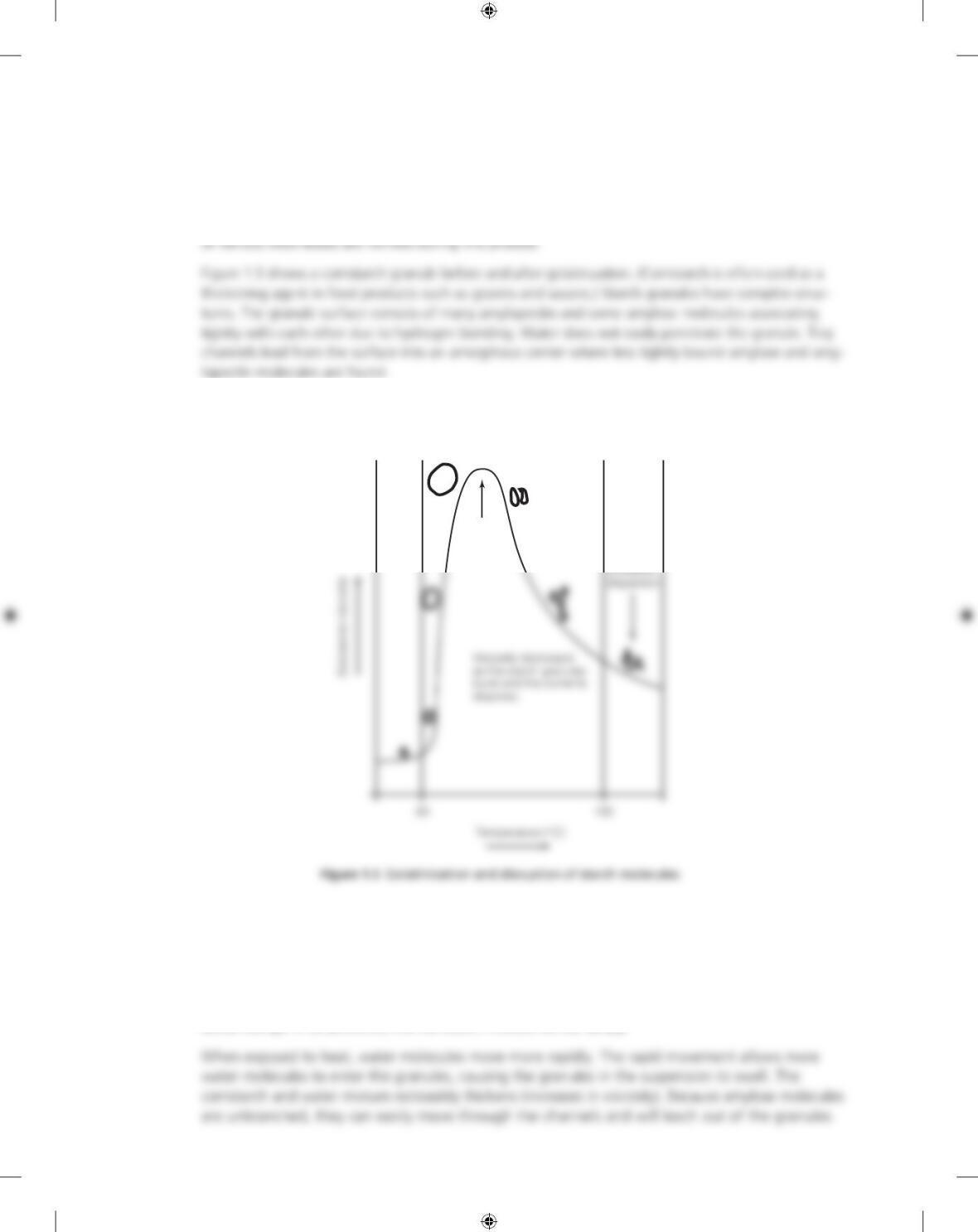
1.Contrastthemicroscopicstarchgranulesofcornwiththoseofpotato,showninFigure1.4.
Corn granules (5–25 mm) generally are smaller than potato granules (15–100 mm). Corn granules are
angular and irregularly shaped, while potato granules are smooth and sphere- or oval-shaped.
2.Nowthatyouhavelearnedmoreaboutthedifferenttypesofstarchgranules,canyouinferthe
typeofgranulesthatRobscrapedfromtheolddress?Explainyourresponse.
M01_REEC4164_04_IE_CH01.indd 12 24/01/14 5:57 PM
ChaPter 1: Picture Perfect b 13
B. using starches in Food: understanding structure for Commercial application. Although the
enzymes in our digestive system are capable of breaking apart starch granules, cooking starchy foods
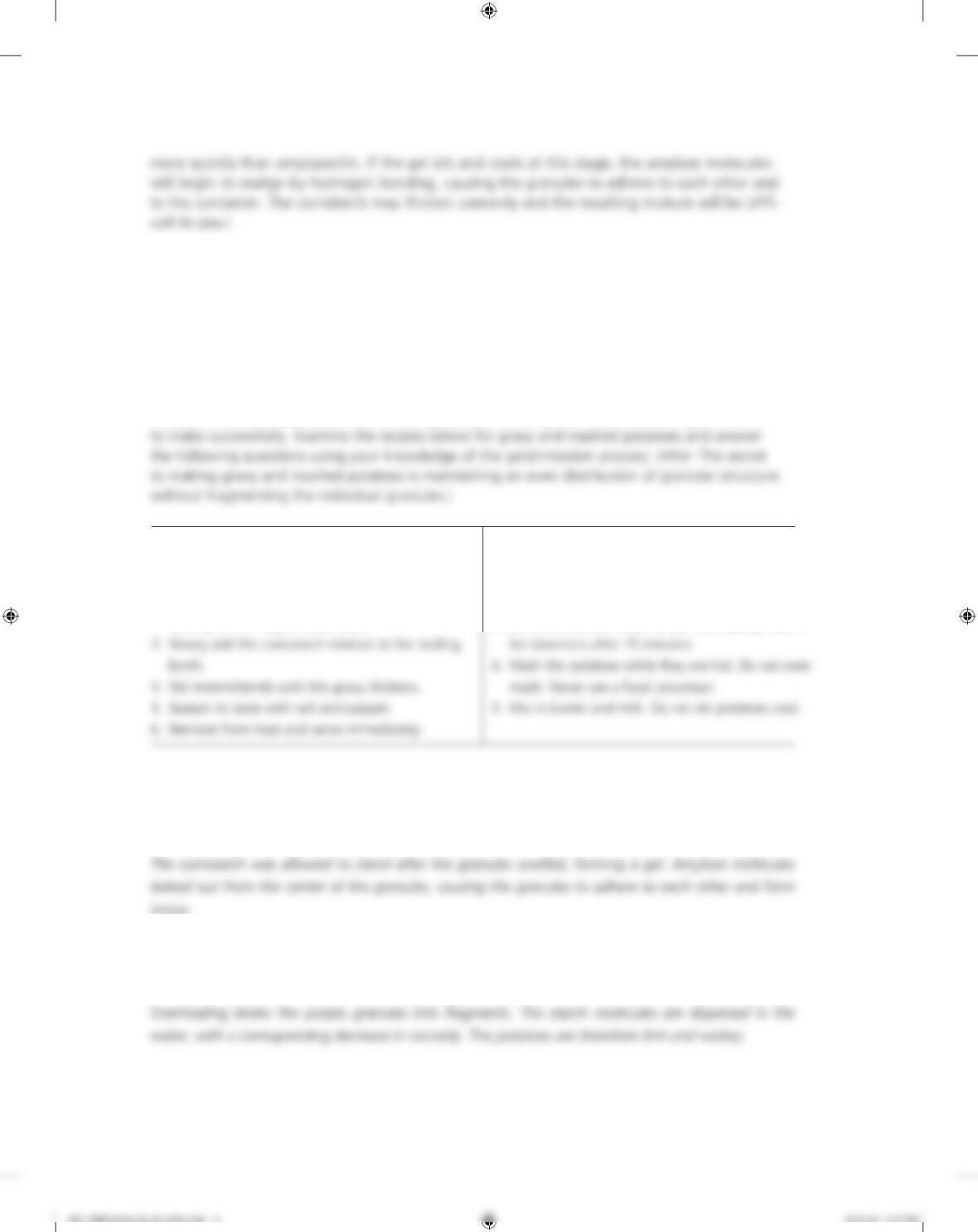
causes the starches to gelatinize, which enhances texture and taste and improves digestion. Gelatini-
zation is the process in which granules of starch swell, break up, and disperse in water. Suspensions
Peak
viscosity
Granules swell
as heated water
molecules enter them.
When starch granules are immersed in water, two things happen. Water moves slowly through the
channels and forms hydrogen bonds with the amylose and amylopectin components in the center of
the granules. At the same time, hydrogen bonding among the amylose and amylopectin molecules
on adjacent granules causes clumping. Stirring the suspension prevents the granules from forming
dense clumps. If understirred, the cornstarch mixture will be lumpy.
M01_REEC4164_04_IE_CH01.indd 13 24/01/14 5:57 PM
14 a BIoloGICal InquIry: A Workbook of Investigative Cases
On the other hand, continued heating of the gelatinized starch transfers more energy to the water
molecules, allowing them to further destabilize hydrogen bonds between starch molecules. The
granules continue to swell, and more starch molecules leak into the surrounding liquid. Heat–
ing past the boiling point causes swollen granules to break into fragments and release all of the
starch molecules into the water. At this point, the mixture thins (decreases in viscosity). Stirring the
mixture will hasten the thinning process, leading to a runny cornstarch mixture.
Investigation: What Went Wrong?
Gravy and mashed potatoes are two foods prepared in many U.S. homes, but they are tricky
turkey Gravy
1. In a large saucepan, over medium heat, bring
1 cup of turkey broth and pan juices to a boil.
2. Meanwhile, blend until smooth 2 tablespoons of
cornstarch in 1 cup of cold water.
Mashed Potatoes
1. Place a large pot of cold water on the stove.
2. Peel each potato, cut into cubes of about
3/4-inch square, and put in the pot.
3. Do not allow the water to boil too rapidly; check
1.Asyoubegintoprepareturkeygravy,youcarefullyblend2tablespoonsofcornstarchintoacupof
coldwater.Youaddthemixturetotheturkeybroth,butthenyouforgettostirit.Yourgravyturns
outlumpy.Howdidthemistakeruinthegravy?
2.Tomakemashedpotatoes,youboilthepotatoesfor25minutes.Thepotatochunksbeginto
disintegrateasyoudrainthem.Whenyouaddthebutterandmilk,thepotatoesarethinand
gluey—similar to wallpaper paste before it dries. What went wrong?
ChaPter 1: Picture Perfect b 15
C. structural Properties of native and Modified starches in Commercial Products. Starch has a num–
ber of properties that make it useful to manufacturers of prepared foods and other commercial products
such as glues. Cornstarch products, such as corn syrup, are among the most common ingredients listed
on the food labels of cookies, puddings, frozen dinners, and crackers.
Waxy cornstarch is produced by a type of corn plant that does not produce amylose. Waxy starch
consists entirely of amylopectin molecules. When this cornstarch is dissolved in a solution, it tends
to be more stable than the dent cornstarch. The resulting product pours easily. For example, hot
chocolate mixes contain waxy cornstarch.
Manufacturers often chemically modify native cornstarch to form additional bonds that cross-link
amylose molecules or cross-link amylose and amylopectin molecules. These modified starches have
different chemical properties than the native starches.
• Cross-linked waxy starches like Consista® and Rezista® absorb water but retain their granular
structure, producing more stable mixtures with higher viscosity than that found in native starches.
Read the following product description and determine which starch would be the best
choice for a manufacturer. (Note:Thecostofdentstarchislow,waxystarchismoreexpensive,
andchemicallymodifiedwaxystarchesarethemostexpensive.Althoughcostisalwaysanim–
portantfactorinmanufacturingdecisions,forthisexerciseconsideronlythecharacteristicsof
the different types of starch.)
A.Dentstarch C.Modifiedwaxystarch
B. Waxy starch D. Amylomaize
1. Instant cheesecake mix. Manufacturers need a starch that will maintain a creamy consistency and will
neitherliquefynorhardenatroomtemperature.Explainyourchoice.
2. Soups.Manufacturersneedastarchthatallowstheirproducttobepourablebutdoesnotthicken
too much as it cools. Explain your choice.
3. Batter and breading.Manufacturersneedastarchthatwilladheretochickenandthenbecome
crunchyasthechickeniscooked.Explainyourchoice.
The best choice is A. Dent starch is the best choice because amylose molecules are present, enabling
V. Open-Ended Investigations
A. Whyisstarchusedinpapermaking?Considerthestructureofstarchmoleculesinyouranswer.
Starch is used throughout the paper-making process. In the wet phases, starch is added to the slumy to
References
Stanley,KeithD.,SeniorResearchScientist,Tate&Lyle,Decatur,IL.Personalcommunication.
Whistler,R.L.,andE.F.Paschall.Starch: Chemistry and Technology.NewYork:AcademicPress,1965.
16 a BIoloGICal InquIry: A Workbook of Investigative Cases