Chapter 26
Working Capital Management
26–1. Answer the following questions:
a. What is the difference between a firm’s cash cycle and its operating cycle?
b. How will a firm’s cash cycle be affected if a firm increases its inventory, all else being equal?
c. How will a firm’s cash cycle be affected if a firm begins to take the discounts offered by its
suppliers, all else being equal?
26–2. Does an increase in a firm’s cash cycle necessarily mean that a firm is managing its cash poorly?
26–3. Aberdeen Outboard Motors is contemplating building a new plant. The company anticipates
that the plant will require an initial investment of $2.11 million in net working capital today. The
plant will last 11 years, at which point the full investment in net working capital will be
recovered. Given an annual discount rate of 6.4%, what is the net present value of this working
capital investment?
342 Berk/DeMarzo, Corporate Finance, Fourth Edition, Global Edition
©2017 Pearson Education, Ltd.
Ignoring revenues and other expenses associated with the new plant, the NPV of the $2.11 million
investment in net working capital is simply the present value of the $2.11 million that the firm will
recoup at the end of ten years minus the initial $2.11 million investment.
11
$2,110,000
NPV $2,110,000 $1,043,589.17.
(1.064)
= − + = −
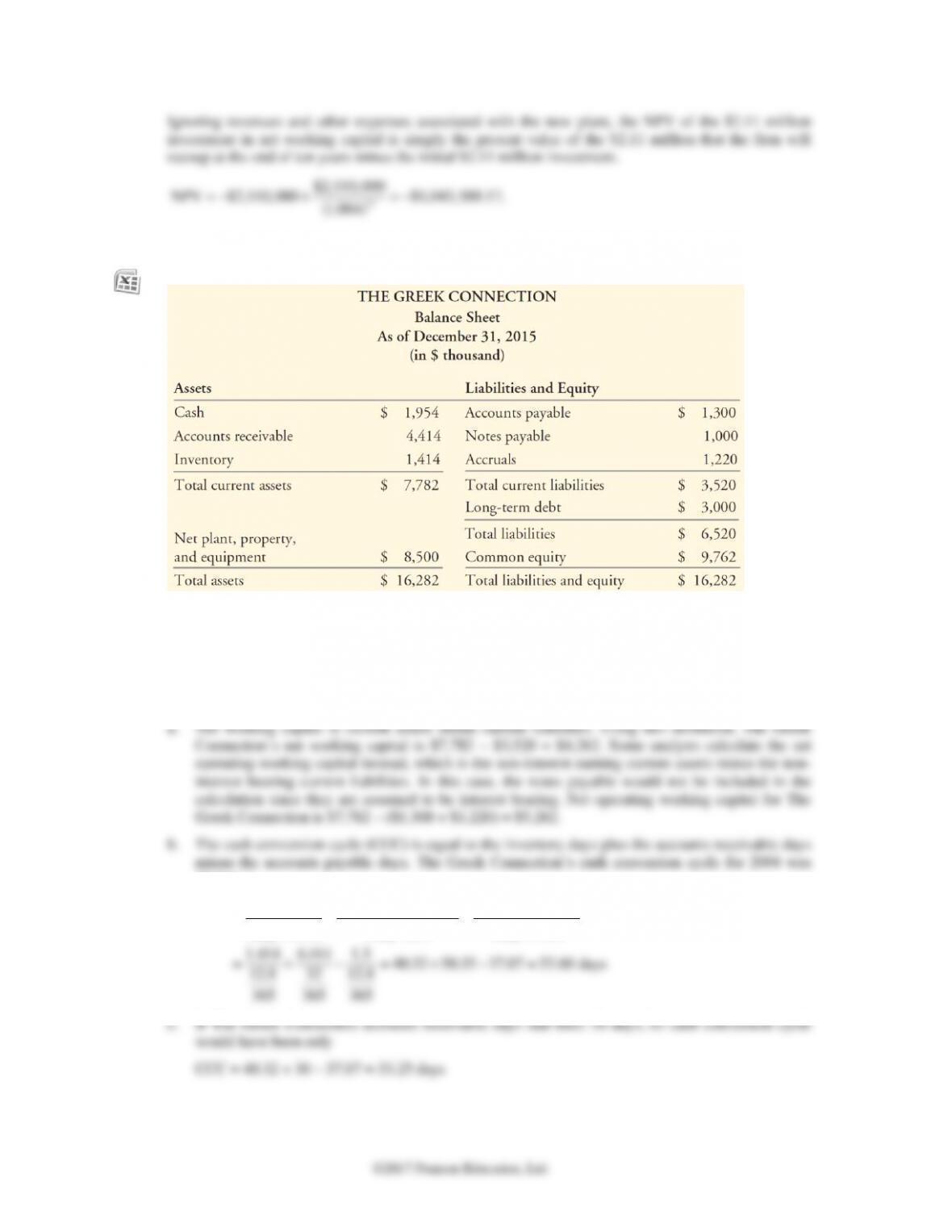
26–4. The Greek Connection had sales of $32 million and a cost of goods sold of $12.8 million in 2015.
A simplified balance sheet for the firm appears below:
a. Calculate The Greek Connection’s net working capital in 2015.
b. Calculate the cash conversion cycle of The Greek Connection in 2015.
c. The industry average accounts receivable days is 30 days. What would the cash conversion
cycle for The Greek Connection have been in 2015 had it matched the industry average for
accounts receivable days?
41.4 days.
inventory accounts receivable accounts payable
CCC daily COGS daily sales daily COGS
1.414 4.414 1.3 40.32 50.35 37.07 53.60 days
12.8 32 12.8
365 365 365
= + −
= + − = + − =
c. If The Greek Connection accounts receivable days had been 30 days, its cash conversion cycle
would have been only
CCC = 40.32 + 30 – 37.07 = 33.25 days
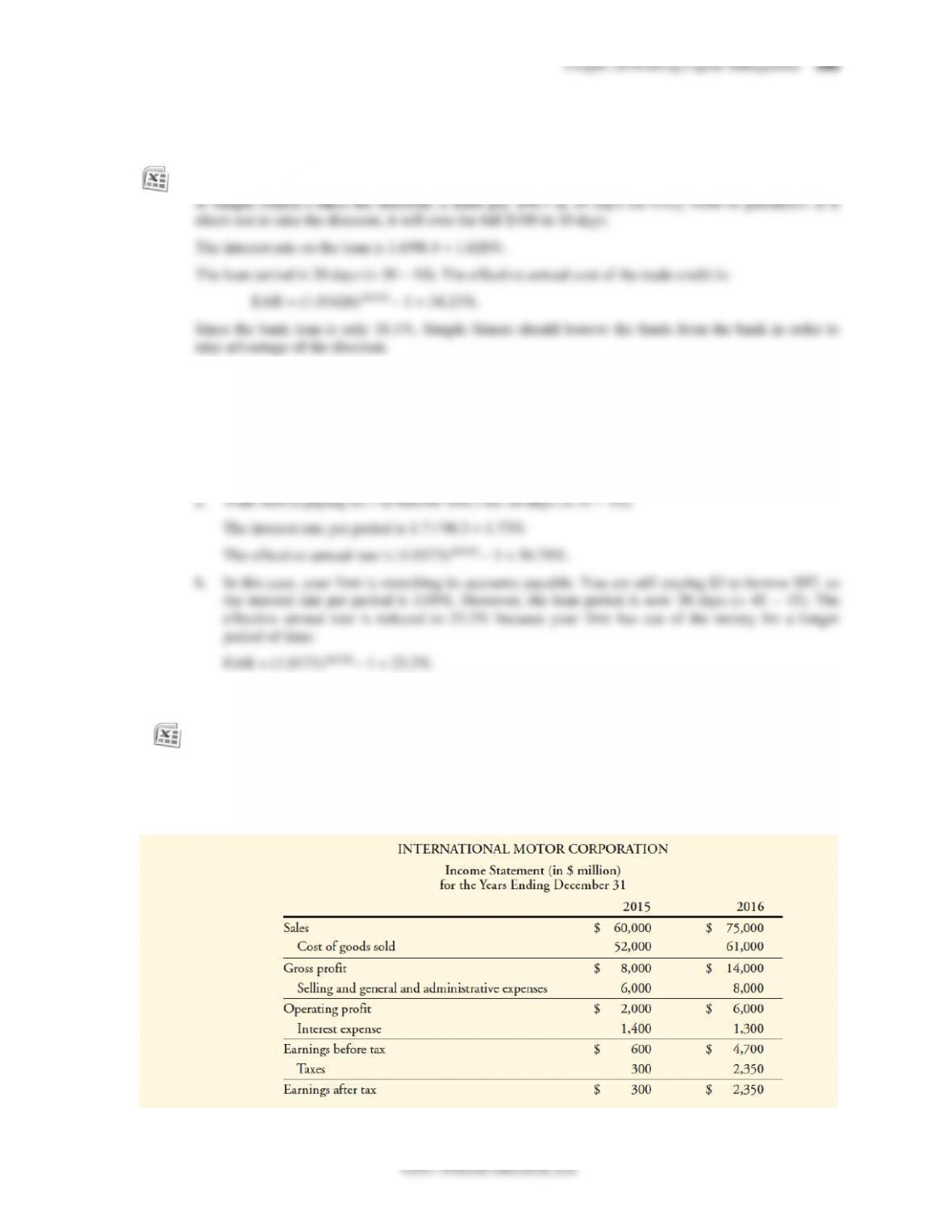
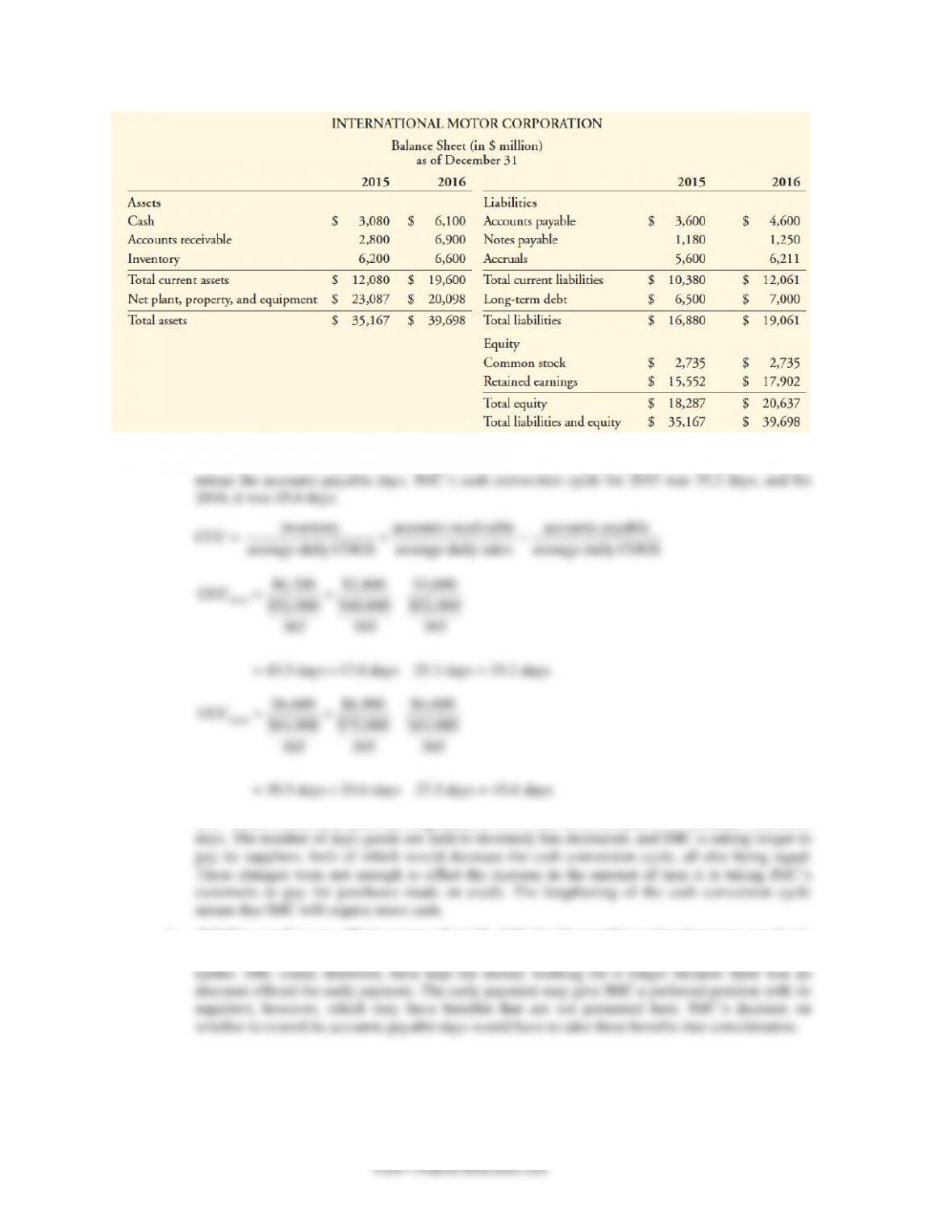
346 Berk/DeMarzo, Corporate Finance, Fourth Edition, Global Edition
a. The cash conversion cycle (CCC) is equal to the inventory days plus the accounts receivable days
=39.5 days +33.6 days –27.5 days =45.6 days
IMC’s cash conversion cycle has lengthened in 2016, due to an increase in its accounts receivable
b. If IMC’s suppliers are offering terms of net 30, IMC should consider waiting longer to pay for its
purchases. In 2015, it paid nearly five days earlier than necessary, and in 2016, it paid 2.5 days