Chapter 22
Real Options
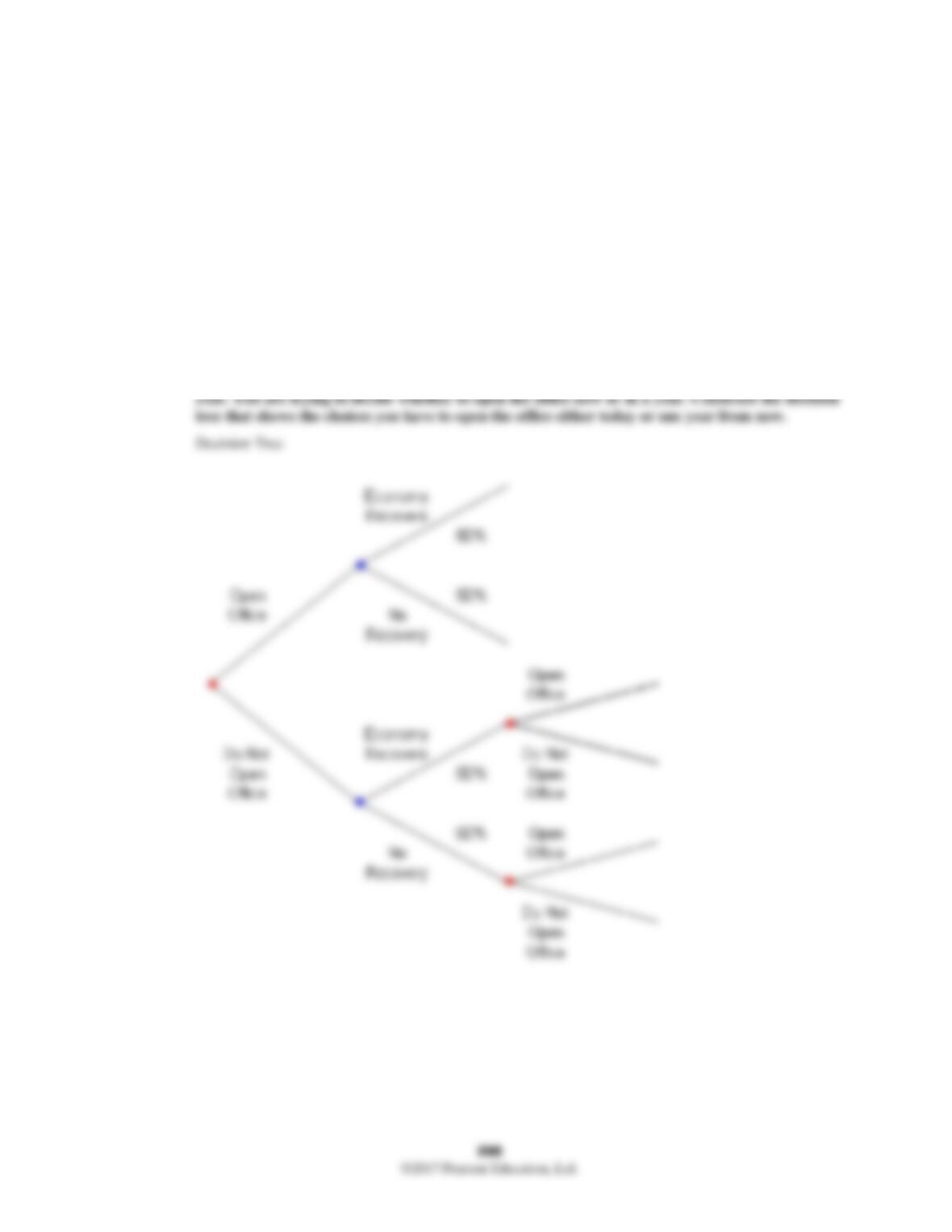
22–1. Your company is planning on opening an office in Japan. Profits depend on how fast the
economy in Japan recovers from its current recession. There is a 50% chance of recovery this
Chapter 22/Real Options 299
c.
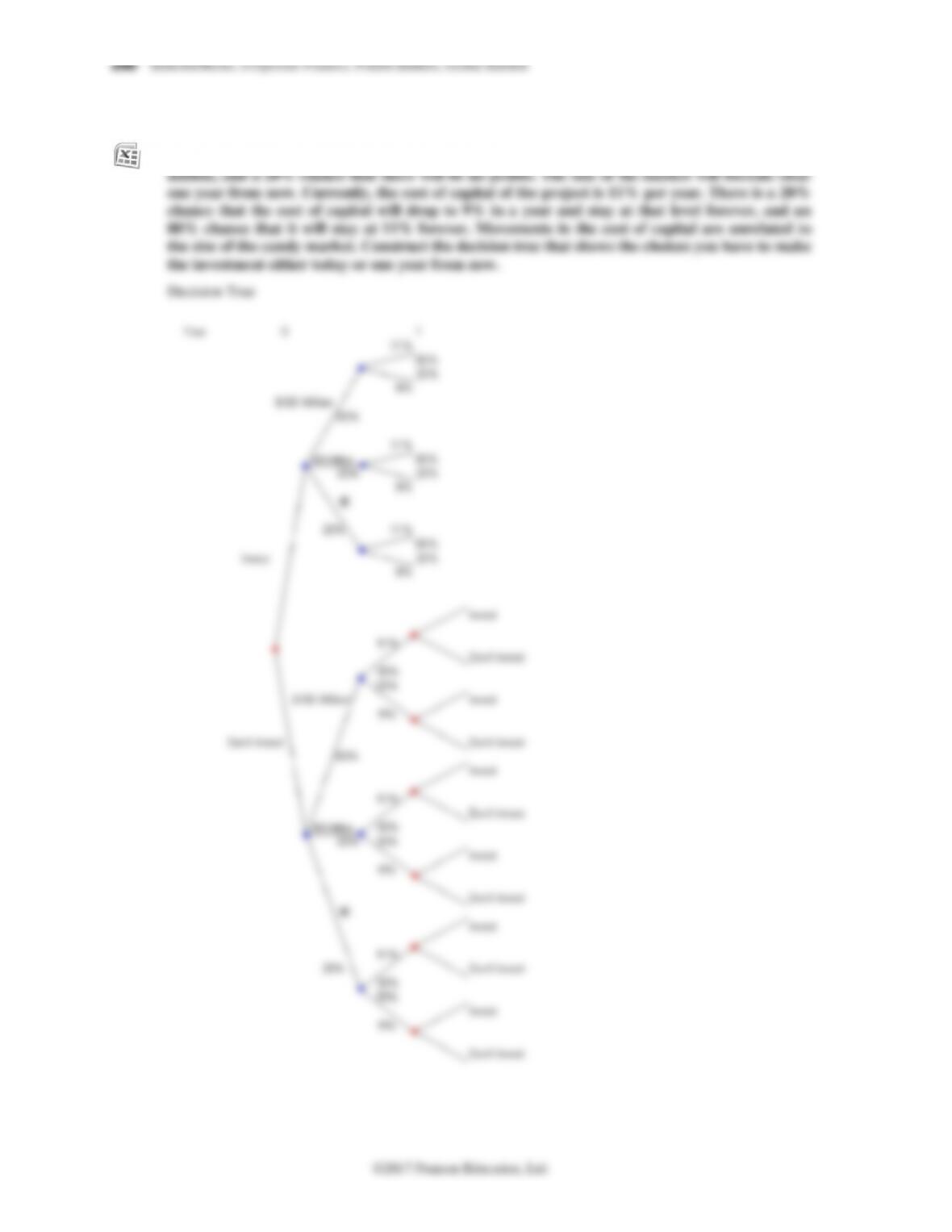
Decision Tree
d. The beta of the investment opportunity is
1
()
=
x
shoe
S N d
C
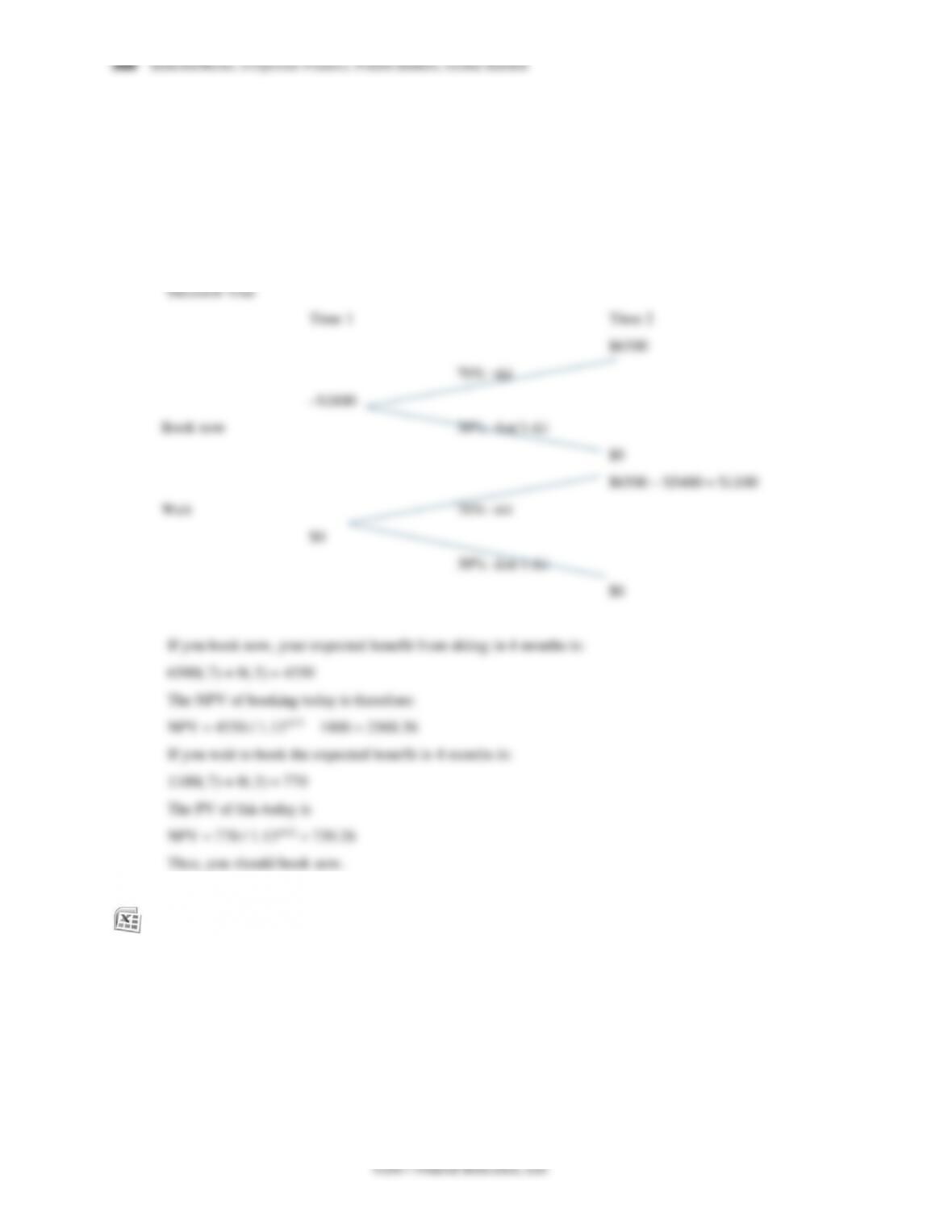
when the shoe business is worth less then $36.6 million and is equal to 1.1 (the beta of a shoe
business) when it is worth more:

Chapter 22/Real Options 301
a. Calculate the NPV of undertaking the investment today.
b. Calculate the NPV of waiting a year to make the investment decision.
c. What is your optimal investment strategy?
1
2
12
0
1
2
3
5
6
7
17
20%
11.5(1.101)2
11.5(1.101)3
11.5(1.101)5
11.5(1.101)5
11.5(1.101)5
11.5(1.101)5
x (1 – 0.02)
x (1 – 0.02)2
x (1-0.02)12
–100
80%
11.5(1.051)2
11.5(1.051)3
11.5(1.051)5
11.5(1.051)5
11.5(1.051)5
11.5(1.051)5
x (1 – 0.02)
x (1 – 0.02)2
x (1 – 0.02)12
If the high growth rate state occurs, then the NPV is:
( ) ( )
( ) ( )
512
high 5
11.5 1.101 1 0.02
1 1 0.02
NPV 4 11.5 1 100
0.101 0.02 1.101
1.101
$16.105 m.
−−
= + − −
+
=
Note: Since the first four cash flows grow out of the same rate as the discount rate, their present
value is just the sum of the cash flows.
If the low growth rate state occurs, then the NPV is:
( )
( )
( ) ( )
24
low
512
5
11.5 1.051
1 1 0.051
NPV 1
1.101 0.101 0.051 1.101
11.5 1.051 1 0.02
1 1 0.02
1 100 $5.285 m.
0.101 0.02 1.101
1.101
+
=−
−
−−
+ − − = −
+
So the expected value is:
b. If the high growth rate state occurs, then the NPV at time 1 is:
( )( ) ( )
( ) ( )
512
high 4
11.5 1.101 1 0.02
1 1 0.02
NPV 3 11.5 1.101 1 100
0.101 0.02 1.101
1.101
$15.170 m.
−−
= + − −
+
=
Note: Since the first three cash flows grow at the same rate as the discount rate, their present value
302 Berk/DeMarzo, Corporate Finance, Fourth Edition, Global Edition
( )
( )
( ) ( )
33
low
512
4
11.5 1.051
1 1 0.051
NPV 1
1.101 0.101 0.051 1.101
11.5 1.051 1 0.02
1 1 0.02
1 100 $7.257 m.
0.101 0.02 1.101
1.101
+
=−
−
−−
+ − − = −
+
22-9. Consider again the electric car dealership in Section 22.3. Suppose the current value of a
dealership is $5.2 million and the first-year free cash flow is expected to be $520,000 rather than
$600,000. What is the beta of a corporation whose only asset is a one-year option to open a
dealership? What is the beta if the first year’s cash flows are expected to be $710,000, so a
working dealership is worth $7.1 million?
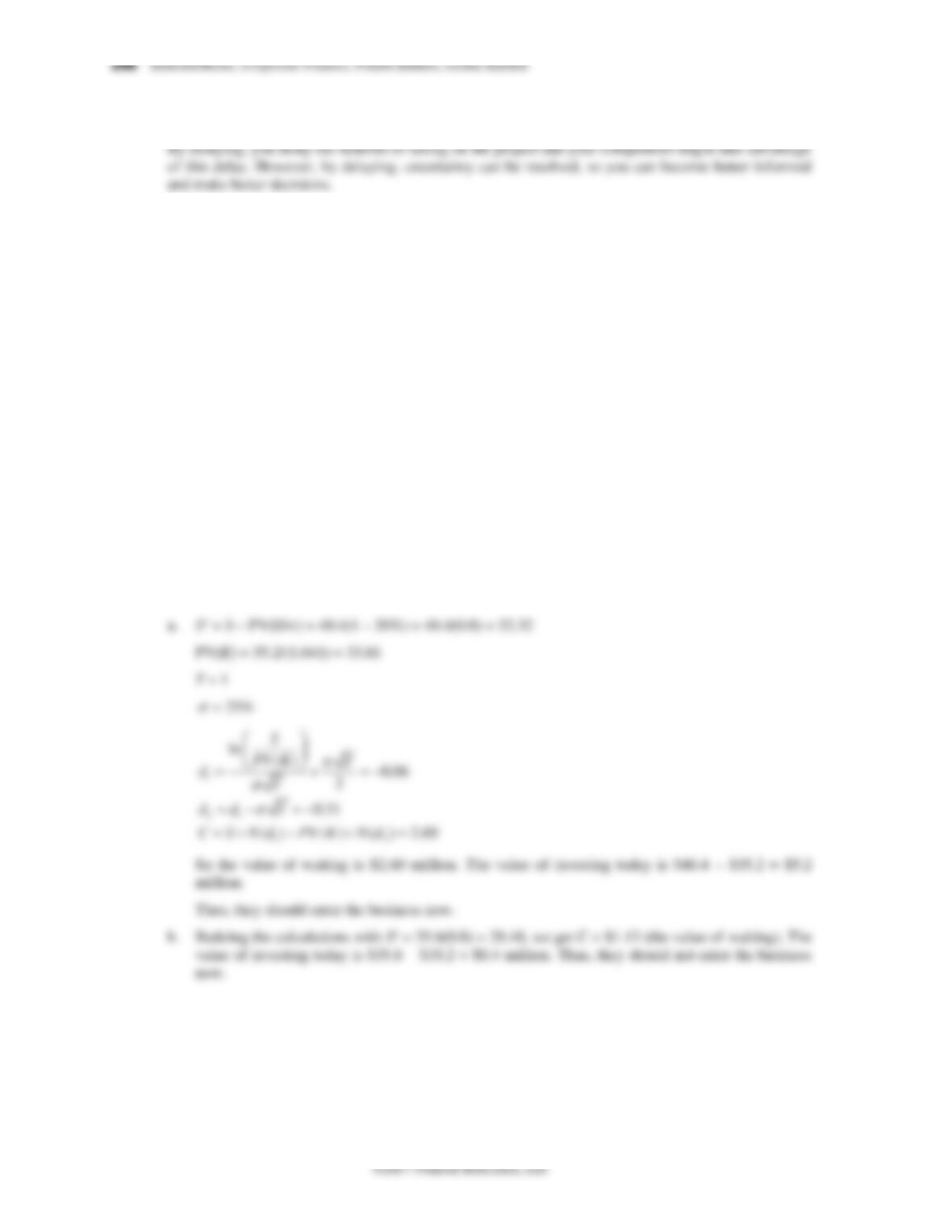
r = 5.00%
Chapter 22/Real Options 303
c. In which case do your options have higher beta? In which case does your firm have higher
beta? Why?
a. First, you must compute the current value of the asset without the dividends that will be missed:
Next, using the information from Table 22.1 calculate the value of the call option to open the
dealership:
K = 5
1.131
Consider what would have happened if instead of waiting one period to make the investment decision,
Southern’s managers decided to make the decision today, i.e., at time 0 on the timeline. In this case,
the decision tree looks like this:
0
1
2
3
4
High Growth
9.6 x 1.03
9.6 x 1.032
9.6 x 1.033
9.6 x 1.034
Low Growth
1
2
3
4
9.6 x 1.024
9.6 x 1.0242
9.6 x 1.0243
9.6 x 1.0244
Chapter 22/Real Options 307
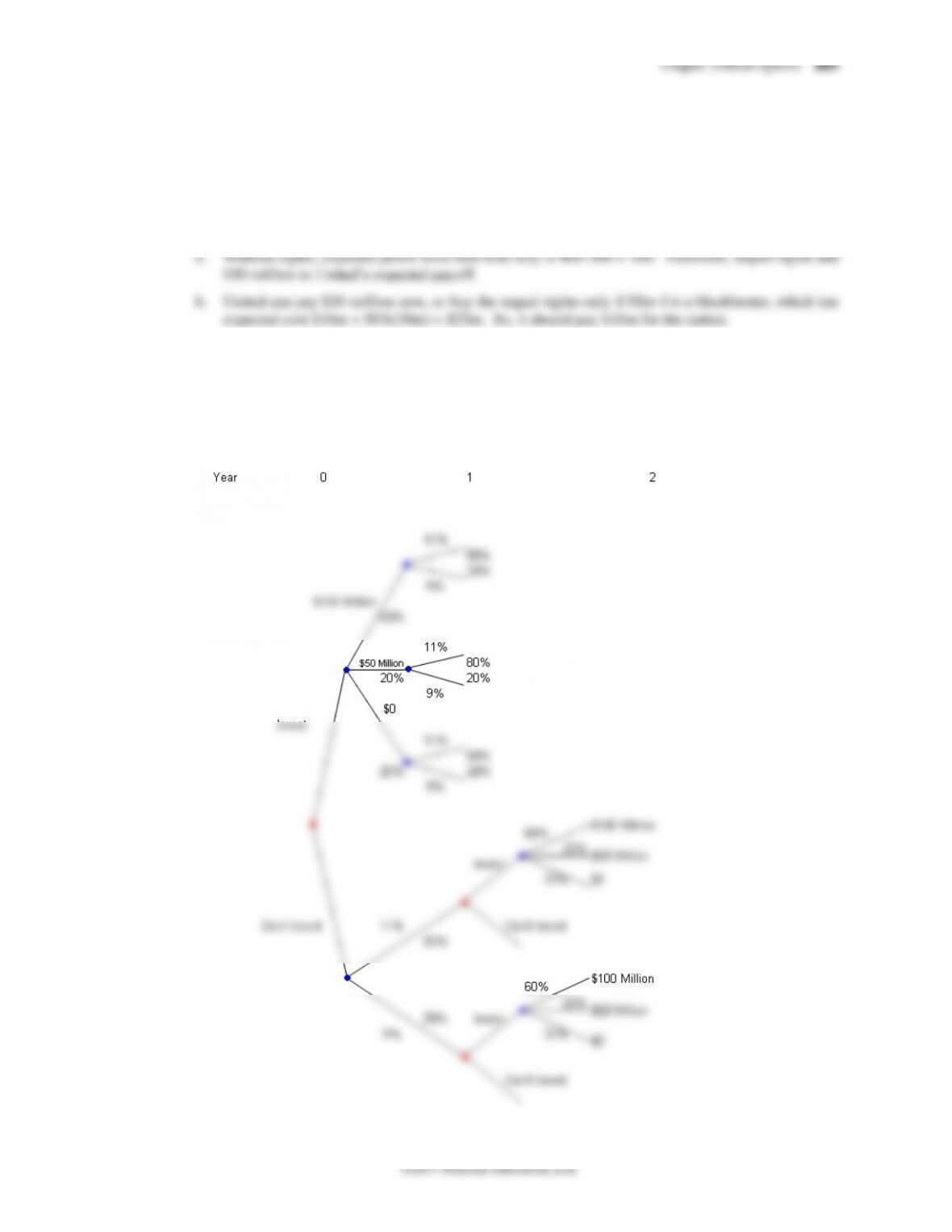
First let’s calculate the NPV of investing in 3 possible states:
1. $100 Million State:
Timeline:
1
2
3
–500
100
100
450.
=
2. $50 Million State:
Timeline:
1
2
3
–500
50
50
( )
NPV 9% 55.56
=
( )
100
EV 55.56 0.2
11.11
=
=
3. NPV is zero in the worst state, since profits are zero so the project will not be undertaken.
So the present value at time 0 of the expected value at time 1 is:
0.6 450 0.2 11.11 $235.54 million.
1.1544
+ =
If the investment is made at time 0, then the NPV is the PV of the expected cash flows minus the
initial investment. The expected cash flows are:
0.6 100 0.2 50 70 + =
per year.