SOLUTION
Requirements 1, 2 and 3
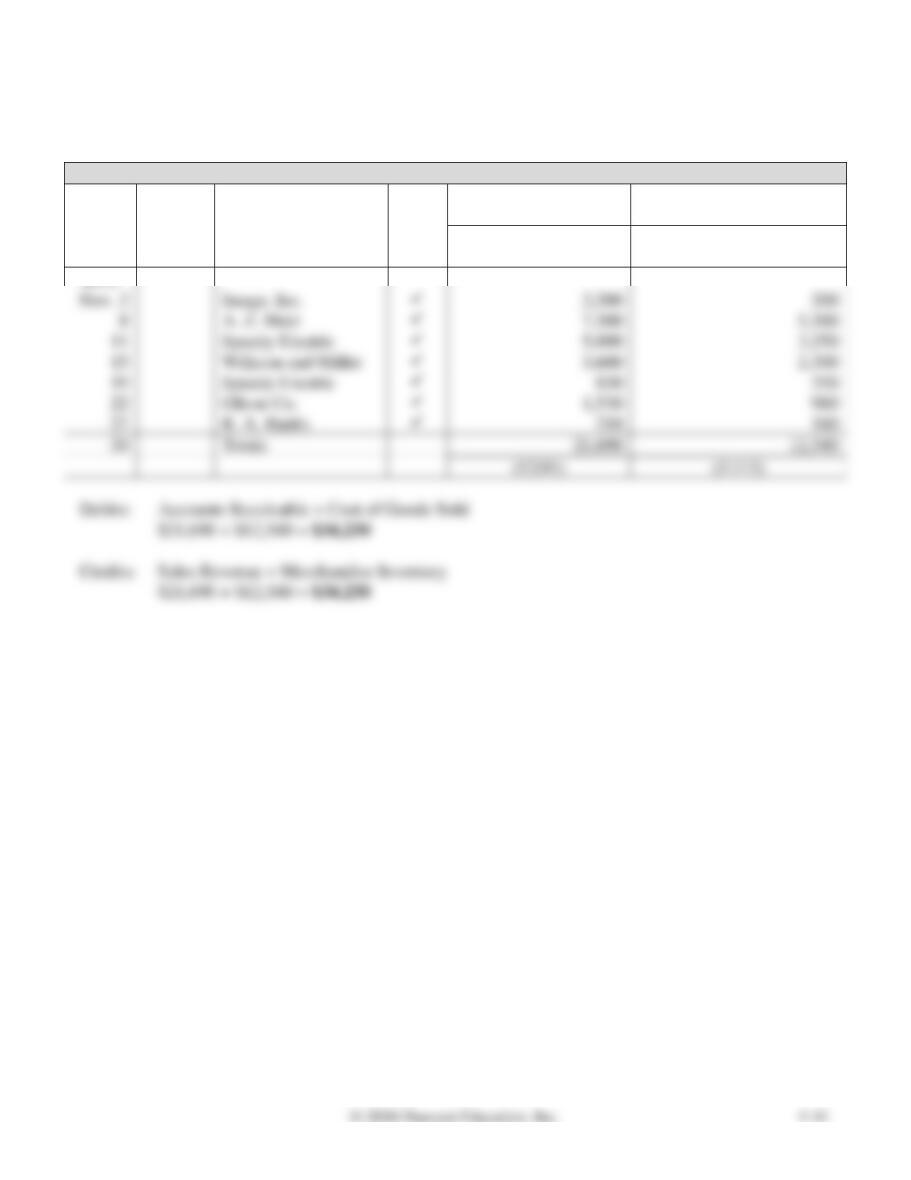
Sales Journal
Page 1
Date
Invoice
No.
Customer
Account Debited
Post.
Ref.
Accounts Receivable
DR
Cost of Goods Sold
DR
Sales Revenue
CR
Merchandise Inventory
CR
PC–27B, cont.
Requirements 1, 2 and 3, cont.
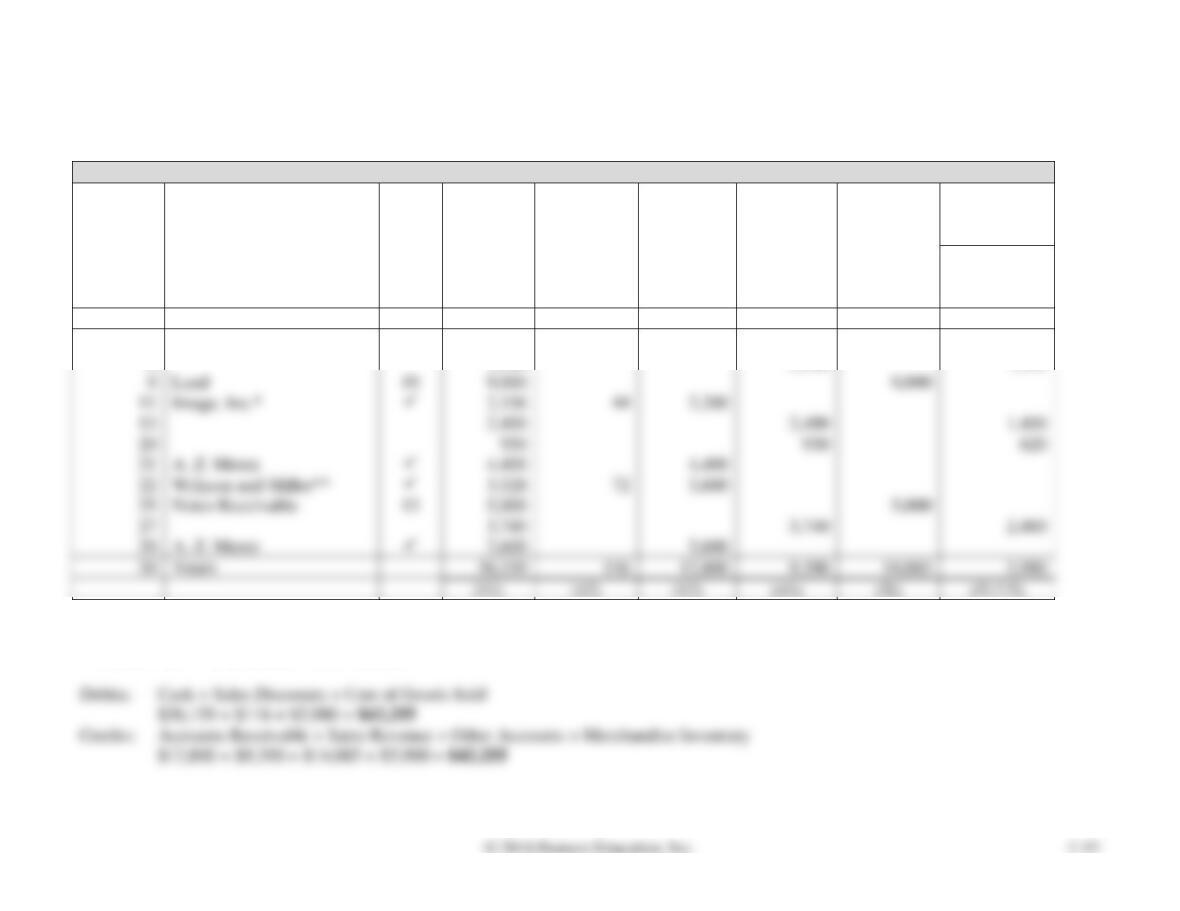
Cash Receipts Journal
Page 1
Date
Account Credited
Post.
Ref.
Cash
DR
Sales
Discounts
DR
Accounts
Receivable
CR
Sales
Revenue
CR
Other
Accounts
CR
Cost of
Goods Sold
DR
Merchandise
Inventory
CR
2016
Nov. 6
Equipment
18
85
85
6
2,300
2,300
1,500
9
Land
19
9,000
11
Image, Inc.*
2,156
13
2,400
2,400
1,400
20
4,400
Wilkson and Miller**
3,528
Notes Receivable
13
5,000
3,740
3,740
2,460
2,600
Totals
36,159
9,390
14,085
5,980
(11)
(41)
(51/15)
*$2,200 × 2% = $44; $2,200 – $44 = $2,156
**$3,600 × 2% = $72; $3,600 – $72 = $3,528
Debits:
Cash + Sales Discounts + Cost of Goods Sold
Credits:
Accounts Receivable + Sales Revenue + Other Accounts + Merchandise Inventory
PC–27B, cont.
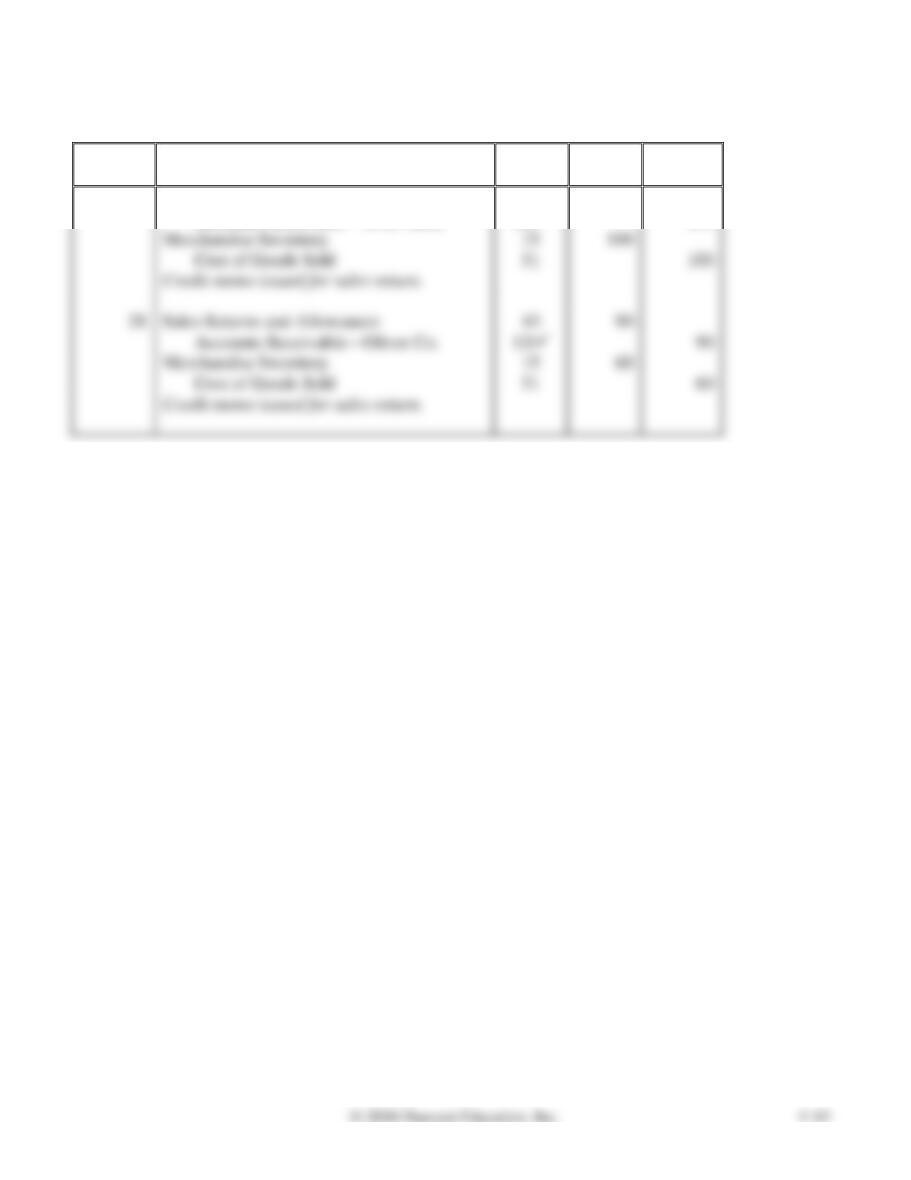
Requirements 1, 2 and 3, cont.
Date
Accounts and Explanation
Post.
Ref.
Debit
Credit
Jul. 18
Sales Returns and Allowances
43
500
Accounts Receivable—A. Z. Metz
12/✓
500
Merchandise Inventory
15
100
Cost of Goods Sold
51
100
Sales Returns and Allowances
43
Accounts Receivable—Oliver Co.
12/✓
Merchandise Inventory
15
Cost of Goods Sold
51
PC-28B Using the purchases, cash payments, and general journals
Learning Objectives 3, 4
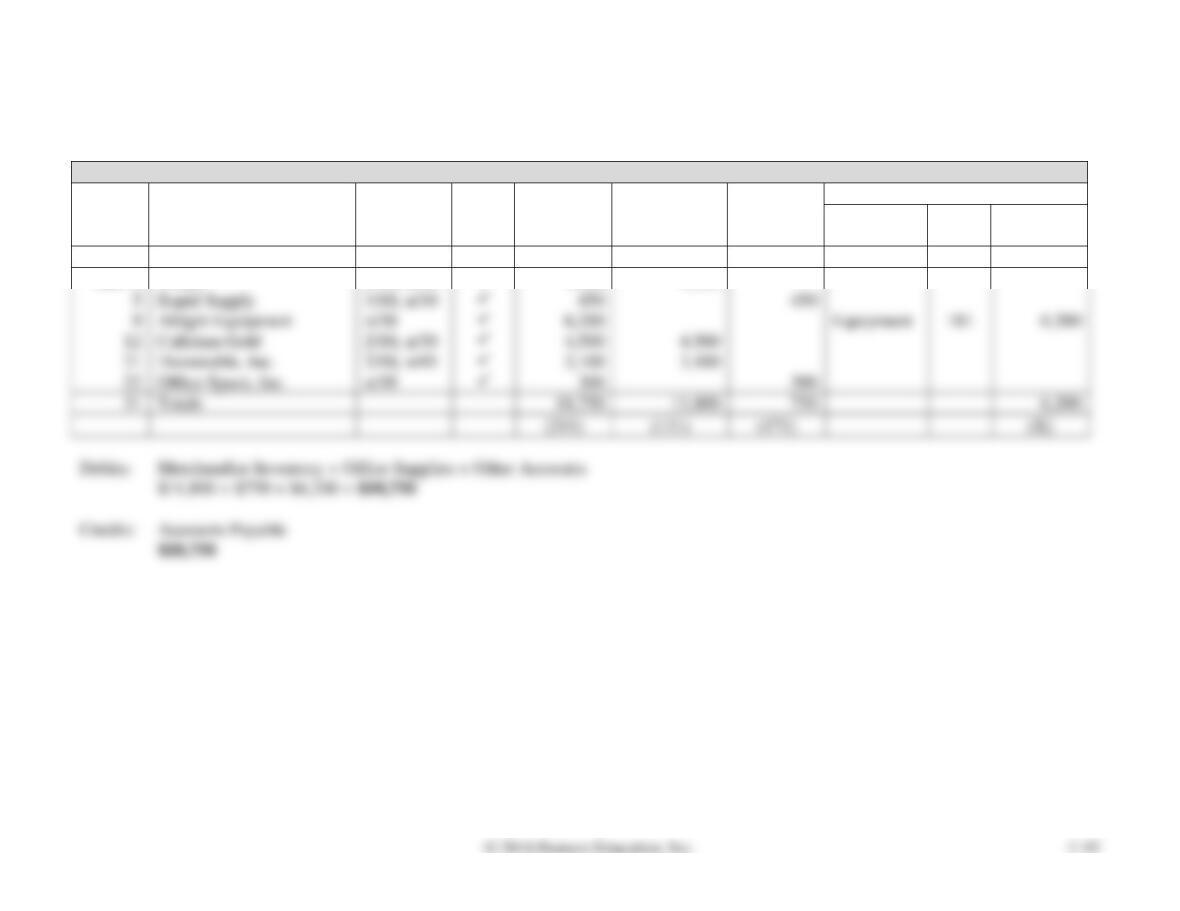
Purchases Journal, Accounts Payable CR column total $18,750
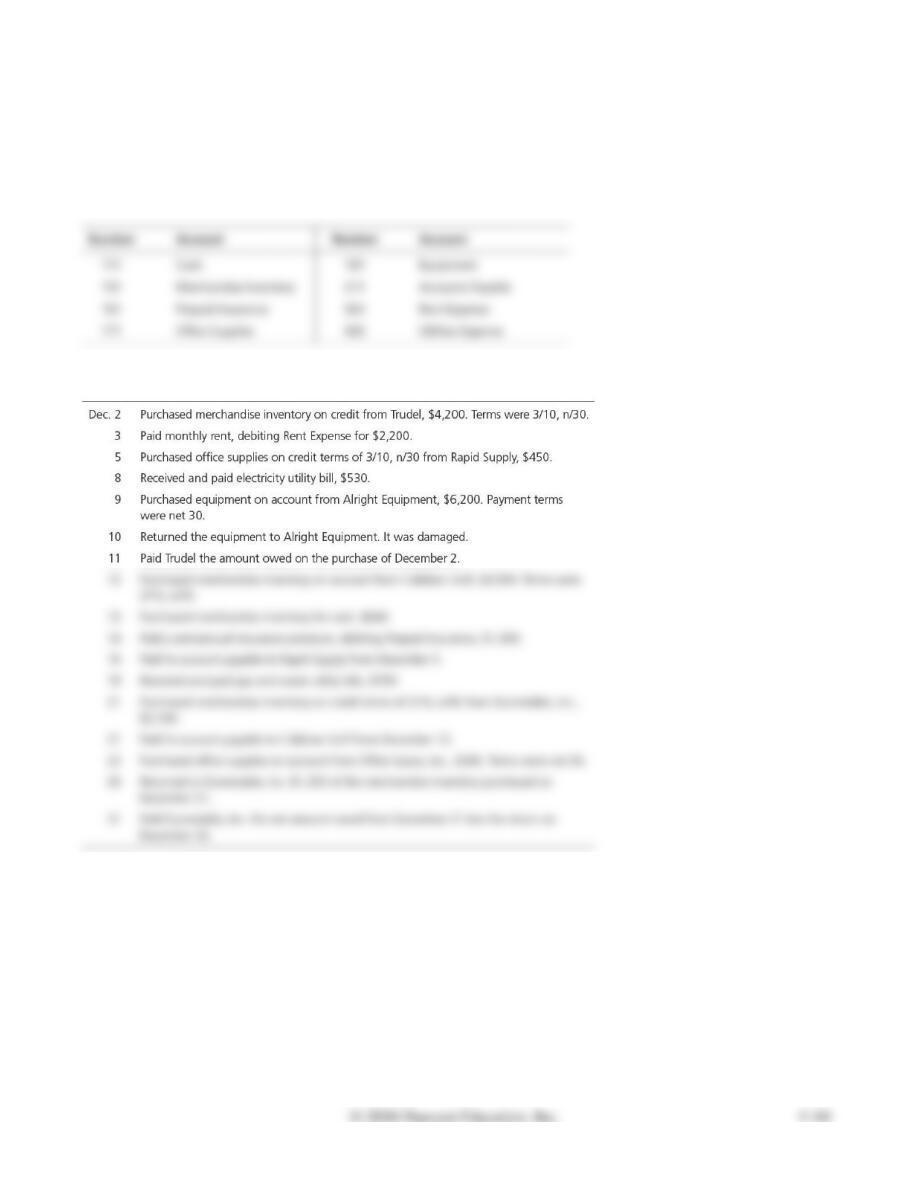
The general ledger of Circus Lake Golf Shop includes the following selected accounts, along with their
account numbers:
Transactions in December that affected purchases and cash payments were as follows:
Requirements
1. Use the appropriate journal to record the preceding transactions in a purchases journal, a cash
payments journal (omit the Check No. column), and a general journal. Circus Lake Golf Shop
records purchase returns in the general journal. The company uses the perpetual inventory system.
2. Total each column of the special journals. Show that total debits equal total credits in each special
journal.
3. Show how postings would be made from the journals by writing the account numbers and check
marks in the appropriate places in the journals.
SOLUTION
Requirements 1, 2 and 3
Purchases Journal
Page 1
Date
Vendor
Account Credited
Terms
Post.
Ref.
Accounts
Payable
CR
Merchandise
Inventory
DR
Office
Supplies
DR
Other Accounts DR
Account
Title
Post.
Ref.
Amount
2016
Dec. 2
Trudel
3/10, n/30
✓
4,200
4,200
Rapid Supply
3/10, n/30
Alright Equipment
n/30
Equipment
Callahan Gold
2/10, n/30
Dunnstable, Inc.
2/10, n/45
Office Space, Inc.
n/30
Totals
Debits:
Merchandise Inventory + Office Supplies + Other Accounts
Credits:
Accounts Payable
PC–28B, cont.
Requirements 1, 2 and 3, cont.
Cash Payments Journal
Page 1
Date
Ck.
No.
Account Debited
Post.
Ref.
Other
Accounts
DR
Accounts
Payable
DR
Merchandise
Inventory
CR
Cash
CR
2016
Dec. 3
Rent Expense
564
2,200
2,200
8
Utilities Expense
583
530
530
4,200
4,074
Merchandise Inventory
131
640
640
Prepaid Insurance
161
1,300
1,300
450
450
583
700
700
4,500
4,410
1,800
1,764
Totals
5,370
10,950
1$4,200 × 3% = $126; $4,200 – $126 = $4,074
2Did not make payment within the discount period
3$4,500 × 2% = $90; $4,500 – $90 = $4,410
4$3,100 – $1,300 = $1,800; $1,800 × 2% = $36; $1,800 – $36 = $1,764
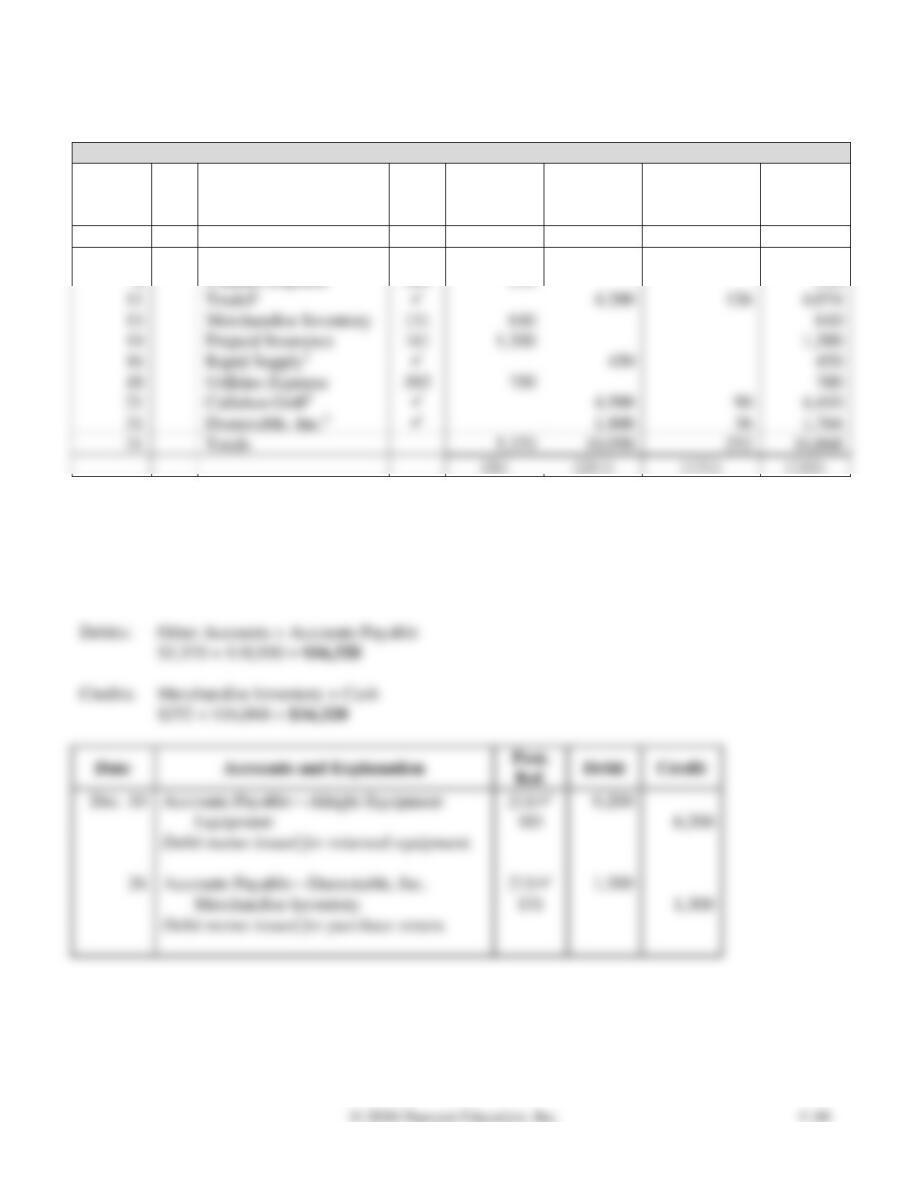
Debits:
Other Accounts + Accounts Payable
Credits:
Merchandise Inventory + Cash
Accounts Payable—Alright Equipment
6,200
26
Accounts Payable—Dunnstable, Inc.
1,300
PC-29B Using all journals, posting, and balancing the ledgers
Learning Objectives 2, 3, 4
Trial balance, total debits $49,400
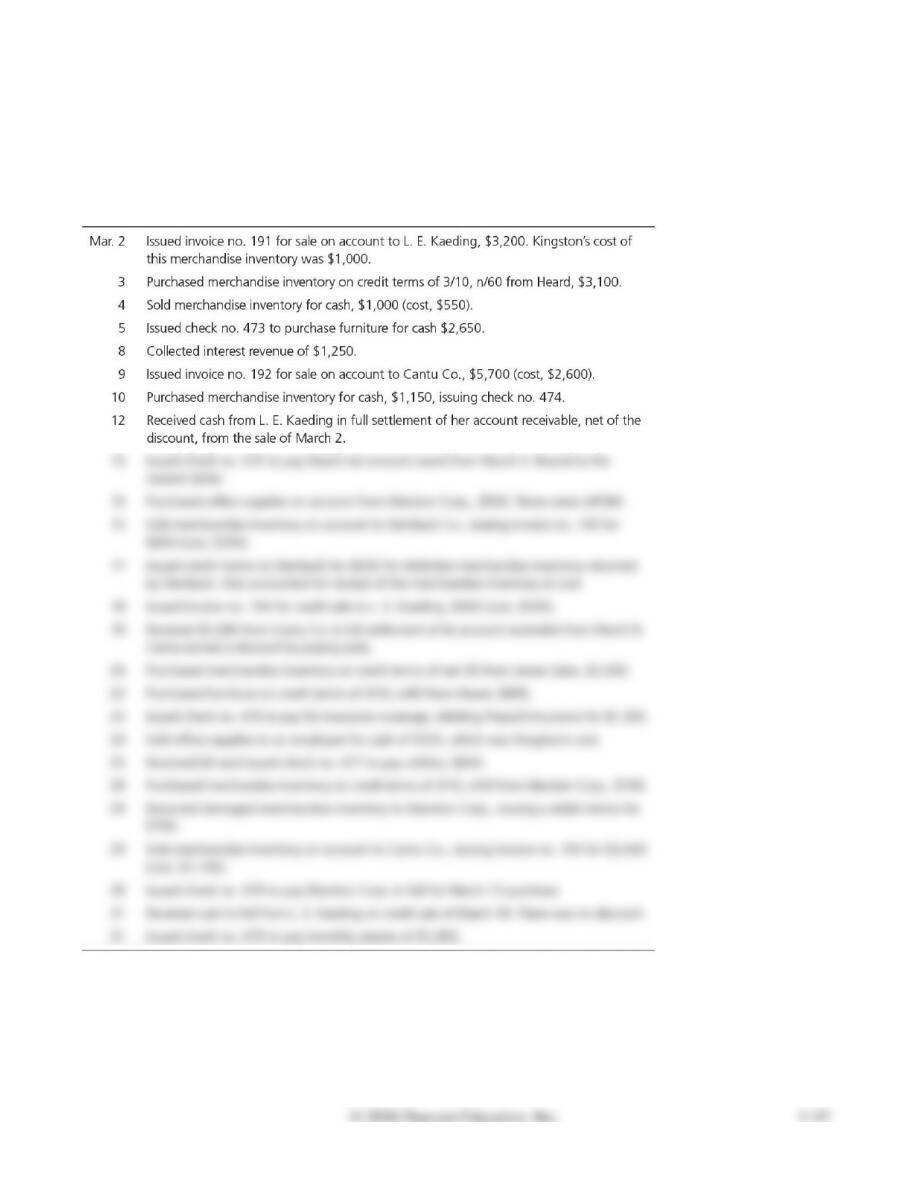
Kingston Computer Security uses the perpetual inventory system and makes all credit
sales on terms of 2/10, n/30. During March, Kingston completed these transactions:
Requirements
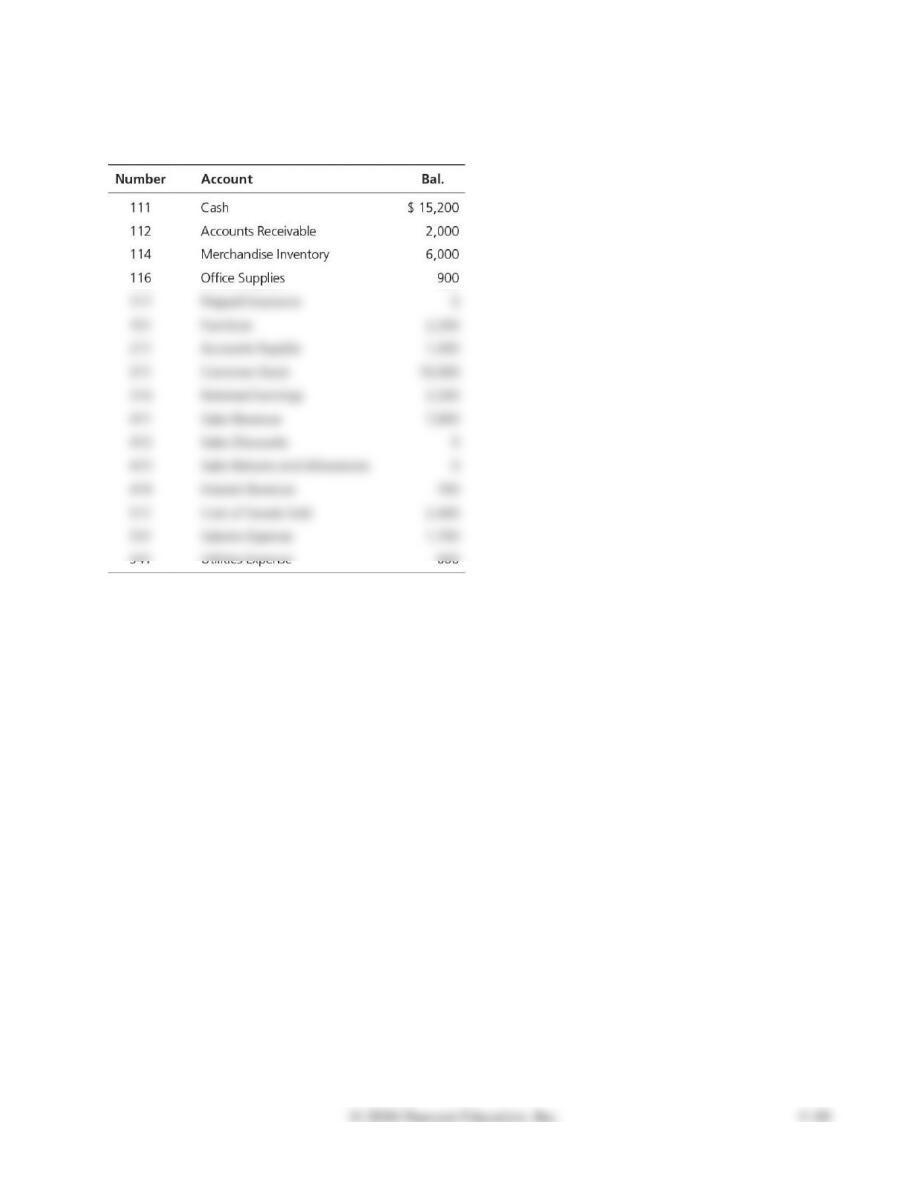
1. Open four-column general ledger accounts using Kingston Computer Security’s account numbers
and balances as of March 1, 2016, that follow. All accounts have normal balances.
2. Open four-column accounts in the subsidiary ledgers with beginning balances as of March 1, if any.
Accounts receivable subsidiary ledger: Abney Co., $2,000; Cantu Co., $0; J. R. Kaeding, $0; and
Stenback, $0. Accounts payable subsidiary ledger: Heard, $0; Marston Corp, $0; James Sales, $0;
and Yount Co., $1,000.
3. Enter the transactions in a sales journal (page 8), a cash receipts journal (page 3), a purchases journal
(page 6), a cash payments journal (page 9), and a general journal (page 4), as appropriate.
4. Post daily to the accounts receivable subsidiary ledger and to the accounts payable subsidiary ledger.
5. Total each column of the special journals. Show that total debits equal total credits in each special
journal. On March 31, post to the general ledger.
6. Prepare a trial balance as of March 31, 2016, to verify the equality of the general ledger. Balance the
total of the customer account balances in the accounts receivable subsidiary ledger against Accounts
Receivable in the general ledger. Do the same for the accounts payable subsidiary ledger and
Accounts Payable in the general ledger.
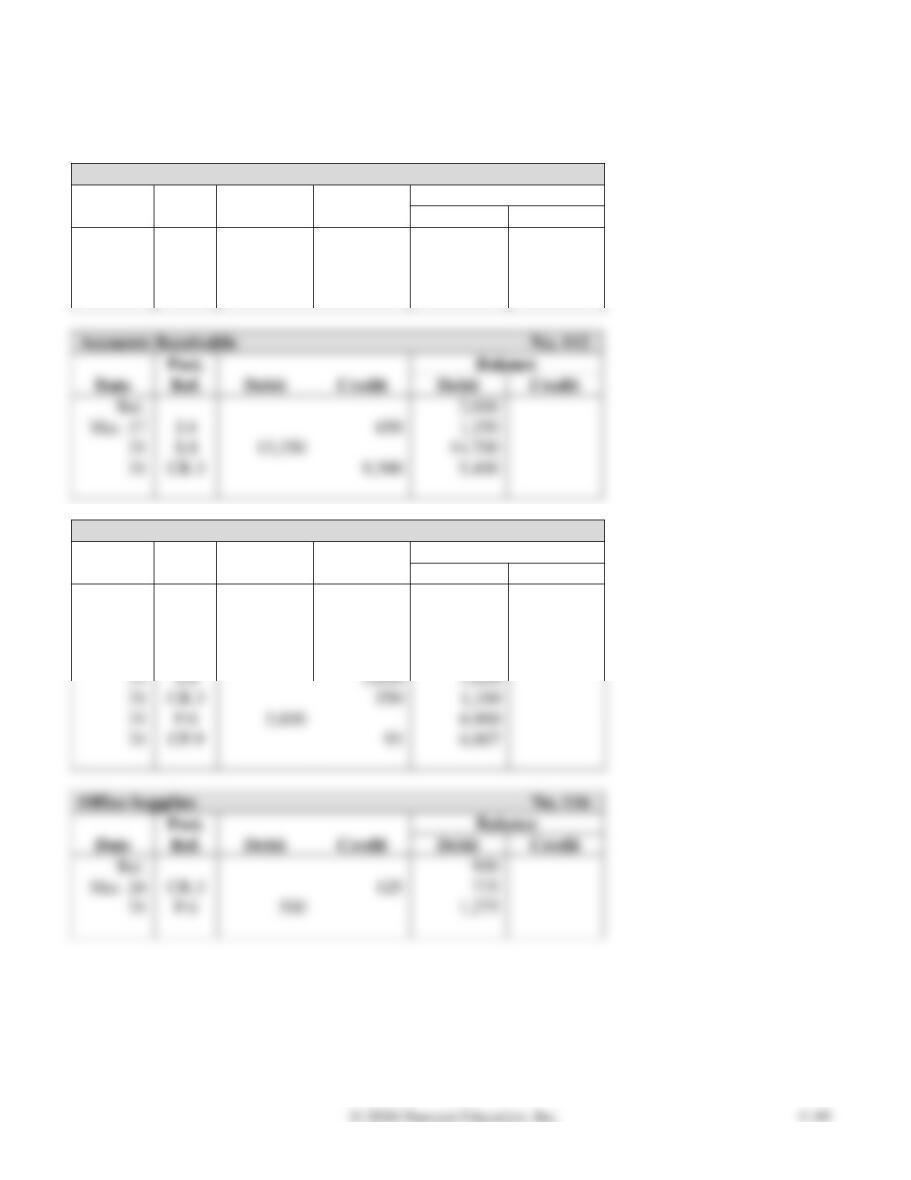
SOLUTION
Requirements 1 and 5
Cash
No. 111
Date
Post.
Ref.
Debit
Credit
Balance
Debit
Credit
Bal.
15,200
Mar. 31
CR.3
11,497
26,697
31
CP.9
11,107
15,590
Accounts Receivable
No. 112
Date
Debit
Credit
Debit
Credit
Bal.
Mar. 17
J.4
650
31
13,350
14,700
31
CR.3
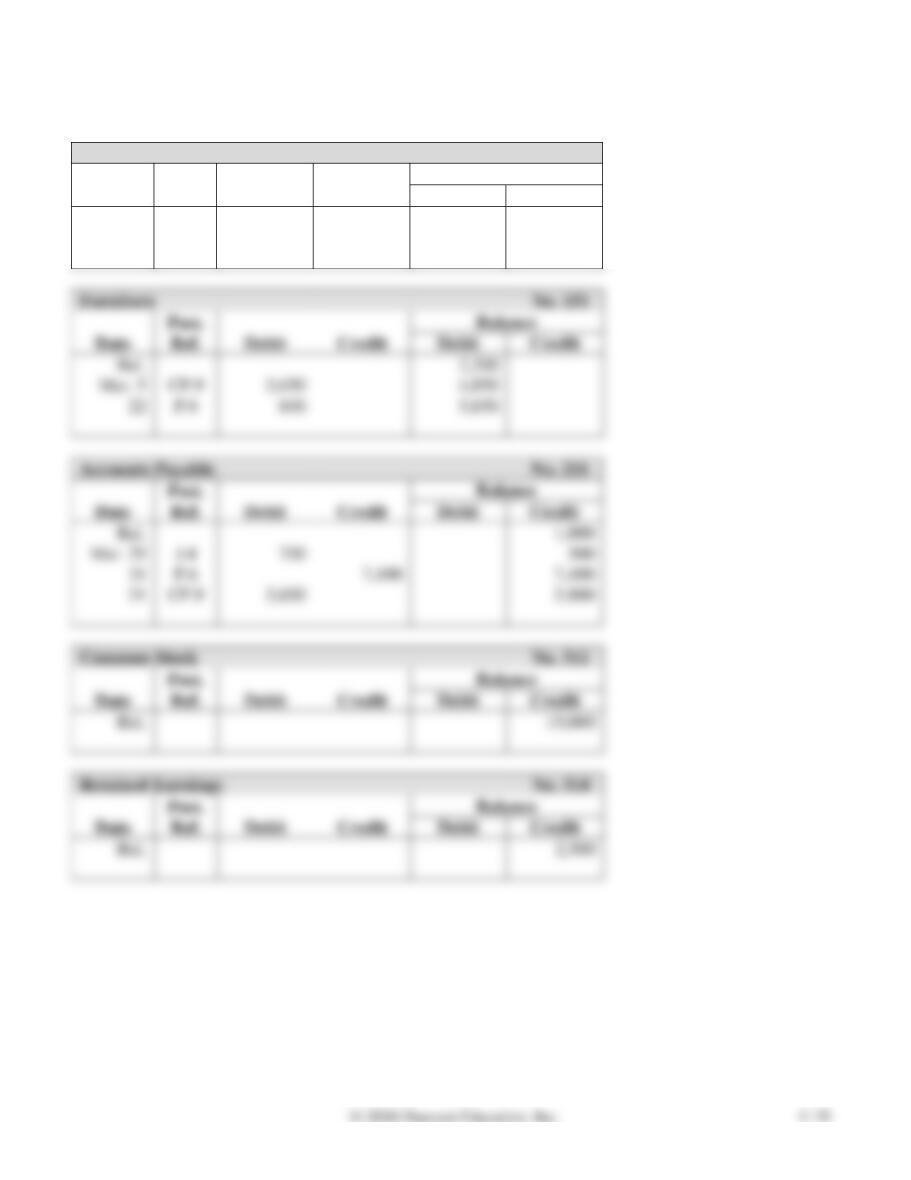
Merchandise Inventory
No. 114
Date
Post.
Ref.
Debit
Credit
Balance
Debit
Credit
Bal.
6,000
Mar. 10
CP.9
1,150
7,150
17
J.4
250
7,400
29
J.4
700
6,700
31
1,650
31
CR.3
550
1,100
31
6,900
31
CP.9
6,807
Office Supplies
No. 116
Date
Post.
Ref.
Debit
Credit
Debit
Credit
Mar. 24
CR.3
125
775
31
500
PC–29B, cont.
Requirements 1 and 5, cont.
Prepaid Insurance
No. 117
Date
Post.
Ref.
Debit
Credit
Balance
Debit
Credit
Bal.
0
Mar. 22
CP.9
1,300
1,300
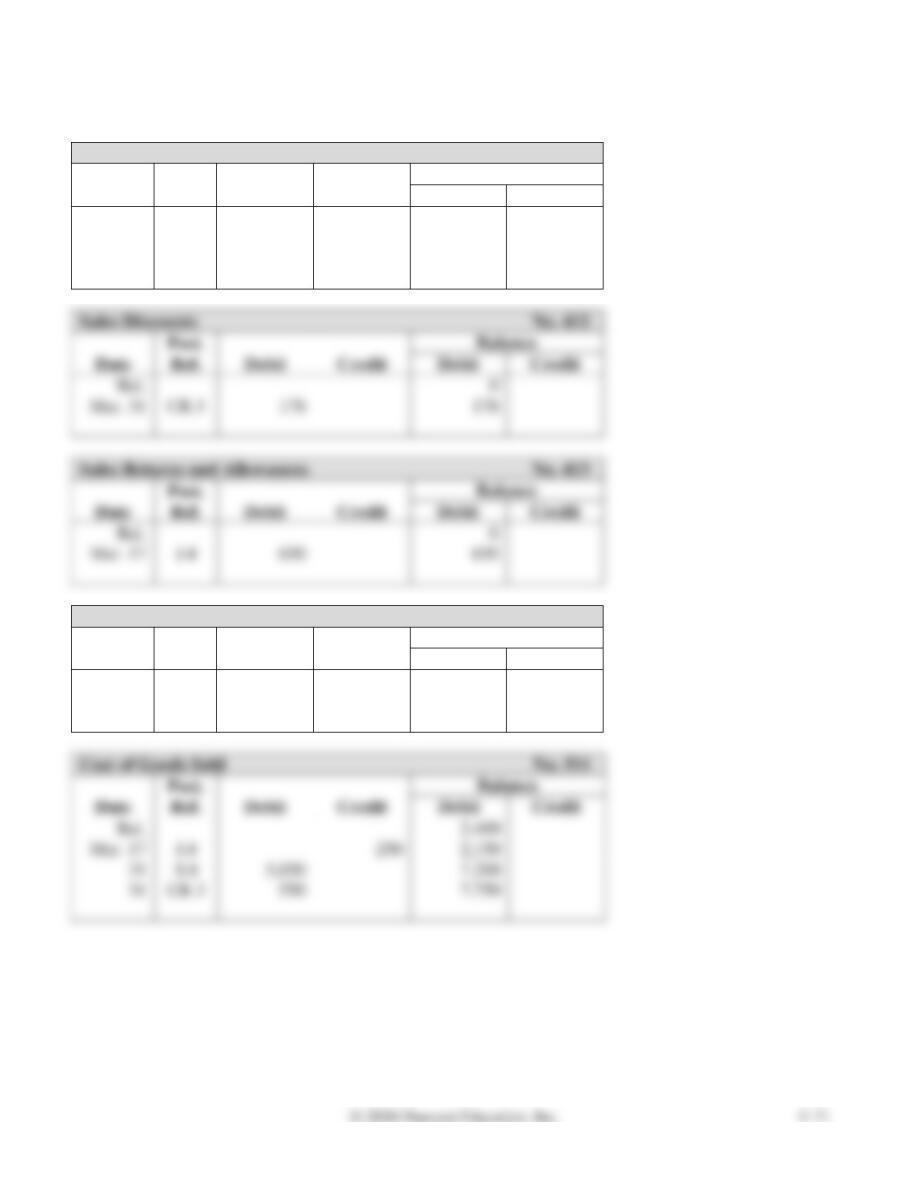
Furniture
No. 151
Date
Post.
Ref.
Debit
Credit
Balance
Debit
Credit
CP.9
2,650
4,850
5,650
Accounts Payable
No. 211
Date
Post.
Ref.
Debit
Credit
Balance
Debit
Credit
Bal.
Mar. 29
7,100
CP.9
3,600
Common Stock
No. 311
Date
Post.
Ref.
Debit
Credit
Balance
Debit
Credit
Bal.
Retained Earnings
No. 314
Date
Post.
Ref.
Debit
Credit
Balance
Debit
Credit
Bal.
2,500
PC–29B, cont.
Requirements 1 and 5, cont.
Sales Revenue
No. 411
Date
Post.
Ref.
Debit
Credit
Balance
Debit
Credit
Bal.
7,800
Mar. 31
S.8
13,350
21,150
31
CR.3
1,000
22,150
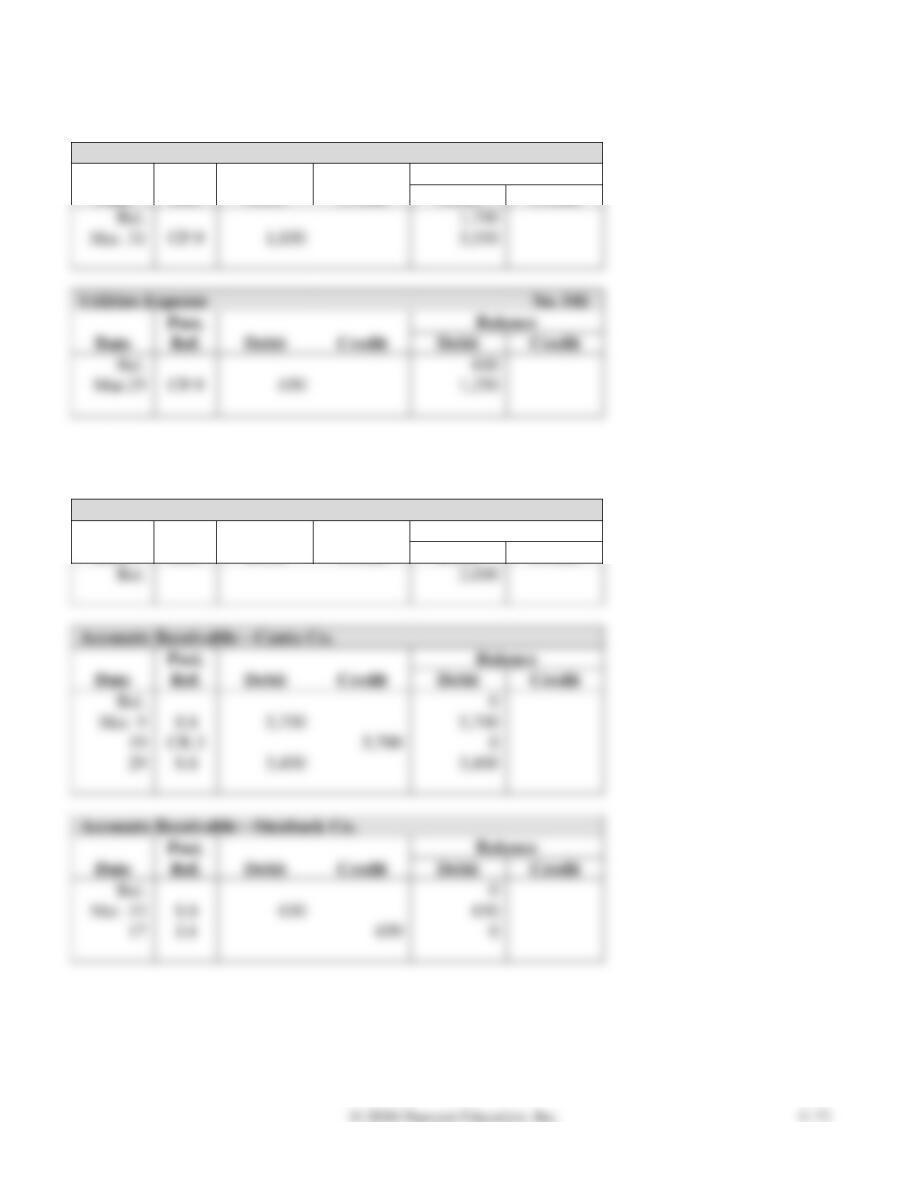
Sales Discounts
No. 412
Balance
Bal.
Mar. 31
CR.3
178
178
Sales Returns and Allowances
No. 413
Date
Post.
Ref.
Debit
Credit
Balance
Debit
Credit
Bal.
Mar. 17
650
650
Interest Revenue
No. 419
Date
Post.
Ref.
Debit
Credit
Balance
Debit
Credit
Bal.
700
Mar. 8
CR.3
1,250
1,950
Cost of Goods Sold
No. 511
Date
Debit
Credit
Credit
Bal.
Mar. 17
250
31
S.8
5,050
31
CR.3
550
PC–29B, cont.
Requirements 1 and 5, cont.
Salaries Expense
No. 531
Date
Post.
Ref.
Debit
Credit
Balance
Debit
Credit
Utilities Expense
No. 541
Date
Post.
Ref.
Debit
Credit
Balance
Debit
Credit
PC-29B, cont.
Requirements 2 and 4
Accounts Receivable—Abney Co.
Date
Post.
Ref.
Debit
Credit
Balance
Debit
Credit
Accounts Receivable—Cantu Co.
Date
Post.
Ref.
Debit
Credit
Balance
Debit
Credit
Accounts Receivable—Stenback Co.
Date
Debit
Credit
Balance
Debit
Credit
PC-29B, cont.
Requirements 2 and 4
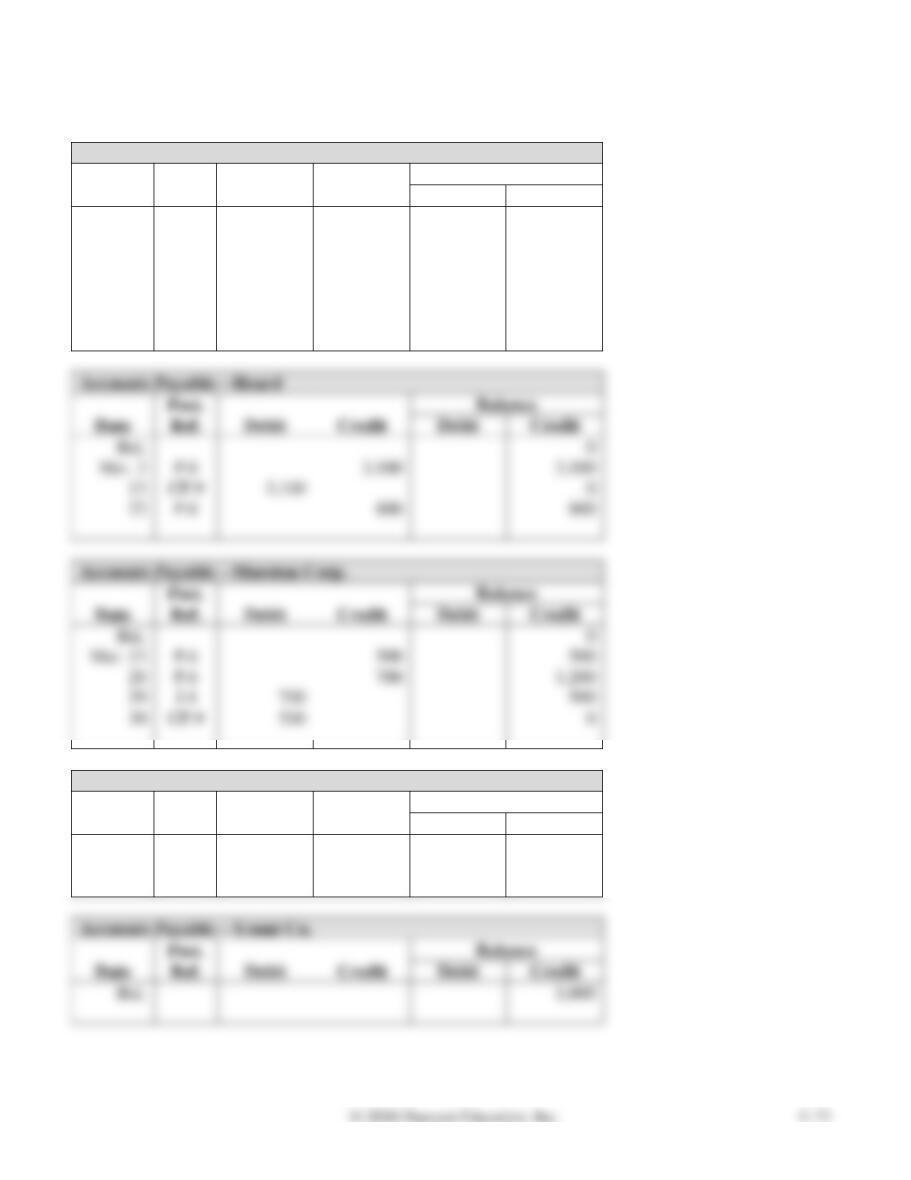
Accounts Receivable—L. E. Kaeding
Date
Post.
Ref.
Debit
Credit
Balance
Debit
Credit
Bal.
0
Mar. 2
S.8
3,200
3,200
12
CR.3
3,200
0
18
S.8
400
400
31
CR.3
400
0
Accounts Payable—Heard
Date
Post.
Ref.
Debit
Credit
Balance
Debit
Credit
Bal.
0
P.6
3,100
3,100
13
3,100
0
22
P.6
800
800
Accounts Payable—Marston Corp.
Balance
Bal.
0
P.6
500
500
28
P.6
700
1,200
29
700
500
30
500
0
Accounts Payable—James Sales
Date
Post.
Ref.
Debit
Credit
Balance
Debit
Credit
Bal.
0
Mar. 20
P.6
2,000
2,000
Accounts Payable—Yount Co.
Date
Post.
Ref.
Debit
Credit
Balance
Debit
Credit
Bal.
1,000
PC–29B, cont.
Requirements 3, 4, 5 and 6
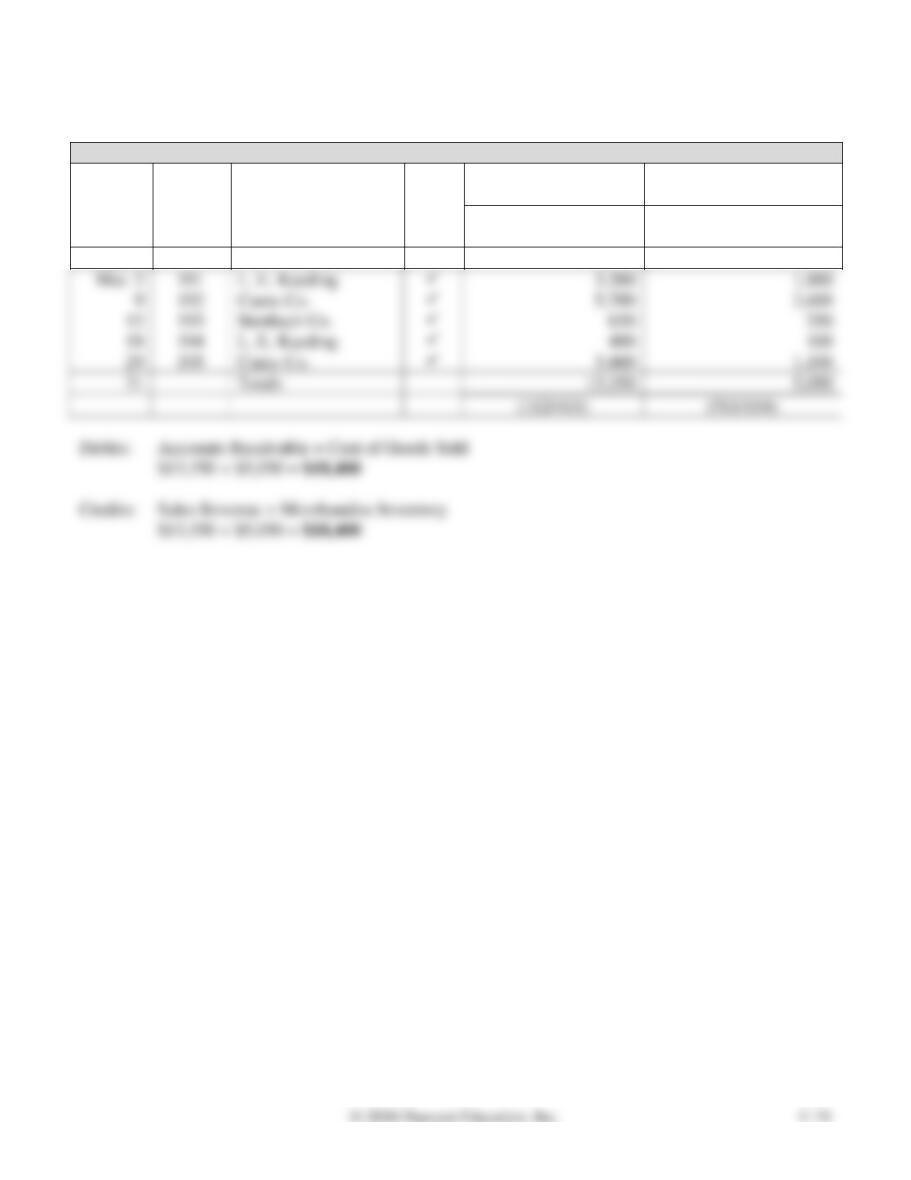
Sales Journal
Page 8
Date
Invoice
No.
Customer
Account Debited
Post.
Ref.
Accounts Receivable
DR
Cost of Goods Sold
DR
Sales Revenue
CR
Merchandise Inventory
CR
2016
L. E. Kaeding
Cantu Co.
Stenback Co.
L. E. Kaeding
Cantu Co.
Totals
Debits:
Accounts Receivable + Cost of Goods Sold
Credits:
Sales Revenue + Merchandise Inventory
PC–29B, cont.
Requirements 3, 4, 5 and 6, cont.
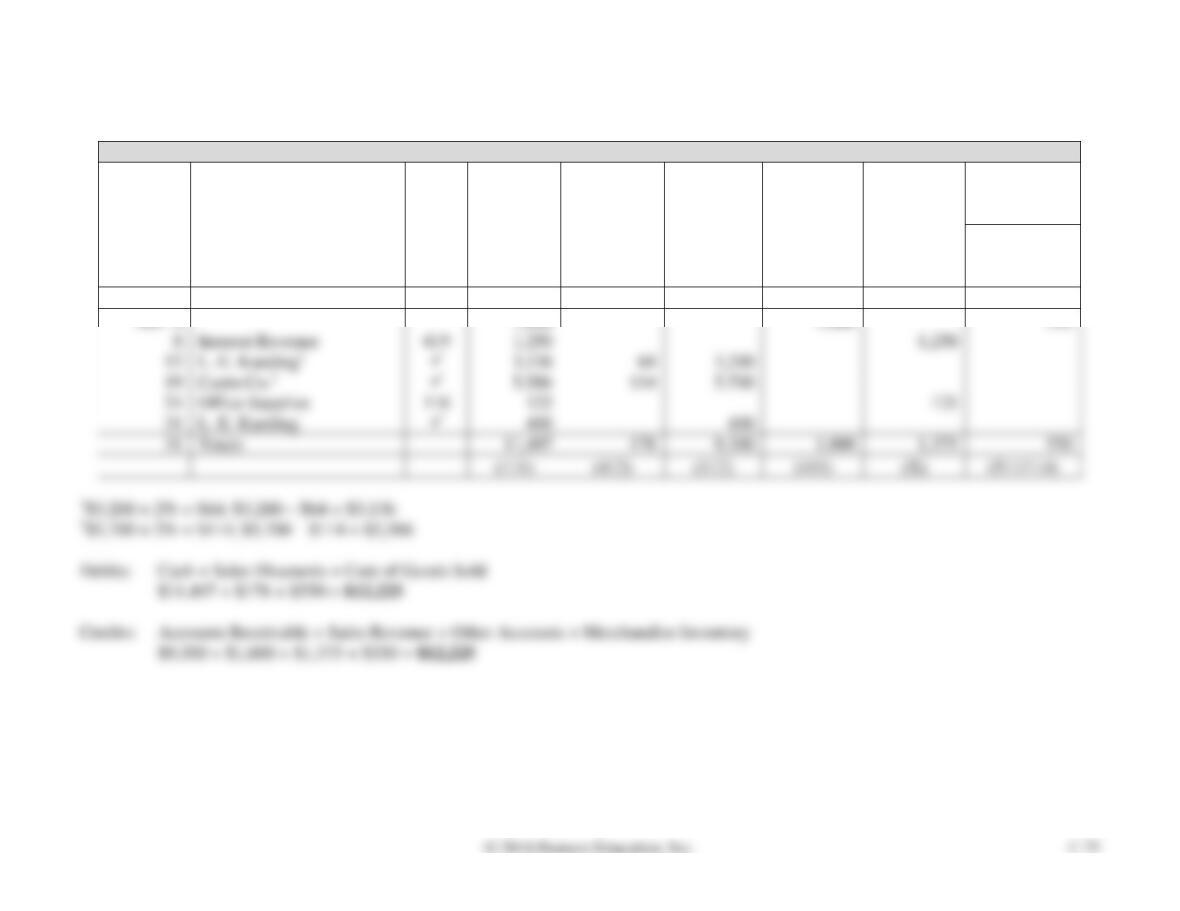
Cash Receipts Journal
Page 3
Date
Account Credited
Post.
Ref.
Cash
DR
Sales
Discounts
DR
Accounts
Receivable
CR
Sales
Revenue
CR
Other
Accounts
CR
Cost of
Goods Sold
DR
Merchandise
Inventory
CR
2016
Mar. 4
1,000
1,000
550
Interest Revenue
1,250
3,136
5,586
Office Supplies
L. E. Kaeding
Totals
1,000
550
(411)
Debits:
Cash + Sales Discounts + Cost of Goods Sold
Credits:
Accounts Receivable + Sales Revenue + Other Accounts + Merchandise Inventory
PC–29B, cont.
Requirements 3, 4, 5 and 6, cont.
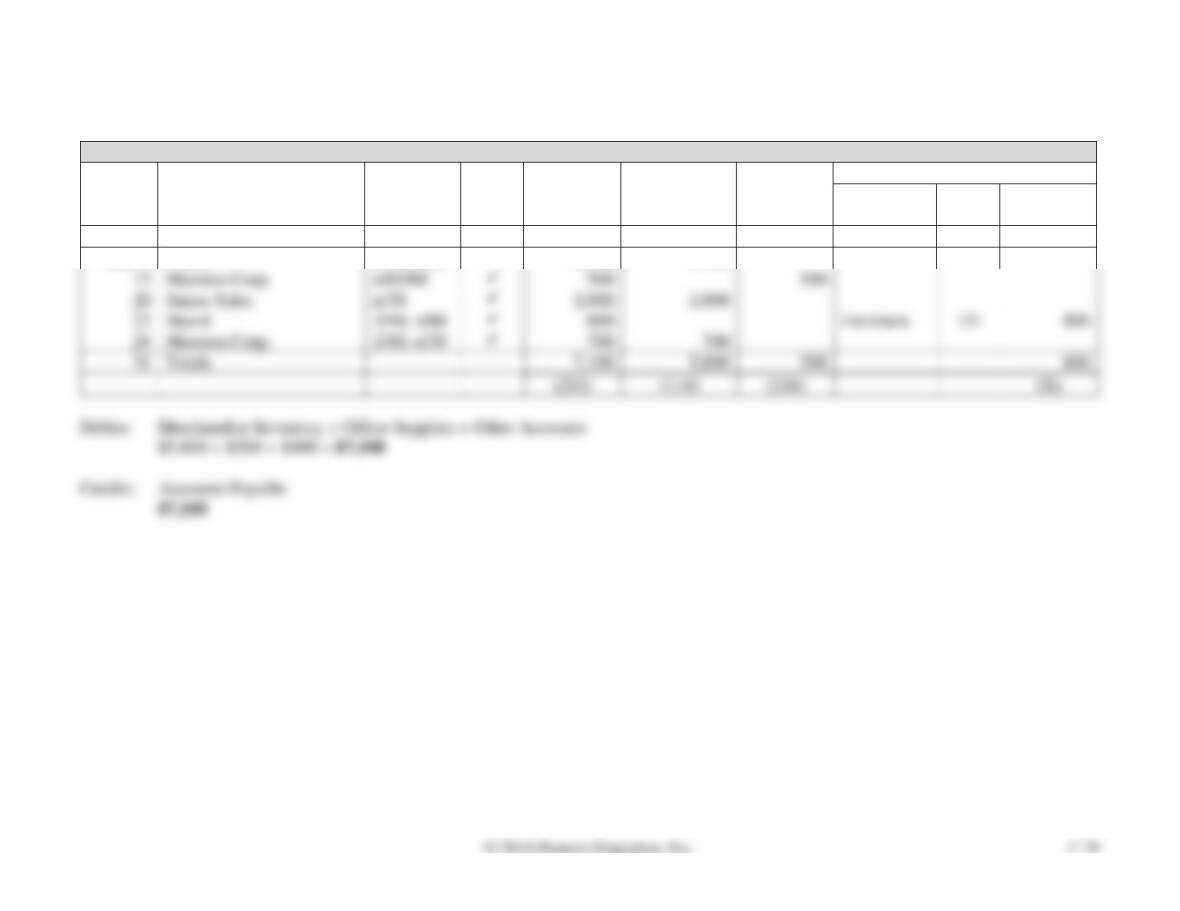
Purchases Journal
Page 6
Date
Vendor
Account Credited
Terms
Post.
Ref.
Accounts
Payable
CR
Merchandise
Inventory
DR
Office
Supplies
DR
Other Accounts DR
Account
Title
Post.
Ref.
Amount
2016
Mar. 3
Heard
3/10, n/60
✓
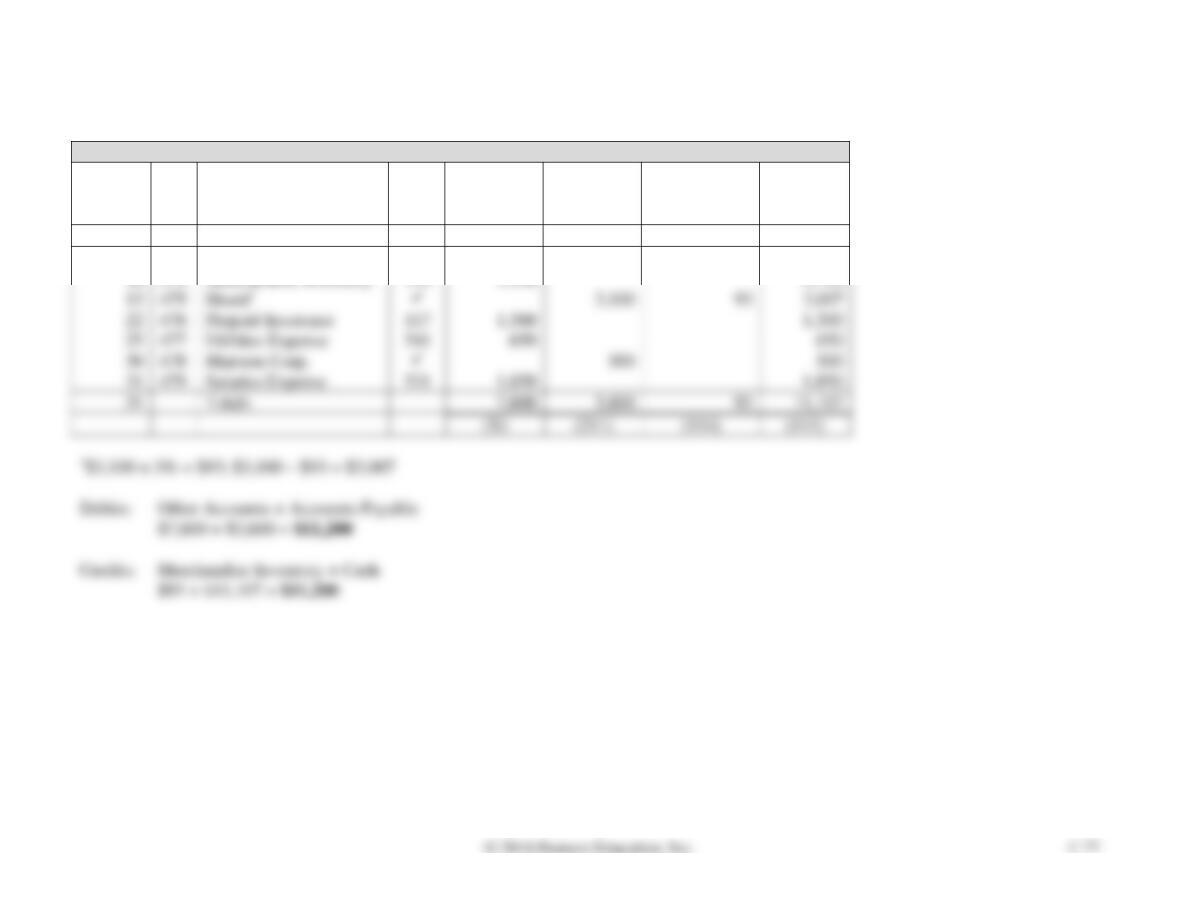
3,100
3,100
James Sales
n/30
✓
2,000
2,000
Heard
3/10, n/60
✓
Furniture
Marston Corp.
2/10, n/30
✓
Totals
7,100
5,800
Debits:
Merchandise Inventory + Office Supplies + Other Accounts
Credits:
Accounts Payable
PC–29B, cont.
Requirements 3, 4, 5 and 6, cont.
Cash Payments Journal
Page 9
Date
Ck.
No.
Account Debited
Post.
Ref.
Other
Accounts
DR
Accounts
Payable
DR
Merchandise
Inventory
CR
Cash
CR
2016
Mar. 5
473
Furniture
151
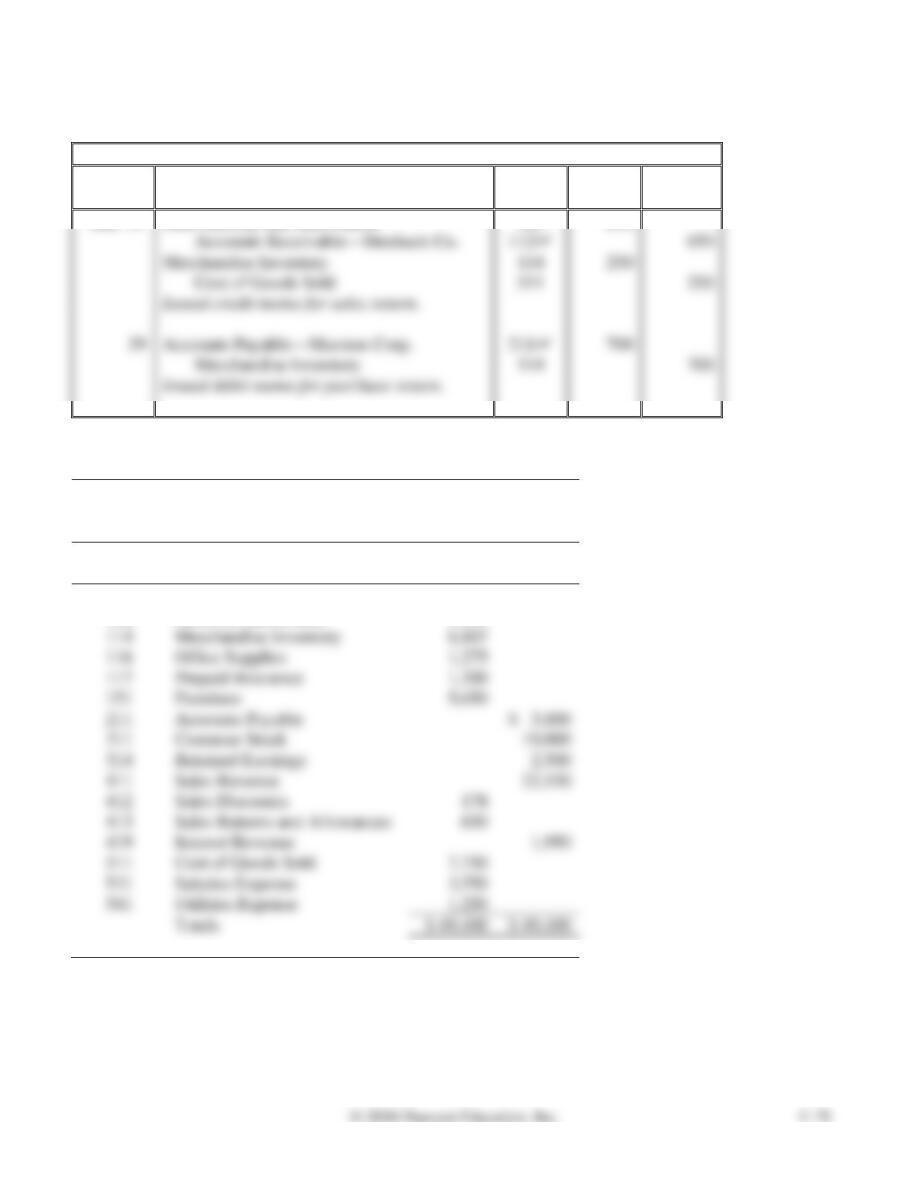
2,650
2,650
10
474
Merchandise Inventory
114
1,150
1,150
13
475
3,100
3,007
22
476
Prepaid Insurance
117
1,300
1,300
25
477
Utilities Expense
541
30
478
Marston Corp.
31
479
Salaries Expense
531
1,850
1,850
31
Totals
7,600
3,600
Debits:
Other Accounts + Accounts Payable
Credits:
Merchandise Inventory + Cash
PC–29B, cont.
Requirements 3, 4, 5 and 6, cont.
General Journal Page 4
Date
Accounts and Explanation
Post.
Ref.
Debit
Credit
Mar. 17
Sales Returns and Allowances
413
650
Merchandise Inventory
114
250
511
Issued credit memo for sales return.
Accounts Payable—Marston Corp.
700
Issued debit memo for purchase return.
Requirement 6
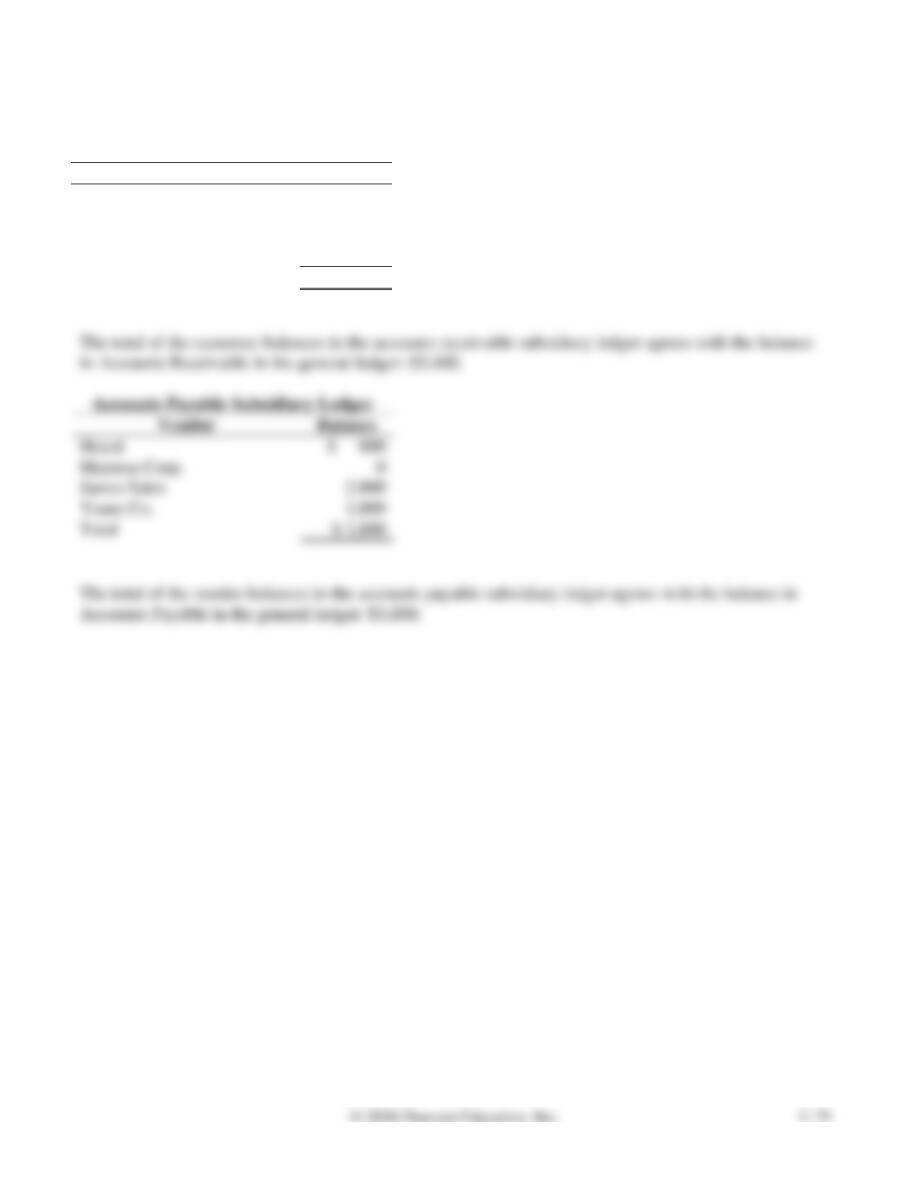
KINGSTON COMPUTER SECURITY
Trial Balance
March 31, 2016
Acct. No.
Account Name
Debit
Credit
111
Cash
$ 15,590
112
Accounts Receivable
5,400
114
Merchandise Inventory
116
Office Supplies
117
Prepaid Insurance
151
Furniture
211
Accounts Payable
311
Common Stock
314
Retained Earnings
411
Sales Revenue
412
Sales Discounts
413
Sales Returns and Allowances
419
Interest Revenue
511
Cost of Goods Sold
531
Salaries Expense
541
Utilities Expense
Totals
$ 49,400
PC–29B, cont.
Requirement 6, cont.
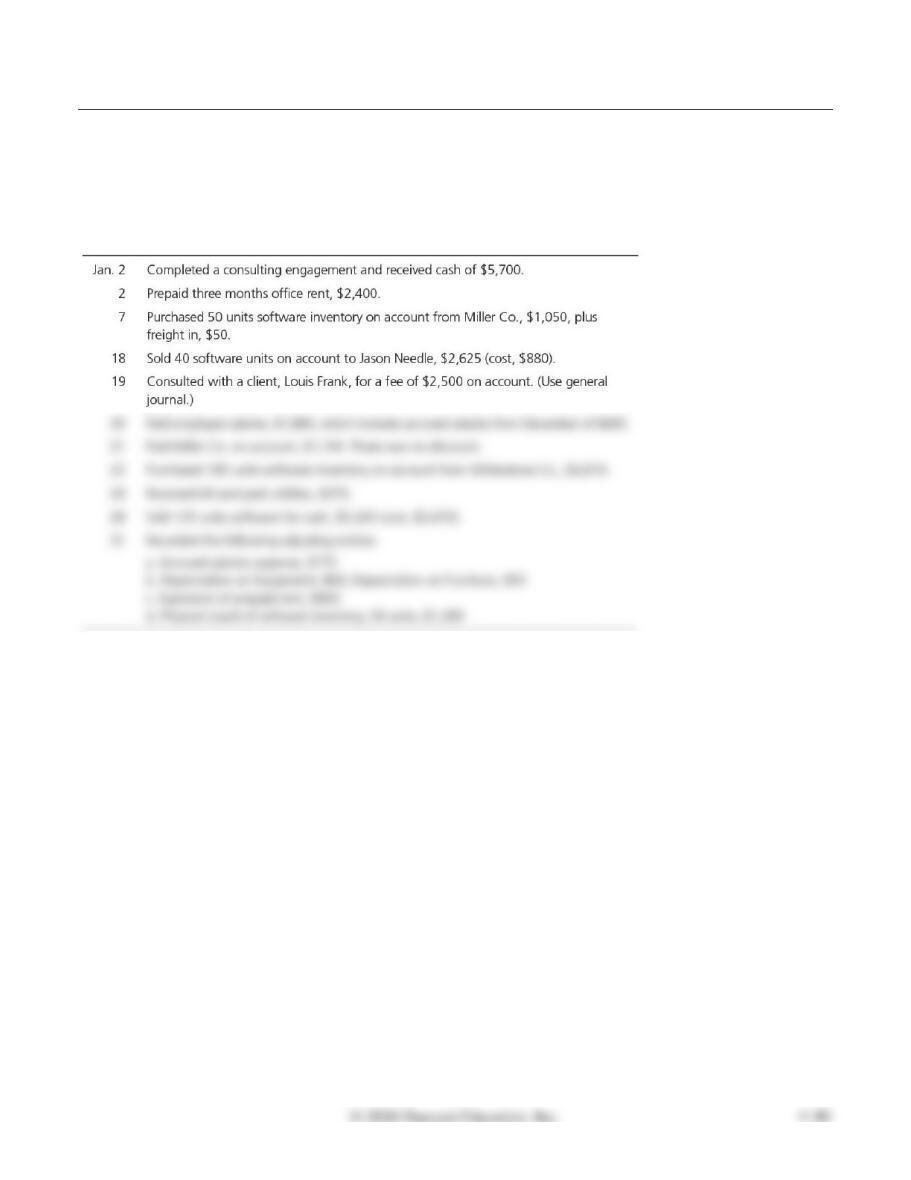
Accounts Receivable Subsidiary Ledger
Customer
Balance
Abney Co.
$ 2,000
Cantu Co.
3,400
Stenback Co.
0
L. E. Kaeding
0
Total
$ 5,400
Balance
Heard
Marston Corp.
0
James Sales
2,000
Yount Co.
1,000
Total
$ 3,800
Continuing Problem
PC-30 Using all journals
This problem continues the Daniels Consulting situation. Daniels Consulting per- forms systems
consulting. Daniels has also begun selling accounting software and uses the perpetual inventory system
to account for software inventory. During January 2017, Daniels completed the following transactions:
Daniels Consulting had the following selected accounts with account numbers and normal balances: