APPENDIX A
Handouts

Handout 1-1 Acronyms Related to Special Education and Other Special Services
As you begin this course, you may already be feeling somewhat overwhelmed by the number of acronyms
used to describe various components of special education and other related services. The following is a
ADA
NCLB
IDEA
IDEA 2004
FAPE
LRE
IEP
IFSP
ADHD
Handout 1-2 Common Questions about Inclusion
The following are questions that experienced general education teachers often ask when they are learning
about inclusive schools. Which of these questions occurred during your class discussion of inclusion?
Which do you view as critical? Which seem unimportant to you?
1. What does research say about inclusion? What are examples of studies that are supportive of
inclusive practices? Not supportive?
with special needs be considered in terms of numbers?
5. What is the role of the special education teacher in inclusive schools? The general education
teacher?
6. Is it ever okay to pull a student with a disability out of a class for a specialized service?
7. Is this a fad that is going to go away? Is inclusion mandated by a law?
8. How can teachers find the time to do the planning and problem solving that is required in inclusive
schools?
9. Who’s accountable for the learning and behavior of a student on an IEP in an inclusive school?
Handout 1-3 Checking Your School’s Inclusiveness
Does your school use inclusive practices? These are some key questions to ask to check. The more
positive responses you make, the more likely you and your colleagues are creating a school environment
that enables all students to experience success.
Does your school have a mission statement expressing the belief that the professionals and other
staff members strive to meet the needs of all students? Is this mission statement displayed,
discussed, and used to guide instructional practices?
Have steps been taken to ensure that teachers will be rewarded for experimentation and innovation,
even if efforts are sometimes not successful?
Have expectations been clarified for students with disabilities who are integrated into classrooms?
Expectations include those related to instruction, discipline, and student evaluation and grading.
Has collaboration been fostered as a key component of the school’s culture? This includes arranging
shared planning time as needed and possibly shared instructional time (co-teaching).
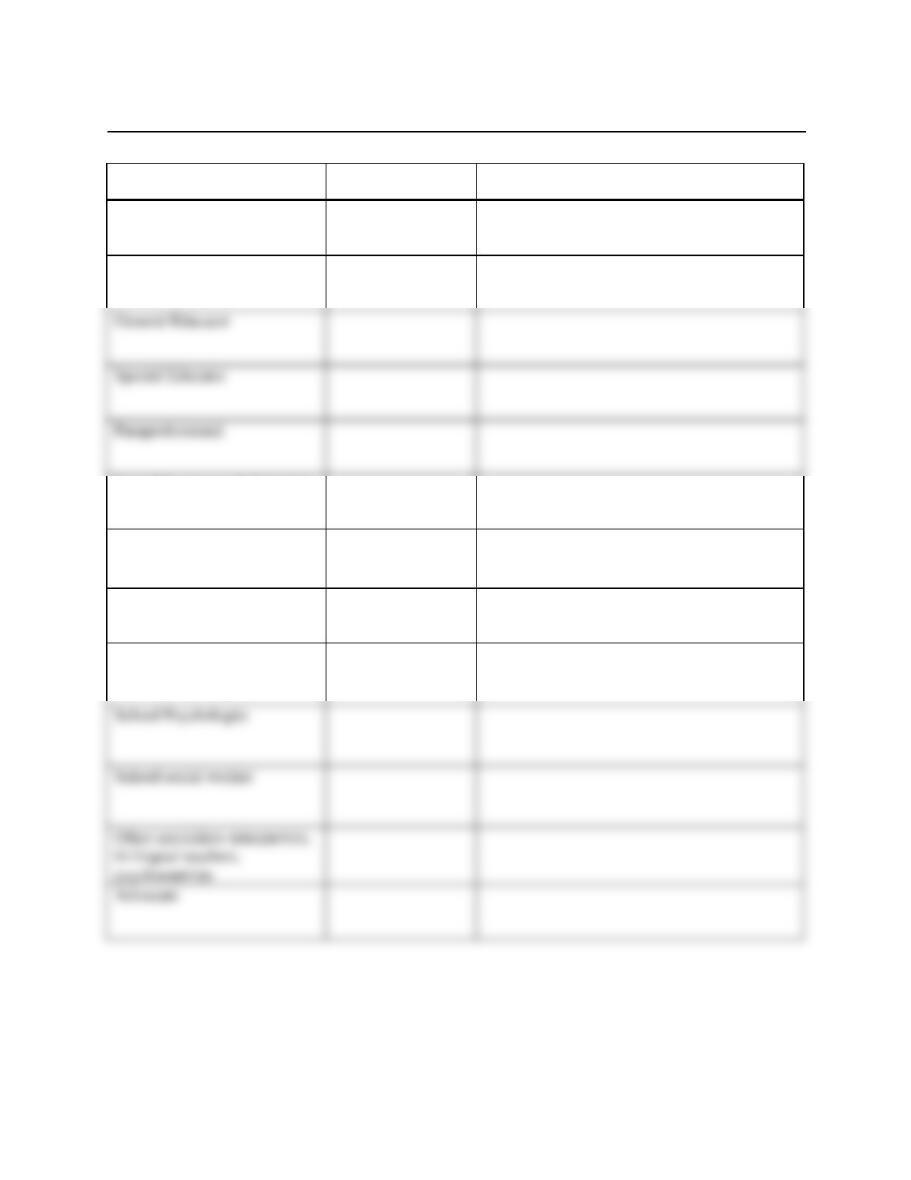
Handout 2-1 Special Education Team Members’ Roles and Responsibilities
Team Member
Role
Responsibilities
Parents, student
Principal
Speech/Language Pathologist
Physical Therapist,
Occupational Therapist
Adaptive physical educators
School Nurse
Advocate
General Educator
Special Educator
Paraprofessional
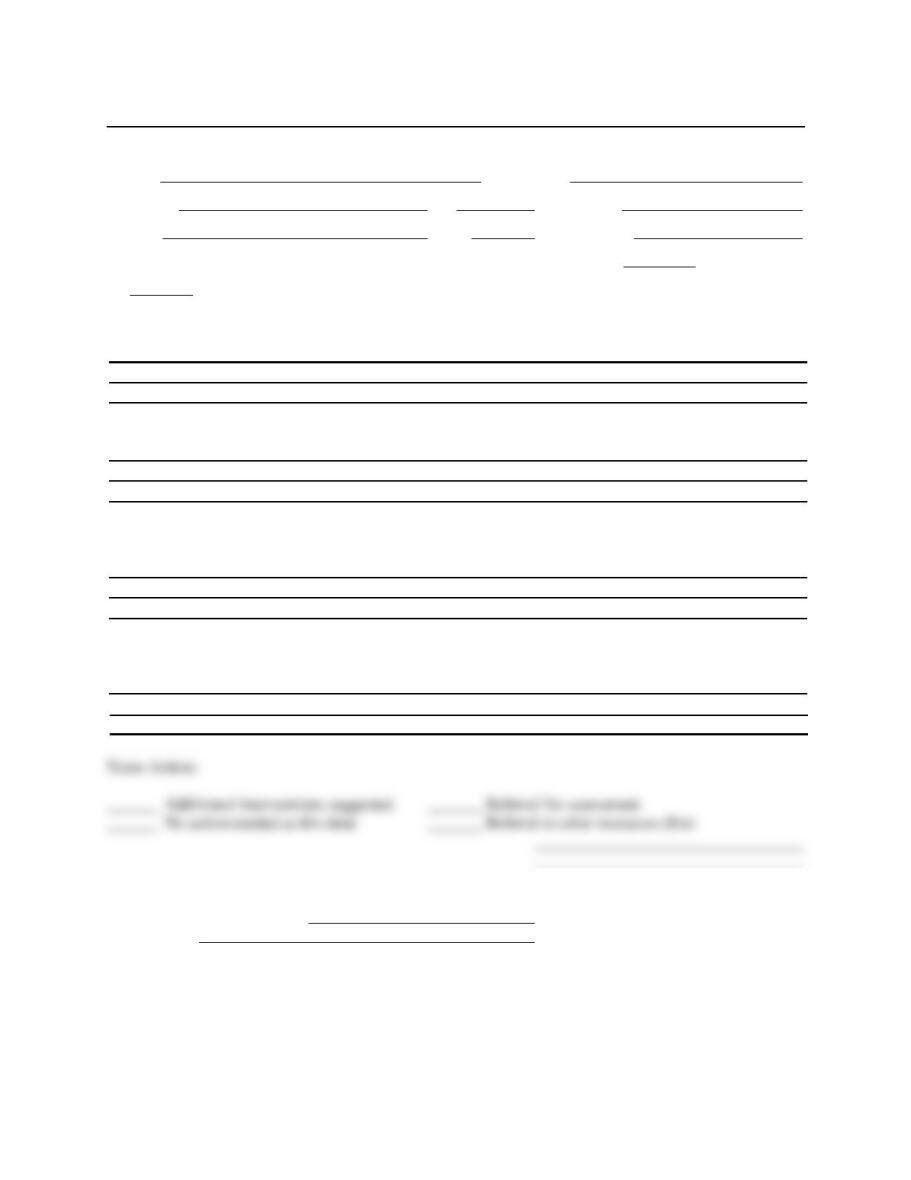
Handout 2-2 Instructional Assistance Request
Student Date ________________
Birth Date Sex I.D. ________________
Teacher Grade School
Has the team discussed this student during the current school year? YES
NO______
1. What specific academic or behavior problems is this student experiencing?
2. What interventions have you used to address the problems?
3. What would you like the student to be able to do that he or she does not currently do?
4. How have you discussed your concerns with the student’s parents?
Date for follow-up (if needed)
Team contact
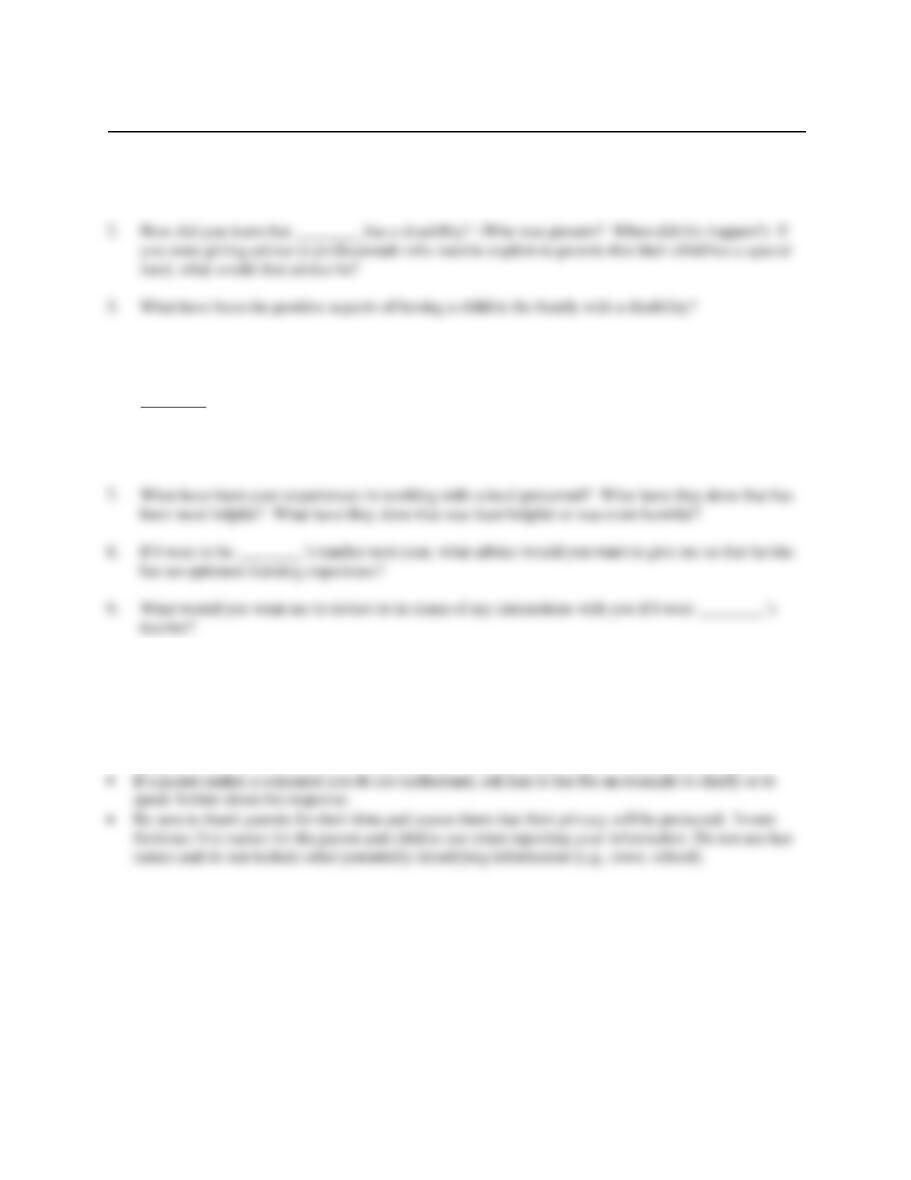
Handout 3-1 Sample Questions for Interviewing Parents of Children with Disabilities
1. Introduce yourself. Explain the requirements of your assignment. Ask permission to take notes or to
audiotape the interview. Ask the parent the name of their child.
4. What have been the problems or challenges you’ve experienced having a child with a disability?
5. How did your other children react to learning their brother/sister had a disability? What impact has
________ had on them? (if appropriate)
6. What kinds of supports have been most helpful to you? (family members, parent groups, neighbors,
other?)
10. I am just learning about students with disabilities and how to work effectively with them in my
classroom. What other information would you like me—and my classmates—to know about
working with children with special needs?
Reminders
• If a parent answers a question before you ask it, do not ask it just for the sake of completeness!
Handout 3-2 Working with Paraprofessionals
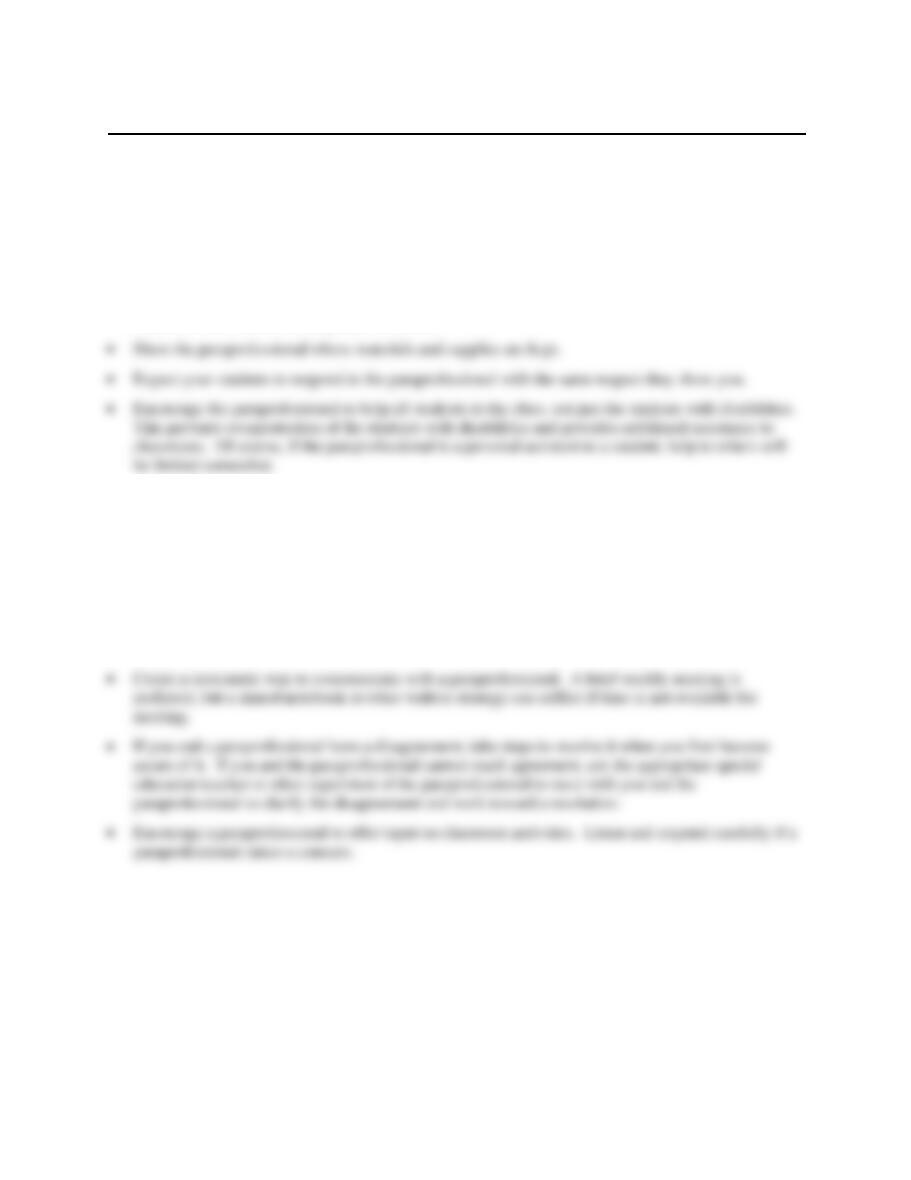
As you work with paraprofessionals in your classroom, here are a few suggestions to ensure that you have
a positive working relationship with those support staff and that you create an appropriate learning
environment for the students.
• Make a place in your classroom where the paraprofessional can leave materials, equipment, or
personal items.
• Explain your general classroom discipline policies, instructional routines, and other important
classroom information to the paraprofessional.
• If a paraprofessional makes an error or otherwise does something you need to correct, do so in a calm
manner when children are not present.
• Provide clear directions to paraprofessionals regarding the tasks you need them to work on. If a
paraprofessional is unsure how to proceed, demonstrate what you want that person to do or provide a
specific example.
• If a paraprofessional is expected to assist with classroom chores such as grading or other paperwork,
keep in mind that he or she also should work with students. Paperwork can be boring for everyone,
not just teachers.

Handout 3-3 Challenges of Professional Interactions
As you work with other general education teachers, special education teachers, related services personnel,
administrators, paraprofessionals, and parents, you will learn how critical effective interactions are for
today’s teachers in inclusive schools. Although most of your interactions will be pleasant and
constructive, you will probably encounter some difficult ones, too. Using information included in
Chapter 3 as a basis, how would you respond to each of the following situations if you were Ms. Verglas?
The vision consultant just left Ms. Verglas’ classroom. He spent some time working with Chris showing
him a new type of magnifier to use when reading his textbook. That part was fine. However, when he
entered the room, he disrupted the lesson and drew attention to Chris. In addition, he practically insisted
that Ms. Verglas’ stop to talk to him before he left. She wants to talk to him by phone. How might she
approach this conversation? __
Ms. Verglas is preparing for fall parent conferences. She is particularly concerned about the conference
with Mr. and Mrs. Cooper, Marguerite’s parents. They have a reputation for making many demands on
teachers and becoming increasingly angry during the course of the school year as Marguerite continues to
struggle to learn. They also have a habit of talking negatively about other teachers when they are not
present. How should Ms. Verglas prepare for this conference? What should she do during the conference
to make it as successful as possible? __
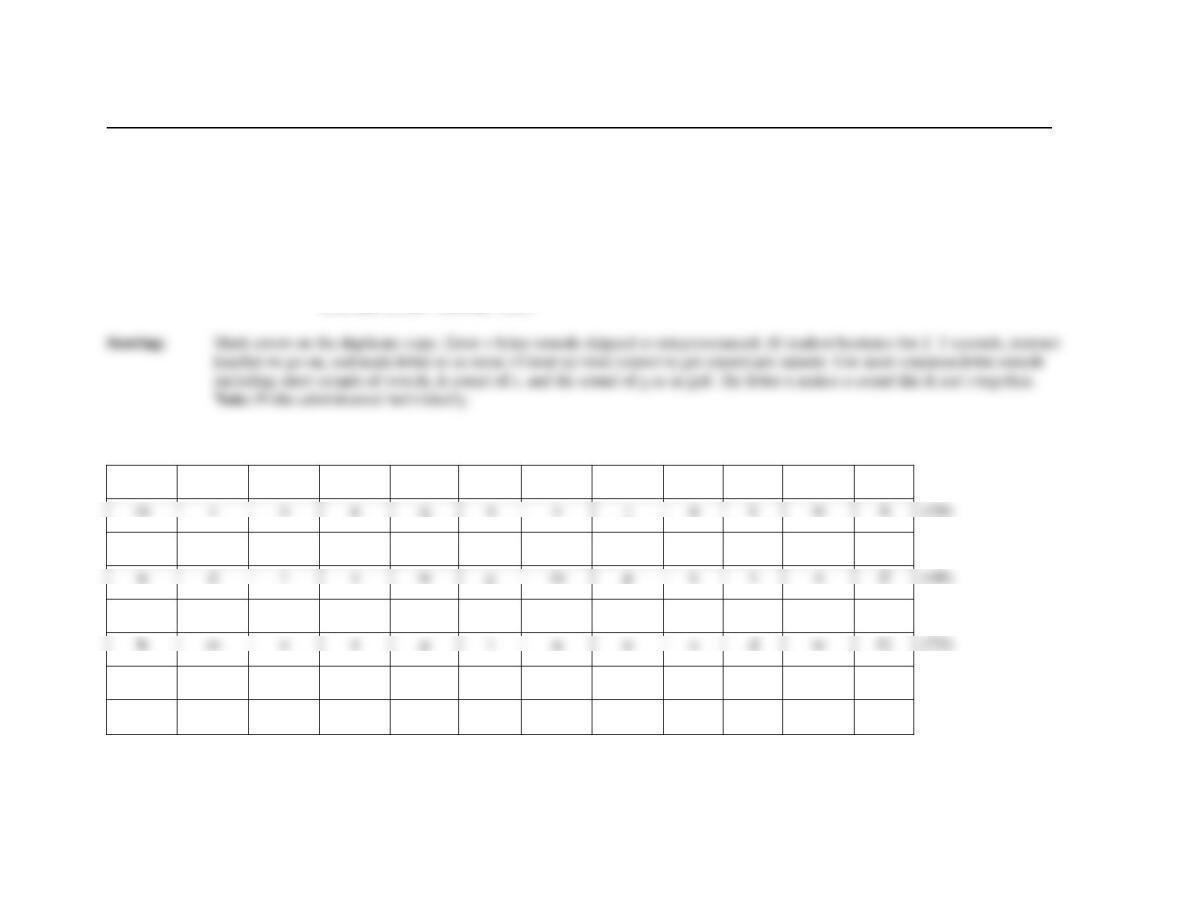
Handout 4-1 See-Say Probe
Time: one minute
Materials: Student stimulus sheet
Examiner duplicate copy of stimulus sheet, pencil, timer
Directions to student: When I say PLEASE BEGIN, say the sound of each letter. Go across the page (examiner demonstrate and try to
say each letter sound quickly and carefully.) READY? PLEASE BEGIN. After one minute elapses, I will say
PLEASE STOP. THANK YOU.
x
b
p
d
c
f
y
h
i
t
v
L
(12)
g
z
e
k
c
l
j
r
a
o
h
F
(36)
u
d
l
s
w
g
m
p
x
t
n
Z
(48)
b
y
q
v
r
f
e
k
o
l
c
J
(60)
h
m
z
t
p
i
u
n
s
d
w
(72)
y
r
b
x
a
q
v
c
j
f
h
E
(84)
t
u
m
d
k
s
o
w
n
i
y
P
(96)
77
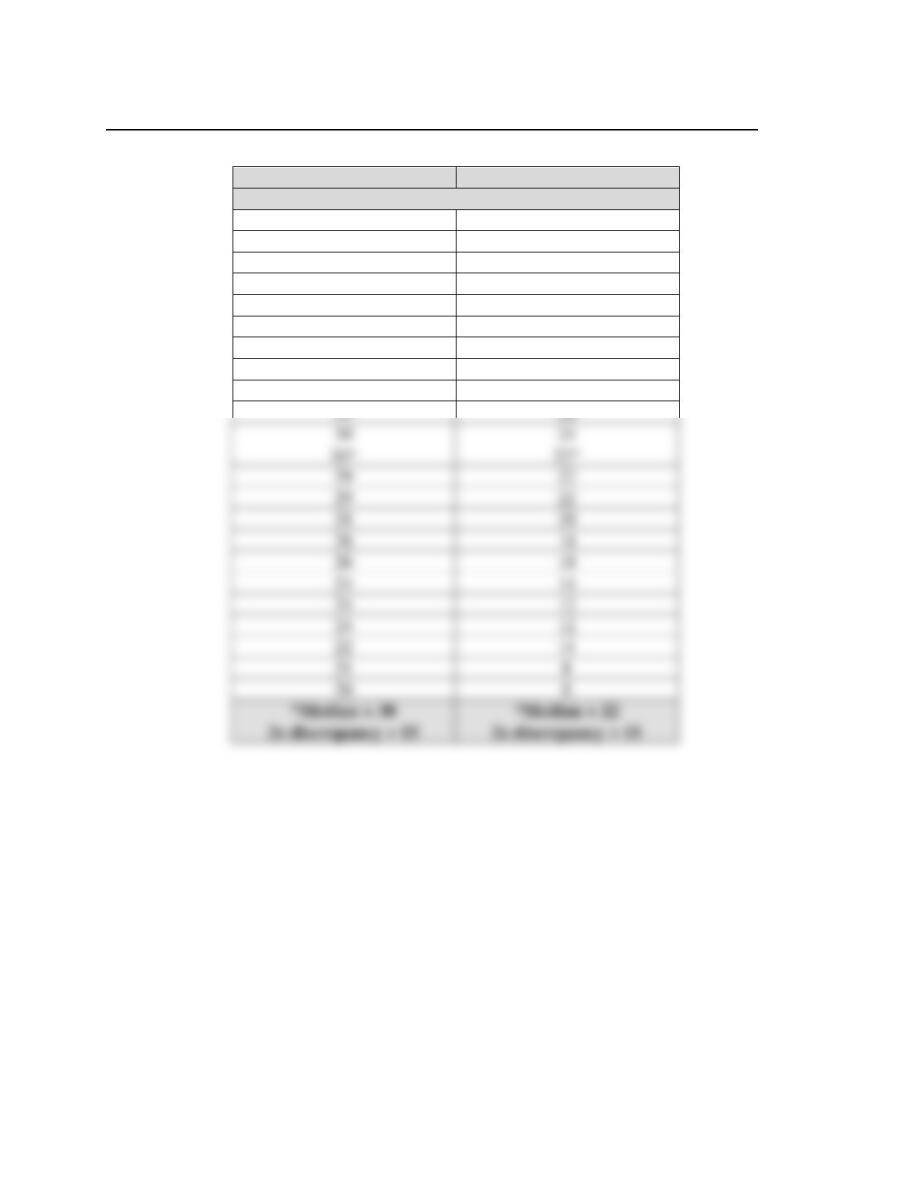
Handout 4-2 See-Say Letter Sounds Grade 1
Class 1
Class 2
Correct sounds per minute
39
36
38
34
38
32
36
32
35
32
34
30
33
28
32
27
32
27
31
26
30
24
29
22
29
22
28
20
26
18
26
18
24
14
24
12
24
12
22
11
21
20
78
Handout 5-1 Problems for Scaffolding
A. Kanesha and Jose always buy soda at the movies. Kanesha buys the 12-ounce soda for $1.50. Jose
buys the 20 oz. soda for $2.00. On a per-ounce basis, which is a better buy?
C. Thomas has just failed his second English test. He was told that if he doesn’t pass the class this year,
he will have to take it with younger students next year. Thomas needs to figure out how to raise his
English grade. What should he do to solve this problem?
79
Handout 6-1 Examples of School Tasks and Related Functional Activities
School Task
Related Functional Activity
Reading and understanding a story or piece of
literature
Listening to a story in order to relate the main
events that occurred
Completing art projects
Learning fine motor skills necessary to daily tasks
such as shoe tying, buttoning, and eating
Learning fractions
Learning how to divide objects into halves, a skill
needed to work in a kitchen or other food service
application
Hygiene; personal care
Learning to bathe and wash hands
Map skills
Learning to recognize or state name and address.
For some students, the related skill of learning
how to get from their home to community
locations is also relevant.
Entering the classroom and beginning to work
independently
Following multiple-step directions as might be
given by an employer
social studies
setting; gaining enjoyment by being around other
people
Going to assemblies and other school programs
Learning to stay with a group and not get lost
Completing science experiments
Following directions and learning to pour and mix
items without spilling them
everyone has a responsibility to help take care of
the environment
Making a choice about what situation to work in
or an activity to complete
Making choices and sticking to them, particularly
for recreation activities

80
Handout 8-1 KWL Chart
Topic:
What I Know
What I Want to Learn
What I Learned

81
Handout 11-1 Constructing Test Items for Students with Special Needs
Shown below are some sample objective and essay test questions. Tell how each question might pose a
problem for some students with special needs. Then, use the recommendations in Chapter 11 to modify each
item so that it is clearer.
1. Multiple Choice
A. Write the correct answer on the blank provided.
____________The ways fungi can help us in the kitchen are
a. making bread rise.
B. Harry left his boat by the riverbank. He planned to retrieve it later. After he returned he would pick
up his canoe for the trip home. Retrieve means: (a) fix; (b) use for the first time; (c) get back.
2. Matching
A. Match the descriptions on the left with the trees on the right.
1. seed plant with flowers
a. pine
2. seed plant with cone
b. cedar
c. larch
4. flat needles
d. monocot
e. hemlock
f. dicot
g. fir
3. True/False
Circle True or False.
True False Amoebas are not plant-like because they do not have
chlorophyll.
82
4. Completion
Write the correct word in the blank.
The __________ is a rock with the exact shape of the original plant or animal. (cast fossil, fossil fuel,
mold fossil)
83
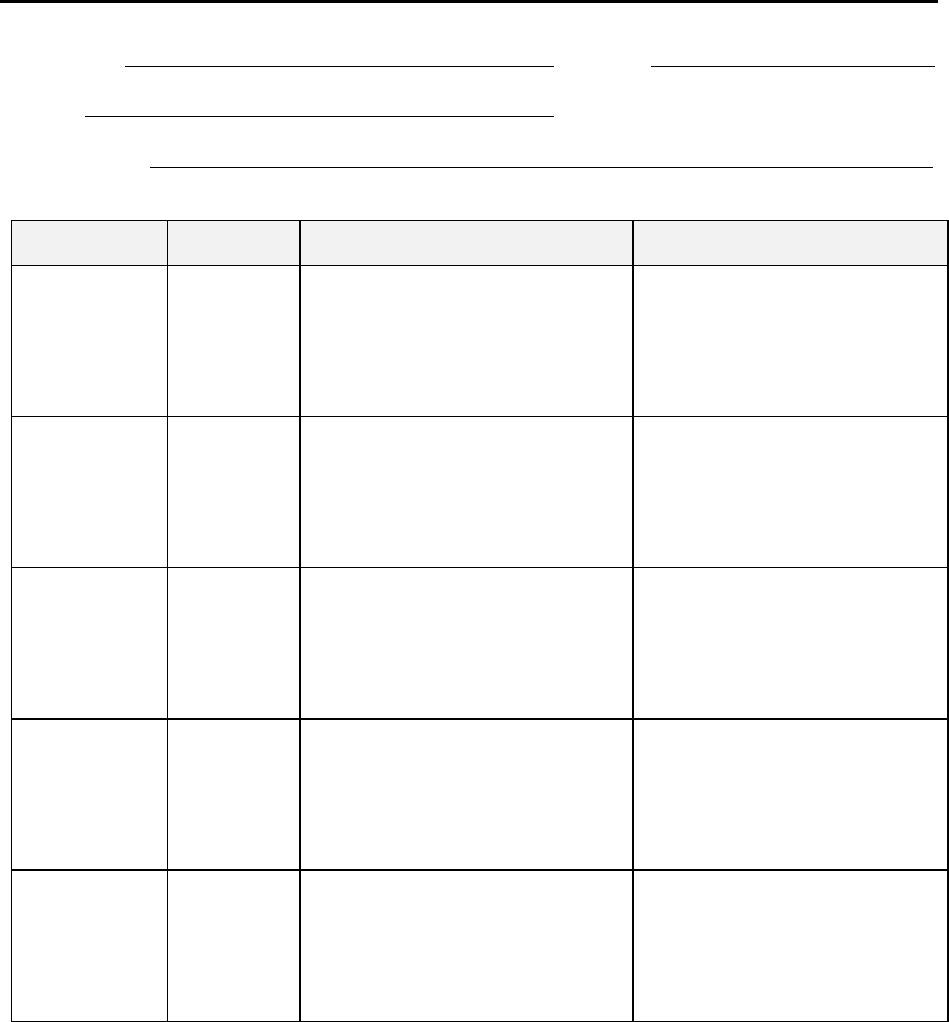
Handout 12-1 Event Recording Form
Student name Date
Observer
Target Behavior ______________________________________________________________
Date/Time
Location
Brief Description
Comments

Handout 12-2 Sample Time Sampling Recording Form
Student name Date
Location Observer
Behavior Start time Stop time
Interval length:
+ = behavior occurred at observation 0 = behavior did not occur at observation
Minutes:
Minutes:
Minutes:
85
Handout 12-3 Sample Student Contract
For
(student name)
I agree to do these things (what, how much, how well, how often, how measured):
My bonus for outstanding performance is:
If I don’t meet the terms of my contract, this is the consequence: