LO S-1
LOS-6
Financial Accounting, 10/e MBA-1
MBA Companion
Leases, Income Taxes, and Retirement
Obligations
ANSWERS TO MULTIPLE CHOICE
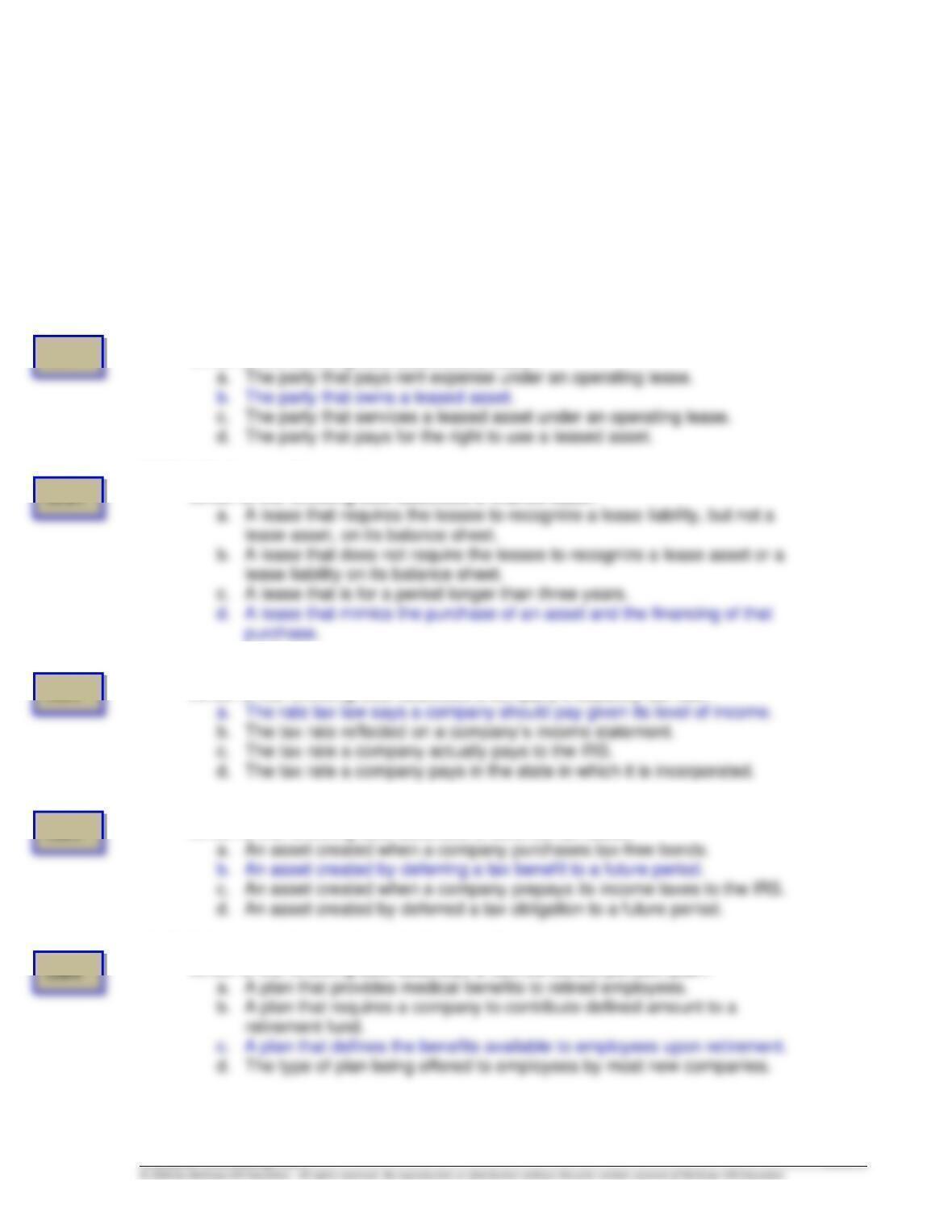
S MC-1 Defining a Lessor
Which of the following best describes a lessor?
S MC-2 Defining a Finance Lease
Which of the following best describes a finance lease?
S MC-3 Defining a Company’s Statutory Tax Rate
Which of the following best describes a company’s statutory tax rate?
S MC-4 Defining Deferred Tax Assets
Which of the following best describes a deferred tax asset?
S MC-5 Defining a Defined Benefit Pension Plan
Which of the following best describes a defined benefit pension plan?
LOS-1
LOS-4
LOS-5
Financial Accounting, 10/e MBA-2
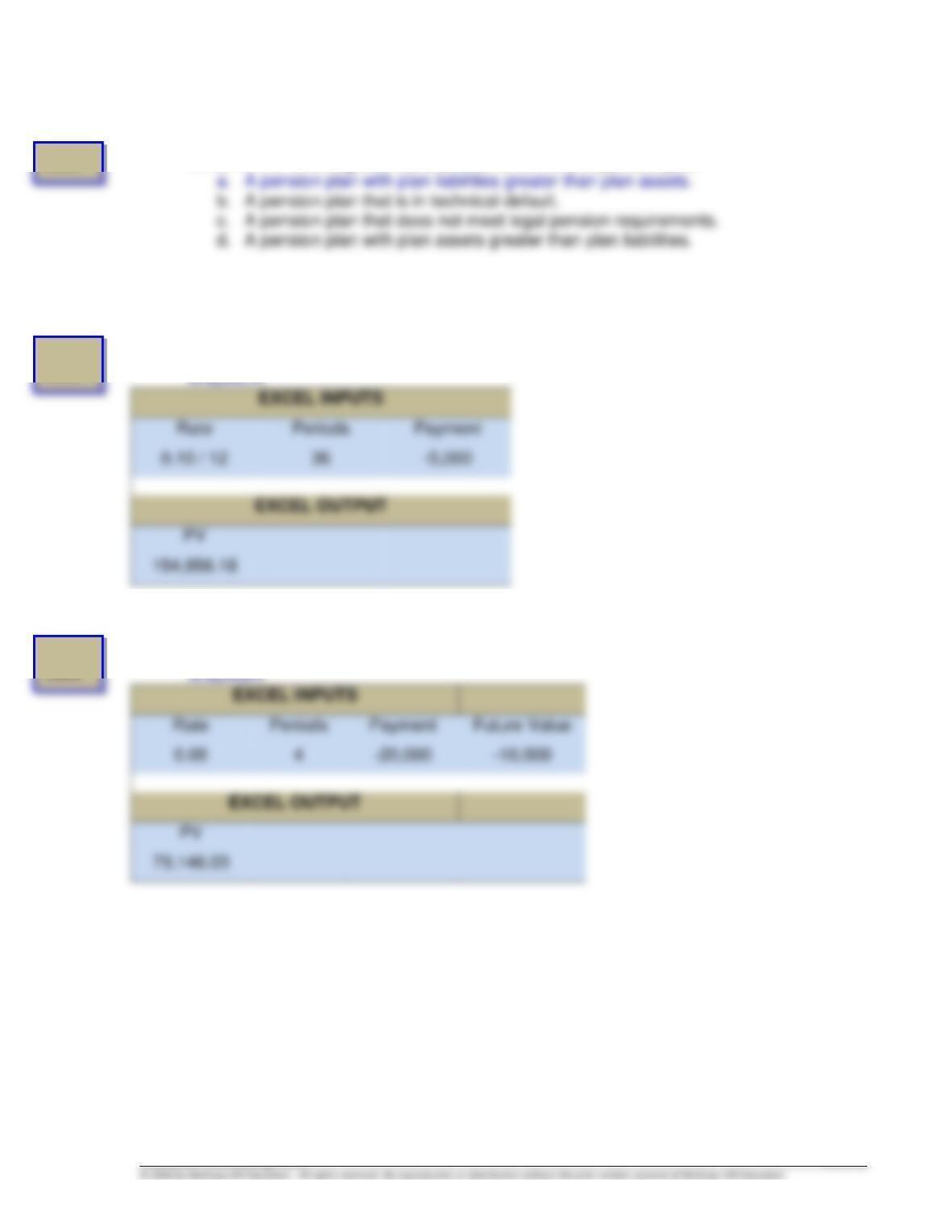
S MC-6 Defining an Underfunded Pension Plan
Which of the following best describes an underfunded pension plan?
MINI-EXERCISES
S ME-1 Computing the Present Value of a Lease
S ME-2 Computing the Present Value of a Lease
LOS-6
LOS-1
LOS-2
LOS-1
LOS-2
EXCEL INPUTS
Financial Accounting, 10/e MBA-3
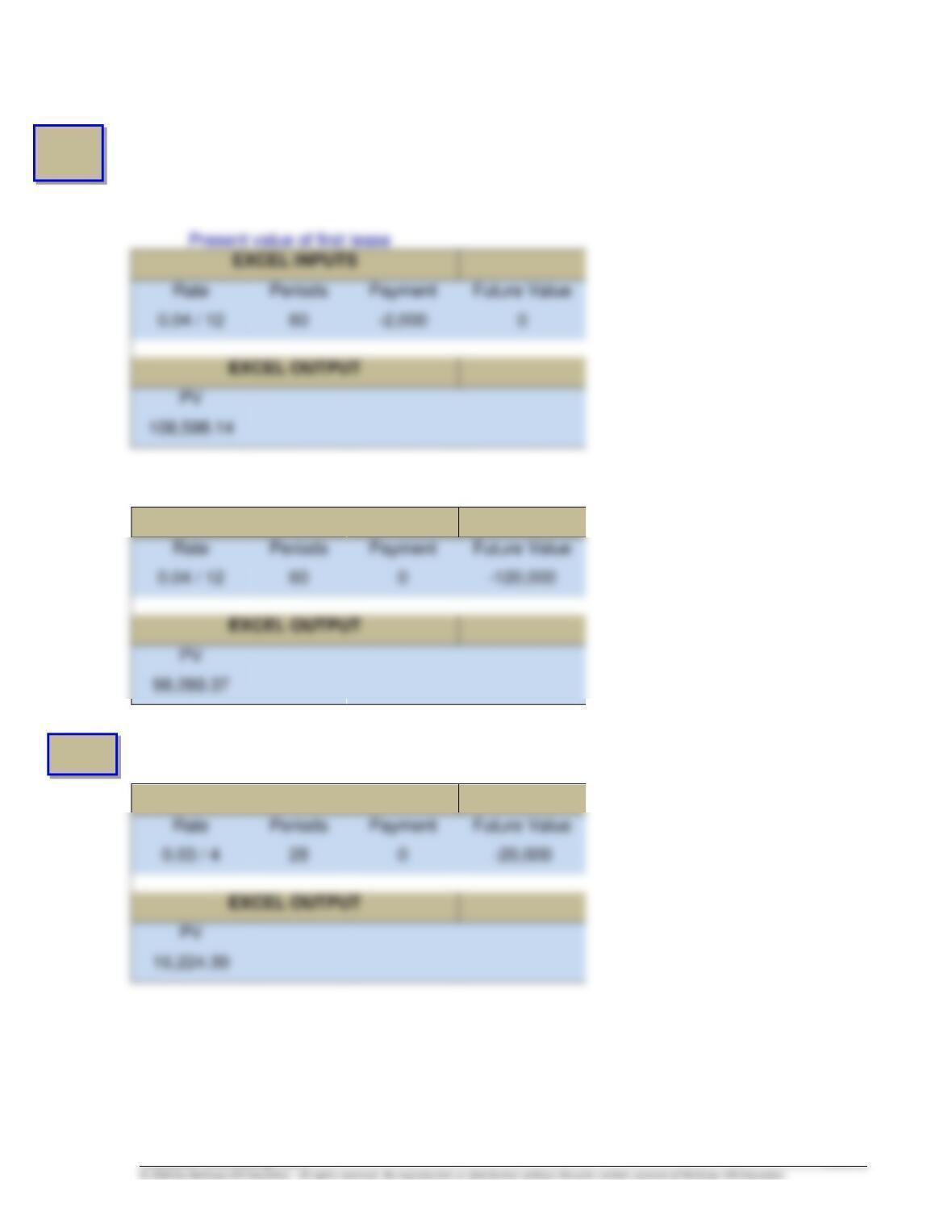
S ME-3 Comparing lease terms
ANSWER
The second lease is a better deal in present value terms (see present value
calculations below).
Present value of second lease
EXCEL INPUTS
S ME-4 Computing the Present Value of a Future Retirement Obligation
ANSWER
EXCEL INPUTS
LOS-1
LOS-2
LOS-6
Financial Accounting, 10/e MBA-4
EXERCISES
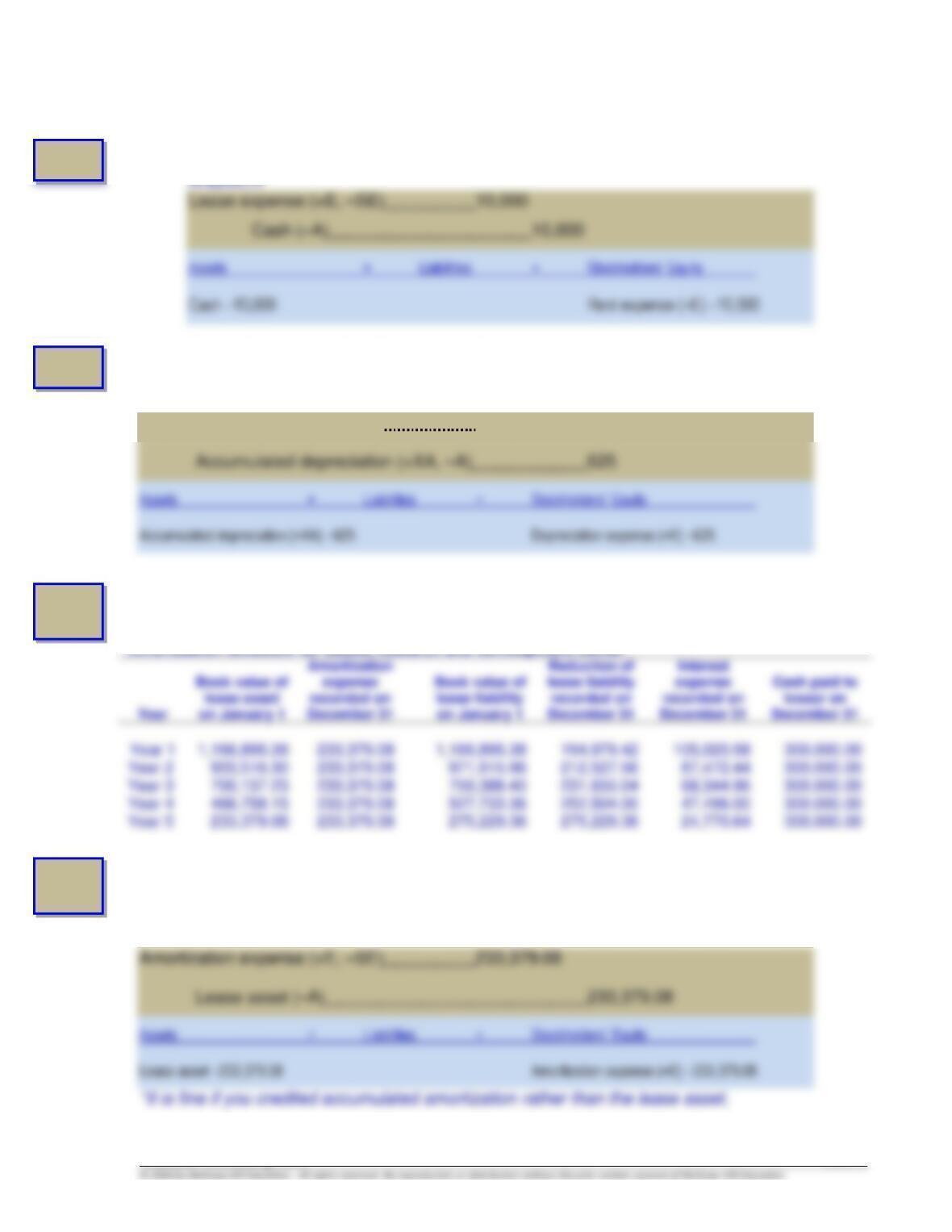
S E-1 Recording lease expense
S E-2 Depreciating leasehold improvements
ANSWER
Depreciation expense (+E, –SE) 625 ($12,500 / 20 quarters)
S E-3 Amortizing lease assets and liabilities
ANSWER
Amortization schedule for leased research and development center
S E-4 Amortizing lease assets and liabilities
ANSWER
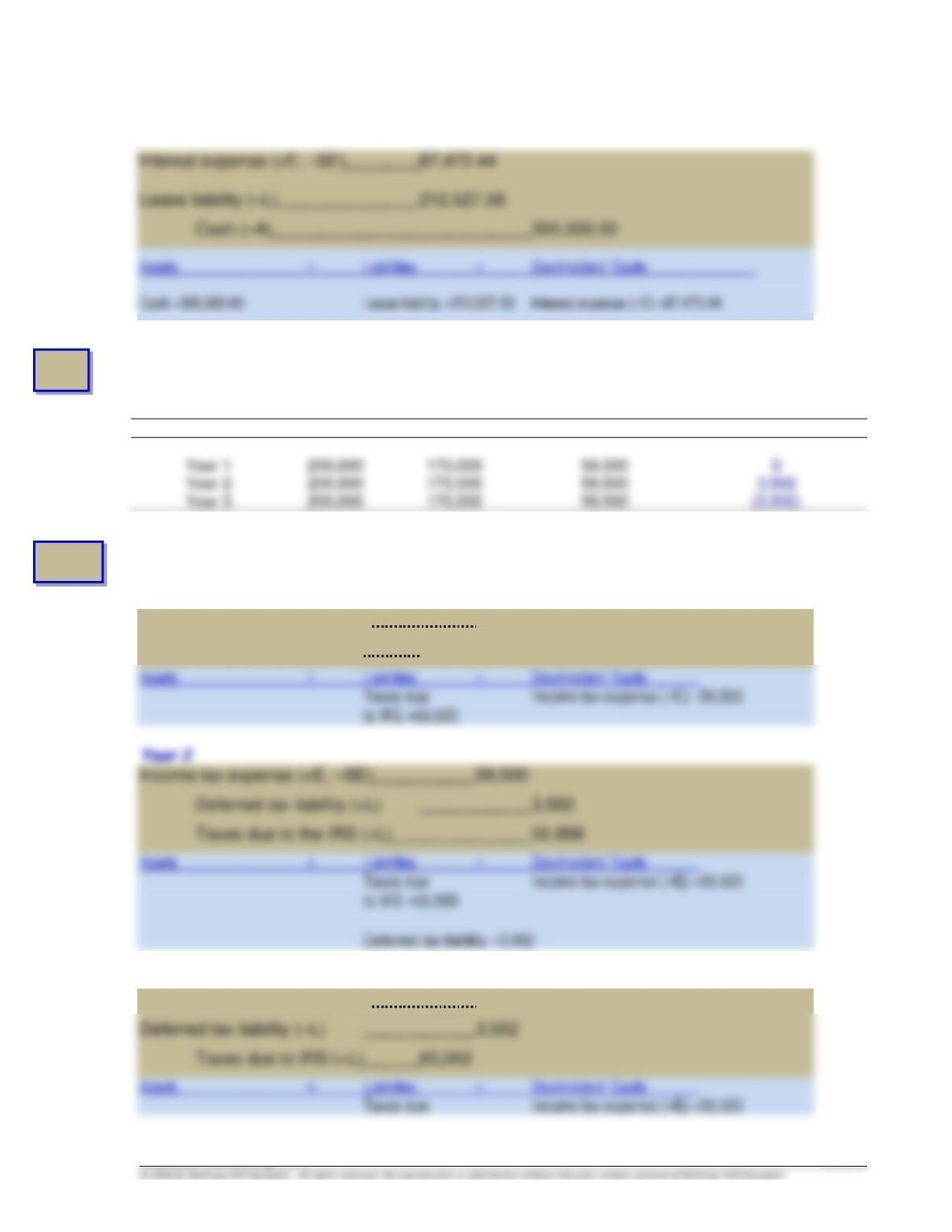
Depreciation of lease asset in Year 2 (using the straight-line method):
LOS-2
LOS-3
LOS-1
LOS-2
LOS-1
LOS-2
Financial Accounting, 10/e MBA-5
Reduction of the lease liability in Year 2 (using the effective interest method):
S E-5 Calculating a deferred tax liability
ANSWER
FINANCIAL REPORTING
Fiscal year ending
Revenue
Taxable Income
Tax Expense
Deferred Tax Liability
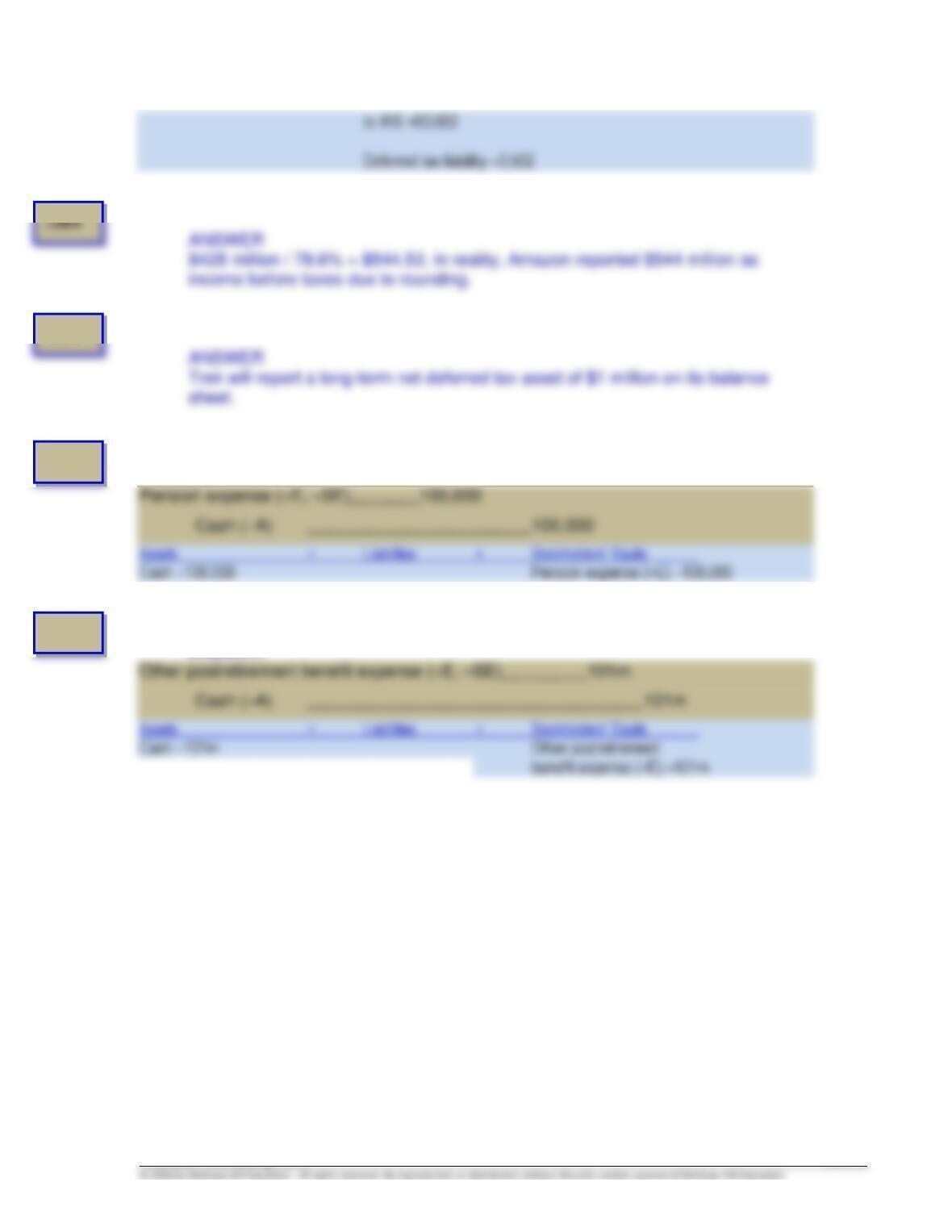
S E-6 Accounting for a deferred tax liability
ANSWER
Year 1
Income tax expense (+E, –SE) 59,500
Taxes due to IRS (+L) 59,500
Year 3
Income tax expense (+E, –SE) 59,500
LO 5
LOS-5
LOS-4
Financial Accounting, 10/e MBA-6
S E-7 Using a company’s effective tax rate
S E-8 Reporting deferred tax asset and deferred liabilities
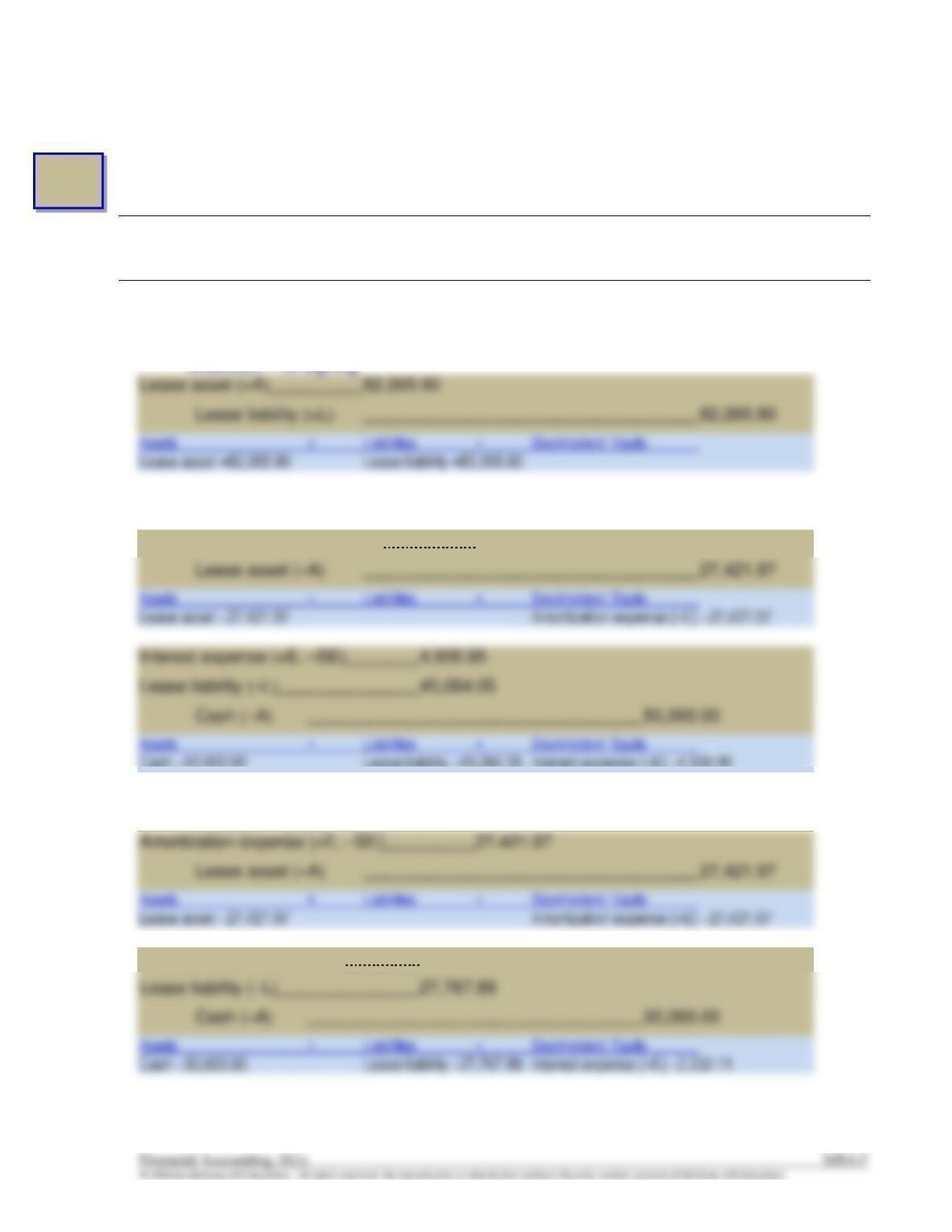
S E-9 Recording a company’s defined contribution pension expense
ANSWER
S E-10 Recording a company’s other postretirement obligations expense
ANSWER
LOS-5
LOS-6
LOS-7
PROBLEMS
S P-1 Accounting for Finance Leases
Amortization schedule to compute values needed for journal entries
Year
Book value of
lease asset
on January 1
Amortization
expense
recorded on
December 31
Book value of
lease liability
on January 1
Reduction of
lease liability
recorded on
December 31
Interest
expense
recorded on
December 31
Cash paid to
lessor on
December 31
Year 1
82,265.90
27,421.97
82,265.90
45,064.05
4,935.95
50,000.00
Year 2
54,843.93
27,421.97
37,201.85
27,767.89
2,232.11
30,000.00
Year 3
27,421.97
27,421.97
9,433.96
9,433.96
566.04
10,000.00
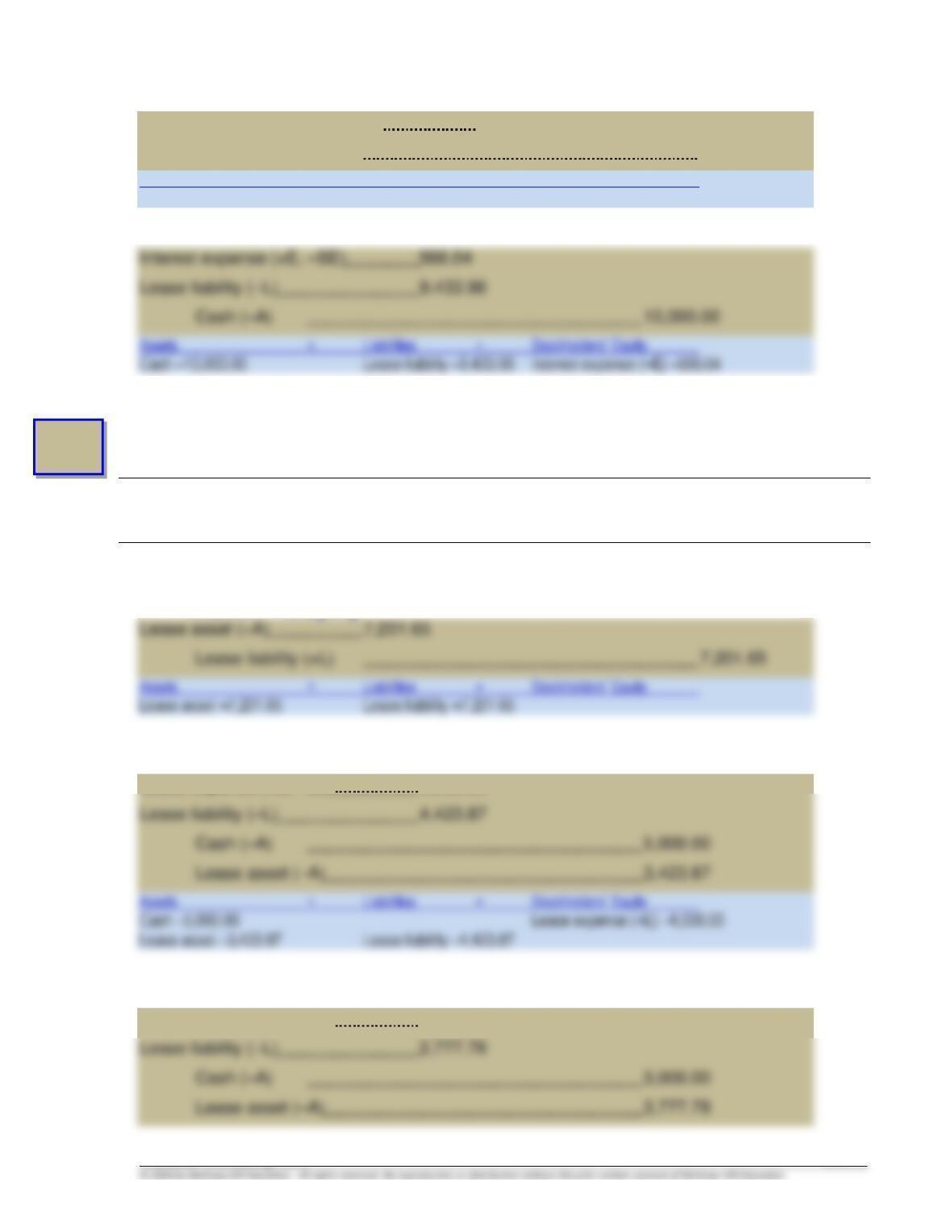
ANSWER – At signing
ANSWER – End of Year 1
Amortization expense (+E, –SE) 27,421.97
Cash –50,000.00 Lease liability –45,064.05 Interest expense (+E) –4,935.95
ANSWER – End of Year 2
Interest expense (+E, –SE) 2,232.11
ANSWER – End of Year 3
LOS-1
LOS-2
Financial Accounting, 10/e MBA-8
Amortization expense (+E, –SE) 27,421.97
Lease asset (–A) 27,421.97
Assets = Liabilities + Stockholders’ Equity
Lease asset –27,421.97 Amortization expense (+E) –27,421.97
S P-2 Accounting for Operating Leases
Amortization schedule to compute values needed for journal entries
Year
Book value of
lease asset
on January 1
Reduction of
lease asset
recorded on
December 31
Book value of
lease liability
on January 1
Reduction of
lease liability
recorded on
December 31
Lease
expense
recorded on
December 31
Cash paid to
lessor on
December 31
Year 1
7,201.65
3,423.87
7,201.65
4,423.87
4,000.00
5,000.00
Year 2
3,777.78
3,777.78
2,777.78
2,777.78
4,000.00
3,000.00
ANSWER – At signing
ANSWER – End of Year 1
Lease expense (+E, –SE) 4,000.00
ANSWER – End of Year 2
Lease expense (+E, –SE) 4,000.00
LOS-1
LOS-2
Financial Accounting, 10/e MBA-9
Assets = Liabilities + Stockholders’ Equity
S P-3 Computing effective tax rates
ANSWER
S P-4 Classifying and reporting deferred taxes
ANSWER
S P-5 Classifying and reporting defined benefit pension obligations
ANSWER
S P-6 Calculating defined contribution pension expense
ANSWER
Under a defined contribution plan Trader Joe’s does not have to worry about what
LOS-4
LOS-5
LOS-6
LOS-6
Financial Accounting, 10/e MBA-10
CASES
S C-1 Analyzing Starbucks’ lease disclosures
The following questions pertain to Starbucks’ 2016 balance sheet and lease
footnote shown below.
1. What dollar amount did Starbucks report as rental expense associated
with operating leases in 2016?
2. Where does Starbucks disclose its operating leases on its balance sheet?
3. Assume a discount rate of 6 percent, and that the amount in the
“thereafter” row in Starbucks’ footnote disclosure is equally spread over
the years 2022 – 2026. What is the present value of Starbucks’ operating
leases at the end of fiscal 2016?
• The present value is $5,610.39 million (see calculations below).
Fiscal Year
Ending
Future
Payments
Periods
Discount
Rate
Present
Value
2017
$1,125.10
1
6.00%
$1,061.42
2019
3
6.00%
2020
4
6.00%
2022
6
6.00%
2023
7
6.00%
2025
9
6.00%
2026
6.00%
$7,285.00
$5,610.39
$2,695.50
4. What is the impact on Starbucks’ 2016 debt–to-equity ratio of adding the
present value of its operating leases to the liability section of its 2016
balance sheet?
• Starbucks’ 2016 debt-to-equity ratio before the adjustments is 1.43
5. Would making the adjustment in #4 change your opinion about Starbucks’
credit worthiness?
LOS-1
LOS-2
Financial Accounting, 10/e MBA-11
S C-2 Analyzing Disney’s income tax disclosures
The following questions pertain to Disney’s 2016 financial statements and
income tax footnote shown below.
1. How much did Disney report as income tax expense in fiscal 2016? How
much cash did Disney pay during the year for income taxes? In general,
why do these numbers differ?
• Disney reports income tax expense on its 2016 income statement
2. What is Disney’s 2016 statutory tax rate? What is its 2016 effective tax
rate? In general, why do these rates differ?
• Disney’s 2016 statutory tax rate is 35%, while its 2016 effective
3. Why does Disney deduct a “valuation allowance” from its net deferred tax
liability in its income tax footnote?
• Valuation allowances are recorded against net deferred tax assets
4. Speculate as to why Disney reports in its income taxes footnote
“depreciable, amortizable and other property” as a deferred tax liability
rather than a deferred tax asset.
• When a company depreciates an asset more quickly for tax
LOS-4
LOS-5