Chapter 9
Take Two Solutions
Exercise 9-1 (10 minutes)
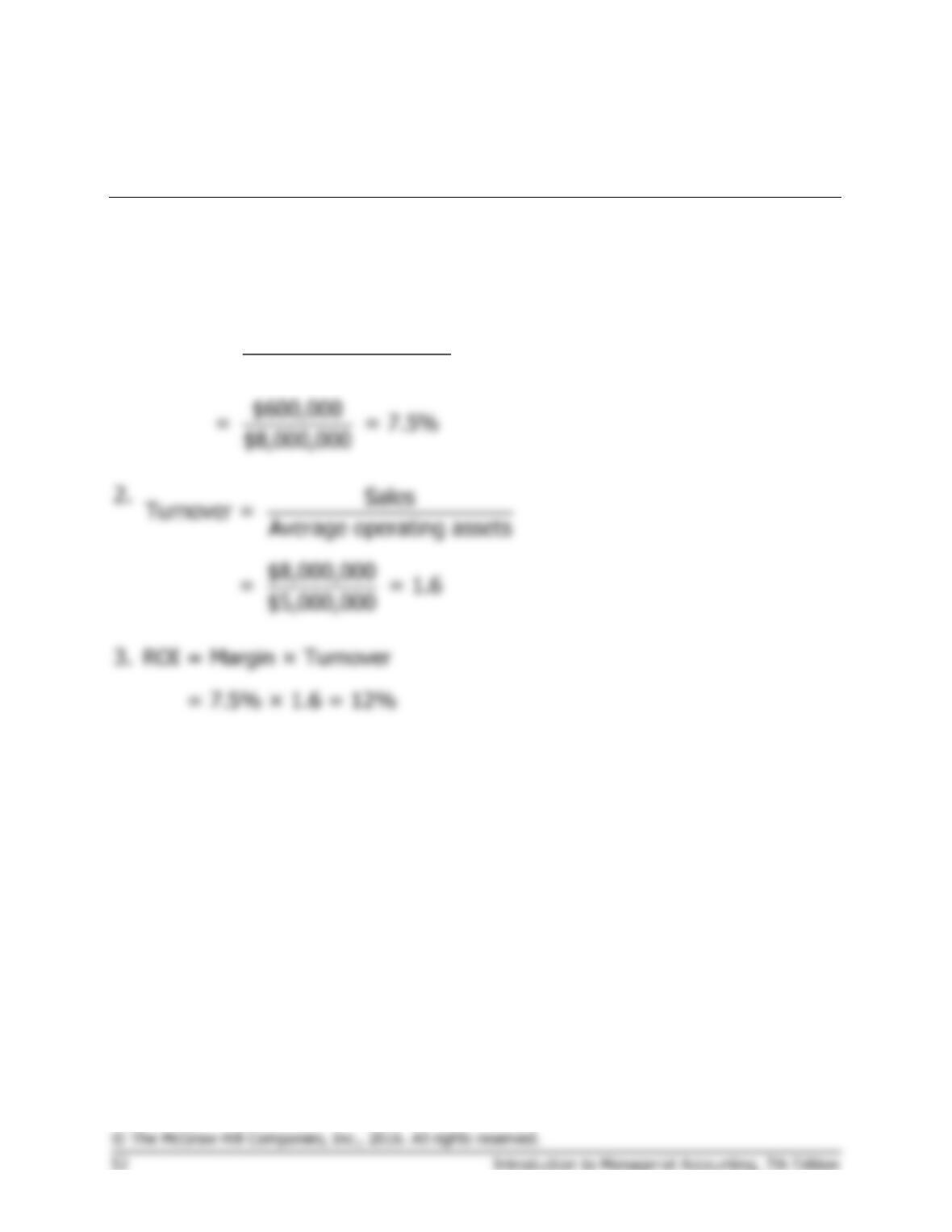
1.
Net operating income
Margin = Sales
Exercise 9-2 (10 minutes)
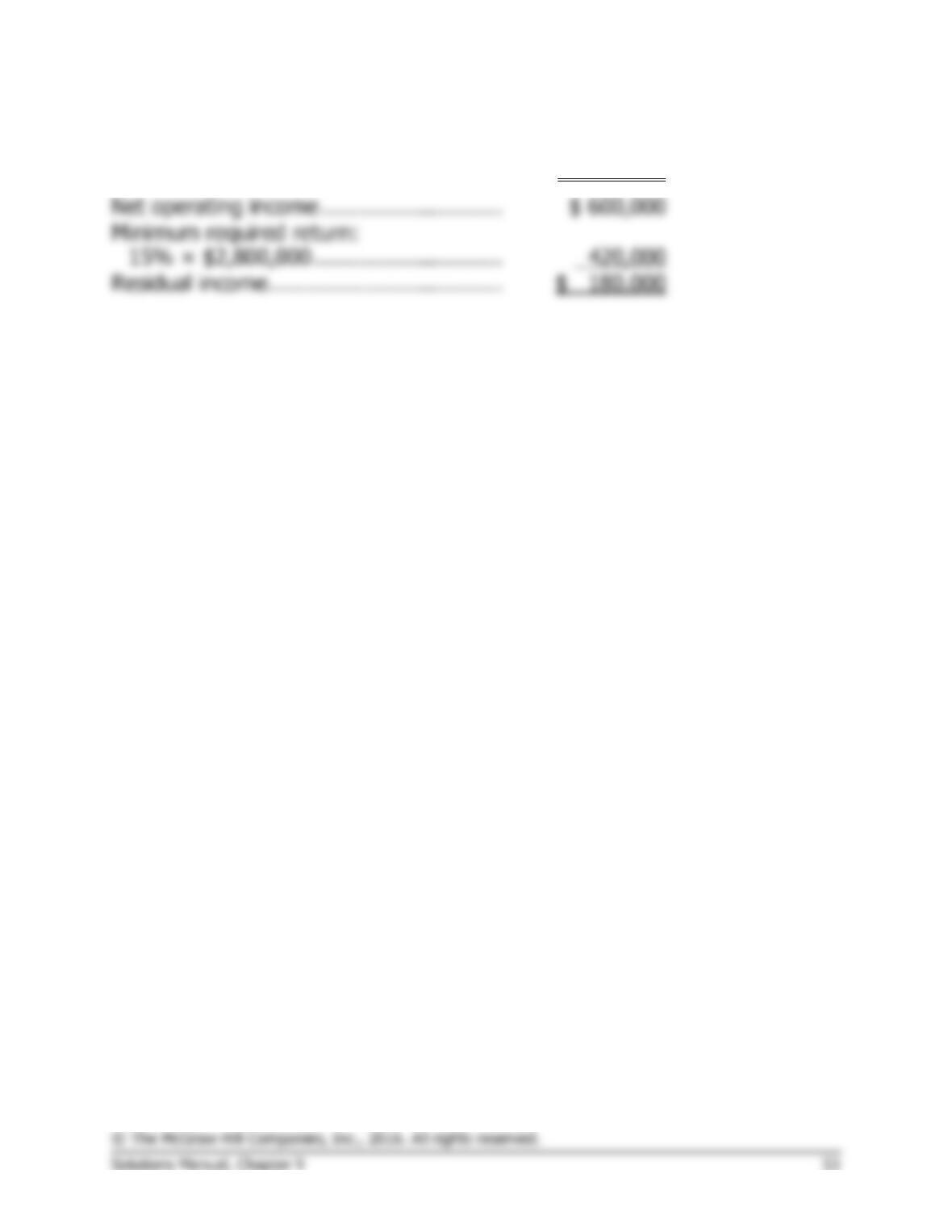
Average operating assets ………………….
$2,800,000
Net operating income ……………………….
Exercise 9-3 (20 minutes)
1.
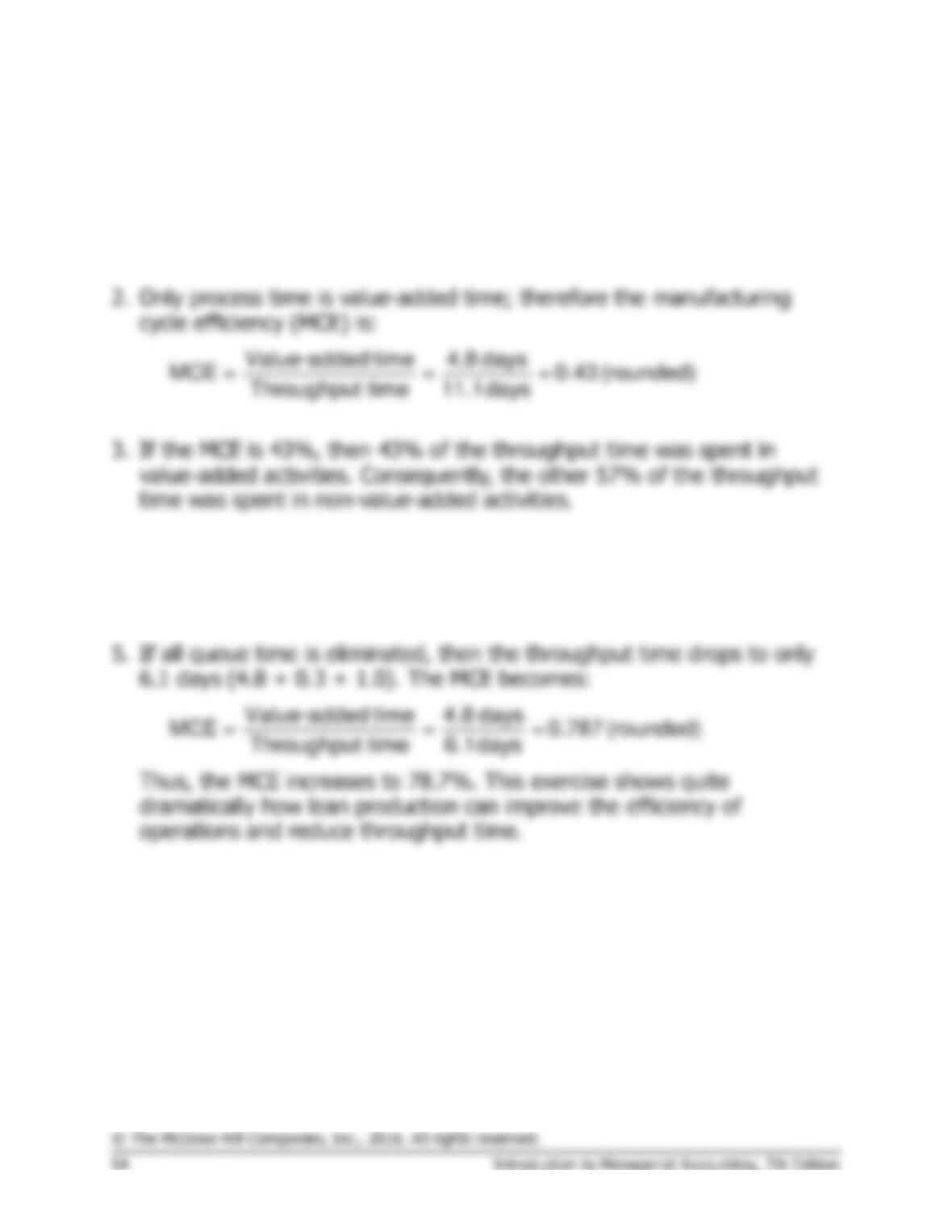
Throughput time =
Process time + Inspection time + Move time +
Queue time
=
4.8 days + 0.3 days + 1.0 days + 5.0 days
=
11.1 days
4.
Delivery cycle time =
Wait time + Throughput time
=
14.0 days + 11.1 days
=
25.1 days
Exercise 9-6 (20 minutes)
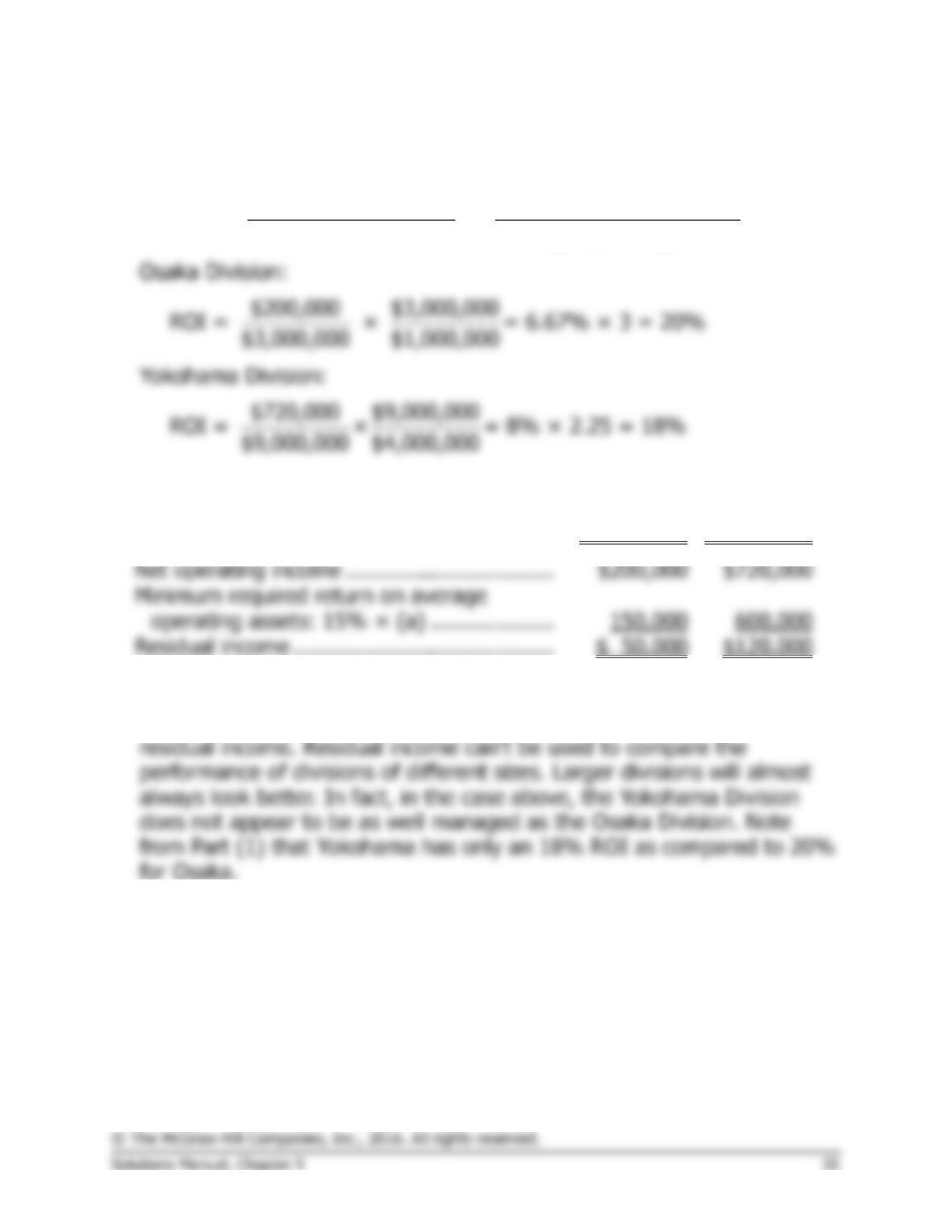
1. ROI computations:
Net operating income Sales
ROI = ×
Sales Average operating assets
2.
Osaka
Yokohama
Average operating assets (a) ………………….
$1,000,000
$4,000,000
Net operating income …………………………..
Residual income ………………………………….
3. No, the Yokohama Division is simply larger than the Osaka Division and
for this reason one would expect that it would have a greater amount of
Exercise 9-11 (30 minutes)
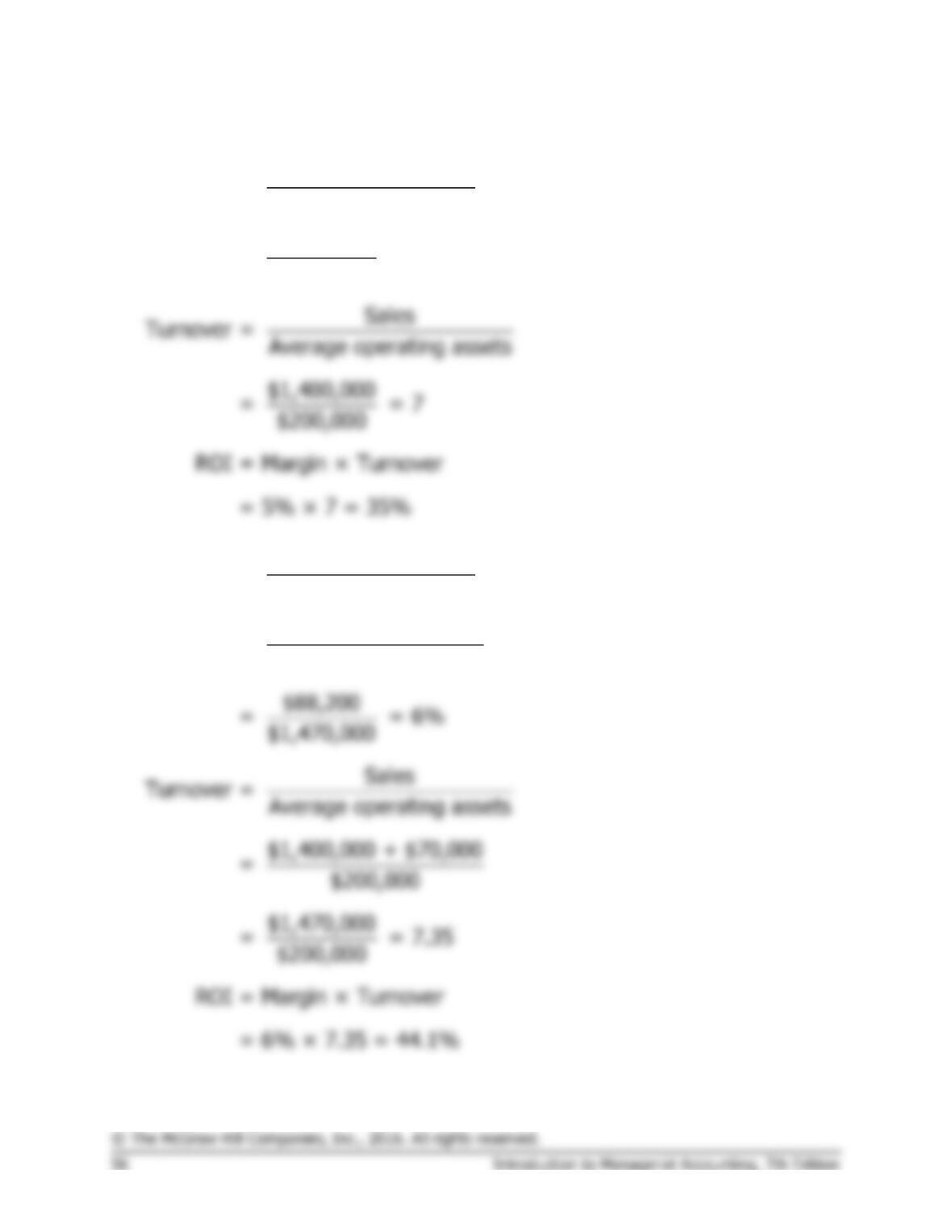
1.
Net operating income
Margin = Sales
$70,000
= = 5%
$1,400,000
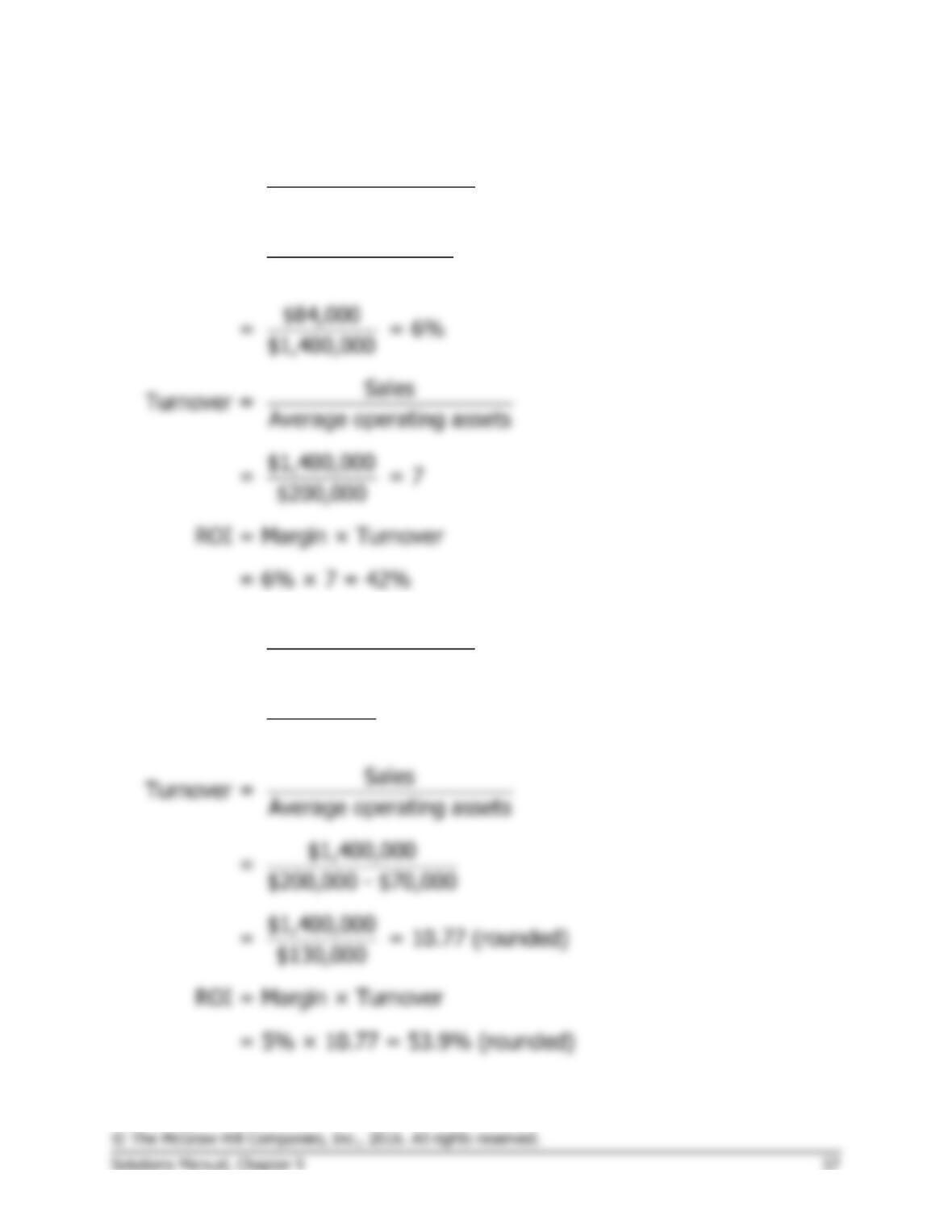
2.
Net operating income
Margin = Sales
$70,000 + $18,200
=
$1,400,000 + $70,000
Exercise 9-11 (continued)
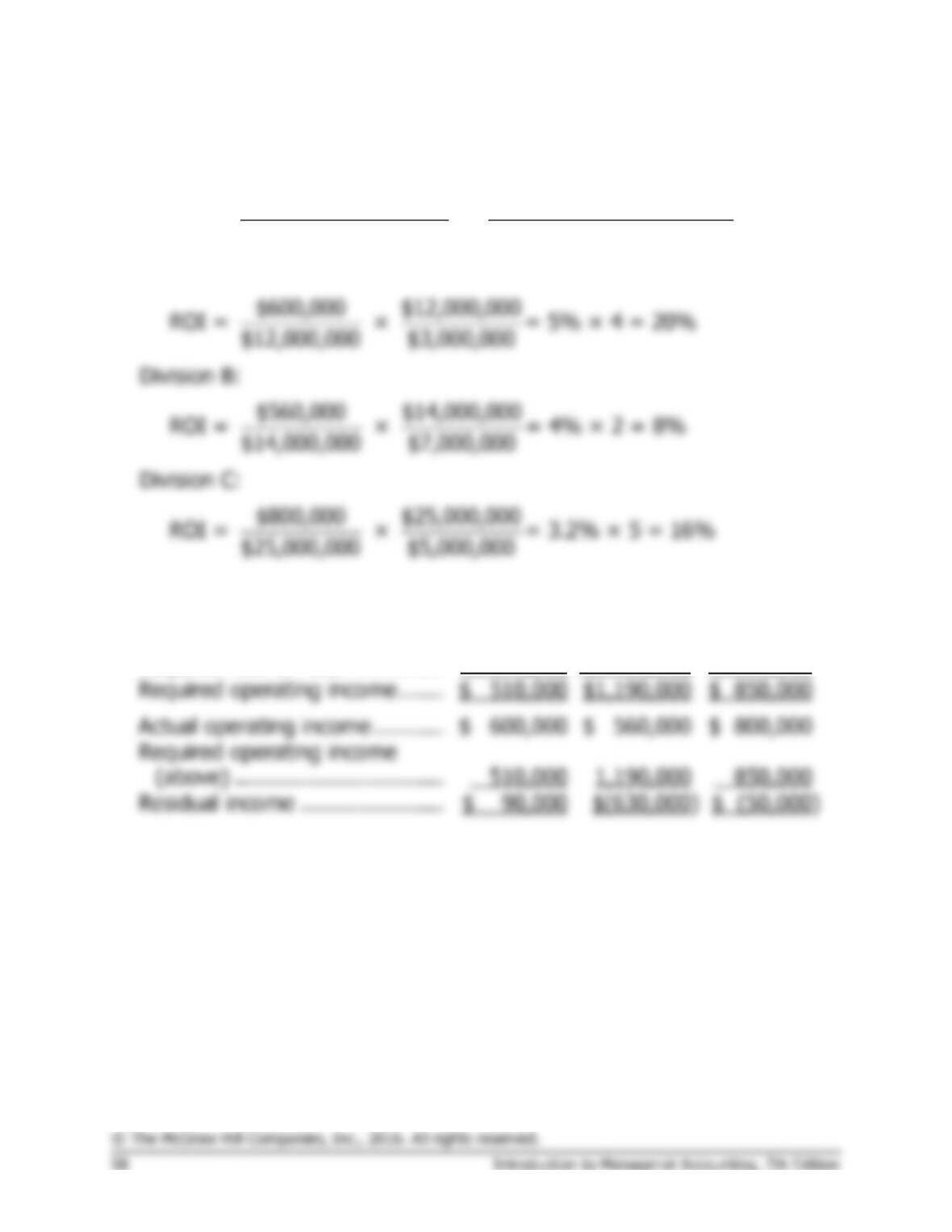
3.
Net operating income
Margin = Sales
$70,000 + $14,000
=
$1,400,000
4.
Net operating income
Margin =
Sales
$70,000
= = 5%
$1,400,000
Exercise 9-12 (30 minutes)
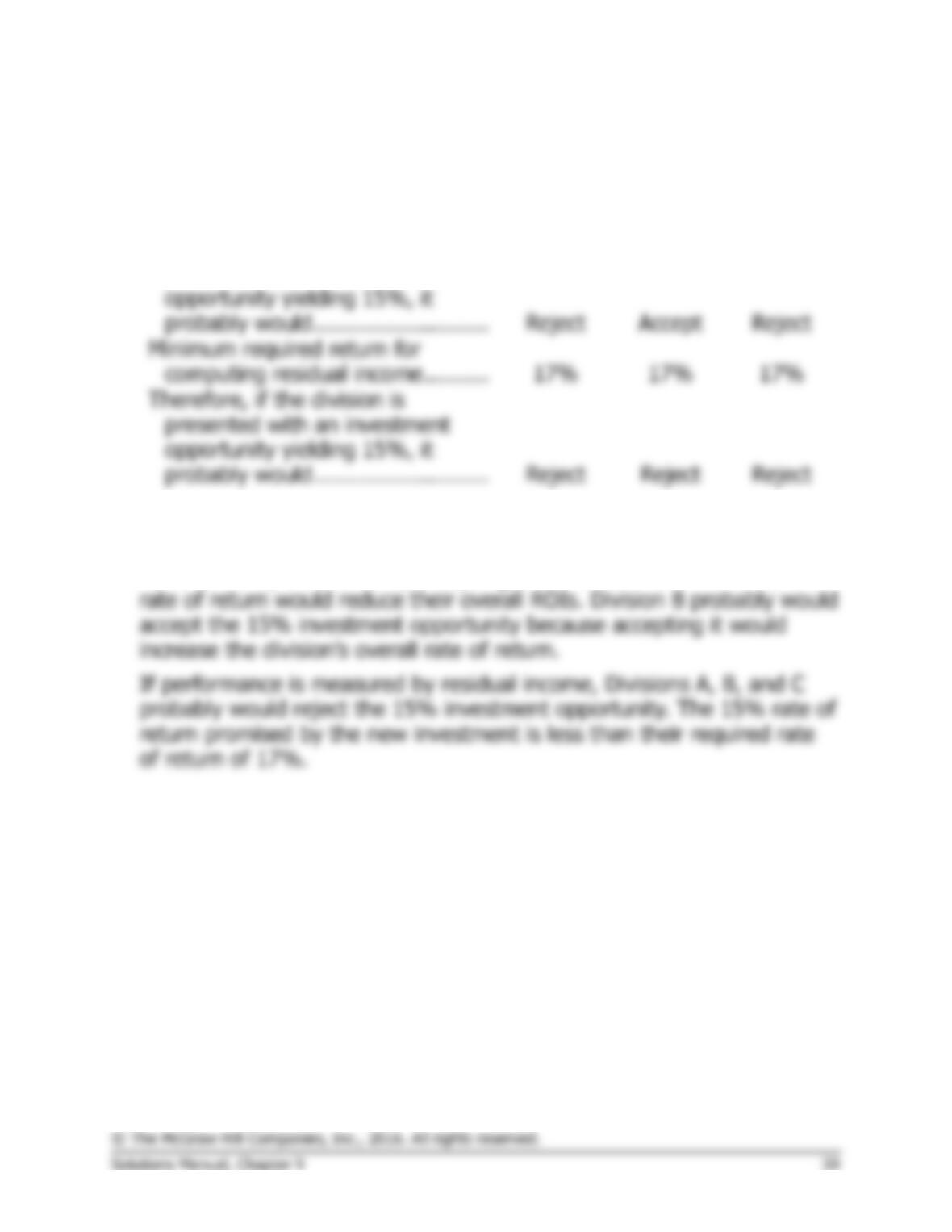
1. ROI computations:
Net operating income Sales
ROI = ×
Sales Average operating assets
Division A:
2.
Division A
Division B
Division C
Average operating assets ………
$3,000,000
$7,000,000
$5,000,000
Required rate of return………….
× 17%
× 17%
× 17%
Required operating income …….
$ 510,000
Actual operating income ………..
$ 600,000
$ 560,000
Residual income ………………….
Exercise 9-12 (continued)
3. a. and b.
Division A
Division B
Division C
Return on investment (ROI) ………..
20%
8%
16%
Therefore, if the division is
presented with an investment
If performance is being measured by ROI, both Division A and Division C
probably would reject the 15% investment opportunity. These divisions’
ROIs currently exceed 15%; accepting a new investment with a 15%
Exercise 9-13 (15 minutes)
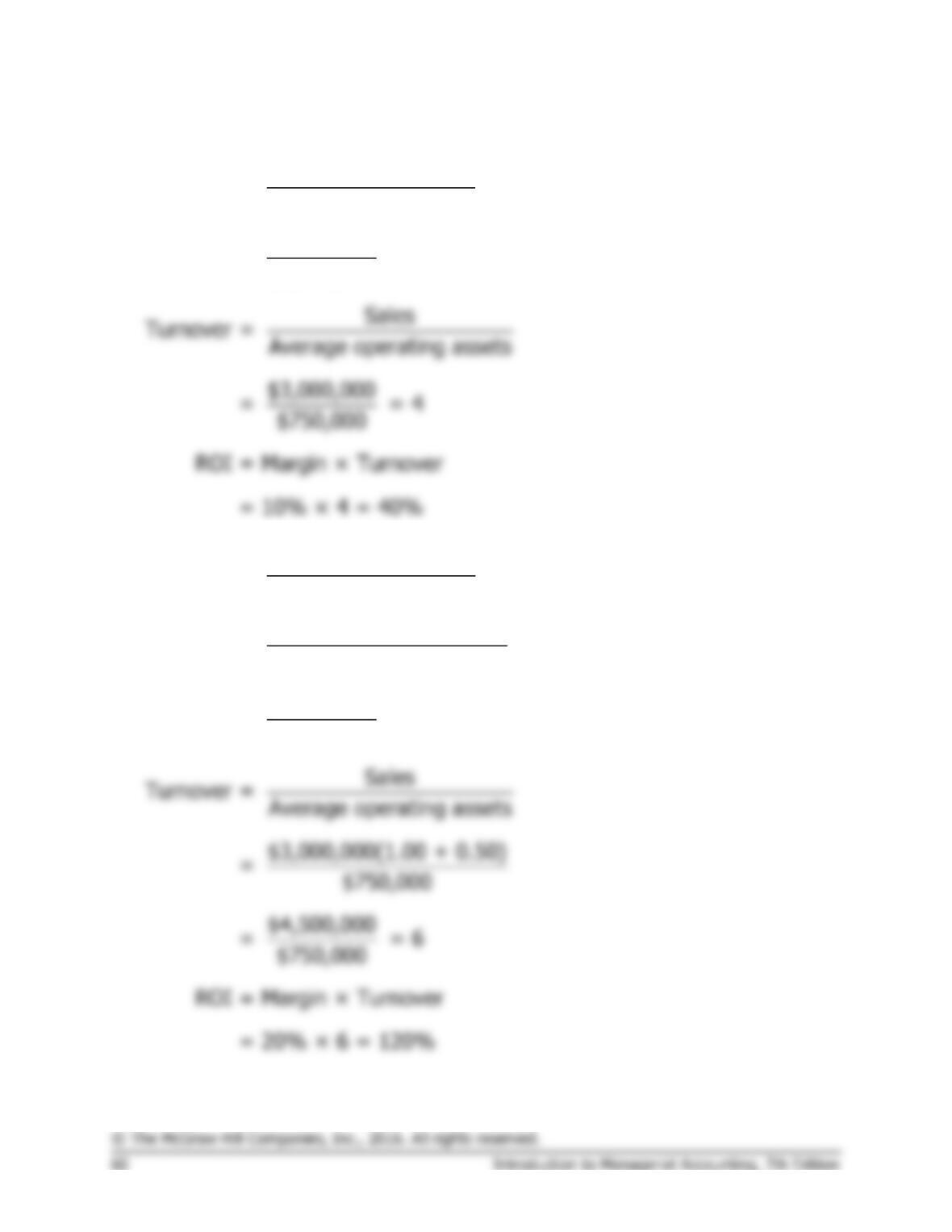
1.
Net operating income
Margin = Sales
$300,000
= = 10%
$3,000,000
2.
Net operating income
Margin = Sales
$300,000(1.00 + 2.00)
=
$3,000,000(1.00 + 0.50)
$900,000
= = 20%
$4,500,000
Exercise 9-13 (continued)
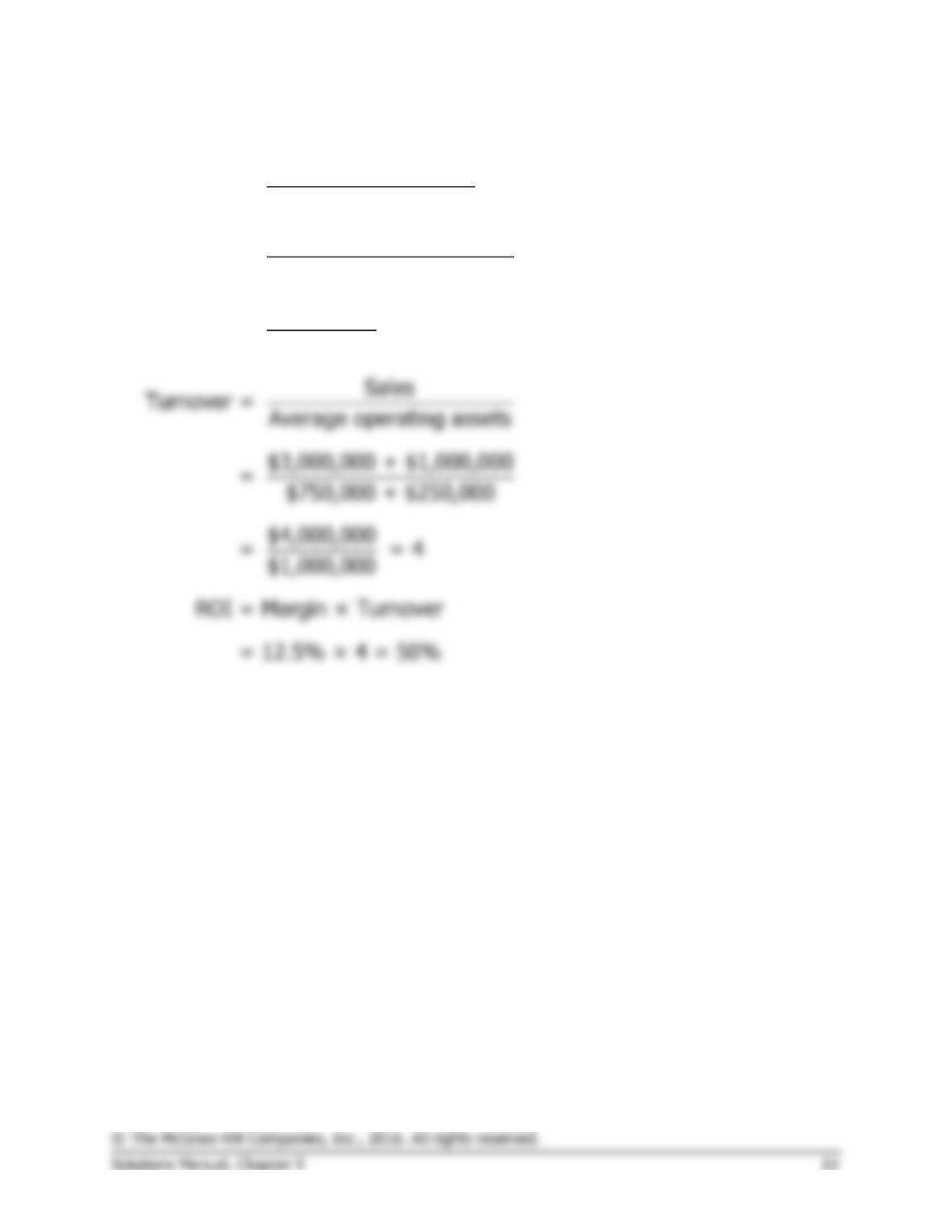
3.
Net operating income
Margin = Sales
$300,000 + $200,000
=
$3,000,000 + $1,000,000
$500,000
= = 12.5%
$4,000,000