596
Problem 9-4A (Concluded)
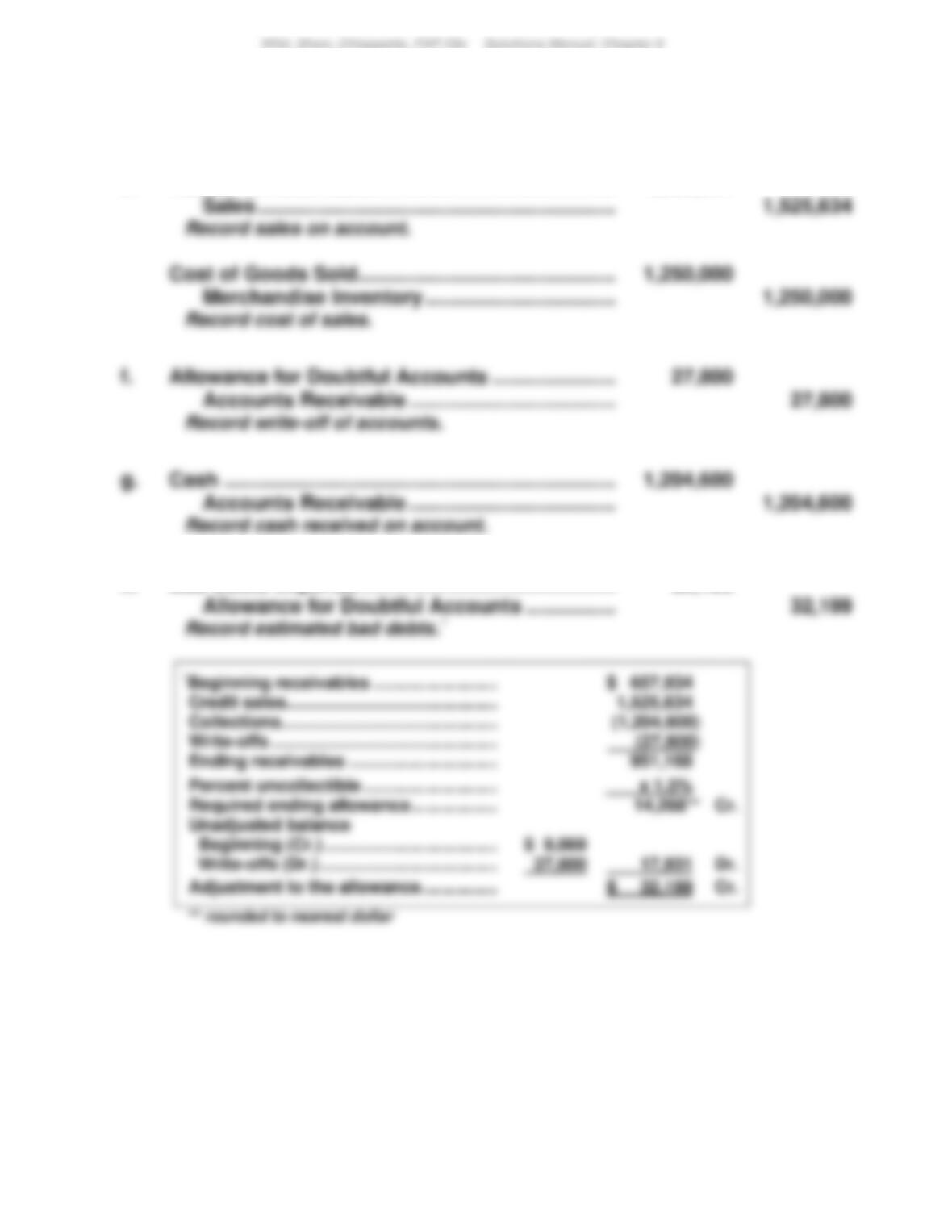
2017
e.
Accounts Receivable ……………………………………….
1,525,634
Allowance for Doubtful Accounts …………………….
27,800
g.
h.
Bad Debts Expense ………………………………………….
32,199
597
Problem 9-5A (75 minutes)
Part 1
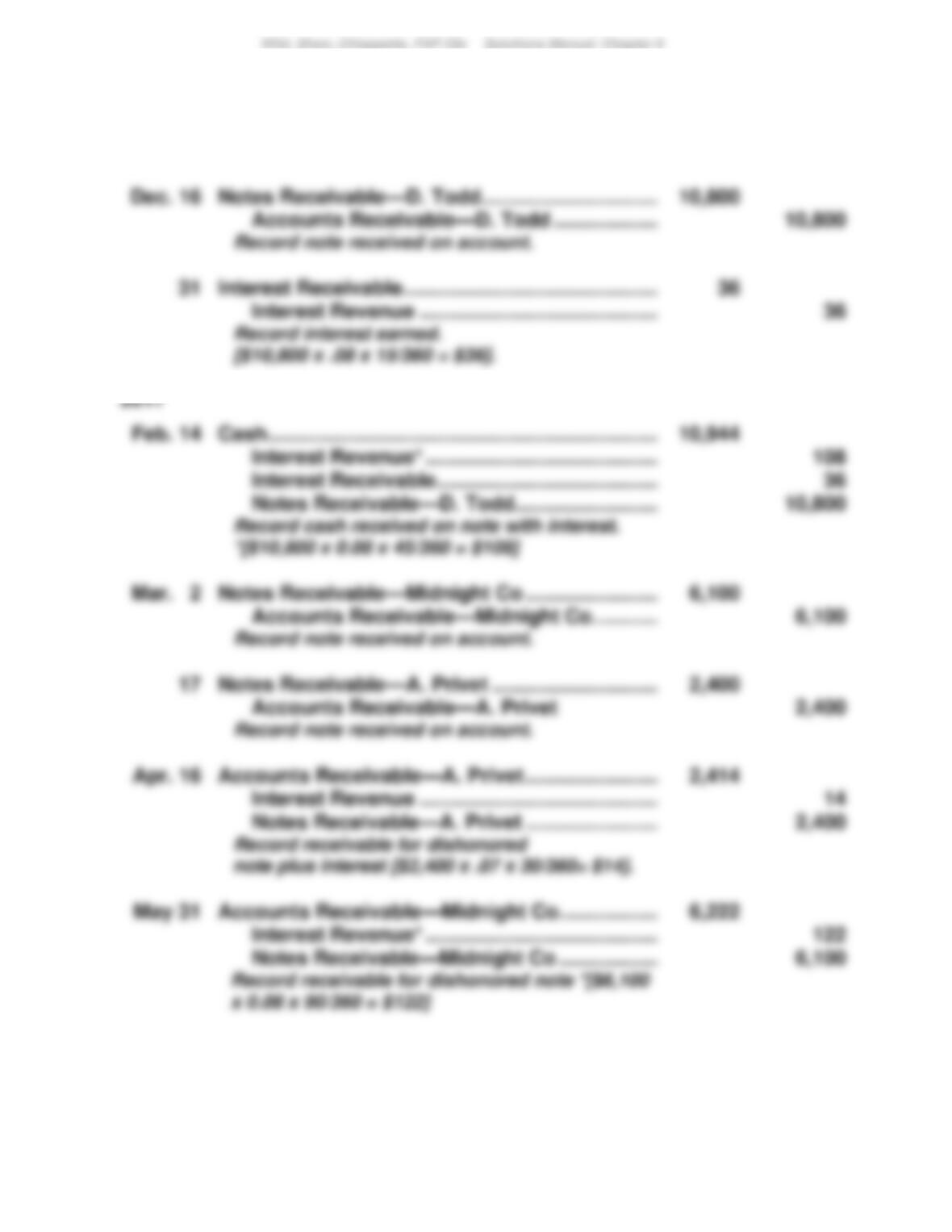
2016
2017
Problem 9-5A (Concluded)
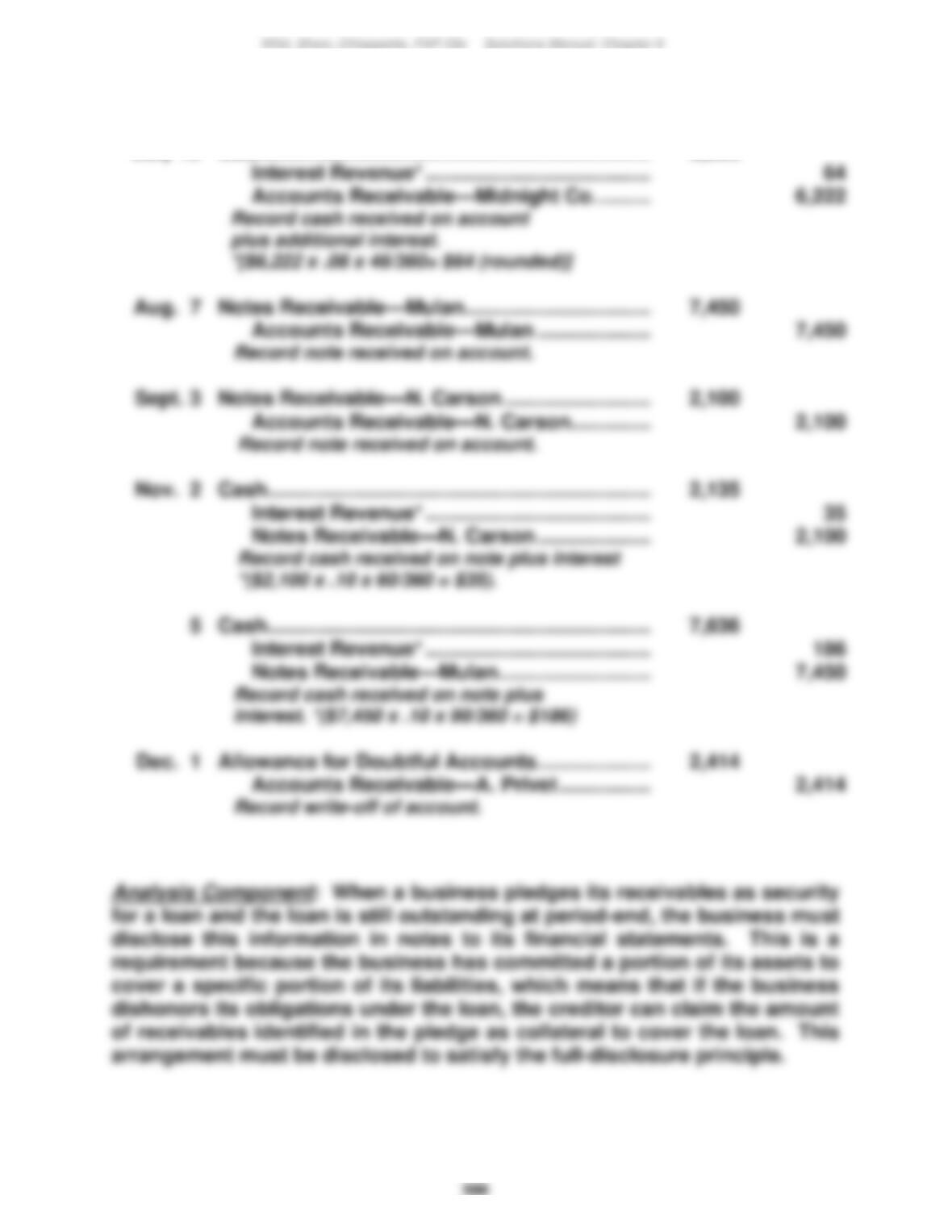
July 16
Cash …………………………………………………………….
6,286
7,450
2,100
Cash …………………………………………………………….
2,135
Cash …………………………………………………………….
7,636
Allowance for Doubtful Accounts ………………….
2,414
Part 2
Wild, Shaw, Chiappetta, FAP 23e Solutions Manual: Chapter 9
599
PROBLEM SET B
Problem 9-1B (30 minutes)
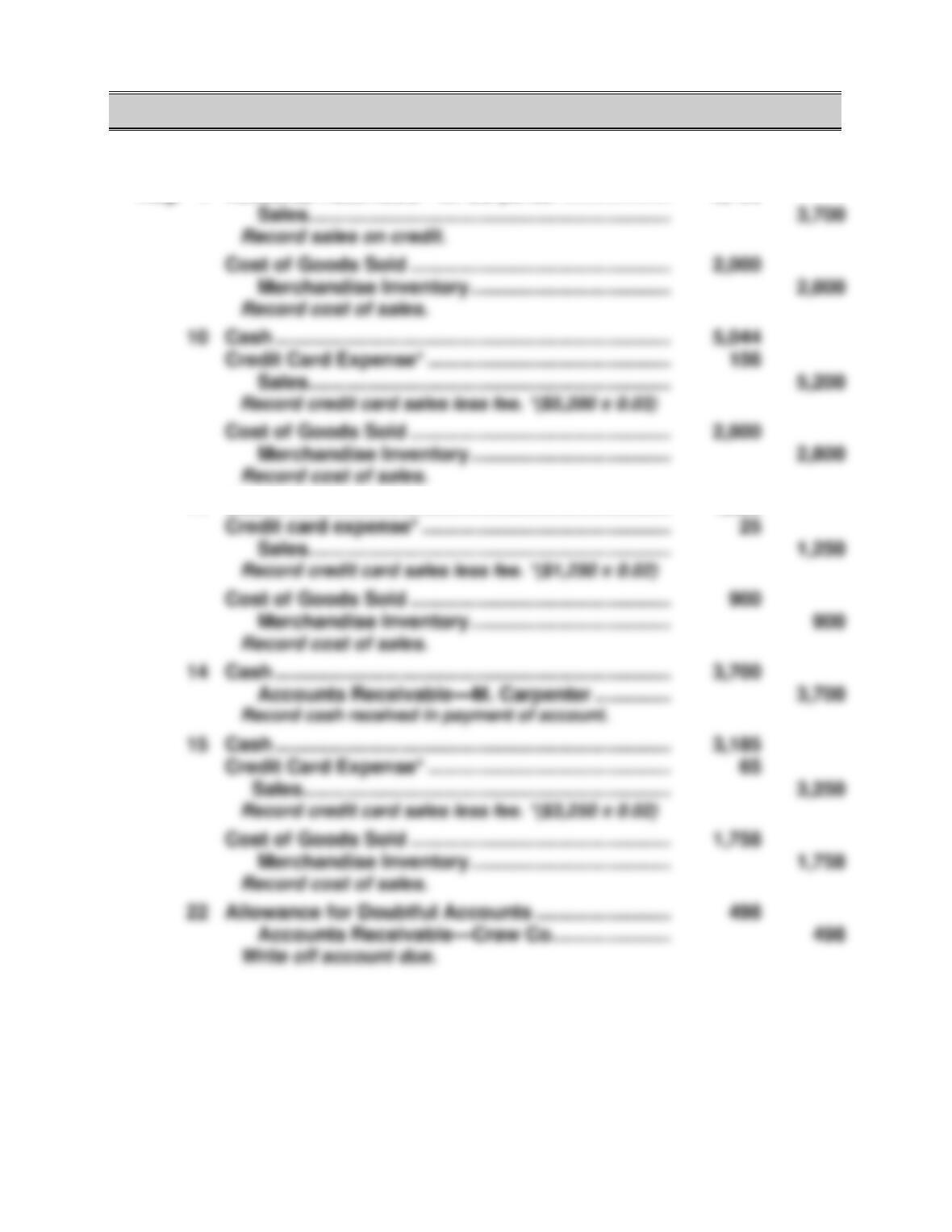
Aug. 4
Accounts Receivable—M. Carpenter ………………….
3,700
11
Cash …………………………………………………………………
1,225
Credit card expense* …………………………………………
1,250
Cost of Goods Sold …………………………..…………………….
Cash …………………………………………………………………
3,700
15
Cash …………………………………………………………………
3,185
Credit Card Expense* ………………………………………..
3,250
Cost of Goods Sold …………………………..…………………….
1,758
1,758
22
Allowance for Doubtful Accounts ………………………
3,700
Cost of Goods Sold …………………………..…………………….
2,000
2,000
10
Cash …………………………………………………………………
5,044
Credit Card Expense* ………………………………………..
Cost of Goods Sold …………………………..…………………….
2,800
2,800
600
Problem 9-2B (35 minutes)
Part 1
a. Expense is 2.5% of credit sales
b. Expense is 1.5% of total sales
c. Allowance is 6% of accounts receivable
Part 2
Current assets
Part 3
Current assets
601
Problem 9-3B (35 minutes)
Part 1
Calculation of the estimated balance of the allowance
Part 2
Dec. 31
Bad Debts Expense …………………………………….
31,390
Part 3
Writing off the account receivable in 2018 will not directly affect Year 2018
602
Problem 9-4B (35 minutes)
2016
a.
Accounts Receivable …………………………………..
685,350
500,000
b.
Cash ……………………………………………………………
482,300
c.
Allowance for Doubtful Accounts …………………
d.
Bad Debts Expense ……………………………………..
603
Problem 9-4B (Concluded)
2017
e.
Accounts Receivable ……………………………………
870,220
Sales ………………………………………………………
870,220
Record sales on account.
650,000
Merchandise Inventory ……………………………………
650,000
Record cost of sales.
990,800
Accounts Receivable ………………………………
990,800
Record cash received on account.
Allowance for Doubtful Accounts ………………….
Accounts Receivable ………………………………
Record write-off of accounts.
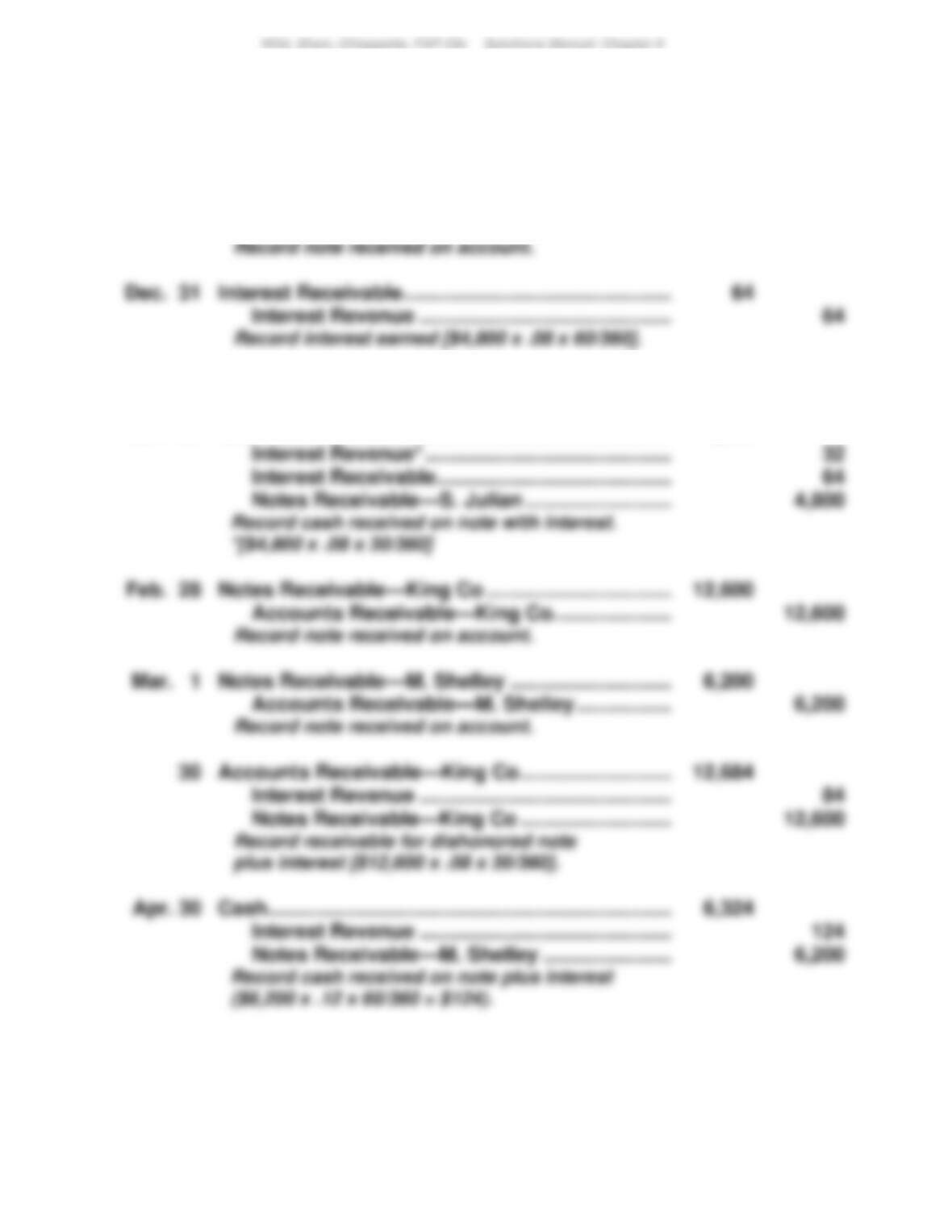
Bad Debts Expense ………………………………………
Allowance for Doubtful Accounts…………….
604
Problem 9-5B (75 minutes)
Part 1
2016
Nov. 1
Notes Receivable—S. Julian …………………………..
4,800
Accounts Receivable—S. Julian ………………….
4,800
2017
Jan. 30
Cash ………………………………………………………………..
4,896
Notes Receivable—S. Julian ……………………….
4,800
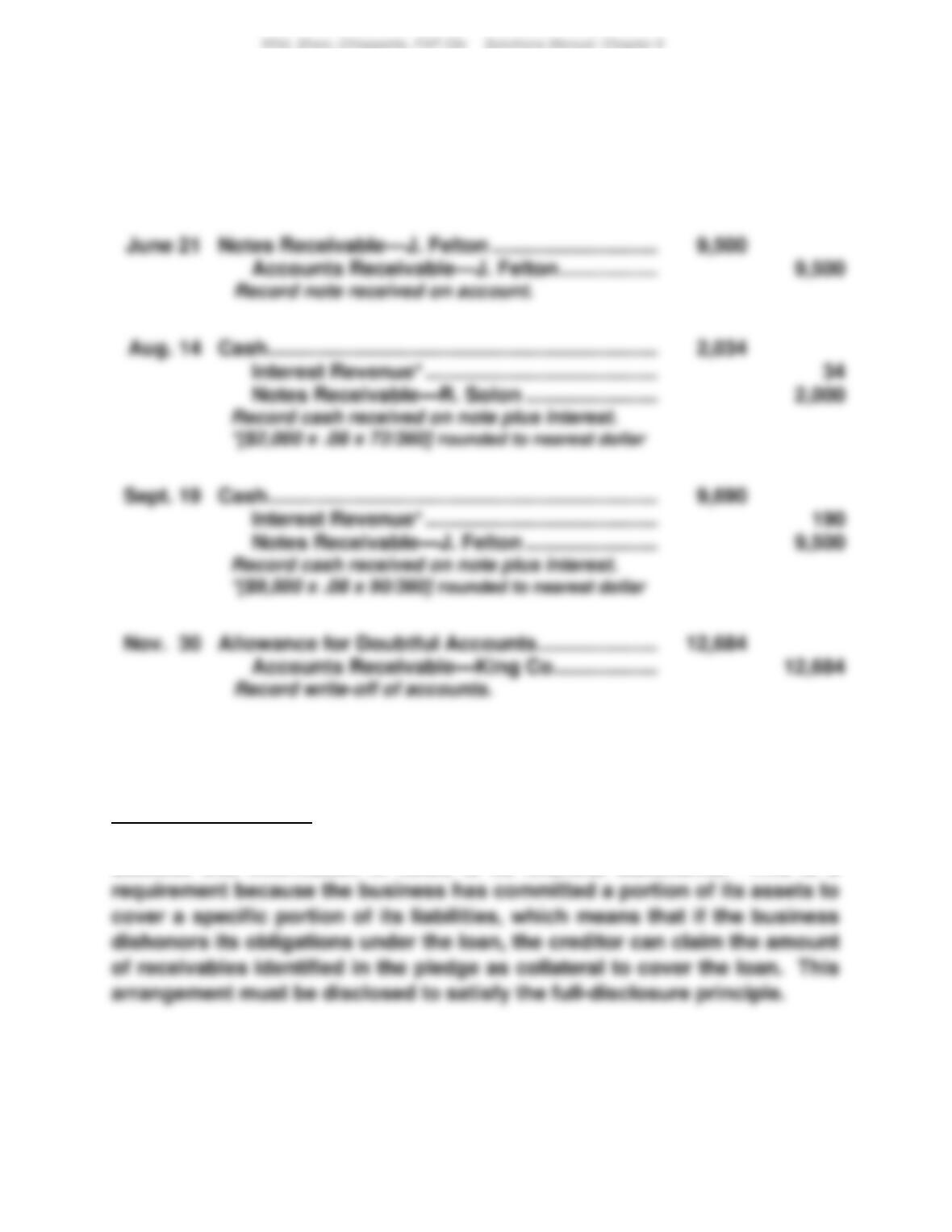
Notes Receivable—King Co ……………………………..
Accounts Receivable—King Co. ………………….
Notes Receivable—M. Shelley ………………………….
6,200
Accounts Receivable—M. Shelley ……………….
6,200
Accounts Receivable—King Co ………………………..
Notes Receivable—King Co ………………………..
Cash ………………………………………………………………..
6,324
Notes Receivable—M. Shelley …………………….
6,200
605
Problem 9-5B (Concluded)
June 15
Notes Receivable—R. Solon …………………………..
2,000
Accounts Receivable—R. Solon …………………
2,000
Record note received on account.
June 21
Notes Receivable—J. Felton …………………………..
9,500
Accounts Receivable—J. Felton ………………..
9,500
Record note received on account.
2,034
Notes Receivable—R. Solon ……………………..
2,000
9,690
Notes Receivable—J. Felton ……………………..
9,500
Accounts Receivable—King Co …………………
Record write-off of accounts.
Part 2
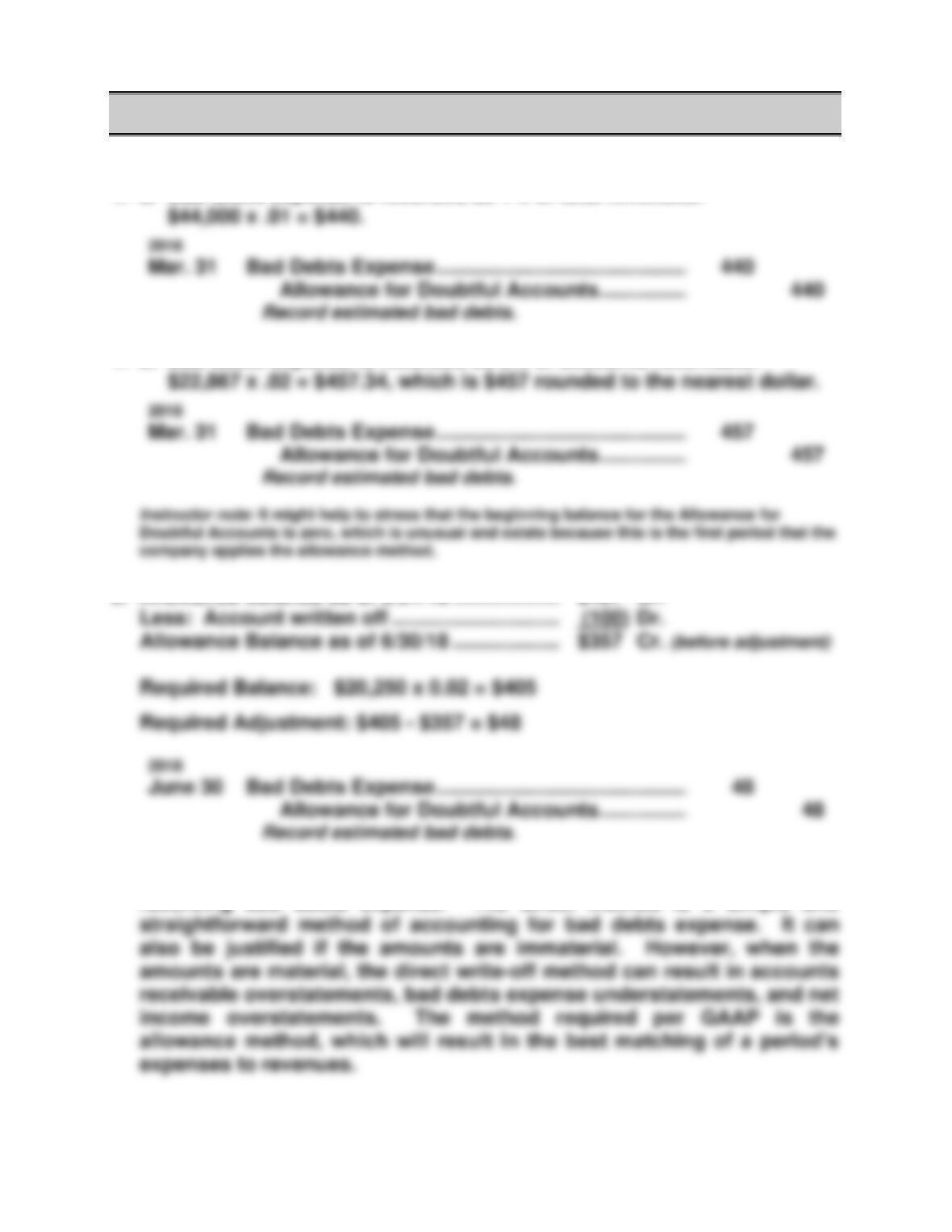
Analysis Component: When a business pledges its receivables as security
for a loan and the loan is still outstanding at period-end, the business must
disclose this information in notes to its financial statements. This is a
Wild, Shaw, Chiappetta, FAP 23e Solutions Manual: Chapter 9
606
SERIAL PROBLEM — SP 9
Serial Problem — SP 9, Business Solutions (50 minutes)
1. a. Bad debts expense is recorded as 1% of total revenues:
1. b. Bad debts expense is recorded as 2% of accounts receivable:
2. Allowance Balance as of 3/31/18 ………………. $457 Cr.
3. Many small business owners use the direct write-off method of
recording bad debts expense. The direct method is a simple and
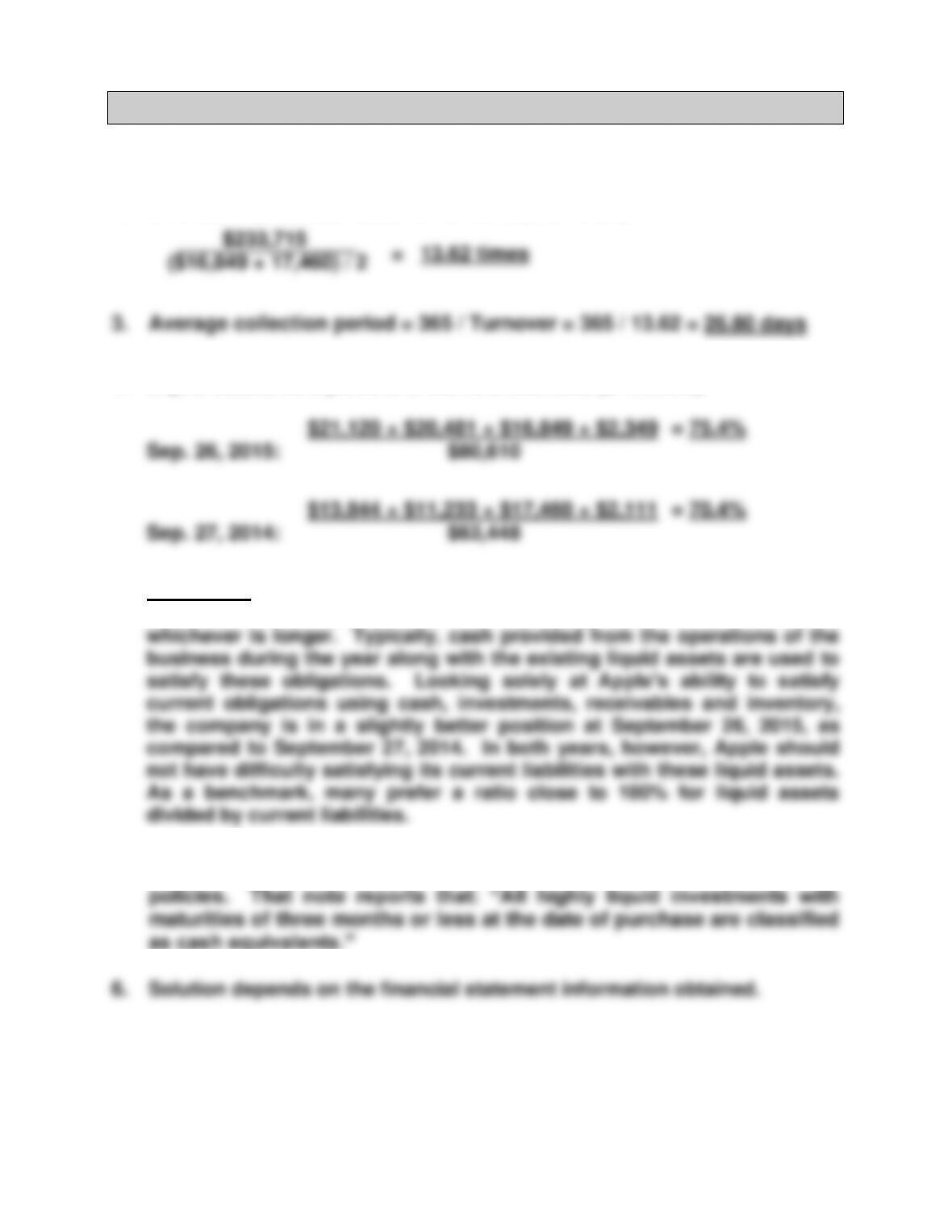
Wild, Shaw, Chiappetta, FAP 23e Solutions Manual: Chapter 9
607
Reporting in Action — BTN 9-1
1. Apple’s receivables at September 26, 2015, are $16,849 million.
2. Accounts receivable turnover for 2015 ($ millions)
4. Liquid assets as a percent of current liabilities ($ millions)
Comments: Current liabilities are obligations that are due to be paid or
liquidated within one year or one operating cycle of the business,
5. Note 1 to Apple’s financial statements describes its accounting
Wild, Shaw, Chiappetta, FAP 23e Solutions Manual: Chapter 9
608
Comparative Analysis — BTN 9-2
1. Accounts Receivable Turnover ($ millions)
Apple (Current Year):
Apple (Prior Year):
2. Average Collection Period (or “Average Days’ Sales Uncollected”)
Apple (Current Year): 365 days / 13.62 times = 26.80 days
3. Both companies appear reasonably efficient in collecting accounts
receivable. Apple collects them over a shorter period of time in both
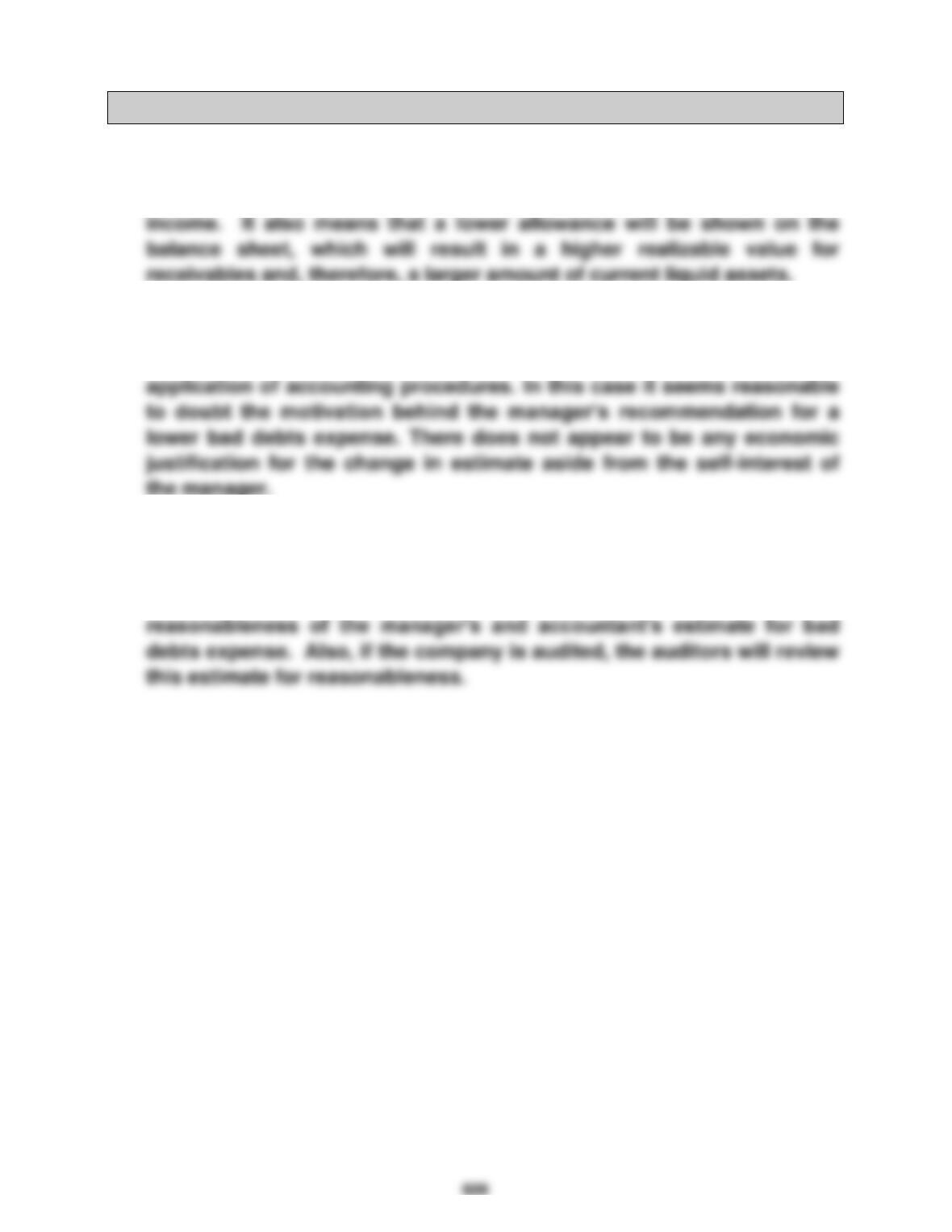
Wild, Shaw, Chiappetta, FAP 23e Solutions Manual: Chapter 9
Ethics Challenge — BTN 9-3
1. If the estimate for bad debts is reduced then less Bad Debts Expense
will be recognized on the income statement resulting in a higher net
2. Accounting procedures often allow for alternate methods or require the
use of estimates. Therefore, managers have some leeway in their
3. An informed owner or an effective board of directors will be aware of
alternate accounting methods and how estimates can affect the
financial statements. The owner or board should review the

Wild, Shaw, Chiappetta, FAP 23e Solutions Manual: Chapter 9
610
Communicating in Practice — BTN 9-4
TO: Sid Omar
FROM: (Your Name)
DATE: _______________
SUBJECT: Difference Between Bad Debts Expense and Allowance
For Doubtful Accounts
In accounting for credit sales and bad debts, we report sales revenue in the
period the sales are made, even though some credit sales do not result in
collections until the following period. Of course, some credit sales
eventually prove to be uncollectible. The fact that some accounts will
become uncollectible is what gives rise to bad debts expense and the
allowance for doubtful accounts.
Determining Bad Debts Expense
Bad debts expense represents the estimated amount of the year’s sales
that will become uncollectible. The reported amount of bad debts expense
is determined at the end of the accounting period by multiplying an
estimated percent times the annual sales for the period. This year’s bad
debts expense of $59,000 is calculated as 2% of the annual sales of
$2,950,000.
Determining Allowance For Doubtful Accounts
The Allowance for Doubtful Accounts unadjusted balance at the end of the
year is the cumulative result of recording bad debts expense and writing
off specific accounts receivable in all past years. The recognition of bad
debts expense at the end of each year has the effect of increasing the
Allowance for Doubtful Accounts balance. However, when specific
accounts receivable are written off, they decrease the Allowance for
Doubtful Accounts balance. Prior to this year’s bad debts expense
calculation, the cumulative total of writing off specific accounts was
$16,000 greater than the cumulative total of the past years’ bad debts
expenses. Therefore, you could say that Allowance for Doubtful Accounts
had an “abnormal” balance of $16,000. Then, when this year’s bad debts
expense of $59,000 is added to Allowance for Doubtful Accounts, the result
is an ending balance of $43,000.
Sid, I hope this clarifies the matter for you. If you have further questions,
please call me.
Wild, Shaw, Chiappetta, FAP 23e Solutions Manual: Chapter 9
611
Taking It to the Net — BTN 9-5
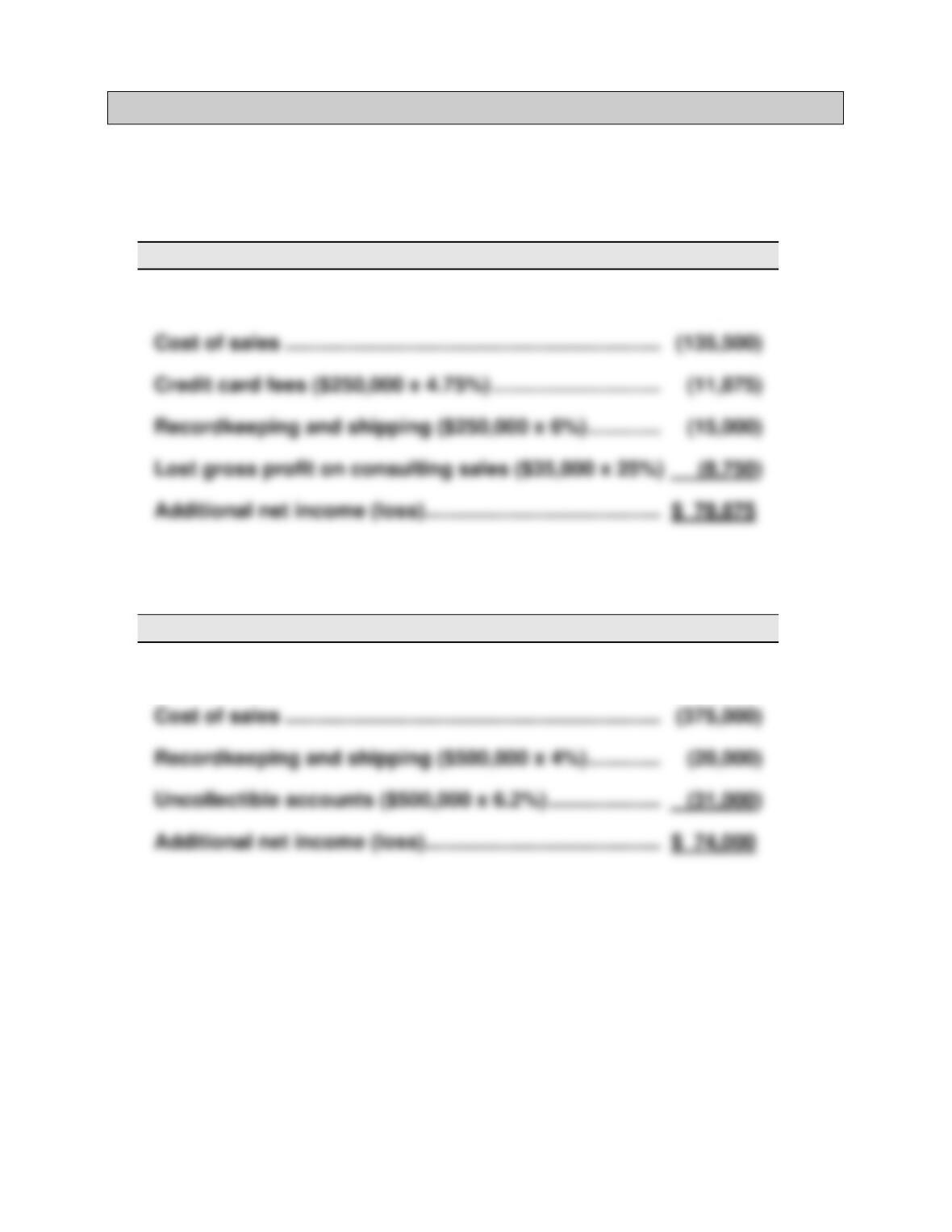
1. At December 31, 2015, eBay’s ($ millions) net accounts receivable were
2.
$ millions
December 31,
2015
December 31,
2014
Allowances for doubtful accounts
3. These percentages seem high compared to other companies, but
eBay’s operations are all online, and the risk of fraudulent transactions
Teamwork in Action — BTN 9-6
Instructor note: Computations for the aging schedule are in the Problem 9-3A solution.
The check figure for total estimated uncollectibles is $41,650.
Adjusting entry
Dec. 31
Bad Debts Expense ……………………………………….
27,150
Allowance for Doubtful Accounts …………….
27,150
Record estimated bad debts.*
December 31, 2017, Balance Sheet Presentation
Wild, Shaw, Chiappetta, FAP 23e Solutions Manual: Chapter 9
612
Entrepreneurial Decision — BTN 9-7
1. Computation of added annual net income or loss
a.
Added Monthly Net Income or Loss under Plan A
Increased sales ……………………………………………………… $250,000
b.
Added Monthly Net Income or Loss under Plan B
Increased sales ……………………………………………………… $500,000
Wild, Shaw, Chiappetta, FAP 23e Solutions Manual: Chapter 9
613
Entrepreneurial Decision — BTN 9-7 continued
2. Plan (A) provides a slightly higher income, so if the company can only
pursue one plan now, based purely on the financial aspect, it should
choose Plan (A).
Plan (A) might expand its product into new markets, and could increase
Hitting the Road — BTN 9-8
Telephone calls to VISA and American Express are the source of
information for this solution. VISA reports that the average transaction fee
Wild, Shaw, Chiappetta, FAP 23e Solutions Manual: Chapter 9
614
Global Decision — BTN 9-9
1. Accounts Receivable Turnover (KRW in millions)
2. Average Collection Period (or “Average Days’ Sales Uncollected”)
3. Samsung’s results are worse than Apple but slightly better than Google