FINANCIAL ACCOUNTING – Eleventh Edition Solutions Manual
P9-83B
(30-40 min.)
Requirements
Solution:
Req. 1
1. If the market interest rate is 7% when Marlin Corp. issues its bonds, will the bonds be
priced at par, at a premium, or at a discount? Explain.
2. If the market interest rate is 9% when Marlin Corp. issues its bonds, will the bonds be
priced at par, at a premium, or at a discount? Explain.
3. Assume that the issue price of the bonds is 99. Journalize the following bond
transactions.
a. Issuance of the bonds on February 28, 2016
b. Payment of interest and amortization of the bond discount on August 31, 2016
c. Accrual of interest and amortization of the bond discount on December 31, 2016, the
year-end
d. Payment of interest and amortization of the bond discount on February 28, 2017
4. Report interest payable and bonds payable as they would appear on the Marlin Corp.
balance sheet at December 31, 2016.
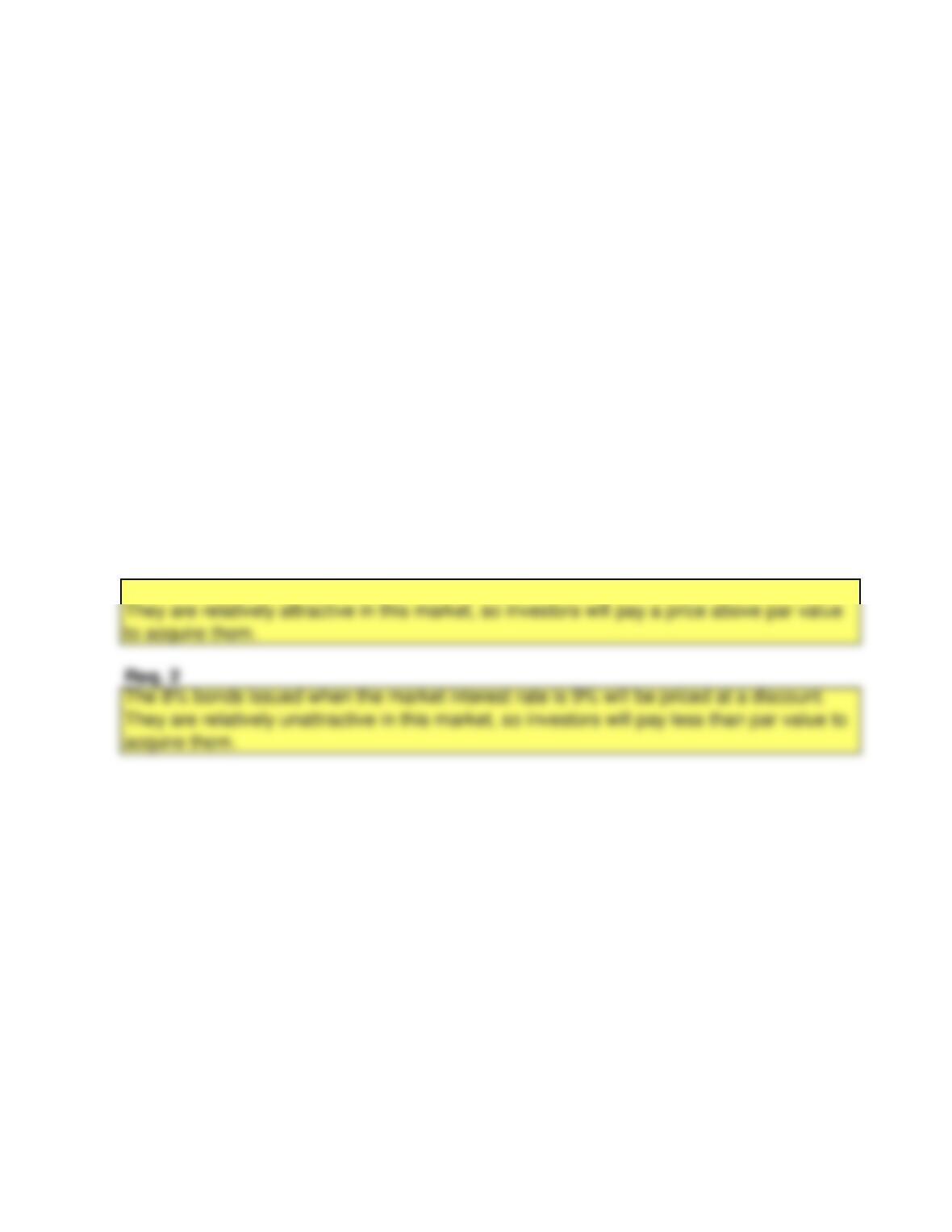
The 8% bonds issued when the market interest rate is 7% will be priced at a premium.
Chapter 9: Liabilities Page 81 of 115
Req. 2
The 8% bonds issued when the market interest rate is 9% will be priced at a discount.
FINANCIAL ACCOUNTING – Eleventh Edition Solutions Manual
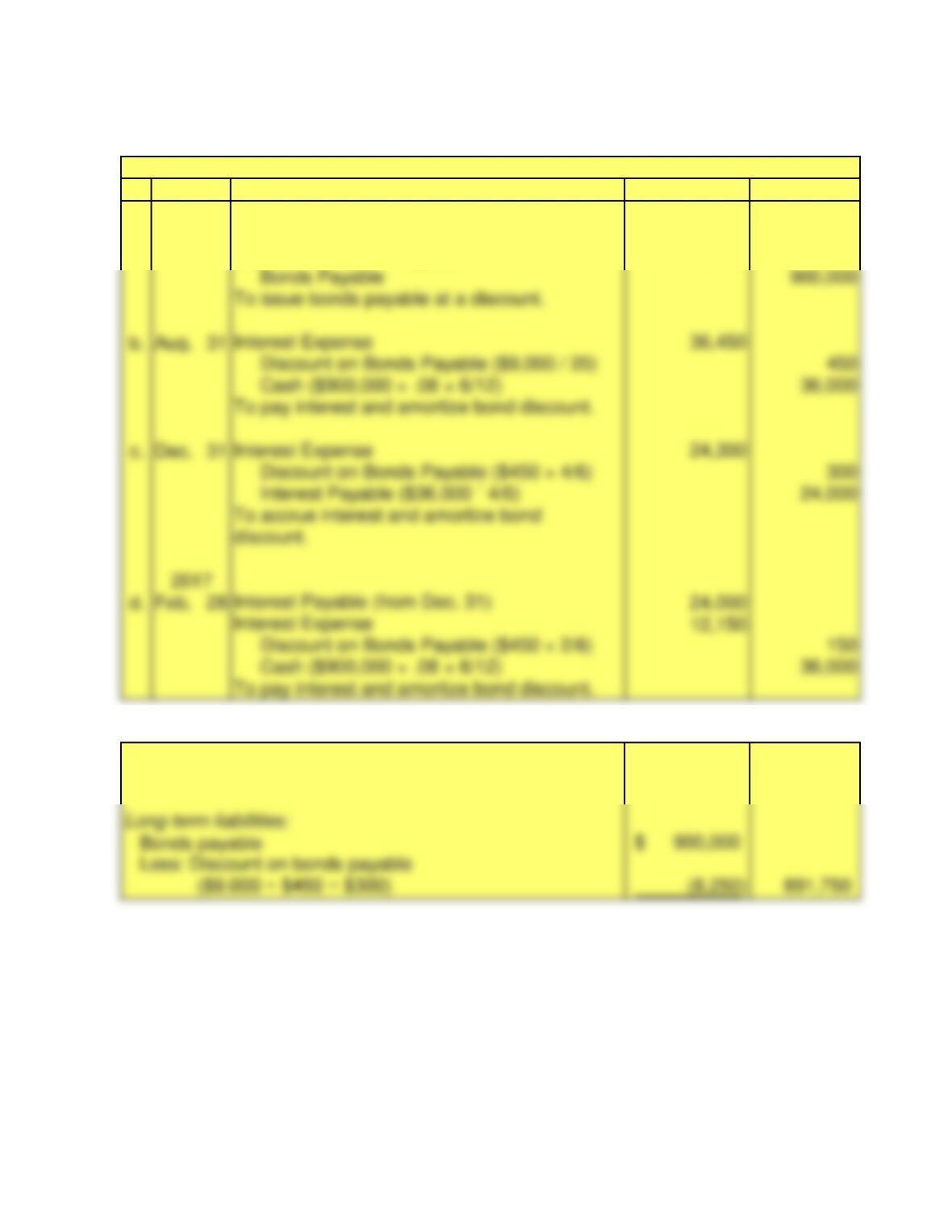
Req. 3
ACCOUNT TITLES AND EXPLANATION DEBIT CREDIT
a. Feb. 28 Cash ($900,000 × 0.99) 891,000
Discount on Bonds Payable 9,000
Req. 4 (reporting the liabilities on the balance sheet at Dec. 31, 2014)
Current liabilities:
Interest payable 24,000$
Bonds payable 900,000$
Journal
2016
DATE
Chapter 9: Liabilities Page 82 of 115
2017
FINANCIAL ACCOUNTING – Eleventh Edition Solutions Manual
P9-84B
(30-40 min.)
Requirements
Solution:
Req. 1
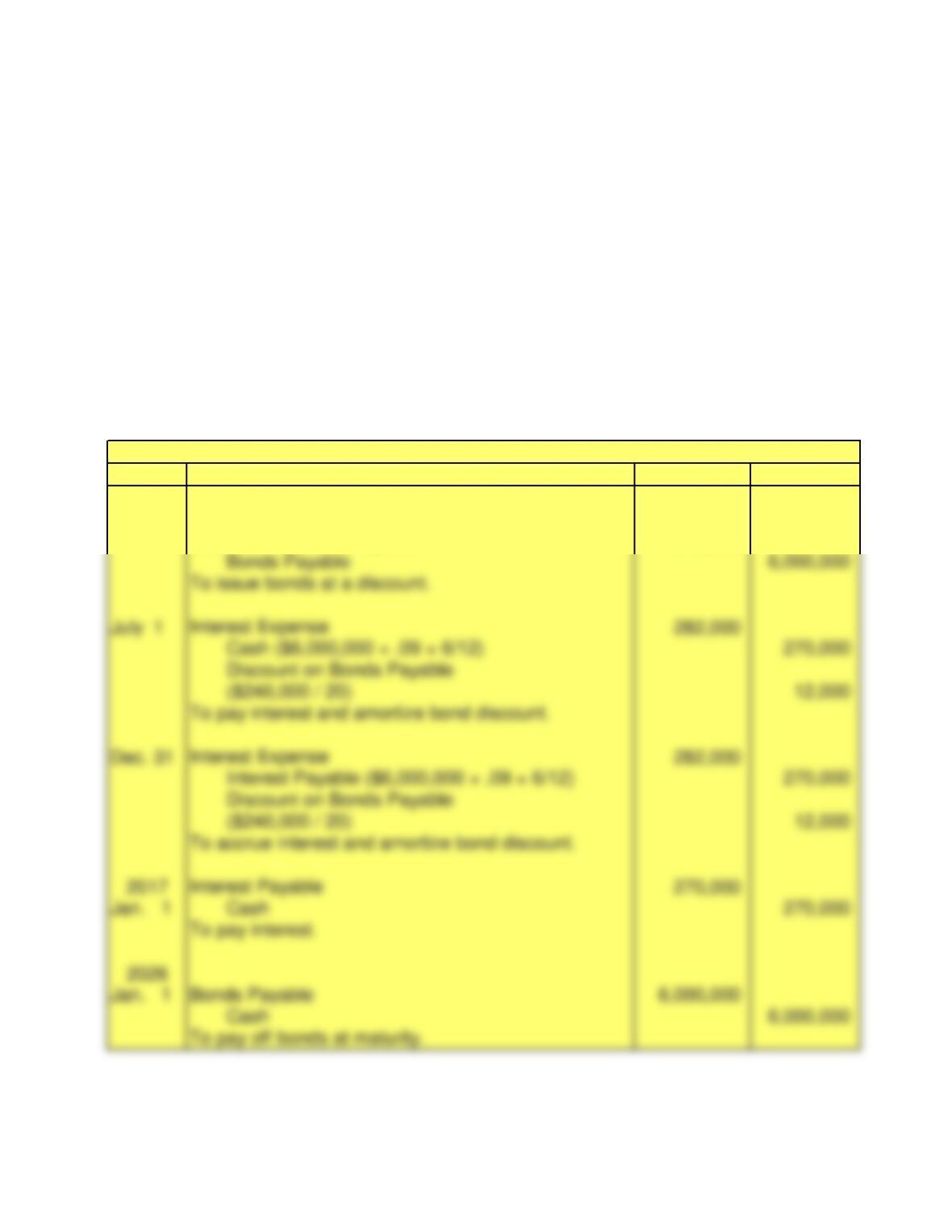
DATE
ACCOUNT TITLES AND EXPLANATION
DEBIT CREDIT
2016
Jan. 1 Cash ($6,000,000 × .96) 5,760,000
Discount on Bonds Payable 240,000
1. Journalize the transactions of Lamothe Communications, Inc.
2. At December 31, 2016, after all year-end adjustments, determine the carrying amount of
Lamothe Communications bonds payable, net.
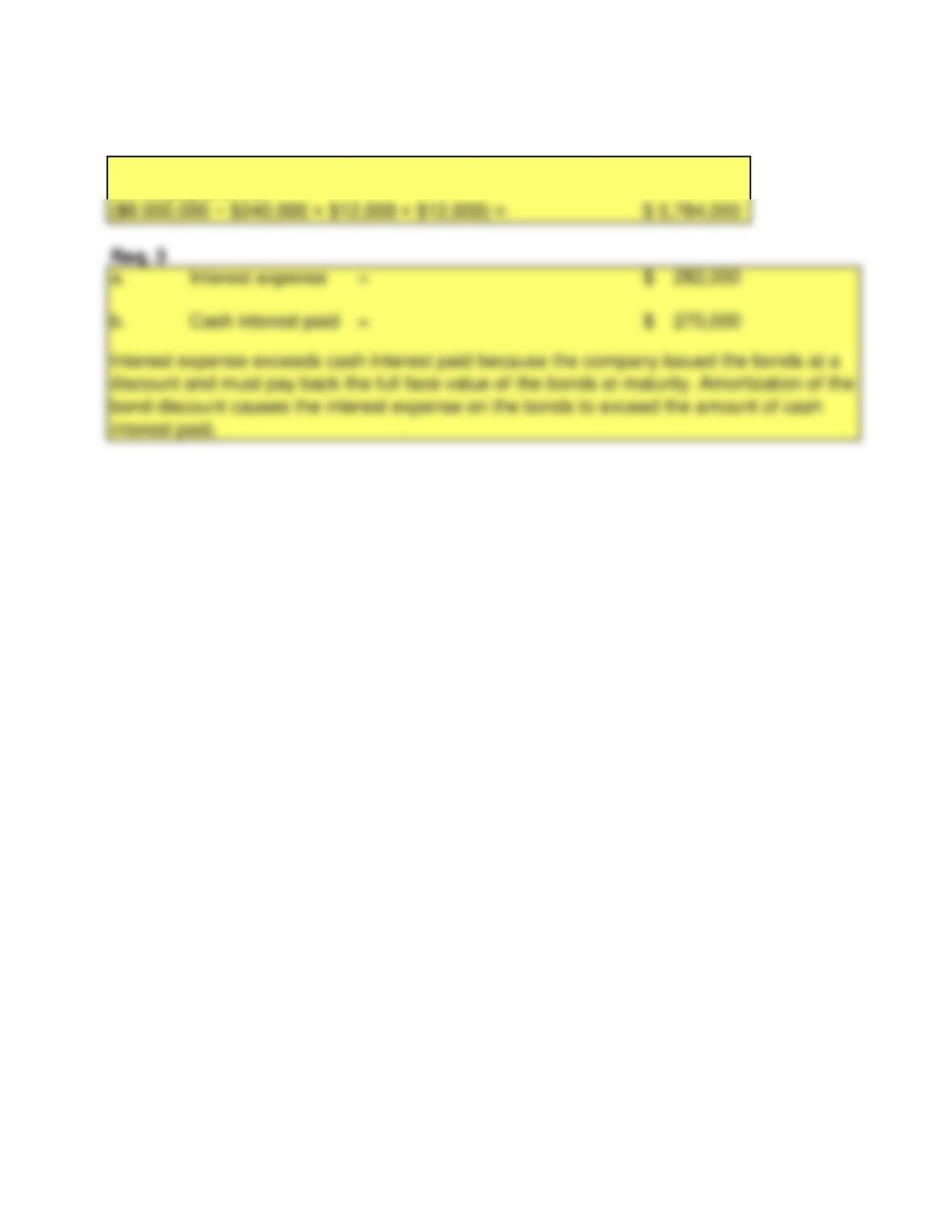
3. For the six months ended July 1, 2016, determine the following for Lamothe
Communications, Inc:
a. Interest expense
b. Cash interest paid
What causes interest expense on the bonds to exceed cash interest paid?
Journal
Chapter 9: Liabilities Page 83 of 115
To issue bonds at a discount.
July 1 Interest Expense 282,000
To pay interest and amortize bond discount.
Dec. 31 Interest Expense 282,000
To accrue interest and amortize bond discount.
To pay interest.
2026
FINANCIAL ACCOUNTING – Eleventh Edition Solutions Manual
Req. 2
Carrying amount at Dec. 31, 2016:
Bonds payable, net
Chapter 9: Liabilities Page 84 of 115
FINANCIAL ACCOUNTING – Eleventh Edition Solutions Manual
P9-85B
(30-45 min.)
Requirements
Solution:
Req. 1
a. Using the PV function in EXCEL, the issue price of the bonds is $2,441,119.
1. Assume the market interest rate on January 1 of year 1, the date of issuance of the
bonds, is 6%. Answer the following questions about Friendship Ltd.’s long-term
liabilities:
a. Using the PV function in Excel, what is the issue price of the bonds?
b. What is the maturity value of the 3% bonds?
c. What is Friendship Ltd.’s annual cash interest payment on the 3% bonds?
d. What is the carrying amount of the 3% bonds at December 31, Year 1?
2. Using Exhibit 9-4 as a model, prepare an amortization table through the maturity date
for the 3% bonds. (Round all amounts to the nearest dollar.) How much is Friendship
Ltd.’s interest expense on the 3% bonds for the year ended December 31, Year 4?
3. Show how Friendship Ltd. would report the 3% bonds and the 7% notes payable at
December 31, Year 4.
Chapter 9: Liabilities Page 85 of 115
b. Maturity value is $3,000,000.
d. Carrying amount is $2,497,586.
FINANCIAL ACCOUNTING – Eleventh Edition Solutions Manual
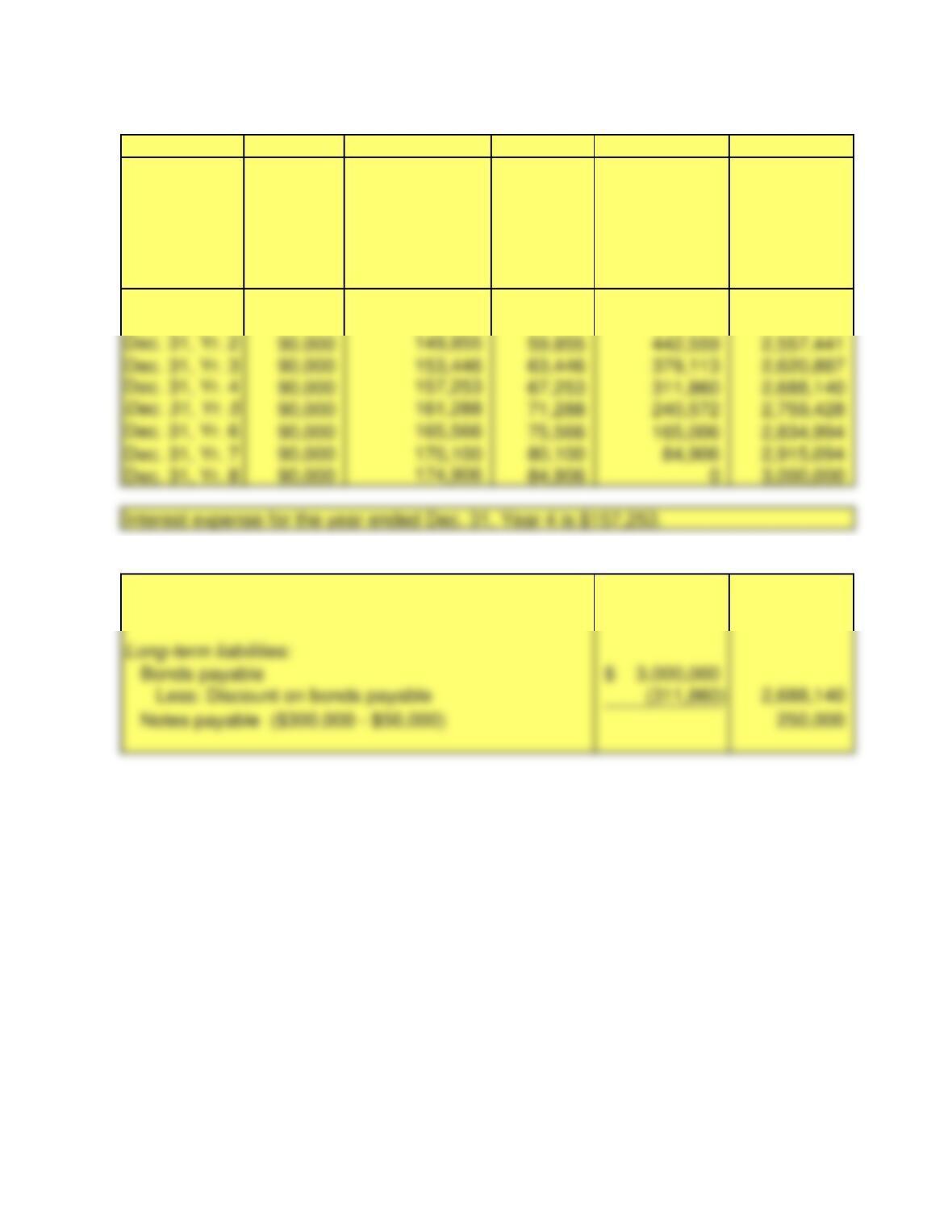
Req. 2 (amortization table)
A B C D E
Jan. 1, Yr. 1 558,881 2,441,119
Dec. 31, Yr. 1 90,000 146,467 56,467 502,414 2,497,586
Req. 3 (reporting the liabilities at Dec. 31, Year 4)
Current liabilities:
Current installment of notes payable 50,000$
Long-term liabilities:
Bonds payable 3,000,000$
Notes payable ($300,000 – $50,000) 250,000
Semiannual
Interest Date
Interest
Payment
(3% of
Maturity
Value)
Interest
Expense (6% of
Preceding
Bond Carrying
Amount)
Discount
Amortizati-
on (B – A)
Discount
Account
Balance
(Preceding D –
C)
Bond
Carrying
Amount
($3,000,000 –
D)
Chapter 9: Liabilities Page 86 of 115
Dec. 31, Yr. 2 90,000 149,855 59,855 442,559 2,557,441
Dec. 31, Yr. 3 90,000 153,446 63,446 379,113 2,620,887
Dec. 31, Yr. 4 90,000 157,253 67,253 311,860 2,688,140
Dec. 31, Yr. 6 90,000 165,566 75,566 165,006 2,834,994
Dec. 31, Yr. 7 90,000 170,100 80,100 84,906 2,915,094
Interest expense for the year ended Dec. 31, Year 4 is $157,253.

FINANCIAL ACCOUNTING – Eleventh Edition Solutions Manual
P9-86B
(40-50 min.)
Requirements
Solution:
Req. 1
1. Use the PV function in Excel to calculate the issue price of the bonds.
2. Using Exhibit 9-4 as a model, prepare an effective-interest method amortization table
for the term of the bonds.
3. Journalize the following transactions:
a. Issuance of the bonds on December 31, 2016. Credit Convertible Bonds Payable.
b. Payment of interest and amortization of the bond discount on June 30, 2017.
c. Payment of interest and amortization of the bond discount on December 31, 2017.
d. Conversion by the bondholders on July 1, 2018, of bonds with face value of $800,000
into 70,000 shares of Zenith Corp. $1-par common stock.
4. Show how Zenith Corp. would report the remaining bonds payable on its balance
sheet at December 31, 2018.
Chapter 9: Liabilities Page 87 of 115

FINANCIAL ACCOUNTING – Eleventh Edition Solutions Manual
Req. 2 (amortization table)
A B C D E
Dec. 31, 2016 260,159 1,739,841
70,000 78,293 8,293 251,866 1,748,134
Dec. 31, 2017 70,000 78,666 8,666 243,200 1,756,800
70,000 79,056 9,056 234,144 1,765,856
Semiannual
Interest Date
Interest
Payment
(3.5% of
Maturity
Value)
Interest
Expense (4.5%
of Preceding
Bond Carrying
Amount)
Discount
Amortization
(B – A)
Discount
Account
Balance
(Preceding D –
C)
Bond
Carrying
Amount
($2,000,000
– D)
June 30, 2017
June 30, 2018
Chapter 9: Liabilities Page 88 of 115
Dec. 31, 2018 70,000 79,464 9,464 224,680 1,775,320
Dec. 31, 2019 70,000 80,334 10,334 204,457 1,795,543
70,000 80,799 10,799 193,657 1,806,343
Dec. 31, 2020 70,000 81,285 11,285 182,372 1,817,628
70,000 81,793 11,793 170,579 1,829,421
Dec. 31, 2021 70,000 82,324 12,324 158,255 1,841,745
70,000 82,879 12,879 145,376 1,854,624
Dec. 31, 2022 70,000 83,458 13,458 131,918 1,868,082
70,000 84,064 14,064 117,854 1,882,146
Dec. 31, 2023 70,000 84,697 14,697 103,158 1,896,842
70,000 85,358 15,358 87,800 1,912,200
Dec. 31, 2024 70,000 86,049 16,049 71,751 1,928,249
70,000 86,771 16,771 54,980 1,945,020
Dec. 31, 2025 70,000 87,526 17,526 37,454 1,962,546
70,000 88,315 18,315 19,139 1,980,861
Dec. 31, 2026 70,000 89,139 19,139 0 2,000,000
June 30, 2025
June 30, 2026
June 30, 2019
June 30, 2020
June 30, 2021
June 30, 2022
June 30, 2023
June 30, 2024
FINANCIAL ACCOUNTING – Eleventh Edition Solutions Manual
Req. 3
DATE ACCOUNT TITLES AND EXPLANATION DEBIT CREDIT
2016
a. Dec. 31 Cash 1,739,841
Discount on Bonds Payable 260,159
Req. 4 (balance sheet presentation of bonds payable at Dec. 31, 2016)
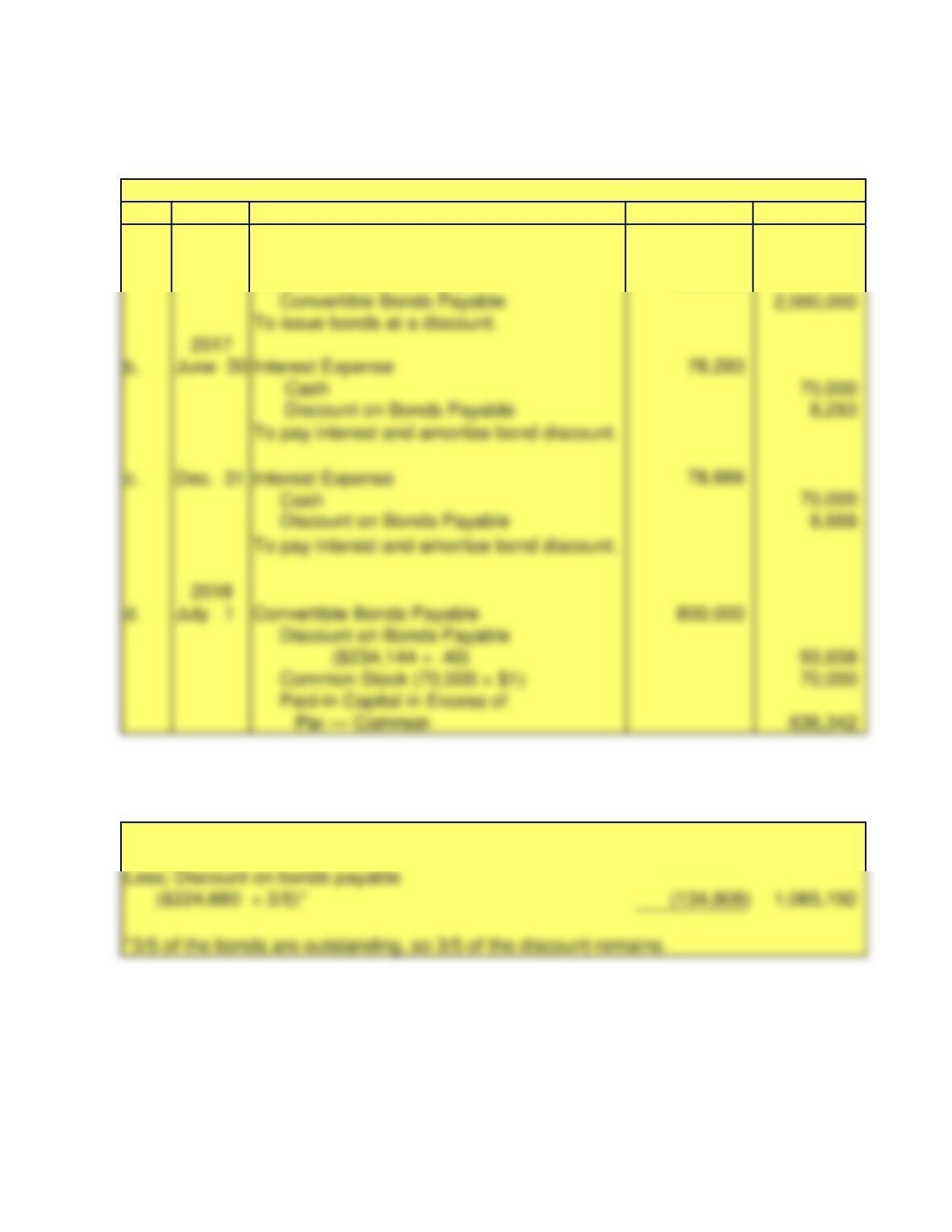
Convertible bonds payable
($2,000,000 − $800,000) 1,200,000$
Less: Discount on bonds payable
*3/5 of the bonds are outstanding, so 3/5 of the discount remains.
Journal
Chapter 9: Liabilities Page 89 of 115
Convertible Bonds Payable 2,000,000
To issue bonds at a discount.
2017
Interest Expense 78,293
Cash 70,000
Discount on Bonds Payable 8,666
2018
Discount on Bonds Payable
Common Stock (70,000 × $1) 70,000
Paid-in Capital in Excess of
FINANCIAL ACCOUNTING – Eleventh Edition Solutions Manual
P9-87B
(15-30 min.)
Requirement
Solution:
Req. 1
Alternative Alternative
1 2
Borrow $4.75 Issue 100,000
mil at 3% shares of stock
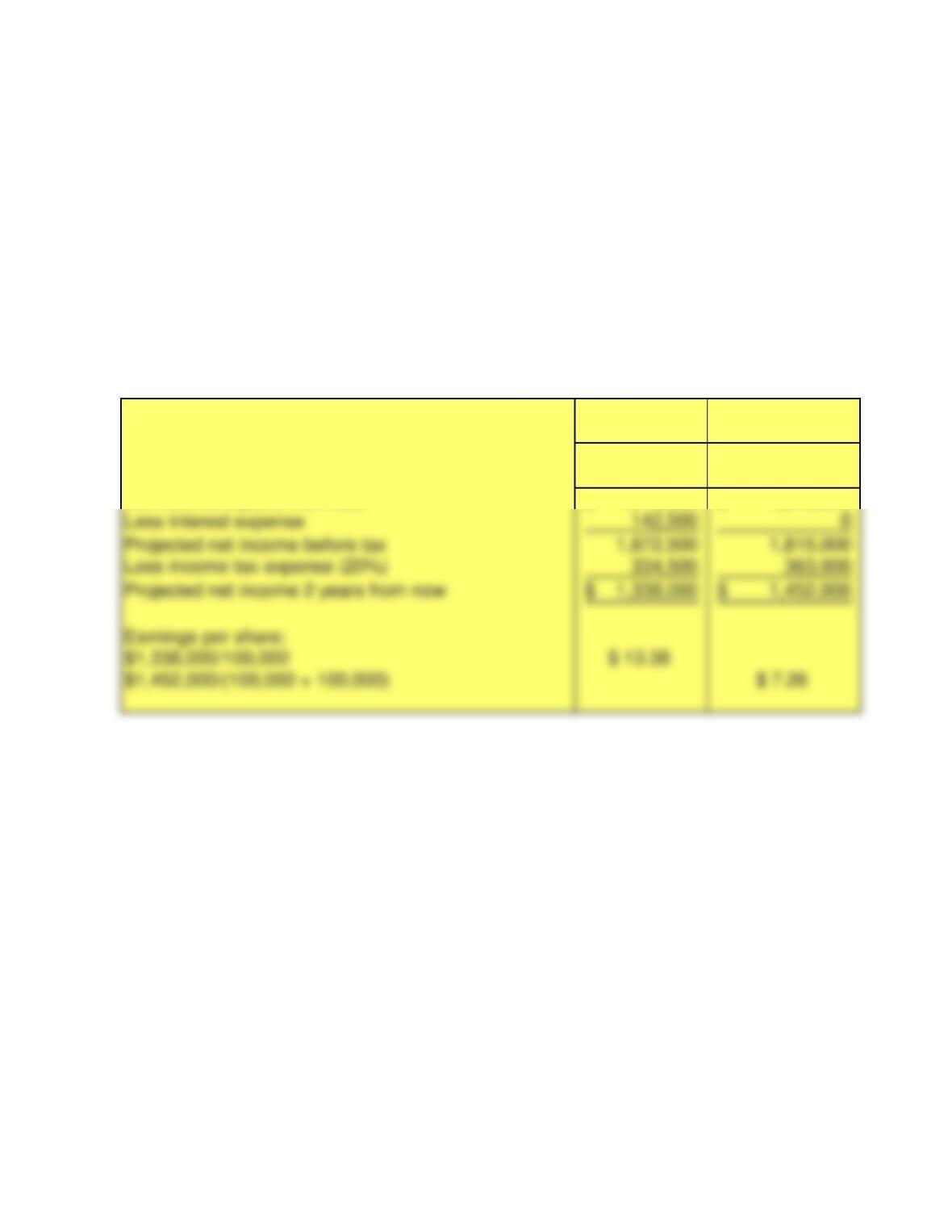
Net income 2 years from now 1,815,000$ 1,815,000$
1. Use Excel to evaluate the effect of the above projected alternatives on net income and
earnings per share two years from now.
2. Write a memo to Summit’s management discussing the advantages and
disadvantages of borrowing and of issuing common stock to raise the needed cash.
Which method of raising the funds would you recommend?
Chapter 9: Liabilities Page 90 of 115
Projected net income before tax 1,672,500 1,815,000
$1,338,000/100,000 $ 13.38
$1,452,000/(100,000 + 100,000) $ 7.26
FINANCIAL ACCOUNTING – Eleventh Edition Solutions Manual
Req. 2
TO: Management of Summit Medical Goods
FROM: Student Name
SUBJECT:
Advantages and disadvantages of borrowing versus issuing stock to
raise cash for expansion
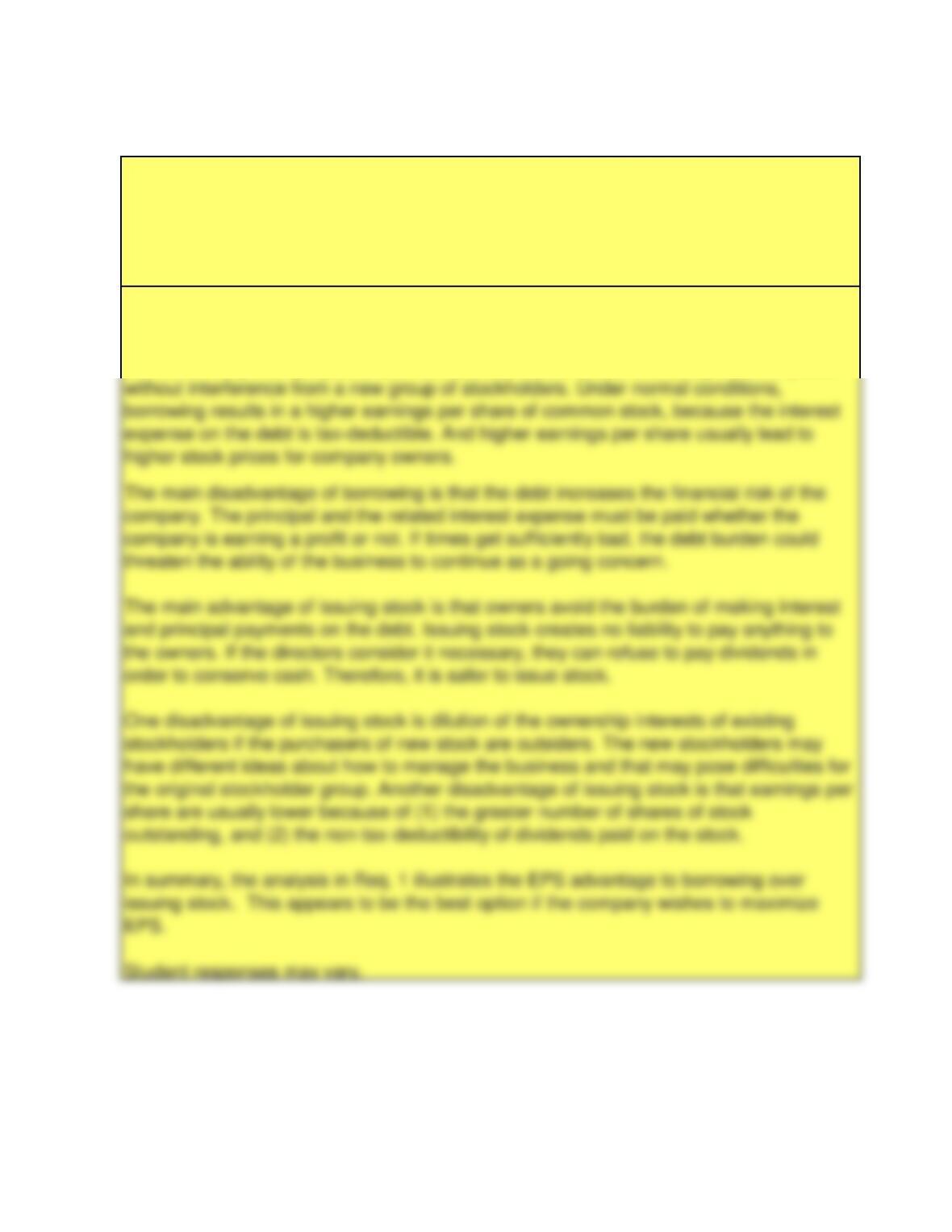
Raising money by borrowing has at least two advantages over issuing common stock.
Borrowing does not change the present ownership of the business. It enables the present
owners to keep their proportionate interests in the business and to carry out their plans
Chapter 9: Liabilities Page 91 of 115
FINANCIAL ACCOUNTING – Eleventh Edition Solutions Manual
E9-88B
(20-30 min.)
Requirements
Solution:
Req. 1
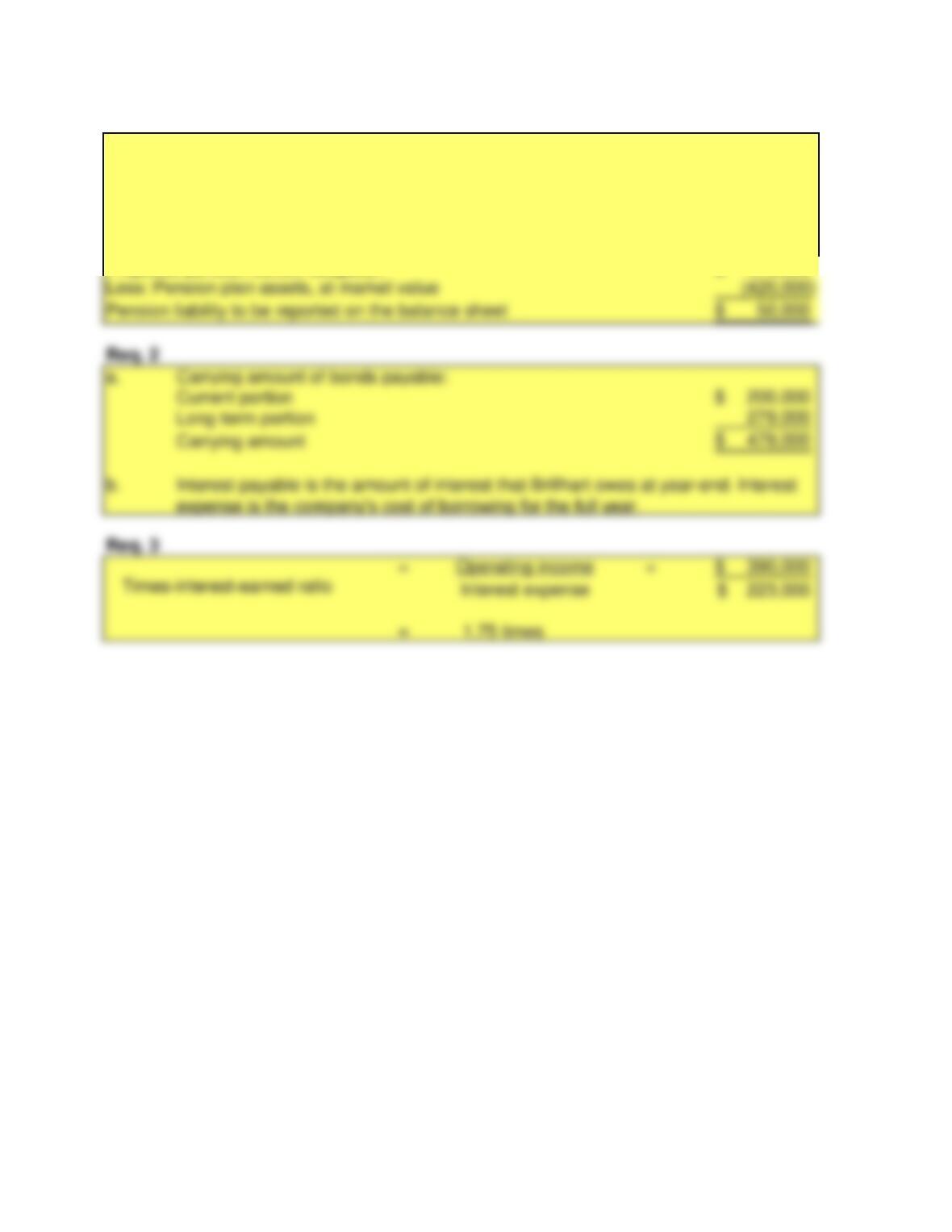
Property, plant, and
equipment: Current liabilities:*
Equipment $ 745,000
Bonds payable,
Accumulated current portion $ 200,000
1. Show how each relevant item would be reported on the Brillhart Foods, Inc., classified
balance sheet, including headings and totals for current liabilities and long-term liabilities.
2. Answer the following questions about Brillhart Food’s financial position at December 31,
2016:
a. What is the carrying amount of the bonds payable (combine the current and long-term
amounts)?
b. Why is the interest-payable amount so much less than the amount of interest expense?
3. How many times did Brillhart Foods cover its interest expense during 2016?
4. Assume that all of the existing liabilities are included in the information provided.
Calculate the leverage ratio and debt ratio of the company. Use year-end figures in place of
averages where needed for the purpose of calculating ratios in this problem. Evaluate the
health of the company from a leverage point of view. What other information would be
helpful in making your evaluation?
5. Independent of your answer to (4), assume that Footnote 8 of the financial statements
includes commitments for long-term operating leases over the next 15 years in the amount
of $3,800,000. If the company had to capitalize these leases in 2016, how would it change
the leverage ratio and the debt ratio? How would this impact your assessment of the
company’s health from a leverage point of view?
Brillhart Foods, Inc.
Partial Balance Sheet
Dec. 31, 2016
Chapter 9: Liabilities Page 92 of 115
bonds payable..
FINANCIAL ACCOUNTING – Eleventh Edition Solutions Manual
Notes:
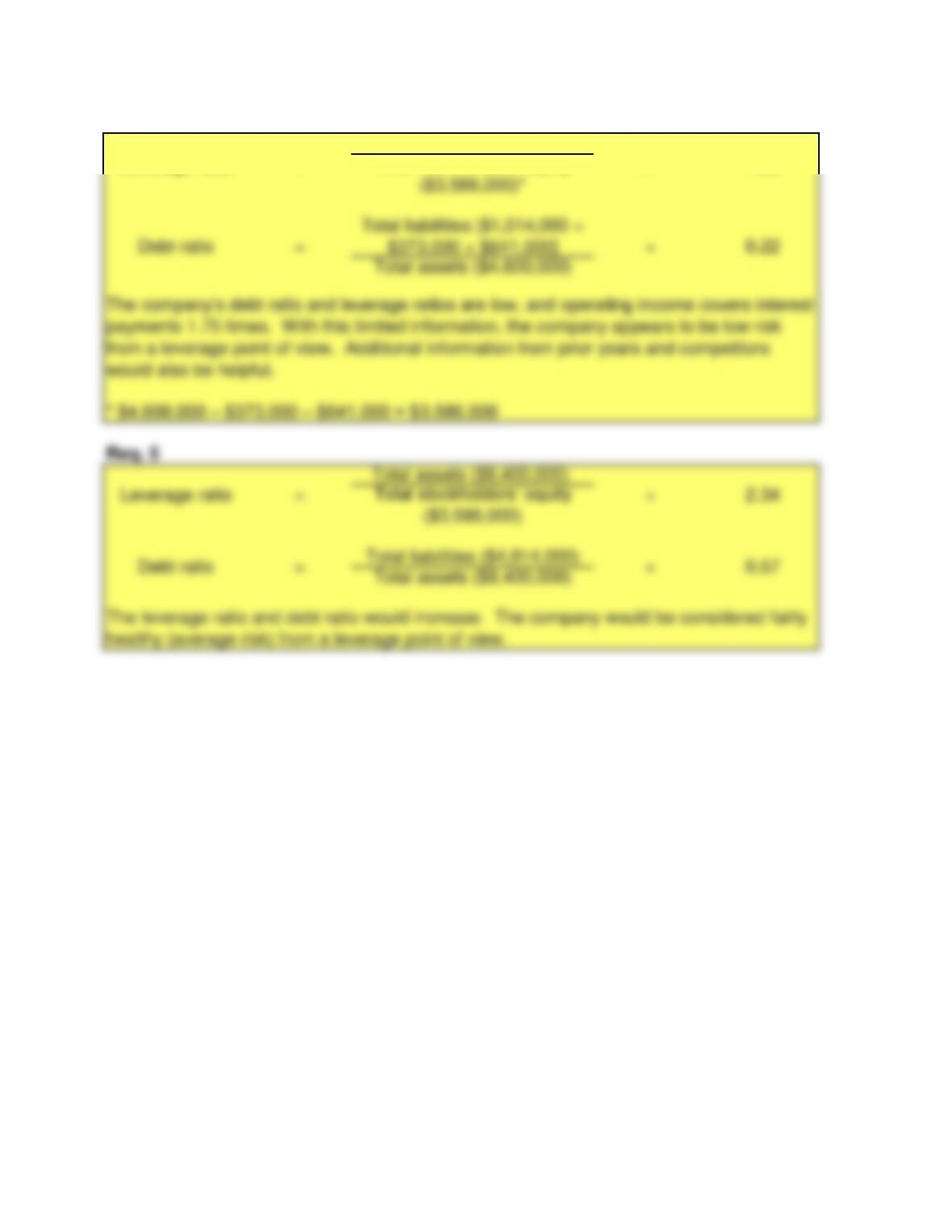
Computation of pension liability:
Projected pension benefit obligation 470,000$
* The order of listing long-term liabilities is optional. However, Discount on Bonds
Payable should come immediately after Bonds Payable. Also, it is customary to report
Interest Payable after the related liability accounts.
Chapter 9: Liabilities Page 93 of 115
FINANCIAL ACCOUNTING – Eleventh Edition Solutions Manual
Req. 4
Total assets ($4,600,000)
Total stockholders’ equity
Leverage ratio
=
=
1.28
Chapter 9: Liabilities Page 94 of 115
=
0.22
=
Leverage ratio
=
=
2.34
Total stockholders’ equity
FINANCIAL ACCOUNTING – Eleventh Edition Solutions Manual
E9-89
(10-15 min.)
Solution:
Req. 1
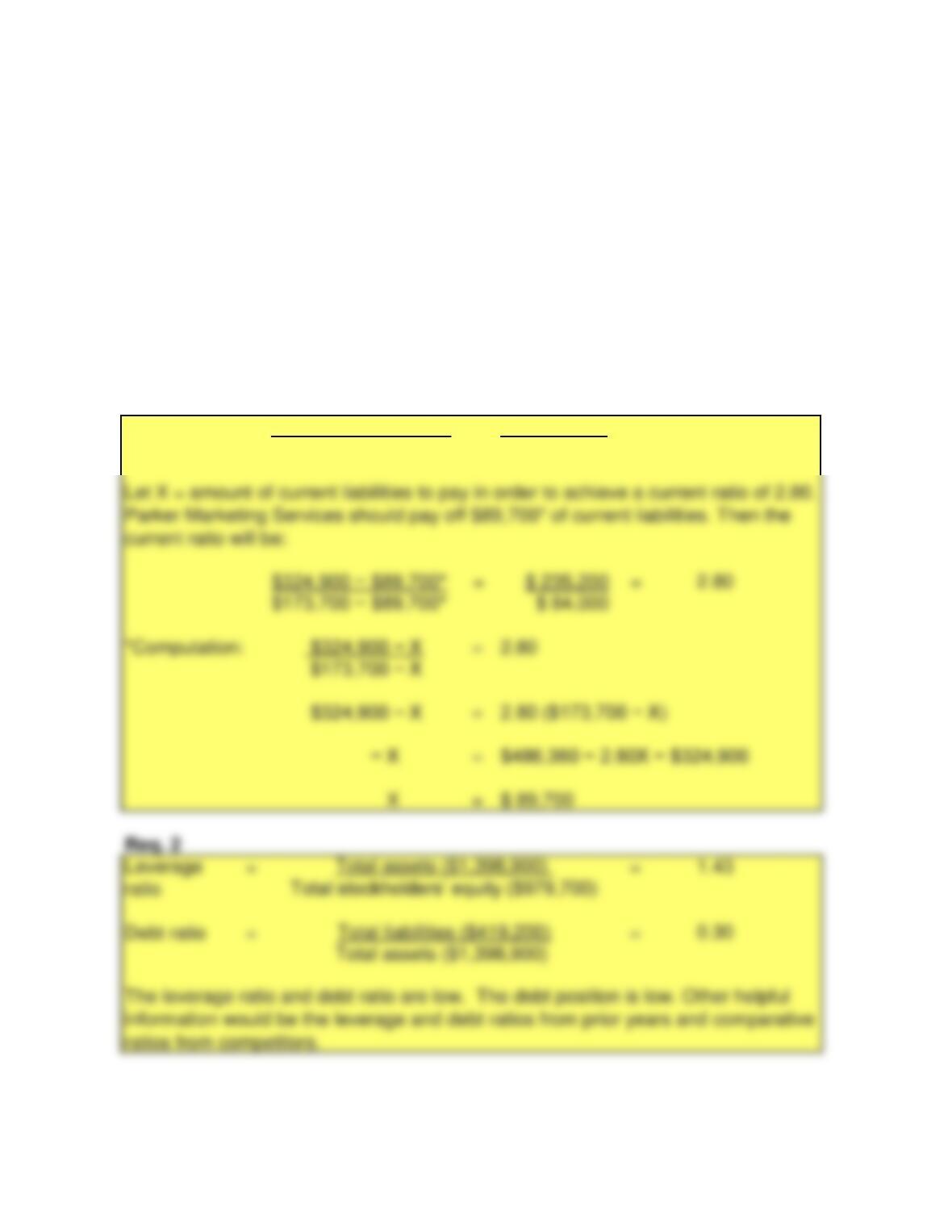
Current ratio = Total current assets = $324,900 – X = 2.80
Total current liabilities $173,700 – X
1. Suppose Parker’s management wants to achieve a current ratio of 2.8. How
much in current liabilities should Parker pay off within the next two days in order to
achieve its goal?
2. Calculate Parker’s leverage ratio and debt ratio. Use year-end figures in place of
averages where needed for the purpose of calculating ratios in this exercise.
Evaluate the company’s debt position. Is it low, high, or about average? What other
information might help you to make a decision?
Chapter 9: Liabilities Page 95 of 115
FINANCIAL ACCOUNTING – Eleventh Edition Solutions Manual
P9-90
(20-30 min.)
Requirements
Solution:
Req. 1
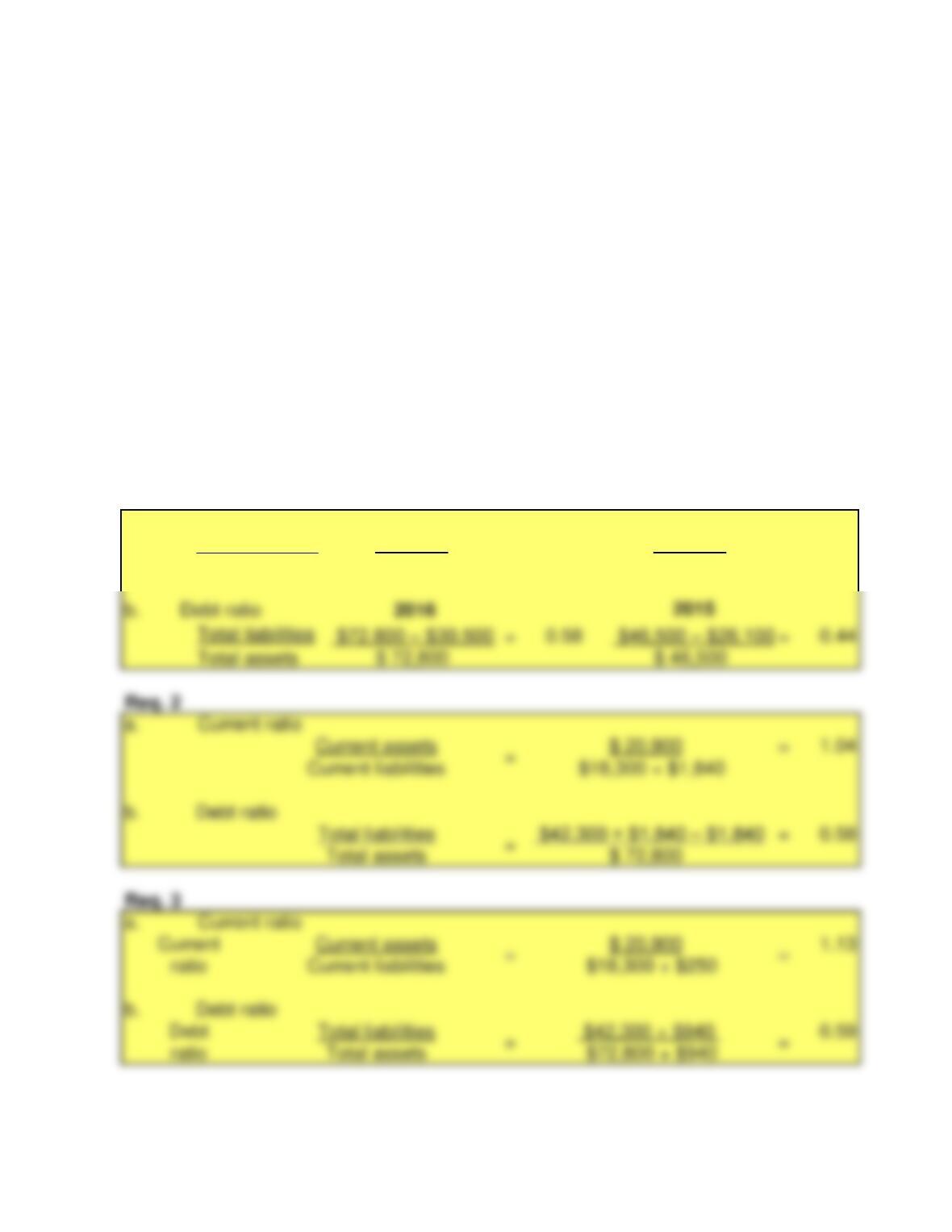
a. Current ratio 2016 2015
Current assets $ 20,900 = 1.14 $ 16,700 = 1.29
Current liabilities
$ 18,300 $ 12,900
1. Calculate the following ratios for 2016 and 2015:
a. Current ratio
b. Debt ratio
2. During 2016, The Organic Soda Company issued $1,840 million of long-term debt
that was used to retire short-term debt. What would the current ratio and debt ratio have
been if this transaction had not been made?
3. The Organic Soda Company reports that its lease payments under operating leases
will total $940 million in the future and $250 million will occur in the next year (2017).
What would the current ratio and debt ratio have been in 2016 if these leases had been
capitalized?
Chapter 9: Liabilities Page 96 of 115
FINANCIAL ACCOUNTING – Eleventh Edition Solutions Manual
Decision Case 1
(15-20 min.)
Requirements
Solution:
Req. 1
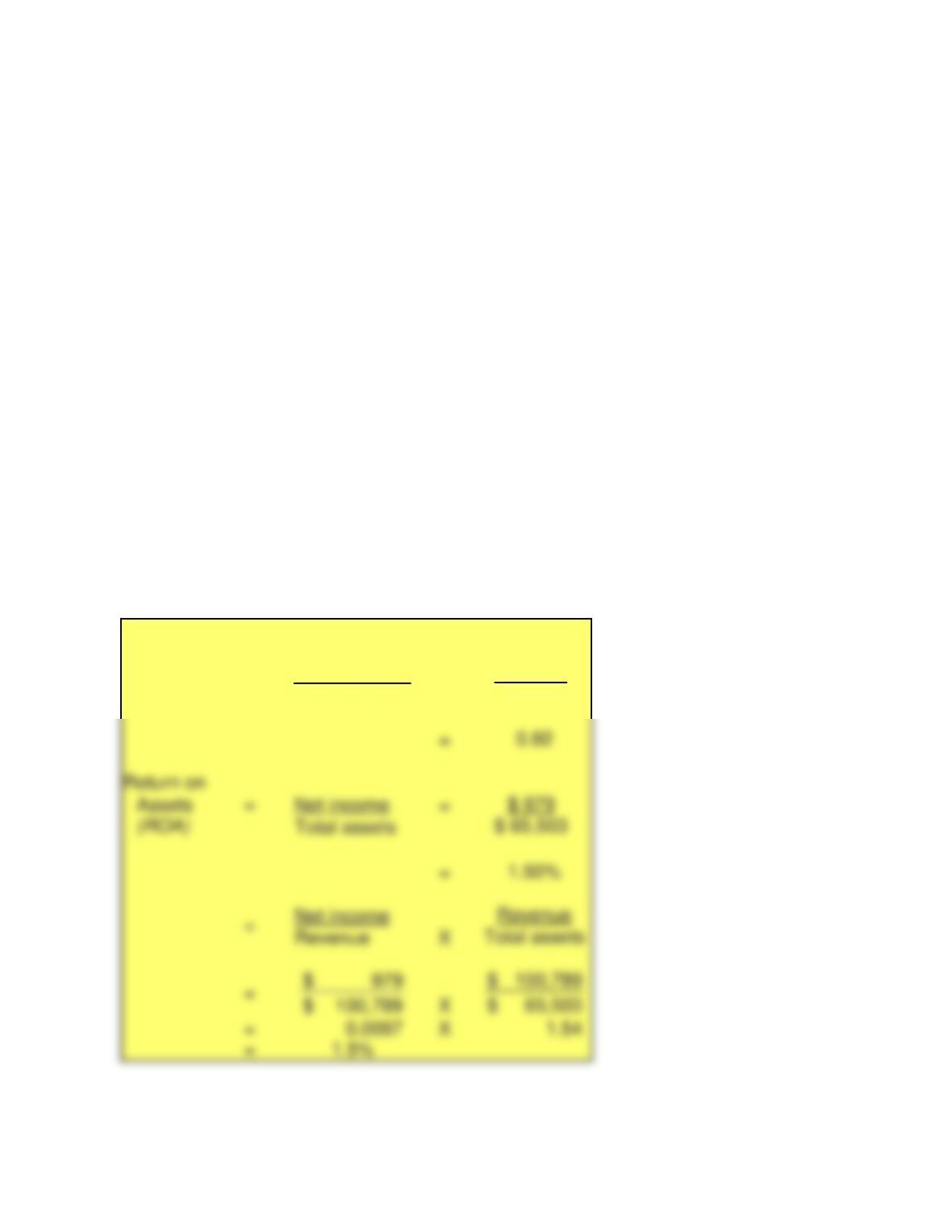
As
Reported
Debt ratio
=
Total liabilities
=$ 54,033
Total assets $ 65,503
1. Compute the debt ratio that Enron reported at the end of 2000. By using the DuPont
Model, which we discussed in Chapter 7 (page 393), compute Enron’s return on total
assets (ROA) for 2000. For this purpose, use only total assets at the end of 2000, rather
than the average of 1999 and 2000.
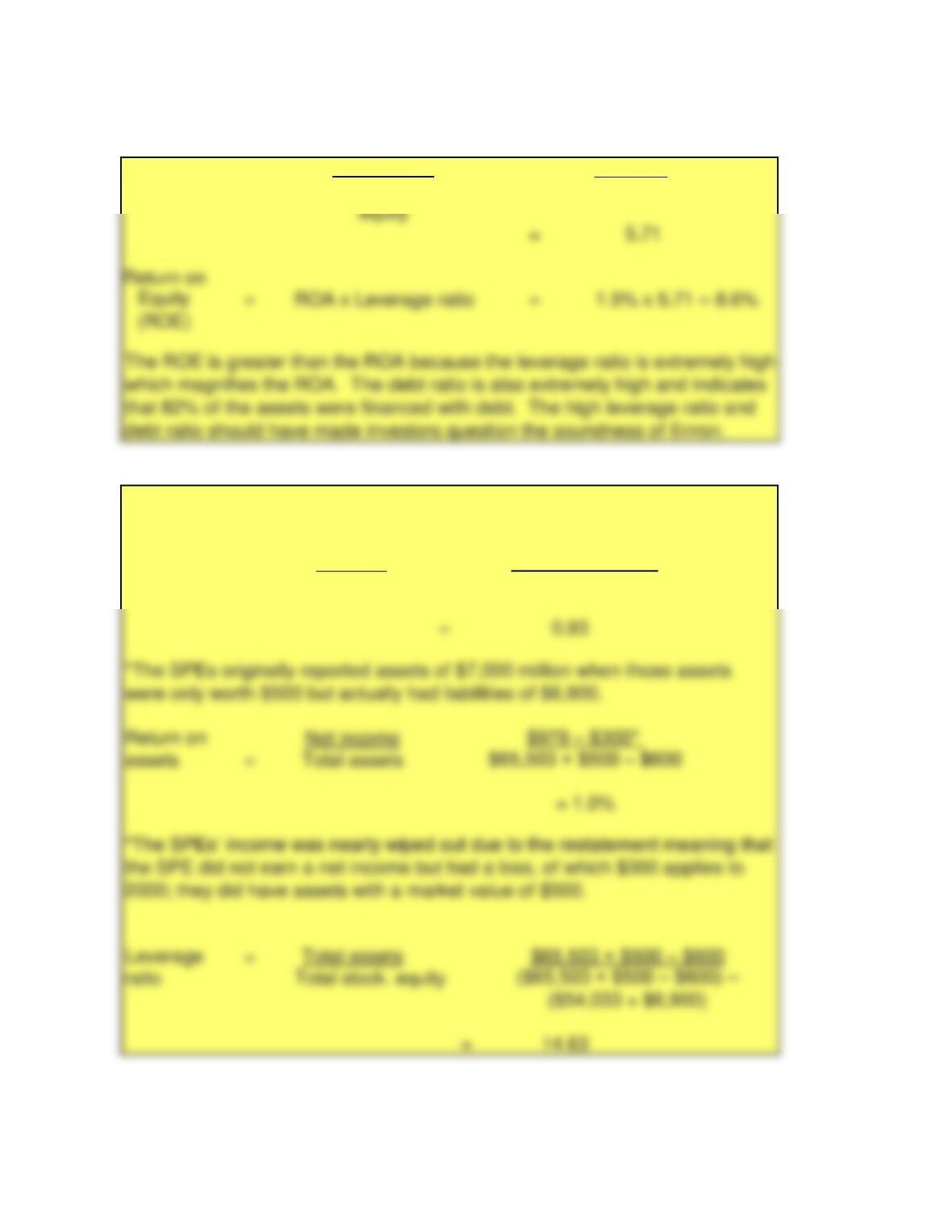
2. Compute Enron’s leverage ratio for 2000. Now compute Enron’s return on equity
(ROE) by multiplying the ROA computed in part 1 by the leverage ratio. Can you see
anything unusual in these ratios that might have caused you to question them? Why or
why not?
3. Add the asset and liability information about the SPEs to the reported amounts
provided in the table. Recompute all ratios after including the SPEs in Enron’s financial
statements. Also compute Enron’s times-interest-earned ratio both ways for 2000.
Assume that the changes to Enron’s financial position occurred during 2000.
4. Why does it appear that Enron failed to include the SPEs in its financial statements?
How do you view Enron after including the SPEs in the company’s financial statements?
(Challenge)
Chapter 9: Liabilities Page 97 of 115
Return on
Net income Revenue
FINANCIAL ACCOUNTING – Eleventh Edition Solutions Manual
Req.2
Leverage = = $ 65,503
ratio $ 11,470
Req. 3
=
Total assets
assets = Total assets
$65,503 + $500* – $600
Total
liabilities
=
Debt
ratio
$54,033 + $6,900
After Including the
Special-Purpose Entities
Total stockholders’
Total assets
Chapter 9: Liabilities Page 98 of 115