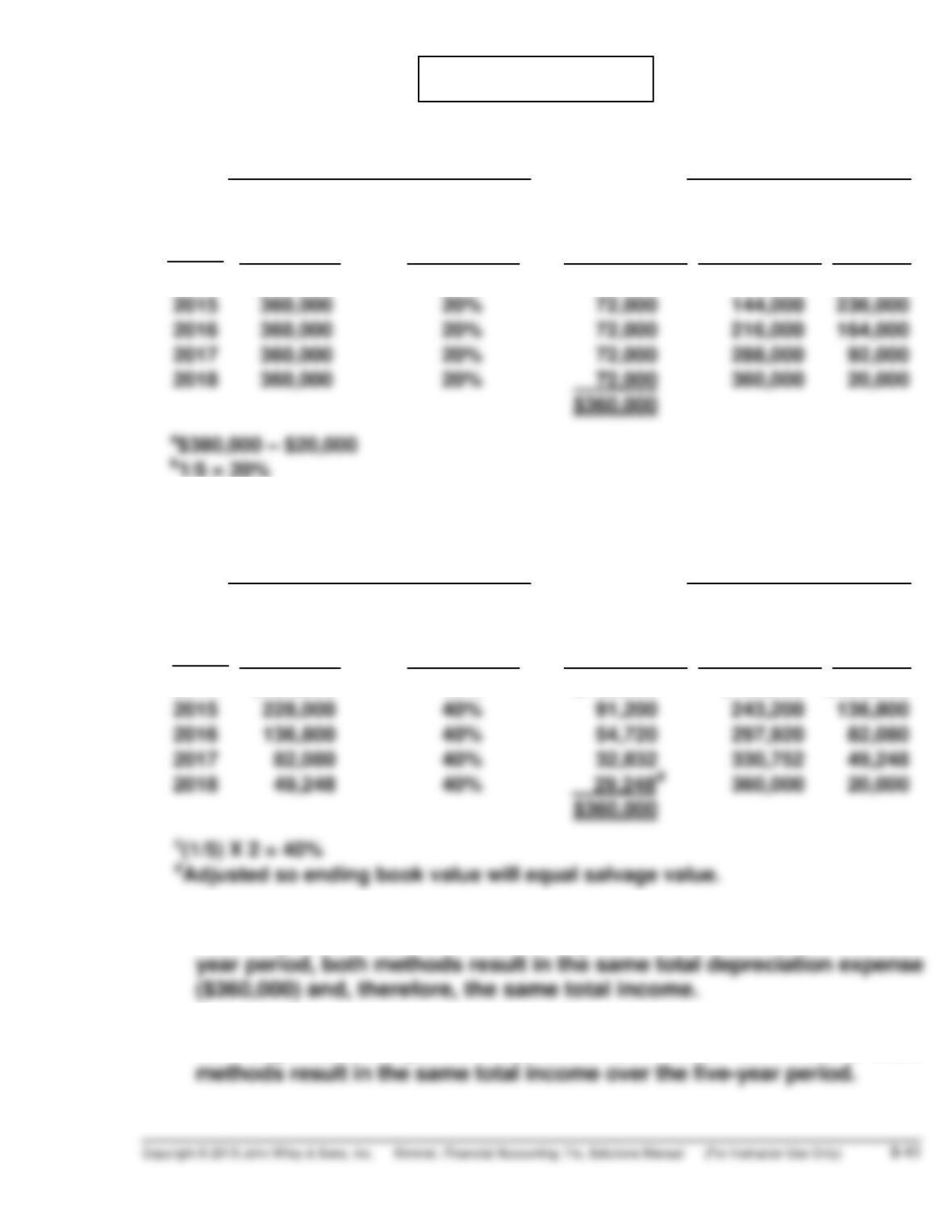
(a) STRAIGHT-LINE DEPRECIATION
Computation End of Year
Annual
Depreciable Depreciation Depreciation Accumulated Book
Years Cost X Rate = Expense Depreciation Value
2014 $360,000a 20%b $ 72,000 $ 72,000 $308,000
DOUBLE-DECLINING-BALANCE DEPRECIATION
Computation End of Year
Book Value Annual
Beginning Depreciation Depreciation Accumulated Book
Years of Year X Rate = Expense Depreciation Value
2014 $380,000 40%c $152,000 $152,000 $228,000
(b) Straight-line depreciation provides the lower amount for 2014 depreci-
ation expense and, therefore, the higher 2014 income. Over the five-
(c) Double-declining-balance depreciation provides the higher amount for
2014 depreciation expense and, therefore, the lower 2014 income. Both
*PROBLEM 9-8B
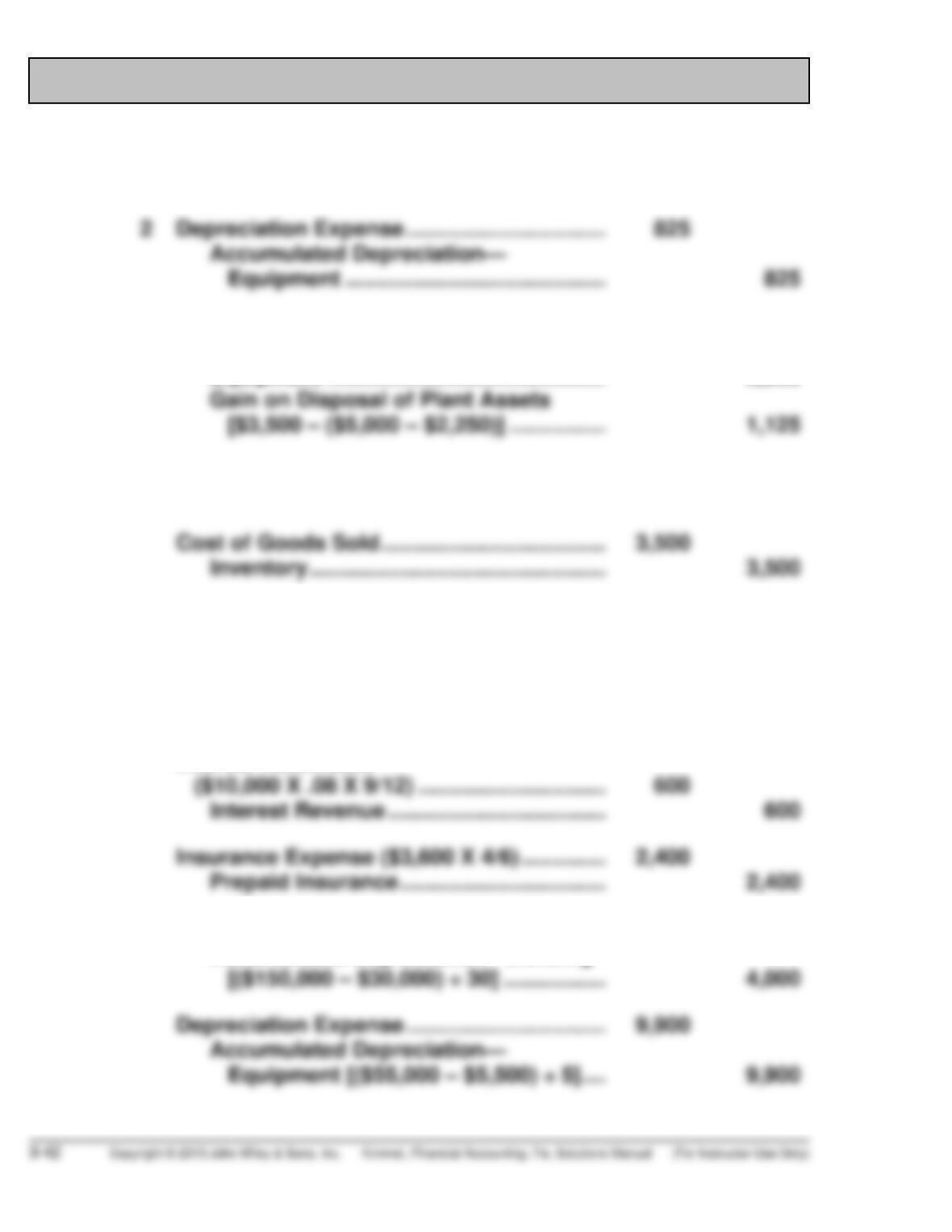
CHAPTER 9 COMPREHENSIVE PROBLEM SOLUTION
(a) Dec. 2 Equipment ……………………………………………. 16,800
Cash ……………………………………………….. 16,800
Cash …………………………………………………….. 3,500
Accumulated Depreciation—Equipment … 2,625
Equipment ………………………………………. 5,000
15 Accounts Receivable ……………………………. 5,000
Sales Revenue …………………………………. 5,000
23 Salaries and Wages Expense ………………… 6,600
Cash ……………………………………………….. 6,600
31 Bad Debt Expense ($4,000 – $500) …………. 3,500
Allowance for Doubtful Accounts …….. 3,500
Interest Receivable
Depreciation Expense …………………………… 4,000
Accumulated Depreciation—Building
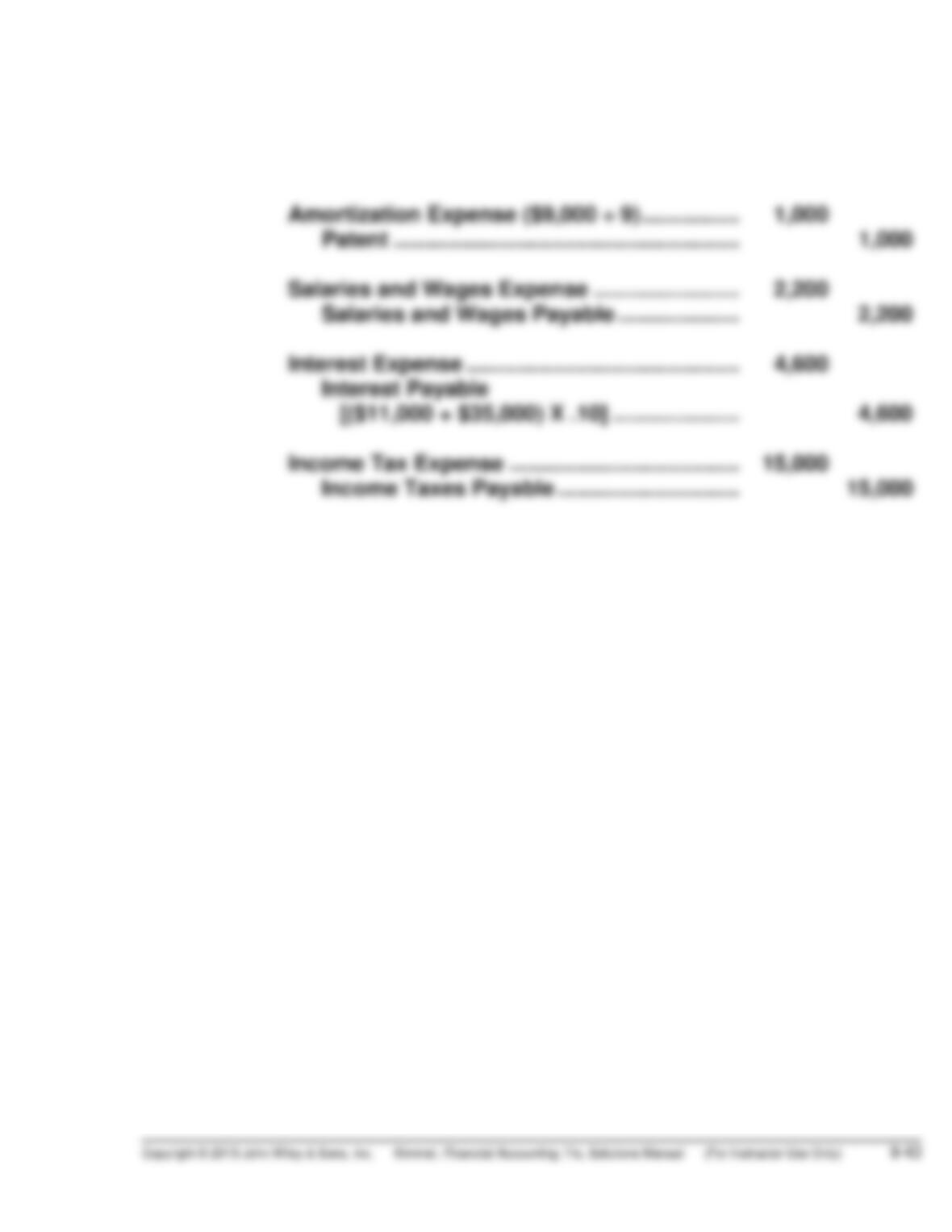
COMPREHENSIVE PROBLEM (Continued)
Depreciation Expense ……………………………… 250
Accumulated Depreciation—Equipment
[($16,800 – $1,800) ÷ 5] X 1/12 …………… 250
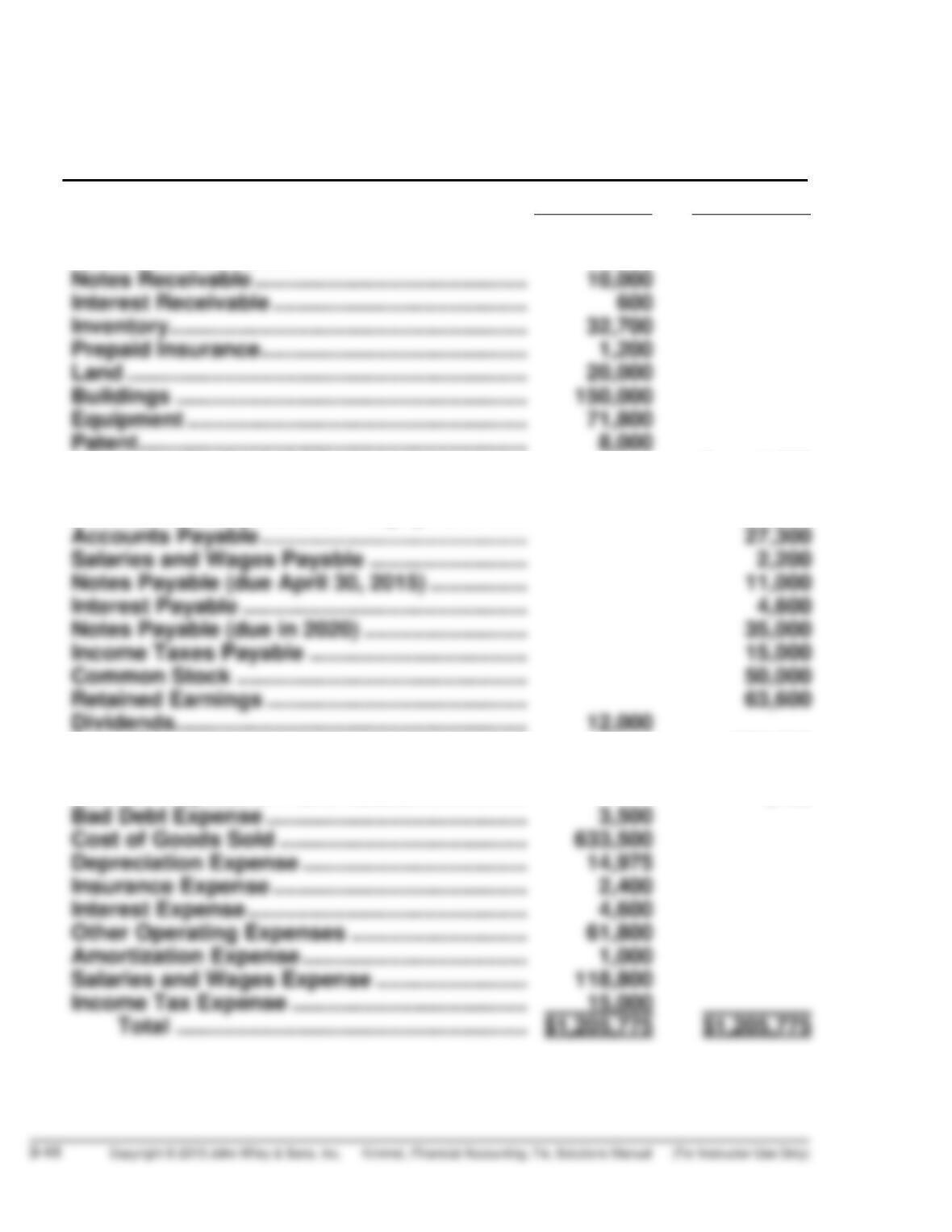
COMPREHENSIVE PROBLEM (Continued)
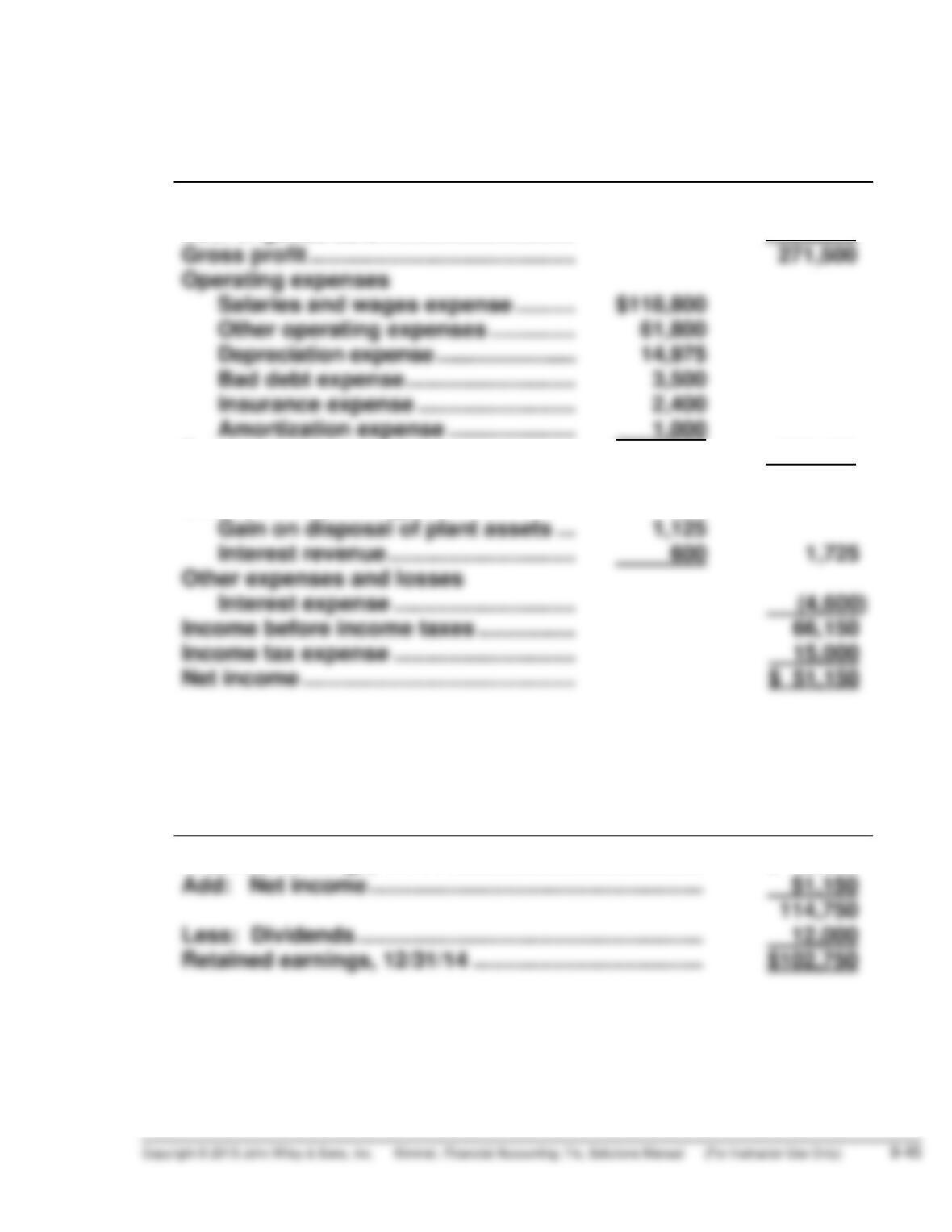
(b) KENSETH CORPORATION
Adjusted Trial Balance
December 31, 2014
Debits Credits
Cash …………………………………………………………
Accounts Receivable …………………………………
Allowance for Doubtful Accounts ………………
Accumulated Depreciation—Buildings ……….
Accumulated Depreciation—Equipment …….
Sales Revenue ………………………………………….
Interest Revenue ……………………………………….
Gain on Disposal of Plant Assets……………….
$ 2,100
41,800
$ 4,000
54,000
32,350
905,000
600
1,125
COMPREHENSIVE PROBLEM (Continued)
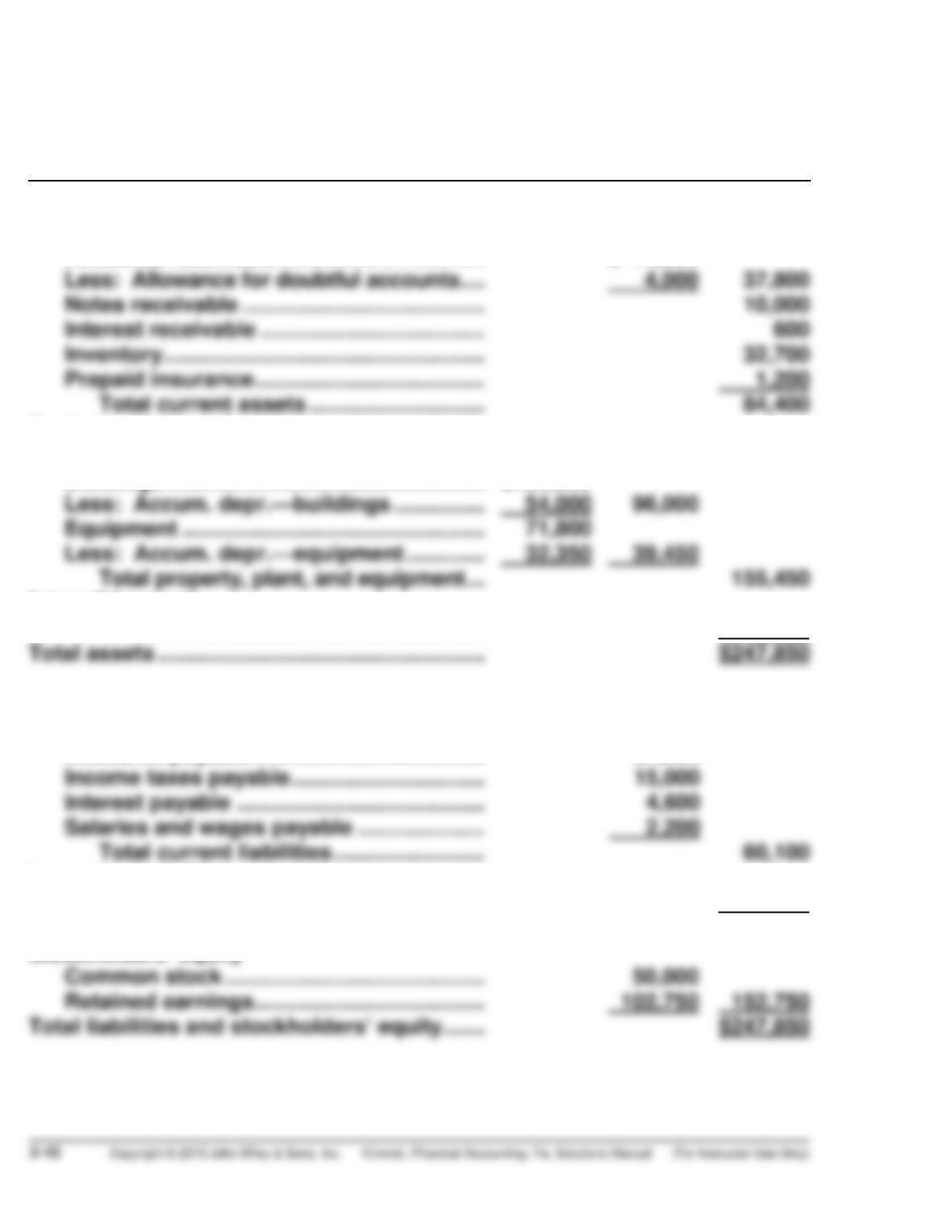
(c) KENSETH CORPORATION
Income Statement
For the Year Ended December 31, 2014
Sales revenue ………………………………….
Cost of goods sold …………………………..
Total operating expenses …………………
Income from operations ……………………
Other revenues and gains
$905,000
633,500
202,475
69,025
KENSETH CORPORATION
Retained Earnings Statement
For the Year Ending December 31, 2014
Retained earnings, 1/1/14 ……………………………………
$ 63,600
COMPREHENSIVE PROBLEM (Continued)
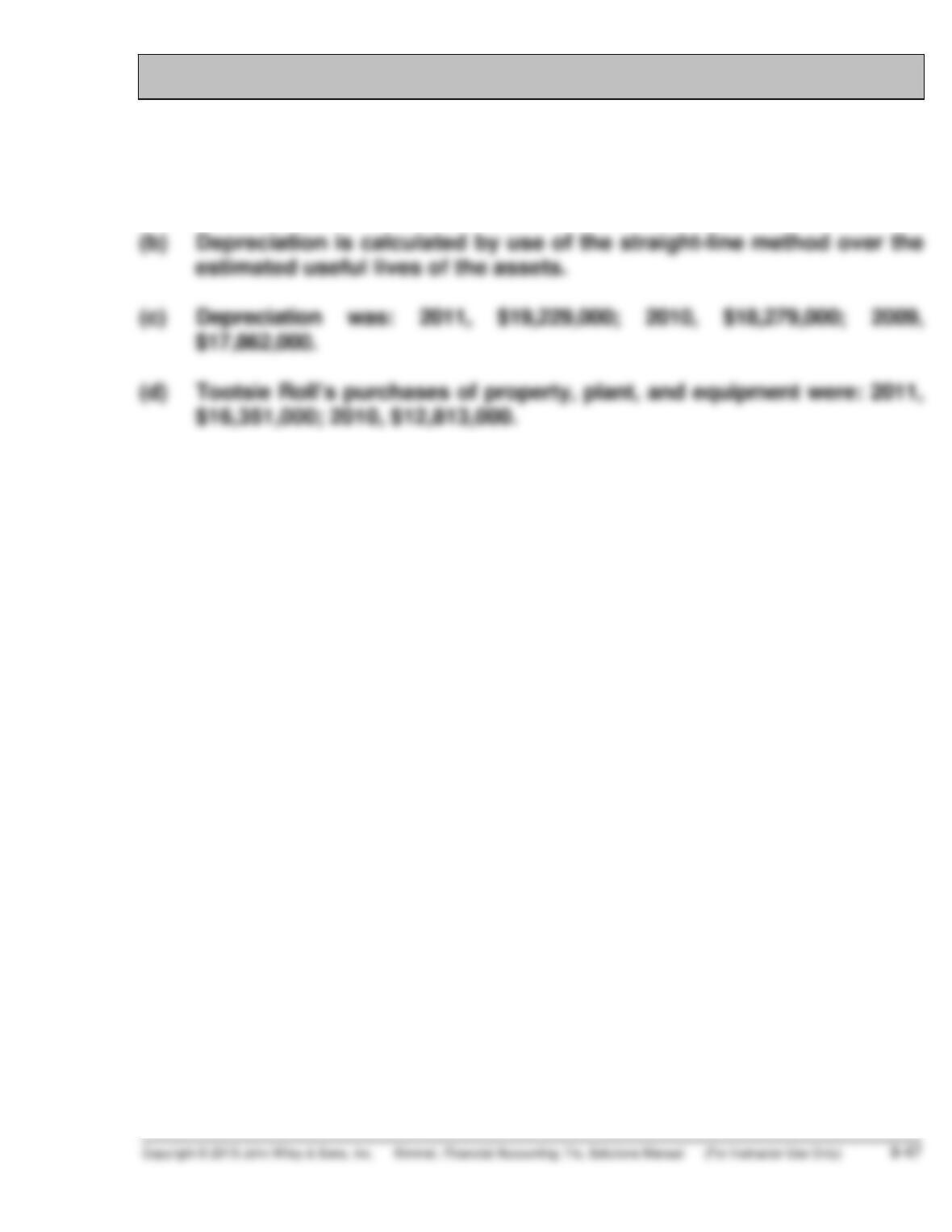
(d) KENSETH CORPORATION
Balance Sheet
December 31, 2014
Current assets
Cash ……………………………………………………
Accounts receivable …………………………….
Property, plant, and equipment
Land ……………………………………………………
Buildings …………………………………………….
Intangible assets
Patent ………………………………………………….
T
Current liabilities
Notes payable (due April 30, 2015) ………..
Accounts payable ………………………………..
Long-term liabilities
Notes payable (due in 2020)………………….
T
otal liabilities …………………………………………..
Stockholders’ equity
T
$150,000
$ 41,800
20,000
$ 11,000
27,300
$ 2,100
8,000
35,000
95,100
(a) At December 31, 2011, total cost of property, plant and equipment was
$455,097,000; book value was $212,162,000.
(e) Goodwill and intangible assets with indefinite lives are not amortized,
but rather tested for impairment at least annually. The company tested
goodwill and trademarks during the fourth quarter of each year. It
recorded an impairment in 2009 but none in 2010 or 2011.
BYP 9-1 FINANCIAL REPORTING PROBLEM
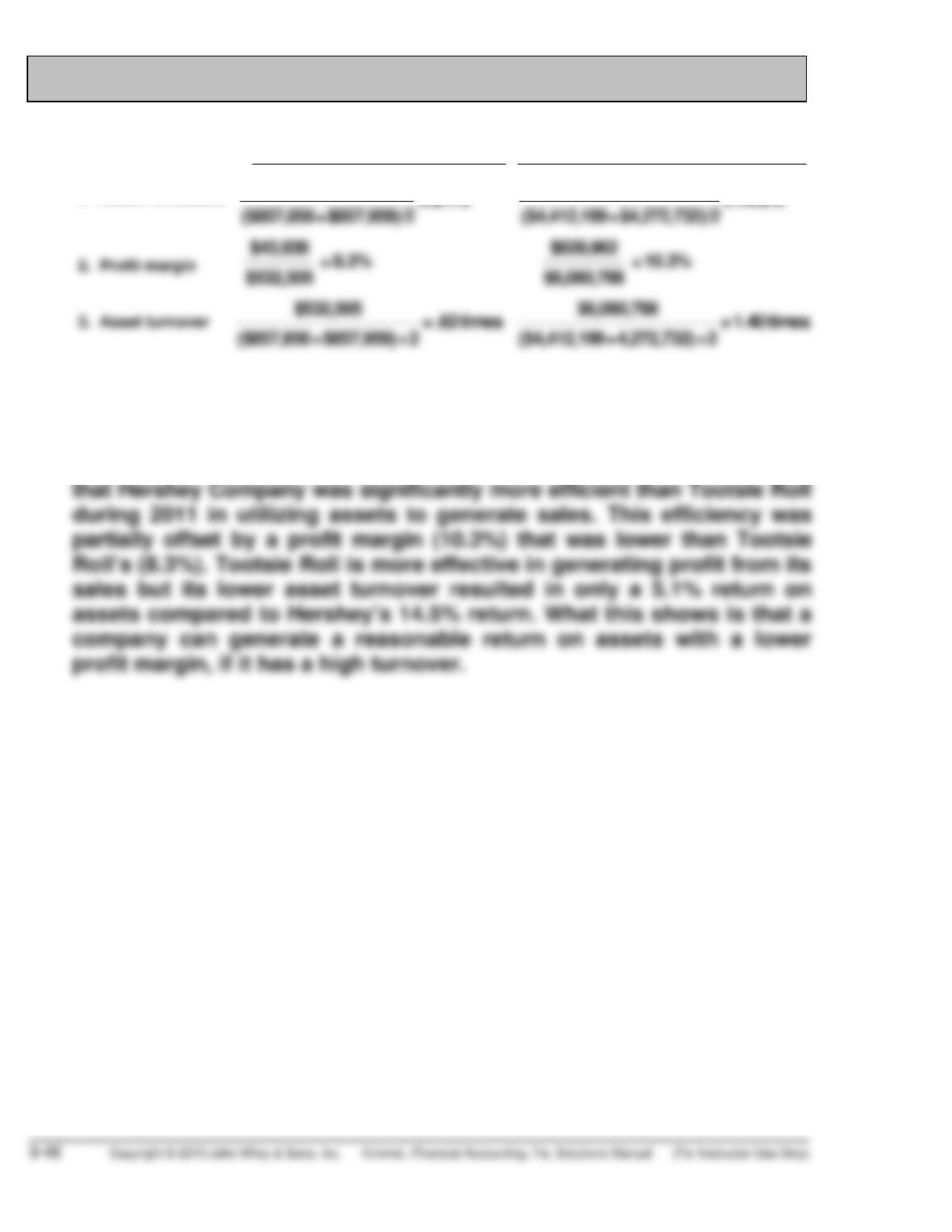
(a) Tootsie Roll Hershey Company
$43,938 $628,962
The asset turnover measures how efficiently a company uses its assets
to generate sales. It shows the dollars of sales generated by each dollar
invested in assets. Hershey Company’s asset turnover (1.40) was 126%
higher than Tootsie Roll’s (.62) in 2011. Therefore, it can be concluded
BYP 9-2 COMPARATIVE ANALYSIS PROBLEM
1. Return on assets
(a) All of the companies have market values (that is, the total market price of
all of their shares) that is less than the shareholders’ equity on their
(b) In most instances, when a company’s market value is less than its book
value, the company needs to consider writing down its goodwill. It is
(c) In order for goodwill to be present on a company’s balance sheet, that
company must have purchased another business. If the amount paid for
BYP 9-3 RESEARCH CASE
(a) Online retailers, such as Amazon, have large investments in
sophisticated warehouses, but they have no money tied up in massive
stores, such as those of Best Buy. This is would mean that, all else equal,
an online retailer would have lower total assets, which would increase
the asset turnover as well as the return on assets. We would also expect
that the online retailer’s operating costs would be lower since it doesn’t
incur salary and other costs of running a store. This should increase its
net income, which would increase the profit margin ratio.
2011 2006
(b) Profit Margin $1,277 =2.5%
$50,272 $1,140 =3.7%
$30,848
(c) Profit Margin × Asset Turnover = Return on Assets
(d) It is interesting to note that the asset turnover stayed the same, at 2.78
times between 2006 and 2011. This means that the company generates
the same amount of sales per dollar invested in assets. However, the
BYP 9-4 INTERPRETING FINANCIAL STATEMENTS

Answers will vary depending on the company chosen by student.
BYP 9-5 REAL-WORLD FOCUS
(a)
(in thousands) Current results
Proposed results
without cannibalization
Proposed results
with cannibalization
Return on assets $12,000 = .12 $13,500 = .135 $12,000 = .12
$100,000 $100,000 $100,000
(b) If there is no cannibalization, return on assets increases from 12% to
13.5%. This occurs even though the profit margin decreases from 27%
to 22.5% because the asset turnover increases significantly, from .45
(c) Yes, there are other alternatives. Here are some examples.
1. Increase spending on marketing in an effort to increase sales of
high end product, without offering the new, low-end product line.
2. Consider marketing the new line under a different name, so as to
minimize the cannibalization. This might substantially increase
3. If neither of 1. or 2. seems feasible, they should consider closing
a plant. This would increase the asset turnover and return on
assets.
BYP 9-6 DECISION MAKING ACROSS THE ORGANIZATION
Answers will depend on the position selected by the student. Some points
that should be considered include:
1. Some relatively small companies may spend less on R&D because they
must expense these costs. However, the vast majority of companies
2. The tangible future benefits of R&D costs may not be realized for
several years, if ever. Conversely, the purchase of a long-lived asset
BYP 9-7 COMMUNICATION ACTIVITY
(a) The stakeholders in this situation are:
Tyler Weber, president of Fresh Air Anti-Pollution Company.
Robin Cain, controller.
(b) The intentional misstatement of the life of an asset or the amount of the
salvage value is unethical for whatever the reason. There is nothing
unethical per se about changing the estimates used for the life of an
asset or of an asset’s salvage value if the change is an attempt to better
(c) Income before income taxes in the year of change is increased $155,000
($387,500 – $232,500) by implementing the president’s proposed changes.
Old Estimates
Asset cost…………………………………………………….. $3,500,000
Revised Estimates
Asset cost…………………………………………………….. $3,500,000
Estimated salvage ………………………………………… 400,000
BYP 9-8 ETHICS CASE
BYP 9-9 ALL ABOUT YOU
(b) For the most part, the value of a brand is not reported on a company’s
balance sheet. Most companies are required to expense all costs related
to the maintenance of a brand name. Also any research and development
that went into the development of the related product is generally
BYP 9-10 FASB CODIFICATION ACTIVITY
(a) Capitalize is a term used to indicate that the cost would be recorded as
(b) Intangible assets are assets that lack physical substance. (The term
intangible asset is used to refer to intangible assets other than
goodwill.)
(c) Codification reference 360-10-35-2 addresses the concept of deprecia-
tion accounting and the various factors to consider in selecting the
BYP 9-11 CONSIDERING PEOPLE, PLANET AND PROFIT
(a) Airbus developed a wing attachment called a Sharklet that is designed to
reduce fuel consumption. It is quite similar to a device that is sold by
(b) Aviation Partners says that its Winglets will reduce fuel consumption by
5 to 7 percent. It says that the total amount of jet fuel that its device has
saved is approximately 3 billion gallons.
(c) Airbus and Aviation Partners were involved in discussions for about
(d) If Aviation Partners loses the lawsuit it would have expense the cost
of the lawsuit. It would also have to review the recorded value of its
IFRS CONCEPTS AND APPLICATION
IFRS9-1
Component depreciation is a method of allocating the cost of a plant asset
into separate parts based on the estimated useful lives of each component.
IFRS9-2
Revaluation is an accounting procedure that adjusts plant assets to fair value
at the reporting date. Revaluation must be applied annually to assets that are
experiencing rapid price changes.
IFRS9-3
Both types of development expenditures relate to the creation of new products
but one is expensed and the other is capitalized. Development costs incurred
IFRS9-4
Warehouse component: ($280,000 – $40,000)/20 = $12,000
IFRS9-5
(a) Accumulated Depreciation—Plant Assets …………….. 60,000
Revaluation Surplus ………………………………….. 40,000

IFRS9-6
Development Expense ………………………………………………… 400,000
IFRS9-7 INTERNATIONAL FINANCIAL STATEMENT ANALYSIS
(a) Zetar uses straight line and reducing-balance depreciation methods.
The depreciation rates range from 10–33%.