9-21
PROBLEM 9-33 (CONTINUED)
3. Since the 20×1 usage of Islin is 200,000 gallons, the firm’s raw-material purchases
budget (in dollars) for Islin for 20×2 is as follows:
Quantity of Islin required for production in 20×2 (in gallons):
Yarex (120,800 × 1) ………………………………………………………….
Darol (79,200 × .7) …………………………………………………………..
120,800
55,440
4. The company should continue using Islin, because the cost of using Philin is
$152,632 greater than using Islin, calculated as follows:
Change in material cost from substituting Philin for Islin:
9-22
PROBLEM 9-34 (25 MINUTES)
1. Tuition revenue budget:
Current student enrollment…………………….
12,000
Add: 5% increase in student body……………
600
Total student body……………………………….
12,600
180
12,420
Credit hours per student per year…………….
x 30
Total credit hours………………………………..
Tuition rate per hour…………………………….
x $75
2. Faculty needed to cover classes:
Total student body…………………………………….
12,600
Total student class enrollments to be covered….
Students per class…………………………………….
Classes to be taught………………………………….
Classes taught per professor……………………….
Faculty needed…………………………………………
Classes per student per year [(15 credit hours ÷
3. Possible actions might include:
• Hire part-time instructors
9-23
PROBLEM 9-35 (25 MINUTES)
1.
Sales budget
July
August
September
Sales (in sets) ………………………………………
5,000
6,000
7,500
2.
Production budget (in sets)
July
August
September
Sales ……………………………………………………
5,000
6,000
7,500
Add: Desired ending inventory ……………..
1,200
1,500
1,500
Total requirements ……………………………….
6,200
7,500
9,000
Less: Projected beginning inventory ……..
1,000
1,200
1,500
3.
Raw-material purchases
July
August
September
Planned production (sets) ……………………….
5,200
6,300
7,500
Raw material required per set
(board feet) …………………………………………
10
10
10
Total requirements ………………………………….
58,300
70,500
83,000
Less: Projected beginning inventory of
Raw material required for production
9-24
PROBLEM 9-35 (CONTINUED)
4.
Direct-labor budget
July
August
September
Planned production (sets) ……………………….
5,200
6,300
7,500
Direct-labor hours required ……………………..
7,800
9,450
11,250
Chapter 09 – Financial Planning and Analysis: The Master Budget
9-25
PROBLEM 9-36 (30 MINUTES)
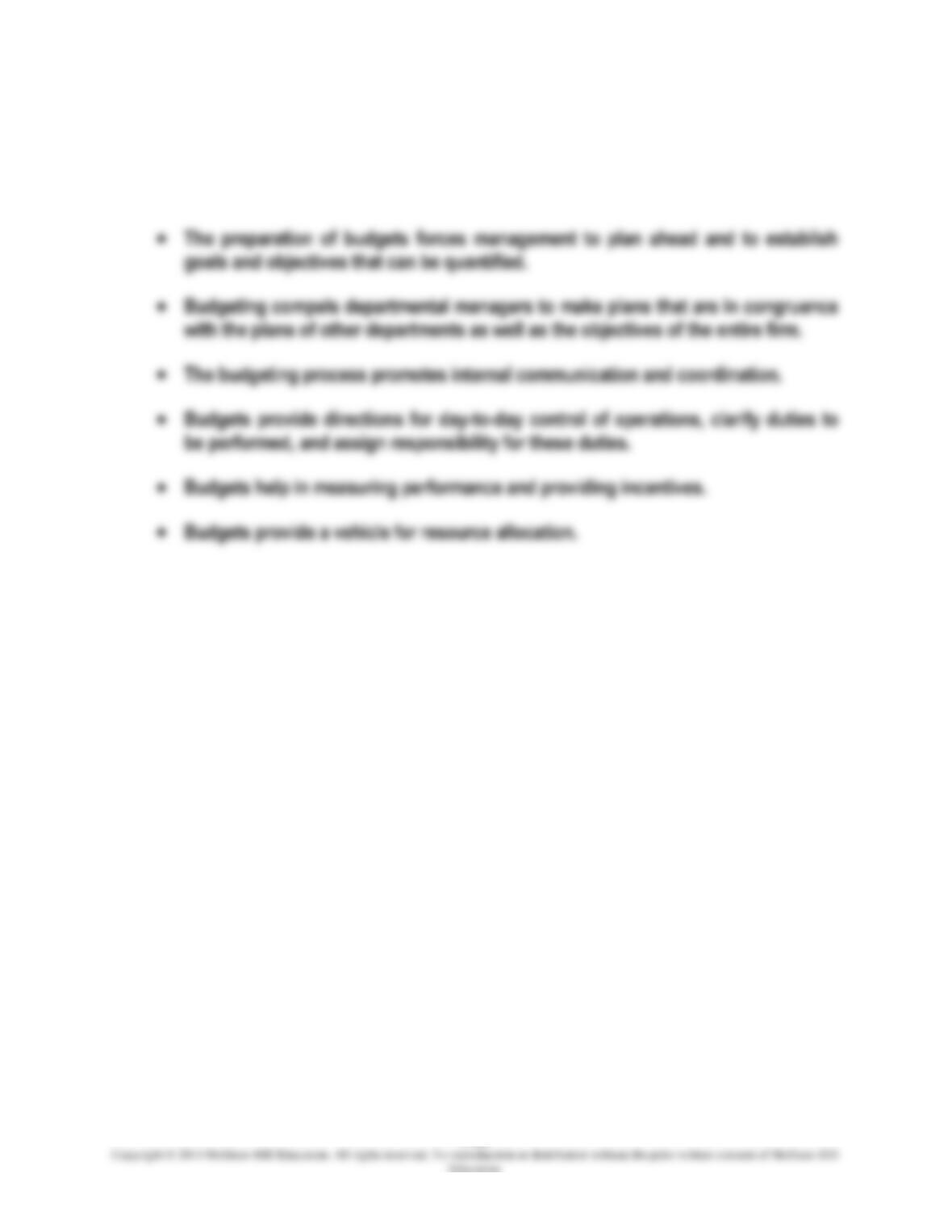
1. Sales are collected over a two-month period, 40% in the month of sale and 60% in the
3. Dakota Fan collected 40% of February’s sales during February, or $78,400. Thus,
7. Financing required is $3,500 ($15,000 minimum balance less ending cash balance of
Chapter 09 – Financial Planning and Analysis: The Master Budget
9-26
PROBLEM 9-37 (45 MINUTES)
1.
The benefits that can be derived from implementing a budgeting system include the
following:
Chapter 09 – Financial Planning and Analysis: The Master Budget
9-27
PROBLEM 9-37 (CONTINUED)
2.
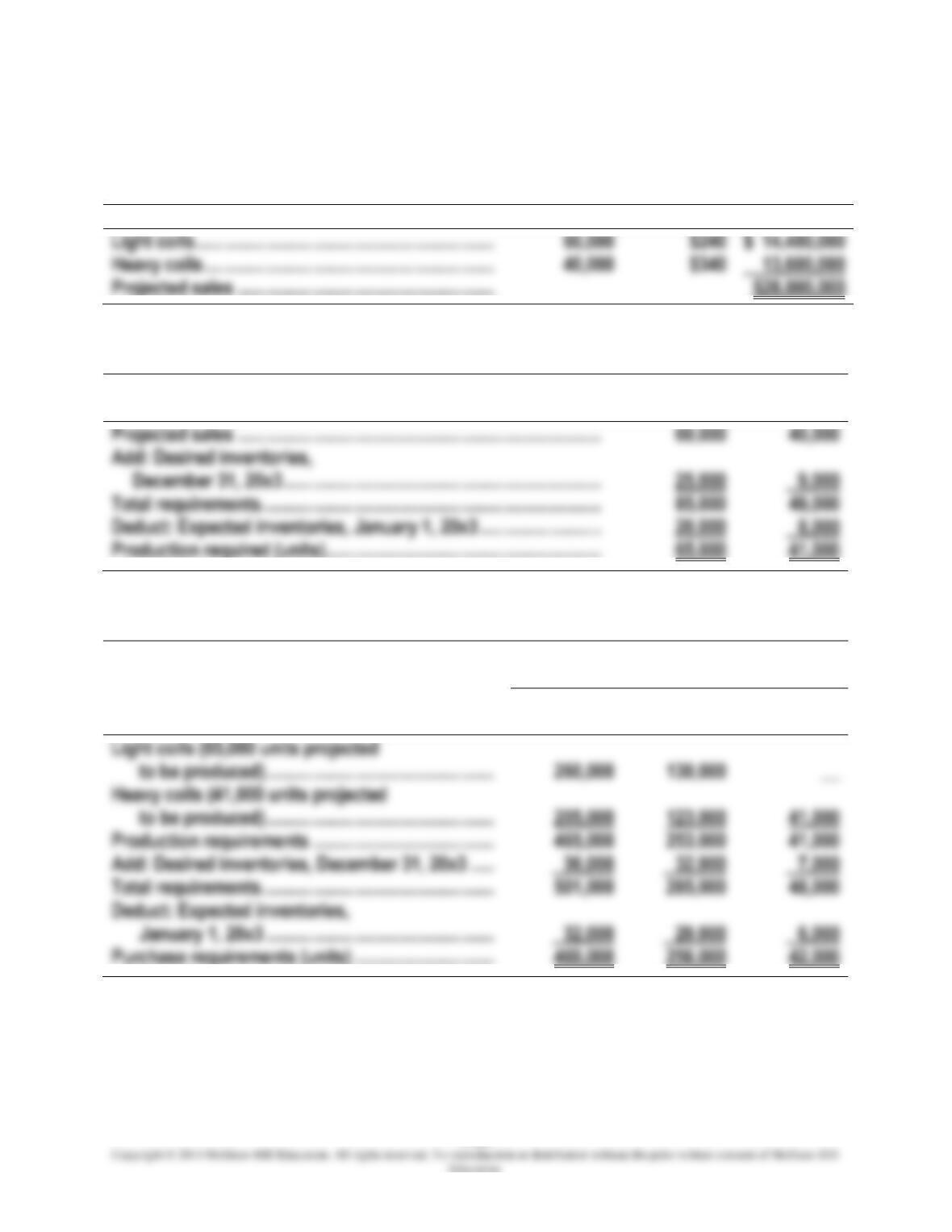
a. Schedule
b. Subsequent Schedule
Sales Budget
Production Budget
Selling Expense Budget
Budgeted Income Statement
Ending Inventory Budget (units)
Production Budget
Production Budget (units)
Direct-Material Budget
Direct-Labor Budget
Production-Overhead Budget
Direct-Material Budget
Direct-Labor Budget
Production-Overhead Budget
Selling Expense Budget
Budgeted Income Statement
Research and Development Budget
Budgeted Income Statement
Administrative Expense Budget
Budgeted Income Statement
Budgeted Income Statement
Budgeted Balance Sheet
Capital Expenditures Budget
Cash Receipts and Disbursements Budget
Budgeted Balance Sheet
Budgeted Statement of Cash Flows
Budgeted Balance Sheet
Budgeted Statement of Cash Flows
Budgeted Statement of Cash Flows
Chapter 09 – Financial Planning and Analysis: The Master Budget
9-28
PROBLEM 9-38 (60 MINUTES)
1. Sales budget for 20×3:
Units
Price
Total
Light coils ……………………………………………………….
$ 14,400,000
Heavy coils ……………………………………………………..
13,600,000
2.
Production budget (in units) for 20x3:
Light
Coils
Heavy
Coils
Projected sales ……………………………………………………………………
Add: Desired inventories,
Total requirements ……………………………………………………………….
Deduct: Expected inventories, January 1, 20×3 ……………………..
3.
Raw-material purchases budget (in quantities) for 20×3:
Raw Material
Sheet
Metal
Copper
Wire
Platforms
Light coils (65,000 units projected
Heavy coils (41,000 units projected
Production requirements …………………………………
Add: Desired inventories, December 31, 20×3 …..
Total requirements …………………………………………..
Deduct: Expected inventories,
January 1, 20×3 ………………………………………….
Chapter 09 – Financial Planning and Analysis: The Master Budget
9-29
PROBLEM 9-38 (CONTINUED)
4.
Raw-material purchases budget for 20×3:
Raw Material
Raw Material
Required
(units)
Anticipated
Purchase
Price
Total
Sheet metal …………………………………………………….
Copper wire ……………………………………………………
5.
Direct-labor budget for 20×3:
Projected
Production
(units)
Hours
per
Unit
Total
Hours
Rate
Total
Cost
Light coils ……………………………….
$3,900,000
Heavy coils ……………………………..
6. Production overhead budget for 20×3:
Cost Driver
Quantity
Cost
Driver
Rate
Budgeted
Cost
Purchasing and material handling …………………..
725,000 lb.a
$.50
$362,500
Depreciation, utilities, and inspection ………………
106,000 coils b
Shipping ………………………………………………………..
General production overhead ………………………….
Chapter 09 – Financial Planning and Analysis: The Master Budget
9-30
PROBLEM 9-39 (60 MINUTES)
1.
Sales budget:
Box C
Box P
Total
Sales (in units)
500,000
500,000
2.
Production budget (in units):
Box C
Box P
Sales …………………………………………………………………………..
500,000
500,000
Add: Desired ending inventory …………………………..………..
Total units needed……………………………………………………….
505,000
515,000
Deduct: Beginning Inventory ……………………………………….
3.
Raw-material budget:
CORRUGATING MEDIUM
Box C
Box P
Total
Production requirements (number of boxes) ………
495,000
495,000
Raw material required per box (pounds) …………….
.2
.3
production (pounds) ……………………………………..
Add: Desired ending
raw-material inventory …………………………………..
Total raw-material needs …………………………………..
257,500
Deduct: Beginning raw-material inventory …………
Raw material to be purchased …………………………...
252,500
Cost of purchases (corrugating medium) …………..
$ 37,875
Raw material required for
9-31
PROBLEM 9-39 (CONTINUED)
PAPERBOARD
Box C
Box P
Total
Production requirement (number of boxes) ………..
495,000
495,000
Raw material required per box (pounds) …………….
.3
.7
Add: Desired ending
raw-material inventory …………………………………..
Total raw-material needs …………………………………..
500,000
Deduct: Beginning raw-material inventory …………
Raw material to be purchased …………………………...
485,000
Price (per pound) ……………………………………………..
Raw material required for
4.
Direct-labor budget:
Box C
Box P
Total
Production requirements (number of boxes)
495,000
495,000
Direct labor required per box (hours) …………………
Direct labor required for production (hours)
1,237.5
Direct-labor rate ……………………………………………….
5.
Production-overhead budget:
Indirect material ……………………………………………………………………………….
$ 15,750
Indirect labor ……………………………………………………………………………………
Utilities …………………………………………………………………………………………….
Property taxes ………………………………………………………………………………….
Insurance ……………………………………………………….………………………………..
Depreciation …………………………………………………………………………………….
43,500
Total overhead ………………………………………………………………………………….
$222,750
Chapter 09 – Financial Planning and Analysis: The Master Budget
9-32
PROBLEM 9-39 (CONTINUED)
6.
Selling and administrative expense budget:
Salaries and fringe benefits of sales personnel ………………………………….
$112,500
Advertising ………………………………………………………………………………………
Management salaries and fringe benefits …………………………………………..
Clerical wages and fringe benefits …………………………………………………….
Miscellaneous administrative expenses …………………………………………….
Total selling and administrative expenses ………………………………………….
$315,000
7.
Budgeted income statement:
Sales revenue [from sales budget, req. (1)] ………………………………………..
$1,650,000
Less: Cost of goods sold:
Gross margin ……………………………………………………………………………………
$1,170,000
Selling and administrative expenses ………………………………………………….
315,000
Income before taxes ………………………………………………………………………….
$ 855,000
Income tax expense (35%) …………………………………………………………………
299,250
Net income ……………………………………………………………………………………….
$ 555,750
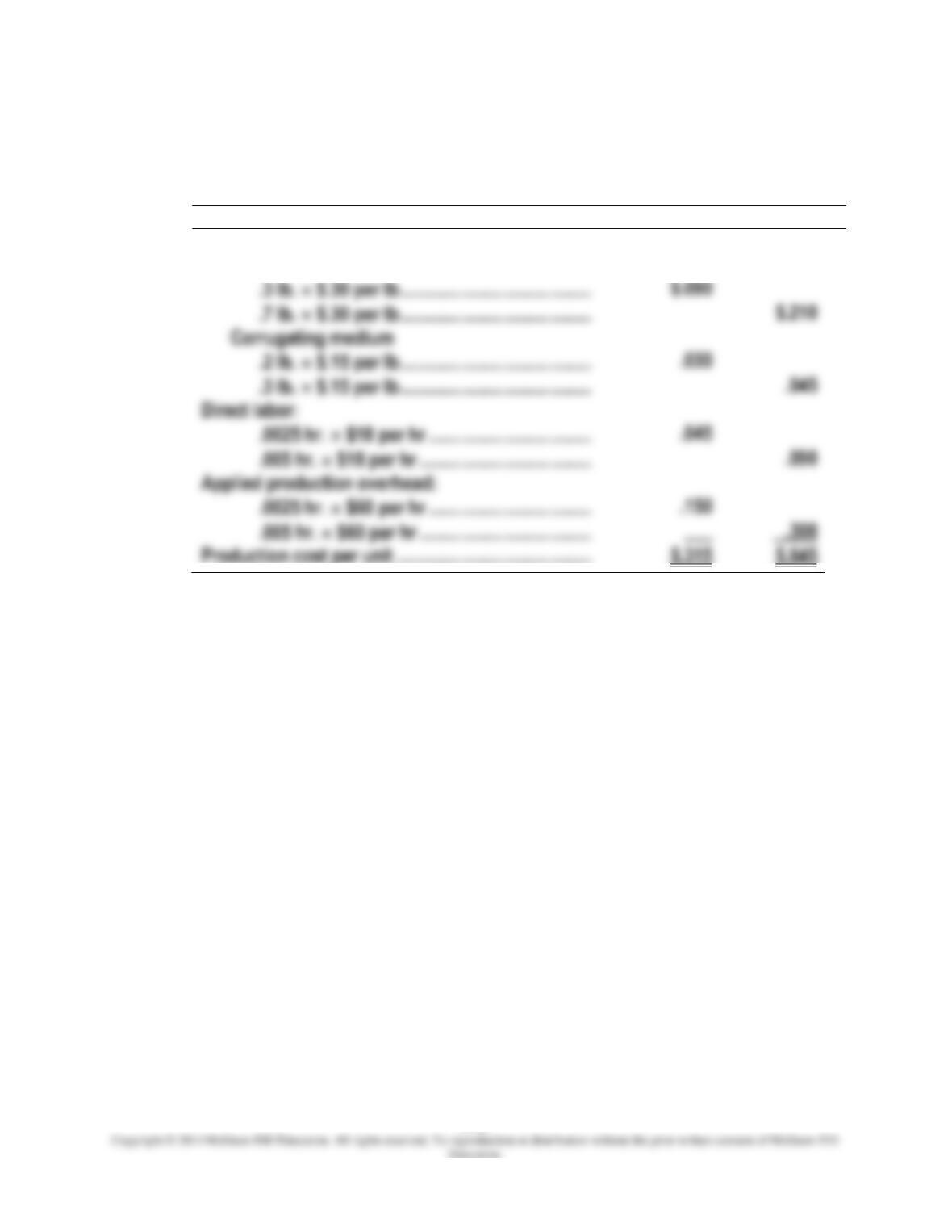
*Calculation of production cost per unit:
(a)
Predetermined overhead rate
=
hours labor–direct of volume
overhead ingmanufactur budgeted
Chapter 09 – Financial Planning and Analysis: The Master Budget
9-33
PROBLEM 9-39 (CONTINUED)
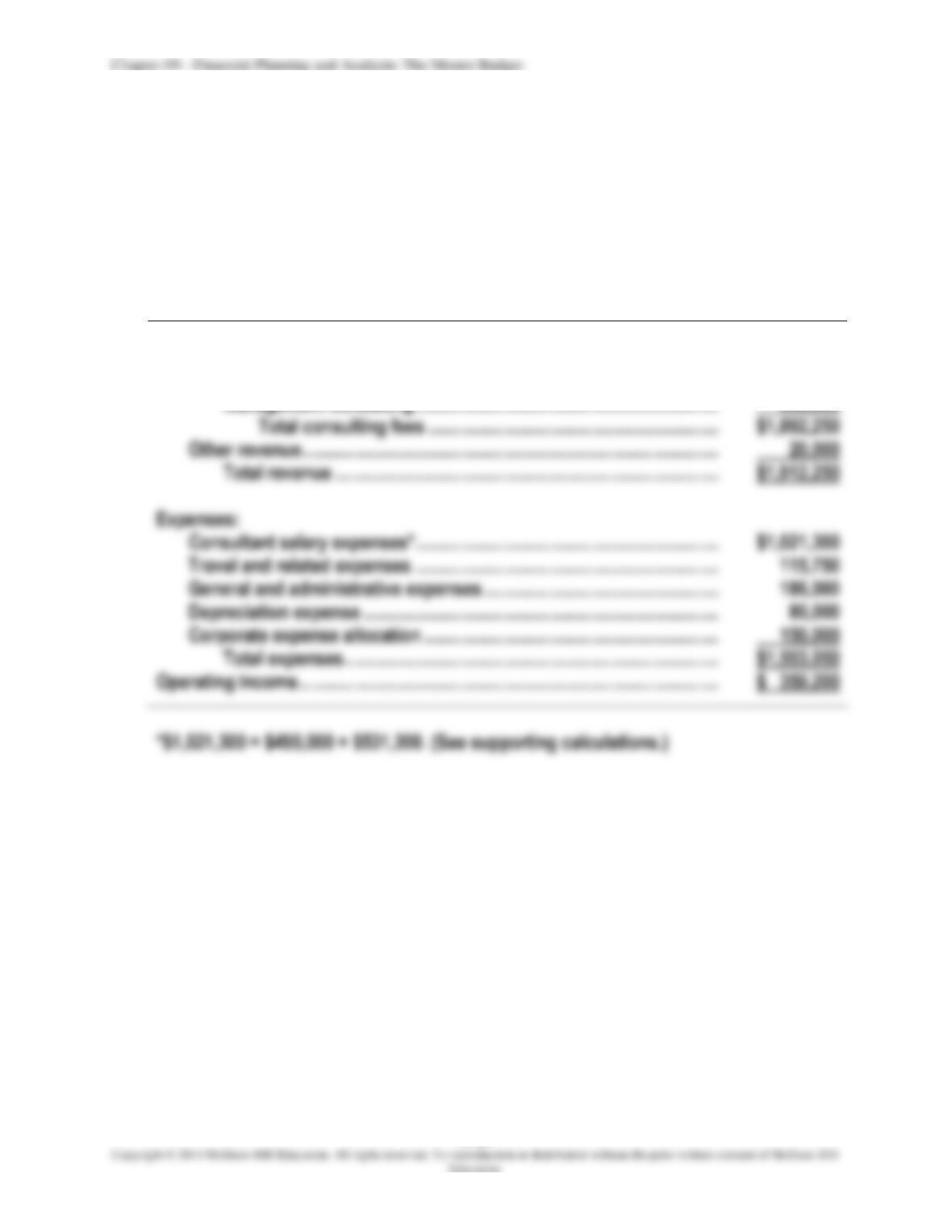
(b)
Calculation of production cost per unit:
Box C
Box P
Direct material:
Paperboard
Corrugating medium
Direct labor:
Applied production overhead:
9-34
PROBLEM 9-40 (45 MINUTES)
1.
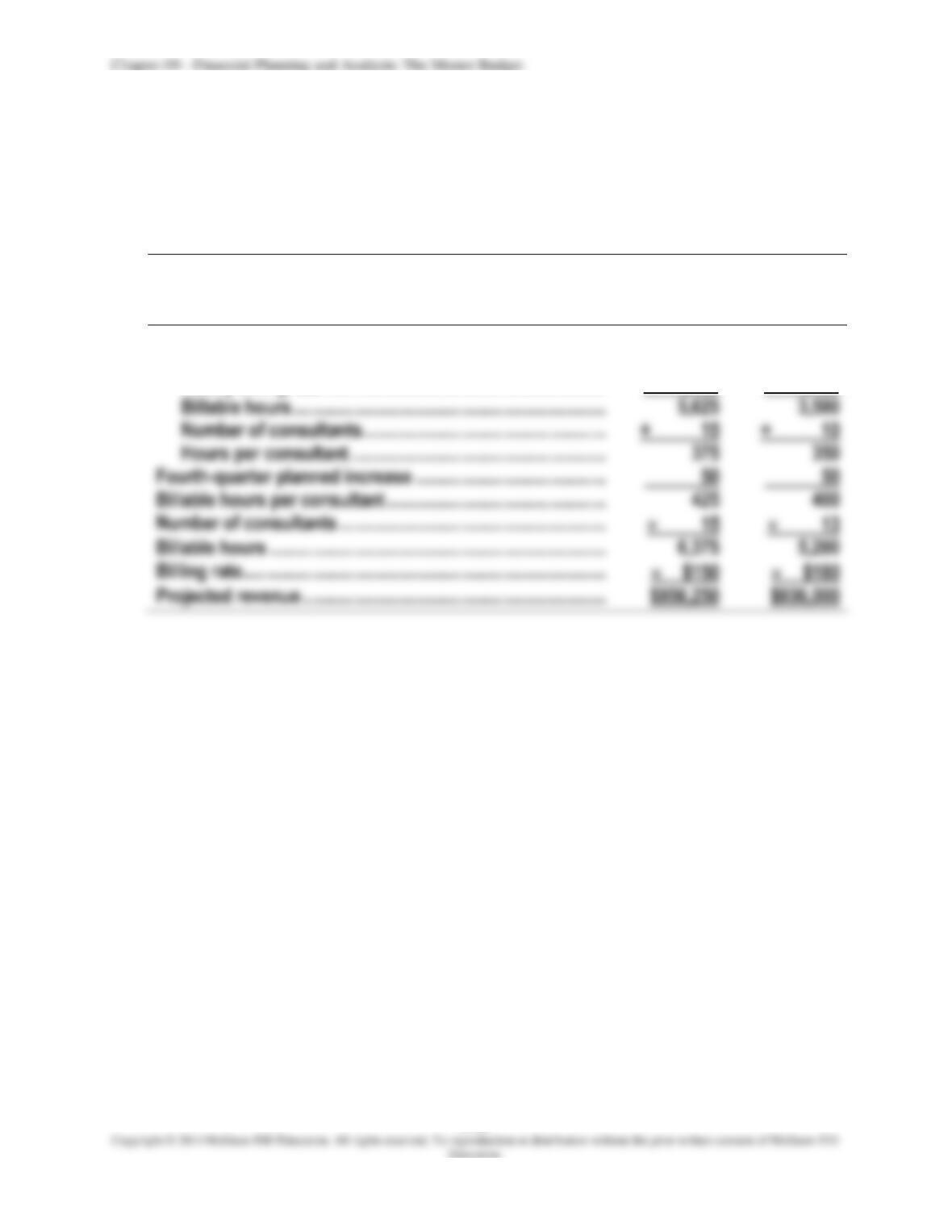
The revised operating budget for Vancouver Consulting Associates for
the fourth quarter is presented below. Supporting calculations follow:
VANCOUVER CONSULTING ASSOCIATES
REVISED OPERATING BUDGET
FOR THE FOURTH QUARTER OF 20X4
Revenue:
Consulting fees:
Computer system consulting …………………………………………………
$ 956,250
Management consulting ………………………………………………………..
936,000
Total consulting fees ……………………………………………………..
$1,892,250
Other revenue ……………………………………………………………………………..
20,000
Total revenue ……………………………………………………………………….
$1,912,250
Expenses:
Consultant salary expenses* …………………………..…………………………...
$1,021,300
Travel and related expenses ………………………………………………………..
General and administrative expenses …………………………………………..
Depreciation expense …………………………..……………………………………..
Corporate expense allocation ………………………………………………………
150,000
Total expenses ……………………………………………………………………..
$1,553,050
*$1,021,300 = $490,000 + $531,300. (See supporting calculations.)
9-35
PROBLEM 9-40 (CONTINUED)
Supporting calculations:
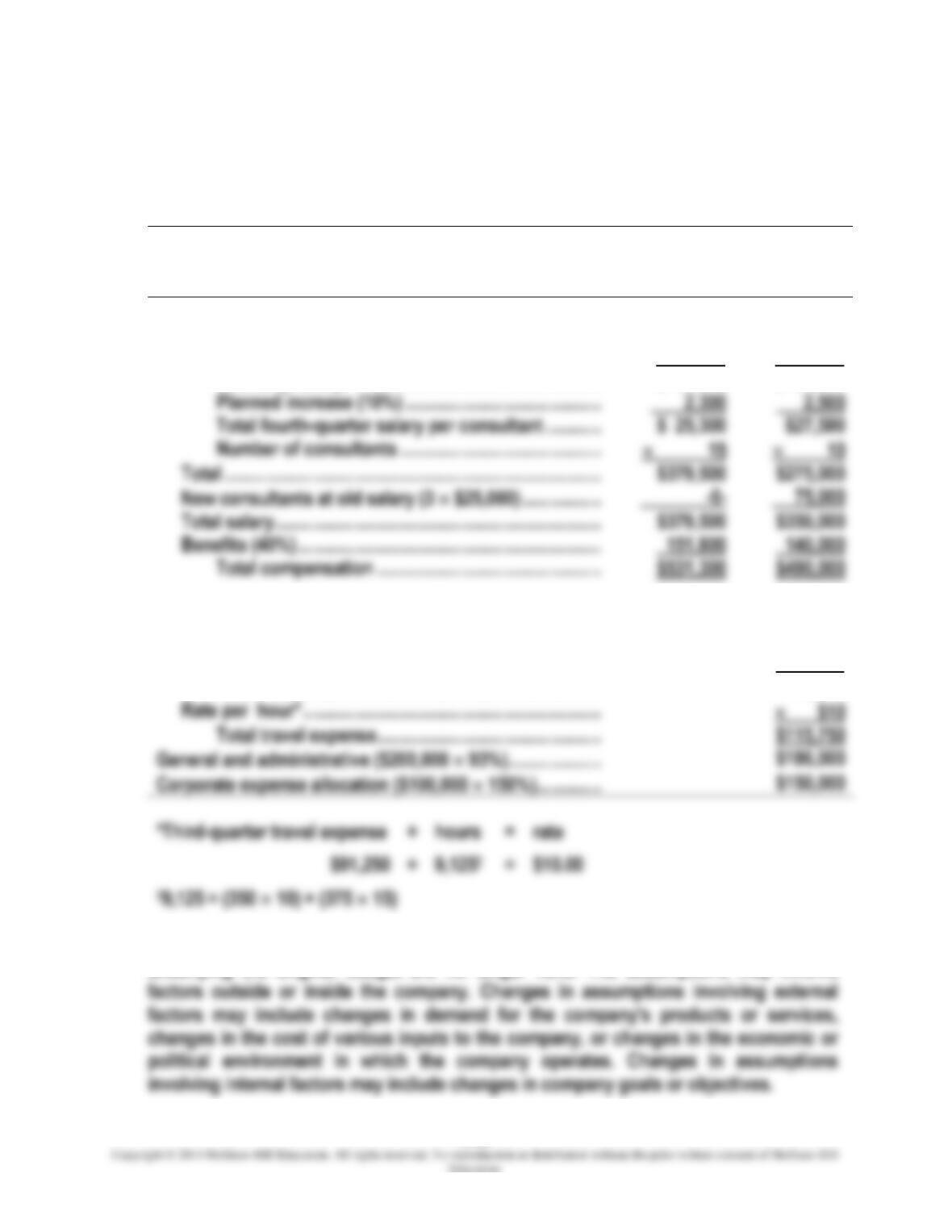
• Schedule of projected revenues for the fourth quarter of 20×4:
Computer
System
Consulting
Management
Consulting
Third Quarter:
Revenue ………………………………………………………………….
$843,750
$630,000
Hourly billing rate ……………………………………………………
÷ $150
÷ $180
Billable hours ………………………………………………………….
Number of consultants …………………………………………….
Hours per consultant ……………………………………………….
Fourth-quarter planned increase …………………………………..
Billable hours per consultant ………………………………………..
Billable hours ………………………………………………………………
Chapter 09 – Financial Planning and Analysis: The Master Budget
9-36
PROBLEM 9-40 (CONTINUED)
• Schedules of projected salaries, travel, general and administrative, and allocated
corporate expenses:
Computer
System
Consulting
Management
Consulting
Compensation:
Existing consultants:
Annual salary …………………………………………………..
$ 92,000
$100,000
Quarterly salary ……………………………………………….
$ 23,000
$ 25,000
Planned increase (10%) ……………………………………
Total fourth-quarter salary per consultant …………
Number of consultants …………………………………….
Total ………………………………………………………………………
$379,500
$275,000
New consultants at old salary (3 $25,000) ……………..
Total salary …………………………………………………………….
$379,500
$350,000
Benefits (40%) ………………………………………………………..
Total compensation …………………………………………
$531,300
Travel expenses:
Computer system consultants (425 hrs. 15) ………….
6,375
Management consultants (400 hrs. 13) ………………….
5,200
Total hours ………………………………………………………
11,575
Rate per hour* ……………………………………………………….
Total travel expense …………………………………………
$115,750
General and administrative ($200,000 93%) ………………..
Corporate expense allocation ($100,000 150%) …………..
*Third-quarter travel expense
÷
hours
=
rate
2.
An organization would prepare a revised operating budget when the assumptions
underlying the original budget are no longer valid. The assumptions may involve
9-37
PROBLEM 9-41 (40 MINUTES)
1. Strategic planning identifies the overall objective of an organization and generally
considers the impact of external factors such as competitive forces, market demand,
2. For each of the financial objectives established by the board of directors and
president of Fit-for-Life Foods, Inc., the calculations to determine whether John
Winslow’s budget attains these objectives are presented in the following table.
CALCULATION OF FINANCIAL OBJECTIVES: FIT-FOR-LIFE FOODS, INC.
Objective
Attained/
Not Attained
Calculations
Maintain cost of goods sold at or
Not attained
$1,339,000*/$1,895,500 = 70.6% (rounded)
Increase sales by 12%
($1,700,000 × 1.12 = $1,904,000)
Not attained
($1,895,500 – $1,700,000)/$1,700,000 = 11.5%
3. The accounting adjustments contemplated by John Winslow are unethical because
they will result in intentionally overstating income by understating the cost of goods
sold. The specific standards of ethical conduct for management accountants
violated by Winslow are as follows:
9-38
PROBLEM 9-41 (CONTINUED)
Competence. By making the accounting adjustments, Winslow violated the
PROBLEM 9-42 (120 MINUTES)
1.
Sales budget:
20×0
20×1
December
January
February
March
First
Quarter
Total sales ……………………
$800,000
$880,000
$968,000
$1,064,800
$2,912,800
Cash sales* ………………….
Sales on account† ………..
*25% of total sales.
2.
Cash receipts budget:
20×1
January
February
March
First
Quarter
Cash sales ……………………………………..
$220,000
$242,000
$266,200
$ 728,200
Cash collections from credit
*10% of current month’s credit sales.
Cash collections from credit
sales made during current
9-39
PROBLEM 9-42 (CONTINUED)
3.
Purchases budget:
20×0
20×1
December
January
February
March
First
Quarter
Budgeted cost of
goods sold ………………
$560,000
$616,000
$677,600
$745,360
$2,038,960
Total goods
$954,800
inventory…………………
Add: Desired
†The desired ending inventory for the quarter is equal to the desired ending inventory
on March 31, 20×1.
**The beginning inventory for the quarter is equal to the December ending inventory.