CHAPTER 23 (FIN MAN); CHAPTER 9 (MAN) Evaluating Variances from Standard Costs
Ex. 23–16 (FIN MAN); Ex. 9–16 (MAN)
a.
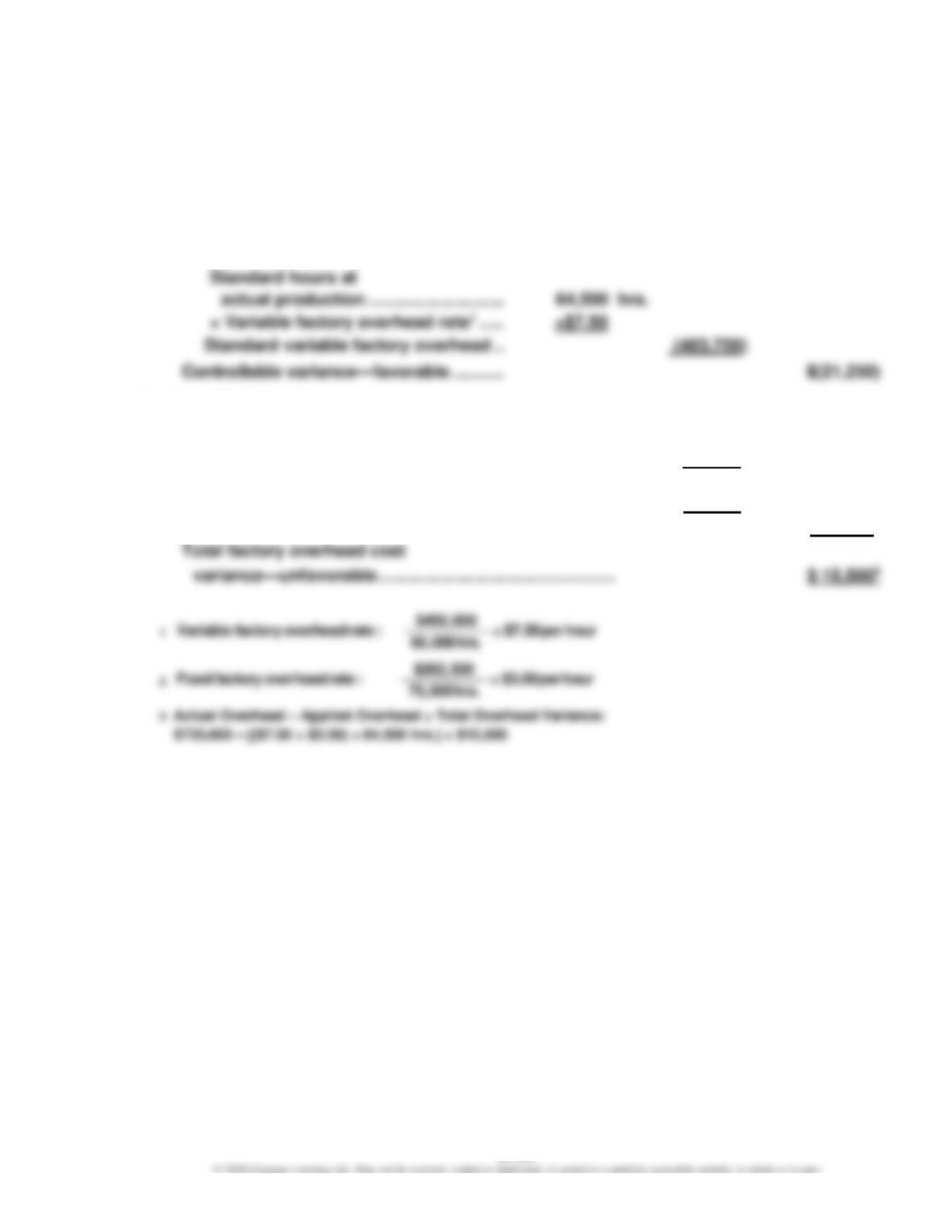
Controllable variance:
Actual variable factory overhead
($725,000 – $262,500) ……………………….
$ 462,500
Standard variable factory overhead
at actual production:
64,500 hrs.
b.
Volume variance:
Volume at 100% of normal capacity …………………………
75,000
hrs.
Less standard hours ………………………………………………
(64,500)
hrs.
Idle capacity …………………………………………………………..
10,500
hrs.
× Fixed overhead rate2 ……………………………………………
× $3.50
Volume variance—unfavorable ……………………………….
36,750
Total factory overhead cost
CHAPTER 23 (FIN MAN); CHAPTER 9 (MAN) Evaluating Variances from Standard Costs
Ex. 23–16 (FIN MAN); Ex. 9–16 (MAN) (Concluded)
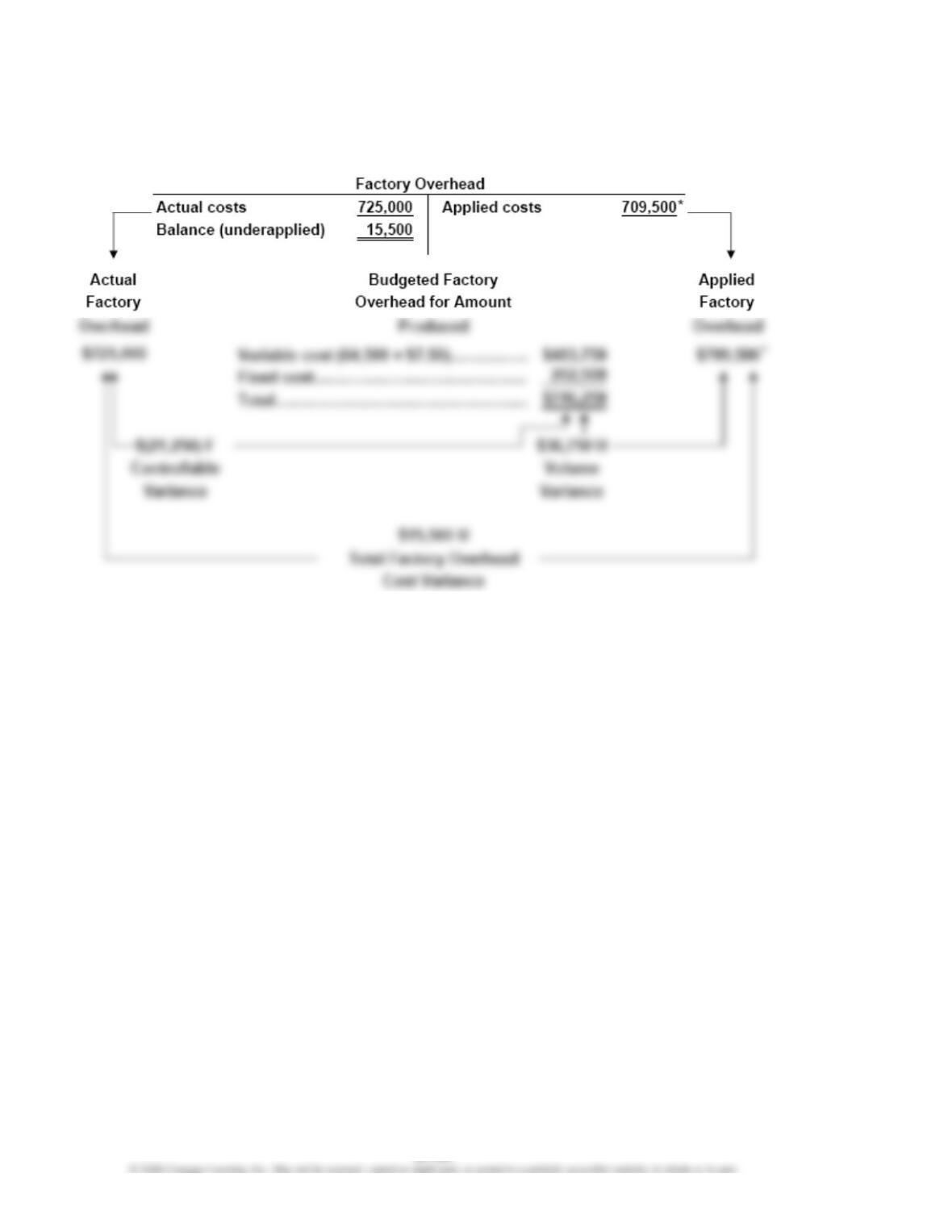
Alternative Computation of Overhead Variances
* [($7.50 + $3.50) × 64,500]
CHAPTER 23 (FIN MAN); CHAPTER 9 (MAN) Evaluating Variances from Standard Costs
Ex. 23–17 (FIN MAN); Ex. 9–17 (MAN)
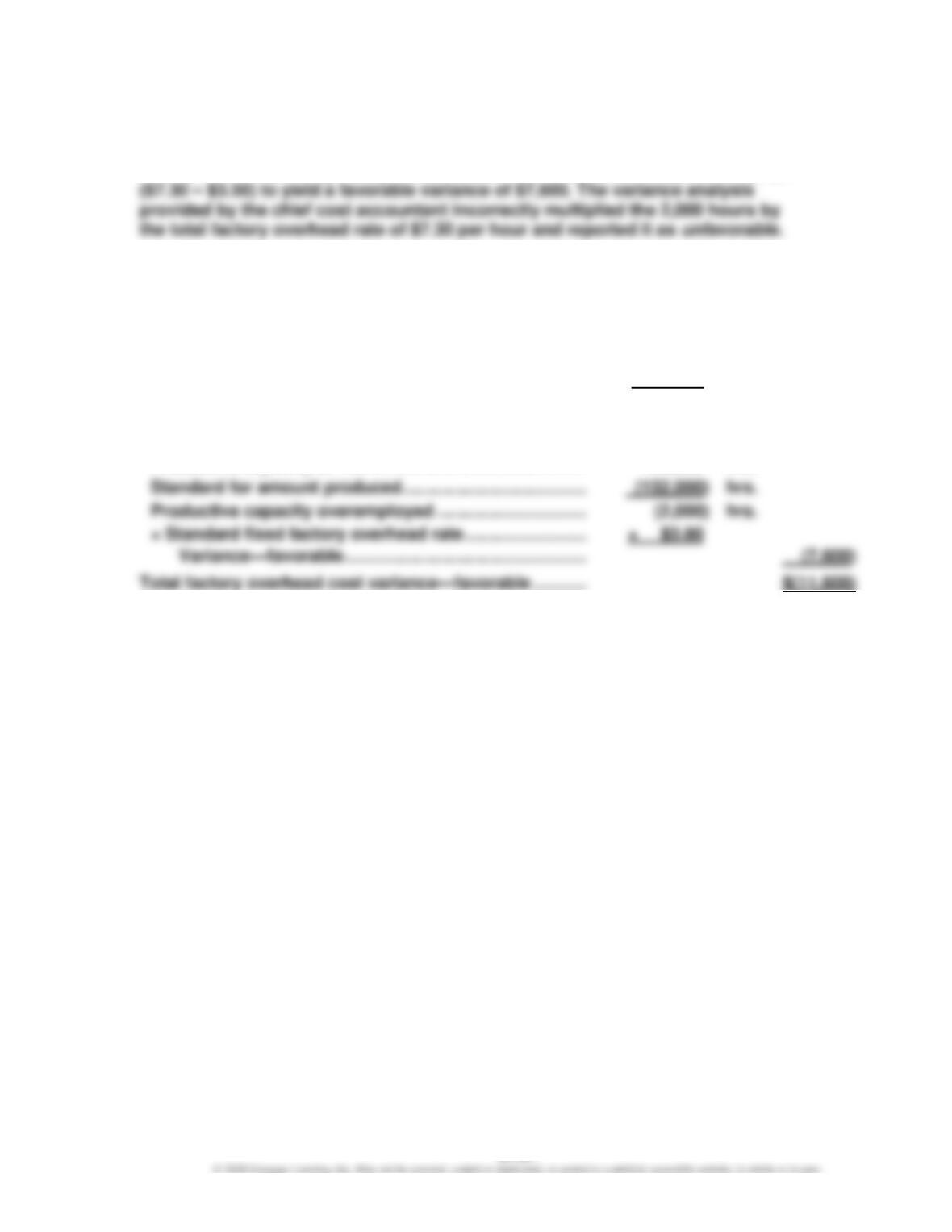
In determining the volume variance, the productive capacity overemployed (2,000
hours) should be multiplied by the standard fixed factory overhead rate of $3.80
A correct determination of the factory overhead cost variances is as follows:
Variable factory overhead controllable variance:
Actual variable factory overhead cost incurred …………
$ 458,000
Budgeted variable factory overhead for 132,000
hours (132,000 × $3.50) …………………………………………
(462,000)
Variance—favorable …………………………………………..
$ (4,000)
Fixed factory overhead volume variance:
Productive capacity at 100% ……………………………………
130,000
hrs.
× Standard fixed factory overhead rate …………………….
× $3.80
CHAPTER 23 (FIN MAN); CHAPTER 9 (MAN) Evaluating Variances from Standard Costs
Ex. 23–17 (FIN MAN); Ex. 9–17 (MAN) (Concluded)
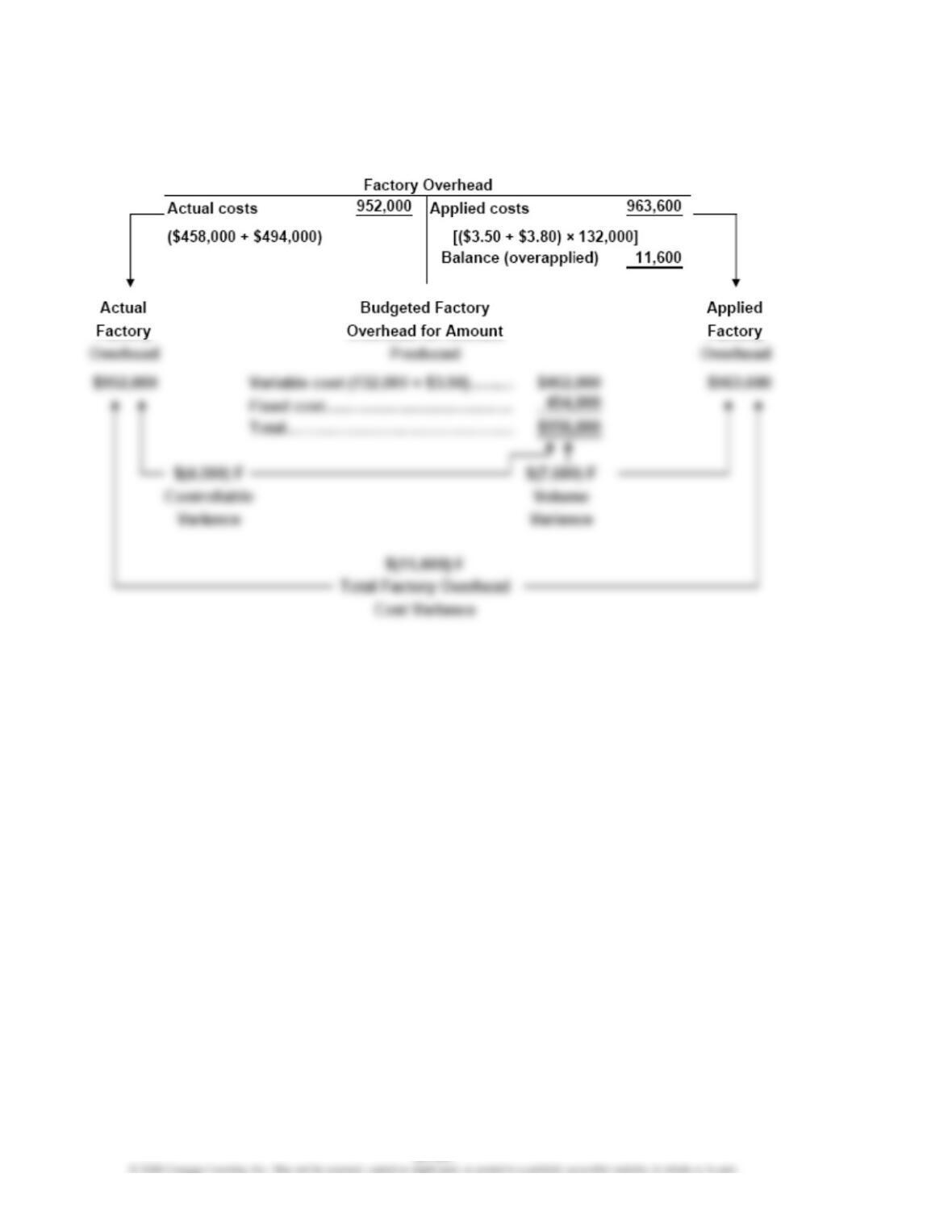
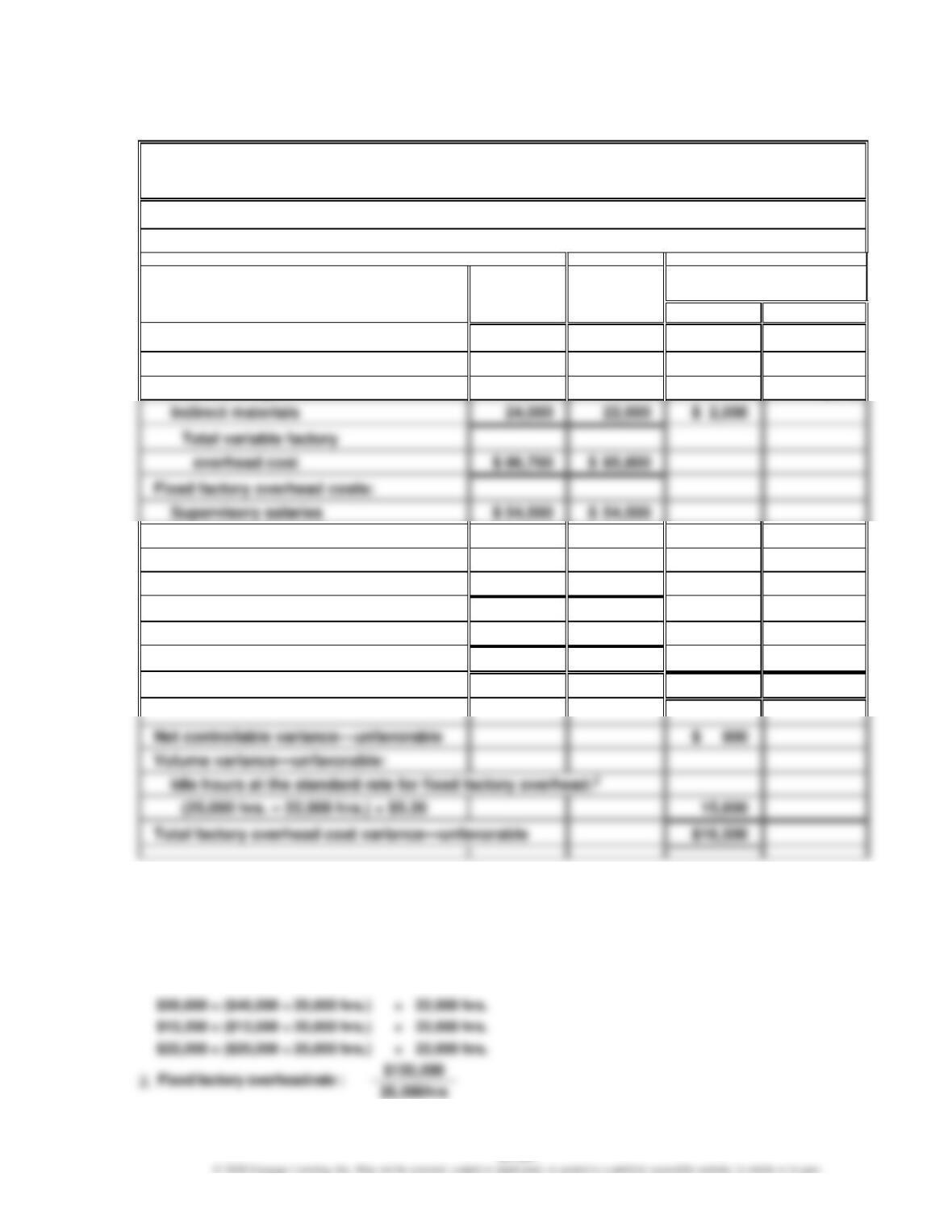
Alternative Computation of Overhead Variances
CHAPTER 23 (FIN MAN); CHAPTER 9 (MAN) Evaluating Variances from Standard Costs
Ex. 23–18 (FIN MAN); Ex. 9–18 (MAN)
Tannin Products Inc.
Factory Overhead Cost Variance Report—Trim Department
For the Month Ended July 31
Productive capacity for the month
25,000 hrs.
Actual productive capacity used for the month
22,000 hrs.
Actual
Cost
Budget
(at Actual
Production)
Variances
Unfavorable
(Favorable)
Variable factory overhead costs:1
Indirect factory labor
$ 49,700
$ 50,600
$ (900)
Power and light
13,000
13,200
(200)
Indirect materials
24,000
22,000
$ 2,000
Total variable factory
Fixed factory overhead costs:
Supervisory salaries
Depreciation of plant and
equipment
40,000
40,000
Insurance and property taxes
35,500
35,500
Total fixed factory
overhead cost
$130,000
$130,000
Total factory overhead cost
$216,700
$215,800
Total controllable variances
$ 2,000
$(1,100)
Net controllable variance—unfavorable
Volume variance—unfavorable:
(25,000 hrs. – 22,000 hrs.) × $5.20
1
The budgeted variable factory overhead costs are determined by multiplying
22,000 hours by the variable factory overhead cost rate for each variable cost
category. These rates are determined by dividing each budgeted amount
(estimated at the beginning of the month) by the planned (budgeted) volume
of 20,000 hours. Thus, for example:
$50,600 = ($46,000 ÷ 20,000 hrs.)
22,000 hrs.
$13,200 = ($12,000 ÷ 20,000 hrs.)
22,000 hrs.
$22,000 = ($20,000 ÷ 20,000 hrs.)
22,000 hrs.
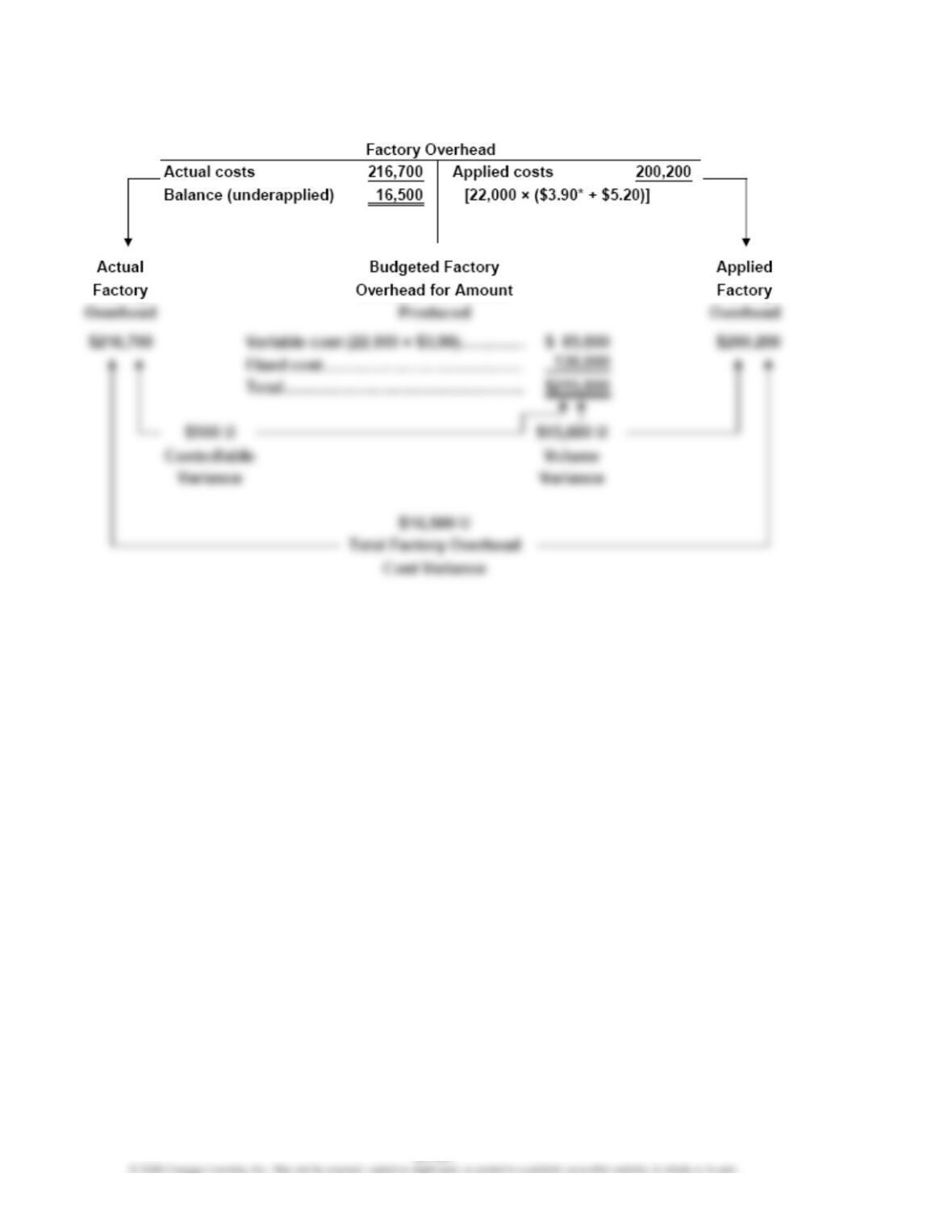
Ex. 23–18 (FIN MAN); Ex. 9–18 (MAN) (Concluded)
CHAPTER 23 (FIN MAN); CHAPTER 9 (MAN) Evaluating Variances from Standard Costs
Alternative Computation of Overhead Variances
*$78,000 ÷ 20,000 hours budgeted at the beginning of the month
CHAPTER 23 (FIN MAN); CHAPTER 9 (MAN) Evaluating Variances from Standard Costs
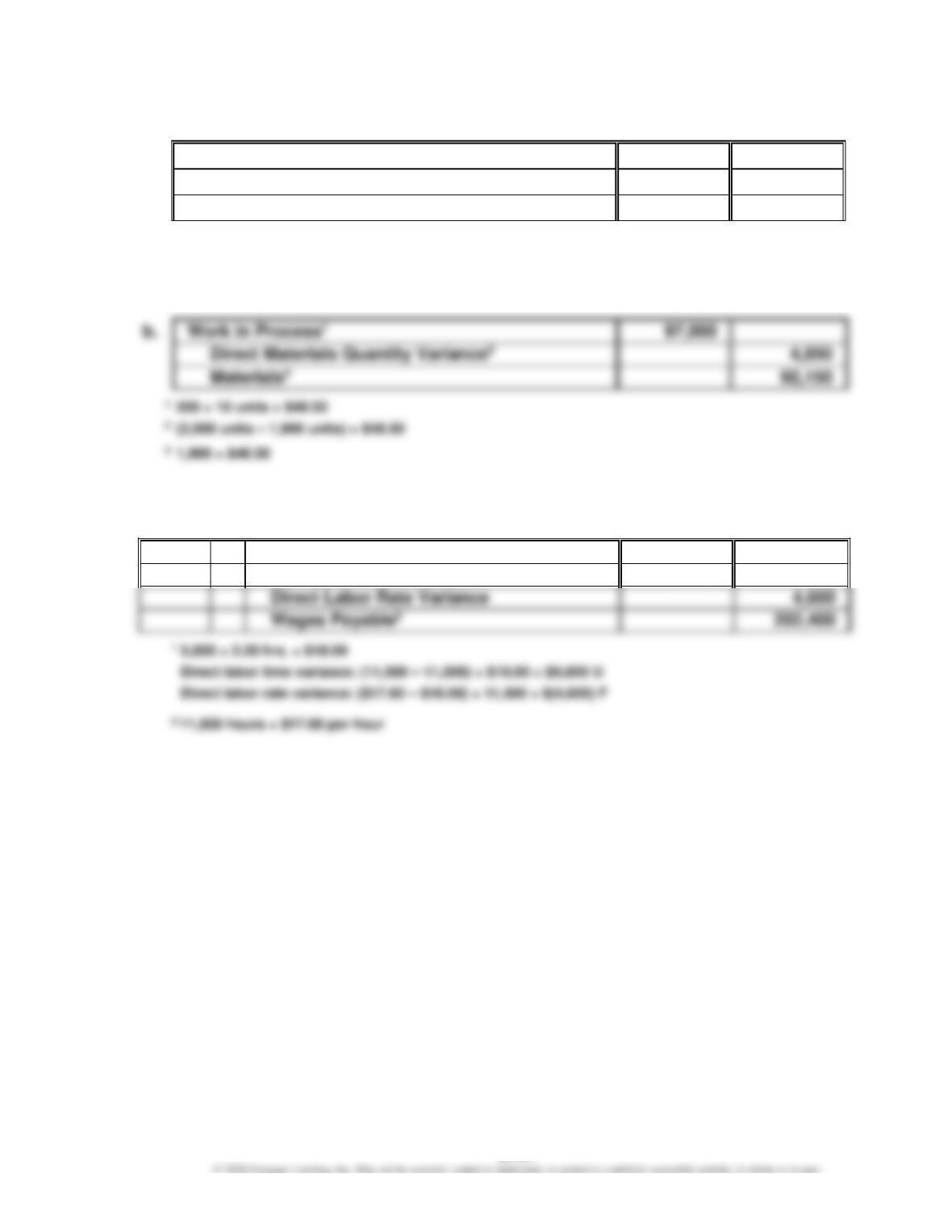
Ex. 23–19 (FIN MAN); Ex. 9–19 (MAN)
a.
Materials1
118,825
Direct Materials Price Variance2
8,575
Accounts Payable3
127,400
1
2,450 × $48.50
2
2,450 × $3.50 ($52.00 – $48.50)
3
2,450 × $52.00
200 × 10 units × $48.50
Ex. 23–20 (FIN MAN); Ex. 9–20 (MAN)
Mar.
31
Work in Process1
198,000
Direct Labor Time Variance
9,000
CHAPTER 23 (FIN MAN); CHAPTER 9 (MAN) Evaluating Variances from Standard Costs
Ex. 23–21 (FIN MAN); Ex. 9–21 (MAN)
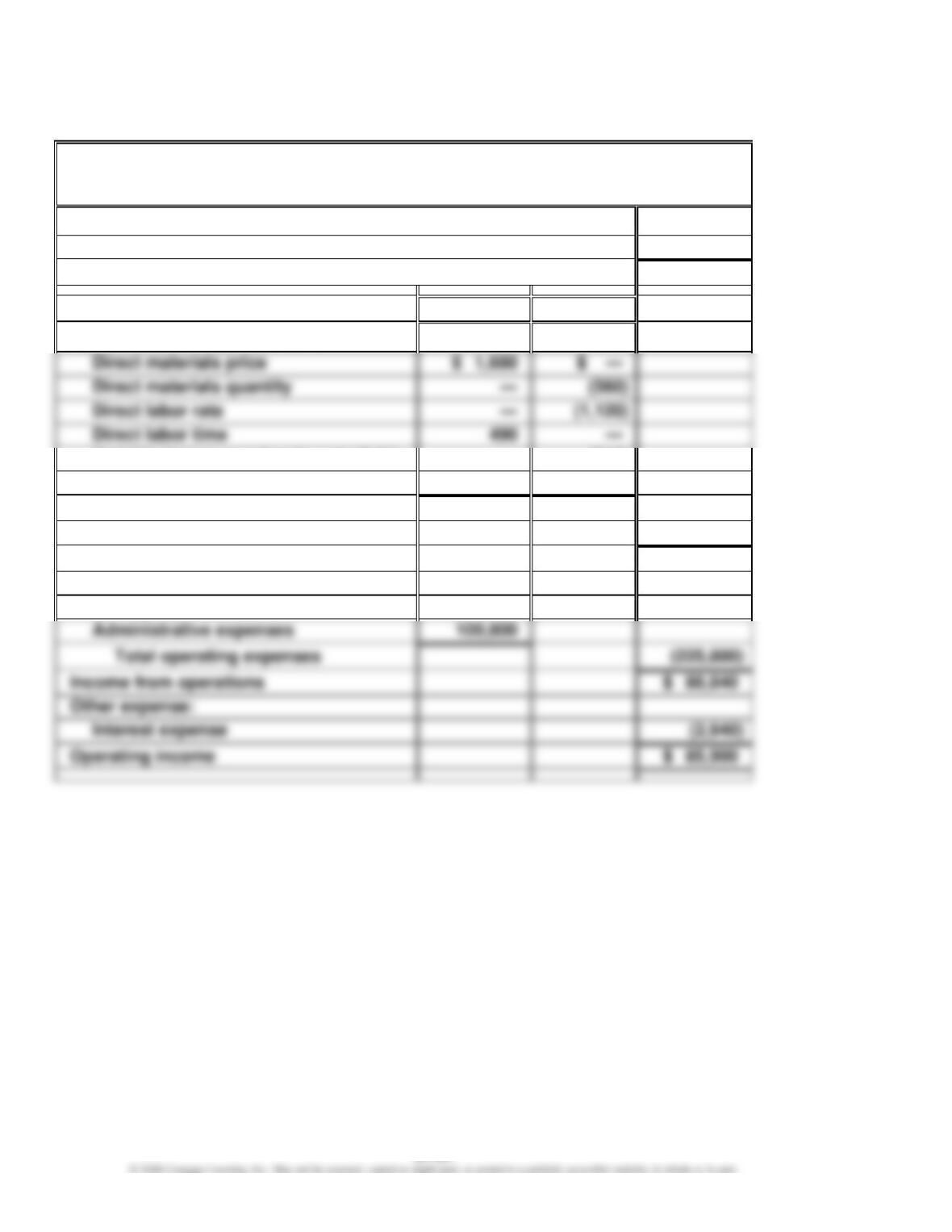
Griggs Company
Income Statement
For the Month Ended December 31
Sales
$ 868,000
Cost of goods sold—at standard
(550,000)
Gross profit—at standard
$ 318,000
Unfavorable
Favorable
Variances from standard cost:
Direct materials price
Direct materials quantity
—
(560)
Direct labor rate
—
Direct labor time
—
Variable factory overhead controllable
—
(210)
Fixed factory overhead volume
3,080
—
Net variance from standard cost—
unfavorable
(3,360)
Gross profit
$ 314,640
Operating expenses:
Selling expenses
$125,000
Administrative expenses
Total operating expenses
Income from operations
Other expense:
Interest expense
(2,940)
CHAPTER 23 (FIN MAN); CHAPTER 9 (MAN) Evaluating Variances from Standard Costs
Appendix Ex. 23–22 (FIN MAN); Ex. 9–22 (MAN)
a.
Revenue Price Variance
=
(Planned Selling Price – Actual Selling Price)
× Actual Units Sold
=
($150 – $144) × 12,900 units
=
77,400 Unfavorable
(Planned Units Sold – Actual Units Sold)
× Planned Selling Price
Appendix Ex. 23–23 (FIN MAN); Ex. 9–23 (MAN)
a.
Revenue Price Variance
=
(Planned Selling Price – Actual Selling Price)
× Actual Units Sold
=
($5.80 – $6.00) × 805,000 units
=
$(161,000) Favorable
(Planned Units Sold – Actual Units Sold)
× Planned Selling Price
=
$(161,000) + $87,000
CHAPTER 23 (FIN MAN); CHAPTER 9 (MAN) Evaluating Variances from Standard Costs
Appendix Ex. 23–24 (FIN MAN); Ex. 9–24 (MAN)
a.
$12, computed as follows:
(Planned Selling Price – Actual Selling Price)
=
Revenue Price Variance
× Actual Units Sold
(Planned Selling Price – Actual Selling Price)
=
$(350,000)
× 175,000 units
b.
180,000 units, computed as follows:
(Planned Units to Be Sold – Actual Units Sold)
=
Revenue Volume Variance
× Planned Selling Price
(Planned Units to Be Sold – 175,000 units ) × $10
=
$50,000
CHAPTER 23 (FIN MAN); CHAPTER 9 (MAN) Evaluating Variances from Standard Costs
Appendix Ex. 23–25 (FIN MAN); Ex. 9–25 (MAN)
a.
Normal Revenue
=
Normal Selling Price × Normal Units Sold
=
$20 × 125,000 units
=
$2,500,000
c.
Actual Revenue for Nov.
=
Actual Selling Price × Actual Units Sold
=
$19 × 135,000 units
=
$2,565,000
=
($19 – $19) × 135,000 units
=
(Planned Units Sold – Actual Units Sold)
=
(145,000 units – 135,000 units) × $19
f. Decreasing the selling price to $19 did increase total revenue to $2,565,000 from
$2,500,000, but it did not increase the revenues by 16% as planned. Instead,
revenues only increased by $65,000 ($2,565,000 – $2,500,000) or 2.6% ($65,000 ÷
$2,500,000). This resulted in an unfavorable revenue volume variance of $190,000.
CHAPTER 23 (FIN MAN); CHAPTER 9 (MAN) Evaluating Variances from Standard Costs
PROBLEMS
Prob. 23–1A (FIN MAN); Prob. 9–1A (MAN)
a.
Standard
Materials and
Labor Cost
per Faucet
Direct materials ($1.80 × 2.5 lbs.) ……………………………………………………………..
$ 4.50
Direct labor [$20.00 × (30 min. ÷ 60 min.)] …………………………………………………
10.00
$14.50
b.
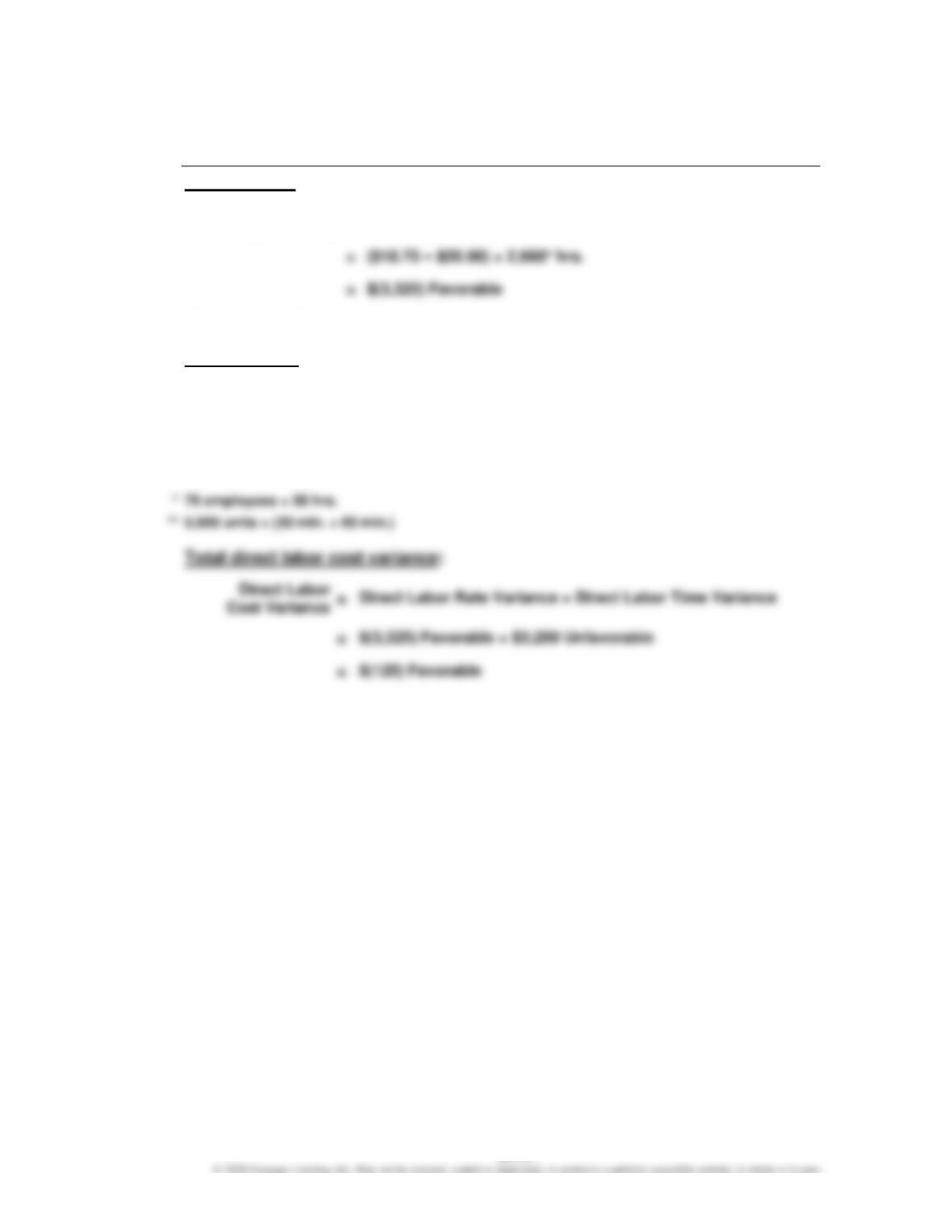
Direct Materials Cost Variance
Price variance:
Direct Materials
Price Variance
=
(Actual Price – Standard Price) × Actual Quantity
Quantity variance:
Direct Materials
=
(Actual Quantity – Standard Quantity) × Standard Price
Quantity Variance
=
(13,000 lbs. – 12,500 lbs.*) × $1.80 per lb.
=
$900 Unfavorable
Direct Materials
$2,850 Unfavorable
CHAPTER 23 (FIN MAN); CHAPTER 9 (MAN) Evaluating Variances from Standard Costs
Prob. 23–1A (FIN MAN); Prob. 9–1A (MAN) (Concluded)
c.
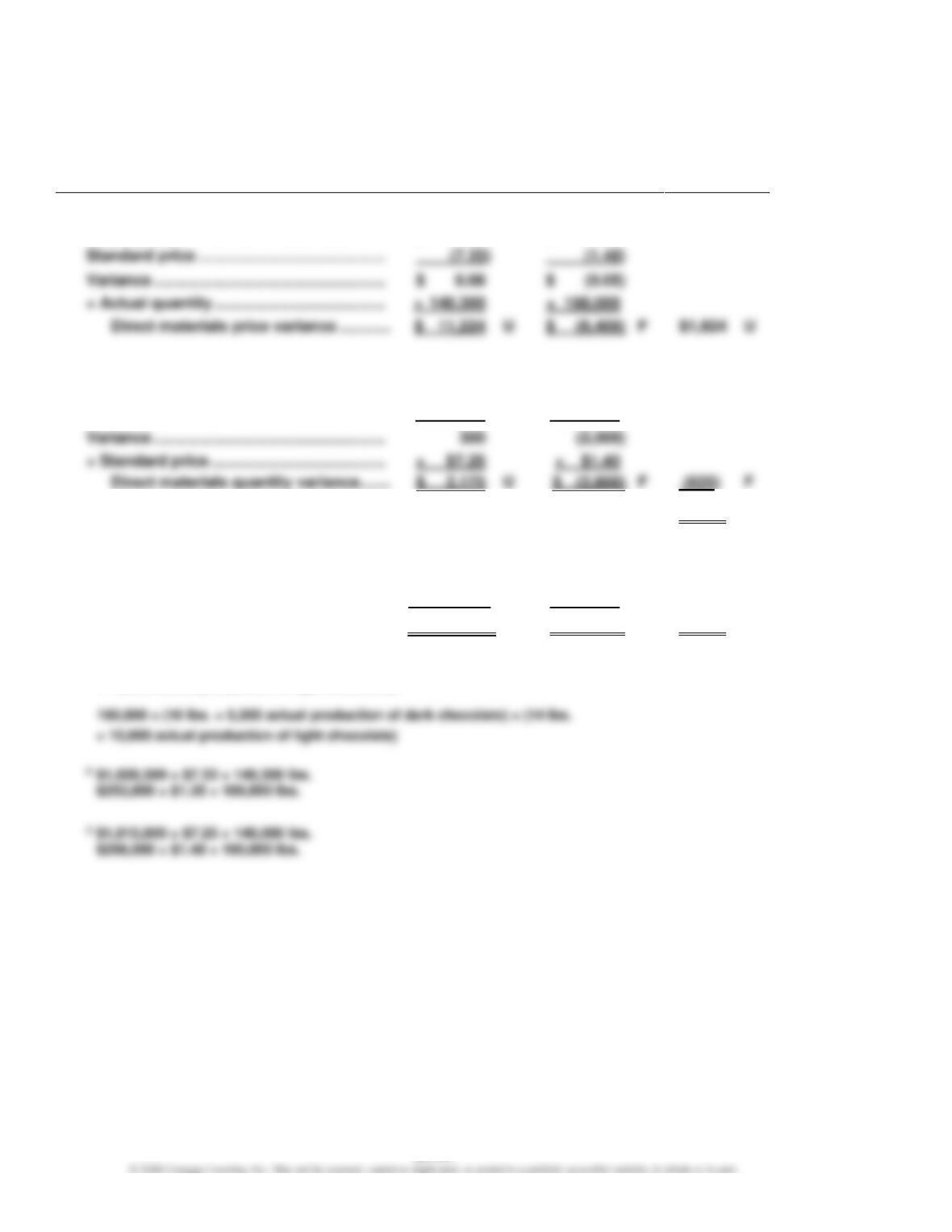
Direct Labor Cost Variance
Rate variance:
Direct Labor
=
(Actual Rate per Hour – Standard Rate per Hour)
Rate Variance
× Actual Hours
=
*
70 employees × 38 hrs.
Time variance:
Direct Labor
=
(Actual Direct Labor Hours – Standard Direct Labor Hours)
Time Variance
× Standard Rate per Hour
=
(2,660 hrs.* – 2,500 hrs.**) × $20.00 per hour
=
$3,200 Unfavorable
CHAPTER 23 (FIN MAN); CHAPTER 9 (MAN) Evaluating Variances from Standard Costs
Prob. 23–2A (FIN MAN); Prob. 9–2A (MAN)
1. a.
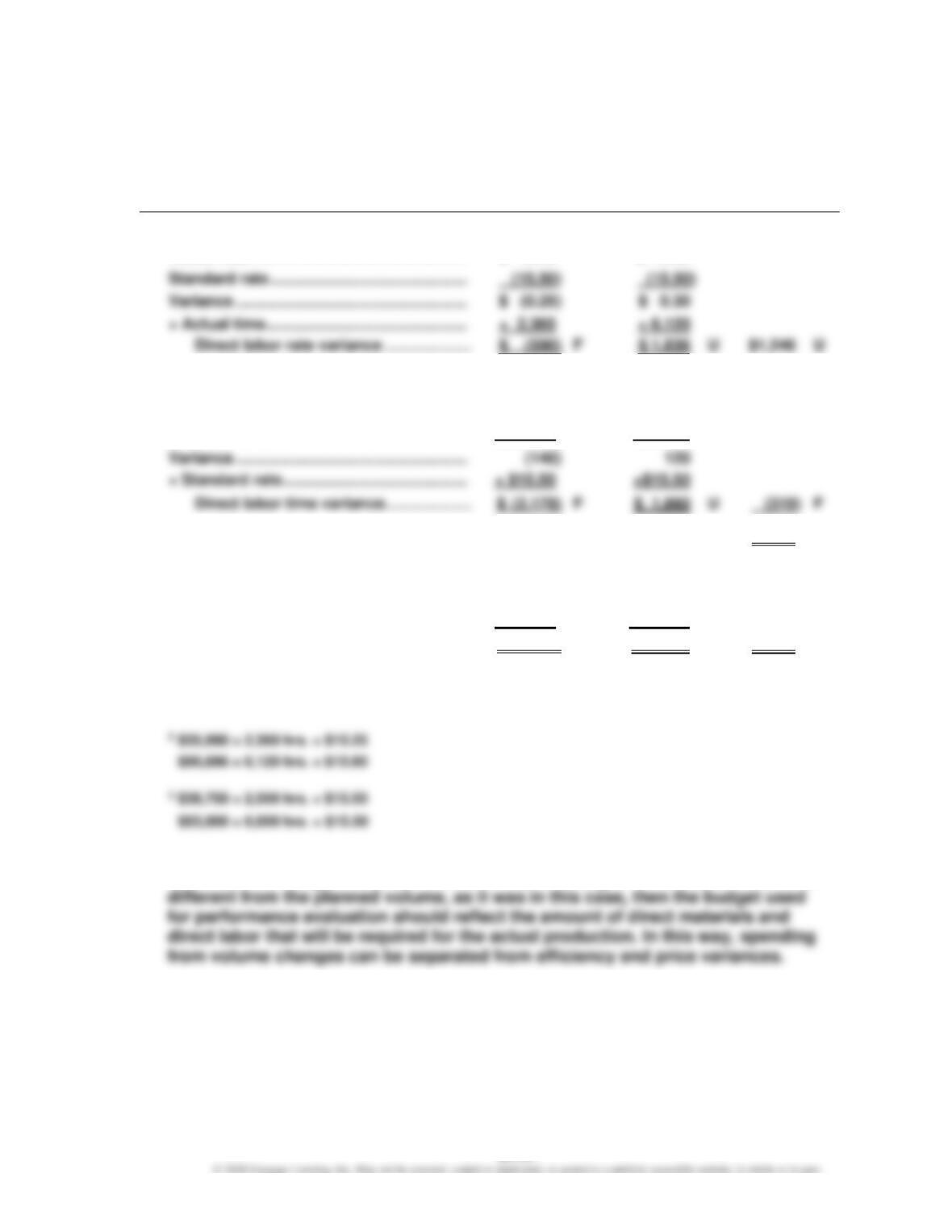
Direct Materials Variance
Cocoa
Sugar
Total
Price variance:
Actual price ………………………………………….
$ 7.33
$ 1.35
× Actual quantity ………………………………….
Quantity variance:
Actual quantity used …………………………….
140,300
188,000
Standard quantity1 ……………………………….
(140,000)
(190,000)
× Standard price …………………………………..
Total direct materials cost variance ……………..
$1,199
U
Alternatively, total direct materials cost variance:
Actual cost 2 ………………………………………..
$ 1,028,399
$ 253,800
Standard cost 3 …………………………………….
(1,015,000)
(266,000)
Total direct materials cost variance ….
$ 13,399
U
$ (12,200)
F
$1,199
U
1
140,000 = (12 lbs. × 5,000 actual production of dark chocolate) + (8 lbs.
× 10,000 actual production of light chocolate)
CHAPTER 23 (FIN MAN); CHAPTER 9 (MAN) Evaluating Variances from Standard Costs
Prob. 23–2A (FIN MAN); Prob. 9–2A (MAN) (Concluded)
1. b.
Direct Labor Variance
Dark
Chocolate
Light
Chocolate
Total
Rate variance:
× Actual time…………………………..……………
Actual rate …………………………………………..
$ 15.25
$ 15.80
Time variance:
Actual time …………………………………………..
2,360
6,120
Standard time 1 …………………………………….
(2,500)
(6,000)
Variance ………………………………………………
× Standard rate …………………………………….
× $15.50
Total direct labor cost variance ……………………
$ 936
U
Alternatively, total direct labor cost variance:
Actual cost 2 ………………………………………..
$ 35,990
$ 96,696
Standard cost 3 …………………………………….
(38,750)
(93,000)
Total direct labor cost variance ……….
$ (2,760)
F
$ 3,696
U
$ 936
U
1
2,500 = 0.50 hr. × 5,000 actual production of dark chocolate
6,000 = 0.60 hr. × 10,000 actual production of light chocolate
2. The variance analyses should be based on the standard amounts at actual
volumes. The budget must flex with the volume changes. If the actual volume is
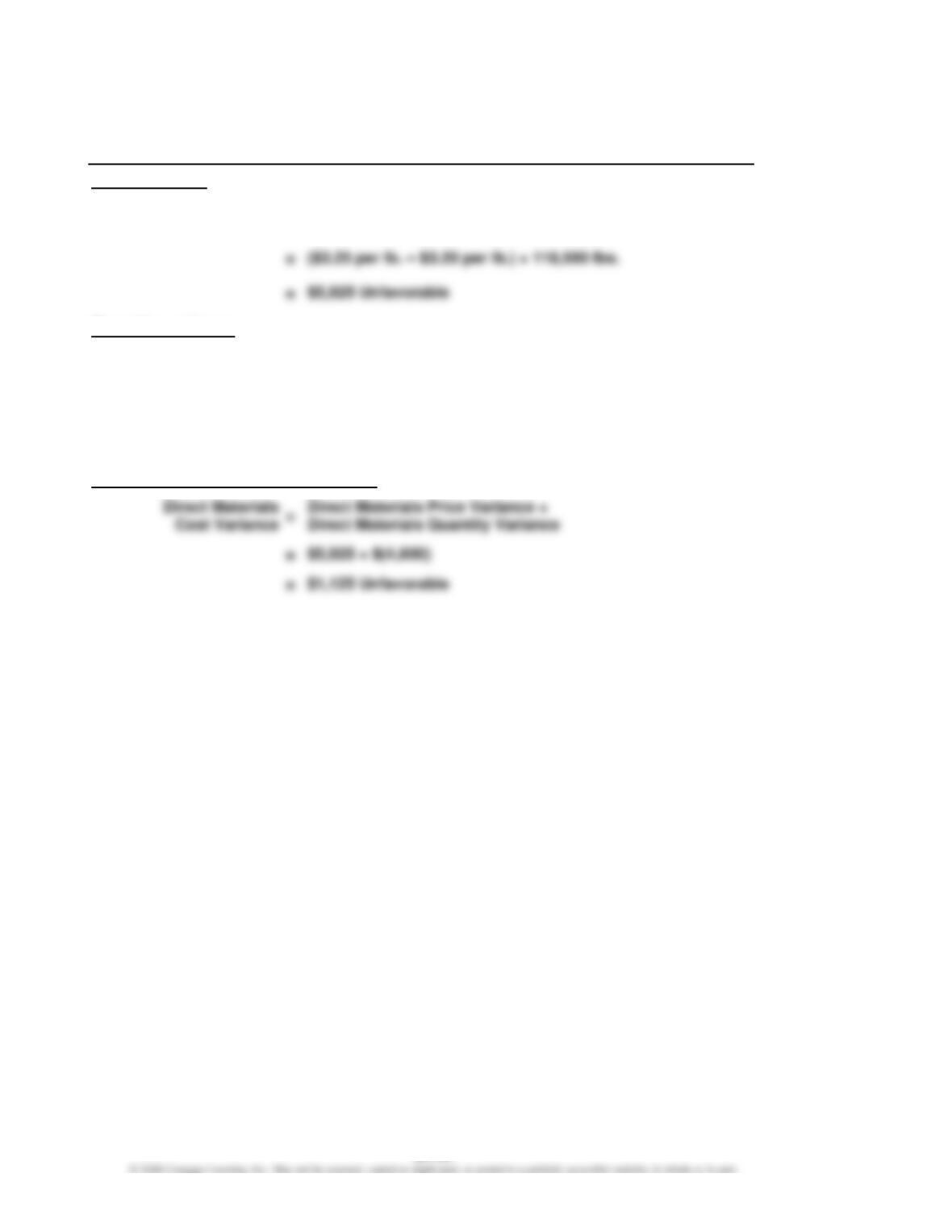
CHAPTER 23 (FIN MAN); CHAPTER 9 (MAN) Evaluating Variances from Standard Costs
Prob. 23–3A (FIN MAN); Prob. 9–3A (MAN)
a.
Direct Materials Cost Variance
Price variance:
Direct Materials
=
(Actual Price – Standard Price) × Actual Quantity
Price Variance
=
($3.25 per lb. – $3.20 per lb.) × 118,500 lbs.
$5,925 Unfavorable
Quantity variance:
Direct Materials
=
(Actual Quantity – Standard Quantity) × Standard Price
Quantity Variance
=
(118,500 lbs. – 120,000 lbs.) × $3.20 per lb.
=
$(4,800) Favorable
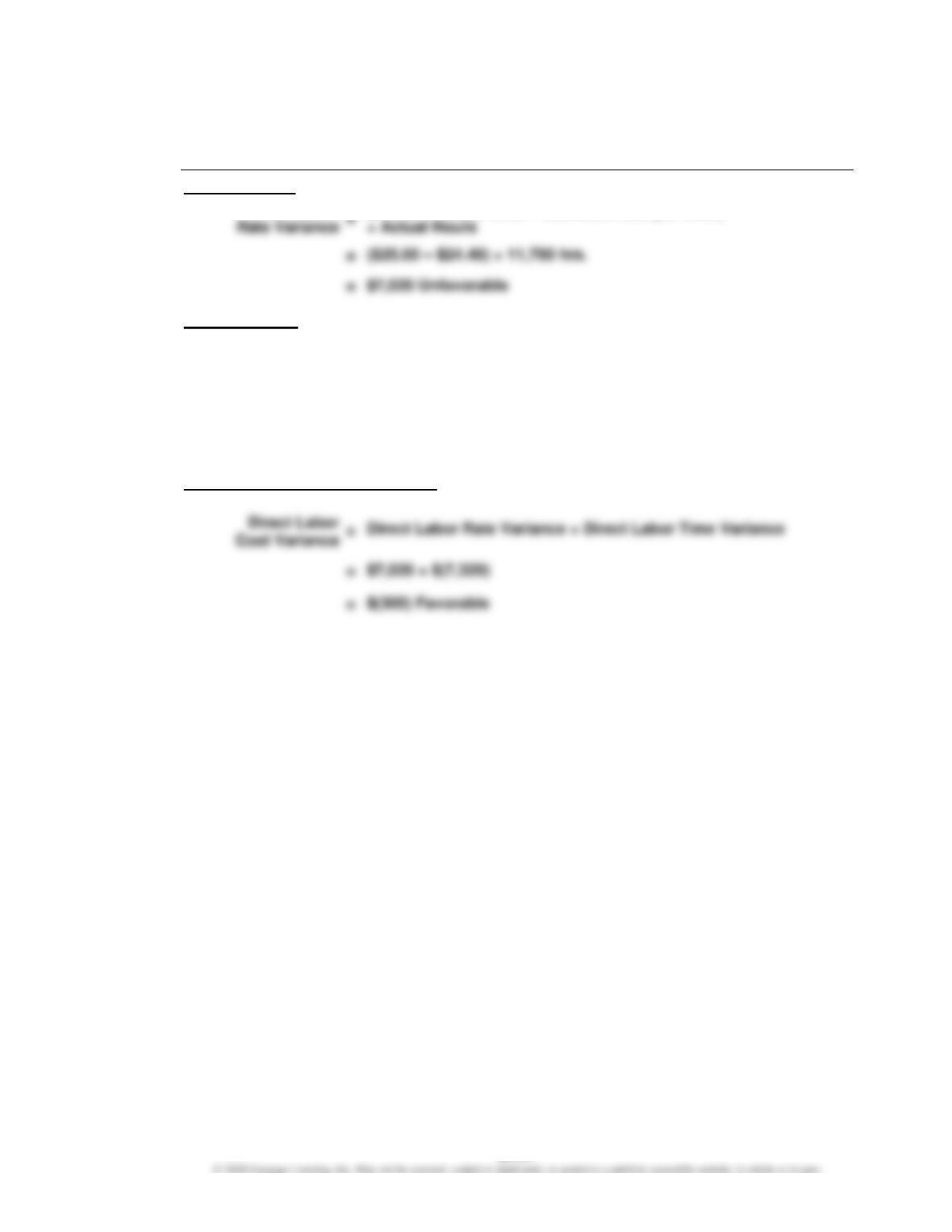
Total direct materials cost variance:
Direct Materials
CHAPTER 23 (FIN MAN); CHAPTER 9 (MAN) Evaluating Variances from Standard Costs
Prob. 23–3A (FIN MAN); Prob. 9–3A (MAN) (Continued)
b.
Direct Labor Cost Variance
Rate variance:
Direct Labor
=
$7,020 Unfavorable
(Actual Rate per Hour – Standard Rate per Hour)
Time variance:
Direct Labor
=
(Actual Direct Labor Hours – Standard Direct Labor Hours)
Time Variance
× Standard Rate per Hour
=
(11,700 hrs. – 12,000 hrs.) × $24.40 per hour
=
$(7,320) Favorable
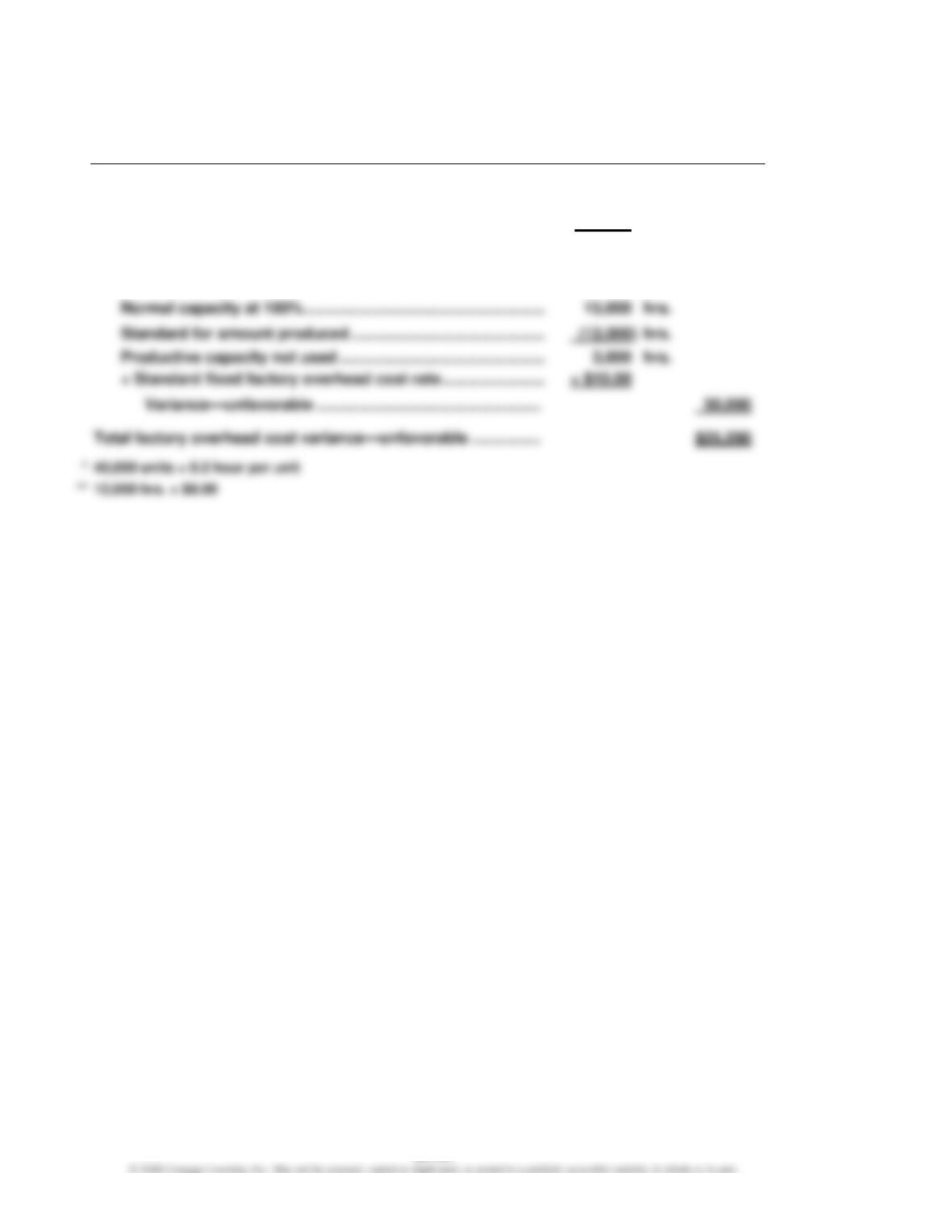
Total direct labor cost variance:
Direct Labor
CHAPTER 23 (FIN MAN); CHAPTER 9 (MAN) Evaluating Variances from Standard Costs
Prob. 23–3A (FIN MAN); Prob. 9–3A (MAN) (Continued)
c.
Factory Overhead Cost Variance
Variable factory overhead controllable variance:
Actual variable factory overhead cost incurred ………………
$ 91,200
Budgeted variable factory overhead for 12,000 hrs.* ………
(96,000)
**
Variance—favorable …………………………………………………
$ (4,800)
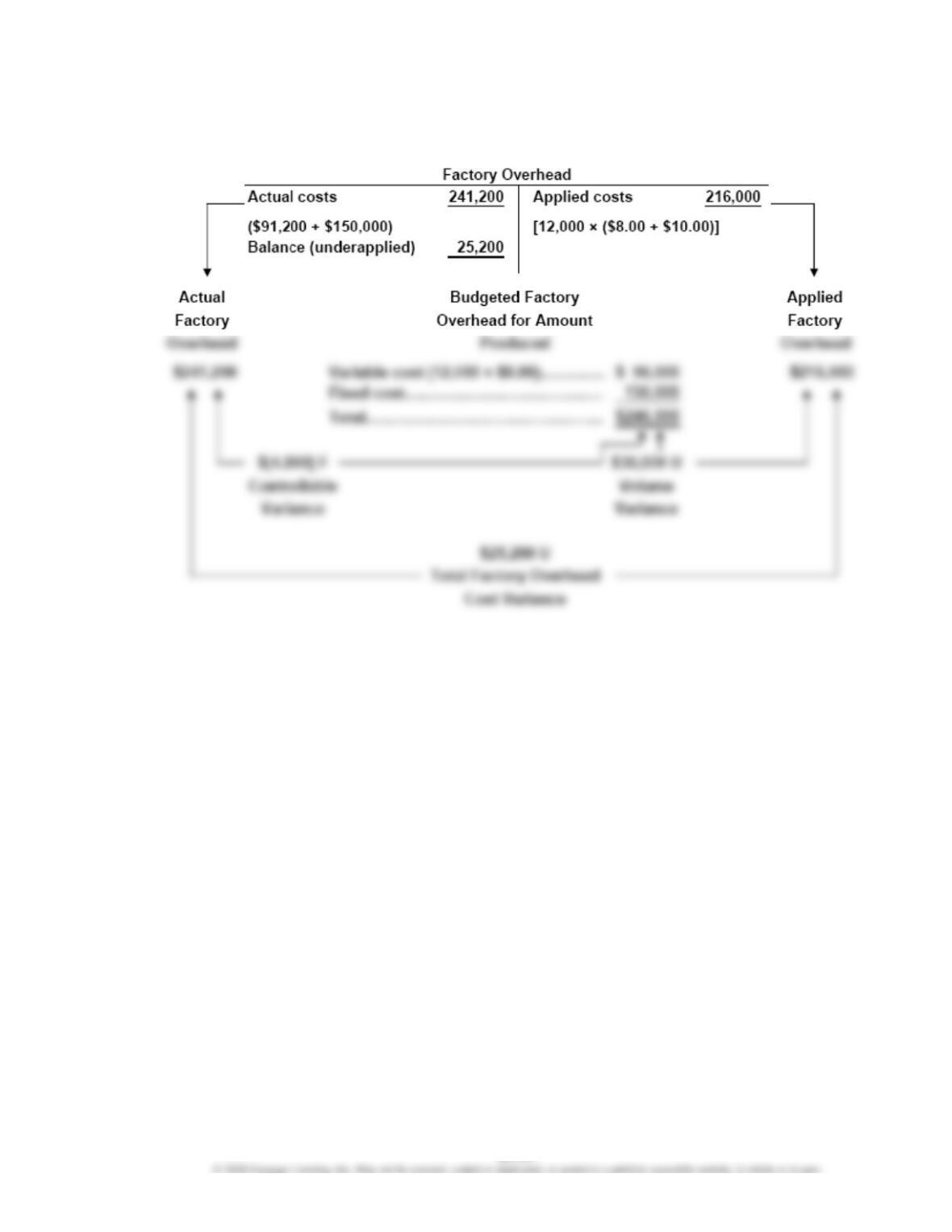
Fixed factory overhead volume variance:
Productive capacity not used …………………………………………
CHAPTER 23 (FIN MAN); CHAPTER 9 (MAN) Evaluating Variances from Standard Costs
Prob. 23–3A (FIN MAN); Prob. 9–3A (MAN) (Concluded)
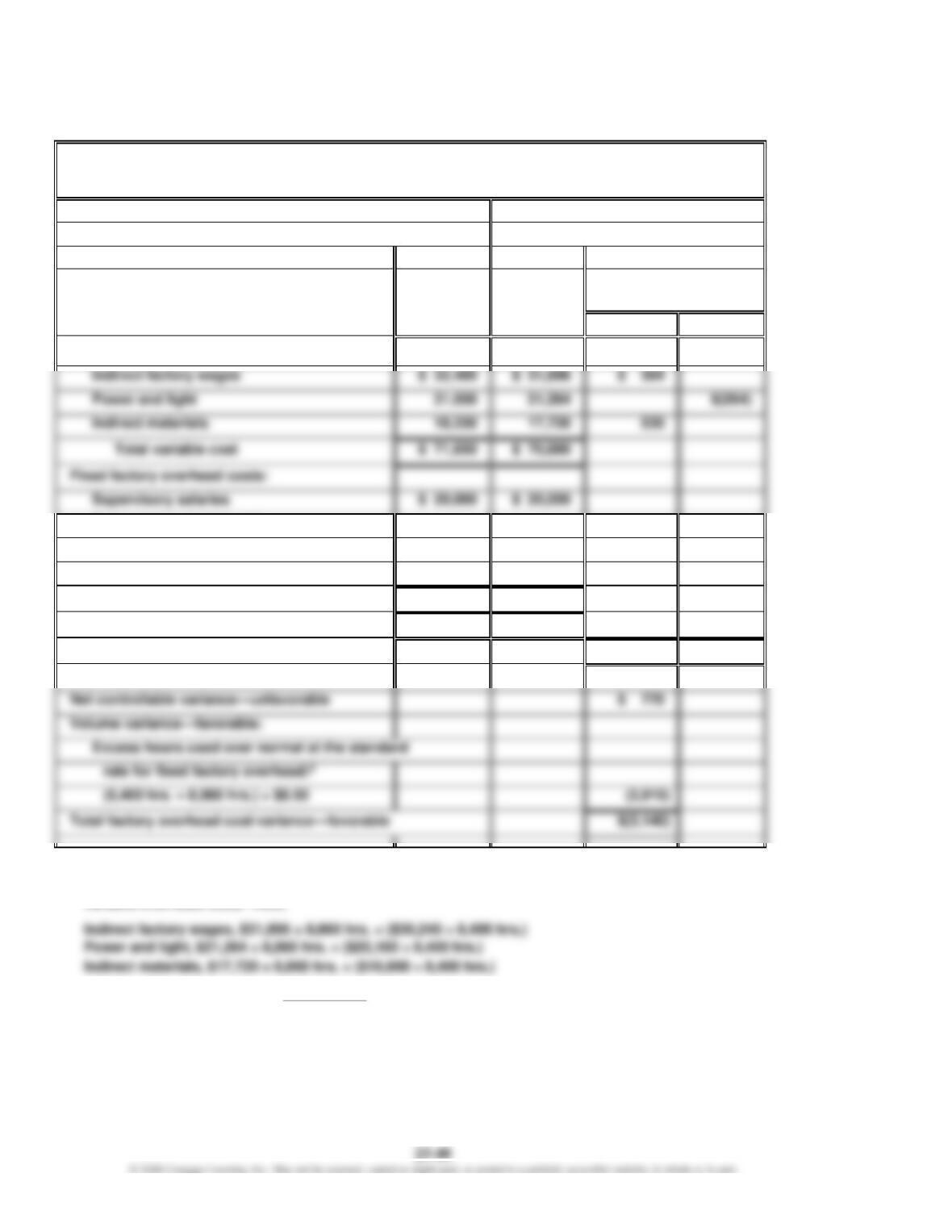
Alternative Computation of Overhead Variances
CHAPTER 23 (FIN MAN); CHAPTER 9 (MAN) Evaluating Variances from Standard Costs
Prob. 23–4A (FIN MAN); Prob. 9–4A (MAN)
Tiger Equipment Inc.
Factory Overhead Cost Variance Report—Welding Department
For the Month Ended May 31
Normal capacity for the month
8,400
hrs.
Actual production for the month
8,860
hrs.
Actual
Cost
Budget
(at Actual
Production)
Variances
Unfavorable
(Favorable)
Variable factory overhead costs:1
Power and light
21,000
21,264
$(264)
18,250
17,720
Fixed factory overhead costs:
Supervisory salaries
Depreciation of plant and
equipment
36,200
36,200
Insurance and property taxes
15,200
15,200
Total fixed cost
$ 71,400
$ 71,400
Total factory overhead cost
$143,050
$142,280
Total controllable variances
$ 1,034
$(264)
Net controllable variance—unfavorable
Volume variance—favorable:
1
The budgeted variable costs are determined by multiplying the 8,860 actual hours
by the variable overhead rate (the May budget divided by 8,400 hours for each
Indirect factory wages, $31,896 = 8,860 hrs. × ($30,240 ÷ 8,400 hrs.)
2.
$71,400
Fixed factory overhead rate : = $8.50 per hr.
8,400 hrs.