
CHAPTER 9
Budgetary Planning
ASSIGNMENT CLASSIFICATION TABLE
Learning Objectives
Questions
Brief
Exercises
Do It!
Exercises
A
Problems
1. State the essentials of effective
budgeting and the components of
the master budget.
1, 2, 3, 4, 5,
6, 7, 8, 9,
10
1
1
1
2. Prepare budgets for sales,
production, and direct materials.
11, 12, 13
2, 3, 4,
2
2, 3, 4, 5, 6,
7, 8, 10
1A, 2A, 3A
3. Prepare budgets for direct labor,
manufacturing overhead, and
selling and administrative
expenses, and a budgeted
income statement.
14, 15, 16,
17, 18
5, 6, 7, 8
3
9, 10, 11,
12, 13
1A, 2A, 6A
4. Prepare a cash budget and a
budgeted balance sheet.
19, 20
9
4
14, 15, 16,
17, 18, 19
4A, 6A
5. Apply budgeting principles to
nonmanufacturing companies.
21, 22
10
5
19, 20, 21
5A
ASSIGNMENT CHARACTERISTICS TABLE
Problem
Number
Description
Difficulty
Level
Time
Allotted (min.)
1A
Prepare budgeted income statement and supporting
budgets.
Simple
30–40
2A
Prepare sales, production, direct materials, direct labor,
and income statement budgets.
Simple
40–50
3A
Prepare sales and production budgets and compute cost
per unit under two plans.
30–40
Prepare cash budget for two months.
merchandiser.
retained earnings and balance sheet.

BLOOM’ S TAXONOMY TABLE
Correlation Chart between Bloom’s Taxonomy, Learning Objectives and End–of-Chapter Exercises and Problems
Learning Objective
Knowledge
Comprehension
Application
Analysis
Synthesis
Evaluation
1. State the essentials of
effective budgeting and
the components of the
master budget.
DI9-1
Q9-1
Q9-2
Q9-3
Q9-4
Q9-5
Q9-6
Q9-7
Q9-8
Q9-9
Q9–10
E9-1
BE9-1
2. Prepare budgets for sales,
production, and direct
materials.
Q9–11
Q9–12
Q9–13
BE9-2
BE9-3
BE9-4
DI9-2
E9-2
E9-3
E9-4
E9-5
E9-6
E9-7
E9-8
E9–10
P9–1A
P9–2A
P9–3A
3. Prepare budgets for direct
labor, manufacturing
overhead, and selling and
administrative expenses,
and a budgeted income
statement.
Q9–14
Q9–15
Q9–16
Q9–18
Q9–17
BE9-5
BE9-6
BE9-7
BE9-8
DI9-3
E9-9
E9–10
E9–11
E9–12
E9–13
P9–1A
P9-2A
P9–6A
4. Prepare a cash budget and
a budgeted balance sheet.
Q9–19
Q9–20
BE9-9
DI9-4
E9–14
E9–15
E9–17
E9–18
E9–19
P9–4A
P9–6A
E9–16
5. Apply budgeting
principles to
nonmanufacturing
companies.
Q9–21
Q9–22
BE9-10
DI9-5
E9–19
E9–20
E9–21
P9–5A
Broadening Your Perspective
BYP9-2
BYP9-3
BYP9-4
BYP9-1
BYP9-5
BYP9-6
BYP9-7
ANSWERS TO QUESTIONS
1. (a) A budget is a formal written statement of management’s plans for a specified future time period,
expressed in financial terms.
2. The primary benefits of budgeting are:
(1) It requires all levels of management to plan ahead and to formalize goals on a recurring basis.
(2) It provides definite objectives for evaluating performance at each level of responsibility.
3. The essentials of effective budgeting are: (1) a sound organizational structure, (2) research and
analysis, and (3) acceptance by all levels of management.
4. (a) Disagree. Accounting information makes major contributions to the budgeting process. Accounting
provides the starting point of budgeting by providing historical data on revenues, costs, and
5. The budget period should be long enough to provide an attainable goal under normal business
conditions. The budget period should minimize the impact of seasonal and cyclical business
fluctuations, but it should not be so long that reliable estimates are impossible. The most common
budget period is one year.
6. Disagree. Long-range planning usually encompasses a period of at least five years. It involves
the selection of strategies to achieve long-term goals and the development of policies and plans to
be able to provide better budgetary estimates. In addition, by involving lower-level managers in
the process, it is more likely that they will perceive the budget as being fair and reasonable. One
disadvantage of participative budgeting is that it takes more time, and thus costs more. Another
disadvantage of participative budgeting is that it may enable managers to game the system
through such practices as budgetary slack.
Questions Chapter 9 (Continued)
8. Budgetary slack is the amount by which a manager intentionally underestimates budgeted
revenues or overestimates budgeted expenses in order to make it easier to achieve budgetary
goals. Managers may have an incentive to create budgetary slack in order to increase the likelihood of
receiving a bonus, or decrease the likelihood of losing their job.
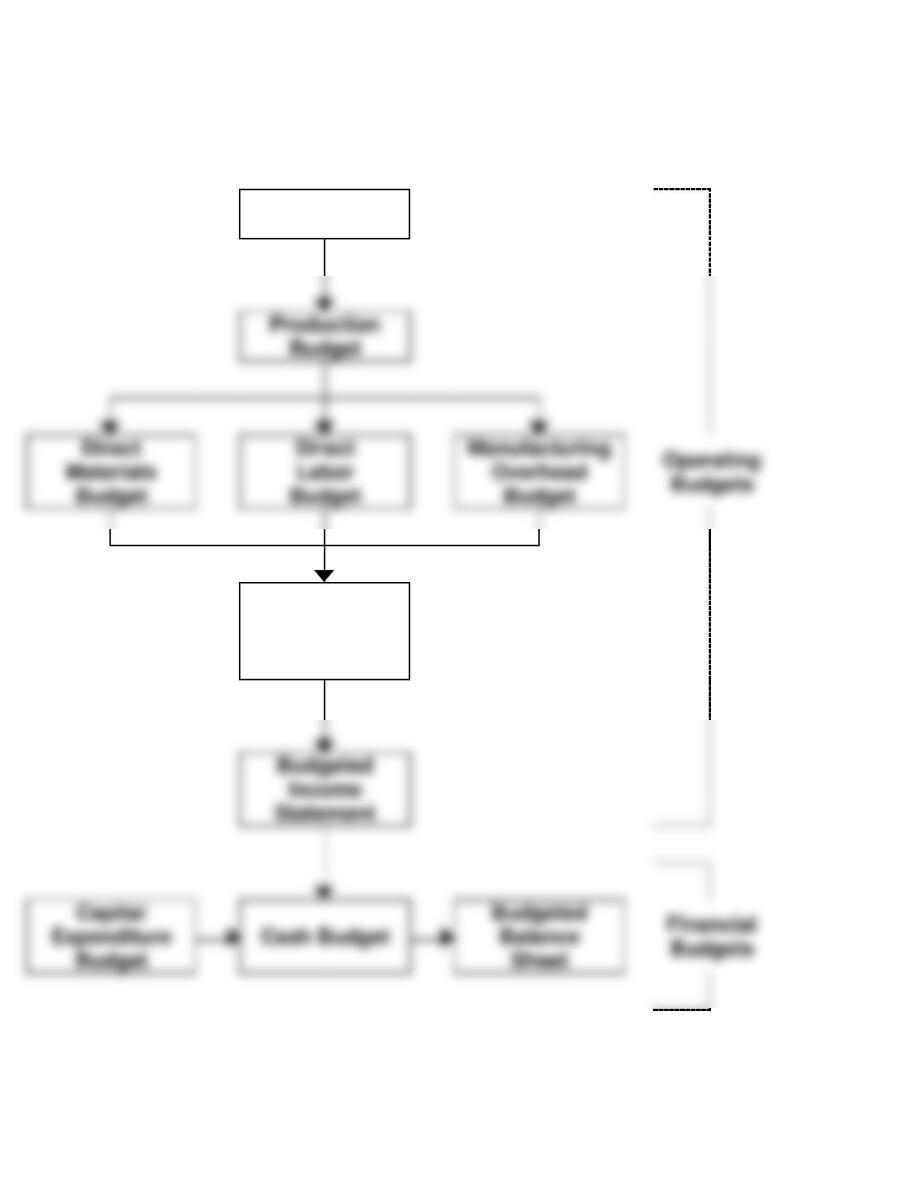
9. A master budget is a set of interrelated budgets that constitutes a plan of action for a specified
time period. The master budget is developed within the framework of a sales forecast.
10. The sales budget is the starting point in preparing the master budget. An inaccurate sales budget
may adversely affect net income. An overly optimistic sales budget may result in excessive
inventories and a very conservative sales budget may lead to inventory shortages.
16. The first quarter budgeted selling and administrative expenses are $74,000 [(12% X $200,000) +
$50,000]. The second quarter total is $78,800 [(12% X $240,000) + $50,000].
17. The budgeted cost per unit of product is $46 ($10 + $20 + $16). Gross profit per unit is $19 ($65 – $46).
Total budgeted gross profit is $475,000 (25,000 X $19).
18. The supporting schedules are the budgets for sales, direct materials, direct labor, and manufacturing
overhead.
SOLUTIONS TO BRIEF EXERCISES
BRIEF EXERCISE 9-1
Sales
Budget
Selling and
Administrative
Expense
Budget
BRIEF EXERCISE 9-2
PAIGE COMPANY
Sales Budget
For the Year Ending December 31, 2017
Quarter
1
2
3
4
Year
Expected
unit
10,000
14,000
15,000
18,000
57,000
BRIEF EXERCISE 9-3
PAIGE COMPANY
Production Budget
For the Six Months Ending June 30, 2017
Quarter
Six
Months
1
2
Expected unit sales
Add: Desired ending finished goods
10,000
3,500
a
14,000
3,750
c
BRIEF EXERCISE 9-4
PERINE COMPANY
Direct Materials Budget
For the Month Ending January 31, 2017
Units to be produced ………………………………………………. 4,000
Direct materials per unit …………………………………………. X 2
Total pounds required for production………………………. 8,000
Add: Desired ending inventory (25% X 5,000 X 2) …… 2,500
BRIEF EXERCISE 9-5
GUNDY COMPANY
Direct Labor Budget
For the Six Months Ending June 30, 2017
Quarter
Six
Months
1
2
Units to be produced
5,000
7,000
BRIEF EXERCISE 9-6
ROCHE INC.
Manufacturing Overhead Budget
For the Year Ending December 31, 2017
Quarter
1
2
3
4
Year
Variable costs
$20,000
$25,000
$30,000
$35,000
$110,000
BRIEF EXERCISE 9-7
ELBERT COMPANY
Selling and Administrative Expense Budget
For the Year Ending December 31, 2017
Quarter
1
2
3
4
Year
Variable expenses
expenses
$24,000
$28,000
$32,000
$36,000
$120,000
BRIEF EXERCISE 9-8
NORTH COMPANY
Budgeted Income Statement
For the Year Ending December 31, 2017
Sales ………………………………………………………………………. $2,250,000
Cost of goods sold (50,000 X $25) ……………………………. 1,250,000
Gross profit …………………………………………………………….. 1,000,000
Total manufacturing overhead
BRIEF EXERCISE 9-9
Collections from Customers
Credit Sales
January
February
March
January, $220,000
February, $260,000
$165,000
$ 55,000
195,000
$ 65,000
BRIEF EXERCISE 9-10
Budgeted cost of goods sold ($400,000 X 65%) …………………… $260,000
Add: Desired ending inventory ($480,000 X 65% X 20%) ……. 62,400
SOLUTIONS FOR DO IT! REVIEW EXERCISES
DO IT! 9-1
1. Operating budgets
2. Master budget
3. Participative budgeting
DO IT! 9-2
PARGO COMPANY
Sales Budget
For the Year Ending December 31, 2017
Quarter
1
2
3
4
Year
Total sales
Expected unit
200,000
250,000
250,000
300,000
1,000,000
DO IT! 9-2 (Continued)
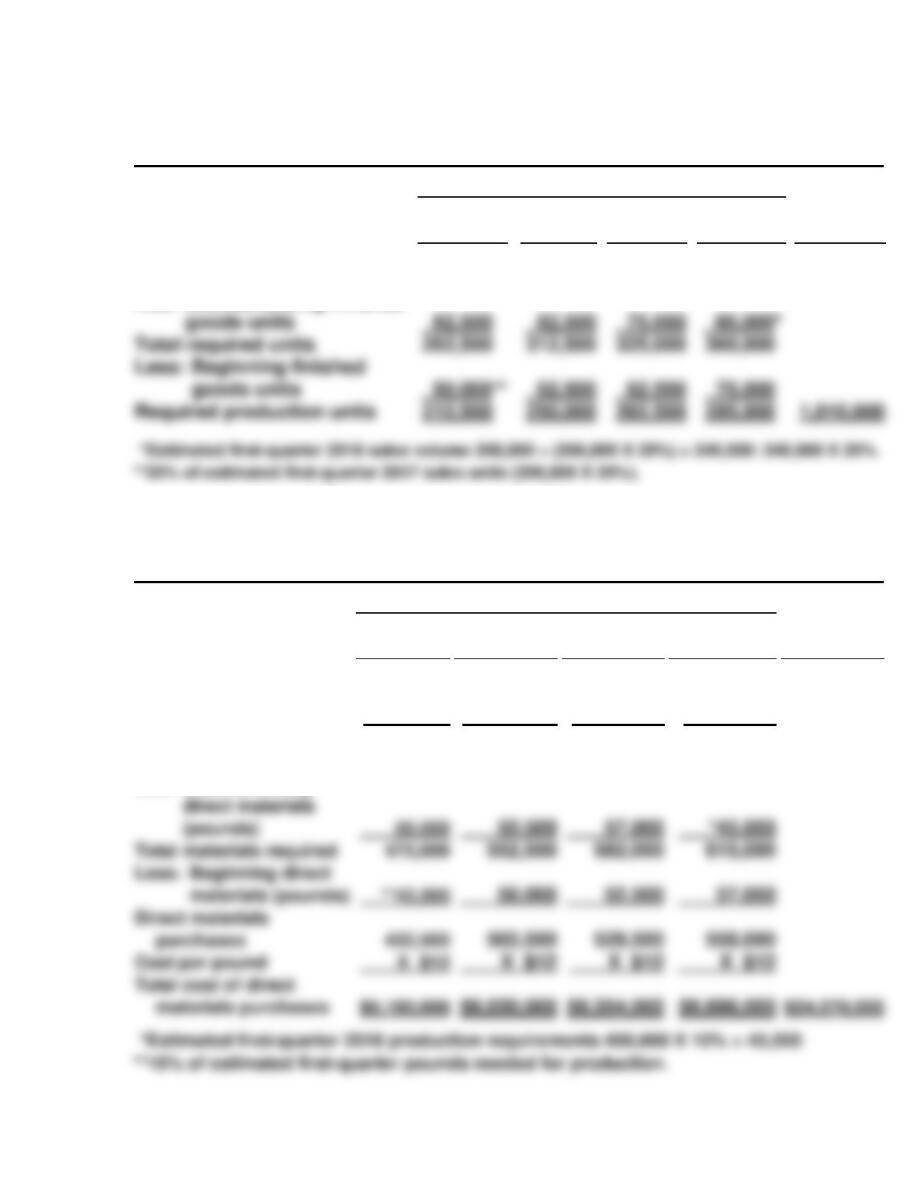
PARGO COMPANY
Production Budget
For the Year Ending December 31, 2017
Quarter
1
2
3
4
Year
Required production units
Expected unit sales
Add: Desired ending finished
200,000
250,000
250,000
300,000
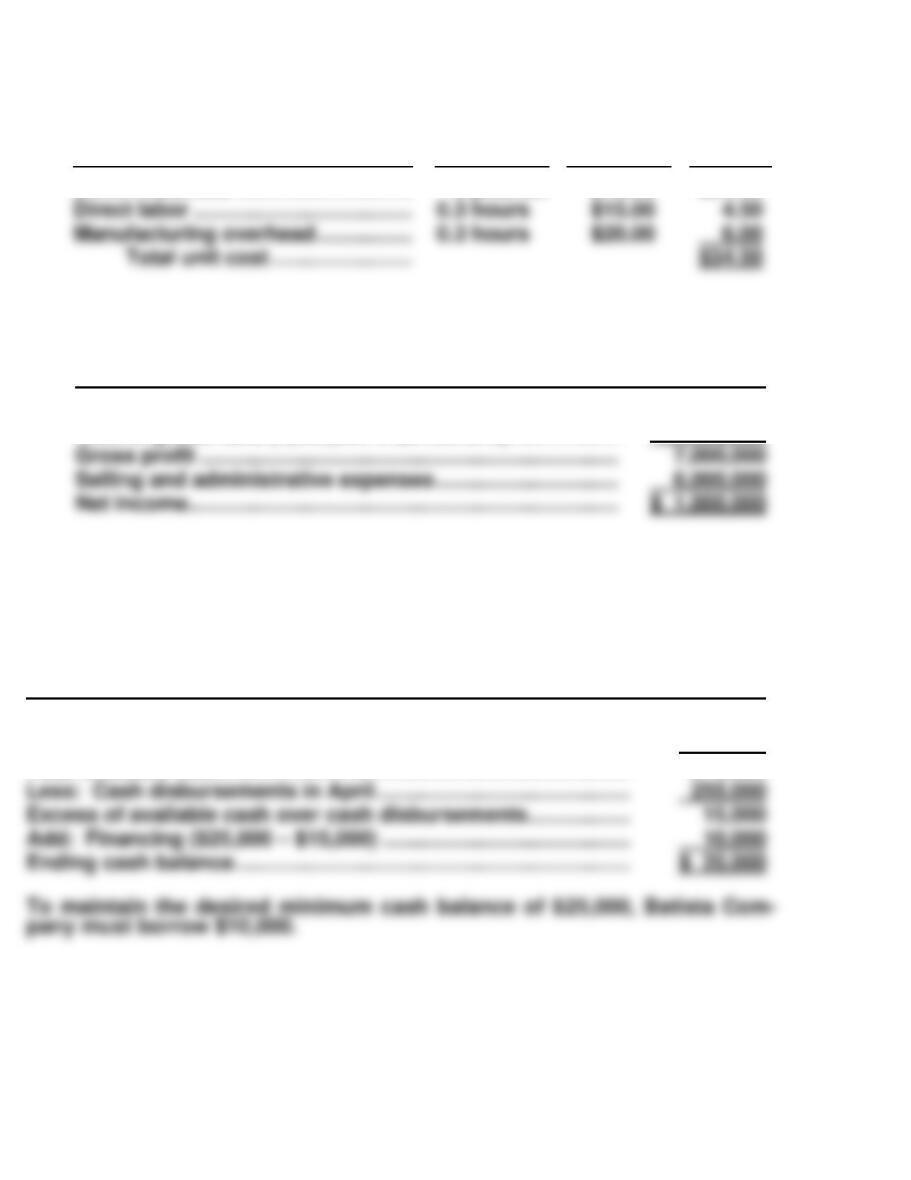
PARGO COMPANY
Direct Materials Budget
For the Year Ending December 31, 2017
Quarter
1
2
3
4
Year
Units to be produced
Direct materials per unit
Total pounds needed for
production
Add: Desired ending
212,500
X 2
425,000
250,000
X 2
500,000
262,500
X 2
525,000
285,000
X 2
570,000
materials purchases
DO IT! 9-3
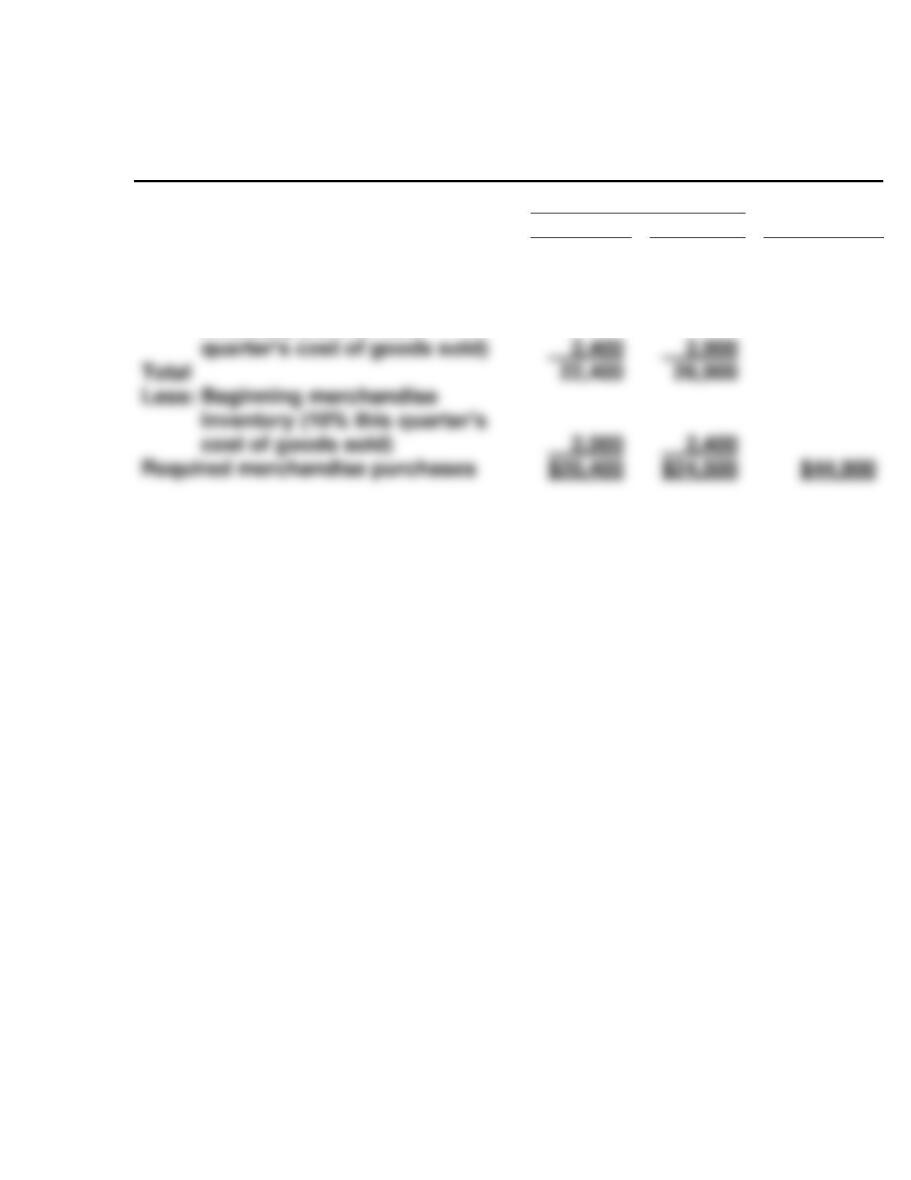
(a) Total unit cost:
Cost Element
Quantity
Unit Cost
Total
Direct materials …………………………
2 pounds
$12.00
$24.00
(b) PARGO COMPANY
Budgeted Income Statement
For the Year Ending December 31, 2017
Sales (1,000,000) units from sales budget, page 9-10 ……. $41,500,000
Cost of goods sold (1,000,000 X $34.50/unit) ……………… 34,500,000
DO IT! 9-4
BATISTA COMPANY
Cash Budget
April
Beginning cash balance…………………………………………………….. $ 25,000
Add: Cash receipts for April ……………………………………………… 245,000
Total available cash …………………………………………………………… 270,000
DO IT! 9-5
Zeller COMPANY
Merchandise Purchases Budget
For the Six Months Ending June 30, 2017
Quarter
Six
1
2
Months
Budgeted cost of goods sold
(Sales .50)
$20,000
$24,000
Add: Desired ending merchandise
inventory (10% of next
Total
Required merchandise purchases
SOLUTIONS TO EXERCISES
EXERCISE 9-1
MEMO
To Jim Dixon
From: Student
Re: Budgeting
I am glad Trusler Company is considering preparing a formal budget. There are
many benefits derived from budgeting, as I will discuss later in this memo.
A budget is a formal written statement of management’s plans for a specified
future time period, expressed in financial terms. The master budget gener–
ally consists of operating budgets such as the sales budget, production
The primary benefits of budgeting are:
1. It requires all levels of management to plan ahead and to formalize
goals on a recurring basis.
2. It provides definite objectives for evaluating performance at each
level of responsibility.
In order to maximize these benefits, it is essential that budgeting take place
within a sound organizational structure, so authority and responsibility for all
phases of operations are clearly defined. Also, the budget should be based on

EXERCISE 9-2
EDINGTON ELECTRONICS INC.
Sales Budget
For the Six Months Ending June 30, 2017
Quarter 1
Quarter 2
Six Months
Product
Units
Selling
Price
Total
Sales
Units
Selling
Price
Total
Sales
Units
Selling
Price
Total
Sales
Totals
300,000
15,000
375,000
27,000

THOME AND CREDE, CPAs
Sales Revenue Budget
For the Year Ending December 31, 2017
Quarter 1
Quarter 2
Quarter 3
Quarter 4
Billable
Billable
Total
Billable
Billable
Total
Billable
Billable
Total
Billable
Billable
Total
Dept.
Hours
Rate
Rev.
Hours
Rate
Rev.
Hours
Rate
Rev.
Hours
Rate
Rev.
Auditing
2,300
$ 80
$184,000
1,600
$ 80
128,000
2,000
$ 80
$160,000
2,400
$ 80
$192,000
Year
Billable
Billable
Total
Dept.
Hours
Rate
Rev.
Auditing
$ 80
$2,197,000
EXERCISE 9-3
Tax
3,000
270,000
2,200
198,000
2,000
180,000
2,500
225,000
1,500
1,500
1,500
1,500
$619,000
$491,000
$505,000
$582,000
EXERCISE 9-4
TURNEY COMPANY
Production Budget
For the Year Ending December 31, 2017
Product HD-240
Quarter
1
2
3
4
Year
Expected unit sales
Add: Desired ending
5,000
7,000
8,000
10,000
EXERCISE 9-5
DEWITT INDUSTRIES
Direct Materials Purchases Budget
For the Quarter Ending March 31, 2017
January
February
March
Units to be produced
Direct materials per unit
Total pounds needed for production
Add: Desired ending direct materials
10,000
X 2
20,000
8,000
X 2
16,000
5,000
X 2
10,000
EXERCISE 9-6
(a) HARDIN COMPANY
Production Budget
For the Six Months Ending June 30, 2017
Quarter
Six
Months
1
2
Expected unit sales
Add: Desired ending finished goods
units
5,000
1,500
(1)
6,000
1,750
(2)
EXERCISE 9-6 (Continued)
(b) HARDIN COMPANY
Direct Materials Budget
For the Six Months Ending June 30, 2017
Quarter
Six
Months
1
2
Units to be produced
Direct materials per unit
Total pounds needed for production
Add: Desired ending direct
5,250
X 3
15,750
6,250
X 3
18,750
EXERCISE 9-7
Finished goods:
Sales ……………………………………………………………… 2,675
Plus: Ending inventory ……………………………………. 2,200
Total required …………………………………………………….. 4,875
Less: beginning inventory ……………………………… 2,230
Production required ……………………………………………. 2,645
$67,800
EXERCISE 9-8
(a) FUQUA COMPANY
Production Budget
For the Two Months Ending February 28, 2017
_____________________________________________________________
January
February
Expected unit sales ……………………………………..
10,000
12,000
Add: desired ending finished goods
(b) FUQUA COMPANY
Direct Materials Budget
For the Month Ending January 31, 2017
_____________________________________________________________
January
Units to be produced ……………………………………………………
10,400
Direct material pounds per unit …………………………………….
X 4
Total pounds needed for production ……………………………..
41,600
Add: desired pounds in ending materials inventory ………
19,520*
Total materials required ……………………………………………….
61,120
Less: beginning direct materials (pounds) …………………….
Direct materials purchases …………………………………………..
44,480
Cost per pound ……………………………………………………………
X $2
Total cost of direct materials purchases ………………………..
$88,960
Total required units ……………………………………..
12,400
14,600
10,400
12,200
EXERCISE 9-9
RODRIQUEZ, INC.
Direct Labor Budget
For the Year Ending December 31, 2017
Quarter
1
2
3
4
Year
Units to be produced
Direct labor time
20,000
25,000
35,000
30,000
110,000
EXERCISE 9-10
LOWELL COMPANY
Production Budget
For the Quarter Ending March 31, 2017
Jan Feb Mar Total
Sales in units 12,000 14,000 13,000 39,000
Plus: desired ending inventory 19,200(1) 17,400(2) 15,400(3) 15,400
EXERCISE 9-10 (Continued)
LOWELL COMPANY
Direct Labor Budget
For the Quarter Ending March 31, 2017
Jan Feb Mar Total
Production in units 13,600 12,200 11,000
EXERCISE 9-11
ATLANTA COMPANY
Manufacturing Overhead Budget
For the Year Ending December 31, 2017
Quarter
1
2
3
4
Year
($443,000 ÷ 78,000)
Variable costs
Indirect materials ($.80/hour)
Indirect labor ($1.20/hour)
Maintenance ($.50/hour)
Total variable
Fixed costs
Supervisory salaries
$12,000
18,000
7,500
37,500
35,000
$ 14,400
21,600
9,000
45,000
35,000
$ 16,800
25,200
10,500
52,500
35,000
$ 19,200
28,800
12,000
60,000
35,000
$ 62,400
93,600
39,000
195,000
140,000
EXERCISE 9-12
KIRKLAND COMPANY
Selling and Administrative Expense Budget
For the Six Months Ending June 30, 2017
Quarter
Six
Months
1
2
Budgeted sales in units
Variable expenses (1)
Sales commissions
20,000
$20,000*
22,000
$22,000
$ 42,000
Fixed expenses
Sales salaries
Office salaries
Depreciation
Insurance
Utilities
12,000
8,000
4,200
1,500
800
12,000
8,000
4,200
1,500
800
24,000
16,000
8,400
3,000
1,600
(1) Variable costs per dollar of sales are: Sales commissions (5%), Delivery
expense (2%), and Advertising (3%).
EXERCISE 9-13
(a) FULTZ COMPANY
Computation of Cost of Goods Sold
For the Year Ending December 31, 2017
Cost of one unit of finished goods:
Direct materials (1 X $5) …………………………..…………………………. $ 5
Direct labor (3 X $15) ………………………………………………………….. 45
(b) FULTZ COMPANY
Budgeted Income Statement
For the Year Ending December 31, 2017
Sales (30,000 X $85) …………………………………………………… $2,550,000
Cost of goods sold (see part (a)) ………………………………… 1,950,000
Gross profit ………………………………………………………………. 600,000
EXERCISE 9-14
DANNER COMPANY
Cash Budget
For the Two Months Ending February 28, 2017
January
February
Beginning cash balance ……………………………………
Add: Receipts
Collections from customers …………………..
Sale of marketable securities …………………
Total receipts ………………………………………..
$ 45,000
85,000
12,000
97,000
$ 27,500
150,000
0
150,000
EXERCISE 9-15
DEITZ CORPORATION
Cash Budget
For the Quarter Ended March 31, 2017
Beginning cash balance …………………………………………………..
Add: Receipts
Collections from customers …………………………………..
Sale of equipment …………………………………………………
Total receipts ………………………………………………….
Total available cash …………………………………………………………
$ 30,000
185,000
3,000
188,000
218,000
EXERCISE 9-16
(a) TRENSHAW COMPANY
Cash Budget
For the Month Ended July 31, 2017
Beginning cash balance ………………………. $45,000
Add: Cash collections ………………………… 90,000
Total cash available …………………………….. $135,000
Less: Cash disbursements
Merchandise purchases ……… $56,200
Operating expenses ……………. 40,800
(b) An advantage of cash budgeting is that it allows cash shortfalls to be
predicted. If the timing of future cash shortfalls is known, arrange–
EXERCISE 9-17
(a) NEITO COMPANY
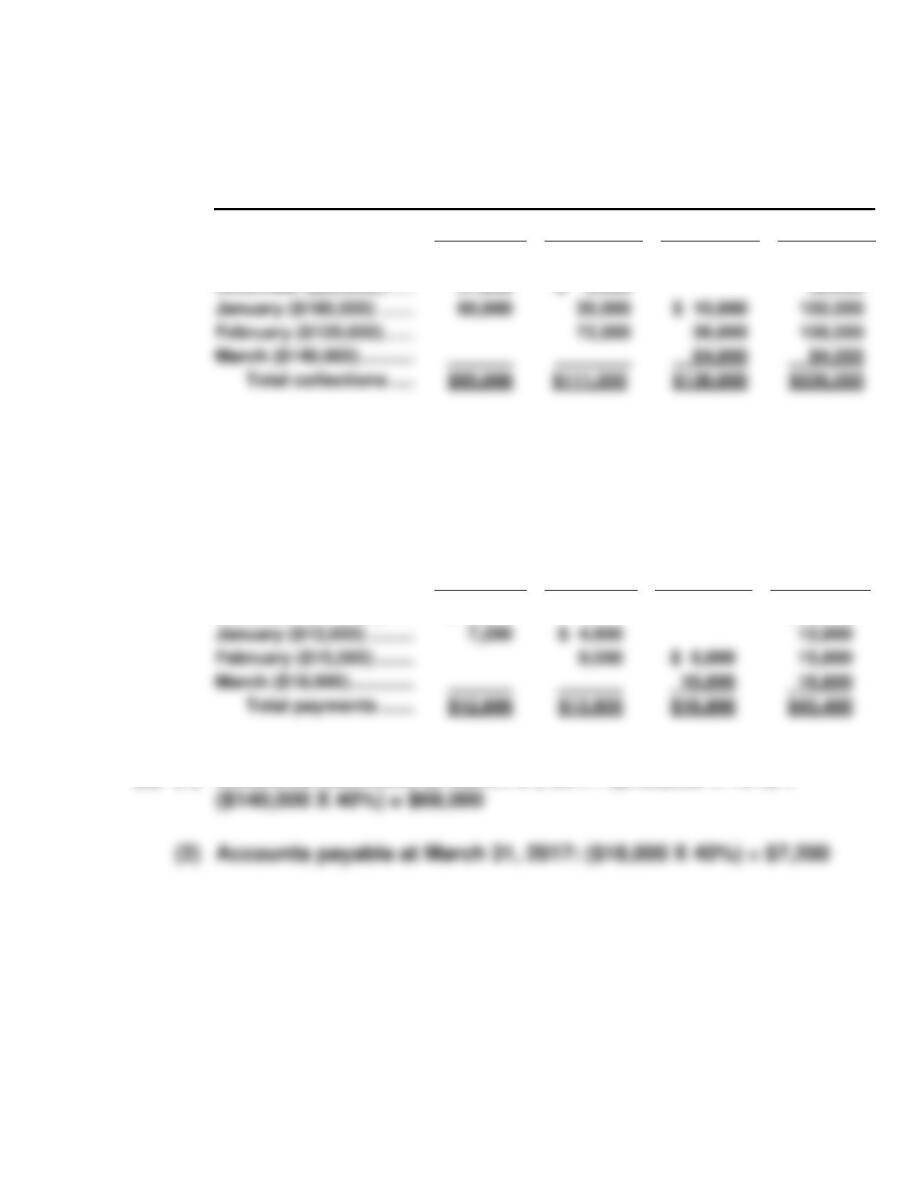
Expected Collections from Customers
March
March cash sales (30% X $250,000) ……………………………….
$ 75,000
Collection of March credit sales
[(70% X $250,000) X 10%] …………………………………………..
17,500
(b) NEITO COMPANY
Expected Payments for Direct Materials
March
March cash purchases (50% X $38,000) …………………………
$19,000
[(50% X $38,000) X 40%] …………………………………………….
[(50% X $36,000) X 60%] …………………………………………….
Total payments ………………………………………………….
Payment of March credit purchases
[(70% X $220,000) X 50%] …………………………………………..
[(70% X $200,000) X 36%] …………………………………………..
50,400
Total collections ………………………………………………..
EXERCISE 9-18
(a) (1)
GREEN LANDSCAPING INC.
Schedule of Expected Collections From Clients
For the Quarter Ending March 31, 2017
January
February
March
Quarter
November ($80,000) ……………………………………….
December ($90,000) ……………………………………….
$ 8,000
27,000
$ 9,000
$ 8,000
36,000
(2)
GREEN LANDSCAPING INC.
Schedule of Expected Payments for Landscaping Supplies
For the Quarter Ending March 31, 2017
________________________________________________________
January
February
March
Quarter
December ($14,000) ……………………………………….
$ 5,600
$ 5,600
(b)
(1)
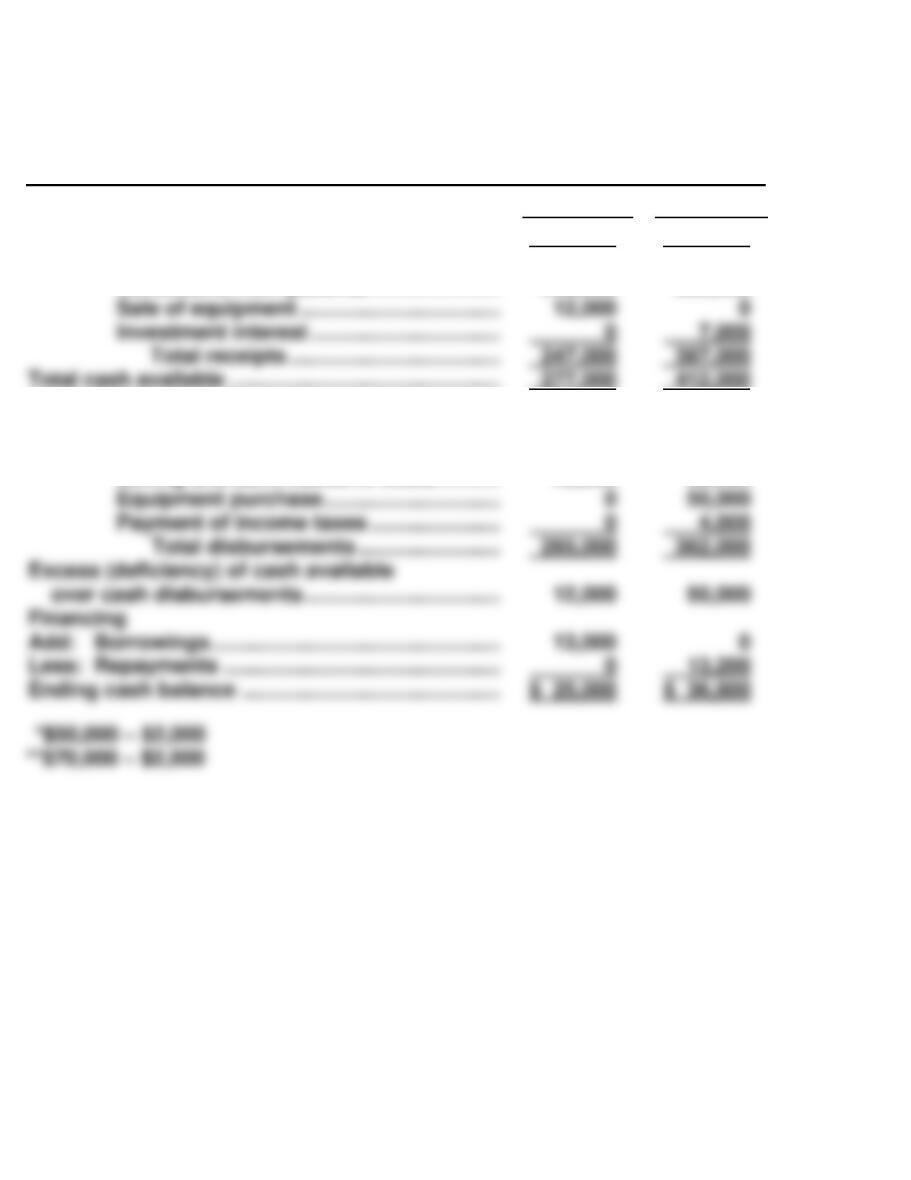
Accounts receivable at March 31, 2017: ($120,000 X 10%) +
EXERCISE 9-19
PLETCHER DENTAL CLINIC
Cash Budget
For the Two Quarters Ending June 30, 2017
1st Quarter
2nd Quarter
Beginning cash balance …………………………………..
Add: Receipts
Collections from patients ……………………
Less: Disbursements
Professional salaries ………………………….
Overhead costs ………………………………….
Selling and administrative costs ………….
$ 30,000
235,000
140,000
77,000
48,000*
$ 25,000
380,000
140,000
100,000
68,000**
EXERCISE 9-20
(a) GRAND STORES
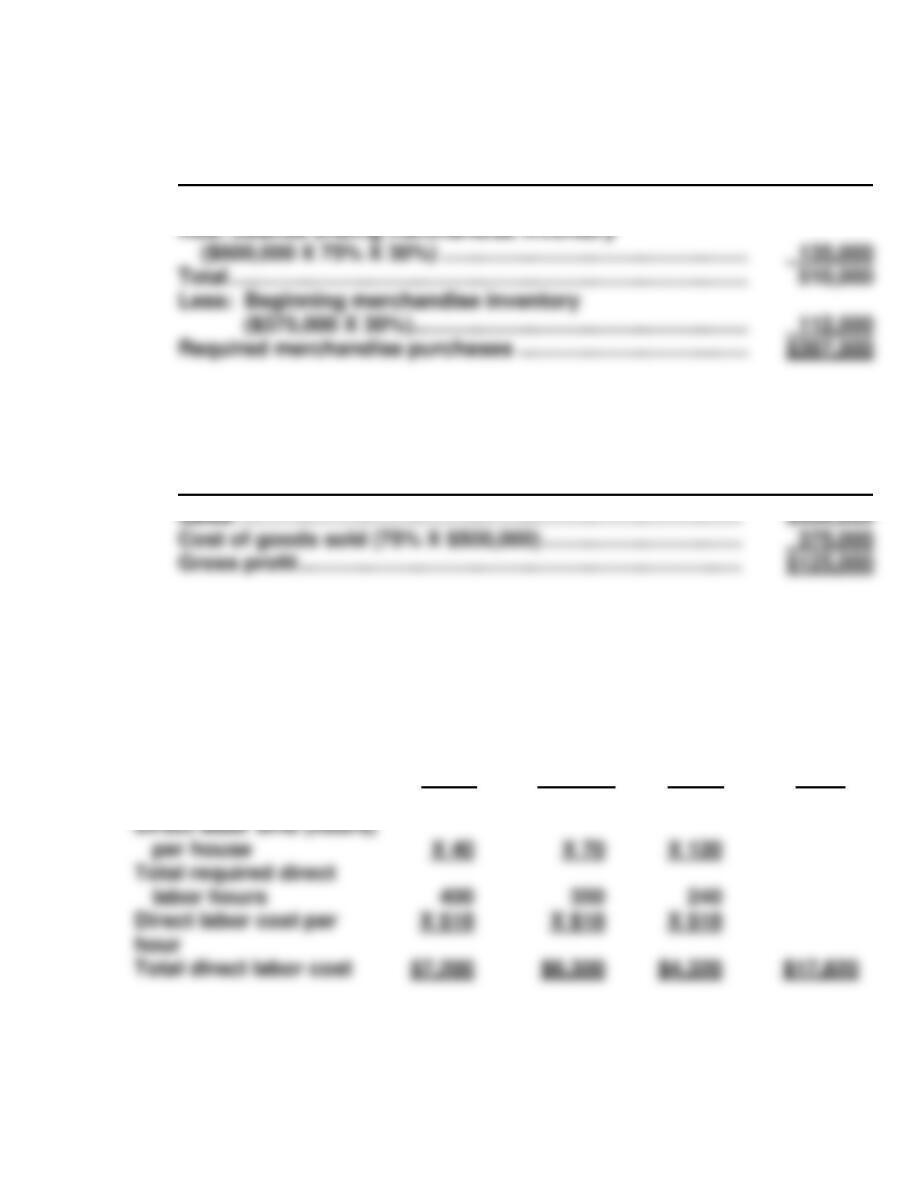
Merchandise Purchases Budget
For the Month Ending June 30, 2017
Budgeted cost of goods sold ($500,000 X 75%) ……………… $375,000
(b) GRAND STORES
Budgeted Income Statement
For the Month Ending June 30, 2017
EXERCISE 9-21
Emeric and Ellie’s Painting Service
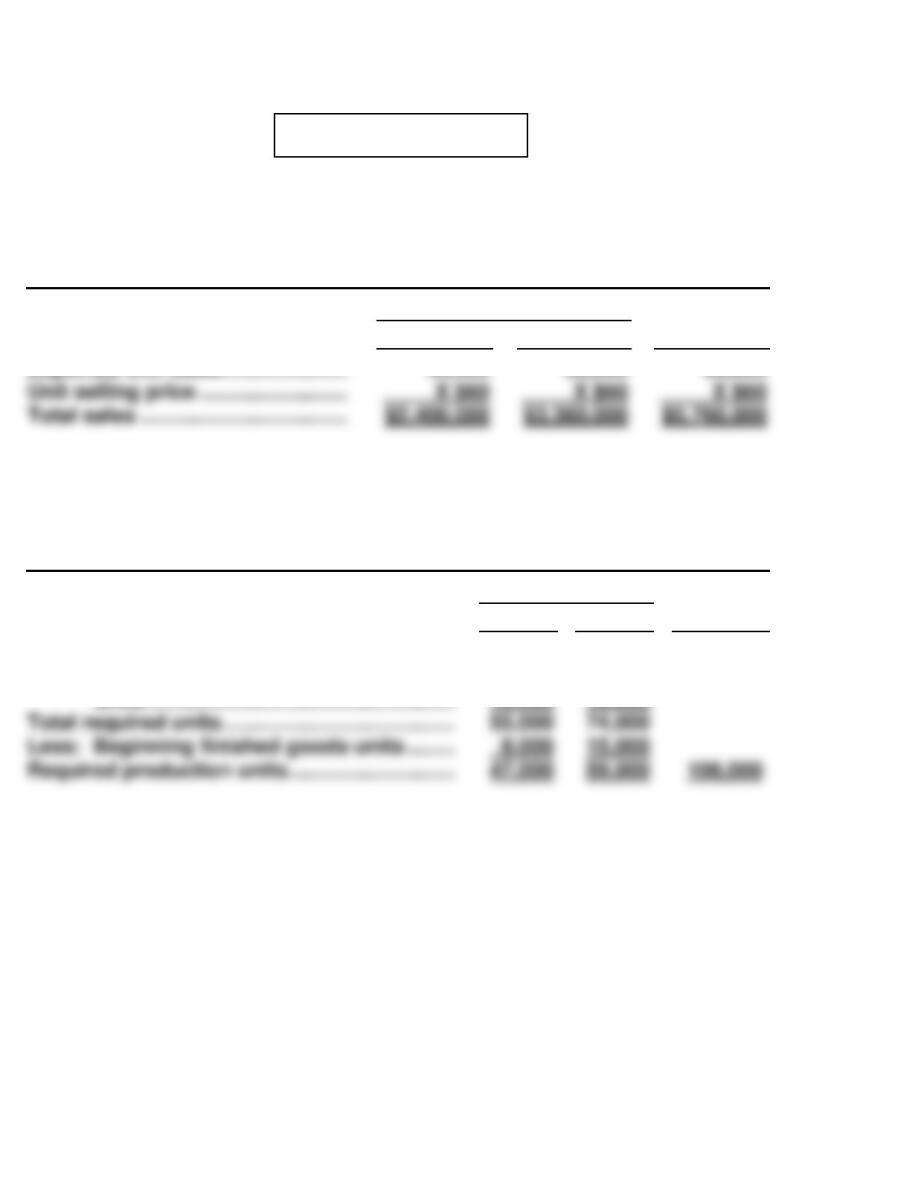
Direct Labor Budget
For the Month Ending June 30, 2017
Small
Medium
Large
Total
Home to be painted
10
5
2
per house
hour
Total direct labor cost
SOLUTIONS TO PROBLEMS
PROBLEM 9-1A
COOK FARM SUPPLY COMPANY
Sales Budget
For the Six Months Ending June 30, 2017
Quarter
Six
Months
1
2
Expected unit sales …………………
40,000
56,000
96,000
COOK FARM SUPPLY COMPANY
Production Budget
For the Six Months Ending June 30, 2017
Quarter
Six
Months
1
2
Required production units …………………………...
Expected unit sales ……………………………………..
Add: Desired ending finished goods
units …………………………………………………
40,000
15,000
56,000
18,000
Total sales ……………………………..
PROBLEM 9-1A (Continued)
COOK FARM SUPPLY COMPANY
Direct Materials Budget—Gumm
For the Six Months Ending June 30, 2017
Quarter
Six
Months
1
2
Units to be produced ………………………………
Direct materials per unit ………………………….
Total pounds needed for production ……….
Add: Desired ending direct materials
47,000
X 4
188,000
59,000
X 4
236,000
COOK FARM SUPPLY COMPANY
Direct Labor Budget
For the Six Months Ending June 30, 2017
Quarter
Six
Months
1
2
Units to be produced ………………………
Direct labor time (hours) per unit ……..
47,000
X 1/4
59,000
X 1/4
PROBLEM 9-1A (Continued)
COOK FARM SUPPLY COMPANY
Selling and Administrative Expense Budget
For the Six Months Ending June 30, 2017
Quarter
Six
Months
1
2
Budgeted sales in units
40,000
56,000
96,000
COOK FARM SUPPLY COMPANY
Budgeted Income Statement
For the Six Months Ending June 30, 2017
Sales ………………………………………………………………………………… $5,760,000
Cost of goods sold (96,000 X $33.20)* ………………………………… 3,187,200
Gross profit ………………………………………………………………………. 2,572,800
*Cost Per Bag
Cost Element
Quantity
Unit Cost
Total
Direct materials
Gumm ……………………………………
Tarr ………………………………………..
4 pounds
6 pounds
$ 3.80
1.50
$15.20
9.00
PROBLEM 9-2A
(a) DELEON INC.
Sales Budget
For the Year Ending December 31, 2017
JB 50
JB 60
Total
Expected unit sales …………..
400,000
200,000
(b) DELEON INC.
Production Budget
For the Year Ending December 31, 2017
JB 50
JB 60
Expected unit sales …………………………
400,000
200,000
PROBLEM 9-2A (Continued)
(c) DELEON INC.
Direct Materials Budget
For the Year Ending December 31, 2017
JB 50
JB 60
Total
Units to be produced ………………….
Direct materials per unit ……………..
Total pounds needed for
405,000
X 2
205,000
X 3
(d) DELEON INC.
Direct Labor Budget
For the Year Ending December 31, 2017
JB 50
JB 60
Total
Units to be produced ………………….
405,000
205,000
650,000
$2,440,000
PROBLEM 9-2A (Continued)
(e) DELEON INC.
Budgeted Income Statement
For the Year Ending December 31, 2017
JB 50
JB 60
Total
Sales ………………………………..
Cost of goods sold ……………
Gross profit ………………………
Operating expenses
Selling expenses ……………
$8,000,000
5,200,000
2,800,000
560,000
(1)
$5,000,000
4,000,000
1,000,000
360,000
(2)
$13,000,000
9,200,000
3,800,000
920,000
$ 1,295,000
PROBLEM 9-3A
(a) HILL INDUSTRIES
Sales Budget
For the Year Ending December 31, 2017
Plan A
Plan B
Expected unit sales ……………………………..
765,000
(1)
950,000
(2)
(b) HILL INDUSTRIES
Production Budget
For the Year Ending December 31, 2017
Plan A
Plan B
Total required units ……………………………………….
Expected unit sales ……………………………………….
Add: Desired ending finished goods units ……
765,000
38,250
(1)
950,000
60,000
(c) Variable costs = $4.40 per unit ($1.80 + $1.40 + $1.20) for both plans.
Plan A
Plan B
$6.88
$6.35
PROBLEM 9-3A (Continued)
(d) Gross Profit
Plan A
Plan B
Sales
$6,426,000
$7,125,000
PROBLEM 9-4A
(a) (1) Expected Collections from Customers
January
February
November ($250,000) …………………………..
December ($320,000) …………………………..
$ 50,000
96,000
$ 0
64,000
(2) Expected Payments for Direct Materials
January
February
December ($100,000) …………………………..
$ 40,000
$ 0
PROBLEM 9-4A (Continued)
(b) COLTER COMPANY
Cash Budget
For the Two Months Ending February 28, 2017
January
February
Beginning cash balance …………………………….
Add: Receipts
Collections from customers …………
[See Schedule (1)]
Notes receivable ………………………….
Sale of securities …………………………
Total receipts ……………………….
Total available cash …………………………………..
$ 60,000
326,000
15,000
341,000
401,000
$ 51,000
372,000
6,000
378,000
429,000
Less: Repayments ……………………………………
Ending cash balance …………………………………
0
$ 51,000
0
$ 50,000
PROBLEM 9-5A
(a) SUPPAR COMPANY
San Miguel Store
Merchandise Purchases Budget
For the Months of May and June, 2017
May
June
Budgeted cost of goods sold ………………………
Add: Desired ending merchandise inventory …..
$600,000
63,000
(2)
$630,000
66,150
(1)
(3)
PROBLEM 9-5A (Continued)
(b) SUPPAR COMPANY
San Miguel Store
Budgeted Income Statement
For the Months of May and June, 2017
May
June
Sales …………………………………………………………
Cost of goods sold
Beginning inventory …………………………….
Purchases …………………………………………..
Cost of goods available for sale …………..
$800,000
60,000
603,000
663,000
$840,000
63,000
633,150
696,150
Net income ………………………………………………..
Income from operations ……………………………..
Interest expense ………………………………………..
Income before income taxes ……………………….
54,100
2,000
52,100
58,900
2,000
56,900
Less: Ending inventory ……………………….
Gross profit ……………………………………………….
PROBLEM 9-6A
KRAUSE INDUSTRIES
Budgeted Cost of Goods Sold
For the Year Ending December 31, 2017
Finished goods inventory, 1/1/17 ……………………… $ 24,000
Cost of goods manufactured
Direct materials used ………………………………… $62,500
KRAUSE INDUSTRIES
Budgeted Income Statement
For the Year Ending December 31, 2017
Sales revenue (8,000 $32) …………………………..…. $256,000
Cost of goods sold ………………………………………….. 141,000
Gross profit …………………………………………………….. 115,000
KRAUSE INDUSTRIES
Budgeted Retained Earnings Statement
For the Year Ending December 31, 2017
Retained earnings, 1/1/17 …………………………………. $25,000
Add: Net income ……………………………………………… 21,900
PROBLEM 9-6A (Continued)
KRAUSE INDUSTRIES
Budgeted Balance Sheet
December 31, 2017
Assets
Current assets
Cash ……………………………………………………….…… $ 5,880
Accounts receivable ($76,800 X 40%) ……………. 30,720
Liabilities and Stockholders’ Equity
Liabilities
Notes payable ($25,000 – $8,000) ………………….. $17,000
Accounts payable ($8,500* + $7,200) ……………… 15,700
PROBLEM 9-6A (Continued)
Proof of budgeted cash balance December 31, 2017
Beginning Cash ………………………………………………. $ 7,500
Collections
Beginning accounts receivable ………………………… $ 73,500
CD9 CURRENT DESIGNS
CURRENT DESIGNS
Production Budget
For the Year Ending December 31, 2017
Quarter 1
Quarter 2
Quarter 3
Quarter 4
Total
Expected unit sales
1,000
1,500
750
750
4,000
Add: desired ending
finished goods units
300*
150*
150*
220**
220
Total required units
1,300
1,650
900
970
4,220
goods units
300
150
Required production units
1,100
1,350
750
820
4,020
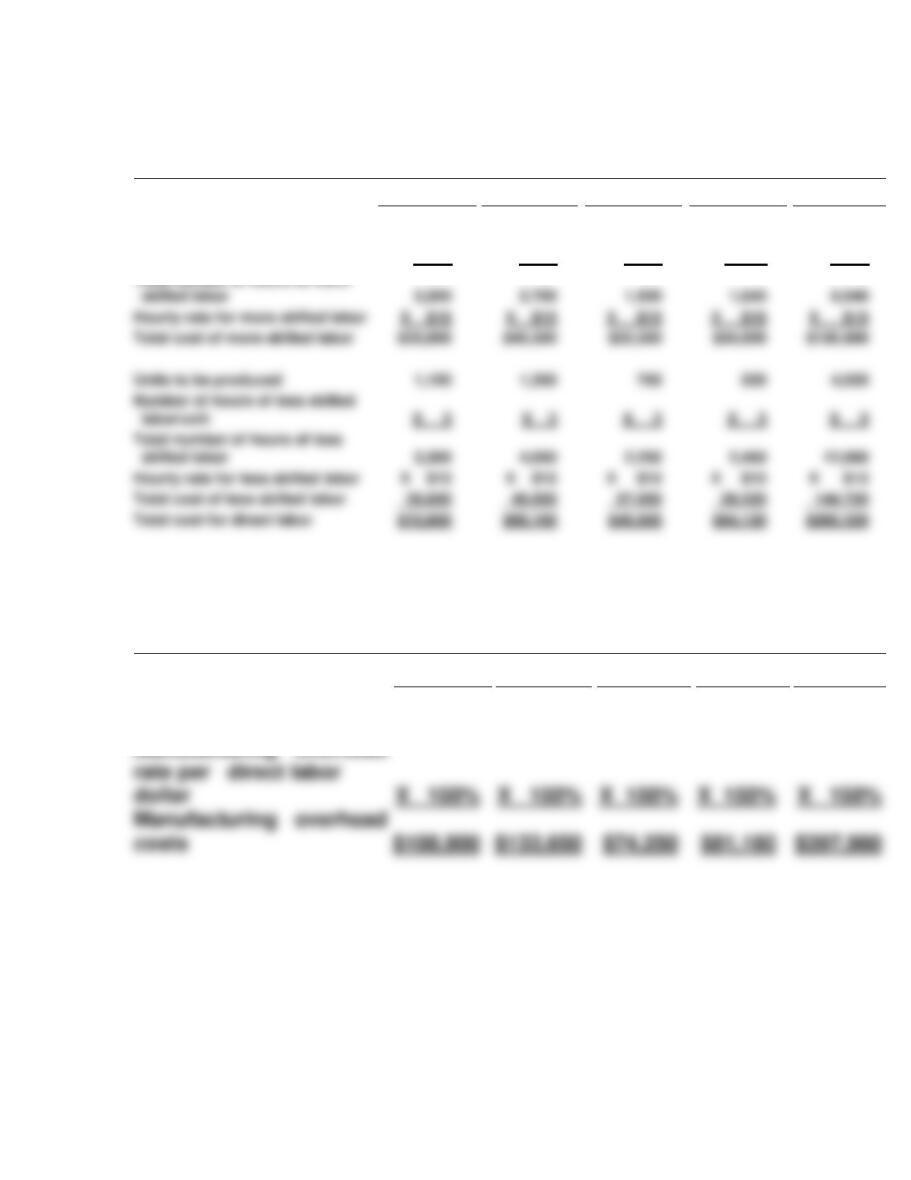
CD9 (Continued)
CURRENT DESIGNS
Direct materials Budget
For the Year Ending December 31, 2017
Quarter 1
Quarter 2
Quarter 3
Quarter 4
Total
Units to be produced
1,100
1,350
750
820
4,020
Pounds of polyethylene
powder per unit
X 54
X 54
X 54
X 54
X 54
*25% of needs for next quarter
**Desired ending inventory for Quarter 4 = 25% of amount needed for first
quarter of 2018 production.
Total pounds needed for
Add: desired ending
inventory of powder
10,125*
15,930
required
Less: Beginning inventory
Pounds of Polyethylene
powder to be purchased
Cost per pound
Cost of polyethylene
manufactured) @$170 each
materials
CD9 (Continued)
CURRENT DESIGNS
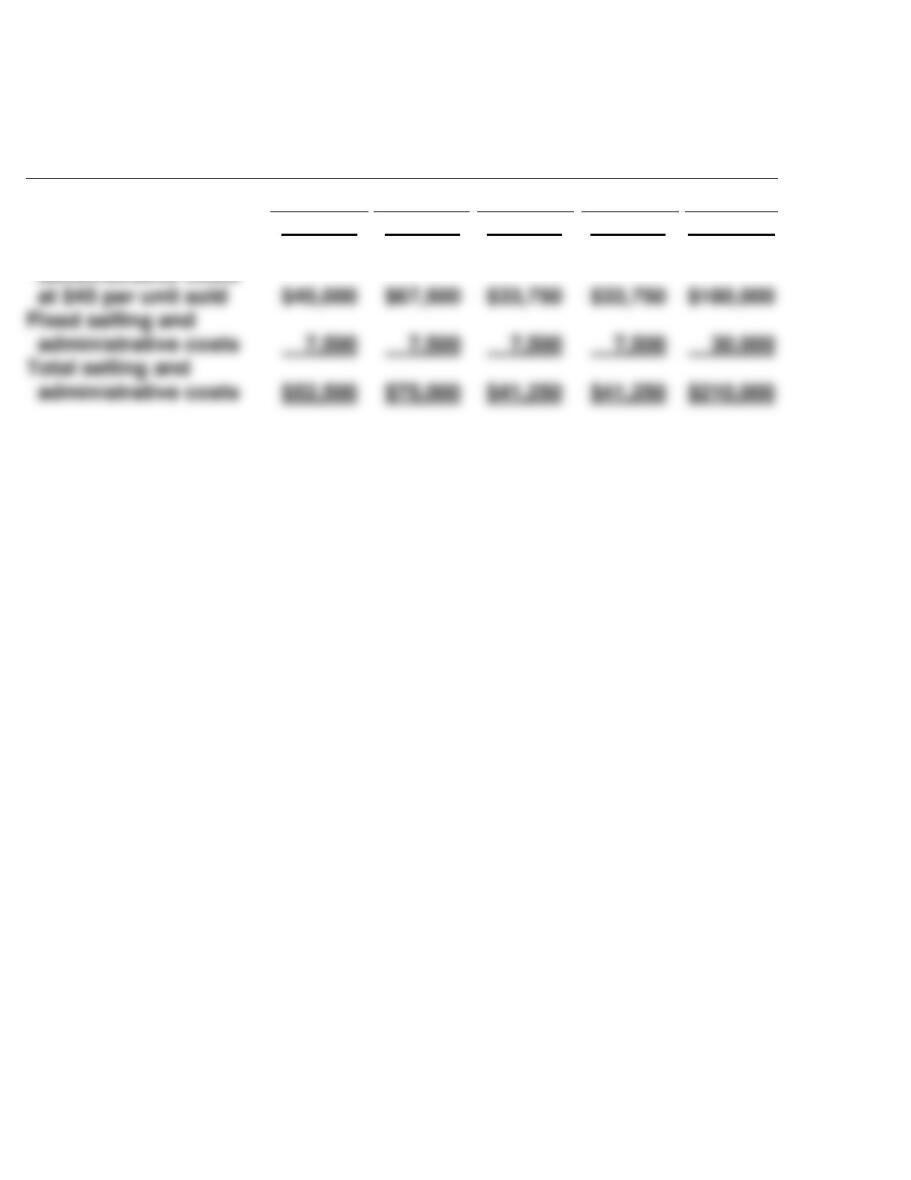
Direct labor Budget
For the Year Ending December 31, 2017
Quarter 1
Quarter 2
Quarter 3
Quarter 4
Total
Units to be produced
1,100
1,350
750
820
4,020
Number of hours of more skilled
labor/unit
X 2
X 2
X 2
X 2
X 2
Total number of hours of more
CURRENT DESIGNS
Manufacturing Overhead Budget
For the Year Ending December 31, 2017
Quarter 1
Quarter 2
Quarter 3
Quarter 4
Total
Total costs for direct
labor
$72,600
$89,100
$49,500
$54,120
$265,320
rate per direct labor
X 150%
X 150%
$74,250
$81,180
$397,980
Manufacturing overhead
Total cost of more skilled labor
Number of hours of less skilled
labor/unit
X 3
X 3
X 3
X 3
Total number of hours of less
Total cost of less skilled labor
Total cost for direct labor
CD9 (Continued)
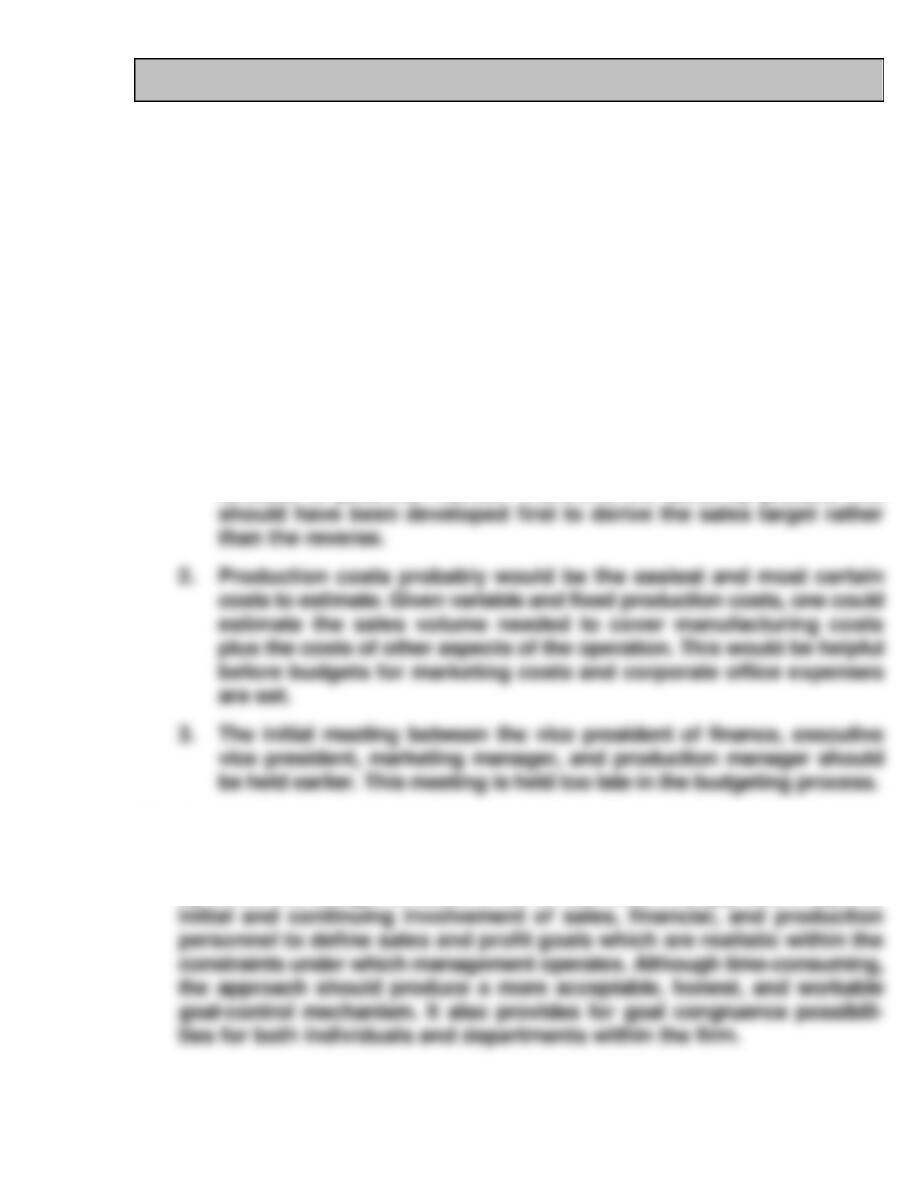
CURRENT DESIGNS
Selling and Administrative Expense Budget
For the Year Ending December 31, 2017
Quarter 1
Quarter 2
Quarter 3
Quarter 4
Total
Expected unit sales
1,000
1,500
750
750
4,000
Variable selling and
administrative costs
BYP 9-1 DECISION-MAKING ACROSS THE ORGANIZATION
(a) The budget at Palmer Corporation is an imposed “top–down” budget
which fails to consider both the need for realistic data and the human
interaction essential to an effective budgeting/control process. The
president has not given any basis for his goals, so one cannot know
whether they are realistic for the company. True participation of company
employees in preparation of the budget is minimal and limited to mechani–
cal gathering and manipulation of data. This suggests there will be little
enthusiasm for implementing the budget.
The budget process is the merging of the requirements of all facets of
the company on a basis of sound judgment and equity. Specific instances
of poor procedures other than the approach and goals include the
following:
1. The sales by product line should be based upon an accurate sales
forecast of potential market. Therefore, the sales by product line
(b) Palmer Corporation should consider the adoption of a “bottom to top”
(participative) budget process. This means that the people responsible
for performance under the budget would participate in the decisions
by which the budget is established. In addition, this approach requires
BYP 9-1 (Continued)
The sales forecast should be developed considering internal sales
(c) The functional areas should not necessarily be expected to cut costs
when sales volume falls below budget. The time frame of the budget
(one year) is short enough so that many costs are relatively fixed in
BYP 9-2 MANAGERIAL ANALYSIS
(a) Direct materials Either lower quality materials resulting in an inferior
product and possible lost sales, or fewer units
produced resulting in lost sales.
Direct labor Reduced production resulting in lost sales, or
reduction in quality of product resulting in lost sales.
(b) Given the nature of their product, a decline in quality should be
avoided, since this could result in lower future sales. Direct materials
represent the largest single cost, and thus perhaps the greatest
potential savings. Perhaps substitute materials of similar quality can
BYP 9-3 REAL-WORLD FOCUS
(a) According to Mr. LaFaive, zero-based budgeting requires that the
existence of a government program or programs be justified in each
(b) In addition to saving money and improving services, zero-based
budgeting may:
• Increase restraint in developing budgets;
(c) On the cost side of the equation, zero-based budgeting:
• May increase the time and expense of preparing a budget;
(d) In Oklahoma, which has recently adopted zero-based budgeting, officials
BYP 9-4 COMMUNICATION ACTIVITY
Date 2017
Mrs. Megan Parcells, CEO
Life Protection Products
Dear Mrs. Parcells:
Allow me to congratulate you on the success of your new venture! The
growth in sales you have experienced is phenomenal. You have managed the
business side of the venture very well also. At the same time, I understand
your concern about cash flow. You are selling these kits as fast as you can
make them, and yet you are running out of cash.
There is a solution to your problem. Before describing that, it may be
helpful for you to understand why this situation occurred. The primary
reason is that you are purchasing kit supplies at least two months in advance
BYP 9-4 (Continued)
However, even if you raised prices, you will find that you need additional
cash as long as the business continues to expand. It certainly does not
mean that you and Sue are doing anything wrong. It just means that you
will be investing additional funds as long as you continue to grow.
BYP 9-5 ETHICS CASE
(a) At best, if you disclose the errors in your calculations, you will be
embarrassed. At worst, you will be dismissed without a recommendation
for another job.
BYP 9-6 ALL ABOUT YOU
Personal Budget
Typical Month
Income:
Wages earned ………………………………………….. $2,500
Expenses:
Rent ………………………………………………………………….. 500
Utilities
Electricity ………………………………………………… 85
Telephone and Internet …………………………….. 125
BYP 9-7 CONSIDERING YOUR COSTS AND BENEFITS
We are concerned that the personal budgets presented on websites and in
financial planning textbooks often list student loans among the sources of
income. This type of thinking can lead to an overreliance on debt during