PROBLEM 9-42 (CONTINUED)
4.
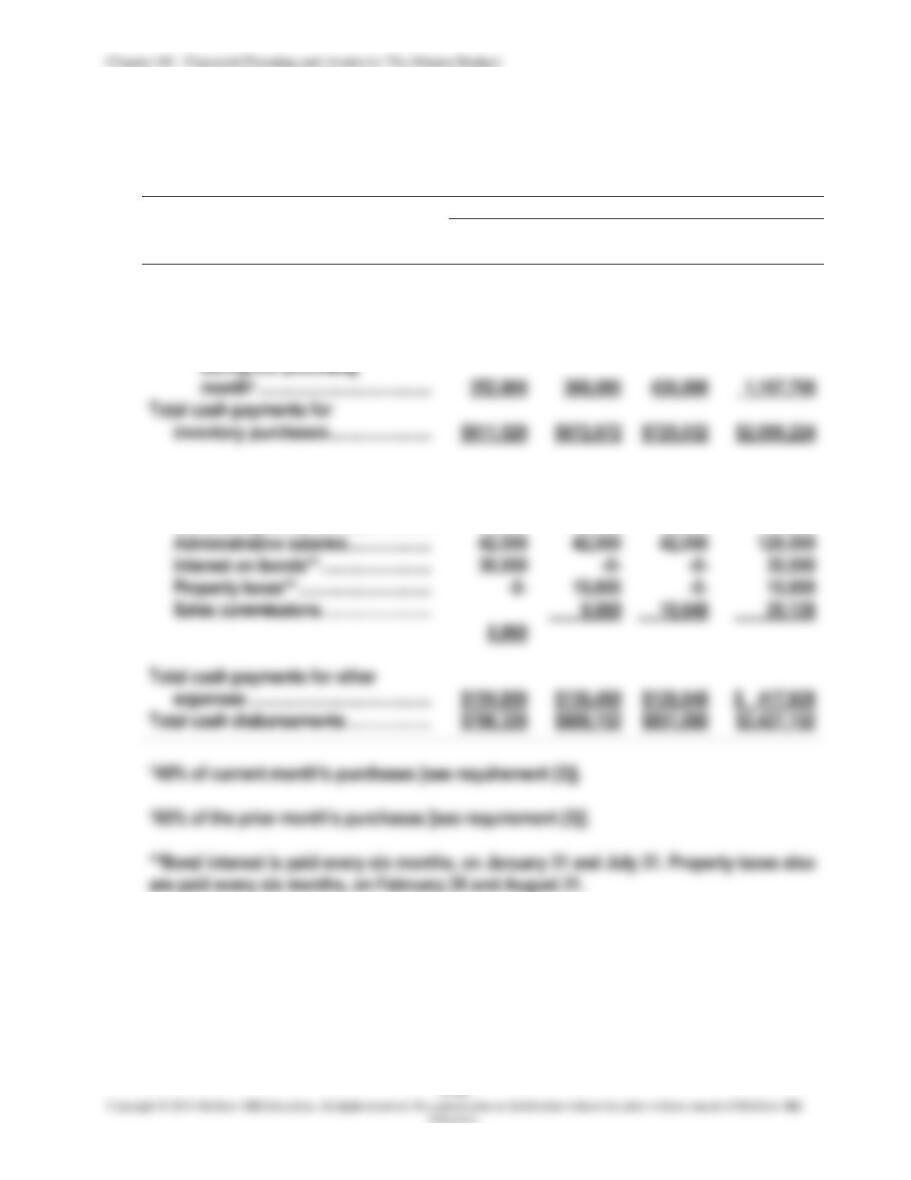
Cash disbursements budget:
20×1
January
February
March
First
Quarter
Inventory purchases:
Cash payments for purchases
during the current month* ……..
$258,720
$284,592
$298,144
$ 841,456
Total cash payments for
inventory purchases …………………..
$611,520
$672,672
$725,032
$2,009,224
Cash payments for purchases
Other expenses:
Sales salaries …………………………….
$ 42,000
$ 42,000
$ 42,000
$ 126,000
Advertising and promotion …………
32,000
32,000
32,000
96,000
Administrative salaries ……………….
42,000
42,000
42,000
Interest on bonds** …………………….
30,000
30,000
Property taxes** …………………………
10,800
10,800
Total cash payments for other
$154,800
$136,480
$126,648
*40% of current month’s purchases [see requirement (3)].
**Bond interest is paid every six months, on January 31 and July 31. Property taxes also
PROBLEM 9-42 (CONTINUED)
5.
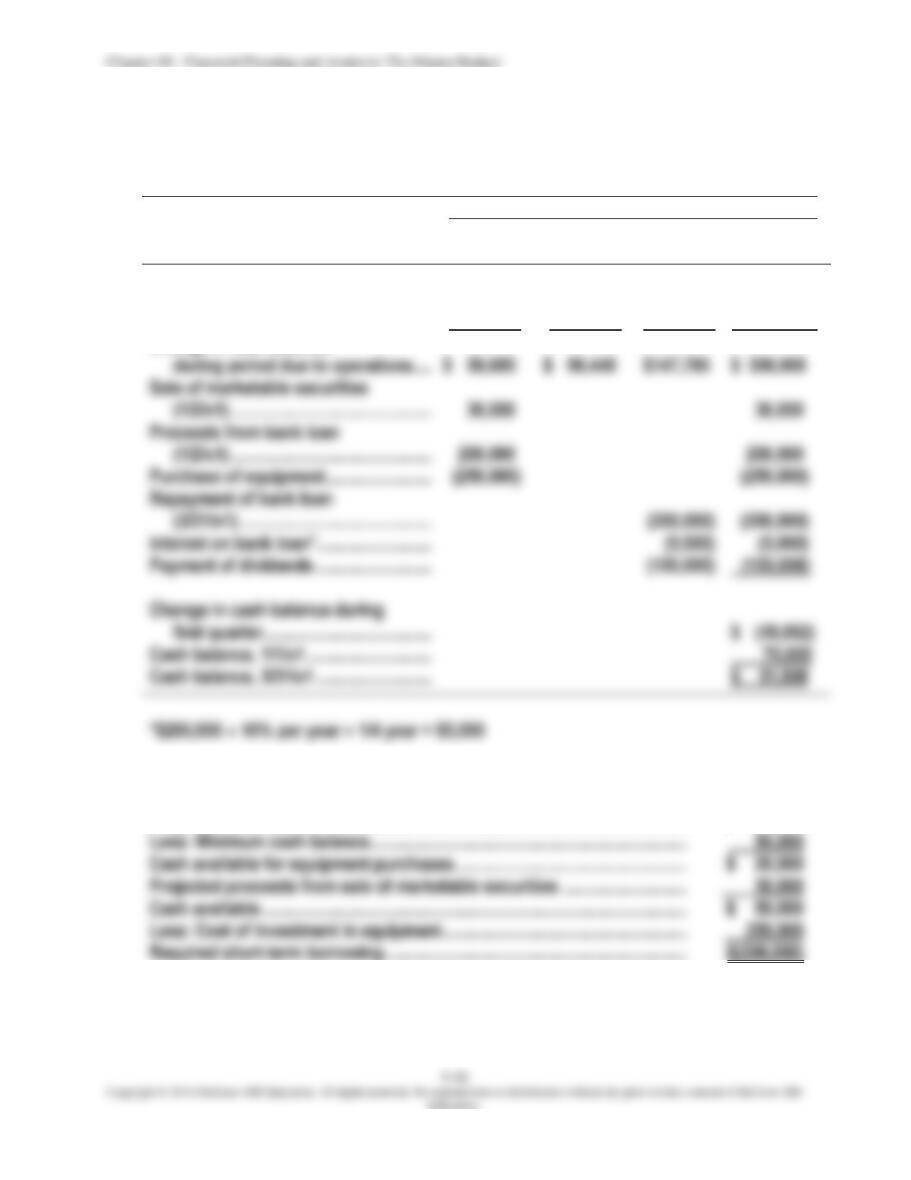
Summary cash budget:
20×1
January
February
March
First
Quarter
Cash receipts [from req. (2)] …………….
$ 826,000
$ 908,600
$ 999,460
$2,734,060
Cash disbursements
[from req. (4)] …………………………….
(766,320)
(809,152)
(851,680)
(2,427,152)
during period due to operations ….
$ 306,908
Sale of marketable securities
(1/2/x1) ………………………………………
Proceeds from bank loan
200,000
200,000
Purchase of equipment ……………………
Repayment of bank loan
(3/31/x1) …………………………………….
Interest on bank loan* ……………………..
Payment of dividends ……………………..
first quarter ………………………………..
Cash balance, 1/1/x1 ……………………….
Change in cash balance
6.
Analysis of short-term financing needs:
Projected cash balance as of December 31, 20×0 ………………………………..
$ 70,000
Less: Minimum cash balance ……………………………………………………………..
Cash available for equipment purchases …………………………………………….
$ 20,000
Projected proceeds from sale of marketable securities ……………………….
Cash available …………………………………………………………………………………..
Less: Cost of investment in equipment …………………………..…………………..
PROBLEM 9-42 (CONTINUED)
7.
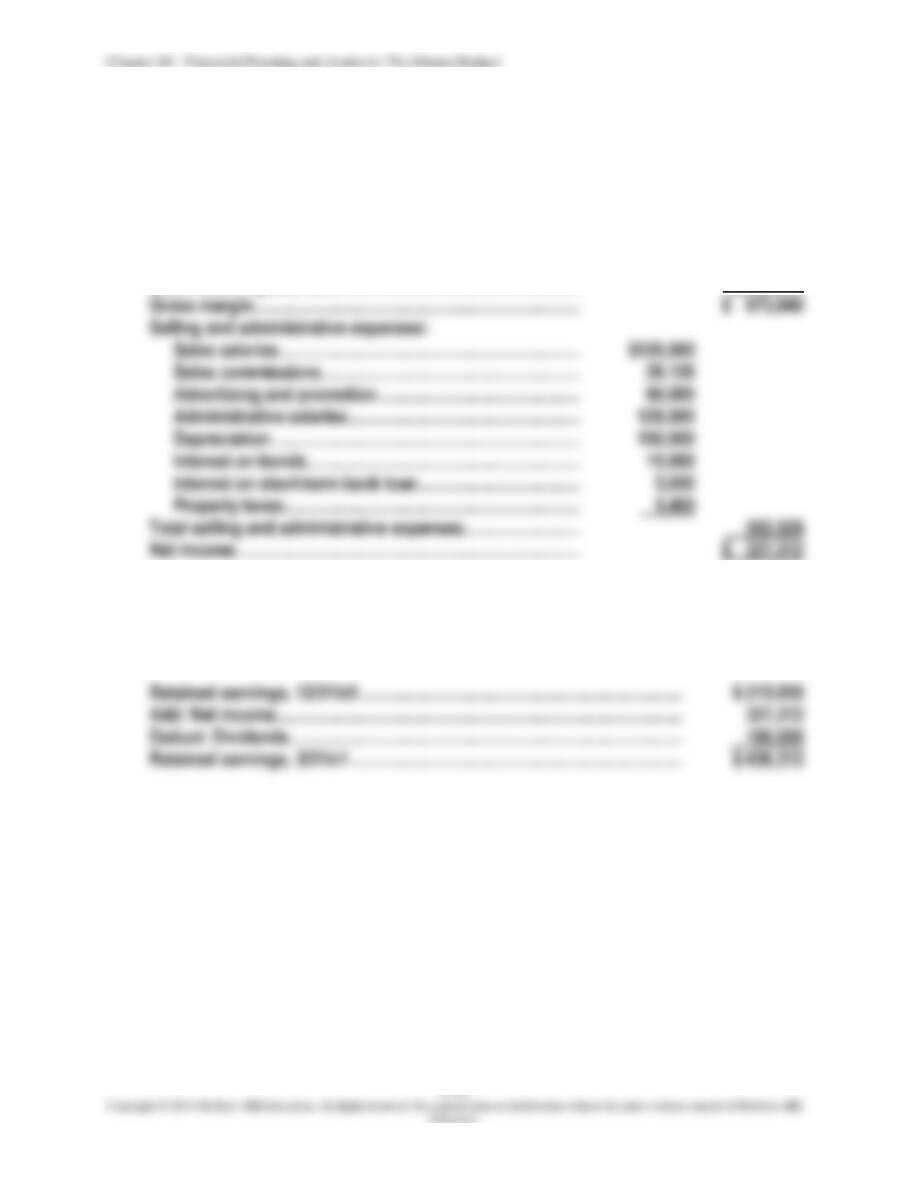
GLOBAL ELECTRONICS COMPANY
BUDGETED INCOME STATEMENT
FOR THE FIRST QUARTER OF 20X1
Sales revenue ………………………………………………………………
$2,912,800
Less: Cost of goods sold ……………………………………………..
2,038,960
Gross margin ……………………………………………………….………
Selling and administrative expenses:
Sales salaries ……………………………………………………….…
Sales commissions ………………………………………………….
Advertising and promotion ………………………………………
Administrative salaries …………………………………………….
Depreciation ……………………………………………………………
Interest on bonds …………………………………………………….
Interest on short-term bank loan ………………………………
Property taxes …………………………………………………………
Total selling and administrative expenses ……………………..
Net income …………………………………………………………………..
8.
GLOBAL ELECTRONICS COMPANY
BUDGETED STATEMENT OF RETAINED EARNINGS
FOR THE FIRST QUARTER OF 20X1
Retained earnings, 12/31/x0 ………………………………………………………………
Add: Net income ……………………………………………………………………………….
Deduct: Dividends …………………………………………………………………………….
Retained earnings, 3/31/x1 …………………………..……………………………………
PROBLEM 9-42 (CONTINUED)
9.
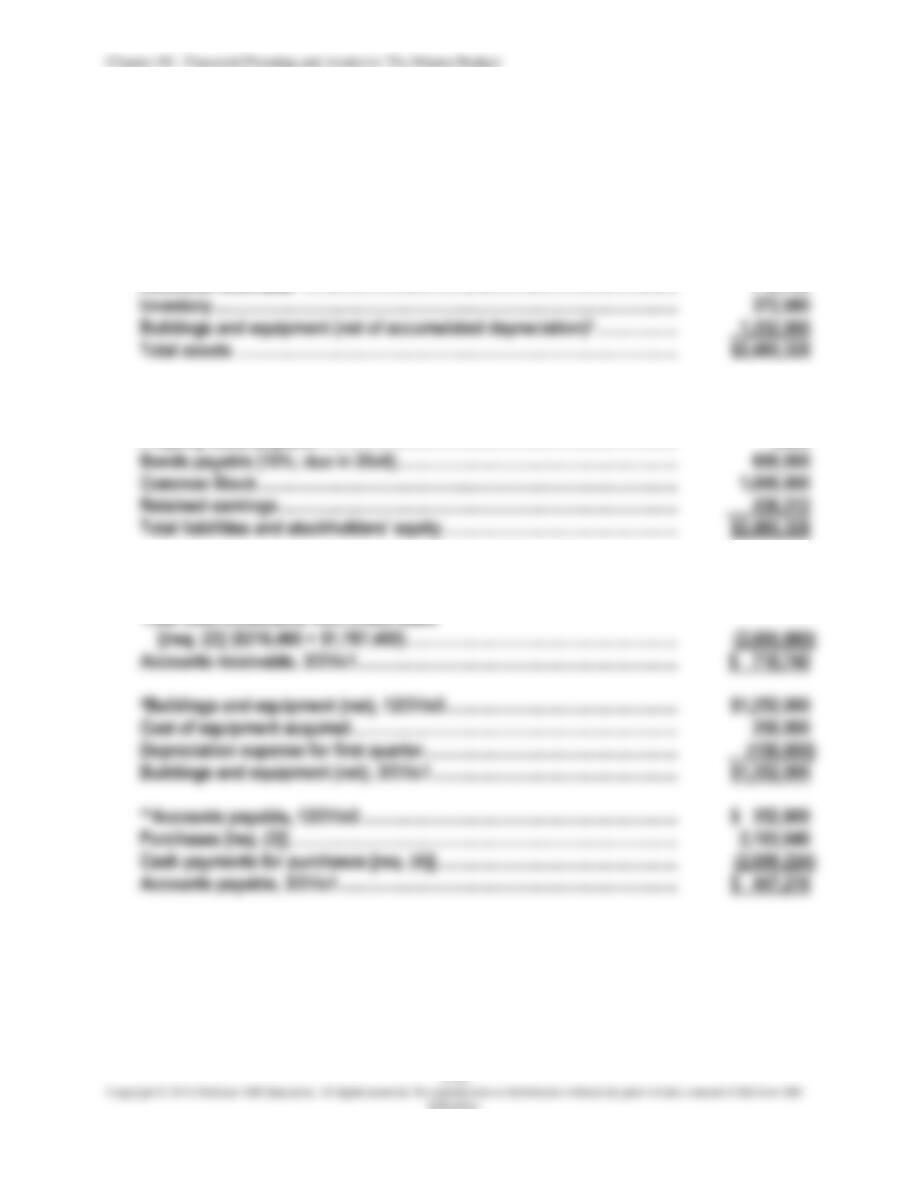
GLOBAL ELECTRONICS COMPANY
BUDGETED BALANCE SHEET
MARCH 31, 20X1
Cash …………………………………………………………………………………………………
$ 51,908
Accounts receivable* …………………………………………………………………………
718,740
Inventory …………………………………………………………………………………………..
372,680
Buildings and equipment (net of accumulated depreciation)† ………………
Total assets ………………………………………………………………………………………
$2,495,328
Accounts payable** ……………………………………………………………………………
$ 447,216
Bond interest payable ………………………………………………………………………..
10,000
Property taxes payable ………………………………………………………………………
1,800
Bonds payable (10%; due in 20×6) ………………………………………………………
Common Stock ………………………………………………………………………………….
1,000,000
Retained earnings ……………………………………………………………………………..
Total liabilities and stockholders’ equity ……………………………………………..
$2,495,328
*Accounts receivable, 12/31/x0 …………………………………………………………..
$ 540,000
Sales on account [req. (1)] ………………………………………………………………….
2,184,600
Accounts receivable, 3/31/x1 ………………………………………………………………
$1,252,000
Cost of equipment acquired ……………………………………………………………….
250,000
Depreciation expense for first quarter …………………………………………………
Buildings and equipment (net), 3/31/x1 ……………………………………………….
$1,352,000
**Accounts payable, 12/31/x0 ……………………………………………………………..
$ 352,800
Purchases [req. (3)] ……………………………………………………………………………
2,103,640
Cash payments for purchases [req. (4)] ………………………………………………
Accounts payable, 3/31/x1 ………………………………………………………………….
$ 447,216
Chapter 09 – Financial Planning and Analysis: The Master Budget
SOLUTIONS TO CASES
CASE 9-43 (35 MINUTES)
1. Some of the operational and behavioral benefits that are generally attributed to a
participatory budgeting process are as follows:
2. Four deficiencies in Jack Riley’s participatory policy for planning and performance
evaluation, along with recommendations of how the deficiencies can be corrected:
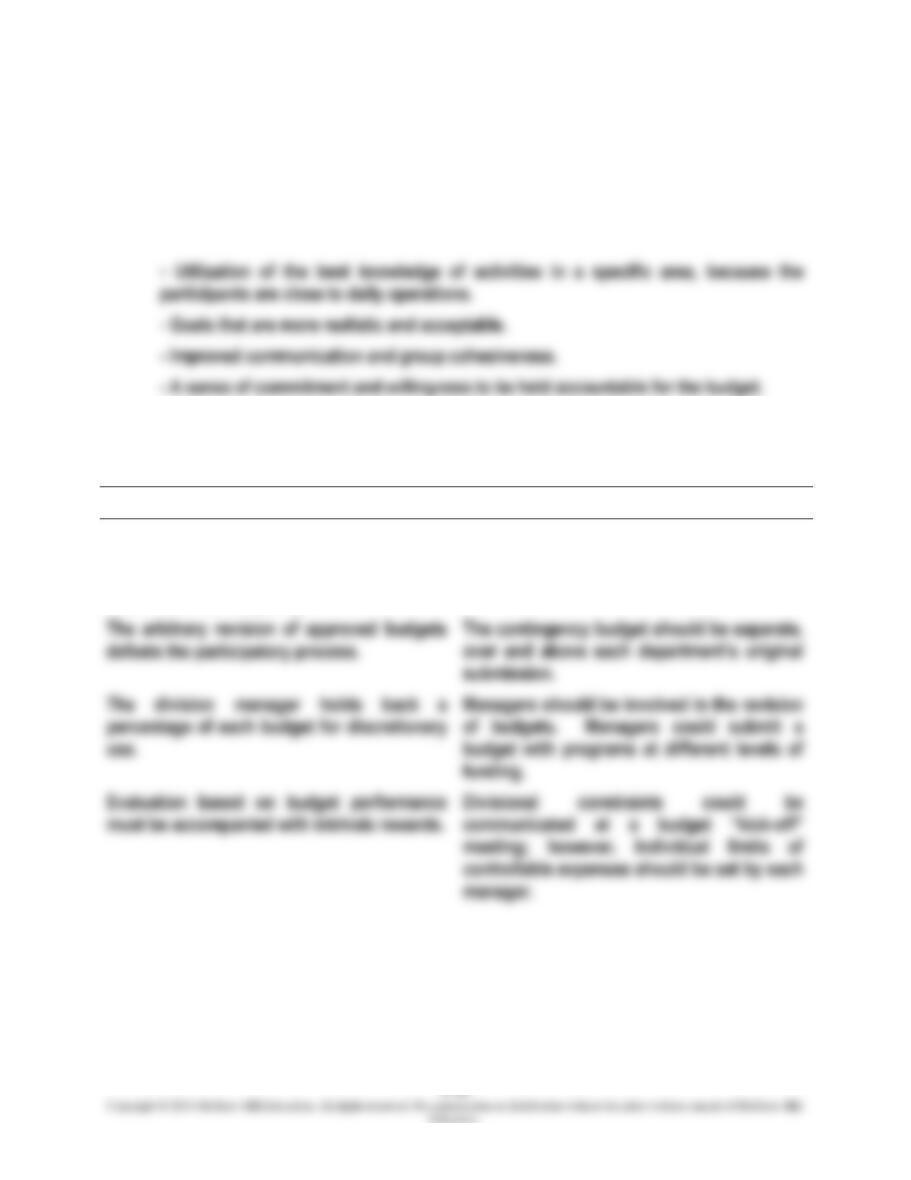
Deficiencies
Recommendations
The setting of constraints on fixed
expenditures includes uncontrollable fixed
costs, thereby mitigating the positive effects
of participatory budgeting.
Rewards should be based on meeting
budget and/or organizational goals or
objectives.
Chapter 09 – Financial Planning and Analysis: The Master Budget
CASE 9-44 (60 MINUTES)
1.
Yes, Triple-F Health Club should be better able to plan its cash receipts with the new
2.
a.
Factors that management should consider before adopting the new membership
plan and fee structure include:
• Costs associated with the plan changeover
• Public acceptance of the new proposal
3.
Because Triple-F’s cash flows should be more predictable, management should be
better able to plan for and control cash disbursements. In addition, management
should be better able to plan for short-term investments when excess cash occurs or
to arrange for short-term financing when there are cash shortages.
Chapter 09 – Financial Planning and Analysis: The Master Budget
CASE 9-45 (120 MINUTES)
1.
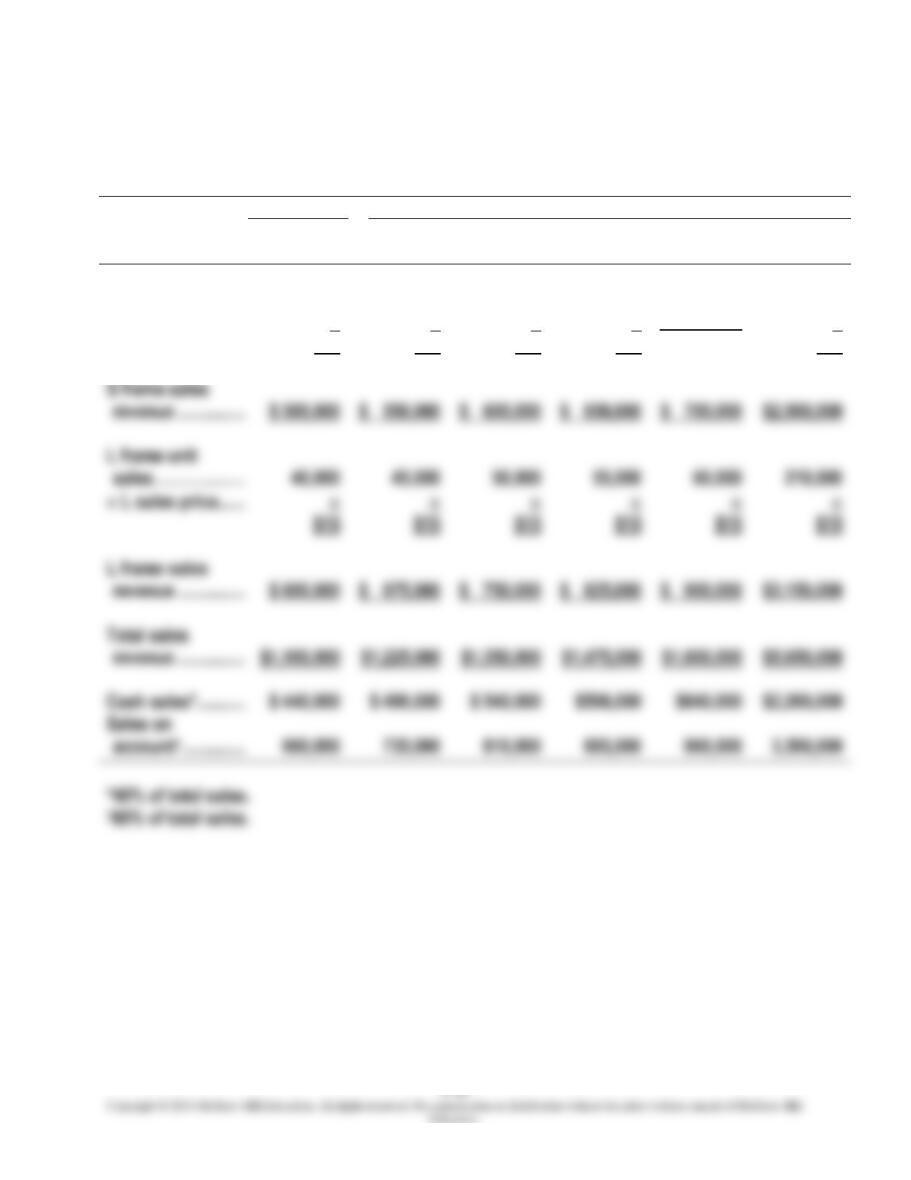
Sales budget:
20×4
20×5
4th
Quarter
1st
Quarter
2nd
Quarter
3rd
Quarter
4th
Quarter
Entire
Year
S frame unit
sales ………………..
50,000
55,000
60,000
65,000
70,000
250,000
S sales price …..
$10
$10
$10
$10
x $10
$10
S frame sales
revenue ……………
L frame unit
sales ………………..
40,000
45,000
50,000
55,000
60,000
210,000
L frame sales
$ 600,000
Total sales
Cash sales* ………..
*40% of total sales.
Chapter 09 – Financial Planning and Analysis: The Master Budget
CASE 9-45 (CONTINUED)
2.
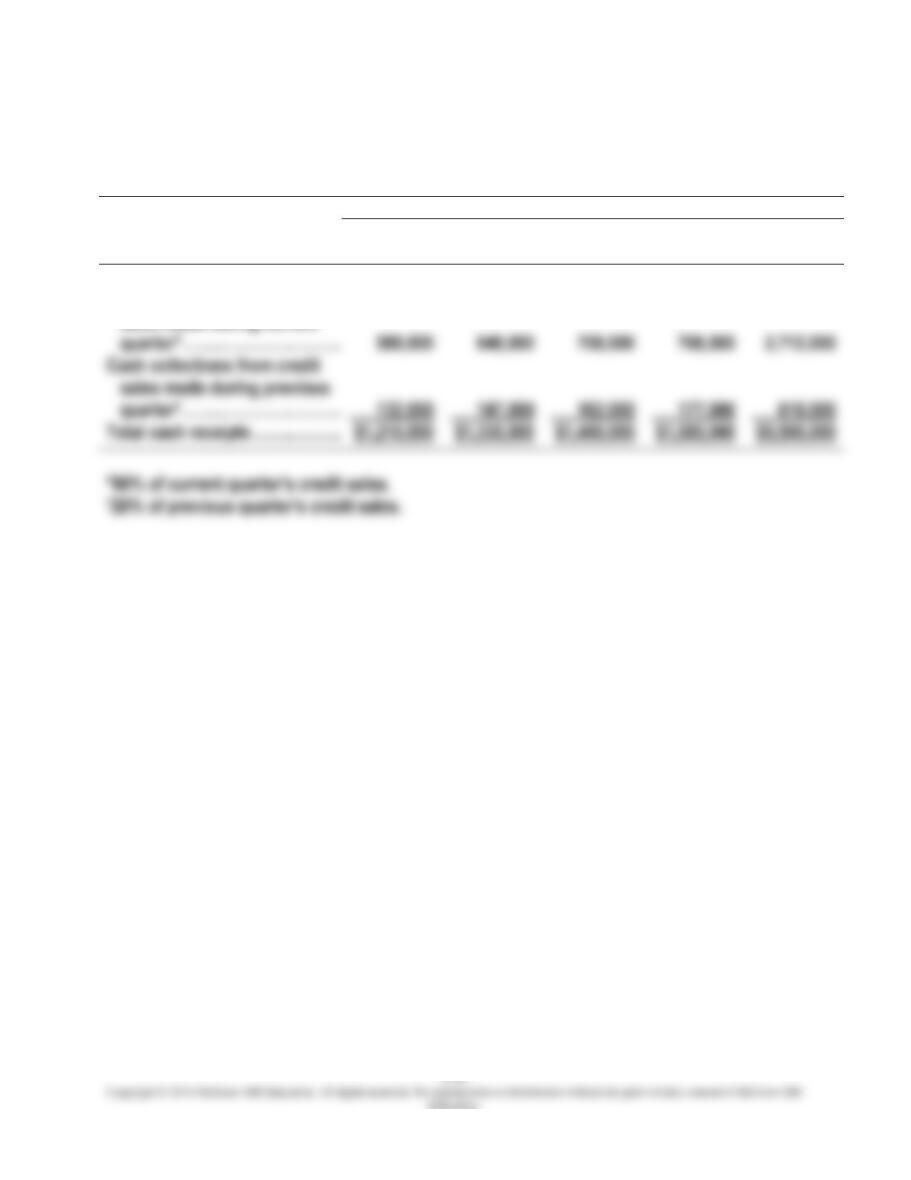
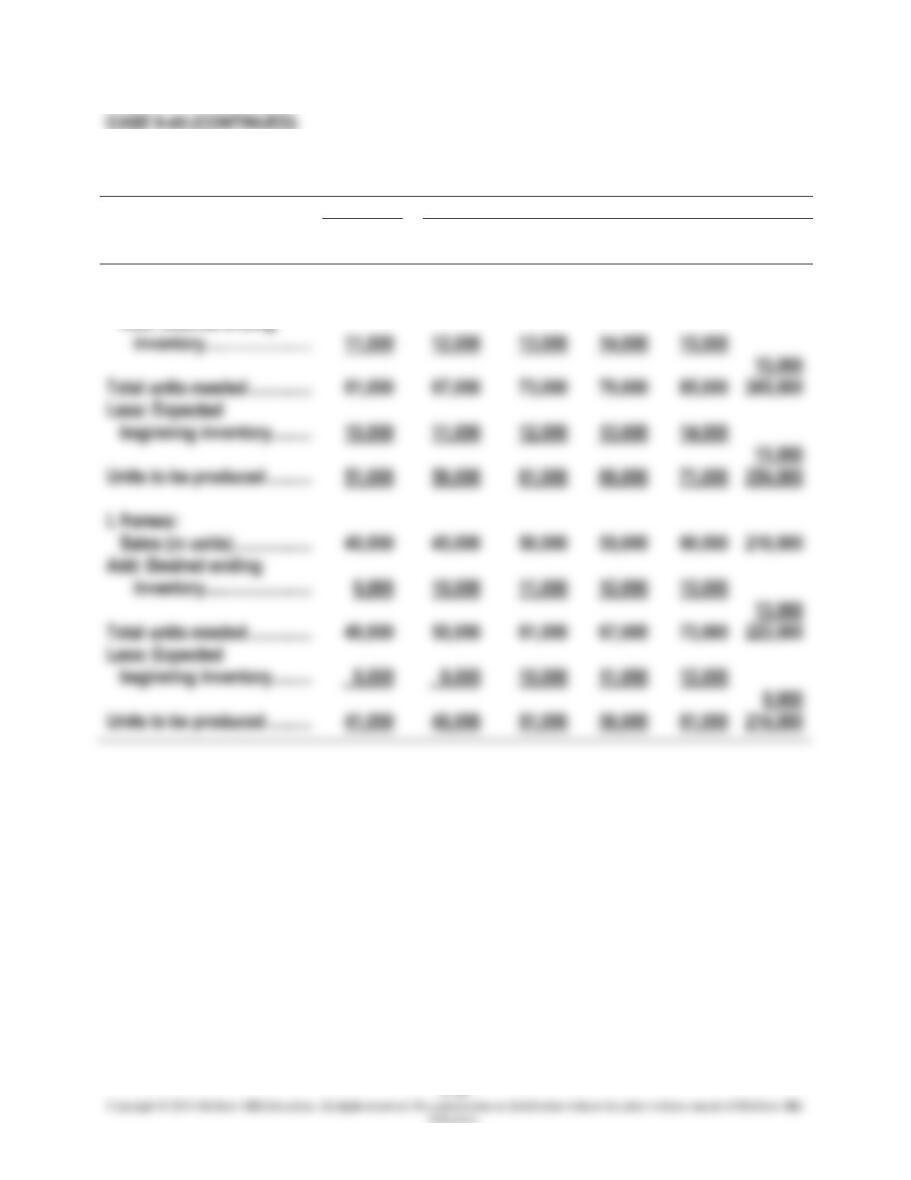
Cash receipts budget:
20×5
1st
Quarter
2nd
Quarter
3rd
Quarter
4th
Quarter
Entire
Year
Cash sales ……………………………………
$ 490,000
$ 540,000
$ 590,000
$ 640,000
$2,260,000
Cash collections from credit
*80% of current quarter’s credit sales.
Cash collections from credit
sales made during current
Chapter 09 – Financial Planning and Analysis: The Master Budget
3.
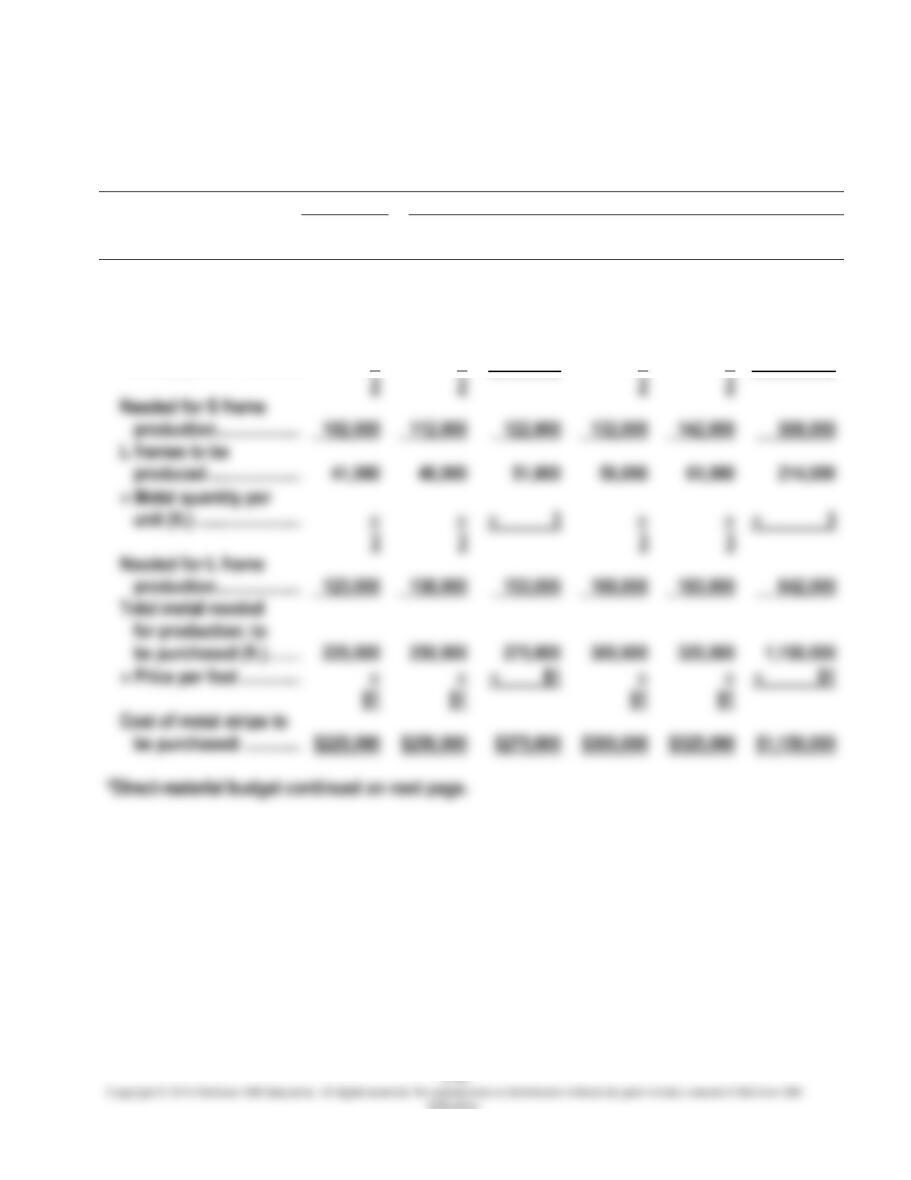
Production budget:
20×4
20×5
4th
Quarter
1st
Quarter
2nd
Quarter
3rd
Quarter
4th
Quarter
Entire
Year
S frames:
Sales (in units) ……………..
50,000
55,000
60,000
65,000
70,000
250,000
Total units needed …………..
61,000
67,000
73,000
79,000
85,000
265,000
Units to be produced ……….
51,000
56,000
61,000
66,000
71,000
254,000
L frames:
Sales (in units) ……………..
40,000
45,000
50,000
55,000
60,000
210,000
Total units needed …………..
49,000
55,000
61,000
67,000
223,000
Add: Desired ending
Chapter 09 – Financial Planning and Analysis: The Master Budget
CASE 9-45 (CONTINUED)
4.
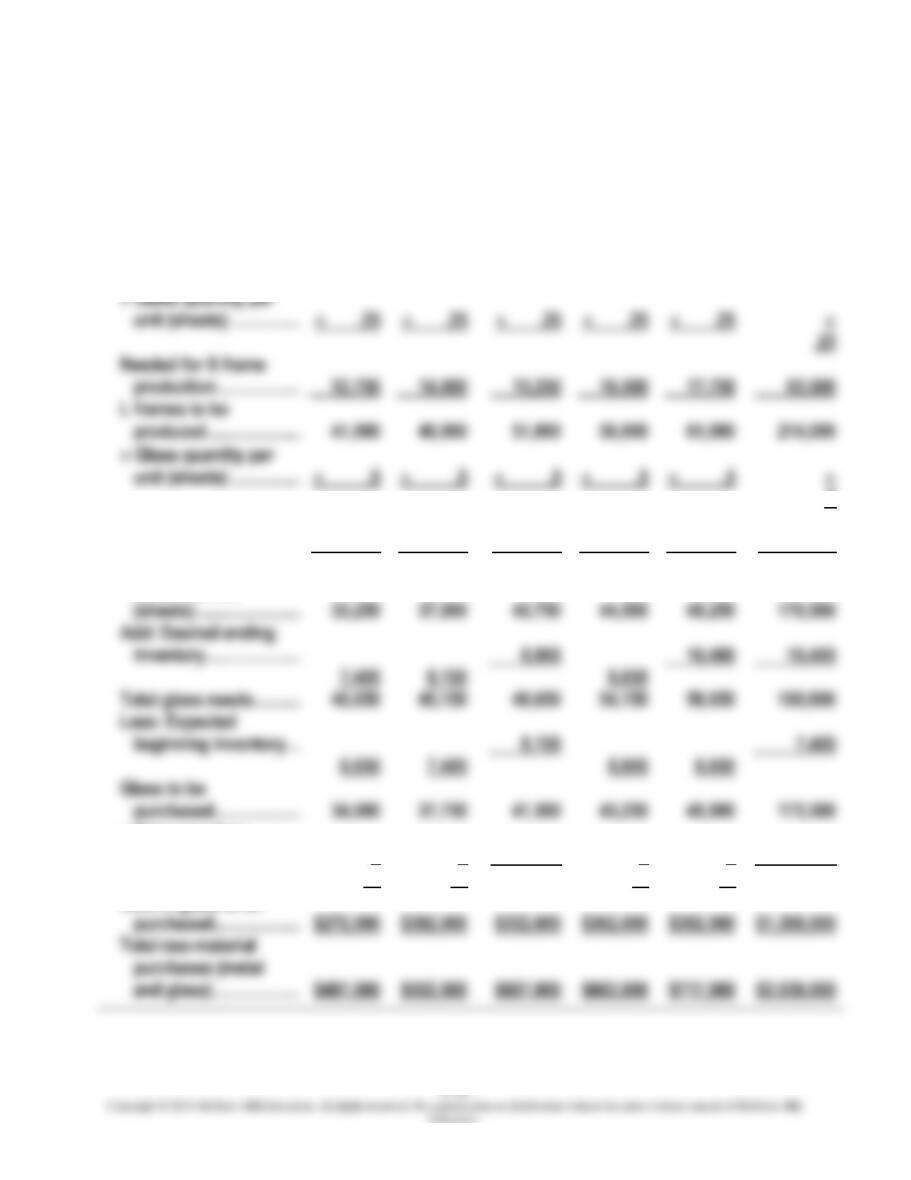
Direct-material budget:*
20×4
20×5
4th
Quarter
1st
Quarter
2nd
Quarter
3rd
Quarter
4th
Quarter
Entire
Year
Metal strips:
S frames to be
produced …………………..
51,000
56,000
61,000
66,000
71,000
254,000
Metal quantity per
unit (ft.) ……………………..
Needed for S frame
L frames to be
Metal quantity per
unit (ft.) ……………………..
3
3
Needed for L frame
be purchased (ft.) ……….
Cost of metal strips to
be purchased: ……………
*Direct-material budget continued on next page.
2
2
Chapter 09 – Financial Planning and Analysis: The Master Budget
CASE 9-45 (CONTINUED)
20×4
20×5
4th
Quarter
1st
Quarter
2nd
Quarter
3rd
Quarter
4th
Quarter
Entire
Year
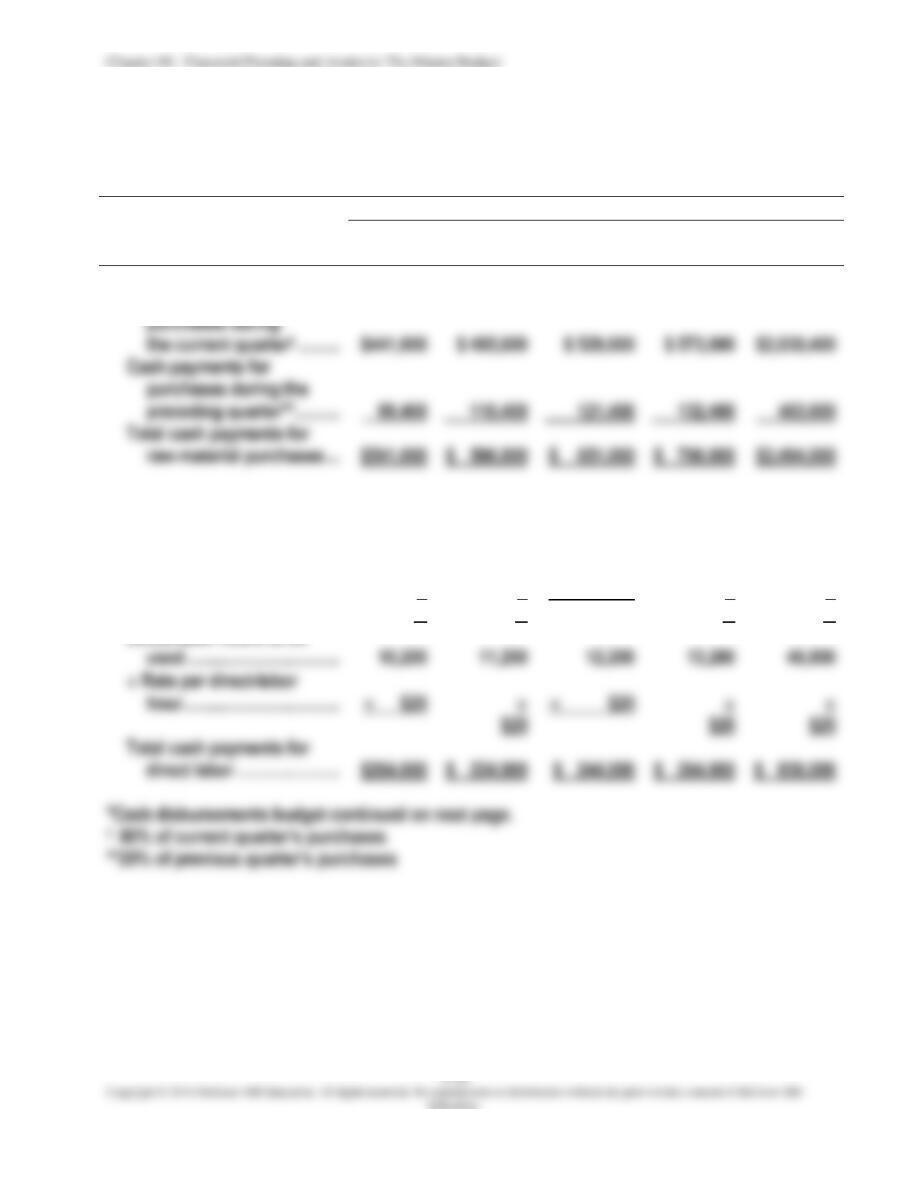
Glass sheets:
S frames to be
produced …………………..
51,000
56,000
61,000
66,000
71,000
254,000
Glass quantity per
unit (sheets) ………………
Needed for S frame
production …………………
12,750
14,000
15,250
16,500
17,750
L frames to be
Glass quantity per
unit (sheets) ………………
.5
Needed for L frame
production …………………
20,500
23,000
25,500
28,000
30,500
107,000
Add: Desired ending
inventory……………………
Total glass needs ………….
Glass to be
purchased ………………….
34,000
37,750
41,500
45,250
49,000
173,500
Total glass needed
for production
Price per glass
sheet …………………………
$8
$8
$8
$8
$8
$8
purchased ………………….
Cost of glass to be
CASE 9-45 (CONTINUED)
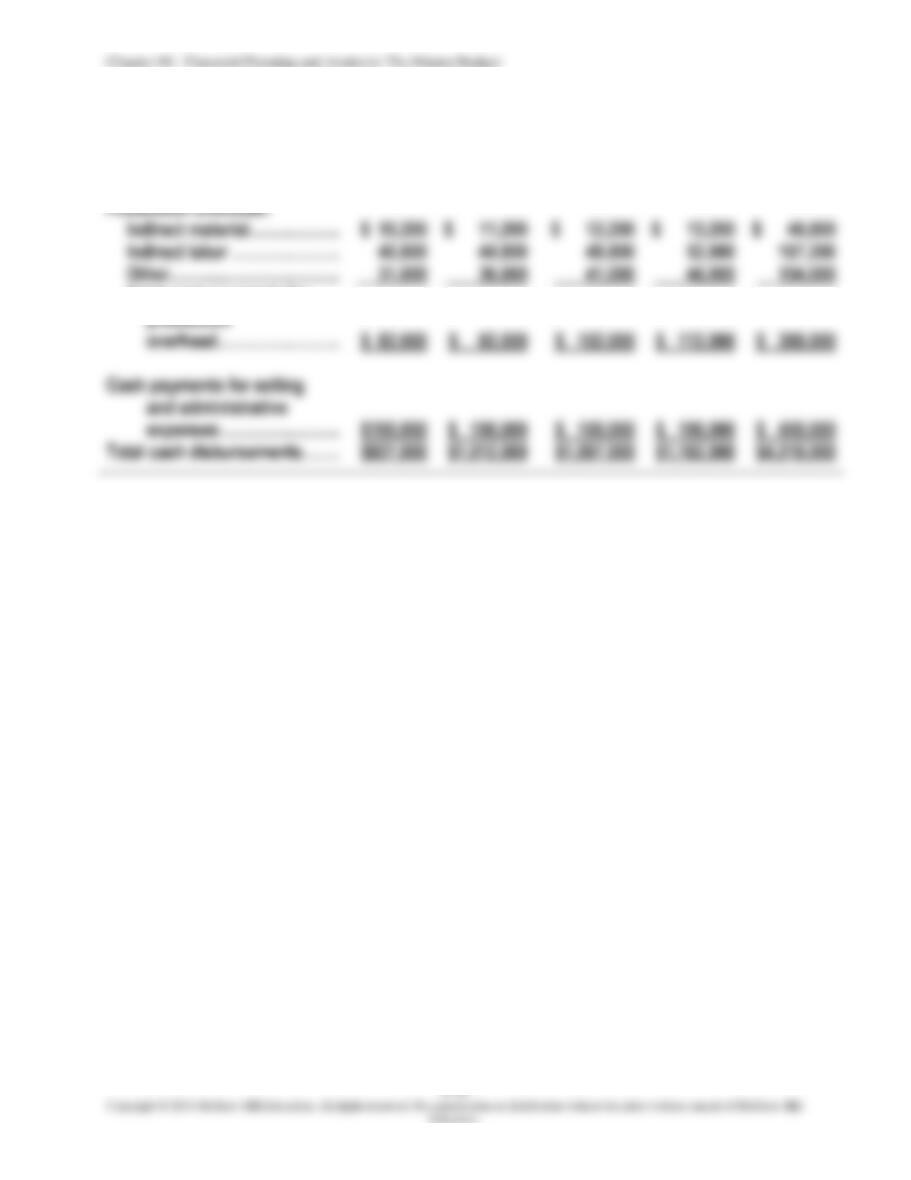
5. Cash disbursements budget:*
205
1st
Quarter
2nd
Quarter
3rd
Quarter
4th
Quarter
Entire
Year
Raw-material purchases:
Cash payments for
Total cash payments for
raw-material purchases …
Cash payments for
Direct labor:
Frames produced
(S and L) ………………………
102,000
112,000
122,000
132,000
468,000
Direct-labor hours per
frame …………………………...
.1
.1
.1
.1
.1
hour ……………………………..
Total cash payments for
*Cash disbursements budget continued on next page.
Direct-labor hours to be
CASE 9-45 (CONTINUED)
1st
Quarter
2nd
Quarter
3rd
Quarter
4th
Quarter
Entire
Year
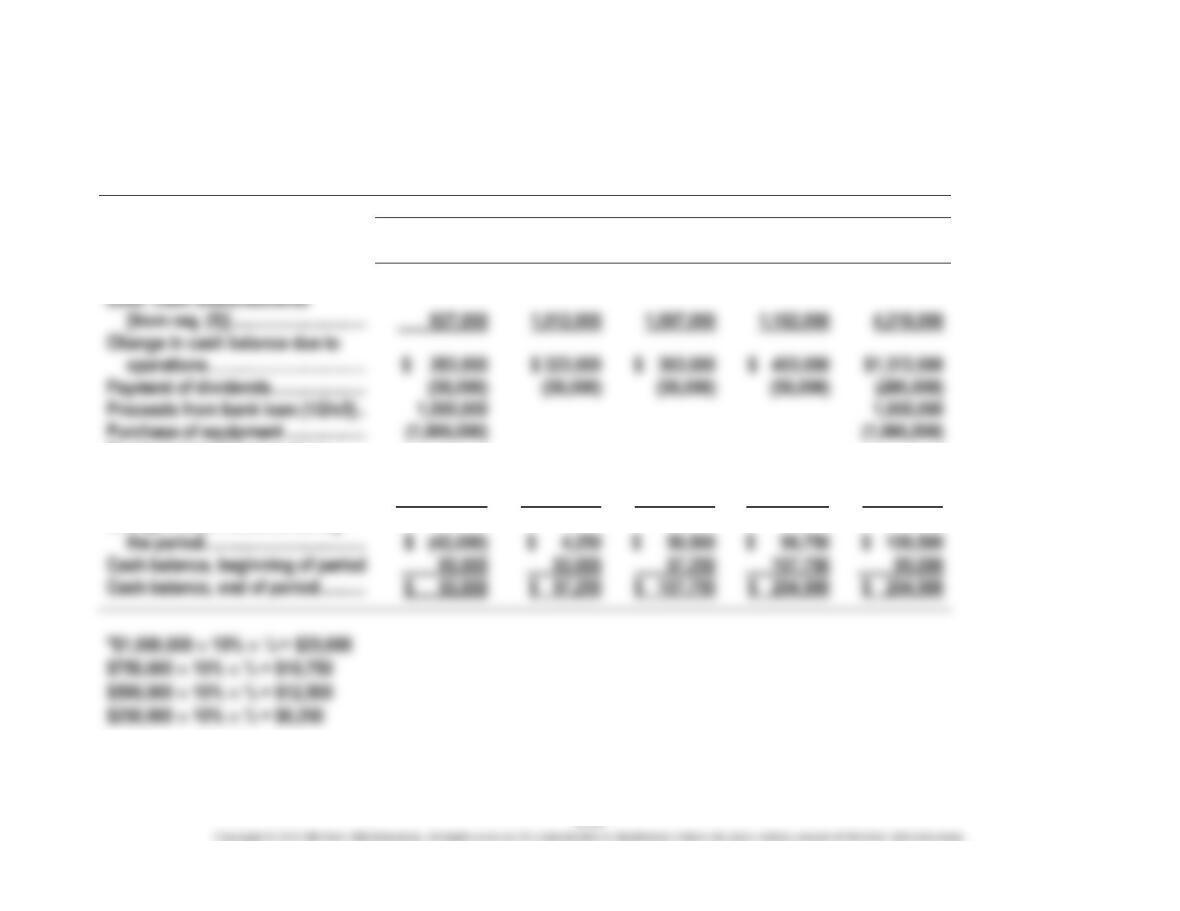
Production overhead:
Indirect material ………………..
Indirect labor ……………………
Other ………………………………..
Total cash payments for
Chapter 09 – Financial Planning and Analysis: The Master Budget
CASE 9-45 (CONTINUED)
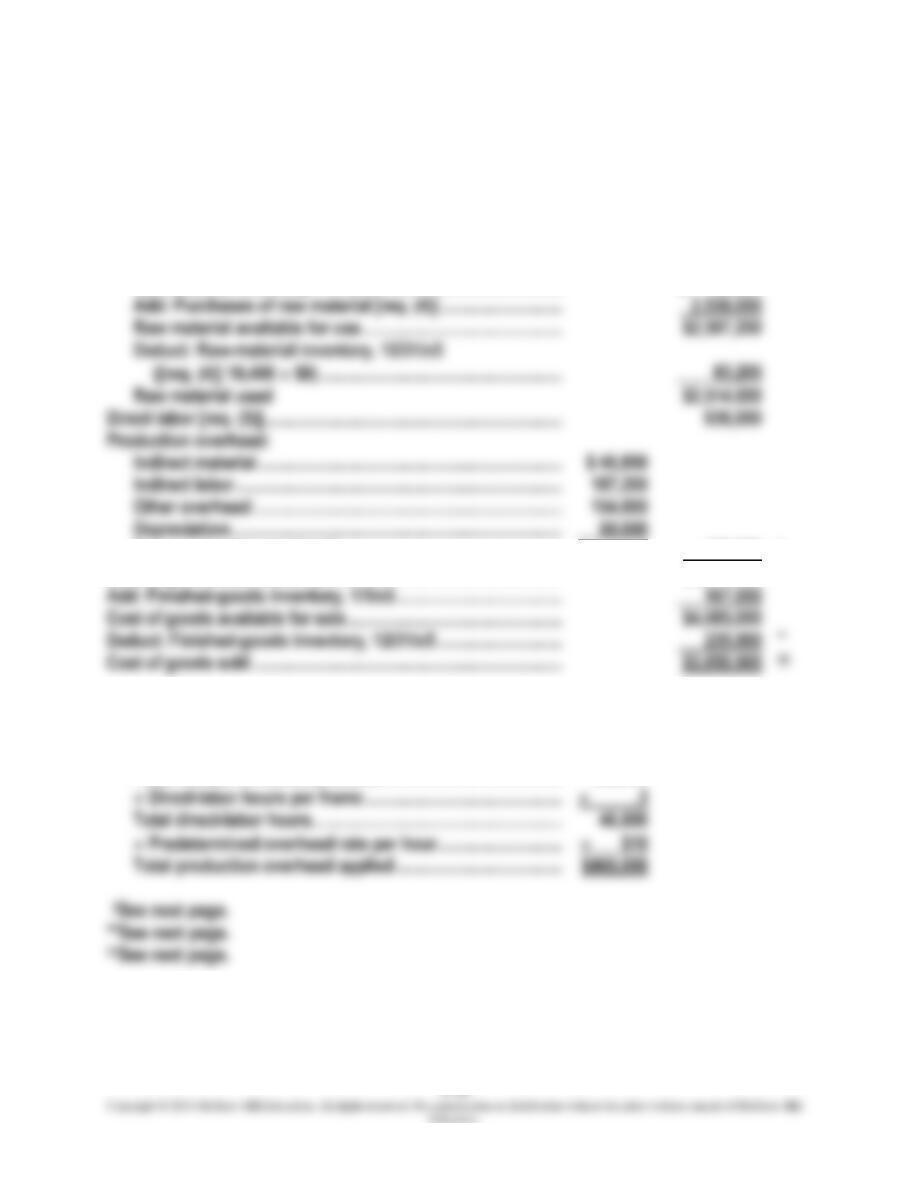
6.
Summary cash budget:
20×5
1st
Quarter
2nd
Quarter
3nd
Quarter
4th
Quarter
Entire
Year
Cash receipts [from req. (2)] ……….
$1,210,000
$1,335,000
$1,460,000
$1,585,000
$5,590,000
Less: Cash disbursements
[from req. (5)] …………………………
Change in cash balance due to
operations ……………………………..
Payment of dividends …………………
Purchase of equipment ………………
Quarterly installment on loan
principal ………………………………..
(250,000)
(250,000)
(250,000)
(250,000)
(1,000,000)
Quarterly interest payment* ………..
(25,000)
(18,750)
(12,500)
(6,250)
(62,500)
the period ………………………………
Cash balance, beginning of period
57,250
95,000
Change in cash balance during
Chapter 09 – Financial Planning and Analysis: The Master Budget
CASE 9-45 (CONTINUED)
7.
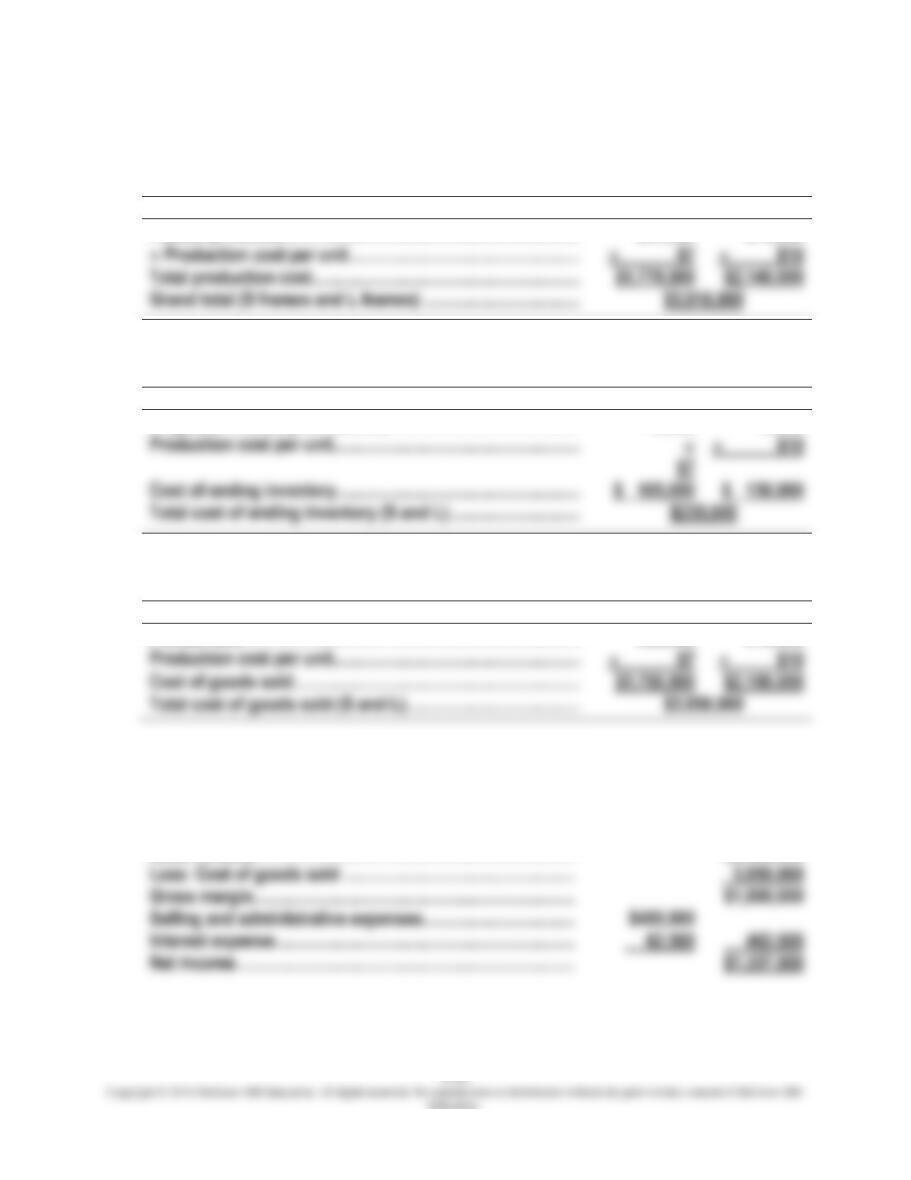
PHOTO ARTISTRY COMPANY
BUDGETED SCHEDULE OF COST OF GOODS MANUFACTURED AND SOLD
FOR THE YEAR ENDED DECEMBER 31, 20X5
Direct material:
Raw-material inventory, 1/1/x5 ………………………………………….
$ 59,200
Add: Purchases of raw material [req. (4)] ………………………….
Raw material available for use ………………………………………….
$2,597,200
Raw material used
$2,514,000
Direct labor [req. (5)] ……………………………………………………………..
Production overhead:
Indirect material ………………………………………………………………
Indirect labor …………………………………………………………………..
187,200
Other overhead ……………………………………………………….………
154,000
Depreciation ……………………………………………………….…………..
Total production overhead ……………………………………………….
__ 468,000
*
Cost of goods manufactured …………………………………………………
$3,918,000
†
Add: Finished-goods inventory, 1/1/x5 …………………………………..
Cost of goods available for sale …………………………………………….
$4,085,000
Deduct: Finished-goods inventory, 12/31/x5 …………………………..
Cost of goods sold ……………………………………………………………….
*In the budget, budgeted and applied production overhead are equal. The applied
production overhead may be verified independently as follows:
Total number of frames produced …………………………………….
468,000
Total direct-labor hours ……………………………………………………
Total production overhead applied …………………………………..
**See next page.
Chapter 09 – Financial Planning and Analysis: The Master Budget
CASE 9-45 (CONTINUED)
†The cost of goods manufactured may be verified independently as follows:
S Frames
L Frames
Frames produced …………………………………………………………
254,000
214,000
Total production cost ……………………………………………………
$1,778,000
$2,140,000
**The finished-goods inventory on 12/31/x5 may be verified independently as follows:
S Frames
L Frames
Projected inventory on 12/31/x5 …………………………………….
15,000
13,000
Cost of ending inventory ………………………………………………
††The cost of goods sold may be verified independently as follows:
S Frames
L Frames
Frames sold …………………………………………………………………
250,000
210,000
Cost of goods sold ……………………………………………………….
$1,750,000
$2,100,000
8.
PHOTO ARTISTRY COMPANY
BUDGETED INCOME STATEMENT
FOR THE YEAR ENDED DECEMBER 31, 20X5
Sales revenue ……………………………………………………………..
$5,650,000
Less: Cost of goods sold …………………………………………….
Gross margin ……………………………………………………….……..
$1,800,000
Selling and administrative expenses …………………………....
Interest expense ………………………………………………………….
Net income ………………………………………………………………….
$1,337,500
CASE 9-45 (CONTINUED)
9.
PHOTO ARTISTRY COMPANY
BUDGETED STATEMENT OF RETAINED EARNINGS
FOR THE YEAR ENDED DECEMBER 31, 20X5
Retained earnings, 12/31/x4 ………………………………………………………………
Add: Net income ……………………………………………………………………………….
Deduct: Dividends …………………………………………………………………………….
Retained earnings, 12/31/x5 ………………………………………………………………
10.
PHOTO ARTISTRY COMPANY
BUDGETED BALANCE SHEET
DECEMBER 31, 20X5
Cash ………………………………………………………………………………………………..
$ 204,500
Accounts receivable* ………………………………………………………………………..
192,000
Inventory:
Raw material† ……………………………………………………………………………..
Finished goods …………………………………………………………………………..
235,000
Plant and equipment (net of accumulated depreciation)** …………………..
Total assets ……………………………………………………………………………………..
Accounts payable†† …………………………………………………………………………..
$ 143,400
Common stock ……………………………………………………….………………………..
Retained earnings …………………………………………………………………………….
Total liabilities and stockholders’ equity …………………………………………….
**$8,000,000 + $1,000,000 – $80,000
Chapter 09 – Financial Planning and Analysis: The Master Budget
FOCUS ON ETHICS (See page 382 in the text.)
Is padding the budget unethical? Some accountants argue that budget padding is a
vicious cycle: budgets are padded by lower-level managers because they believe top
management will cut the budget, and budgets are cut by top management because they
believe the submitted budget has been padded by lower-level managers. This situation