Chapter 9
Flexible Budgets and Performance Analysis
Solutions to Questions
9-1 A planning budget is prepared before
the period begins and is valid for only the
planned level of activity. It is sometimes referred
to as a static planning budget because it is not
adjusted even if the level of activity
subsequently changes.
9-3 Actual results can differ from the budget
for many reasons. Very broadly speaking, the
differences are usually due to a change in the
level of activity, changes in prices, and changes
in how effectively resources are managed.
9-4 As noted above, a difference between
the budget and actual results can be due to
many factors. Most importantly, the level of
activity can have a very big impact on costs.
From a manager’s perspective, a variance that is
due to a change in activity is very different from
a variance that is due to changes in prices and
changes in how effectively resources are
managed. A variance of the first kind requires
assumed in the planning budget. Caution should
be exercised in interpreting an activity variance.
The “favorable” and “unfavorable” labels are
perhaps misleading for activity variances that
involve costs. A “favorable” activity variance for
a cost occurs because the cost has some
9-6 If the actual level of activity is greater
than the planned level of activity, the activity
variances for variables expenses will be
unfavorable.
9-7 A revenue variance is the difference
between the actual revenue for the period and
how much the revenue should have been, given
the actual level of activity. A revenue variance is
easy to interpret. A favorable revenue variance
occurs because the revenue is greater than
expected for the actual level of activity. An
unfavorable revenue variance occurs because
the revenue is less than expected for the actual
level of activity.
9-9 In a flexible budget performance report,
the actual results are not directly compared to
the static planning budget. The flexible budget is
interposed between the actual results and the
static planning budget. The differences between
the flexible budget and the static planning
variances) from the differences that are due to
changes in prices and the effectiveness with
which resources are managed (the revenue and
spending variances).
9-10 The only difference between a flexible
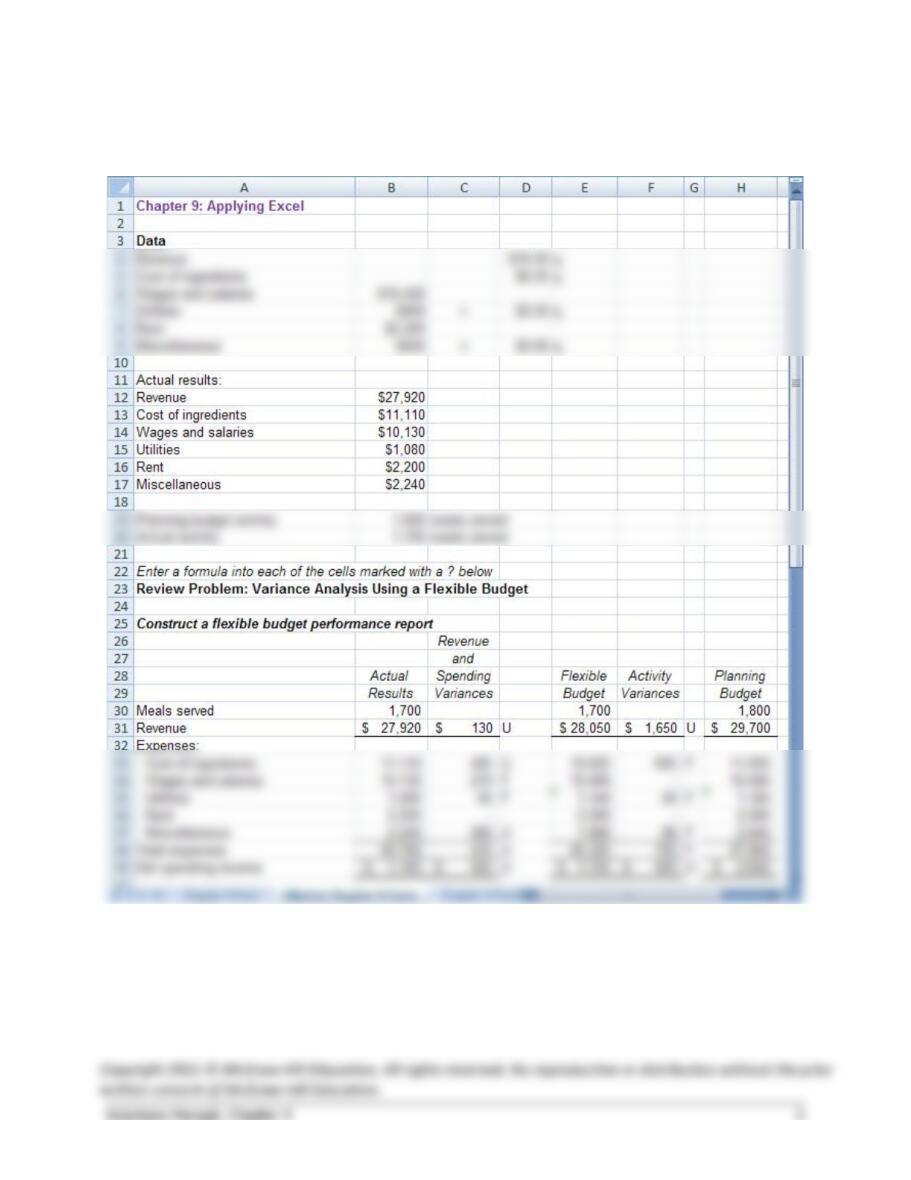
Chapter 9: Applying Excel
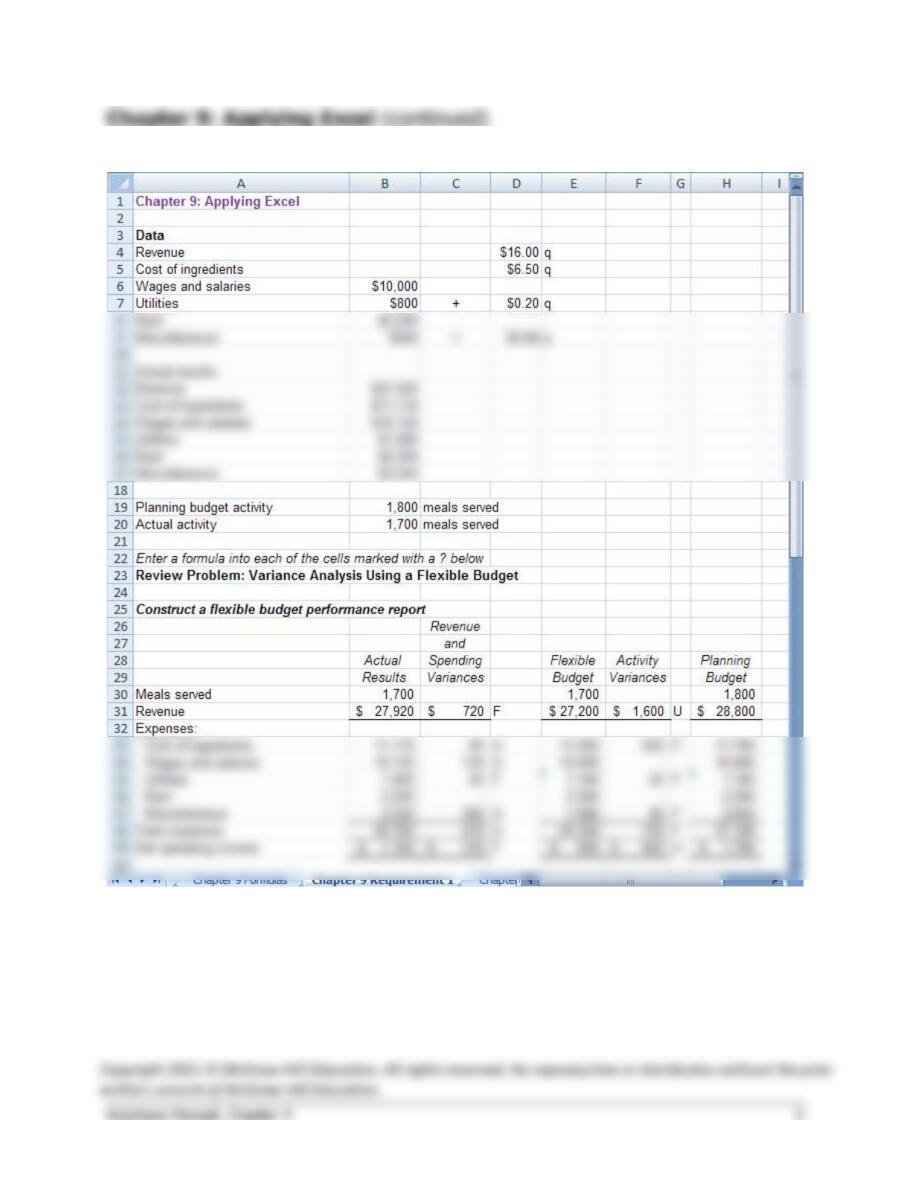
The completed worksheet is shown below.
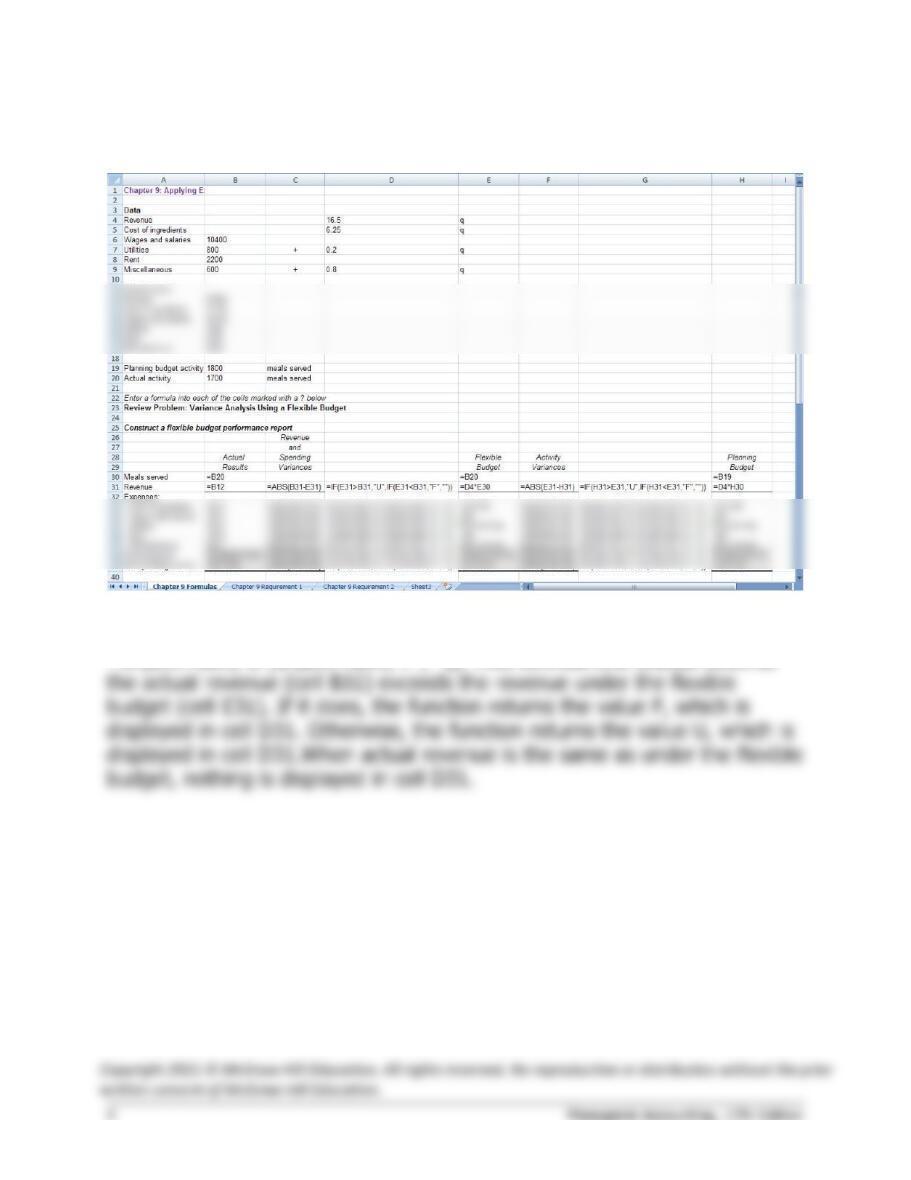
Chapter 9: Applying Excel (continued)
The completed worksheet, with formulas displayed, is shown below.
Note: For formulas to compute whether a variance is Favorable or
Unfavorable, use the IF() function. For example, in cell D31, the formula is
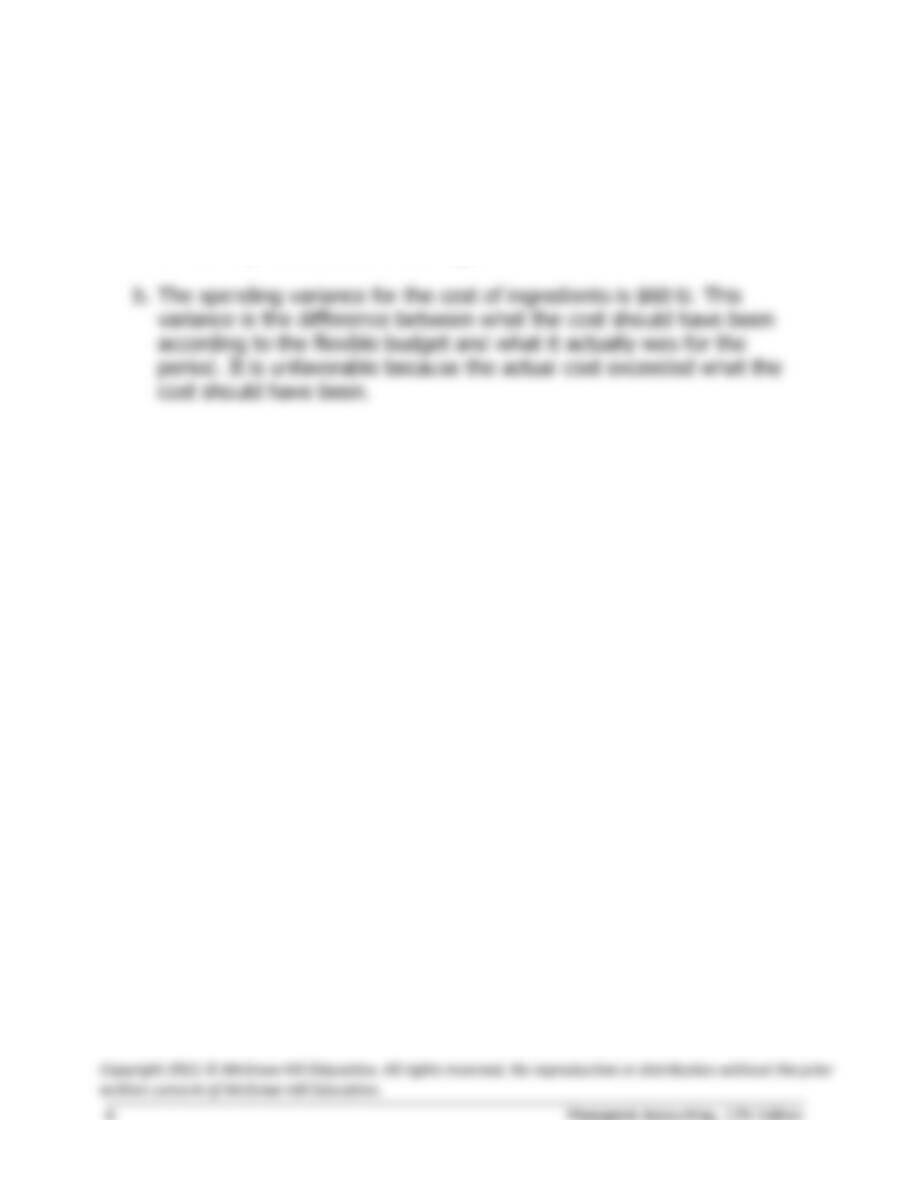
1. With the changes in data, the result is:
Chapter 9: Applying Excel (continued)
a. The activity variance for revenue is $1,600 U. This variance is the
difference between the revenue under the planning budget and under
the flexible budget. It is unfavorable because the actual activity is
less than the budgeted activity and consequently revenue should be
less than planned under the budget.
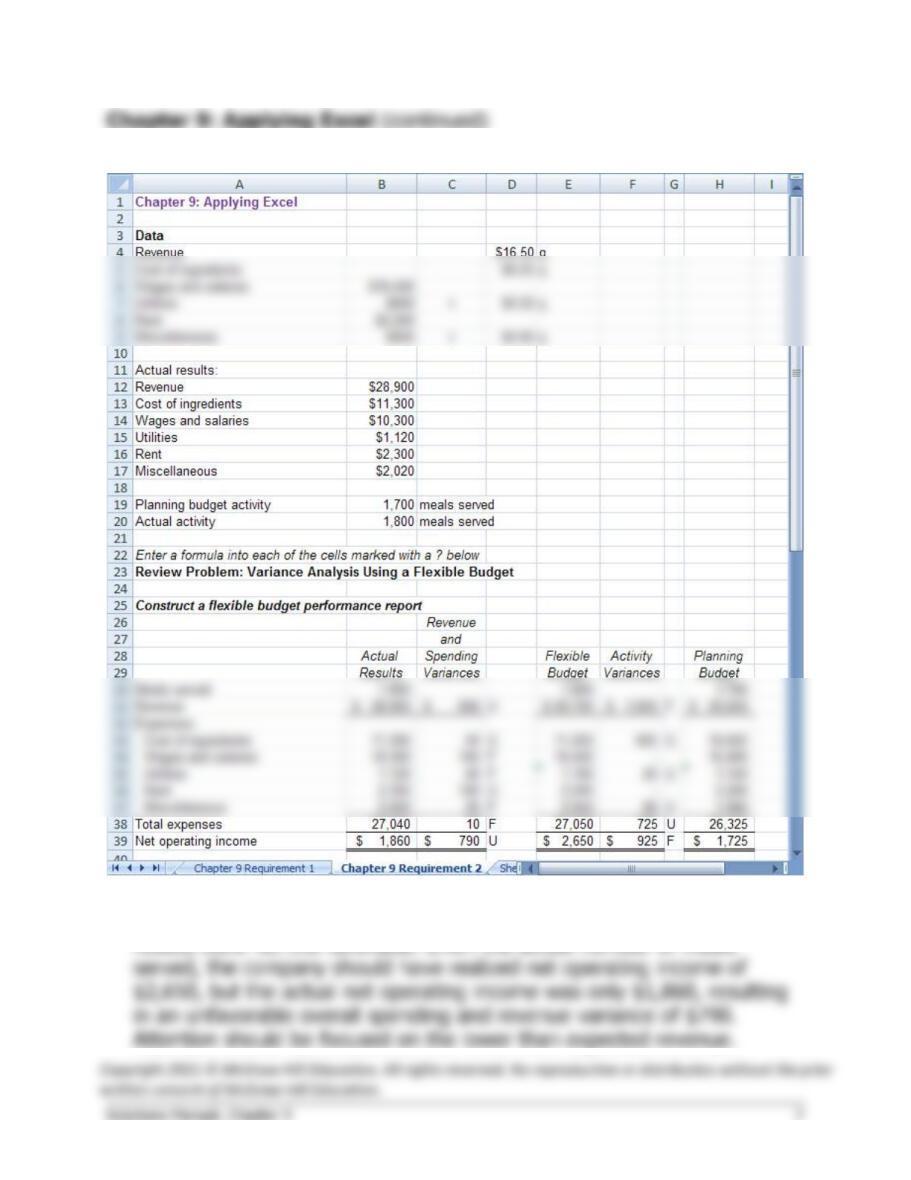
2. With the revised data, the worksheet should look like this:
Actual activity exceeded planned activity by 100 meals served, which
should have boosted net operating income by $925. However, actual

The Foundational 15
1. The amount of revenue in the flexible budget for May is:
Revenue:
Variable element per customer served (a) …….
$5,000
Actual activity (b) ……………………………………
35
Amount in flexible budget (a) × (b) …………….
2. The amount of employee salaries and wages in the flexible budget for
May is:
Employee salaries and wages:
Variable element per customer served (a) …….
$1,100
Actual activity (b) ……………………………………
35
Variable portion of the amount (a) × (b) ……..
$38,500
Variable portion of the amount …………………..
$38,500
Fixed element per month ………………………….
50,000
Amount in flexible budget …………………………
$88,500
3. The amount of travel expenses in the flexible budget for May is:
Travel expenses:
Variable element per customer served (a) …….
Actual activity (b) ……………………………………
35
Amount in flexible budget (a) × (b) …………….
$21,000
4. The amount of Other Expenses included in the flexible budget for May
would be the fixed element per month of $36,000.
5. The net income reported in the flexible budget can be derived by
combining the answers to questions 1-4 as follows:
Revenue ……………………………………….
$175,000
Employee salaries and wages …………….
$88,500
Travel expenses ……………………………..
21,000
Other expenses ………………………………
36,000
145,500
Net operating income ………………………
$ 29,500
The Foundational 15
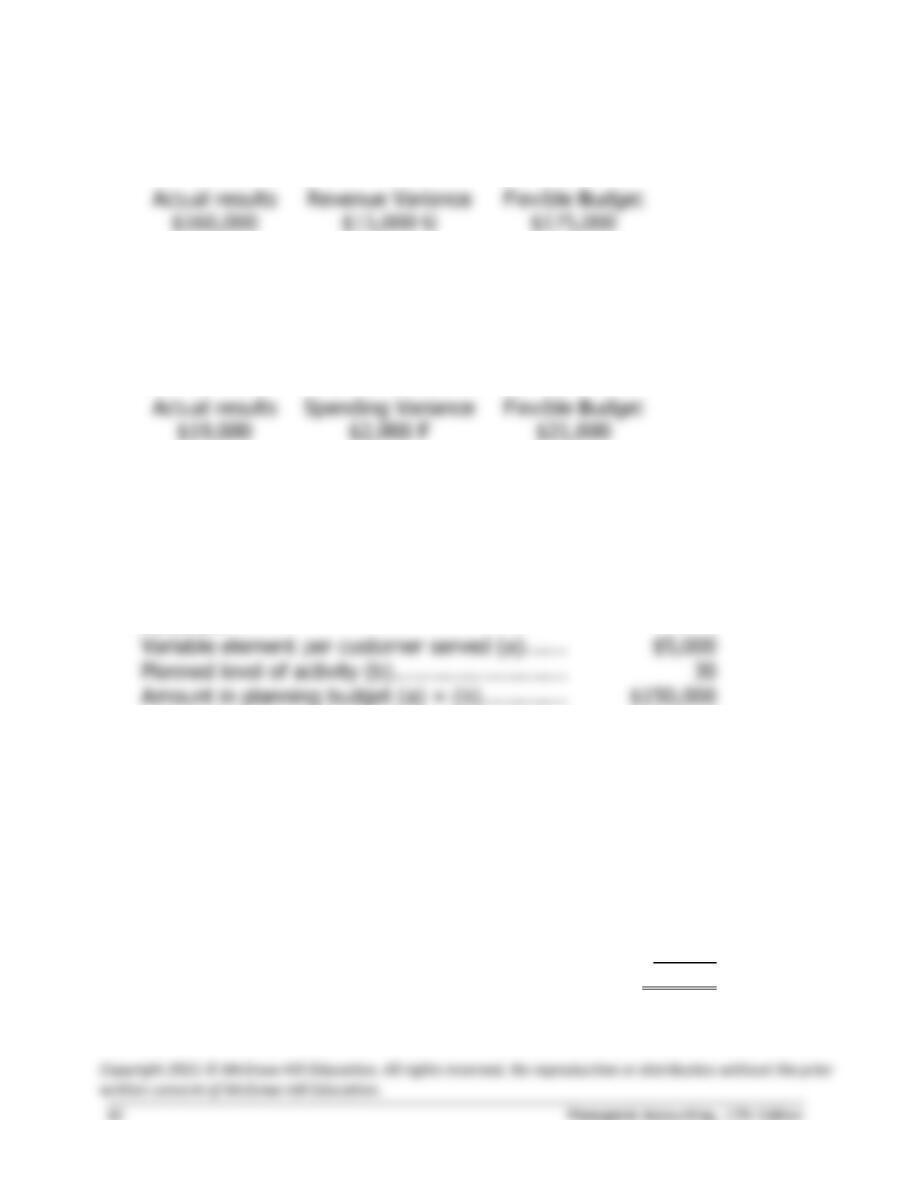
6. The revenue variance for May is:
7. The employee salaries and wages spending variance for May is:
Actual results
Spending Variance
Flexible Budget
$88,000
$500 F
$88,500
8. The travel expenses spending variance for May is:
$19,000
$2,000 F
$21,000
9. The other expenses spending variance for May is:
Actual results
Spending Variance
Flexible Budget
$34,500
$1,500 F
$36,000
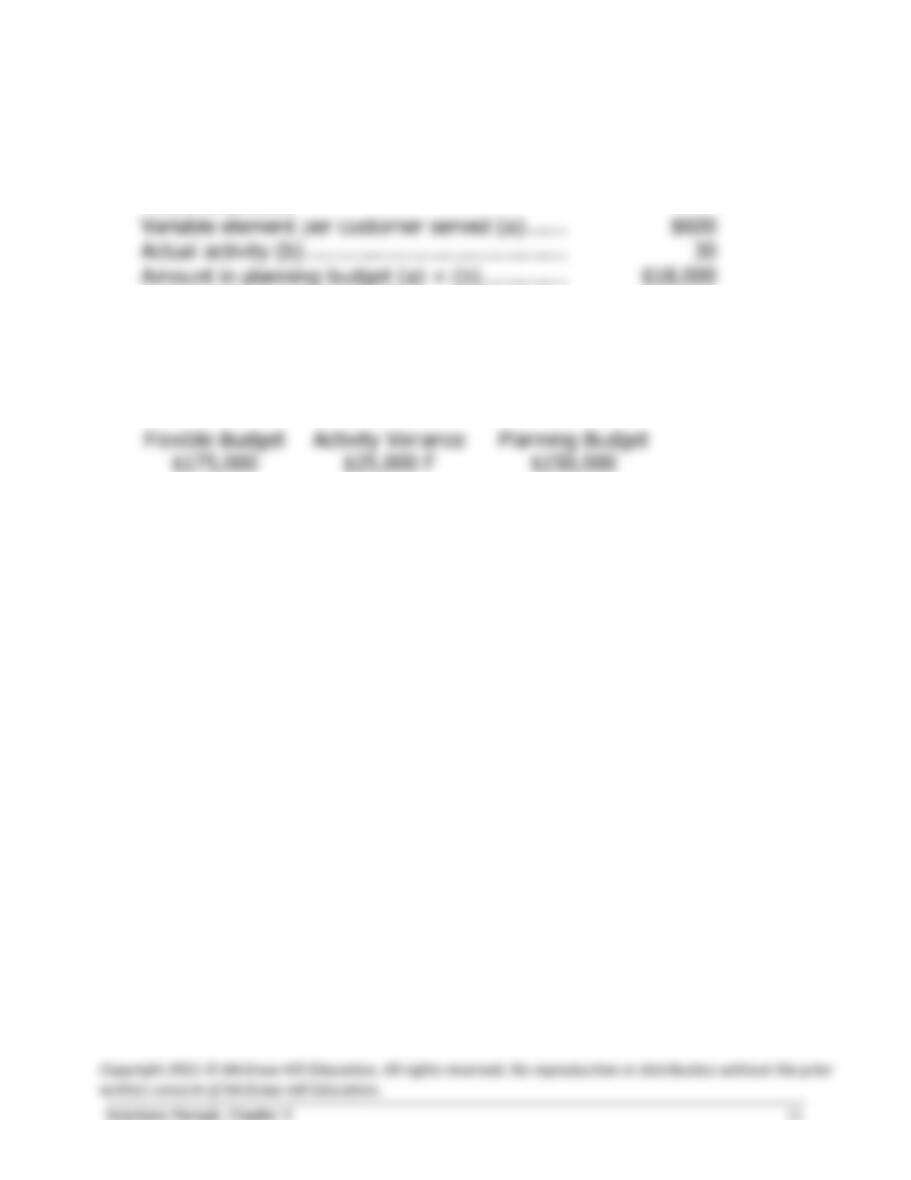
10. The amount of revenue in the planning budget for May is:
Revenue:
Variable element per customer served (a) …….
$5,000
Planned level of activity (b) ……………………….
30
Amount in planning budget (a) × (b) …………..
11. The amount of employee salaries and wages in the planning budget for
May is:
Employee salaries and wages:
Variable element per customer served (a) …….
$1,100
Actual activity (b) ……………………………………
30
Variable portion of the amount (a) × (b) ……..
$33,000
Variable portion of the amount …………………..
$33,000
Fixed element per month ………………………….
50,000
Amount in planning budget ……………………….
$83,000
The Foundational 15
12. The amount of travel expenses in the planning budget for May is:
Travel expenses:
Variable element per customer served (a) …….
Actual activity (b) ……………………………………
Amount in planning budget (a) × (b) …………..
13. The amount of Other Expenses included in the planning budget for
May would be the fixed element per month of $36,000.
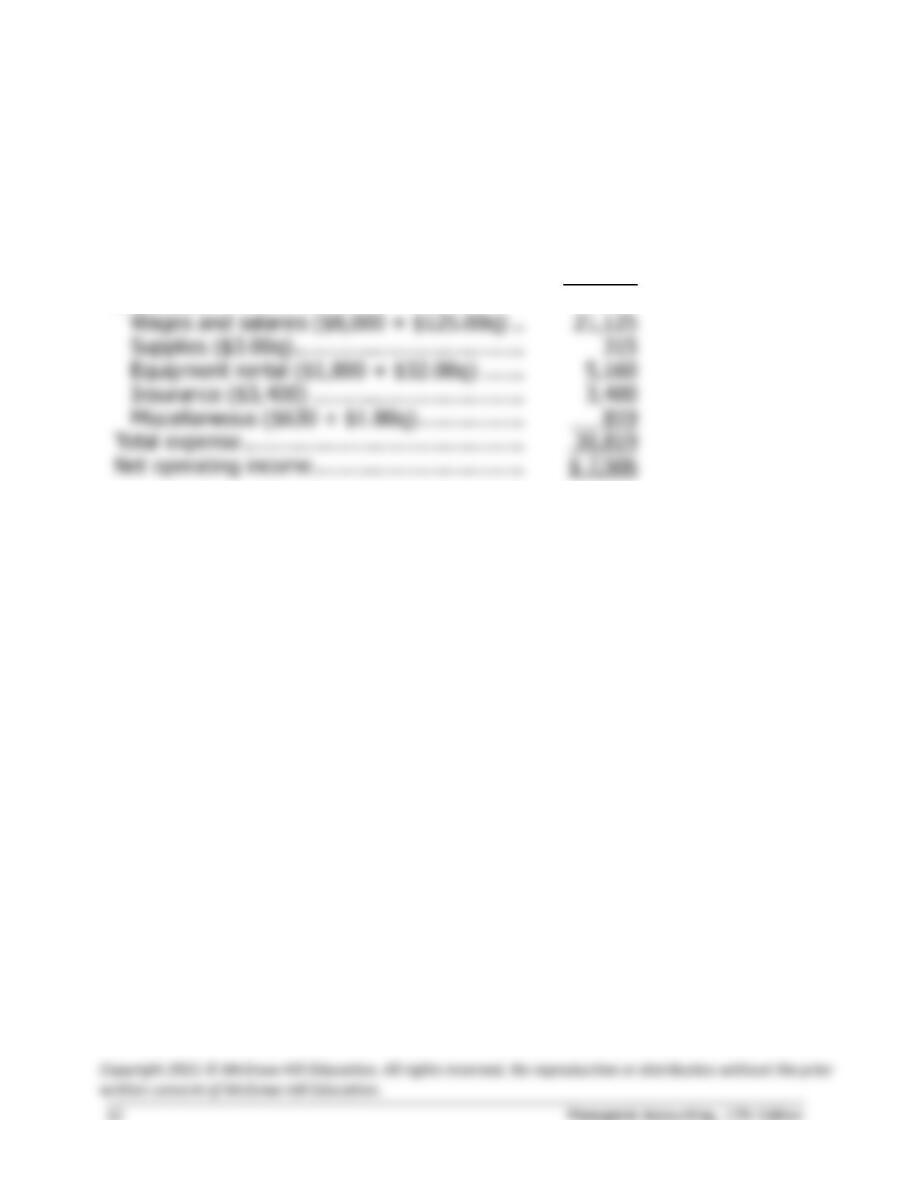
14. The activity variance for revenue for May is:
15. The activity variances for the expenses for May are as follows:
Flexible
Budget
Activity
Variance
Planning
Budget
Employee salaries and wages …
$88,500
$5,500 U
$83,000
Travel expenses ………………….
$21,000
$3,000 U
$18,000
Other expenses …………………..
$36,000
$0
$36,000
Exercise 9-1 (10 minutes)
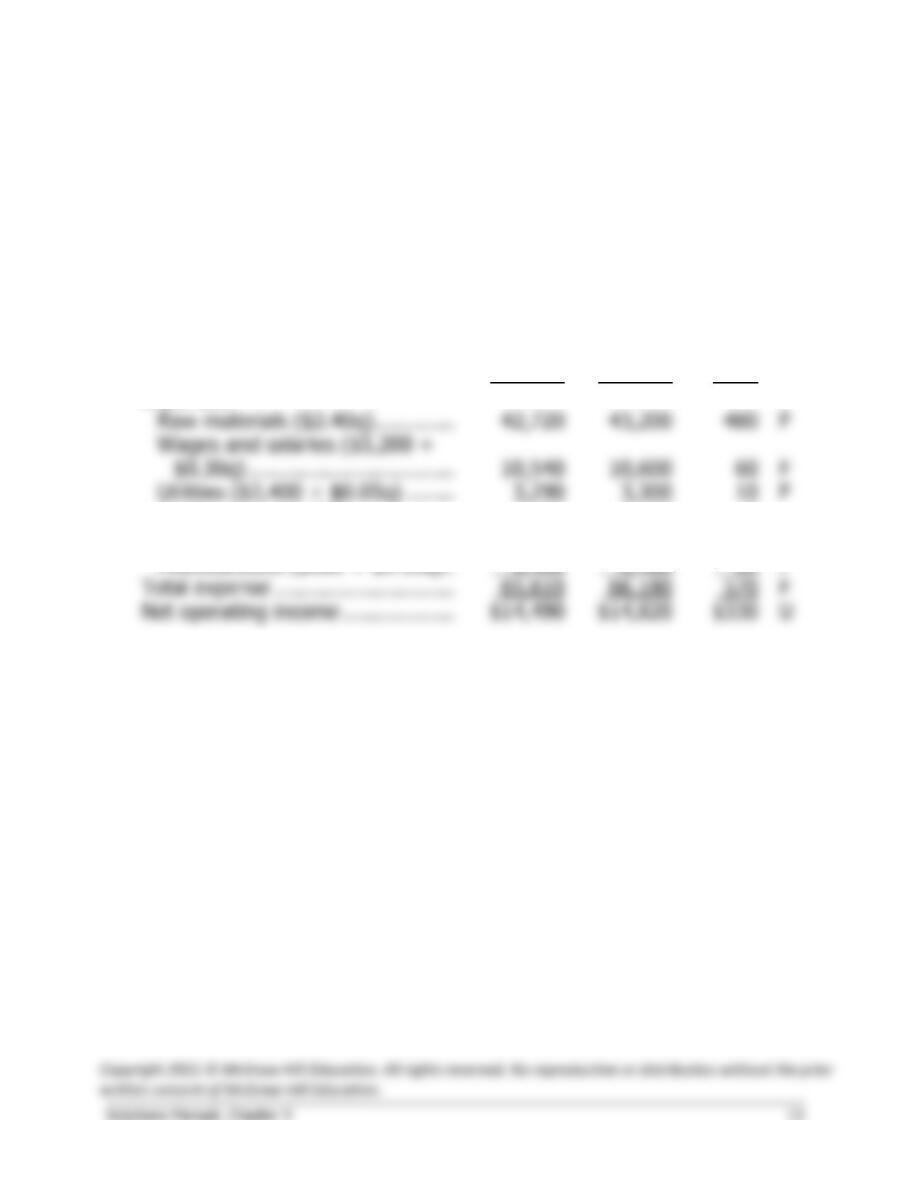
Puget Sound Divers
Flexible Budget
For the Month Ended May 31
Actual diving-hours ……………………………….
105
Revenue ($365.00q) ……………………………..
$38,325
Expenses:
315
Total expense ………………………………………
Net operating income…………………………….
Exercise 9-2 (15 minutes)
1. The activity variances are shown below:
Flight Café
Activity Variances
For the Month Ended July 31
Flexible
Budget
Planning
Budget
Activity
Variances
Meals …………………………………..
17,800
18,000
Revenue ($4.50q) …………………..
$80,100
$81,000
$900
U
Expenses:
Raw materials ($2.40q) ………….
F
F
Utilities ($2,400 + $0.05q) ……..
F
Facility rent ($4,300) …………….
4,300
4,300
0
Insurance ($2,300) ……………….
2,300
2,300
0
Miscellaneous ($680 + $0.10q) ..
2,460
F
Total expense ………………………..
F
2. Management should be concerned that the level of activity fell below
what had been planned for the month. This led to an expected decline
in profits of $330. However, the individual items on the report should
not receive much management attention. The unfavorable variance for
revenue and the favorable variances for expenses are entirely caused by
the drop in activity.
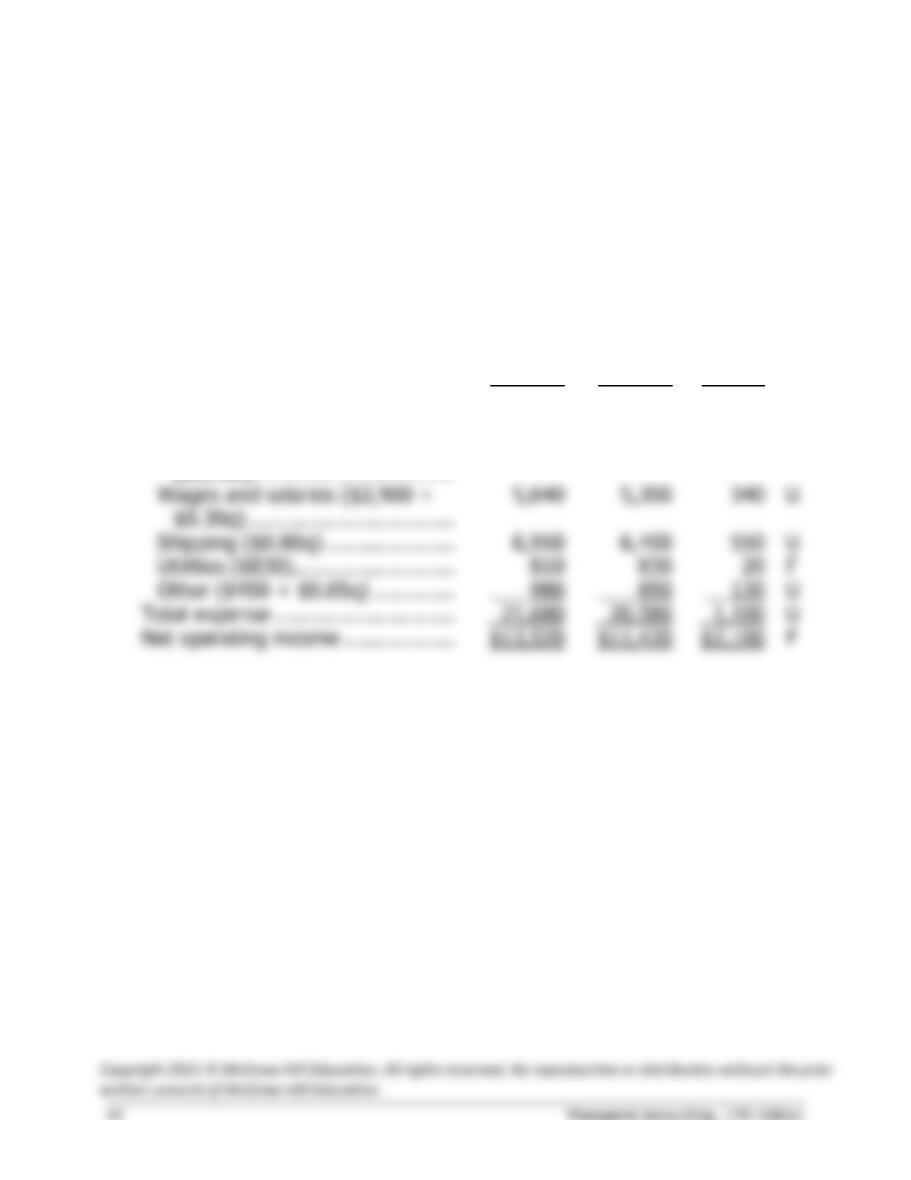
Exercise 9-3 (15 minutes)
Quilcene Oysteria
Revenue and Spending Variances
For the Month Ended August 31
Actual
Results
Flexible
Budget
Revenue
and
Spending
Variances
Pounds …………………………………
8,000
8,000
Revenue ($4.00q) …………………..
$35,200
$32,000
$3,200
F
Expenses:
Packing supplies ($0.50q) ………
4,200
4,000
200
U
Oyster bed maintenance
Wages and salaries ($2,900 +
5,640
5,300
340
U
Shipping ($0.80q) …………………
6,950
6,400
550
U
Utilities ($830) ……………………..
F
U
Net operating income ………………
F
3,100
3,200
100
F
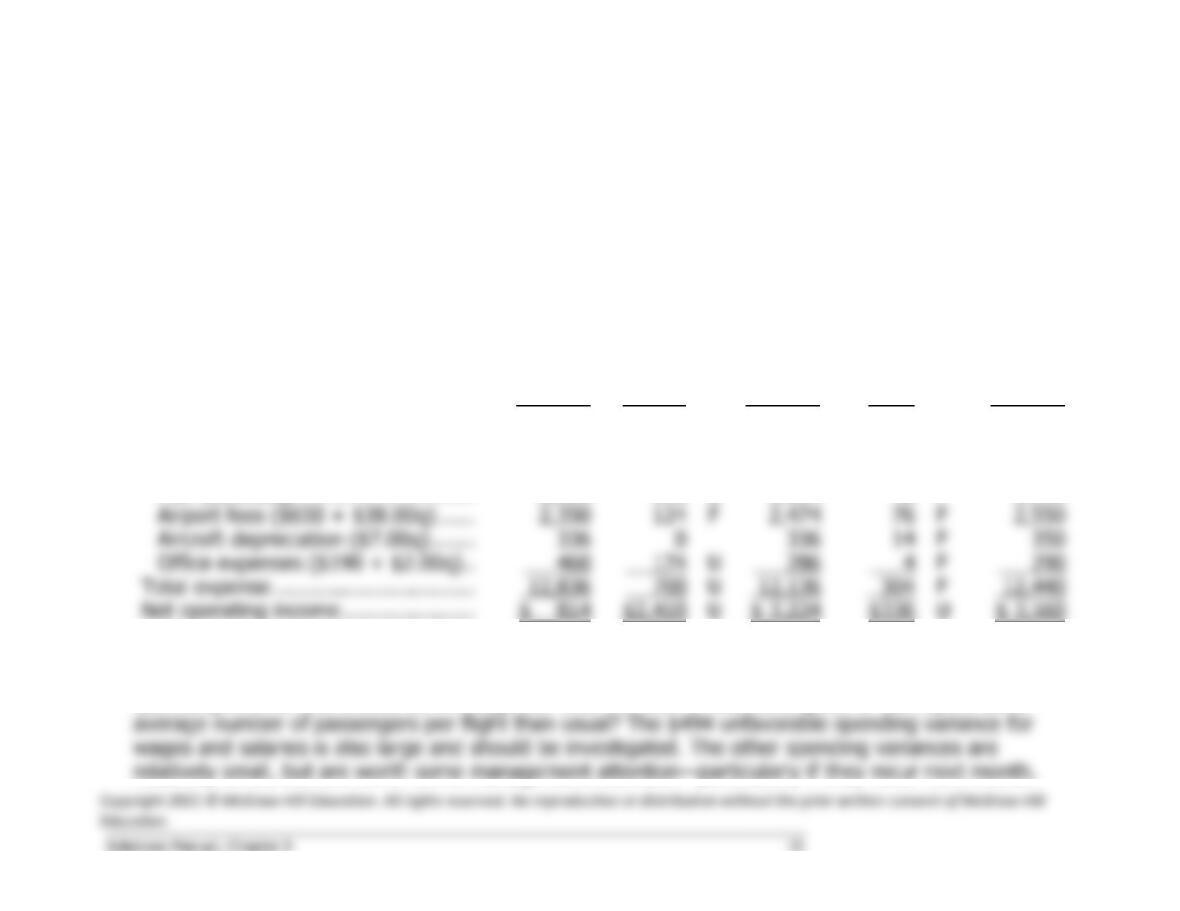
Exercise 9-4 (20 minutes)
1.
Vulcan Flyovers
Flexible Budget Performance Report
For the Month Ended July 31
Actual
Results
Revenue
and
Spending
Variances
Flexible
Budget
Activity
Variances
Planning
Budget
Flights (q) ………………………………..
48
48
50
Revenue ($320.00q) …………………..
$13,650
$1,710
U
$15,360
$640
U
$16,000
Expenses:
Wages and salaries ($4,000 +
$82.00q) …………………………….
8,430
494
U
7,936
164
F
8,100
U
F
2,350
124
F
2,474
F
2,550
F
U
F
Total expense …………………………..
U
304
F
Net operating income …………………
$2,410
U
$336
U
2. The overall $336 unfavorable activity variance is due to activity falling below what had been planned
for the month. The $1,710 unfavorable revenue variance is very large relative to the company’s net
operating income and should be investigated. Was this due to discounts given or perhaps a lower
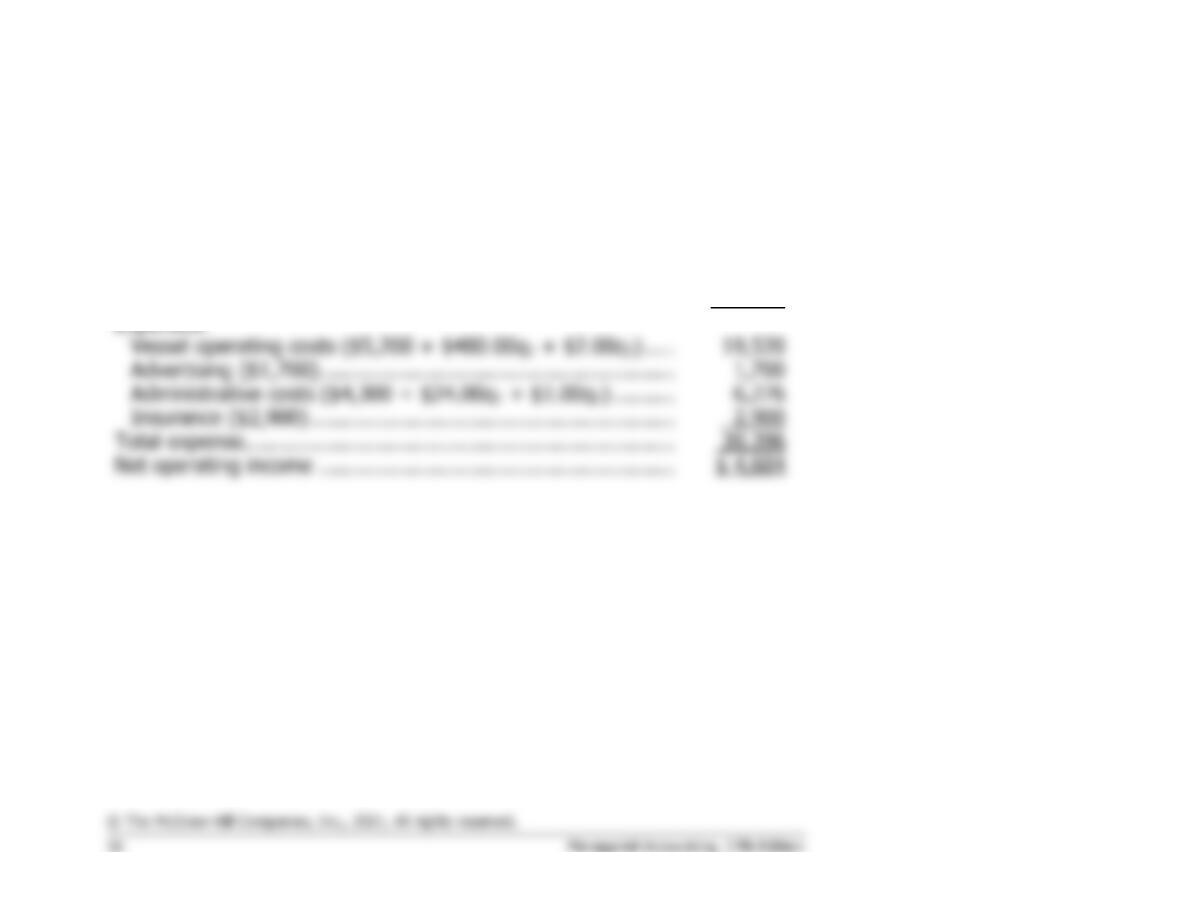
Exercise 9-5 (15 minutes)
Alyeski Tours
Flexible Budget
For the Month Ended July 31
Actual cruises (q1) ……………………………………………………..
24
Actual passengers (q2) ………………………………………………..
1,400
Revenue ($25.00q2) ……………………………………………………
$35,000
Expenses:
6,276
Total expense ……………………………………………………………
Net operating income …………………………………………………
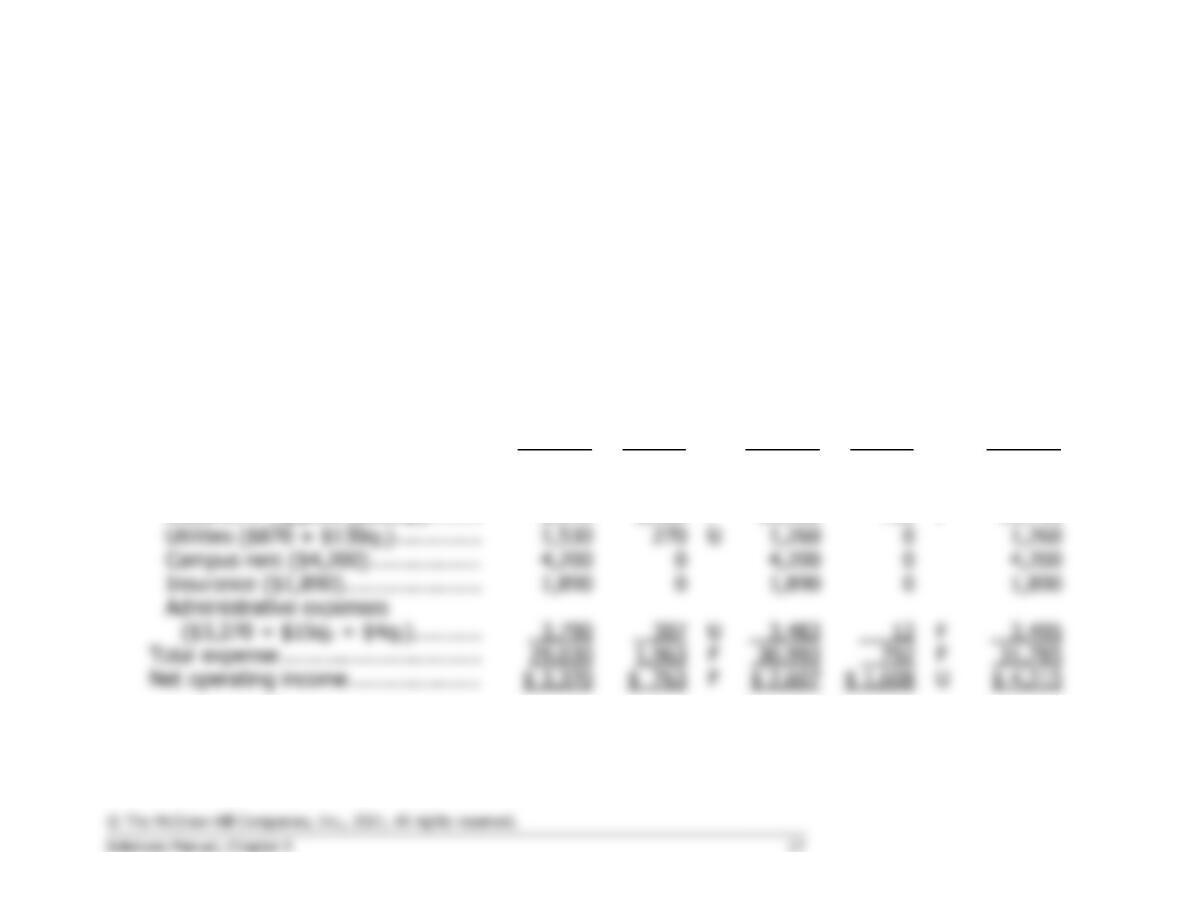
Exercise 9-6 (30 minutes)
The flexible budget performance report for September appears below:
Gourmand Cooking School
Flexible Budget Performance Report
For the Month Ended September 30
Actual
Results
Revenue
and
Spending
Variances
Flexible
Budget
Activity
Variances
Planning
Budget
Courses (q1) …………………………….
3
3
3
Students (q2) …………………………...
42
42
45
Revenue ($800q2) ……………………..
$32,400
$1,200
U
$33,600
$2,400
U
$36,000
Expenses:
Instructor wages ($3,080q1) ……..
9,080
160
F
9,240
0
9,240
Classroom supplies ($260q2) ……..
8,540
F
780
F
U
Campus rent ($4,200) ………………
4,200
0
4,200
0
4,200
Insurance ($1,890) ………………….
1,890
0
1,890
0
1,890
U
F
Total expense …………………………..
F
F
31,785
Net operating income …………………
F
U
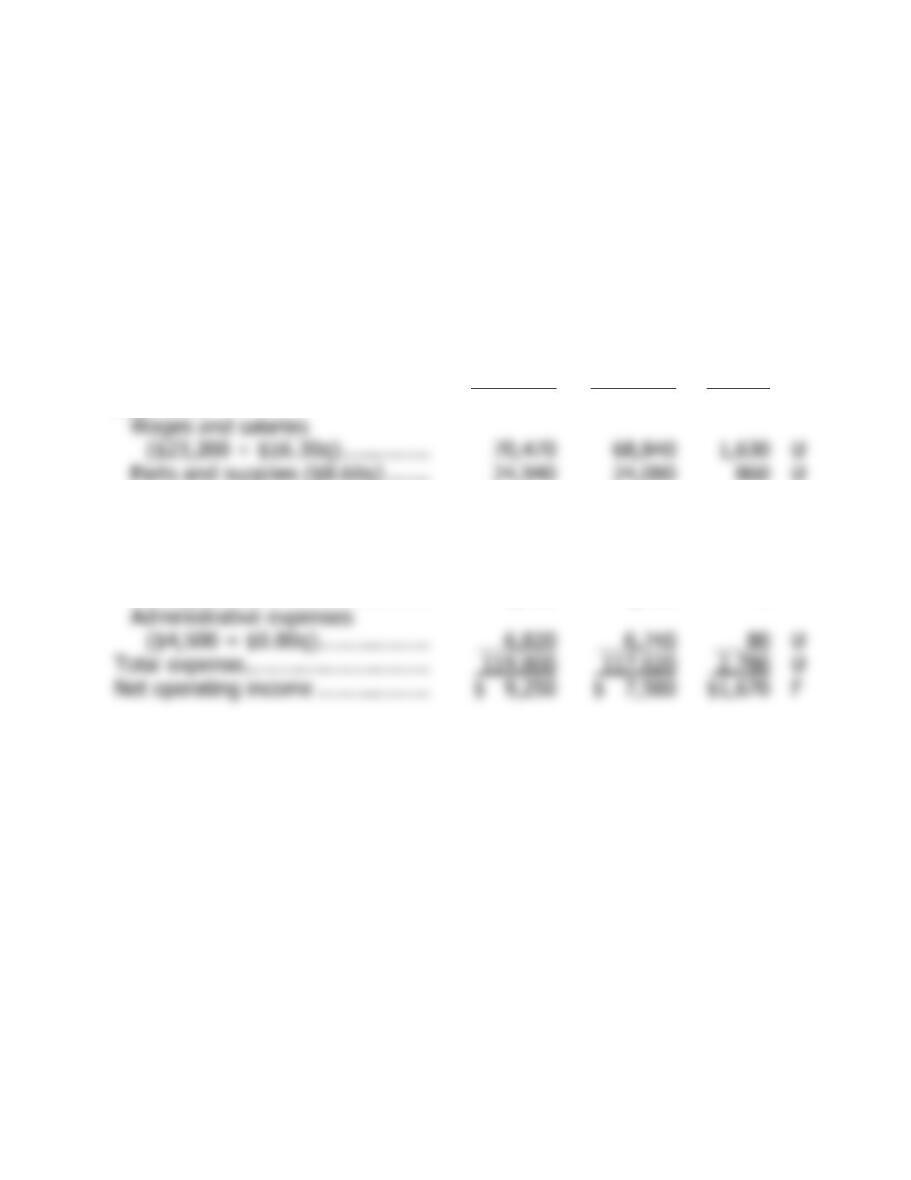
Exercise 9-7 (20 minutes)
Jake’s Roof Repair
Activity Variances
For the Month Ended May 31
Flexible
Budget
Planning
Budget
Activity
Variances
Repair-hours (q) ……………………..
2,900
2,800
Revenue ($44.50q) ………………….
$129,050
$124,600
$4,450
F
Expenses:
Wages and salaries
($23,200 + $16.30q) …………..
U
Parts and supplies ($8.60q) …….
24,940
24,080
860
U
Equipment depreciation
($1,600 + $0.40q) ………………
2,760
2,720
40
U
Truck operating expenses
($6,400 + $1.70q) ………………
11,330
11,160
170
U
Rent ($3,480) ………………………
3,480
3,480
0
Administrative expenses
($4,500 + $0.80q) ………………
80
U
Total expense …………………………
2,780
U
Net operating income ………………
$ 9,250
$ 7,580
F
Exercise 9-8 (10 minutes)
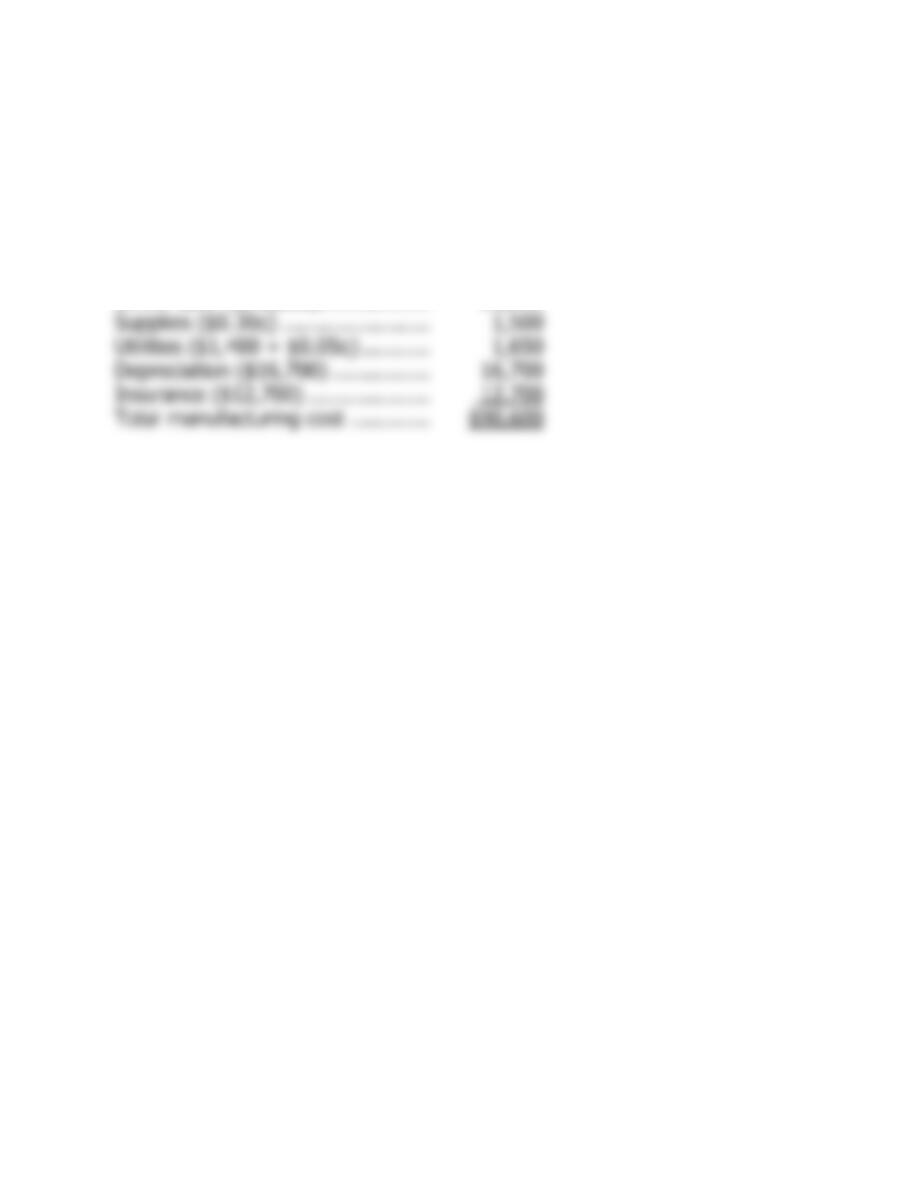
Wyckam Manufacturing Inc.
Planning Budget for Manufacturing Costs
For the Month Ended June 30
Budgeted machine-hours (q) ……..
5,000
Direct materials ($4.25q) ………….
$21,250
Supplies ($0.30q) ……………………
1,500
Utilities ($1,400 + $0.05q) ………..
1,650
Insurance ($12,700) ………………..
Total manufacturing cost ………….
$90,600
Exercise 9-9 (15 minutes)
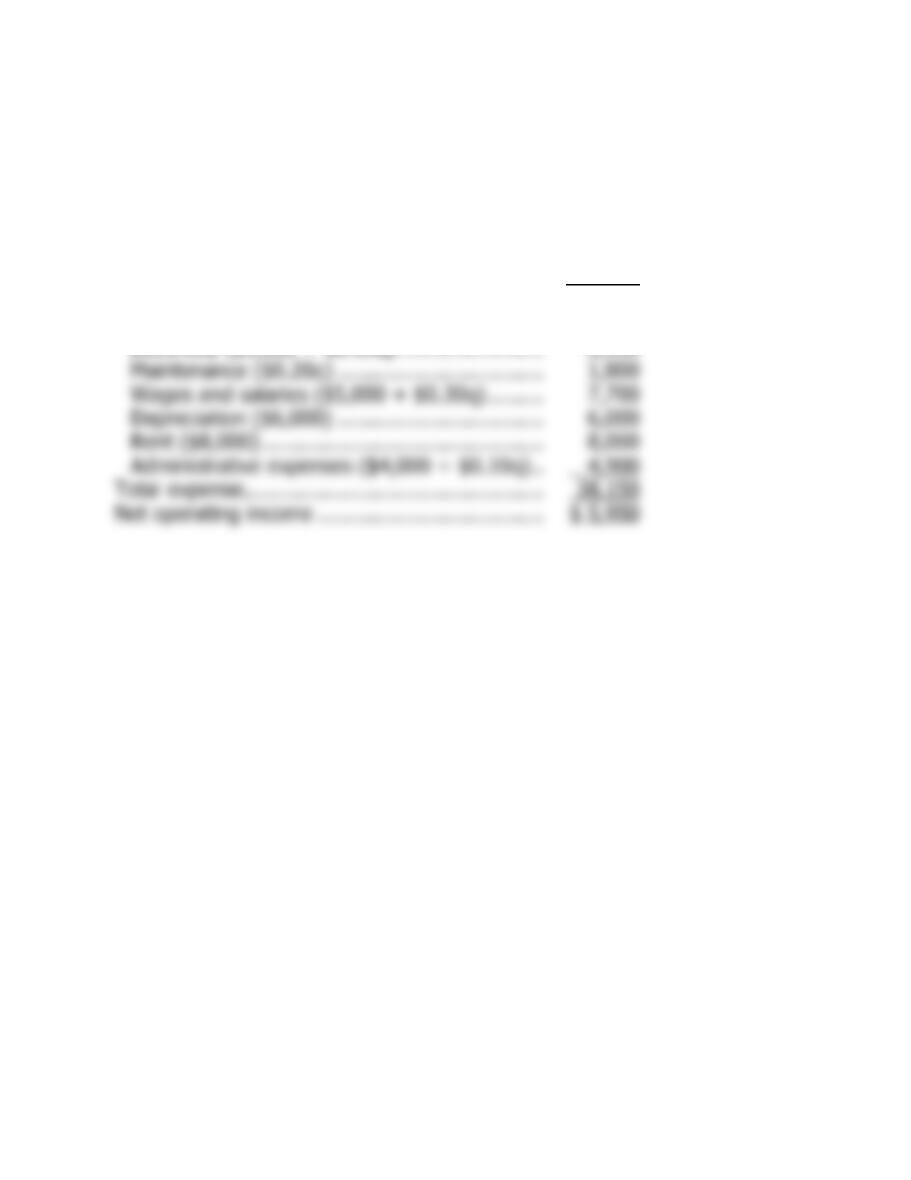
Lavage Rapide
Planning Budget
For the Month Ended August 31
Budgeted cars washed (q) ………………………..
9,000
Revenue ($4.90q) ……………………………………
$44,100
Expenses:
Cleaning supplies ($0.80q) ……………………..
7,200
Electricity ($1,200 + $0.15q) …………………..
2,550
Wages and salaries ($5,000 + $0.30q) ………
7,700
Depreciation ($6,000) …………………………...
6,000
Administrative expenses ($4,000 + $0.10q) ..
Total expense …………………………………………
Net operating income ………………………………