Carrying
Value
a. ÷ 4 $70,000
2,400
12,000
c. × 50% $45,000
× 50% 22,500
× 50% 11,250
–$10,000 10,000
b. $80,000
1
22,500
4
$45,000
11,250
$90,000
45,000
22,500
1,25011,250
2
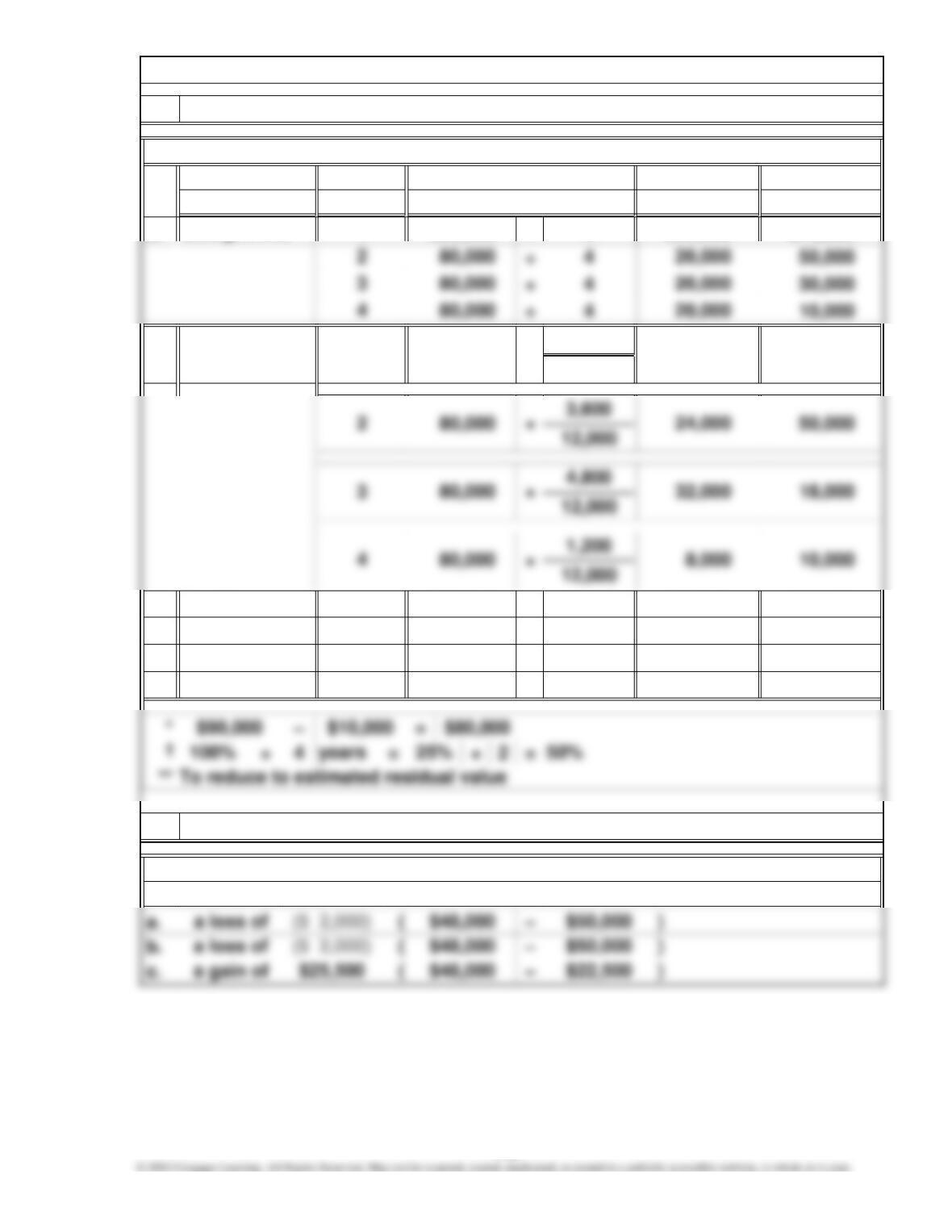
Depreciation Table
$80,000
$74,000×
1
Chapter 9, P 3.
Depreciation computed1.
Production
Depreciation
Method Year Computation
1
3
Straight-line
balance
Double-
declining-
$16,000
Depreciation
$20,000
If the printer was sold for $48,000 after year 2, the gain or loss under each method
would be as follows:
2. Gain or loss determined
*
**
†
449
The production method results in variable amounts of depreciation and is unpre-
3. User Insight: Patterns of depreciation and effects on profitability and cash flows
Chapter 9, P 3. (Continued)
Straight-line results in equal amounts of annual depreciation over the four years.
450
Carrying
Depreciation Value
a. ÷ $217,000 $1,225,000
c. × $480,619 $ 961,381
× 320,428 640,953
× 213,630 427,323
33.33%
33.33%
33.33%
961,381
640,953
$1,442,000
Computation
$1,302,000 6
Production
1
2
3
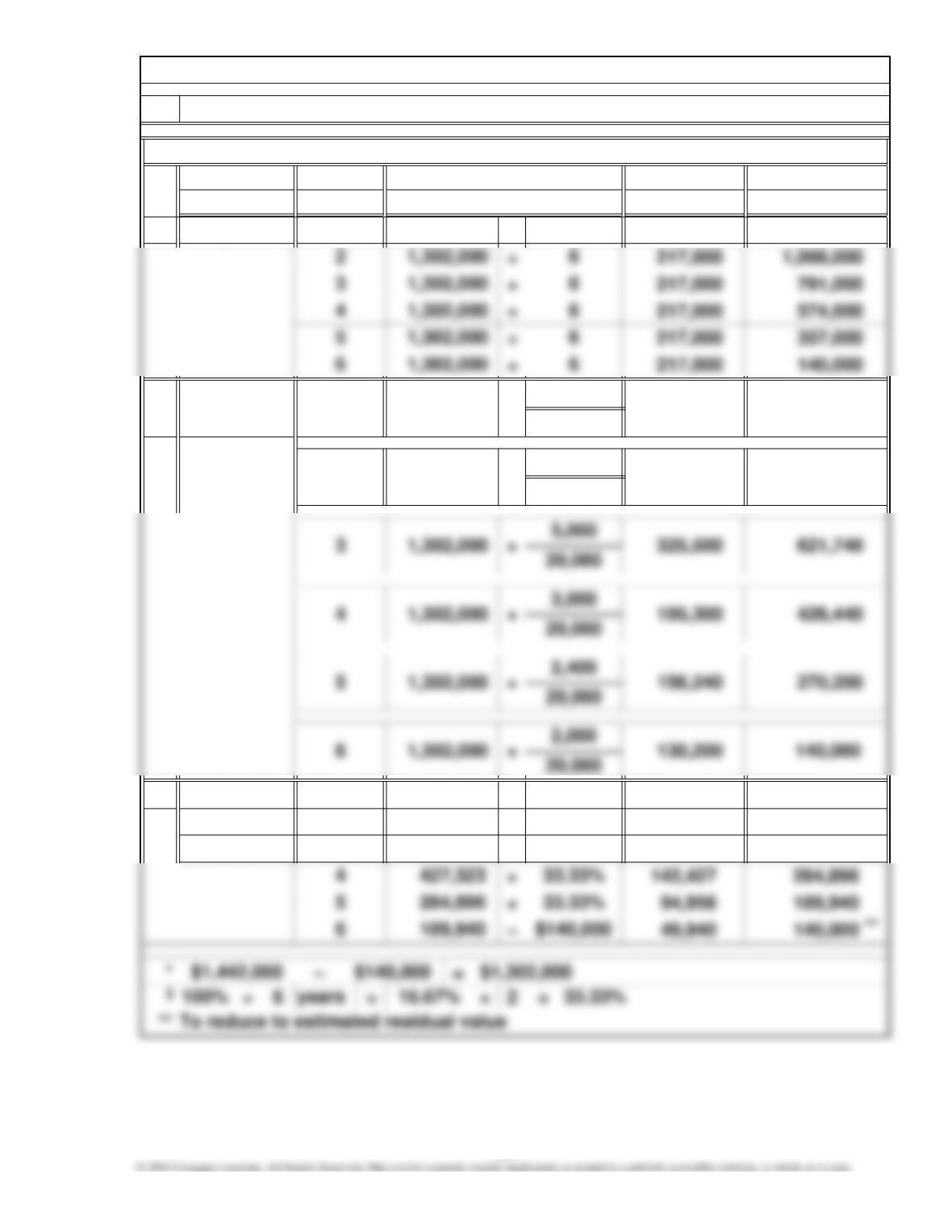
Depreciation Table
947,240
b.
Chapter 9, P 4.
Depreciation computed1.
20,000
260,400
1,302,000
$1,207,640
20,000 $234,360
3,600
×
$1,302,000
Depreciation
Year
4,000
balance
Straight-line
1
2
×
Double-
declining-
Method
1
*
†
451
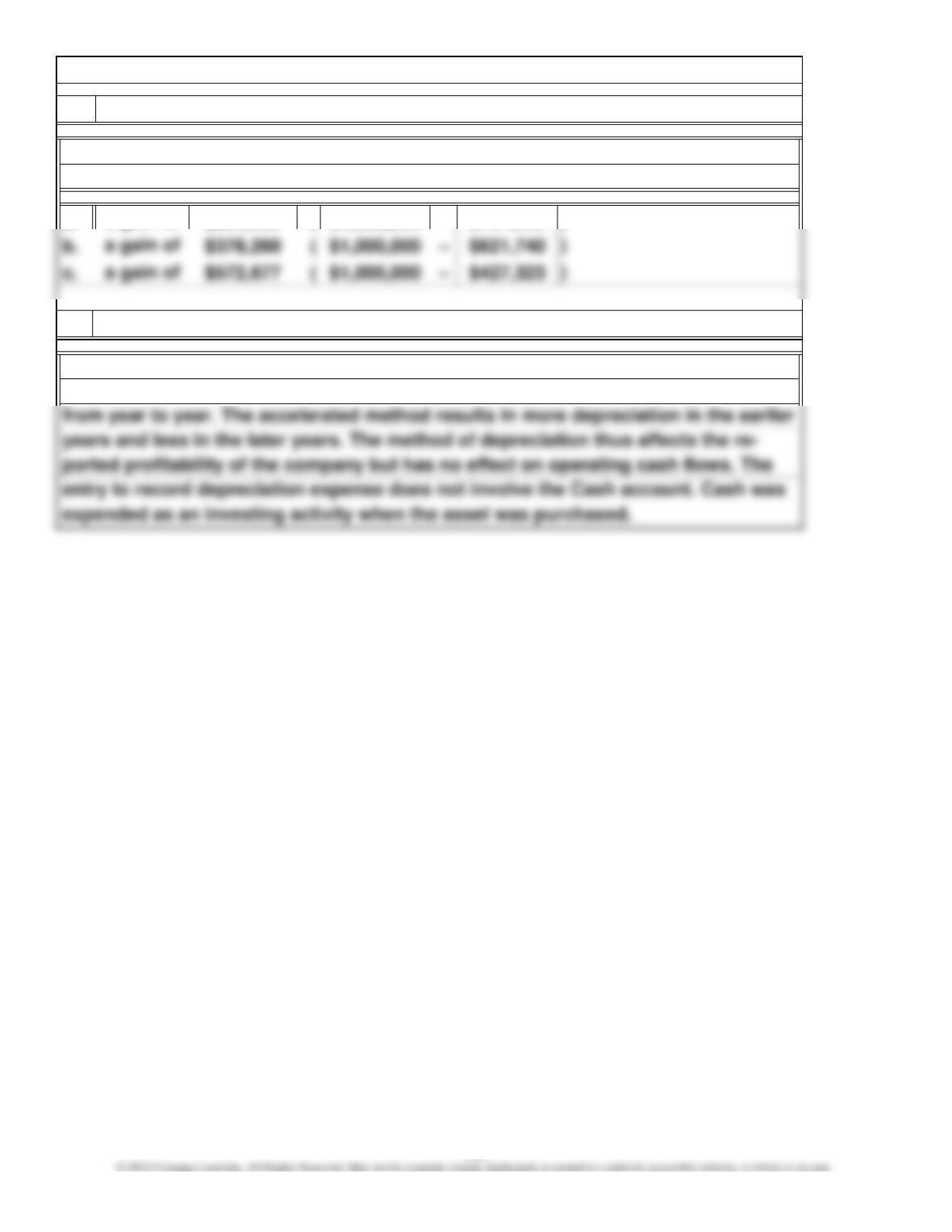
a. $209,000 ( $1,000,000 – $791,000
User Insight: Patterns of depreciation and effects on profitability and cash flows
Straight-line results in equal amounts of annual depreciation over the six years. The
production method results in variable amounts of depreciation and is unpredictable
3.
Chapter 9, P 4. (Continued)
would be as follows:
2. Gain or loss determined
)
If the crane was sold for $1,000,000 after year 3, the gain or loss under each method
a gain of
452
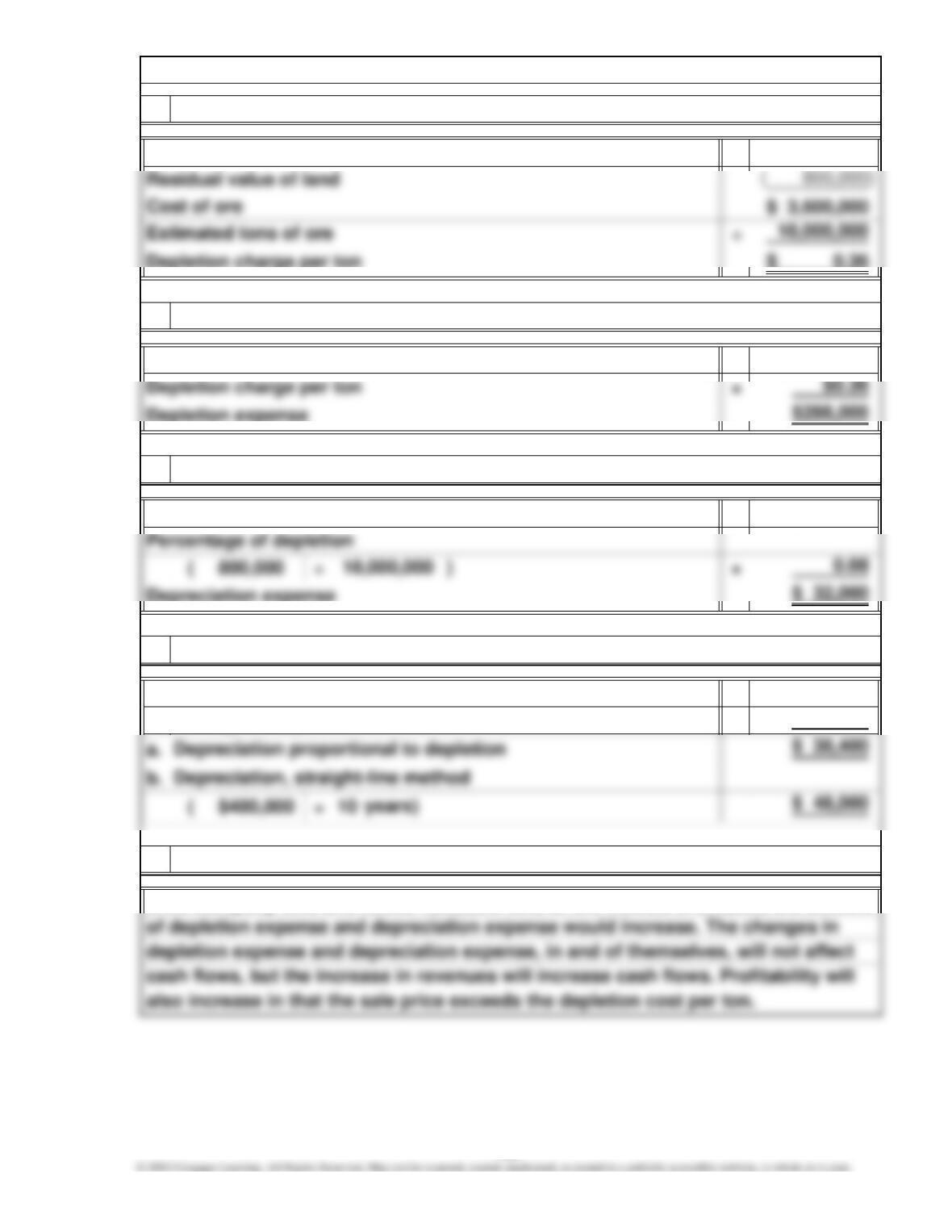
$ 4,400,000
800,000
$400,000
$480,000
×0.08
Percentage of depletion
Cost of land and ore
Cost of equipment
4. Depreciation expense determined for equipment
Depletion expense computed
Tons of ore mined and sold
2.
1.
If the company sold and mined 1,000,000 tons of ore instead of 800,000, the amount
Chapter 9, P 5.
Depletion charge per ton computed
3.
5. User Insight: Effect of change in depletion expense discussed
Cost of buildings
Depreciation expense determined for buildings
453
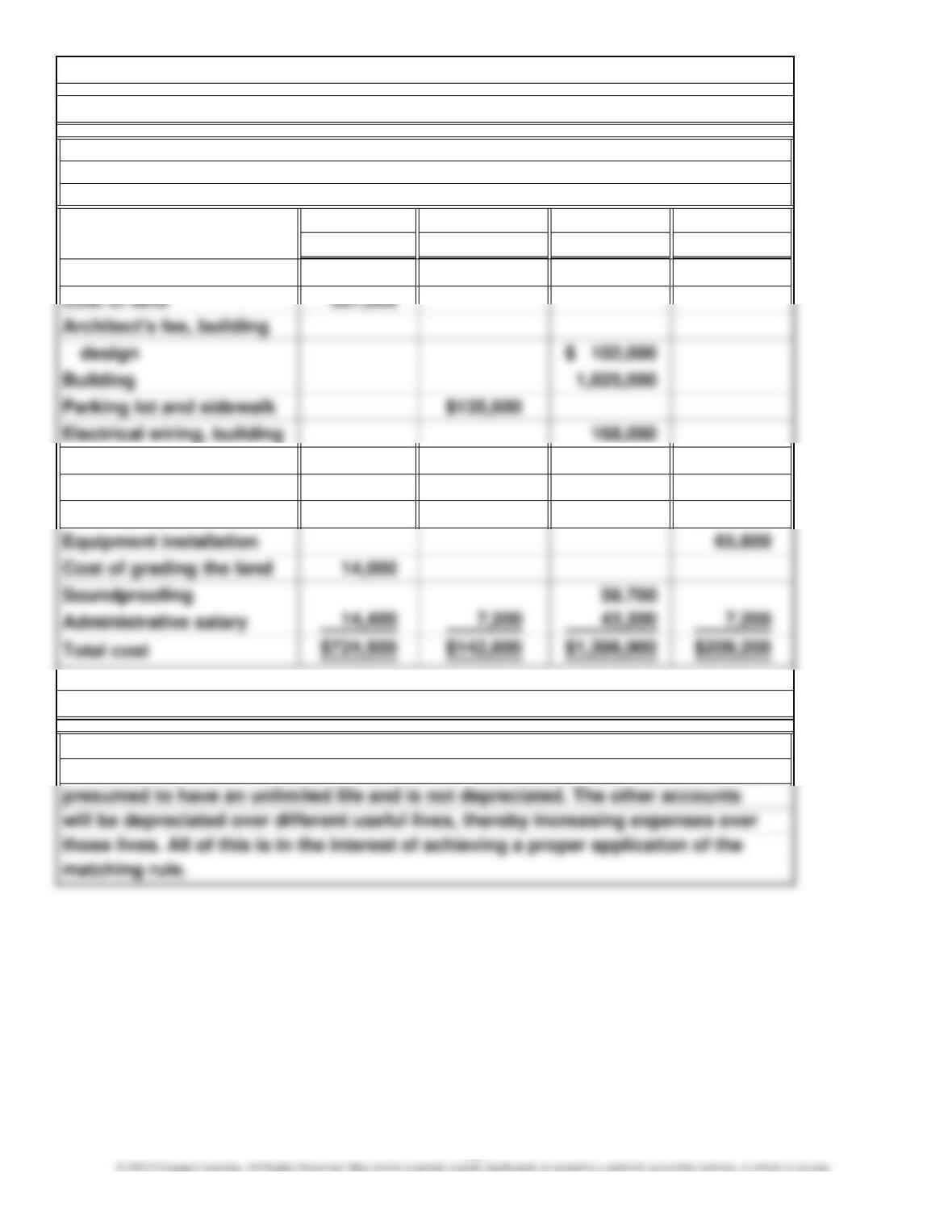
Land
Land Improvements Building Equipment
Attorney’s fee $ 35,200
Landscaping 55,000
Survey cost 8,900
Training equipment, etc. $136,400
Chapter 9, P 6.
Schedule of Proper Charges for Training Center
1. Schedule prepared
Pappas Computers
December 31, 2011
2. User Insight: Impact of classifications discussed
The classification of the above items among several accounts will affect profit-
ability because each of the items has a different useful life. Land, for instance, is
454
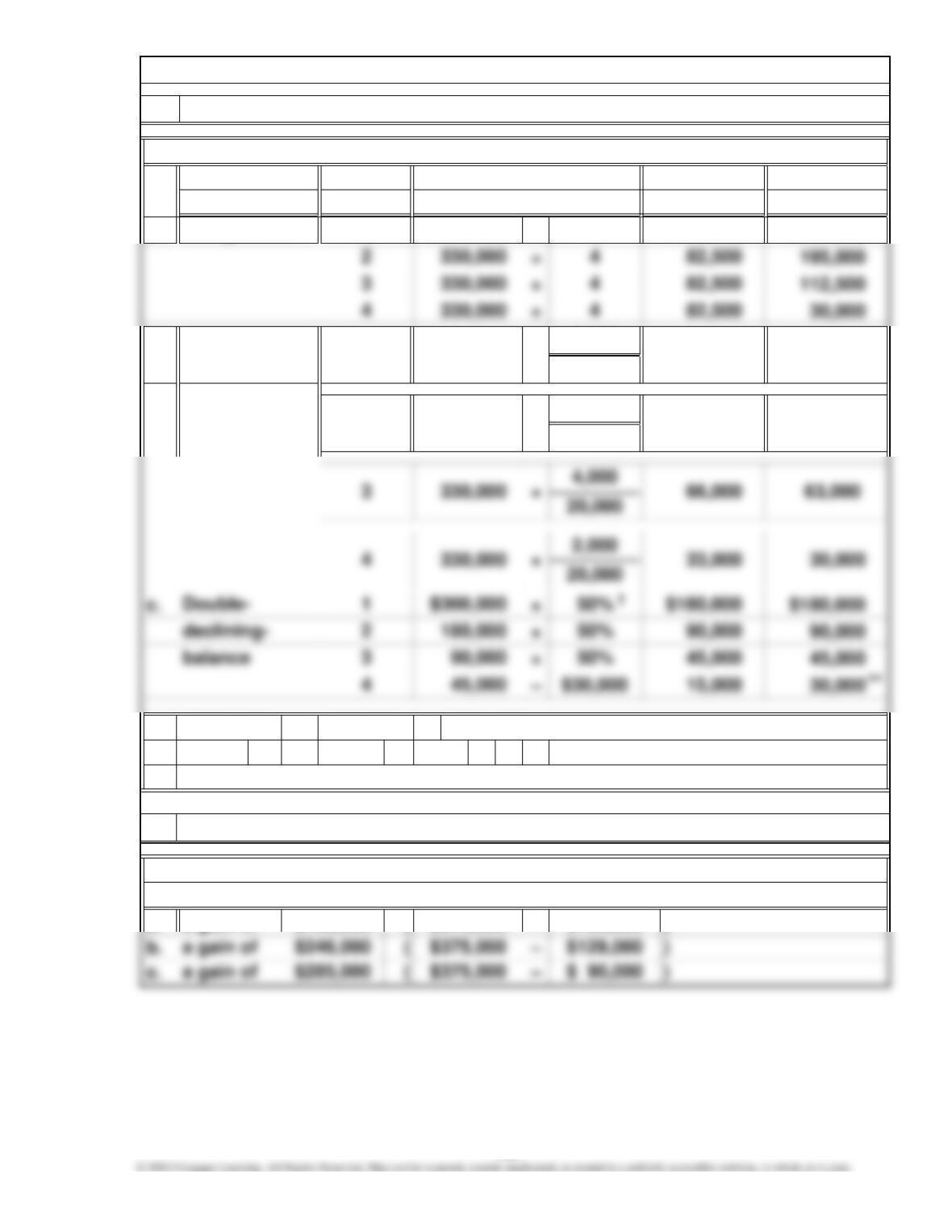
Carrying
Value
a. ÷ $277,500
*–=
†÷4 ×2=
**
a. –
)
$195,000
a gain of
$180,000
(
$375,000
Gain or loss determined
$ 99,000
Depreciation
$ 82,500
132,000
$261,000
8,000
×
Straight-line 1
×20,000
Depreciation
6,000
20,000
b. $330,0001
2 330,000
Production
Chapter 9, P 7.
Depreciation computed1.
Depreciation Table
YearMethod
100% years
If the robot was sold for $375,000 after year 2, the gain or loss under each method
would be as follows:
2.
25%= 50%
To reduce to estimated residual value
$360,000 $30,000 $330,000
129,000
Computation
$330,000 4
*
455
The production method results in variable amounts of depreciation and is unpre-
Chapter 9, P 7. (Continued)
3.
Straight-line results in equal amounts of annual depreciation over the four years.
User Insight: Patterns of depreciation and effects on profitability and cash flows
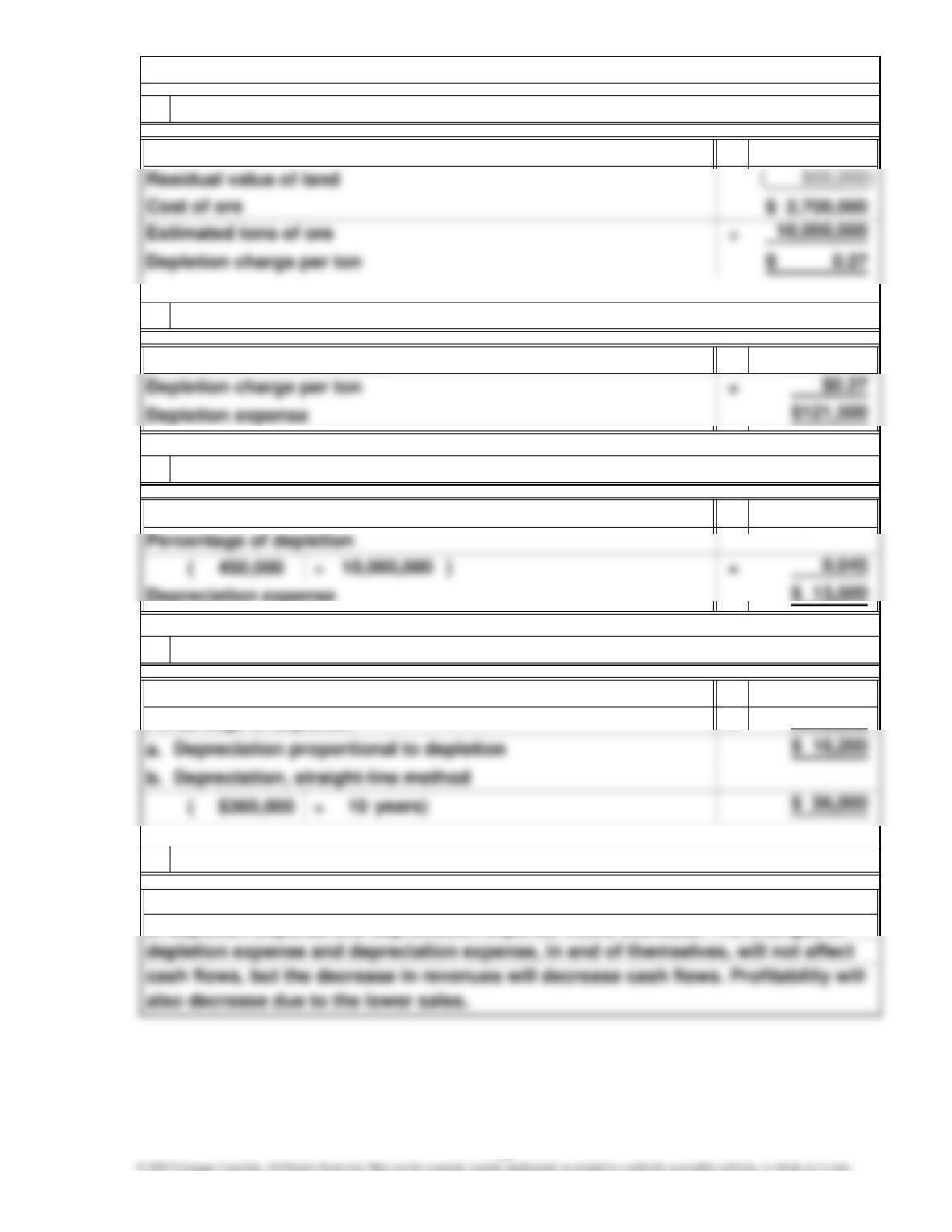
$ 3,300,000
450,000
$300,000
$360,000
×0.045
If the company sold and mined 250,000 tons of ore instead of 450,000, the amount
of depletion expense and depreciation expense would decrease. The changes in
5. User Insight: Effect of change in depletion expense discussed
Chapter 9, P 8.
1. Depletion charge per ton computed
3.
2. Depletion expense computed
4. Depreciation expense determined for equipment
Cost of buildings
Cost of land and ore
Tons of ore mined and sold
Percentage of depletion
Cost of equipment
Depreciation expense determined for buildings
457
Carrying
Depreciation Value
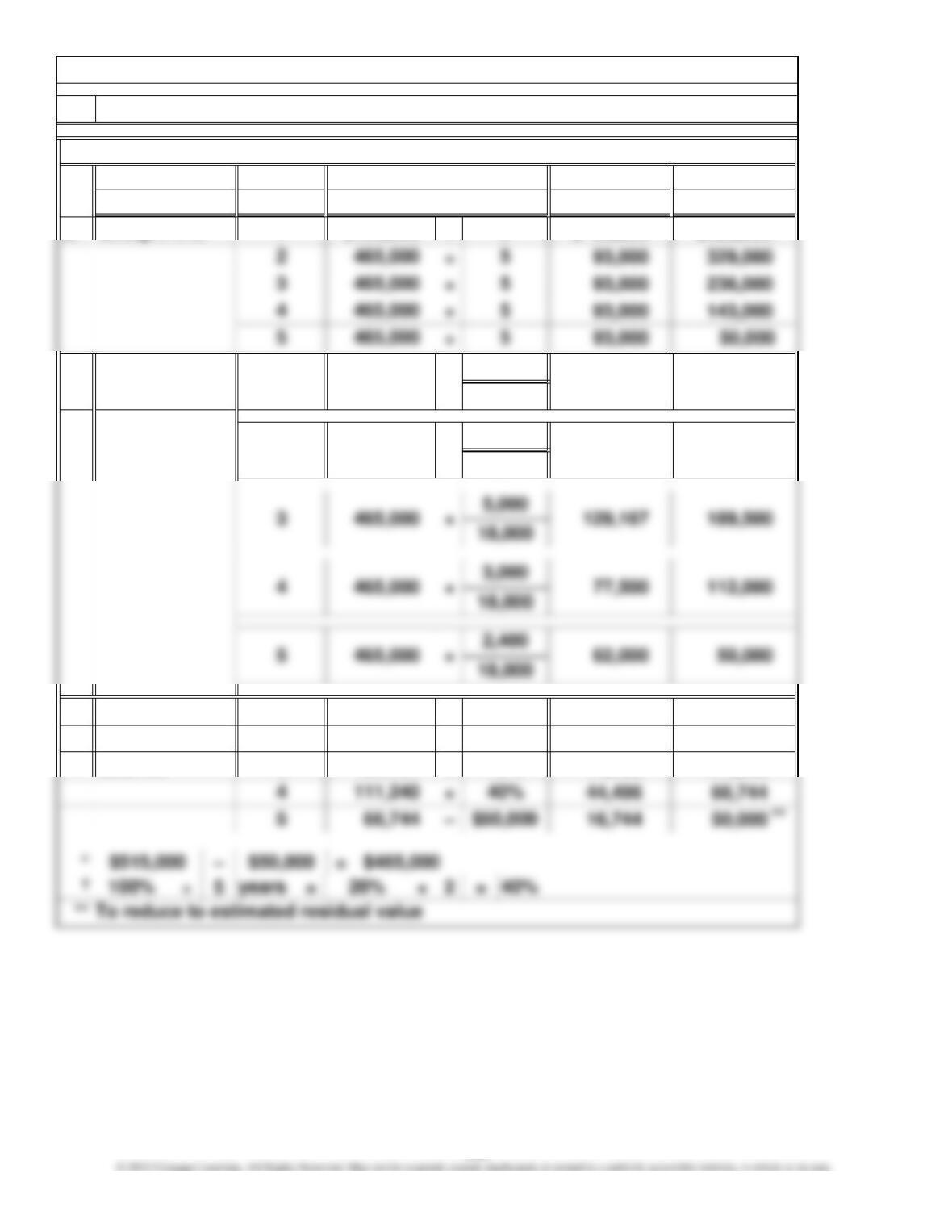
a. ÷ $ 93,000 $422,000
c. × $206,000 $309,000
× 123,600 185,400
× 74,160 111,240
4,000
balance
Double-
declining-
Depreciation
Method
1
2 465,000
$465,000
Chapter 9, P 9.
Depreciation computed1.
318,667
Computation
18,000
b. Production
Depreciation Table
103,333
$465,000
Straight-line
5
× $422,000
18,000 $ 93,000
3,600
Year
1
2
3
40%
40%
40%
309,000
185,400
$515,0001
×
*
†
458
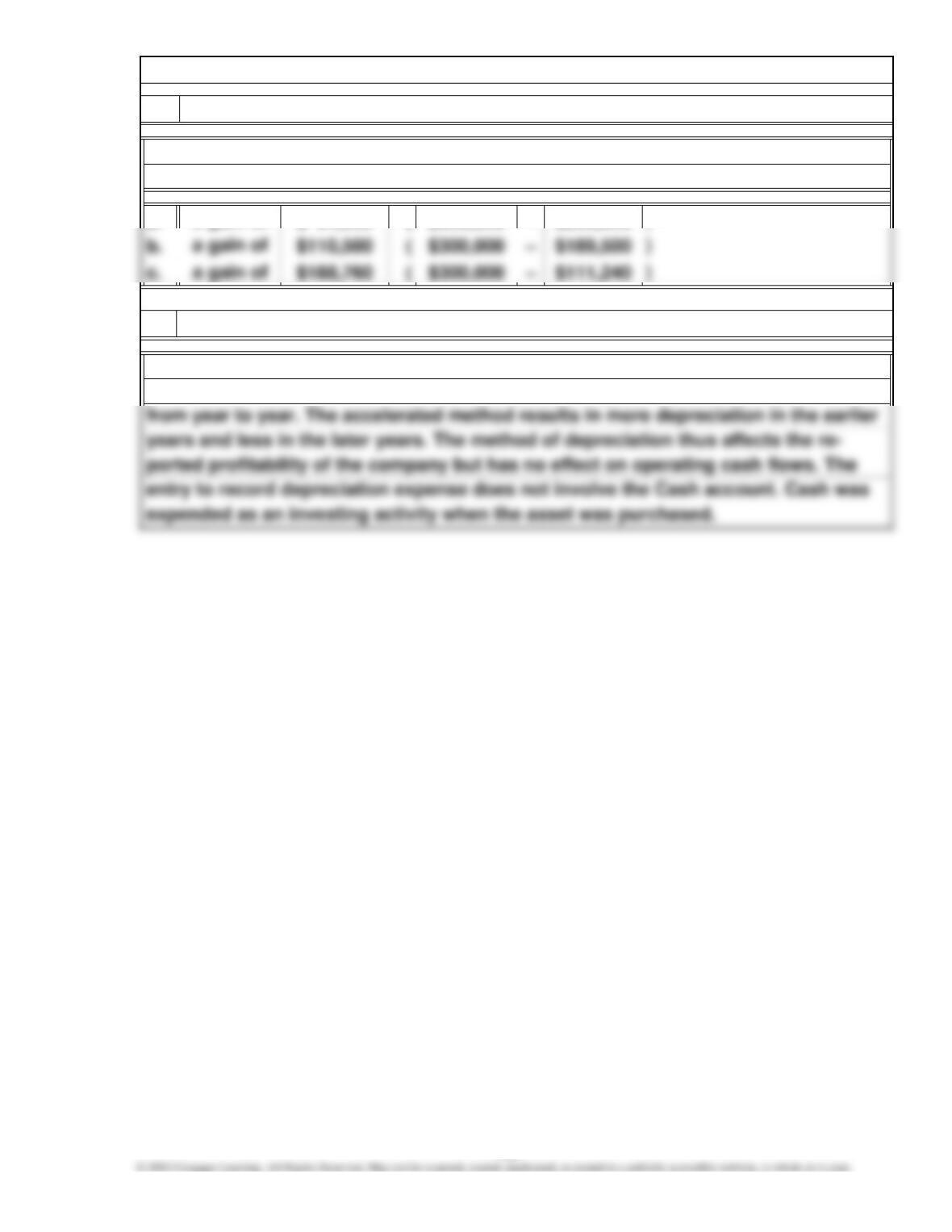
a. $ 64,000 ( $300,000 – $236,000
2. Gain or loss determined
)
If the truck was sold for $300,000 after year 3, the gain or loss under each method
a gain of
Chapter 9, P 9. (Continued)
would be as follows:
3.
Straight-line results in equal amounts of annual depreciation over the five years. The
production method results in variable amounts of depreciation and is unpredictable
User Insight: Patterns of depreciation and effects on profitability and cash flows
459
Chapter 9, C 1.
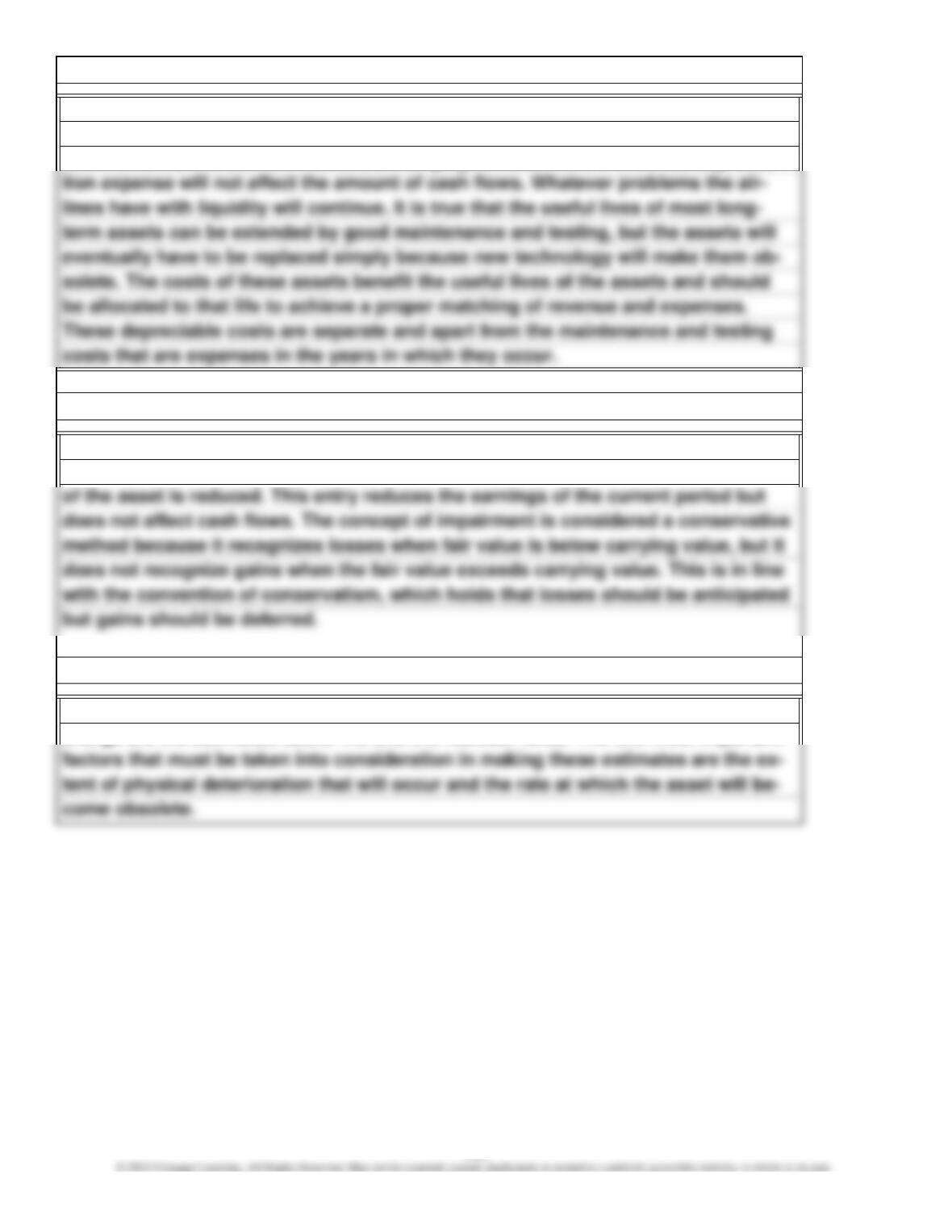
The advantage to the airlines of increasing the useful life of aircraft is that the an-
duce losses of the airlines. However, changing the amount of the annual deprecia-
The two principal estimates that must be made to compute the annual depreciation
fair value. When an impairment occurs, a loss is recorded and the recorded value
charge are the estimated useful life and the residual value. The two most important
Chapter 9, C 3.
Asset impairment occurs when the carrying value of a long-term asset exceeds its
Chapter 9, C 2.
nual depreciation charge will decrease. This will serve to increase earnings or re-
460
asset brands resulted from acquisition. However, if brands are internally developed
or if a company only manages a brand for the owner, then no asset would be re-
Brands are recorded when purchased from other companies; therefore, Hilton’s
Chapter 9, C 4.
461
2. Depreciation discussed
1. Property and equipment discussed
The components of property and equipment were land, building and improvements,
In 2009, property and equipment, net constituted 12.9 percent ($7,923 ÷ $61,641)
of total assets.
fixtures and equipment, leasehold improvements, and software. Fixtures and
Property, equipment and improvements to leased premises are depreciated using
Chapter 9, C 5.
equipment at over $6.3 billion of investment is the largest component.
the straight-line method over estimated useful lives of the assets or, when appli-
the asset to the asset’s estimated future cash flows. If the estimated future cash
3. Impairment discussed
When evaluating assets for impairment, CVS first compares the carrying value of
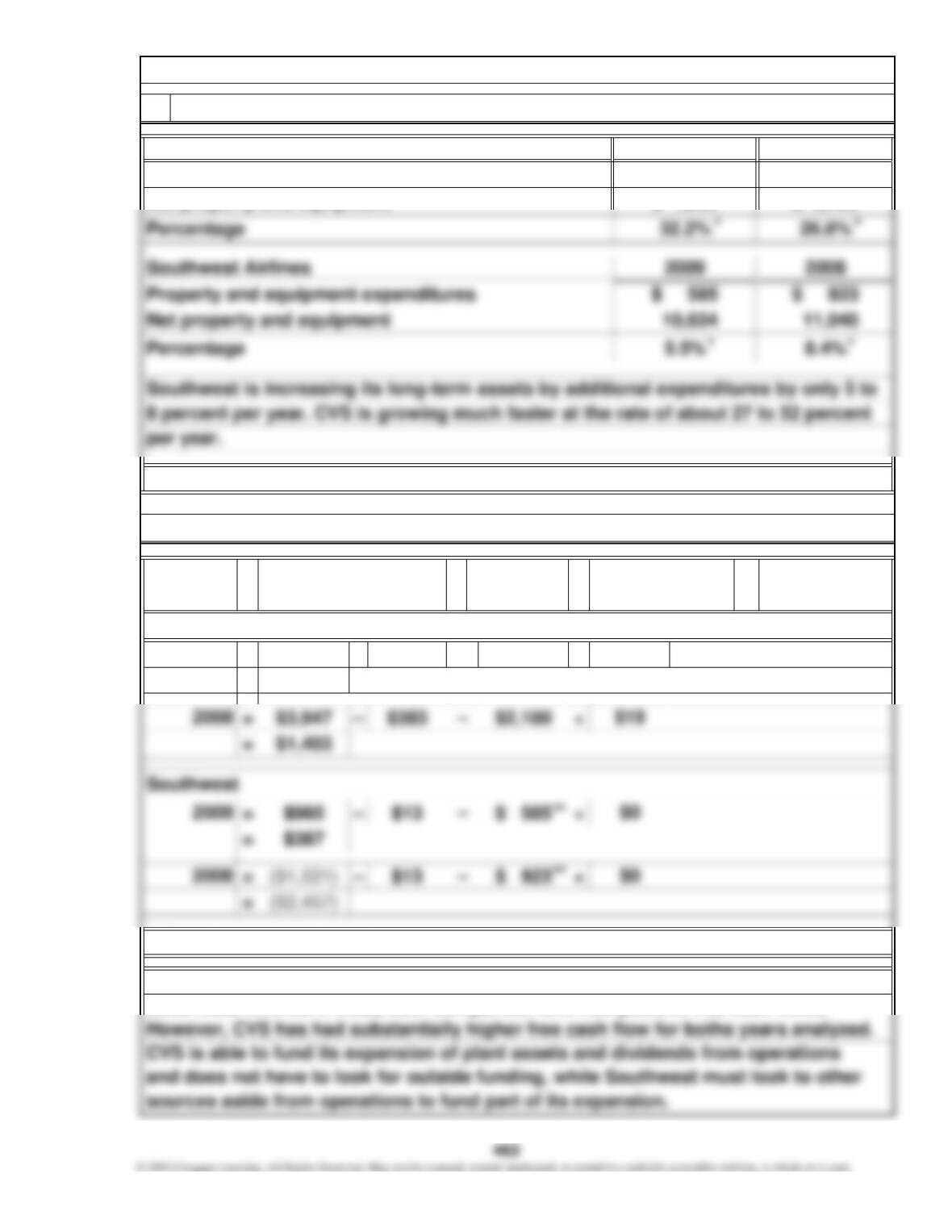
= $4,035 – $439 $2,548 +
= $1,071
2008CVS
2009
Property and equipment expenditures
Net property and equipment
** Purchases are net of sales
Except for the negative operating cash flows and thus negative free cash flow for
Southwest Airlines in 2008, both companies have had positive free cash flows.
2. Free cash flow analyzed (in millions)
2009
Chapter 9, C 6.
Expenditures on property and equipment analyzed (in millions)1.
Free
Cash Flow
–
CVS
+
$ 2,548
$ 7,923
$ 2,180
$ 8,125
Dividends
Sales of
Plant Assets
Net Cash Flows from
Operating Activities
Purchases of
Plant Assets
=
–
–
$23
*Rounded
Depreciation in and of itself does not affect cash flows because it is an allocation
However, cash flows are affected by the decision in that depreciation is deductible
Chapter 9, C 7.
of the cost of purchase and does not require a cash outlay when it is recorded.
for tax purposes. Thus, the decision that results in the higher level of annual depre-
464
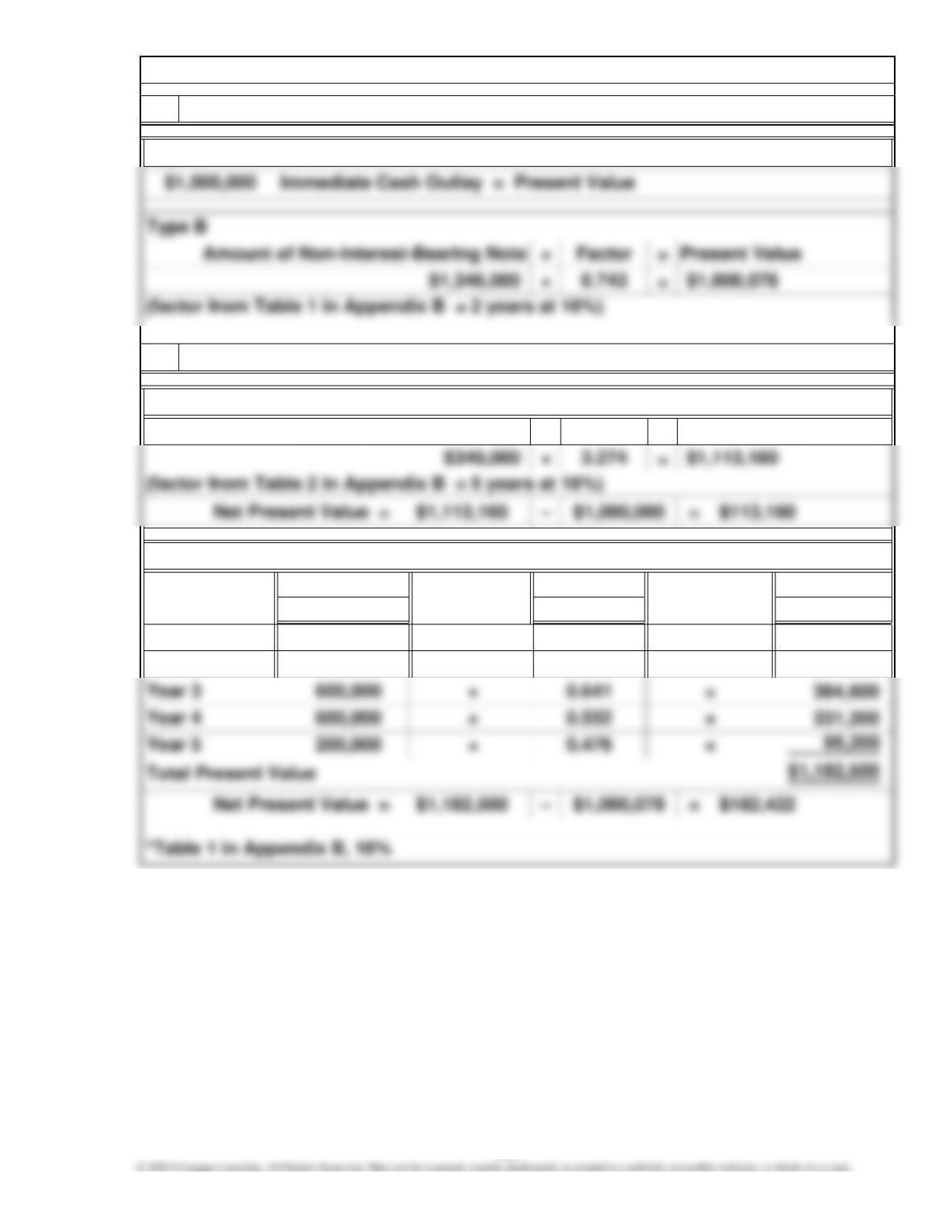
=
Present
Value
$—
371,500
0.743
—
=
500,000
Present Value
Year 1 =
=×
Type A
Chapter 9, C 8.
Present value computed for each type of equipment1.
Type B
Type A
× Factor
2. Net present value computed for each type of equipment
Annual Net Cash Receipts
Net Cash
Receipts Factor*
$—
Year 2
×
×
465
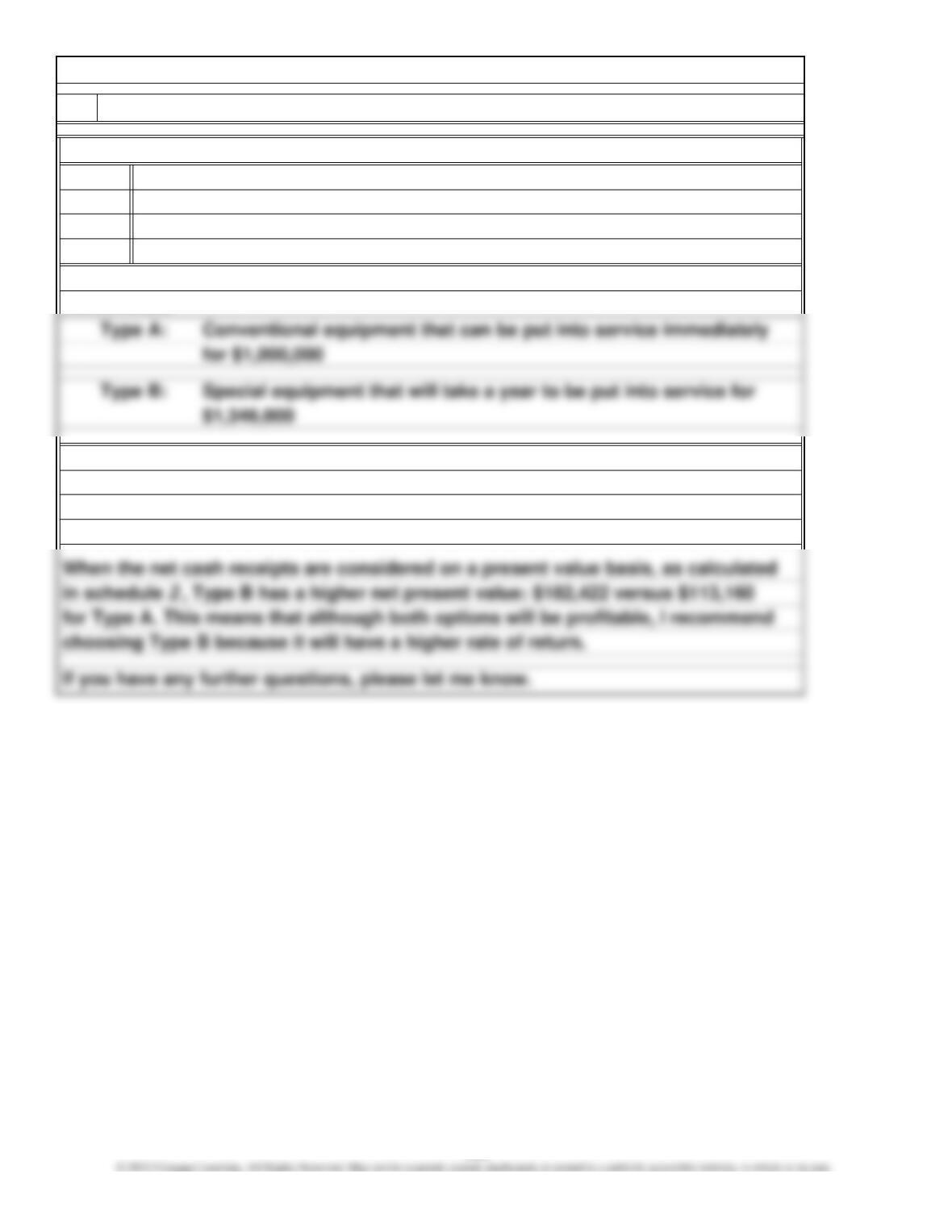
Re:
Today’s Date
Board of Directors
From:
3. Memorandum with recommendation
Memorandum
Student
Purchase Recommendation
Date:
To:
percent interest (rate of return), the investments both cost approximately $1,000,000,
as shown in schedule 1.
To compare these two options requires the use of present values to convert the
cash flows from each to a comparable basis. On a present value basis, using 16
We have two machines that will enable us to manufacture the parts for the new
subcontract:
Chapter 9, C 8. (Continued)
466