
Chapter 8
Sales/Collection Process
Answers to Review Exercises
Multiple Choice Questions
Discussion Questions
The solutions presented here come from the textbook discussion. Your students may include other insight that is
relevant but not presented in these solutions.
1 If Pipefitters began conducting business with a substantial number of non-U.S. customers they would need
to change a number of their tables, forms, and reports. When we use this question in our class discussions,
we find that students are very good at thinking of a variety of issues and how the database elements must be
changed to accommodate them. The following are some of the changes that Pipefitters might find necessary:
2. Service firms use a table that works very much like an Inventory table that is usually called a Service table.
Each row in the Service table contains an identifying number (the primary key) for and a description of a
3. Most restaurants would not have a customer table. Exceptions occur when the restaurant makes deliveries or
carries its own charge accounts. Restaurant managers are, however, interested in information that allows
them to plan purchasing, staffing, and promotional campaigns that can help them minimize costs and

8-2 CHAPTER 8 • SALES/COLLECTION PROCESS
chains),
• and an employee table.
4. In accounting databases, it is almost always a good idea to enforce referential integrity on foreign key links.
The referential integrity property can create an effective internal control over the contents of the foreign key
5. At first, students may think this is fine because the total sales invoice price (sum of invoice line extensions)
is stored in tblSale, and therefore it must be acceptable to store the components of the total sales invoice
8-3 CHAPTER 8 • SALES/COLLECTION PROCESS
Practice Exercises
The solutions are included in the Ch08Inst-PracticeExercises.accdb file on the Instructor web site.
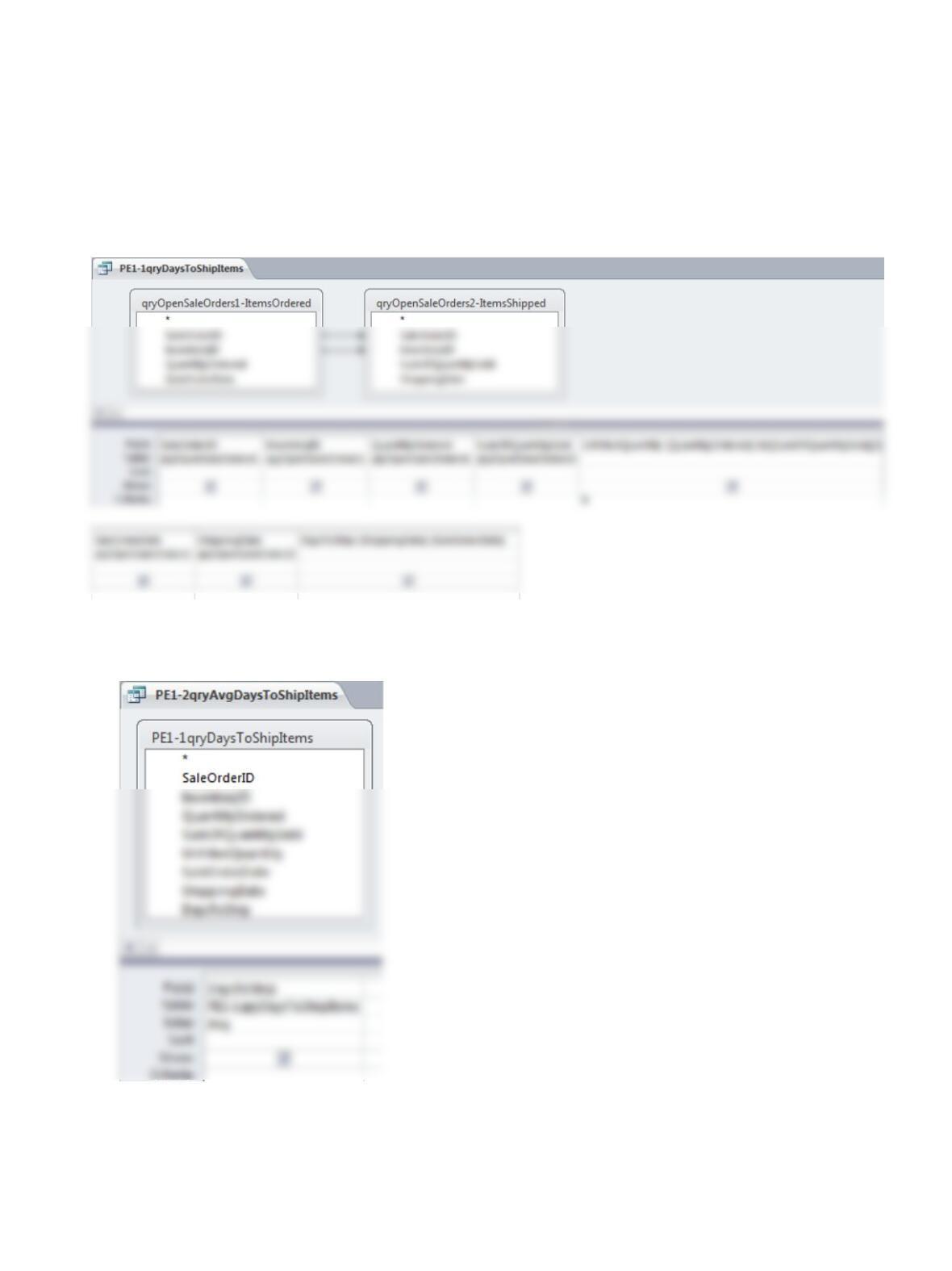
1. The first query in the solution is presented below in Design view. It requires a horizontal computation to
subtract the order date from the shipping date. Also, students must change the criteria of the unfilled
quantity from >0 to 0.
The only purpose of the second query is to take the average of the days to ship ordered merchandise. It is
presented below in Design view.
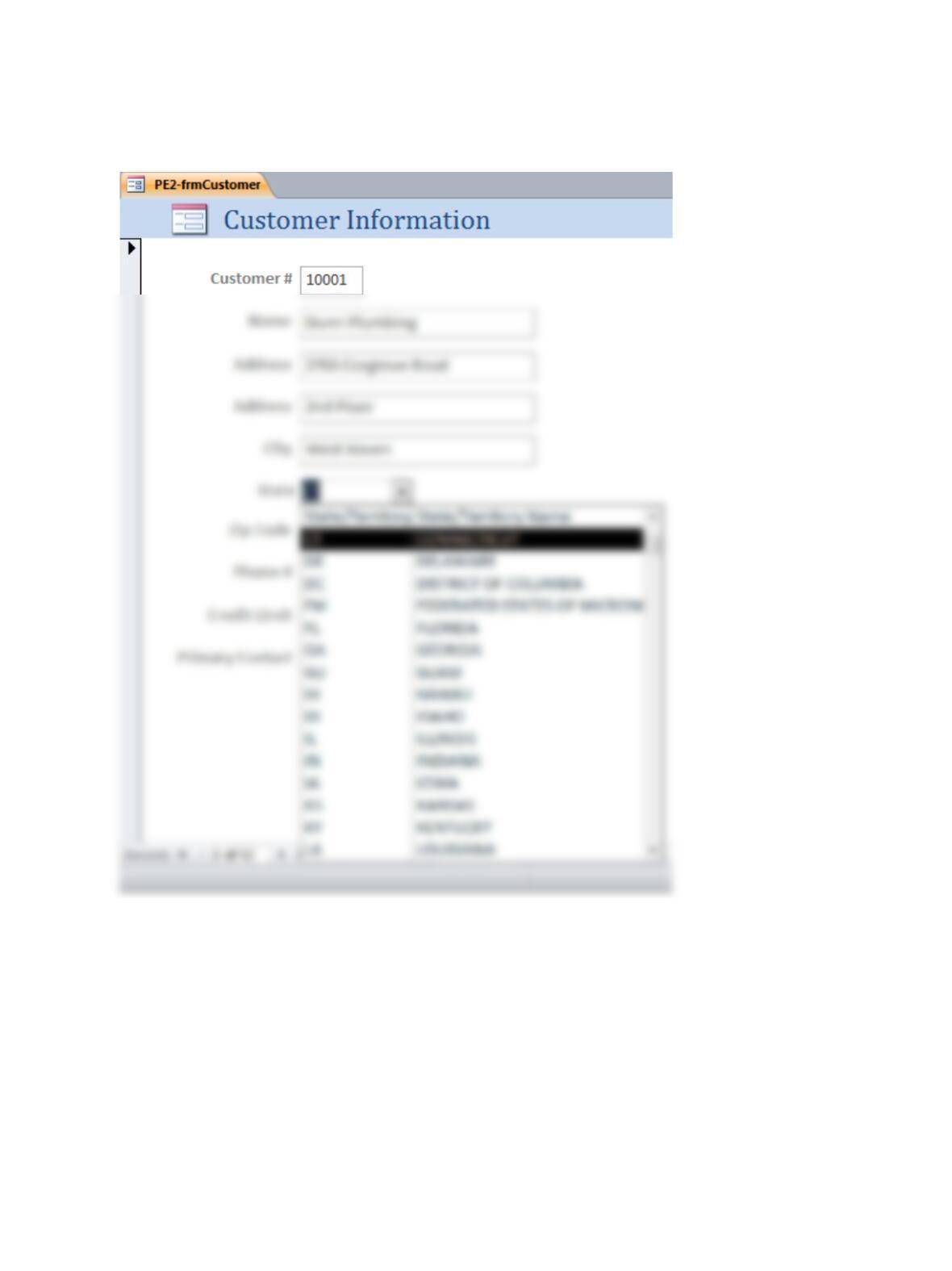
2. A good solution to this exercise will require that students create a table that stores the state abbreviations.
Our solution stores both state abbreviations and state names in a new table, tblStateAbbreviation. We then
8-4 CHAPTER 8 • SALES/COLLECTION PROCESS
modified frmCustomer by replacing the CustomerState text box control with a combo box control that uses
tblStateAbbreviation as the source for the combo box control. Use the Combo Box Wizard and the figure
below to guide you through this solution.
3. The solution query in design view is presented below.
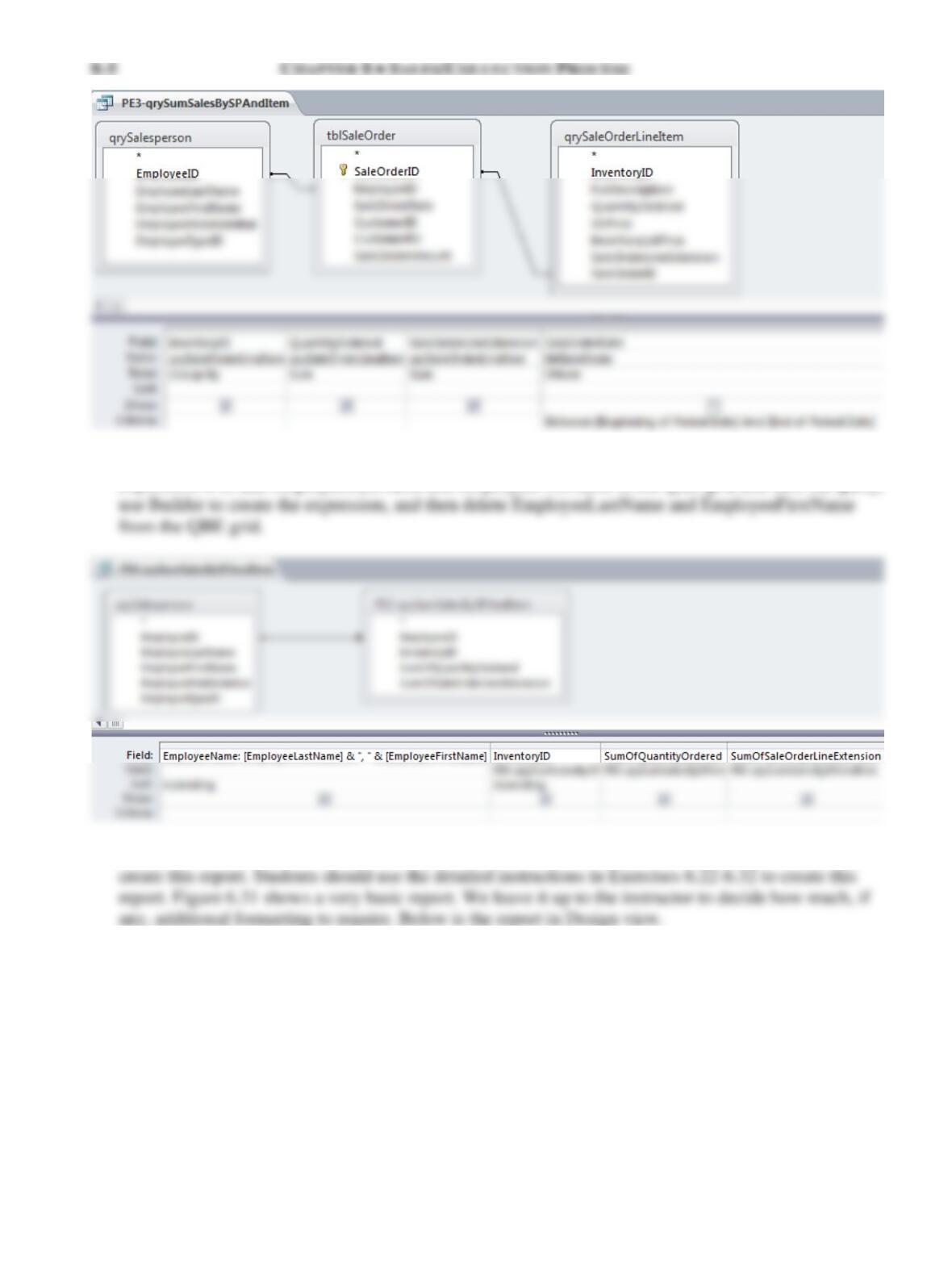
4. The solution query in design view is presented below. An easy way to create the employee name
expression is to add EmployeeLastName and EmployeeFirstName to the QBE grid and save the query,
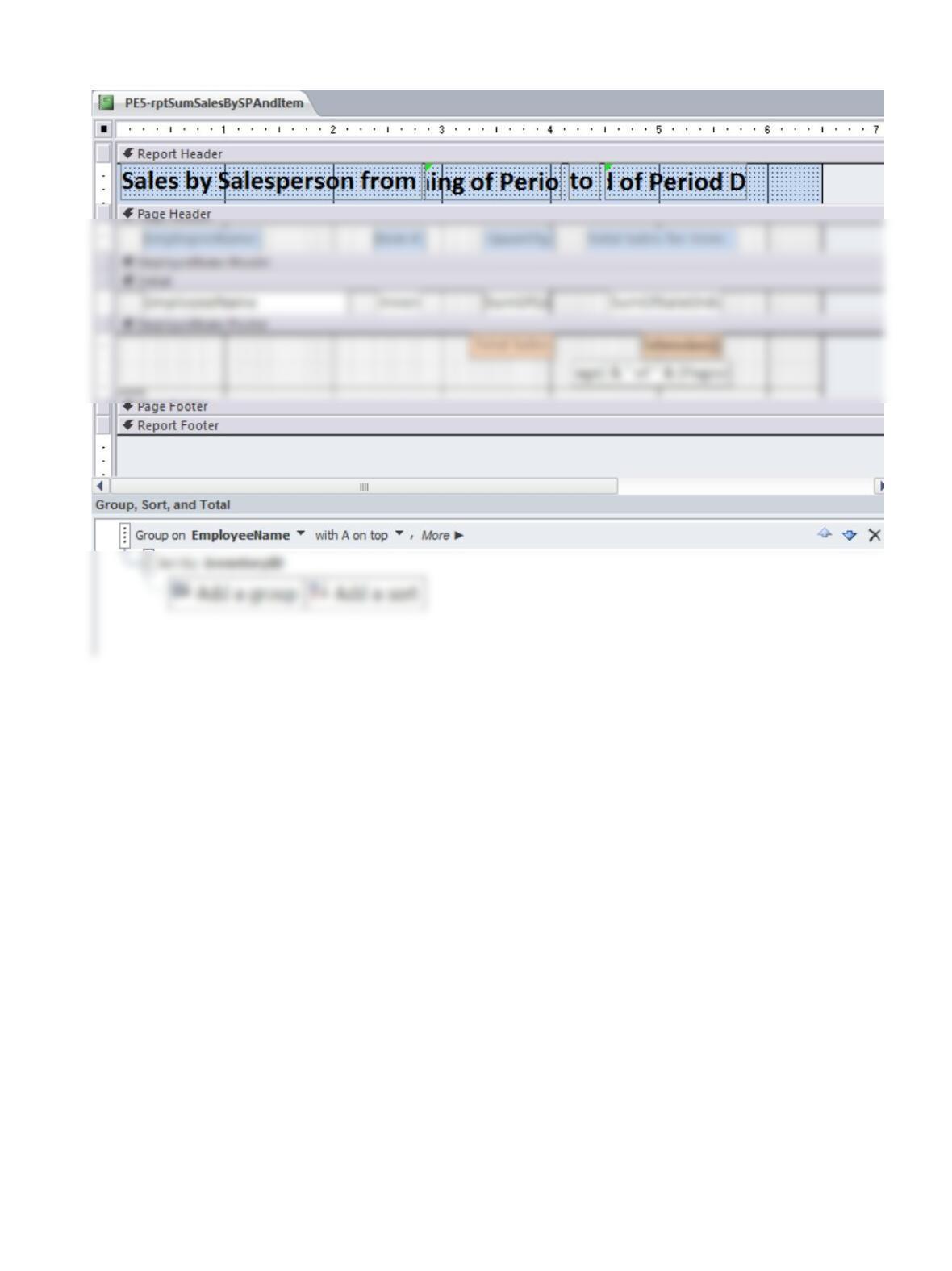
5. We left creating a report to the end of chapter exercises due to the length of the explanation necessary to
8-6 CHAPTER 8 • SALES/COLLECTION PROCESS
8-7 CHAPTER 8 • SALES/COLLECTION PROCESS
Problems
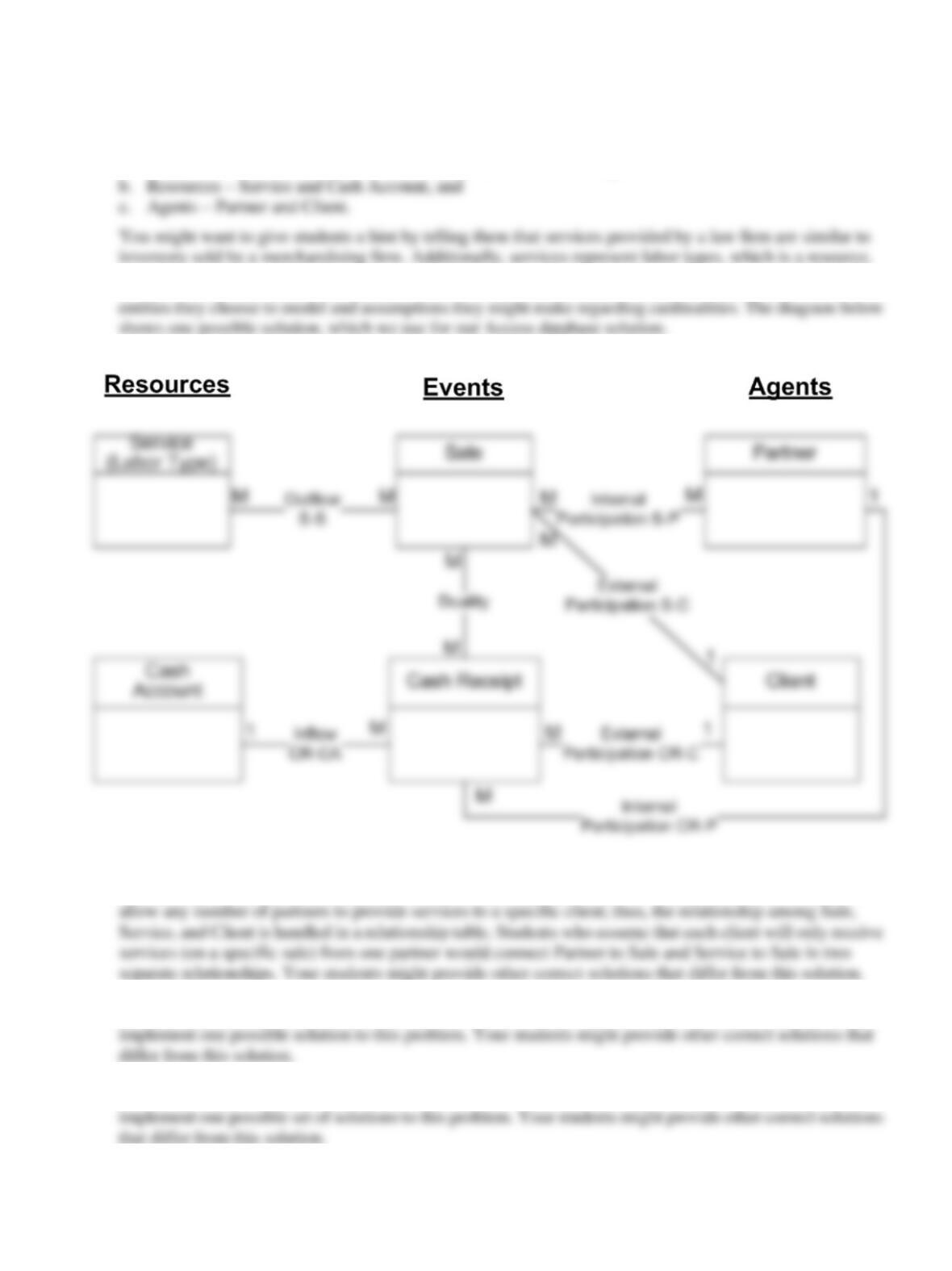
1. Solutions prepared by students might vary, but they should include the following:
a. Events – Sale (or Revenue or Service Rendered), and Cash Receipt,
2. It is possible that students will create somewhat different versions of this diagram depending on which
3. The database provided on the Instructor web site named Ch08Inst-Problems.accdb includes tables and
relationships that implement one possible solution to this problem. This solution assumes that GPS wants to
4. The database provided on the Instructor web site named Ch08Inst-Problems.accdb includes forms that
5. The database provided on the Instructor web site named Ch08Inst-Problems.accdb includes reports that