PROBLEM 8-34 (45 MINUTES)
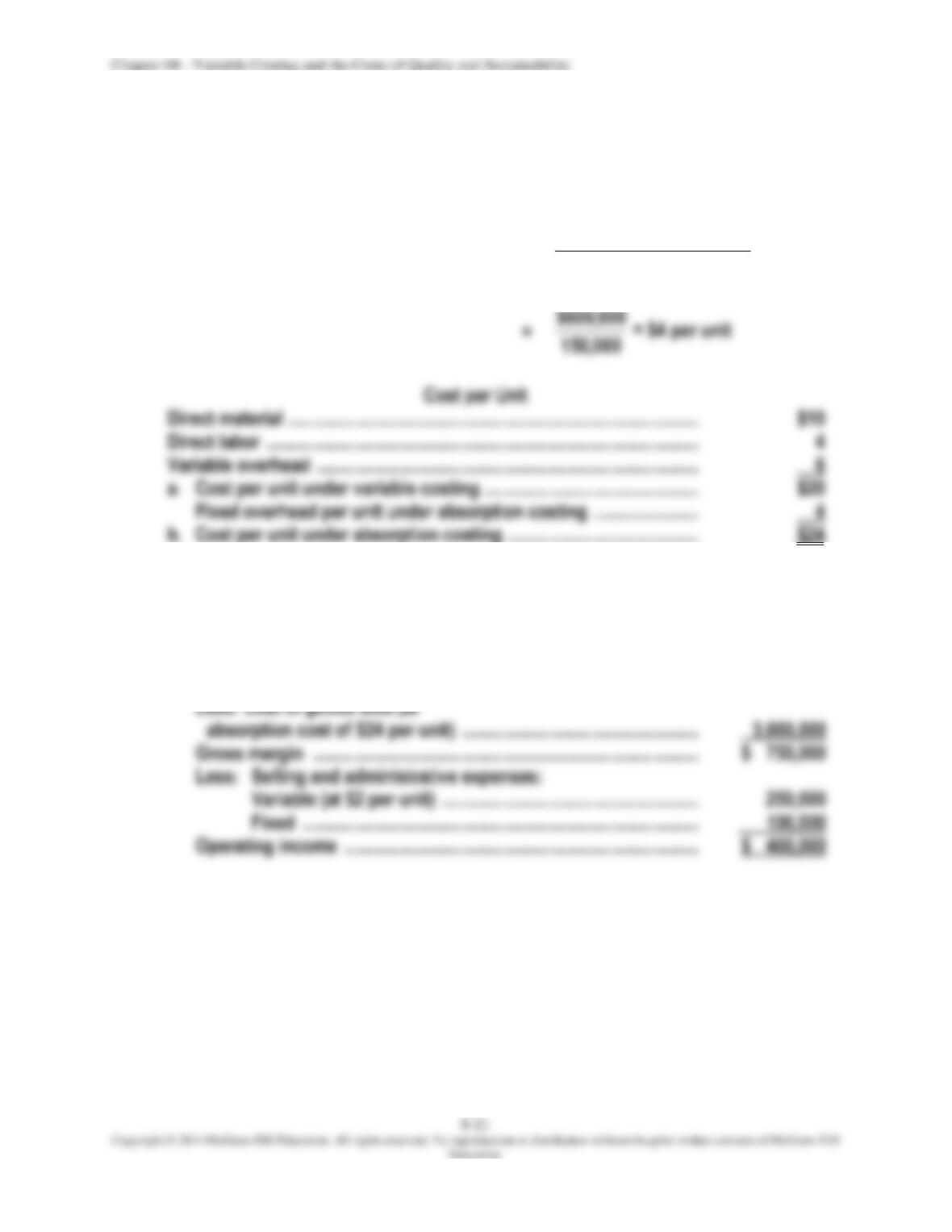
1. To compute fixed overhead per unit:
Predetermined fixed overhead rate
=
production budgeted
overhead fixed budgeted
Direct material …………………………………………………………………………….
Direct labor …………………………………………………………………………………
Variable overhead ……………………………………………………………………….
Fixed overhead per unit under absorption costing …………………..
2.
a. SKINNY DIPPERS, INC.
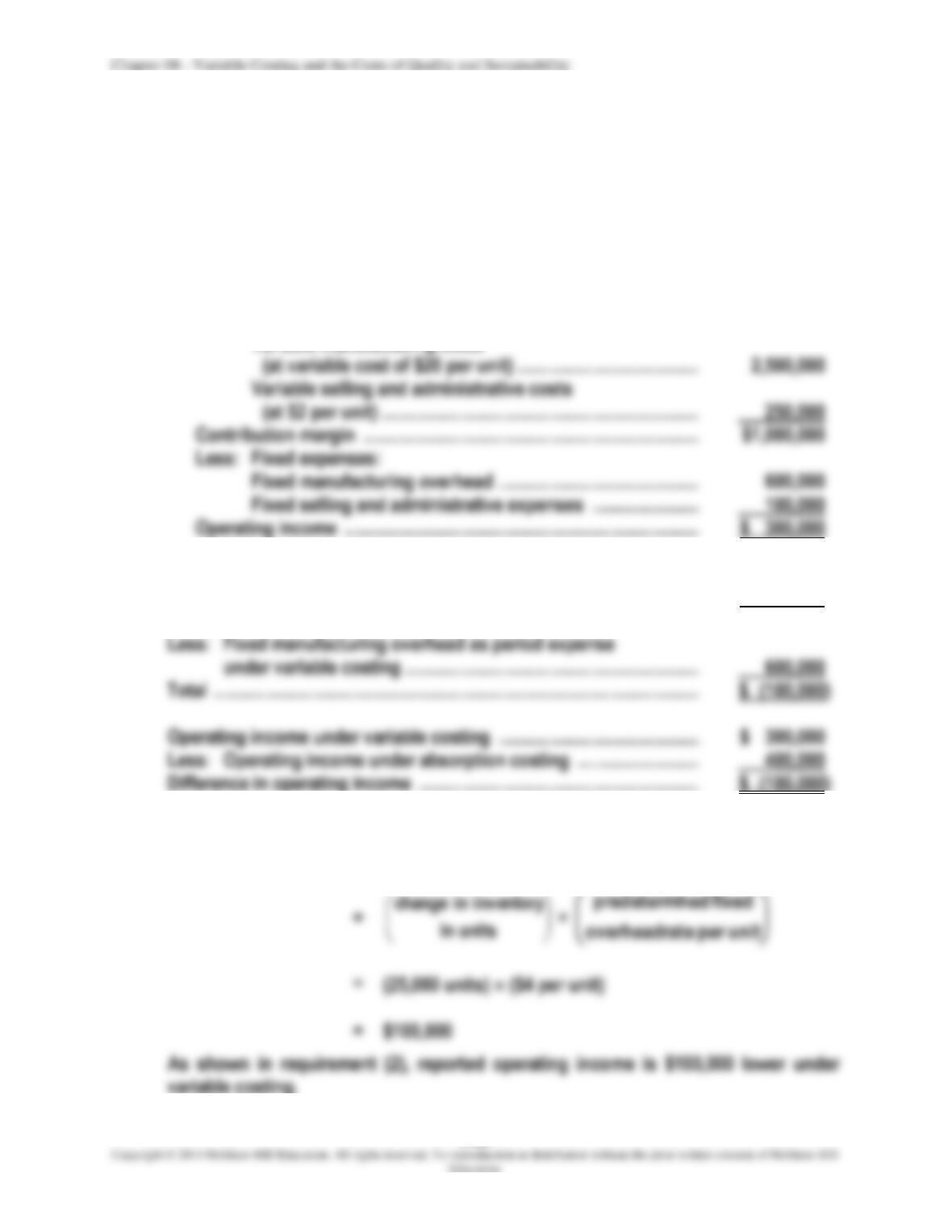
ABSORPTION-COSTING OPERATING INCOME STATEMENT
FOR THE YEAR ENDED DECEMBER 31, 20X4
Sales revenue (125,000 units sold at $30 per unit) ……………………
$3,750,000
Gross margin ………………………………………………………………………..
Less: Selling and administrative expenses:
Variable (at $2 per unit) ……………………………………………….
Fixed ………………………………………………………………………….
Operating income ………………………………………………………………….
8-22
PROBLEM 8-34 (CONTINUED)
b. SKINNY DIPPERS, INC.
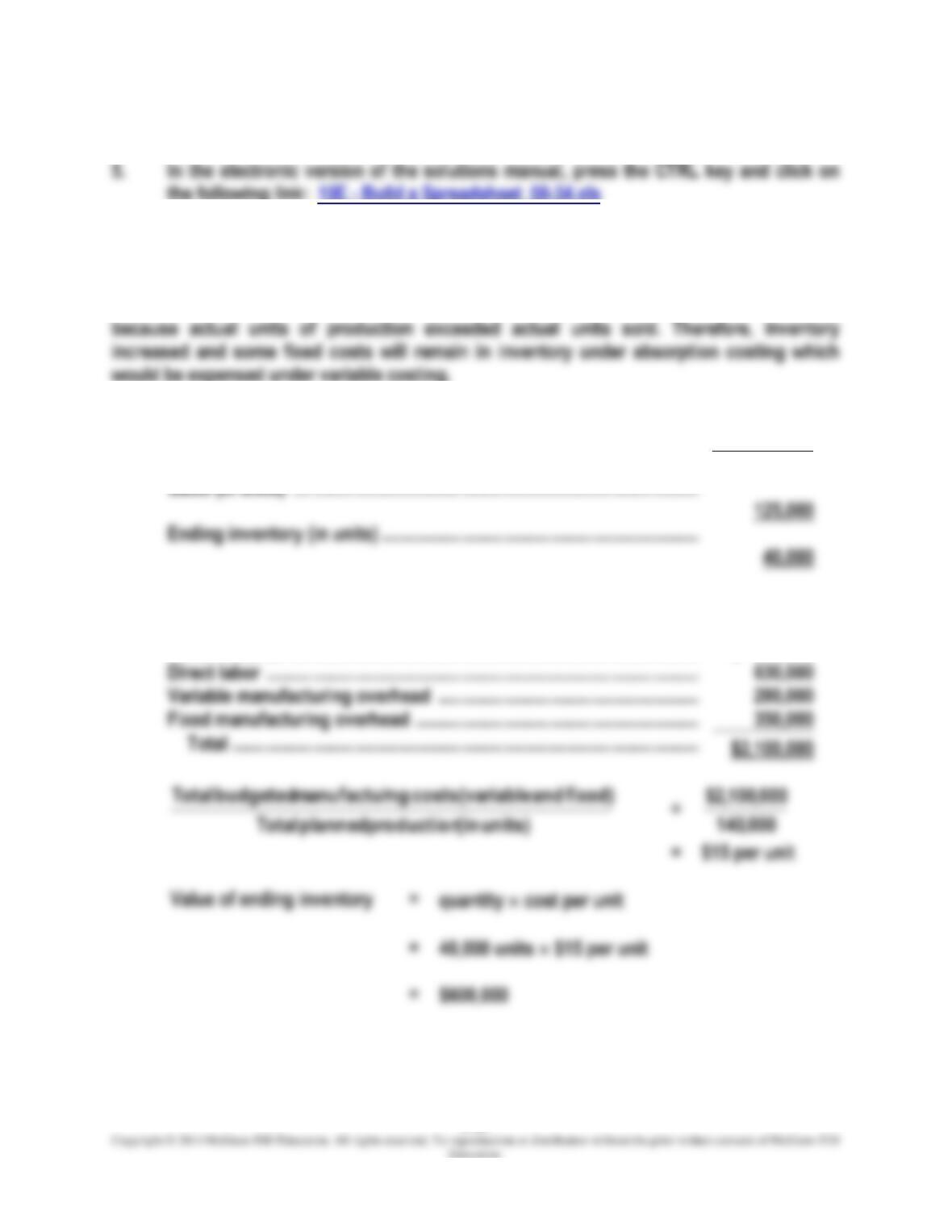
VARIABLE-COSTING OPERATING INCOME STATEMENT
FOR THE YEAR ENDED DECEMBER 31, 20X4
Sales revenue (125,000 units sold at $30 per unit) ……………………
$3,750,000
Less: Variable expenses:
Variable selling and administrative costs
Contribution margin ………………………………………………………………
$1,000,000
Less: Fixed expenses:
Fixed manufacturing overhead …………………………………….
Fixed selling and administrative expenses …………………..
Operating income ………………………………………………………………….
$ 300,000
Variable manufacturing costs
3.
Cost of goods sold under absorption costing ……………………………….
$3,000,000
Less: Variable manufacturing costs under variable costing …………
2,500,000
Subtotal ……………………………………………………………………………………..
$ 500,000
Less: Fixed manufacturing overhead as period expense
Total …………………………………………………………………………………………..
$ (100,000
)
Operating income under variable costing …………………………………….
$ 300,000
Less: Operating income under absorption costing ……………………..
Difference in operating income ……………………………………………………
$ (100,000
)
4.
Difference in
reported operating
income
=
difference in fixed overhead expensed under
absorption and variable costing
Chapter 08 – Variable Costing and the Costs of Quality and Sustainability
8-23
PROBLEM 8-34 (CONTINUED)
PROBLEM 8-35 (25 MINUTES)
Outback, Ltd.’s reported 20×4 operating income will be higher under absorption costing
1.
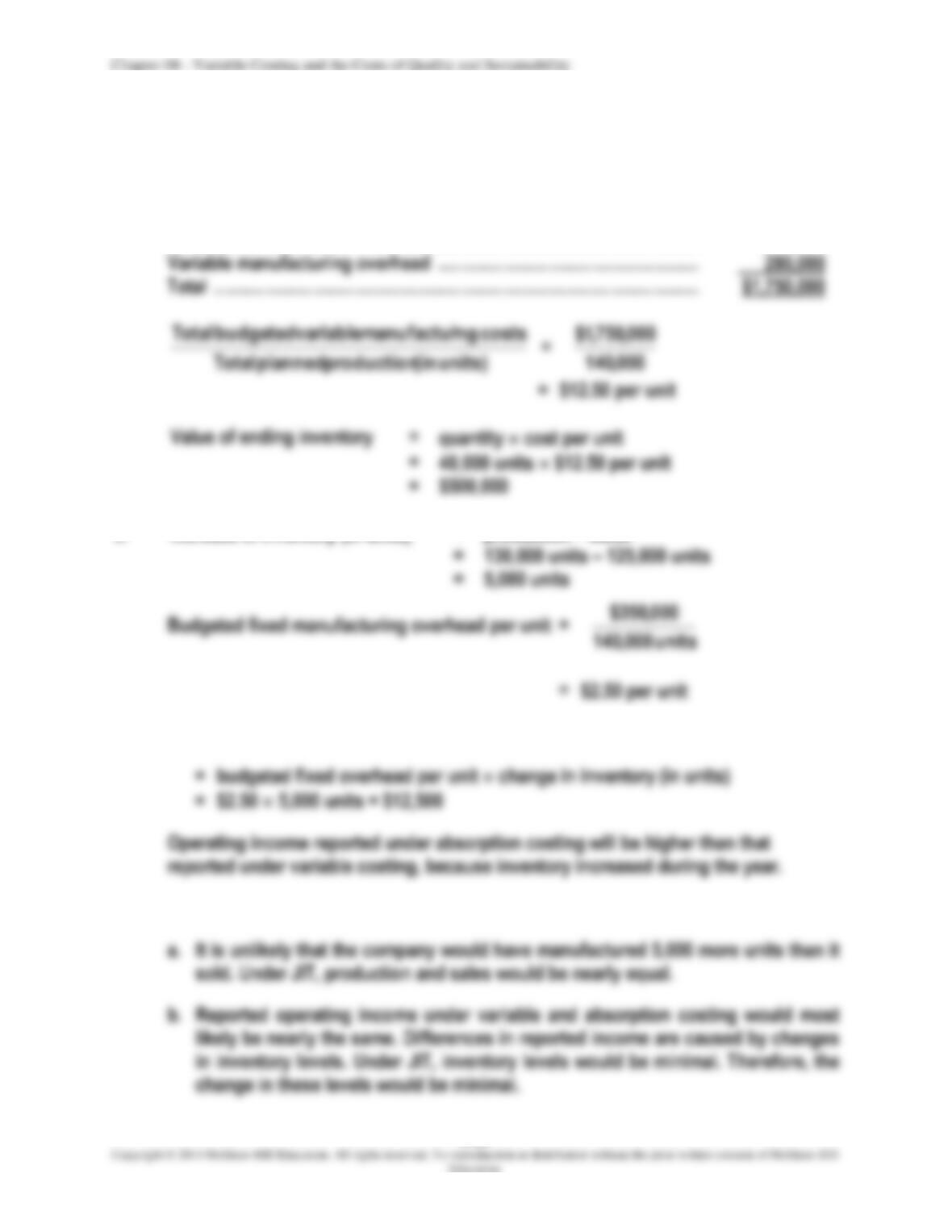
Beginning inventory (in units) ……………………………………………………..
35,000
Actual production (in units) …………………………………………………………
130,000
Available for sale (in units) ………………………………………………………….
165,000
Budgeted manufacturing costs:
Direct material …………………………………………………………………………….
$ 840,000
Direct labor …………………………………………………………………………………
630,000
Variable manufacturing overhead …………………………..……………………
280,000
Fixed manufacturing overhead …………………………………………………….
350,000
$2,100,000
8-24
PROBLEM 8-35 (CONTINUED)
2.
Budgeted variable manufacturing costs:
Direct material …………………………………………………………………………….
$ 840,000
Direct labor …………………………………………………………………………………
630,000
Variable manufacturing overhead …………………………..……………………
Total …………………………………………………………………………………………..
$1,750,000
=
$500,000
3.
Increase in inventory (in units)
=
production – sales
=
130,000 units – 125,000 units
=
5,000 units
Difference in reported operating income
4. If Outback, Ltd. had adopted a JIT program at the beginning of 20×4:
8-25
PROBLEM 8-36 (35 MINUTES)
1. Total cost:
Direct material (10,000 units x $36)……………
$ 360,000
Direct labor………………………………………..
Variable manufacturing overhead…………….
Fixed manufacturing overhead………………..
Fixed selling and administrative costs………
354,000
$1,934,400
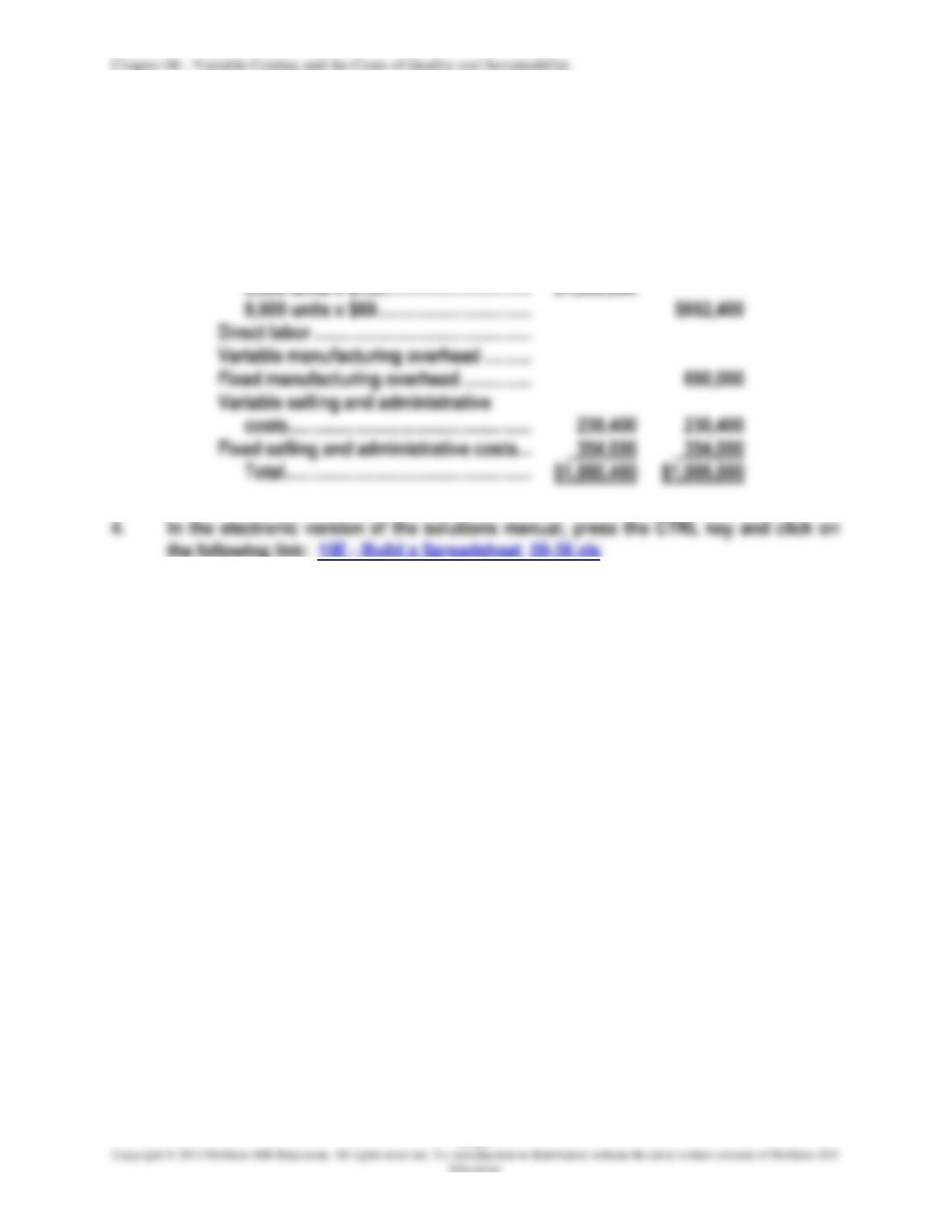
2. The cost of the year-end inventory of 400 units (10,000 units produced – 9,600 units
sold) is computed as follows:
Absorption
Costing
Variable
Costing
Direct material…………………………..
$ 360,000
$360,000
Direct labor………………………………
Variable manufacturing overhead…..
Fixed manufacturing overhead………
660,000
$1,350,000
$690,000
Cost per unit (total ÷ 10,000 units)…
Year-end inventory (400 units x cost
3. The total costs would be allocated between the current period’s operating income
statement and the year-end inventory on the balance sheet. Thus:
8-26
PROBLEM 8-36 (CONTINUED)
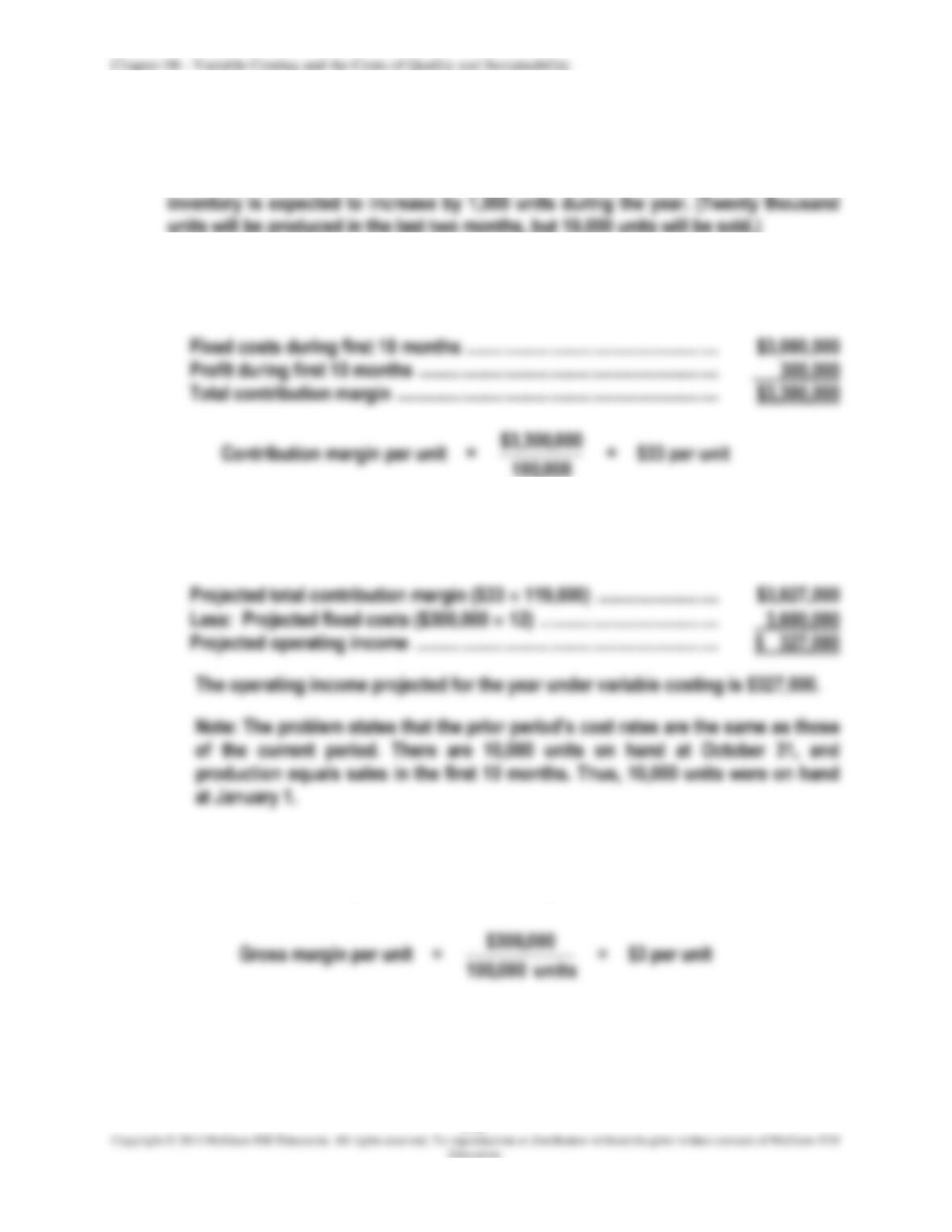
Alternatively, these amounts can be derived as follows:
Absorption
Costing
Variable
Costing
Variable selling and administrative
Cost of goods sold:
8-27
PROBLEM 8-37 (45 MINUTES)
1. Reported operating income will be higher under absorption costing, because
2. a. Variable costing: Total contribution during first 10 months is equal to the fixed
costs plus profit for that period.
Projected total sales for the year are 119,000 units (100,000 in first 10 months
plus 19,000 units in last 2 months). We can compute projected operating income
for the year as follows. (There are no selling and administrative costs.)
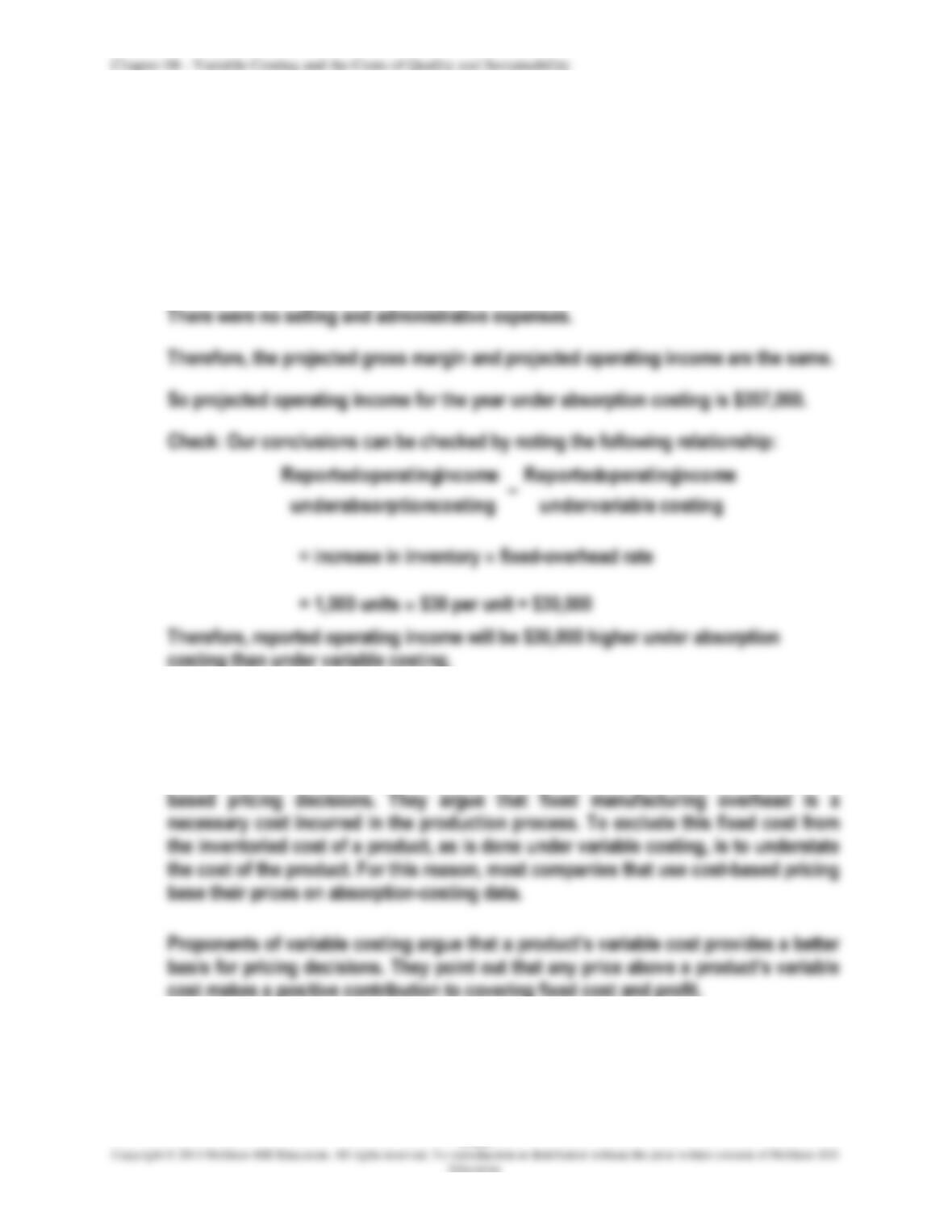
b. Absorption costing: The gross margin for the first 10 months is $300,000. Notice
that operating income and gross margin are the same, since there are no selling
or administrative expenses. Therefore, during the first 10 months:
8-28
PROBLEM 8-37 (CONTINUED)
Projected sales for the year are 119,000 units, so we can compute the projected
gross margin for the year as follows:
Projected gross margin ($3 119,000) ……………………………………….
$357,000
3. The advantages and disadvantages of variable and absorption costing are
summarized as follows:
(a) Pricing decisions: Many managers prefer to use absorption-costing data in cost-
Chapter 08 – Variable Costing and the Costs of Quality and Sustainability
8-29
PROBLEM 8-37 (CONTINUED)
(b) Definition of an asset: Another controversy about absorption and variable costing
hinges on the definition of an asset. An asset is a thing of value owned by the
organization with future service potential. By accounting convention, assets are
(c) Cost-volume-profit analysis: Some managers find the inconsistency between
PROBLEM 8-38 (40 MINUTES)
1.
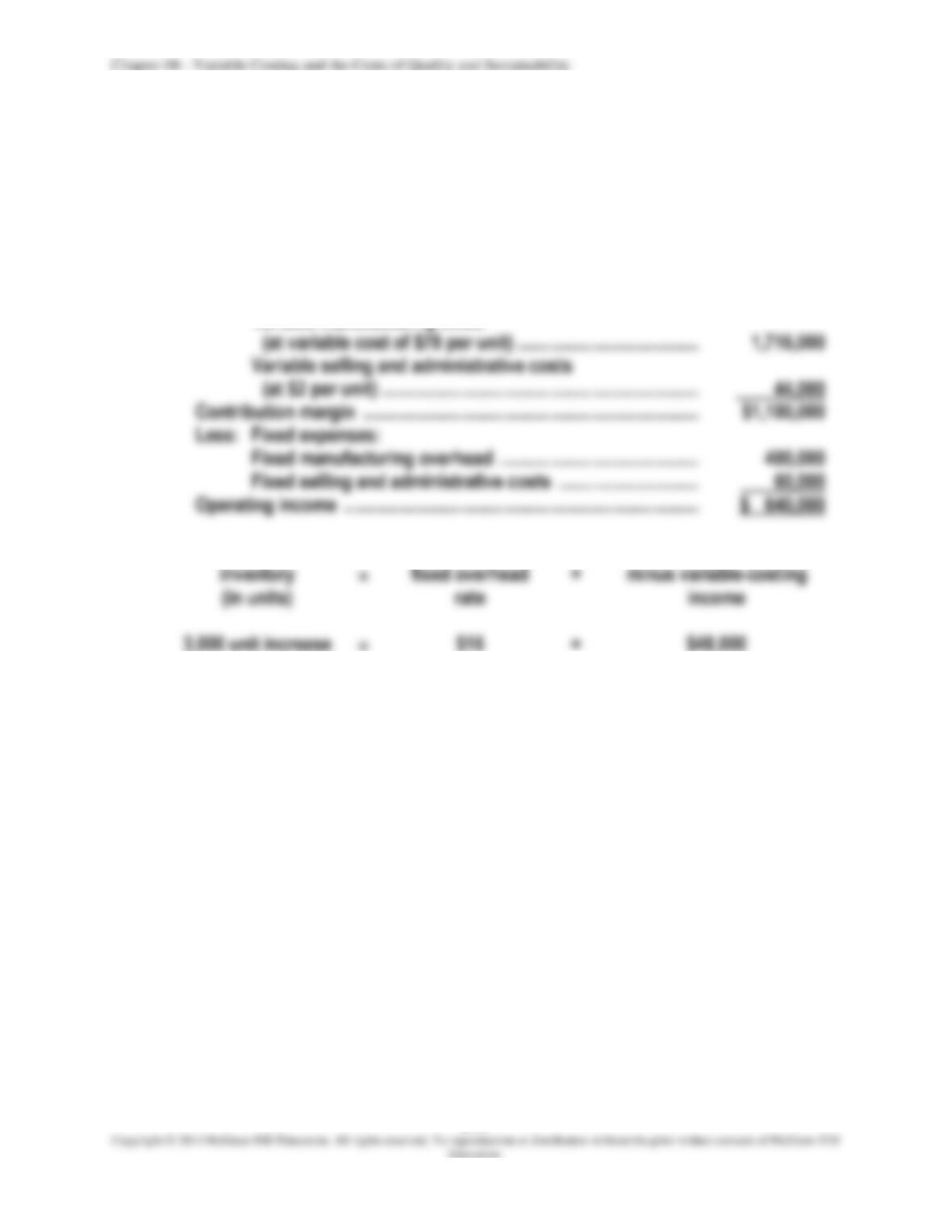
Cost per unit:
(a) Absorption Costing
(b) Variable Costing
Direct material ………………………..
$40
……………………………………………….
$40
Direct labor …………………………….
……………………………………………….
Manufacturing overhead
……………………………………………….
Total absorption cost per unit ….
$94
Total variable cost per unit ……………………………………………………………………
$78
2.
a. GREAT OUTDOZE, INC.
OPERATING INCOME STATEMENT FOR THE YEAR ENDED DECEMBER 31, 20X4
ABSORPTION COSTING
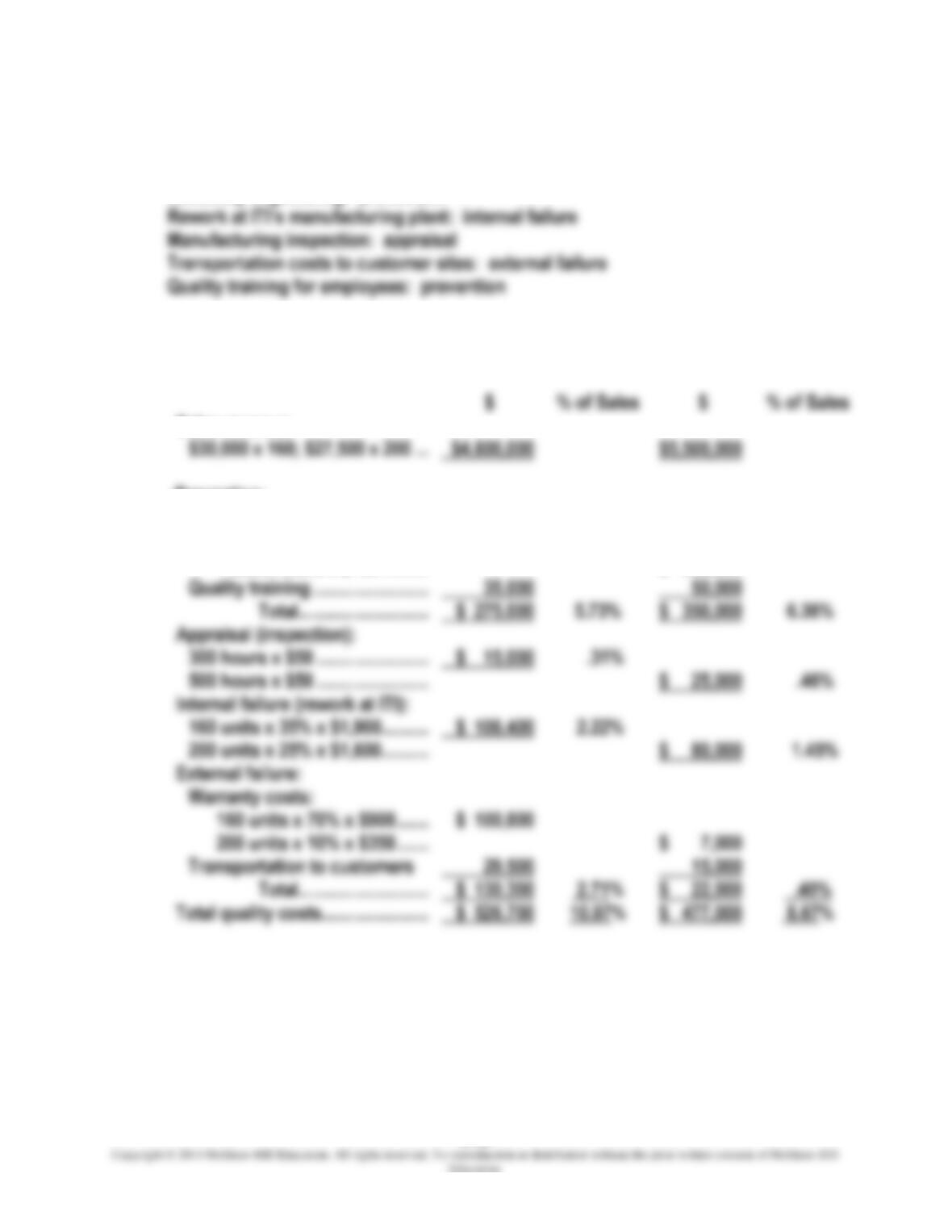
Sales revenue (at $130 per unit) ……………………………………………..
$2,860,000
Gross margin …………………………………………………………………………
Less: Selling and administrative expenses:
Variable (at $2 per unit) ……………………………………………….
Fixed ………………………………………………………………………….
Operating income ………………………………………………………………….
Less: Cost of goods sold (at
8-31
PROBLEM 8-38 (CONTINUED)
b. GREAT OUTDOZE, INC.
OPERATING INCOME STATEMENT FOR THE YEAR ENDED DECEMBER 31, 20X4
VARIABLE COSTING
Sales revenue (at $130 per unit) ……………………………………………..
$2,860,000
Less: Variable expenses:
Variable selling and administrative costs
Contribution margin ………………………………………………………………
$1,100,000
Less: Fixed expenses:
Fixed manufacturing overhead …………………………………….
Fixed selling and administrative costs …………………………
Operating income ………………………………………………………………….
Variable manufacturing costs
3.
Change in
predetermined
absorption-costing income
=
Chapter 08 – Variable Costing and the Costs of Quality and Sustainability
8-32
PROBLEM 8-39 (35 MINUTES)
1. Warranty costs: External failure
Reliability engineering: prevention
2 & 3. Evaluation of quality costs:
No. 165
No. 172
Sales revenue:
$30,000 x 160; $27,500 x 200 …
$5,500,000
Prevention:
Reliability engineering
1,600 hours x $150 ……….
$ 240,000
2,000 hours x $150 ……….
$ 300,000
Quality training …………………….
35,000
50,000
$ 275,000
$ 350,000
Appraisal (inspection):
300 hours x $50 ……………………
$ 15,000
500 hours x $50 ……………………
$ 25,000
Internal failure (rework at ITI):
160 units x 35% x $1,900 ……….
$ 106,400
200 units x 25% x $1,600 ……….
$ 80,000
External failure:
Warranty costs:
$ 100,800
$ 7,000
Transportation to customers
29,500
15,000
$ 130,300
$ 22,000
Total quality costs…………………..
$ 526,700
$ 477,000
Chapter 08 – Variable Costing and the Costs of Quality and Sustainability
8-33
PROBLEM 8-39 (CONTINUED)
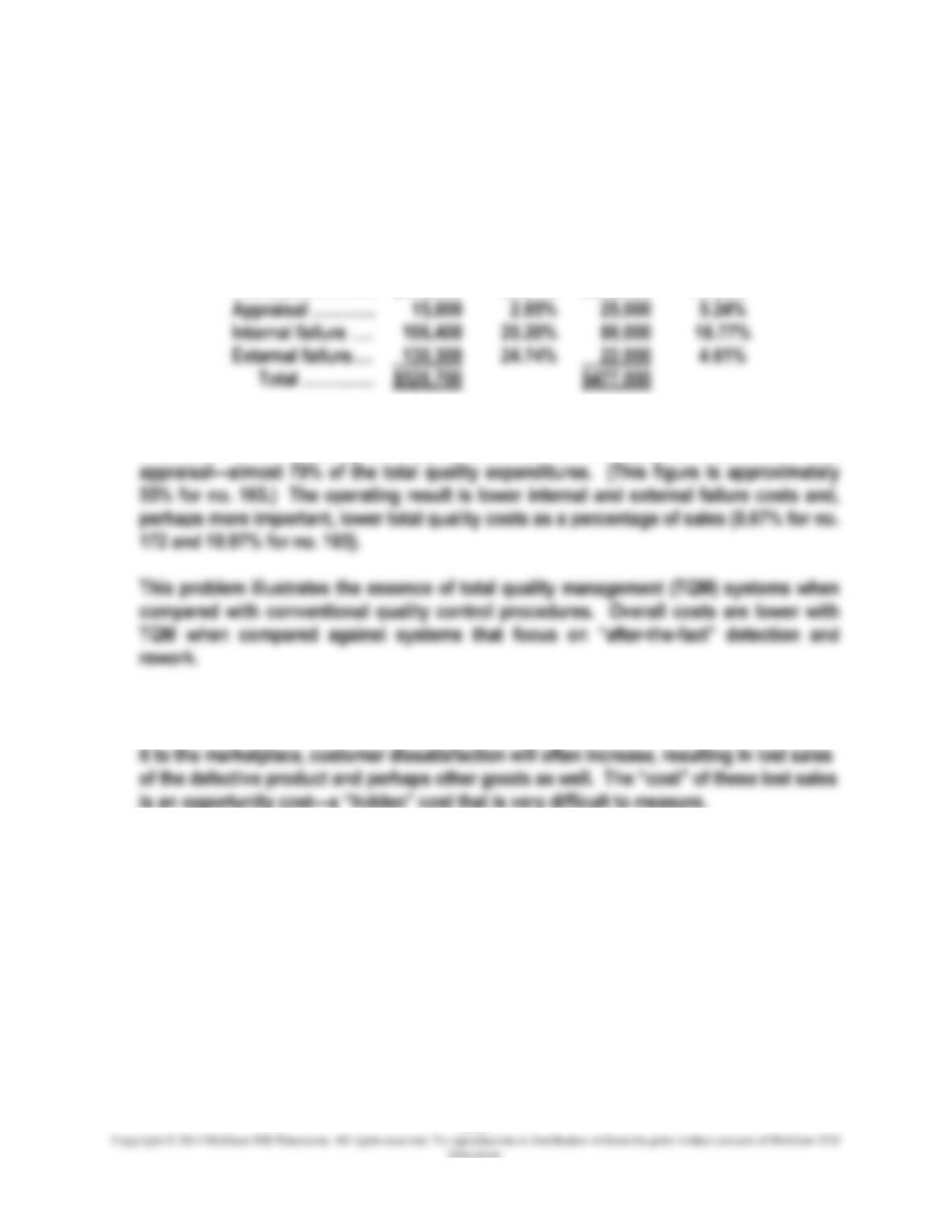
Individual quality costs as a % of total quality costs:
No. 165
No. 172
$
% of Total
$
% of Total
Prevention………..
$275,000
52.21%
$350,000
73.38%
15,000
25,000
20.20%
80,000
24.74%
22,000
$526,700
$477,000
4. Yes, the company is “investing” its quality expenditures differently for the two
machines. ITI is spending more up-front on no. 172 with respect to prevention and
5. Prevention, appraisal, internal failure, and external failure costs are observable in the
sense that such amounts can be measured and reported. When inferior products make