8-1
CHAPTER 8
FLEXIBLE BUDGETS, OVERHEAD COST VARIANCES, AND
MANAGEMENT CONTROL
8-1 Effective planning of variable overhead costs involves:
1. Planning to undertake only those variable overhead activities that add value for
customers using the product or service, and
2. Planning to use the drivers of costs in those activities in the most efficient way.
8-3 The key differences are how direct costs are traced to a cost object and how indirect costs
are allocated to a cost object:
Actual Costing
Standard Costing
Direct costs
Actual prices
× Actual inputs used
Standard prices
× Standard inputs allowed for actual output
Indirect costs
Actual indirect rate
× Actual inputs used
Standard indirect cost-allocation rate
× Standard quantity of cost-allocation base
allowed for actual output
8-4 Steps in developing a budgeted variable-overhead cost rate are
1. Choose the period to be used for the budget.
2. Select the cost-allocation bases to use in allocating variable overhead costs to the
output produced.
3. Identify the variable overhead costs associated with each cost-allocation base.
4. Compute the rate per unit of each cost-allocation base used to allocate variable
overhead costs to output produced.
8-6 Possible reasons for a favorable variable-overhead efficiency variance include:
• Workers are more skillful in using machines than budgeted.
• Production scheduler was able to schedule jobs better than budgeted, resulting in
8-2
8-7 A direct materials efficiency variance indicates whether more or less direct materials
were used than was budgeted for the actual output achieved. A variable manufacturing overhead
efficiency variance indicates whether more or less of the chosen allocation base was used than
was budgeted for the actual output achieved.
8-8 Steps in developing a budgeted fixed-overhead rate are
1. Choose the period to use for the budget.
2. Select the cost-allocation base to use in allocating fixed overhead costs to output
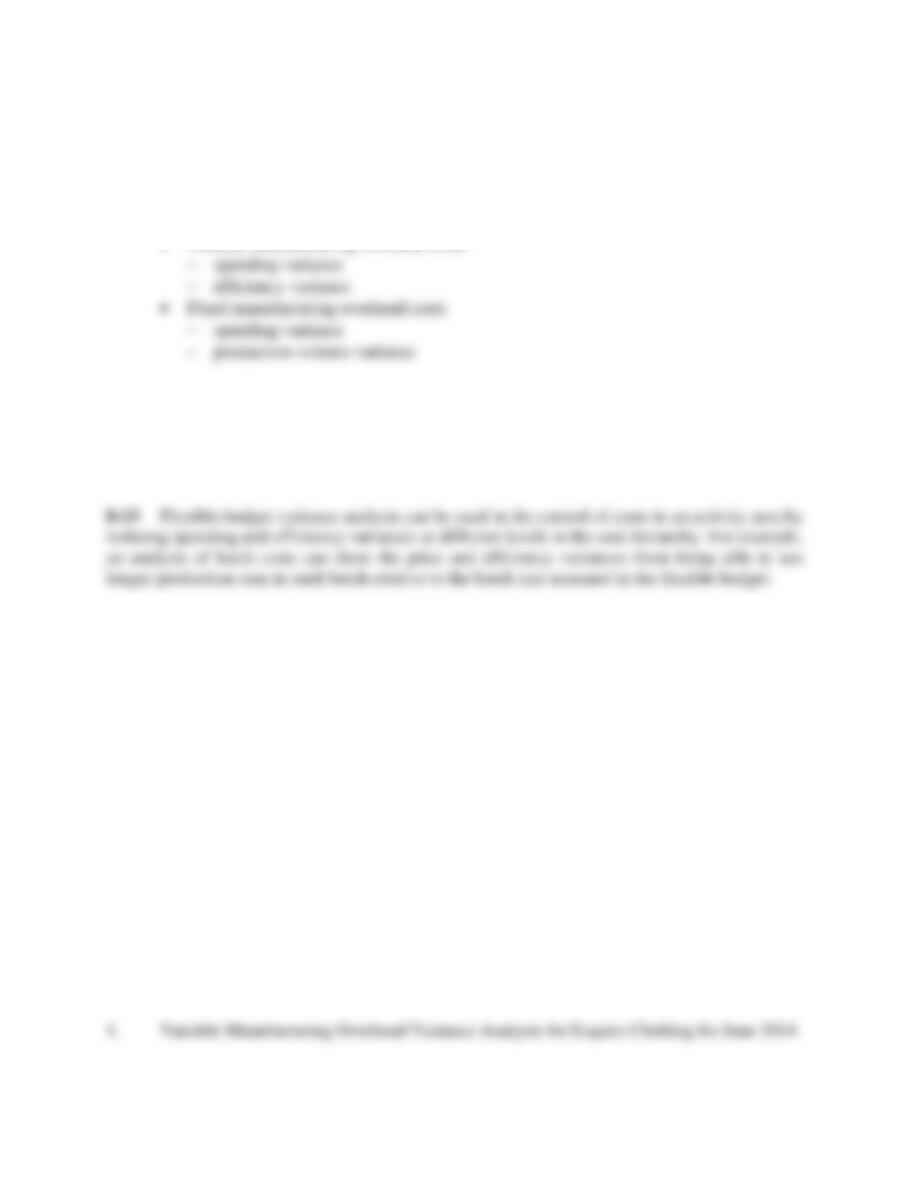
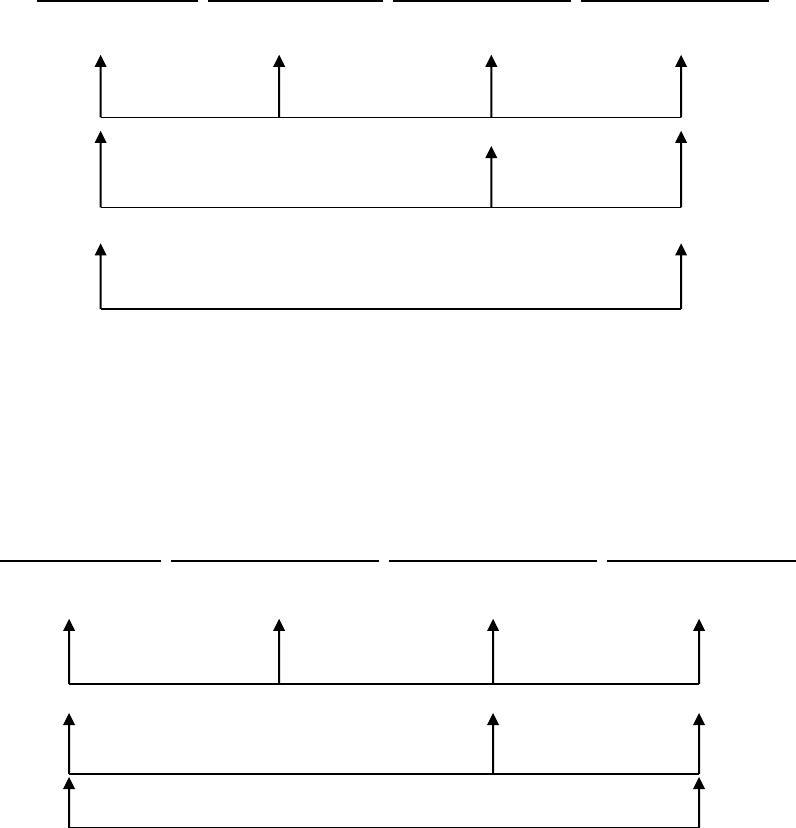
8-9 The relationship for fixed-manufacturing overhead variances is:
There is never an efficiency variance for fixed overhead because managers cannot be
more or less efficient in dealing with an amount that is fixed regardless of the output level. The
result is that the flexible-budget variance amount is the same as the spending variance for fixed–
manufacturing overhead.
8-12 A strong case can be made for writing off an unfavorable production-volume variance to
cost of goods sold. The alternative is prorating it among inventories and cost of goods sold, but
this would “penalize” the units produced (and in inventory) for the cost of unused capacity, i.e.,
for the units not produced. But, if we take the view that the denominator level is a “soft”
number—i.e., it is only an estimate, and it is never expected to be reached exactly—then it
Flexible-budget variance
Spending variance
Efficiency variance
(never a variance)
8-3
written off to cost of goods sold. Finally, prorating also dampens the efficacy of any steps taken
by company management to manage operating income through manipulation of the production
volume variance. In sum, a production-volume variance need not always be written off to cost of
goods sold.
8-13 The four variances are
• Variable manufacturing overhead costs
8-14 Interdependencies among the variances could arise for the spending and efficiency
variances. For example, if the chosen allocation base for the variable overhead efficiency
variance is only one of several cost drivers, the variable overhead spending variance will include
the effect of the other cost drivers. As a second example, interdependencies can be induced when
there are misclassifications of costs as fixed when they are variable and vice versa.
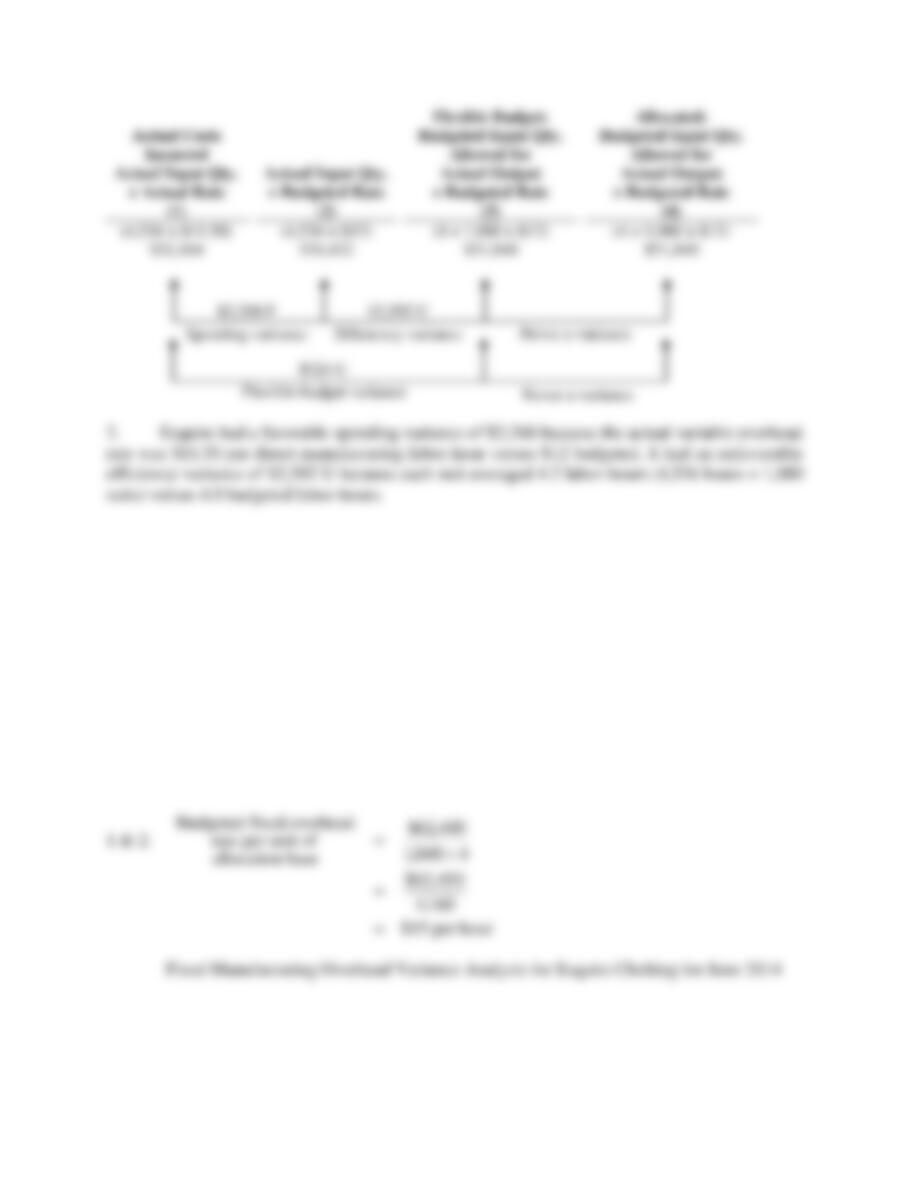
8-16 (20 min.) Variable manufacturing overhead, variance analysis.
Esquire Clothing is a manufacturer of designer suits. The cost of each suit is the sum of three
variable costs (direct material costs, direct manufacturing labor costs, and manufacturing
overhead costs) and one fixed-cost category (manufacturing overhead costs). Variable
manufacturing overhead cost is allocated to each suit on the basis of budgeted direct
manufacturing labor-hours per suit. For June 2014, each suit is budgeted to take 4 labor-hours.
Budgeted variable manufacturing overhead cost per labor-hour is $12. The budgeted number of
suits to be manufactured in June 2014 is 1,040.
Actual variable manufacturing costs in June 2014 were $52,164 for 1,080 suits started and
completed. There were no beginning or ending inventories of suits. Actual direct manufacturing
labor-hours for June were 4,536.
Required:
1. Compute the flexible-budget variance, the spending variance, and the efficiency variance for
variable manufacturing overhead.
2. Comment on the results.
SOLUTION
8-4
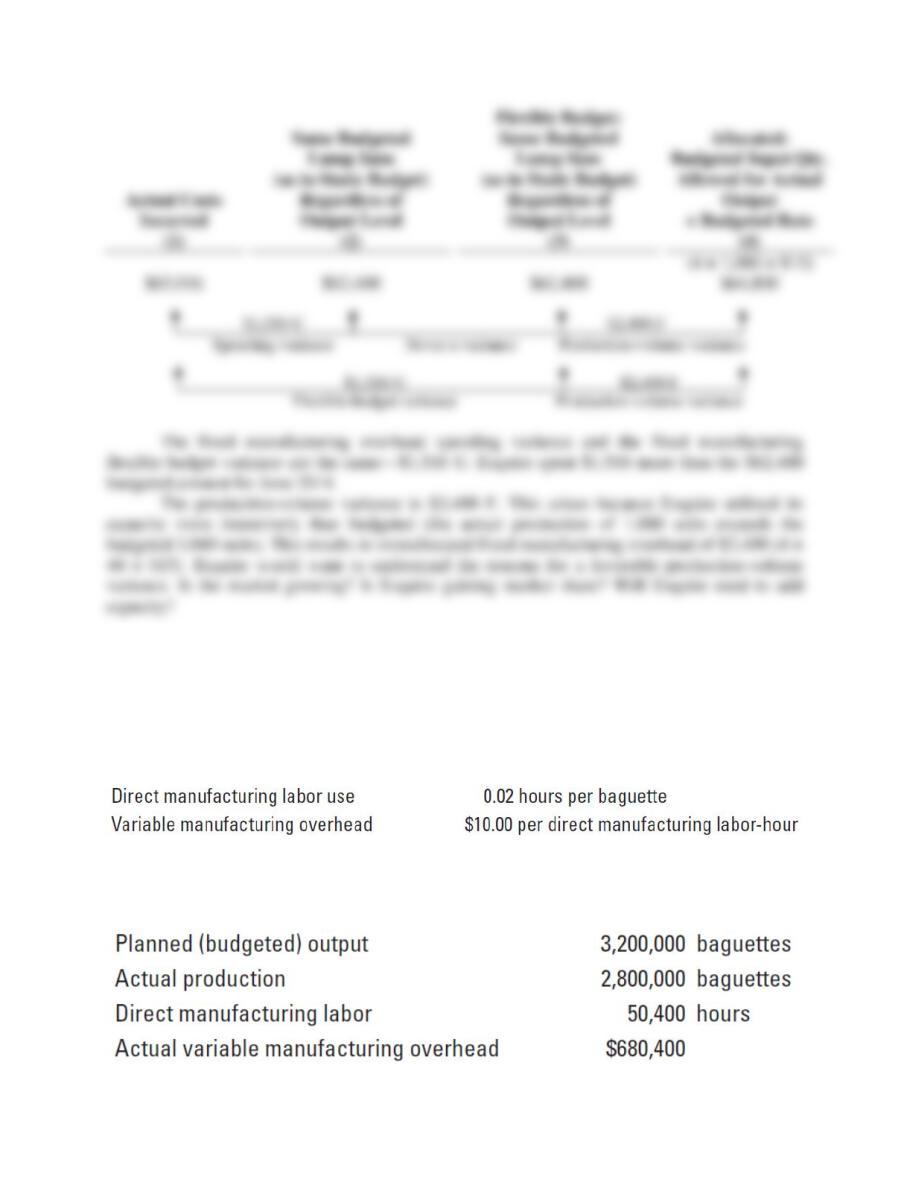
8-17 (20 min.) Fixed-manufacturing overhead, variance analysis (continuation of 8-16).
Esquire Clothing allocates fixed manufacturing overhead to each suit using budgeted direct
manufacturing labor-hours per suit. Data pertaining to fixed manufacturing overhead costs for
June 2014 are budgeted, $62,400, and actual, $63,916.
Required:
1. Compute the spending variance for fixed manufacturing overhead. Comment on the results.
2. Compute the production-volume variance for June 2014. What inferences can Esquire
Clothing draw from this variance?
SOLUTION
8-5
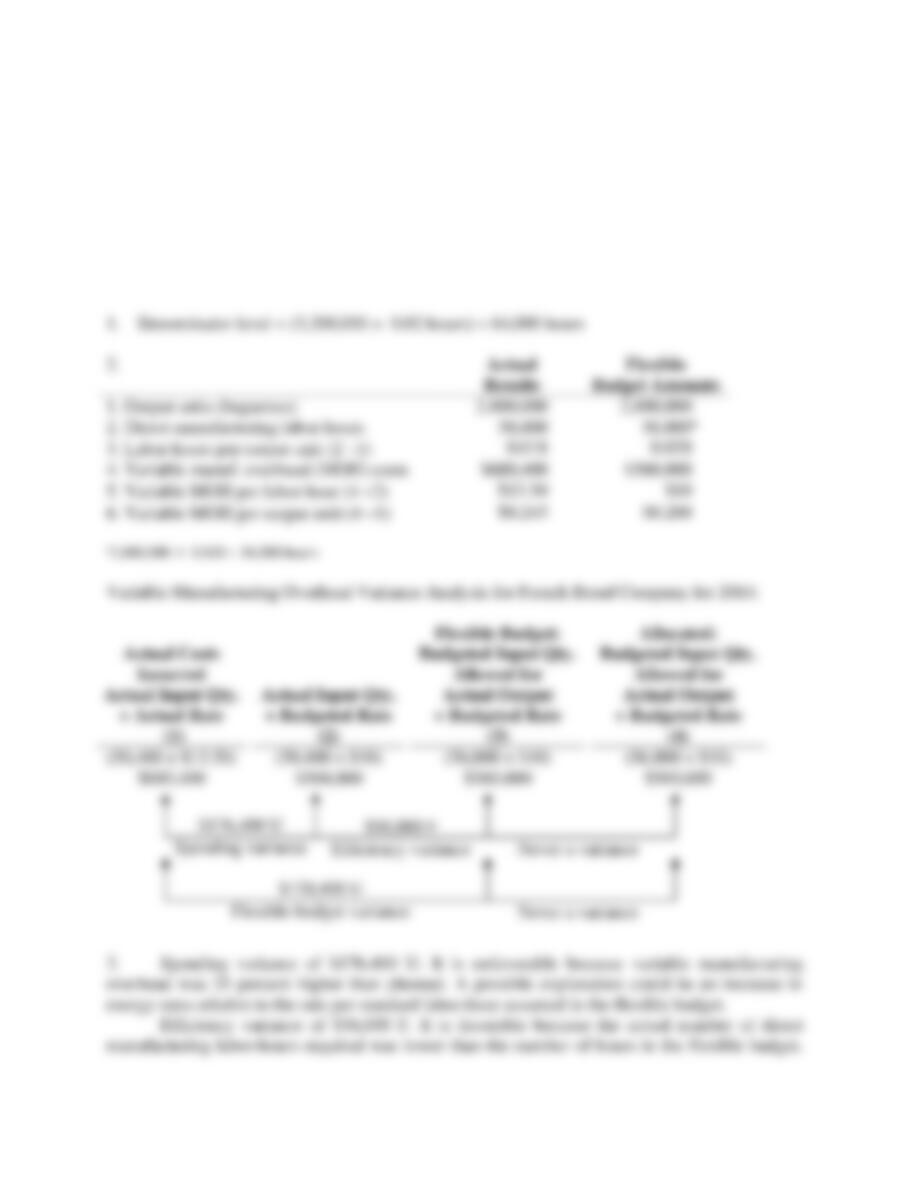
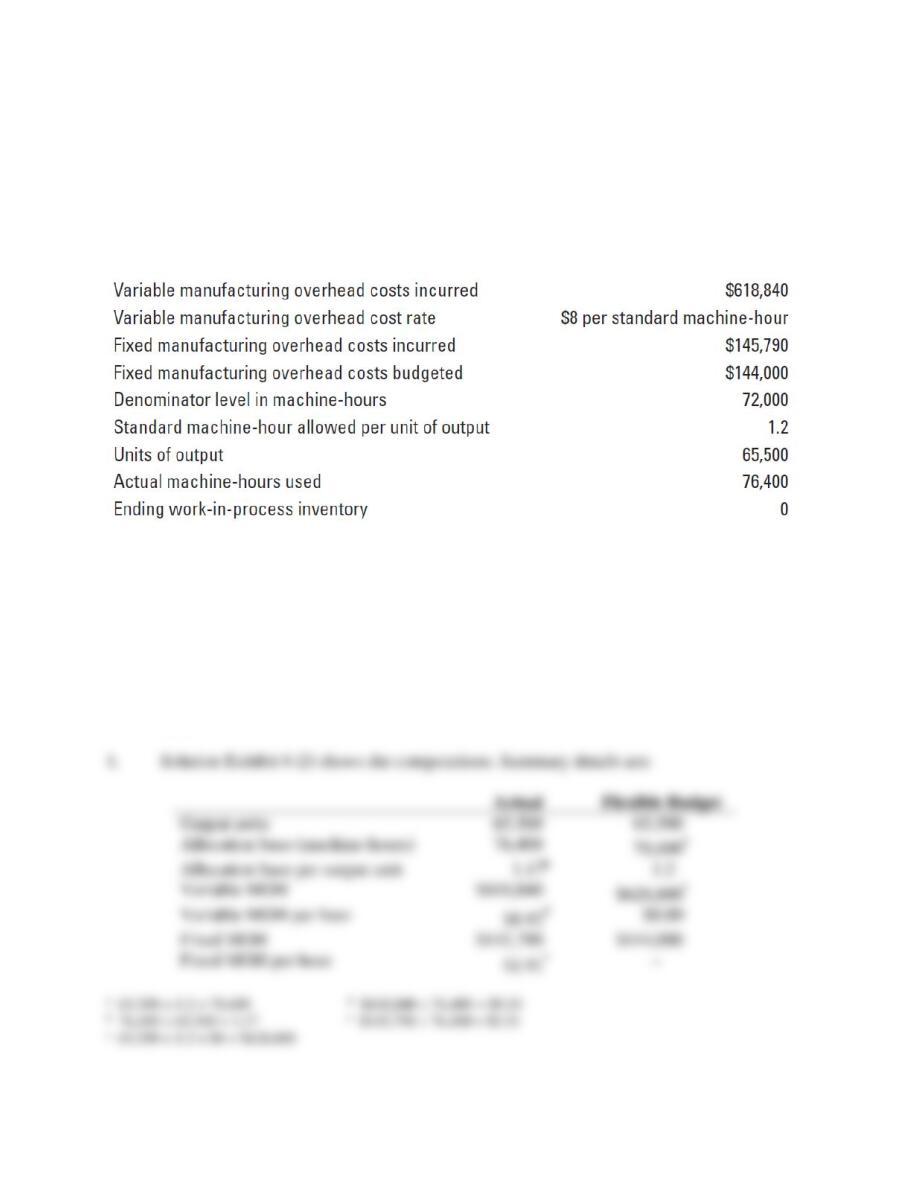
8-18 (30 min.) Variable manufacturing overhead variance analysis.
The French Bread Company bakes baguettes for distribution to upscale grocery stores. The
company has two direct-cost categories: direct materials and direct manufacturing labor.
Variable manufacturing overhead is allocated to products on the basis of standard direct
manufacturing labor-hours. Following is some budget data for the French Bread Company:
The French Bread Company provides the following additional data for the year ended December
31, 2014:
8-6
Required:
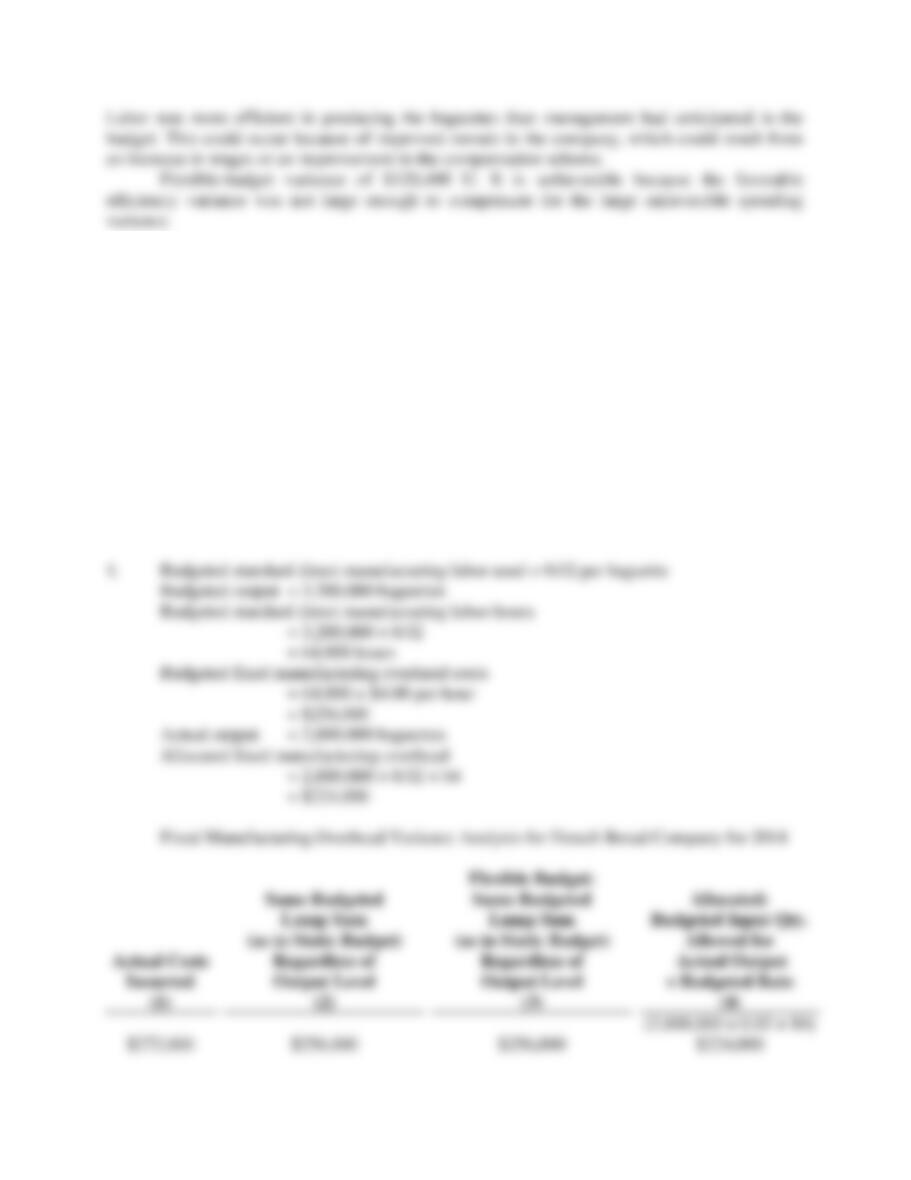
1. What is the denominator level used for allocating variable manufacturing overhead? (That is,
for how many direct manufacturing labor-hours is French Bread budgeting?)
2. Prepare a variance analysis of variable manufacturing overhead. Use Exhibit 8-4 (page 304)
for reference.
3. Discuss the variances you have calculated and give possible explanations for them.
SOLUTION
8-7
8-19 (30 min.) Fixed manufacturing overhead variance analysis (continuation of 8-18).
The French Bread Company also allocates fixed manufacturing overhead to products on the basis
of standard direct manufacturing labor-hours. For 2014, fixed manufacturing overhead was
budgeted at $4.00 per direct manufacturing labor-hour. Actual fixed manufacturing overhead
incurred during the year was $272,000.
Required:
1. Prepare a variance analysis of fixed manufacturing overhead cost. Use Exhibit 8-4 (page 304)
as a guide.
2. Is fixed overhead underallocated or overallocated? By what amount?
3. Comment on your results. Discuss the variances and explain what may be driving them.
SOLUTION
8-8
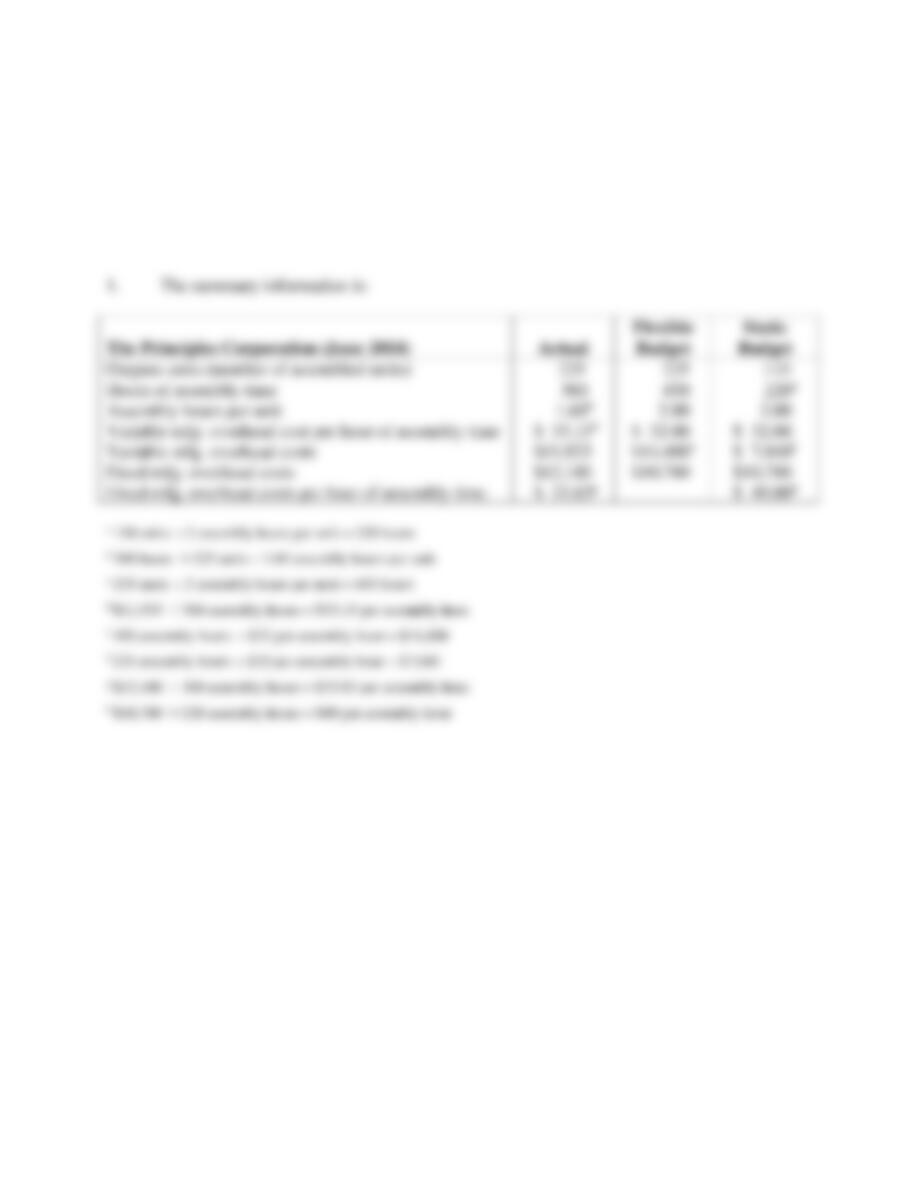
8-20 (30–40 min.) Manufacturing overhead, variance analysis.
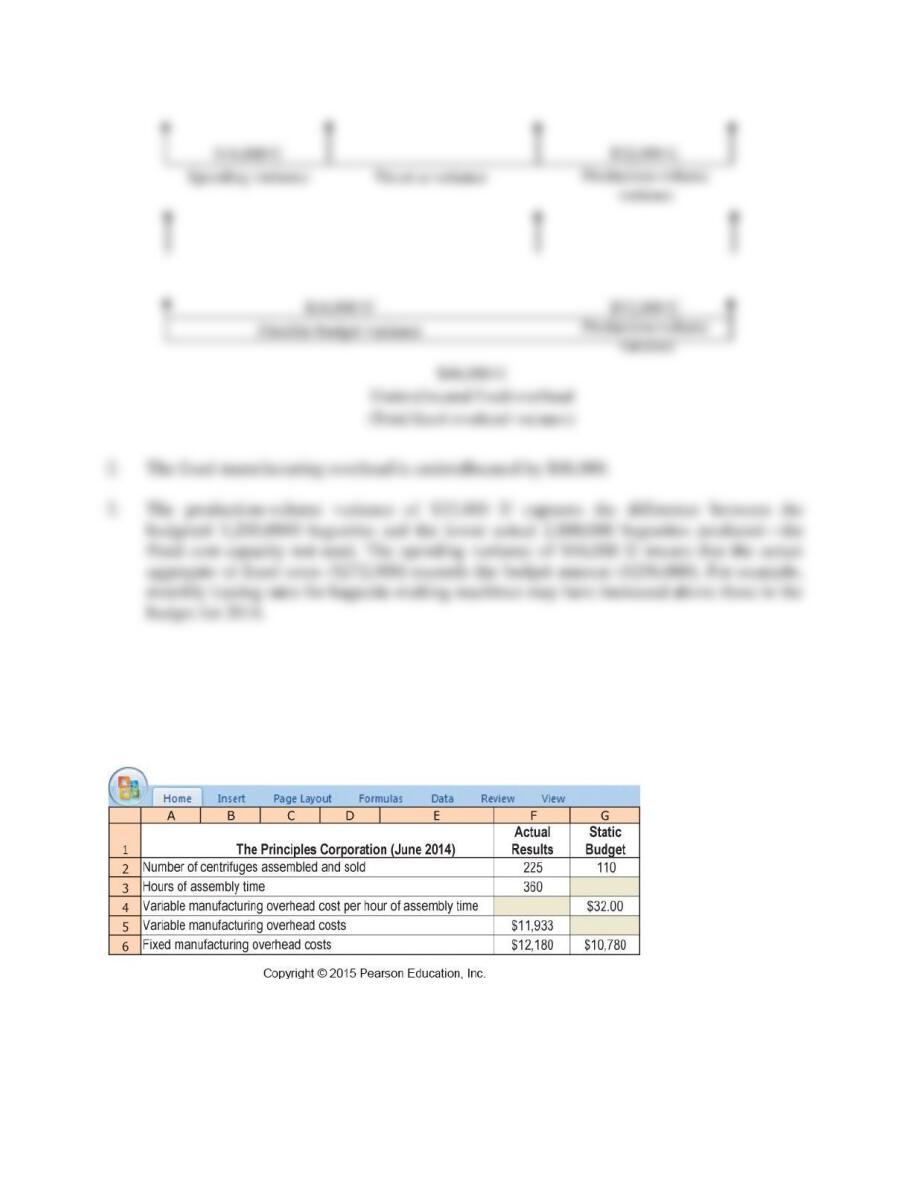
The Principles Corporation is a manufacturer of centrifuges. Fixed and variable manufacturing
overheads are allocated to each centrifuge using budgeted assembly-hours. Budgeted assembly
time is 2 hours per unit. The following table shows the budgeted amounts and actual results
related to overhead for June 2014.
Required:
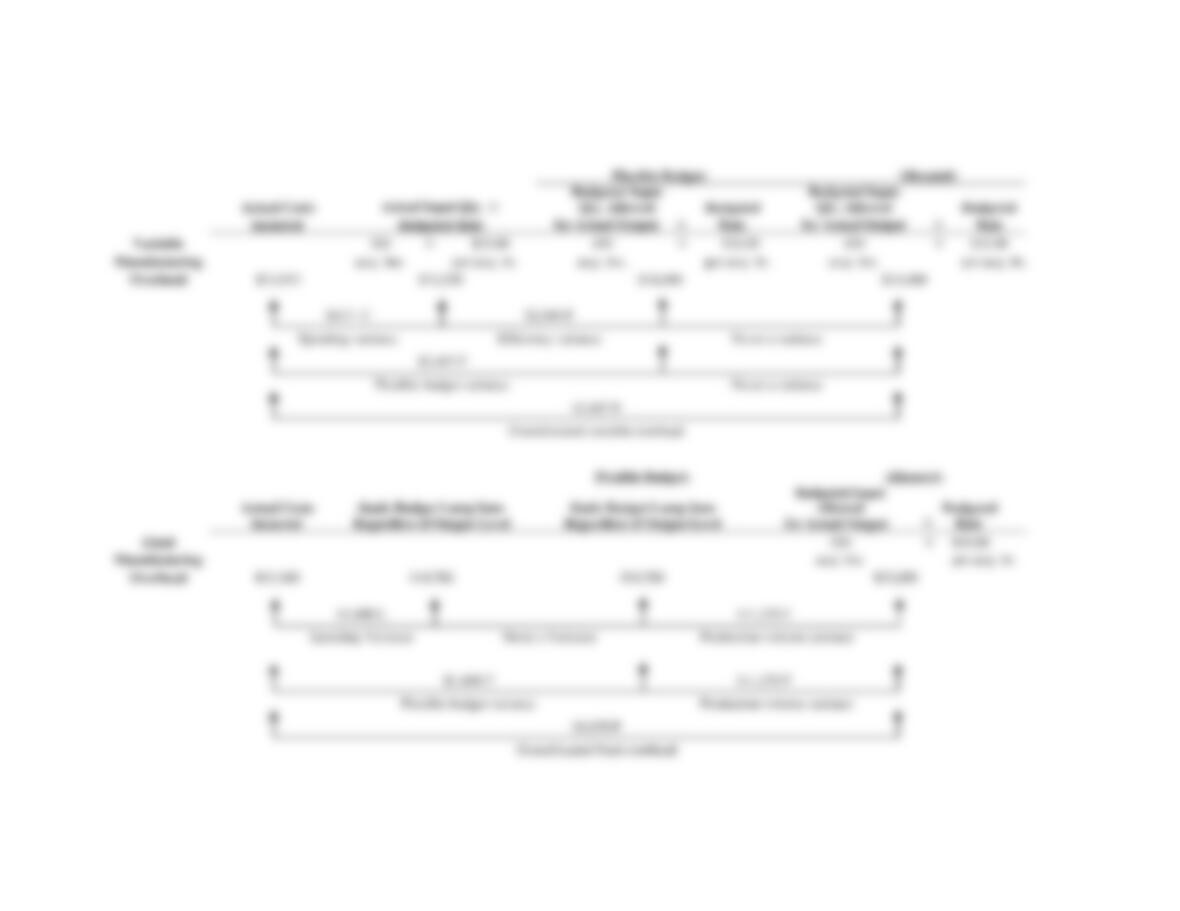
1. Prepare an analysis of all variable manufacturing overhead and fixed manufacturing
overhead variances using the columnar approach in Exhibit 8-4 (page 304).
8-9
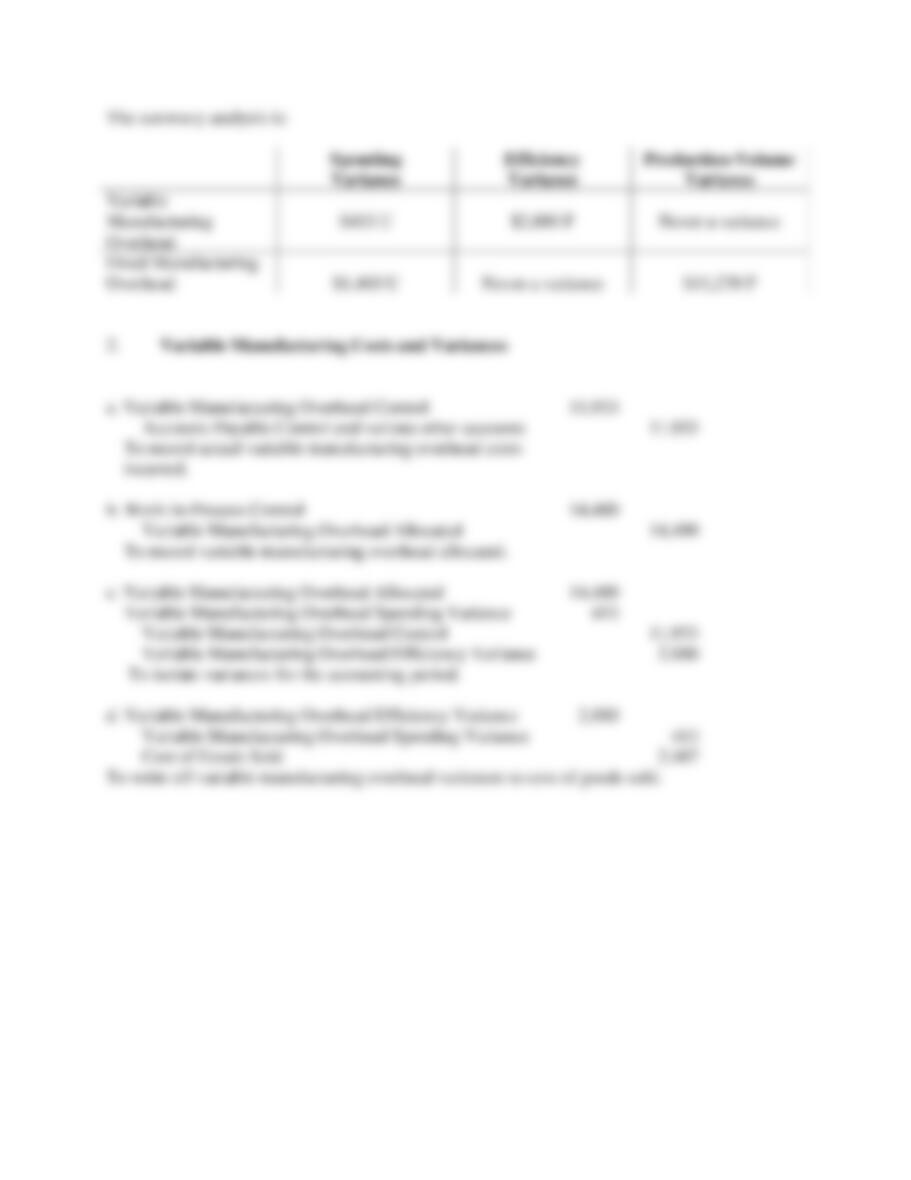
2. Prepare journal entries for Principles’ June 2014 variable and fixed manufacturing overhead
costs and variances; write off these variances to cost of goods sold for the quarter ending
June 30, 2014.
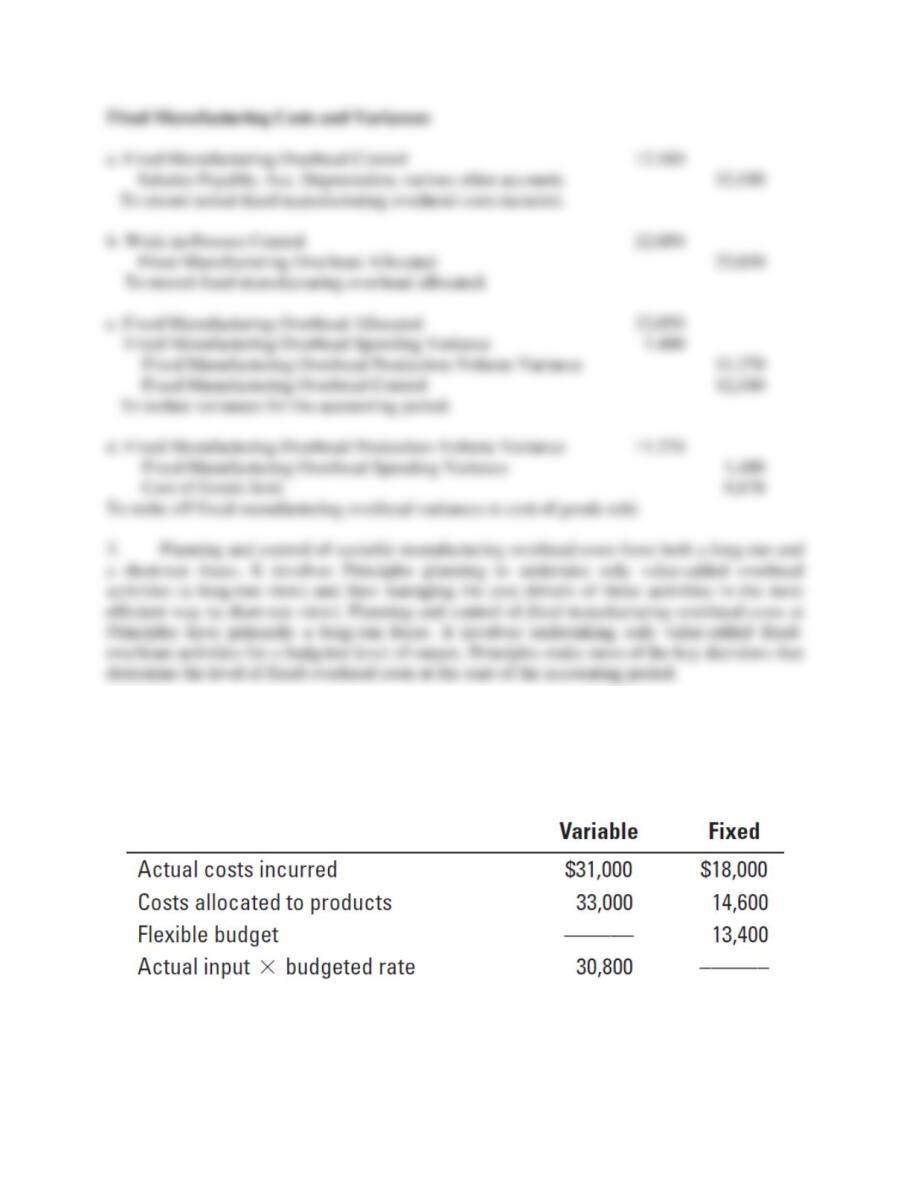
3. How does the planning and control of variable manufacturing overhead costs differ from the
planning and control of fixed manufacturing overhead costs?
SOLUTION
8-10
8-11
8-12
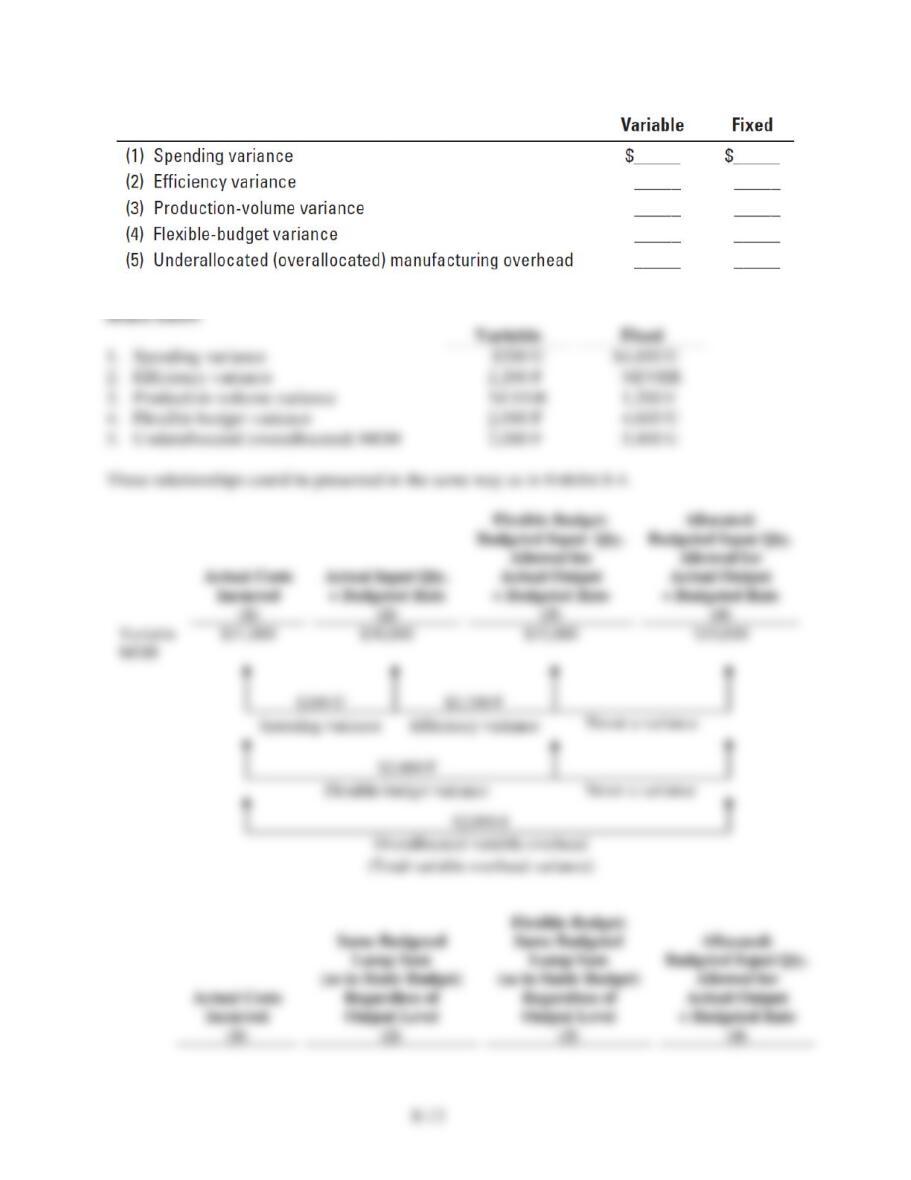
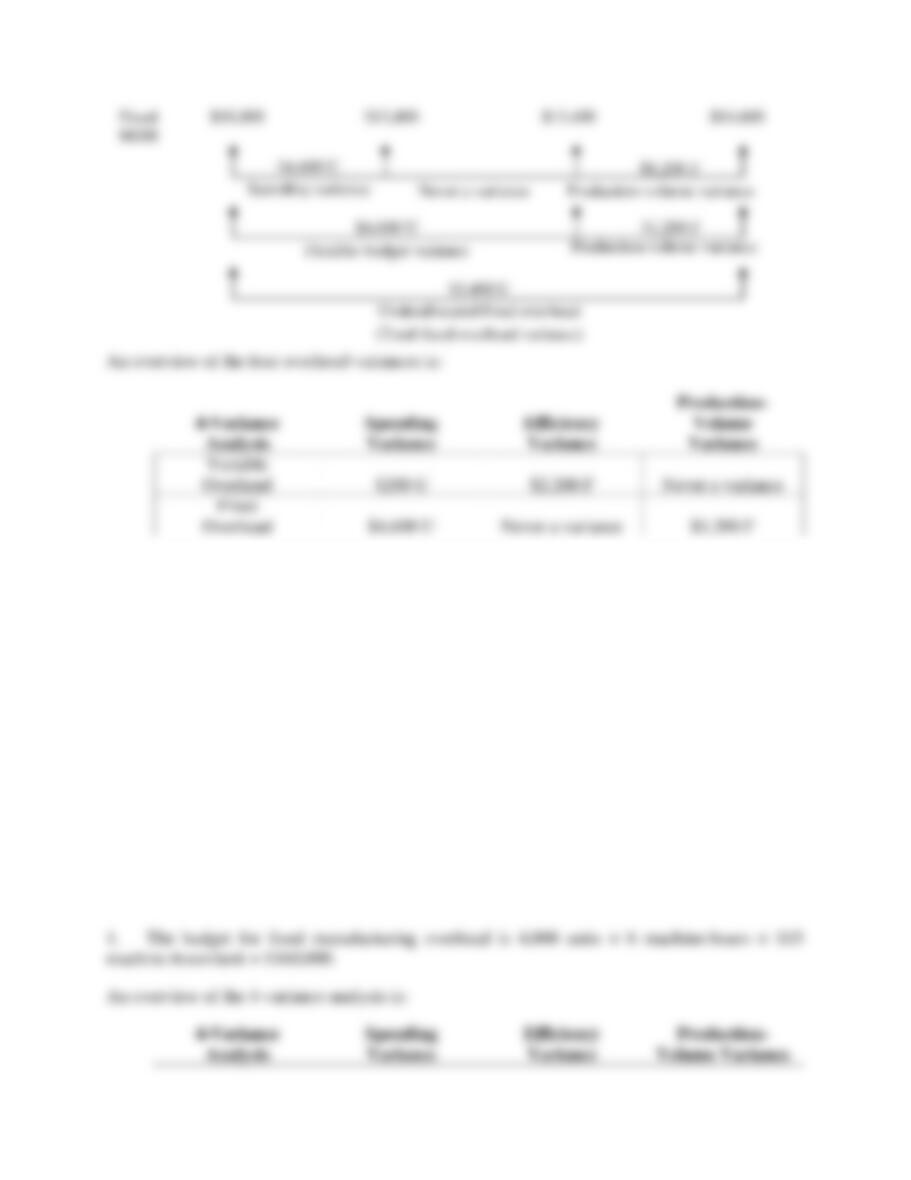
8-21 (10−15 min.) 4-variance analysis, fill in the blanks.
Rozema, Inc., produces chemicals for large biotech companies. It has the following data for
manufacturing overhead costs during August 2015:
Use F for favorable and U for unfavorable:
8-14
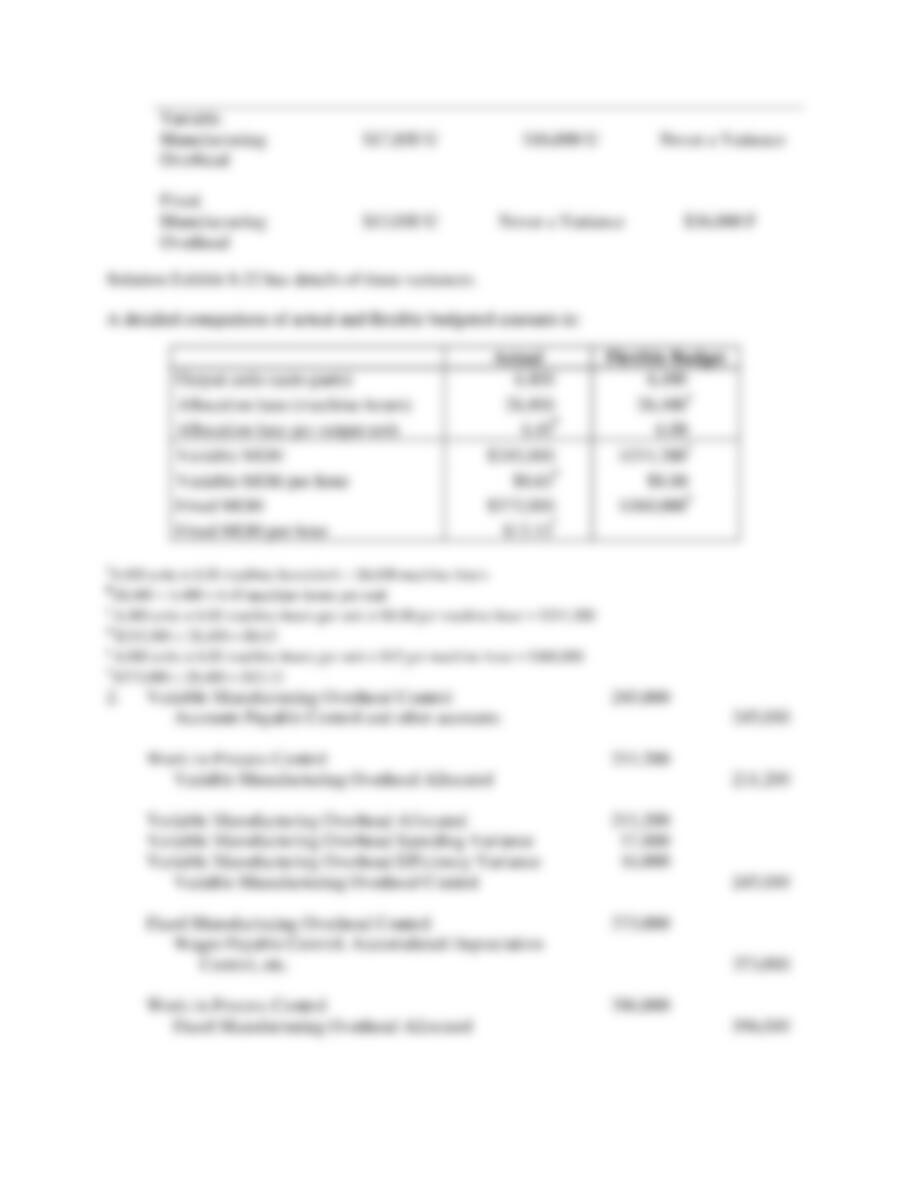
8-22 (20–30 min.) Straightforward 4-variance overhead analysis.
The Lopez Company uses standard costing in its manufacturing plant for auto parts. The
standard cost of a particular auto part, based on a denominator level of 4,000 output units per
year, included 6 machine-hours of variable manufacturing overhead at $8 per hour and 6
machine-hours of fixed manufacturing overhead at $15 per hour. Actual output produced was
4,400 units. Variable manufacturing overhead incurred was $245,000. Fixed manufacturing
overhead incurred was $373,000. Actual machine-hours were 28,400.
Required:
1. Prepare an analysis of all variable manufacturing overhead and fixed manufacturing
overhead variances, using the 4-variance analysis in Exhibit 8-4 (page 304).
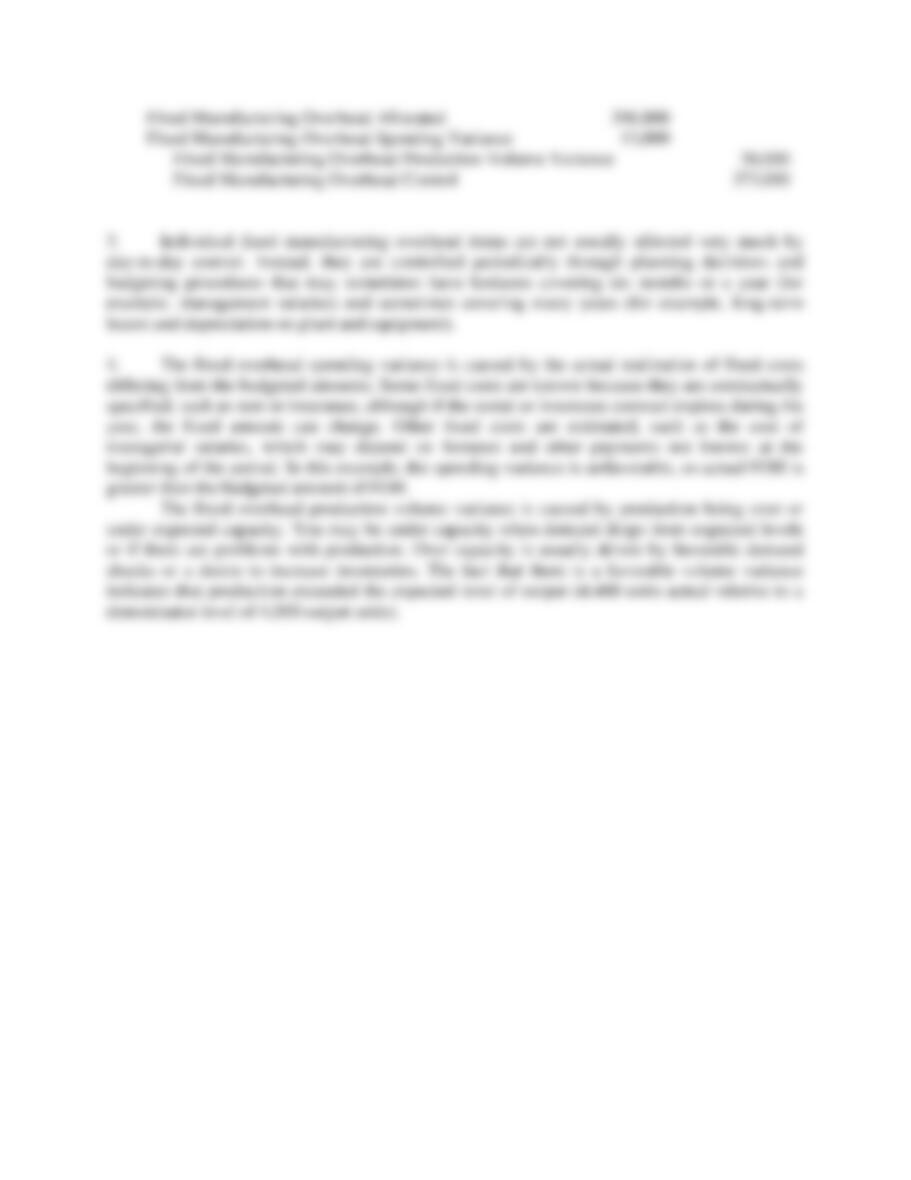
2. Prepare journal entries using the 4-variance analysis.
3. Describe how individual fixed manufacturing overhead items are controlled from day to day.
4. Discuss possible causes of the fixed manufacturing overhead variances.
SOLUTION
8-15
8-16
8-17
SOLUTION EXHIBIT 8-22
Actual Costs
Incurred
(1)
Actual Input
× Budgeted Rate
(2)
Flexible Budget:
Budgeted Input
Allowed for
Actual Output
× Budgeted Rate
(3)
Allocated:
Budgeted Input
Allowed for
Actual Output
× Budgeted Rate
(4)
Variable
MOH
$245,000
(28,400 × $8)
$227,200
(4,400 × 6 × $8)
$211,200
(4,400 × 6 × $8)
$211,200
Actual Costs
Incurred
(1)
Same Budgeted
Lump Sum
(as in Static Budget)
Regardless of
Output Level
(2)
Flexible Budget:
Same Budgeted
Lump Sum
(as in Static Budget)
Regardless of
Output Level
(3)
Allocated:
Budgeted Input
Allowed for
Actual Output
× Budgeted Rate
(4)
Fixed
MOH
$373,000
(4,000 × 6 × $15)
$360,000
(4,000 × 6 × $15)
$360,000
(4,400 × 6 × $15)
$396,000
$17,800 U
Spending variance
$16,000 U
Efficiency variance
Never a variance
$13,000 U
Spending variance
Never a variance
$36,000 F
Production-volume
variance
$33,800 U
Flexible-budget variance
Never a variance
$33,800 U
Underallocated variable overhead
(Total variable overhead variance)
$13,000 U
Flexible-budget variance
$36,000 F
Production-volume
variance
$23,000 F
Overallocated fixed overhead
(Total fixed overhead variance)
8-18
8-23 (30−40 min.) Straightforward coverage of manufacturing overhead, standard–
costing system.
The Singapore division of a Canadian telecommunications company uses standard costing for its
machine-paced production of telephone equipment. Data regarding production during June are as
follows:
Required:
1. Prepare an analysis of all manufacturing overhead variances. Use the 4-variance analysis
framework illustrated in Exhibit 8-4 (page 304).
2. Prepare journal entries for manufacturing overhead costs and their variances.
3. Describe how individual variable manufacturing overhead items are controlled from day to
day.
4. Discuss possible causes of the variable manufacturing overhead variances.
SOLUTION
8-19
8-20