CHAPTER 8
SOLUTIONS TO PROBLEMS: SET B
PROBLEM 8-1B
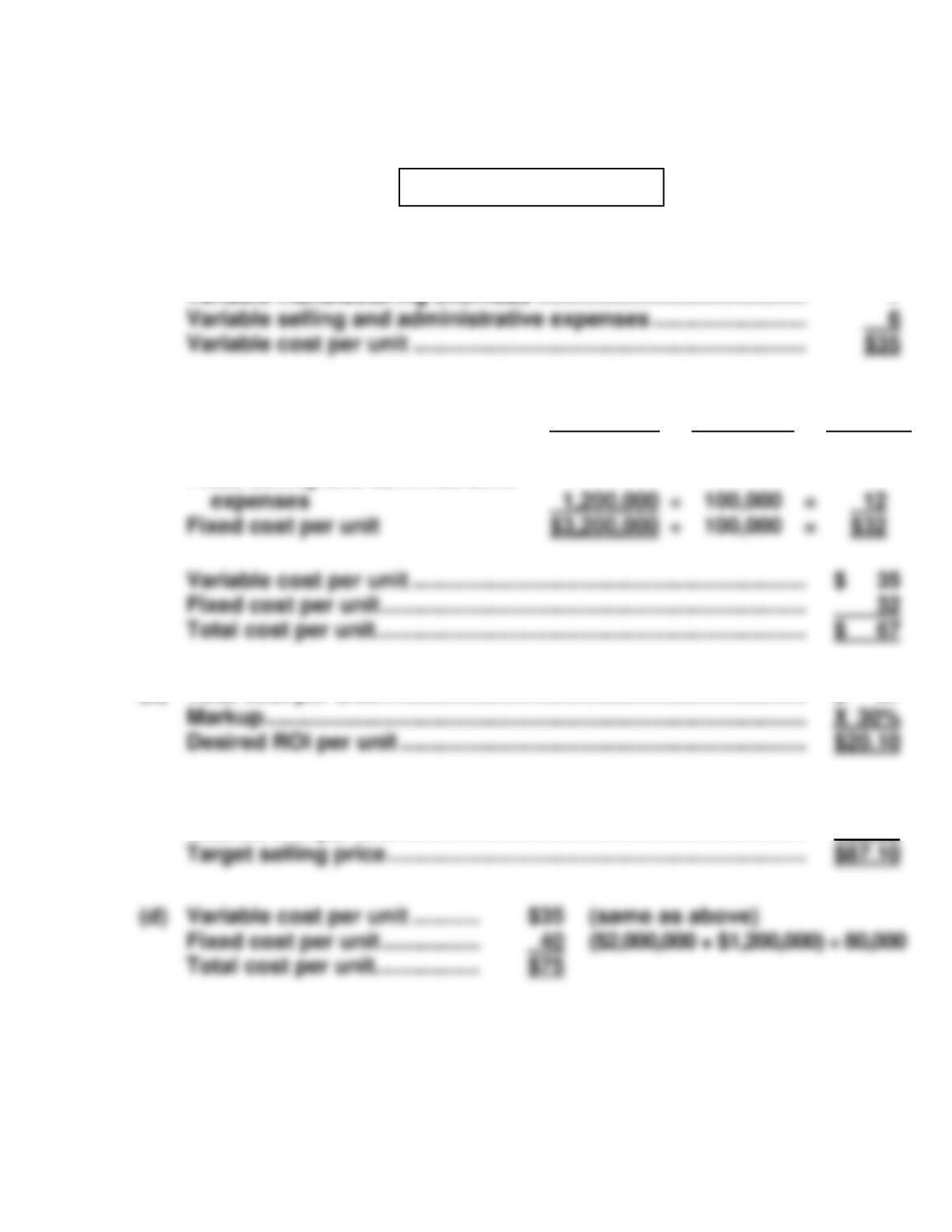
(a) Direct materials ……………………………………………………………….. $ 8
Direct labor ……………………………………………………………………… 14
Variable manufacturing overhead …………………………………….. 7
Total
Costs
÷
Budgeted
Volume
=
Cost
Per Unit
expenses
Fixed cost per unit
1,200,000
÷
100,000
=
Fixed manufacturing overhead
Fixed selling and administrative
$2,000,000
÷
100,000
=
$20
(b) Total cost per unit ……………………………………………………………. $ 67
(c) Total cost per unit ……………………………………………………………. $67.00
Desired ROI per unit ………………………………………………………… 20.10
PROBLEM 8-2B
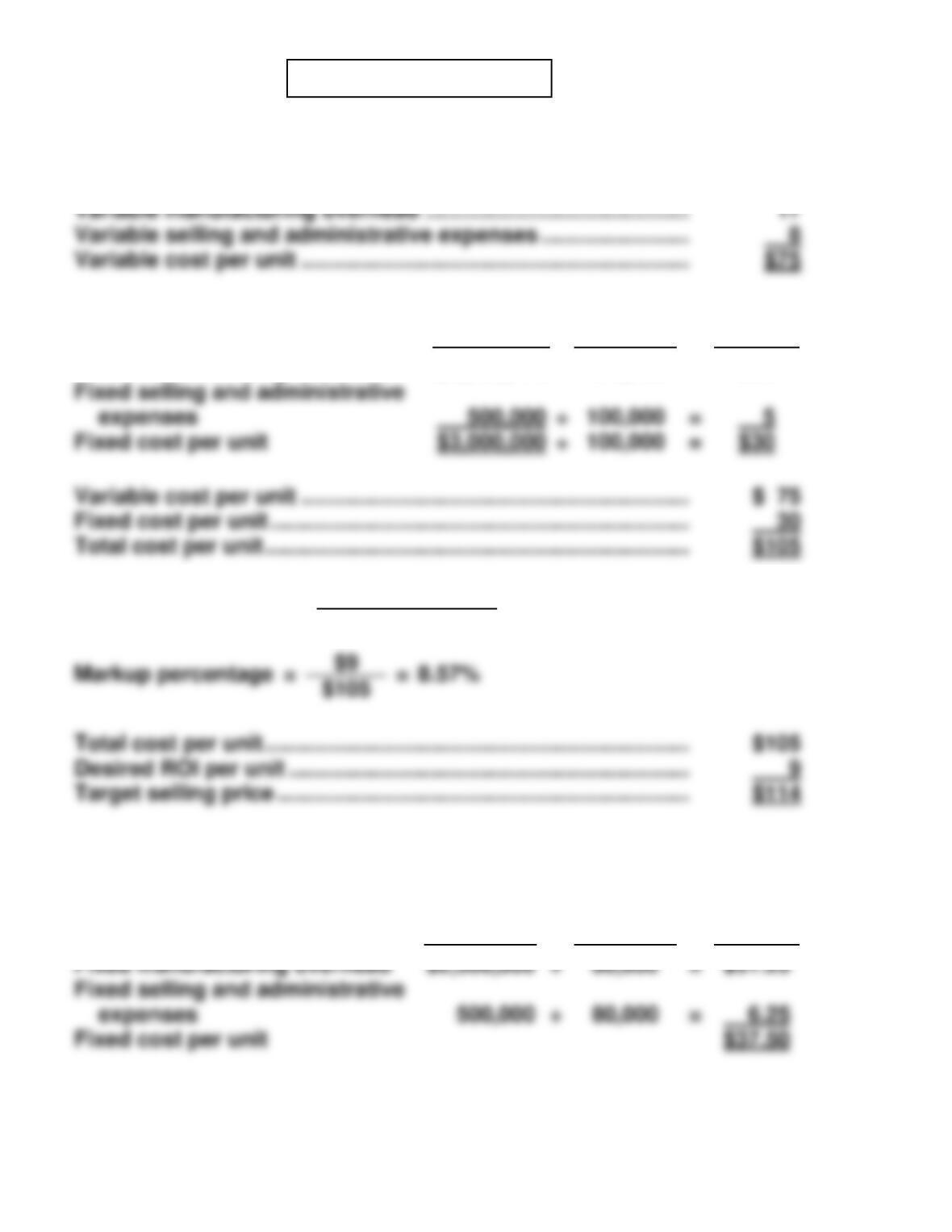
(a) Direct materials ………………………………………………………………. $30
Direct labor …………………………………………………………………….. 20
Total
Costs
÷
Budgeted
Volume
=
Cost
Per Unit
expenses
Fixed cost per unit
÷
100,000
100,000
=
=
Fixed manufacturing overhead
$2,500,000
÷
100,000
=
$25
Desired ROI per unit
=
30% X $3,000,000
=
$9
100,000
(b) Variable cost per unit ……………………………………… $75 (same as (a))
Total
Costs
÷
Budgeted
Volume
=
Cost
Per Unit
expenses
Fixed cost per unit
500,000
÷
80,000
=
PROBLEM 8-2B (Continued)
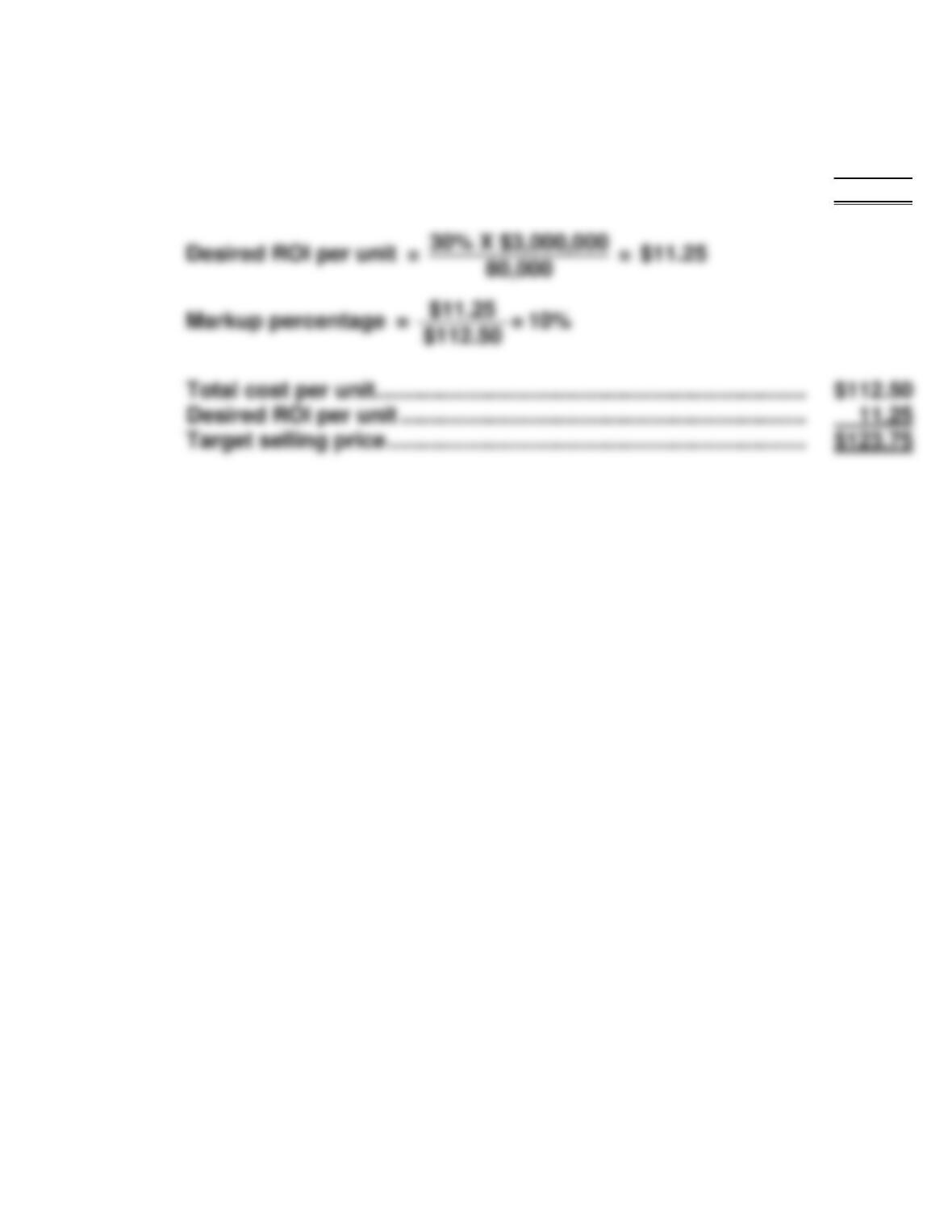
Variable cost per unit ………………………………………………………. $ 75.00
Fixed cost per unit …………………………………………………………… 37.50
Total cost per unit ……………………………………………………………. $112.50
PROBLEM 8-3B
(a) Computation of time charge rate
Total
Cost
Total
Hours
Per Hour
Charge
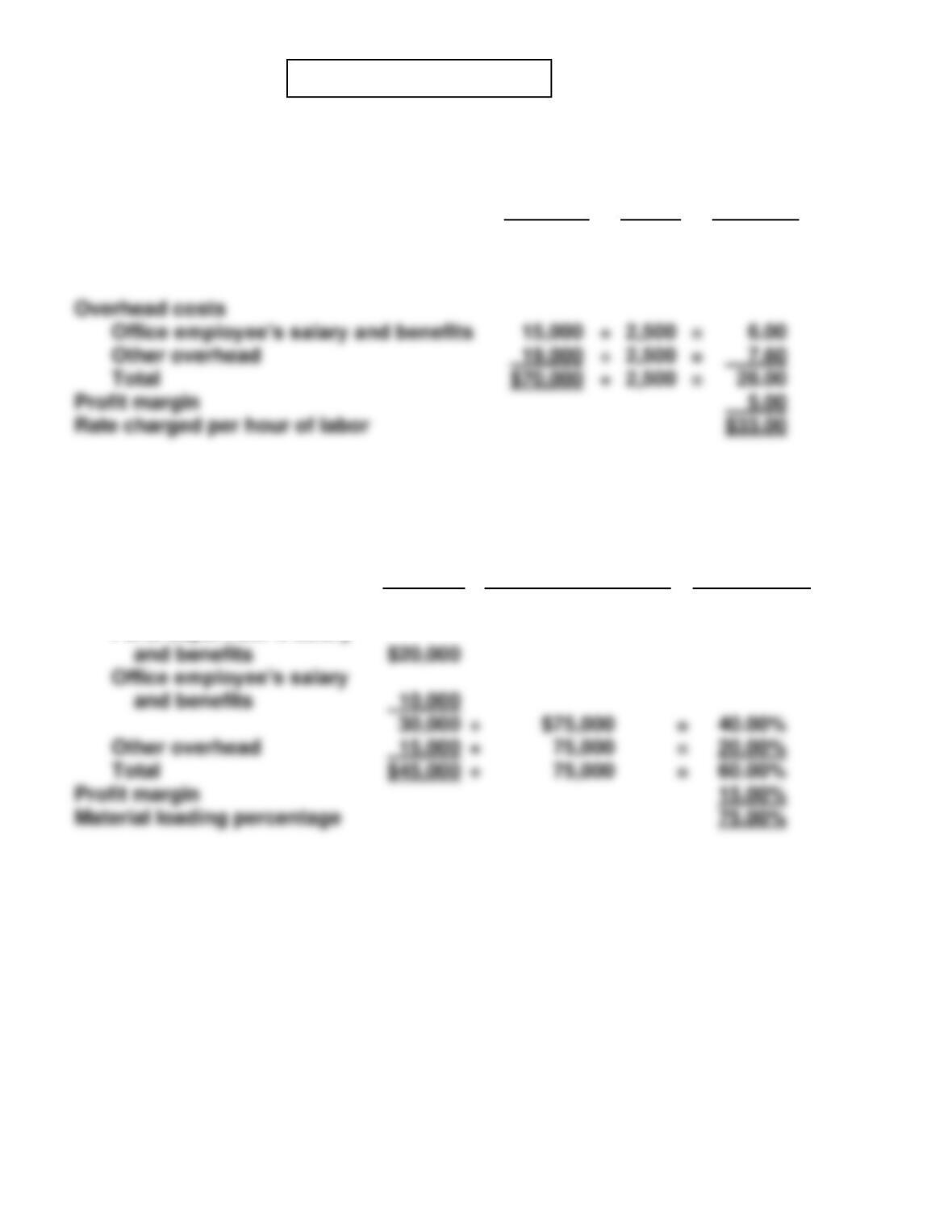
Hourly labor rate for repairs
Shop employees’ wages and benefits
$36,000
÷
2,500
=
$14.40
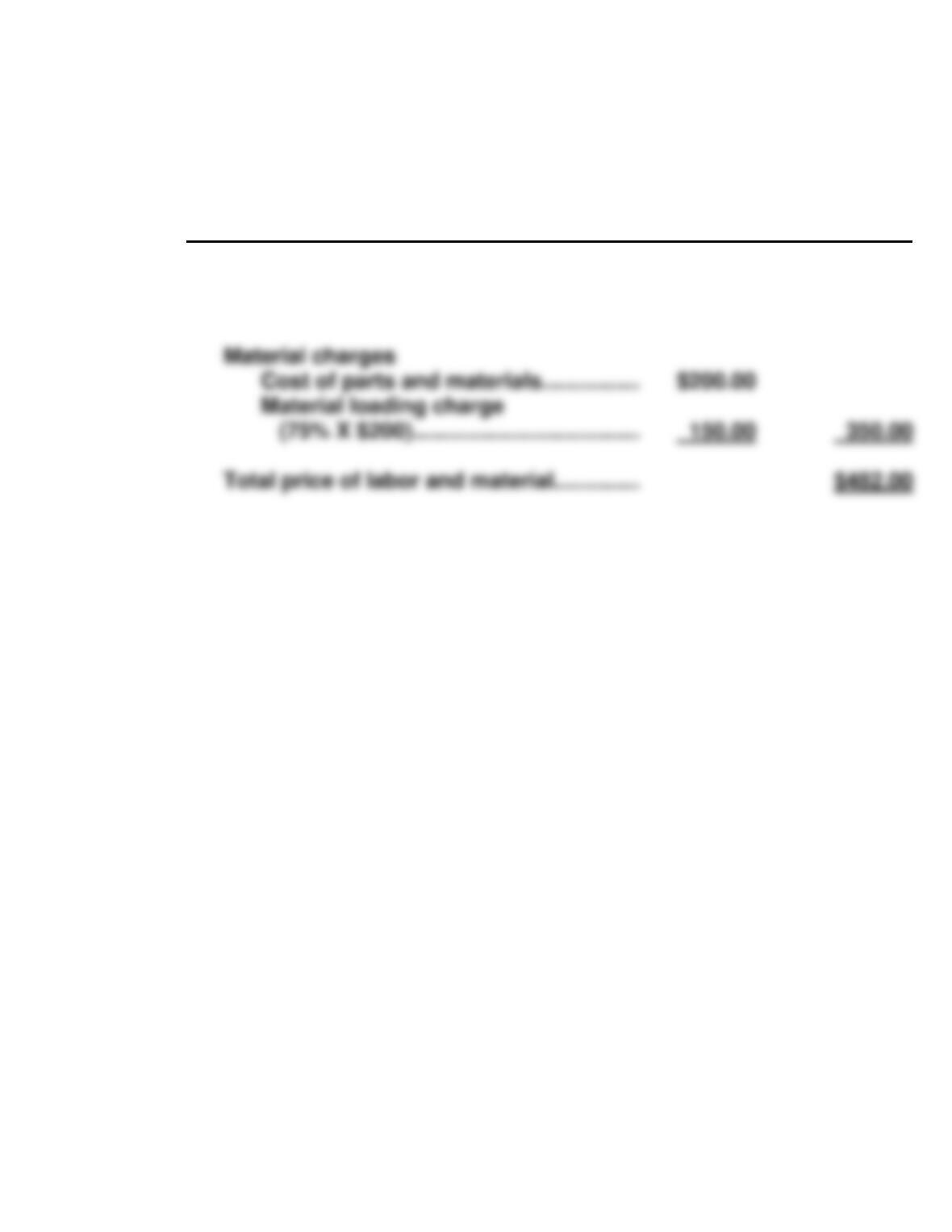
(b) Computation of material loading charge
Material
Loading
Charges
Total Invoice Cost,
Parts and Materials
Material
Loading
Percentage
Total
Overhead costs
Parts supervisor’s salary
PROBLEM 8-3B (Continued)
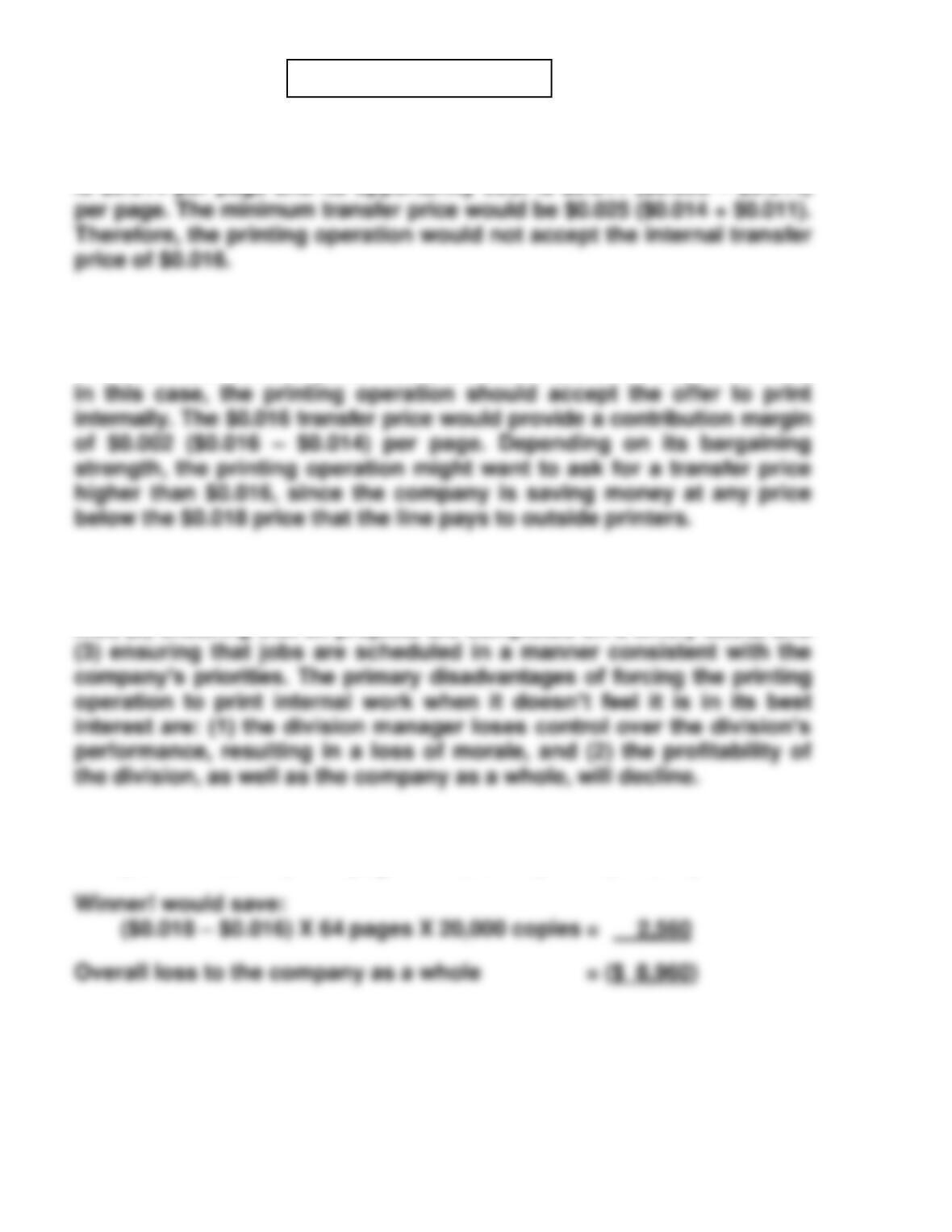
(c) Price quotation for time and material
ARMSTRONG BIKE REPAIR SHOP
Time and Material Price Quotation
Job: Fix Superior Mountain bike
Labor charges: 4 hours @ $33 ……………. $132.00
PROBLEM 8-4B
(a) Assuming no available capacity, the printing operation’s variable cost
is $0.014 per page and its opportunity cost is $0.011 ($0.025 – $0.014)
(b) Assuming that the printing operation has available capacity, the print–
ing operation’s variable cost is $0.014 and its opportunity cost is $0.
The minimum transfer price would be $0.014 ($0.014 + $0). Therefore,
(c) The advantages of having all of the company’s printing done intern–
ally include: (1) ensuring that the company’s quality expectations are
met, (2) ensuring that all projects are completed on a timely basis, and
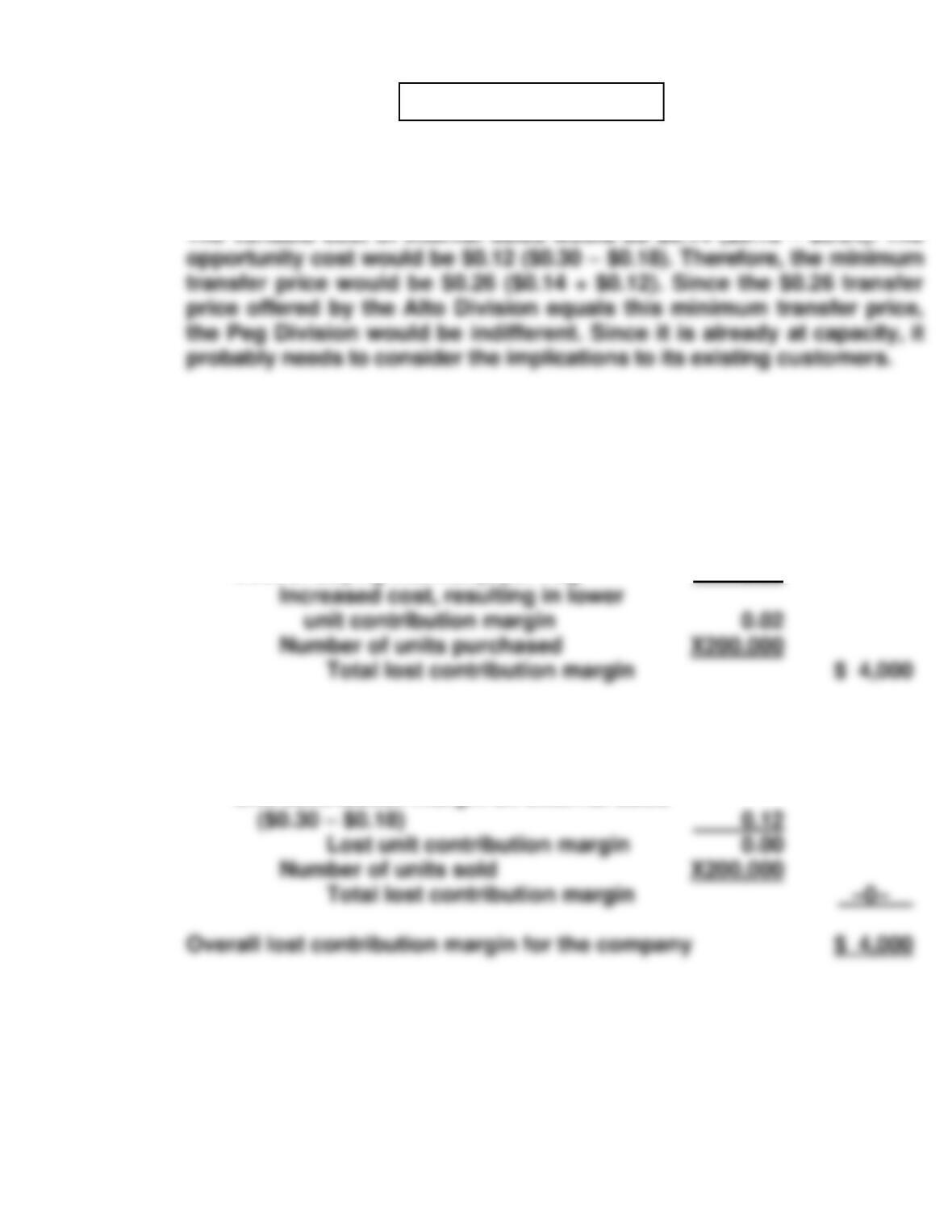
(d) The printing operation would lose:
($0.025 – $0.016) X 64 pages X 20,000 copies = ($11,520)
PROBLEM 8-5B
(a) The minimum transfer price is based on the variable cost of units
transferred internally, plus the opportunity cost of units sold externally.
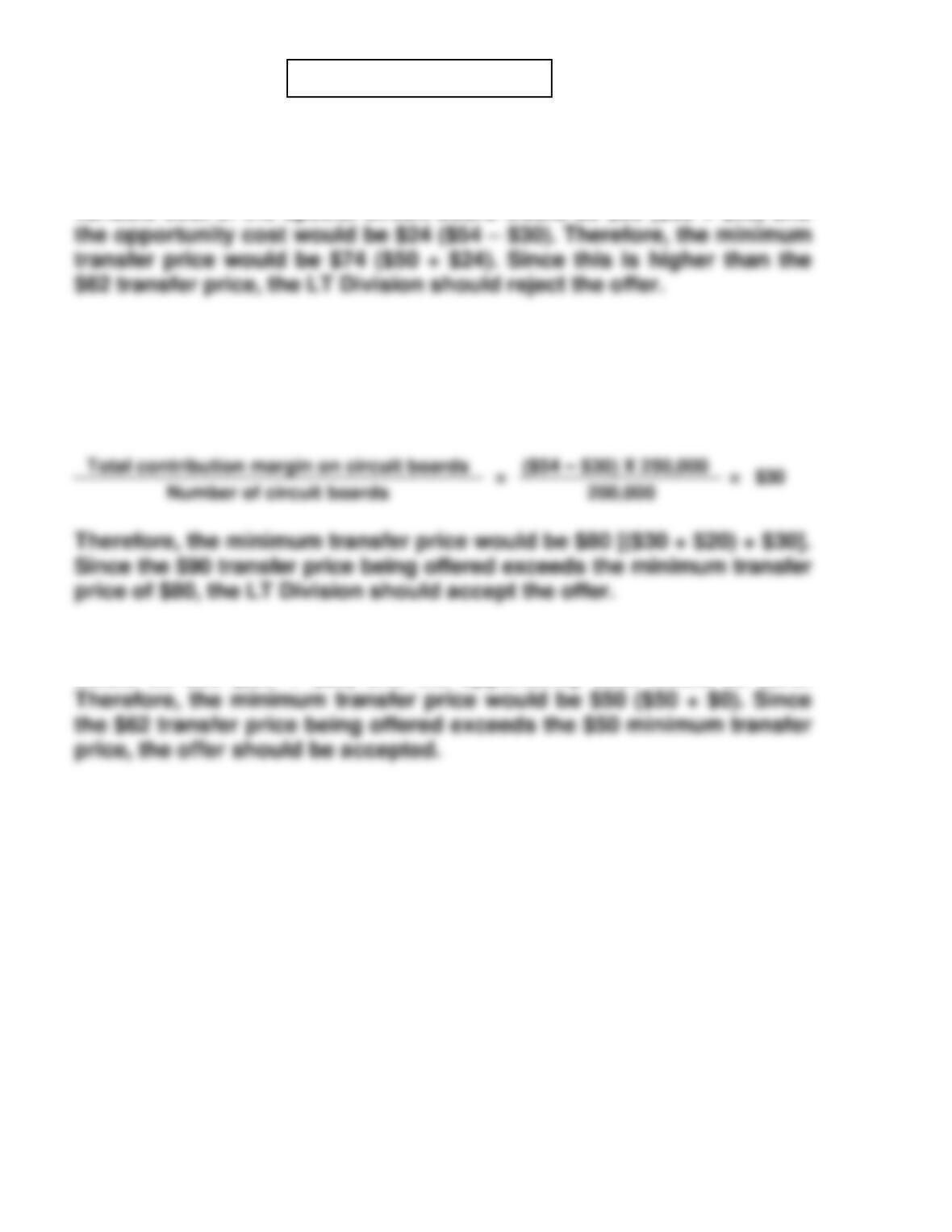
(b) If the Peg Division rejects the offer, the Alto division will suffer a loss
of contribution margin, as well as the company as a whole. The amount
of this loss is calculated as:
Lost contribution margin by Alto Division:
Cost of buying externally, per Peg $0.28
Cost of buying internally, per Peg 0.26
Lost contribution margin by Peg Division:
Unit contribution margin on internal sales
($0.26 – $0.14) $0.12
Unit contribution margin on external sales
PROBLEM 8-6B
(a) Assuming no available capacity, and that the number of new units
produced would be equal to the number of standard units forgone,
variable cost of the special circuit board would be $50 ($30 + $20) and
(b) Assuming no available capacity, and that in order to produce the 200,000
circuit boards, 250,000 standard circuit boards would be forgone, the
minimum variable cost would be ($30 + $20) or $50 and the opportunity
cost would be:
(c) Assuming that the LT Division has available capacity, variable cost
would be $50 ($30 + $20) and the opportunity cost would be zero.
*PROBLEM 8-7B
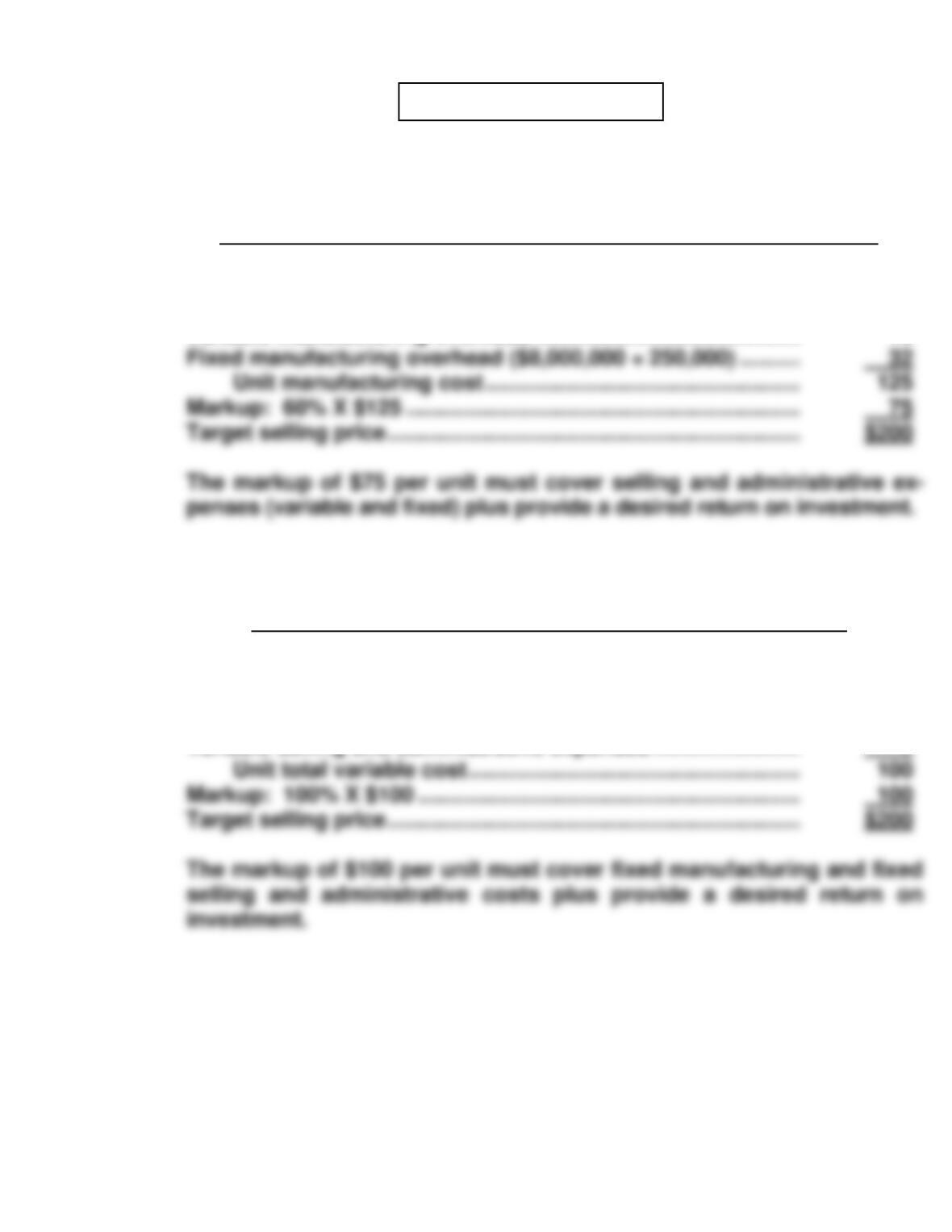
(a) Absorption-cost pricing:
Computation of unit manufacturing cost and target selling price
Direct materials ………………………………………………………………. $ 50
Direct labor …………………………………………………………………….. 30
Variable manufacturing overhead ……………………………………. 13
(b) Variable-cost pricing:
Computation of total variable cost and target selling price
Direct materials ………………………………………………………………. $ 50
Direct labor …………………………………………………………………….. 30
Variable manufacturing overhead ……………………………………. 13
Variable selling and administrative expenses …………………… 7
*PROBLEM 8-8B
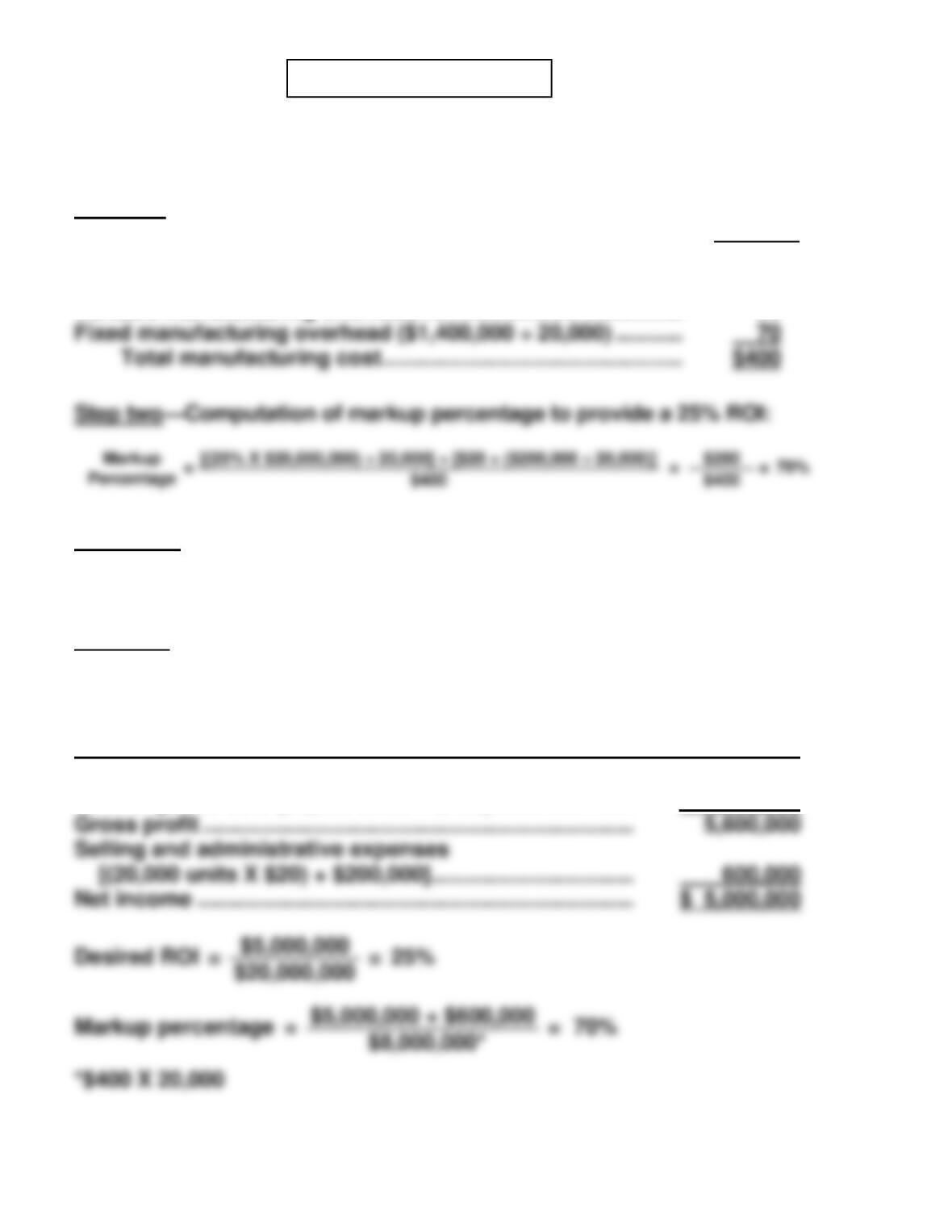
Absorption-cost pricing
(a) Step one—Computation of unit manufacturing cost:
Per Unit
Direct materials ………………………………………………………………
Direct labor …………………………………………………………………….
Variable manufacturing overhead ……………………………………
$200
100
30
(b) Step three—Computation of target price:
Target price: $400 + (70% X $400) = $680
Step four—Proof of 25% ROI under absorption-cost approach:
GEORGIA GOULD BIKES INC.
Budgeted Absorption-Cost Income Statement
(Mountain Bike)
Revenues (20,000 units X $680) ……………………………….. $13,600,000
Cost of goods sold (20,000 units X $400) ………………….. 8,000,000
*PROBLEM 8-8B (Continued)
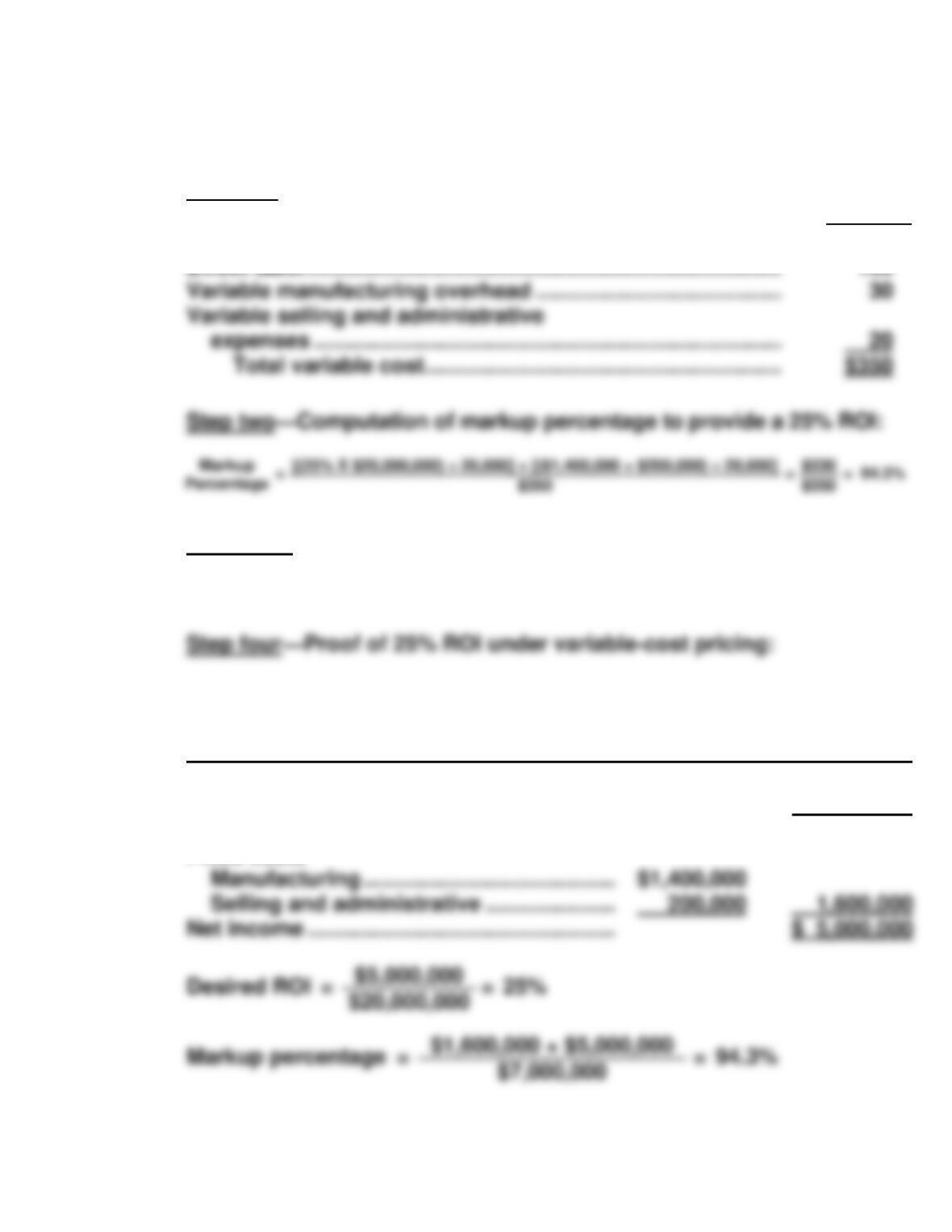
Variable-cost pricing
(c) Step one—Computation of unit variable cost:
Per Unit
Direct materials …………………………………………………………….
$200
(d) Step three—Computation of target price:
Target price: $350 + (94.3% X $350) = $680
GEORGIA GOULD BIKES INC.
Budgeted Variable-Cost Income Statement
(Mountain Bike)
Revenue (20,000 units X $680) ………………. $13,600,000
Variable costs (20,000 units X $350) ……… 7,000,000
Contribution margin …………………………….. 6,600,000
Fixed costs
*PROBLEM 8-8B (Continued)
(e) Both absorption–cost pricing and variable-cost pricing are used because
they have differing merits.
Absorption-cost pricing, especially when it includes full or all costs, is
preferred by some because in the long-run all costs plus a normal profit
margin must be covered. Using only variable costs, as the variable-cost
pricing does, is thought to encourage decision makers to set too low a