E8–12.
Management of General Motors Corporation probably anticipated that the pre-2001
property and equipment would be more productive or efficient in the earlier part of their
E8–13.
Straight-line depreciation (SL) is a simple method to use and understand. Managers
often prefer SL because it results in lower depreciation expense and higher net income
in the earlier years of an asset’s life when compared with the accelerated methods.
E8–14.
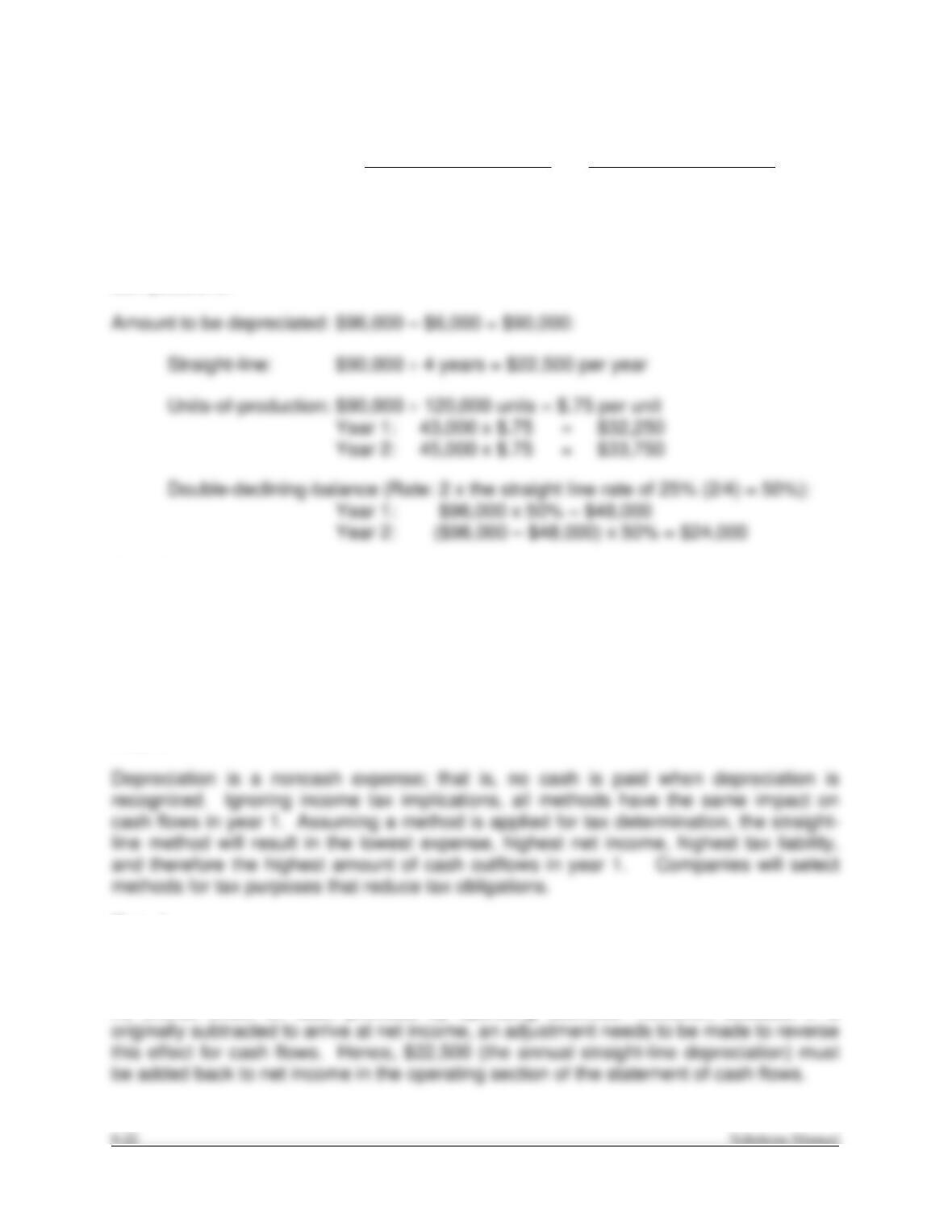
Req. 1
Depreciation Expense
Book Value at End of
Method of Depreciation
Year 1
Year 2
Year 1
Year 2
Straight-line ……………………..
$22,500
$22,500
$73,500
$51,000
Units-of-production ……………
32,250
33,750
63,750
30,000
Double-declining-balance …..
48,000
24,000
48,000
24,000
Computations:
Year 1:
43,000 x $.75
Year 2:
45,000 x $.75
Year 1:
$96,000 x 50% = $48,000
Year 2:
Req. 2
The double-declining-balance method would result in the lowest EPS for Year 1
because it produced the highest depreciation expense and therefore the lowest income
(from Requirement 1). In Year 2, the units–of-production method would result in the
lowest EPS because it produced the highest depreciation expense and therefore the
lowest income in that year.
Req. 3
Req. 4
The machine acquisition would decrease cash provided by investing activities by the
purchase cost of $96,000. As a noncash expense, the annual depreciation should have
no overall effect on cash provided by operating activities—however, because it is
Financial Accounting, 9/e 8-23
E8–15.
Req. 1
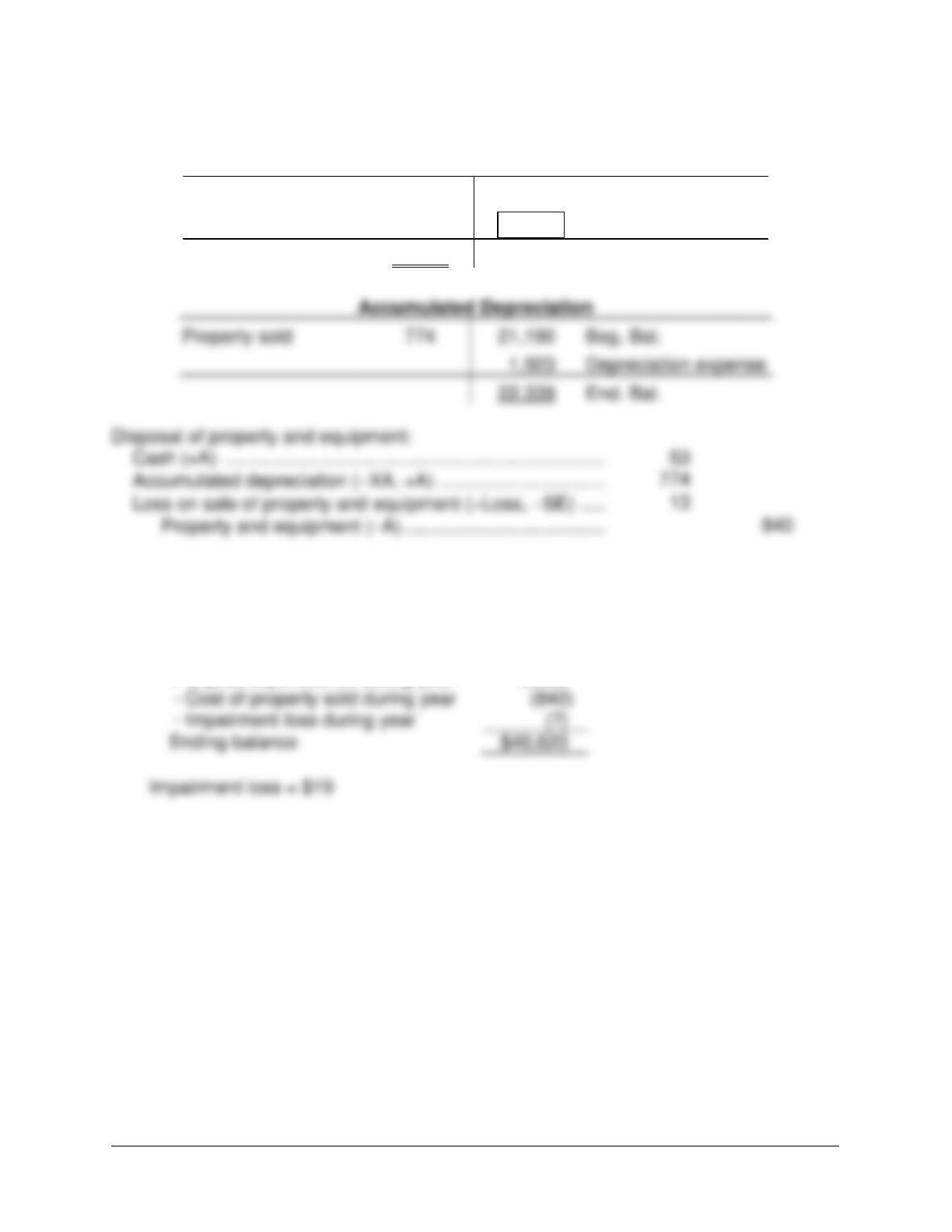
Property, Plant, and Equipment
Beg. Bal
39,151
840
Property sold
Capital expenditures
2,328
19
Impairment write-offs
End. Bal.
40,620
Req. 2
Amount of property and equipment written off as impaired during the year:
Beginning balance
$39,151
+ Capital expenditures during year
2,328
– Cost of property sold during year
– Impairment loss during year
Ending balance
Property sold
1,923
Depreciation expense
End. Bal.
E8–16.
Req. 1a
Cash (+A) ……………………………………………………………………
12,000
Accumulated depreciation (−XA, +A) ………………………………
23,000
Delivery truck (−A) …………………………………………………….
35,000
Sale of an asset at book value; the result is no loss or gain.
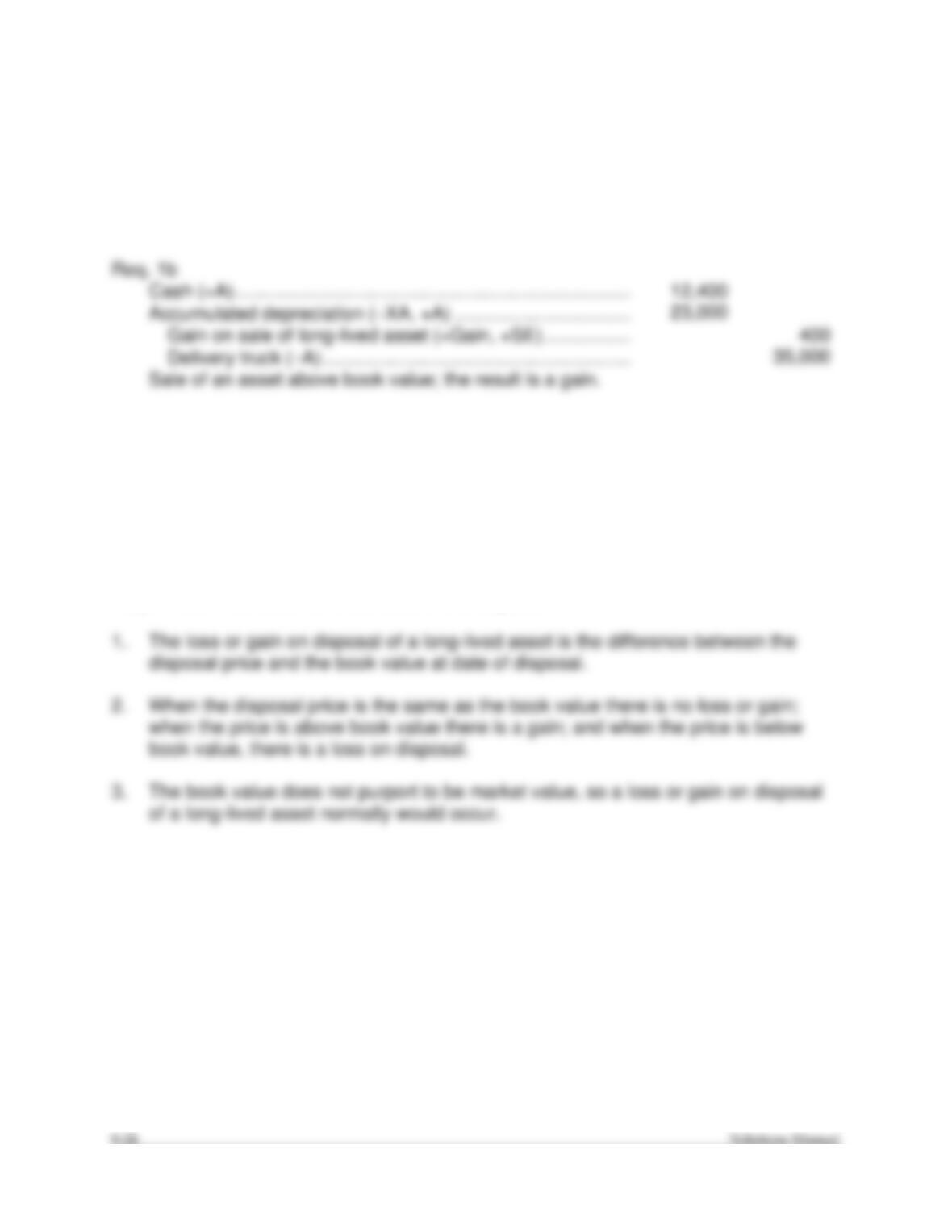
Cash (+A) ………………………………………………………………….
12,400
Accumulated depreciation (−XA, +A) …………………………….
23,000
Gain on sale of long-lived asset (+Gain, +SE) ……………..
Delivery truck (−A) …………………………………………………..
35,000
Sale of an asset above book value; the result is a gain.
Req. 1c
Cash (+A) ……………………………………………………………………
11,500
Accumulated depreciation (−XA, +A) ………………………………
23,000
Loss on sale of long-lived asset (+Loss, −SE) ………………….
500
Delivery truck (−A) …………………………………………………….
35,000
Sale of an asset below book value; the result is a loss.
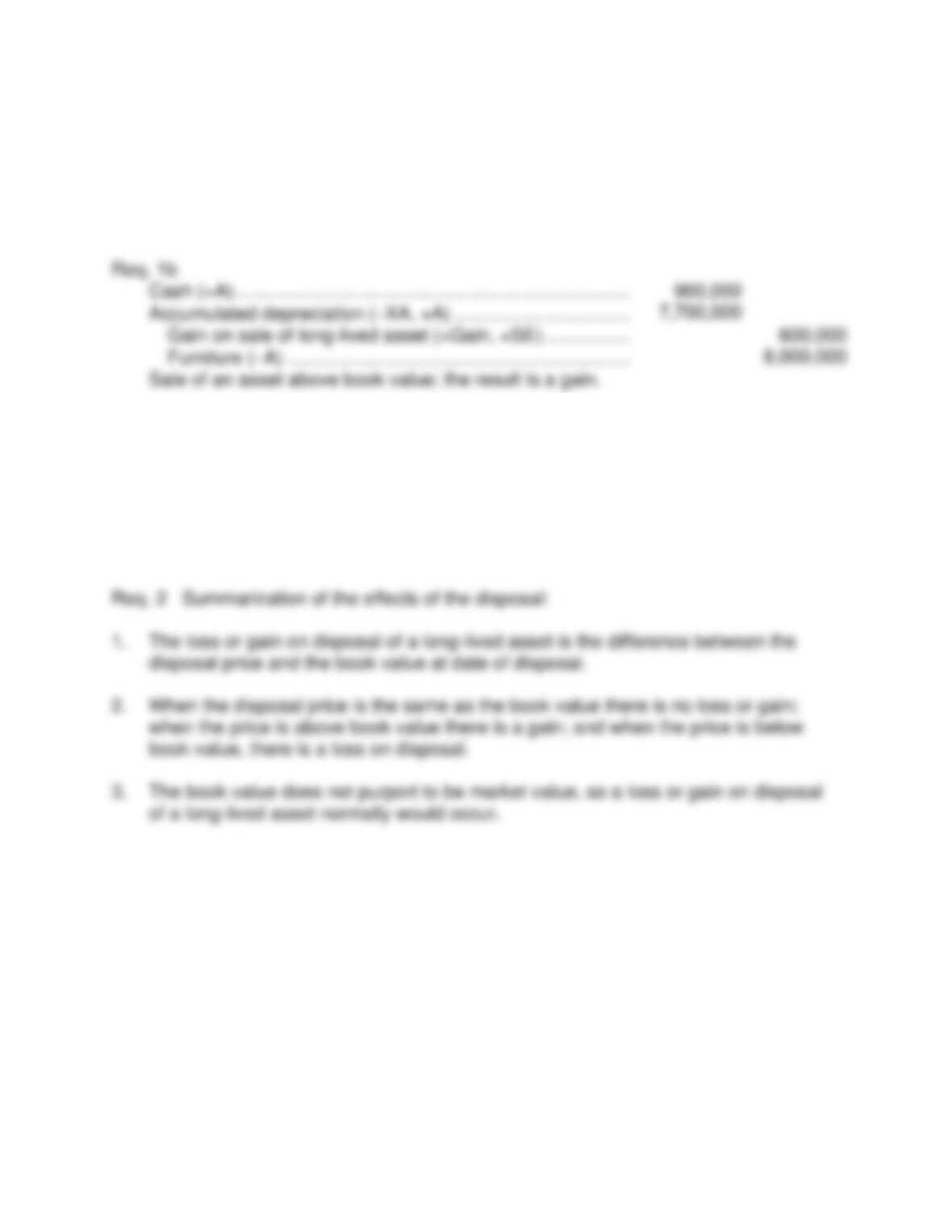
Req. 2 Summarization of the effects of the disposal:
Financial Accounting, 9/e 8-25
E8–17.
Req. 1a
Cash (+A) ……………………………………………………………………
300,000
Accumulated depreciation (−XA, +A) ………………………………
7,700,000
Furniture (−A) …………………………………………………………..
8,000,000
Sale of an asset at book value; the result is no loss or gain.
Req. 1c
Cash (+A) ……………………………………………………………………
100,000
Accumulated depreciation (−XA, +A) ………………………………
7,700,000
Loss on sale of long-lived asset (+Loss, −SE) ………………….
200,000
Furniture (−A) …………………………………………………………..
8,000,000
Sale of an asset below book value; the result is a loss.
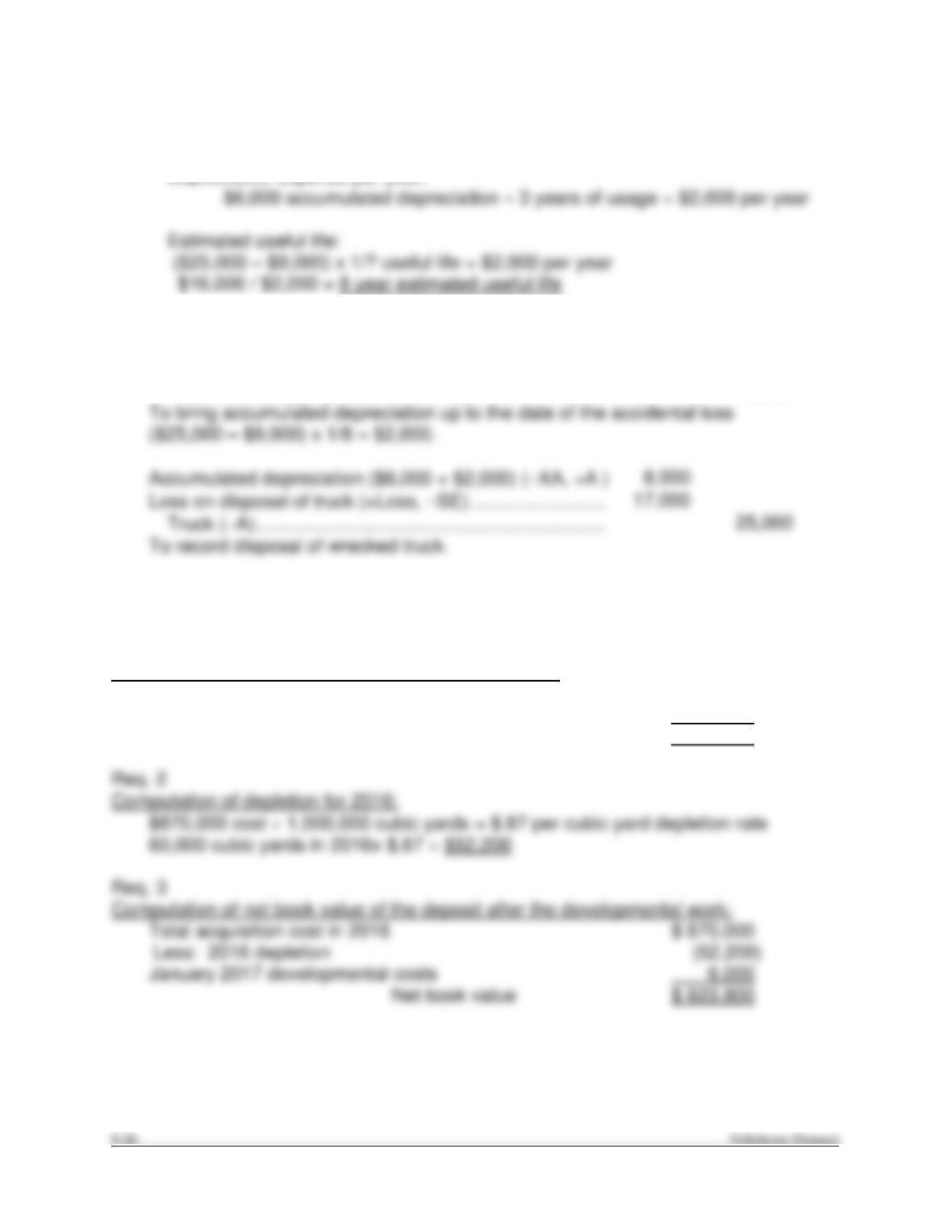
Cash (+A) ………………………………………………………………….
Accumulated depreciation (−XA, +A) …………………………….
7,700,000
Gain on sale of long-lived asset (+Gain, +SE) ……………..
Furniture (−A) …………………………………………………………
8,000,000
Sale of an asset above book value; the result is a gain.
E8–18.
Req. 1
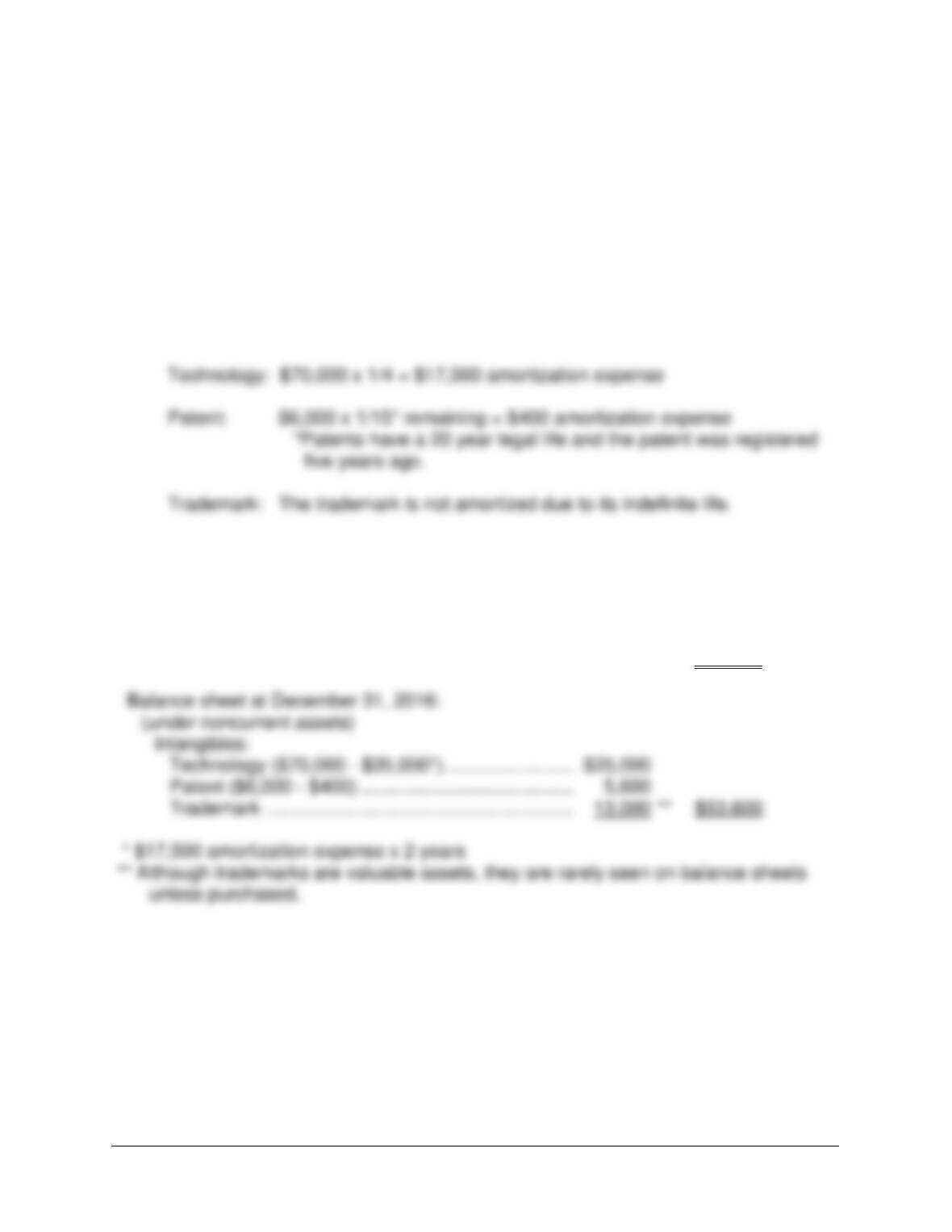
Depreciation expense per year:
Req. 2
December 31:
Depreciation expense (+E, −SE) ………………………………
2,000
Accumulated depreciation (+XA, −A) ……………………..
2,000
Accumulated depreciation ($6,000 + $2,000) (−XA, +A )
Loss on disposal of truck (+Loss, −SE) ……………………..
Truck (−A) ………………………………………………………….
E8–19.
Req. 1
Computation of acquisition cost of the deposit in 2016:
February 2016: Purchase of mineral deposit $ 800,000
March 2016: Preparation costs 70,000
Total acquisition cost in 2015 $ 870,000
Financial Accounting, 9/e 8-27
E8–20.
Req. 1
Acquisition cost:
Technology $70,000
Patent 6,000
Trademark 13,000
Req. 2
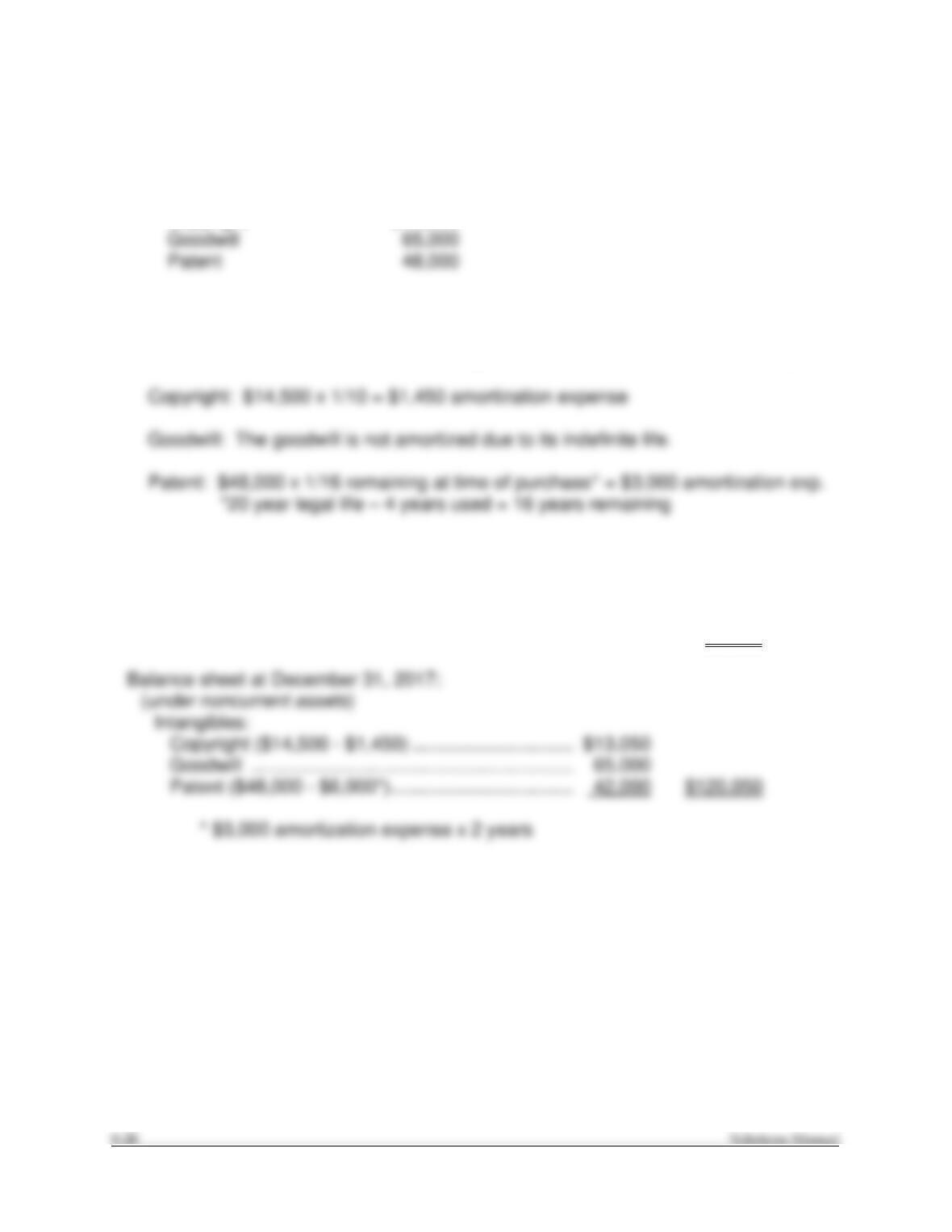
Amortization on December 31, 2016 (straight-line method with no residual value):
Req. 3
Income statement for 2016:
Operating expenses:
Amortization expense ($17,500 + $400)
$17,900
Intangibles:
E8–21.
Req. 1
Acquisition cost:
Copyright $14,500
Req. 2
Amortization on December 31, 2017 (straight-line method with no residual value):
Req. 3
Income statement for 2017:
Operating expenses:
Amortization expense ($1,450 + $3,000)
$4,450
Intangibles:
Financial Accounting, 9/e 8-29
E8–22.
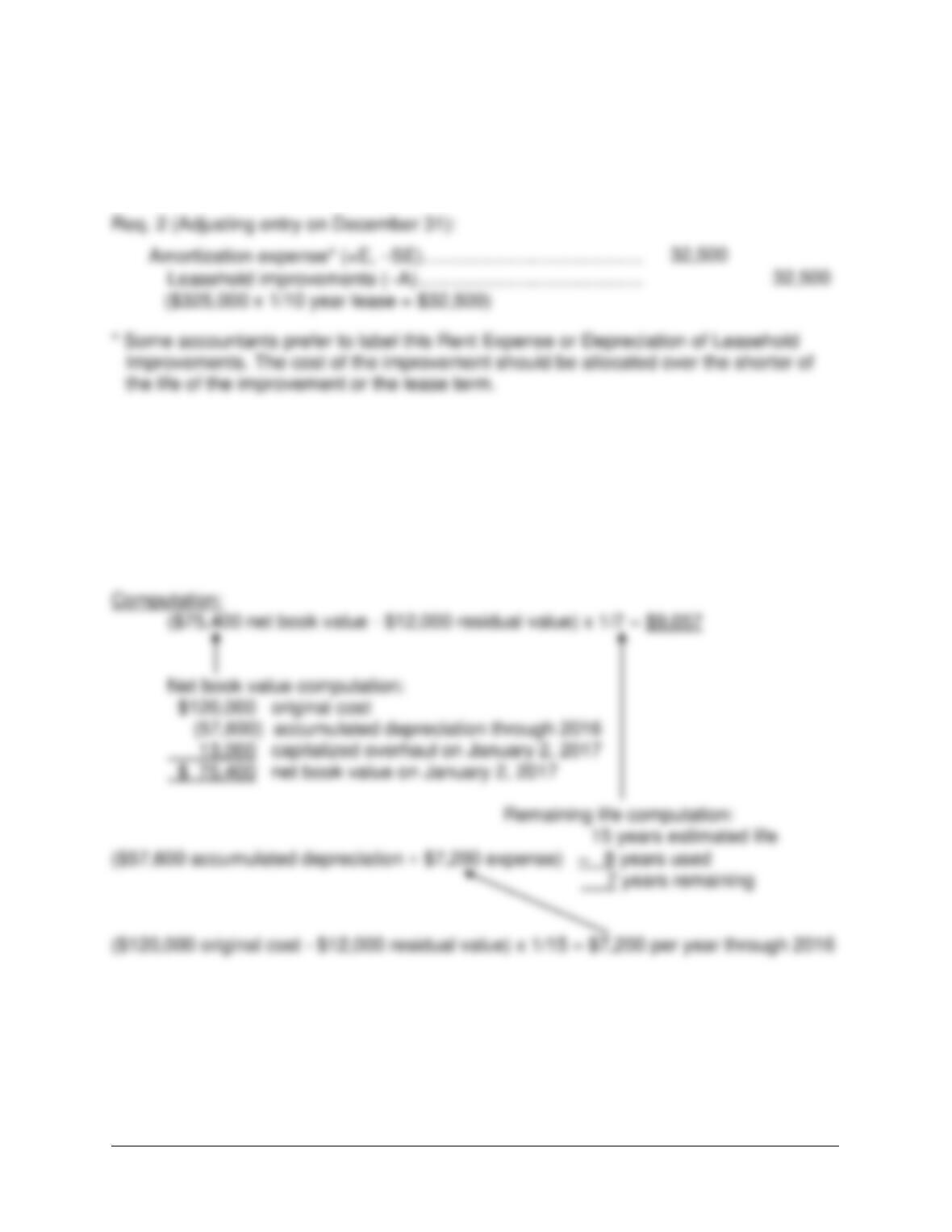
Req. 1 (January 1):
Leasehold improvements (+A) ……………………………………….
325,000
Cash (−A) ………………………………………………………………..
325,000
E8–23.
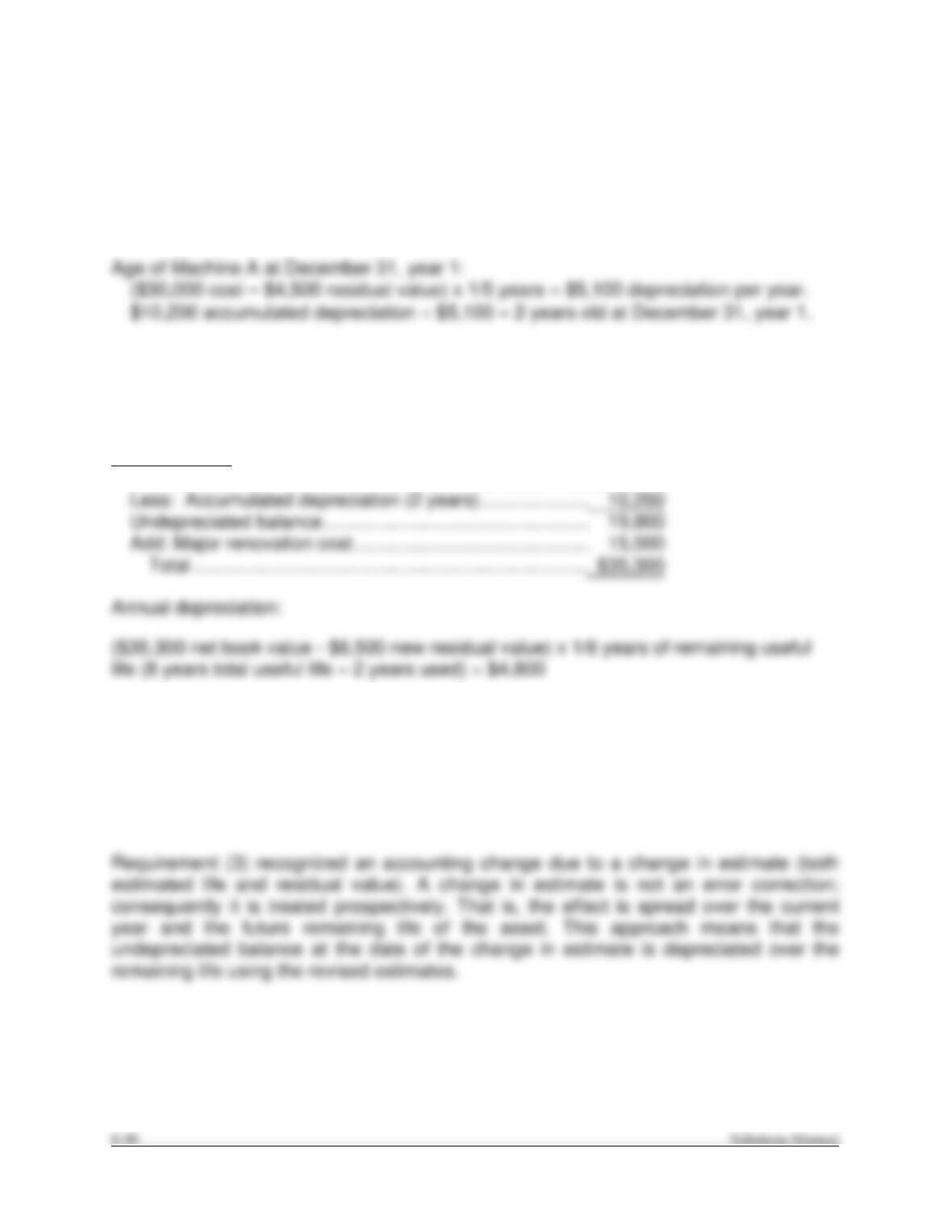
December 31, 2017:
Adjusting entry for 2016 depreciation:
Depreciation expense (+E, −SE) …….. ……………….
9,057
Accumulated depreciation, equipment (+XA, −A)
9,057
Leasehold improvements (−A) …………………………………….
E8–24.
Req. 1
Equipment (+A) ……………………………………………………….
15,500
Cash (−A)…………………………………………………………..
15,500
Req. 2
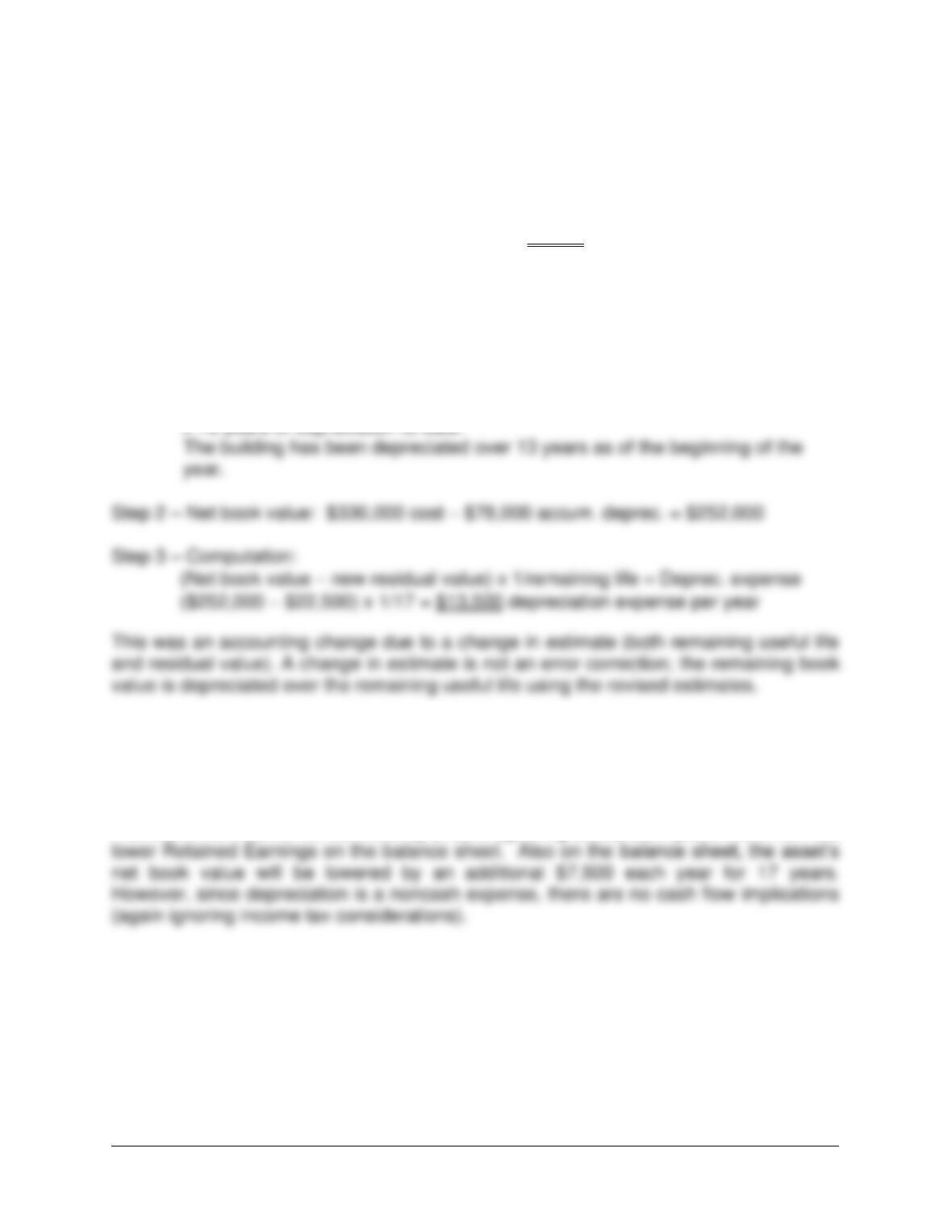
Req. 3
Depreciation expense (for year 2) (+E, −SE) ………………..
4,800
Accumulated depreciation, machinery (+XA, −A) …….
4,800
Computations:
Cost when acquired ……………………………………………………….
$30,000
Less: Accumulated depreciation (2 years) …………………………..
Undepreciated balance ……………………………………………………….
Add: Major renovation cost ……………………………………………………….
Total ……………………………………………………………………………………
Req. 4
Requirement (1) assumed that the major renovation and improvement cost was a
capital expenditure rather than a repair expense. Because capital expenditures benefit
future periods, the expenditure is added to the net book value of the asset and then is
depreciated over the remaining life of the asset.
Financial Accounting, 9/e 8-31
E8–25.
Req. 1
Depreciation expense prior to the change in estimates:
($330,000 cost – $30,000 residual value) x 1/50 = $6,000 annual depreciation
Req. 2
Depreciation expense after the change in estimates:
Step 1 – Age of the asset: $78,000 accumulated depreciation $6,000 annual expense
Req. 3
The depreciation expense increases by $7,500 each year for the next 17 years.
Therefore, net income will be lower by $7,500 (ignoring taxes) each year; this in turn will
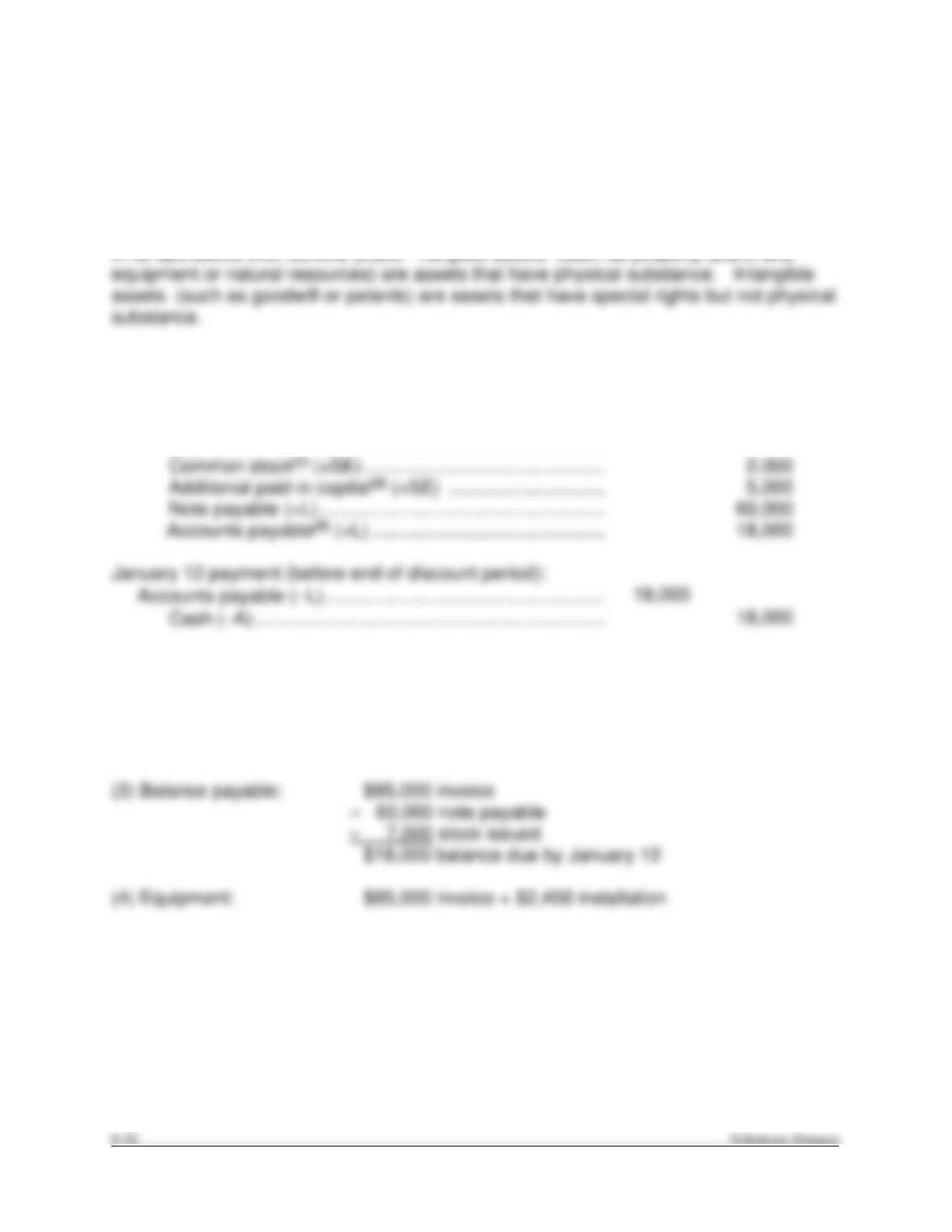
PROBLEMS
P8–1.
Req. 1
Long-lived assets are tangible and intangible resources owned by a business and used
Req. 2
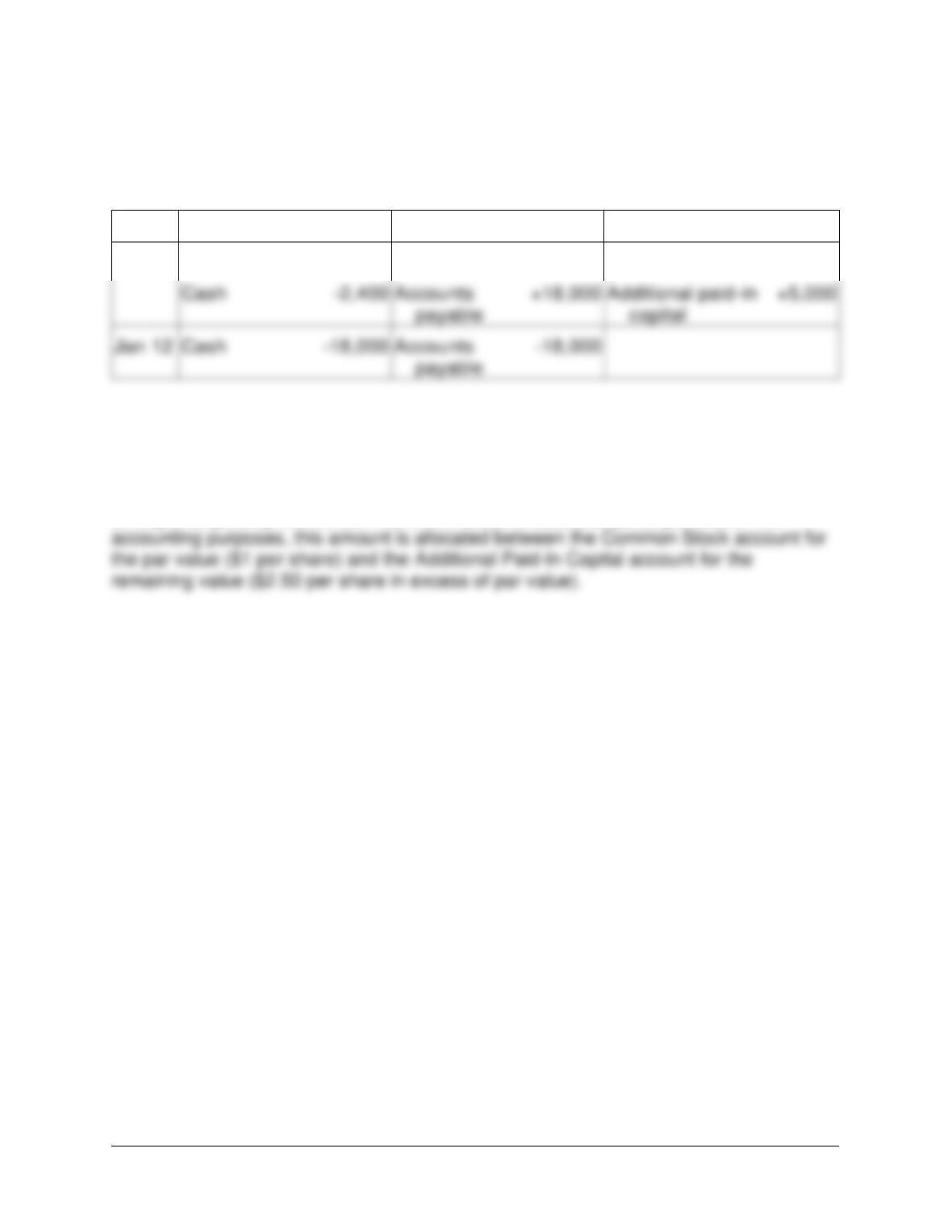
January 2 purchase:
Equipment (4) (+A) ……………………………………………………
87,400
Cash (−A)…………………………………………………………..
2,400
2,000
5,000
18,000
Computations:
(1) Common stock: $1 par value x 2,000 shares
(2) Additional paid-in capital: ($3.50 market value – $1 par value) x 2,000 shares
Financial Accounting, 9/e 8-33
P8–1. (continued)
Req. 3
Date
Assets
Liabilities
Stockholders’ Equity
Jan 2
Equipment
+87,400
Note payable
+60,000
Common stock
+2,000
Req. 4
Cost of the machinery includes installation costs. Freight was excluded because it was
an expense paid by the vendor. Common stock is valued at $3.50 per share—for
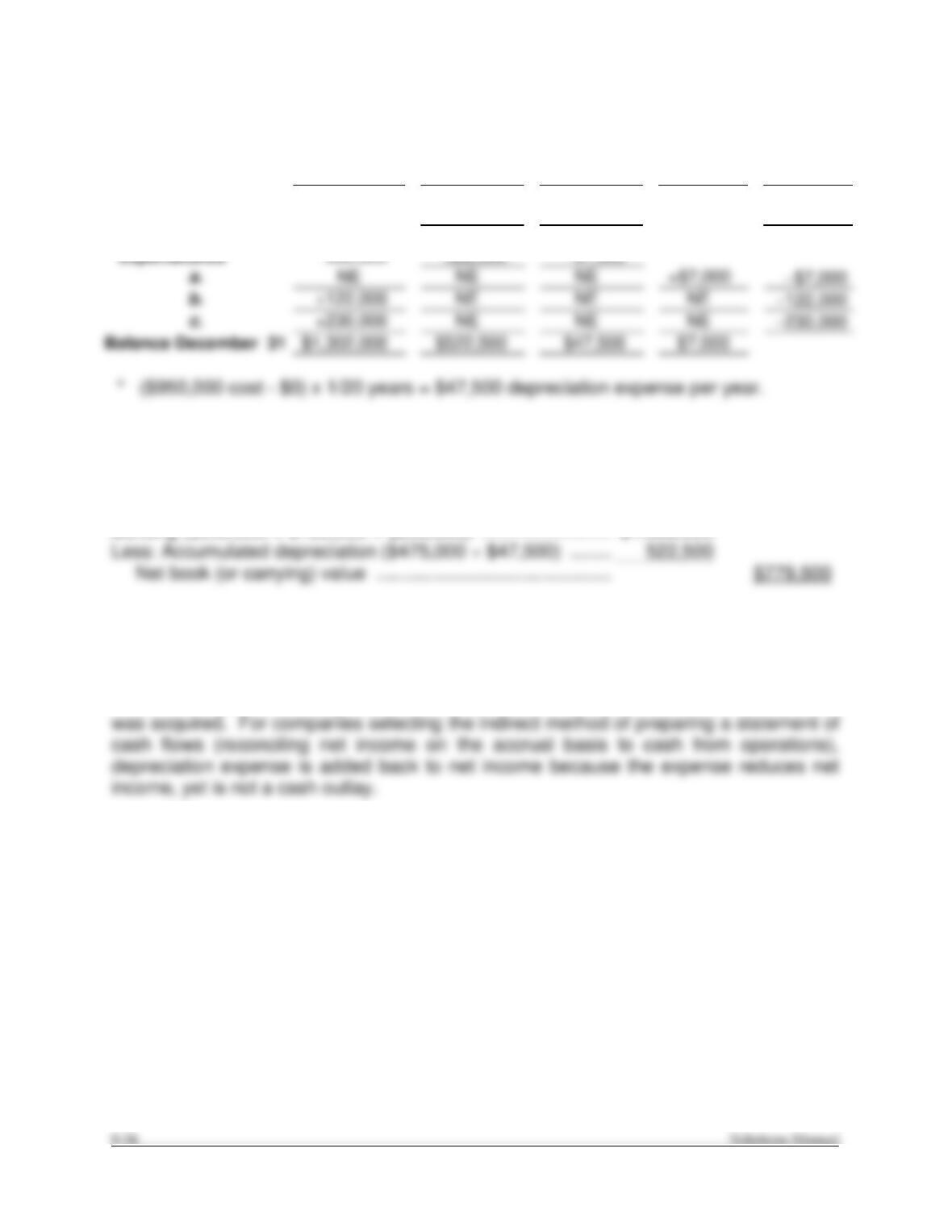
P8–2.
Req. 1
Building
Accum.
Deprec.
Deprec.
Expense
Repairs
Expense
Cash
Balance January 1
$950,000
$475,000
Depreciation
47,500
$47,500*
NE
Balance December 31
$522,500
Balance prior to
Req. 2
Net Book Value of Building on December 31 of the current year:
Building ($950,000 + $122,000 + $230,000) …………………….
$1,302,000
Less: Accumulated depreciation ($475,000 + $47,500) ……..
Net book (or carrying) value ………………………………………
Req. 3
Depreciation is a noncash expense. Unlike most expenses, no cash payment is made
when the expense is recognized. The cash outflow occurred when the related asset
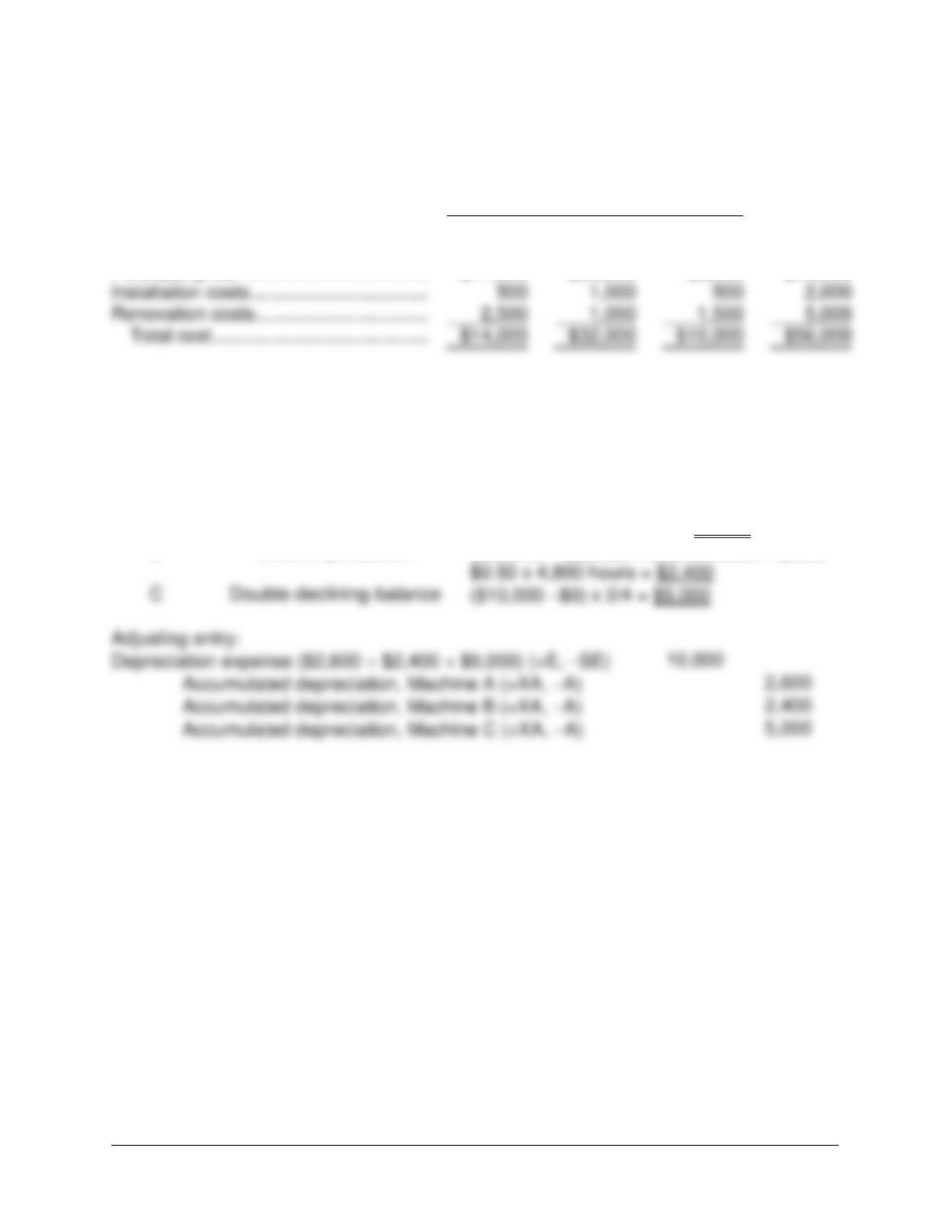
Financial Accounting, 9/e 8-35
P8–3.
Req. 1
Cost of each machine:
Machine
A
B
C
Total
Purchase price ………………………………
$11,000
$30,000
$8,000
$49,000
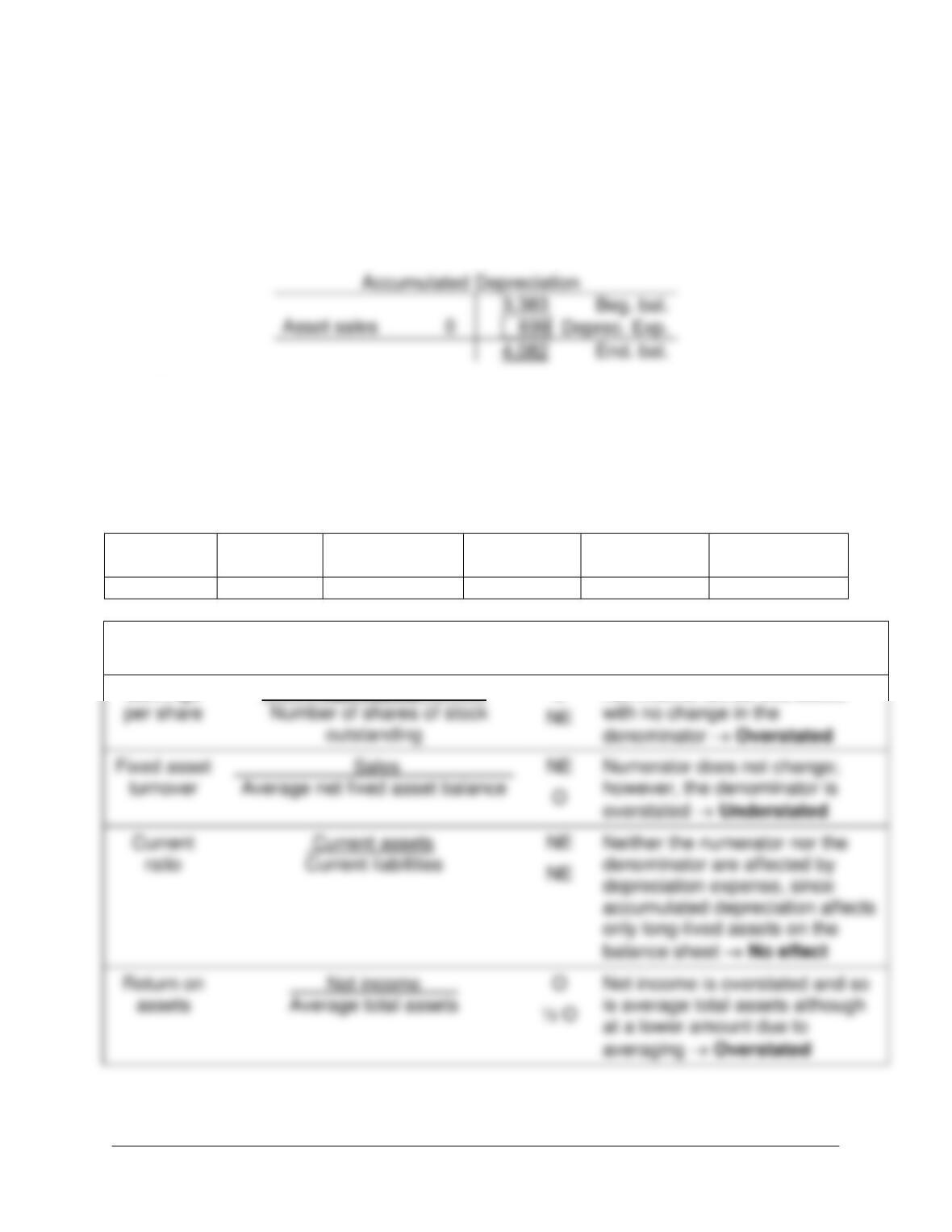
Req. 2
Computation of depreciation at the end of year 1 for each machine:
Machine
Method
Computation
A
Straight-line
($14,000 − $1,000) x 1/5 = $2,600
B
Units-of-production
C
($10,000 −$0) x 2/4 = $5,000
($32,000 − $2,000) 60,000 hours = $0.50
Installation costs …………………………….
Renovation costs …………………………...
Total cost …………………………………..
$56,000
8-36 Solutions Manual
P8–4.
Req. 1
Depreciation expense of $699 recorded in the current year is inferred from the
activities affecting the Accumulated Depreciation account:
Req. 2
Recording depreciation at the end of the period increases expenses (and thus
decreases net income and stockholders’ equity) and decreases the net book value of
the property and equipment accounts. Failing to record depreciation creates the
opposite effects.
Assets
Liabilities
Stockholders’
Equity
Revenues
Expenses
Net Income
Overstated
NE
Overstated
NE
Understated
Overstated
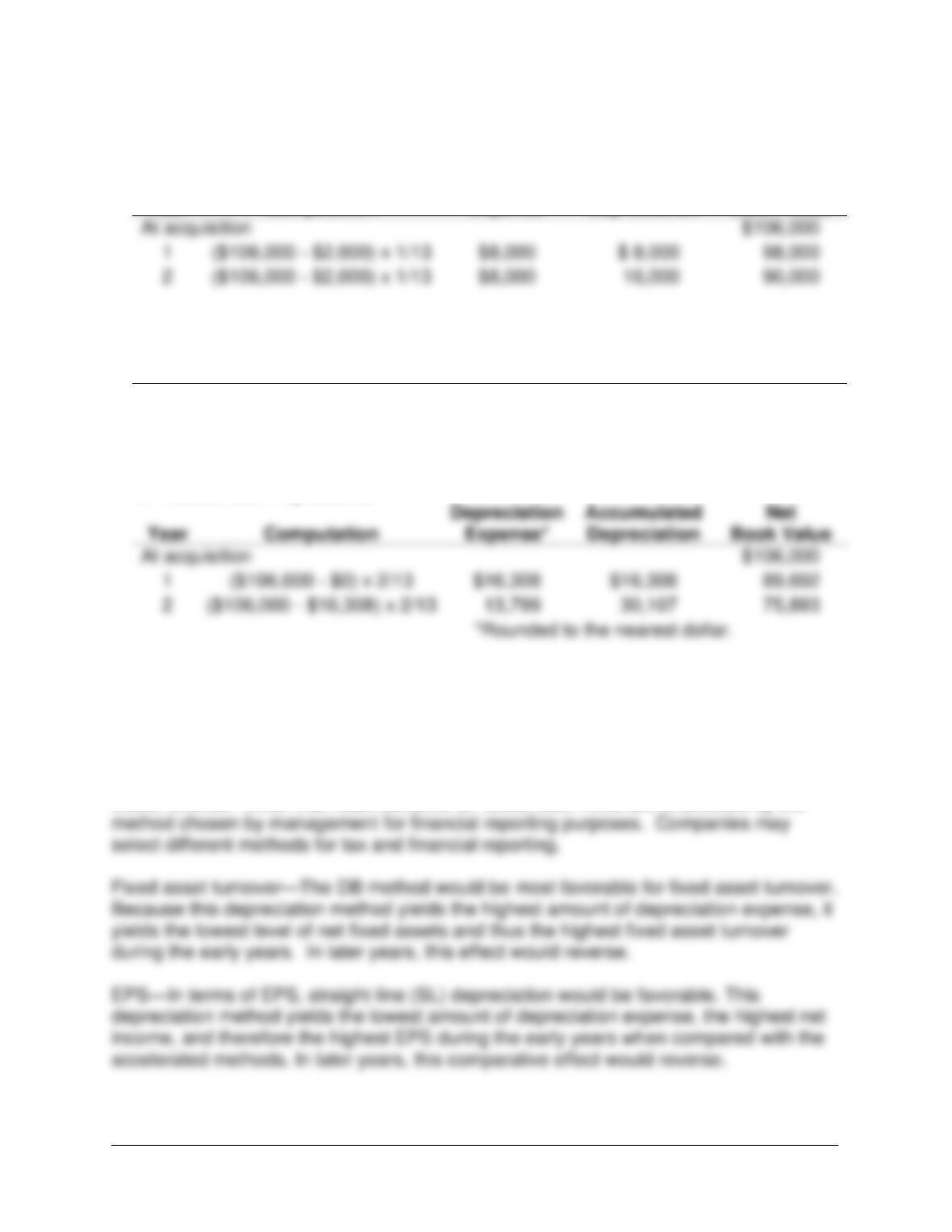
Ratio
Computation
Effect on Ratio of Failing to
Record Depreciation Expense
Earnings
Net income
O
Net income will be overstated
Financial Accounting, 9/e 8-37
P8–5.
Req. 1
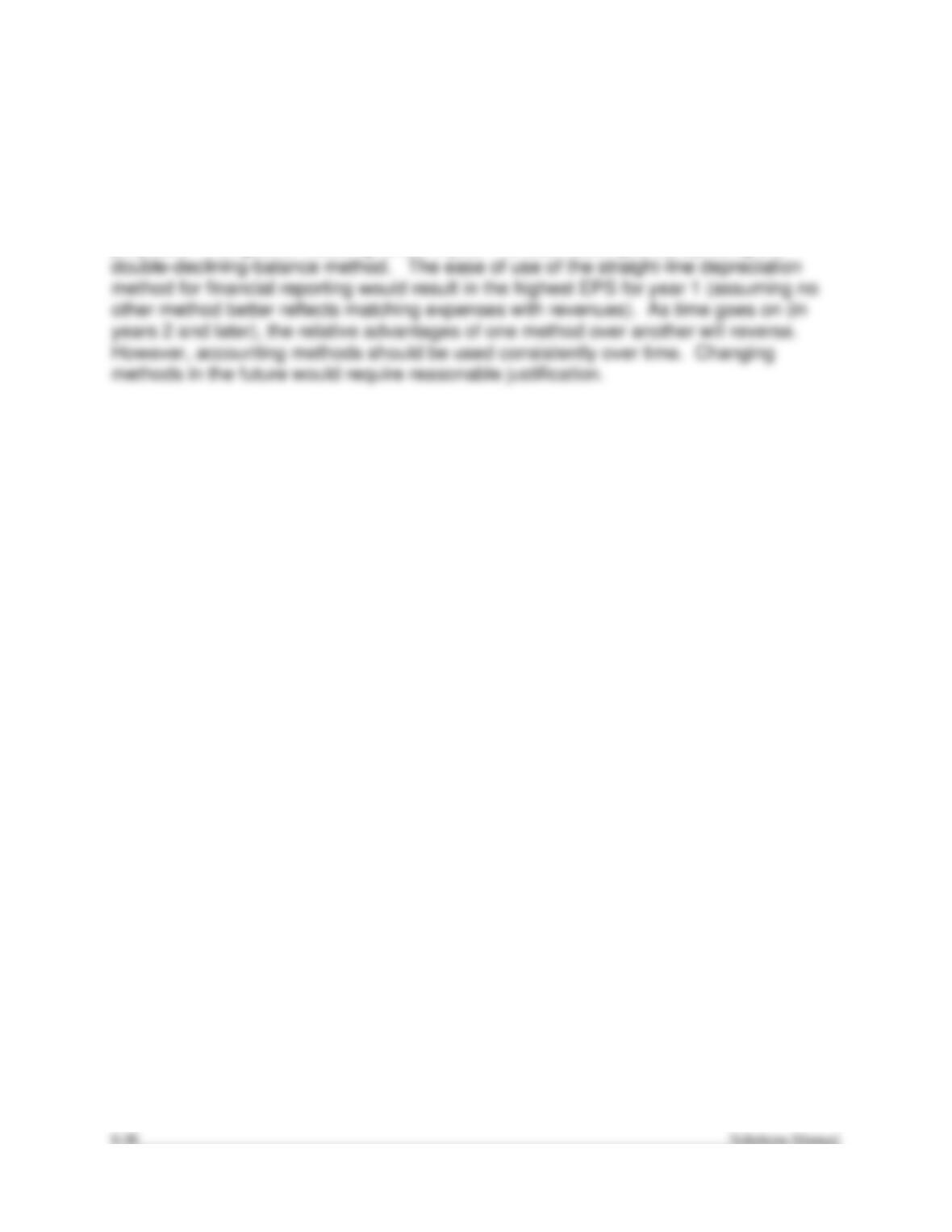
a. Straight-line:
Year
Computation
Depreciation
Expense
Accumulated
Depreciation
Net
Book Value
b. Units-of-production: ($106,000 – $2,000) 200,000 = $0.52 per unit of output
Year
Computation
Depreciation
Expense
Accumulated
Depreciation
Net
Book Value
At acquisition
$106,000
1
$0.52 x 20,000 units
$10,400
$10,400
95,600
2
$0.52 x 16,000 units
8,320
18,720
87,280
c. Double-declining-balance:
Year
Computation
Depreciation
Accumulated
Depreciation
Net
Book Value
At acquisition
$106,000
1
2
75,893
Req. 2
Cash flow—For tax purposes, the declining-balance (DB) method usually is viewed as
preferable because an early tax deduction is preferable to a later tax deduction. DB
depreciation expense is highest; therefore, it yields lower taxable income and lower
income tax payable (and lower cash outflow) in the early years. In later years, this effect
would reverse. Other than cash outflows for taxes, cash flows are unaffected by the
At acquisition
1
2
P8–5. (continued)
Req. 2 (continued)
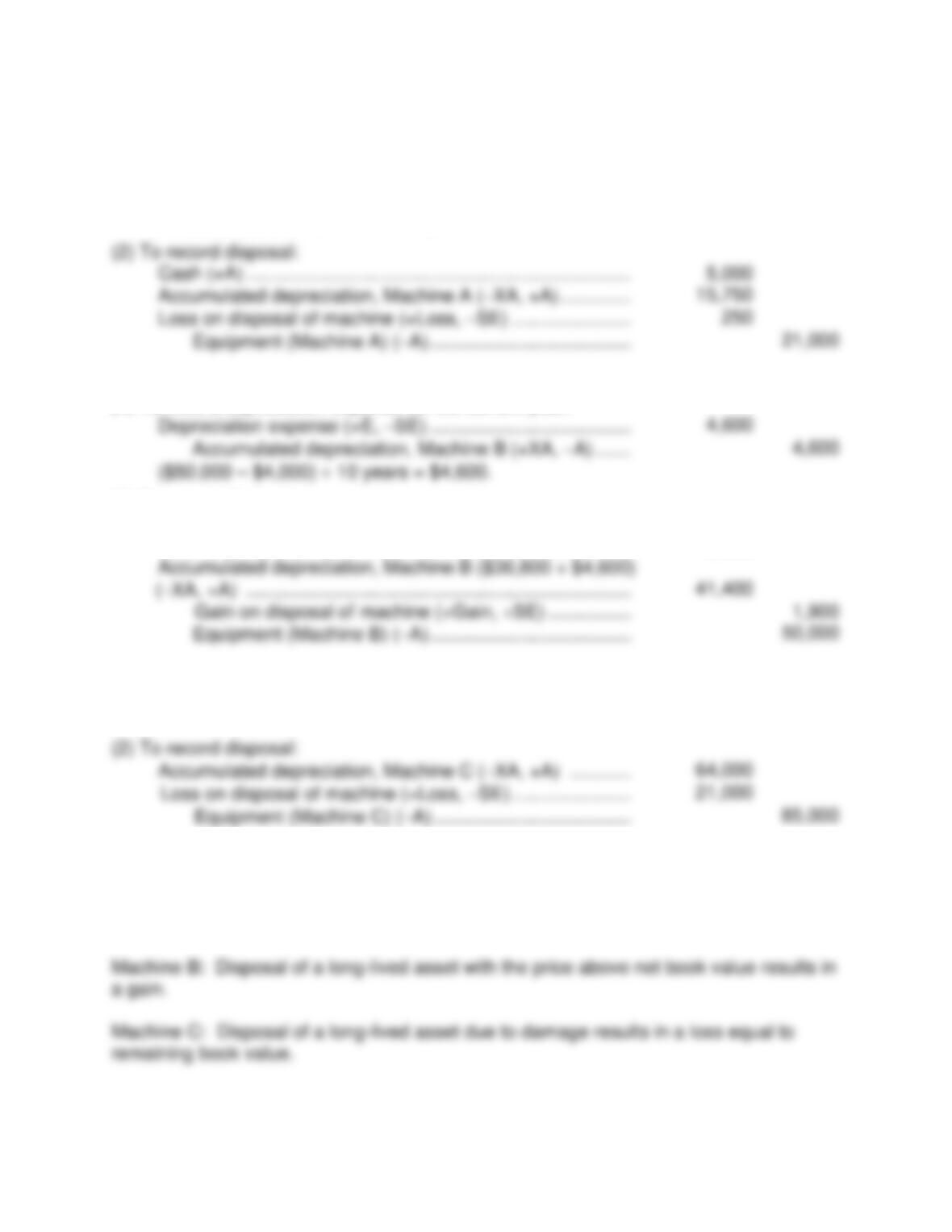
Recommendation to Ford Motor Company’s management:
Companies may choose a different method for tax purposes than for financial reporting
purposes. The goal of reducing taxes in year 1 is best accomplished by using the
Financial Accounting, 9/e 8-39
P8–6.
Req. 1
a. Machine A – Sold on January 1 of the current year:
(1)
Depreciation expense for the current year – none recorded
because disposal date was January 1.
b. Machine B – Sold on December 31 of the current year:
(1)
To record depreciation expense for the current year:
(2)
To record disposal:
Cash (+A) ………………………………………………………………..
2,500
Note receivable (+A)………………………………………………….
8,000
1,900
c. Machine C – Disposal on January 1 of the current year:
(1)
Depreciation expense for the current year – none recorded
because disposal date was January 1.
(2)
To record disposal:
Req. 2
Machine A: Disposal of a long-lived asset with the price below net book value results in
a loss.
(2)
To record disposal:
Cash (+A) ………………………………………………………………..
5,000
P8–7.
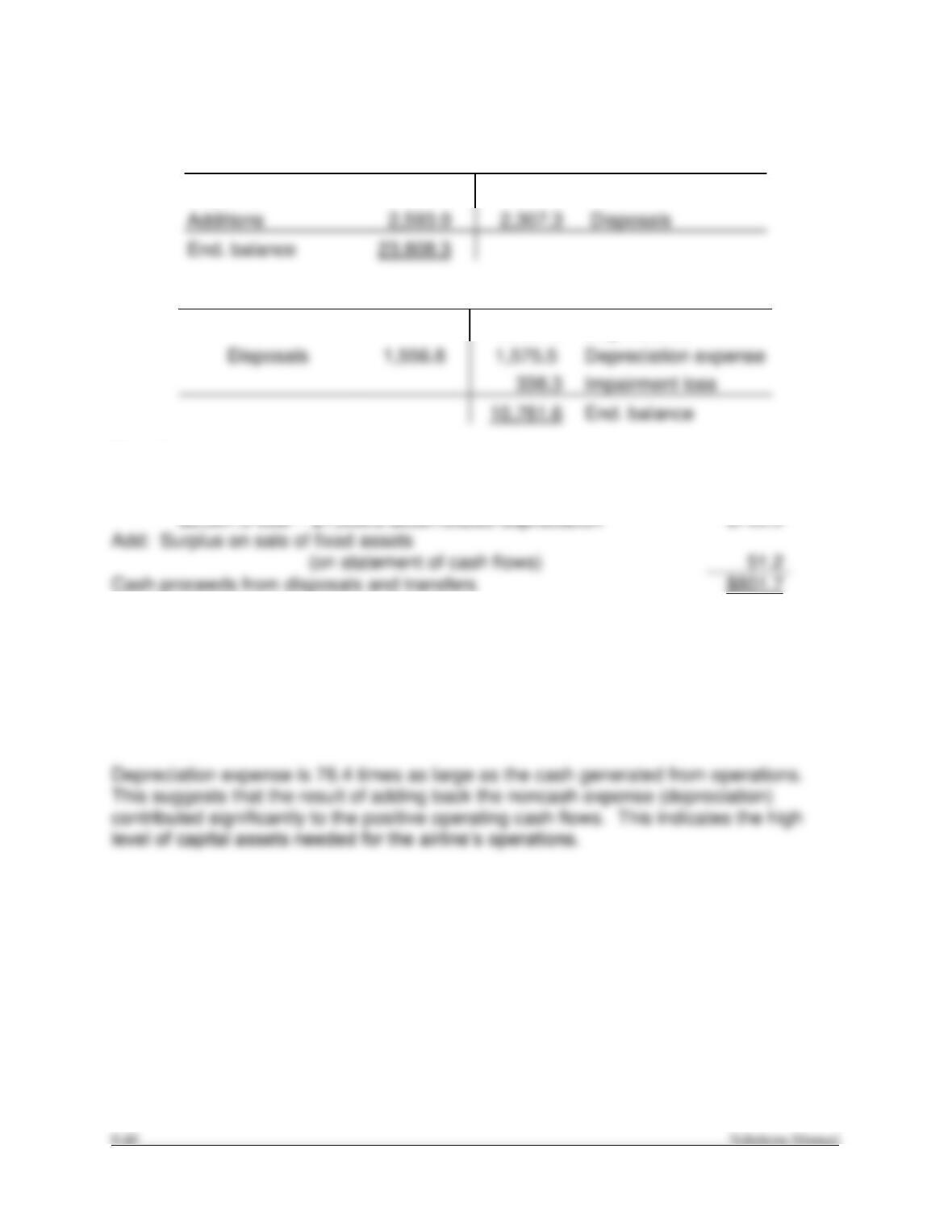
Req. 1
Property, Plant, and Equipment
Beg. balance
23,522.6
Additions
Disposals
End. balance
23,808.3
Accumulated Depreciation
10,424.6
Beg. balance
Depreciation expense
End. balance
Req. 2
(on statement of cash flows)
Cash proceeds from disposals and transfers
$801.7
Net book value of the disposals:
$750.5
Req. 3
Percentage depreciation expense to cash flows from operations
= ($1,575.5 / $2,063.5) x 100% = 76.4% (Rounded)