FINANCIAL ACCOUNTING – Eleventh Edition Solutions Manual
S8-1
(5-10 min.)
Solution:
Jan. 1 Held-to-Maturity Investment in Bonds 10,000
2016
Record the initial purchase of the bonds on January 1, 2016, and the receipt of
the interest on the first interest payment date of July 1, 2016.
Journal
DATE
ACCOUNT TITLES AND EXPLANATION
DEBIT
CREDIT
Chapter 8 : Long-Term Investments and the Time Value of Money Page 1 of 80
FINANCIAL ACCOUNTING – Eleventh Edition Solutions Manual
S8-2
(5-10 min.)
Solution:
Jan. 1 Held-to-Maturity Investment in Bonds 90,000
2016
Record the initial purchase of the bonds by Broadbent on January 1, 2016, and
the receipt of the interest on the first interest payment date of July 1, 2016.
Journal
DATE
ACCOUNT TITLES AND EXPLANATION
DEBIT
CREDIT
Chapter 8 : Long-Term Investments and the Time Value of Money Page 2 of 80
FINANCIAL ACCOUNTING – Eleventh Edition Solutions Manual
S8-3
(5-10 min.)
Solution:
July 1 Held-to-Maturity Investment in Bonds 1,000
2016
Using the data from S8-2, calculate the amount of discount amortization (using the
straight-line amortization method) on July 1, 2016, and record the related journal
entry. What is the total interest revenue for the first six months of 2016? (Hint: include
both the interest received in S8-2 and the discount amortization from this exercise.)
Journal
DATE
ACCOUNT TITLES AND EXPLANATION
DEBIT
CREDIT
Chapter 8 : Long-Term Investments and the Time Value of Money Page 3 of 80
FINANCIAL ACCOUNTING – Eleventh Edition Solutions Manual
S8-4
(5-10 min.)
Solution:
Dec.
31 Interest Receivable ($100,000 × .055 × 6/12) 2,750
2016
Using the data from S8-2, make the adjusting entry that Broadbent Insurance would
need to make on December 31, 2016, related to the investment in DGM bonds. How
would the bonds be reported on Broadbent Insurance’s balance sheet as of
December 31, 2016? What amount of interest revenue would be reported on
Broadbent Insurance’s income statement for the year ended December 31, 2016,
related to the DGM bonds?
Journal
DATE
ACCOUNT TITLES AND EXPLANATION
DEBIT
CREDIT
Chapter 8 : Long-Term Investments and the Time Value of Money Page 4 of 80
31 Held-to-Maturity Investment in Bonds 1,000
FINANCIAL ACCOUNTING – Eleventh Edition Solutions Manual
S8-5
(5-10 min.)
Solution:
July 1 Interest Revenue 750
2015
Calculate the amount of premium amortization (using the straight-line
amortization method) on July 1, 2016, and record the related journal entry. What is
the total interest revenue for the first six months of 2016?
Journal
DATE
ACCOUNT TITLES AND EXPLANATION
DEBIT
CREDIT
Chapter 8 : Long-Term Investments and the Time Value of Money Page 5 of 80
FINANCIAL ACCOUNTING – Eleventh Edition Solutions Manual
S8-6
(5-10 min.)
Solution:
Dec.
31 Interest Receivable ($100,000 × .12 × 6/12) 6,000
2016
Balance sheet reports Held-to-Maturity Investment in Bonds of $106,000
Using the data from S8-5, make the adjusting entries that Sunshine Pools
would need to make on December 31, 2016, related to the investment in BHT
bonds. How would the bonds be reported on Sunshine Pools’ balance sheet as
of December 31, 2016? What amount of interest revenue would be reported on
Sunshine Pools’ income statement for the year ended December 31, 2016,
related to the BHT bonds?
Journal
DATE
ACCOUNT TITLES AND EXPLANATION
DEBIT
CREDIT
Chapter 8 : Long-Term Investments and the Time Value of Money Page 6 of 80
FINANCIAL ACCOUNTING – Eleventh Edition Solutions Manual
S8-7
(10-15 min.)
Solution:
1.
1. How much did HW pay to purchase the bond investment? How much will
HW collect when the bond investment matures?
2. How much cash interest will HW receive each year from Amexon?
3. Will HW’s annual interest revenue on the bond investment be more or less
than the amount of cash interest received each year? Give your reason.
4. Compute HW’s annual interest revenue on this bond investment. Use the
straight-line method to amortize the premium on the investment.
$1,300,000 × 1.03 = $1,339,000 paid to purchase Amexon bonds.
Chapter 8 : Long-Term Investments and the Time Value of Money Page 7 of 80
FINANCIAL ACCOUNTING – Eleventh Edition Solutions Manual
S8-8
(10 min.)
Solution:
a.
June
30 Held-to-Maturity Investment in Bonds 1,339,000
($1,300,000 × 1.03)
Journalize the following on HW’s books:
a. Purchase of the bond investment on June 30, 2016. HW expects to hold the
investment to maturity.
b. Receipt of semiannual cash interest on December 31, 2016.
c. Amortization of the premium on the bonds on December 31, 2016. Use the
straight-line method.
d. Collection of the investment’s face value at the maturity date on June 30, 2021.
(Assume the receipt of 2021 interest and the amortization of bonds for 2021 have
already been recorded, so ignore these entries.)
DEBIT
Journal
DATE
ACCOUNT TITLES AND EXPLANATION
CREDIT
2016
Chapter 8 : Long-Term Investments and the Time Value of Money Page 8 of 80
d.
June
30 Cash 1,300,000
2021
FINANCIAL ACCOUNTING – Eleventh Edition Solutions Manual
S8-9
(5-10 min.)
Solution:
2016
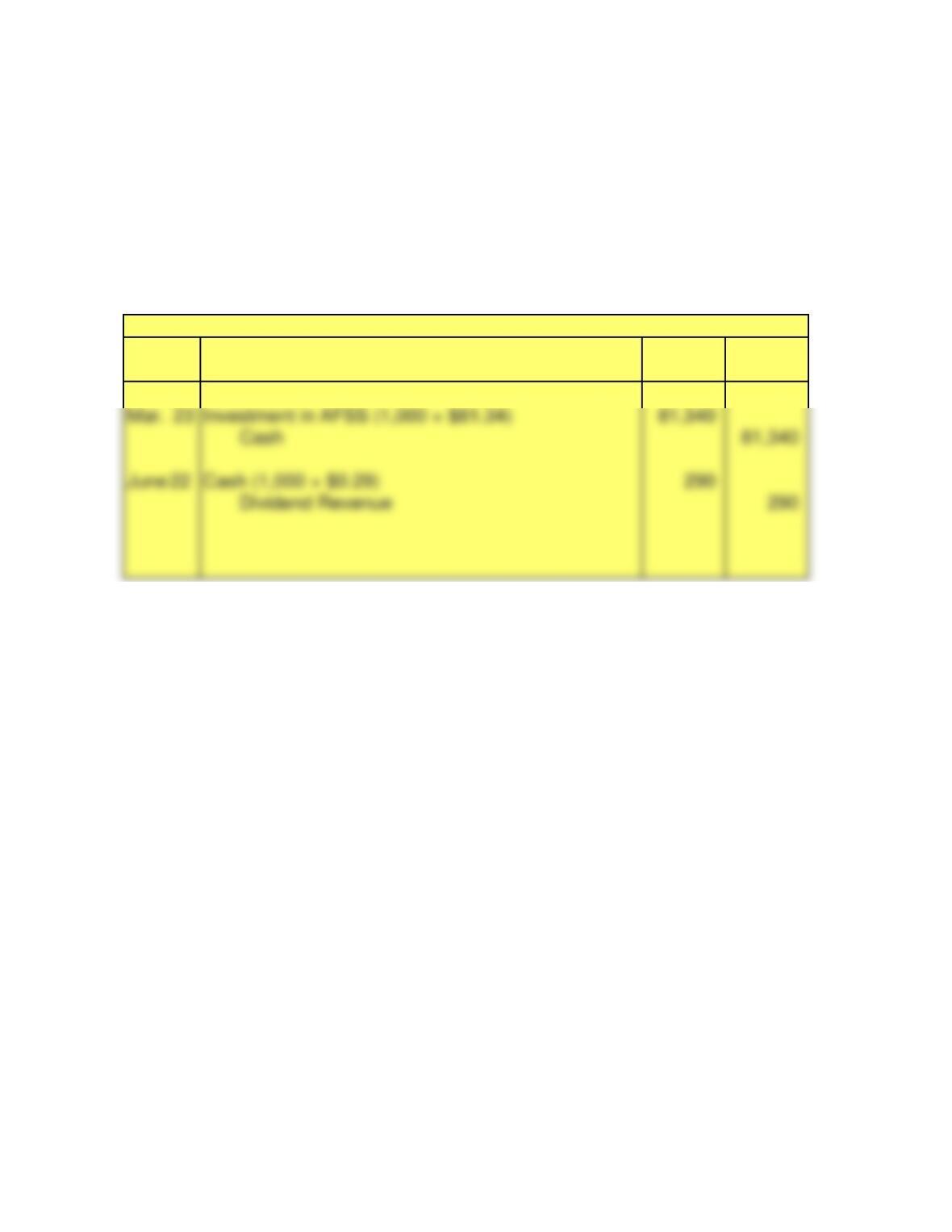
Write the entries to (1) record the initial investment; and (2) record the receipt of
the cash dividend.
Journal
DATE
ACCOUNT TITLES AND EXPLANATION
DEBIT
CREDIT
Chapter 8 : Long-Term Investments and the Time Value of Money Page 9 of 80
FINANCIAL ACCOUNTING – Eleventh Edition Solutions Manual
S8-10
(5-10 min.)
Solution:
Allowance to Adjust Investment in AFSS to Market 2,820
2016
Dec. 31
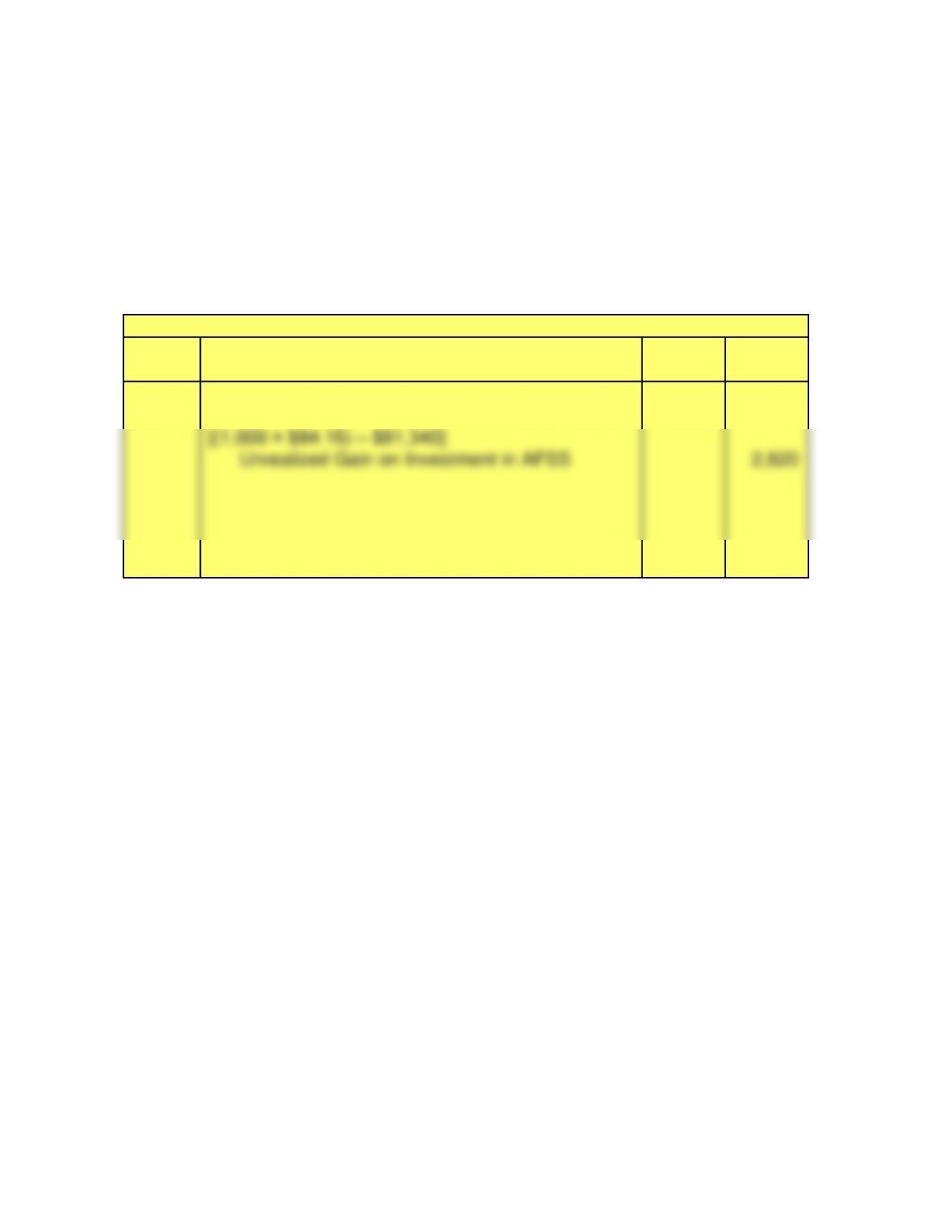
Assuming that Williams Company has no other investments, record the entry to
adjust the American Express common stock to fair value.
Journal
DATE
ACCOUNT TITLES AND EXPLANATION
DEBIT
CREDIT
Chapter 8 : Long-Term Investments and the Time Value of Money Page 10 of 80
FINANCIAL ACCOUNTING – Eleventh Edition Solutions Manual
S8-11
(5-10 min.)
Solution:
2017
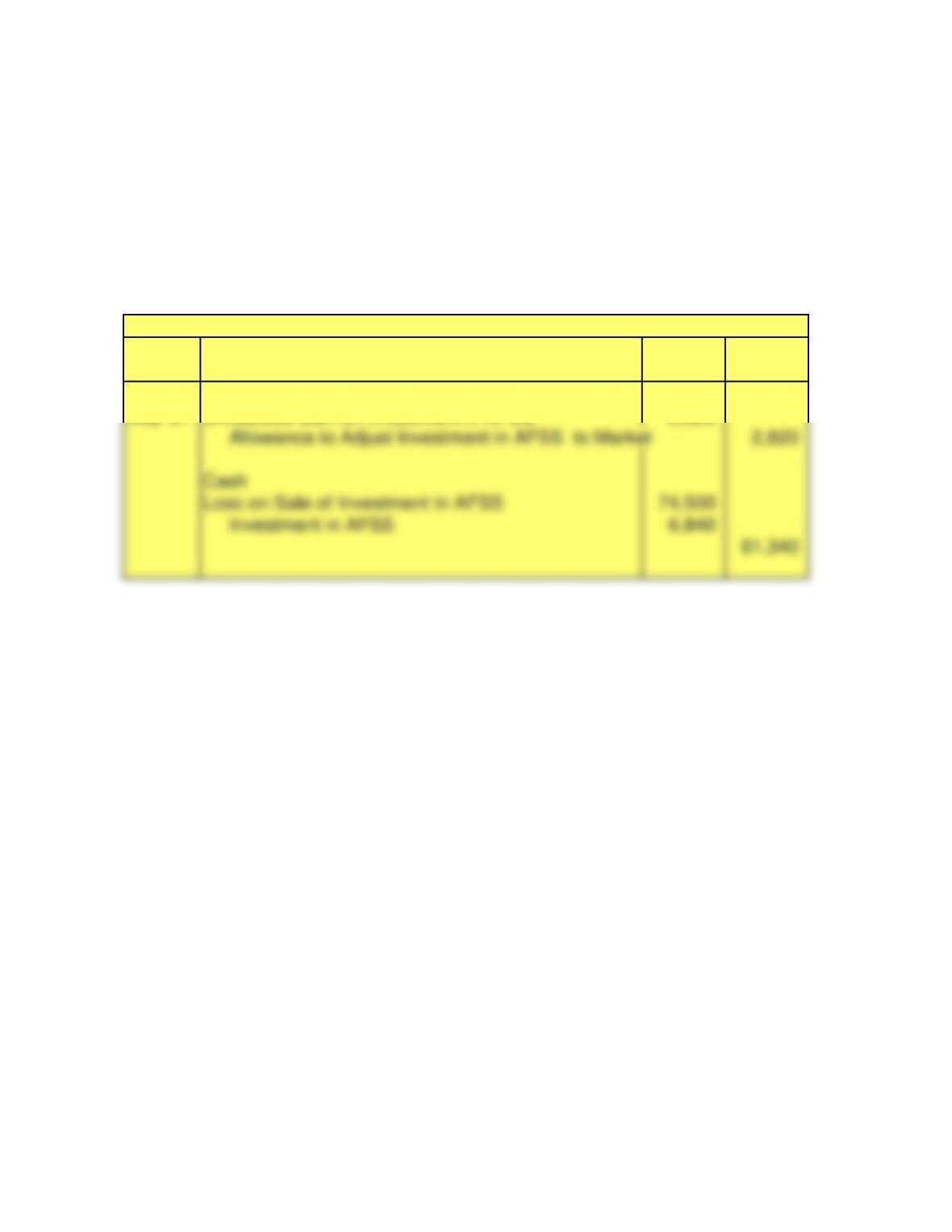
Williams Company sells its entire investment in American Express common stock
on November 22, 2017, for a total of $74,500. Record the entries for the sale.
Journal
DATE
ACCOUNT TITLES AND EXPLANATION
DEBIT
CREDIT
Chapter 8 : Long-Term Investments and the Time Value of Money Page 11 of 80
FINANCIAL ACCOUNTING – Eleventh Edition Solutions Manual
S8-12
(10-15 min.)
Solution:
Req. 1
Apr. 10 Investment in AFSS (300 × $20) 6,000
Req. 2
Req. 3
ASSETS
Total current assets $ XXX
Long-term assets:
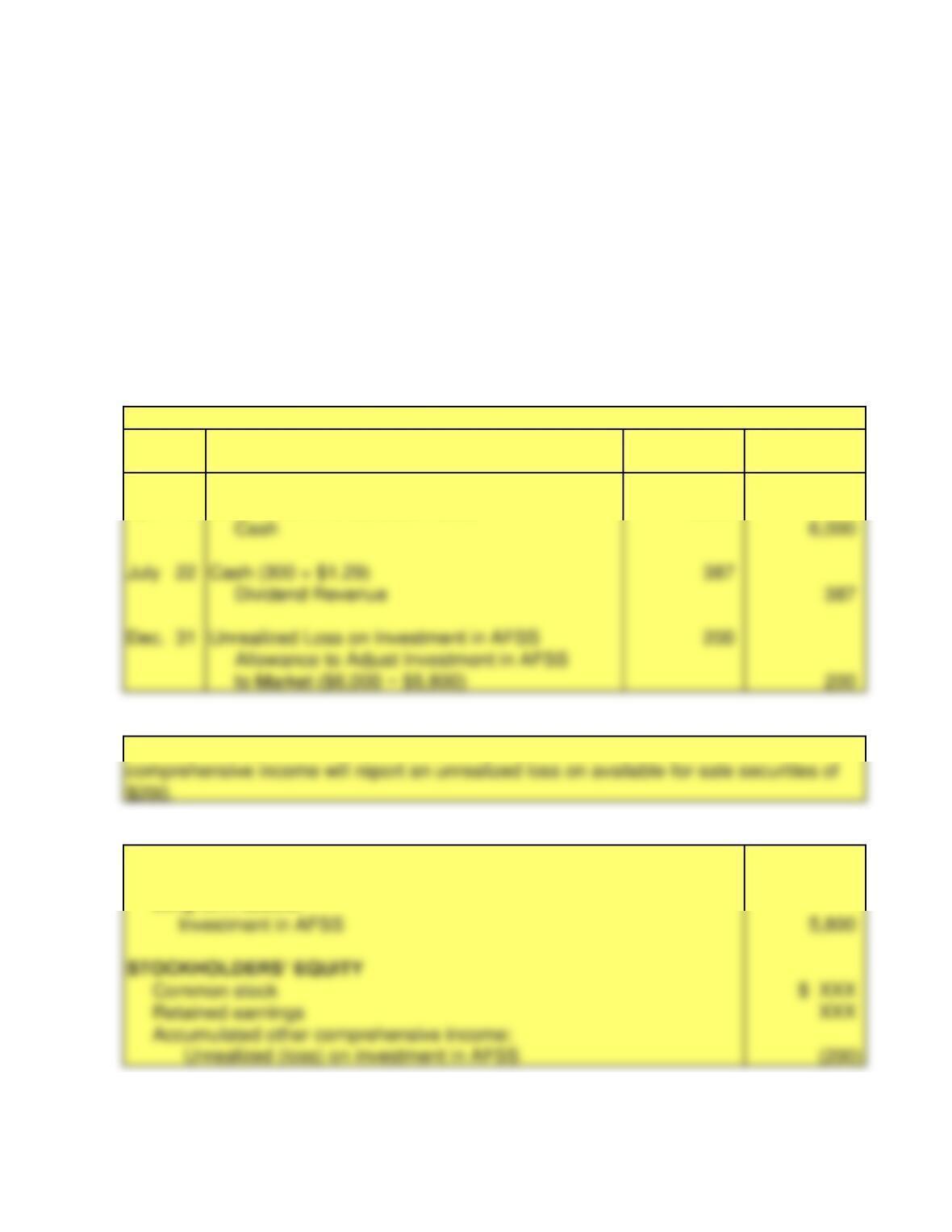
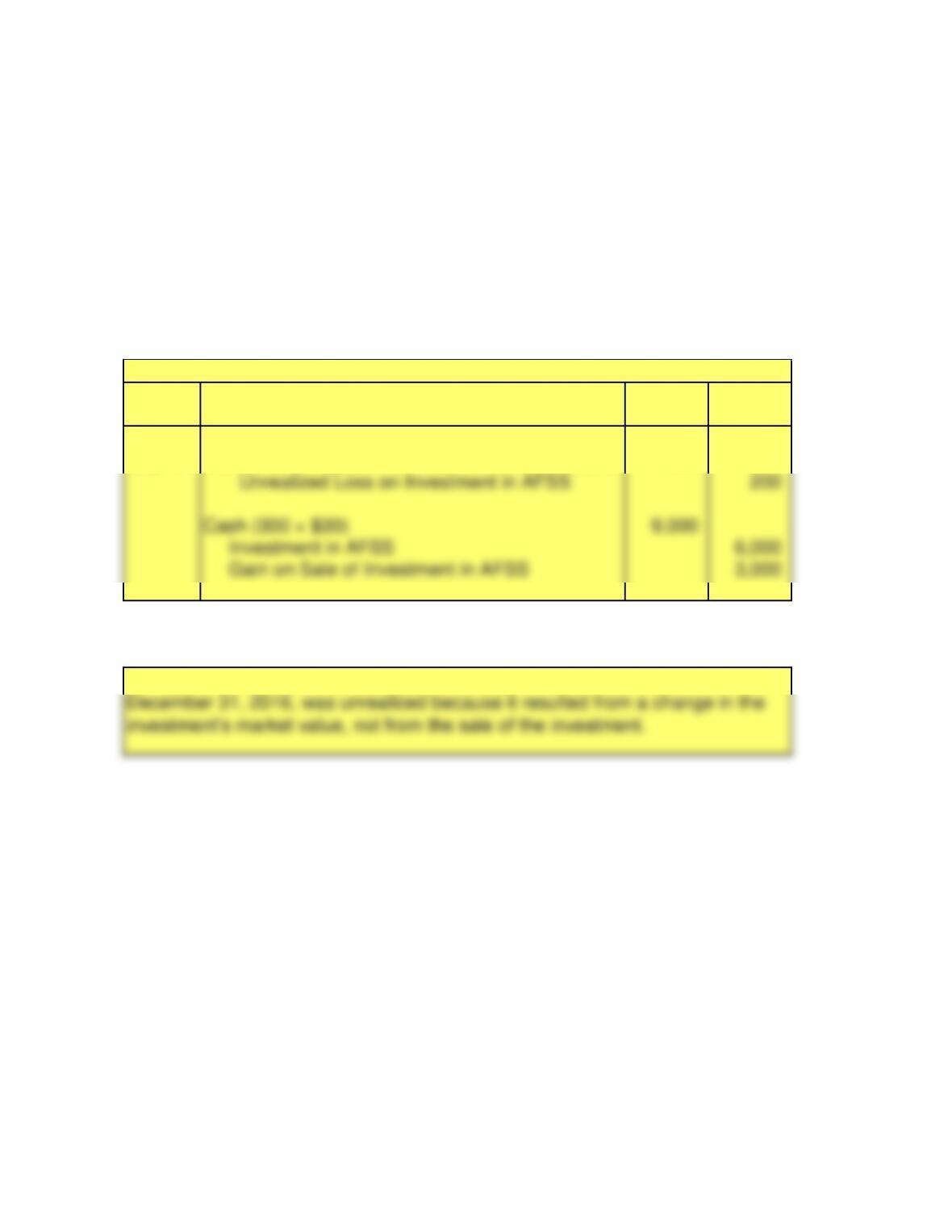
1. Journalize Hilton Company’s investment transactions. Explanations are not required.
2. Assume the Microscape Co. stock is Hilton Company’s only investment. Explain how
these transactions will be reflected on Hilton Company’s income statement and its
statement of comprehensive income.
3. Show how to report the investment and any unrealized gain or loss on Hilton
Company’s
balance sheet at December 31, 2016. Ignore income tax.
2016
The income statement will report dividend revenue of $387. The statement of
Journal
DEBIT
CREDIT
ACCOUNT TITLES AND EXPLANATION
DATE
Chapter 8 : Long-Term Investments and the Time Value of Money Page 12 of 80
FINANCIAL ACCOUNTING – Eleventh Edition Solutions Manual
S8-13
(5-10 min.)
Solution:
Req. 1
May 21
Allowance to Adjust Investment in AFSS to Market
200
Req. 2
2017
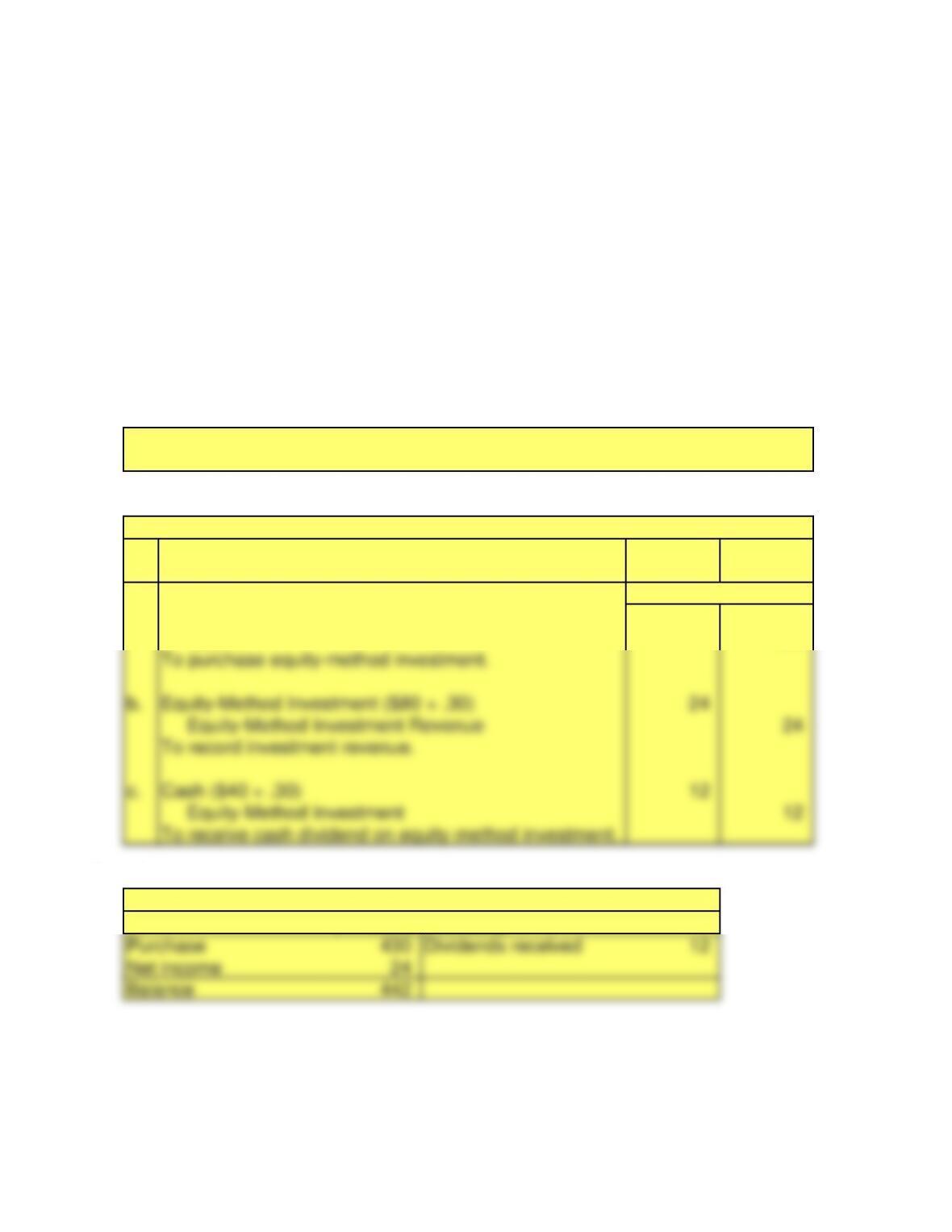
This gain on sale of investment is a realized gain. The loss recorded at
1. Journalize the sale. No explanation is required.
2. How does the gain or loss that you recorded here differ from the gain or loss
that was recorded at December 31, 2016?
Journal
DATE
ACCOUNT TITLES AND EXPLANATION
DEBIT
CREDIT
Chapter 8 : Long-Term Investments and the Time Value of Money Page 13 of 80
FINANCIAL ACCOUNTING – Eleventh Edition Solutions Manual
S8-14
(10-15 min.)
Solution:
Req. 1
Req. 2
a. Equity-Method Investment 430
Cash 430
Req. 3
Equity method is appropriate because the investor (Eastern Motors) holds a 30%
investment in the investee company (Tripp Motors).
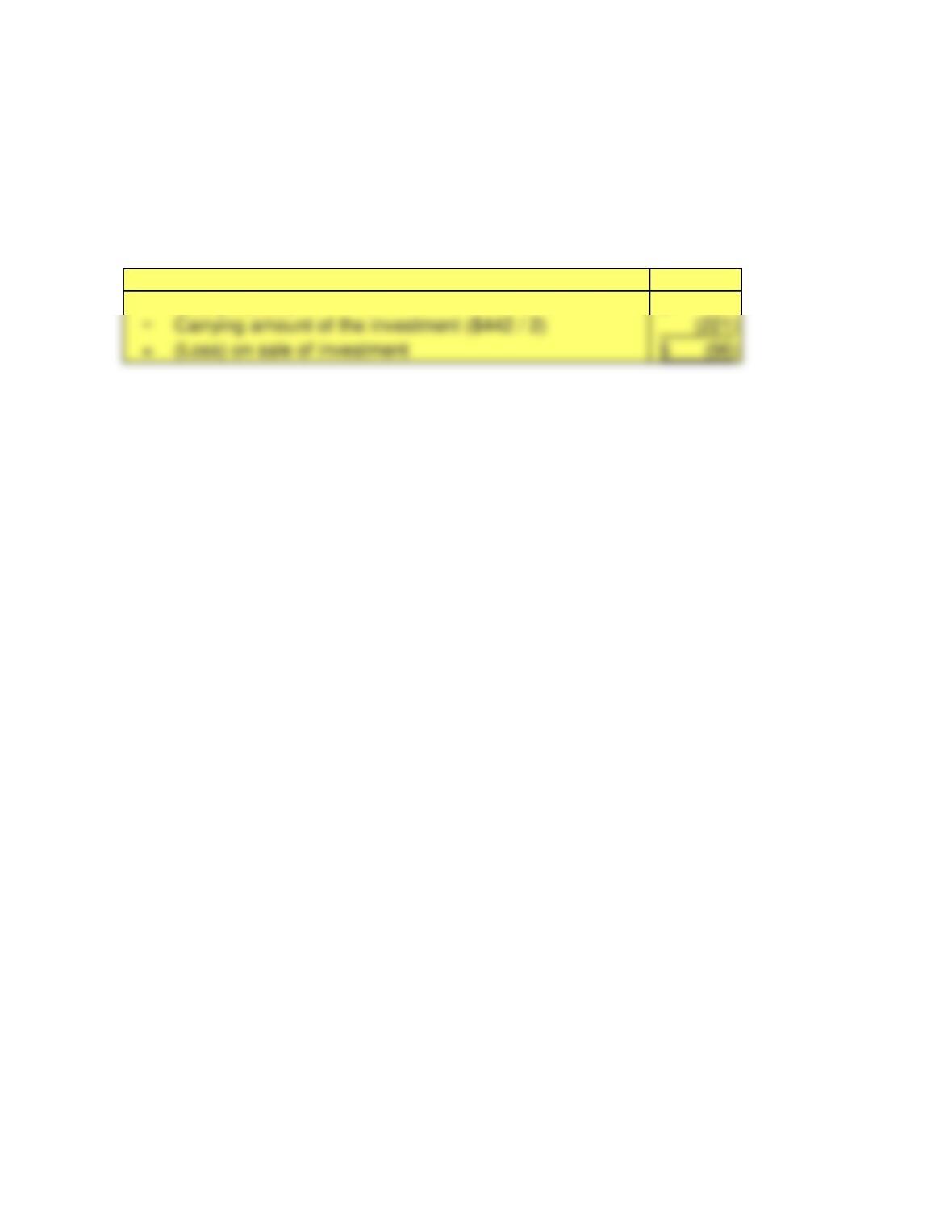
1. What method should Eastern Motors use to account for the investment in
Tripp? Give your reason.
2. Journalize these three transactions on the books of Eastern Motors. Show all
amounts in millions of dollars (rounded to the closest million), and include an
explanation for each entry.
3. Post to the Equity-Method Investment T-account. What is its balance after all
the
Millions
Equity-Method Investment
(Amounts in millions)
Journal
DEBIT
CREDIT
ACCOUNT TITLES AND EXPLANATION
Chapter 8 : Long-Term Investments and the Time Value of Money Page 14 of 80
b. Equity-Method Investment ($80 × .30) 24
FINANCIAL ACCOUNTING – Eleventh Edition Solutions Manual
S8-15
(5 min.)
Solution:
Millions
Sale proceeds 125$
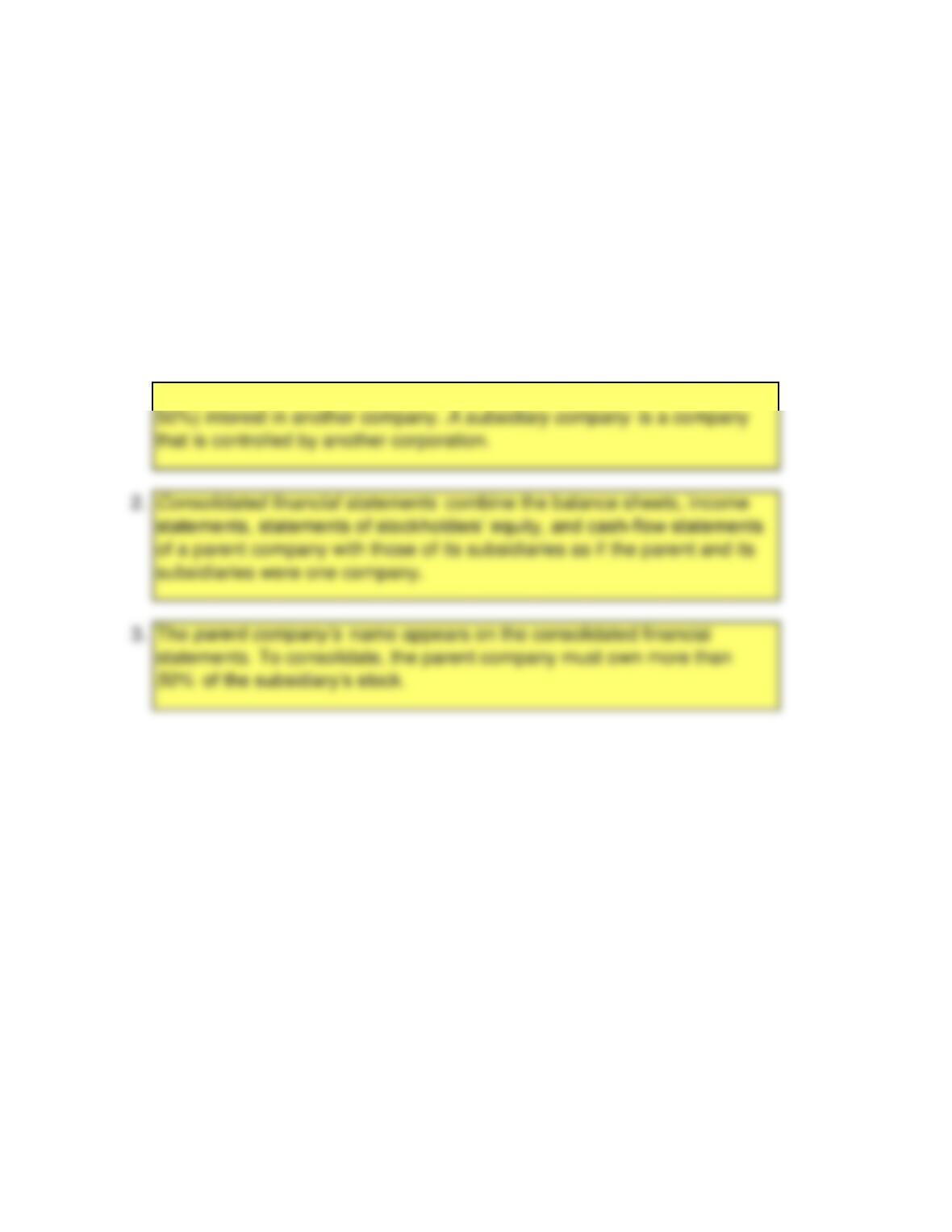
Compute Eastern Motors’ gain or loss on the sale.
Chapter 8 : Long-Term Investments and the Time Value of Money Page 15 of 80
FINANCIAL ACCOUNTING – Eleventh Edition Solutions Manual
S8-16
(10 min.)
Solution:
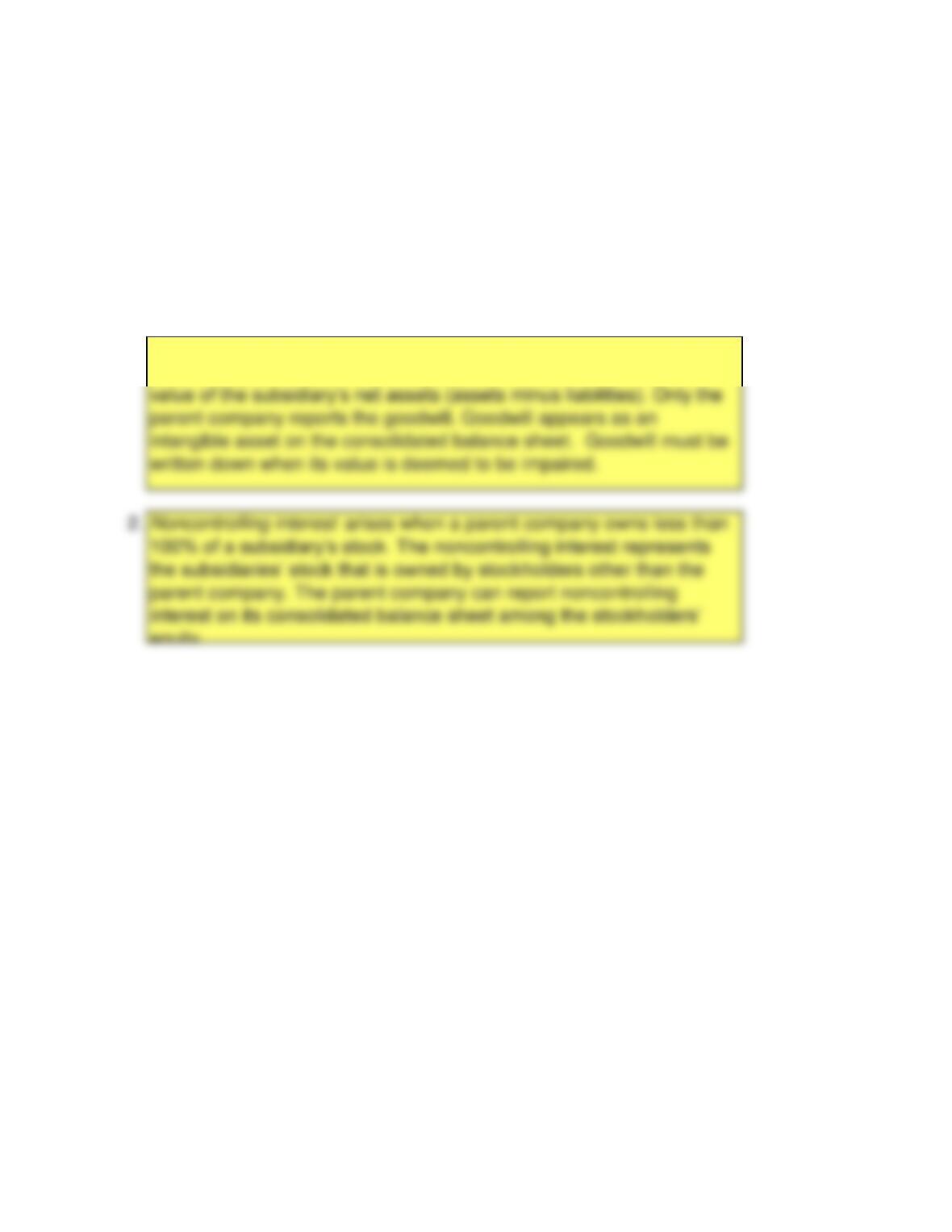
1.
1. Define “parent company.” Define “subsidiary company.”
2. How do consolidated financial statements differ from the financial
statements of a single company?
3. Which company’s name appears on the consolidated financial statements?
How much of the subsidiary’s shares must the parent own before reporting
consolidated statements?
A parent company is a corporation that owns a controlling (more than
Chapter 8 : Long-Term Investments and the Time Value of Money Page 16 of 80
2.
3.
FINANCIAL ACCOUNTING – Eleventh Edition Solutions Manual
S8-17
(10 min.)
Solution:
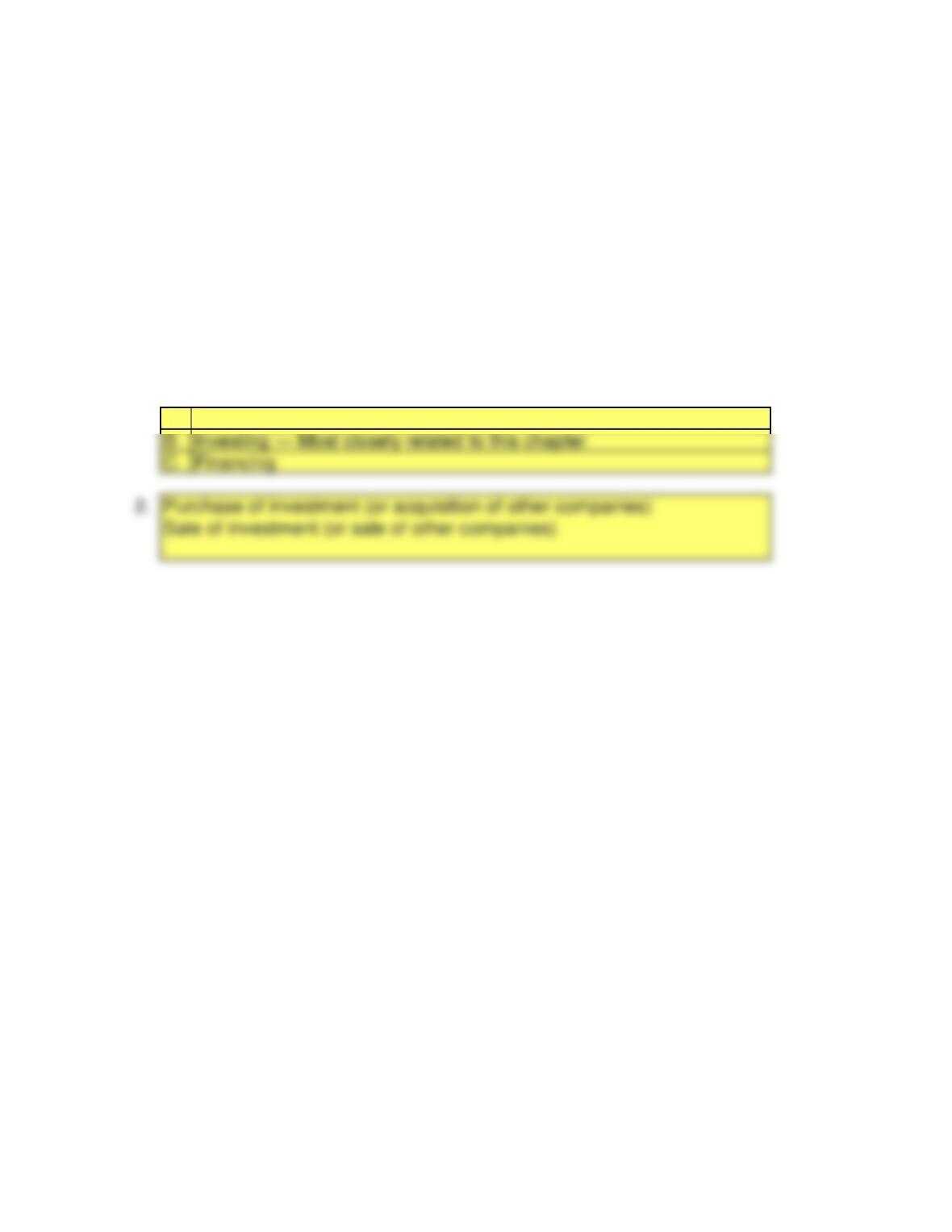
1.
1. What is goodwill, and how does it arise? Which company reports
goodwill, the parent or the subsidiary? Where is goodwill reported?
2. What is noncontrolling interest, and which company reports it, the
parent or the subsidiary? Where is noncontrolling interest reported?
Goodwill is an intangible asset. Goodwill is the excess of the purchase
price to acquire a subsidiary company over the sum of the market
Chapter 8 : Long-Term Investments and the Time Value of Money Page 17 of 80
2.
FINANCIAL ACCOUNTING – Eleventh Edition Solutions Manual
S8-18
(5 min.)
Solution:
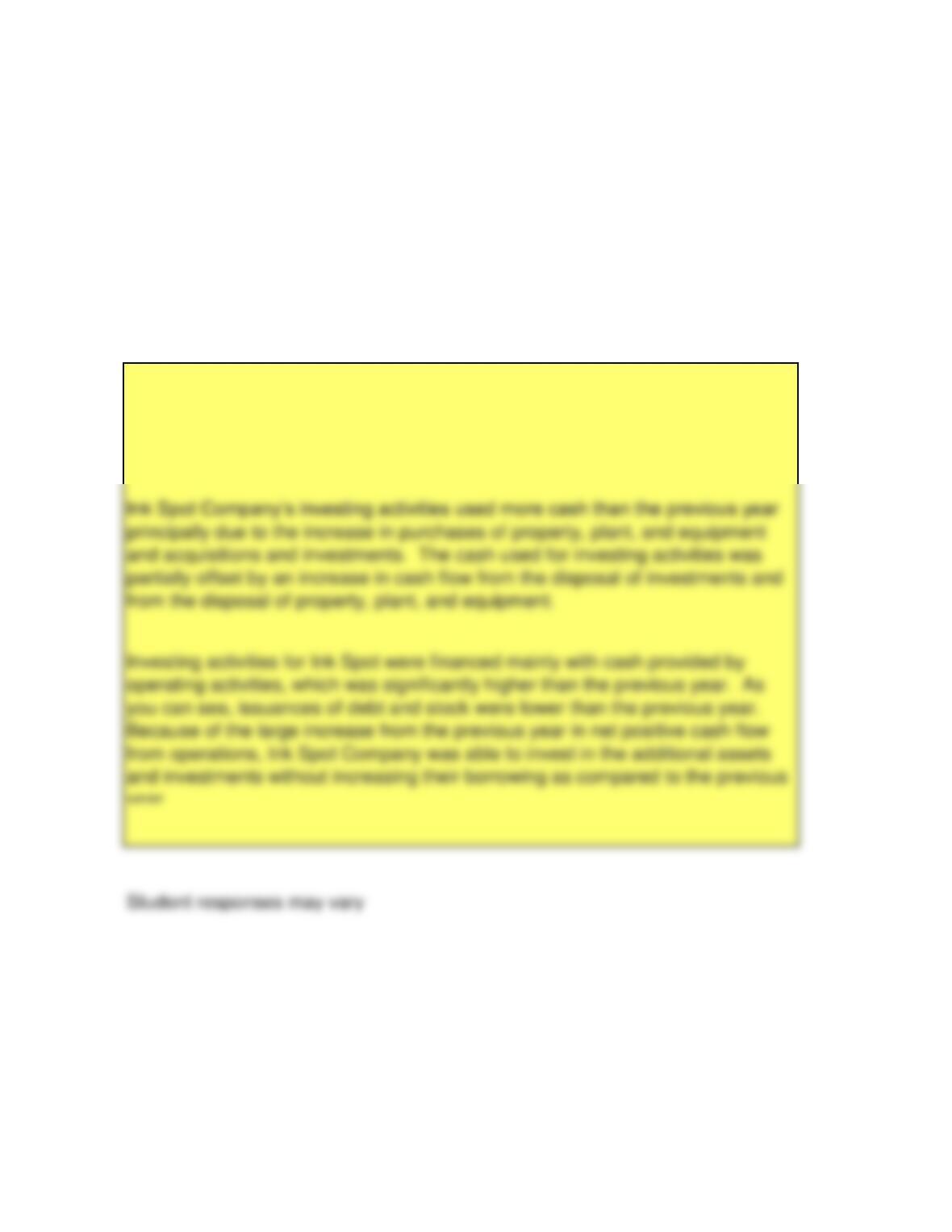
1. A.
Companies divide their cash flows into three categories for reporting on the
cash flow statement.
1. List the three categories of cash flows in the order they appear on the cash
flow statement. Which category of cash flows is most closely related to this
chapter?
2. Identify two types of transactions that companies report as cash flows from
investing activities.
Operating
Chapter 8 : Long-Term Investments and the Time Value of Money Page 18 of 80
2.
Financing
FINANCIAL ACCOUNTING – Eleventh Edition Solutions Manual
S8-19
(10 min.)
Solution:
DATE: Early in 2017
TO: The Ink Spot Company Stockholders
FROM: Chief Executive Officer
RE: Investing Activities During 2016
As the chief executive officer of The Ink Spot Company, your duty is to write the
management letter to your stockholders explaining Ink Spot’s major investing
activities during 2016. Compare the company’s level of investment with previous
years, and indicate how the company financed its investments during 2016. Net
income for 2016 was $4,123 million.
Chapter 8 : Long-Term Investments and the Time Value of Money Page 19 of 80

FINANCIAL ACCOUNTING – Eleventh Edition Solutions Manual
S8-20
(5-10 min.)
Solution:
Req. 1
Calculate the present value of the following amounts:
1. $12,000 at the end of five years at 10%
2. $12,000 a year at the end of the next five years at 10%
Chapter 8 : Long-Term Investments and the Time Value of Money Page 20 of 80