CHAPTER 8
LIABILITIES AND STOCKHOLDERS’ EQUITY
CLASS DISCUSSION QUESTIONS
1. Most current liabilities arise from two basic
transactions:
2. Short-term notes payable may be issued to
purchase merchandise or other assets or to
satisfy an account payable which was cre-
ated earlier.
3. To match revenues and expenses properly,
the liability to cover product warranties
should be recorded in the period during
which the sale of the product is made.
5. a. Yes. A contingent liability is one that
results from past transactions if certain
events occur in the future. In this case,
redemption of awards by members rep-
6. a. (1)
b. (2)
c. (3)
d. (3)
e. (2)
7. If the vacation payment is probable and can
8. (1) To pay the face (maturity) amount of the
bonds at a specified date. (2) To pay peri-
9. a. Less than $40,000,000
b. 1. $40,000,000
2. 8%
b. Interest Expense
11. No. Common stock with a higher par is not
necessarily a better investment than com-
mon stock with a lower par because par is
an amount assigned to the shares.
12. No. Premium on stock is additional paid-in
capital.
stockholders’ equity accounts.
14. a. It has no effect on revenue or expense.
b. It reduces stockholders’ equity by
$2,250,000.
ed for plant expansion, replacement of fa-
cilities, payment of liabilities, and so on.
17. a. No change.
b. Total equity is the same.
18. The primary purpose of a stock split is to
bring about a reduction in the market price
222
EXERCISES
E8–1
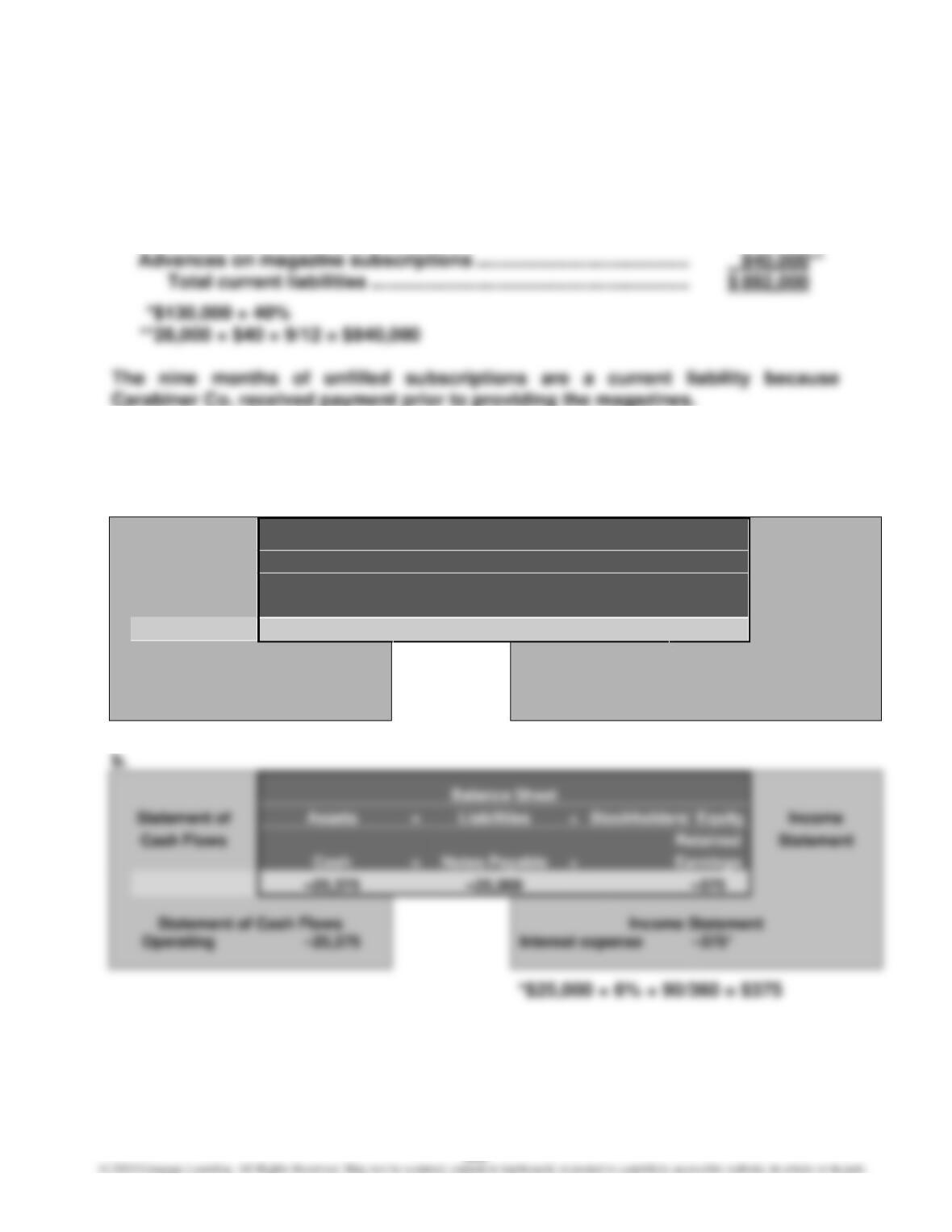
Current liabilities as of March 31, 20Y5:
Federal income taxes payable ……………………………………………… $ 52,000*
E8–2
a.
Balance Sheet
Statement of
Assets
=
Liabilities
+
Stockholders’ Equity
Income
Cash Flows
Accounts
Notes
Statement
Payable
+
Payable
–25,000
25,000
Balance Sheet
Statement of
=
+
Stockholders’ Equity
Income
Cash Flows
Retained
Statement
=
+
Earnings
Operating
Interest expense
–375*
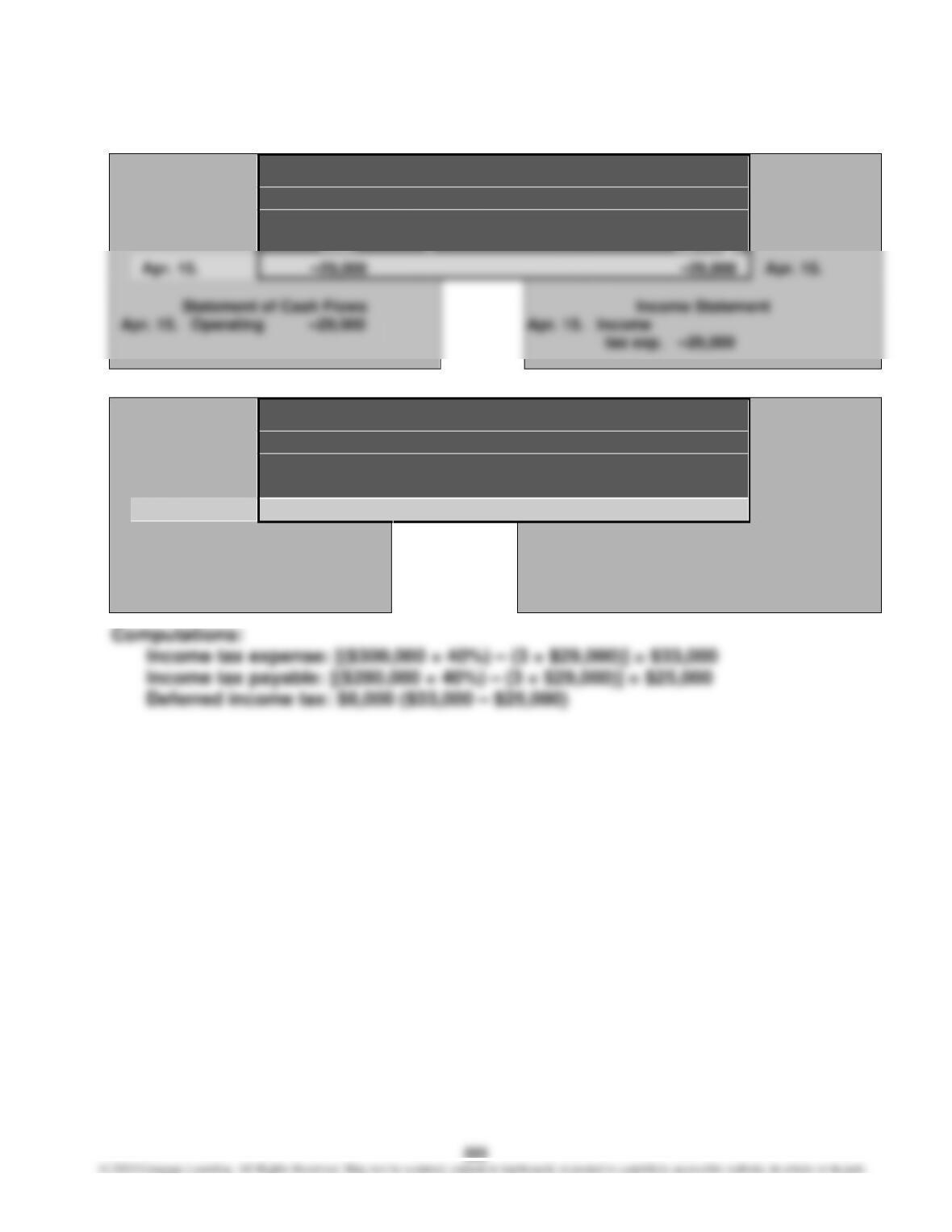
E8–3
Balance Sheet
Statement of
Assets
=
Liabilities
+
Stockholders’ Equity
Income
Cash Flows
Retained
Statement
=
Earnings
Apr. 15.
Apr. 15.
Apr. 15.
Operating
–29,000
Apr. 15.
Income
tax exp.
Balance Sheet
Statement of
Assets
=
Liabilities
+
Stockholders’ Equity
Income
Cash Flows
Income Tax
Deferred
Retained
Statement
Payable
+
Inc. Tax. Pay.
+
Earnings
Dec. 31.
25,000
8,000
–33,000
Dec. 31.
Income Statement
Dec. 31.
Income
tax exp.
–33,000
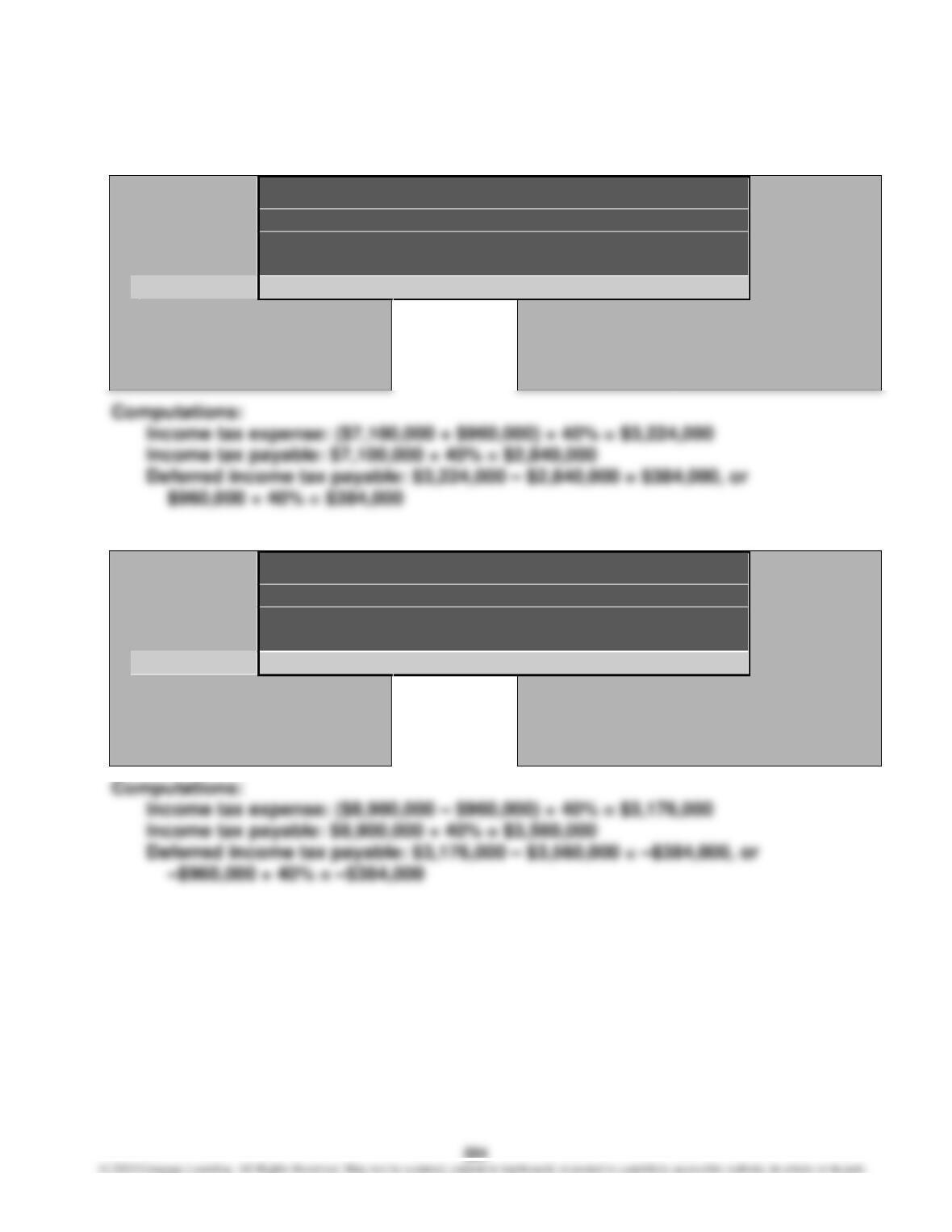
E8–4
20Y7
Balance Sheet
Statement of
Assets
=
Liabilities
+
Stockholders’ Equity
Income
Cash Flows
Income Tax
Deferred
Retained
Statement
Payable
+
Inc. Tax. Pay.
+
Earnings
Dec. 31.
2,840,000
384,000
–3,224,000
Dec. 31.
Income Statement
Dec. 31.
Income
tax exp.
–3,224,000
20Y8
Balance Sheet
Statement of
Assets
=
Liabilities
+
Stockholders’ Equity
Income
Cash Flows
Income Tax
Deferred
Retained
Statement
Payable
+
Inc. Tax. Pay.
+
Earnings
Dec. 31.
3,560,000
–384,000
–3,176,000
Dec. 31.
Income Statement
Dec. 31.
Income
tax exp.
–3,176,000
225
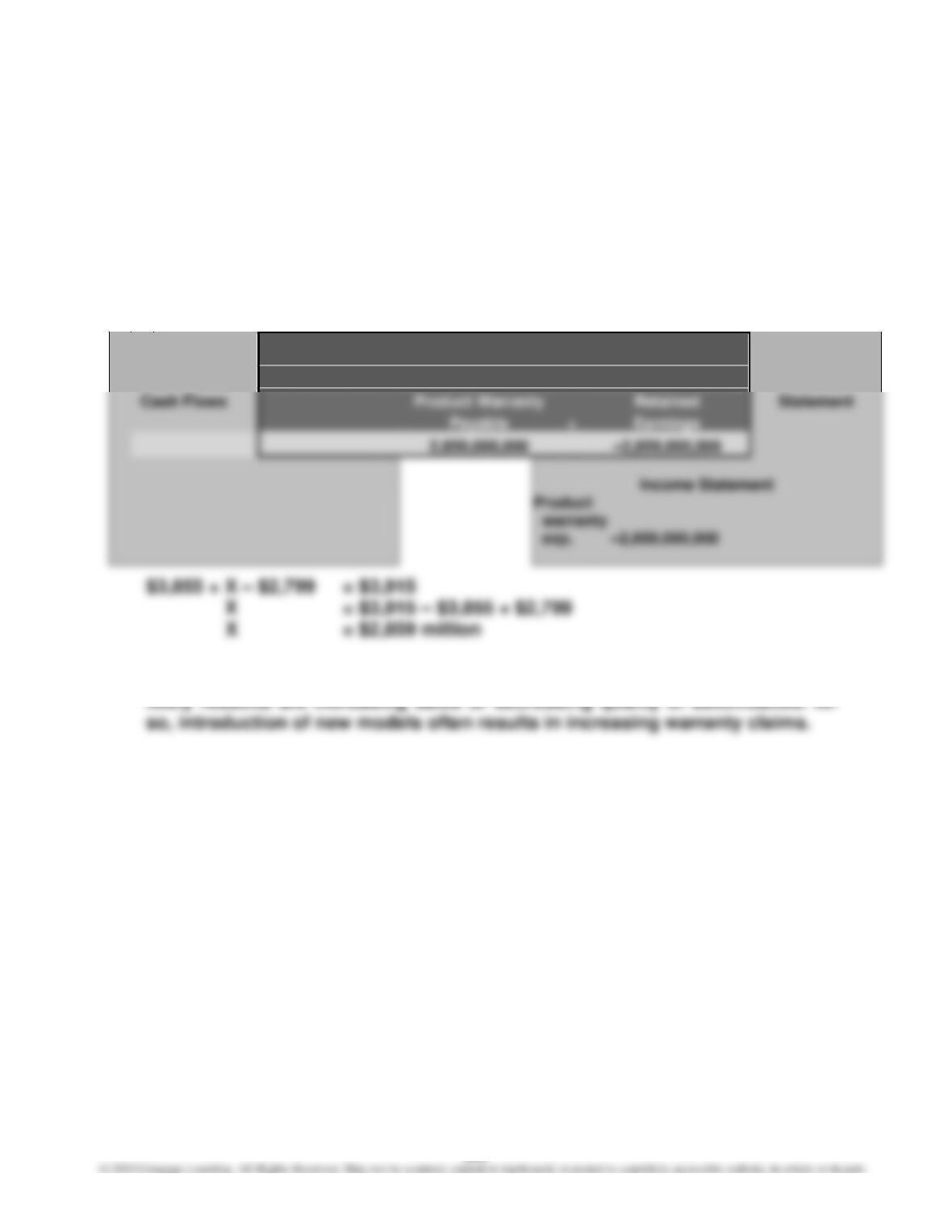
E8–5
a. $18,000 ($450,000 × 4%)
b. Product Warranty Payable and Parts Inventory
E8–6
a.
Balance Sheet
Statement of
Assets
=
Liabilities
+
Stockholders’ Equity
Income
Statement
+
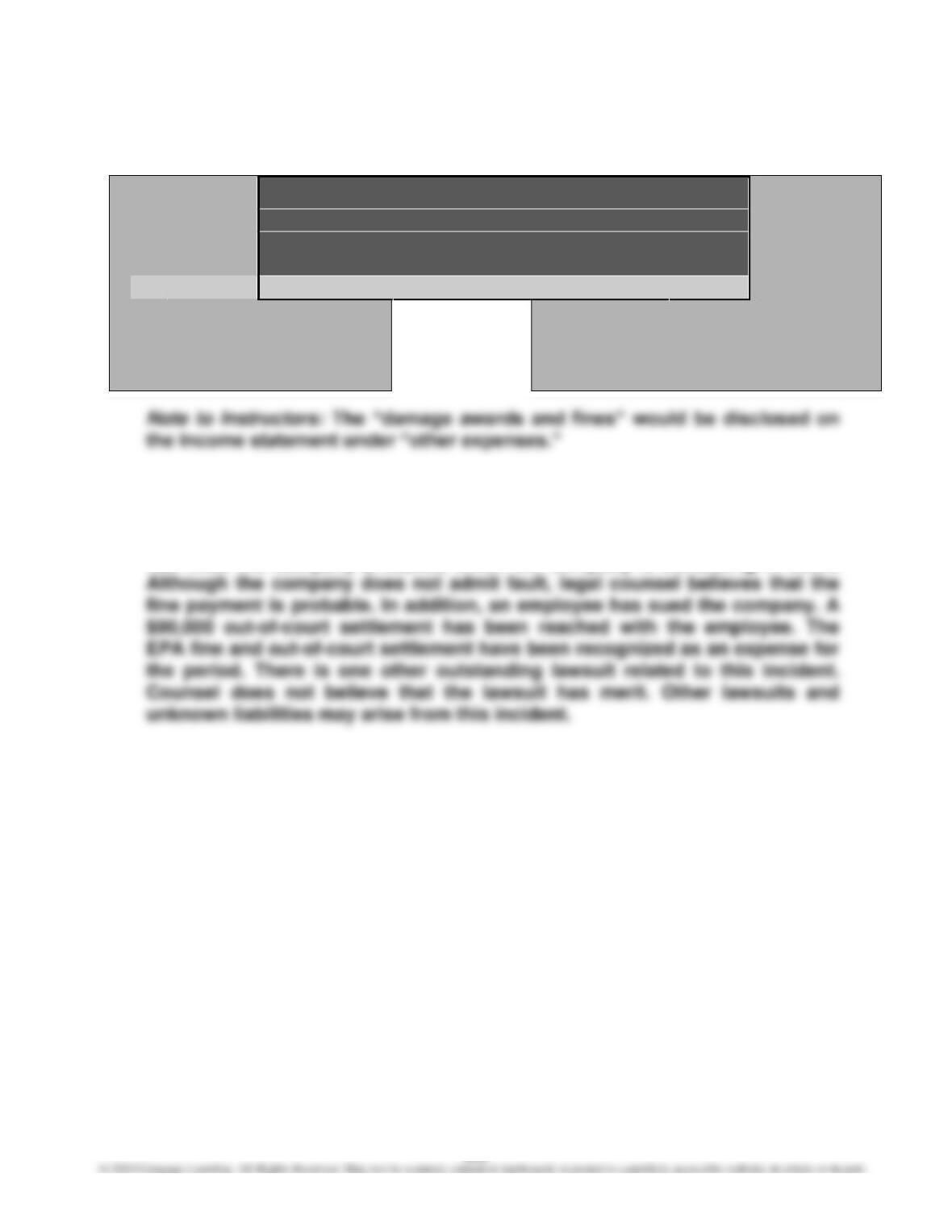
b. The liability may have increased for a number of possible reasons. The most
226
E8–7
a.
Balance Sheet
Statement of
Assets
=
Liabilities
+
Stockholders’ Equity
Income
Cash Flows
EPA Fines
Litigation
Retained
Statement
Payable
+
Claims Pay.
+
Earnings
750,000
90,000
–840,000
Income Statement
Damage awards
and fines exp.
–840,000
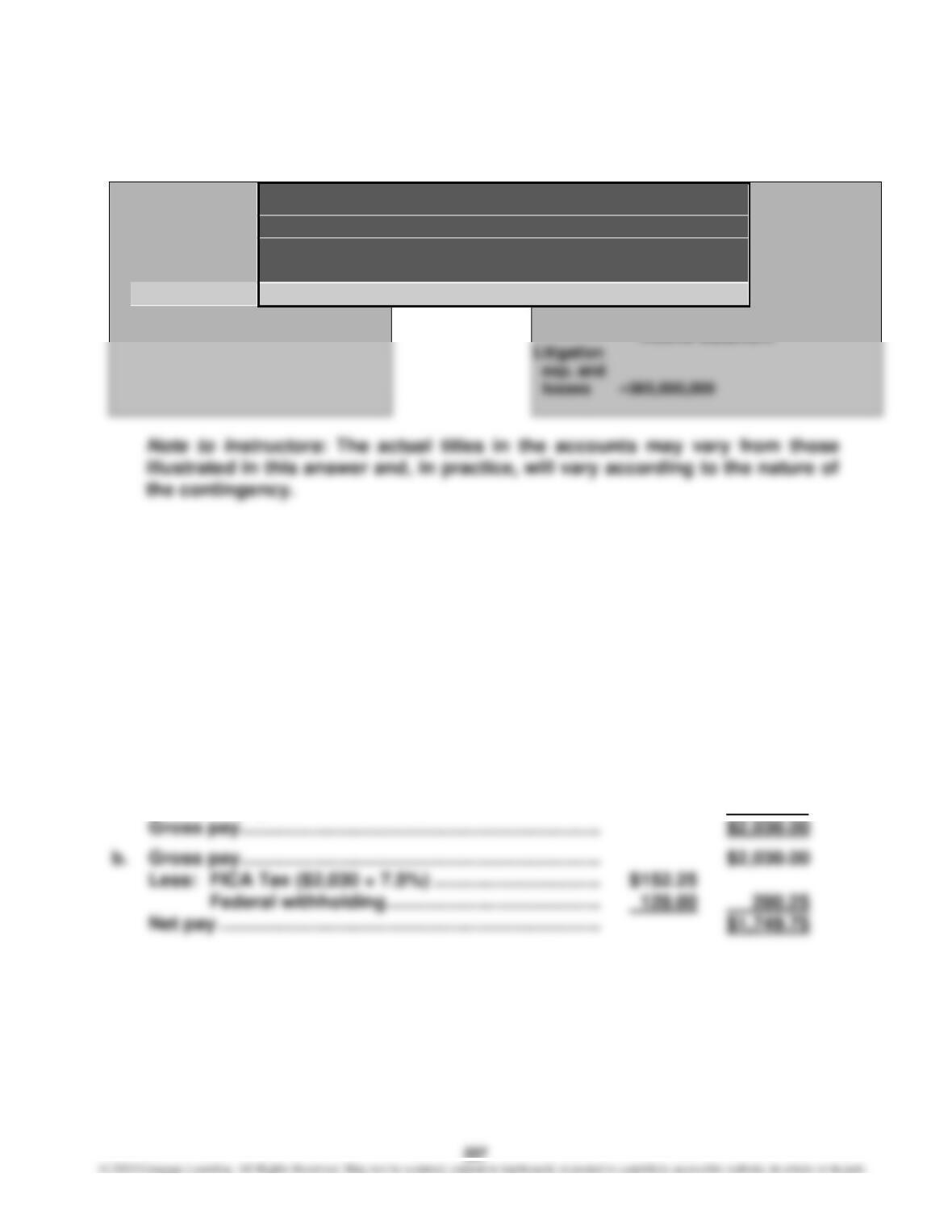
b. The company experienced a hazardous materials spill at one of its plants
during the previous period. This spill has resulted in a number of lawsuits to
which the company is a party. The Environmental Protection Agency (EPA)
has fined the company $750,000, which the company is contesting in court.
E8–8
a. The adjustment to accrue litigation contingency:
Balance Sheet
Statement of
Assets
=
Liabilities
+
Stockholders’ Equity
Income
Cash Flows
Contingent Product
Retained
Statement
& Tort Claims Pay.
+
Earnings
365,000,000
–365,000,000
Income Statement
b. A liability must be recognized if the contingency is both estimable and proba-
ble. The note makes it clear that the claims have been ongoing across thou-
sands of cases. This means it is possible to reasonably estimate the losses
from the historical litigation experience. That is, the average loss per case
could be determined and applied to the outstanding cases. In addition, a por-
tion of the claim losses are known to be probable, again based upon past
experience.
E8–9
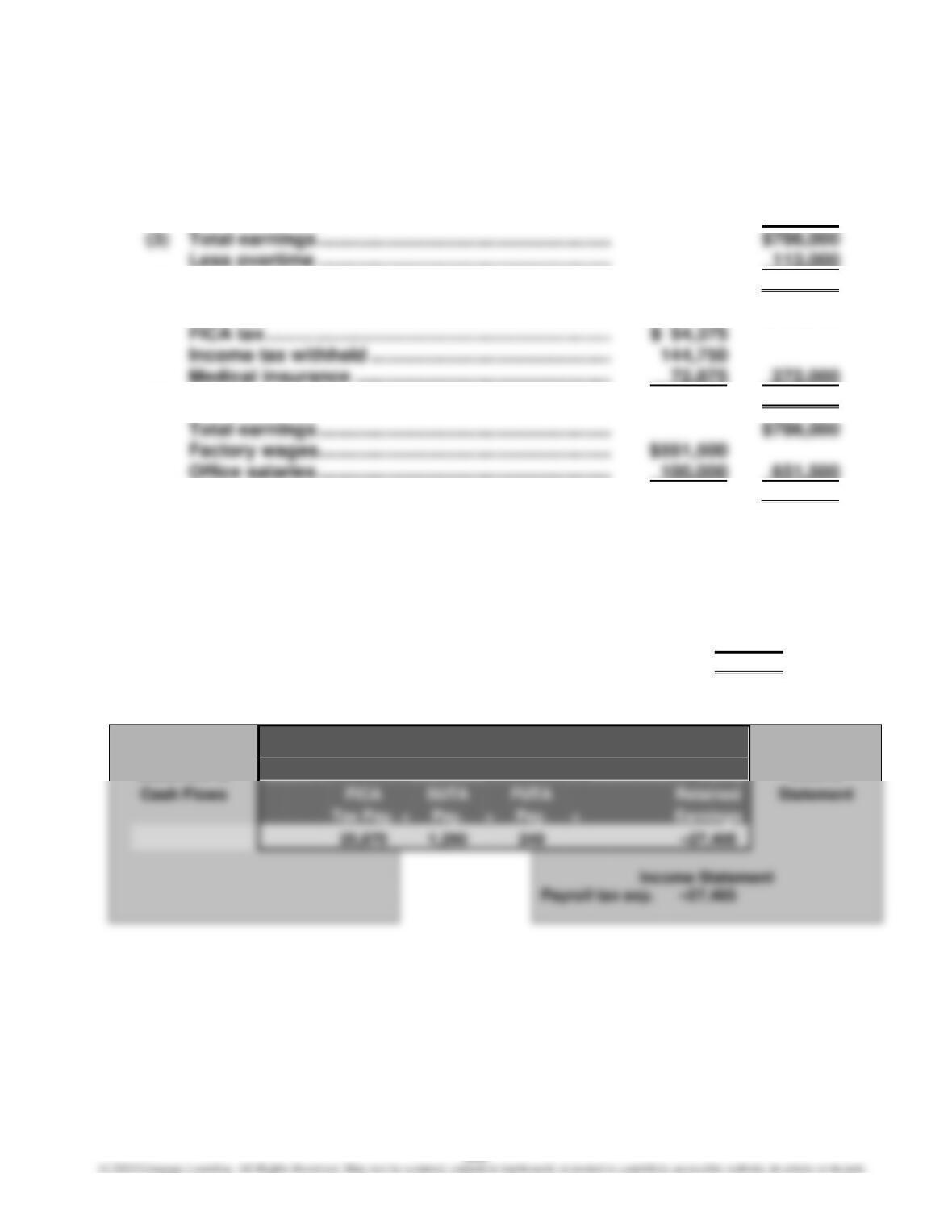
a. Regular pay (40 hrs. × $35) ………………………………….. $1,400.00
Overtime pay (12 hrs. × $52.50)……………………………. 630.00
228
E8–10
Summary: (1) $673,000; (3) $786,000; (7) $22,750; (11) $134,500
Net amount paid ……………………………………………. $491,250
Total deductions ……………………………………………. 294,750
(1) Regular …………………………………………………………. $673,000
Total deductions ……………………………………………. $294,750
(7) Union dues ……………………………………………………. $ 22,750
(11) Sales salaries ………………………………………………… $134,500
E8–11
a. FICA tax (7.5% × $345,000) ……………………………………………… $ 25,875
State unemployment (4.3% × $30,000) ……………………………… 1,290
Federal unemployment (0.8% × $30,000) ………………………….. 240
$ 27,405
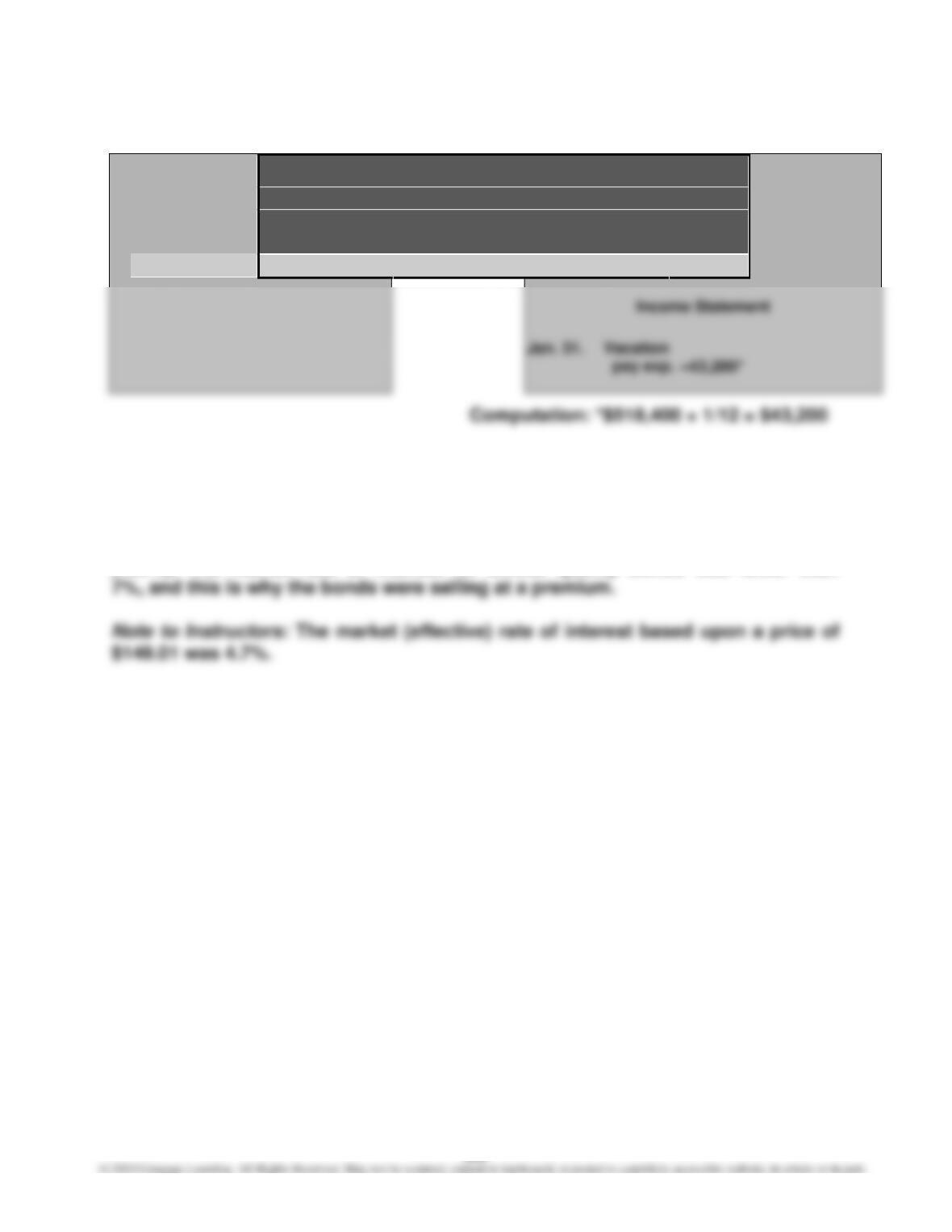
b.
Balance Sheet
Statement of
Assets
=
Liabilities
+
Stockholders’ Equity
Income
Statement
+
+
+
229
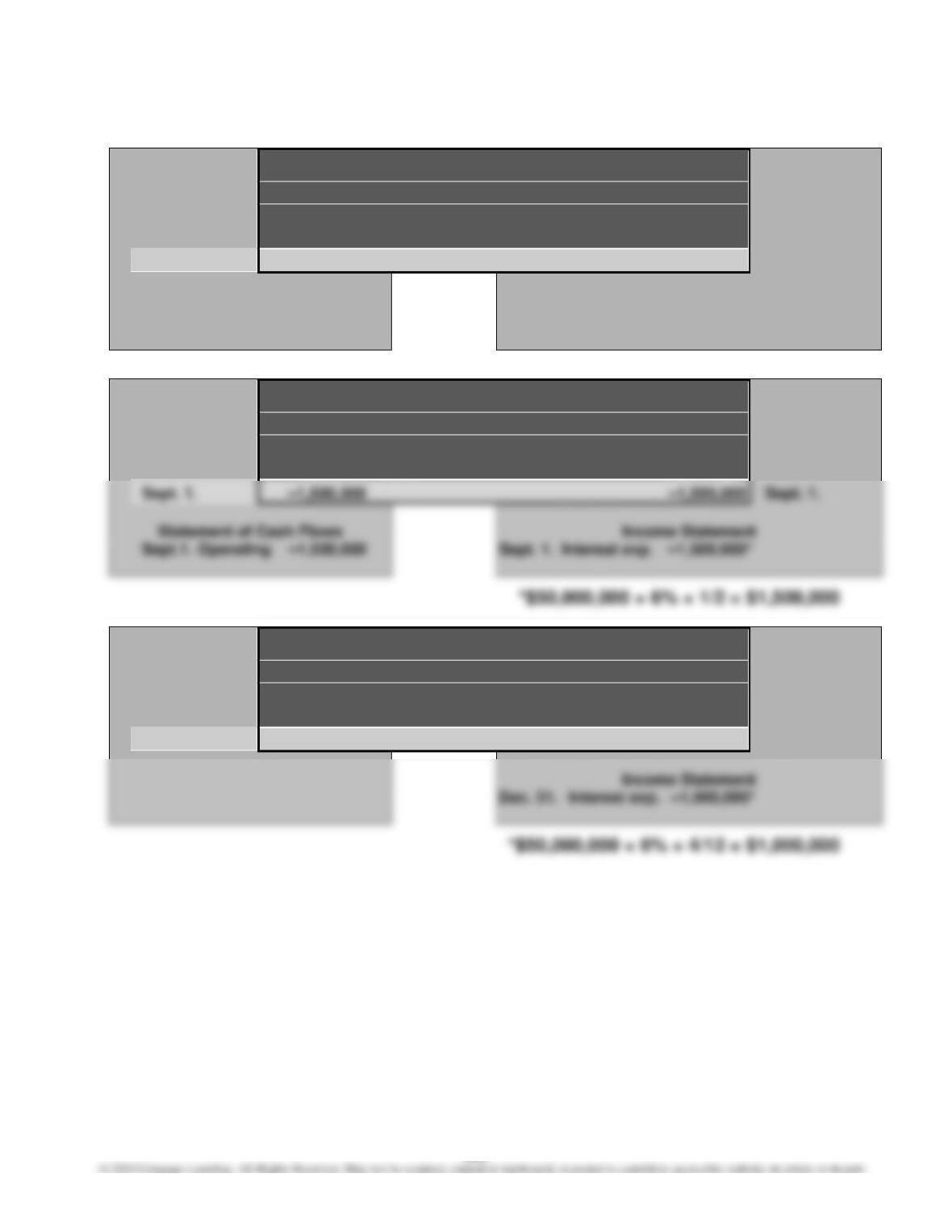
E8–12
Balance Sheet
Statement of
Assets
=
Liabilities
+
Stockholders’ Equity
Income
Cash Flows
Vacation Pay
Retained
Statement
Payable
+
Earnings
Jan. 31.
43,200
–43,200
Jan. 31.
E8–13
The bonds were selling at a premium. This is indicated by the selling price of
149.01, which is stated as a percentage of face amount and is more than par
(100%). The market rate of interest for similar quality bonds was lower than
230
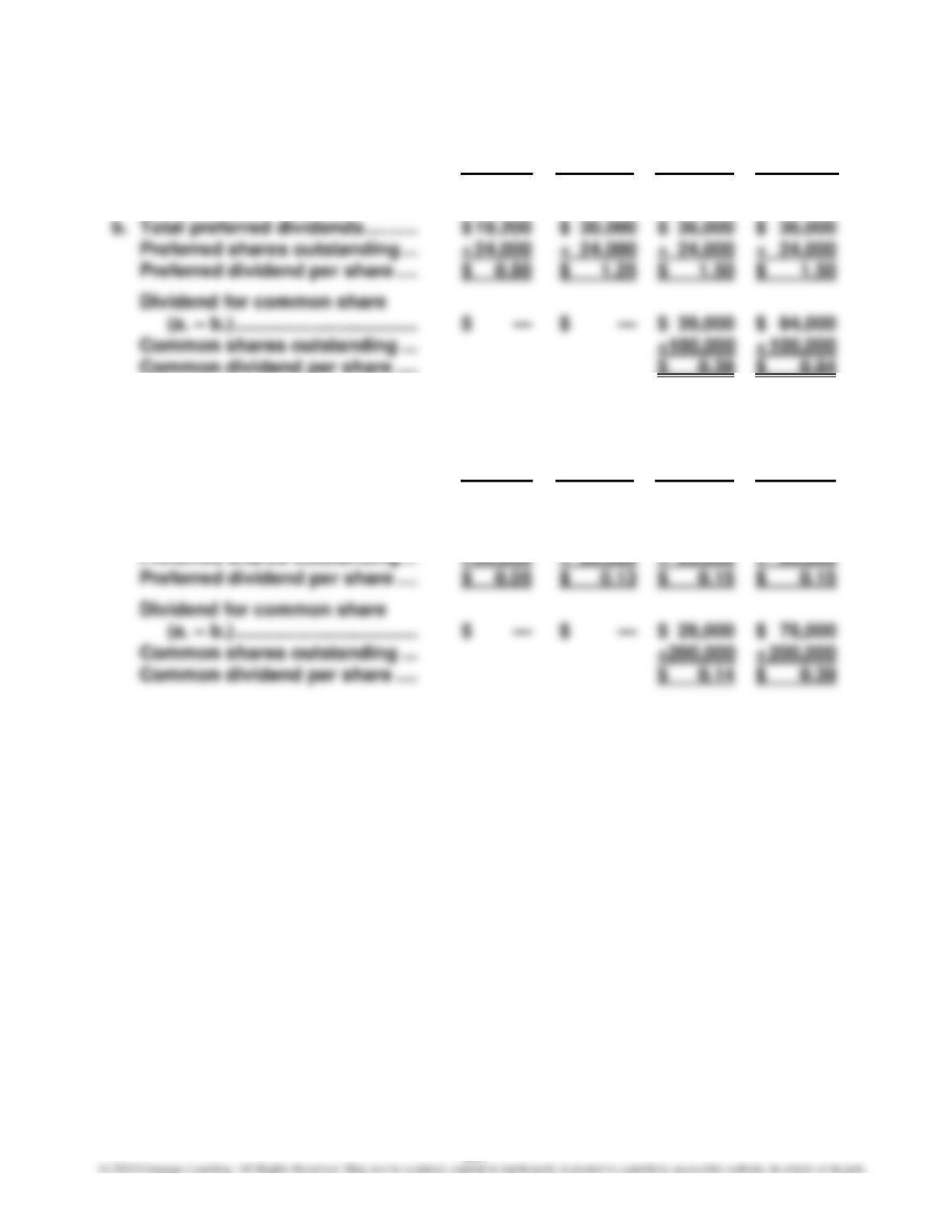
E8–14
Balance Sheet
Statement of
Assets
=
Liabilities
+
Stockholders’ Equity
Income
Cash Flows
Statement
Cash
=
Bonds Payable
Mar. 1.
50,000,000
50,000,000
Statement of Cash Flows
Mar. 1.
Financing
50,000,000
Balance Sheet
Statement of
Assets
=
Liabilities
+
Stockholders’ Equity
Income
Cash Flows
Retained
Statement
Cash
=
Earnings
–1,500,000
–1,500,000
Sept. 1.
Sept.1.
Operating
Sept. 1.
Interest exp.
Balance Sheet
Statement of
Assets
=
Liabilities
+
Stockholders’ Equity
Income
Cash Flows
Retained
Statement
Interest Payable
+
Earnings
Dec. 31.
1,000,000
–1,000,000
Dec. 31.
Dec. 31.
Interest exp.
–1,000,000*
231
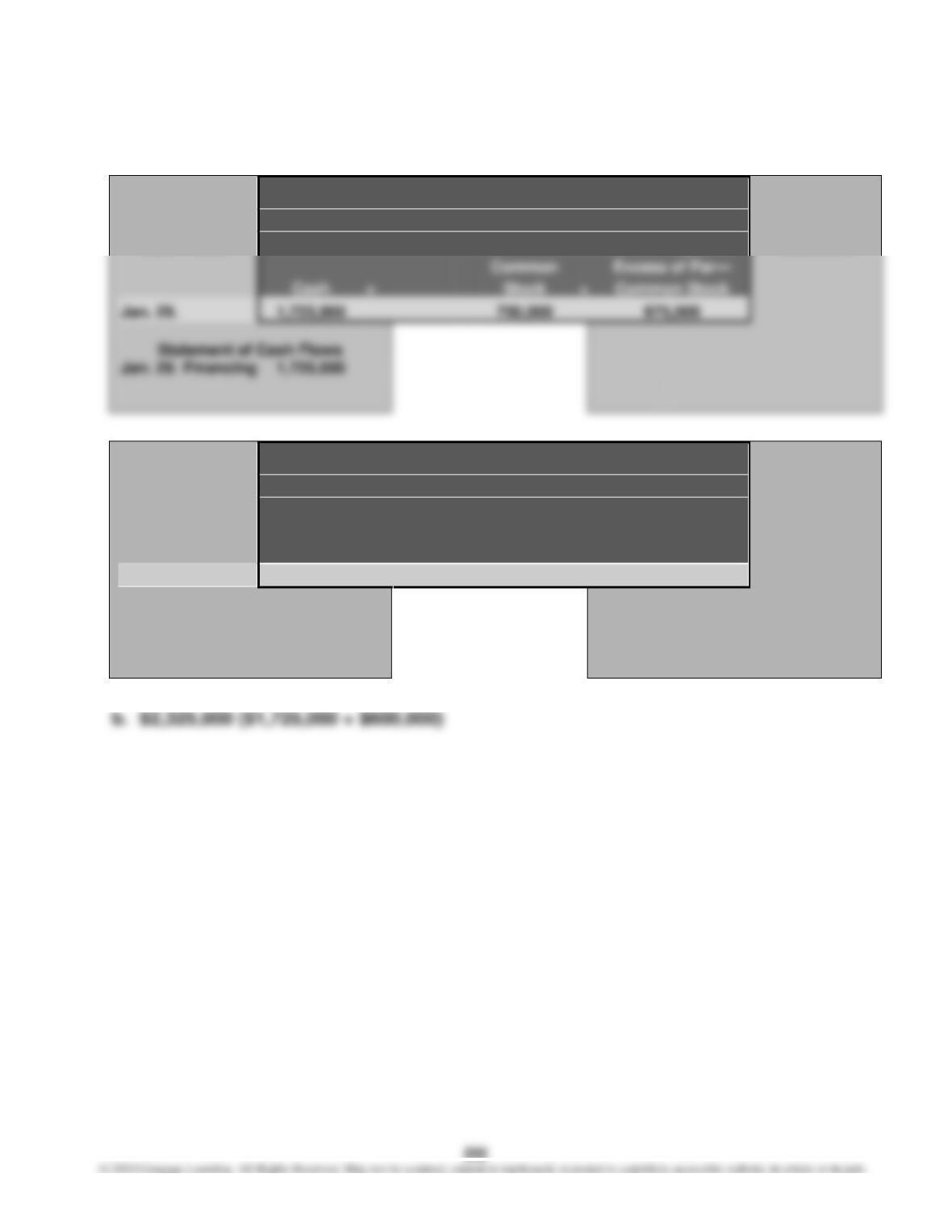
E8–15
1st Year 2nd Year 3rd Year 4th Year
a. Total dividend declared …………. $ 19,200 $ 30,000 $ 75,000 $ 120,000
E8–16
1st Year 2nd Year 3rd Year 4th Year
a. Total dividend declared …………. $ 4,000 $ 10,400 $ 40,000 $ 90,000
b. Total preferred dividends ………. $ 4,000 $ 10,400 $ 12,000 $ 12,000
E8–17
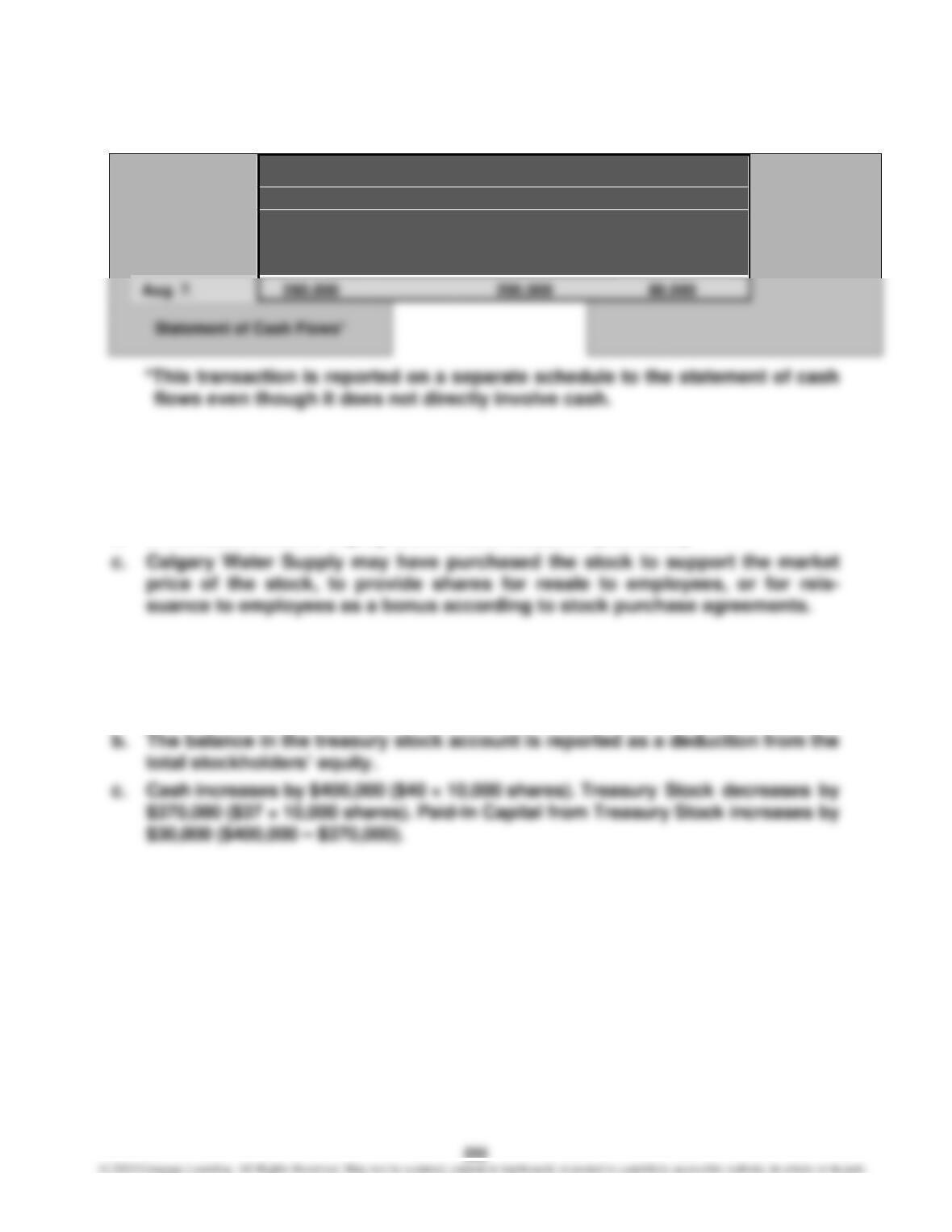
a.
Balance Sheet
Statement of
Assets
=
Liabilities
+
Stockholders’ Equity
Income
Cash Flows
Paid-In Capital in
Statement
Cash
=
Common
Stock
+
Excess of Par—
Jan. 29.
750,000
975,000
Statement of Cash Flows
Financing
Balance Sheet
Statement of
Assets
=
Liabilities
+
Stockholders’ Equity
Income
Cash Flows
Paid-In Capital in
Statement
Cash
=
Preferred
Stock
+
Excess of Par—
Preferred Stock
May 31.
600,000
400,000
200,000
Statement of Cash Flows
May 31.
Financing
600,000
E8–18
Balance Sheet
Statement of
Assets
=
Liabilities
+
Stockholders’ Equity
Income
Cash Flows
Common
Paid-In Capital in
Statement
Land*
=
Stock
+
Excess of Par—
Common Stock
E8–19
a. $880,000 ($44 × 20,000 shares)
b. In the Stockholders’ Equity section as a reduction (decrease).
E8–20
a. $1,036,000 ($37 × 28,000 shares)
234
E8–21
a. $990,000 ($33 × 30,000 shares)
b. Stockholders’ Equity section as a reduction (decrease)
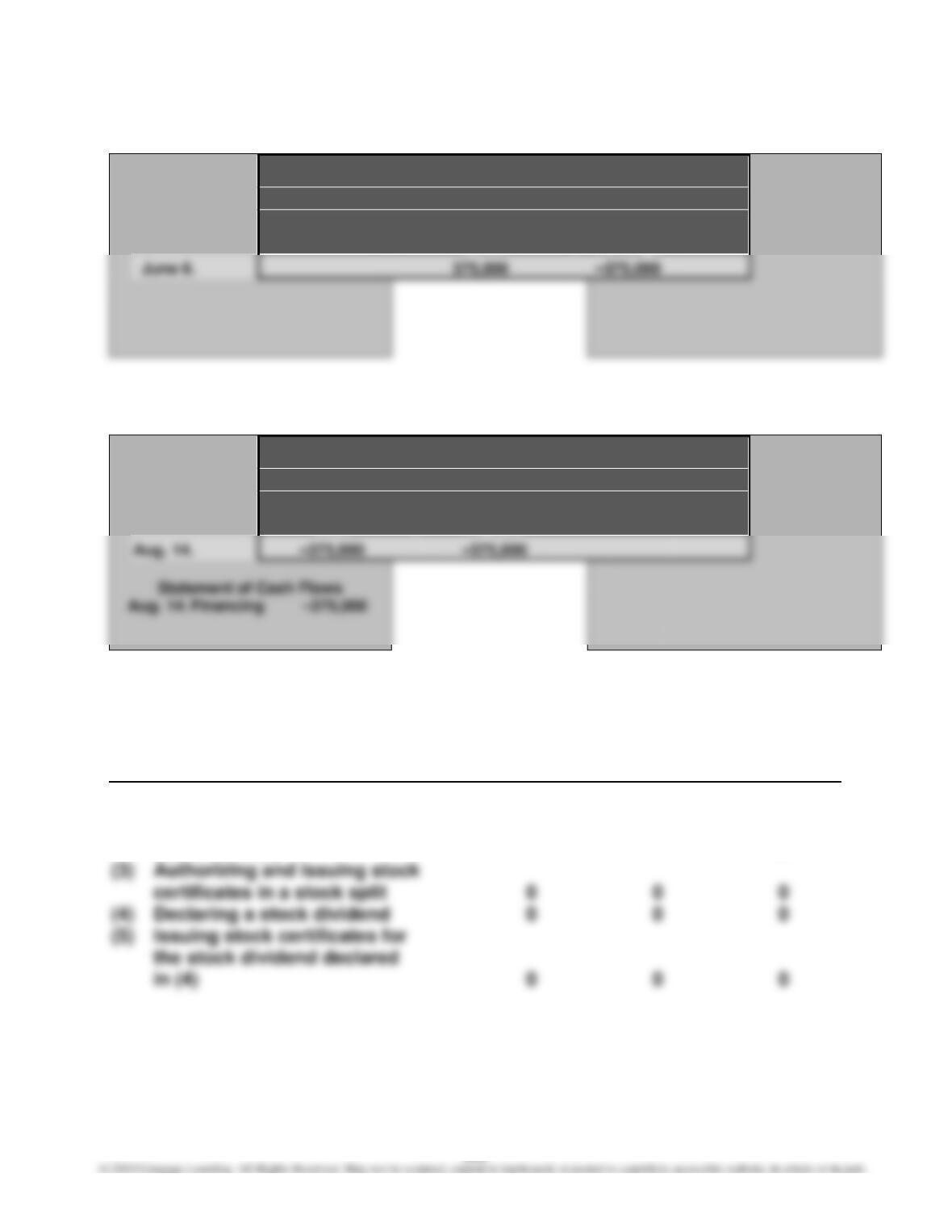
d.
Balance Sheet
Statement of
Assets
=
Liabilities
+
Stockholders’ Equity
Income
Cash Flows
Treasury
Paid-In Capital
Statement
Cash
=
Stock
+
from Treasury Stock
Jan. 25.
800,0001
660,0002
140,0003
Statement of Cash Flows
Jan. 25. Financing 800,000
235
E8–22
Balance Sheet
Statement of
Assets
=
Liabilities
+
Stockholders’ Equity
Income
Cash Flows
Cash Dividends
Retained
Statement
Payable
+
Earnings
June 6.
July 15. No entry required.
Balance Sheet
Statement of
Assets
=
Liabilities
+
Stockholders’ Equity
Income
Cash Flows
Cash Dividends
Statement
Cash
=
Payable
Aug. 14.
Financing
E8–23
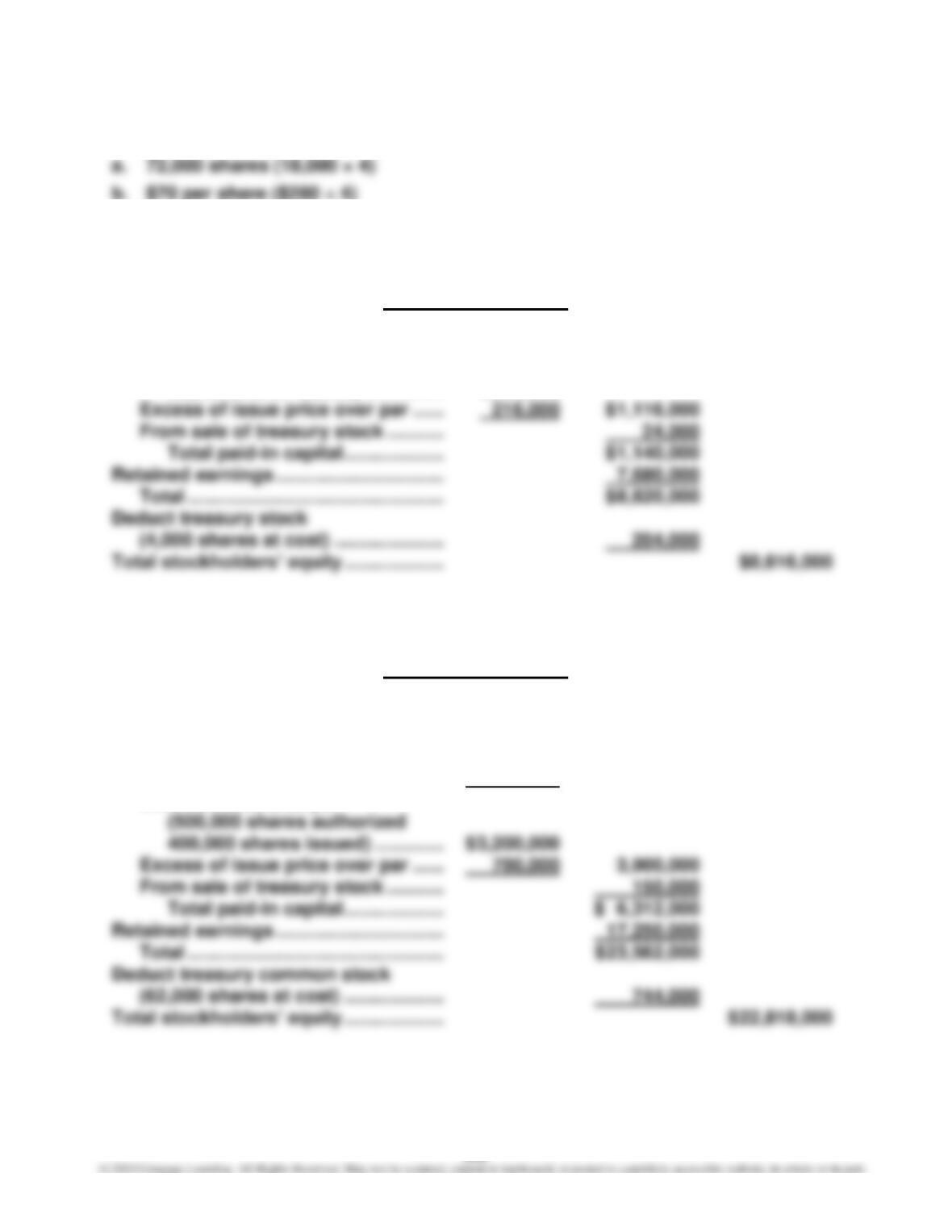
Stockholders’
Assets Liabilities Equity
(1) Declaring a cash dividend 0 + –
(2) Paying the cash dividend
declared in (1) – – 0
236
E8–24
E8–25
Stockholders’ Equity
Paid-in capital:
Common stock, $25 par
(50,000 shares authorized,
36,000 shares issued) …………… $ 900,000
E8–26
Stockholders’ Equity
Paid-in capital:
Preferred 2% stock, $80 par
(40,000 shares authorized,
26,000 shares issued) …………… $ 2,080,000
Excess of issue price over par …… 182,000 $ 2,262,000
Common stock, $8 par
237
E8–27
BSF Co.
a. Earnings before bond interest and income tax ……….. $ 1,000,000
Bond interest ($7,500,000 × 8%) …………………………….. 600,000
Balance ……………………………………………………….……….. $ 400,000
Earnings per share on common stock (150,000 shares) $ 0.60
b. Earnings before bond interest and income tax ……….. $ 3,000,000
Bond interest ($7,500,000 × 8%) …………………………….. 600,000
Balance ……………………………………………………….……….. $ 2,400,000
Income tax (40%) ………………………………………………….. 960,000
Net income …………………………………………………………… $ 1,440,000
Dividends on preferred stock ($7,500,000 × 2%) ……… 150,000
Earnings available for common stock ……………………. $ 1,290,000
Earnings per share on common stock (150,000 shares) $ 8.60
E8–28
Factors other than earnings per share that should be considered in evaluating
financing plans include: bonds represent a fixed annual interest requirement,