Financial Accounting, 10/e 8-41
P8–6.
Req. 1
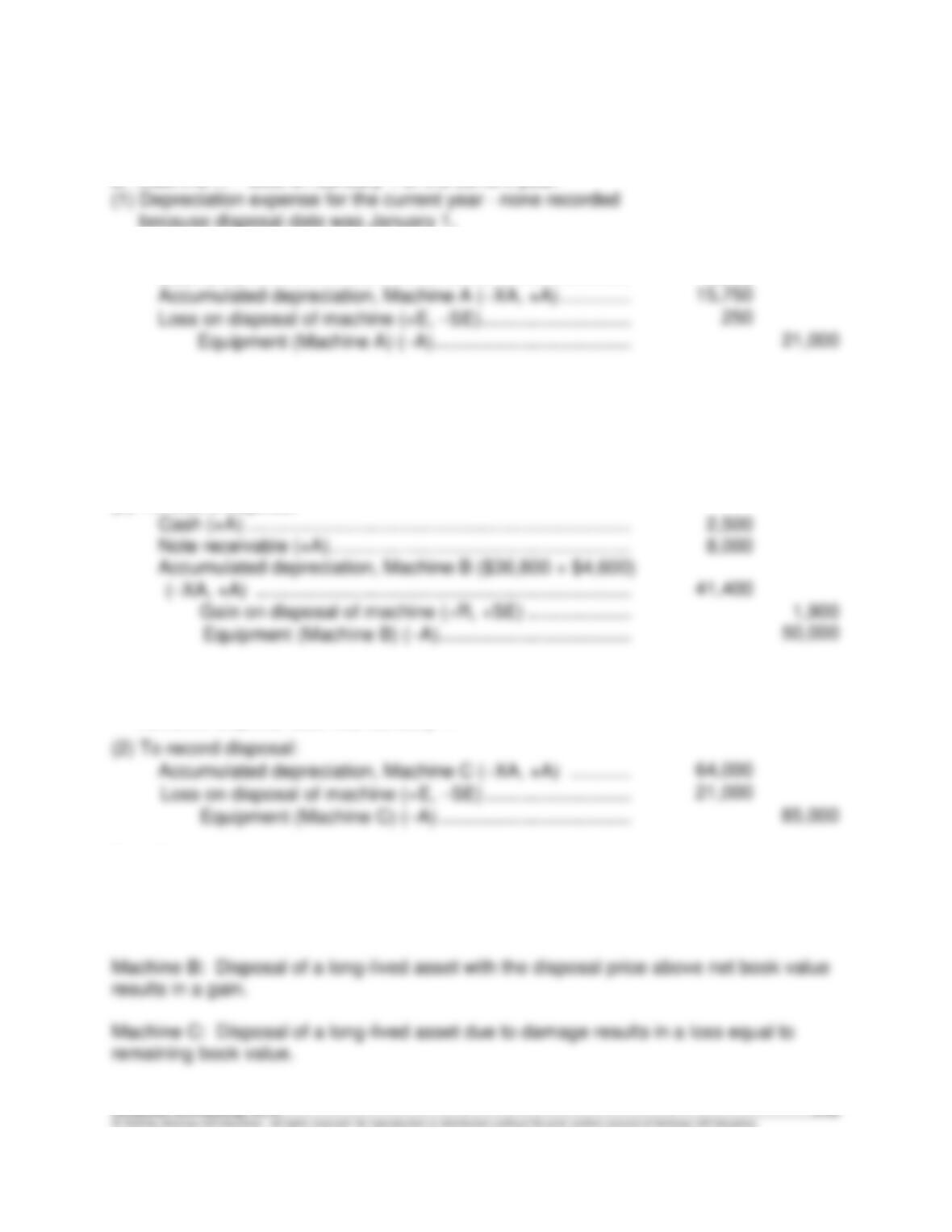
a. Machine A – Sold on January 1 of the current year:
(1)
Depreciation expense for the current year – none recorded
because disposal date was January 1.
(2)
To record disposal:
Cash (+A) ………………………………………………………………..
5,000
Accumulated depreciation, Machine A (−XA, +A) …………..
b. Machine B – Sold on December 31 of the current year:
(1)
To record depreciation expense for the current year:
Depreciation expense (+E, −SE) …………………………………
4,600
Accumulated depreciation, Machine B (+XA, −A) …….
4,600
($50,000 – $4,000) 10 years = $4,600.
(2)
To record disposal:
Cash (+A) ………………………………………………………………..
Note receivable (+A)………………………………………………….
8,000
c. Machine C – Disposal on January 1 of the current year:
(1)
Depreciation expense for the current year – none recorded
because disposal date was January 1.
(2)
To record disposal:
Accumulated depreciation, Machine C (−XA, +A) …………
Equipment (Machine C) (−A) ……………………………….
Req. 2
Machine A: Disposal of a long-lived asset with the disposal price below net book value
results in a loss.
P8–7.
(Dollar amounts in millions)
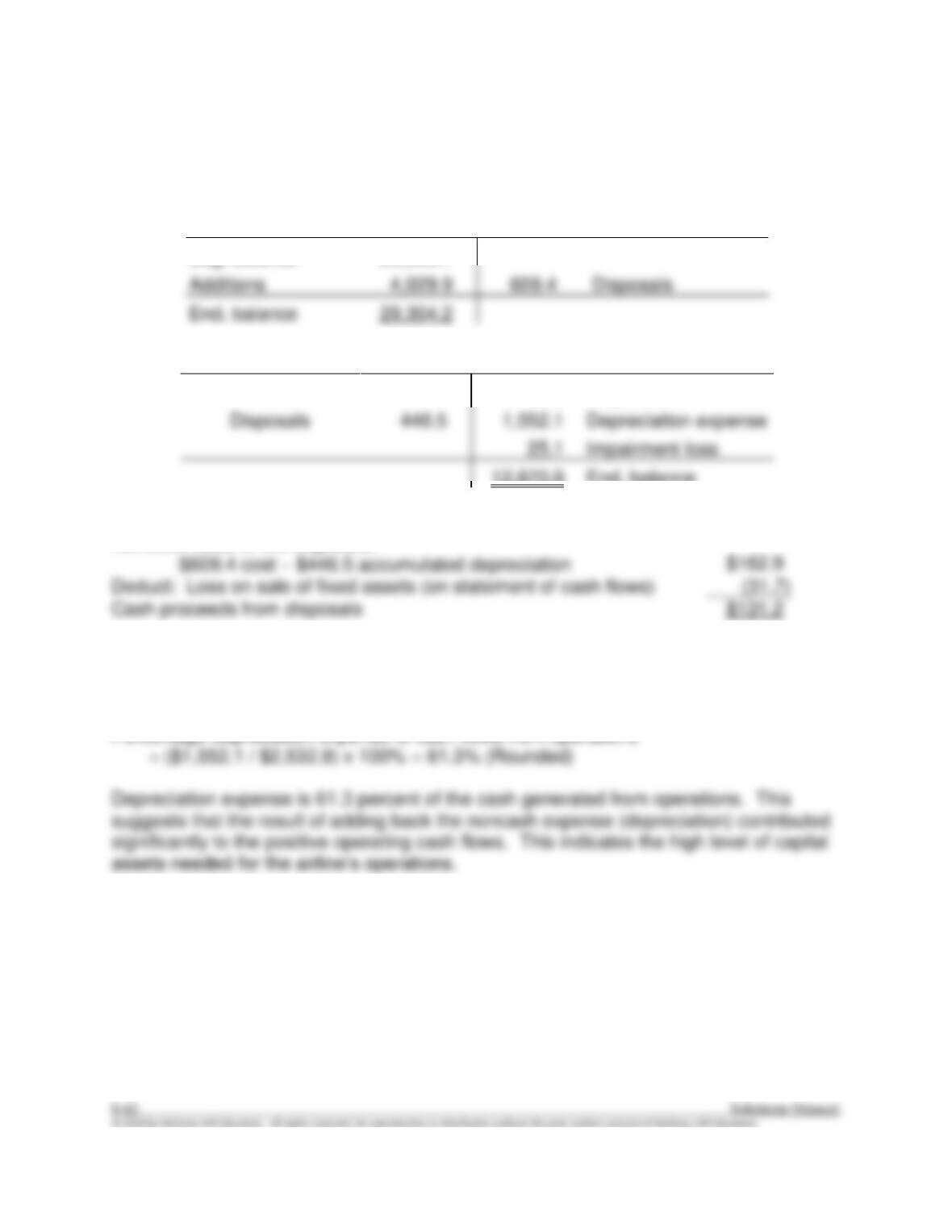
Req. 1
Property, Plant, and Equipment
Beg. balance
25,883.7
Additions
Disposals
End. balance
29,304.2
Accumulated Depreciation
11,740.2
Beg. balance
Depreciation expense
Impairment loss
12,870.9
End. balance
Req. 2
Deduct: Loss on sale of fixed assets (on statement of cash flows)
Cash proceeds from disposals
Net book value of the disposals:
Req. 3
Percentage depreciation expense to cash flows from operations
Financial Accounting, 10/e 8-43
P8–8.
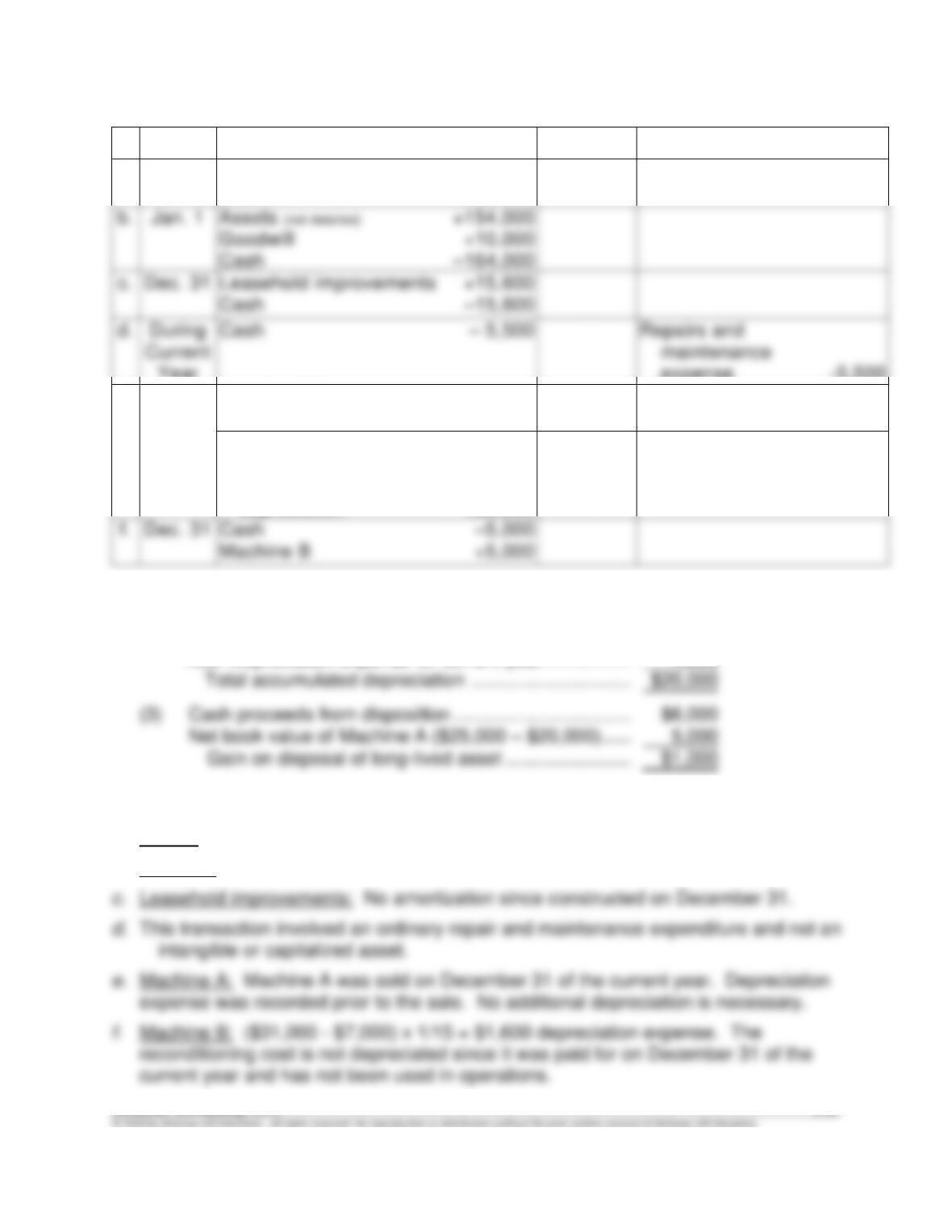
Req. 1
Date
Assets
Liabilities
Stockholders’ Equity
a.
Jan. 1
Patent
Cash
+28,000
–28,000
Assets (not detailed)
Dec. 31
Leasehold improvements
Year
expense
-5,500
e.
Dec. 31
Accumulated
depreciation(1)
– 4,000
Depreciation
expense
–4,000
Cash
Machine A
Accumulated
depreciation(2)
+6,000
–25,000
+20,000
Gain on disposal of
long–lived asset(3)
+1,000
Dec. 31
Cash
(1)
($25,000 – $5,000) x 1/5 = $4,000
(2)
Accumulated depreciation to Dec. 31 of prior year ……
$16,000
Add: Depreciation expense for current year ……………..
4,000
Total accumulated depreciation ………………………….
$20,000
(3)
5,000
Req. 2 December 31 depreciation and amortization for the current year:
a.
Patent: $28,000 7 years = $4,000 amortization expense.
b.
Goodwill: No amortization due to indefinite life.
c.
Leasehold improvements: No amortization since constructed on December 31.
expense was recorded prior to the sale. No additional depreciation is necessary.
P8–9.
Req. 1
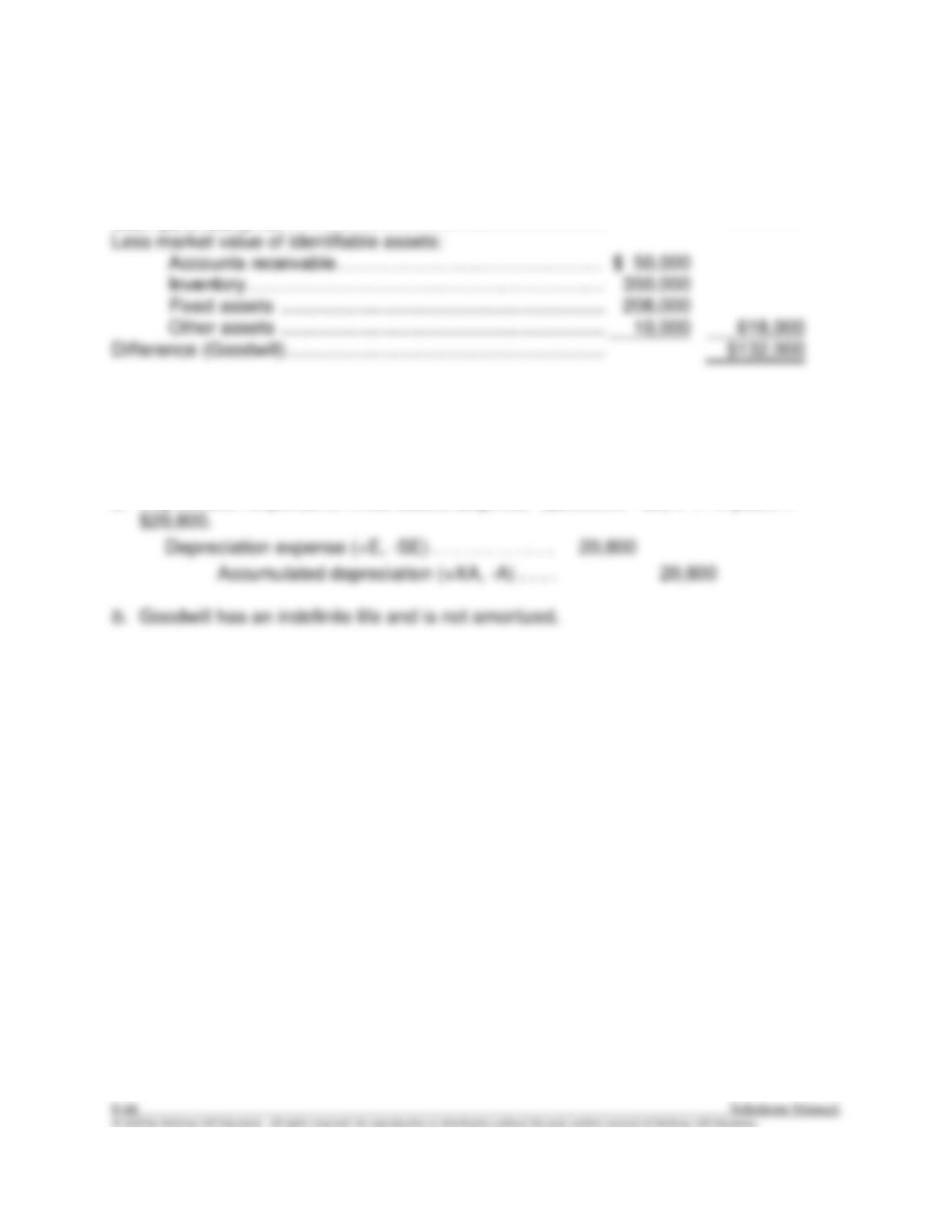
January 5 of the current year:
Cash purchase price …………………………………………………….
$750,000
Less market value of identifiable assets:
Accounts receivable…………………………………….
Inventory………………………………………………….
Fixed assets ……………………………………………………..
Other assets ……………………………………………………..
Difference (Goodwill) …………………………………………………….
Req. 2
December 31 of the current year:
a.
Accumulated depreciation (+XA, -A) . . . . 20,800
Goodwill has an indefinite life and is not amortized.
Depreciation expense on fixed assets acquired: ($208,000 – $0) x 1/10 years =
P8–10.
Req. 1
a.
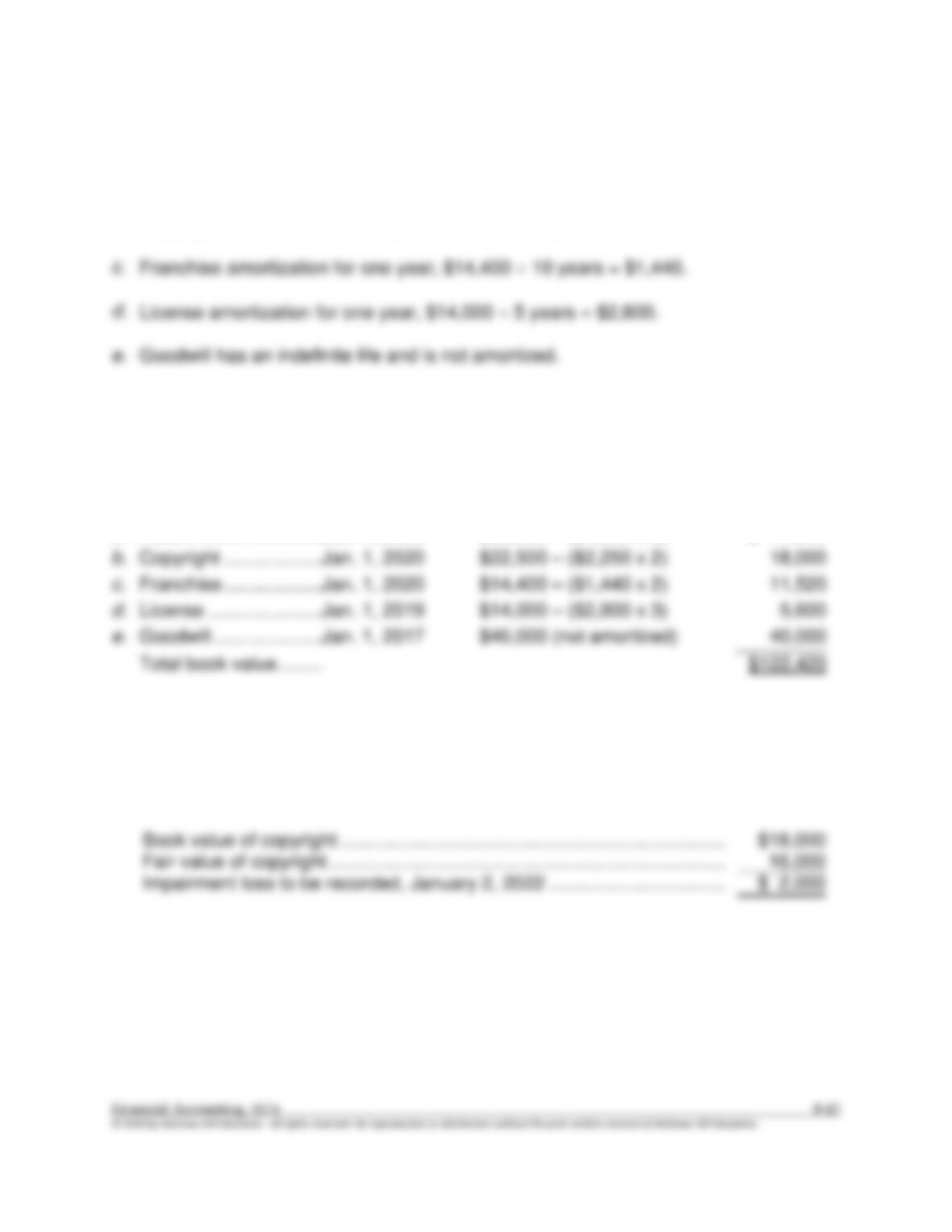
Patent amortization for one year, $55,900 13 years = $4,300.
b.
Copyright amortization for one year, $22,500 10 years = $2,250.
Franchise amortization for one year, $14,400 10 years = $1,440.
d.
License amortization for one year, $14,000 5 years = $2,800.
Goodwill has an indefinite life and is not amortized.
Req. 2
Net Book Value on December 31, 2021:
Item
Date Acquired
Book Value
Computations
Book Value
Dec. 31, 2021
a.
Patent ……………………..
Jan. 1, 2020
$55,900 – ($4,300 x 2)
$ 47,300
b.
Copyright …………………
Jan. 1, 2020
c.
Franchise …………………
Jan. 1, 2020
d.
License ……………………
Jan. 1, 2019
e.
Goodwill …………………..
Jan. 1, 2017
$40,000 (not amortized)
Total book value………..
Req. 3
The book value of the copyright on January 2, 2022 ($18,000) exceeds the expected
future cash flows ($17,000). Therefore, the asset is impaired.
P8–11.
Req. 1
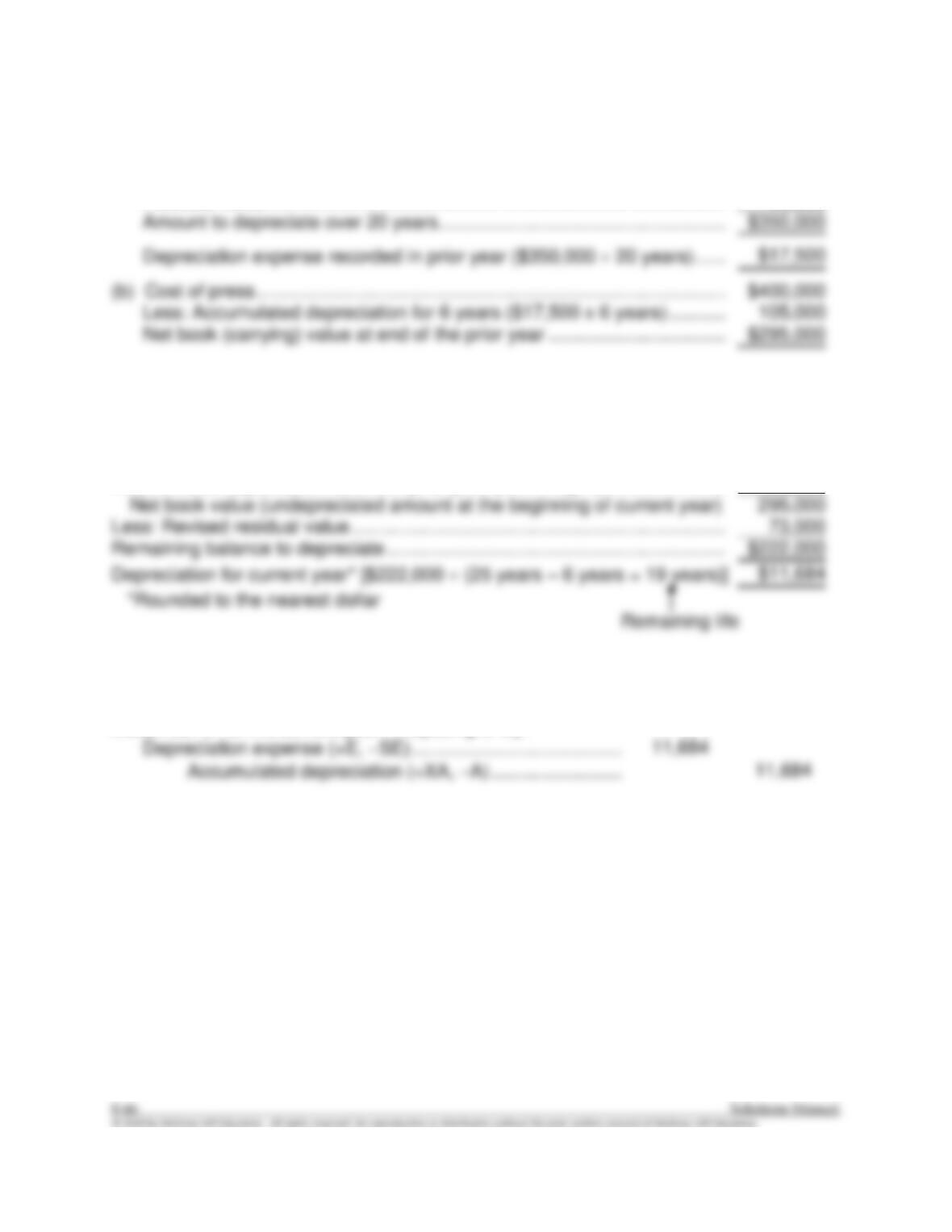
(a) Cost of press ………………………………………………………………………………
$400,000
Residual value …………………………………………………………………………….
50,000
Amount to depreciate over 20 years ……………………………………………….
$350,000
(b) Cost of press ………………………………………………………………………………
$400,000
Less: Accumulated depreciation for 6 years ($17,500 x 6 years) ………..
105,000
Net book (carrying) value at end of the prior year …………………………….
$295,000
Req. 2
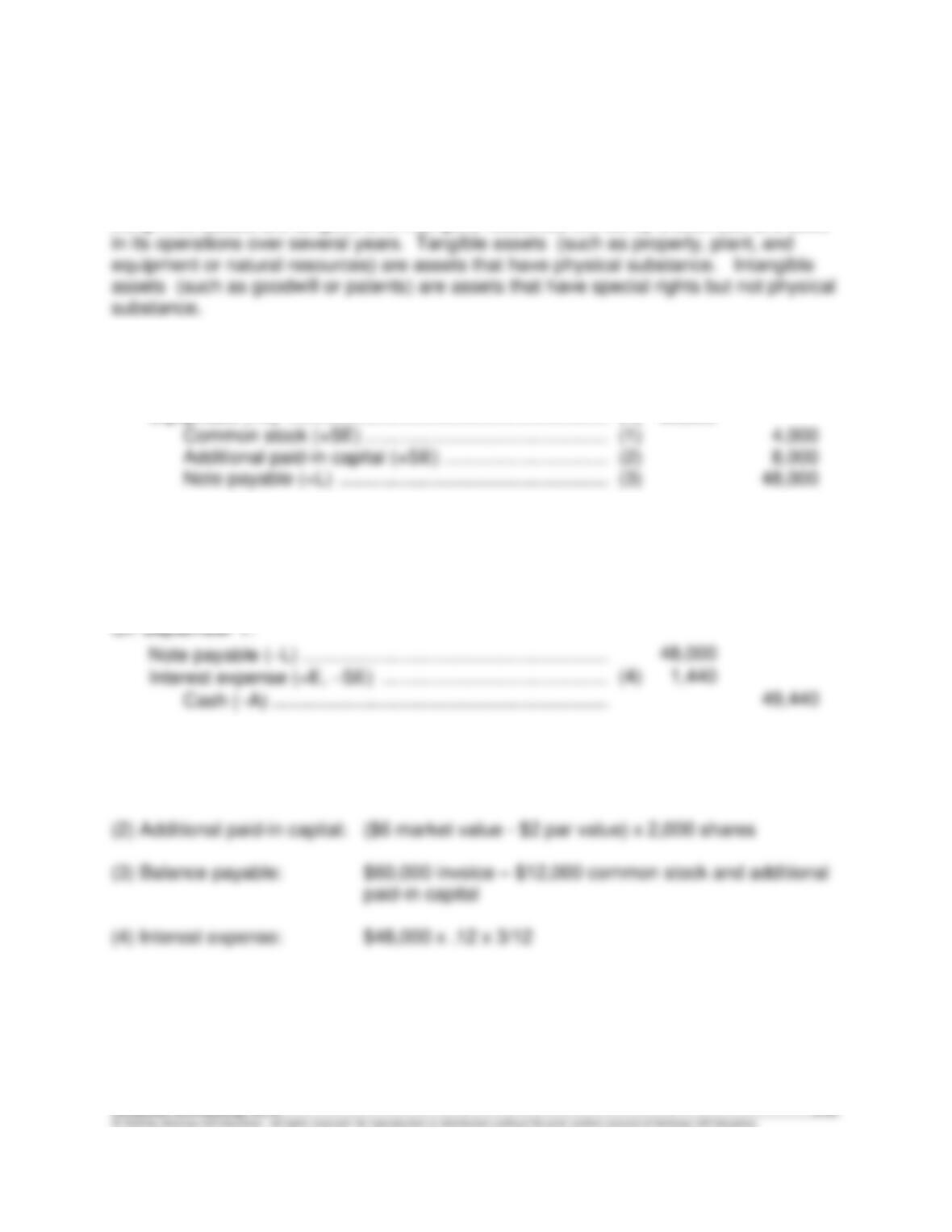
Cost of press ……………………………………………………….…………………………..
$400,000
Accumulated depreciation at end of prior year (from Req. 1) …………………..
105,000
Less: Revised residual value ………………………………………………………………
73,000
Remaining balance to depreciate ………………………………………………………..
$222,000
Req. 3
December 31 of the current year—Adjusting entry:
Financial Accounting, 10/e 8-47
ALTERNATE PROBLEMS
AP8–1.
Req. 1
Long-lived assets are tangible and intangible resources owned by a business and used
Req. 2
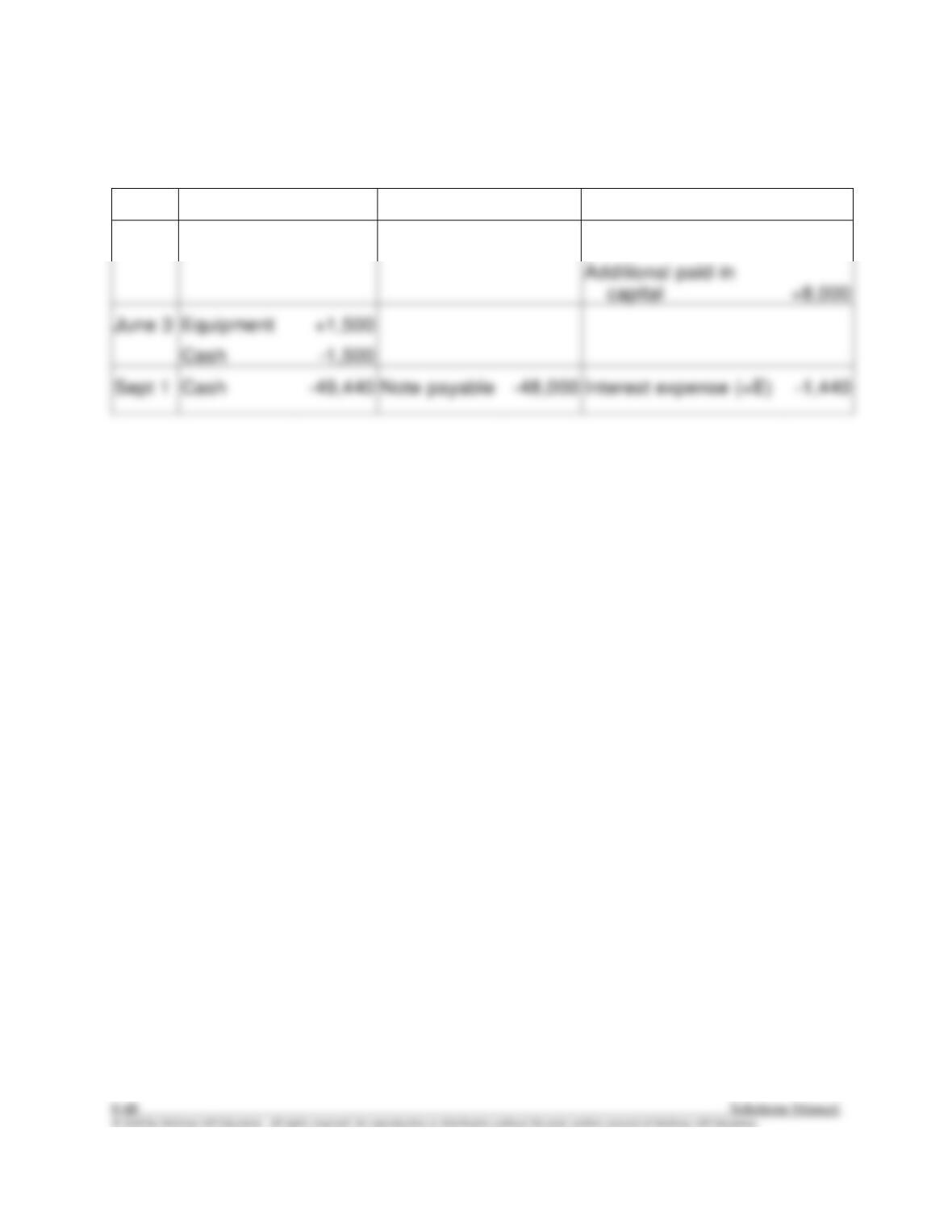
On June 1:
Equipment (+A) ……………………………………………………….
(1)
60,000
Common stock (+SE) ……………………………………………..
(1)
(2)
(3)
On June 3:
Equipment (+A) ……………………………………………………….
1,500
Cash (−A) ……………………………………………………….
1,500
Cash (−A) ……………………………………………………………..
Computations:
(1) Common stock: $2 par value x 2,000 shares
AP8–1. (continued)
Req. 3
Date
Assets
Liabilities
Stockholders’ Equity
June 1
Equipment
+60,000
Note payable
+48,000
Common stock
+4,000
Req. 4
Cost of the machinery was $61,500 and includes the invoice price plus installation
costs. Freight should not be included because it was paid by the vendor. The $1,440
interest is not a part of the cost of the machinery—it must be recorded as interest
expense because it is a cost of financing. Common stock is valued at $6 per share—
for accounting purposes, this amount is allocated between the common stock account
for the par value ($2 per share) and the additional paid-in capital account for the
remaining value ($4 per share in excess of par value).
Financial Accounting, 10/e 8-49
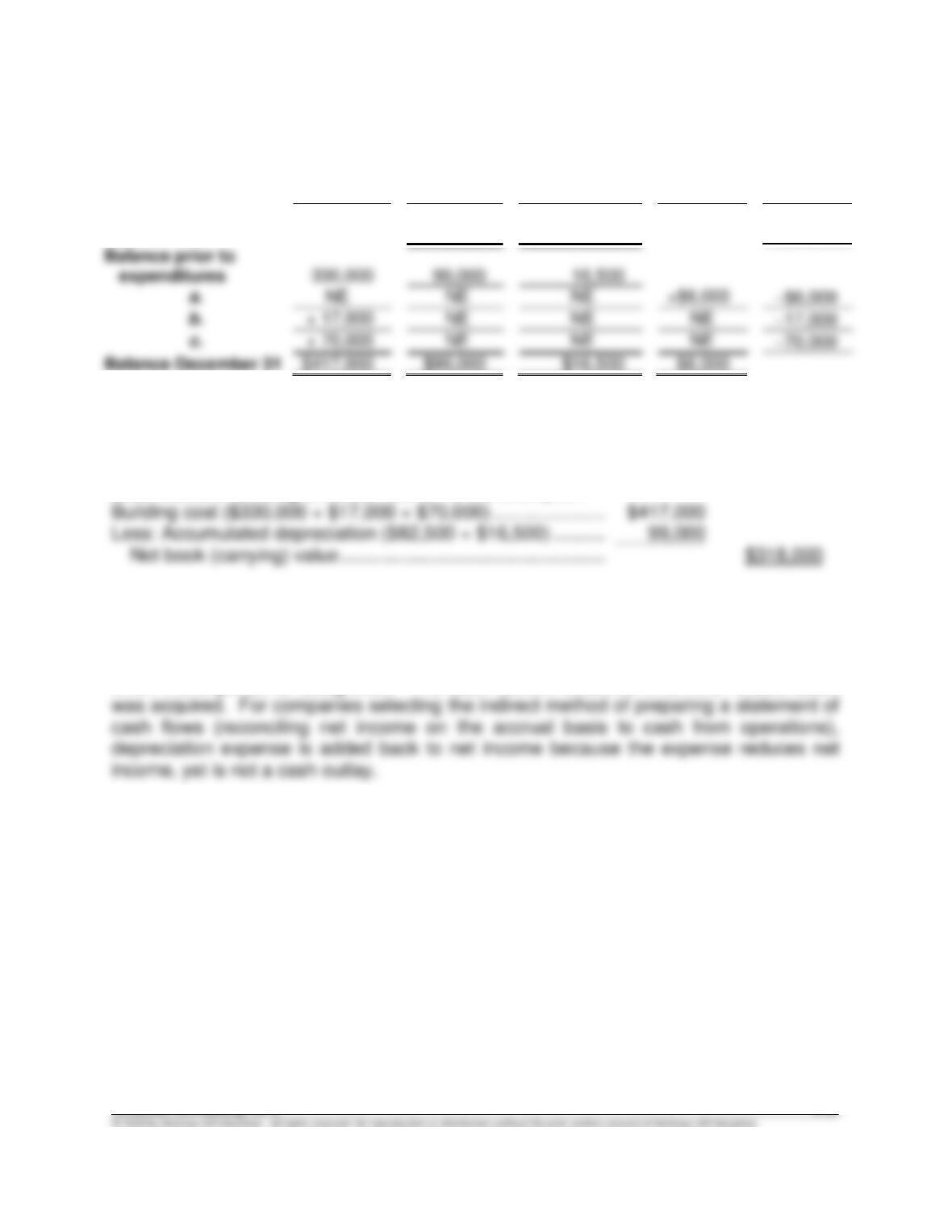
AP8–2.
Req. 1
Building
Accum.
Deprec.
Deprec.
Expense
Repairs
Expense
Cash
Balance January 1
$330,000
$82,500
Depreciation
16,500
(1) $16,500
NE
Balance prior to
Balance December 31
(1) ($330,000 cost – $0 residual value) 20 years = $16,500 per year
Req. 2
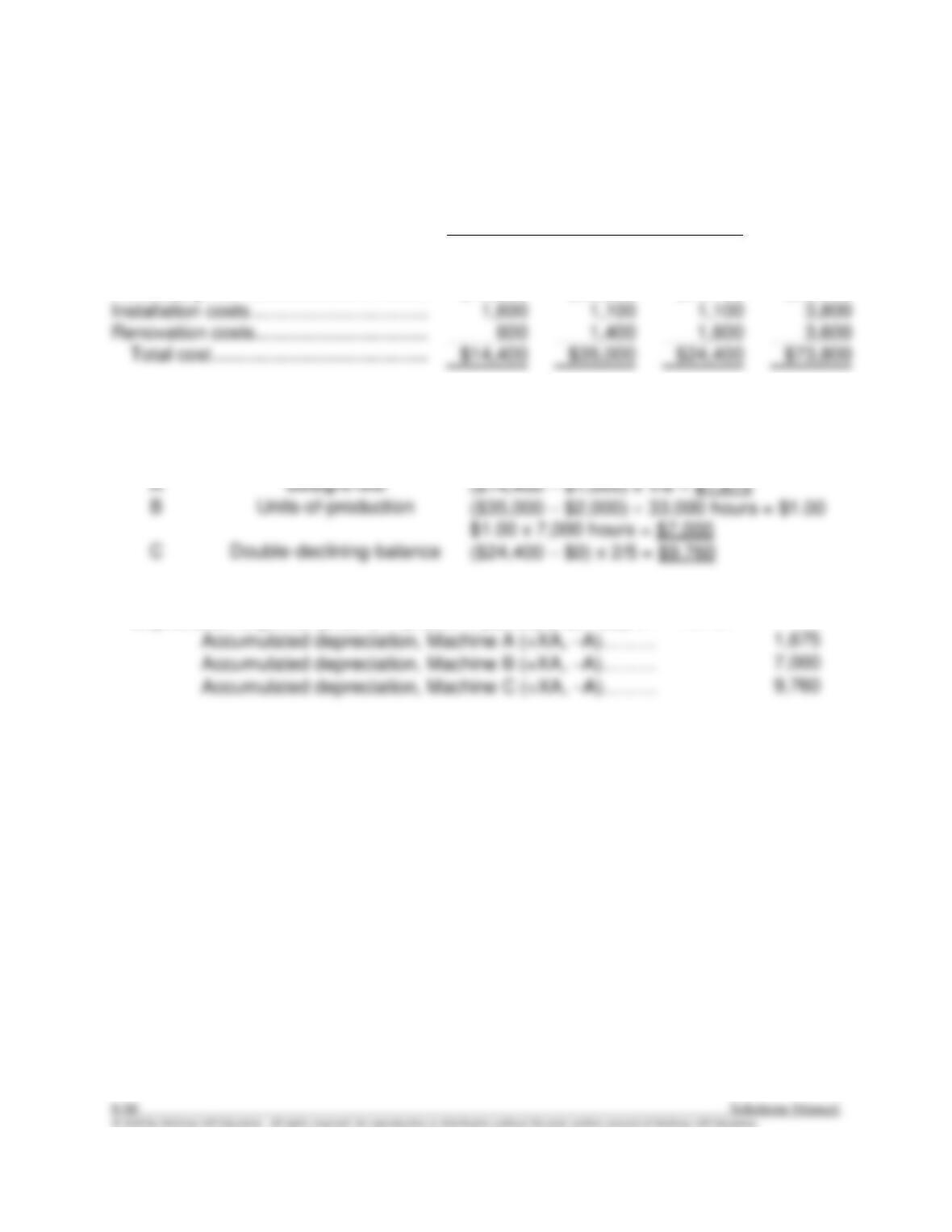
Book Value of Building on December 31 of the sixth year:
Req. 3
Depreciation is a noncash expense. Unlike most expenses, no cash payment is made
when the expense is recognized. The cash outflow occurred when the related asset
AP8–3.
Req. 1
Cost of each machine:
Machine
A
B
C
Total
Purchase price ………………………………
$12,200
$32,500
$21,700
$66,400
Installation costs …………………………….
Renovation costs …………………………...
Total cost …………………………………..
$14,400
$35,000
$24,400
$73,800
Req. 2
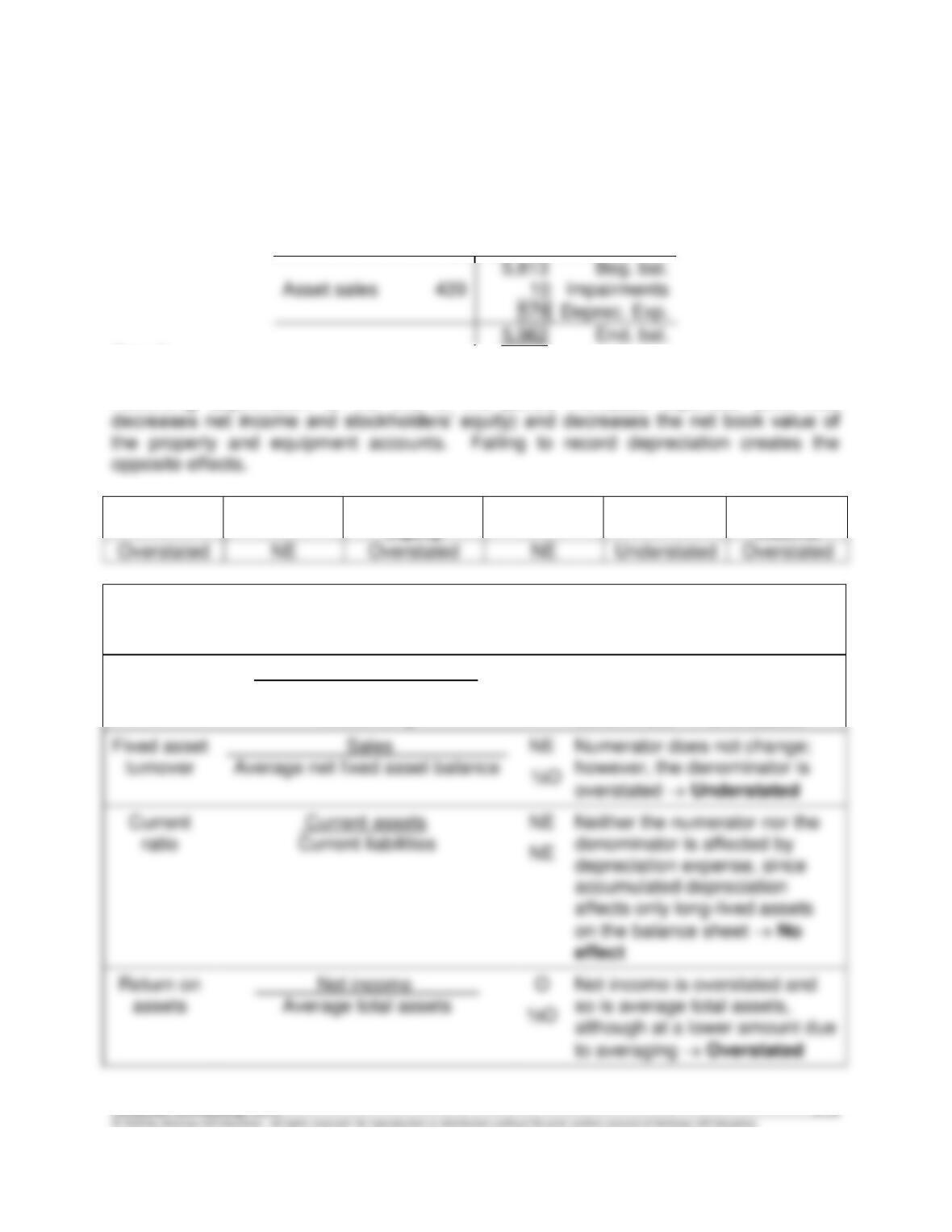
Computation of Year 1 depreciation expense for each machine:
Machine
Method
Computation
Depreciation expense ($1,675 + $7,000 + $9,760) (+E, −SE)….
18,435
Accumulated depreciation, Machine A (+XA, −A)………
Accumulated depreciation, Machine B (+XA, −A)………
Accumulated depreciation, Machine C (+XA, −A)………
Financial Accounting, 10/e 8-51
AP8–4.
Req. 1
Depreciation expense of $578 million recorded in the current year is inferred from the
activities affecting the Accumulated Depreciation account:
Accumulated Depreciation (in millions)
Req. 2
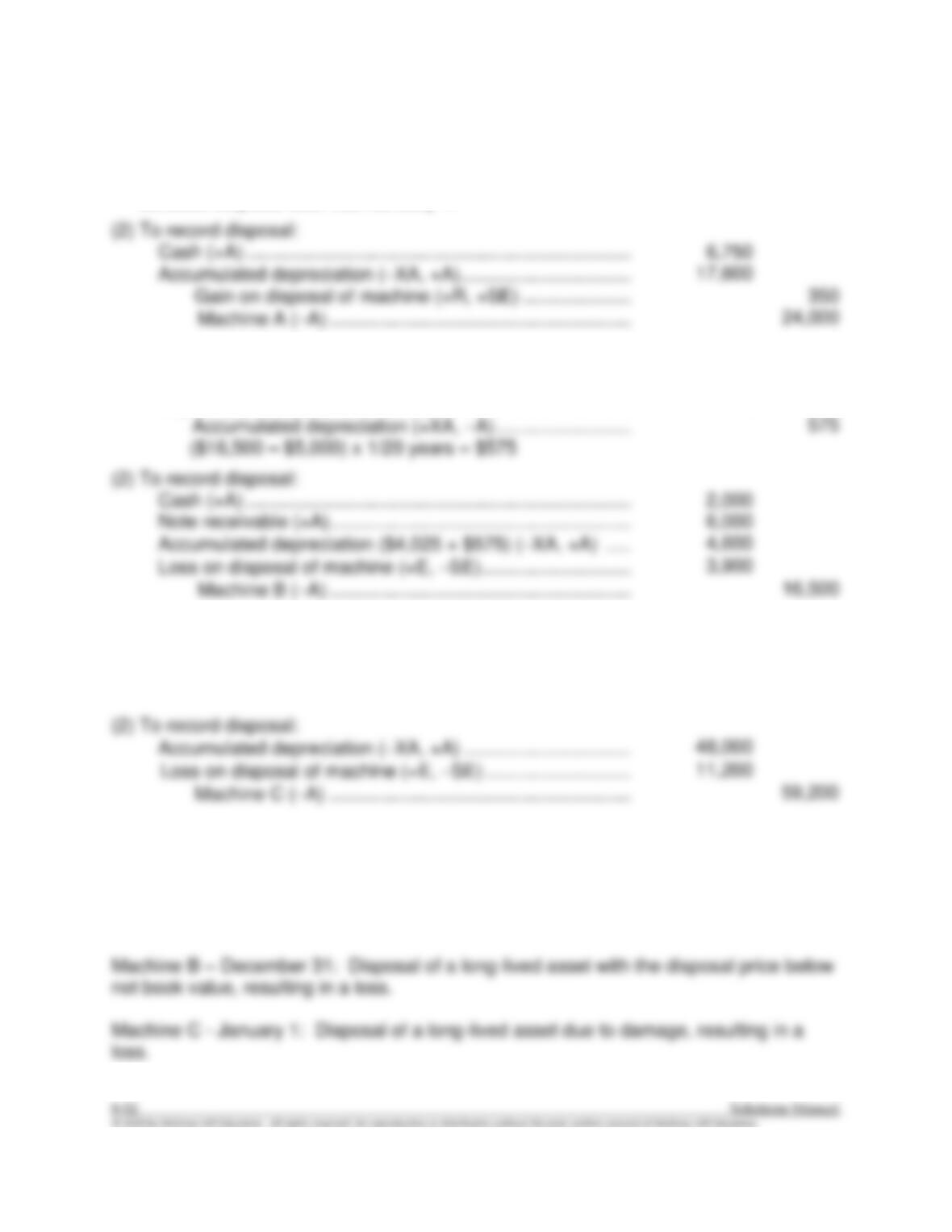
Recording depreciation at the end of the period increases expenses (and thus
Assets
Liabilities
Stockholders’
Equity
Revenues
Expenses
Net
Income
Ratio
Computation
Effect on Ratio of Failing to
Record Depreciation
Expense
Earnings
per share
Net income
Number of shares of stock
outstanding
O
NE
Net income will be overstated
with no change in the
denominator → Overstated
AP8–5.
Req. 1
a. Machine A – Sold on January 1:
(1)
Depreciation expense in the current year – none recorded
because disposal date was January 1.
(2)
To record disposal:
Cash (+A) ………………………………………………………………..
Accumulated depreciation (−XA, +A)…………………………...
Machine A (−A) ………………………………………………….
b. Machine B – Sold on December 31:
(1)
To record depreciation expense for the current year:
Depreciation expense (+E, −SE) …………………………………
575
Accumulated depreciation (+XA, −A) ……………………..
(2)
To record disposal:
Cash (+A) ………………………………………………………………..
Note receivable (+A)………………………………………………….
Accumulated depreciation ($4,025 + $575) (−XA, +A) …..
Machine B (−A) ………………………………………………….
c. Machine C – Disposal on January 1:
(1)
Depreciation expense in the current year – none recorded
because disposal date was January 1.
(2)
To record disposal:
Accumulated depreciation (−XA, +A) …………………………..
Req. 2
Machine A – January 1: Disposal of a long-lived asset with the disposal price above net
book value, resulting in a gain.
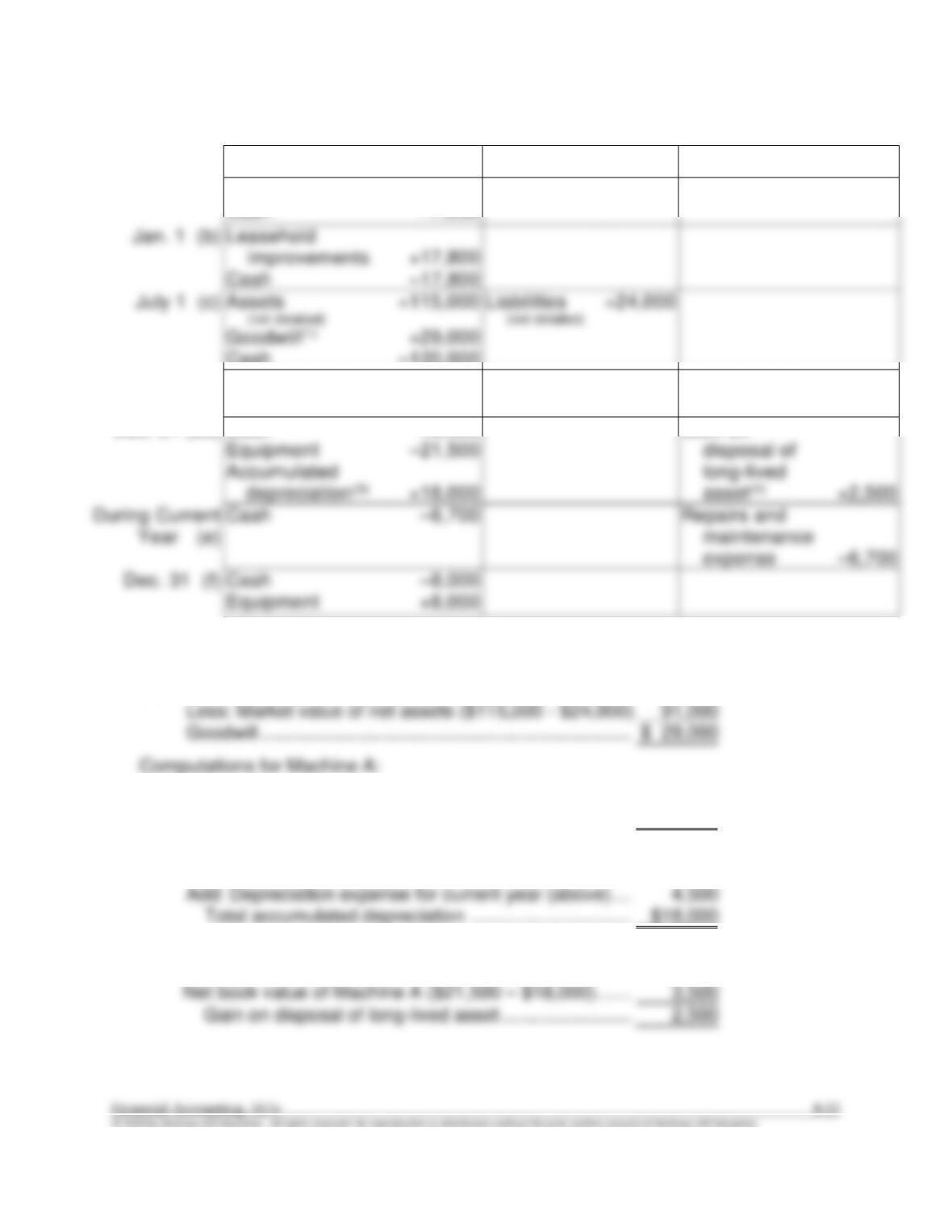
AP8–6.
Req. 1
Date
Assets
Liabilities
Stockholders’ Equity
Jan. 1 (a)
License
+7,200
Cash
–120,000
Dec. 31 (d1)
Accumulated
depreciation(2)
–4,500
Depreciation
expense
–4,500
Dec. 31 (d2)
Cash
Cash
+6,000
Gain on
Computations:
(1)
Purchase price …………………………………………………….
$120,000
Less: Market value of net assets ($115,000 – $24,000)
91,000
Goodwill ……………………………………………………………..
Computations for Machine A:
(2)
Depreciation expense for the current year:
($21,500 – $3,500) x 1/4
$4,500
(3)
Accumulated depreciation to Jan. 1 of the current year
$13,500
Total accumulated depreciation ………………………….
$18,000
(4)
Cash proceeds from disposition ……………………………..
$6,000
Net book value of Machine A ($21,500 – $18,000) …….
Gain on disposal of long-lived asset …………………….
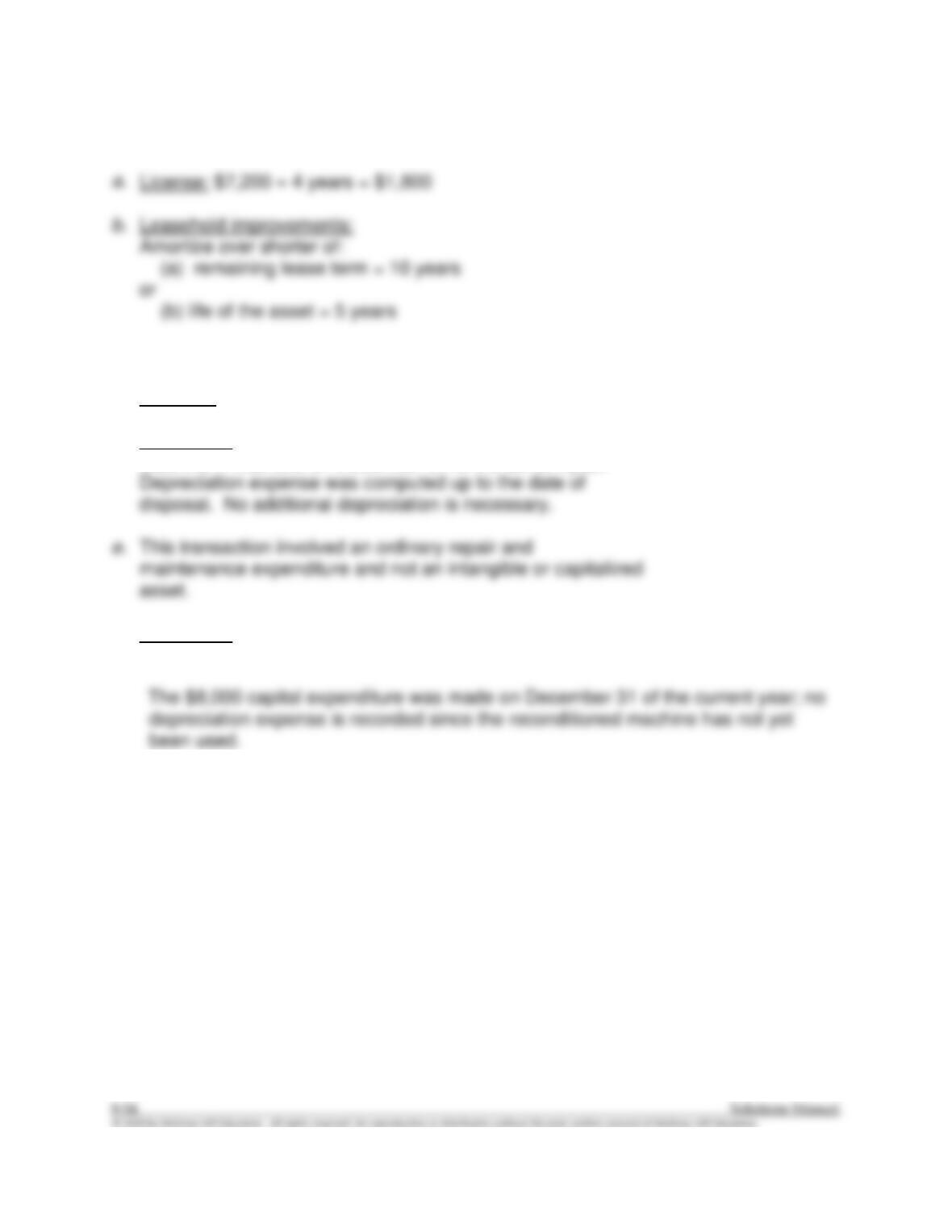
AP8–6. (continued)
Req. 2 Depreciation and amortization expense for the current year:
b.
Leasehold improvements:
Amortization for the current year: $17,800 x 1/5 = $3,560
c.
Goodwill: No amortization since it has an indefinite life.
d.
Machine A:
Depreciation expense was computed up to the date of
disposal. No additional depreciation is necessary.
This transaction involved an ordinary repair and
maintenance expenditure and not an intangible or capitalized
asset.
Machine A was sold on December 31 of the current year.
f.
Machine B:
($18,000 – $2,000) x 1/4 = $4,000 depreciation expense for the current year
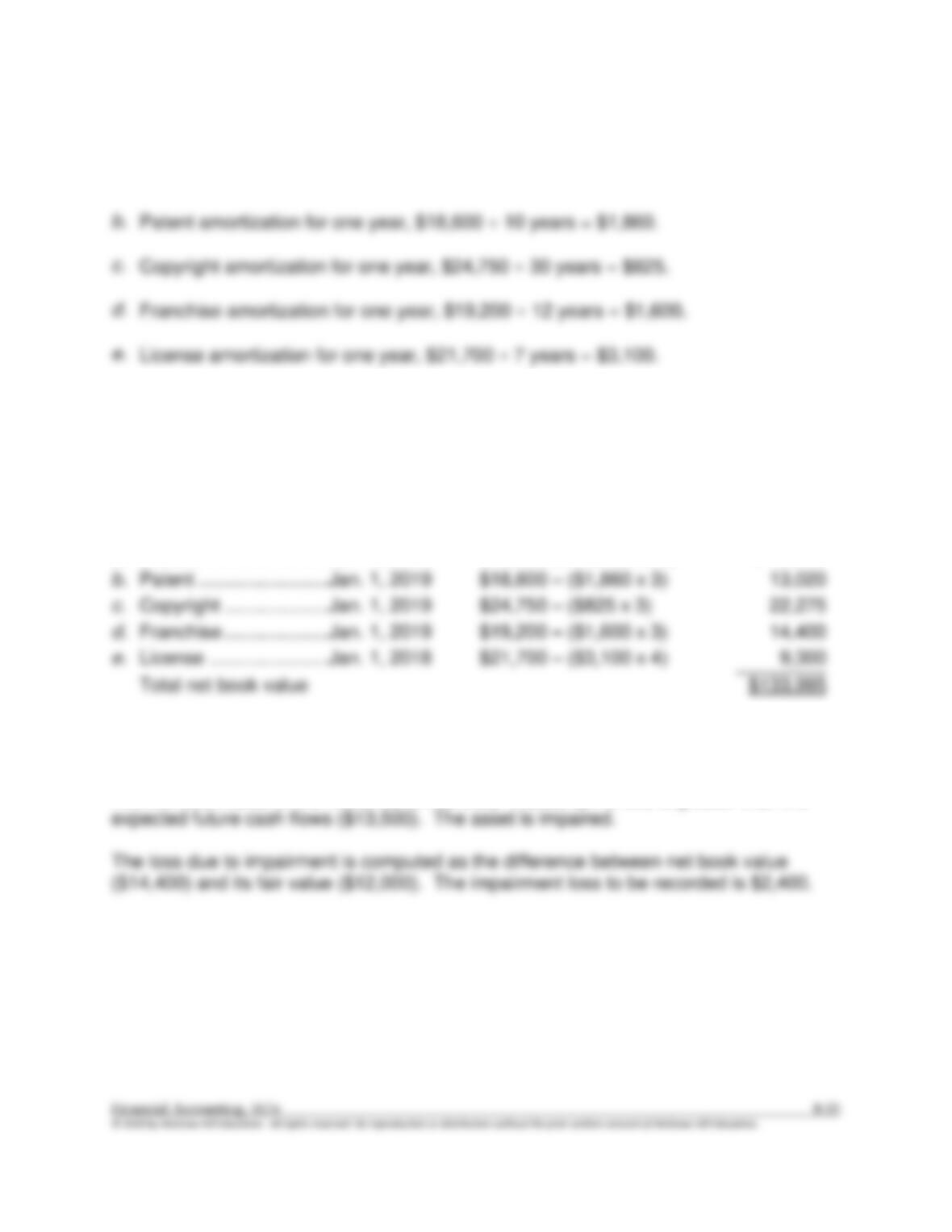
AP8–7.
Req. 1
a.
Goodwill is not amortized since it has an indefinite life.
Req. 2
Net book value on January 1, 2022:
Item
Date Acquired
Book Value
Computations
Net Book Value
Jan. 1, 2022
a.
Goodwill …………………..
Jan. 1, 2010
$75,000 (not amortized)
$ 75,000
b.
Patent ……………………..
Jan. 1, 2019
c.
Copyright …………………
Jan. 1, 2019
e.
License ……………………
Jan. 1, 2018
Total net book value
Req. 3
The net book value of the franchise on January 1, 2022 ($14,400) is greater than the
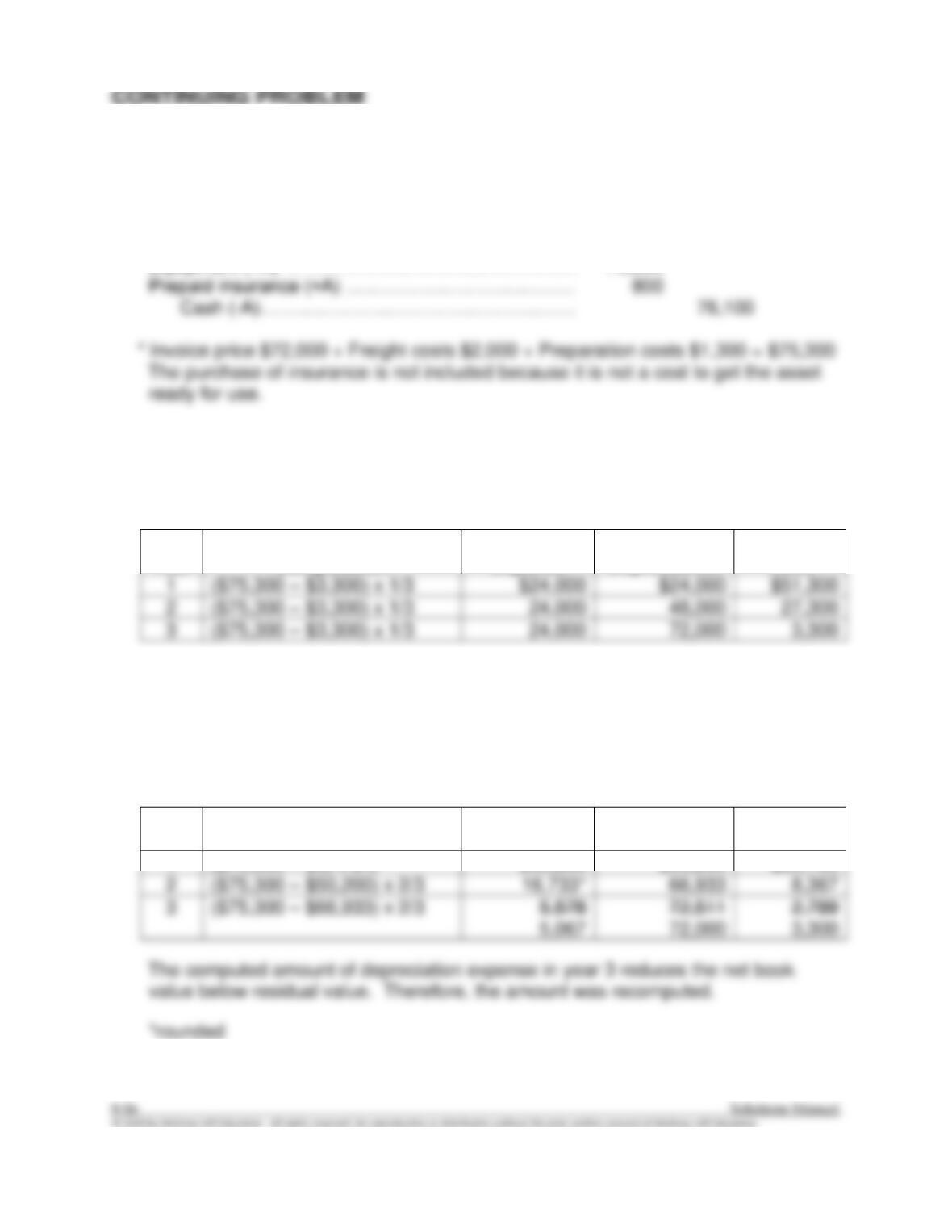
CON8-1
Req. 1
January 1, Year 1:
Debit
Credit
Equipment (+A)*………………………………………..
75,300
76,100
Req. 2
Straight-Line Method: (Cost – Residual Value) x 1/ Useful Life
Year
Computation
Depreciation
Expense
Accumulated
Depreciation
Net Book
Value
1
($75,300 – $3,300) x 1/3
$24,000
$24,000
$51,300
2
($75,300 – $3,300) x 1/3
3
($75,300 – $3,300) x 1/3
Req. 3
Double-Declining-Balance Method:
(Cost – Accumulated Depreciation) x 2/ Useful Life
Year
Computation
Depreciation
Expense
Accumulated
Depreciation
Net Book
Value
1
($75,300 – $0) x 2/3
$50,200
$50,200
$25,100
2
($75,300 – $50,200) x 2/3
Financial Accounting, 10/e 8-57
CON8-1 (continued)
Req. 4
Units-of-Production Method:
Year
Computation
Depreciation
Expense
Accumulated
Depreciation
Net Book
Value
1
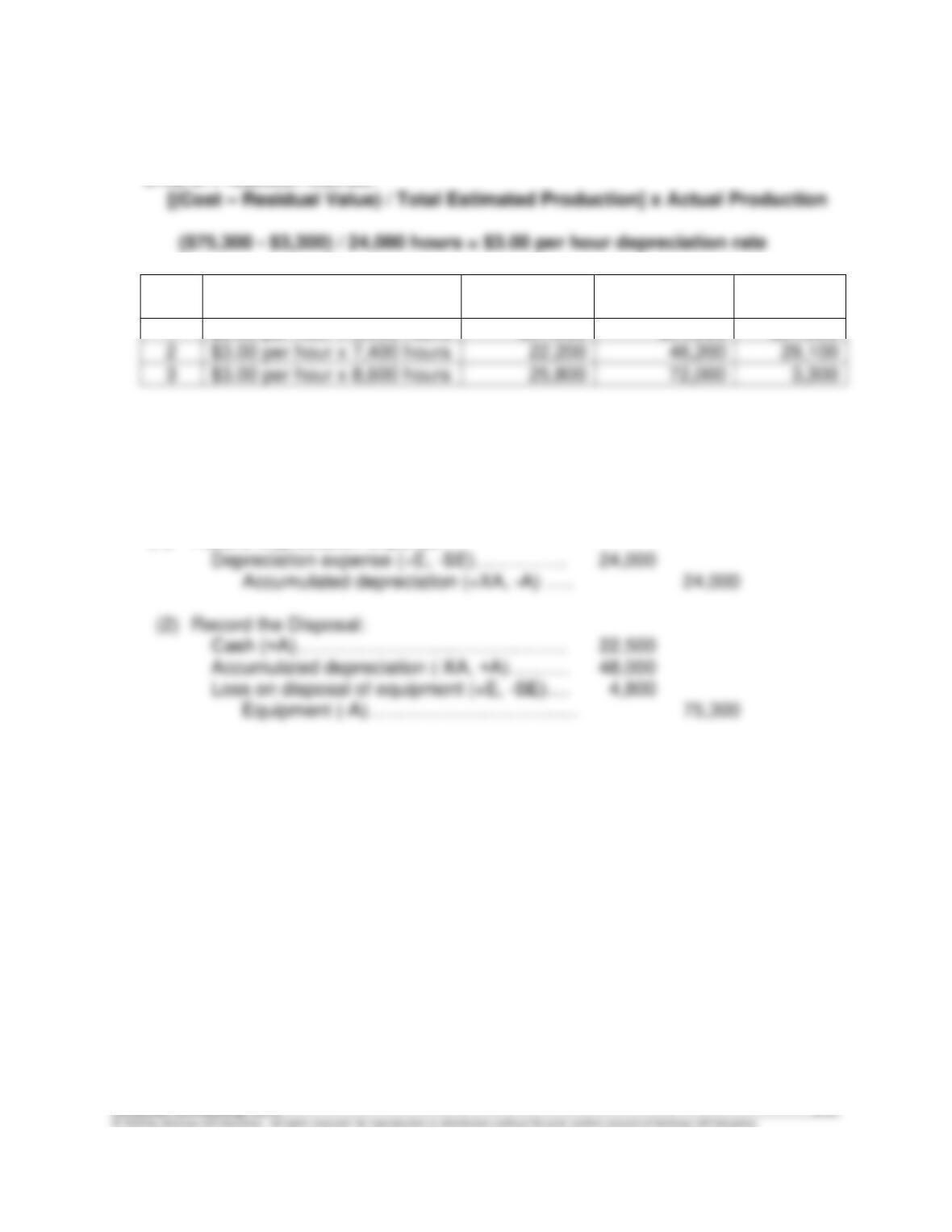
$3.00 per hour x 8,000 hours
$24,000
$24,000
$51,300
2
$3.00 per hour x 7,400 hours
Req. 5
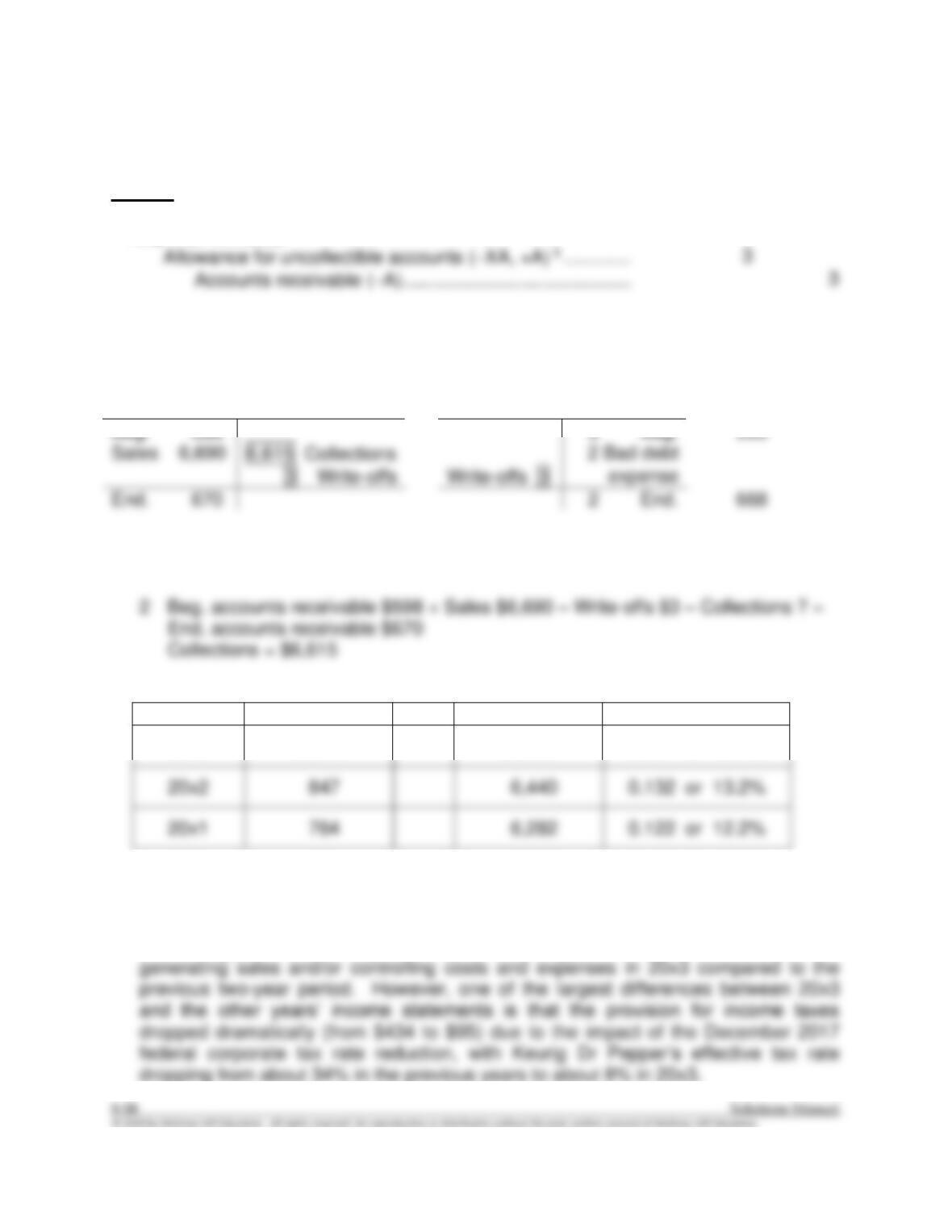
December 31, Year 2:
Debit
Credit
(1) Record Depreciation Expense:
Accumulated depreciation (+XA, –A) …..
Cash (+A)……………………………………..
Accumulated depreciation (-XA, +A)……….
Loss on disposal of equipment (+E, –SE)….
Equipment (-A)…………………………….
COMPREHENSIVE PROBLEMS (Chapters 6, 7, and 8)
COMP8-1.
Case A
Req. 1 (in millions)
Req. 2
Cash collections for 20×3 2 were $6,615 million.
Accounts
Receivable
–
Allowance for
Uncollectible Accounts
Net
= Realizable
Value
3 Beg.
2 End.
1 Beg. allowance $3 + Bad debt expense $2 – Write-offs ? = End. Allowance $2
Write-offs = $3
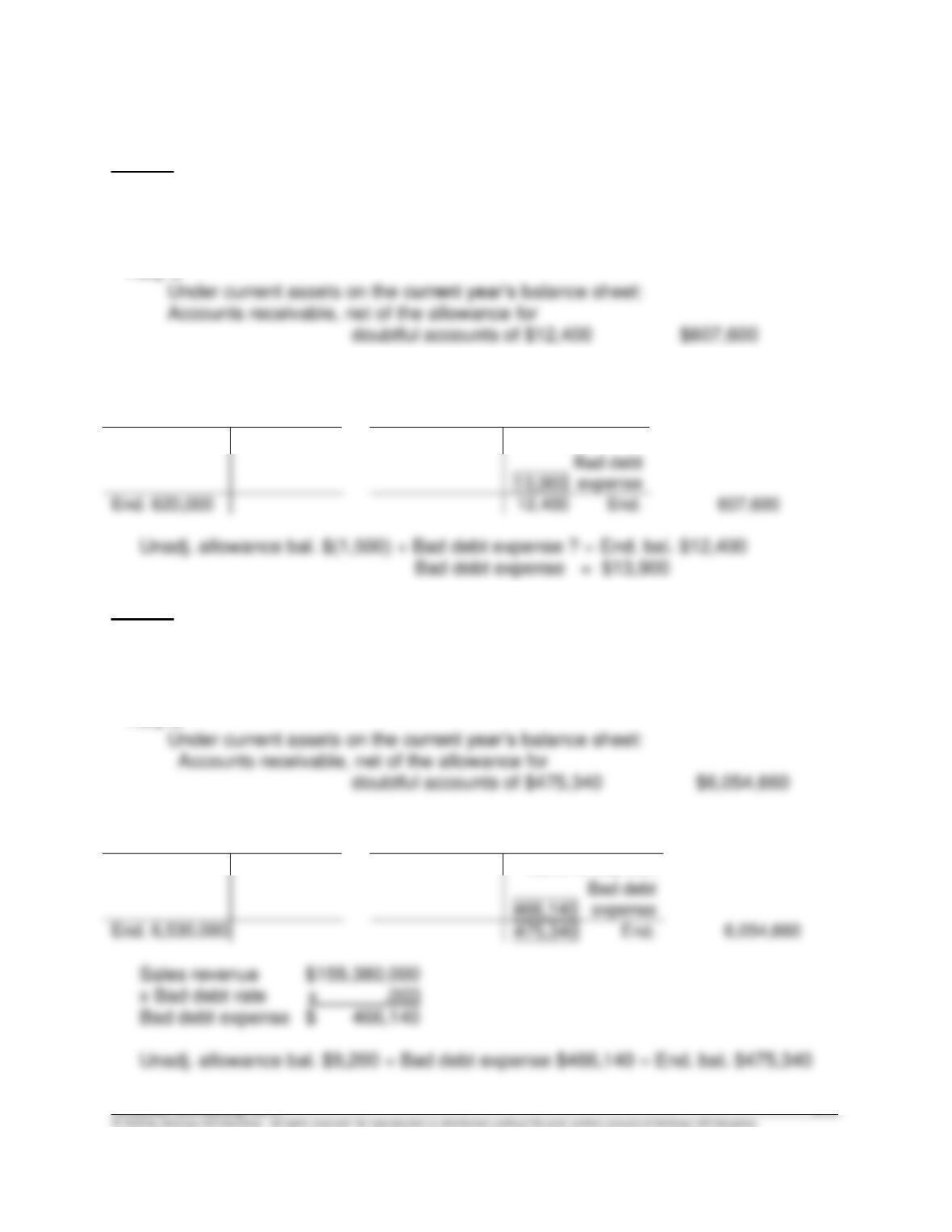
Req. 3
Net Income
÷
Net Sales
= Net Profit Margin
20x3
$1,076
$6,690
0.161 or 16.1%
20x2
20x1
0.122 or 12.2%
The company’s net profit margin increased one percent between 20x1 and 20x2,
from 12.2% to 13.2%, with net income increasing 10.9%. However, net income
increased significantly in 20x3 by 27.0%, yielding a net profit margin of 16.1%. This
could suggest that Keurig Dr Pepper’s management was more effective at
Financial Accounting, 10/e 8-59
COMP8-1. (continued)
Case B
Req. 1
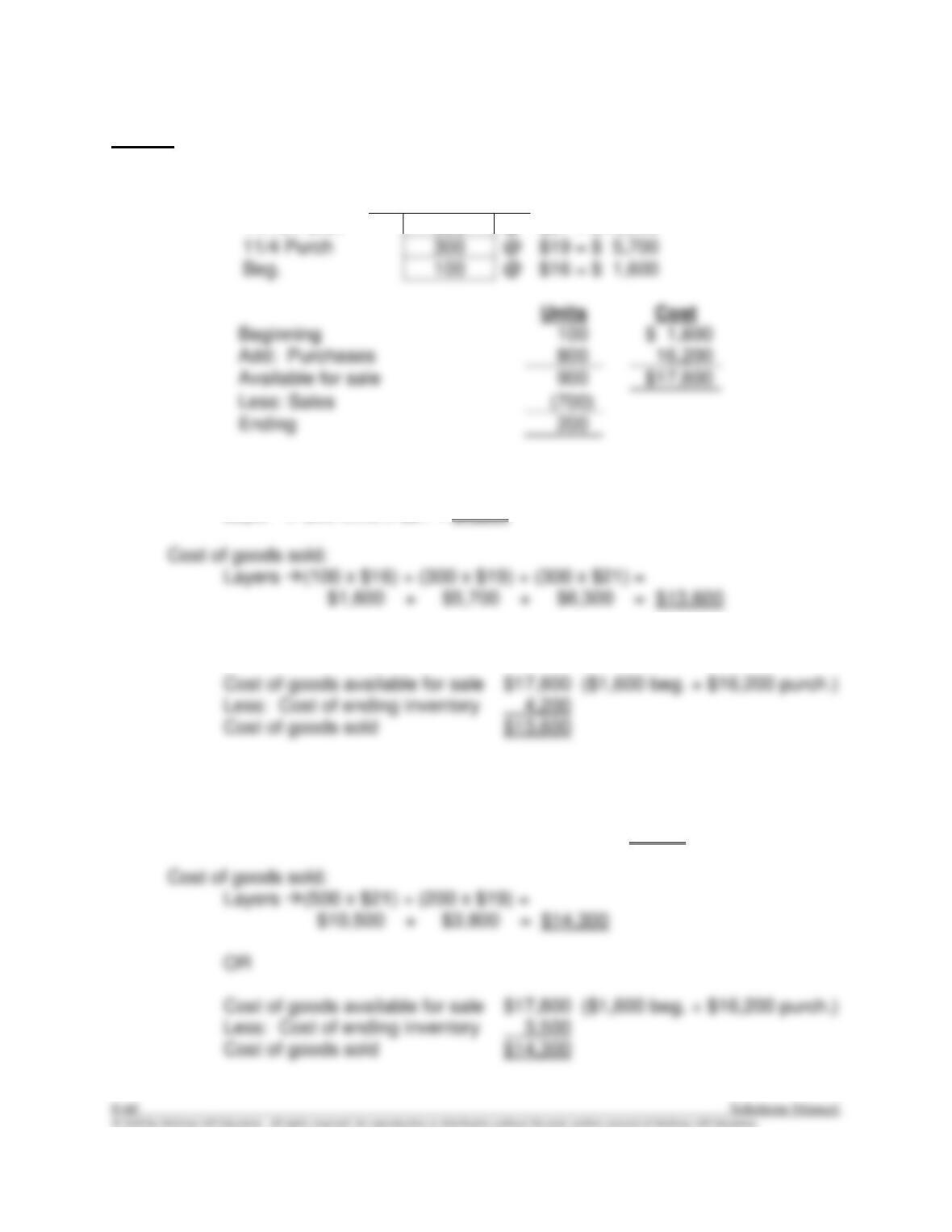
The company should record bad debt expense of $13,900 for the current year.
Req. 2
Accounts Receivable
–
Allowance for Uncollectible
Accounts
Net
= Realizable Value
1,500
Unadj. bal.
End. 620,000
Case C
Req. 1
The company should record bad debt expense of $466,140 for the current year.
Req. 2
Accounts Receivable
–
Allowance for Uncollectible
Accounts
Net
= Realizable Value
9,200 Unadj. bal.
COMP8-1. (continued)
Case D
Req. 1
Inventory “Bin”:
11/13 Purch
500
@
$21 = $10,500
11/4 Purch
300
@
$19 = $ 5,700
Beg.
100
@
Beginning
Add: Purchases
Available for sale
Less: Sales
Ending
a. FIFO
Cost of ending inventory:
Layer → 200 units x $21 = $4,200
OR
b. LIFO
Cost of ending inventory:
Layers → (100 units x $16) + (100 units x $19)
$1,600 + $1,900 = $3,500