Case (continued)
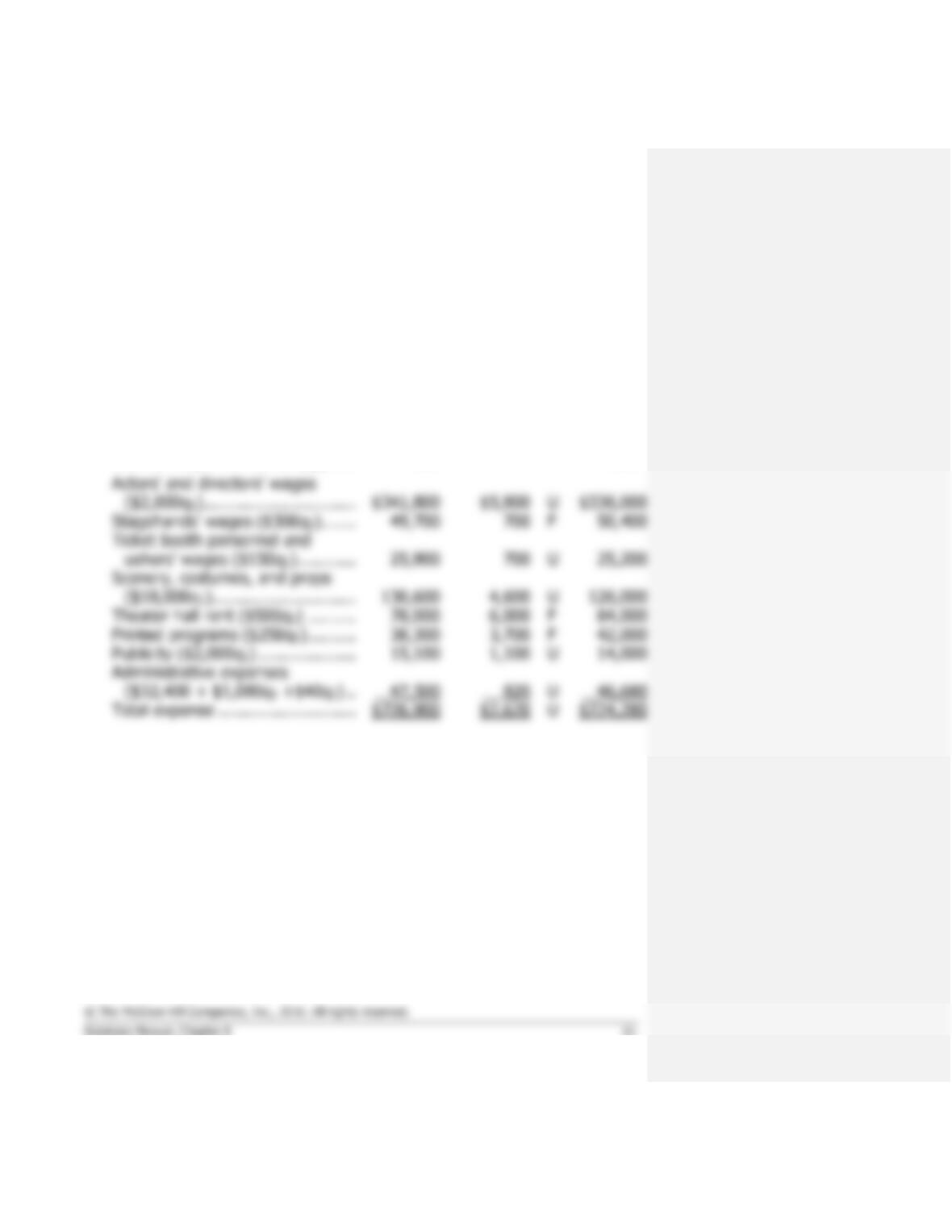
2. The spending variances are computed as follows:
The Little Theatre
Spending Variances
For the Year Ended December 31
Actual
Results
Spending
Variances
Flexible
Budget
Number of productions (q1) ……..
7
7
Number of performances (q2) …..
168
168
Printed programs ($250q2) ……….
F
U
Case (continued)
3. The overall unfavorable spending variance is a very small percentage of
the total cost, less than 0.4%. This suggests that costs are under
control. In addition, the pattern of the variances may reflect good
4. Average costs may not be very good indicators of the additional costs of
any particular production or performance. The averages gloss over
considerable variations in costs. For example, a production of Peter
Rabbit may require only half a dozen actors and actresses and fairly
Chapter 8
Take Two Solutions
Exercise 8-1 (10 minutes)
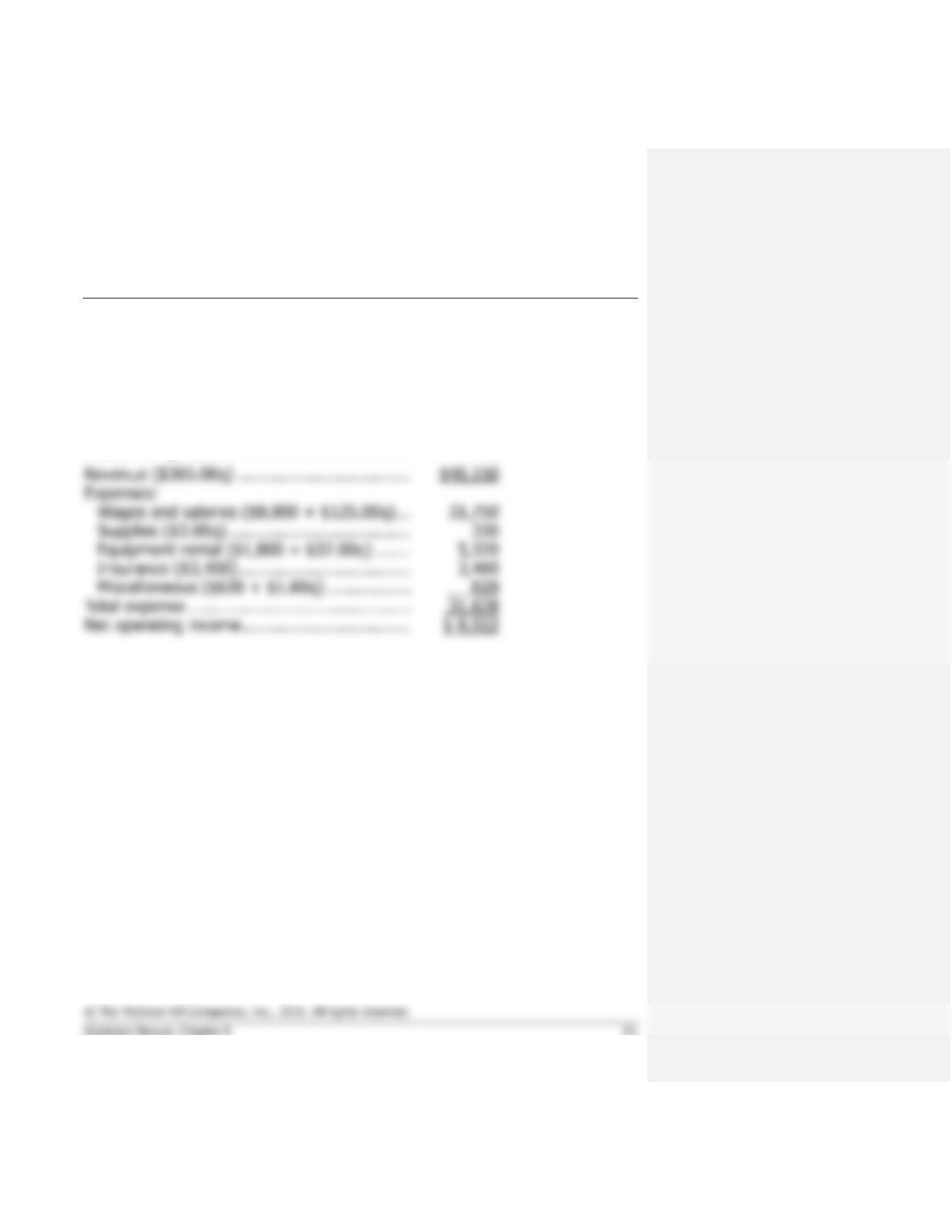
Puget Sound Divers
Flexible Budget
For the Month Ended May 31
Actual diving-hours ……………………………….
110
Expenses:
Total expense ………………………………………
Exercise 8-2 (15 minutes)
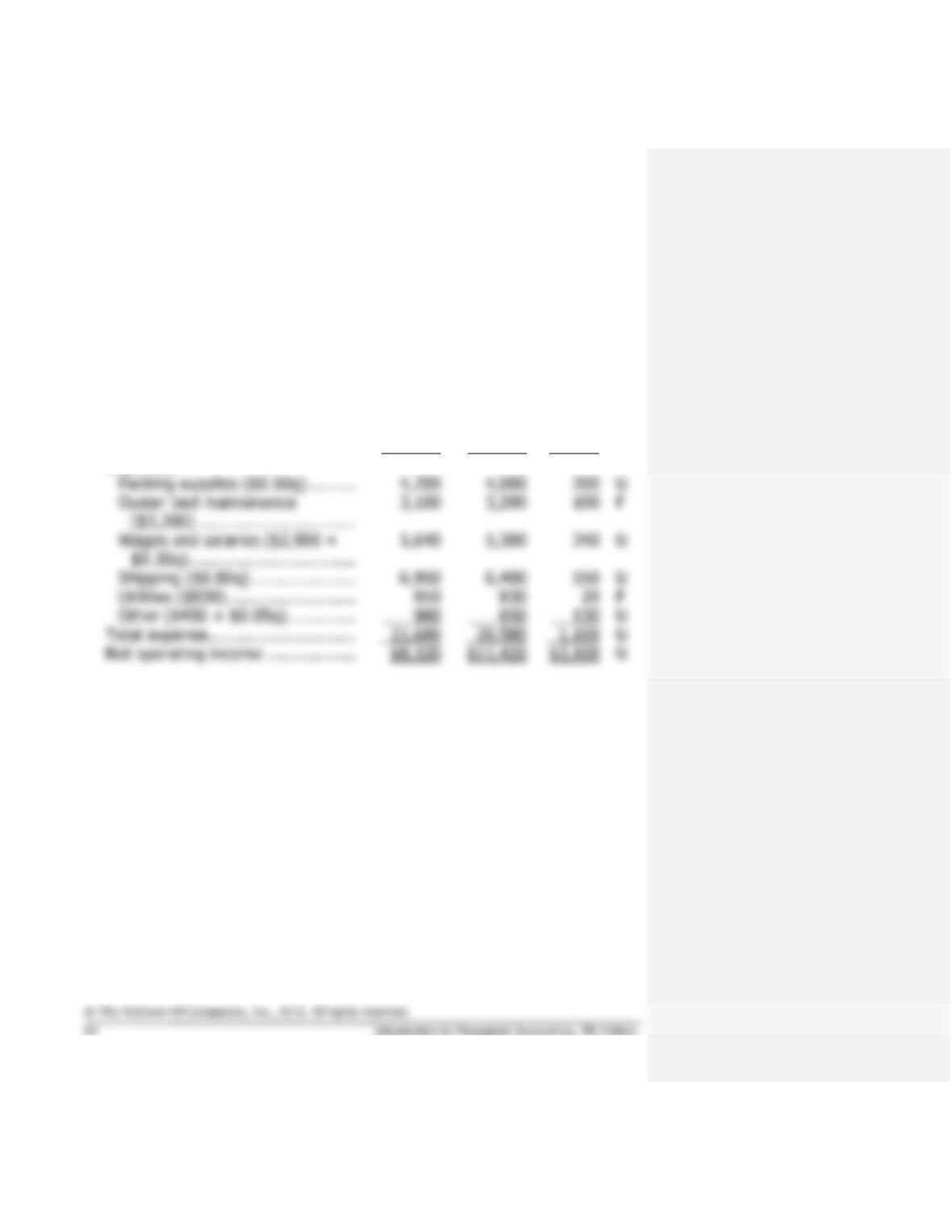
Quilcene Oysteria
Revenue and Spending Variances
For the Month Ended August 31
Actual
Results
Flexible
Budget
Revenue
and
Spending
Variances
Pounds …………………………………
8,000
8,000
Revenue ($4.00q) ……………………
$30,000
$32,000
$2,000
U
Expenses:
F
U
Net operating income ………………
U
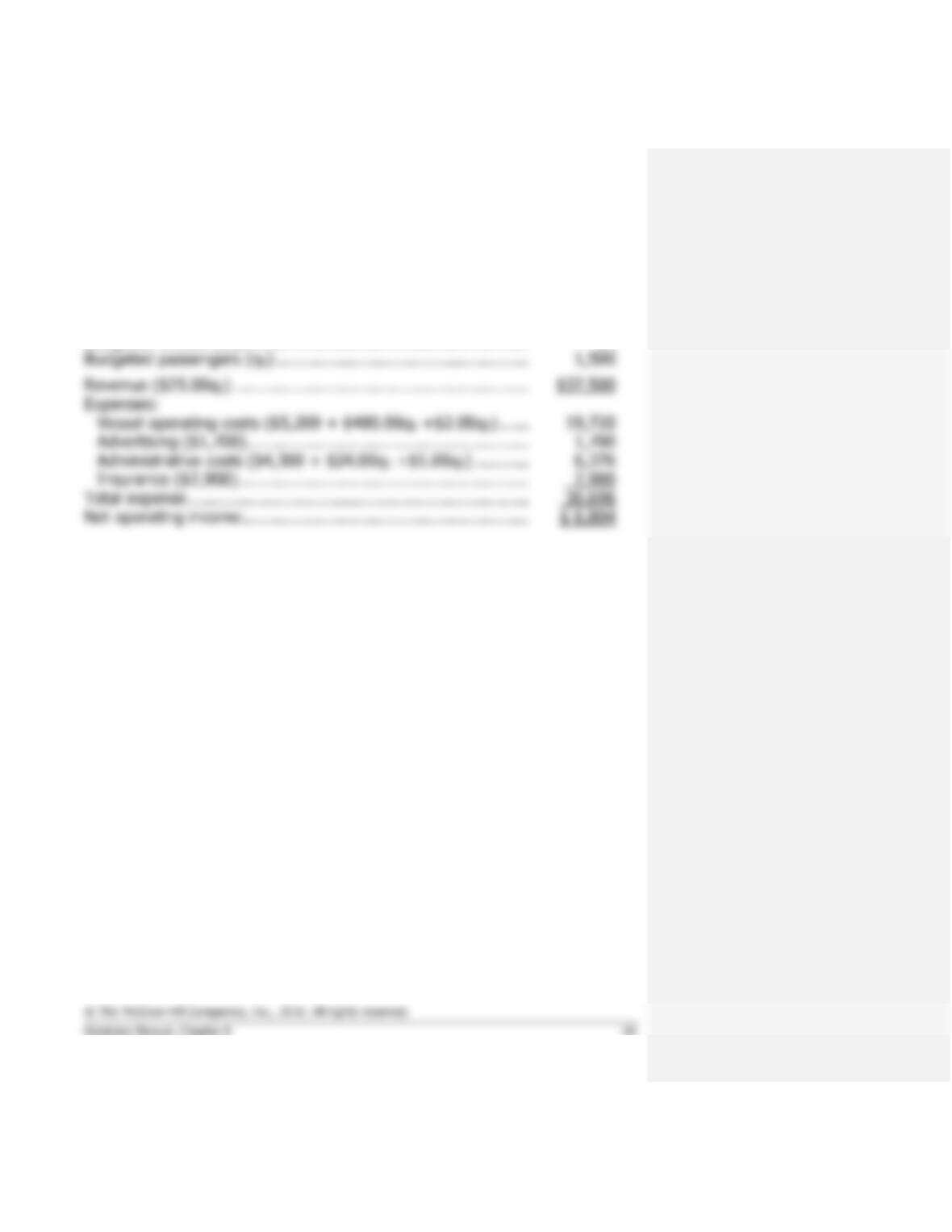
Exercise 8-3 (15 minutes)
Alyeski Tours
Planning Budget
For the Month Ended July 31
Budgeted cruises (q1) …………………………..……………………..
24
Net operating income ………………………………………………….
Exercise 8-4 (20 minutes)
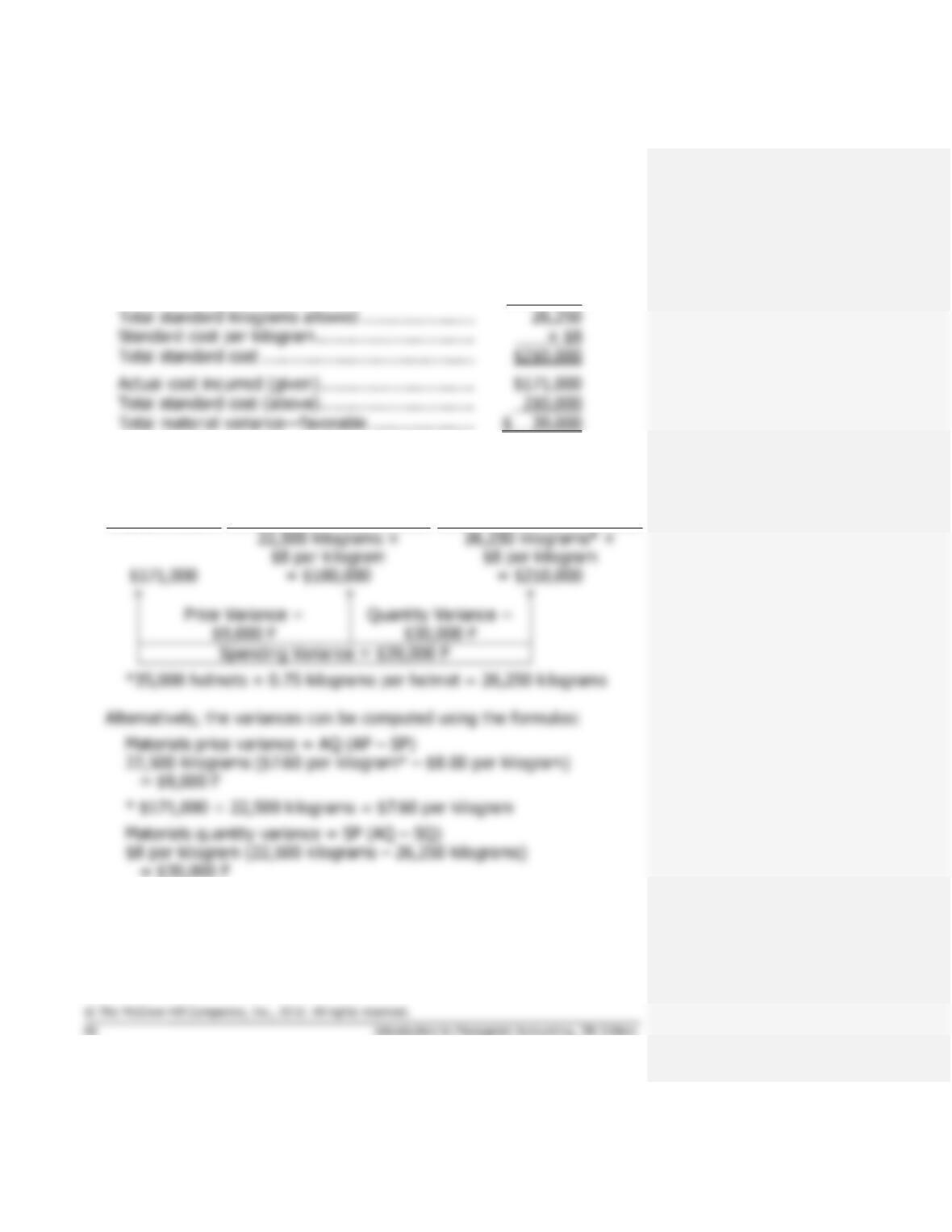
1.
Number of helmets …………………………………….
35,000
Standard kilograms of plastic per helmet …………
× 0.75
Total standard kilograms allowed …………………..
Standard cost per kilogram …………………………..
2.
Actual Quantity
of Input, at
Actual Price
Actual Quantity of Input,
at Standard Price
Standard Quantity
Allowed for Output, at
Standard Price
(AQ × AP)
(AQ × SP)
(SQ × SP)
Exercise 8-5 (20 minutes)
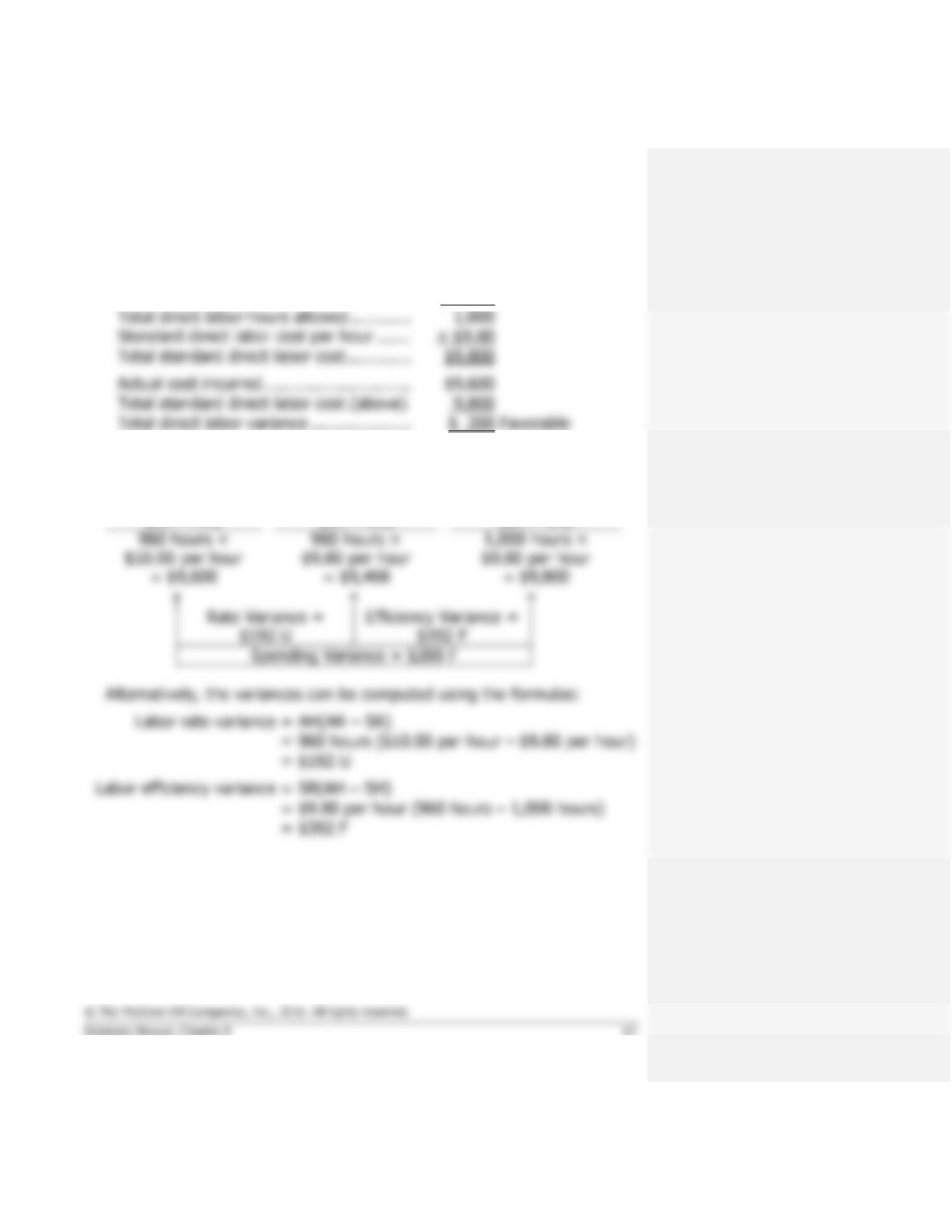
1.
Number of meals prepared ……………….
4,000
Standard direct labor-hours per meal ….
× 0.25
2.
Actual Hours of
Input, at the
Actual Rate
Actual Hours of Input,
at the Standard Rate
Standard Hours
Allowed for Output, at
the Standard Rate
(AH × AR)
(AH × SR)
(SH × SR)
960 hours ×
$10.00 per hour
Exercise 8-7 (15 minutes)
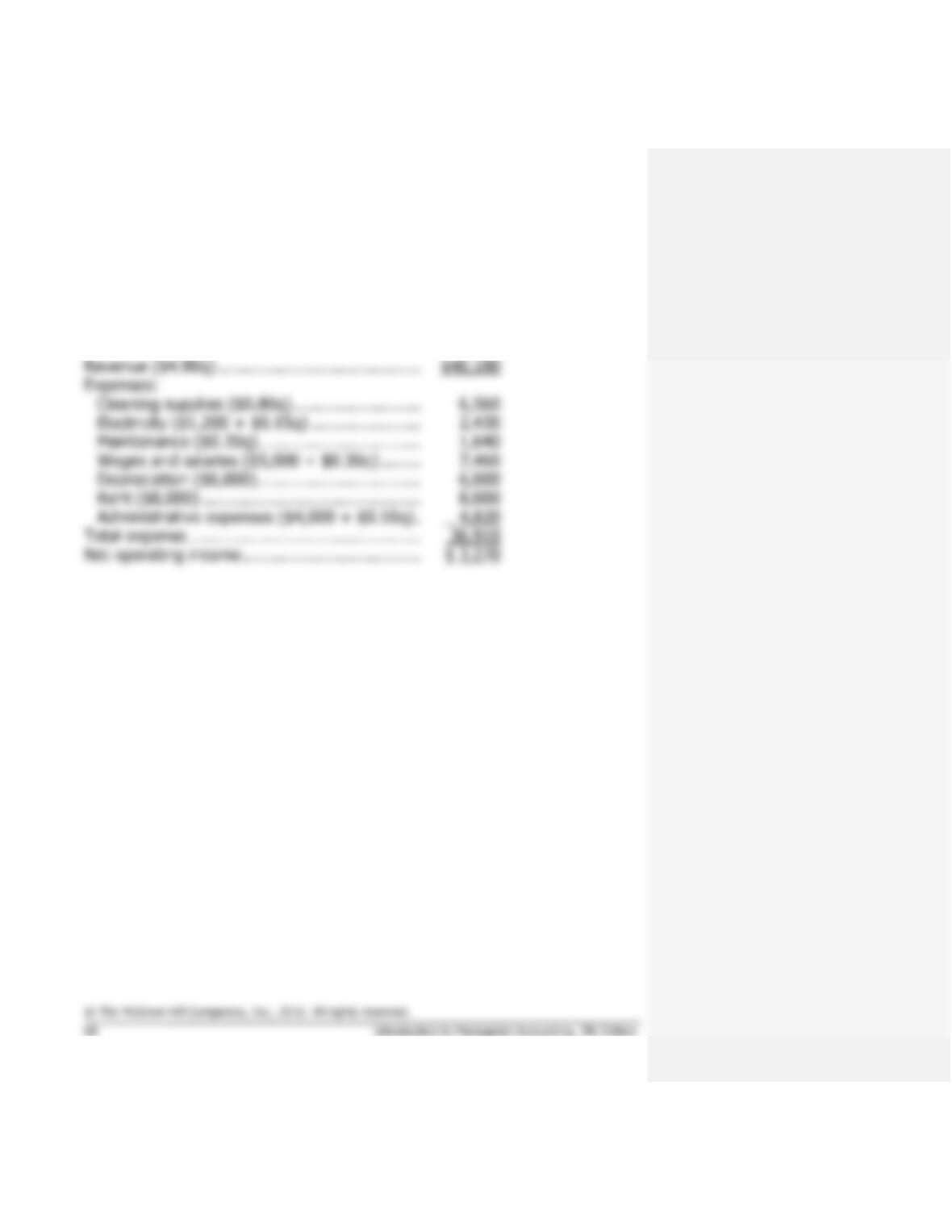
Lavage Rapide
Planning Budget
For the Month Ended August 31
Budgeted cars washed (q) ………………………..
8,200
Appendix 8A
Predetermined Overhead Rates and
Overhead Analysis in a Standard Costing
System
Exercise 8A-1 (15 minutes)
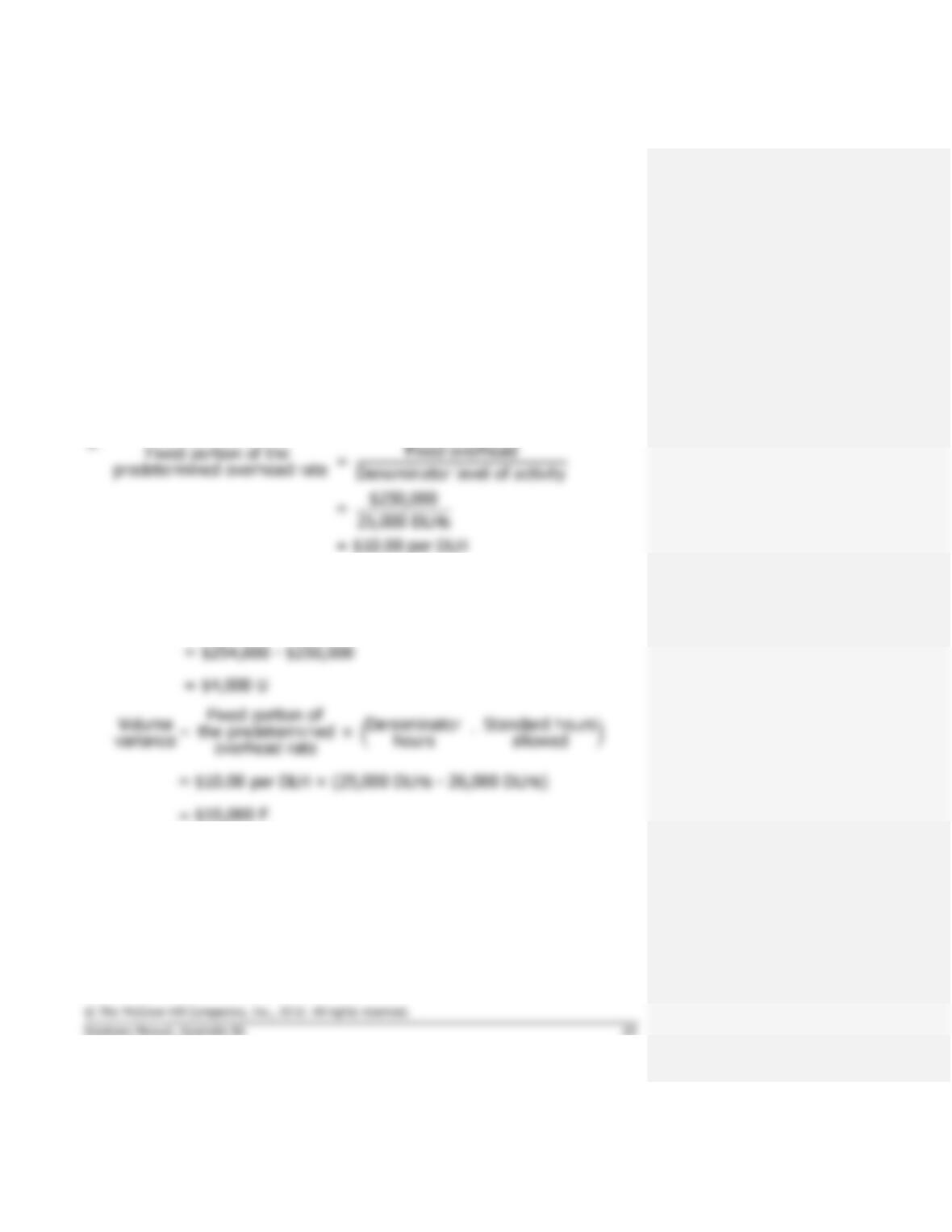
2.
Budget Actual fixed Budgeted fixed
= –
variance overhead overhead
Exercise 8A–2 (20 minutes)
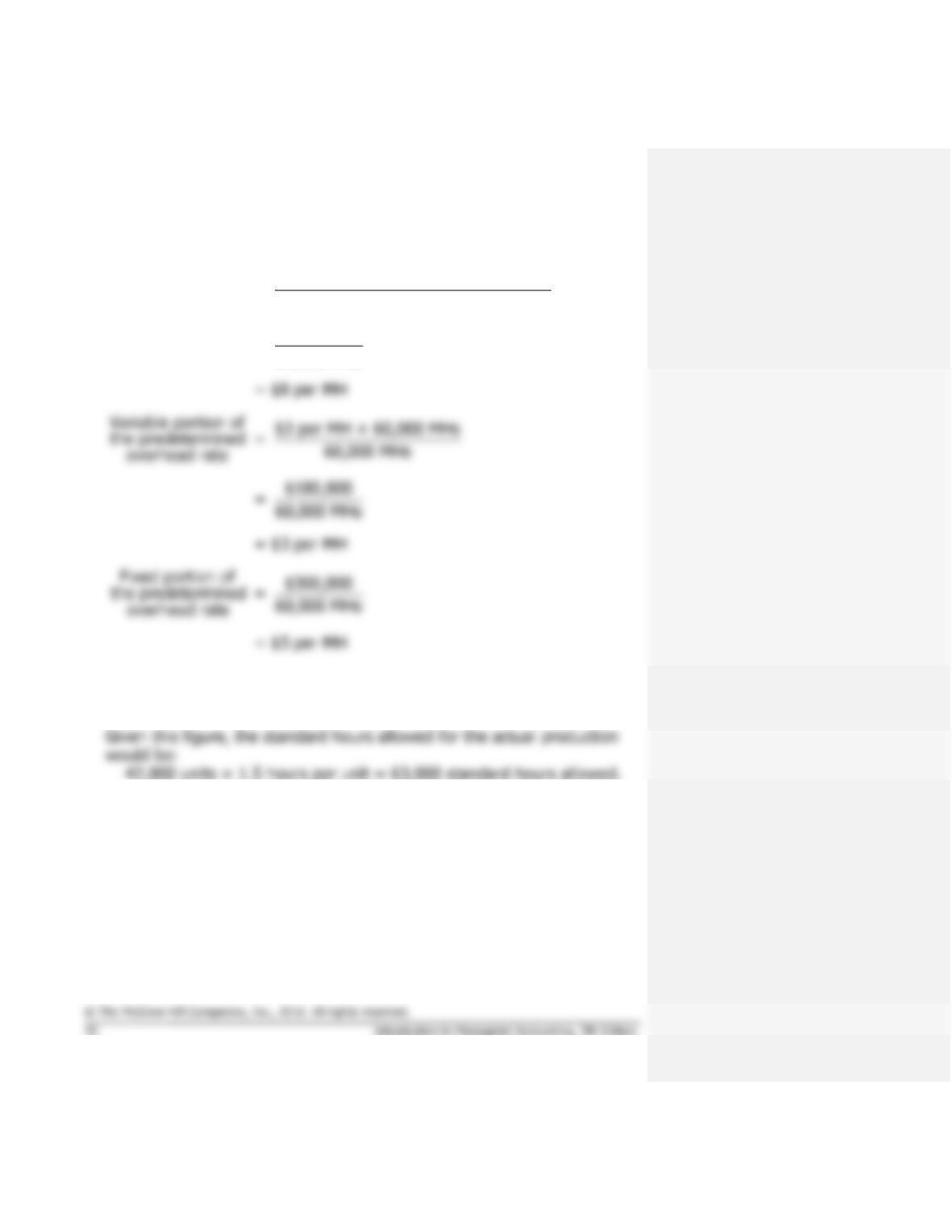
1.
$3 per MH × 60,000 MHs + $300,000
Predetermined =
overhead rate 60,000 MHs
$480,000
= 60,000 MHs
2. The standard hours per unit of product are:
60,000 hours ÷ 40,000 units = 1.5 hours per unit
Exercise 8A–2 (continued)
3. Variable overhead rate variance:
Variable overhead rate variance = (AH × AR) – (AH × SR)
($185,600) – (64,000 hours × $3 per hour) = $6,400 F
Variable overhead efficiency variance:
Variable overhead efficiency variance = SR (AH – SH)
Alternative approach to the budget variance:
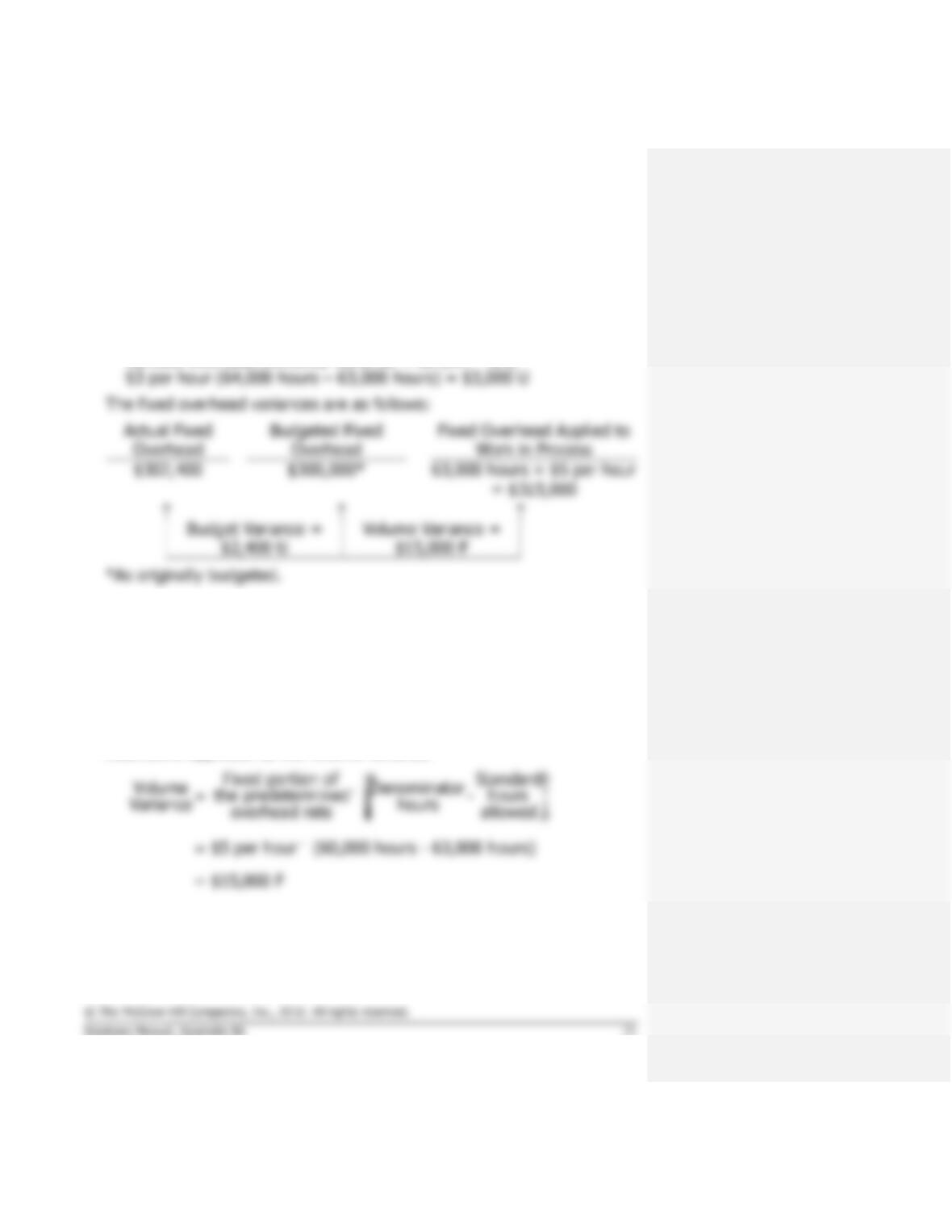
Budget Actual fixed Budgeted fixed
= –
variance overhead overhead
= $302,400 – $300,000
= $2,400 U
Alternative approach to the volume variance:
Exercise 8A-3 (15 minutes)
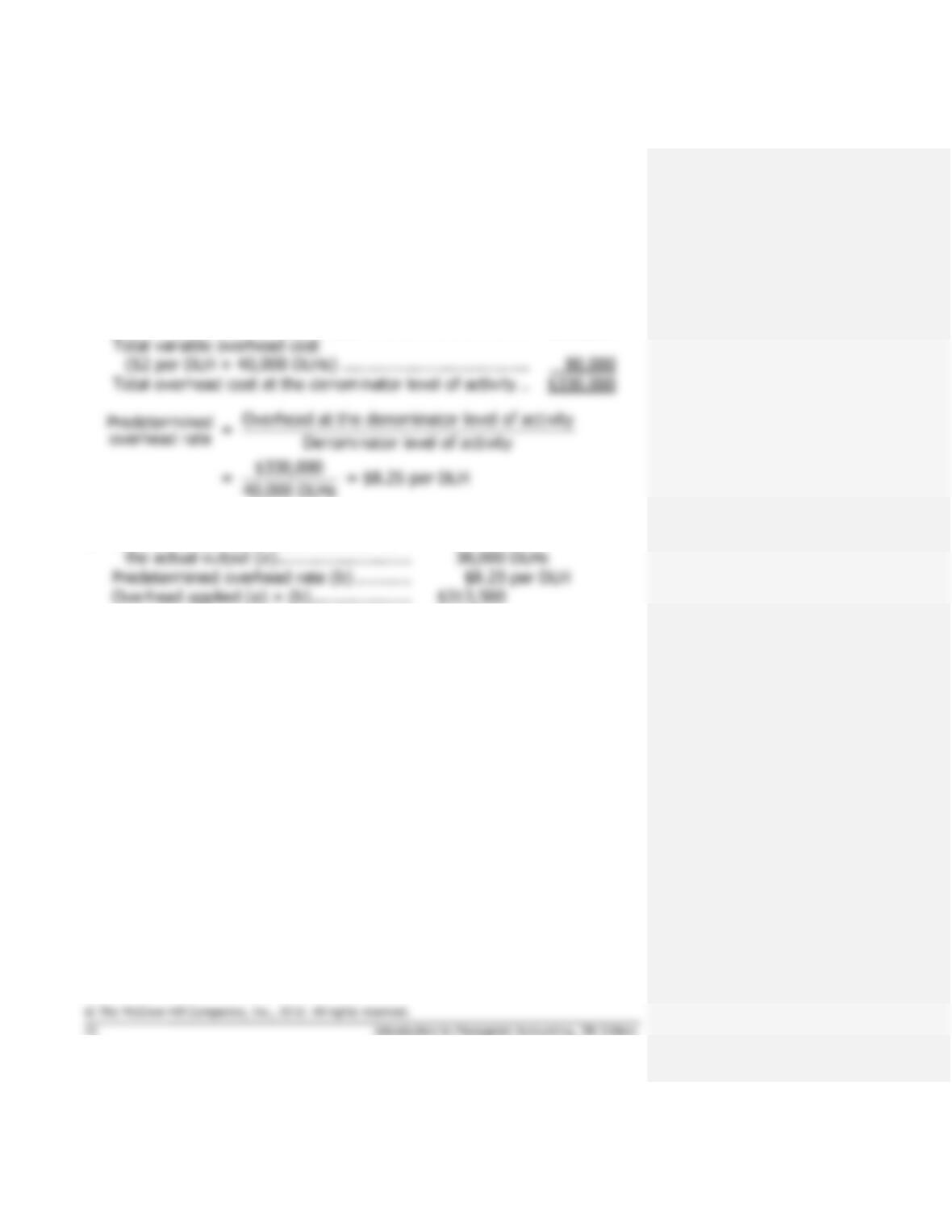
1. The total overhead cost at the denominator level of activity must be
determined before the predetermined overhead rate can be computed.
Total fixed overhead cost per year …………………………...
$250,000
2.
Overhead applied (a) × (b) ………………..
Standard direct labor-hours allowed for
Exercise 8A–4 (10 minutes)
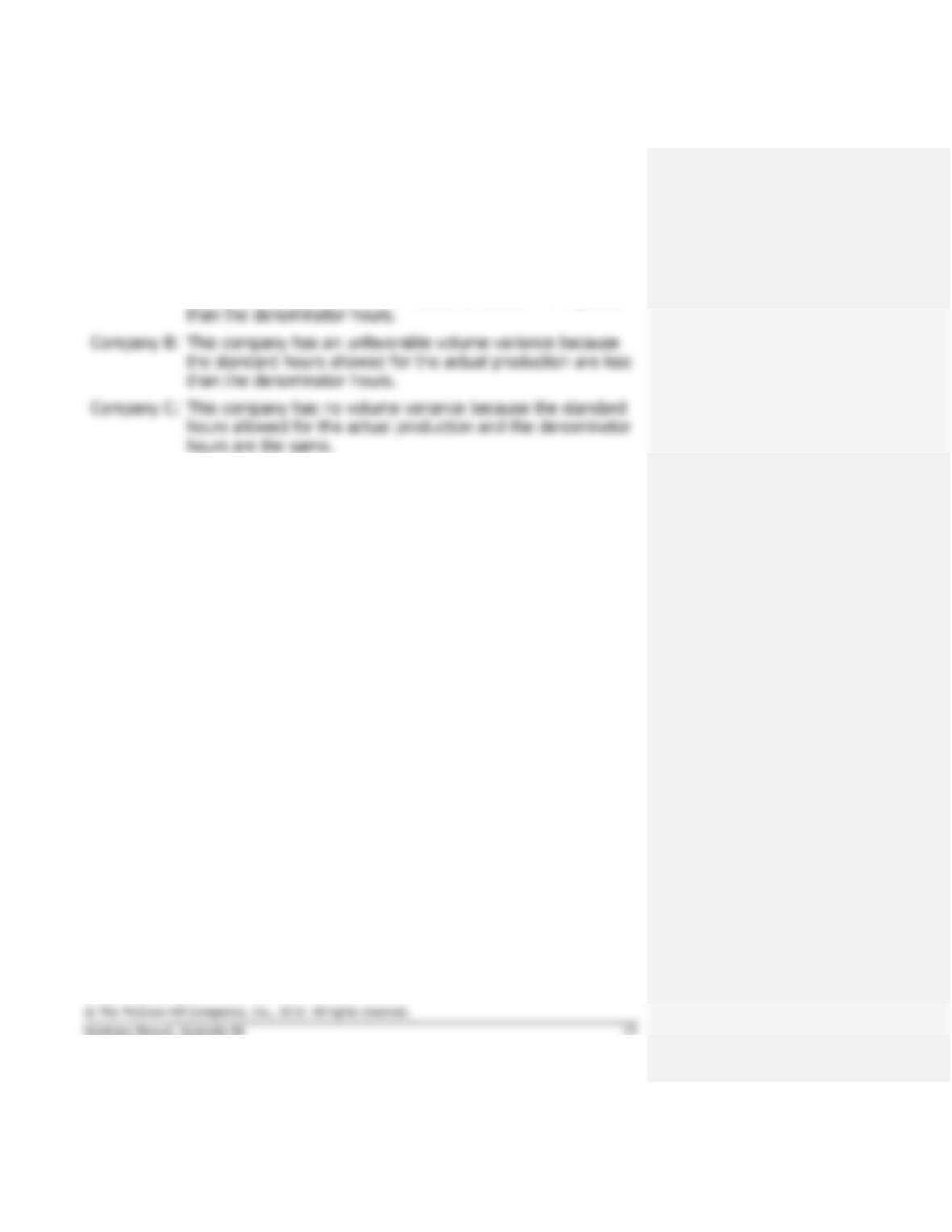
Company A:
This company has a favorable volume variance because the
standard hours allowed for the actual production are greater
Exercise 8A–5 (15 minutes)
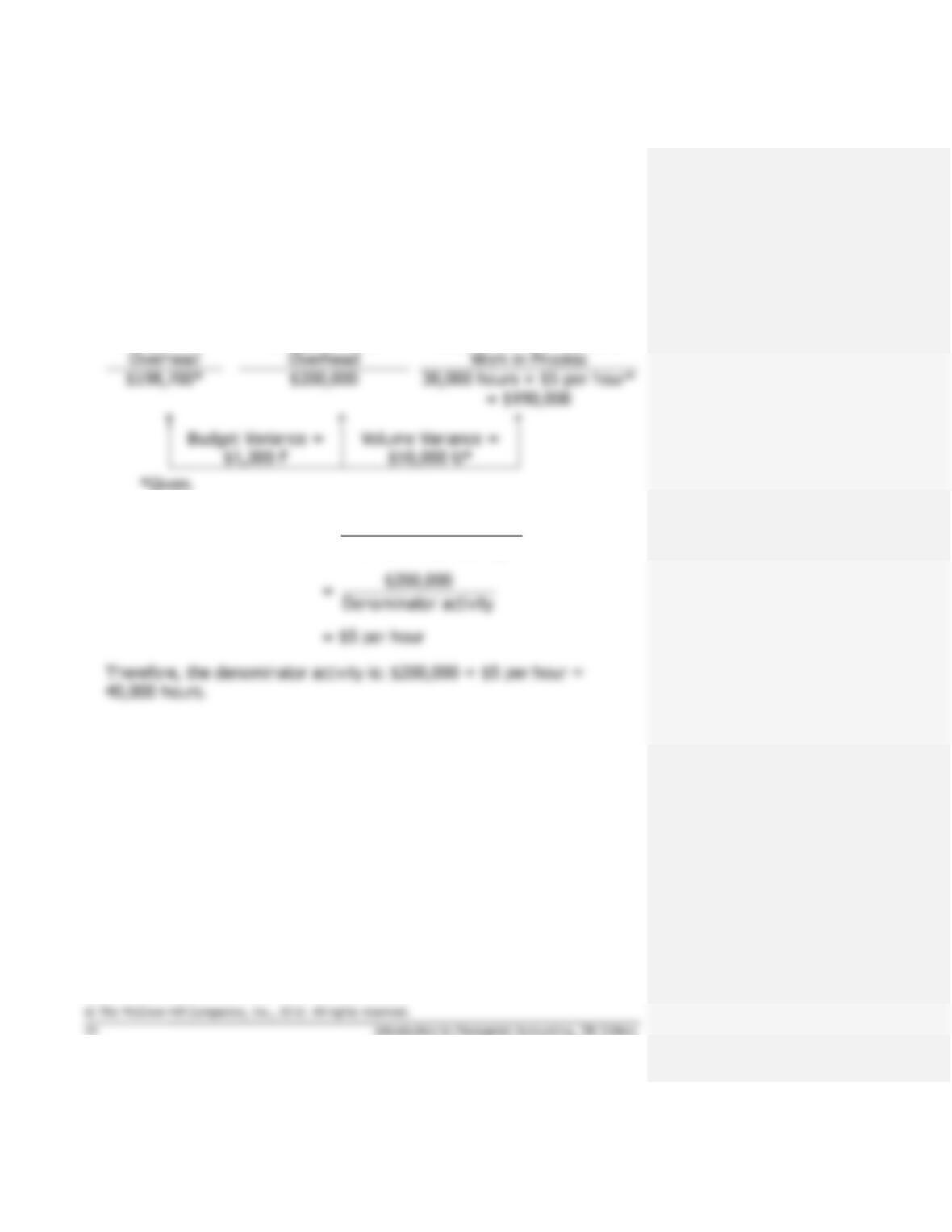
1. 9,500 units × 4 hours per unit = 38,000 hours.
2. and 3.
Actual Fixed
Budgeted Fixed
Fixed Overhead Applied to
4.
Budgeted fixed overhead
Fixed element of the =
predetermined overhead rate Denominator activity
Exercise 8A-6 (15 minutes)
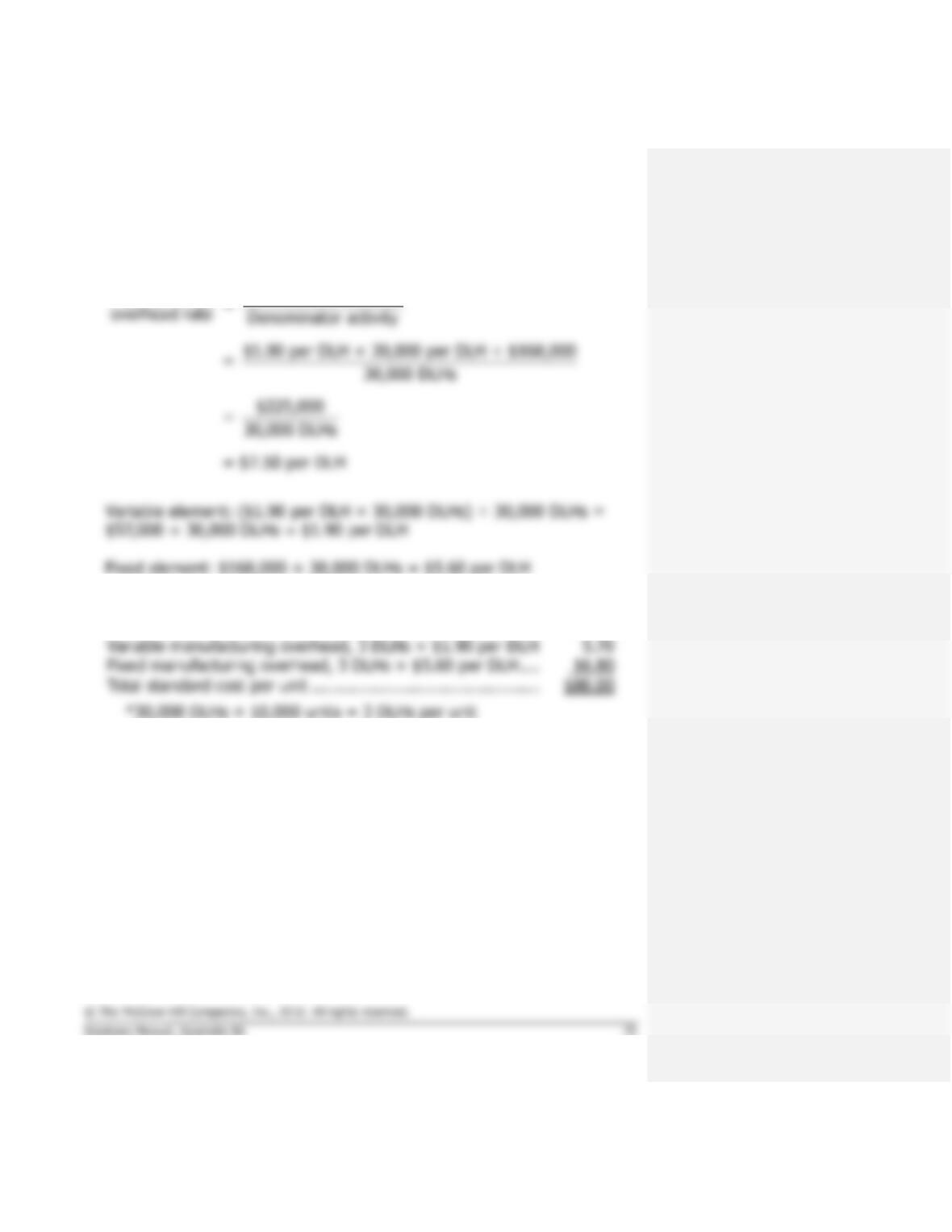
1.
Total overhead at the
denominator activity
Predetermined =
2.
Direct materials, 2.5 yards × $8.60 per yard ………………….
$21.50
Direct labor, 3 DLHs* × $12.00 per DLH ……………………….
36.00
Variable manufacturing overhead, 3 DLHs × $1.90 per DLH
Fixed manufacturing overhead, 3 DLHs × $5.60 per DLH ….
Exercise 8A–7 (15 minutes)
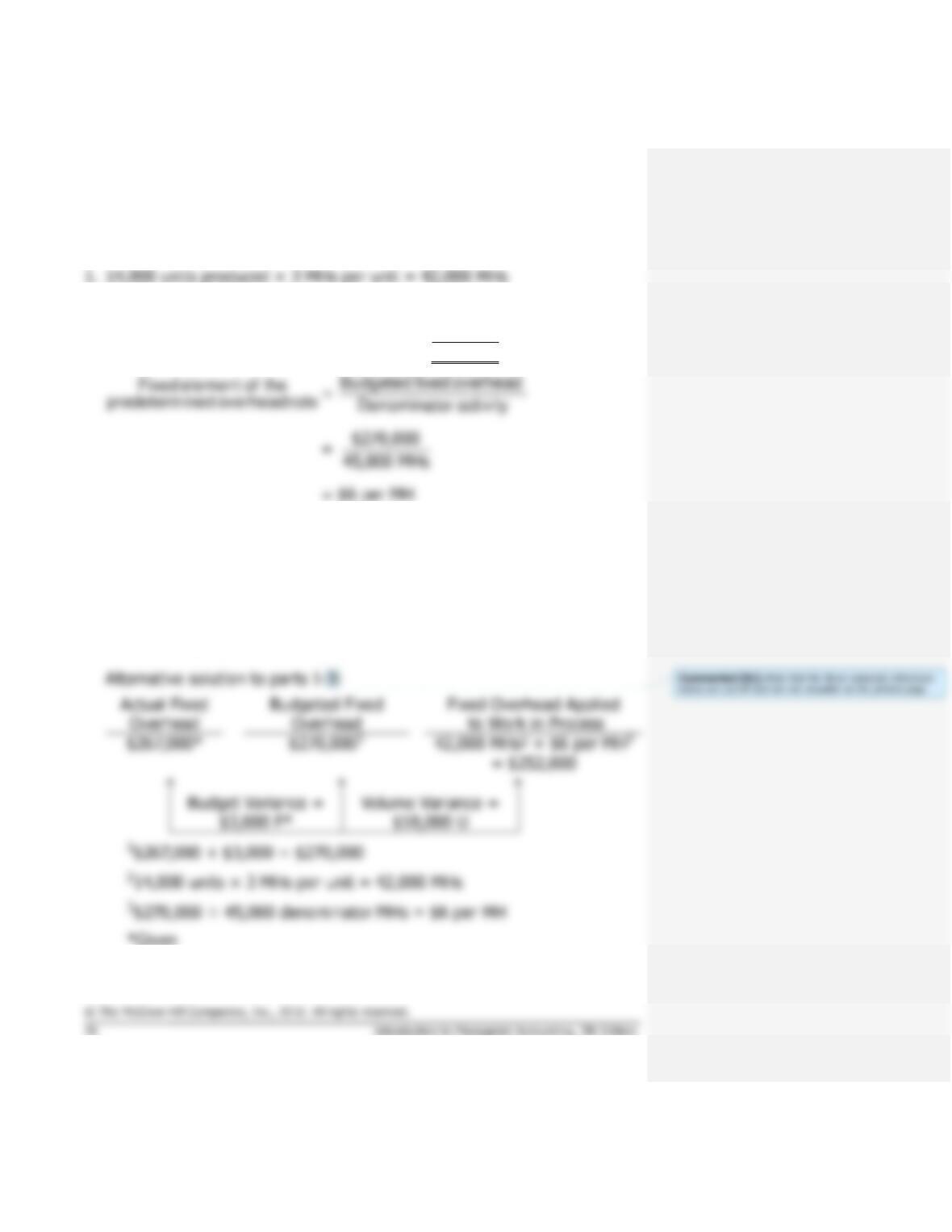
2.
Actual fixed overhead incurred …………….
$267,000
Add: Favorable budget variance …………..
3,000
Budgeted fixed overhead cost ……………..
$270,000
3.
Fixed portion of Standard
Volume Denominator
= the predetermined – hours
Variance hours
overhead rate allowed
= $6 per MH (45,000 MHs – 42,000 MHs)
= $18,000 U
æö
÷
ç÷
ç÷
ç÷
ç÷
ç
èø
*Given
Problem 8A-8A (45 minutes)
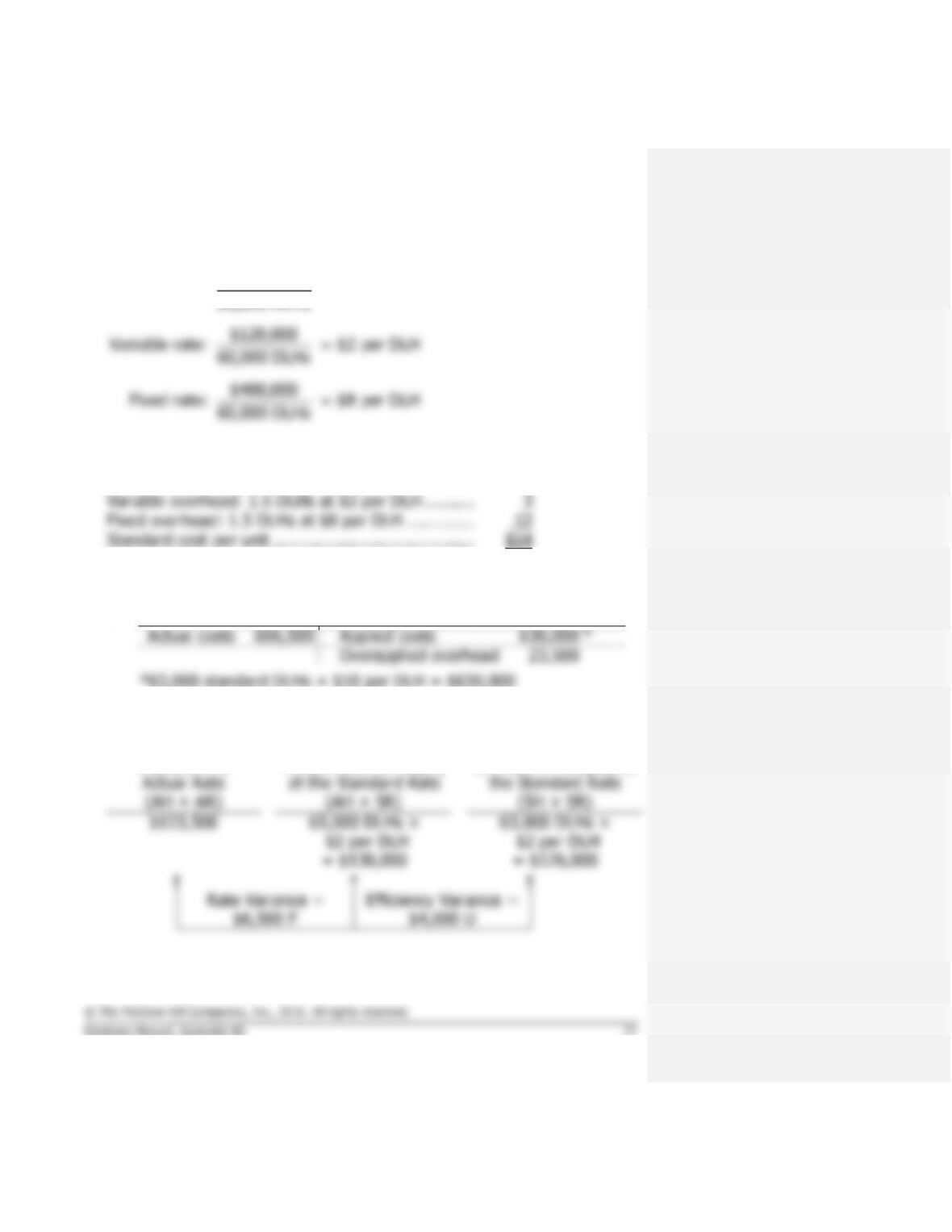
1.
$600,000
Total rate: = $10 per DLH
2.
Direct materials: 3 pounds at $7 per pound ……….
$21
Direct labor: 1.5 DLHs at $12 per DLH ………………
18
3. a. 42,000 units × 1.5 DLHs per unit = 63,000 standard DLHs.
b.
Manufacturing Overhead
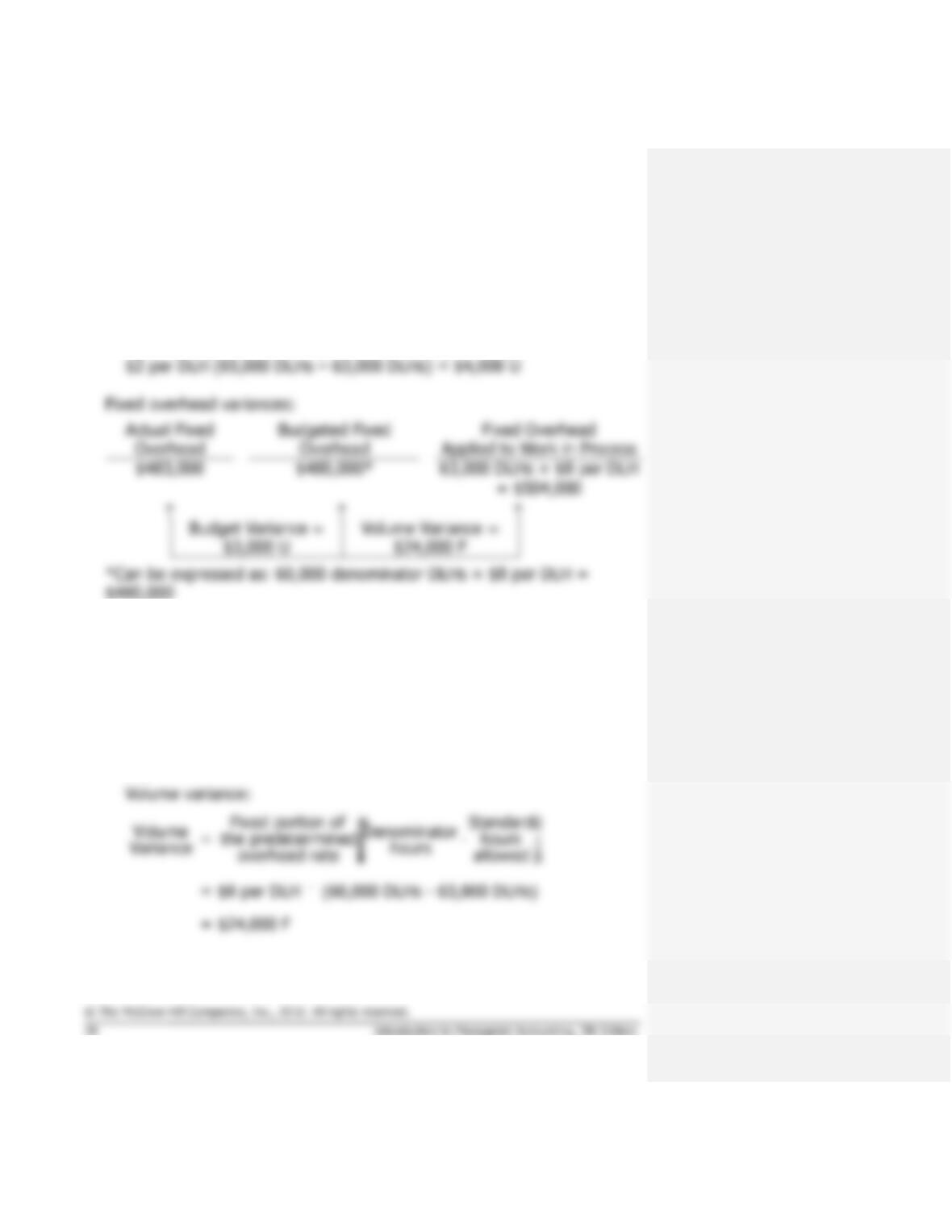
4. Variable overhead variances:
Actual Hours of
Input, at the
Actual Hours of Input,
Standard Hours
Allowed for Output, at
Problem 8A-8A (continued)
Alternative solution:
Variable overhead rate variance = (AH × AR) – (AH × SR)
($123,500) – (65,000 DLHs × $2 per DLH) = $6,500 F
Variable overhead efficiency variance = SR (AH – SH)
Alternative solution:
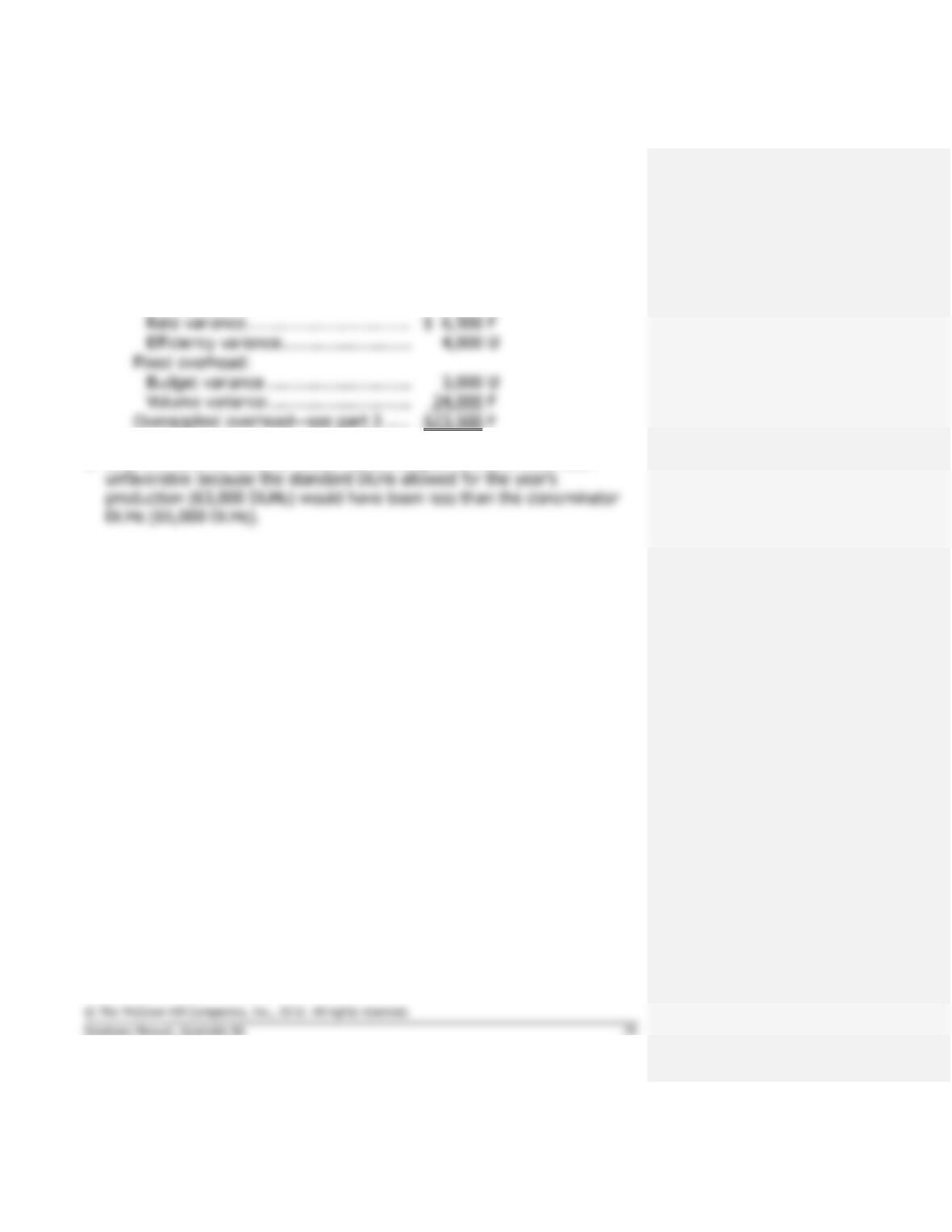
Budget variance:
Budget Actual fixed Budgeted fixed
= –
variance overhead overhead
= $483,000 – $480,000
= $3,000 U
Problem 8A-8A (continued)
The company’s overhead variances can be summarized as follows:
Variable overhead:
F
5. Only the volume variance would have changed. It would have been
Problem 8A-9A (45 minutes)
1.
$297,500
Total rate: = $8.50 per hour
35,000 hours
2. 32,000 standard hours × $8.50 per hour = $272,000.
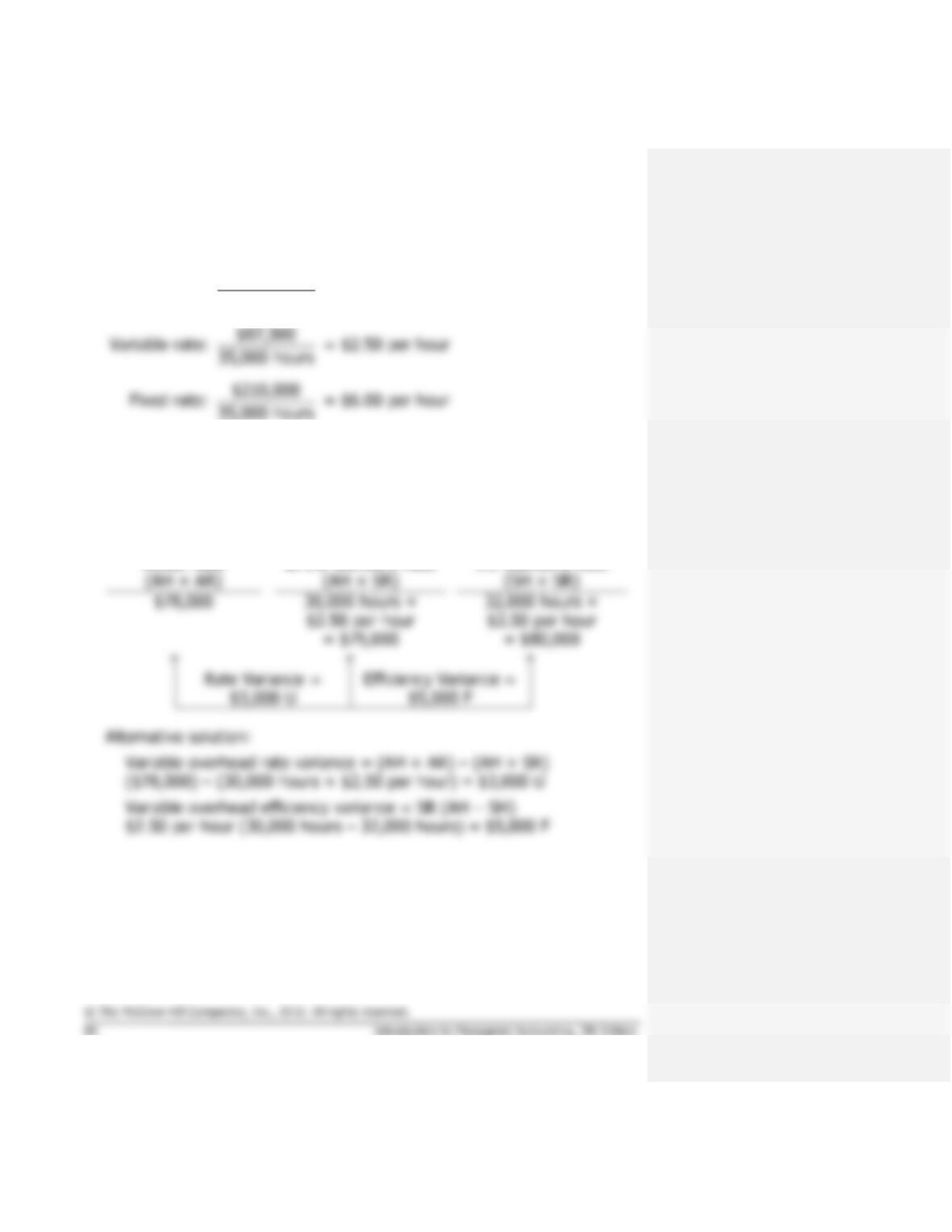
3. Variable overhead variances:
Actual Hours of
Input, at the
Actual Rate
Actual Hours of Input,
at the Standard Rate
Standard Hours
Allowed for Output, at
the Standard Rate