1.
a.
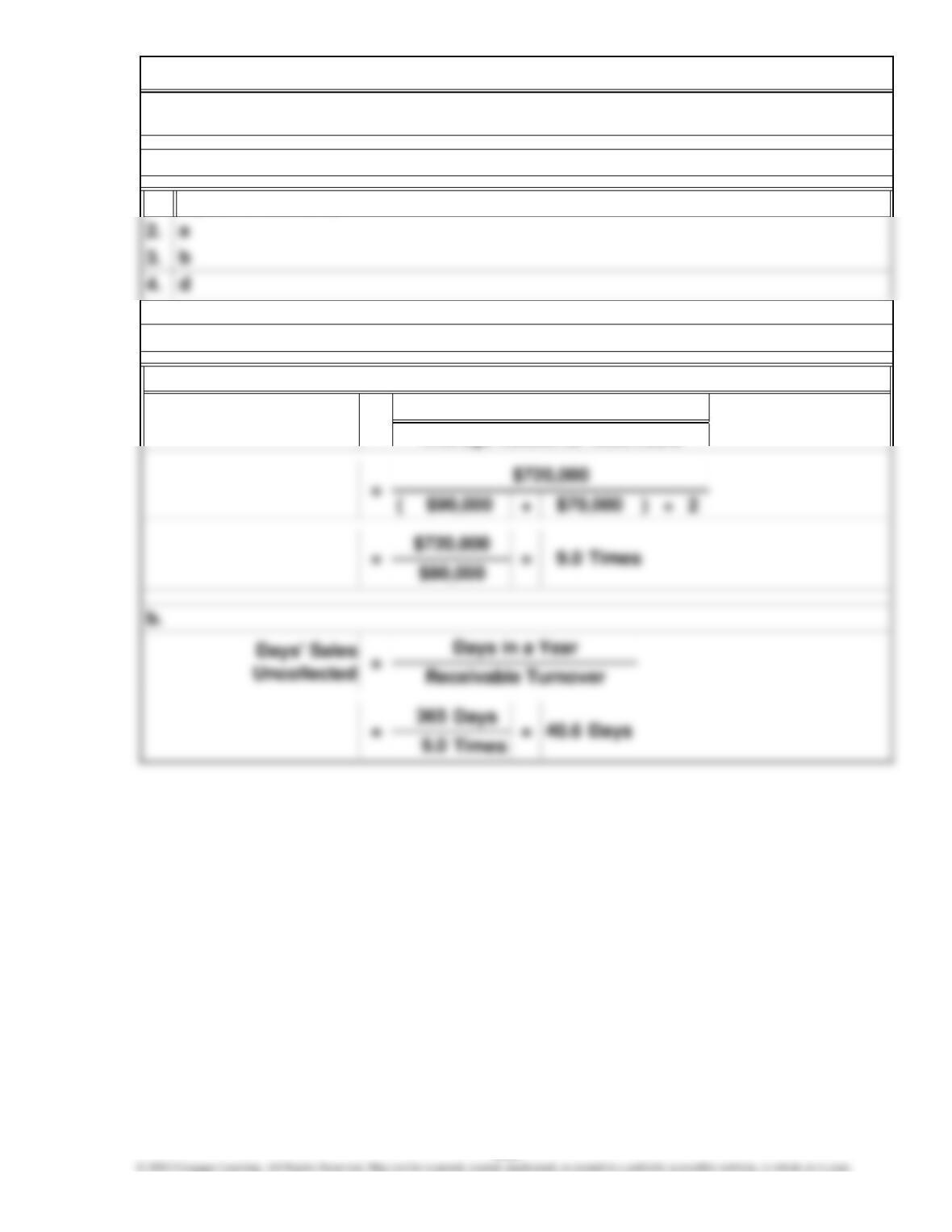
Receivable Turnover
c (also could be a)
Average Accounts Receivable
CASH AND RECEIVABLES
CHAPTER 7—Solutions
=
Chapter 7, SE 2.
Net Sales
Chapter 7, SE 1.
353
$ 250
$7,294.15
981.36
$8,275.51
Chapter 7, SE 5.
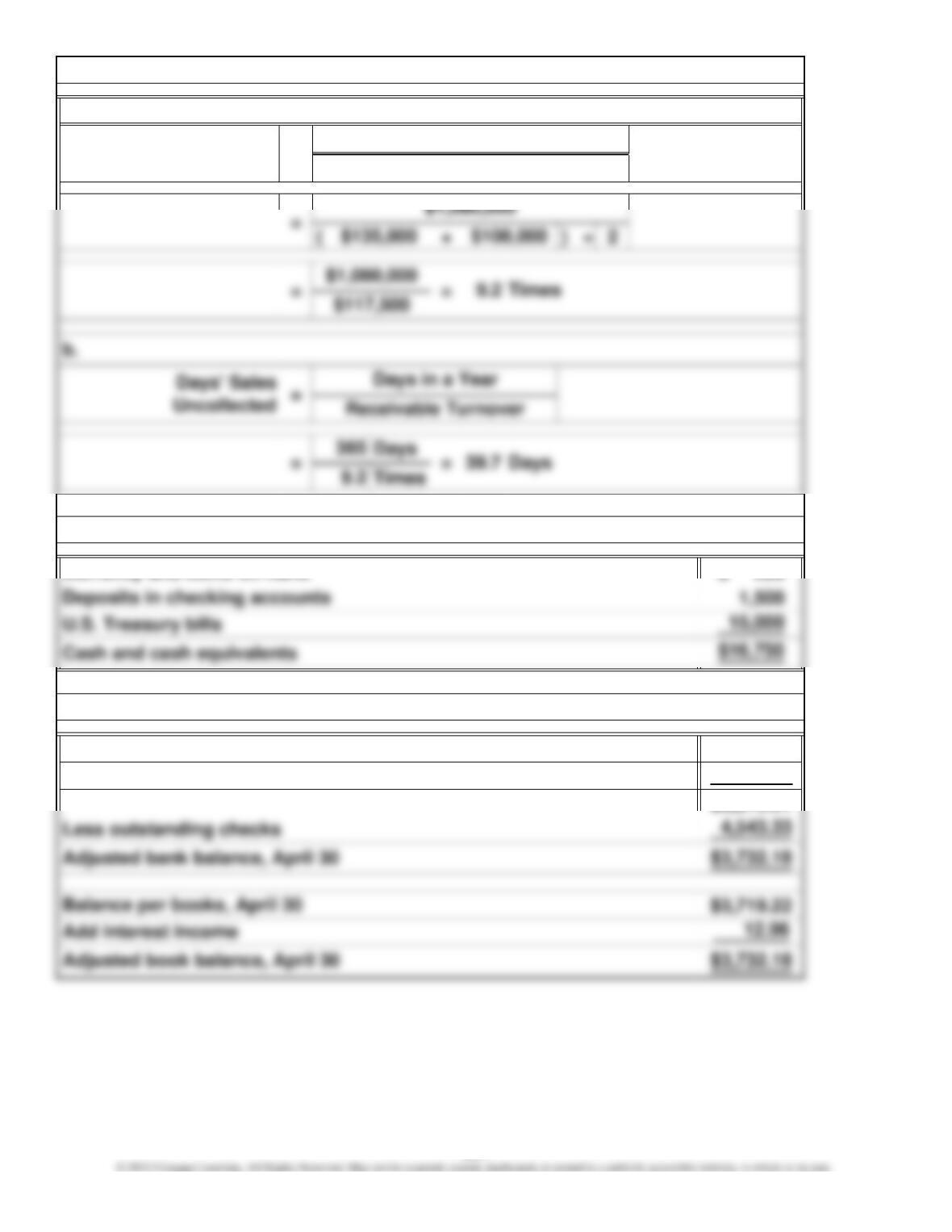
Balance per bank, April 30
Add deposits in transit
Average Accounts Receivable
Chapter 7, SE 3.
Net Sales
=
Receivable Turnover
Chapter 7, SE 4.
Currency and coins on hand
a.
354
$4,862.77
654.24
31 7,500
30 102,000
102,000
Chapter 7, SE 6.
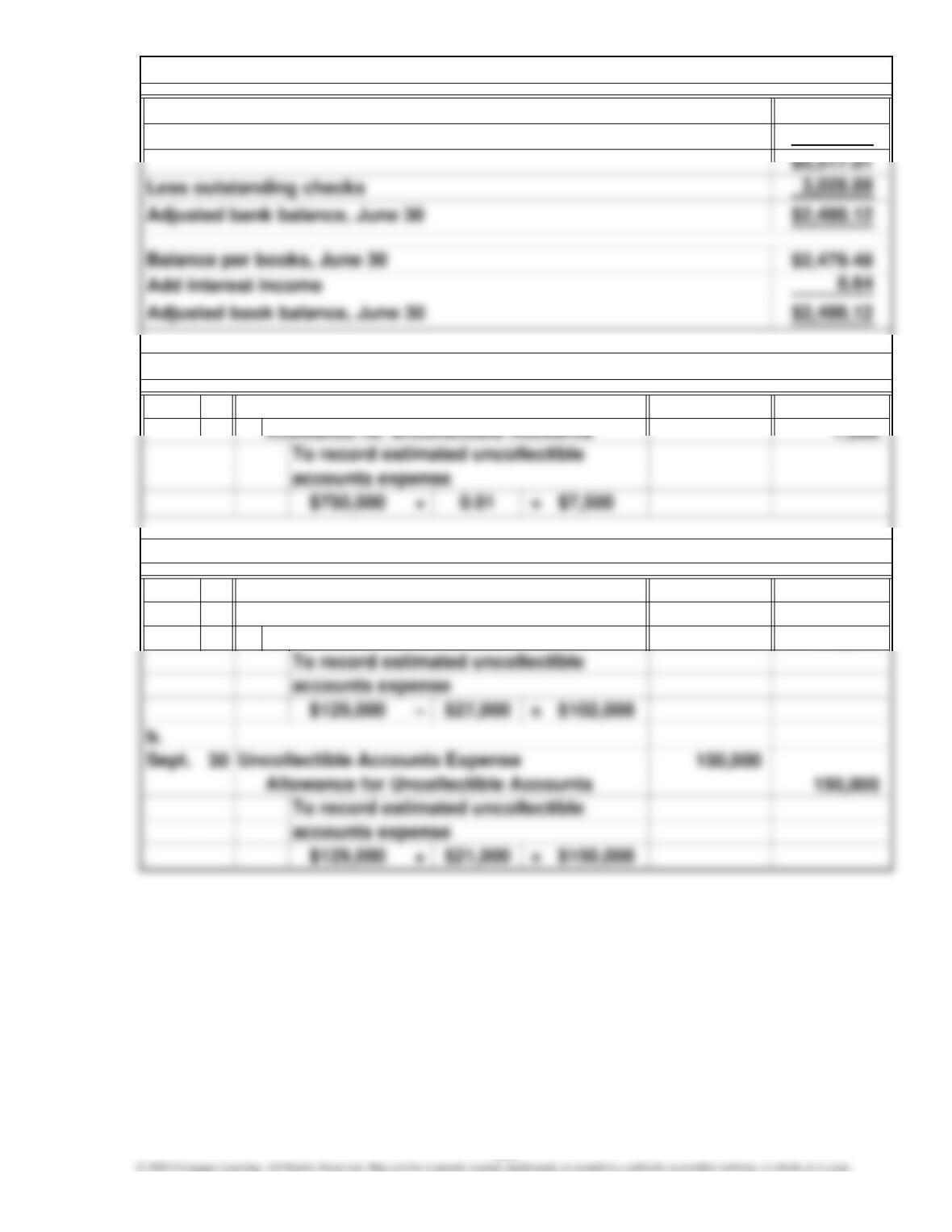
Balance per bank, June 30
Add deposits in transit
Chapter 7, SE 7.
Oct. Uncollectible Accounts Expense
Chapter 7, SE 8.
a.
Sept. Uncollectible Accounts Expense
Allowance for Uncollectible Accounts
355
30 68,000
30 100,000
100,000
$25,400 $23,200
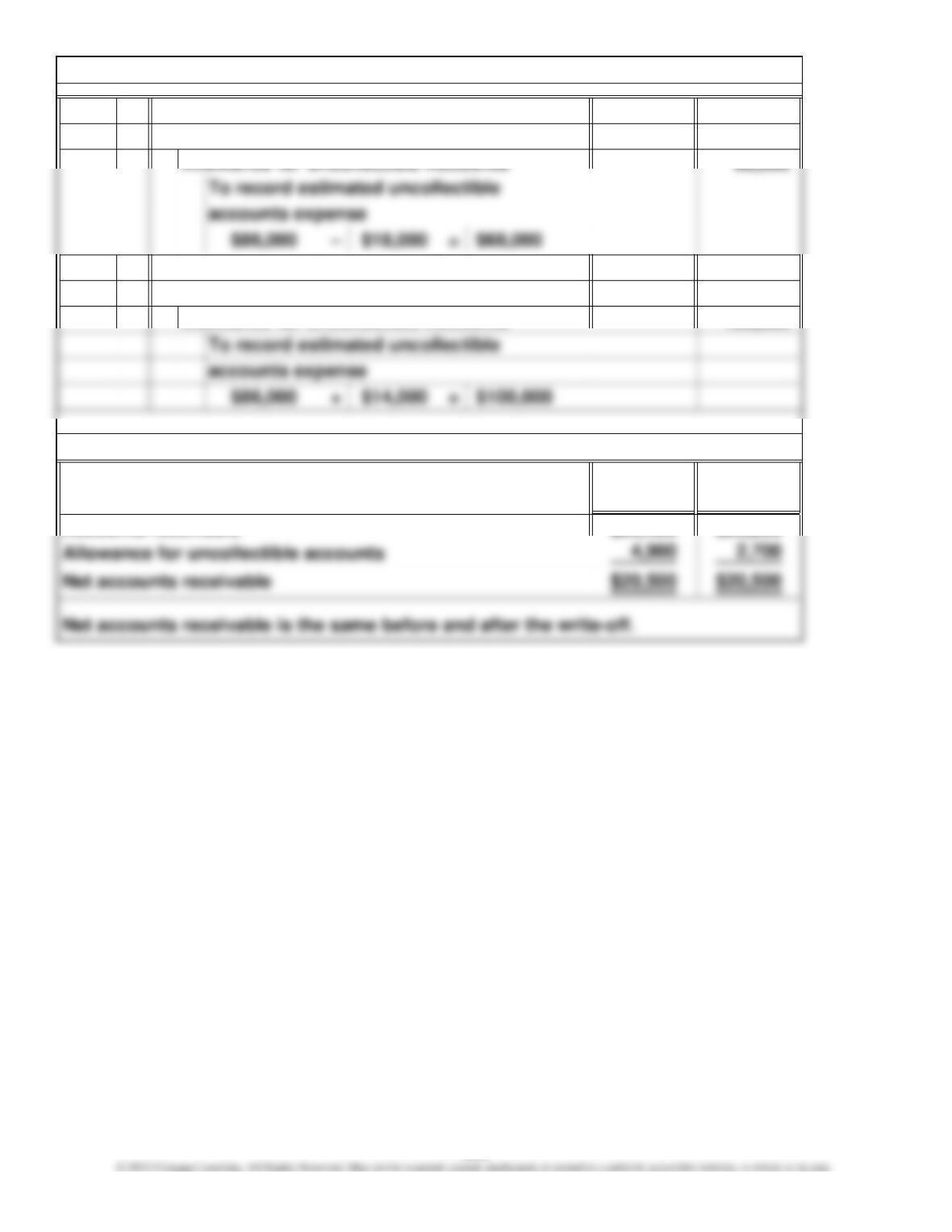
Accounts receivable
Before
Write-Off
After
Write-Off
b.
Allowance for Uncollectible Accounts
June Uncollectible Accounts Expense
Chapter 7, SE 9.
Uncollectible Accounts Expense
a.
Chapter 7, SE 10.
June
356
6
× 9 / 100 × 90 / 365 = $443.84
10
×
Time Interest
b. Interest at maturity: $443.84
a. Maturity date:
Rate of
Interest
Days remaining in August (31 – 25)
=
November 23
Principal ×
Chapter 7, SE 11.
$20,000
Chapter 7, SE 12.
$517.81
a. Maturity date:
Days remaining in March (31 – 21)
June 19
Interest
b. Interest at maturity:
Rate of
Interest
=
Principal
Time
××
357
1.
2.
3.
4.
1.
2.
3.
Chapter 7, E 1.
Both Allowance for Uncollectible Accounts and Accumulated Depreciation are
contra-asset accounts, but their purposes are different. Allowance for Uncol-
A decreasing receivable turnover and an increasing days’ sales uncollected
from period to period, especially in the absence of changes in credit policies
The primary advantage when a company finances its receivables is improved
financial flexibility (cash flows).
The results of increasing credit terms from 15 to 30 days are a smaller receiv-
able turnover and more average days to collect. These changes occur because
The matching rule is violated by the direct charge-off method because uncol-
Chapter 7, E 2.
be unethical.
Seasonal businesses have varying needs for cash throughout the year. These
include toy companies, college textbook publishers, amusement parks, con-
An accrual of interest income is not required if the interest income earned as
1.
2.
$ 5,600
Chapter 7, E 4.
Average Accounts Receivable
= Net Sales
Currency and coins on hand
Chapter 7, E 3.
a. Receivable Turnover
a
b
Key Ratios:
Chapter 7, E 5.
359
$35,510.88
4,509.62
$40,020.50
30,300
30,300
a. 1,475
1,475
b. 1,875
1,875
Chapter 7, E 6.
Balance per bank, May 31
Chapter 7, E 7.
Allowance for Uncollectible Accounts
Uncollectible Accounts Expense
Allowance for Uncollectible Accounts
Chapter 7, E 8.
Uncollectible Accounts Expense
Uncollectible Accounts Expense
Allowance for Uncollectible Accounts
Add deposits in transit
360
22,400
22,400
Adjusting entry:
Write-offs 17,500Credit sales
Uncollectible Accounts Expense
Allowance for Uncollectible Accounts
1. T accounts prepared to determine ending balances:
Collections 1,475,000
Accounts Receivable
Chapter 7, E 9.
2. a. Percentage of net sales method applied
1,600,000
215,000
Bal.
$322,500
20,600
$301,900
20,600
21,150
21,150
$322,500
19,350
Balance sheet presentation:
Accounts receivable
Less allowance for uncollectible accounts
Bal.
Less allowance for uncollectible accounts
Accounts receivable, net
Chapter 7, E 9. (Continued)
Balance sheet presentation:
Accounts receivable
2. b. Aging of accounts receivable method applied
Adjusting entry:
Uncollectible Accounts Expense
Allowance for Uncollectible Accounts
To record estimated uncollectible
362
a.
85,500
b.
94,000
94,000
c.
Chapter 7, E 10.
not be expected to be exactly the same. The aging of accounts receivable
Percentage of net sales method:
Accounts receivable aging method:
Uncollectible Accounts Expense
Uncollectible Accounts Expense
Allowance for Uncollectible Accounts
method is usually considered more reliable because it is a direct valuation
The results are different because these are estimation methods. They would
To record estimated uncollectible accounts
363
a.
July 31
b.
July 31
c.
Uncollectible Accounts Expense
33,400Allowance for Uncollectible Accounts
33,400
32,200
Uncollectible Accounts Expense
Chapter 7, E 11.
Journal entries for uncollectible accounts prepared
Percentage of net sales method:
The results are different because these are estimation methods. They would not
be expected to be exactly the same. The aging of accounts receivable method
expense (The debit balance in the allowance
To record estimated uncollectible accounts
Accounts receivable aging method:
$139,600 $130,000
12,800 3,200
$126,800 $126,800
a. × 10 / 100 × 90 / =
$38,760
Chapter 7, E 13.
Chapter 7, E 12.
Bal.
Sale
Collection
Net accounts receivables
4,800
Accounts Receivable
365
$955.73
Before
Write-Off
After
Write-Off
Accounts receivable
Allowance for uncollectible accounts
130,000
14,400
365
13
× 10 / 100 × 90 / =
30
× 12 / 100 × 30 / =
Interest in 2011: $147.95
$15,000 365
×
Rate of
Interest
Chapter 7, E 15.
=
Days remaining in December (31 – 1)
Interest
$147.95
$72,000 $1,775.34
×× Time
Rate of
InterestPrincipal
= Interest
Time
Interest at maturity: $1,775.34
Chapter 7, E 14.
Maturity date: May 16
Days remaining in February (28 – 15)
Maturity date: March 1
×
Principal
365
366
a.
× 10 / 100 × 60 / =
b.
Maturity date:
22
$39.45
×
March 9, accepted a 60-day, 12% note for $1,500
×
Interest at maturity:
$2,400 $39.45365
Chapter 7, E 16.
January 5, accepted a 60-day, 10% note for $2,400
Rate of
Interest
Days remaining in March (31 – 9)
Maturity date: March 6
Principal Time
May 8
= Interest
367
$281,434.16
$311,533.84
14,605.28
$296,928.56
$300,070.56
$ 792.00
70.00
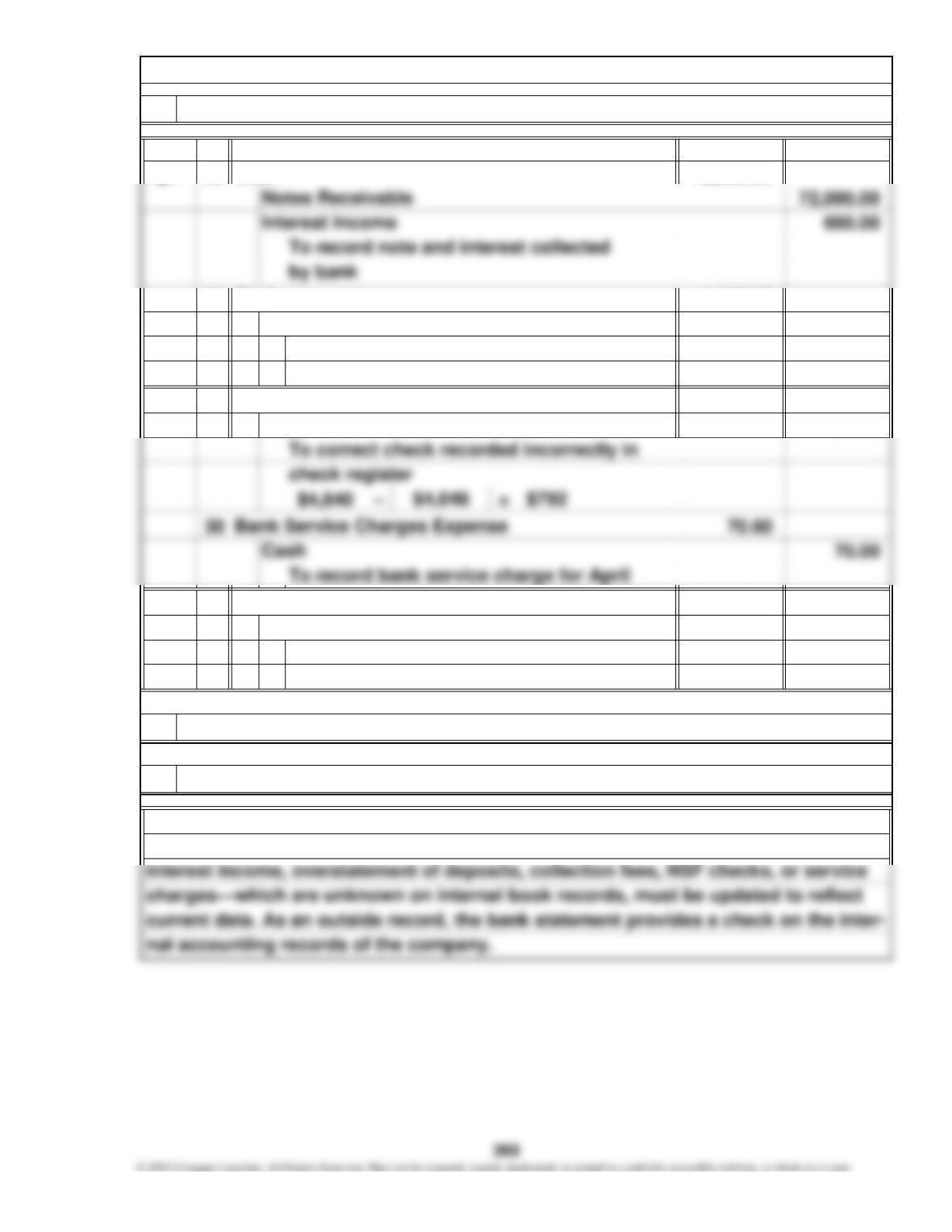
1. Bank reconciliation prepared
Merry Corporation
Bank Reconciliation
April 30, 2011
Balance per bank, April 30
Less outstanding checks
Adjusted bank balance, April 30
Check recorded incorrectly in check register
Bank service charge
Less:
368
30 72,600.00
30 1,120.00
1,120.00
30 792.00
792.00
30 2,280.00
2,280.00
Cash
A bank reconciliation is a necessary internal control because certain events and
items—for example, a note receivable collected by a bank, interest income on a note,
3. The adjusted cash balance of $296,928.56 should appear on the balance sheet.
To record NSF check of Jim Hall returned
by bank
account balance
To record interest on average bank
Journal entries prepared
Advertising Expense
4. User Insight: Importance of bank reconciliation discussed
Accounts Receivable
CashApr.
Interest Income
Chapter 7, P 1. (Continued)
Cash
Cash
2011
2.
74,500
a.
=×
Uncollectible Accounts Expense
Bal.
1.
Sales returns and allowances
Percentage of net sales method:
Chapter 7, P 2.
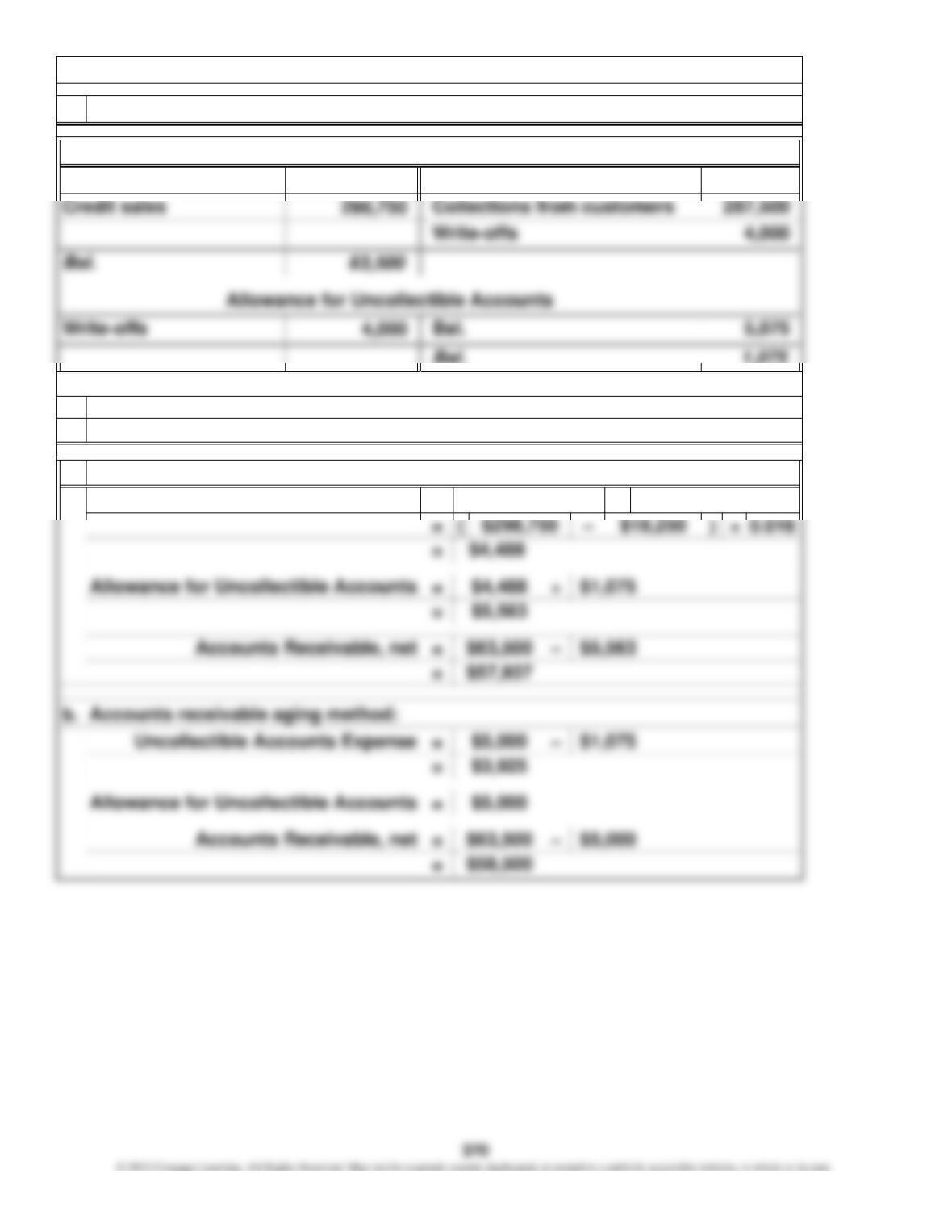
T accounts prepared and data entered
2. Uncollectible accounts expense and ending balance of Allowance for
Accounts Receivable
18,250
Uncollectible Accounts determined
Net credit sales
1.6 percent
( * + **) ÷ 2
4.
Because the percentage of net sales method and the accounts receivable aging
method are both estimates and are based on different assumptions, it is expected
that they would differ in their effects. Also, the amount of uncollectible accounts
Chapter 7, P 2. (Continued)
$18,250
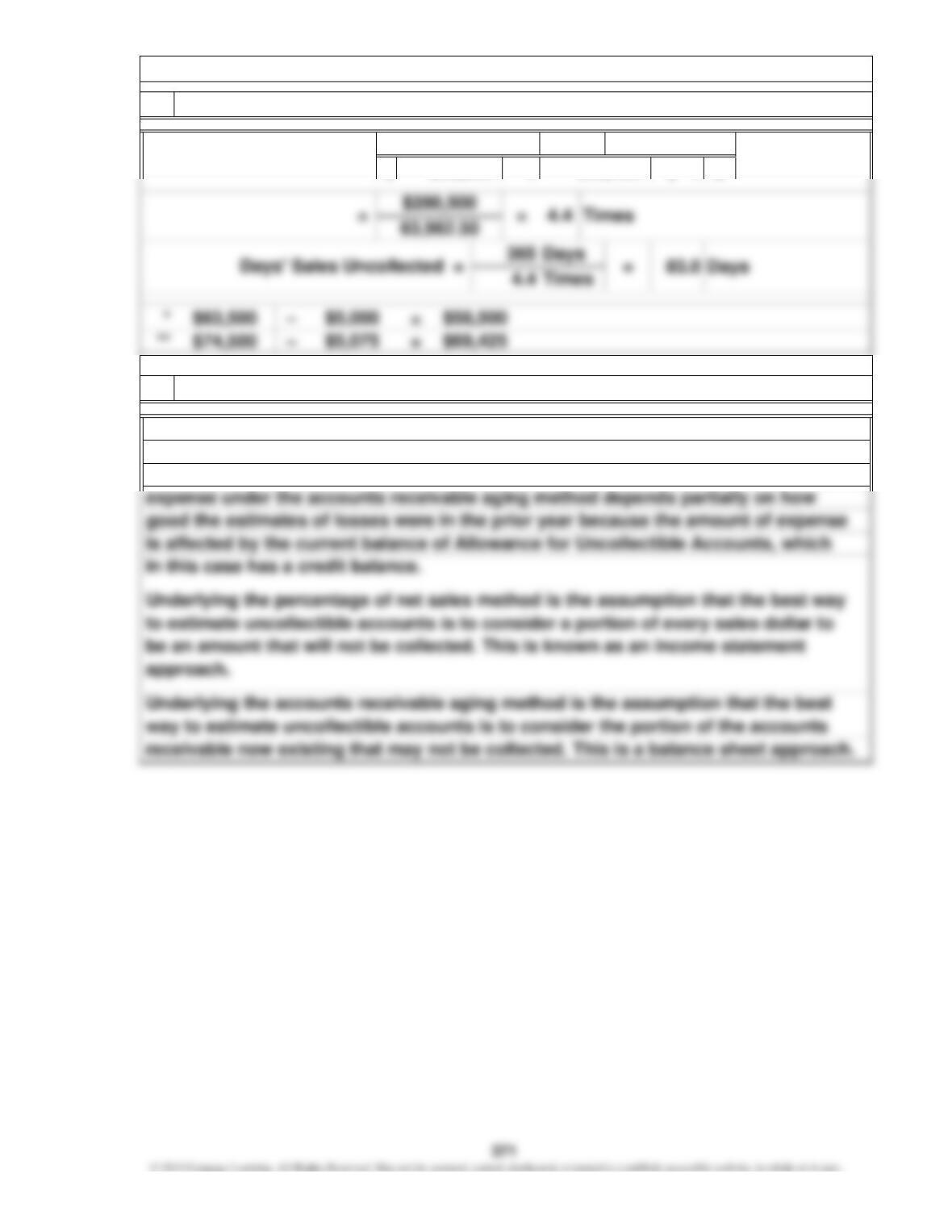
3. Receivable turnover and days’ sales uncollected calculated
–
Receivable Turnover =
$298,750
$58,500 $69,425
User Insight: Difference in methods and rationales discussed
1–30 31–60 61–90 Over
Not Yet Days Days Days 90 Days
Total Due Past Due Past Due Past Due Past Due
$ 45,215
Accounts Receivable
Beginning balance
Account
Balance
Customer
Chapter 7, P 3.
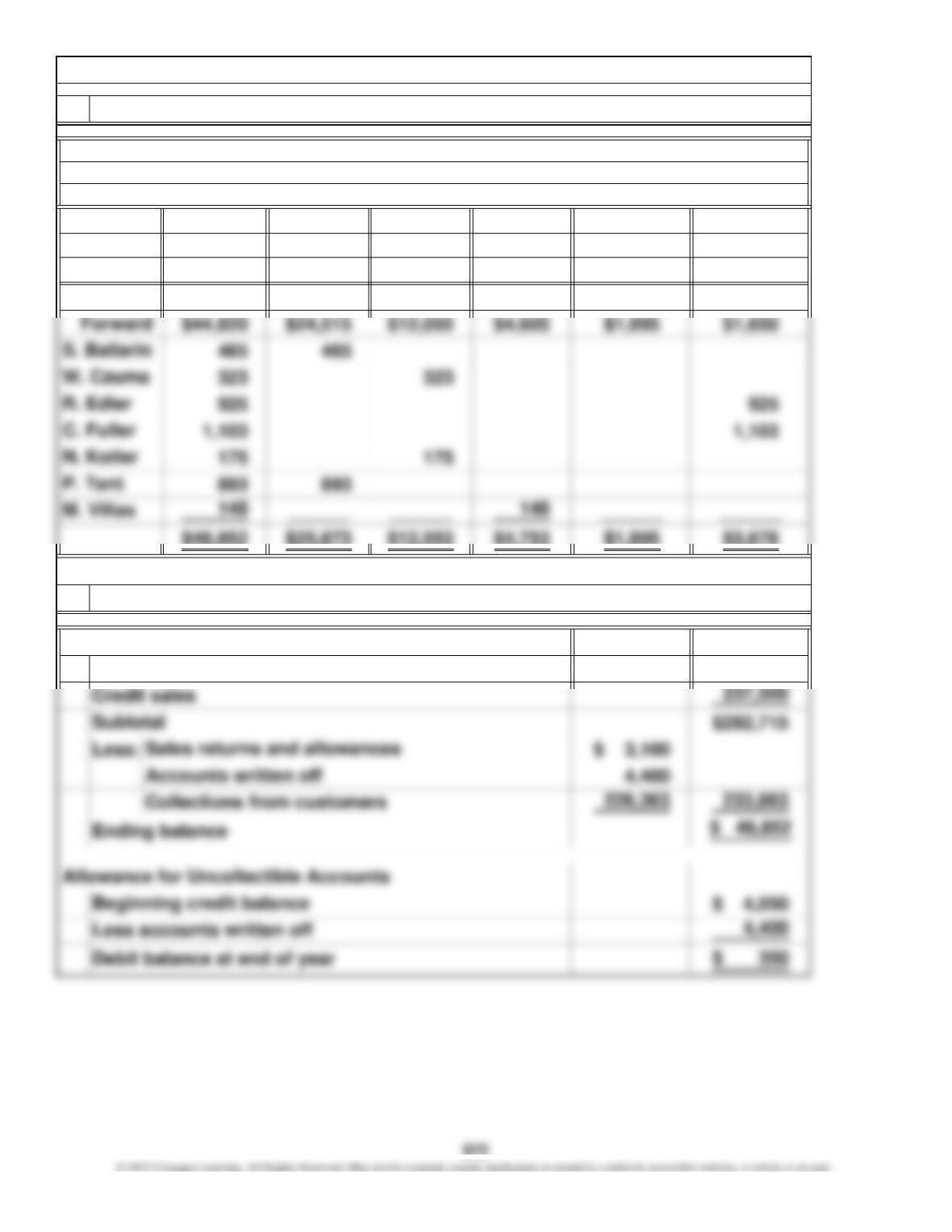
1. Aging analysis completed
Thorn Company
Aging Analysis of Accounts Receivable
December 31, 2011
2. End-of-year balances computed