Wild and Shaw, Financial & Managerial Accounting, 8e Solutions Manual: Chapter 7
435
Chapter 7
Accounting for Receivables
QUESTIONS
1. When customers use credit cards, the selling companies can avoid having to directly
evaluate the credit standing of their customers. They also avoid the risk of bad debts and
2. Revenues and expenses usually are not matched under the direct write-off method because
3. The accounting constraint of materiality suggests that the requirements of accounting
4. A note represents a written acknowledgment by the debtor of both the debt and its amount
and terms. This results in the note having greater legal significance.
5. Writing off a bad debt against the Allowance account does not reduce the estimated
realizable value of a company’s accounts receivable because the write-off reduces the
6. The adjusted balances of Bad Debts Expense and Allowance for Doubtful Accounts are
virtually never equal because the expense amount reflects only the events of the current
7. Apple lists its accounts receivable as “Accounts receivable, less allowances of $58 and $53,
respectively” ($ millions) on its balance sheet. This means that Apple’s allowance is $58
million as of September 30, 2017, and $53 million as of September 24, 2016.
Wild and Shaw, Financial & Managerial Accounting, 8e Solutions Manual: Chapter 7
9. Samsung titles its accounts receivable as “Trade receivables.” Samsung reports Trade
receivables (in KRW millions) of ₩27,695,995.
10. Samsung titles its accounts receivable as “Trade receivables” and it reports them as part of
current assets. There is no allowance listed on the face of the balance sheet.
QUICK STUDIES
Quick Study 7-1 (15 minutes)
1.
Cash …………………………………………………………………….
19,000
Credit Card Expense* ……………………………………………
1,000
Cost of Goods Sold ………………………………………………
15,000
2.
Cash …………………………………………………………………….
4,800
Credit Card Expense* ……………………………………………
200
Cost of Goods Sold ………………………………………………
3,000
Quick Study 7-2 (10 minutes)
Oct. 1
Bad Debts Expense ……………………………………………..
50,000
Wild and Shaw, Financial & Managerial Accounting, 8e Solutions Manual: Chapter 7
Quick Study 7-3 (10 minutes)
Oct. 30
Accounts Receivable—P.Moore …………………………..
50,000
Bad Debts Expense ………………………………………..
Oct. 30
50,000
Accounts Receivable— P. Moore ……………………
Quick Study 7-4 (15 minutes)
1. DW direct write-off method
2. A allowance method
Quick Study 7-5 (15 minutes)
1.
Jan. 31
Allowance for Doubtful Accounts ………………………
800
Accounts Receivable—C. Green …………………..
800
Write off account.
2.
Mar. 9
Accounts Receivable—C. Green* ……………………….
300
Allowance for Doubtful Accounts …………………
300
300
Accounts Receivable—C. Green …………………..
300
Record payment on a receivable.
Wild and Shaw, Financial & Managerial Accounting, 8e Solutions Manual: Chapter 7
Quick Study 7-6 (10 minutes)
1.
Before Write-Off
2.
After Write-Off
Accounts receivable …………………………………..
$50,000
$49,700
Realizable value of accounts receivable ……..
$48,000
Quick Study 7-7 (15 minutes)
1.
Dec. 31
Bad Debts Expense …………………………………………
885
2.
Desired balance in allowance = $1,485 (part 1)
Adjustment required = $1,485 cr. + $300 dr. = $1,785
Quick Study 7-8 (15 minutes)
Dec. 31
Bad Debts Expense …………………………………………
1,400
Wild and Shaw, Financial & Managerial Accounting, 8e Solutions Manual: Chapter 7
Quick Study 7-9 (20 minutes)
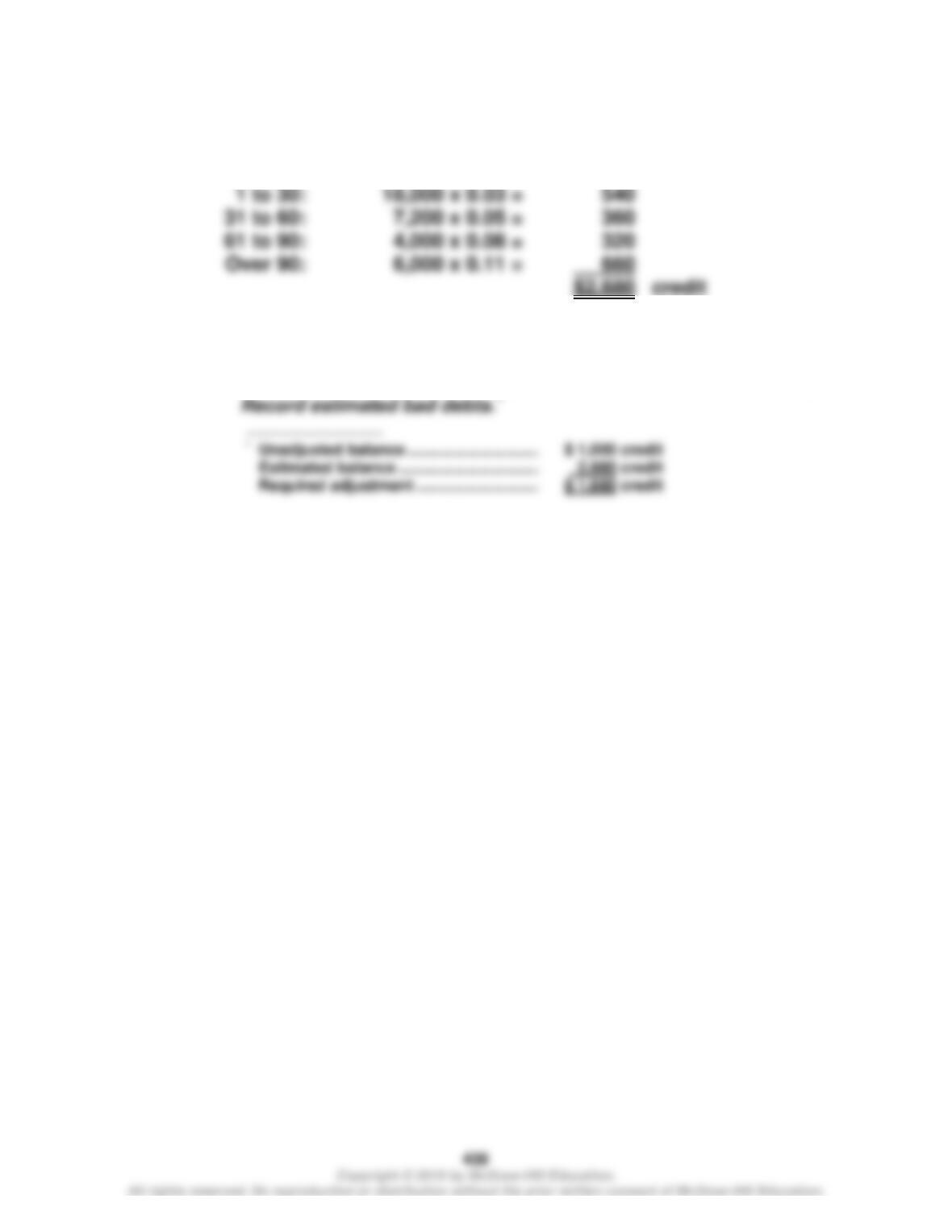
1. Estimated balance of allowance for doubtful accounts:
Not due:
$80,000 x 0.01 =
$ 800
2.
Dec. 31
Bad Debts Expense ……………………………………….
1,680
Allowance for Doubtful Accounts …………….
1,680
Wild and Shaw, Financial & Managerial Accounting, 8e Solutions Manual: Chapter 7
Quick Study 7-10 (20 minutes)
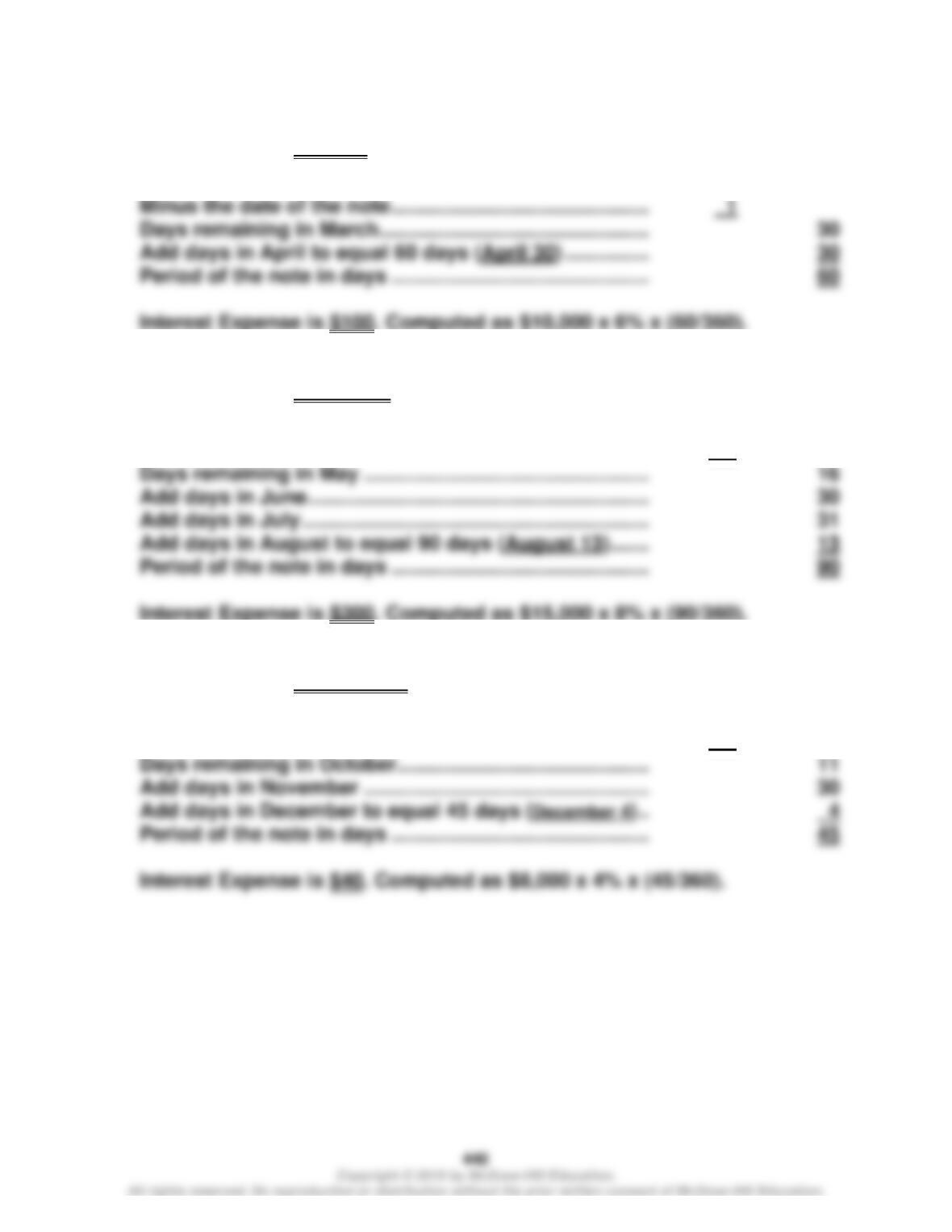
1. Maturity date is April 30, which is computed as follows:
Days in March ………………………………………………………… 31
2. Maturity date is August 13, which is computed as follows:
Days in May ……………………………………………………………. 31
Minus the date of the note ………………………………………. 15
3. Maturity date is December 4, which is computed as follows:
Days in October ……………………………………………………… 31
Minus the date of the note ………………………………………. 20
Wild and Shaw, Financial & Managerial Accounting, 8e Solutions Manual: Chapter 7
Quick Study 7-11 (15 minutes)
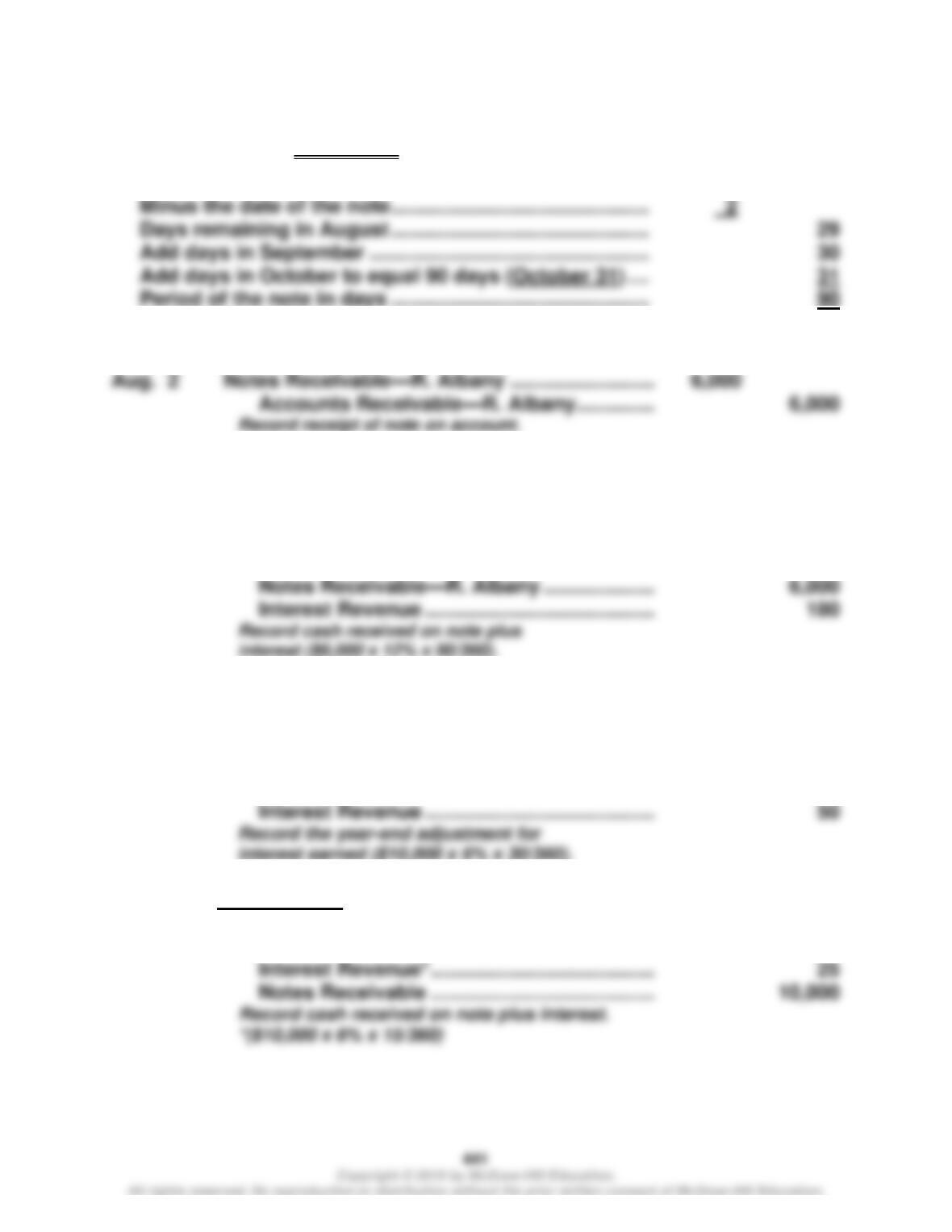
1. Maturity date is October 31, which is computed as follows:
Days in August ………………………………………………………. 31
2.
Quick Study 7-12 (10 minutes)
Oct. 31 Cash ………………………………………………………….. 6,180
Quick Study 7-13 (15 minutes)
1.
Dec. 31 Interest Receivable …………………………………….. 50
2. Maturity date
Jan. 15 Cash ………………………………………………………….. 10,075
Interest Receivable ………………………………. 50
Wild and Shaw, Financial & Managerial Accounting, 8e Solutions Manual: Chapter 7
442
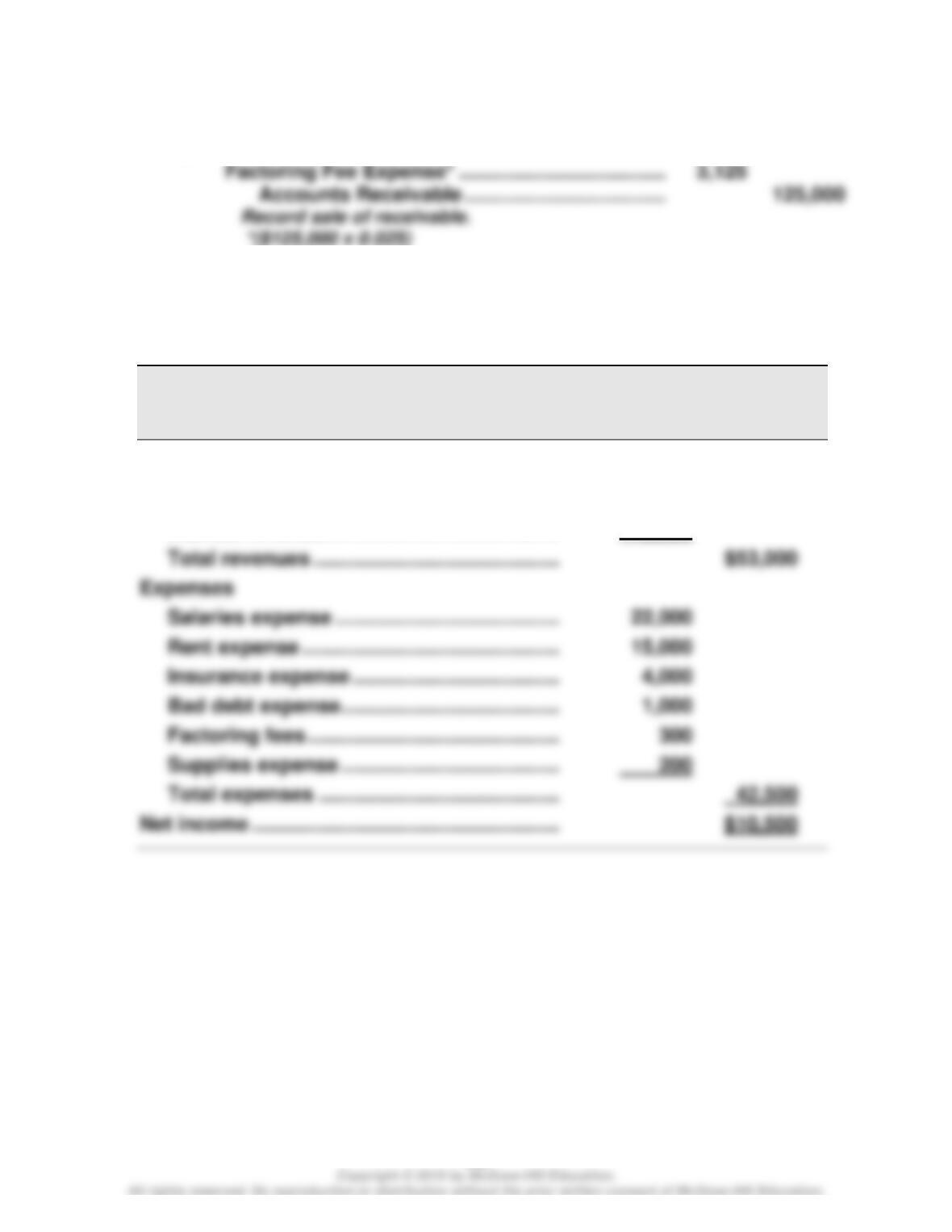
Quick Study 7-14 (10 minutes)
May 1
Cash ……………………………………………………………..
121,875
Quick Study 7-15 (15 minutes)
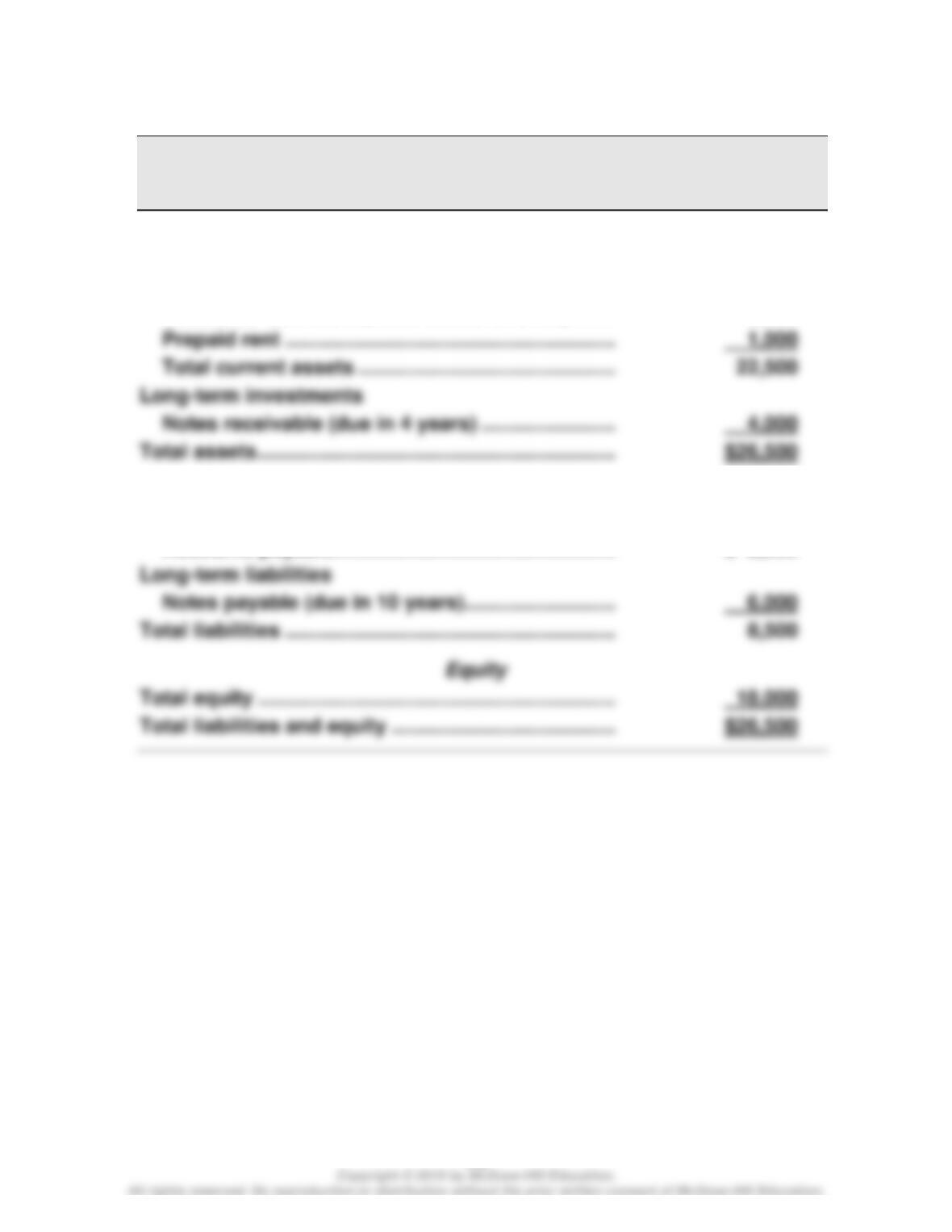
FAIR TRADER CO.
Income Statement
For Year Ended December 31
Revenues
Sales …………………………………………………… $50,000
Interest revenue …………………………………… 3,000
Wild and Shaw, Financial & Managerial Accounting, 8e Solutions Manual: Chapter 7
443
Quick Study 7-16 (15 minutes)
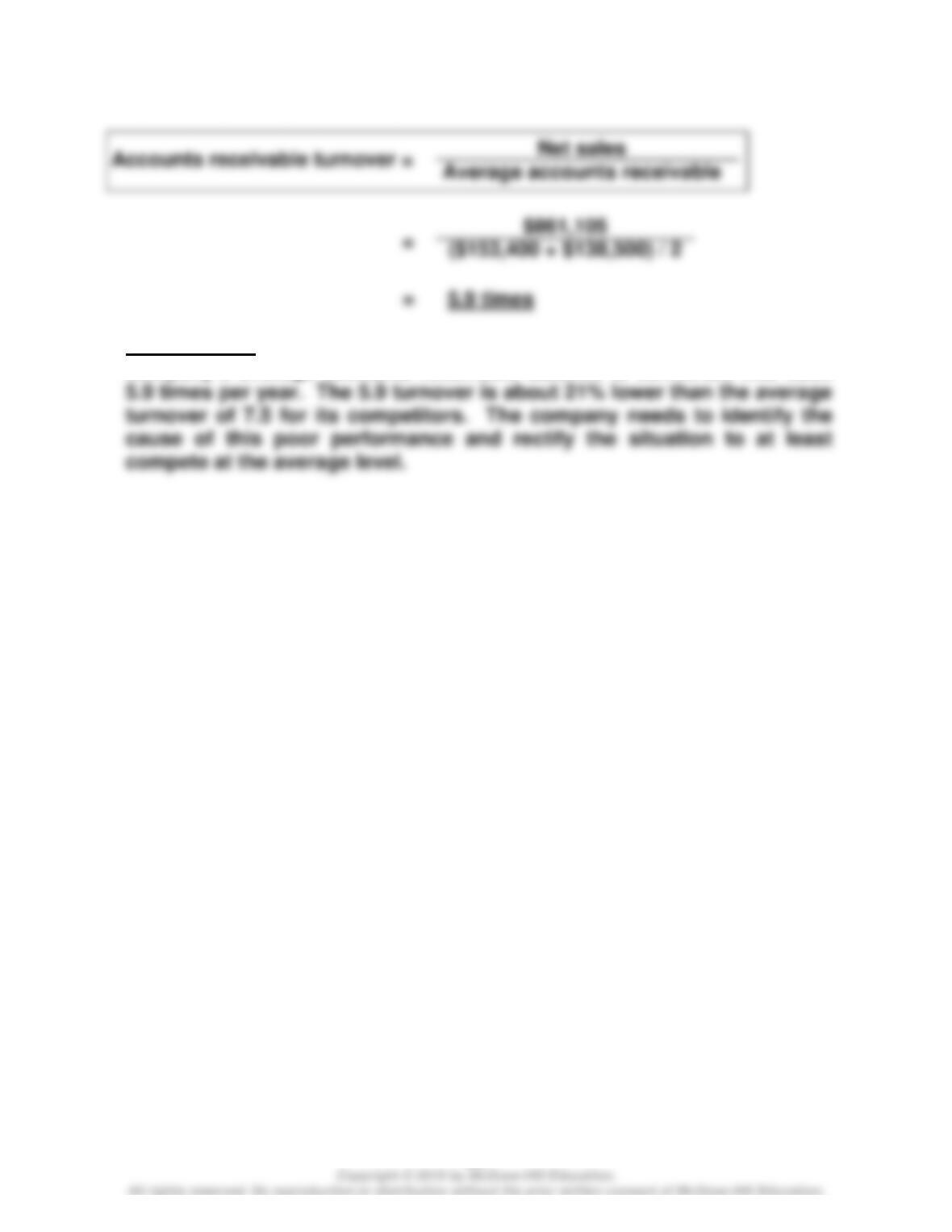
BENNETT CO.
Balance Sheet
December 31
Assets
Current assets
Cash ……………………………………………………………… $12,000
Accounts receivable (net of $500 allowance) …….. 9,500
Liabilities
Current liabilities
Accounts payable ………………………………………….. $ 2,500
Wild and Shaw, Financial & Managerial Accounting, 8e Solutions Manual: Chapter 7
444
Quick Study 7-17 (10 minutes)
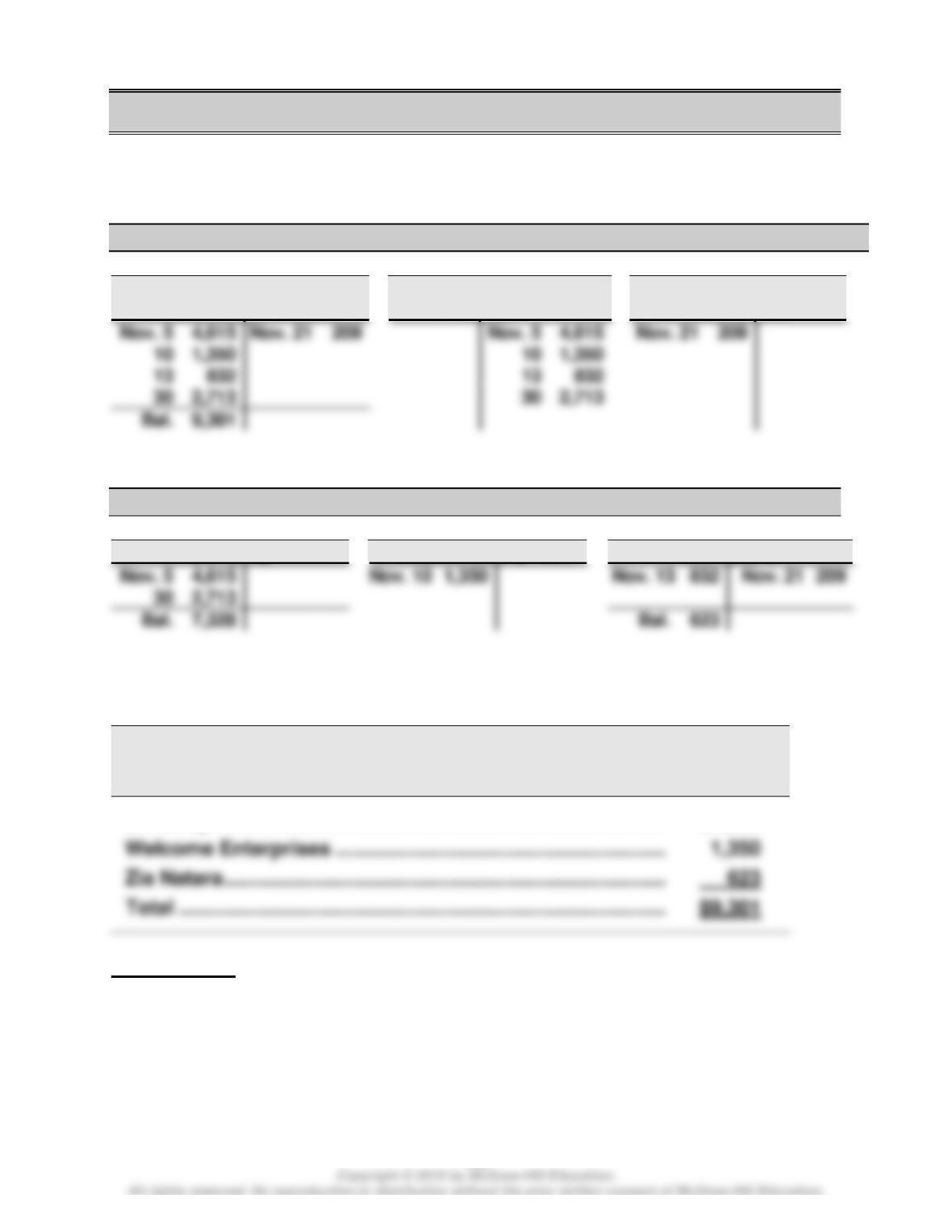
Interpretation: An accounts receivable turnover of 5.9 implies that the
company’s average accounts receivable balance is converted into cash
Wild and Shaw, Financial & Managerial Accounting, 8e Solutions Manual: Chapter 7
445
EXERCISES
Exercise 7-1 (25 minutes)
Part 1
GENERAL LEDGER
Accounts Receivable
Sales
Sales Returns and
Allowances
Nov. 5
ACCOUNTS RECEIVABLE LEDGER
Ski Shop
Welcome Enterprises
Zia Natara
Nov. 5
Part 2
Vail Company
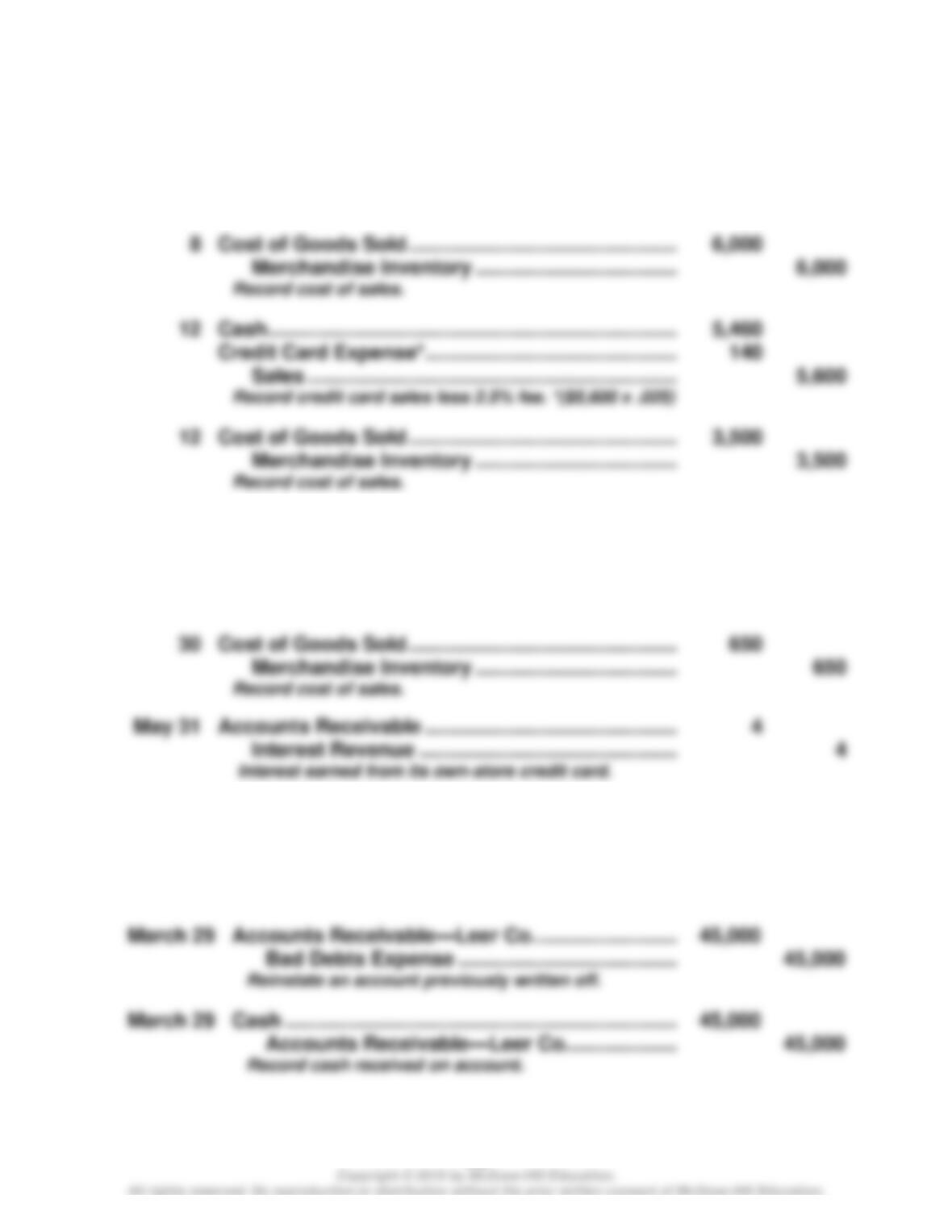
Schedule of Accounts Receivable
November 30
Ski Shop ………………………………………………………………………
$7,328
Welcome Enterprises …………………………………………………..
Comparison: The total of the Schedule of Accounts Receivable ($9,301) is
proved with the balance of the Accounts Receivable controlling T-account
from Part 1 ($9,301).
Wild and Shaw, Financial & Managerial Accounting, 8e Solutions Manual: Chapter 7
446
Exercise 7-2 (20 minutes)
Apr. 8
Cash ……………………………………………………………….
8,064
Credit Card Expense* ………………………………………
336
Sales …………………………………………………………
8,400
Record credit card sales less 4% fee. *($8,400 x 0.04)
Cost of Goods Sold …………………………………………
6,000
Merchandise Inventory ………………………………
6,000
Record cost of sales.
Cash ……………………………………………………………….
5,460
Credit Card Expense* ………………………………………
140
Sales …………………………………………………………
5,600
Record credit card sales less 2.5% fee. *($5,600 x .025)
Cost of Goods Sold …………………………………………
3,500
Merchandise Inventory ………………………………
3,500
Record cost of sales.
Exercise 7-3 (10 minutes)
Apr. 30
Accounts Receivable ………………………………………
1,000
Sales …………………………………………………………
1,000
Record own-store credit card sales.
Cost of Goods Sold …………………………………………
Merchandise Inventory ………………………………
Record cost of sales.
Accounts Receivable ………………………………………
Interest Revenue ……………………………………….
Exercise 7-4 (15 minutes)
March 11
Bad Debts Expense …………………………………………….
45,000
Accounts Receivable—Leer Co. ……………………..
45,000
Write off an account.
45,000
Bad Debts Expense ……………………………………….
45,000
Cash …………………………………………………………………..
45,000
Accounts Receivable—Leer Co. ……………………..
45,000
Record cash received on account.
447
Exercise 7-5 (20 minutes)
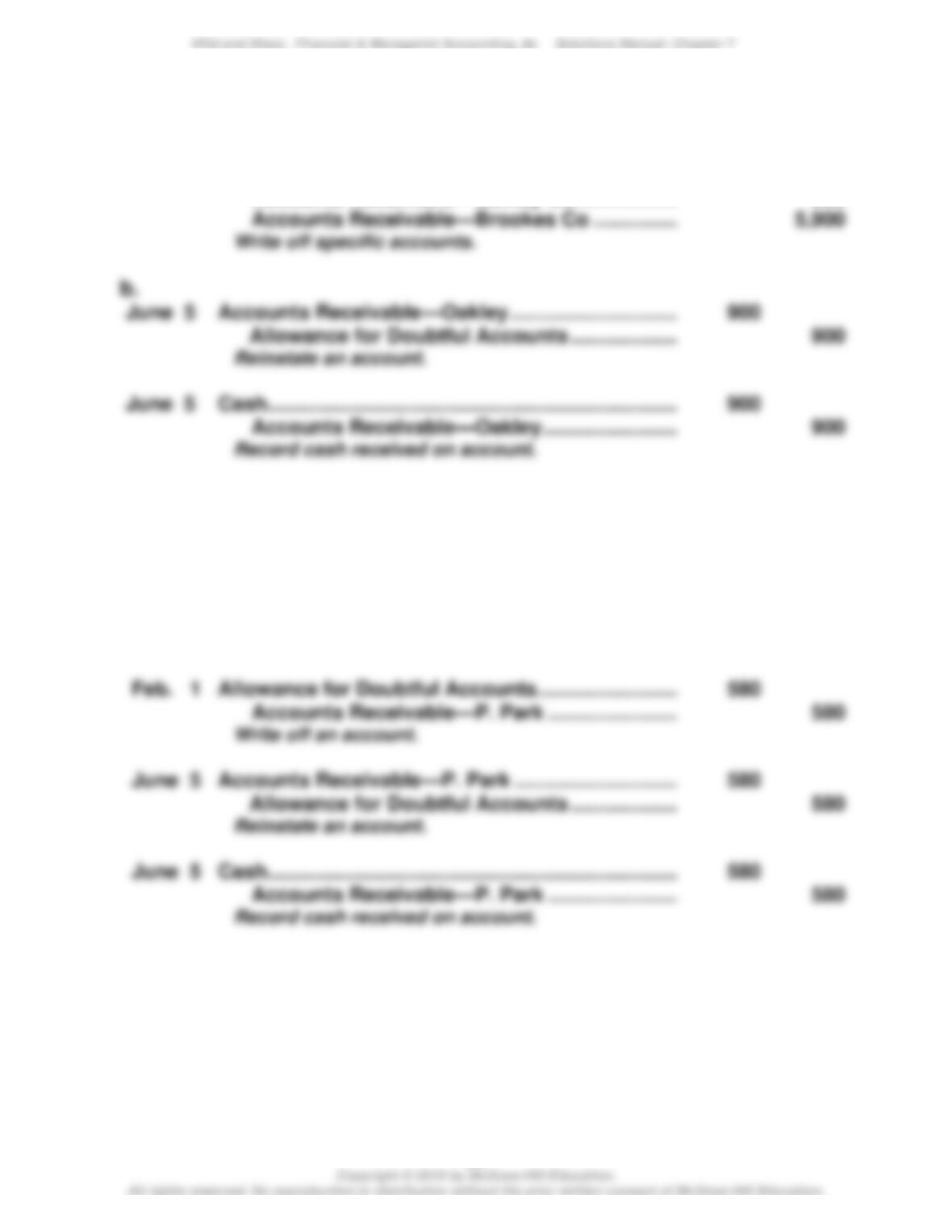
a.
Feb. 1
Allowance for Doubtful Accounts …………………………
6,800
Accounts Receivable—Oakley Co …………………..
900
Accounts Receivable—Brookes Co ………………..
5,900
900
Accounts Receivable—Oakley ………………………..
900
Exercise 7-6 (20 minutes)
Dec. 31
Bad Debts Expense ……………………………………………..
4,875
Allowance for Doubtful Accounts……………………
4,875
Record estimated bad debts expense
(0.01 x $487,500).
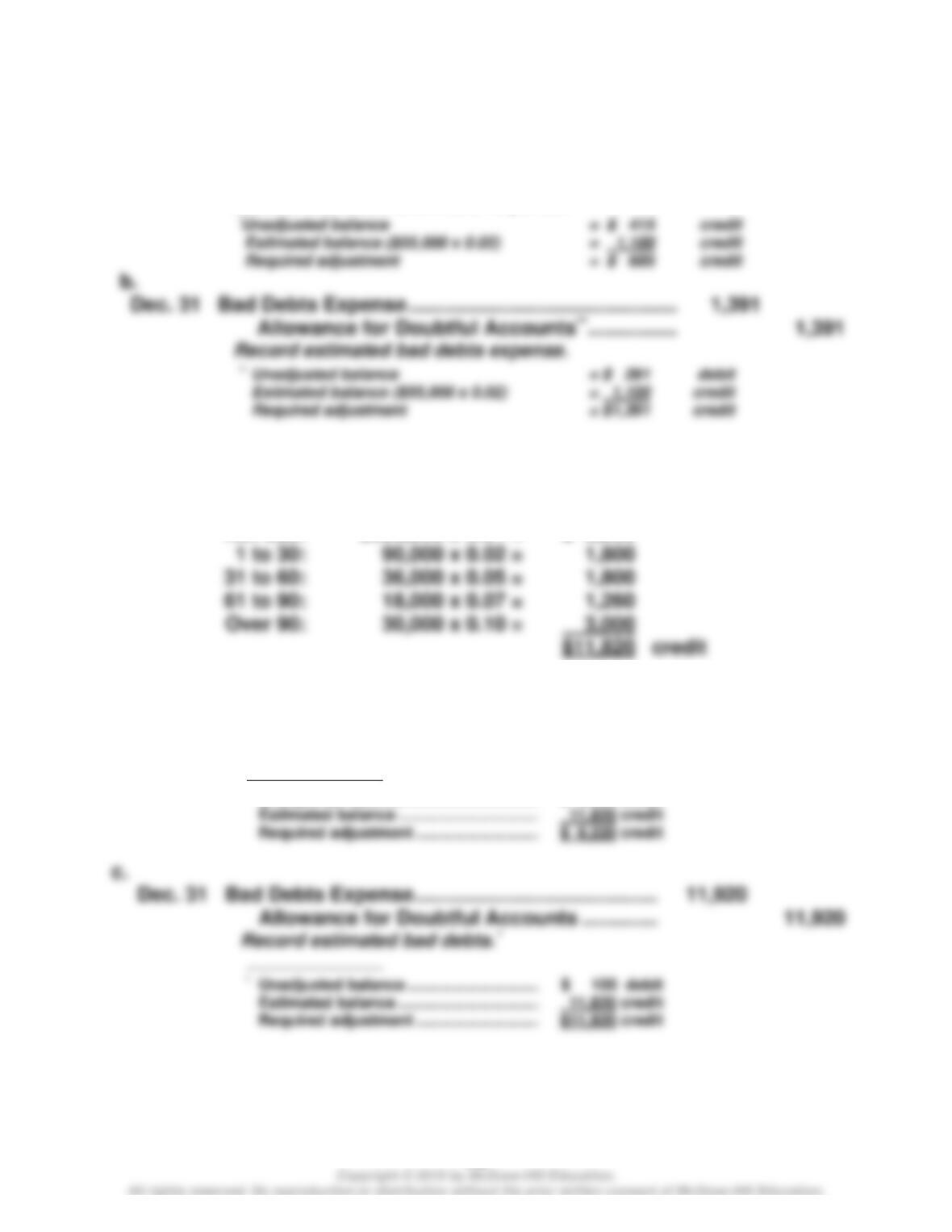
Allowance for Doubtful Accounts …………………………
Accounts Receivable—P. Park ……………………….
580
580
Wild and Shaw, Financial & Managerial Accounting, 8e Solutions Manual: Chapter 7
448
Exercise 7-7 (15 minutes)
a.
Dec. 31
Bad Debts Expense ………………………………………………
685
Allowance for Doubtful Accounts* …………………..
685
Record estimated bad debts expense.
Dec. 31
Bad Debts Expense ………………………………………………
Allowance for Doubtful Accounts** ………………….
Record estimated bad debts expense.
Exercise 7-8 (30 minutes)
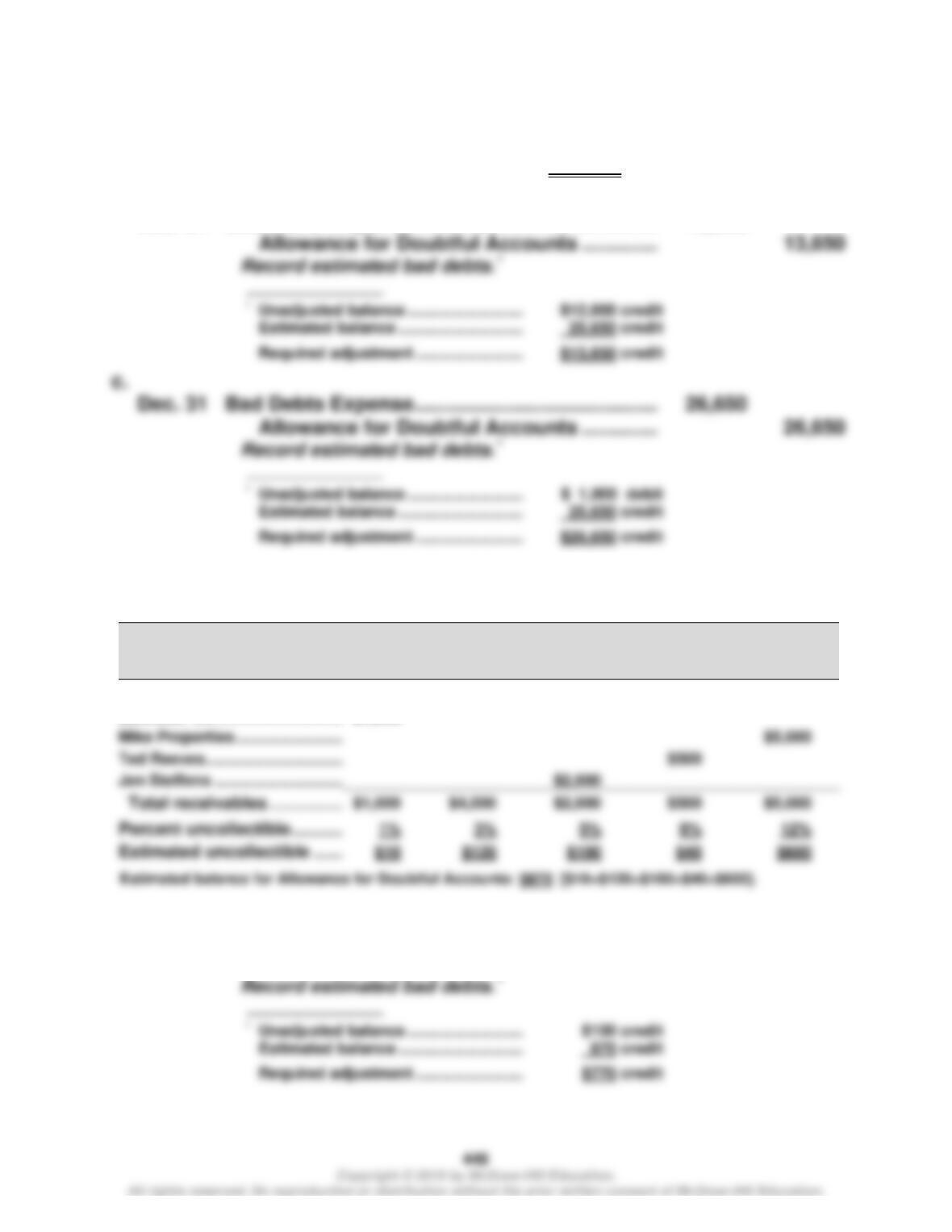
a. Computation of the estimated balance of the allowance for uncollectibles:
Not due:
$396,000 x 0.01 =
$ 3,960
b.
Dec. 31
Bad Debts Expense ……………………………………….
8,220
Allowance for Doubtful Accounts …………….
8,220
Record estimated bad debts.*
* Unadjusted balance …………………………..
$ 3,600 credit
Allowance for Doubtful Accounts …………….
* Unadjusted balance …………………………..
Required adjustment …………………………..
$11,920 credit
Wild and Shaw, Financial & Managerial Accounting, 8e Solutions Manual: Chapter 7
Exercise 7-9 (25 minutes)
a. Computation of the estimated balance of the allowance for uncollectibles:
$570,000 x 0.045 =
$25,650
credit
b.
Dec. 31
Bad Debts Expense ……………………………………….
13,650
Allowance for Doubtful Accounts …………….
13,650
Dec. 31
Bad Debts Expense ……………………………………….
26,650
Allowance for Doubtful Accounts …………….
26,650
Exercise 7-10 (30 minutes)
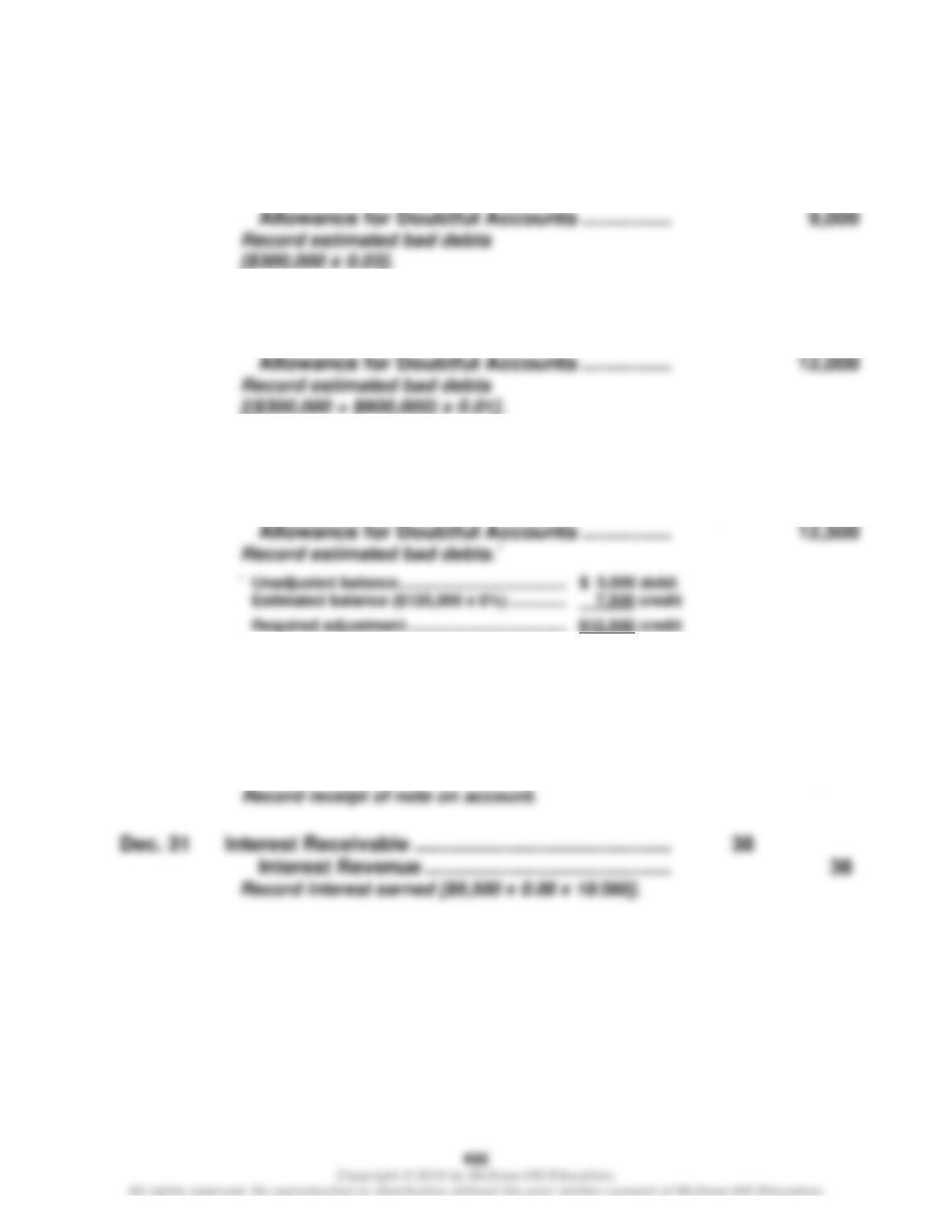
1.
Customer
Not Yet
Due
1 to 30
Days Past
Due
31 to 60
Days Past
Due
61 to 90
Days Past
Due
Over 90
Days Past
Due
BCC Company …………………………..
$4,000
Lannister Co. …………………………..
$1,000
Mike Properties …………………………..
Ted Reeves …………………………..
Jen Steffens …………………………..
2.
Dec. 31
Bad Debts Expense ……………………………………….
770
Allowance for Doubtful Accounts …………….
770
Wild and Shaw, Financial & Managerial Accounting, 8e Solutions Manual: Chapter 7
Exercise 7-11 (25 minutes)
1. Expense is 3.0% of credit sales
Dec. 31
Bad Debts Expense ………………………………………..
9,000
2. Expense is 1.0% of total sales
Dec. 31
Bad Debts Expense ………………………………………..
12,000
12,000
3. Allowance is 6% of accounts receivable
Dec. 31
Bad Debts Expense ………………………………………..
12,500
12,500
Exercise 7-12 (10 minutes)
Dec. 13
Notes Receivable—M. Lee……………………………..
9,500
Accounts Receivable—M. Lee ………………….
9,500
Dec. 31
Wild and Shaw, Financial & Managerial Accounting, 8e Solutions Manual: Chapter 7
451
Exercise 7-13 (15 minutes)
Jan. 27
Cash ……………………………………………………………..
9,595
Interest Revenue* …………………………..…………
57
Interest Receivable …………………………………..
38
Notes Receivable—M. Lee ………………………..
9,500
Record cash received on note plus interest.
* $9,500 x 0.08 x (45–18)/360 = $57
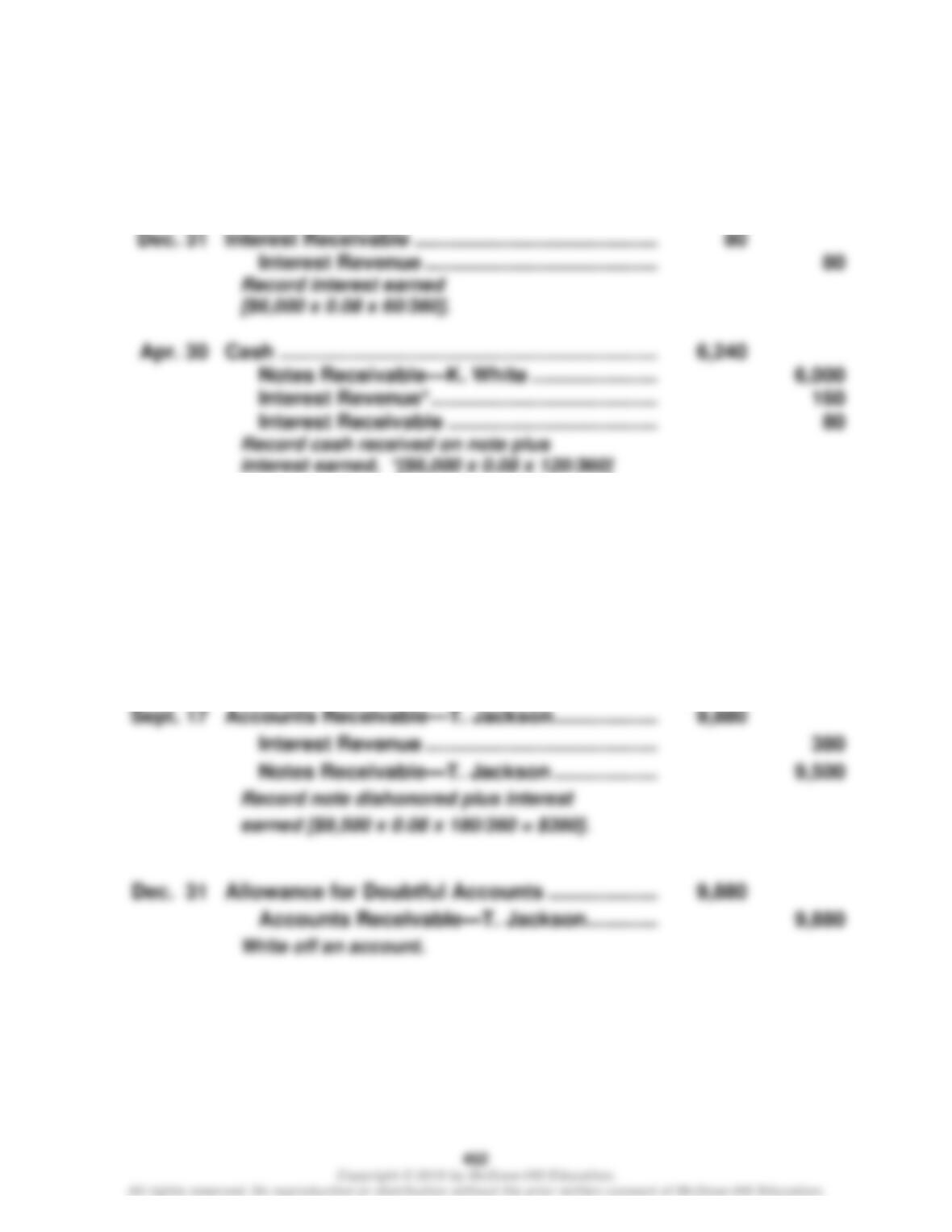
Notes Receivable—Tomas Co. ……………………….
5,000
Accounts Receivable-Tomas Co ……………….
5,000
17
Notes Receivable—H. Cheng ………………………….
2,000
Accounts Receivable—H. Cheng ………………
2,000
Apr. 16
Accounts Receivable—H. Cheng ……………………
2,015
Interest Revenue ………………………………………
15
Notes Receivable—H. Cheng …………………….
2,000
Record receivable for dishonored
note plus interest [$2,000 x 0.09 x 30/360].
Allowance for Doubtful Accounts …………………..
2,015
Accounts Receivable—H. Cheng ………………
2,015
Cash ……………………………………………………………..
5,125
Interest Revenue ………………………………………
Notes Receivable—Tomas Co …………………..
5,000
Record cash received on note with
Wild and Shaw, Financial & Managerial Accounting, 8e Solutions Manual: Chapter 7
Exercise 7-14 (15 minutes)
Nov. 1
Notes Receivable—K. White ………………………..
6,000
Accounts Receivable—K. White ……………..
6,000
Record receipt of note on account.
[$6,000 x 0.08 x 60/360].
6,240
interest earned. *[$6,000 x 0.08 x 120/360]
Exercise 7-15 (20 minutes)
Mar. 21
Notes Receivable—T. Jackson ……………………….
9,500
Accounts Receivable—T. Jackson …………….
9,500
Record receipt of note on account.
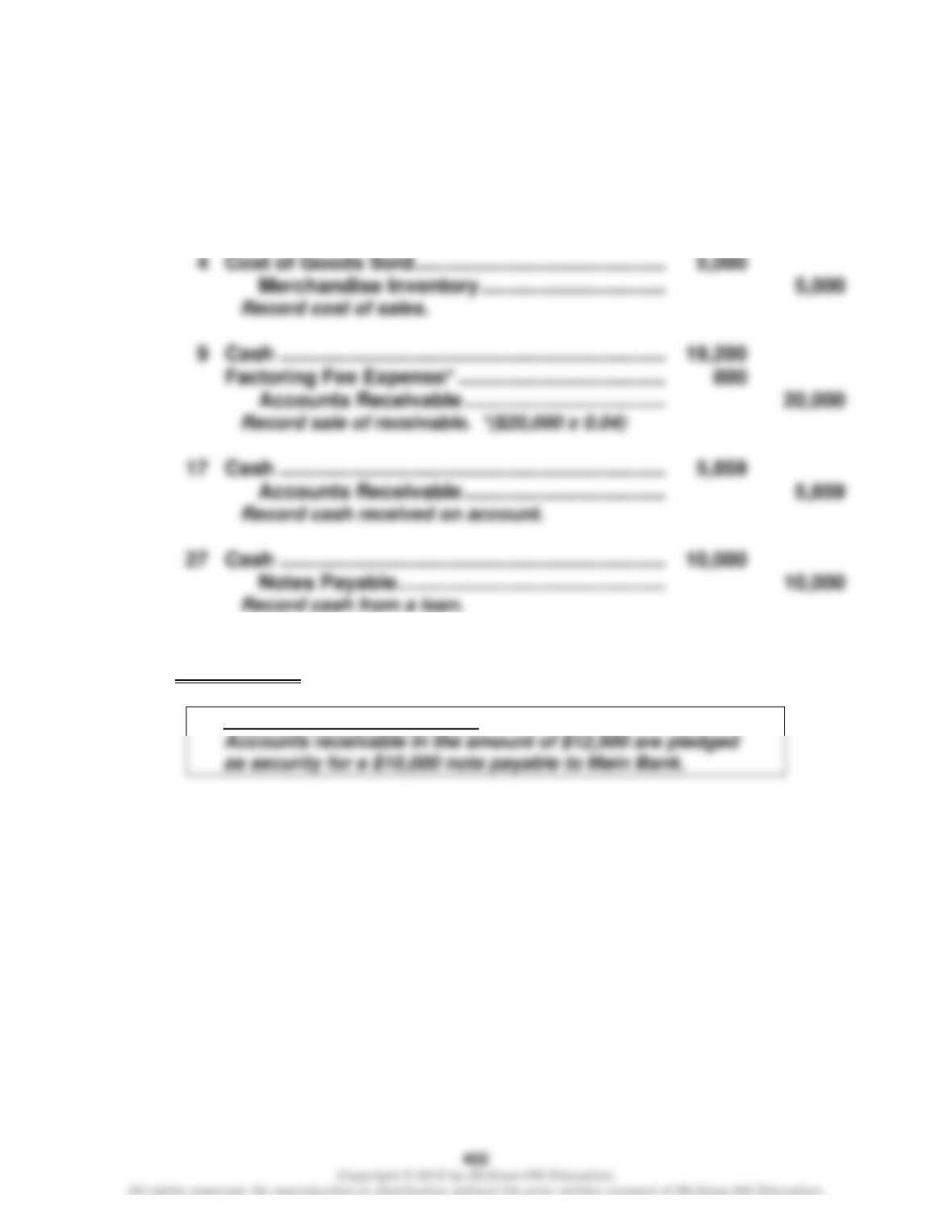
9,880
9,500
earned [$9,500 x 0.08 x 180/360 = $380].
9,880
Write off an account.
Wild and Shaw, Financial & Managerial Accounting, 8e Solutions Manual: Chapter 7
Exercise 7-16 (20 minutes)
1.
Dec. 4
Accounts Receivable ……………………………………..
7,245
Sales ……………………………………………………….
7,245
Record sales on credit.
5,000
Merchandise Inventory ……………………………………
5,000
Record cost of sales.
Accounts Receivable ………………………………..
Record sale of receivable. *($20,000 x 0.04)
5,859
Accounts Receivable ………………………………..
5,859
Record cash received on account.
Notes Payable …………………………………………..
Record cash from a loan.
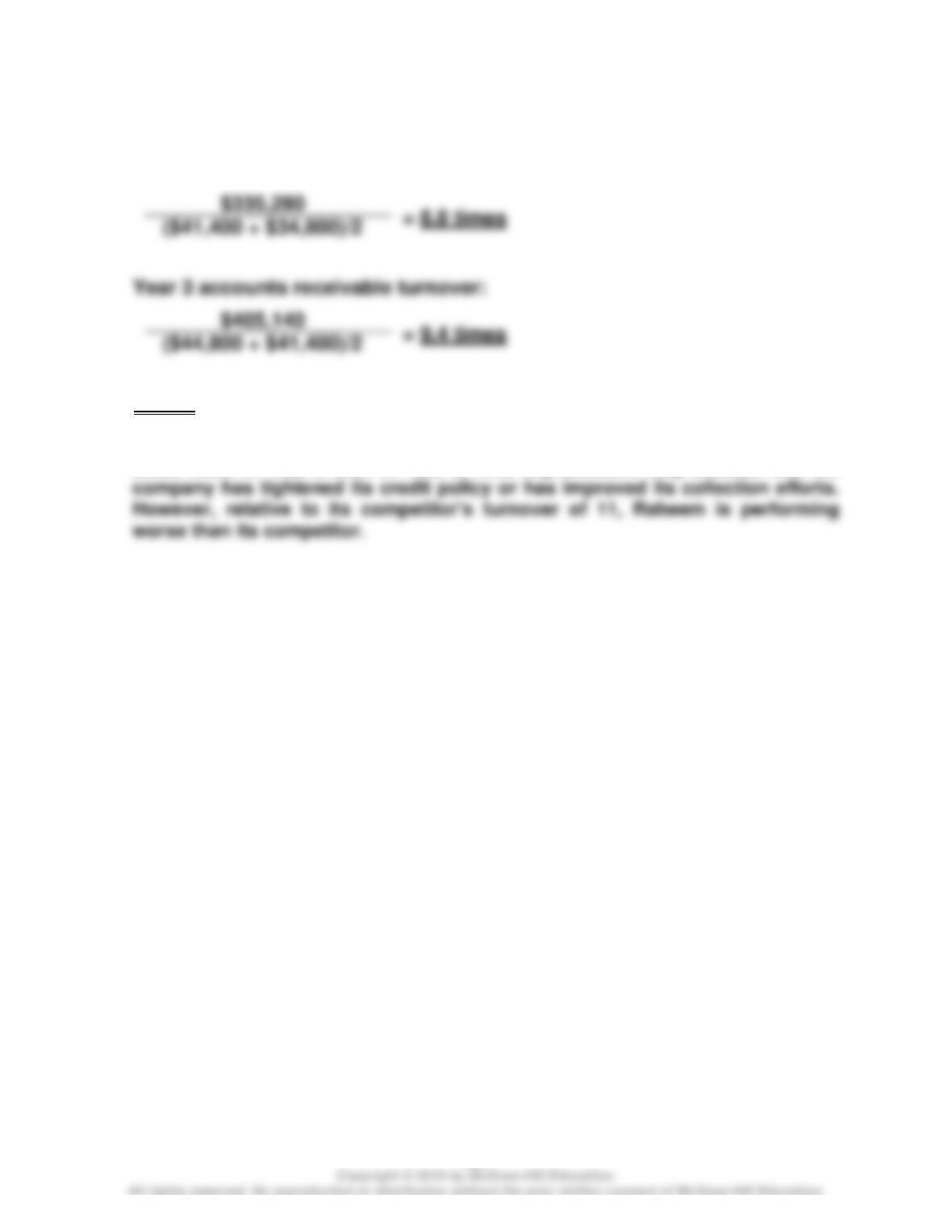
2. The December 27 transaction. An example of this disclosure follows.
Note to Financial Statements
Wild and Shaw, Financial & Managerial Accounting, 8e Solutions Manual: Chapter 7
454
Exercise 7-17 (15 minutes)
1.
Year 2 accounts receivable turnover:
2. Worse.
Analysis: Raheem Company turned over its accounts receivable 0.6 (9.4 – 8.8)
times more in Year 3 than in Year 2. This improvement may indicate that the