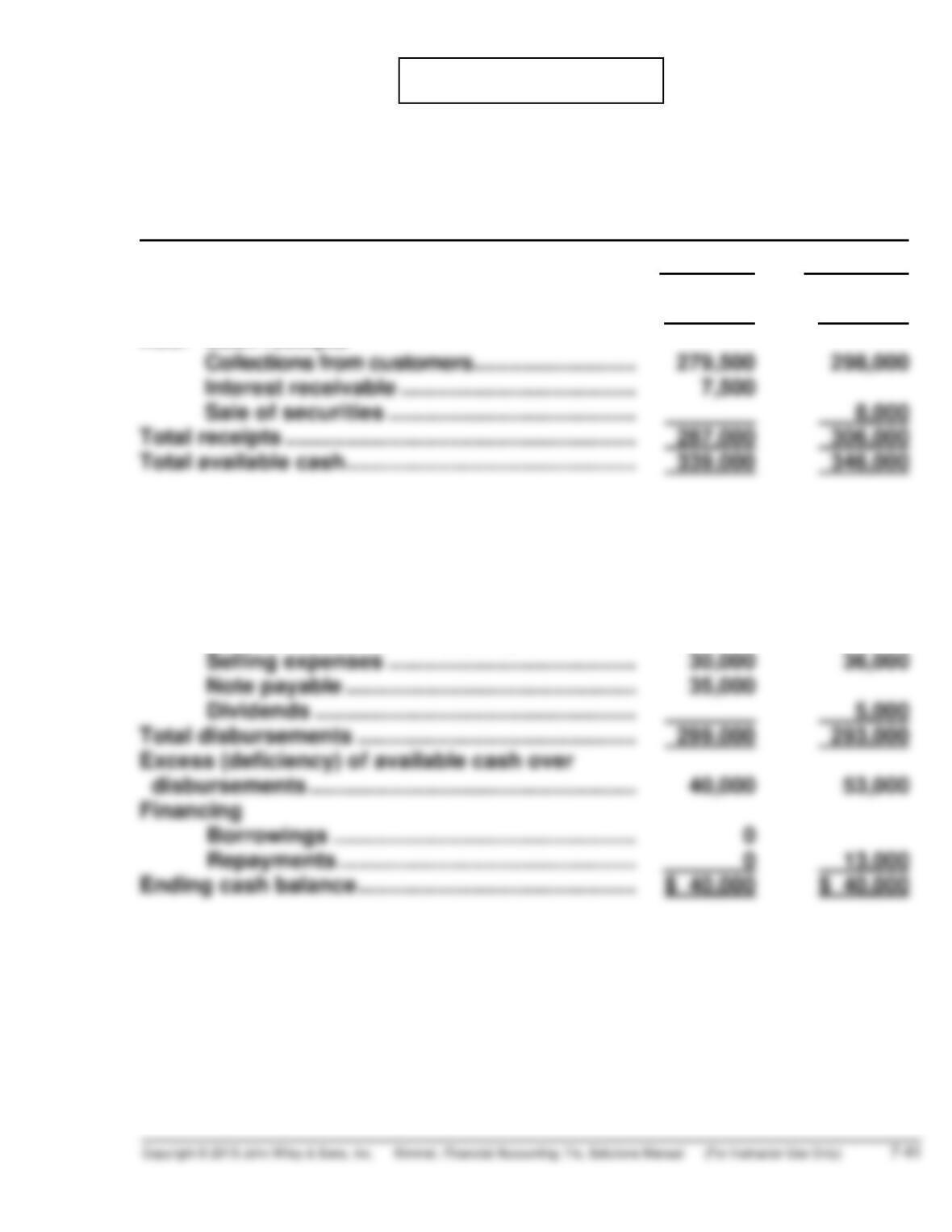
PROBLEM 7-7B
NOBLE CORPORATION
Cash Budget
For the Two Months Ending February 28, 2014
January February
Beginning cash balance …………………………………. $ 52,000 $ 40,000
Add: Cash receipts
Less: Cash disbursements
Purchases ……………………………………………. 106,000 116,000
Salaries ………………………………………………… 72,000 78,000
Administrative expenses (Jan. $58,000 –
$2,000; Feb. $60,000 – $2,000) ……………….. 56,000 58,000

PROBLEM 7-8B
(a) ELITE SERVICE COMPANY
Bank Reconciliation
March 31, 2014
Balance per bank statement ……………………………………….. $5,931.51
Plus: Undeposited receipts ……………………………………….. 1,591.63
7,523.14
Less: Outstanding checks
No. Amount No. Amount
206
441
590
$358.53
292.00
283.00
781
782
783
$286.00
319.47
303.14
1,842.14
Adjusted balance per bank …………………………………………. $5,681.00
Cash balance per books …………………………………………….. $6,889.53
Add: Bank credit (collection of note receivable) ………… 175.00
Adjusted balance per books (before theft) ………………….. 7,064.53
Theft ($7,064.53 – $5,681.00) ………………………………………. 1,383.53
Adjusted balance per books ………………………………………. $5,681.00
(b) The cashier attempted to cover the theft of $1,383.53 by:
1. Not listing as outstanding three checks totaling $933.53 (No. 206,
$358.53; No. 441, $292.00; and No. 590, $283.00).
2. Underfooting the outstanding checks listed by $100. (The correct
total is $908.61.)
3. Subtracting the $175 credit from the bank balance instead of add-
ing it to the book balance, thereby concealing $350 of the theft.
PROBLEM 7-8B (Continued)
(c) 1. The principle of independent internal verification has been violated
because the cashier prepared the bank reconciliation.
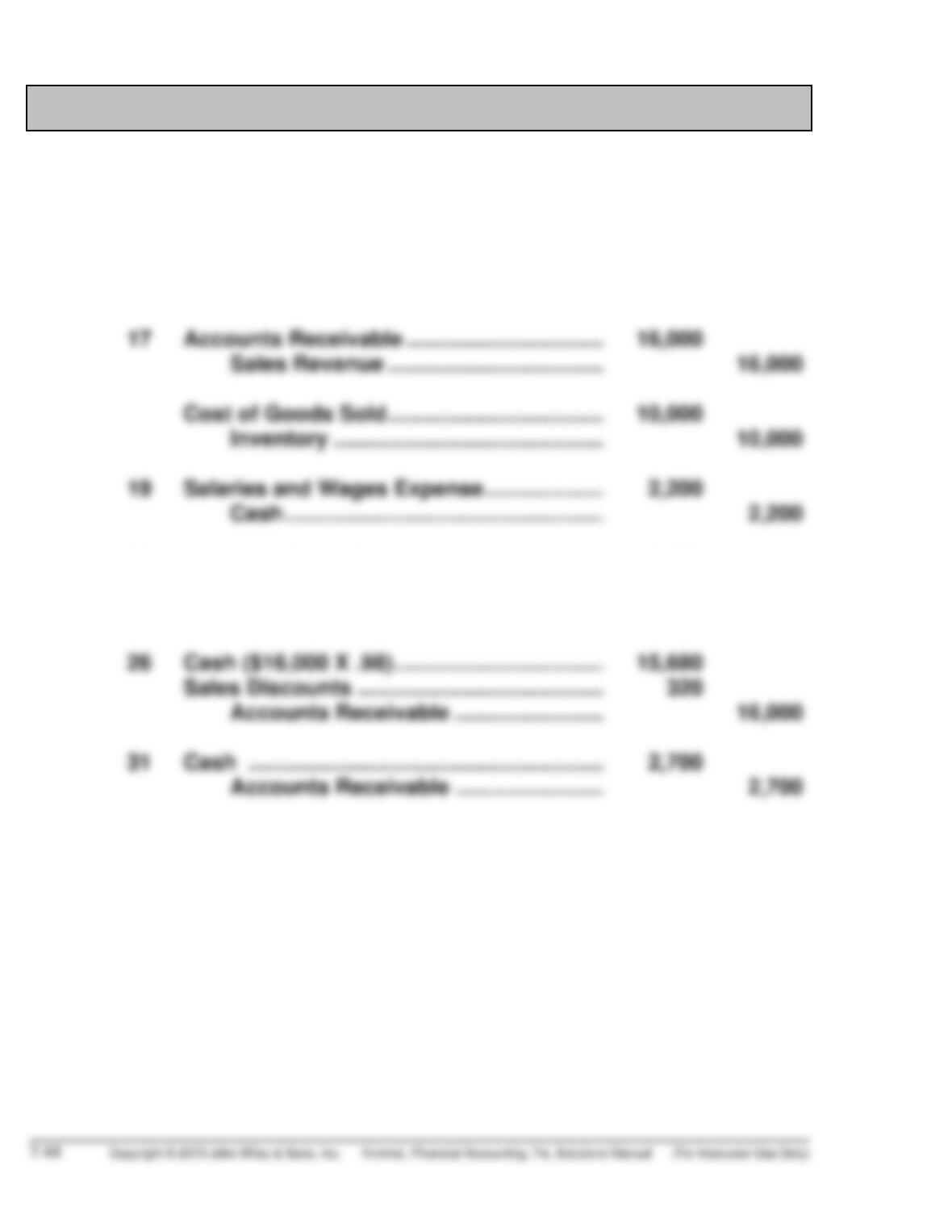
COMPREHENSIVE PROBLEM SOLUTION
(a) Dec. 7 Cash …………………………………………………..
.
Accounts Receivable ……………………
.
3,600
3,600
12 Inventory …………………………………………….
.
Accounts Payable …………………………
.
12,000
12,000
.
.
22 Accounts Payable ……………………………….
.
Cash ($12,000 X .99) ……………………..
.
Inventory ……………………………………..
.
12,000
11,880
120
.
.
.
COMPREHENSIVE PROBLEM SOLUTION (Continued)
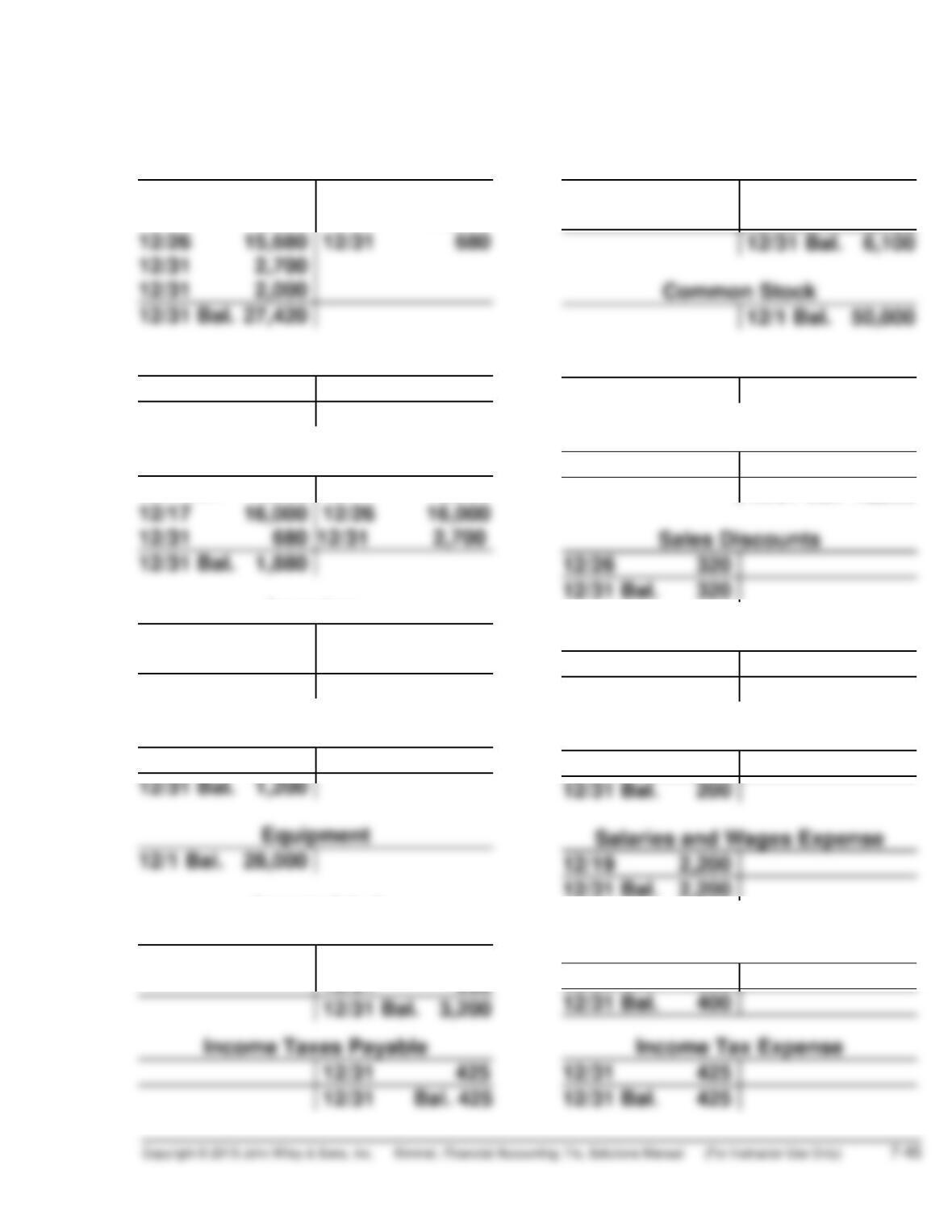
(b) & (e) General Ledger
Cash
12/1 Bal. 18,200
12/7 3,600
12/19 2,200
12/22 11,880
Notes Receivable
12/1 Bal. 2,000 12/31 2,000
12/31 Bal. – 0 –
Accounts Receivable
12/1 Bal. 7,500
12/7 3,600
Inventory
12/1 Bal. 16,000
12/12 12,000
12/17 10,000
12/22 120
12/31 Bal. 17,880
Prepaid Insurance
12/1 Bal. 1,600 12/31 400
Accumulated
Depreciation—Equipment
12/1 Bal. 3,000
12/31 200
Accounts Payable
12/22 12,000 12/1 Bal. 6,100
12/12 12,000
Retained Earnings
12/1 Bal. 14,200
Sales Revenue
12/17 16,000
12/31 Bal. 16,000
Cost of Goods Sold
12/17 10,000
12/31 Bal. 10,000
Depreciation Expense
12/31 200
12/31 Bal. 2,200
Insurance Expense
12/31 400
COMPREHENSIVE PROBLEM SOLUTION (Continued)
(c) HAVENHILL COMPANY
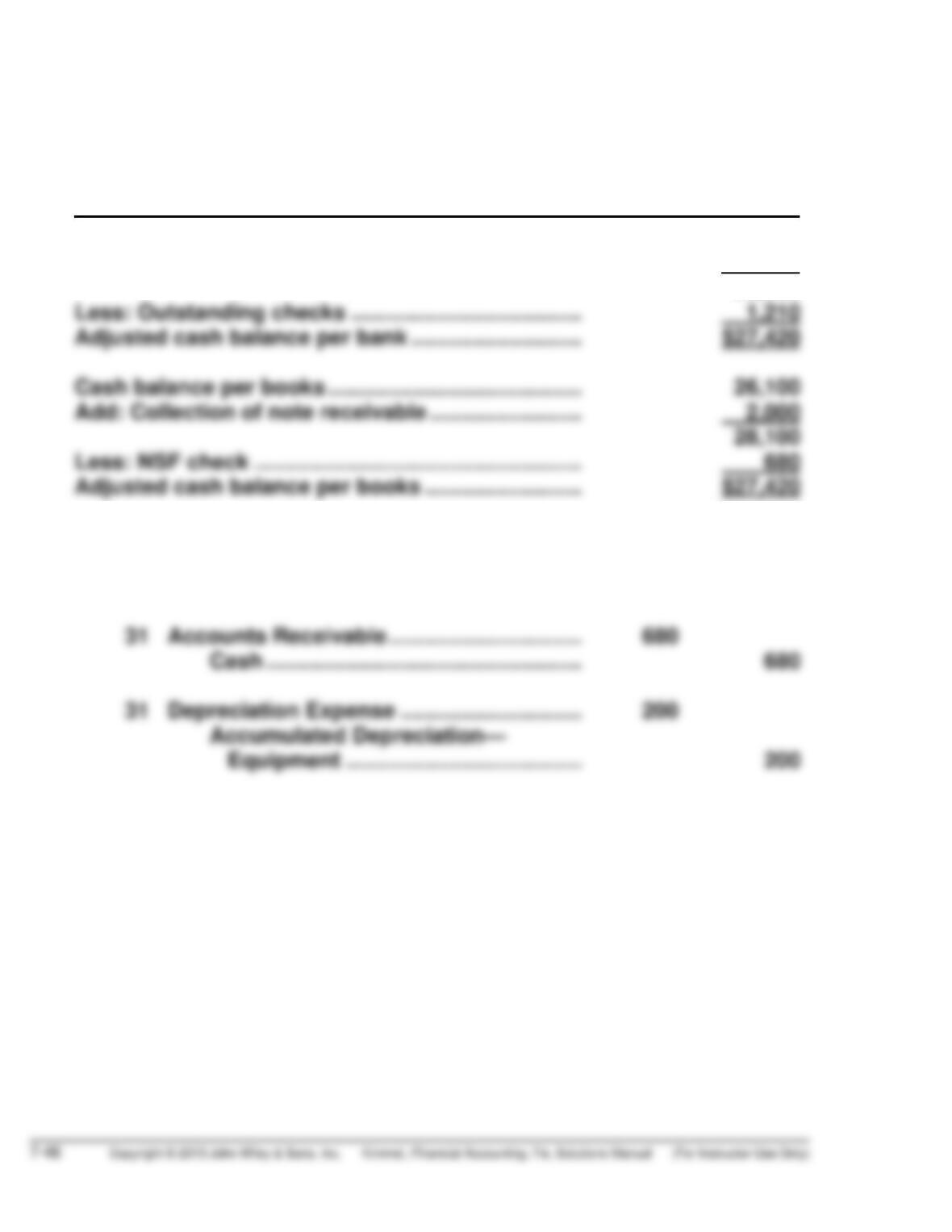
Bank Reconciliation
December 31, 2014
Cash balance per bank statement …………………….. $25,930
Add: Deposits in transit ……………………………………. 2,700
28,630
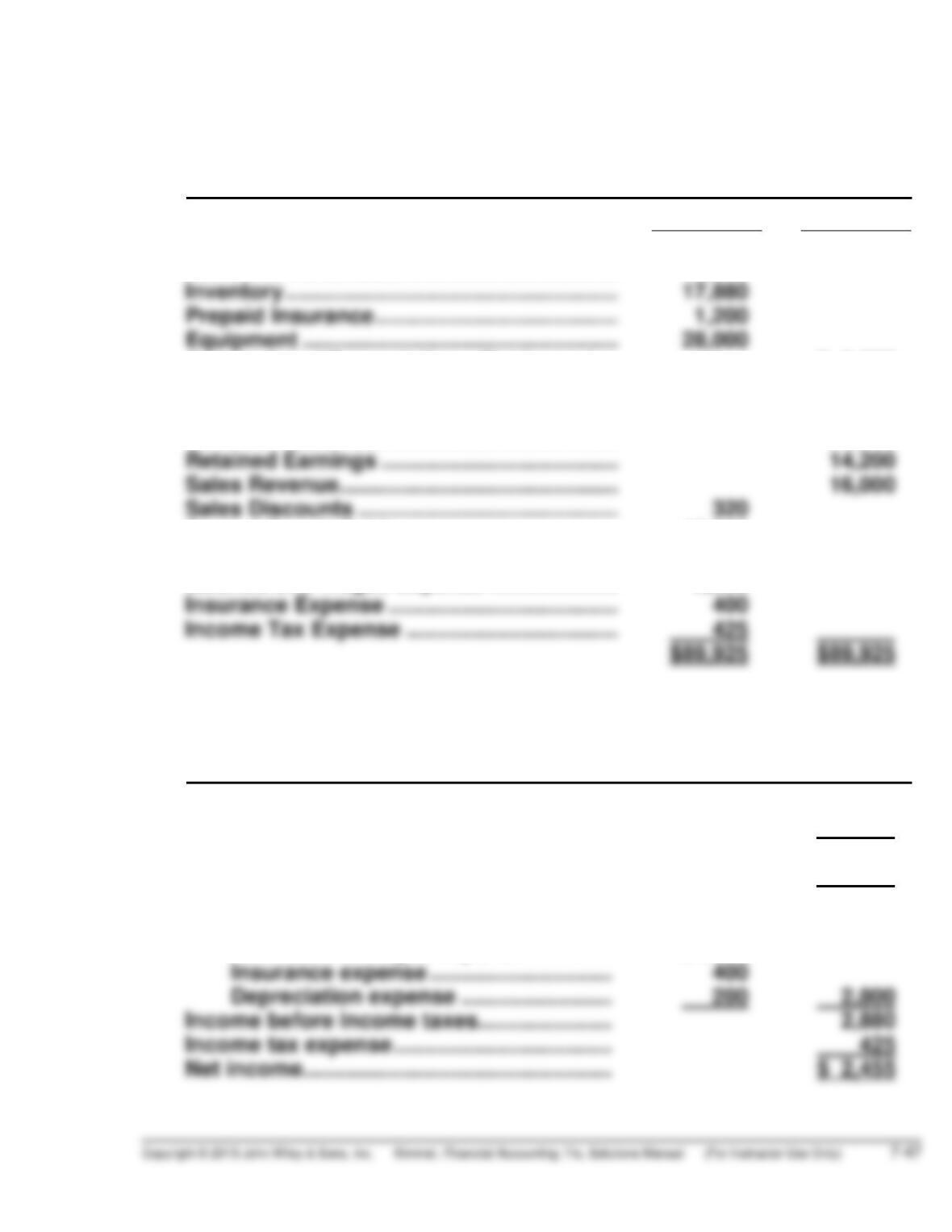
(d) Dec. 31 Cash ………………………………………………….. 2,000
Notes Receivable …………………………. 2,000
31 Insurance Expense …………………………….. 400
Prepaid Insurance ………………………… 400
31 Income Tax Expense ………………………….. 425
Income Taxes Payable ………………….. 425
COMPREHENSIVE PROBLEM SOLUTION (Continued)
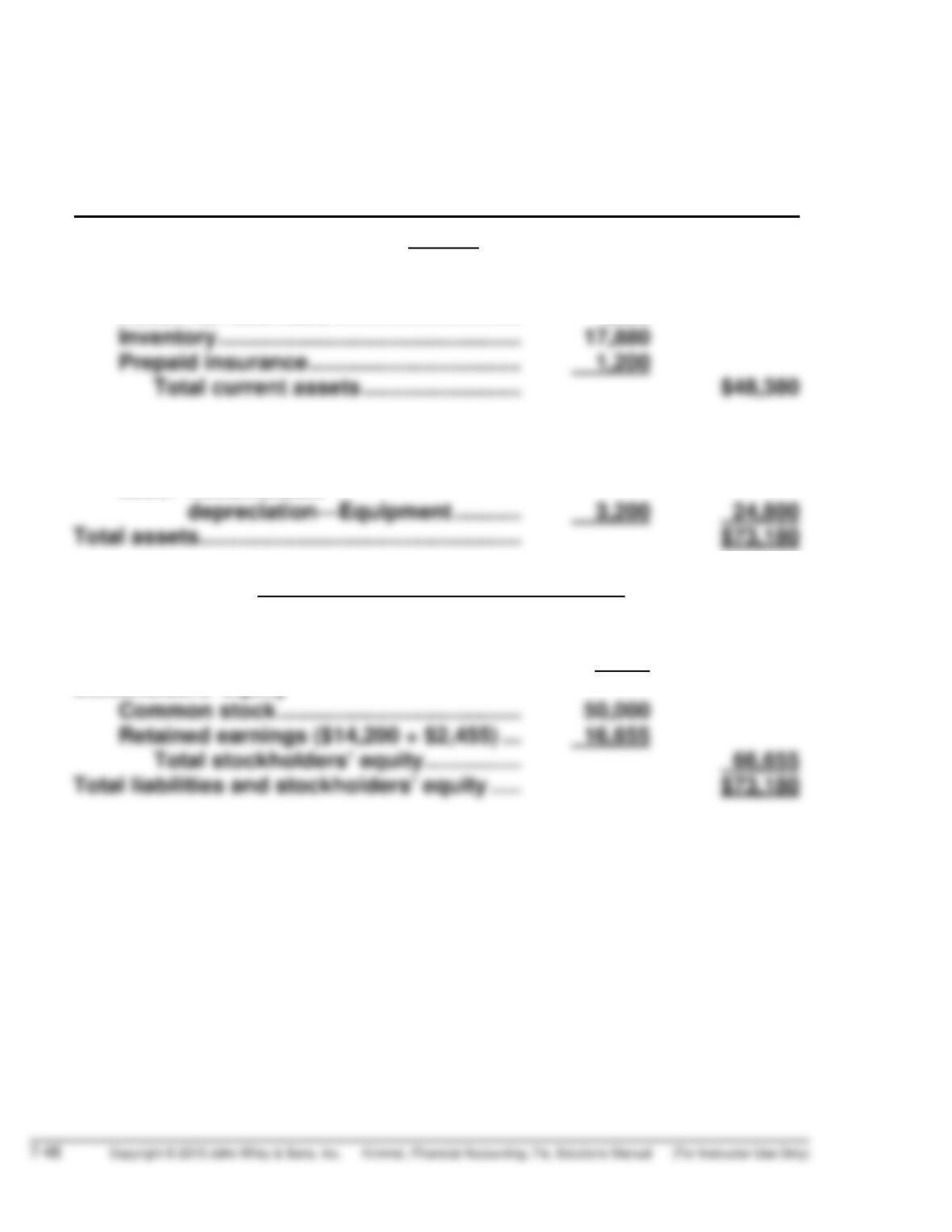
(f) HAVENHILL COMPANY
Adjusted Trial Balance
December 31, 2014
DR. CR.
Cash …………………………………………………….. $27,420
Accounts Receivable…………………………….. 1,880
Accumulated Depreciation
—
Equipment…. $ 3,200
Accounts Payable …………………………………. 6,100
Income Taxes Payable…………………………… 425
Common Stock ……………………………………… 50,000
Cost of Goods Sold ………………………………. 10,000
Depreciation Expense …………………………… 200
Salaries and Wages Expense ………………… 2,200
(g) HAVENHILL COMPANY
Income Statement
For the Month Ending December 31, 2014
Sales revenue ………………………………………. $16,000
Less: Sales discounts …………………………. 320
Net sales ……………………………………………… 15,680
Cost of goods sold ………………………………. 10,000
Gross profit …………………………………………. 5,680
Operating expenses
Salaries and wages expense ………….. $2,200
COMPREHENSIVE PROBLEM SOLUTION (Continued)
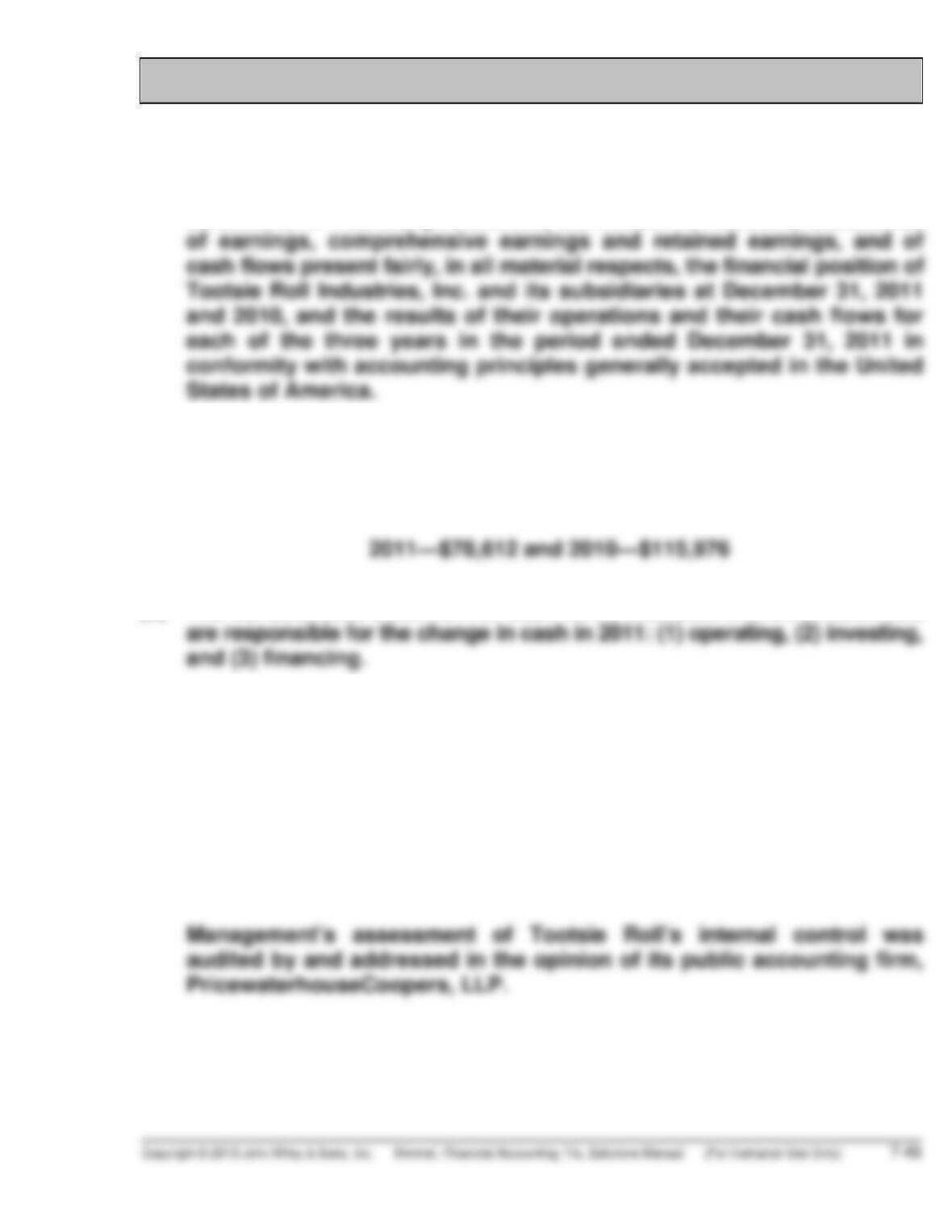
(g) HAVENHILL COMPANY
Balance Sheet
December 31, 2014
Assets
Current assets
Cash ………………………………………………… $27,420
Accounts receivable …………………………. 1,880
Property, plant, and equipment
Equipment ………………………………………. 28,000
Less: Accumulated
Liabilities and Stockholders’ Equity
Current liabilities
Accounts payable …………………………….. $6,100
Income taxes payable ……………………….. 425 $6,525
Stockholders’ equity
BYP 7-1 FINANCIAL REPORTING PROBLEM
(a) The first paragraph of the independent registered public accounting
firm’s report states that: In our opinion, the accompanying consolidated
statements of financial position and the related consolidated statements
(b) The consolidated statement of financial position shows the combined
cash and cash equivalent balances (in thousands) at December 31,
2011 and 2010:
(c) The consolidated statement of cash flows indicates that three activities
(d) The notes say: The company considers temporary cash investments
with an original maturity of three months or less to be cash equivalents.
(e) The management of Tootsie Roll Industries, Inc. is responsible for estab-
lishing and maintaining adequate internal control over financial reporting.
After performing an evaluation of company procedures, management
concluded that its internal control over financial reporting was effective.
BYP 7-2 COMPARATIVE ANALYSIS PROBLEM
(In thousands)
Tootsie
Roll
Hershey
Company
(c) Cash provided by operating activities $50,390 $580,867
(d) The objective in cash management is to ensure that a company has
sufficient cash to meet payments as they come due, yet minimize the
amount of non-revenue-generating cash on hand. The decrease in cash as
a percentage of total assets experienced by both companies is a cause
BYP 7-3 RESEARCH CASE
(a) The article lists 8 different forms of payment. They are: wire transfer,
paper checks, automated clearing house (ACH) credits, ACH debits, pur-
chasing cards (p-cards), paying from statements, petty cash, payment
via travel and expense (T&E) reimbursement.
(c) The controls suggested in the article are:
1. Limit payment type i.e. only p-card.
2. Make sure purchase orders are extinguished whenever a payment
is made.
BYP 7-4 INTERPRETING FINANCIAL STATEMENTS
(a) The global percentage of companies that experienced a significant
instance of fraud during the period covered by the survey was 16%
and Western Europe had the highest rate at 21%.
(b) 44% of survey respondents performed a fraud risk assessment in the
six months prior to the survey. 15% of survey respondents have never