7–78 Intermediate Accounting, 8/e
Real World Case 7–4
Requirement 2
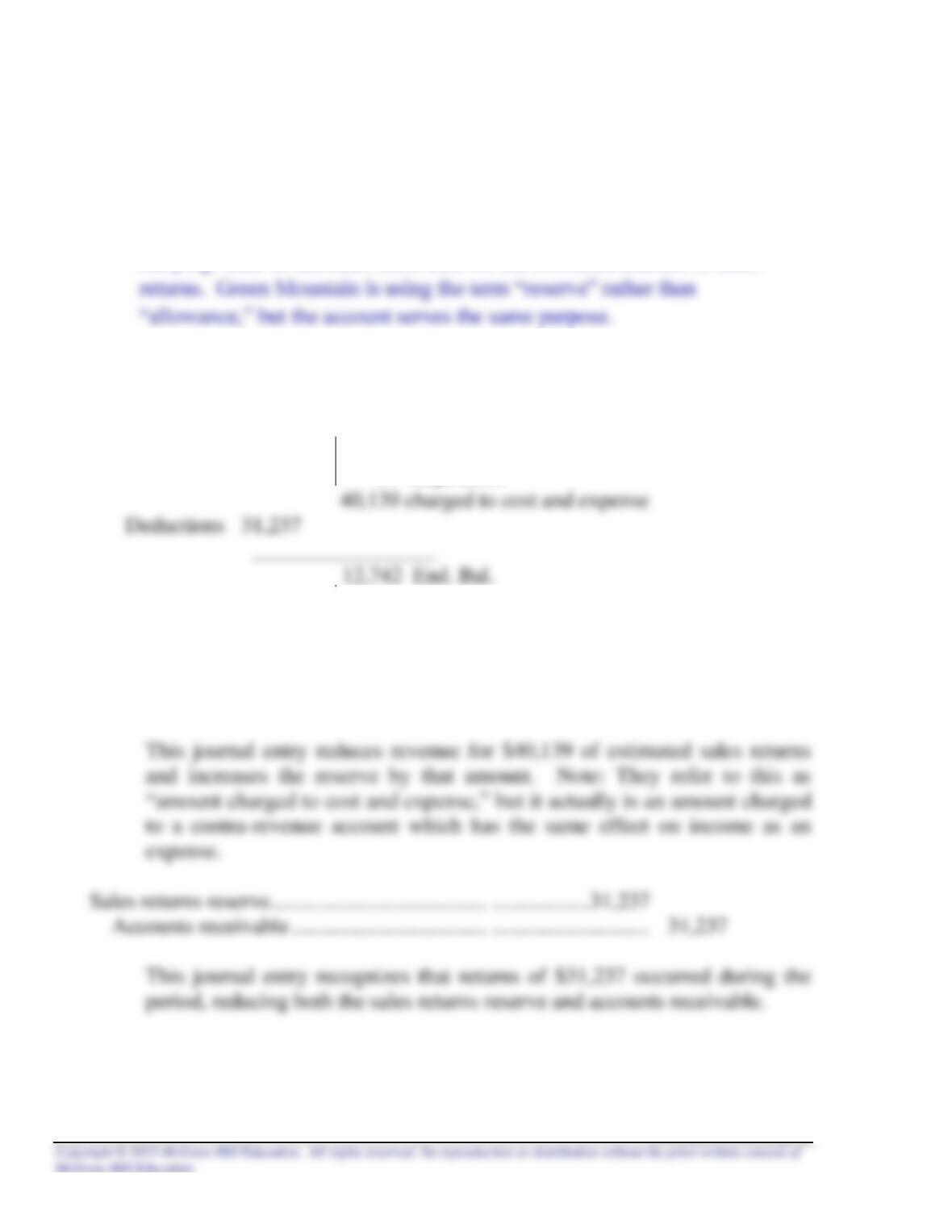
a. Sales returns reserve is a contra-asset account, serving to reduce the
carrying value of accounts receivable for the estimated amount of sales
b.
Sales Returns Reserve
_______________________________________
3,809 Beg. Bal.
31 Acquisition
c.
Sales returns (a contra-revenue account) …….. ……………… 40,139
Sales returns reserve ……………………………… ……………………….. 40,139
Real World Case 7–4 (continued)
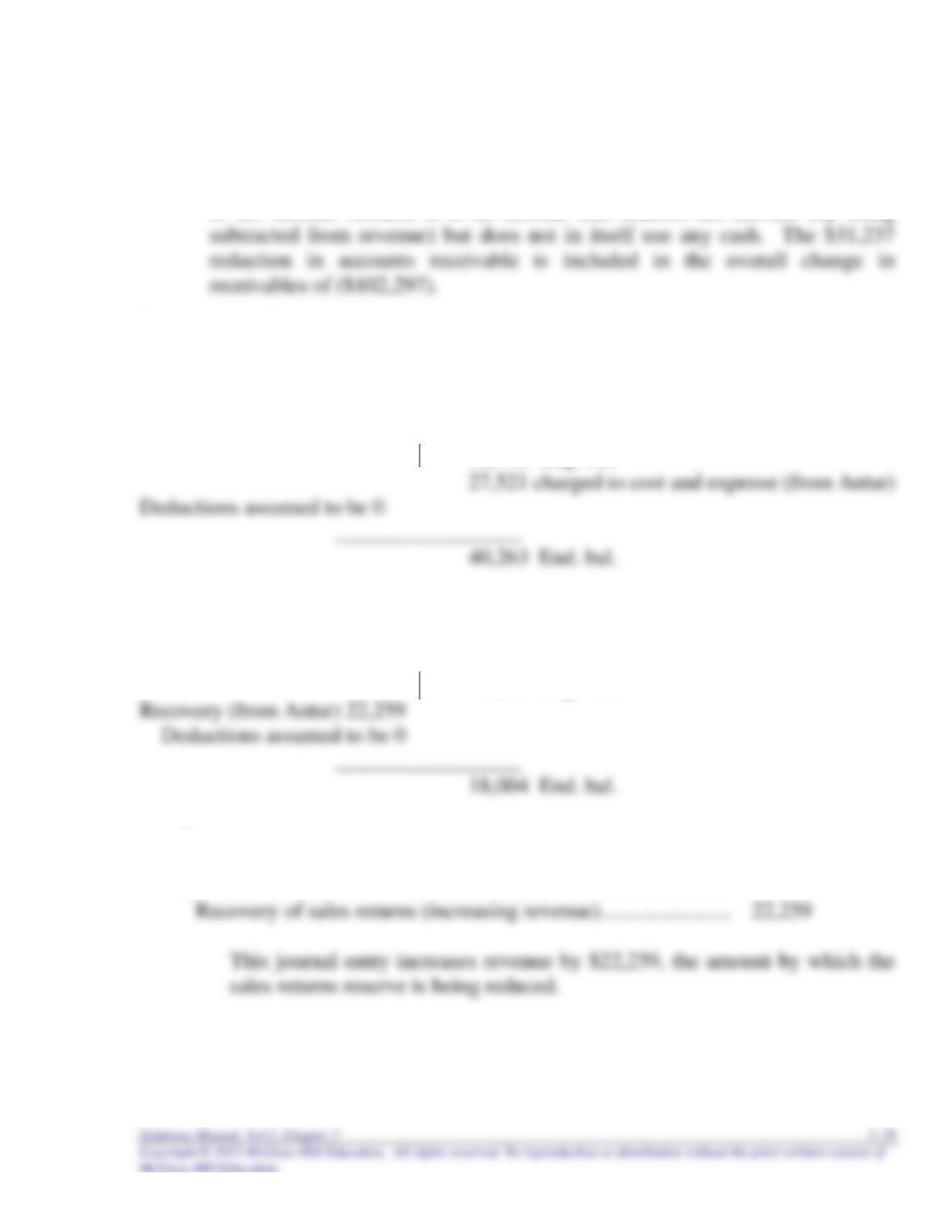
d. In the operations section of the statement of cash flows, $40,139 is added back
to net income because it is an amount that reduces net income (by being
Requirement 3
a.
Sales Returns Reserve
________________________________________
12,742 Beg. bal.
b.
Sales Returns Reserve
________________________________________
40,263 Beg. bal.
c.
Sales returns reserve …………………………………. …………….. 22,259
7–80 Intermediate Accounting, 8/e
Real World Case 7–4 (concluded)
d. It could be that Green Mountain unintentionally overestimated returns in Q1
Ethics Case 7–5
Requirement 1
Requirement 2
Discussion should include these elements.
Ethical Dilemma:
You, as the assistant controller, have a responsibility to follow GAAP and make a
reasonably accurate estimate of the net realizable value of receivables. Is your
Alternative actions and consequences include:
1. Refuse to comply with the controller’s request to change the aging category of the
large account.
Positive consequences:
a. Preservation of your honesty and integrity.
b. Fair presentation of the net realizable value of receivables.
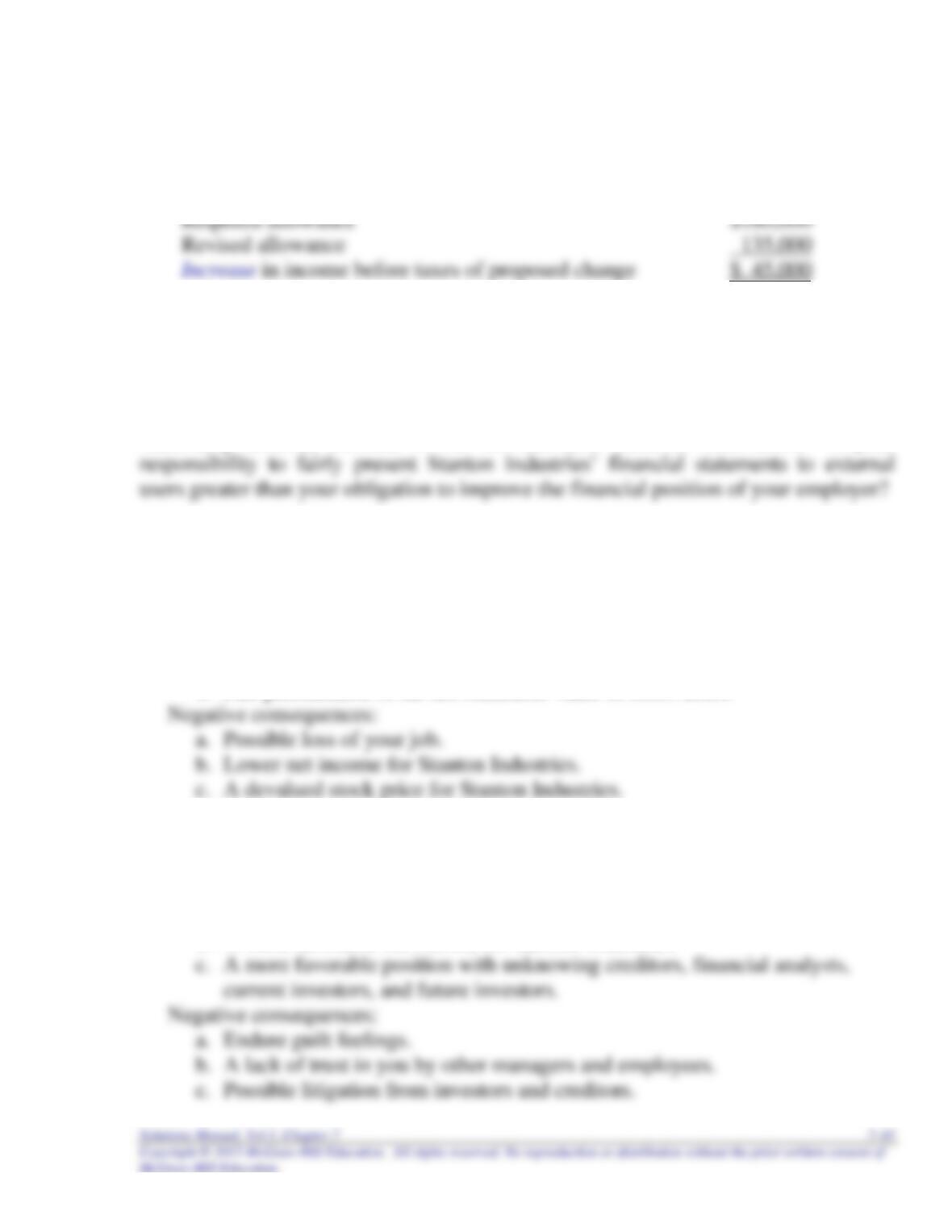
2. Comply with the controller’s suggestion to report the allowance for uncollectible
accounts at $135,000.
Positive consequences:
a. Retention of your job.
b. A more favorable net income for Stanton Industries.
7–82 Intermediate Accounting, 8/e
Case 7–5 (concluded)
3. Report the controller’s suggestion to a higher level of management, the audit
committee, or the auditors. If one of these parties corrects the controller and
compels fair reporting of the allowance account, the consequences would be the
4. Refuse to comply with the controller’s request and resign as assistant controller. If
you report the controller’s suggestion to higher management, the audit committee,
Judgment Case 7–6
1. A weakness is created by the fact that John need only submit a list of accounts and
amounts to be charged to replenish the petty cash fund. The supporting
documentation for the petty cash disbursements also should be submitted with
7–84 Intermediate Accounting, 8/e
Real World Case 7–7
Requirement 3
Avon Products, Inc., information from 2013
2013 Net sales: $9,764.4
2013 net accounts receivable: $676.3 (allowance $147.2)
2012 net accounts receivable: $752.1 (allowance $161.1)
Provision for doubtful accounts (bad debt expense) from cash flow statement: $239.3
Answers will, of course, vary depending on the year. The following were
reported in the financial statements for the year ended December 31, 2013 ($ in
millions):
a. Net trade accounts receivable + Allowance for doubtful accounts = Gross
accounts receivable
Integrating Case 7–8
McLaughlin’s underestimation of bad debts is treated as a change in accounting
estimate. Changes in estimates are accounted for prospectively. When a company
revises a previous estimate, prior financial statements are not restated. Instead, the
7–86 Intermediate Accounting, 8/e
Analysis Case 7–9
Requirement 1
These methods can be described by one of two basic arrangements:
1. A secured borrowing, or
2. A sale of receivables.
Two popular arrangements used for the sale of receivables are factoring and
securitization. A factor is a financial institution that buys receivables for cash,
handles the billing and collection of the receivables, and charges a fee for this service.
Actually, credit cards like VISA and Mastercard are forms of factoring arrangements.
Case 7–9 (concluded)
Requirement 2
In an assignment of specific receivables, usually the amount borrowed is less
than the amount of receivables assigned. The difference provides some protection for
the lender to allow for possible uncollectible accounts. Also, the assignee (transferee)
No special accounting treatment is needed for an assignment of receivables in
general, and the arrangement is simply described in a disclosure note.
When a company sells accounts receivable without recourse, the buyer assumes
the risk of uncollectibility. This means the buyer has no recourse to the seller if
customers don’t pay the receivables. In that case, the seller simply accounts for the
7–88 Intermediate Accounting, 8/e
Real World Case 7–10
Requirement 1
Sanofi-Aventis uses the terms “provision for impairment” and “impairment” for
“allowance for bad debts.” The (€137) is the allowance necessary to adjust gross
accounts receivable for estimated bad debts.
Requirement 2
Sanofi-Aventis has recently engaged in factoring and/or securitizing its
receivables. We know this because note D.10 states, “Some Sanofi subsidiaries have
Requirement 3
a. Accounts receivable would be reduced in the period of change, as Sanofi–
Aventis would collect outstanding receivables and immediately securitize new
receivables.
b. Cash flow from operations would be increased in the period of change, as
Requirement 4
The answers to requirement 3 highlight that decisions to increase or decrease the
extent of securitization create one-time changes in receivables and cash flows in the
period in which the company transitions to the new level. For example, increasing
Research Case 7–11
Requirement 1
When a company sells accounts receivable without recourse, the buyer assumes
the risk of uncollectibility. This means the buyer cannot pursue collection from the
seller (has no recourse) if customers don’t pay the receivables.
Requirement 2
FASB ASC 860–10–40–5: “Transfers and Servicing—Overall—Derecognition—
Criteria for a Sale of Financial Assets.”
The transferor is determined to have surrendered control over the receivables if
and only if all of the following conditions are met:
a. The transferred assets have been isolated from the transferor—put presumptively
beyond the reach of the transferor and its creditors—even in bankruptcy or other
receivership.
7–90 Intermediate Accounting, 8/e
Case 7–11 (concluded)
Requirement 3
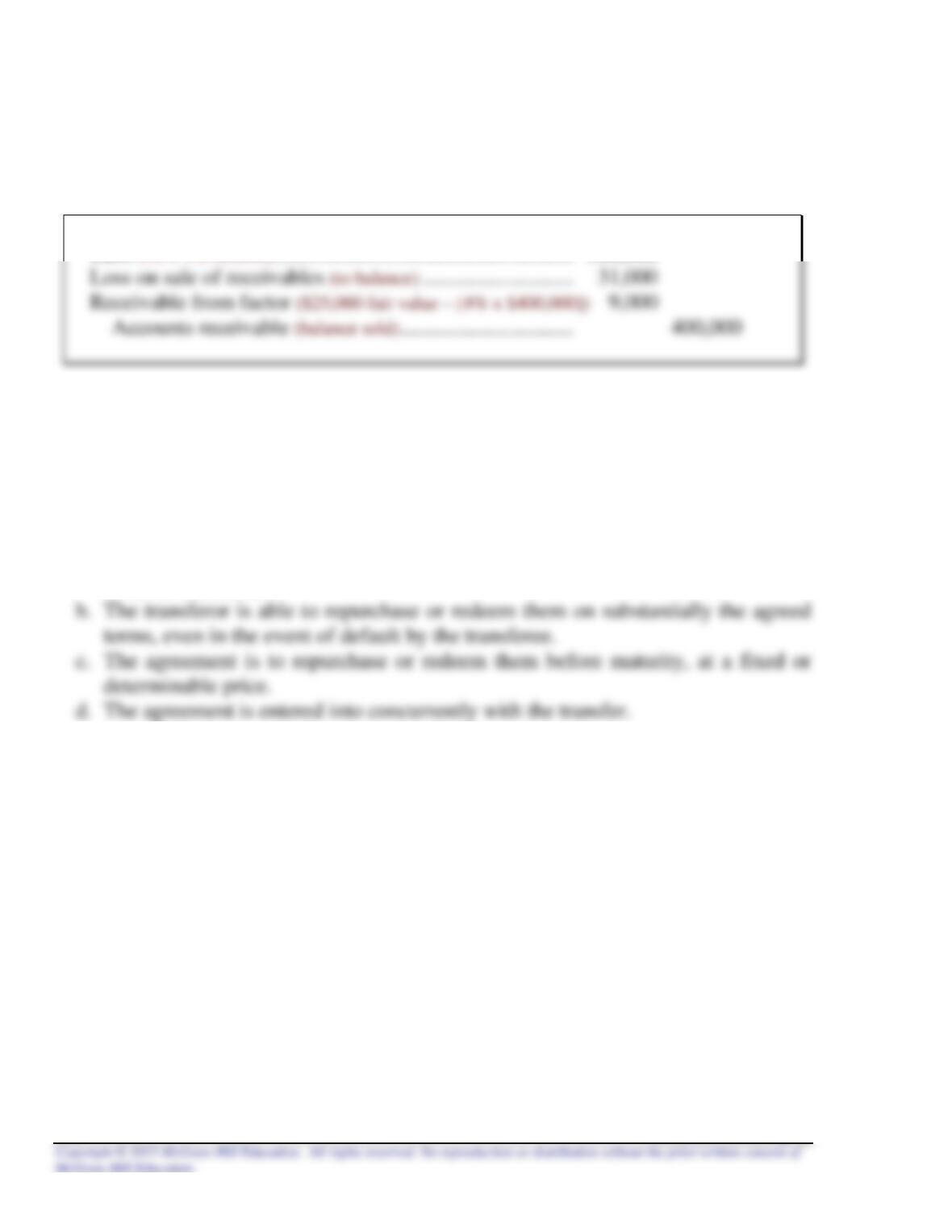
Cash (90% x $400,000) ………………………………………………. 360,000
Requirement 4
FASB ACS 860–10–40–24: “Transfers and Servicing—Overall—Derecognition –
Effective Control Through Both a Right and an Obligation (previously paragraph 47
of SFAS No. 140) lists the following conditions:
a. The assets to be repurchased or redeemed are the same or substantially the same
as those transferred.
Analysis Case 7–12
Requirement 1
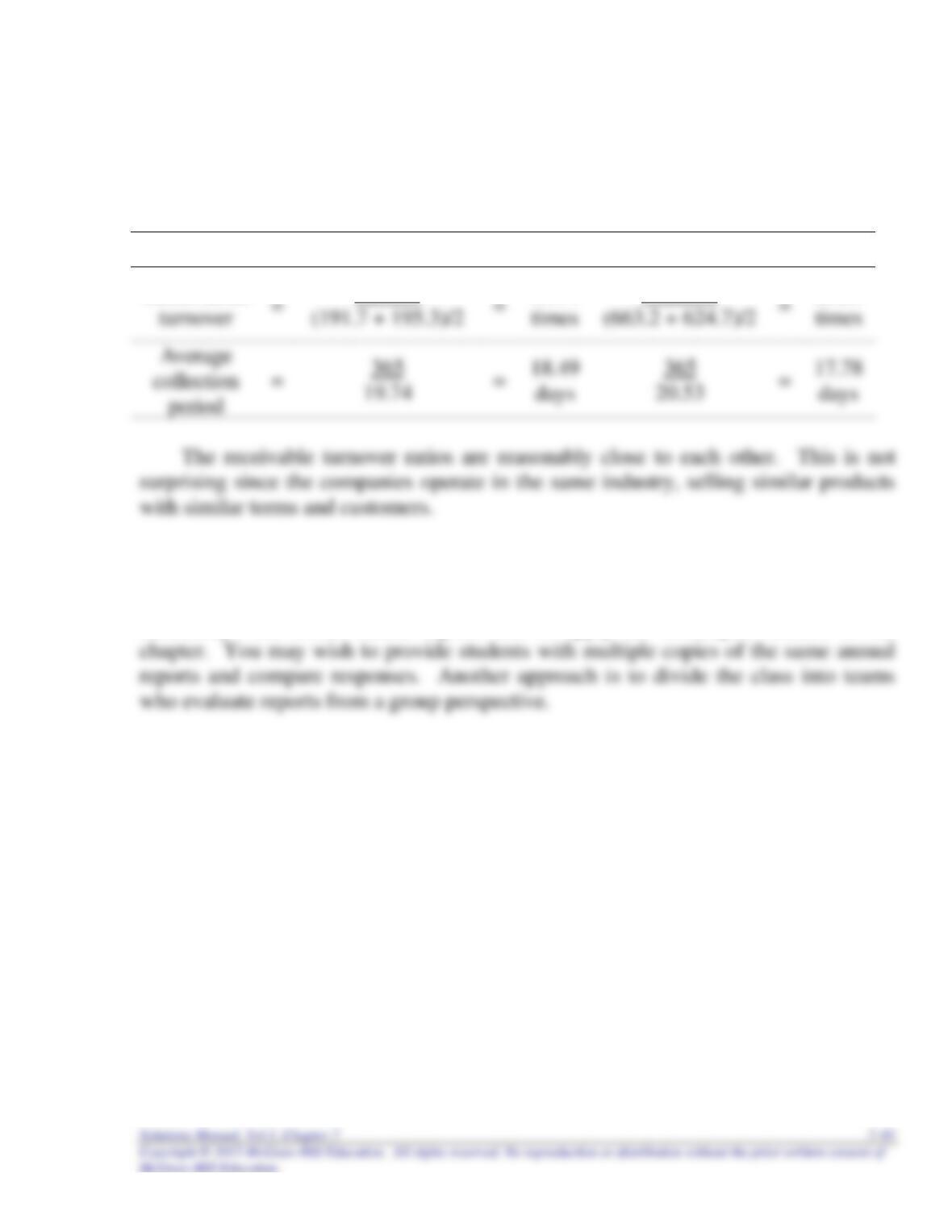
Del Monte
Smithfield
Receivables
3,819.4
19.74
13,221.1
20.53
Requirement 2
The objective of this requirement is to motivate students to obtain hands–on
familiarity with actual annual reports and to apply the techniques learned in the
7–92 Intermediate Accounting, 8/e
Analysis Case 7–13
Requirement 1
Note 1 indicates “We consider any liquid investments with a maturity of three
months or less at purchase to be cash equivalents. Included in cash and cash
Requirement 2
Requirement 3
Air France–KLM Case
Requirement 1
AF indicates the following:
“4.10.1 Valuation of trade receivables and non-current financial
assets
Trade receivables, loans and other non-current financial assets are
considered to be assets issued by the Group and are recorded at
Requirement 2
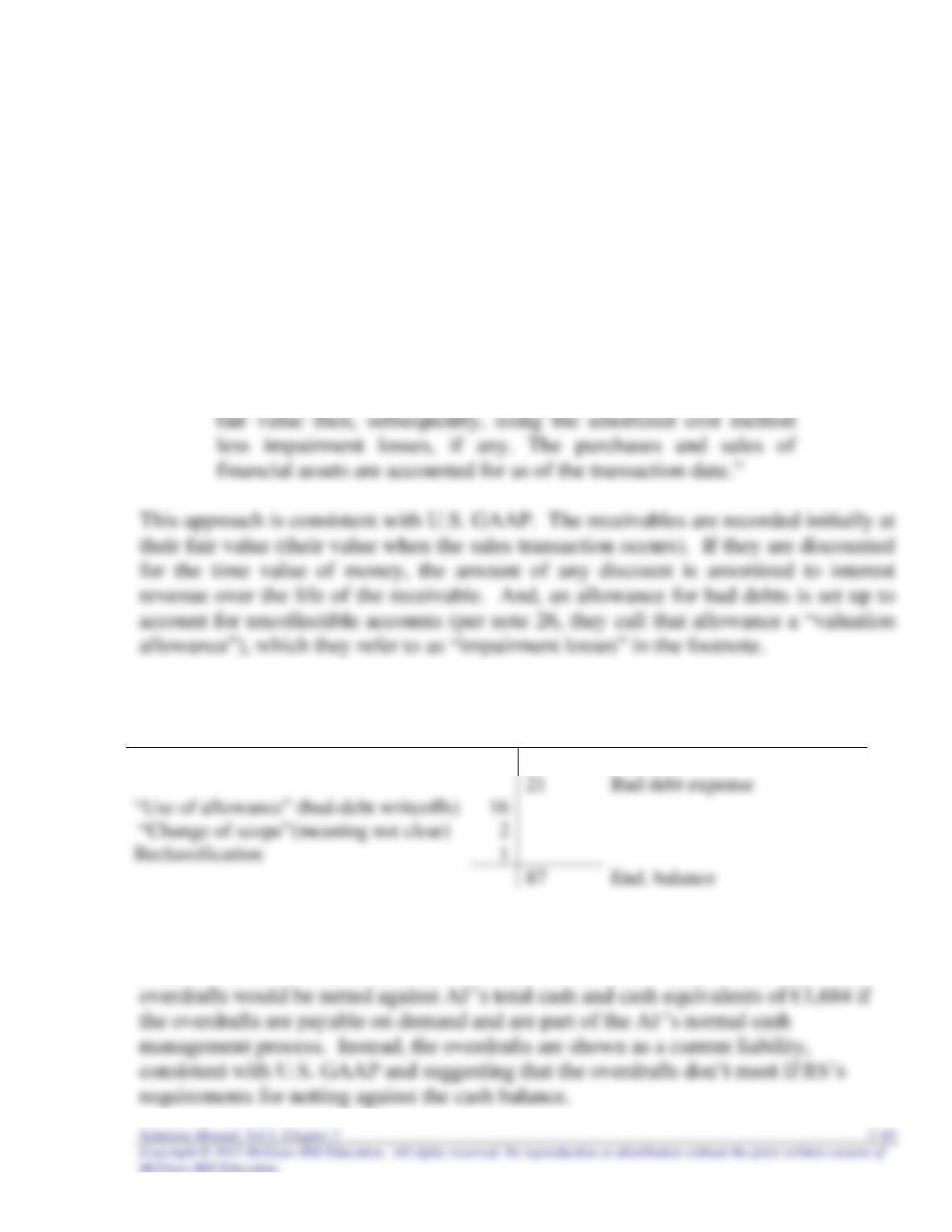
Valuation allowance for trade accounts receivable
85
Beg. balance
21
Bad debt expense
Reclassification
87
Requirement 3
AF has bank overdrafts of €166 as of December 31, 2013. Under IFRS, those