7
Job Costing
Solutions to Review Questions
7-1.
Companies using a job order cost system are likely to be performing services or
manufacturing products according to specific customer orders and product specifications.
Construction contractors, manufacturers of special equipment, aircraft manufacturers,
CPA firms, attorneys, and hospitals all employ job order cost systems.
7-2.
There are two primary reasons that cost allocation bases using direct labor are common.
First, direct labor historically was the most important resource used in manufacturing.
Second, direct labor usage is already recorded for products, meaning no additional record
keeping is required.
7-3.
The Manufacturing Overhead account is used to accumulate the actual manufacturing
overhead costs as they are incurred. Manufacturing Overhead Applied represents the
estimate of overhead that is used as a basis for computing work in process and other
inventory costs. The applied account is used to facilitate recordkeeping during the period.
7-4.
A materials requisition is used to document the authorization for issuances of materials
7-5.
The job costing procedure is basically the same in both types of organizations, except that
7-6
The costs of a product using normal costing are:
• Actual direct materials cost.
• Actual direct labor cost.
• Applied overhead, which is calculated as: Predetermined overhead rate x actual
allocation base.
7-7.
Mega has choices to make about the allocation base and the cost pools used to
accumulate the overhead. This does not mean Mega can choose to do whatever it wants.
The government has a set of contracting rules and an audit agency to enforce the rules.
However, some interpretation is always required when classifying costs.
Solutions to Critical Analysis and Discussion Questions
7-10.
Actual costing requires knowing the actual costs of overhead as well as the actual direct
cost for a job. By the time the actual overhead is known, the information is not timely for
decision-making. In addition, actual costing requires allocations of many overhead costs to
jobs, so it is only the total costs that are actual, not the job costs.
7-11.
If materials costs are not properly assigned to jobs, management may later be misled in
estimating the actual costs to complete future, similar jobs. Thus, profit planning may be in
error. Profitable jobs may be rejected because errors in cost assignments have made the
jobs look unprofitable or less profitable. If the company prepares bids on jobs, the bids
may be in error if they are based on the wrong costs.
7-12.
7-13.
7-15.
7-16.
Yes. The choice of a costing system is based on the nature of the products and the uses
of the product cost information computed. If units of output are difficult to distinguish or if
individual unit costs are not used for decisions, a company might choose not to use job
costing.
7-17.
Yes, a trial is a job for costing purposes. A trial is a discrete event and records of costs
can be maintained for each job (trial).
7-18.
Answers will vary. The steps might include:
a. Measure the area of the walls;
b. Multiply the area by the amount (fractions of a gallon) of paint required per square foot;
c. Determine the number of coats of paint required;
d. Multiply the amount of paint in step b by the number of coats in step c;
e. Determine the costs of miscellaneous supplies (drop cloths, paint brushes, etc.);
7-19.
Answers will vary. Common responses are (labor) time, materials cost, wall area, and so
on.
7-20.
Answers will vary. In general, the answer is that this is not ethical. Although the “correct”
allocation basis is subjective, it is difficult to justify the choice by the outcome. There
might be other reasons, such as more valuable employees or other resources are used
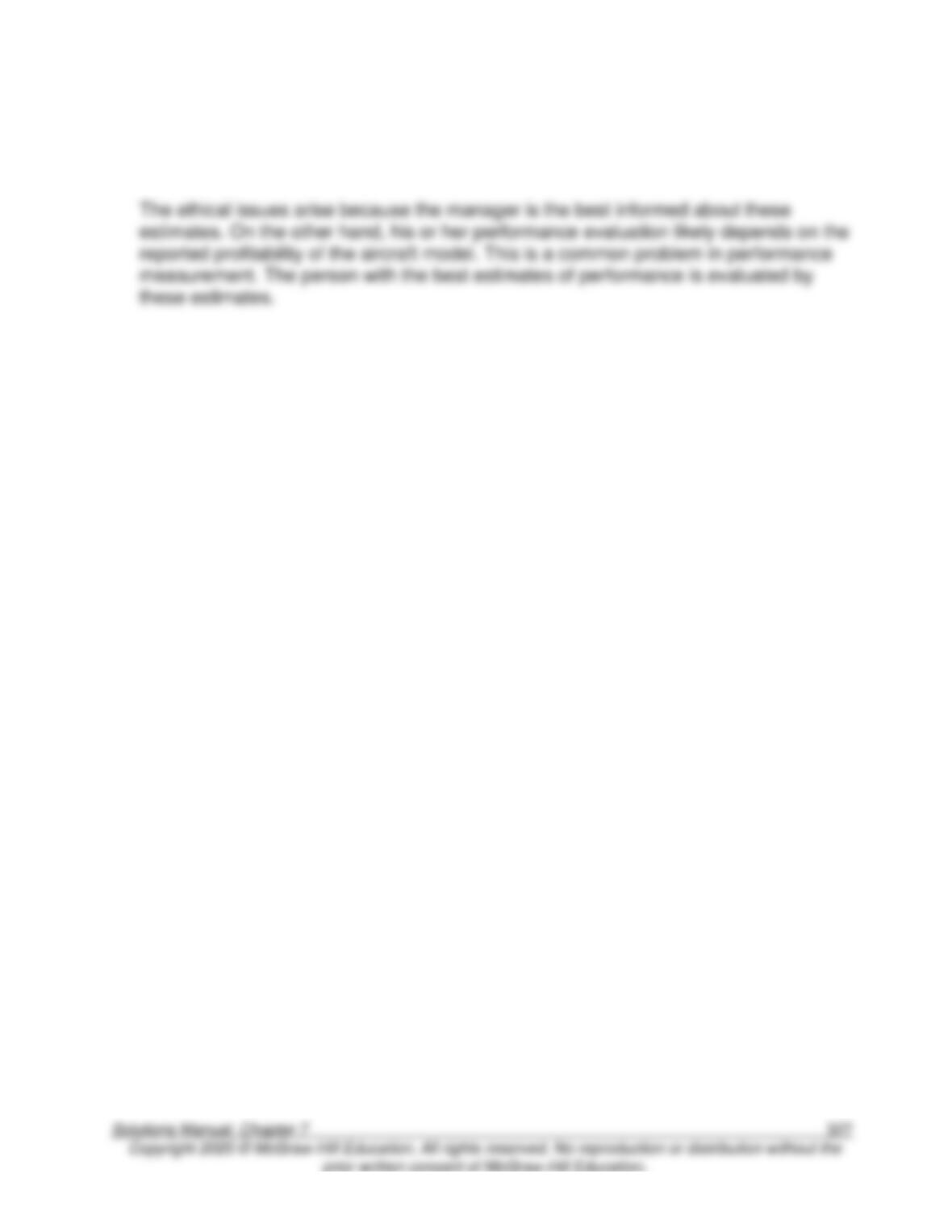
7-21.
Answers will vary. The manager can choose, at a minimum, the forecast of future costs,
future sales, and the life of the program. A company might choose this approach,
because it provides an estimate of current profitability of a particular aircraft based on
the best estimates available.
Solutions to Exercises
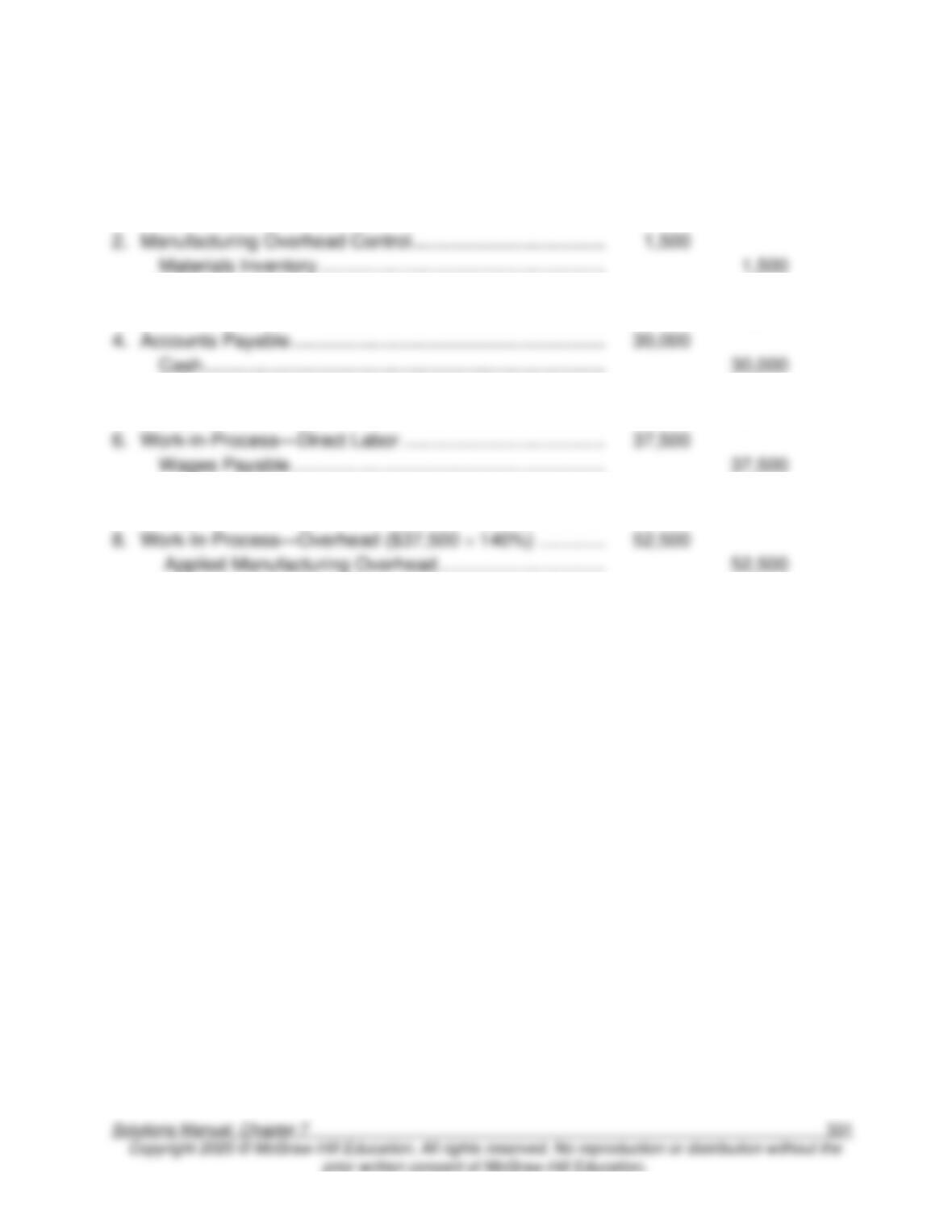
7-22. (30 min.) Assigning Costs to Jobs: Steve’s Cabinets.
a.
1.
Materials Inventory …………………………………………………..
80,000
Accounts Payable …………………………………………………
80,000
2.
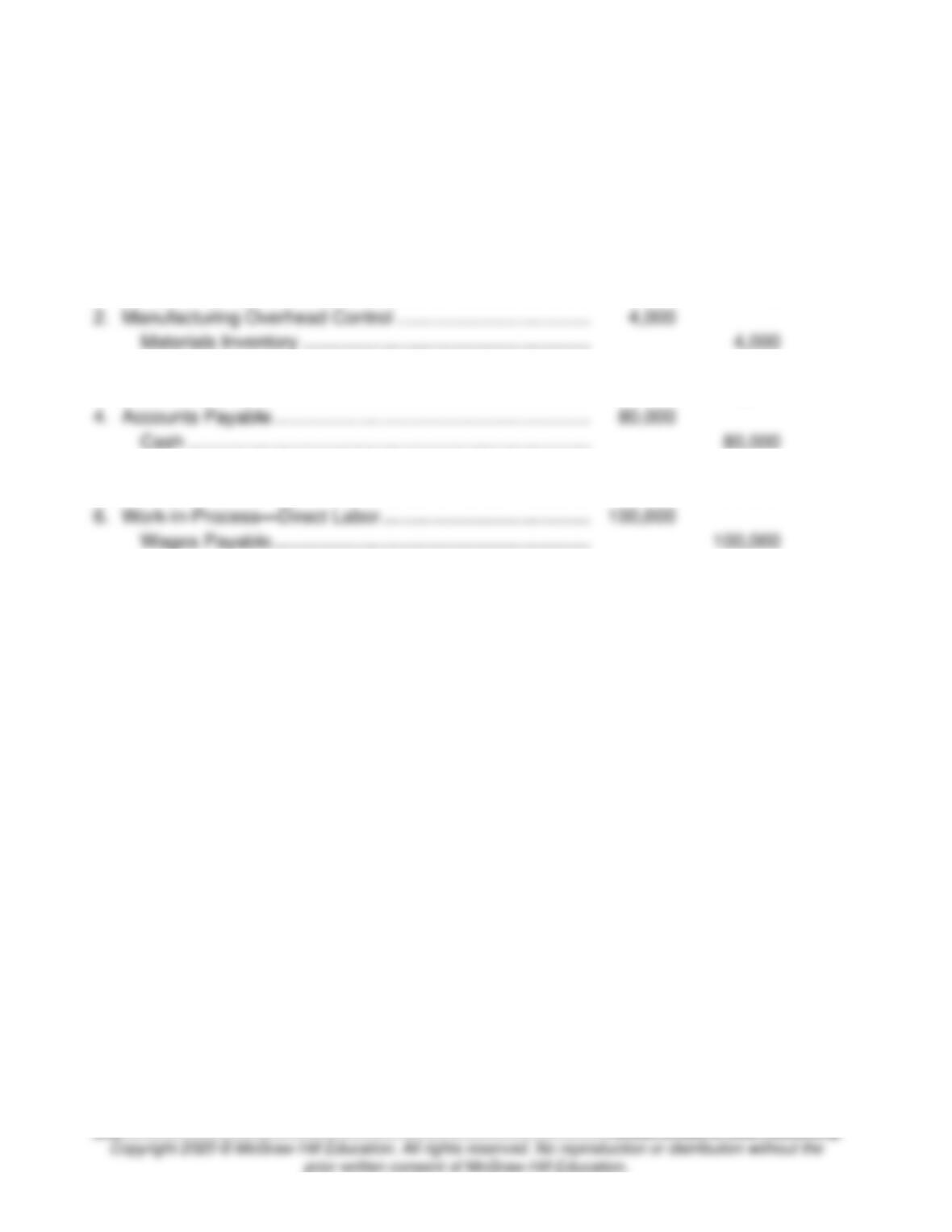
Manufacturing Overhead Control ……………………………….
Materials Inventory ……………………………………………….
3.
Materials Inventory …………………………………………………..
56,000
Accounts Payable …………………………………………………
56,000
4.
Accounts Payable …………………………………………………….
80,000
Cash …………………………………………………………………..
80,000
5.
Work-in-Process—Direct Materials …………………………….
68,000
Materials Inventory ……………………………………………….
68,000
6.
Work-in-Process—Direct Labor ………………………………….
100,000
Wages Payable …………………………………………………….
7.
Manufacturing Overhead Control ……………………………….
106,000
Cash …………………………………………………………………..
106,000
8.
Work-In-Process— Overhead ($100,000 125%) ………..
125,000
Applied Manufacturing Overhead …………………………
125,000
9.
Manufacturing Overhead Control ……………………………….
50,000
Accumulated Depreciation—Property, Plant, and
Equipment ……………………………………………………….
50,000
7-22 (continued)
b.
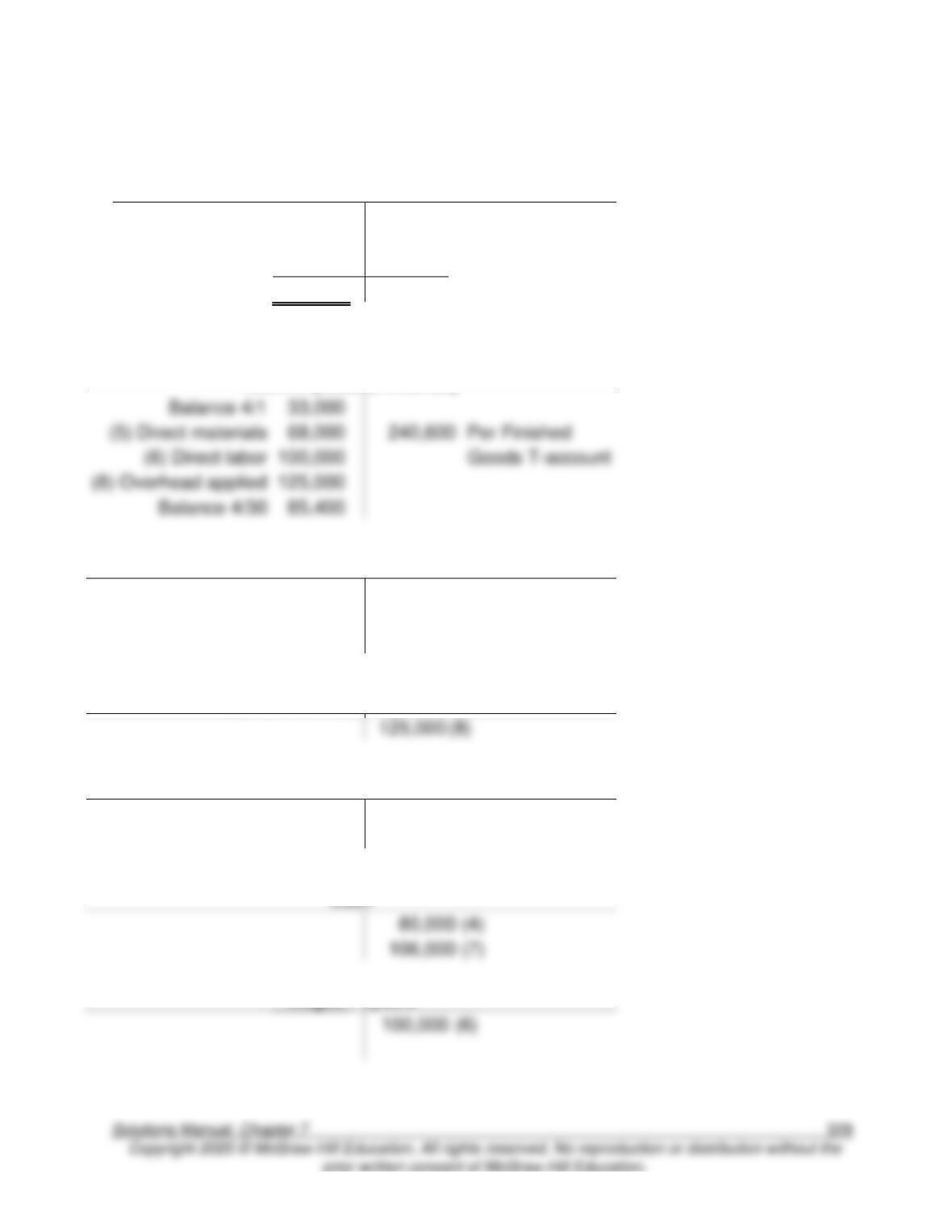
Materials Inventory
Balance 4/1
148,200
4,000
(2) Ind. materials
(1)
80,000
68,000
(5) Direct materials
(3)
56,000
Balance 4/30
212,200
*
*$212,200 = $148,200 + $80,000 + $56,000 – $4,000 – $68,000
Work-in-process inventory
68,000
Per Finished
Manufacturing Overhead Control
(2)
4,000
(7)
106,000
(9)
50,000
Applied Manufacturing Overhead
(8)
Accounts Payable
(4)
80,000
80,000
(1)
56,000
(3)
(4)
(7)
(6)
7-22. (continued)
Accumulated Depreciation—
Property, Plant, and Equipment
50,000
(9)
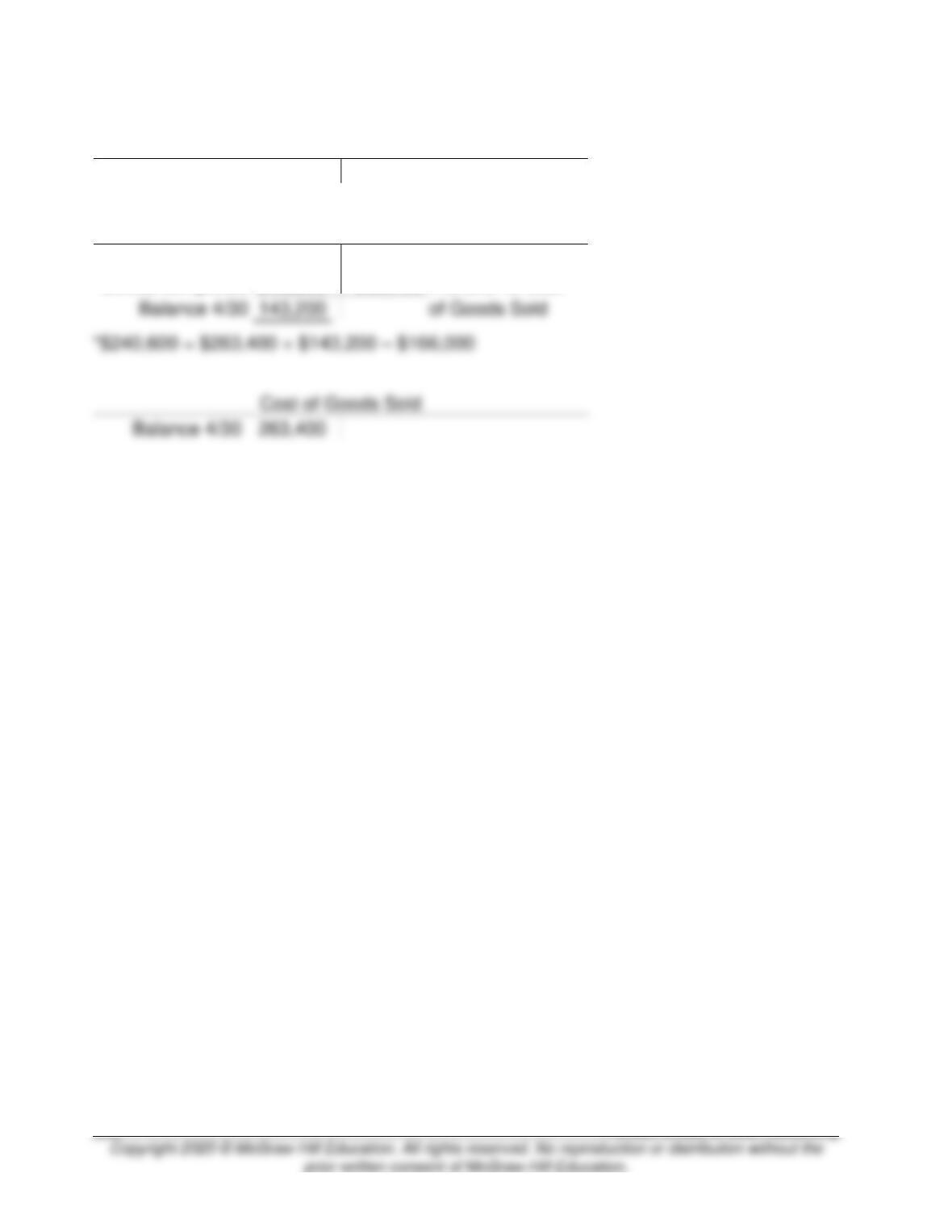
Finished Goods Inventory
Balance 4/1
166,000
Goods completed
240,600
*
263,400
Transfer to Cost
of Goods Sold
7-23. (20 min.) Assigning Costs to Jobs: Sunset Products.
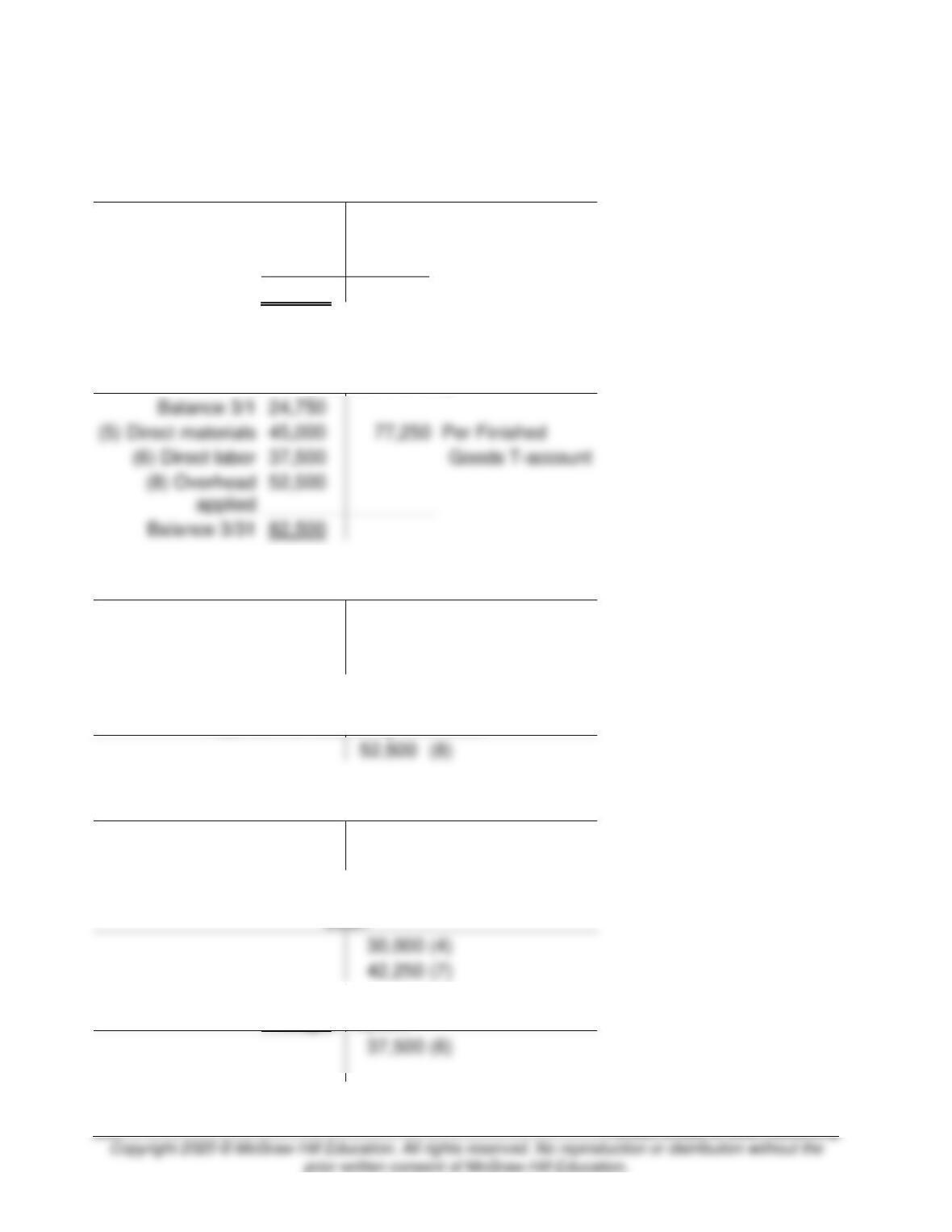
a.
1.
Materials Inventory ………………………………………………….
30,000
Accounts Payable ………………………………………………..
30,000
2.
Manufacturing Overhead Control ……………………………….
Materials Inventory ……………………………………………….
3.
Materials Inventory ………………………………………………….
37,500
Accounts Payable ………………………………………………..
37,500
4.
Accounts Payable ……………………………………………………
30,000
Cash …………………………………………………………………..
30,000
5.
Work-in-Process—Direct Materials …………………………….
45,000
Materials Inventory ……………………………………………….
45,000
6.
37,500
Wages Payable ……………………………………………………
37,500
7.
Manufacturing Overhead Control ……………………………….
42,250
Cash …………………………………………………………………..
42,250
8.
Work-In-Process—Overhead ($37,500 140%) ………….
52,500
Applied Manufacturing Overhead …………………………..
52,500
9.
Manufacturing Overhead Control ……………………………….
7,500
Accumulated Depreciation—Property, Plant, and
Equipment ……………………………………………………….
7,500
7-23. (continued)
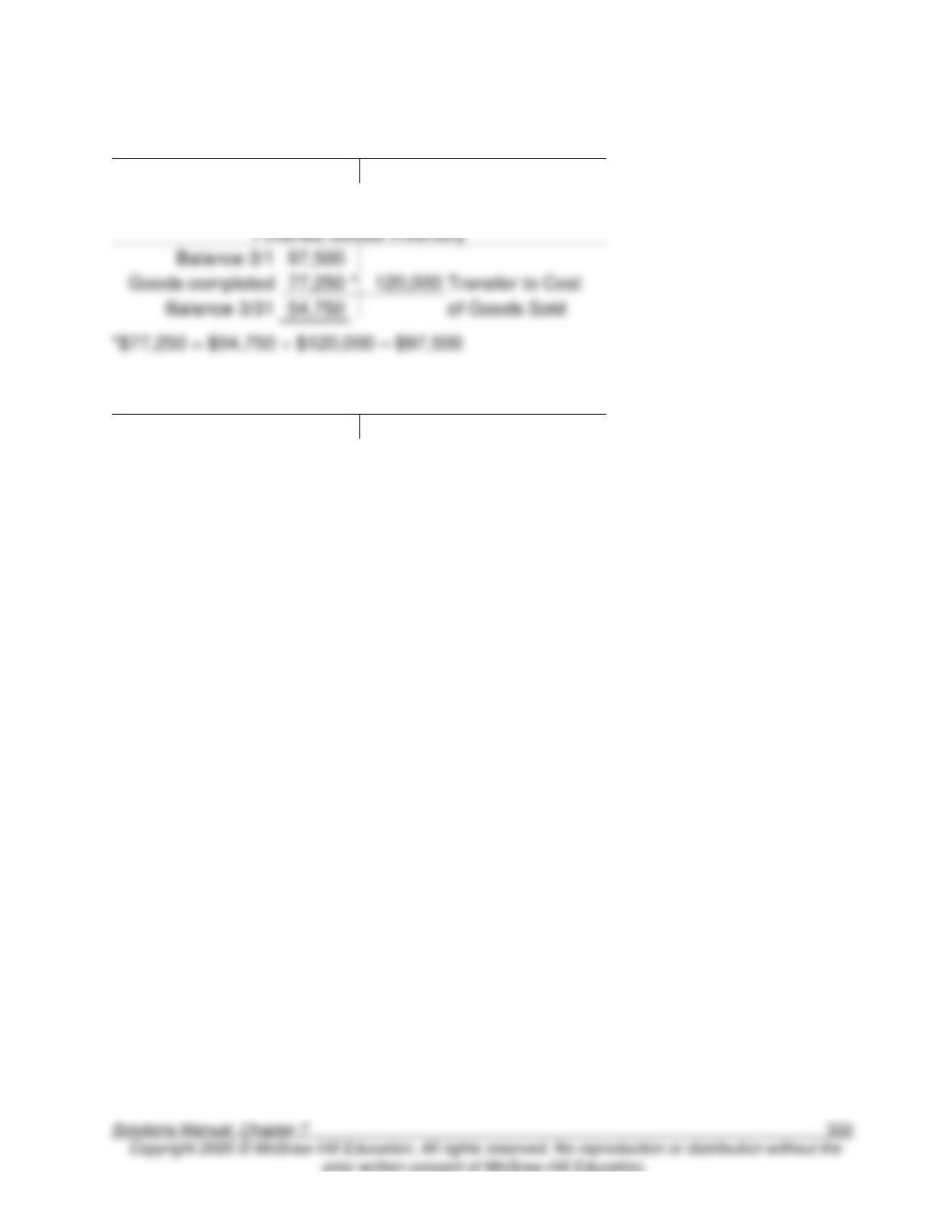
b.
Materials Inventory
Balance 3/1
13,500
1,500
(2) Ind. materials
(1)
30,000
45,000
(5) Direct materials
(3)
37,500
Balance 3/31
34,500
*
*$34,500 = $13,500 + $30,000 + $37,500 – $1,500 – $45,000
Work-in-process inventory
Balance 3/1
45,000
Per Finished
37,500
Manufacturing Overhead Control
(2)
1,500
(7)
42,250
(9)
7,500
Applied Manufacturing Overhead
52,500
(8)
Accounts Payable
(4)
30,000
30,000
(1)
37,500
(3)
30,000
(4)
(7)
Wages Payable
37,500
(6)
7-23. (continued)
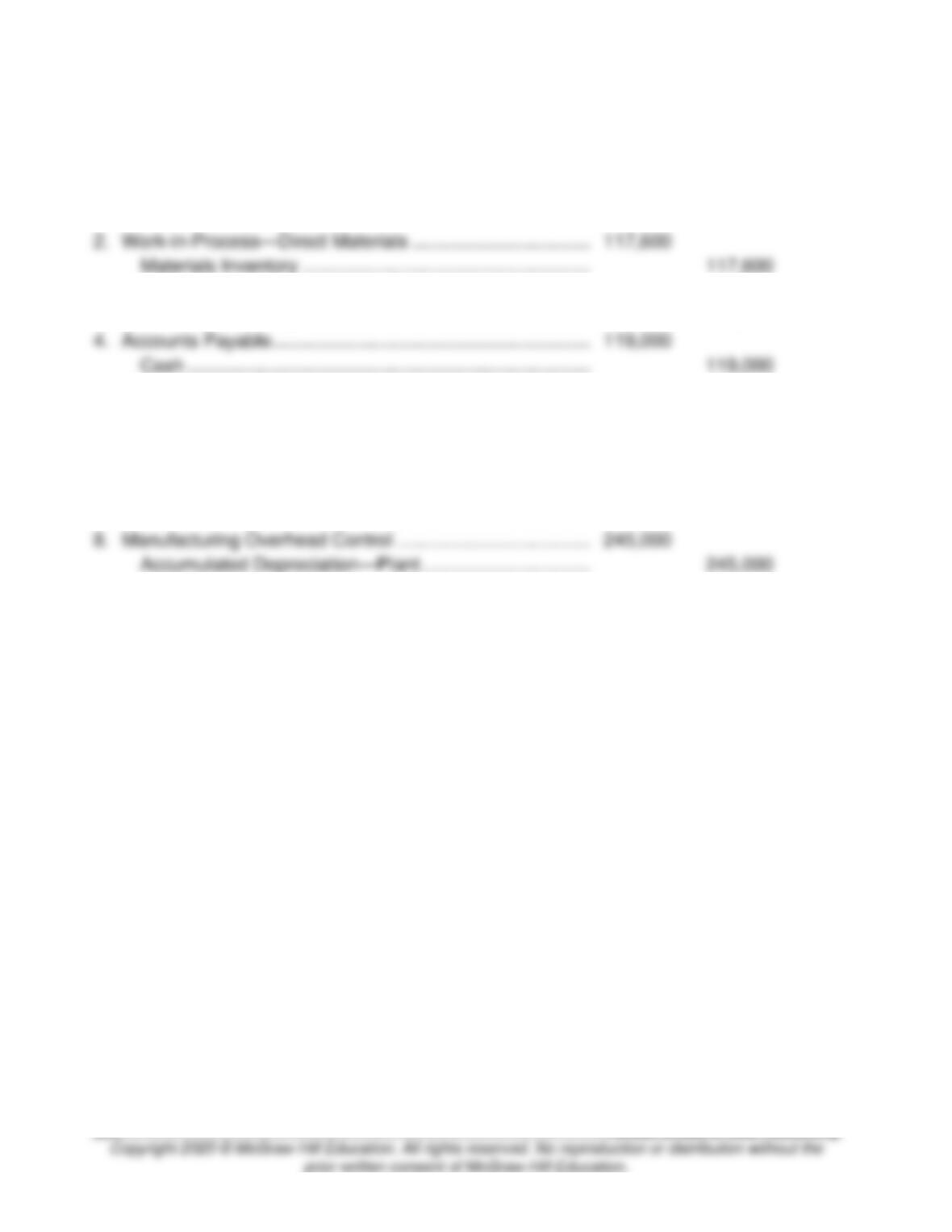
Accumulated Depreciation—
Property, Plant, and Equipment
7,500
(9)
Balance 3/1
of Goods Sold
Cost of Goods Sold
Balance 3/31
120,000
7-24. (20 min.) Assigning Costs to Jobs: Forest Components.
a.
1.
Materials Inventory …………………………………………………..
119,000
Accounts Payable …………………………………………………
119,000
2.
Materials Inventory ……………………………………………….
117,600
3.
Manufacturing Overhead Control ……………………………….
8,400
Materials Inventory ……………………………………………….
8,400
4.
Accounts Payable …………………………………………………….
119,000
Cash …………………………………………………………………..
119,000
5.
Materials Inventory …………………………………………………..
15,400
Work-in-Process—Direct Materials …………………………
15,400
6.
Work-in-Process—Direct Labor ………………………………….
217,000
Cash …………………………………………………………………..
217,000
7.
Manufacturing Overhead Control ……………………………….
120,400
Accounts Payable …………………………………………………
120,400
8.
Manufacturing Overhead Control ……………………………….
245,000
Accumulated Depreciation—Plant …………………………..
245,000
9.
Work-In-Process—Overhead ($217,000 93%)* ………….
201,810
Applied Manufacturing Overhead …………………………..
201,810
* The predetermined rate is 93% (= $2,790,000 ÷ $3,000,000).
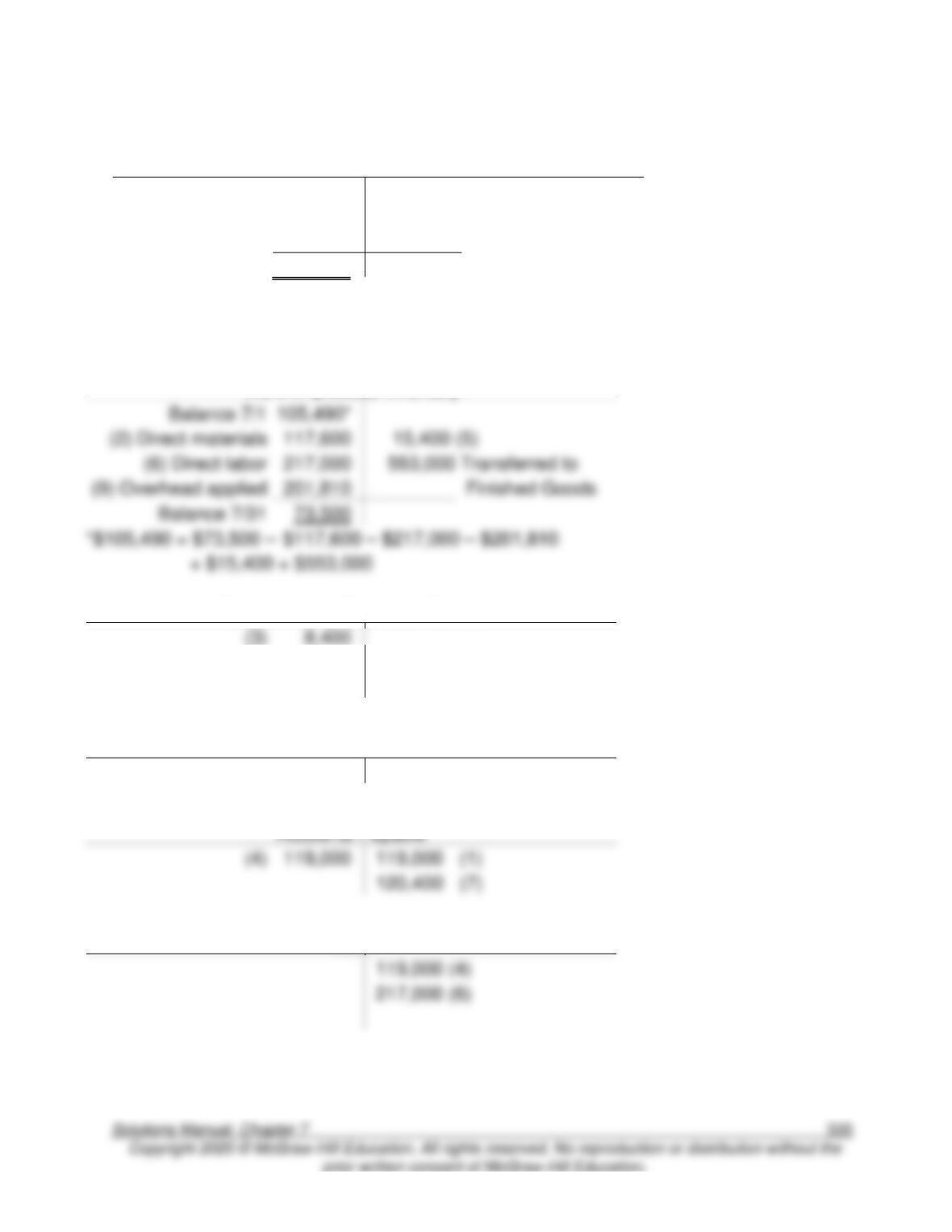
7-24. (continued)
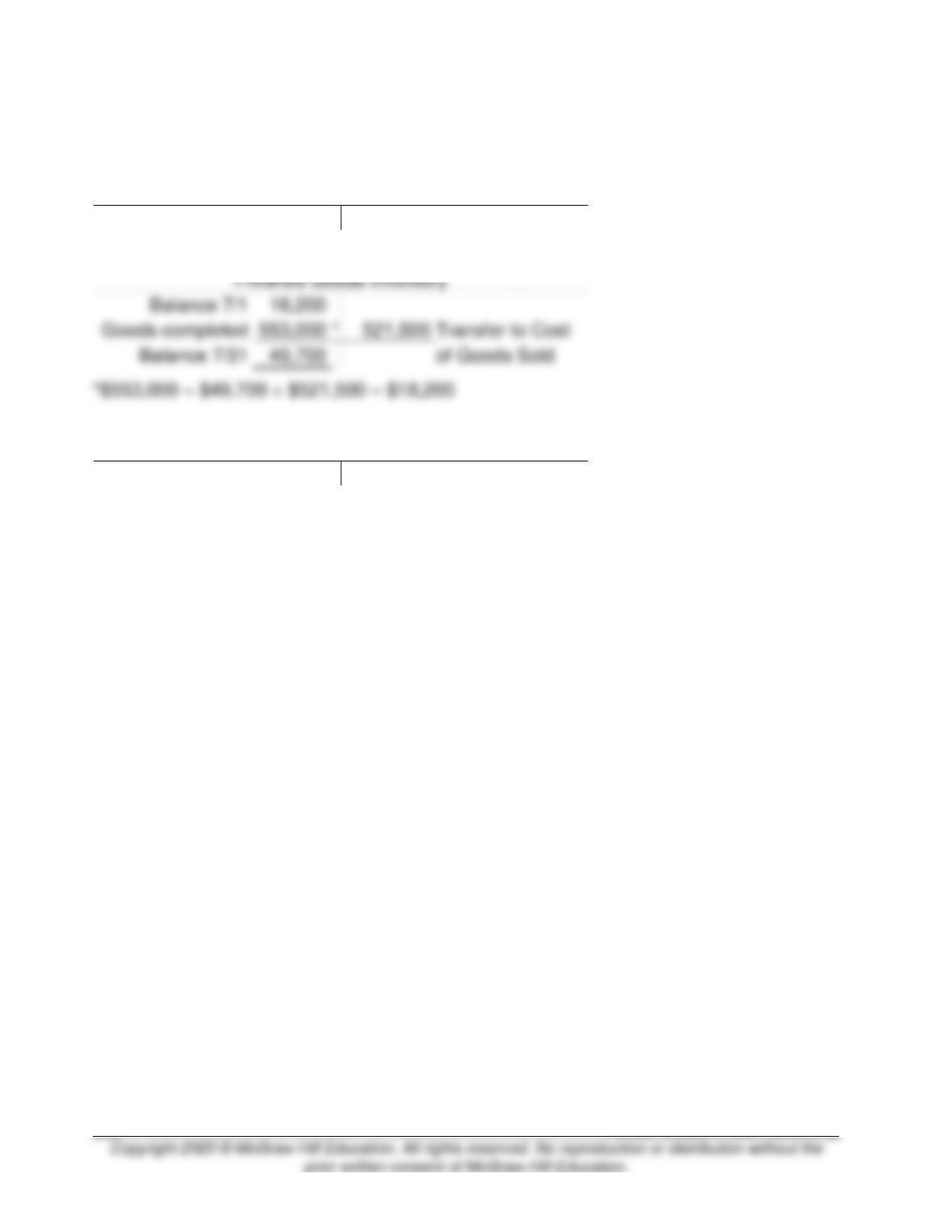
b.
Materials Inventory
Balance 7/1
79,800
*
(1)
119,000
117,600
(2) Direct materials
(5)
15,400
8,400
(3) Indirect materials
Balance 7/31
88,200
* Beginning Balance = Ending Balance – Additions + Uses
$79,800 = $88,200 – $119,000 – $15,400 + $117,600 + $8,400
117,600
(5)
217,000
553,000
Transferred to
Finished Goods
Manufacturing Overhead Control
(3)
8,400
(7)
120,400
(8)
245,000
Applied Manufacturing Overhead
201,810
(9)
(4)
119,000
119,000
120,400
Cash
(4)
(6)
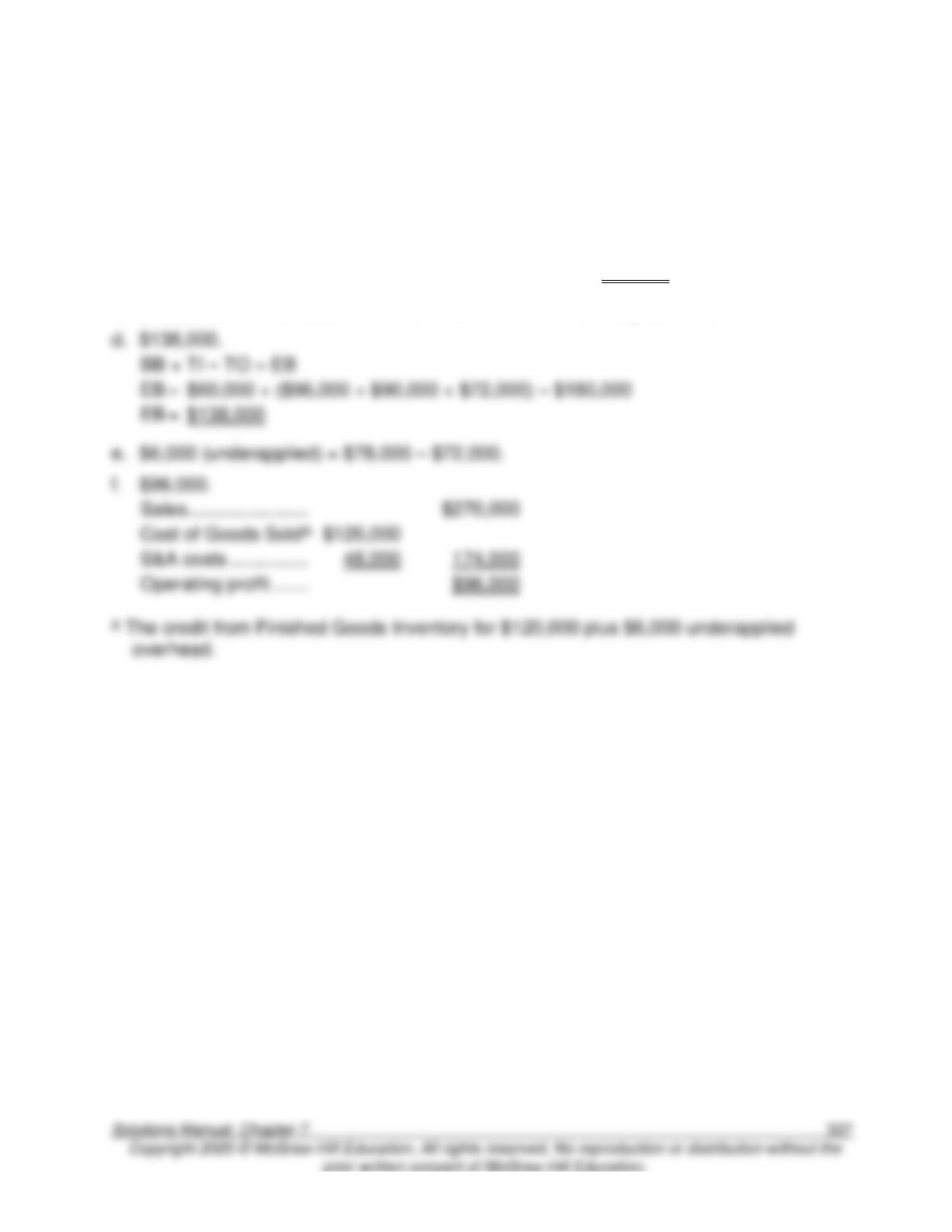
7-24. (continued)
Accumulated Depreciation—
Property, Plant, and Equipment
245,000
(8)
Balance 7/31
of Goods Sold
Cost of Goods Sold
Balance 7/31
521,500
7-25. (25 min.) Assigning Costs to Jobs: Cardinals, Inc.
a. $96,000, the credit side of the Materials Inventory account.
b. $72,000.
Direct labor ………………………………………
$90,000
Labor rate ………………………………………..
$30 per hour
Direct labor-hours ……………………………..
$90,000 $30 = 3,000 hours
Manufacturing overhead applied ………….
3,000 $24
=
$72,000
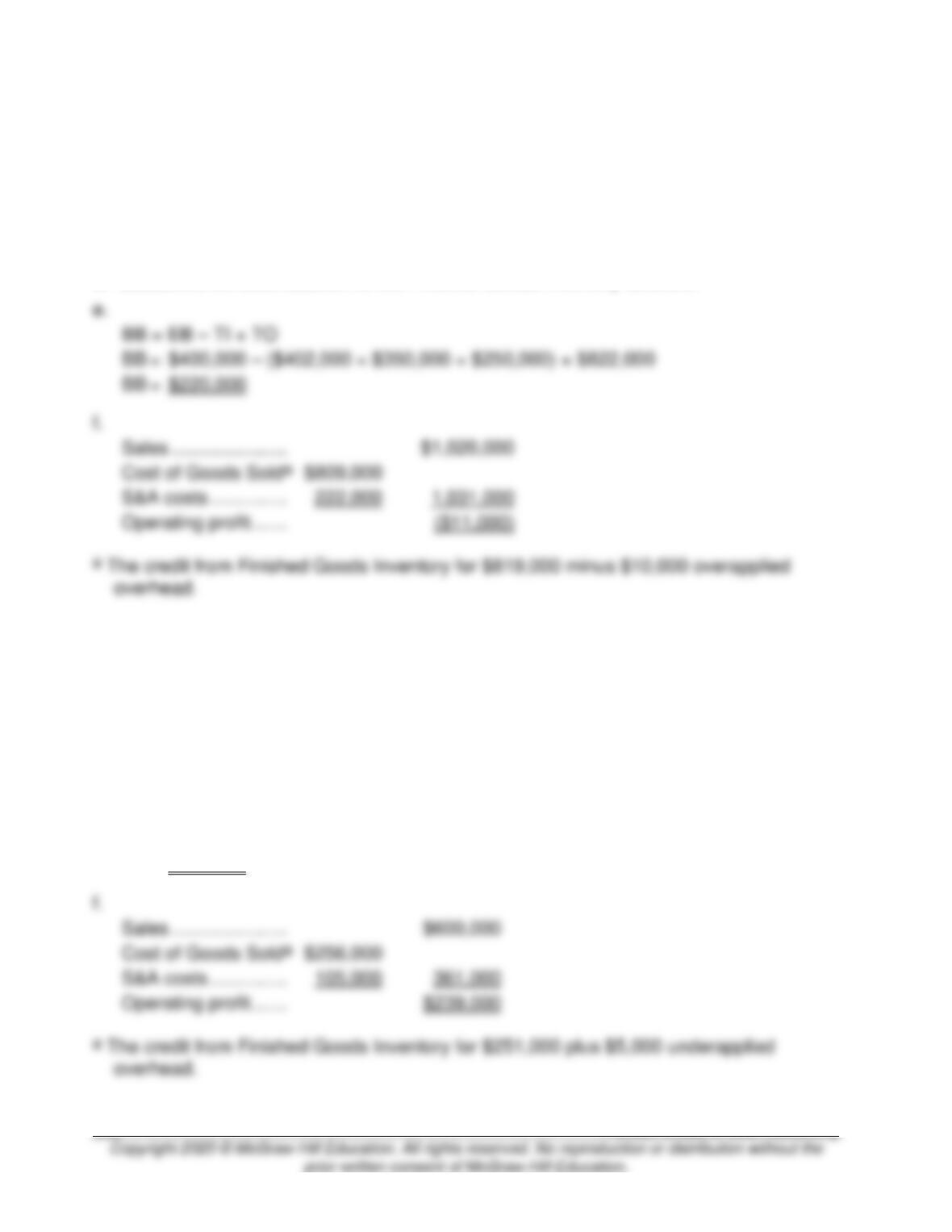
c. $180,000, the debit addition to the Finished Goods Inventory account.
BB + TI – TO = EB
=
$60,000 + ($96,000 + $90,000 + $72,000) – $180,000
Sales …………………..
S&A costs ……………
7-26. (25 min.) Assigning Costs to Jobs: Blake Corporation.
a. $447,000, the debit side of the Materials Inventory account.
b. $10,000 overapplied (the difference between overhead control and overhead applied).
c. $25/direct-labor hour (= $250,000 Applied ÷ 10,000 [= $350,000 ÷ $35] Direct Labor
Hours).
d. $822,000, the debit addition to the Finished Goods Inventory account.
BB = EB – TI + TO
BB
=
$400,000 – ($402,000 + $350,000 + $250,000) + $822,000
BB
=
$220,000
Sales ………………….
S&A costs ……………
7-27. (25 min.) Assigning Costs to Jobs: Pine Ridge Corporation.
a. $190,000, the credit side of the Materials Inventory account.
b. $5,000 underapplied (= $155,000 Control – $150,000 Applied).
c. 80% (= $150,000 Applied ÷ $187,500 Direct Labor Cost).
d. $345,000, the debit addition to the Finished Goods Inventory account.
e.
BB + TI – TO = EB
EB
=
$100,000 + ($190,000 + $187,500 + $150,000) – $345,000
EB
=
$282,500
Sales ………………….
S&A costs ……………
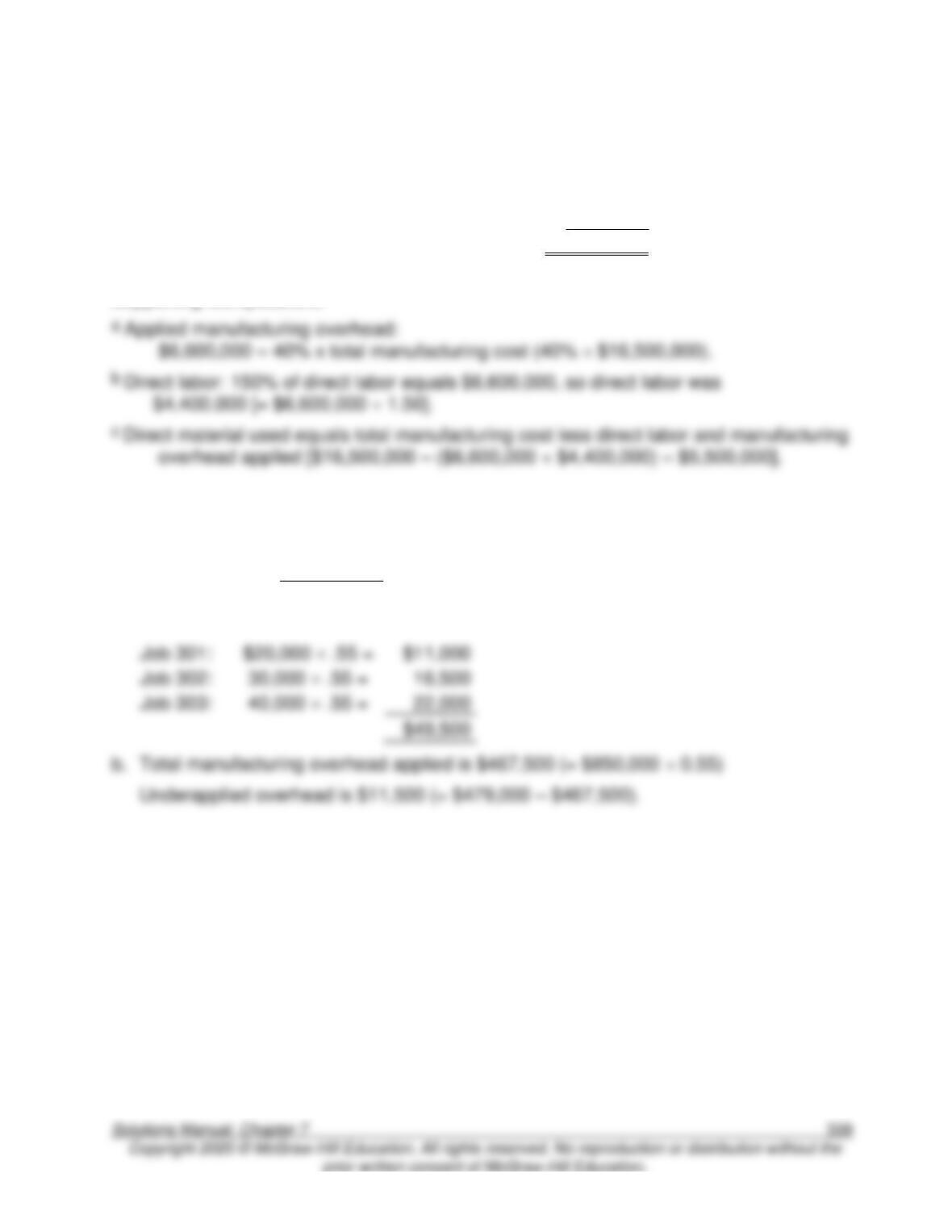
7-28. (10 min.) Predetermined Overhead Rates: Dixboro Company.
Direct material used …………………………………….
$5,500,000c
Direct labor …………………………………………………
4,400,000b
Manufacturing overhead applied ……………………
6,600,000a
Total manufacturing cost during the year ………..
$16,500,000
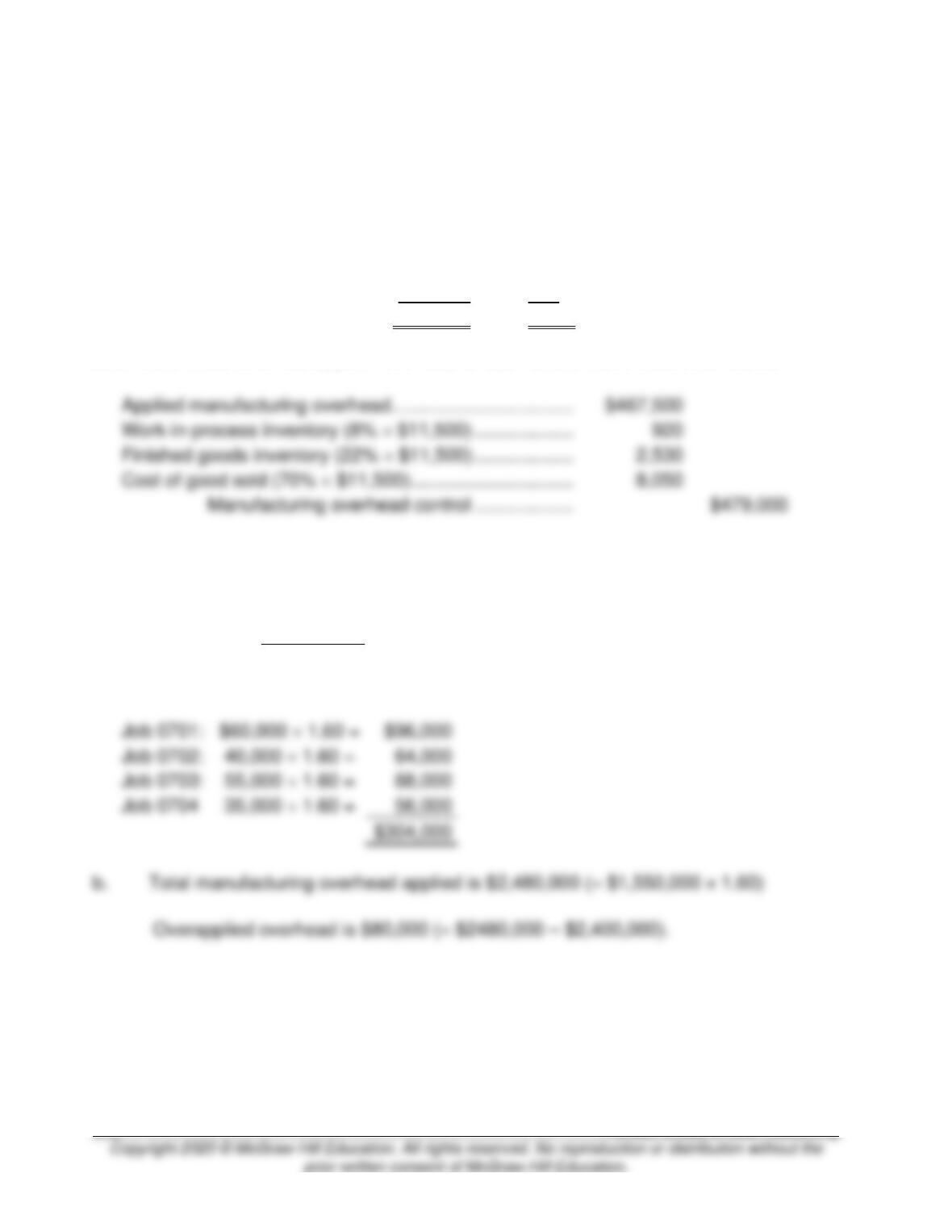
7-29. (15 min.) Predetermined Overhead Rates: Southern Rim Parts.
a.
Application rate:
$495,000
= 55% of direct labor
$900,000
Job 301:
Job 302:
Job 303:
7-30. (10 Min.) Prorate Under- or Overapplied Overhead: Southern Rim Parts.
First, determine the percentage of overhead applied is in each account:
Applied
Overhead
% of Total
Applied
Work in process inventory …
$37,400
8%
(= $37,400 ÷ $467,500)
Finished goods ……………….
102,850
22
(= $102,850 ÷ $467,500)
Cost of goods sold …………..
327,250
70
(= $327,250 ÷ $467,500)
Total …………………………..
$467,500
100%
Second, allocate the underapplied overhead to each account and record as follows:
Applied manufacturing overhead …………………………..…
2,530
Cost of good sold (70% $11,500) ………………………….
$479,000
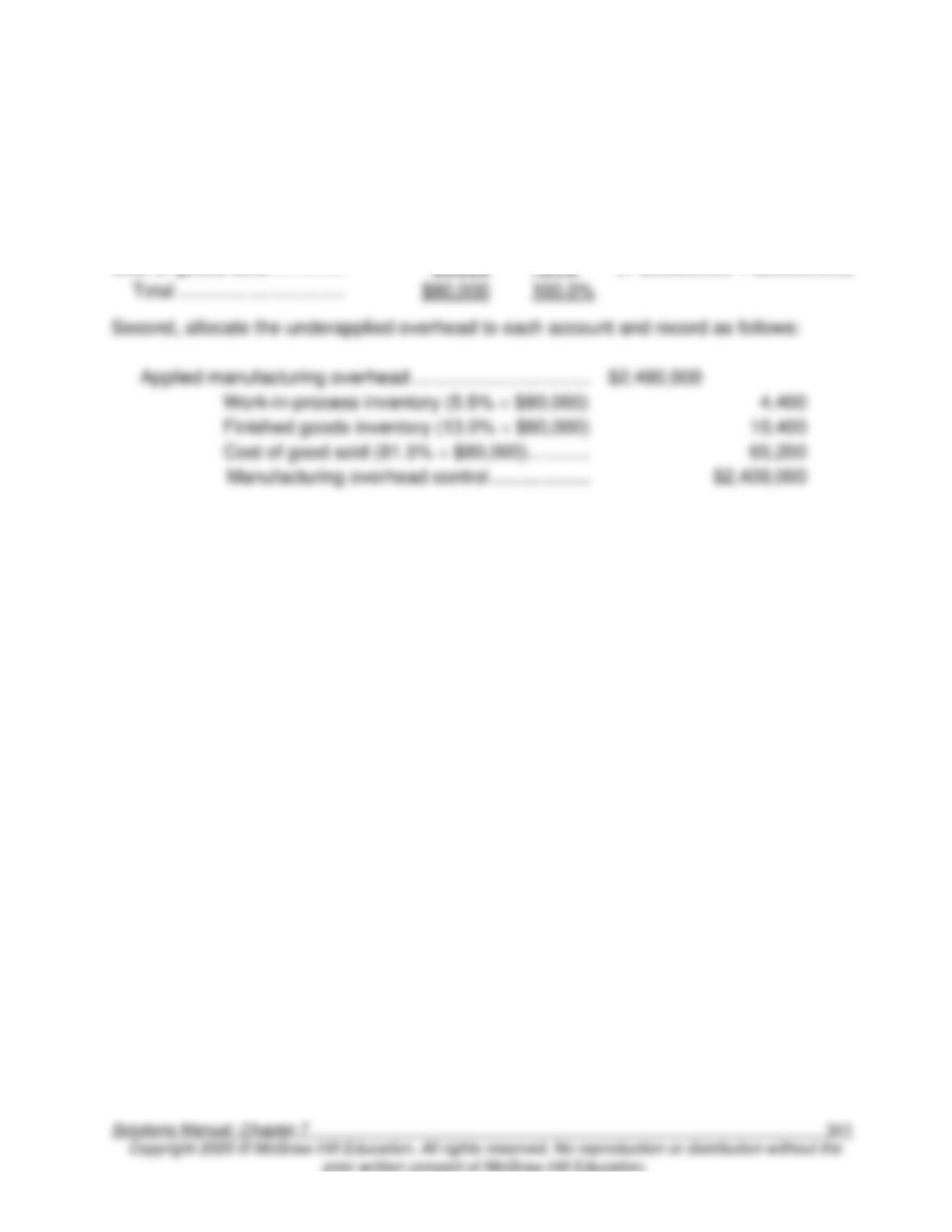
7-31. (15 min.) Predetermined Overhead Rates: Yarra Fabrication
a.
Application rate:
$2,240,000
= 160% of direct materials
$1,400,000
Job 0702:
Job 0703:
$304,000
7-32. (10 Min.) Prorate Under- or Overapplied Overhead: Yarra Fabrication.
First, determine the percentage of overhead applied is in each account:
Applied
Overhead
% of Total
Applied
Work in process inventory …
$4,400
5.5%
(= $451,000 ÷ $8,200,000)
Finished goods ………………..
10,400
13.0
(= $1,066,000 ÷ $8,200,000)
Cost of goods sold……………
65,200
(= $6,683,000 ÷ $8,200,000)
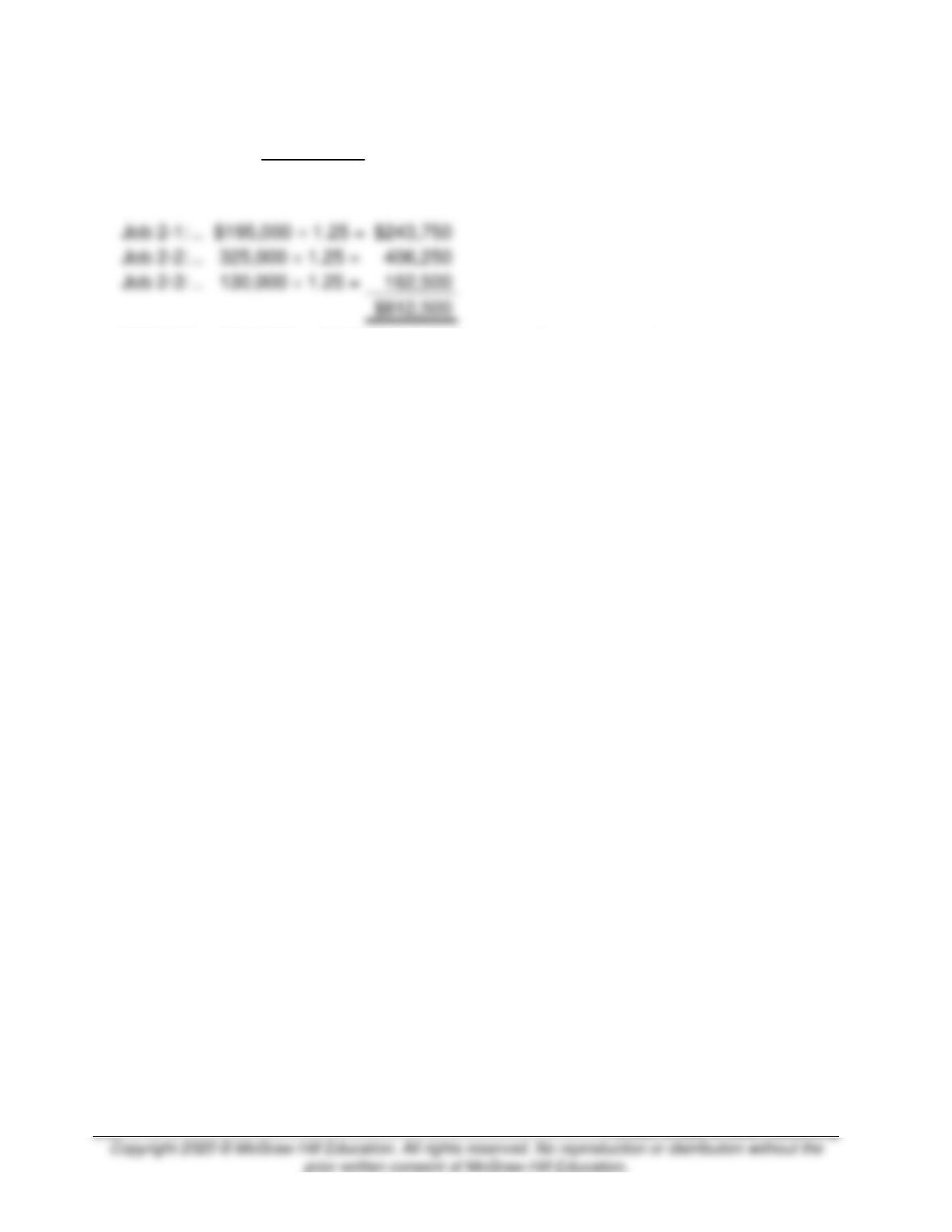
7-33. (15 min.) Predetermined Overhead Rates: Aspen Company.
a.
Application rate:
$625,000
= 125% of direct labor
$500,000
Job 2-2: ..
Job 2-3: ..
b. $800,000 – $812,500 = $12,500 overapplied manufacturing overhead.