Problem 7-24A (45 minutes)
1. a. The reasons that Marge Atkins and Pete Granger use budgetary slack
include the following:
• These employees are hedging against the unexpected (reducing
b. The use of budgetary slack can adversely affect Atkins and Granger
by:
• limiting the usefulness of the budget to motivate their employees to
top performance.
Problem 7-24A (continued)
2. The use of budgetary slack, particularly if it has a detrimental effect on
the company, may be unethical. In assessing the situation, the specific
standards contained in “Standards of Ethical Conduct for Management
Accountants” that should be considered are listed below.
Competence
Clear reports using relevant and reliable information should be
prepared.
Problem 7-25A (45 minutes)
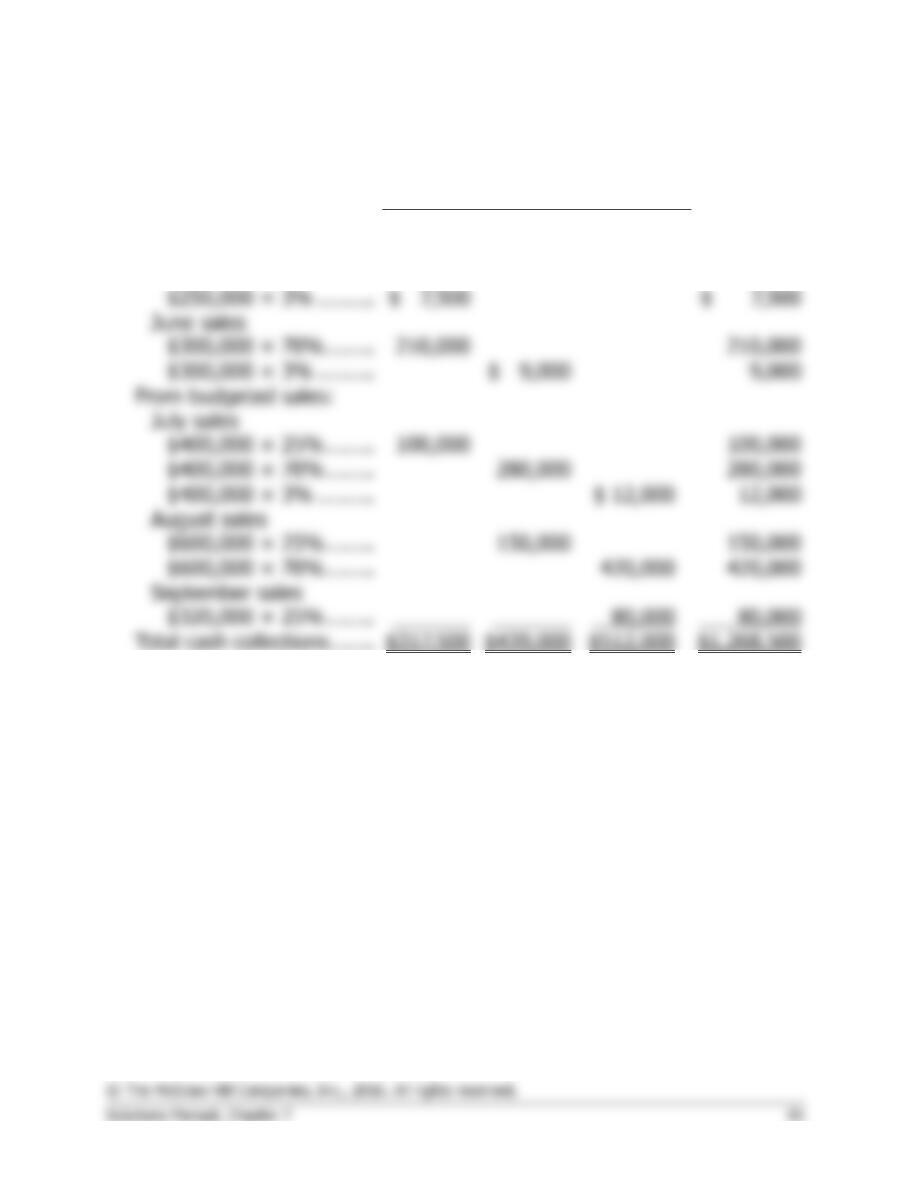
1. Schedule of expected cash collections:
Month
July
August
September
Quarter
From accounts receivable:
August sales
May sales
Problem 7-25A (continued)
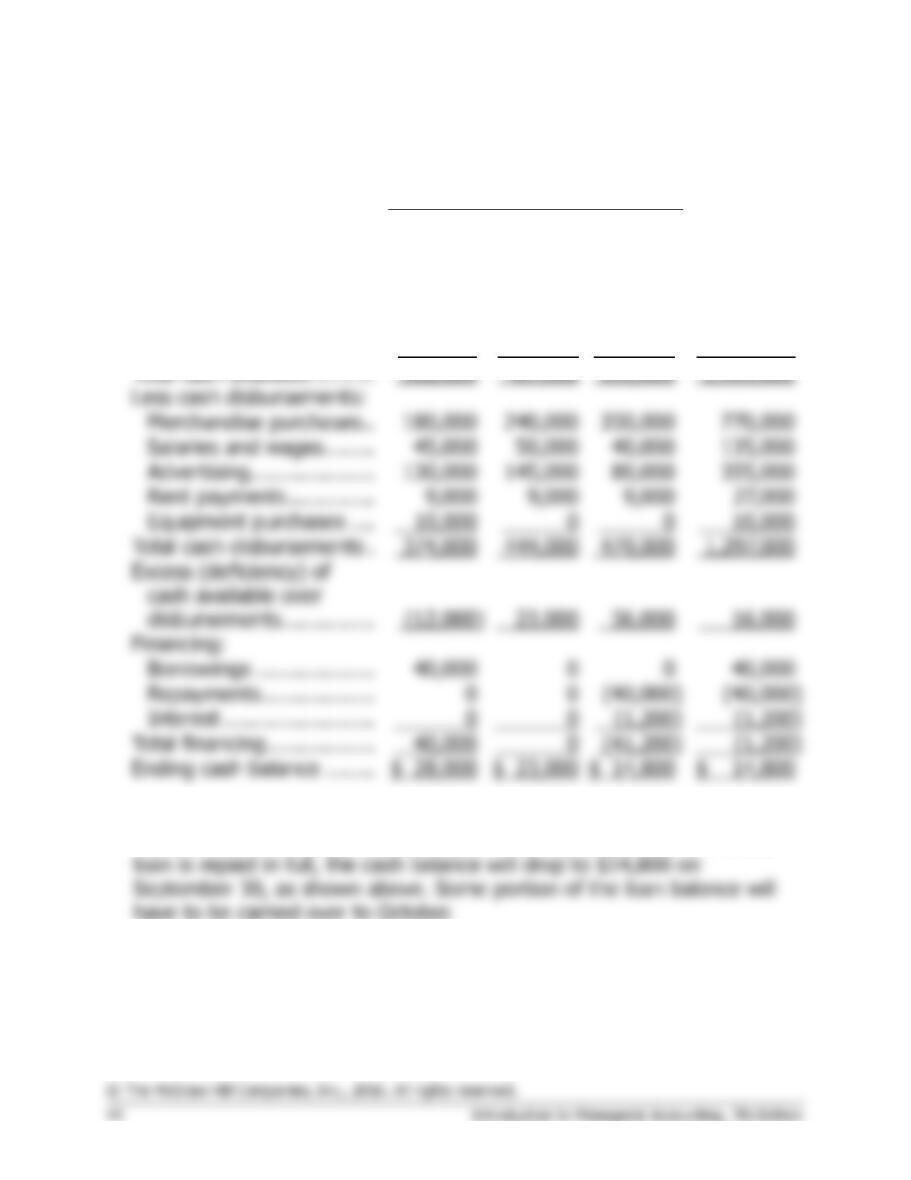
2. Cash budget:
Month
July
August
Septem-
ber
Quarter
Beginning cash balance ….
$ 44,500
$ 28,000
$ 23,000
$ 44,500
Add receipts:
Collections from
customers ………………
317,500
439,000
512,000
1,268,500
Total cash available ……….
362,000
467,000
535,000
1,313,000
Less cash disbursements:
130,000
0
Total cash disbursements .
374,000
479,000
Financing:
(1,200)
(1,200)
Total financing ……………..
(1,200)
Ending cash balance ……..
$ 23,000
3. If the company needs a $20,000 minimum cash balance to start each
month, then the loan cannot be repaid in full by September 30. If the
Problem 7-26A (60 minutes)
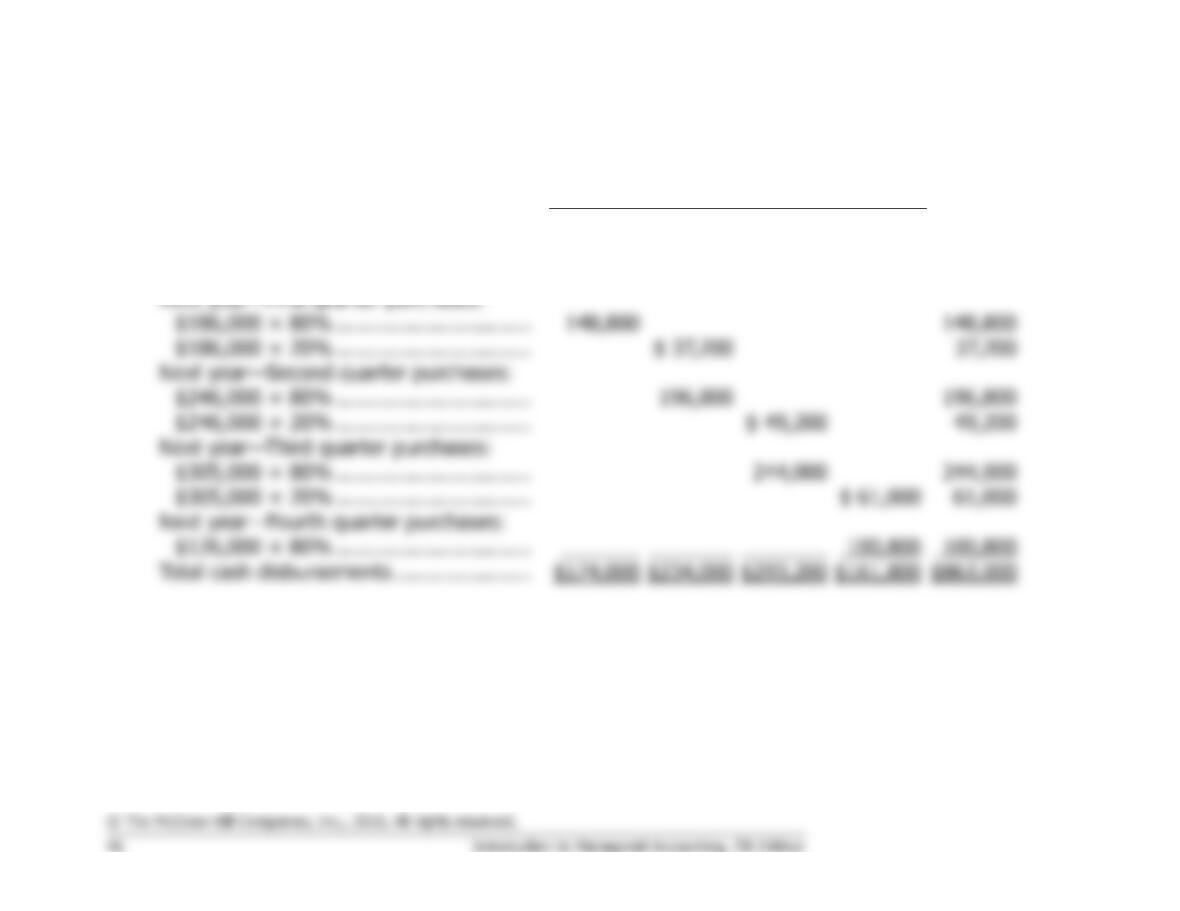
1. a. Schedule of expected cash collections:
Next Year’s Quarter
First
Second
Third
Fourth
Total
Current year—Fourth quarter sales:
Next year—Second quarter sales:
Next year—Fourth quarter sales:
Problem 7-26A (continued)
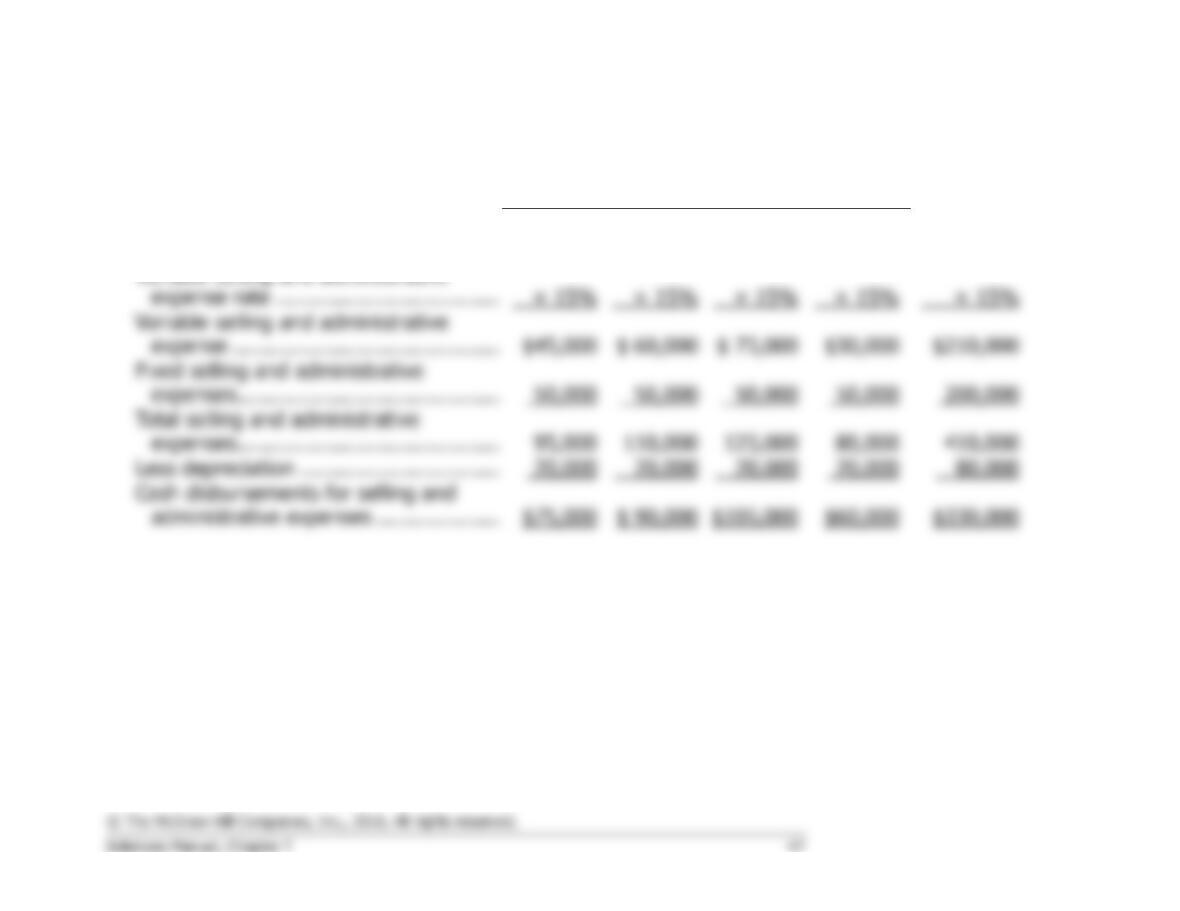
b. Schedule of expected cash disbursements for merchandise purchases for next year:
Quarter
First
Second
Third
Fourth
Total
Current year—Fourth quarter purchases:
$126,000 × 20% ………………………….
$ 25,200
$ 25,200
Next year—Second quarter purchases:
Next year—Fourth quarter purchases:
Problem 7-26A (continued)
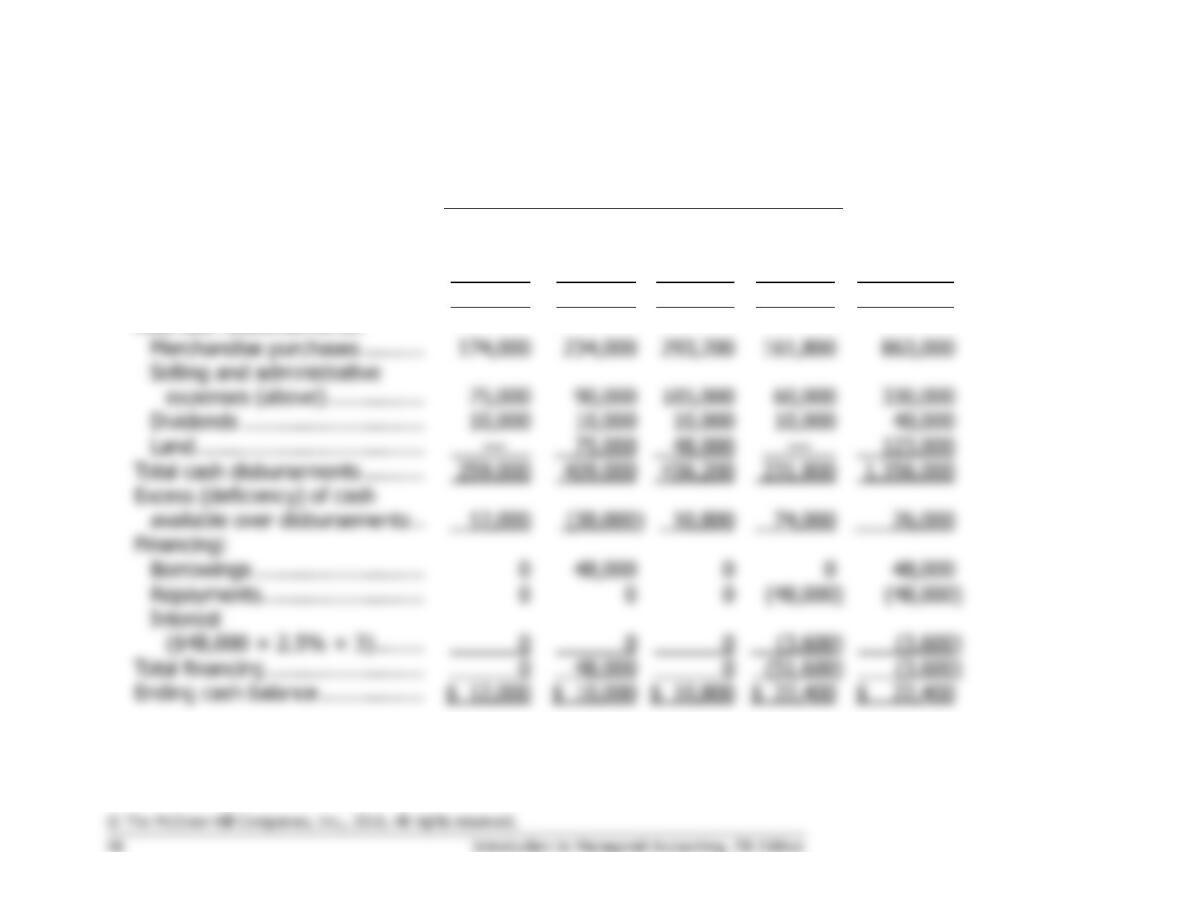
2. Budgeted selling and administrative expenses for next year:
Quarter
First
Second
Third
Fourth
Year
Budgeted sales in dollars …………………
$300,000
$400,000
$500,000
$200,000
$1,400,000
Variable selling and administrative
Problem 7-26A (continued)
3. Cash budget for next year:
Quarter
First
Second
Third
Fourth
Year
Beginning cash balance ………….
$ 10,000
$ 12,000
$ 10,000
$ 10,800
$ 10,000
Add collections from customers .
261,000
359,000
457,000
295,000
1,372,000
Total cash available ……………….
271,000
371,000
467,000
305,800
1,382,000
Less cash disbursements:
174,000
––
123,000
Total cash disbursements ……….
259,000
409,000
231,800
1,356,000
74,000
26,000
Financing:
0
0
(3,600)
Total financing ……………………..
0
(3,600)
Ending cash balance ……………..
$ 10,000
$ 10,800
Problem 7-27A (120 minutes)
1. Schedule of expected cash collections:
April
May
June
Quarter
Cash sales ………………..
$36,000
*
$43,200
$54,000
$133,200
*
24,000
Total collections …………
$56,000
*
$67,200
$82,800
$206,000
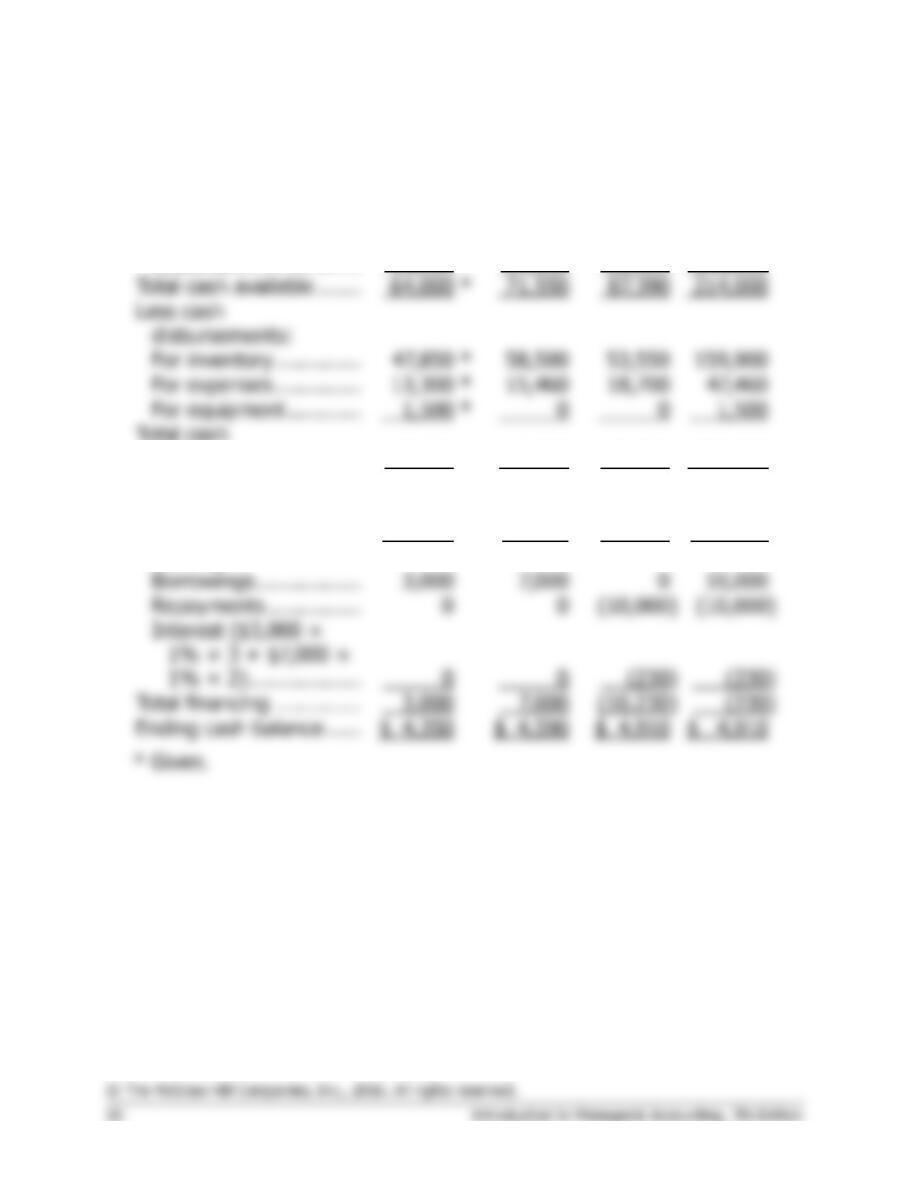
2. Merchandise purchases budget:
April
May
June
Quarter
Budgeted cost of goods
sold1 ……………………….
$45,000
*
$ 54,000
*
$67,500
$166,500
*
*
28,800
Total needs …………………
*
Required purchases ………
$52,200
*
$ 64,800
$42,300
$159,300
Schedule of expected cash disbursements—merchandise purchases
April
May
June
Quarter
March purchases ………….
$21,750
*
$ 21,750
*
April purchases ……………
*
*
*
Total disbursements ……..
$47,850
*
Problem 7-27A (continued)
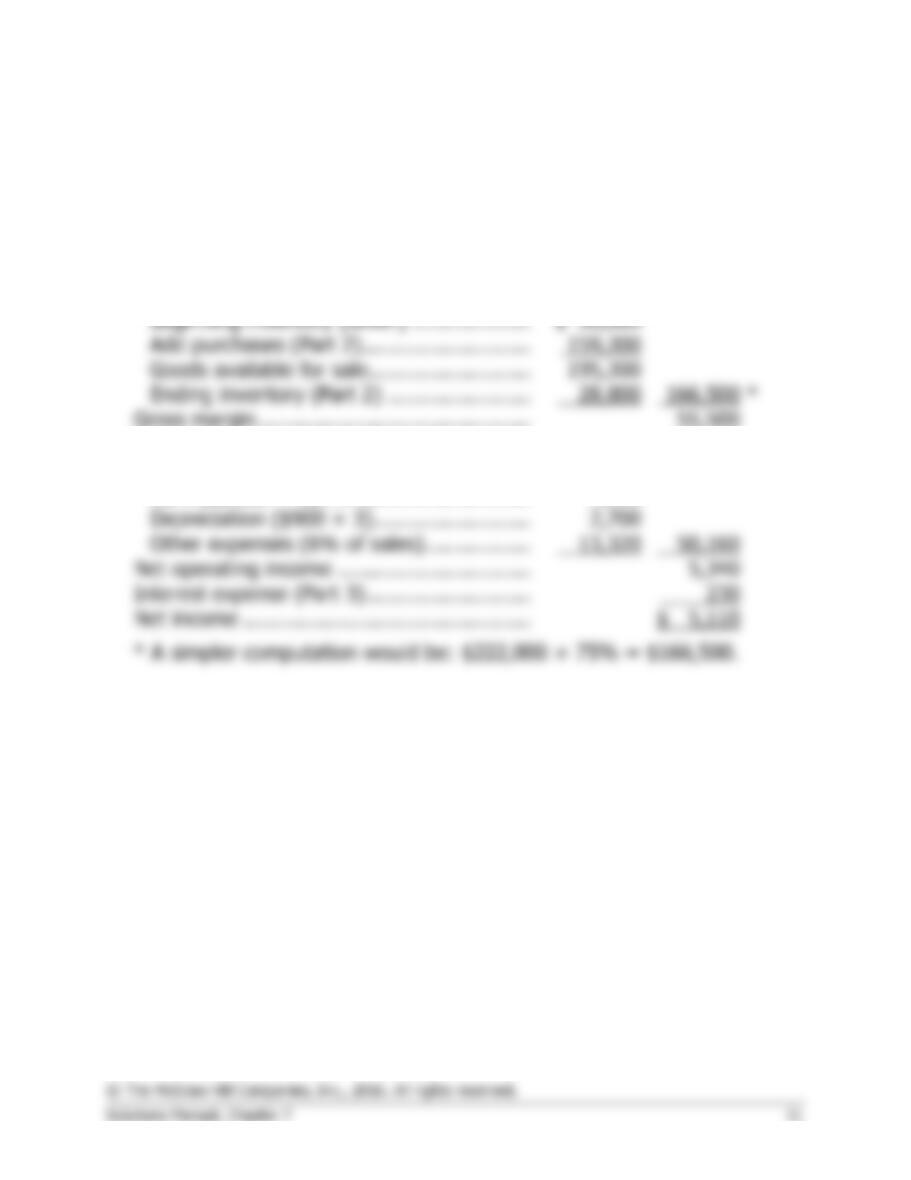
3. Cash budget:
April
May
June
Quarter
Beginning cash balance .
$ 8,000
*
$ 4,350
$ 4,590
$ 8,000
Add collections from
customers ………………
56,000
*
67,200
82,800
206,000
Total cash available …….
*
Less cash
disbursements:
For inventory …………..
47,850
*
159,900
For expenses …………..
13,300
*
*
Total cash
disbursements …………
62,650
*
73,960
72,250
208,860
Excess (deficiency) of
cash available over
disbursements …………
1,350
*
(2,410)
15,140
5,140
Financing:
Borrowings ……………..
0
0
(230)
(230)
Total financing …………..
3,000
7,000
(10,230)
(230)
Ending cash balance ……
Problem 7-27A (continued)
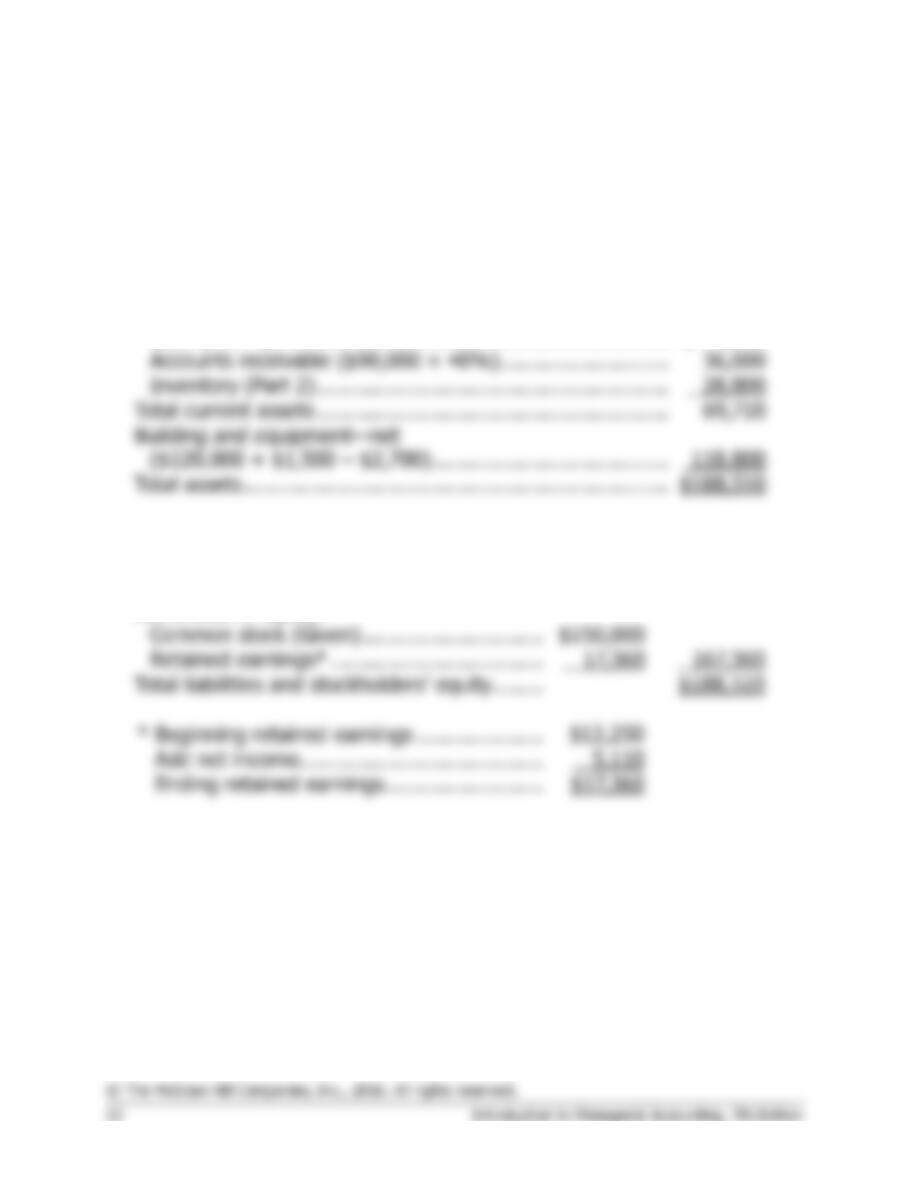
4.
Shilow Company
Income Statement
For the Quarter Ended June 30
Sales ($60,000 + $72,000 + $90,000) …….
$222,000
Cost of goods sold:
Beginning inventory (Given) ……………….
Add purchases (Part 2) ………………………
Goods available for sale ……………………..
28,800
166,500
*
Gross margin ……………………………………..
55,500
Selling and administrative expenses:
Commissions (12% of sales) ……………….
26,640
Rent ($2,500 × 3) …………………………….
7,500
13,320
Net operating income ………………………….
Interest expense (Part 3) ……………………..
Net income ……………………………………….
Problem 7-27A (continued)
5.
Shilow Company
Balance Sheet
June 30
Assets
Current assets:
Cash (Part 4) …………………………..………………………….
$ 4,910
Accounts receivable ($90,000 × 40%) ………………………
Total current assets ………………………………………………..
Total assets …………………………………………………………..
Liabilities and Stockholders’ Equity
Accounts payable (Part 2: $42,300 × 50%) ..
$ 21,150
Stockholders’ equity:
Common stock (Given) ………………………..
Retained earnings* …………………………….
17,360
Total liabilities and stockholders’ equity ……..
Beginning retained earnings ………………..
Add net income …………………………..…….
Ending retained earnings …………………….
Problem 7-28A (60 minutes)
1. The sales budget for the third quarter:
Month
July
August
September
Quarter
Budgeted units sales …..
30,000
70,000
50,000
150,000
Selling price per unit …..
× $12
Budgeted sales ………….
Total cash collections ..
2. The production budget for July-October:
July
August
September
October
Budgeted unit sales ……………
30,000
70,000
50,000
20,000
1,500
Total needs ………………………
53,000
4,500
10,500
3,000
Required production in units…
36,000
45,500
18,500
Problem 7-28A (continued)
3. The direct materials budget for the third quarter:
July
August
September
Quarter
Required production in units of
finished goods ………………………..
36,000
67,000
45,500
148,500
Units of raw materials needed per
unit of finished goods ……………….
× 4
× 4
× 4
× 4
Units of raw materials needed to
meet production ……………………..
594,000
materials inventory ………………….
37,000
Total units of raw materials
needed ………………………………….
631,000
91,000
Units of raw materials to be
purchased ……………………………..
Unit cost of raw materials ……………
× $0.80
× $0.80
× $0.80
Cost of raw materials to be
Problem 7-28A (continued)
3. The schedule of expected cash disbursements for materials purchases:
July
August
September
Quarter
Accounts payable,
June 30 ……………………
$ 76,000
$ 76,000
August purchases:
Problem 7-29A (120 minutes)
1. Schedule of expected cash collections:
January
February
March
Quarter
Cash sales ………………..
$ 80,000
*
$120,000
$ 60,000
$ 260,000
Credit sales ………………
224,000
*
320,000
480,000
1,024,000
Total cash collections ….
*
$440,000
$540,000
$1,284,000
2. a. Merchandise purchases budget:
January
February
March
Quarter
Budgeted cost of goods
sold1 ……………………..
$240,000
*
$360,000
*
$180,000
$780,000
90,000
*
45,000
30,000
30,000
*
Required purchases …….
$270,000
*
$315,000
$165,000
$750,000
* Given.
Add desired ending
b. Schedule of expected cash disbursements for merchandise purchases:
January
February
March
Quarter
December
purchases …………
$ 93,000
*
$ 93,000
*
January purchases ..
*
$135,000
*
*
February purchases .
March purchases …..
82,500
purchases …………
$228,000
*
$292,500
$240,000
$760,500
Problem 7-29A (continued)
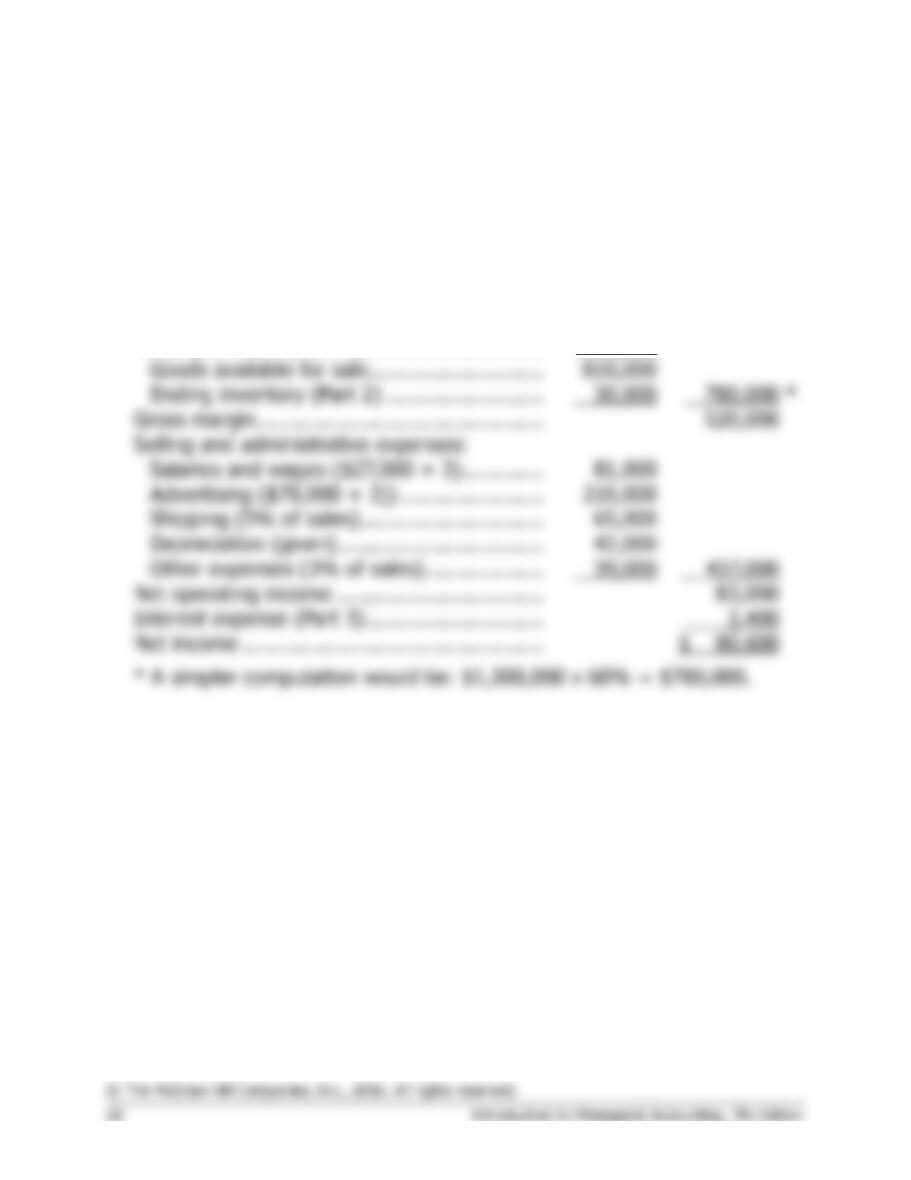
3. Cash budget:
January
February
March
Quarter
Beginning cash balance …..
$ 48,000
*
$ 30,000
$ 30,800
$ 48,000
Add collections from
customers ………………….
304,000
*
440,000
540,000
1,284,000
Total cash available ………..
352,000
*
470,000
570,800
1,332,000
Less cash disbursements:
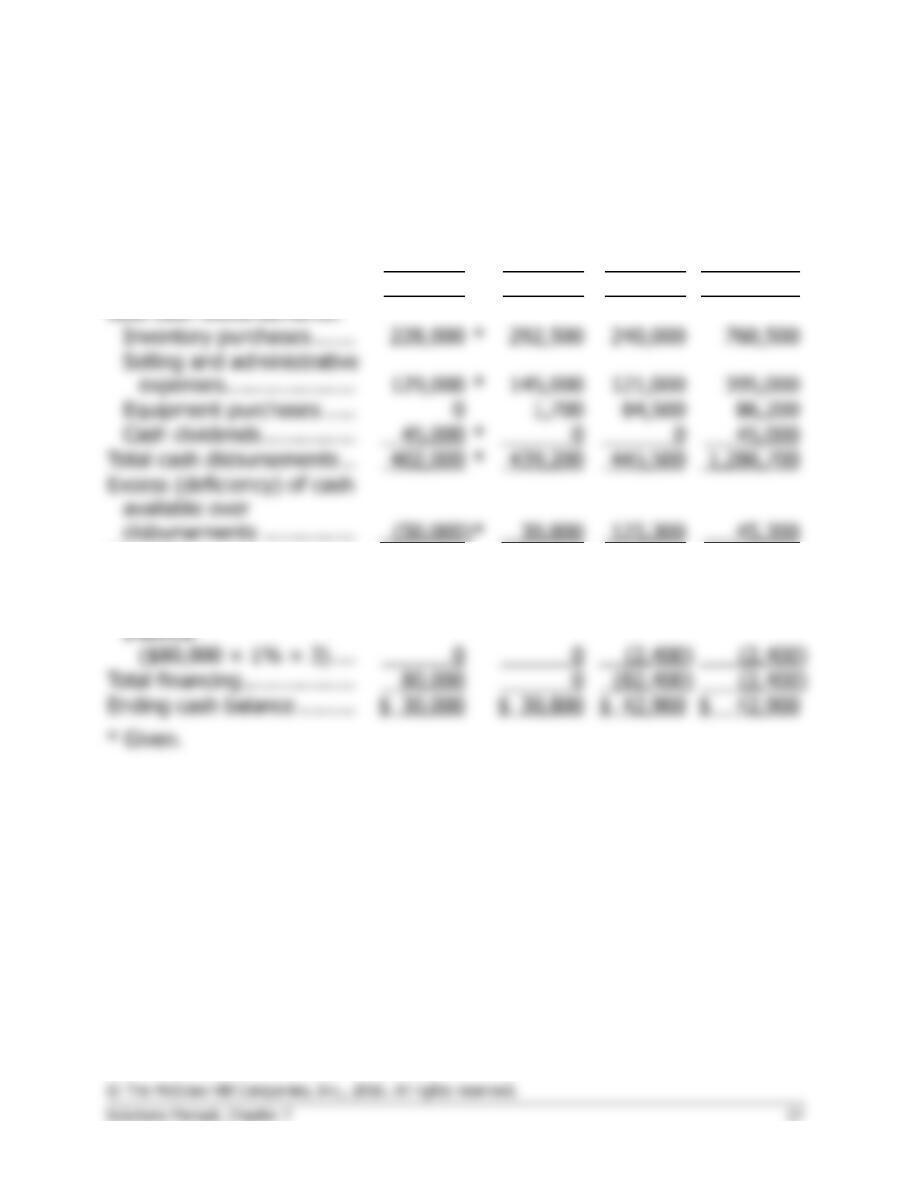
Inventory purchases …….
*
292,500
*
145,000
45,000
*
0
0
45,000
Total cash disbursements ..
402,000
*
439,200
445,500
1,286,700
*
30,800
125,300
45,300
Financing:
Borrowings ………………..
80,000
0
0
80,000
Repayments ……………….
0
0
(80,000)
(80,000)
0
(2,400)
Total financing ………………
80,000
0
(2,400)
Ending cash balance ………
$ 30,000
$ 30,800
$ 42,900
$ 42,900
Problem 7-29A (continued)
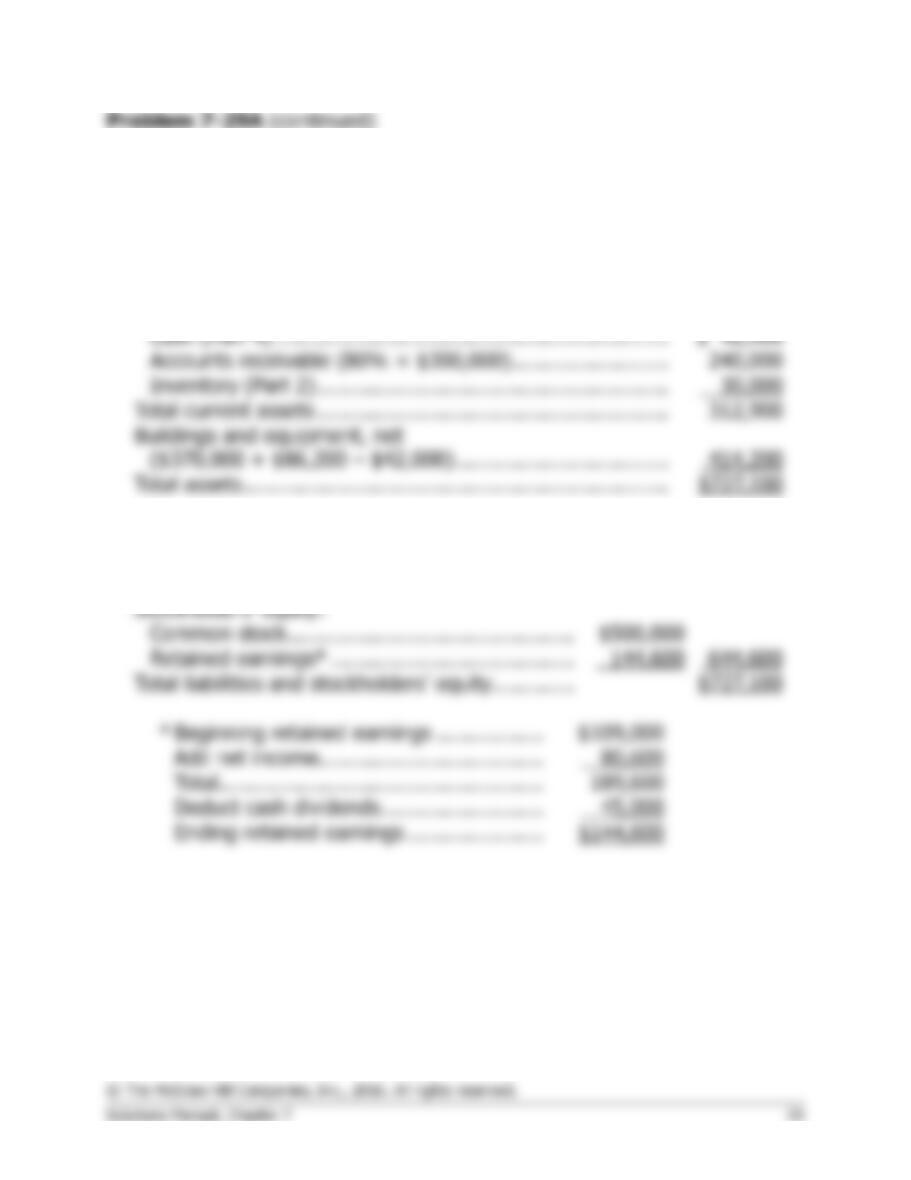
4. Income statement:
Hillyard Company
Income Statement
For the Quarter Ended March 31
Sales …………………………………………………
$1,300,000
Cost of goods sold:
Beginning inventory (Given) …………………
$ 60,000
Add purchases (Part 2) ………………………..
750,000
Goods available for sale ……………………….
*
Gross margin ……………………………………….
Selling and administrative expenses:
Salaries and wages ($27,000 × 3) ………….
Advertising ($70,000 × 3)) …………………..
Other expenses (3% of sales) ……………….
437,000
Net operating income …………………………...
Interest expense (Part 3) ……………………….
2,400
Net income …………………………………………
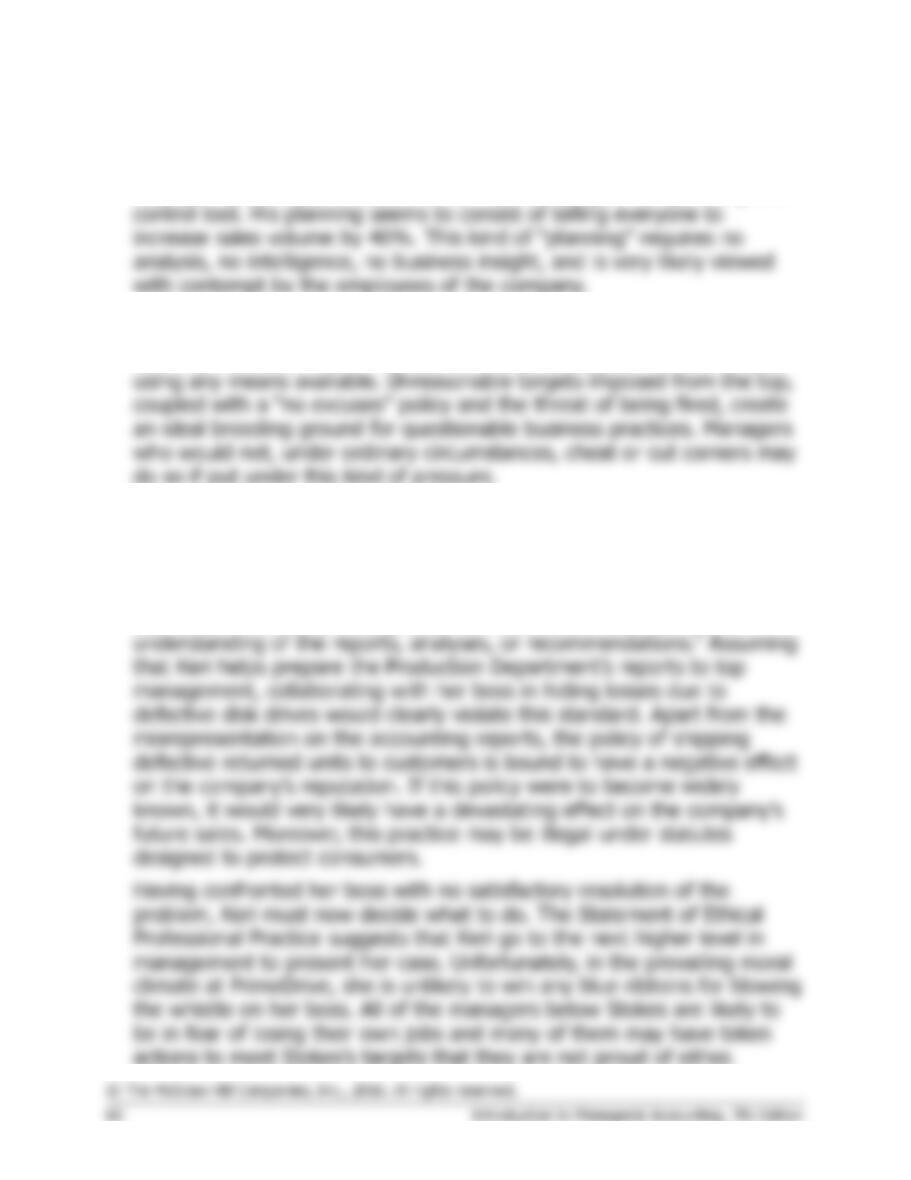
5. Balance sheet:
Hillyard Company
Balance Sheet
March 31
Assets
Current assets:
Cash (Part 4) …………………………..………………………….
$ 42,900
Accounts receivable (80% × $300,000) …………………….
Total current assets ………………………………………………..
Liabilities and Stockholders’ Equity
Current liabilities:
Accounts payable (Part 2: 50% × $165,000) ..
$ 82,500
Total liabilities and stockholders’ equity ………….
*
Beginning retained earnings ……………..
Add net income ………………………………
Ending retained earnings ………………….
Ethics Challenge (75 minutes)
1. Stokes is using the budget as a club to pressure employees and as a
way to find someone to blame rather than as a legitimate planning and
2. The way in which the budget is being used is likely to breed hostility,
tension, mistrust, lack of respect, and actions designed to meet targets
3. As the old saying goes, Keri Kalani is “between a rock and a hard place.”
The Statement of Ethical Professional Practice established by the
Institute of Management Accountants states that management
accountants have a responsibility to “disclose all relevant information
that could reasonably be expected to influence an intended user’s