Ethics Challenge (continued)
It would take tremendous courage for Keri to take the problem all the
way up to Stokes himself—particularly in view of his less-than-humane
treatment of subordinates. And going to the Board of Directors is
unlikely to work either because Stokes and his venture capital firm
Analytical Thinking (45 minutes)
1. The budgetary control system has several important shortcomings that
reduce its effectiveness and may cause it to interfere with good
performance. Some of the shortcomings are explained below.
a.
Lack of Coordinated Goals.
Emory had been led to believe high-
quality output is the goal; it now appears low cost is the goal.
2. The improvements in the budgetary control system should correct the
deficiencies described above. The system should:
a. more clearly define the company’s objectives.
Case (120 minutes)
1.
a.
Sales budget:
April
May
June
Quarter
Budgeted unit sales ……
65,000
100,000
50,000
215,000
Selling price per unit ….
× $10
× $10
× $10
× $10
Total sales ……………….
$650,000
$1,000,000
$500,000
$2,150,000
b.
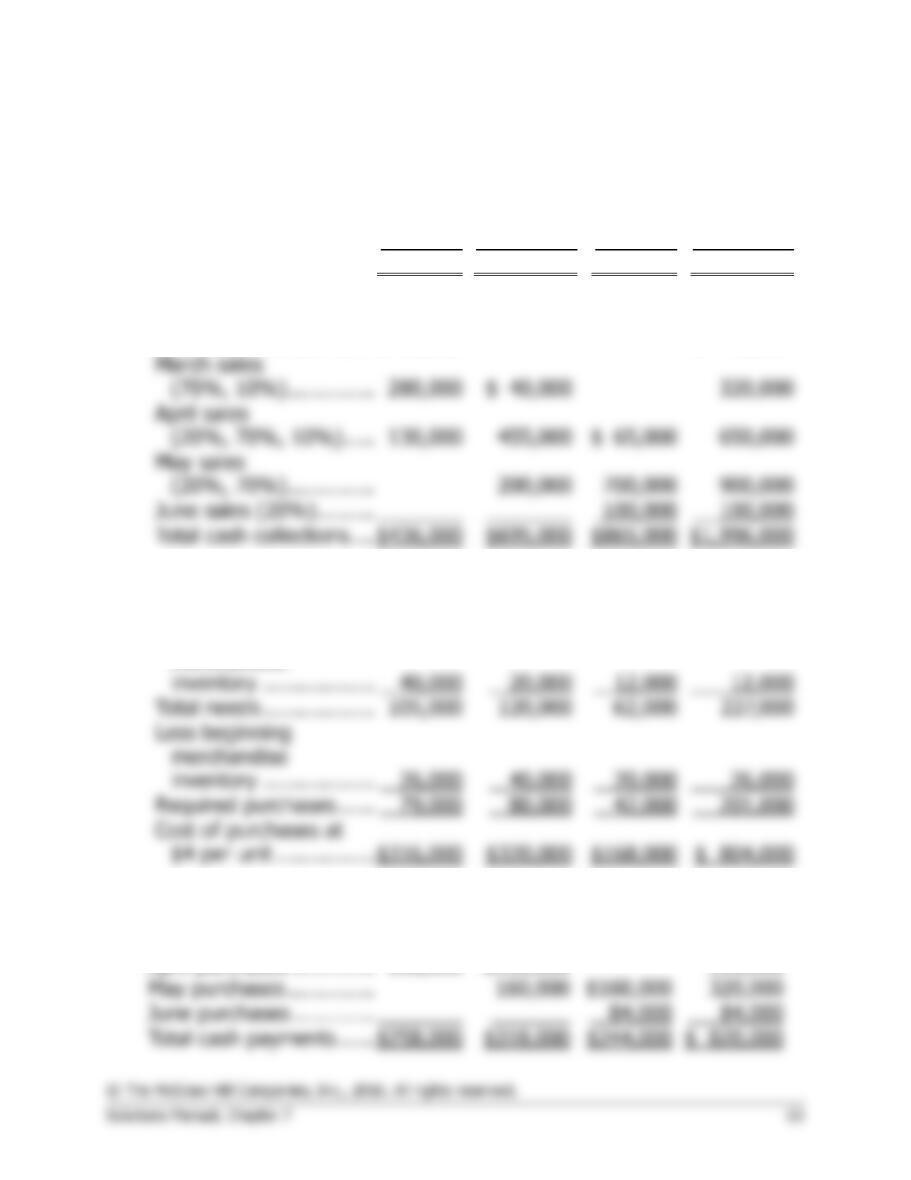
Schedule of expected cash collections:
February sales (10%) …
$ 26,000
$ 26,000
130,000
455,000
$ 65,000
650,000
June sales (20%) ………
Total cash collections ….
$436,000
$695,000
$865,000
$1,996,000
c.
Merchandise purchases budget:
Budgeted unit sales ……
65,000
100,000
50,000
215,000
Total needs ………………
105,000
120,000
62,000
Less beginning
merchandise
Required purchases ……
201,000
Add desired ending
merchandise
d.
Budgeted cash disbursements for merchandise purchases:
Accounts payable ……….
$100,000
$ 100,000
April purchases ………….
158,000
$158,000
316,000
May purchases …………..
June purchases ………….
84,000
84,000
Case (continued)
2.
Earrings Unlimited
Cash Budget
For the Three Months Ending June 30
April
May
June
Quarter
Beginning cash balance …..
$ 74,000
$ 50,000
$ 50,000
$ 74,000
Add collections from
customers ………………….
436,000
695,000
865,000
1,996,000
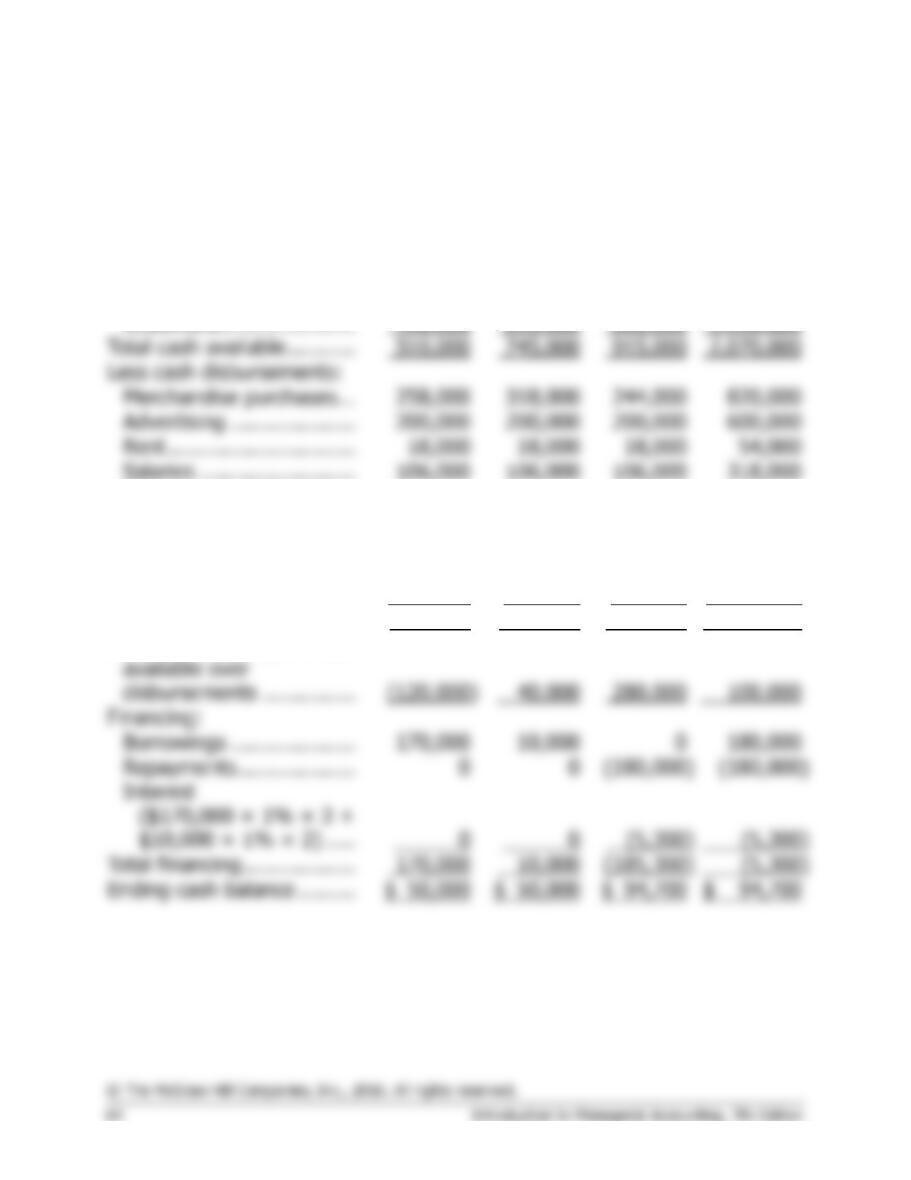
Total cash available ………..
510,000
745,000
915,000
2,070,000
Less cash disbursements:
Merchandise purchases …
258,000
244,000
820,000
Advertising ………………..
200,000
200,000
600,000
Rent …………………………
18,000
18,000
18,000
54,000
Salaries …………………….
106,000
106,000
318,000
Commissions (4% of
sales) ……………………..
26,000
40,000
20,000
86,000
Utilities ……………………..
7,000
7,000
7,000
21,000
Equipment purchases …..
0
16,000
40,000
56,000
Dividends paid ……………
15,000
0
0
15,000
Total cash disbursements ..
630,000
705,000
635,000
1,970,000
(120,000)
280,000
Financing:
Borrowings ………………..
170,000
10,000
180,000
Repayments ……………….
0
(180,000)
0
(5,300)
Total financing ………………
170,000
(5,300)
Ending cash balance ………
$ 50,000
$ 50,000
Excess (deficiency) of cash
Case (continued)
3.
Earrings Unlimited
Budgeted Income Statement
For the Three Months Ended June 30
Sales (Part 1 a.) …………………………………
$2,150,000
Variable expenses:
Cost of goods sold @ $4 per unit …………
$860,000
Commissions @ 4% of sales ……………….
Contribution margin …………………………….
Fixed expenses:
Rent ($18,000 × 3) …………………………..
Salaries ($106,000 × 3) …………………….
Net operating income ………………………….
Interest expense (Part 2) ……………………..
Net income ……………………………………….
Case (continued)
4.
Earrings Unlimited
Budgeted Balance Sheet
June 30
Assets
Cash ……………………………………………………………………
$ 94,700
Accounts receivable (see below) ………………………………..
Inventory (12,000 units @ $4 per unit) ……………………….
Prepaid insurance ($21,000 – $9,000) ………………………..
Total assets …………………………………………………………..
Liabilities and Stockholders’ Equity
Accounts payable, purchases (50% × $168,000) …………..
$ 84,000
Dividends payable ………………………………………………….
Common stock ………………………………………………………
Retained earnings (see below) ………………………………….
Total liabilities and stockholders’ equity ……………………….
Accounts receivable at June 30:
10% × May sales of $1,000,000 …………
$100,000
80% × June sales of $500,000 …………..
400,000
Total …………………………………………….
$500,000
Retained earnings at June 30:
Balance, March 31 …………………………..
$580,000
Add net income (part 3) …………………..
154,700
Total …………………………………………….
Less dividends declared ……………………
Balance, June 30 …………………………….
Communicating in Practice (60 minutes)
1. Across-the-board cuts may be politically palatable and may be perceived
2. When determining which programs should receive greater or smaller
3. If cuts are likely to continue, administrators should be particularly
4. To increase understanding and cooperation, the decision-making
5. By allowing individuals to participate in the budgeting process and by
attempting to build consensus, the animosity that may be felt by those
affected by cuts may be reduced. However, this is a two-edged sword.
Chapter 7
Take Two Solutions
Exercise 7-1 (20 minutes)
1.
April
May
June
Total
February sales:
$230,000 × 10% …….
$ 23,000
$ 23,000
April sales: $300,000 ×
$ 30,000
May sales: $500,000 ×
June sales: $250,000 ×
Total cash collections ….
$336,000
March sales: $260,000
2. Accounts receivable at June 30:
From May sales: $500,000 × 10% ……………………
From June sales: $250,000 × (70% + 10%) ………
Total accounts receivable at June 30 …………………
$250,000
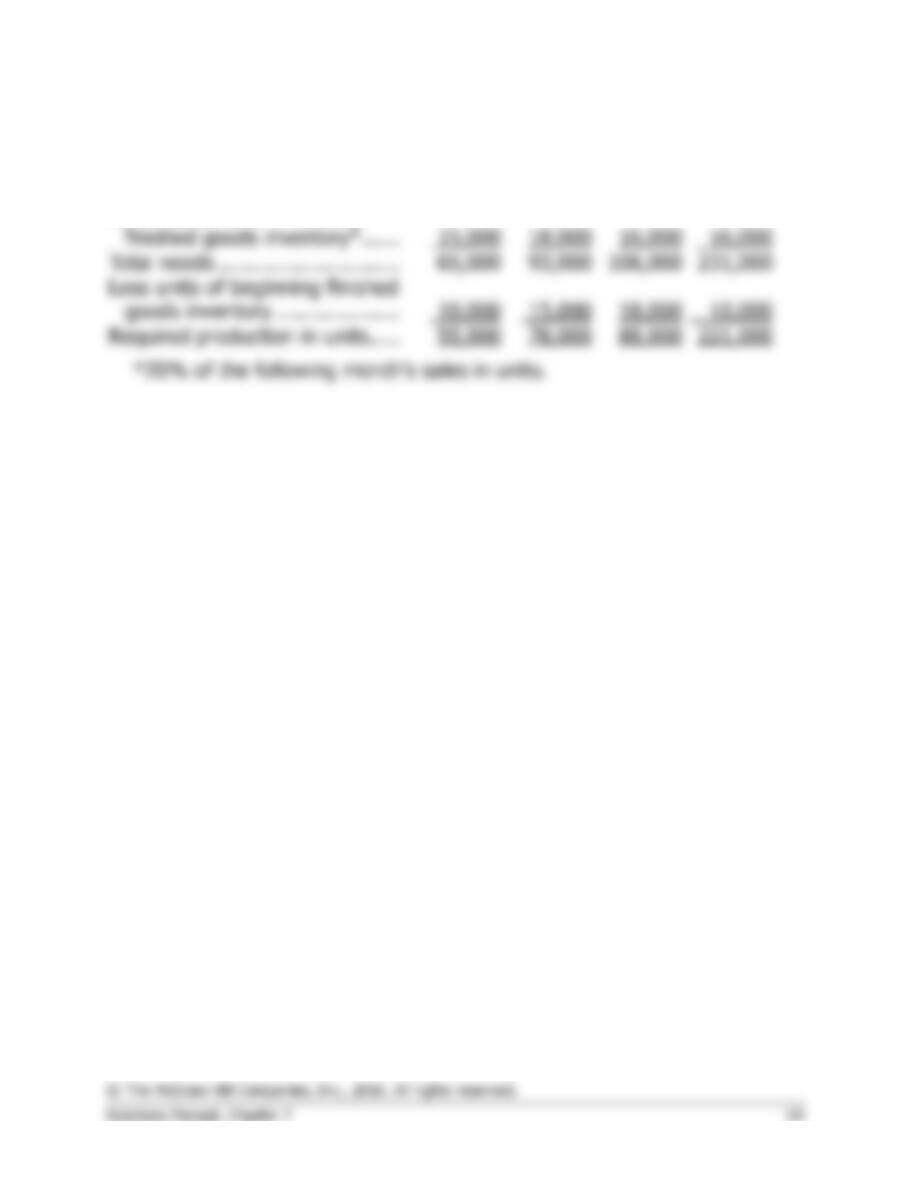
Exercise 7-2 (10 minutes)
April
May
June
Quarter
Budgeted unit sales ……………..
50,000
75,000
90,000
215,000
Total needs ………………………..
Less units of beginning finished
Required production in units …..
Add desired units of ending
Exercise 7-3 (15 minutes)
Quarter—Year 2
First
Second
Third
Fourth
Year
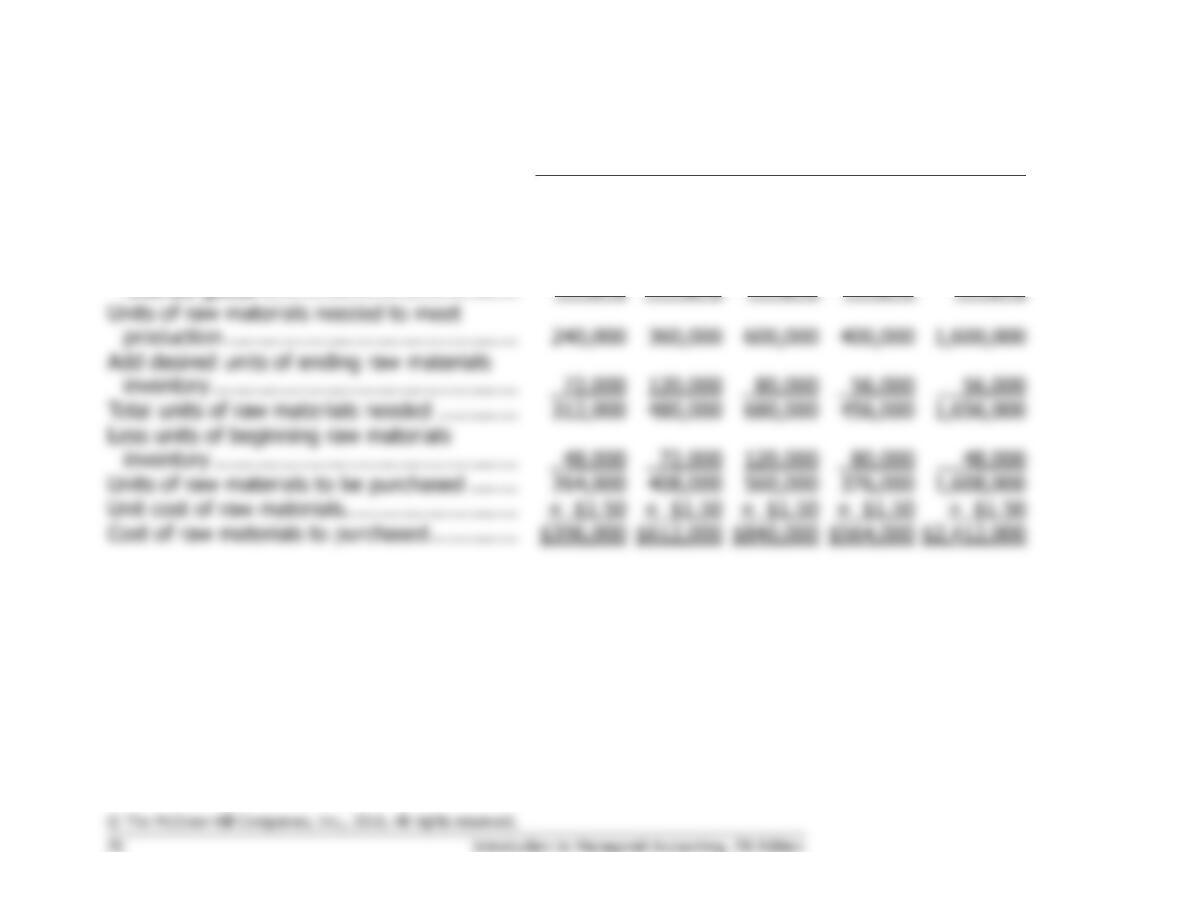
Required production in units of finished
goods ………………………………………………
60,000
90,000
150,000
100,000
400,000
Units of raw materials needed per unit of
finished goods …………………………………..
× 4
× 4
× 4
× 4
× 4
Units of raw materials needed to meet
production ………………………………………..
400,000
inventory ………………………………………….
Total units of raw materials needed ………….
Less units of beginning raw materials
Units of raw materials to be purchased ……..
Unit cost of raw materials ……………………….
× $1.50
× $1.50
× $1.50
Cost of raw materials to purchased …………..
Exercise 7-4 (20 minutes)
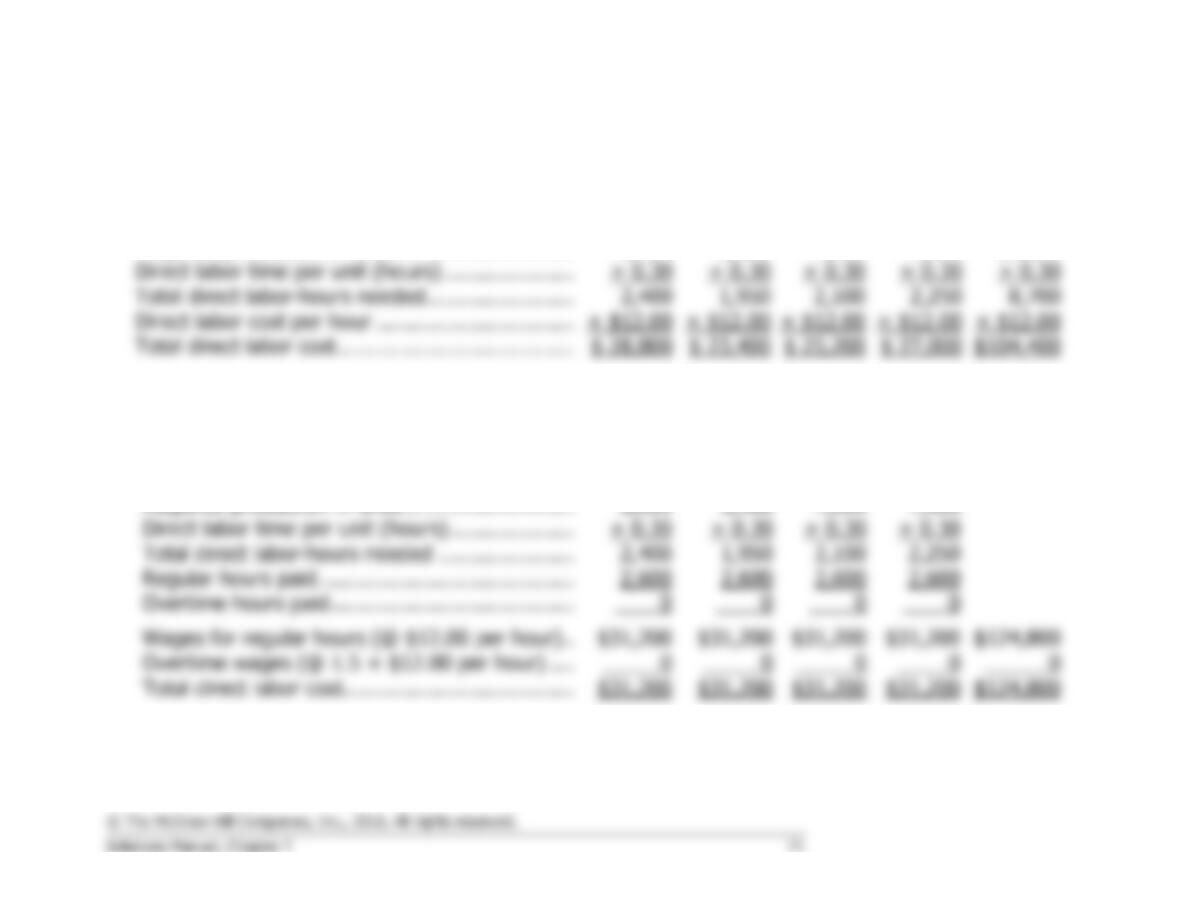
1. Assuming that the direct labor workforce is adjusted each quarter, the direct labor budget is:
1st
Quarter
2nd
Quarter
3rd
Quarter
4th
Quarter
Year
Required production in units ……………………….
8,000
6,500
7,000
7,500
29,000
Total direct labor-hours needed……………………
Direct labor cost per hour …………………………..
Total direct labor cost ………………………………..
2. Assuming that the direct labor workforce is not adjusted each quarter and that overtime wages are
paid, the direct labor budget is:
1st
Quarter
2nd
Quarter
3rd
Quarter
4th
Quarter
Year
Required production in units ………………………
8,000
6,500
7,000
7,500
Direct labor time per unit (hours) ………………..
Total direct labor-hours needed ………………….
1,950
Regular hours paid …………………………………..
2,600
2,600
2,600
2,600
Overtime hours paid …………………………………
0
0
0
0
Wages for regular hours (@ $12.00 per hour) ..
Overtime wages (@ 1.5 × $12.00 per hour) ….
Total direct labor cost …………………………..…..