Chapter 7
Master Budgeting
Solutions to Questions
7-1 A budget is a detailed quantitative plan
for the acquisition and use of financial and other
7-2
1. Budgets communicate management’s
plans throughout the organization.
2. Budgets force managers to think about
and plan for the future. In the absence of the
necessity to prepare a budget, many managers
would spend all of their time dealing with day–
to-day emergencies.
7-3 Responsibility accounting is a system in
which a manager is held responsible for those
items of revenues and costs—and only those
7-4 A master budget represents a summary
of all of management’s plans and goals for the
future, and outlines the way in which these
plans are to be accomplished. The master
master budget usually also contains a budgeted
income statement, budgeted balance sheet, and
cash budget.
7-5 The level of sales impacts virtually every
other aspect of the firm’s activities. It
determines the production budget, cash
collections, cash disbursements, and selling and
administrative budget that in turn determine the
assumptions impact all supporting schedules and
the projected financial statements.
7-8 A self-imposed budget is one in which
recognized as members of the team whose
views and judgments are valued. (2) Budget
estimates prepared by front-line managers are
often more accurate and reliable than estimates
prepared by top managers who have less
intimate knowledge of markets and day-to-day
operations. (3) Motivation is generally higher
7-9 The direct labor budget and other
budgets can be used to forecast workforce
staffing needs. Careful planning can help a
company avoid erratic hiring and laying off of
The Foundational 15
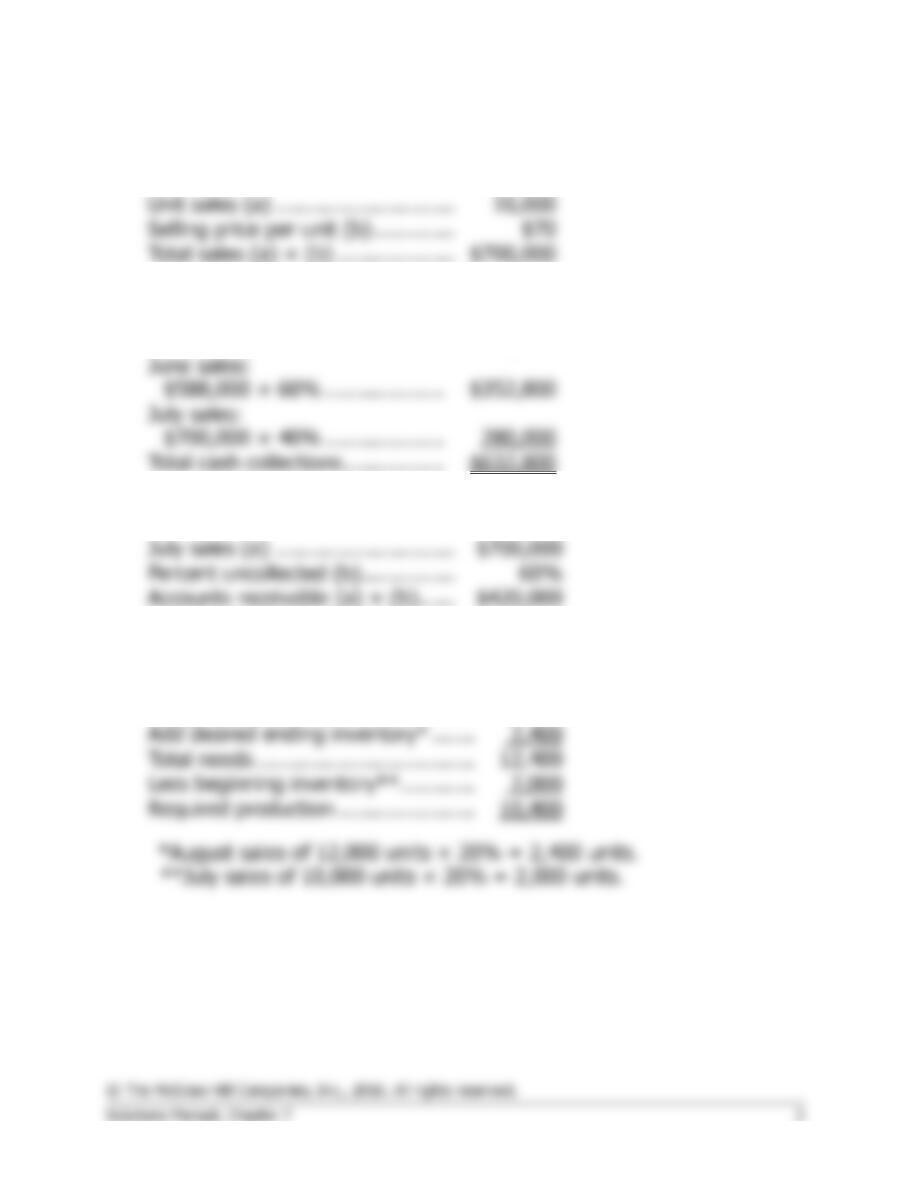
1. The budgeted sales for July are computed as follows:
Unit sales (a) ………………………..
Selling price per unit (b) ………….
Total sales (a) × (b) ……………….
2. The expected cash collections for July are computed as follows:
July
Total cash collections …………….
3. The accounts receivable balance at the end of July is:
July sales (a) ………………………..
Percent uncollected (b) ……………
Accounts receivable (a) × (b) ……
4. The required production for July is computed as follows:
July
Budgeted sales in units ………………
10,000
Add desired ending inventory* …….
Total needs ……………………………..
Less beginning inventory** …………
Required production ………………….
The Foundational 15 (continued)
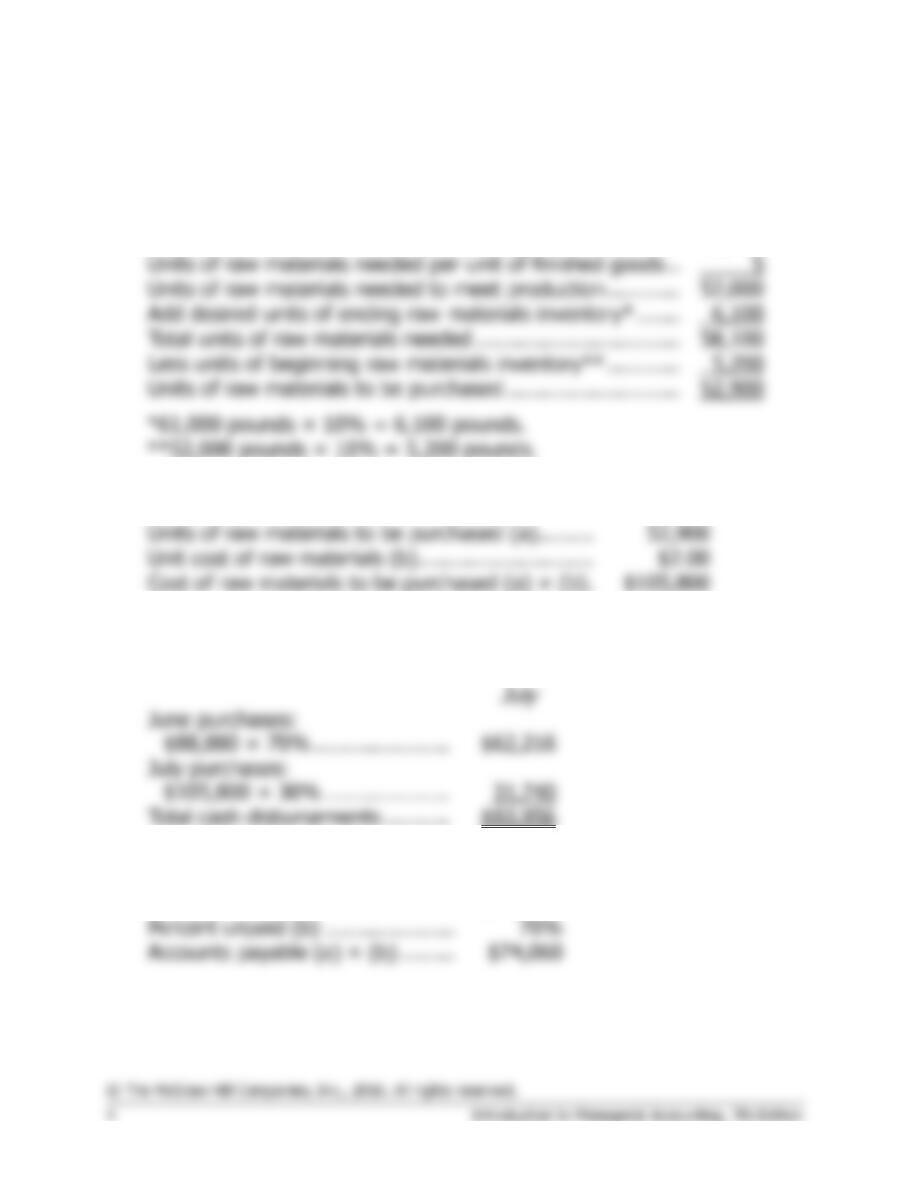
5. The raw material purchases for July are computed as follows:
July
Required production in units of finished goods ……………..
10,400
Units of raw materials needed per unit of finished goods ..
Units of raw materials needed to meet production …………
Add desired units of ending raw materials inventory* …….
Total units of raw materials needed …………………………...
Less units of beginning raw materials inventory** …………
Units of raw materials to be purchased ……………………….
6. The cost of raw material purchases for July is computed as follows:
Units of raw materials to be purchased (a)………
Unit cost of raw materials (b) ……………………….
Cost of raw materials to be purchased (a) × (b) .
7. The estimated cash disbursements for materials purchases in July is
computed as follows:
July
Total cash disbursements ………..
8. The accounts payable balance at the end of July is:
July purchases (a) ………………….
$105,800
Percent unpaid (b) …………………
Accounts payable (a) × (b) ………
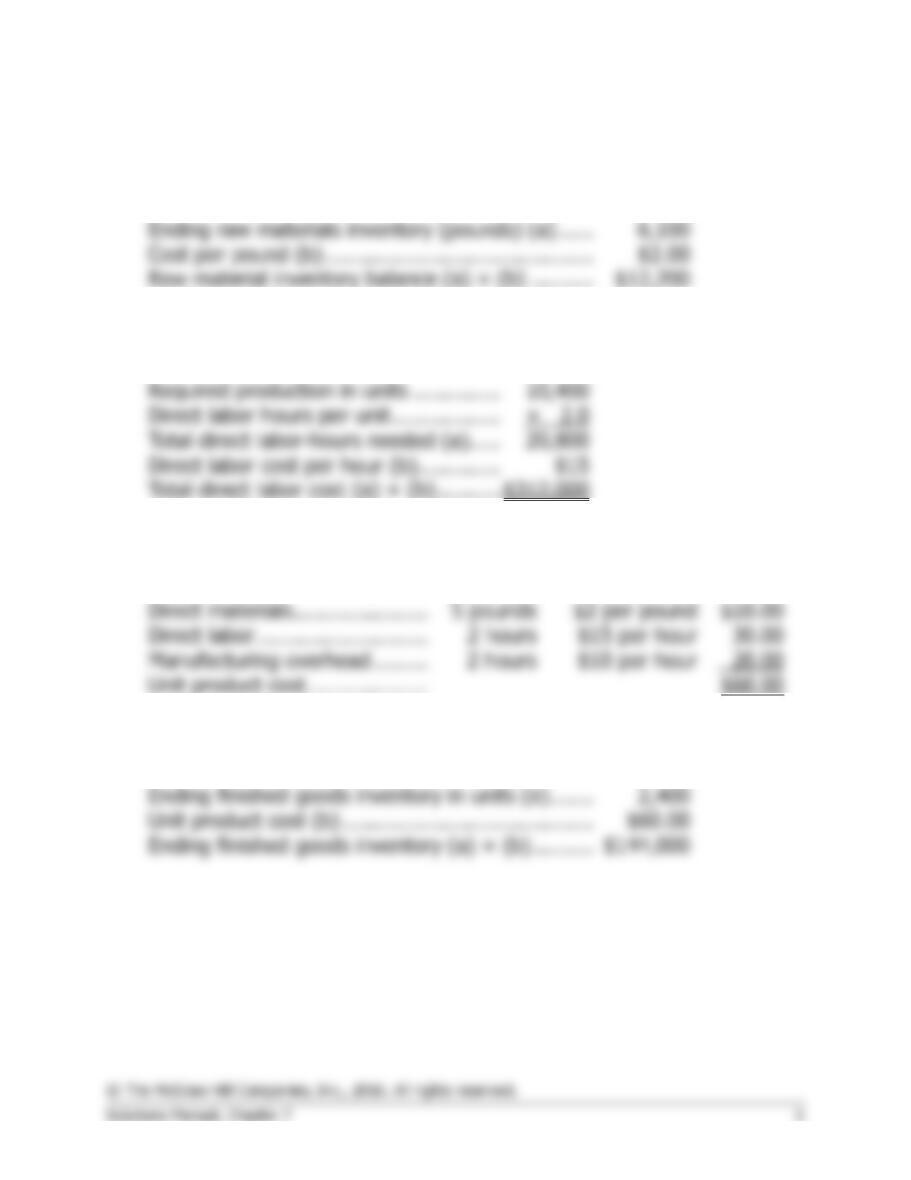
The Foundational 15 (continued)
9. The estimated raw materials inventory balance at the end of July is
computed as follows:
Ending raw materials inventory (pounds) (a) ……
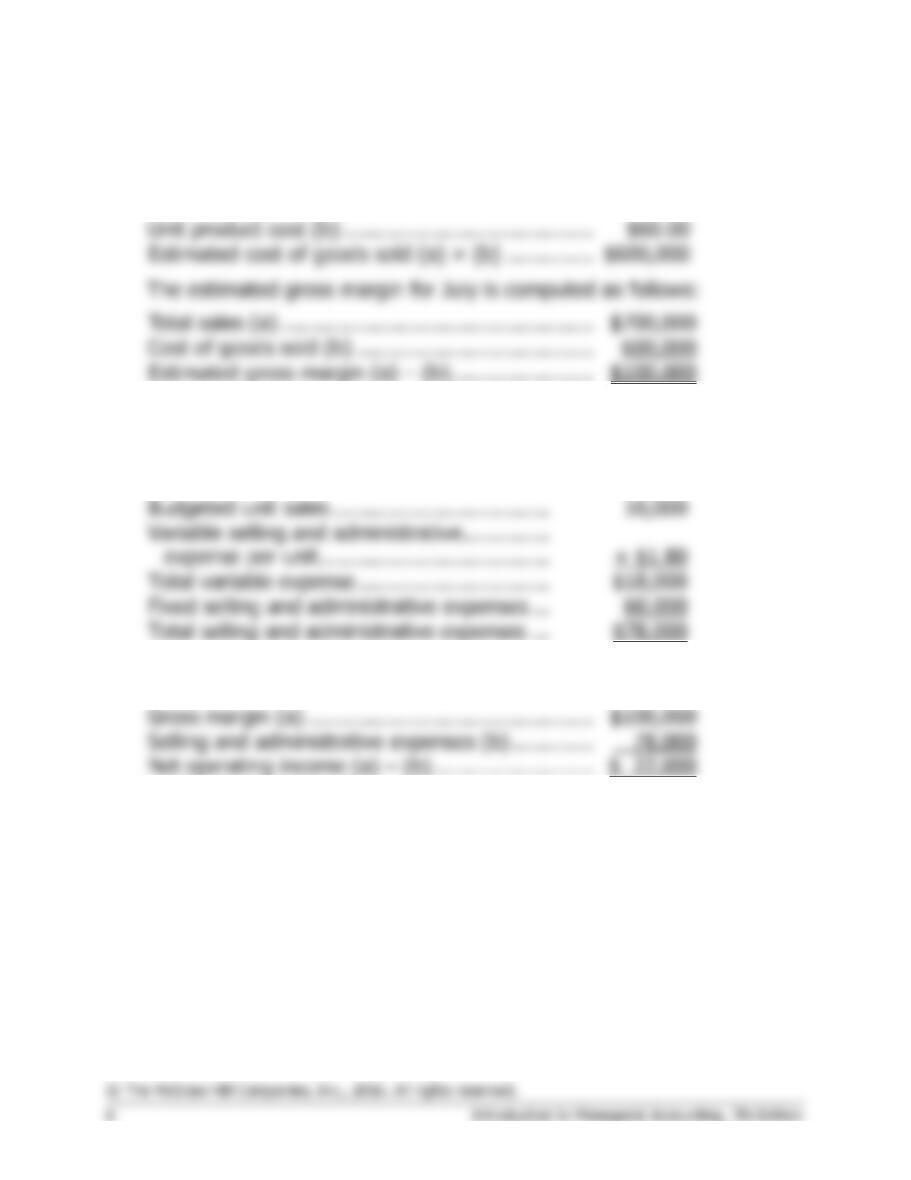
10. The estimated direct labor cost for July is computed as follows:
July
Required production in units …………..
Direct labor hours per unit ……………..
Total direct labor-hours needed (a)…..
11. The estimated unit product cost is computed as follows:
Quantity
Cost
Total
Direct materials …………………..
Direct labor ………………………..
Manufacturing overhead ……….
12. The estimated finished goods inventory balance at the end of July is
computed as follows:
Ending finished goods inventory in units (a) …….
Unit product cost (b) ………………………………….
Ending finished goods inventory (a) × (b) ……….
The Foundational 15 (continued)
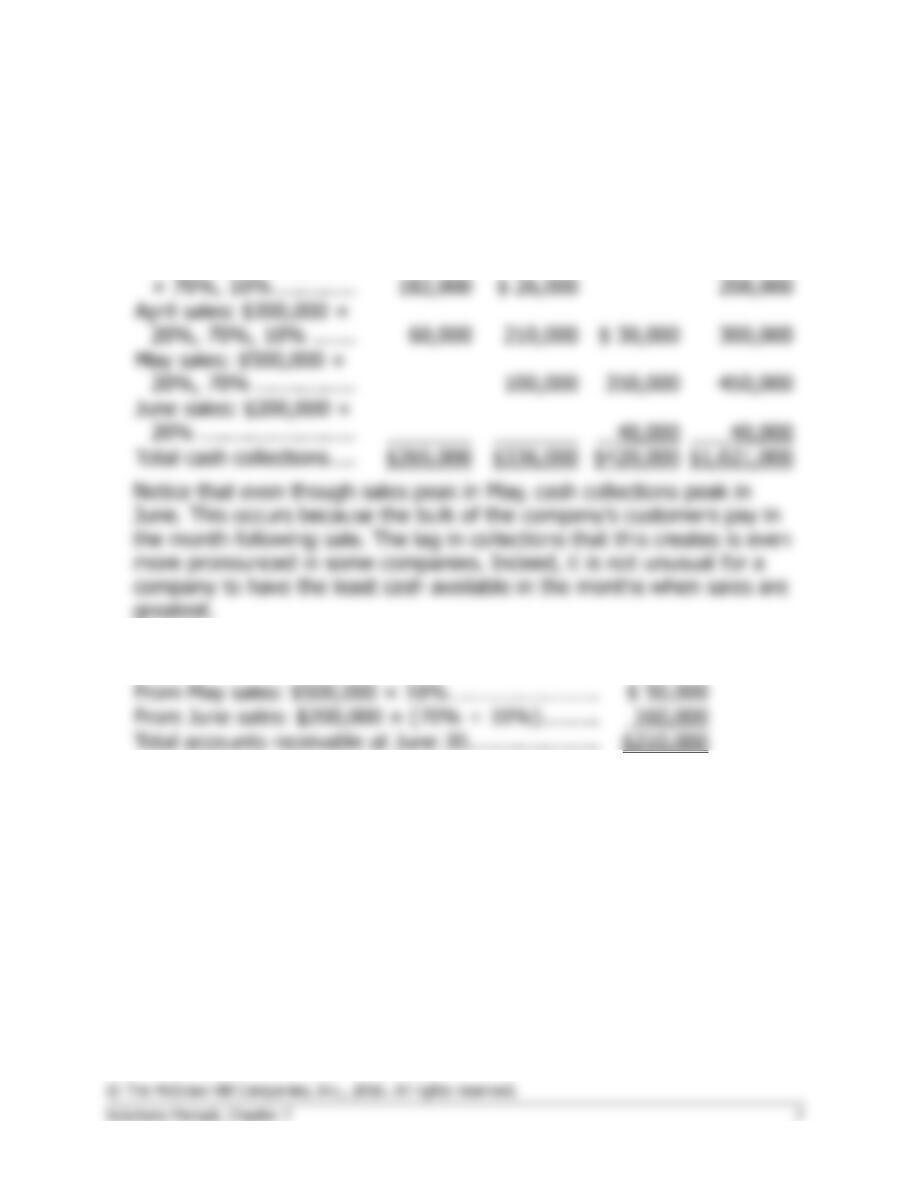
13. The estimated cost of goods sold for July is computed as follows:
Unit sales (a) ……………………………………………
10,000
Unit product cost (b) ………………………………….
Total sales (a) …………………………………………..
14. The estimated selling and administrative expense for July is computed
as follows:
July
Budgeted unit sales ……………………………..
Total selling and administrative expenses …
15. The estimated net operating income for July is computed as follows:
Selling and administrative expenses (b) ………….
Net operating income (a) – (b) ……………………..
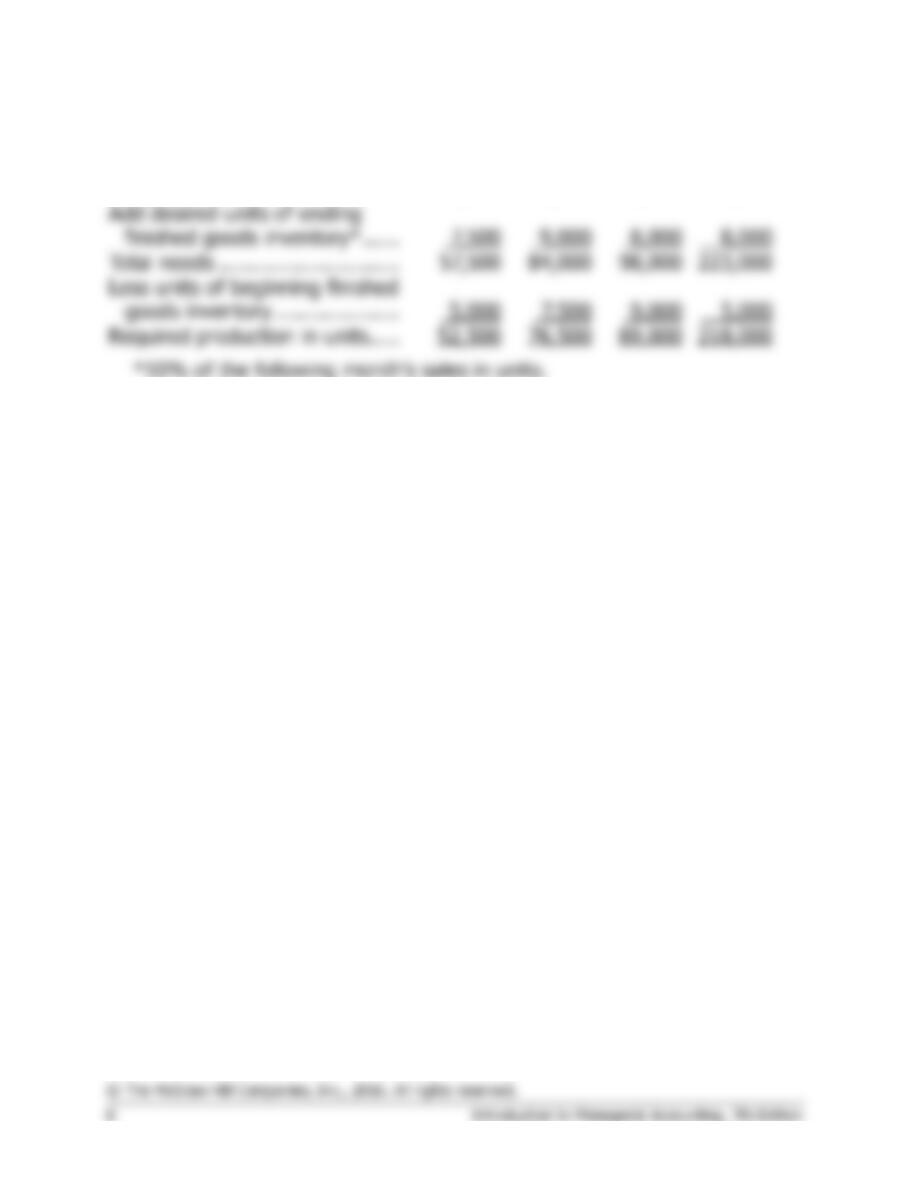
Exercise 7-1 (20 minutes)
1.
April
May
June
Total
February sales:
$230,000 × 10% …….
$ 23,000
$ 23,000
April sales: $300,000 ×
20%, 70%, 10% …….
$ 30,000
May sales: $500,000 ×
June sales: $200,000 ×
Total cash collections ….
$336,000
March sales: $260,000
2. Accounts receivable at June 30:
From May sales: $500,000 × 10% ……………………
From June sales: $200,000 × (70% + 10%) ………
Total accounts receivable at June 30 …………………
$210,000
Exercise 7-2 (10 minutes)
April
May
June
Quarter
Budgeted unit sales ……………..
50,000
75,000
90,000
215,000
Total needs ………………………..
Required production in units …..
Exercise 7-3 (15 minutes)
Quarter—Year 2
First
Second
Third
Fourth
Year
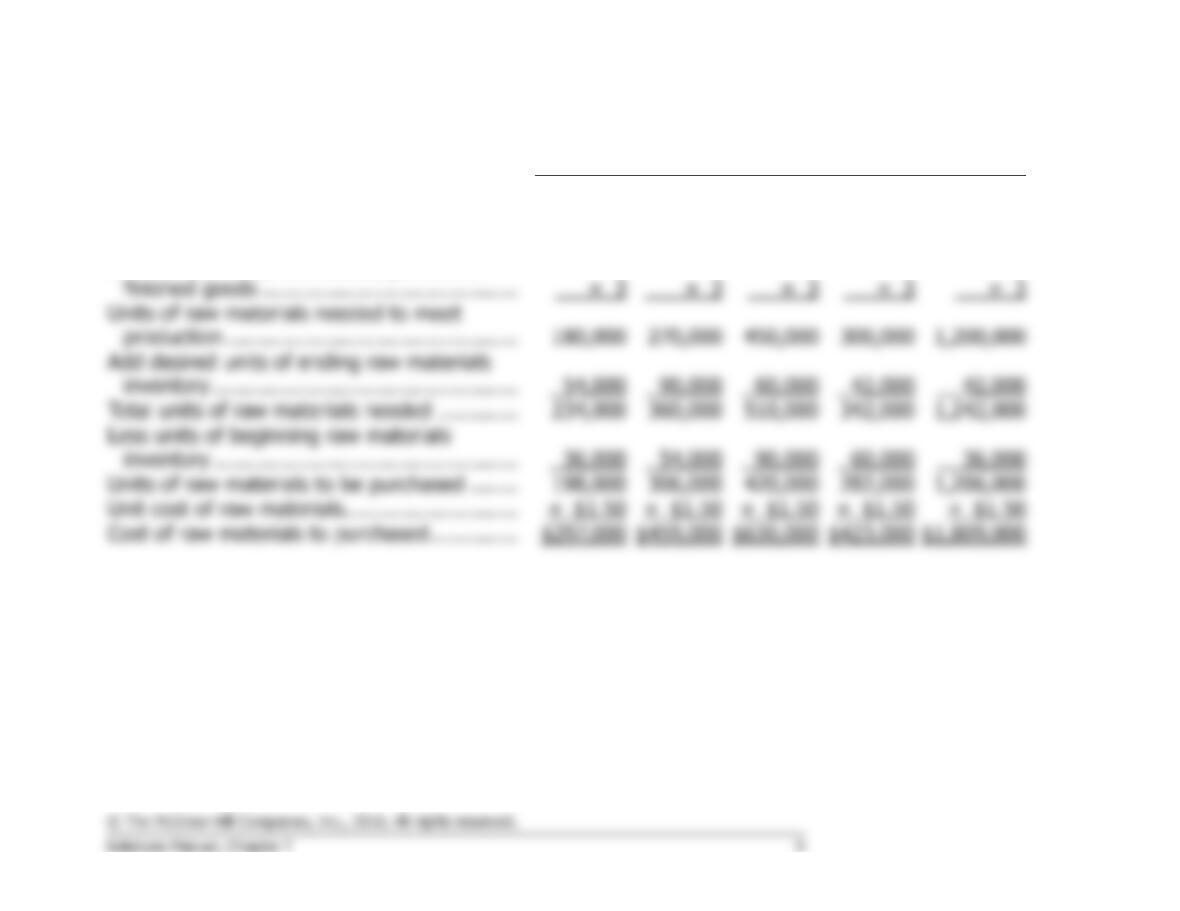
Required production in units of finished
goods ………………………………………………
60,000
90,000
150,000
100,000
400,000
Units of raw materials needed to meet
production ………………………………………..
180,000
270,000
450,000
300,000
Total units of raw materials needed ………….
Less units of beginning raw materials
Units of raw materials to be purchased ……..
Unit cost of raw materials ……………………….
Cost of raw materials to purchased …………..
Units of raw materials needed per unit of
Exercise 7-4 (20 minutes)
1. Assuming that the direct labor workforce is adjusted each quarter, the direct labor budget is:
1st
Quarter
2nd
Quarter
3rd
Quarter
4th
Quarter
Year
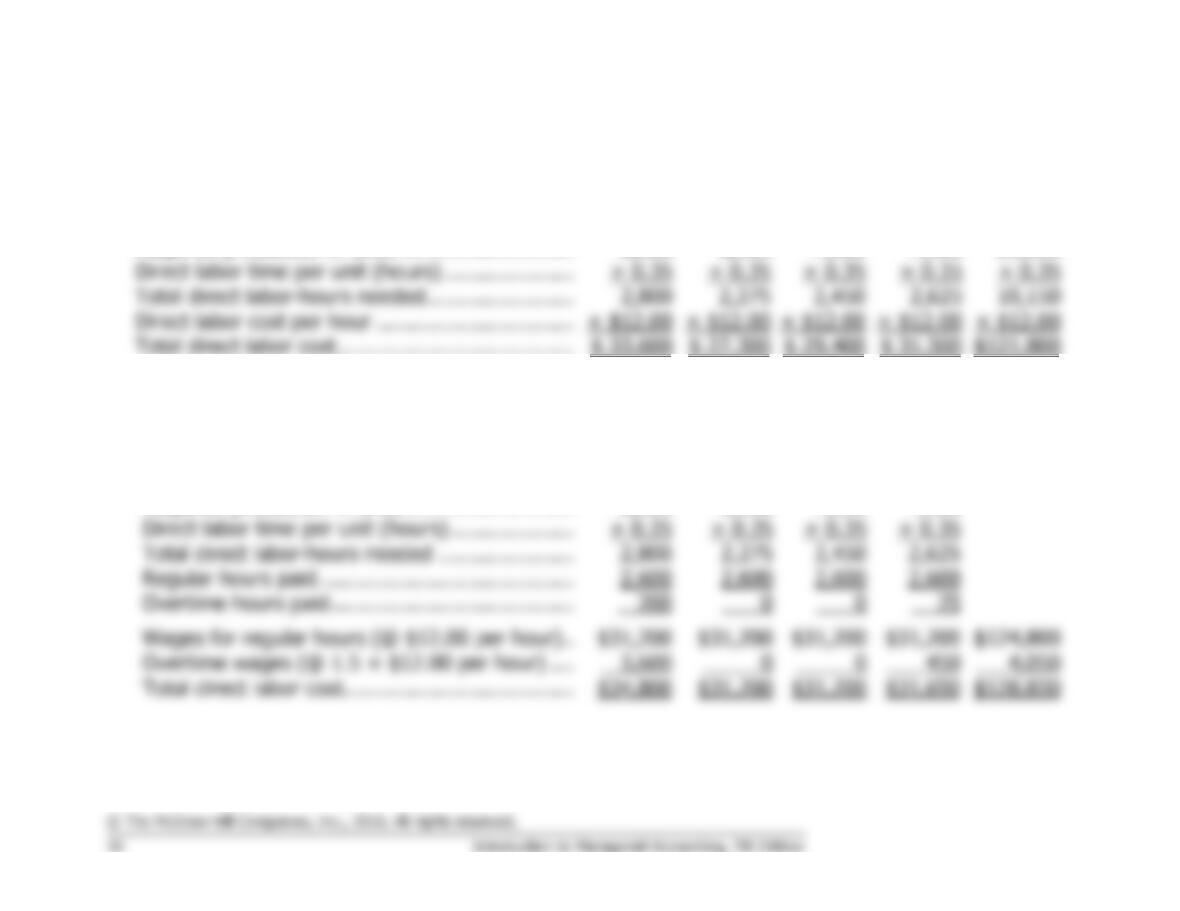
Required production in units ……………………….
8,000
6,500
7,000
7,500
29,000
Total direct labor-hours needed……………………
2,800
Direct labor cost per hour …………………………..
Total direct labor cost ………………………………..
2. Assuming that the direct labor workforce is not adjusted each quarter and that overtime wages are
paid, the direct labor budget is:
1st
Quarter
2nd
Quarter
3rd
Quarter
4th
Quarter
Year
Required production in units ………………………
8,000
6,500
7,000
7,500
Direct labor time per unit (hours) ………………..
Total direct labor-hours needed ………………….
2,800
2,275
2,450
2,625
Regular hours paid …………………………..………
2,600
2,600
2,600
2,600
Overtime hours paid …………………………………
0
25
Wages for regular hours (@ $12.00 per hour) ..
Overtime wages (@ 1.5 × $12.00 per hour) ….
Total direct labor cost ……………………………….
Exercise 7-5 (15 minutes)
1.
Yuvwell Corporation
Manufacturing Overhead Budget
1st
Quarter
2nd
Quarter
3rd
Quarter
4th
Quarter
Year
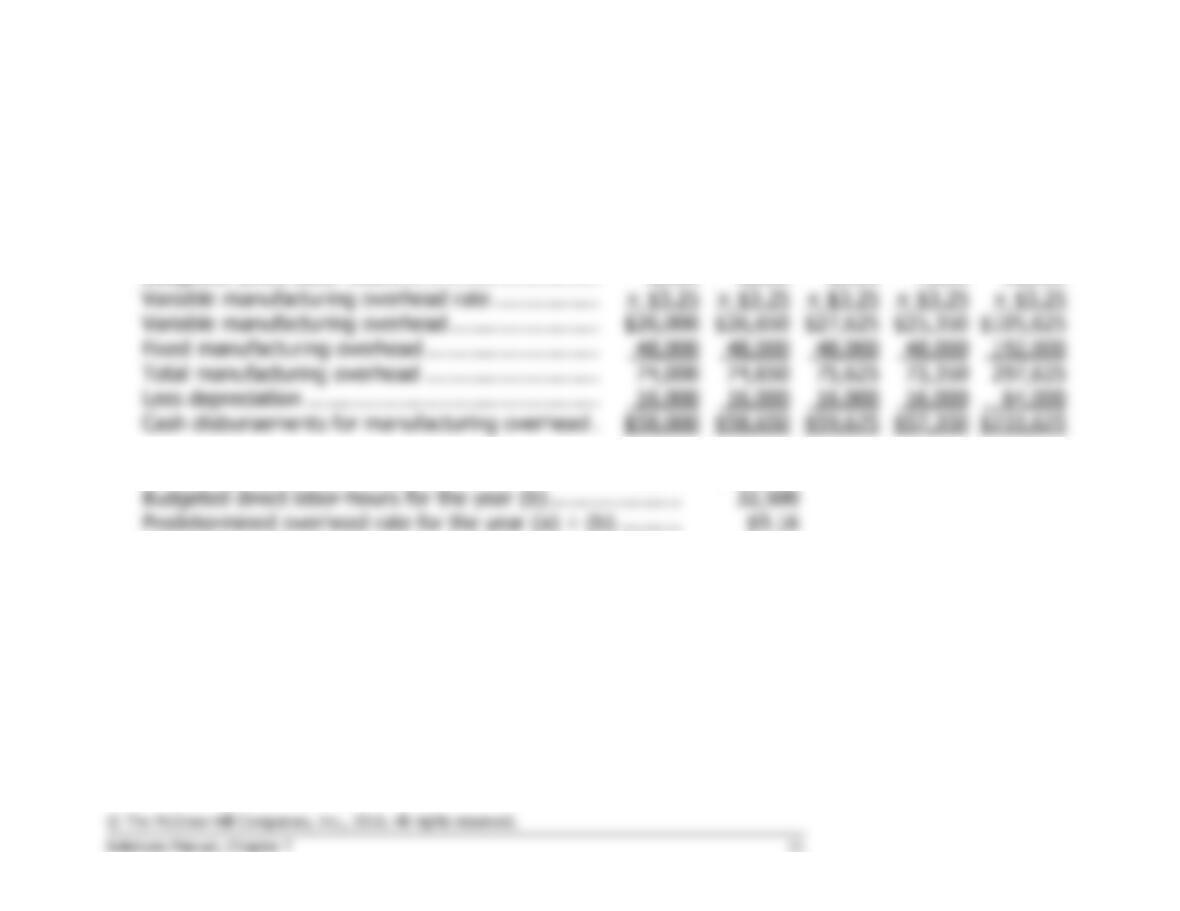
Budgeted direct labor-hours …………………………..
8,000
8,200
8,500
7,800
32,500
Variable manufacturing overhead rate ……………..
Variable manufacturing overhead ……………………
Fixed manufacturing overhead ……………………….
Total manufacturing overhead ……………………….
Less depreciation ………………………………………..
Cash disbursements for manufacturing overhead .
2.
Total budgeted manufacturing overhead for the year (a) …
$297,625
Budgeted direct labor-hours for the year (b) …………………
Predetermined overhead rate for the year (a) ÷ (b) ……….
Exercise 7-6 (15 minutes)
Weller Company
Selling and Administrative Expense Budget
1st
Quarter
2nd
Quarter
3rd
Quarter
4th
Quarter
Year
Budgeted unit sales …………………………..………..
15,000
16,000
14,000
13,000
58,000
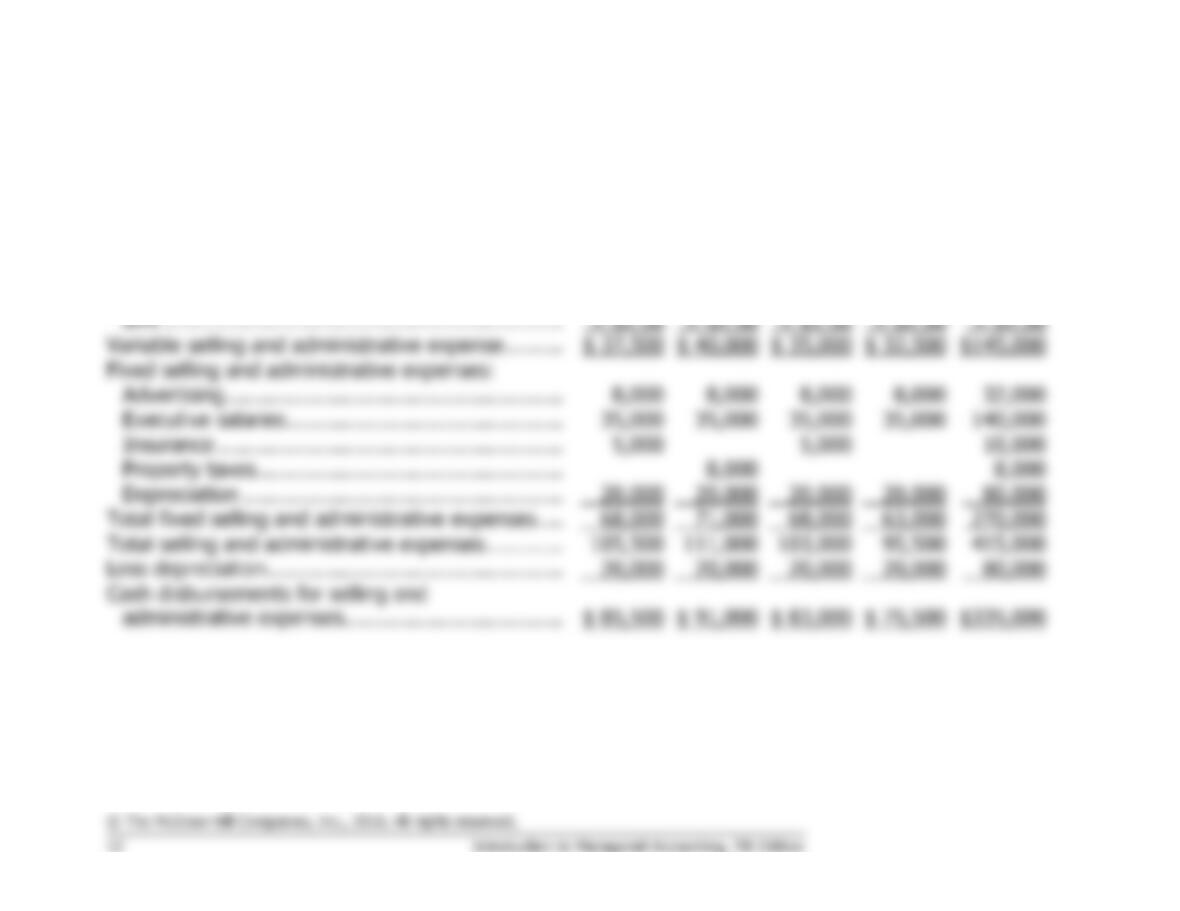
Variable selling and administrative expense ………
Fixed selling and administrative expenses:
Total fixed selling and administrative expenses ….
Variable selling and administrative expense per
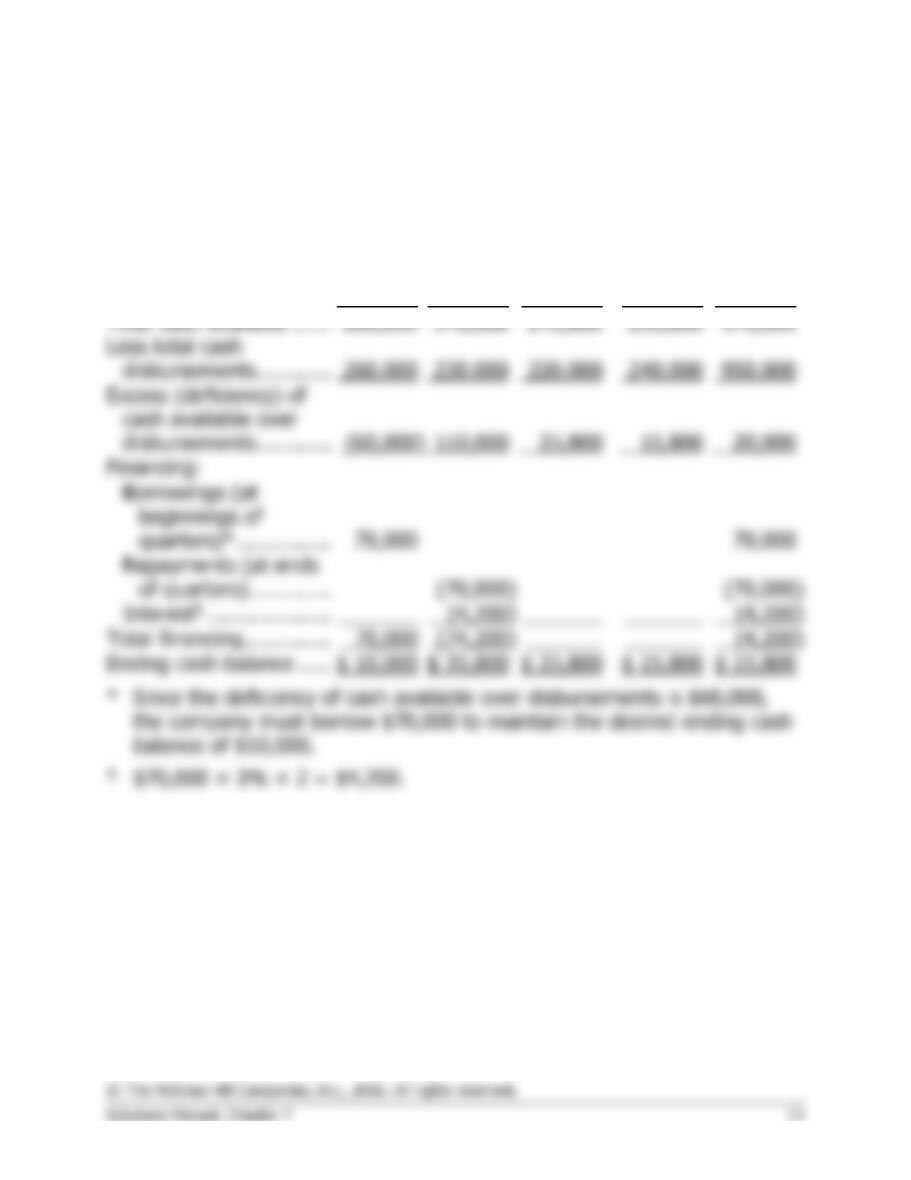
Exercise 7-7 (15 minutes)
Garden Depot
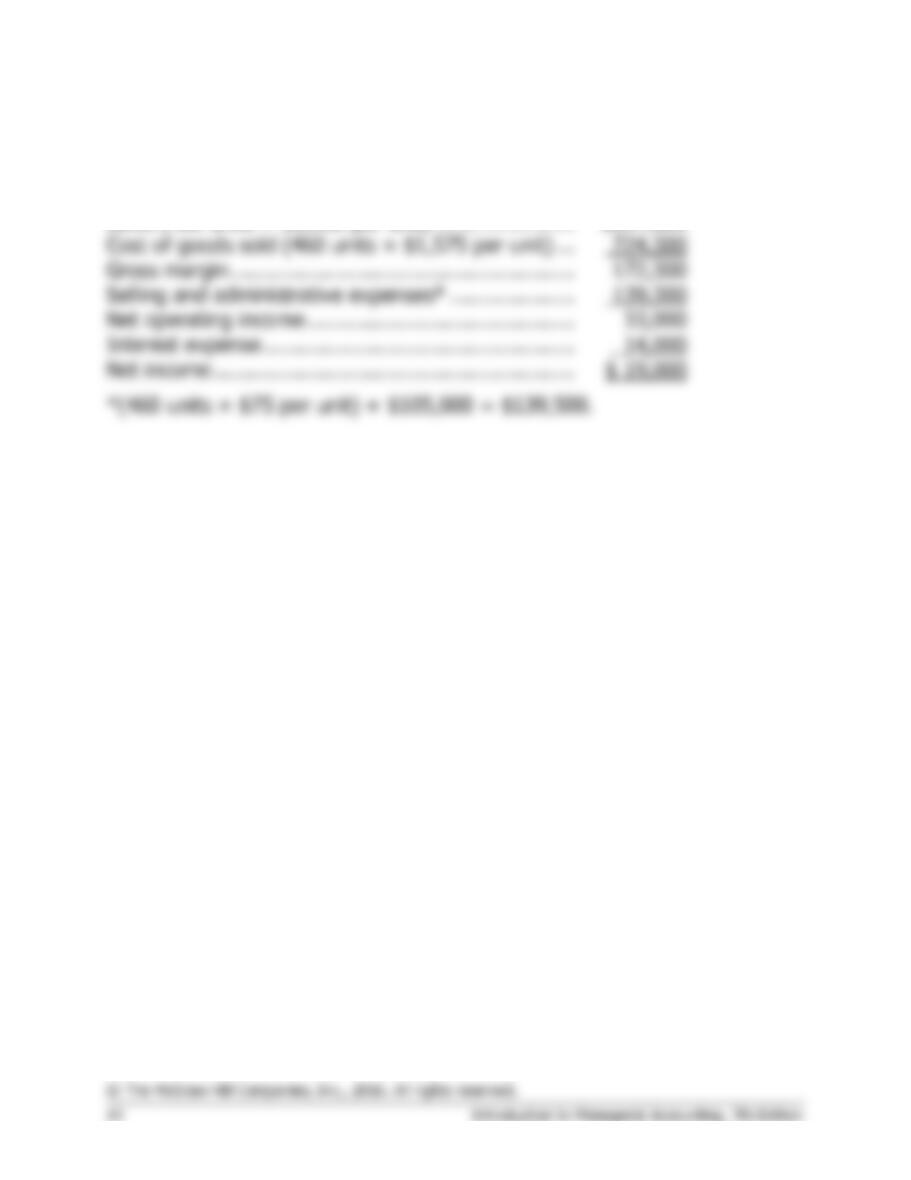
Cash Budget
1st
Quarter
2nd
Quarter
3rd
Quarter
4th
Quarter
Year
Beginning cash balance .
$ 20,000
$ 10,000
$ 35,800
$ 25,800
$ 20,000
Total cash receipts ……..
180,000
330,000
210,000
230,000
950,000
Total cash available ……
260,000
Financing:
(4,200)
(4,200)
Total financing …………..
(74,200)
(4,200)
Ending cash balance …..
$ 10,000
Exercise 7-8 (10 minutes)
Gig Harbor Boating
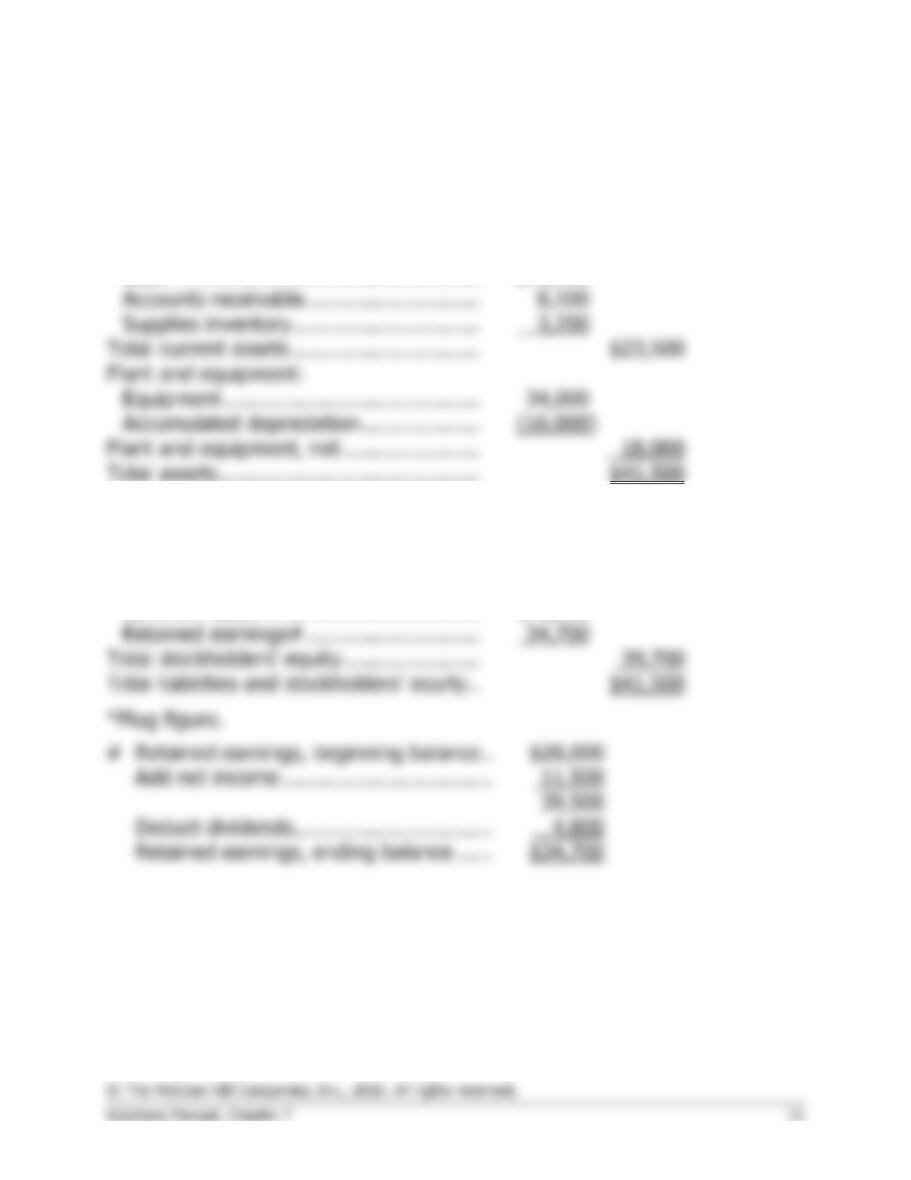
Budgeted Income Statement
Sales (460 units × $1,950 per unit) ………………….
$897,000
Selling and administrative expenses* ………………..
Net operating income …………………………………….
Interest expense …………………………………………..
Net income ………………………………………………….
Exercise 7-9 (15 minutes)
Mecca Copy
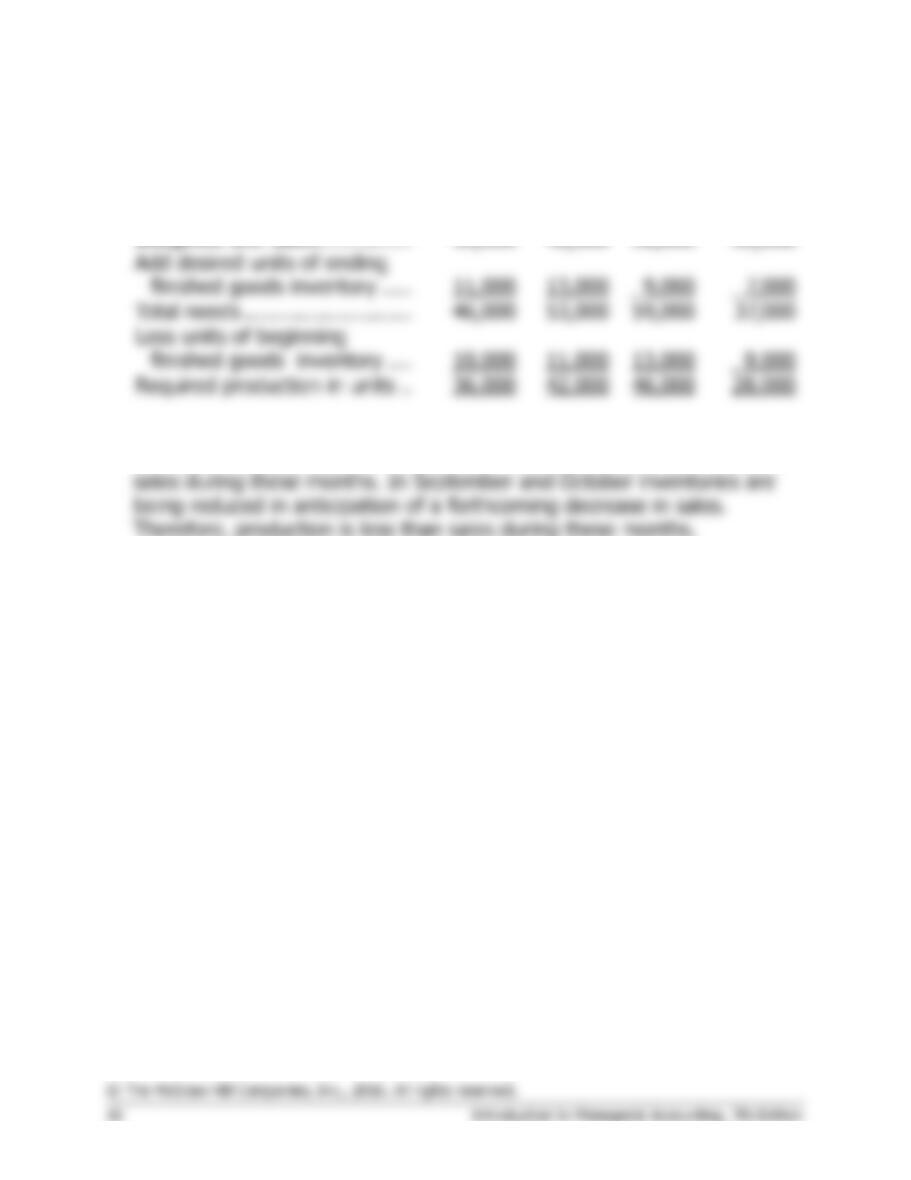
Budgeted Balance Sheet
Assets
Current assets:
Cash* …………………………………………
$12,200
Accounts receivable ……………………….
Supplies inventory …………………………
Total current assets …………………………
Plant and equipment:
Equipment …………………………………..
Accumulated depreciation ……………….
Plant and equipment, net ………………….
Total assets …………………………..……….
Liabilities and Stockholders’ Equity
Current liabilities:
Accounts payable ………………………….
$ 1,800
Stockholders’ equity:
Common stock ……………………………..
$ 5,000
Retained earnings# ……………………….
Total stockholders’ equity ………………….
39,700
Total liabilities and stockholders’ equity ..
#
Retained earnings, beginning balance ..
Add net income …………………………….
Deduct dividends …………………………..
4,800
Retained earnings, ending balance ……
Exercise 7-10 (45 minutes)
1. Production budget:
July
August
Septem-
ber
October
Budgeted unit sales ……………
35,000
40,000
50,000
30,000
2. During July and August the company is building inventories in
anticipation of peak sales in September. Therefore, production exceeds
Exercise 7-10 (continued)
3. Direct materials budget:
July
August
Septem-
ber
Third
Quarter
Required production in units of finished goods …….
36,000
42,000
46,000
124,000
Units of raw materials needed per unit of finished
Exercise 7-11 (20 minutes)
Quarter (000 omitted)
1
2
3
4
Year
Beginning cash balance ………………………….
$ 6
*
$ 5
$ 5
$ 5
$ 6
Add collections from customers ……………….
65
70
96
*
92
323
*
Total cash available ……………………………….
71
*
75
101
97
329
Less cash disbursements:
*
*
*
*
*
*
*
*
*
*
*
*
2
*
*
Total cash disbursements ……………………….
*
90
*
*
Financing:
*
*
Total financing ……………………………………..
(1)
Ending cash balance ……………………………..
$ 5
$ 5
$ 5
$ 8
$ 8
* Given.
Exercise 7-12 (30 minutes)
1. Schedule of expected cash collections:
Month
July
August
Sept.
Quarter
From accounts receivable .
$136,000
$136,000
From July sales:
From August sales:
From September sales:
Total cash collections …….
2. a. Merchandise purchases budget:
July
August
Sept.
Total
Budgeted cost of goods sold
(60% of sales)………………….
$126,000
$138,000
$132,000
$396,000
Total needs ………………………..
Required purchases ……………..
b. Schedule of cash disbursements for purchases:
July
August
Sept.
Total
From accounts payable ……….
$ 71,100
$ 71,100
For July purchases ……………..
For August purchases …………
For September purchases ……
Total cash disbursements …….
Exercise 7-12 (continued)
3.
Beech Corporation
Income Statement
For the Quarter Ended September 30
4.
Beech Corporation
Balance Sheet
September 30
Assets
Cash ($90,000 + $653,000 – $366,940 – ($55,000 ×
3)) ……………………………………………………………
$211,060