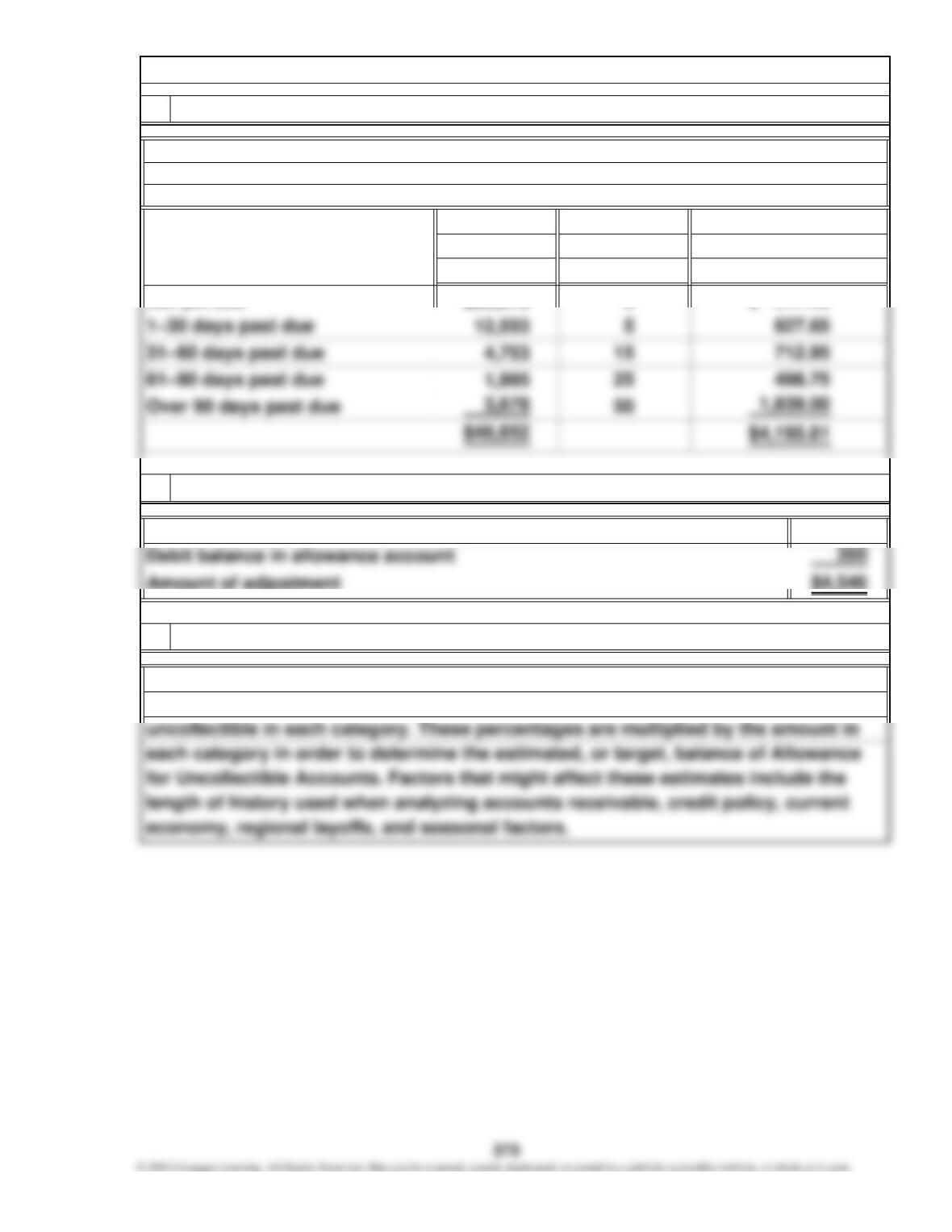
Amount
$25,873
$4,196
analyze their accounts receivable history to determine the estimated percentage
5. User Insight: Role of estimates discussed
Estimates play an important role in applying the aging analysis method. Businesses
Estimated Uncollectible Accounts
Percentage
Thorn Company
December 31, 2011
Chapter 7, P 3. (Continued)
3. Analysis of estimated uncollectible accounts prepared
Allowance for
UncollectibleConsidered
AccountsUncollectible
$ 517.46Not yet due
2
Uncollectible accounts expense calculated
Desired balance
4.
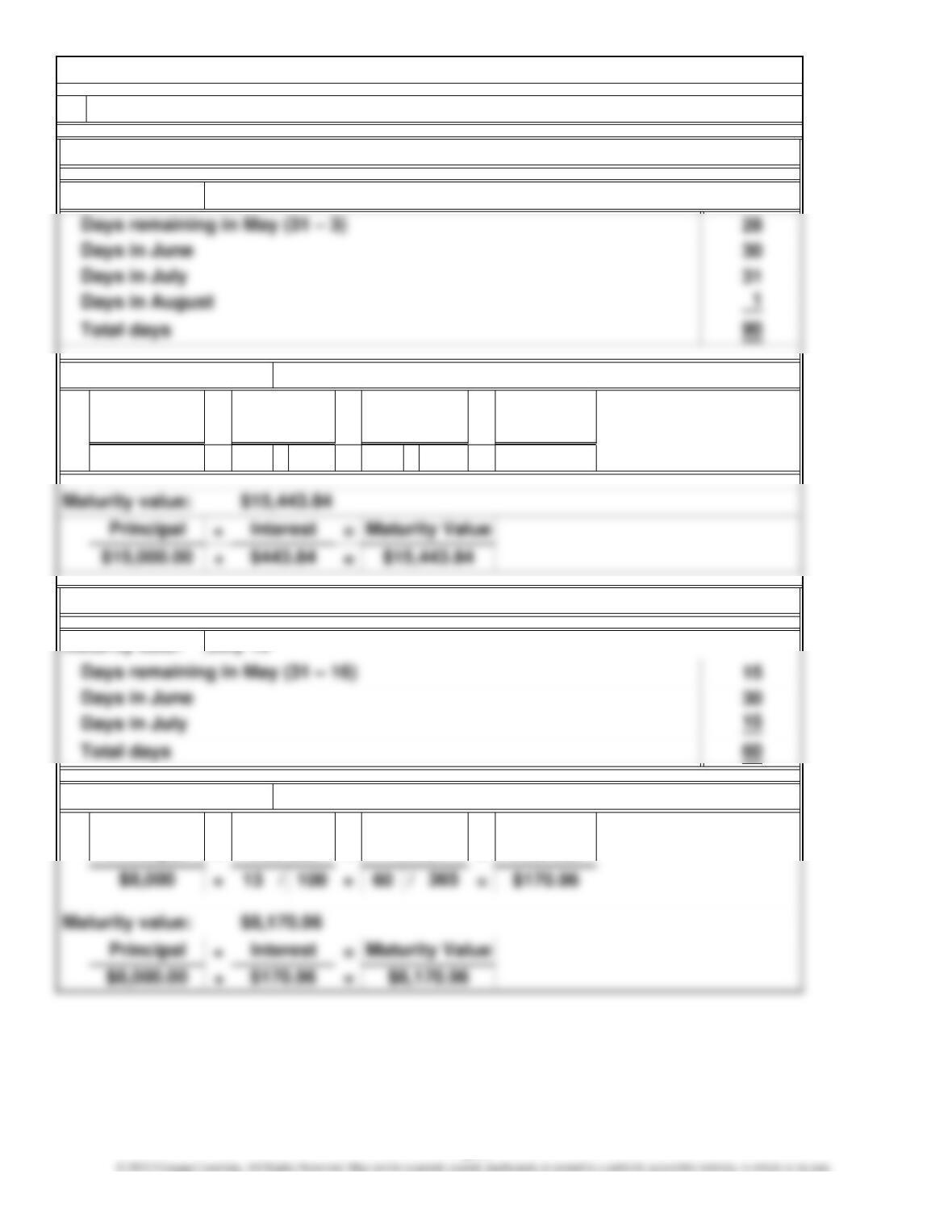
× 12 / 100 × 90 / = $443.84
Principal
Rate of
Interest
Time
Rate of
Interest ×Time
=
May 16, accepted $8,000, 60-day, 13% note receivable
×
Principal
Interest at maturity: $170.96
Chapter 7, P 4.
1. Maturity date, interest on the note, and maturity value for each note determined
$15,000 365
×
May 3, accepted $15,000, 90-day, 12% note receivable
= Interest
×
Interest at maturity: $443.84
Interest
July 15
August 1Maturity date:
Maturity date:
374
0
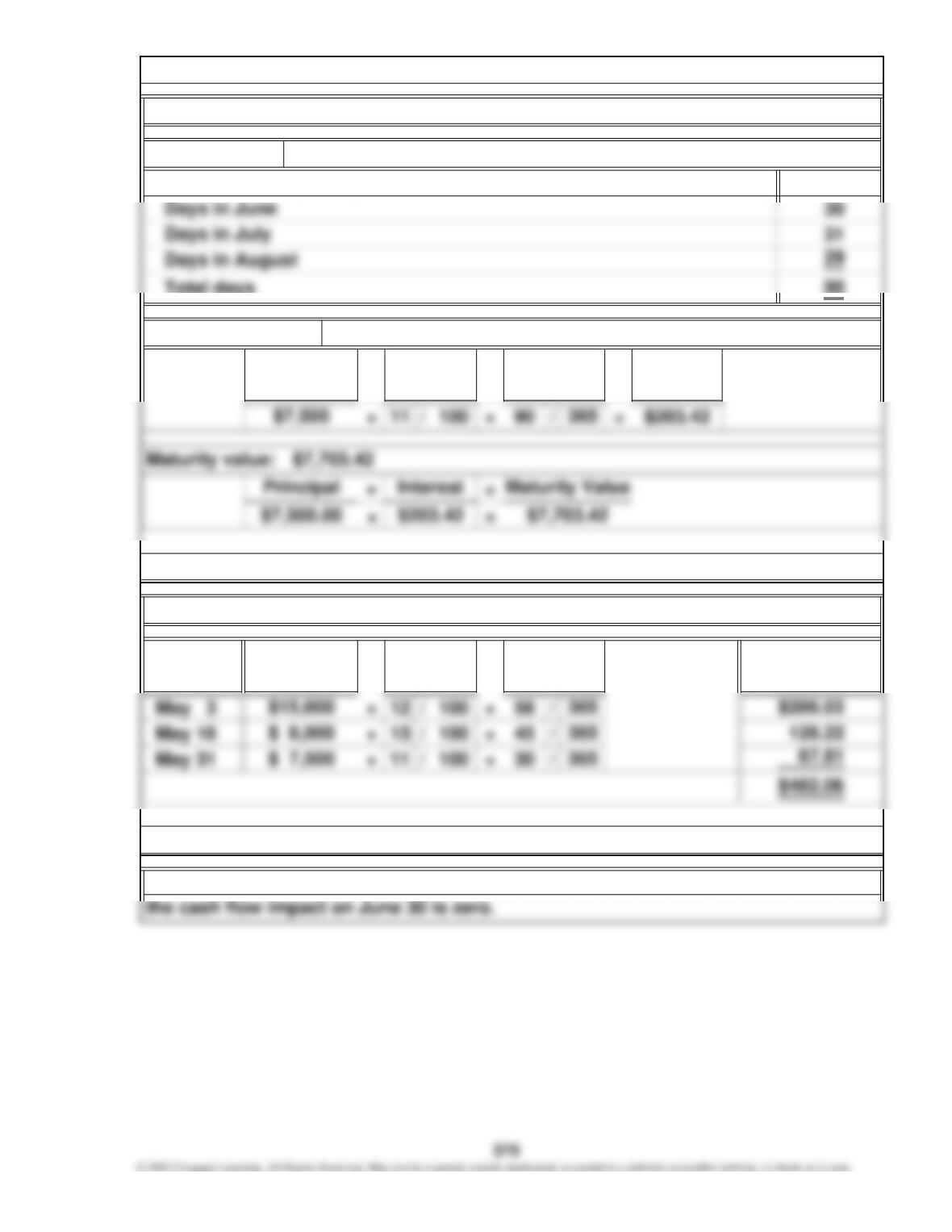
2. Interest income on June 30 reported
Since interest income on these notes receivable will not be received until maturity,
3. User Insight: Cash flow effect discussed
Date of
Note
Accrued interest income as of June 30
Time
×
Rate of
Interest
InterestPrincipal ×
= InterestPrincipal
Chapter 7, P 4. (Continued)
May 31, accepted $7,500, 90-day, 11% note receivable
Maturity date:
Days remaining in May (31 – 31)
August 29
Rate of
Interest
$203.42Interest at maturity:
×Time
×
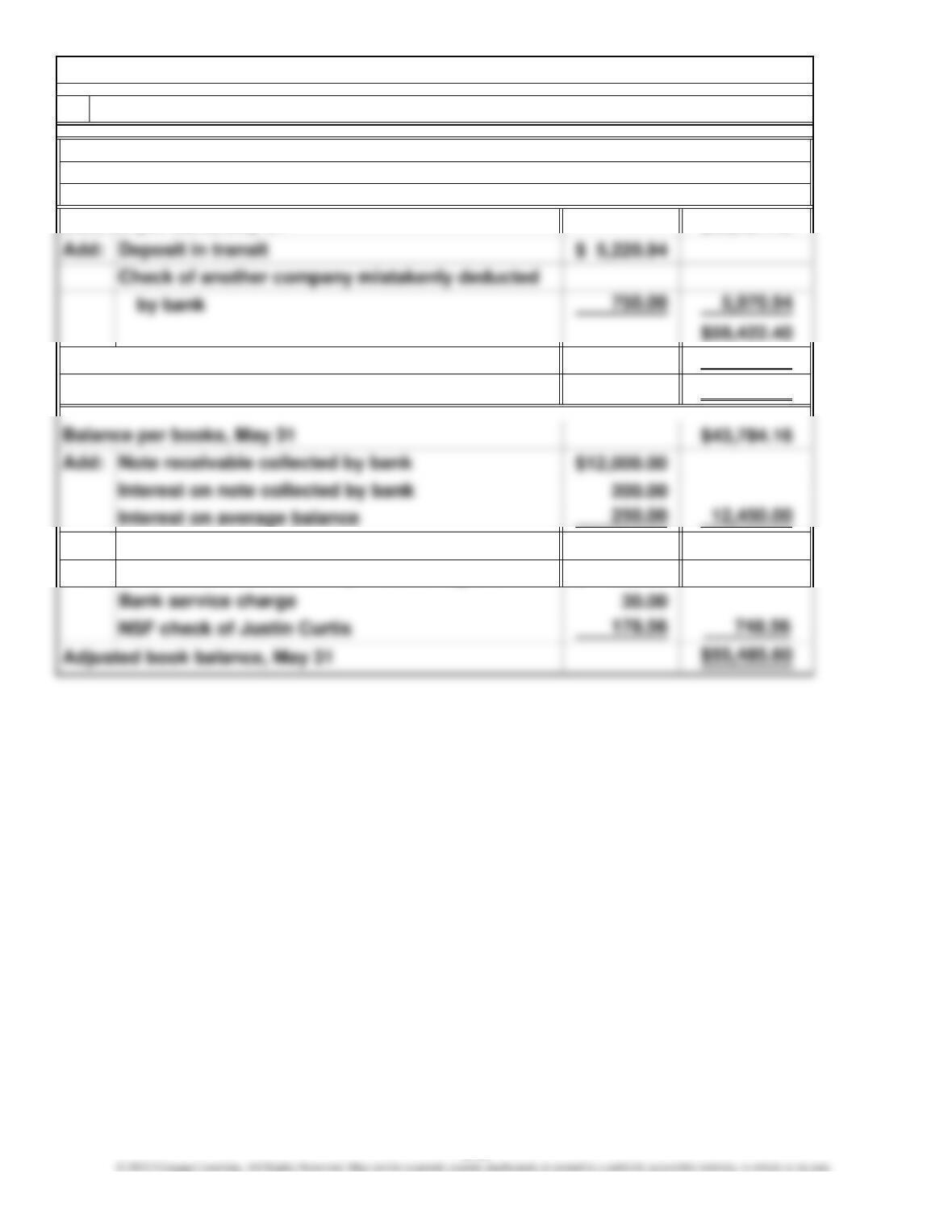
$53,451.46
3,936.80
$55,485.60
$56,234.16
$ 540.00
Check recorded incorrectly in check register
Less:
Less outstanding checks
Adjusted bank balance, May 31
May 31, 2011
Balance per bank, May 31
1. Bank reconciliation prepared
Lotus Lake, Inc.
Chapter 7, P 5.
Bank Reconciliation
376
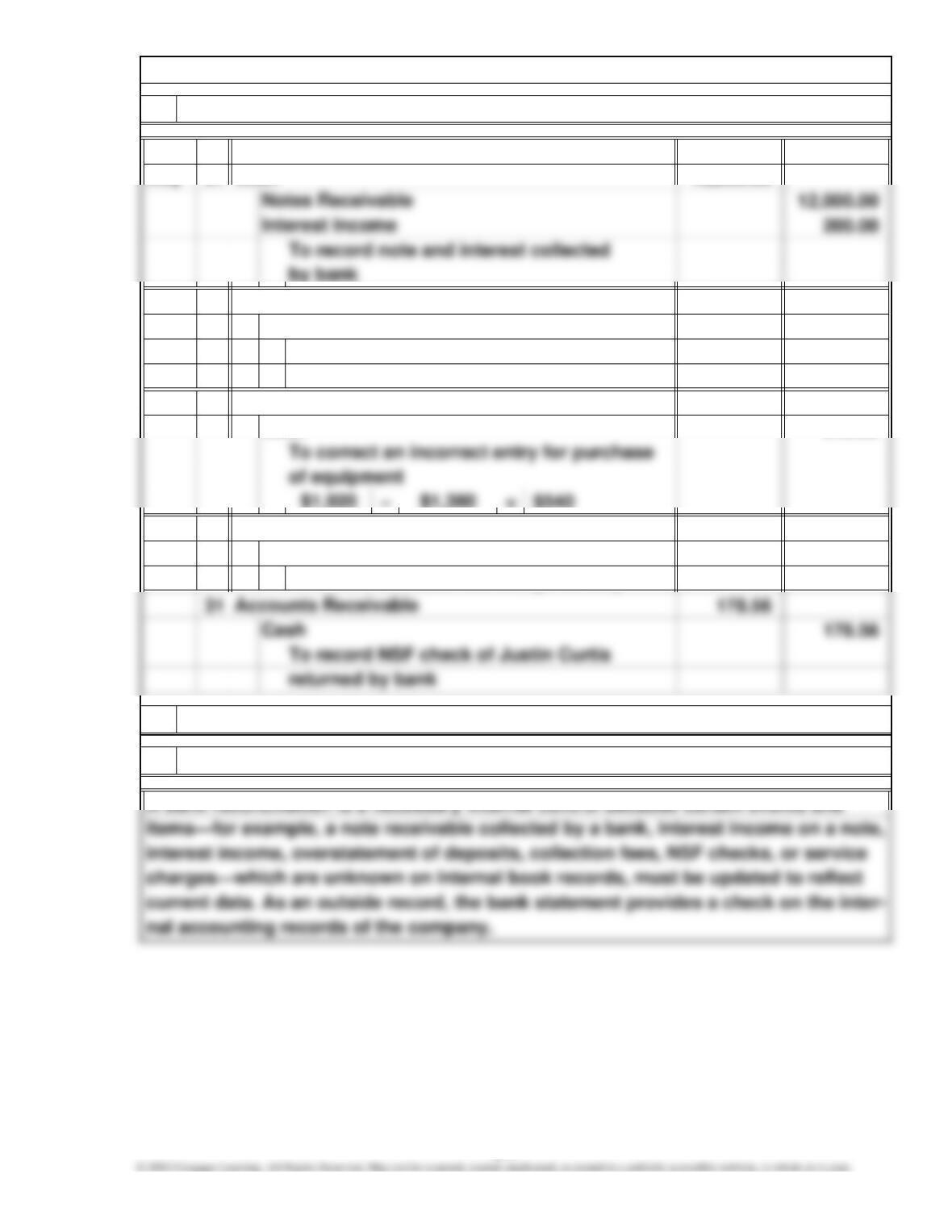
31 12,200.00
31 250.00
250.00
31 540.00
540.00
– = $540
31 30.00
30.00
3.
4. User Insight: Importance of bank reconciliation discussed
The adjusted cash balance of $55,485.60 should appear on the balance sheet.
Bank Service Charges Expense
2. Journal entries prepared
2011
Cash
To record bank service charge for May
Chapter 7, P 5. (Continued)
Equipment
Interest Income
To record interest on average bank
Cash
Cash
account balance
CashMay
377
640,000
a.
×
b.
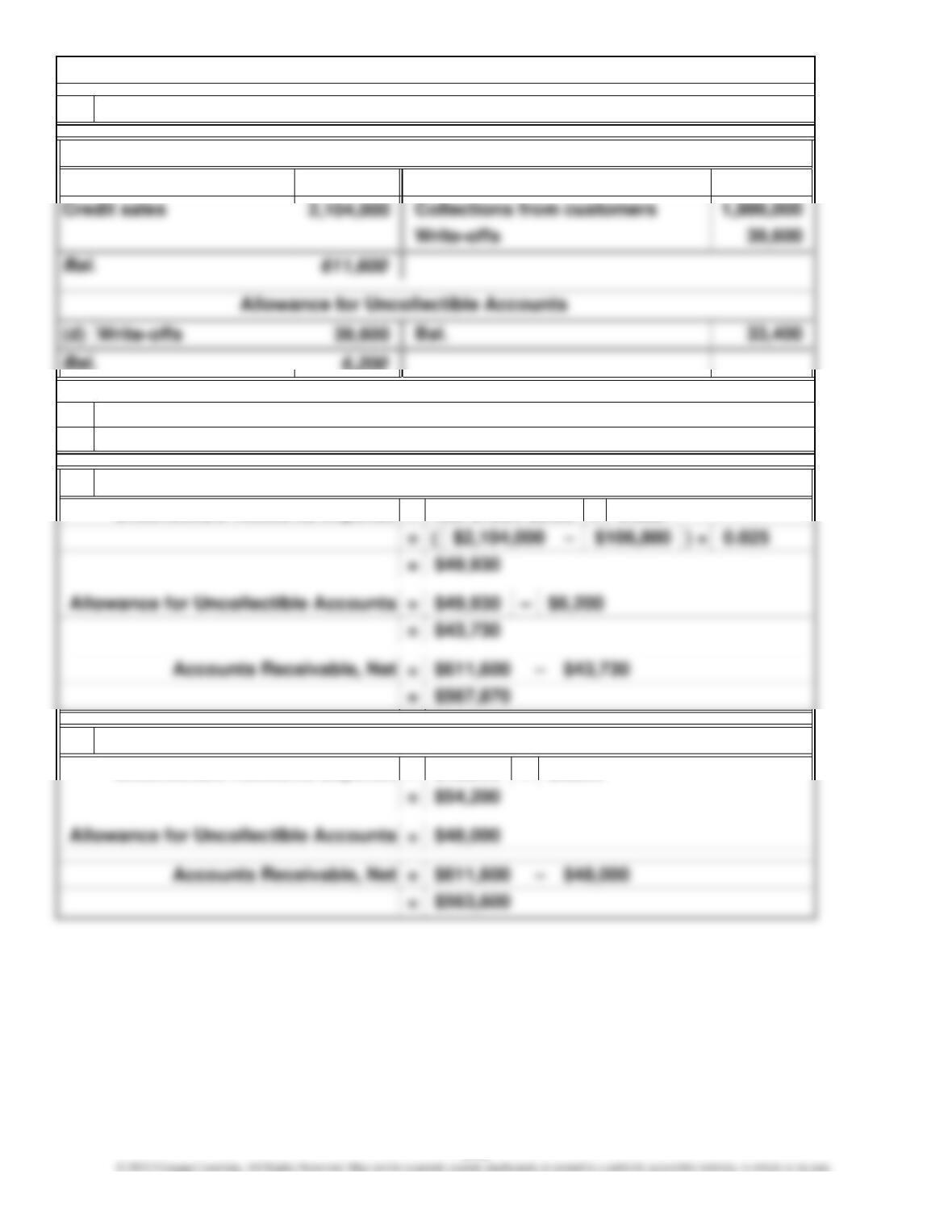
Accounts receivable aging method:
=
Uncollectible Accounts Expense
Uncollectible accounts expense and ending balance of Allowance for
Bal.
Chapter 7, P 6.
1. T accounts prepared and data entered
106,800
Accounts Receivable
0.025
2.
Uncollectible Accounts determined
Sales returns and allowances
Percentage of net sales method:
$6,200
Uncollectible Accounts Expense = Net Credit Sales
+
$48,000
378
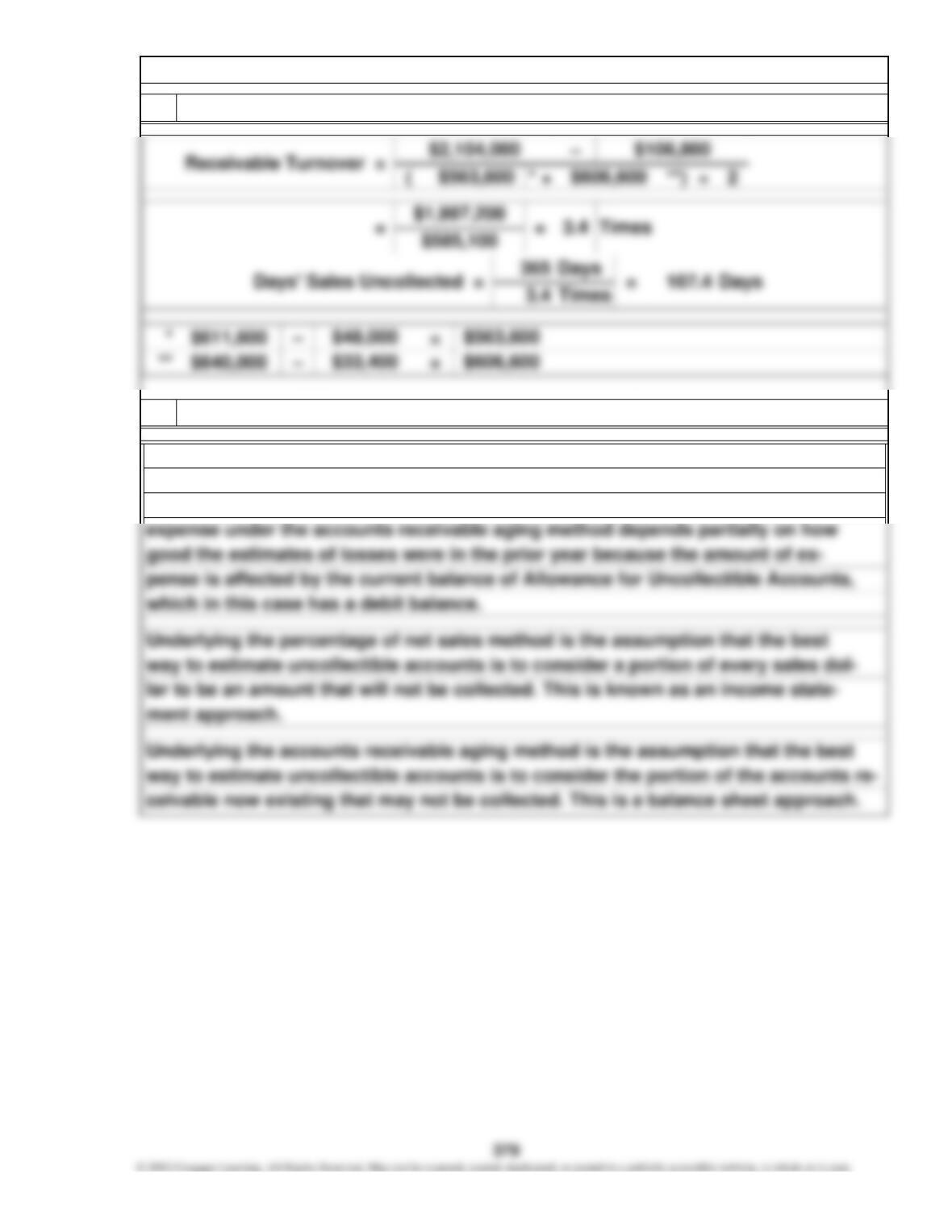
method are both estimates and are based on different assumptions, it is expected
Chapter 7, P 6. (Continued)
3. Receivable turnover and days’ sales uncollected calculated
that they would differ in their effects. Also, the amount of uncollectible accounts
User Insight: Difference in methods and rationales discussed
Because the percentage of net sales method and the accounts receivable aging
4.
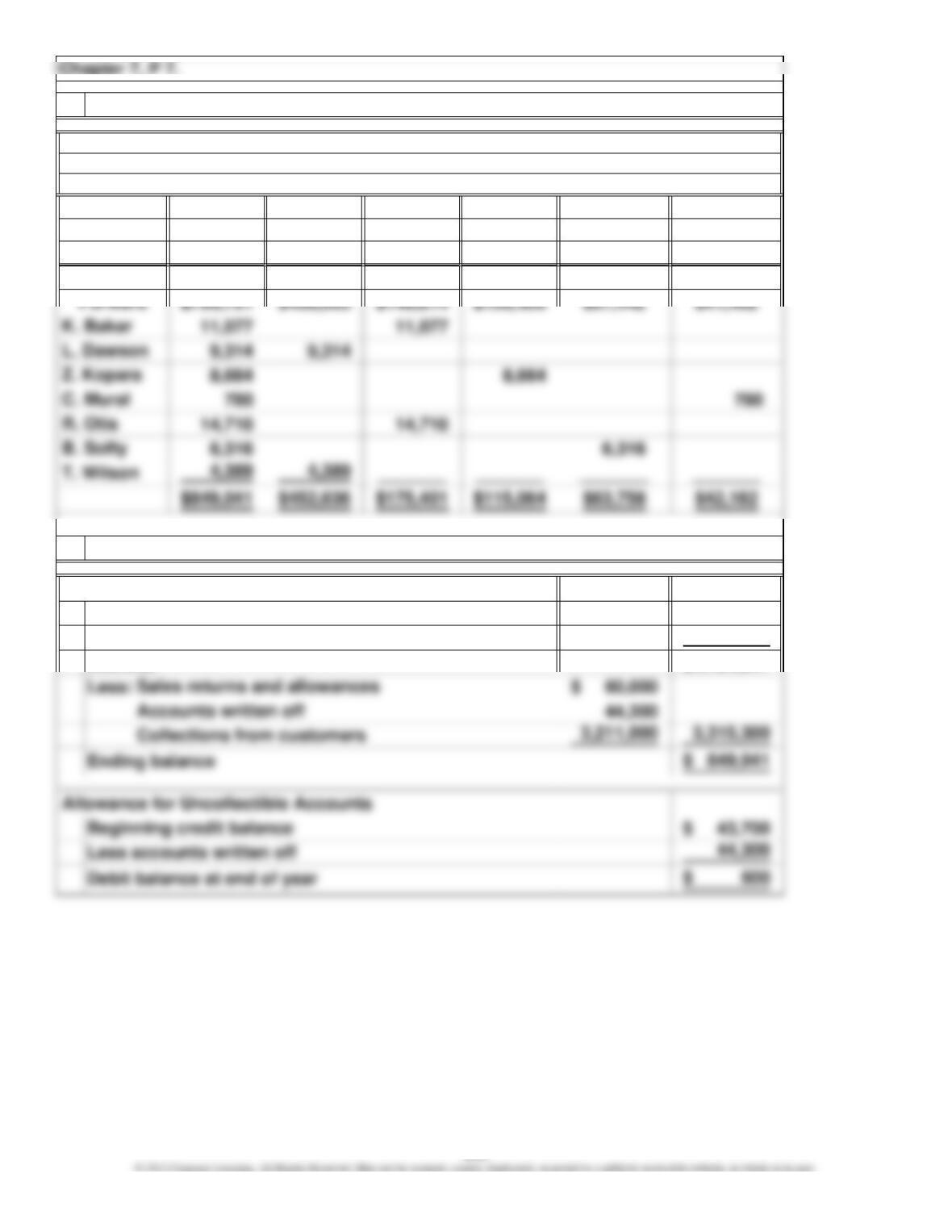
1–30 31–60 61–90 Over
Not Yet Days Days Days 90 Days
Total Due Past Due Past Due Past Due Past Due
$ 442,341
3,722,000
$4,164,341
Account
2. End-of-year balances computed
Customer
1. Aging analysis completed
Fossella Fashions
Aging Analysis of Accounts Receivabl
e
January 31, 2011
Balance
Accounts Receivable
Beginning balance
Credit sales
Subtotal
380
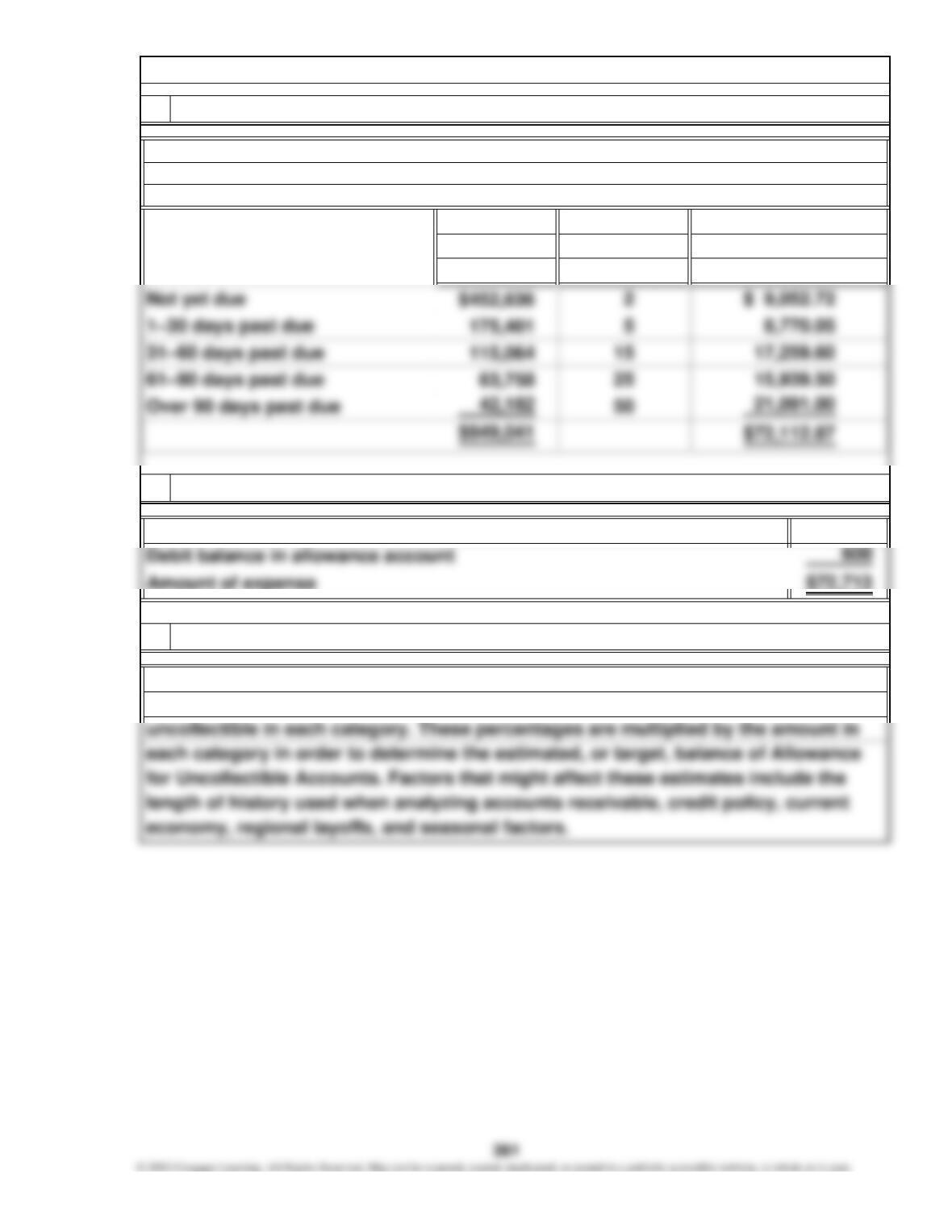
Amount
$72,113
4. Uncollectible accounts expense calculated
Desired balance
Fossella Fashions
Allowance for
Uncollectible
Uncollectible
Chapter 7, P 7. (Continued)
3. Analysis of estimated uncollectible accounts prepared
Estimated Uncollectible Accounts
5. User insight: Role of estimates discussed
Accounts
January 31, 2011
Percentage
Considered
Estimates play an important role in applying the aging analysis method. Businesses
analyze their accounts receivable history to determine the estimated percentage
28
15
30
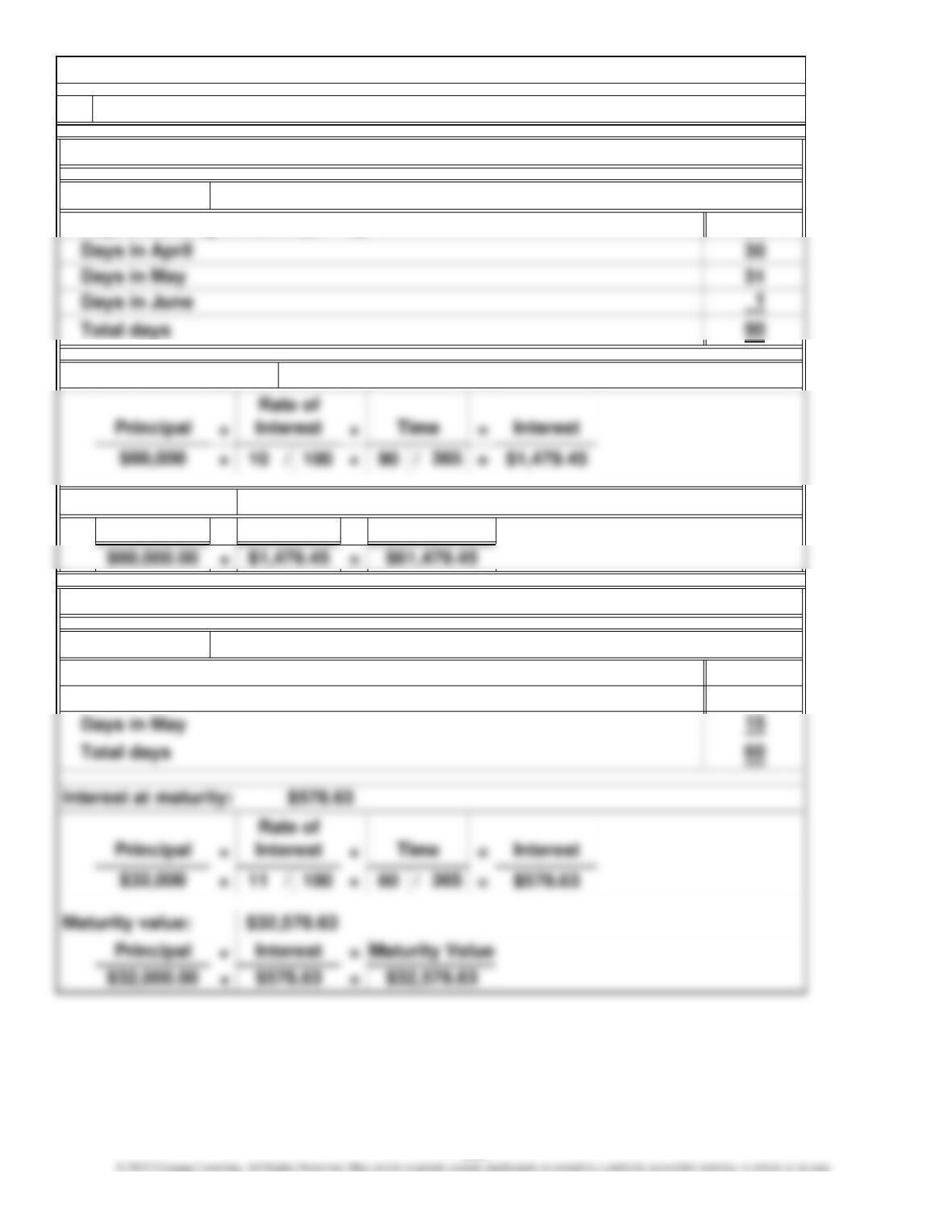
Interest at maturity:
March 3, accepted $60,000, 90-day, 10% note receivable
Interest Maturity Value
$61,479.45
May 15Maturity date:
$1,479.45
June 1
Chapter 7, P 8.
Days remaining in March (31 – 3)
Maturity date:
1. Maturity date, interest on the note, and maturity value for each note determined
Days remaining in March (31 – 16)
Days in April
Principal
March 16, accepted $32,000, 60-day, 11% note receivable
+=
Maturity value:
382
0
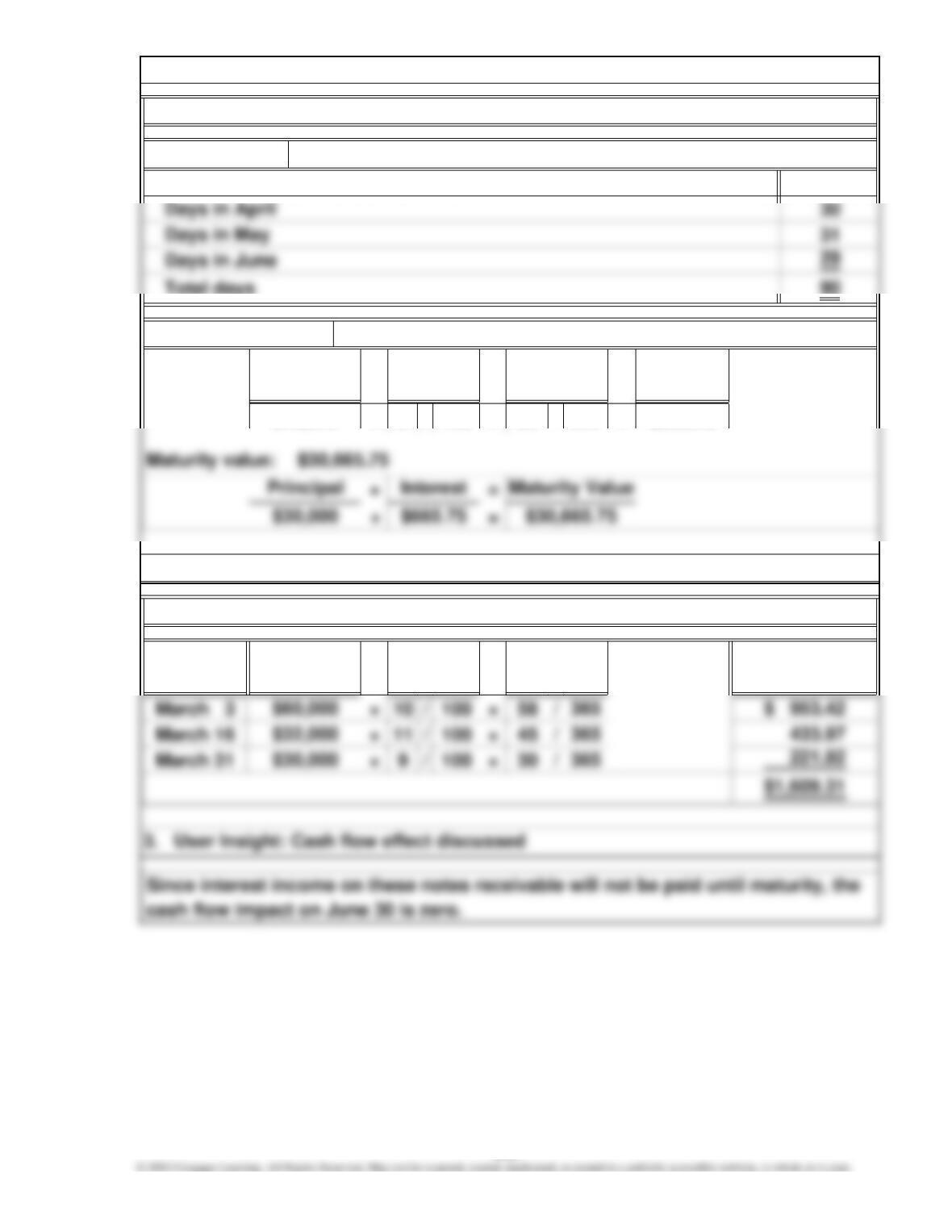
× 9 / 100 × 90 / = $665.75
$665.75Interest at maturity:
×Time
×
$30,000 365
Rate of
Interest
Chapter 7, P 8. (Continued)
March 31, accepted $30,000, 90-day, 9% note receivable
Days remaining in March (31 – 31)
June 29Maturity date:
= InterestPrincipal
2. Interest income on April 30 reported
Date of
Note
Interest
Accrued interest income as of April 30
Principal Time
×
Rate of
Interest
×
383
1.
2.
3.
Pledge the accounts receivable against a loan from the bank.
Sell or factor the accounts receivable.
Sell or discount the notes to the bank or to another source.
The financing alternatives available to Gerard for raising the needed cash are as
follows:
Since Gerard sells its appliances to large, established customers, the accounts
and notes receivable, which total $12 million, should provide adequate security to
Chapter 7, C 3.
Estimates are necessary in accounting for receivables because not all the receiv-
collectible accounts expense must be recognized in the year in which the sales
Chapter 7, C 1.
and payments because management felt that such terms would increase sales
Mitsubishi established the generous credit terms of 14 months without interest
dramatically. Customers could make large purchases without emptying their
justing entry.
Chapter 7, C 2.
ables will be collected. To comply with the matching rule, an estimated loss of un-
384
Chapter 7, C 4.
The receivable turnover ratios of Fosters and Heineken reveal that Fosters gener-
able turnover. This measure for Fosters is 93.6 days and 81.1 days and for Heineken
is 54.5 and 59.8 days for 2008 and 2009, respectively. Although days’ sales uncol-
lected for Fosters are decreasing, it takes Fosters longer to collect a receivable
than it does Heineken. Thus, proportionately, Fosters has more capital tied up in
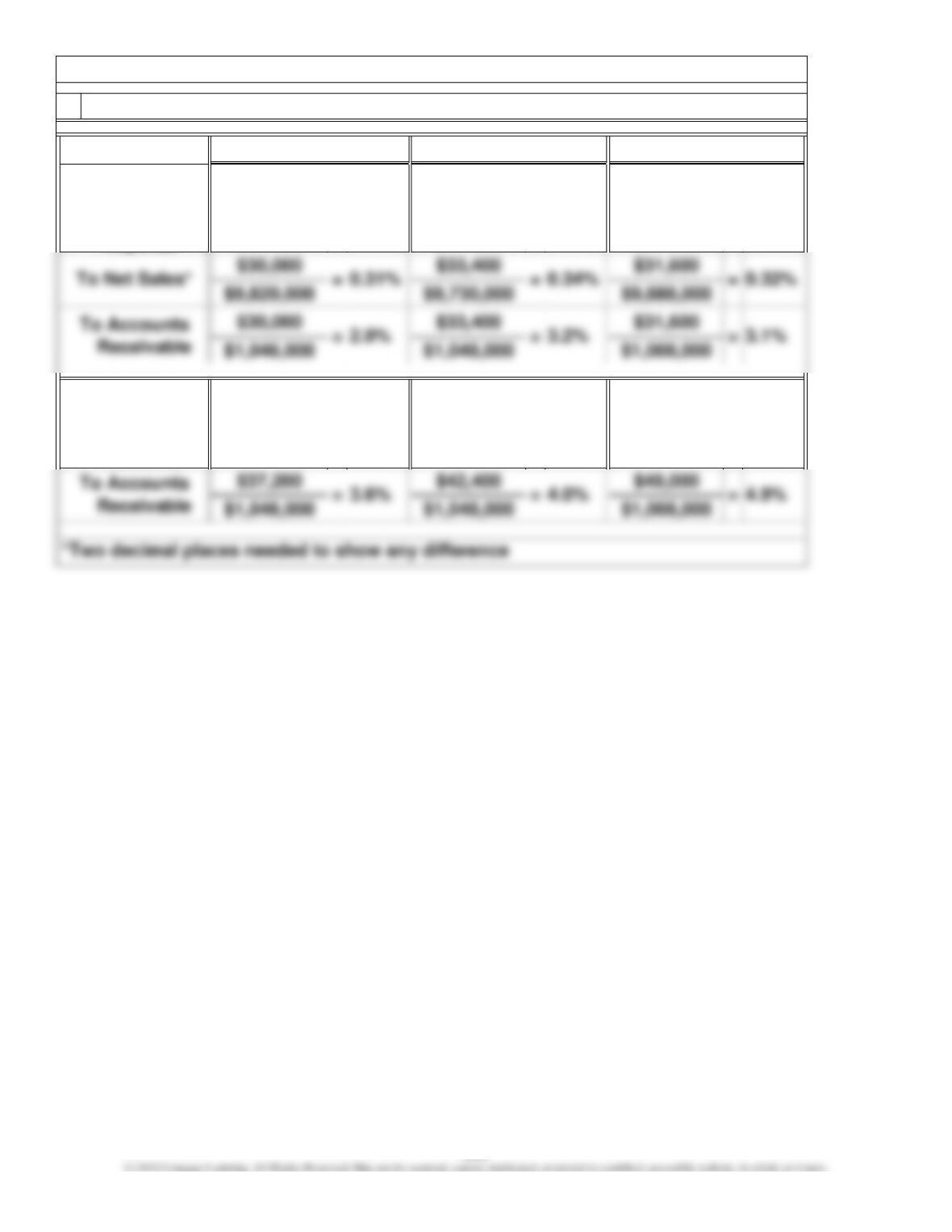
Ratio of
Uncollectible
Accounts
Expense
Chapter 7, C 5.
1. Financial ratios computed (dollar amounts in thousands)
2011 2010
2009
Ratio of
Allowance for
Uncollectible
Accounts
386
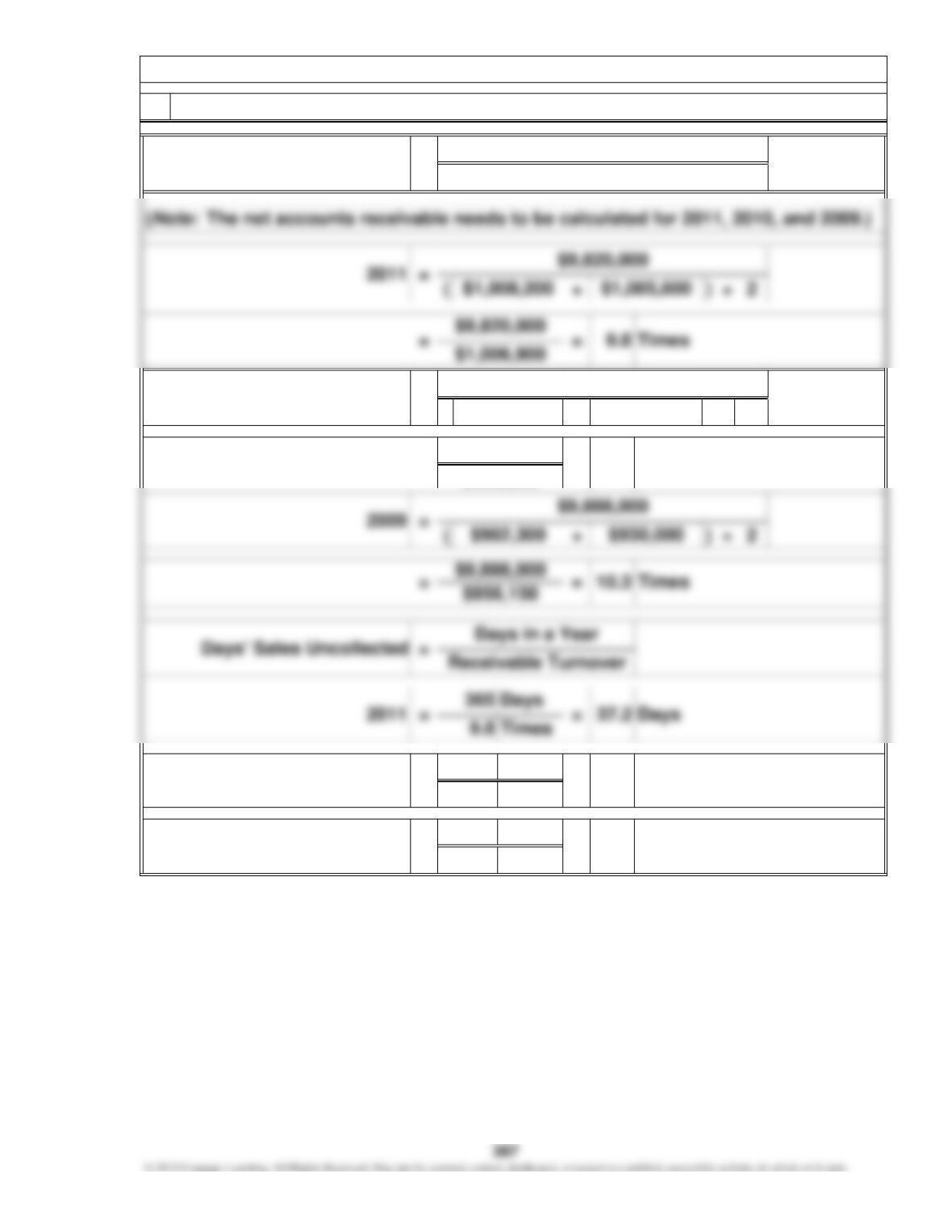
( + ) ÷ 2
Days35.4
$1,005,600
9.9
Days36.9
Days
Times
Times
9.9
=
Times
Receivable Turnover Average Accounts Receivable
Net Sales
Chapter 7, C 5. (Continued)
2. Receivable turnover and days’ sales uncollected calculated
=
$9,730,000
=
$9,730,000
$982,300
= $959,000
2010
Days
=
=
2010
=365
10.3
2009
365 =
Ratios interpreted
2011. Thus, the ratio of allowance for uncollectible accounts to accounts receivable
This opinion is also supported by the fact that the net accounts written off in total
has decreased from 4.9 percent in 2009 to 3.6 percent in 2011.
Chapter 7, C 5. (Continued)
3.
1.
2.
3.
be fairly steady during the course of the year. However, there is some variation.
In Note 15, it may be observed that the sales are lowest in the first and third
quarters (January to March and July to September) of the year. The fourth quar-
As a drug and pharmacy company, CVS’s seasonal needs for cash are likely to
Chapter 7, C 6.
CVS had $1,086 million in cash and cash equivalents in 2009. It is likely that
CVS had accounts receivable of $5,457 million in 2009. Although the company
makes few sales to consumers on credit, its note on accounts receivable states
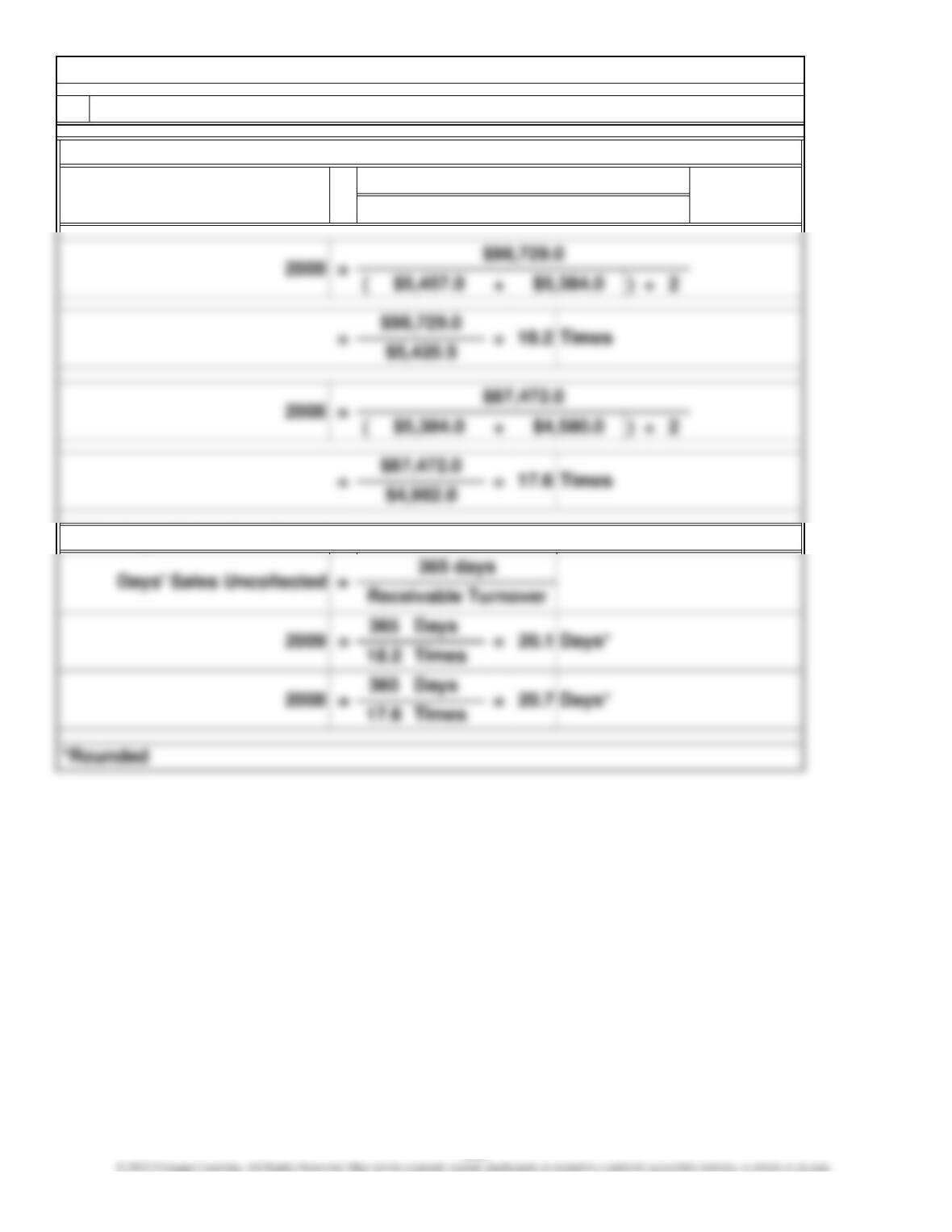
CVS’s Receivable Turnover
=
Chapter 7, C 7.
Receivable turnover and days’ sales uncollected calculated (in millions)1.
Average Accounts Receivable
Net Sales
Receivable Turnover
CVS’s Days’ Sales Uncollected
390
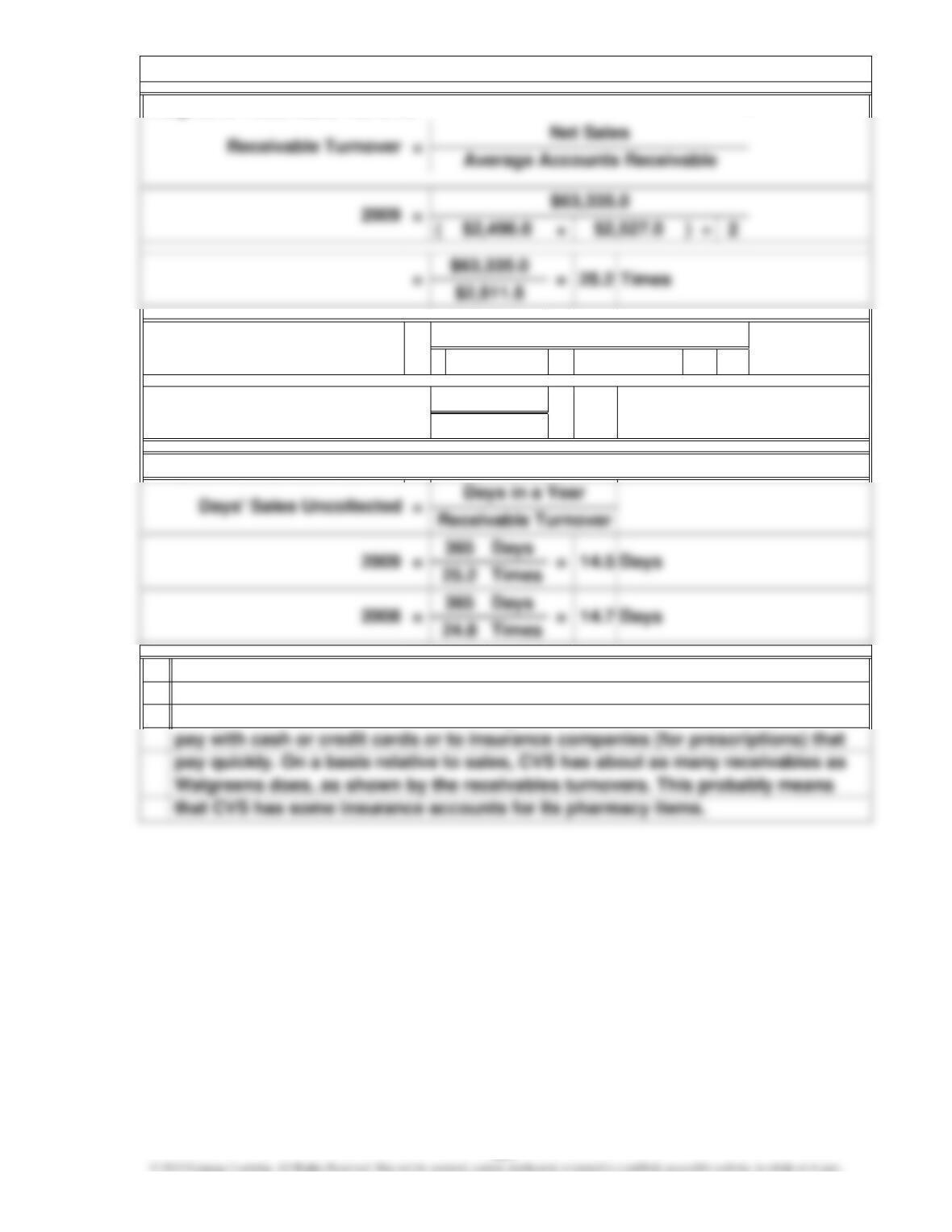
(+ 2
2.
is expected because both CVS and Walgreens sell mostly to retail customers who
denced by the high receivable turnovers and short days’ sales uncollected. This
= Times
$2,382.0
Both companies have relatively small amounts of accounts receivable as evi-
2008
Chapter 7, C 7. (Continued)
Walgreens’ Days’ Sales Uncollected
=
= $2,237.0 ) ÷
Walgreens’ Receivable Turnover
$2,527.0
$59,034.0
24.8
$59,034.0
391
This case addresses several issues that get at the heart of the question, does ac-
counting matter? The main issue is whether accounting should be used to accom-
plish short-term business goals even if, in the process, it distorts reality. Because
Chapter 7, C 8.
the restructuring of the insurance company may portend worse times in the com-
munity, Mullin Interiors may not always be able to adjust its accounts as it wishes.
392