Chapter 6 – Inventory and Cost of Goods Sold
Exercise 6-20 (LO 6-9)
Requirement 1
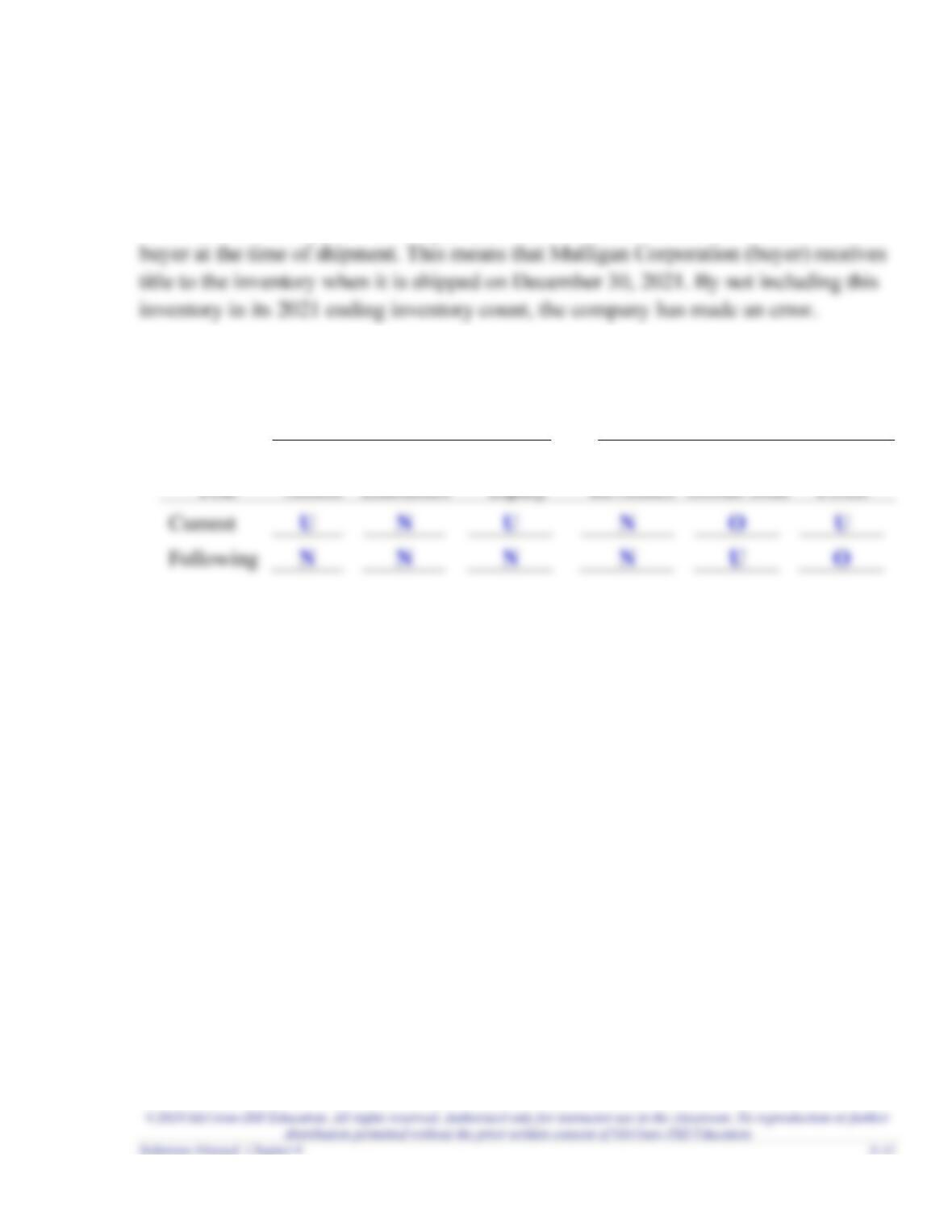
When goods are shipped FOB shipping point, title transfers from the seller to the
Requirement 2
Balance Sheet
Income Statement
Year
Assets
Liabilities
Stockholders’
Equity
Revenues
Cost of
Goods Sold
Gross
Profit
6-42 Financial Accounting, 5e
Exercise 6-21
Requirement 1
January 3
Debit
Credit
Inventory
126,000
Accounts Payable
126,000
(Purchase inventory on account)
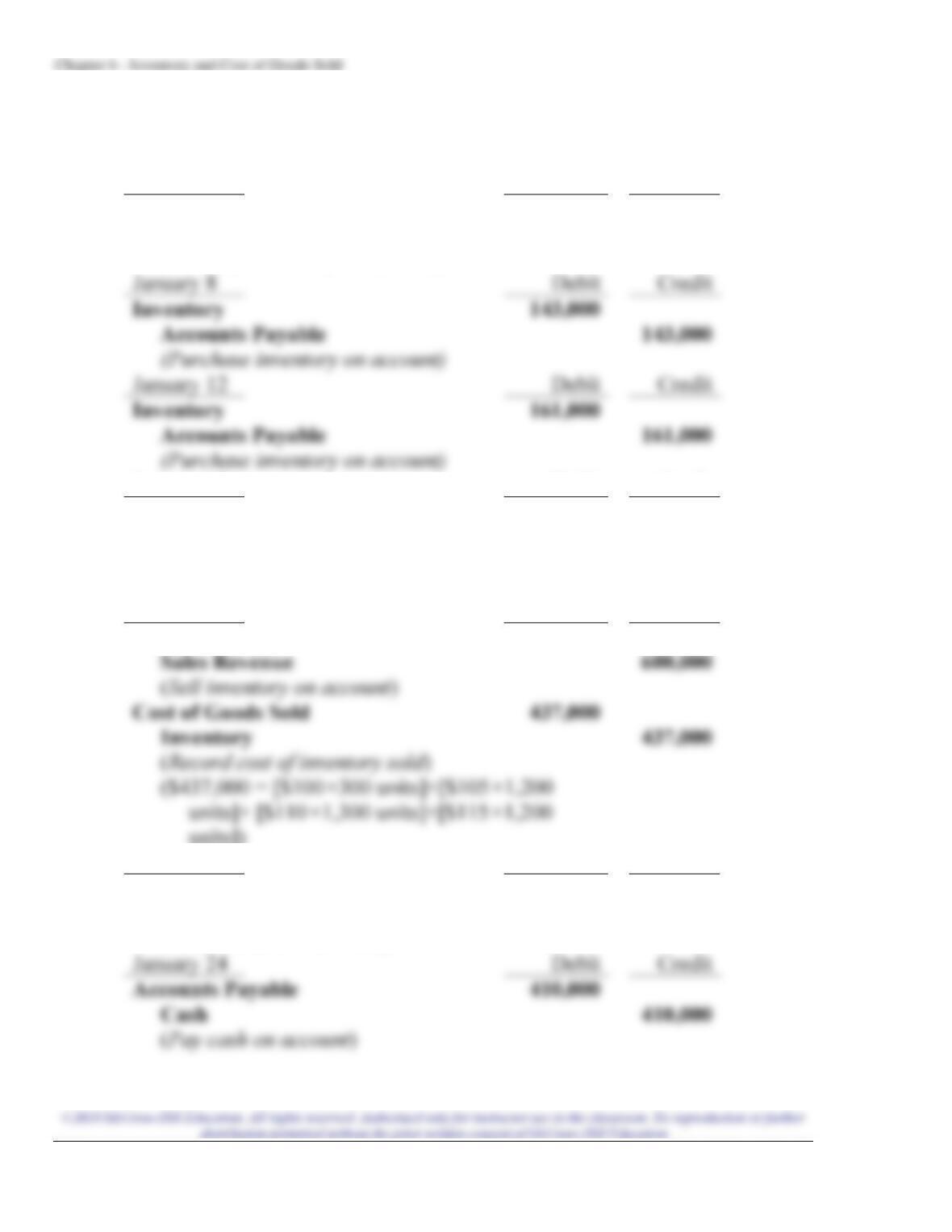
Inventory
143,000
Accounts Payable
143,000
(Purchase inventory on account)
January 12
Debit
Credit
Inventory
161,000
Accounts Payable
161,000
(Purchase inventory on account)
January 15
Debit
Credit
Accounts Payable
11,500
Inventory
11,500
(Return defective inventory)
($11,500 = $115×100 units)
January 19
Debit
Credit
Accounts Receivable
600,000
Sales Revenue
600,000
(Sell inventory on account)
Cost of Goods Sold
437,000
Inventory
437,000
units])
January 22
Debit
Credit
Cash
580,000
Accounts Receivable
580,000
(Receive cash on account)
Accounts Payable
410,000
Cash
410,000
(Pay cash on account)
Chapter 6 – Inventory and Cost of Goods Sold
Exercise 6-21 (continued)
Requirement 1 (concluded)
January 27
Debit
Credit
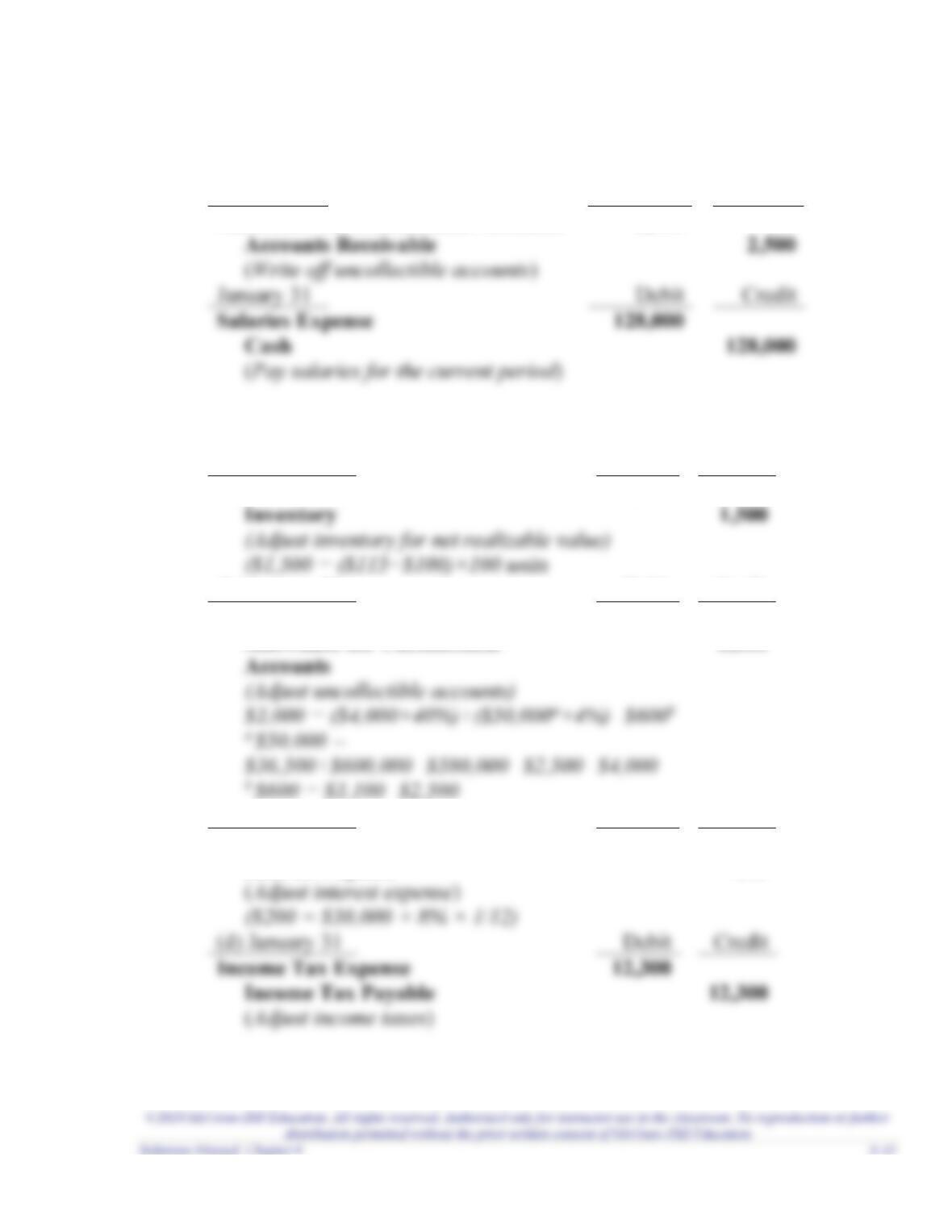
Allowance for Uncollectible Accounts
2,500
Accounts Receivable
January 31
Debit
Credit
Cash
128,000
Requirement 2
(a) January 31
Debit
Credit
Cost of Goods Sold
1,500
(b) January 31
Debit
Credit
Bad Debt Expense
3,000
Accounts
Allowance for Uncollectible
3,000
(c) January 31
Debit
Credit
Interest Expense
200
Interest Payable
200
Income Tax Expense
Income Tax Payable

Chapter 6 – Inventory and Cost of Goods Sold
Exercise 6-21 (continued)
Requirement 3
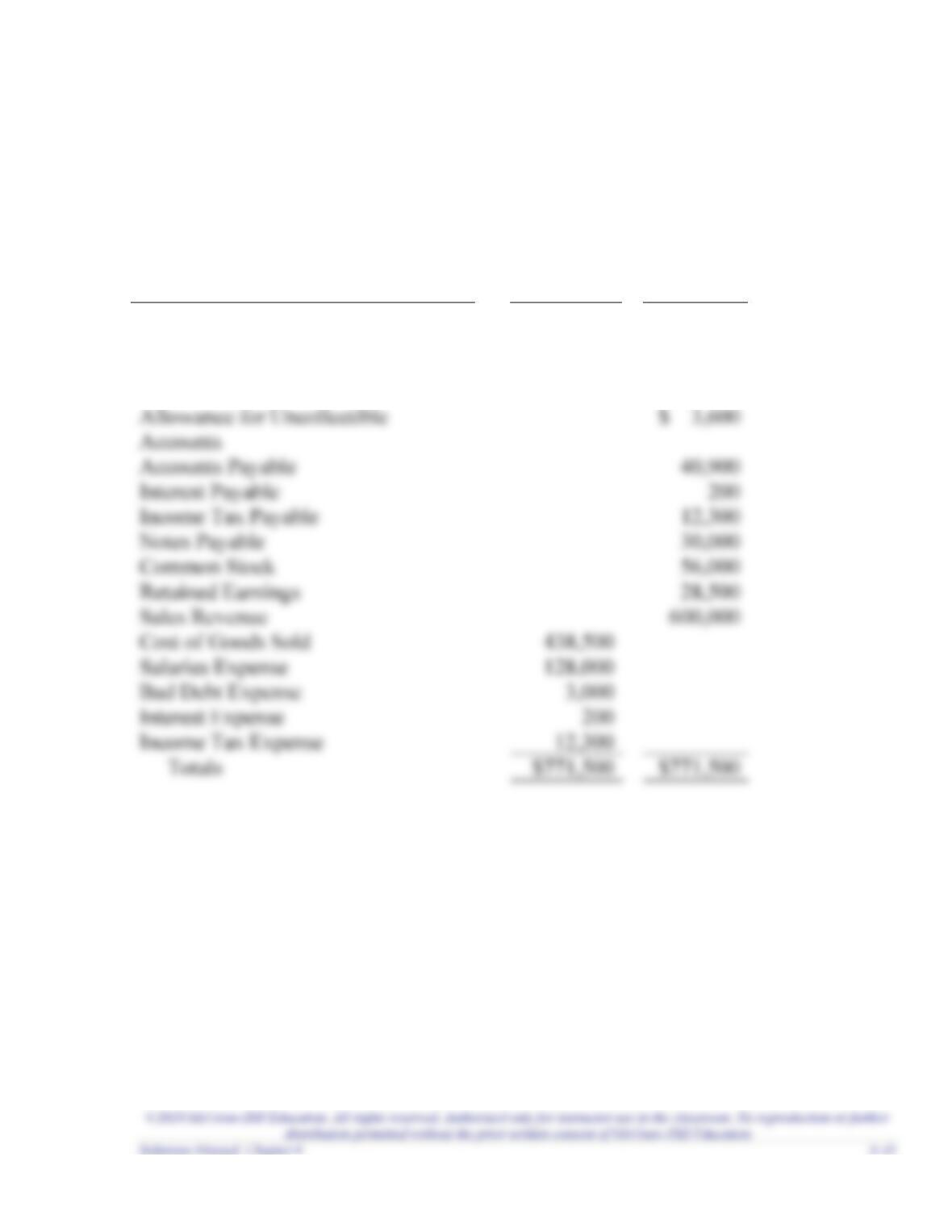
Big Blast Fireworks
Adjusted Trial Balance
January 31, 2021
Accounts
Debit
Credit
Cash
$ 63,900
Accounts Receivable
54,000
Inventory
10,000
Land
61,600
Accounts
Accounts Payable
Interest Payable
Income Tax Payable
Notes Payable
Common Stock
Retained Earnings
Sales Revenue
Salaries Expense
128,000
Bad Debt Expense
Interest Expense
Income Tax Expense
12,300
$771,500
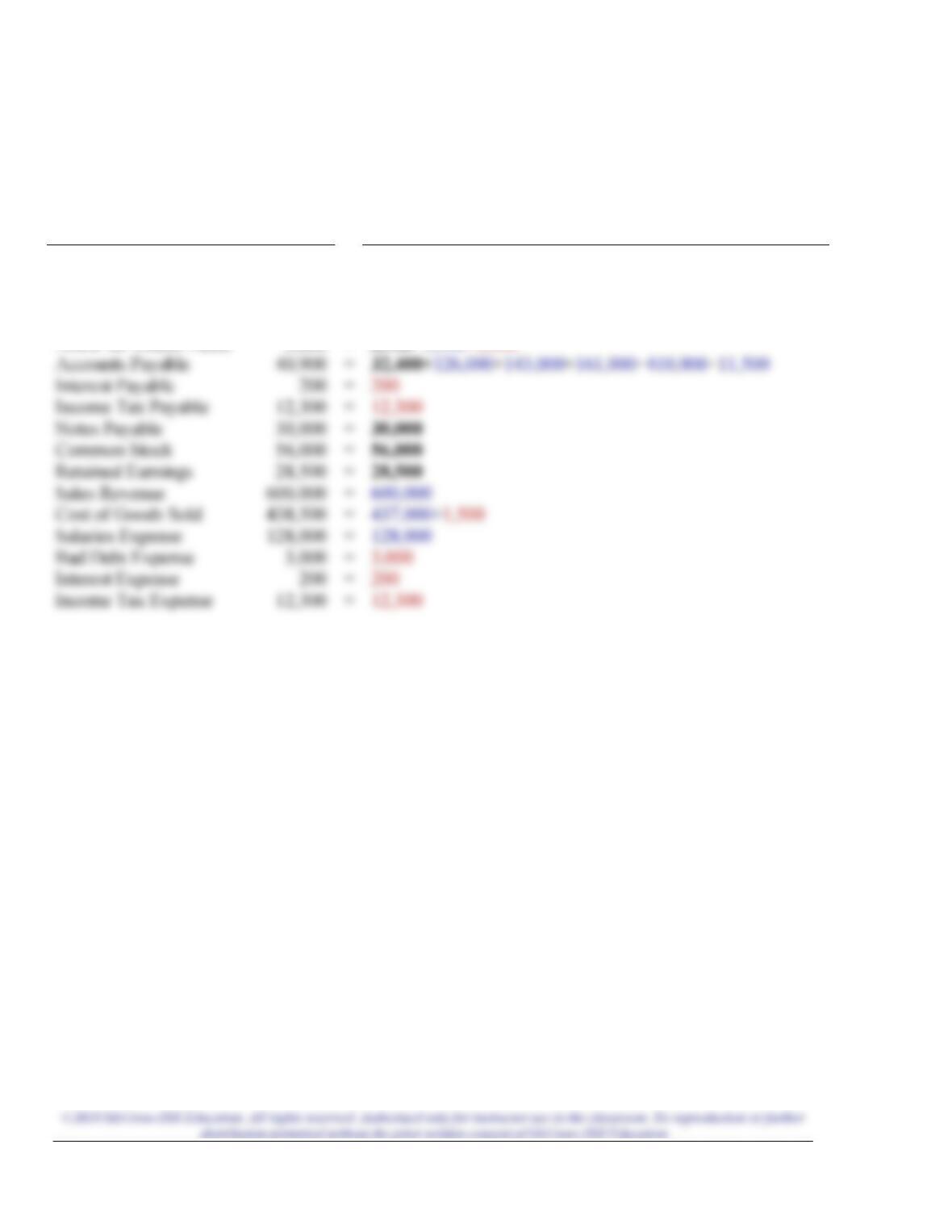
Chapter 6 – Inventory and Cost of Goods Sold
6-46 Financial Accounting, 5e
Exercise 6-21 (continued)
Requirement 3 (concluded)
Accounts
Ending
Balance
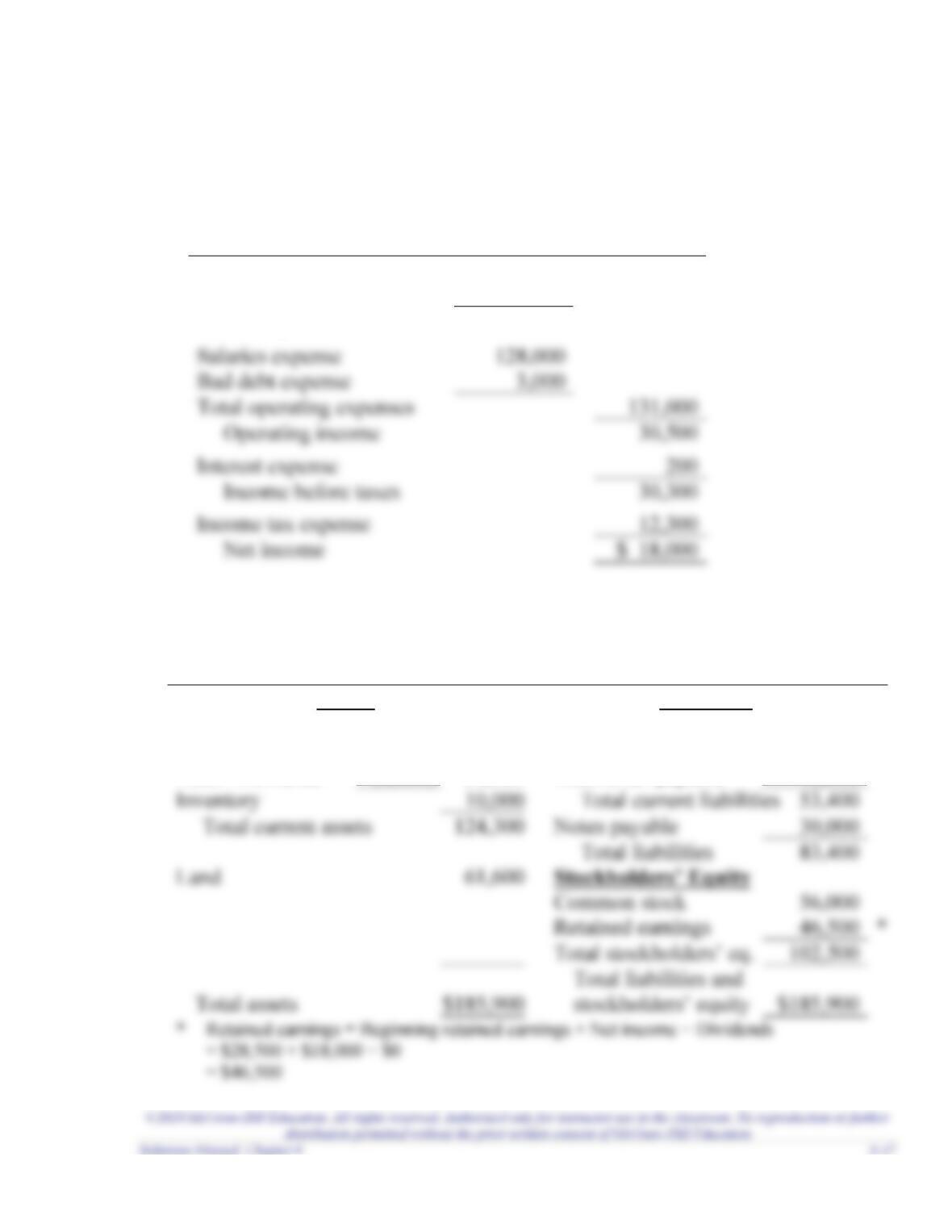
Beginning balance in bold, entries during January in blue,
and adjusting entries in red.
Cash
$ 63,900
=
21,900+580,000−410,000−128,000
Accounts Receivable
54,000
=
36,500+600,000−580,000−2,500
Inventory
10,000
=
30,000+126,000+143,000+161,000−437,000−11,500−1,500
Land
61,600
=
61,600
Allow for Uncoll Accts
3,600
=
3,100−2,500+3,000
Accounts Payable
40,900
=
32,400+126,000+143,000+161,000−410,000−11,500
Interest Payable
=
Income Tax Payable
12,300
=
Notes Payable
30,000
=
30,000
Common Stock
56,000
=
Retained Earnings
28,500
=
Sales Revenue
600,000
=
Cost of Goods Sold
438,500
=
Salaries Expense
128,000
=
Bad Debt Expense
3,000
=
Interest Expense
=
Income Tax Expense
12,300
=
Chapter 6 – Inventory and Cost of Goods Sold
Exercise 6-21 (continued)
Requirement 4
Big Blast Fireworks
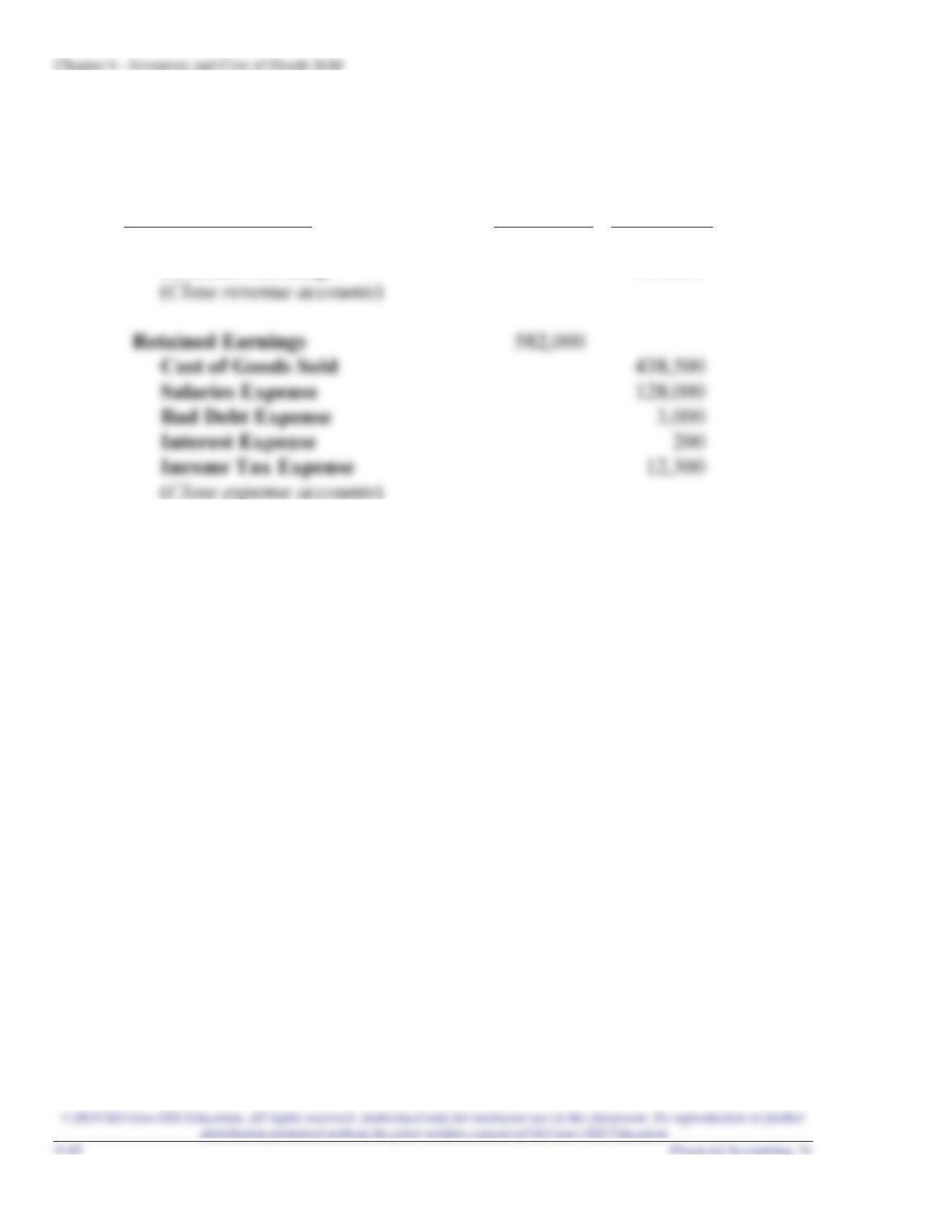
Multiple-Step Income Statement
For the year ended January 31, 2021
Sales revenue
$600,000
Cost of goods sold
438,500
Gross profit
$161,500
Salaries expense
128,000
Total operating expenses
Interest expense
Income tax expense
Requirement 5
Big Blast Fireworks
Classified Balance Sheet
January 31, 2021
Assets
Liabilities
Cash
$ 63,900
Accounts payable
$ 40,900
Accounts receivable
54,000
Interest payable
200
Less: Allowance
(3,600)
50,400
Income tax payable
12,300
Inventory
10,000
53,400
Notes payable
30,000
83,400
Land
61,600
Retained earnings
*
Total assets
$185,900
Exercise 6-21 (continued)
Requirement 6
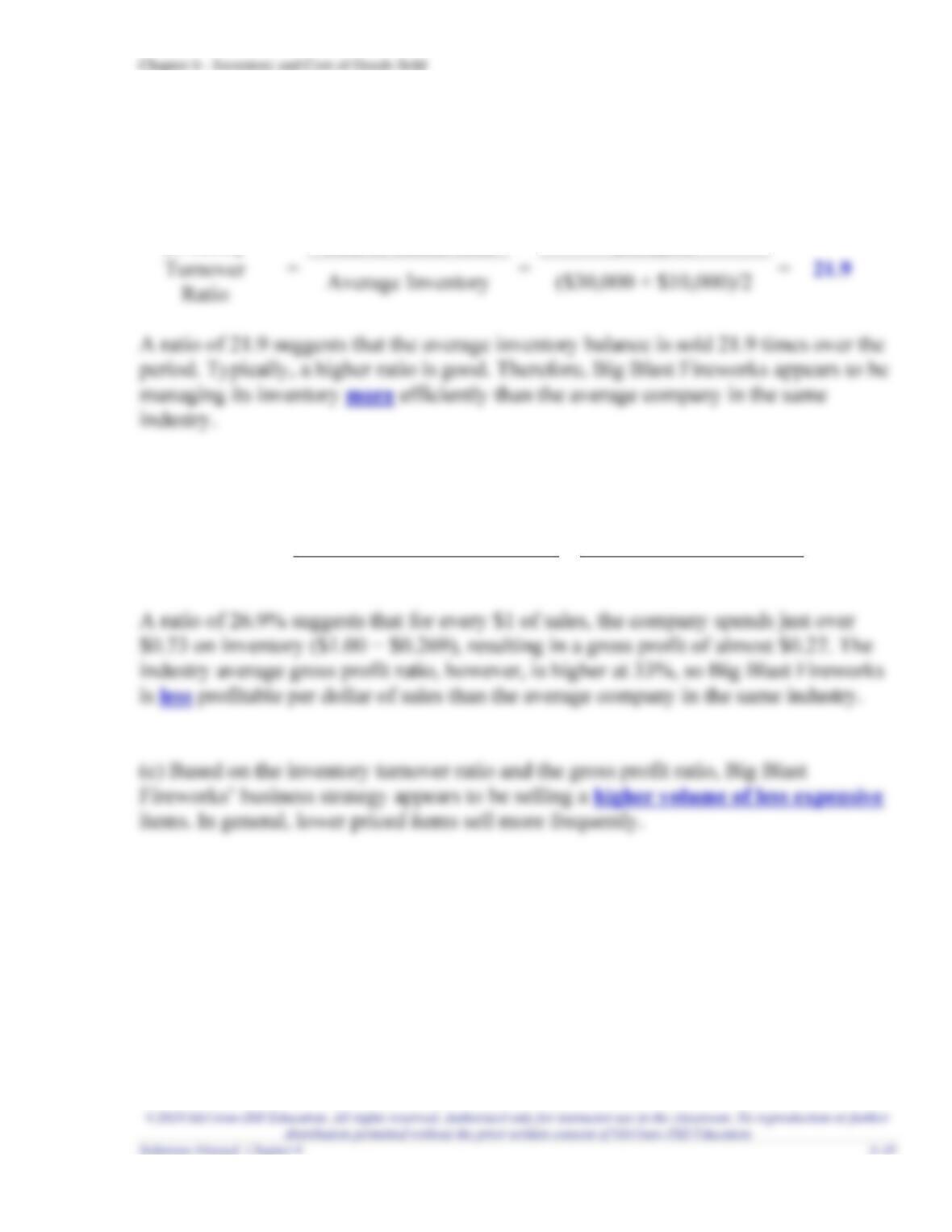
January 31, 2021
Debit
Credit
Sales Revenue
600,000
Retained Earnings
600,000
Retained Earnings
582,000
Salaries Expense
128,000
Bad Debt Expense
Interest Expense
Income Tax Expense
Exercise 6-21 (concluded)
Requirement 7
(a) The inventory turnover ratio is:
Inventory
Cost of Goods Sold
$438,500
(b) The gross profit ratio is:
Gross Profit
Ratio
=
(Sales − Cost of Goods Sold)
=
($600,000 − $438,500)
=
26.9%
Sales
$600,000
Chapter 6 – Inventory and Cost of Goods Sold
6-50 Financial Accounting, 5e
PROBLEMS: SET A
Problem 6-1A (LO 6-3)
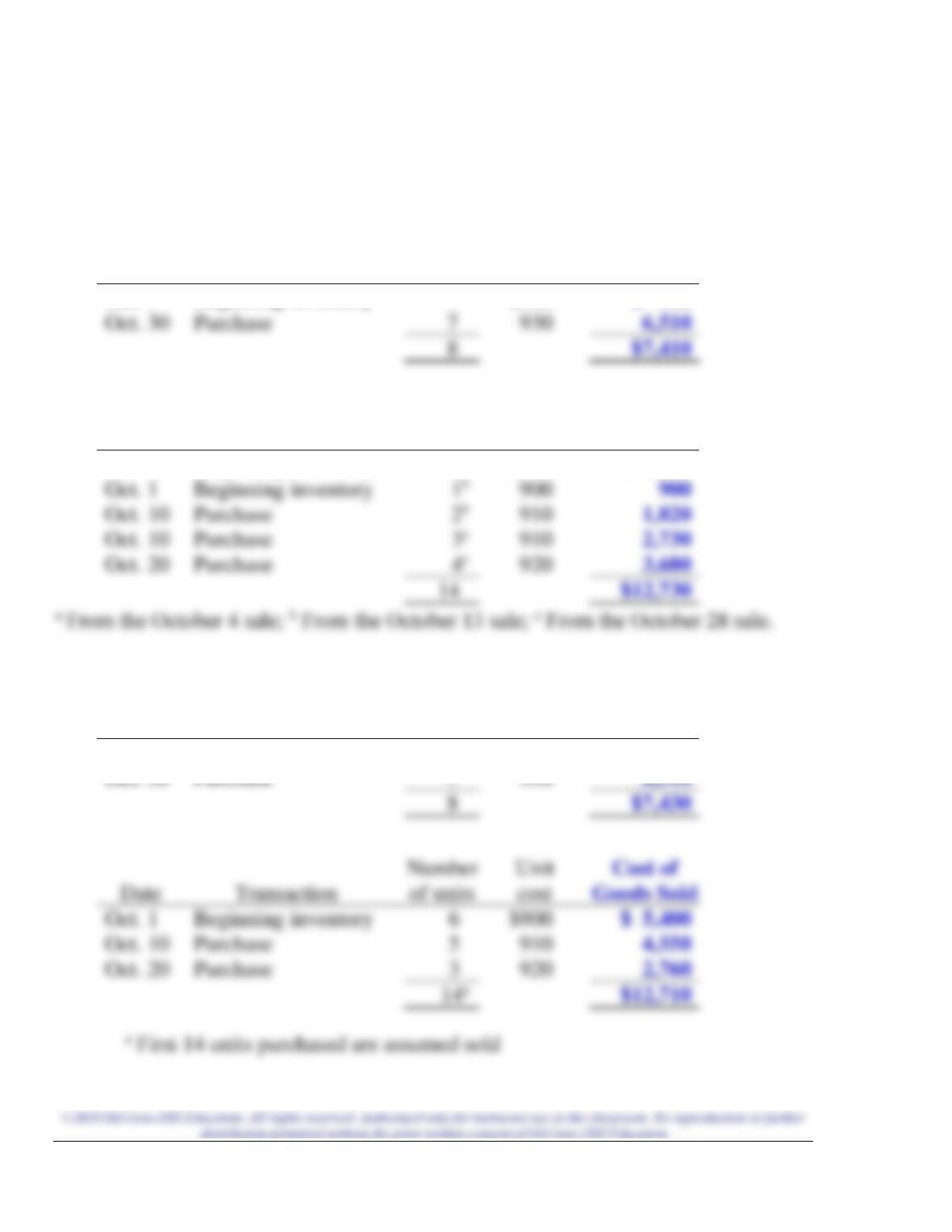
Requirement 1 Specific identification
Date
Transaction
Number
of units
Unit
cost
Ending
Inventory
Oct. 1
Beginning inventory
1
$900
$ 900
Oct. 30
Purchase
7
Date
Transaction
Number
of units
Unit
cost
Cost of
Goods Sold
Oct. 1
Beginning inventory
4a
$900
$ 3,600
Oct. 1
Beginning inventory
1b
Oct. 10
Purchase
Oct. 10
Purchase
Oct. 20
Purchase
4c
Requirement 2 FIFO
Date
Transaction
Number
of units
Unit
cost
Ending
Inventory
Oct. 20
Purchase
1
$920
$ 920
Oct. 30
Purchase
7
8
Date
Transaction
Number
of units
Unit
cost
Cost of
Goods Sold
Oct. 1
Beginning inventory
$900
$ 5,400
Oct. 20
Purchase
Chapter 6 – Inventory and Cost of Goods Sold
Problem 6-1A (concluded)
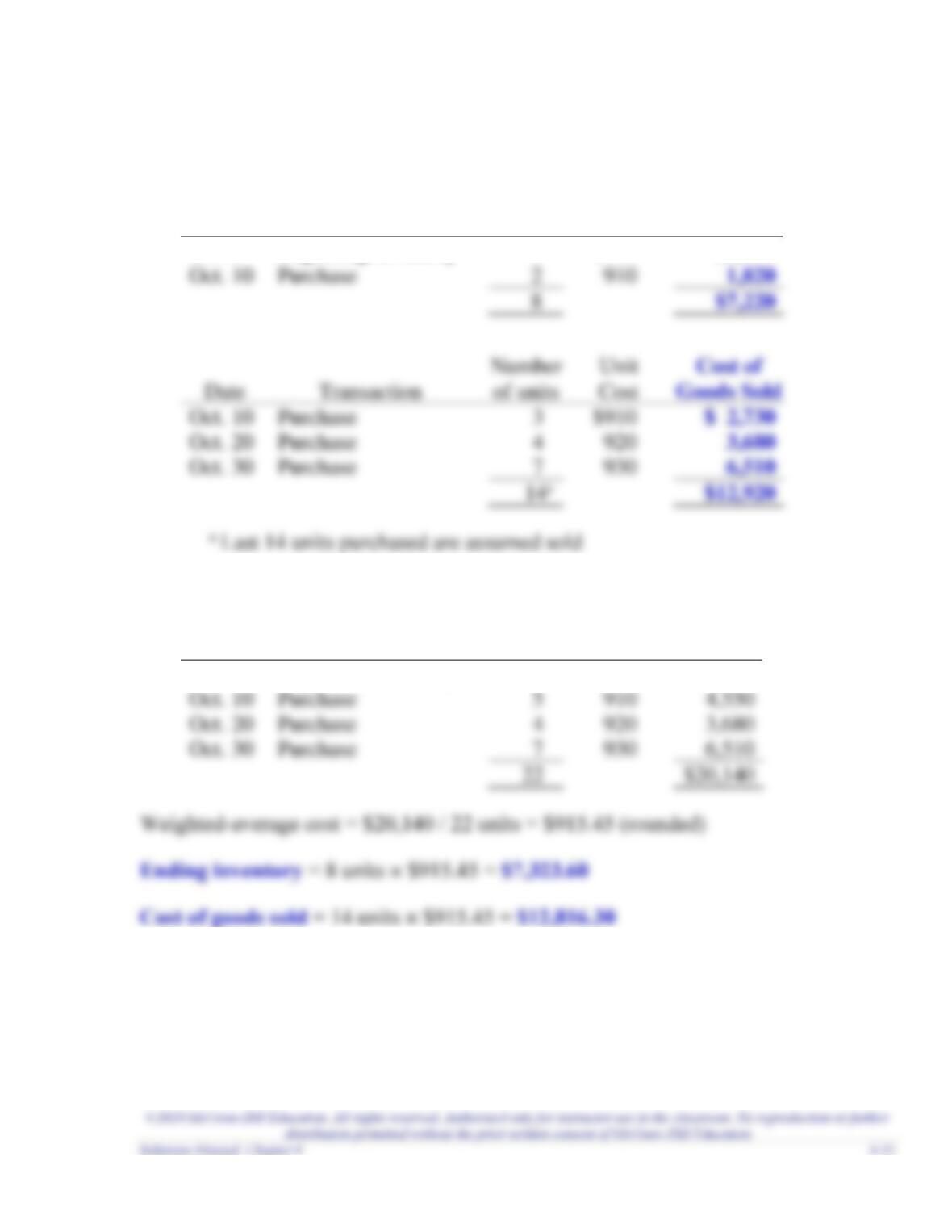
Requirement 3 LIFO
Date
Transaction
Number
of units
Unit
Cost
Ending
Inventory
Oct. 1
Beginning inventory
6
$900
$5,400
Oct. 10
Purchase
Date
Transaction
of units
Cost
Oct. 10
Purchase
3
$910
Oct. 20
Purchase
4
Oct. 30
Purchase
Requirement 4 Weighted average
Date
Transaction
Number
of units
Unit
cost
Total
Cost
Oct. 1
Beginning inventory
6
$900
$ 5,400
Oct. 10
Purchase
5
Oct. 20
Purchase
4
Oct. 30
Purchase
7
Chapter 6 – Inventory and Cost of Goods Sold
Problem 6-2A (LO 6-3, 6-4, 6-5)
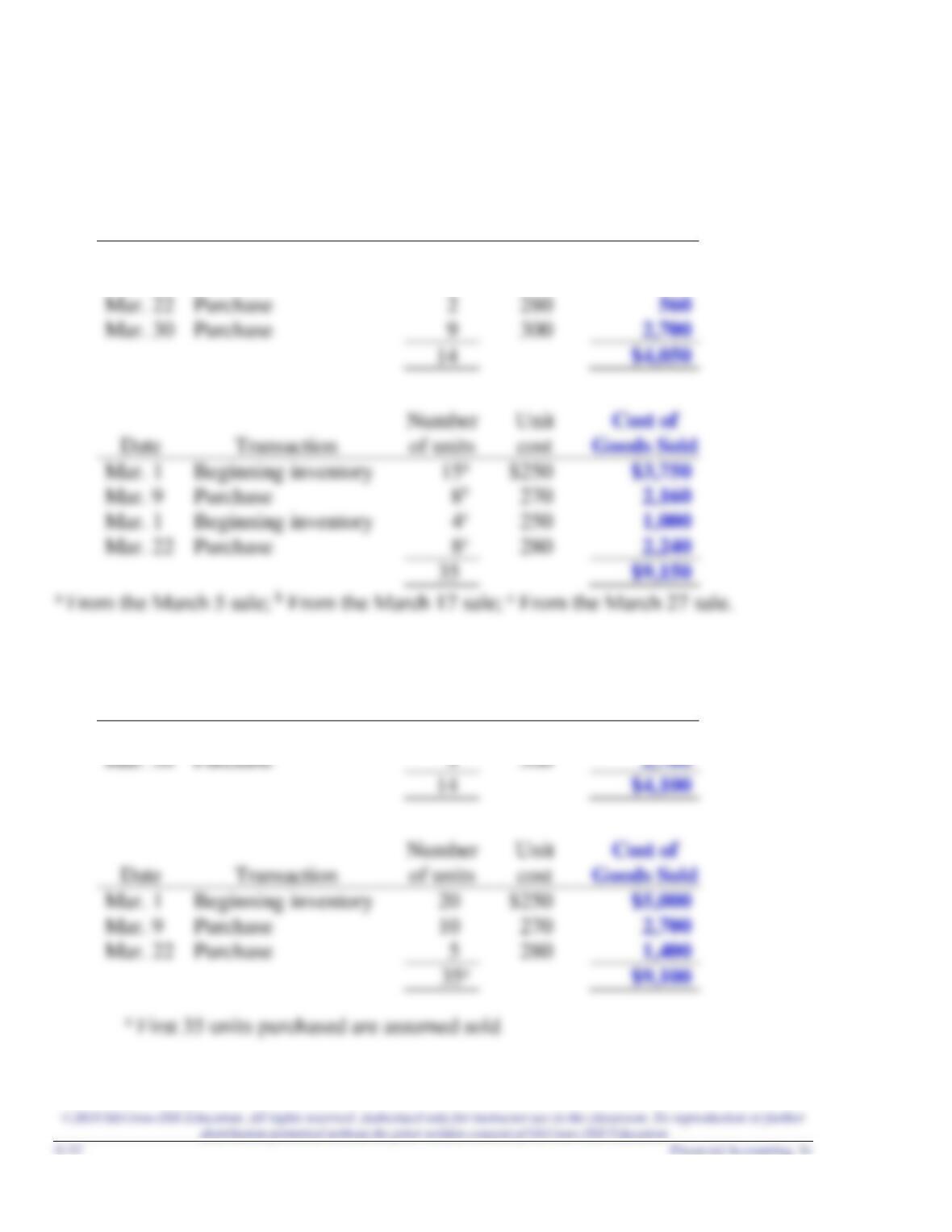
Requirement 1 Specific identification
Date
Transaction
Number
of units
Unit
cost
Ending
Inventory
Mar. 1
Beginning inventory
1
$250
$ 250
Mar. 9
Purchase
2
270
540
Mar. 22
Purchase
2
280
Date
Transaction
Number
of units
Unit
cost
Mar. 1
Beginning inventory
$250
$3,750
Mar. 9
Purchase
270
Mar. 1
Beginning inventory
250
Requirement 2 FIFO
Date
Transaction
Number
of units
Unit
cost
Ending
Inventory
Mar. 22
Purchase
5
$280
$1,400
Mar. 30
Purchase
9
Date
Transaction
of units
cost
Mar. 9
Purchase
270
Purchase
280
$9,100
Chapter 6 – Inventory and Cost of Goods Sold
Problem 6-2A (continued)
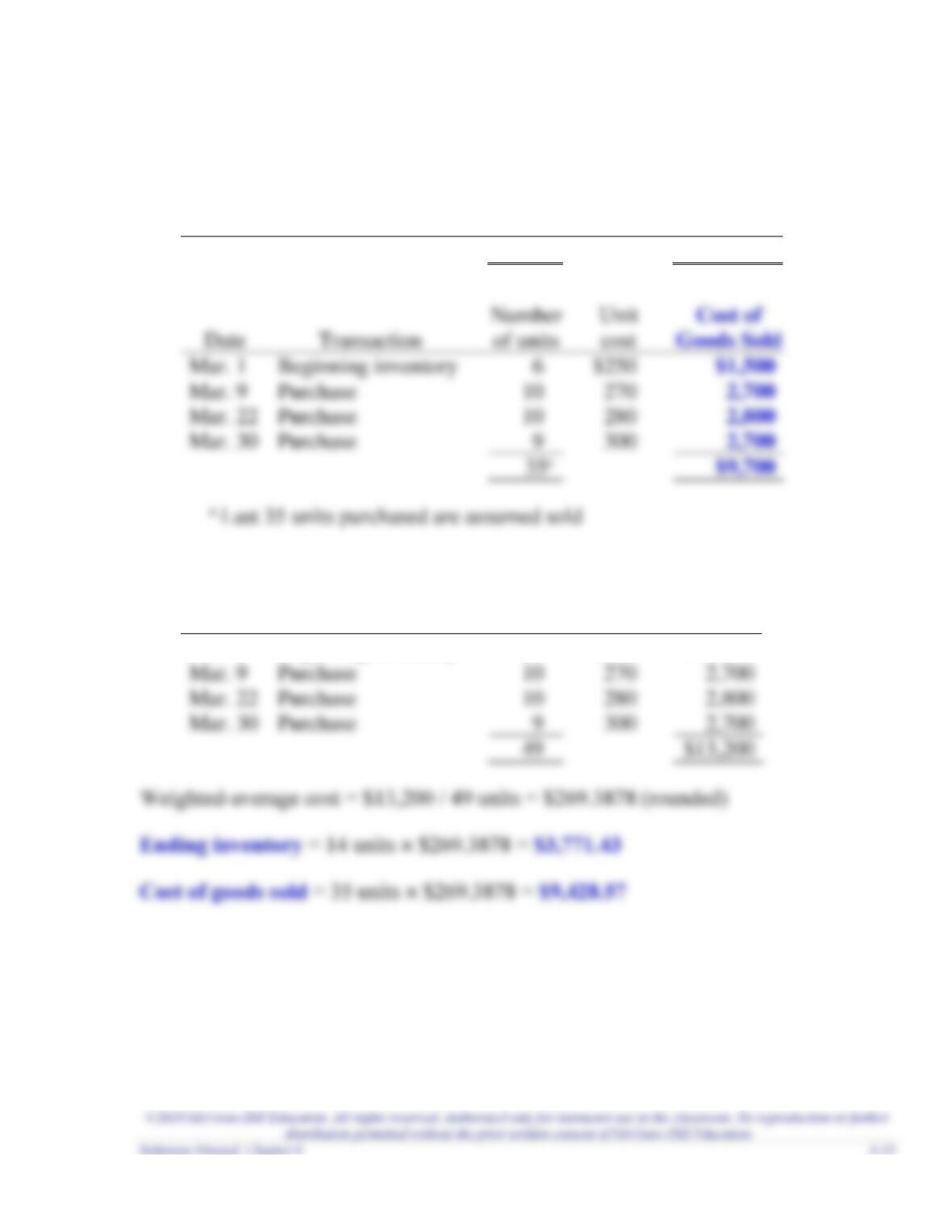
Requirement 3 LIFO
Date
Transaction
Number
of units
Unit
cost
Ending
Inventory
Mar. 1
Beginning inventory
14
$250
$3,500
Date
Transaction
Number
of units
Unit
cost
Mar. 1
Beginning inventory
$250
Mar. 9
Purchase
10
Mar. 22
Purchase
10
Mar. 30
Purchase
$9,700
Requirement 4 Weighted average
Date
Transaction
Number
of units
Unit
cost
Total
Cost
Mar. 1
Beginning inventory
20
$250
$ 5,000
Mar. 9
Purchase
10
Mar. 22
Purchase
10
Mar. 30
Purchase
6-54 Financial Accounting, 5e
Problem 6-2A (concluded)
Requirement 5
Specific
Identification
FIFO
LIFO
Weighted-
average
Cost
Sales revenue
$15,300
$15,300
$15,300
$15,300.00
Cost of goods sold
Gross profit
Requirement 6
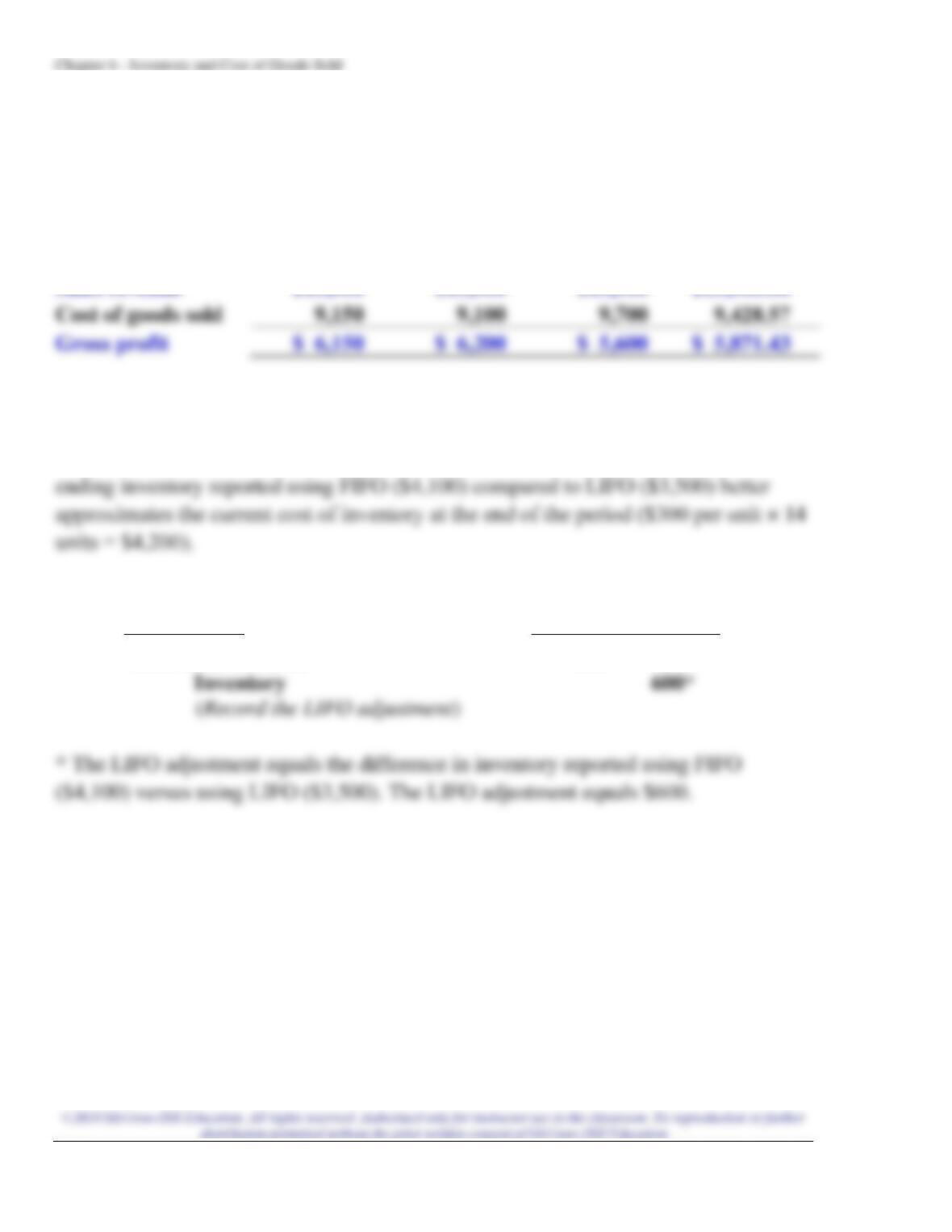
FIFO provides the more meaningful measure of ending inventory. The amount of
Requirement 7
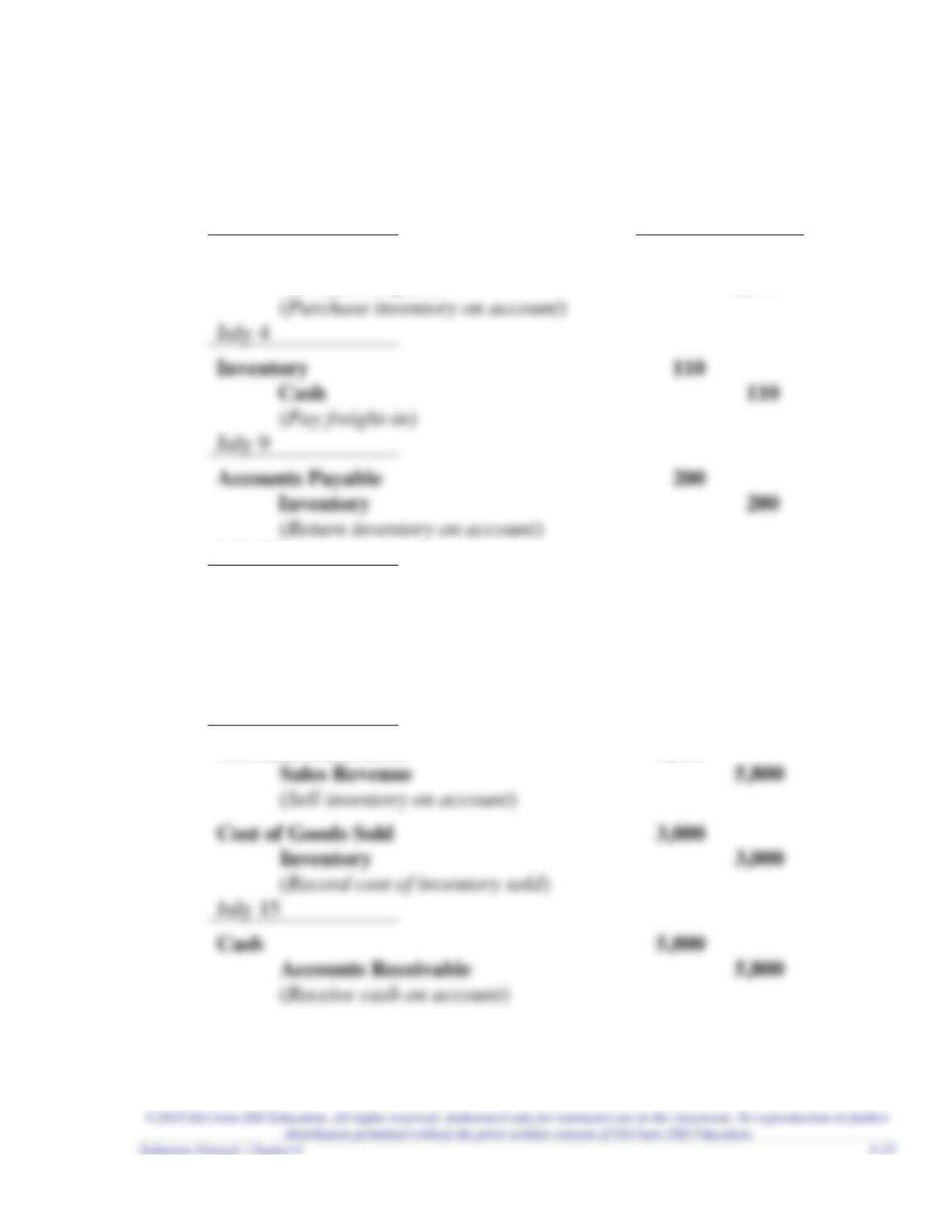
March 31
Debit
Credit
Cost of Goods Sold
600
Chapter 6 – Inventory and Cost of Goods Sold
Problem 6-3A (LO 6-2, 6-5)
Requirement 1
July 3
Debit
Credit
Inventory
2,300
Accounts Payable
2,300
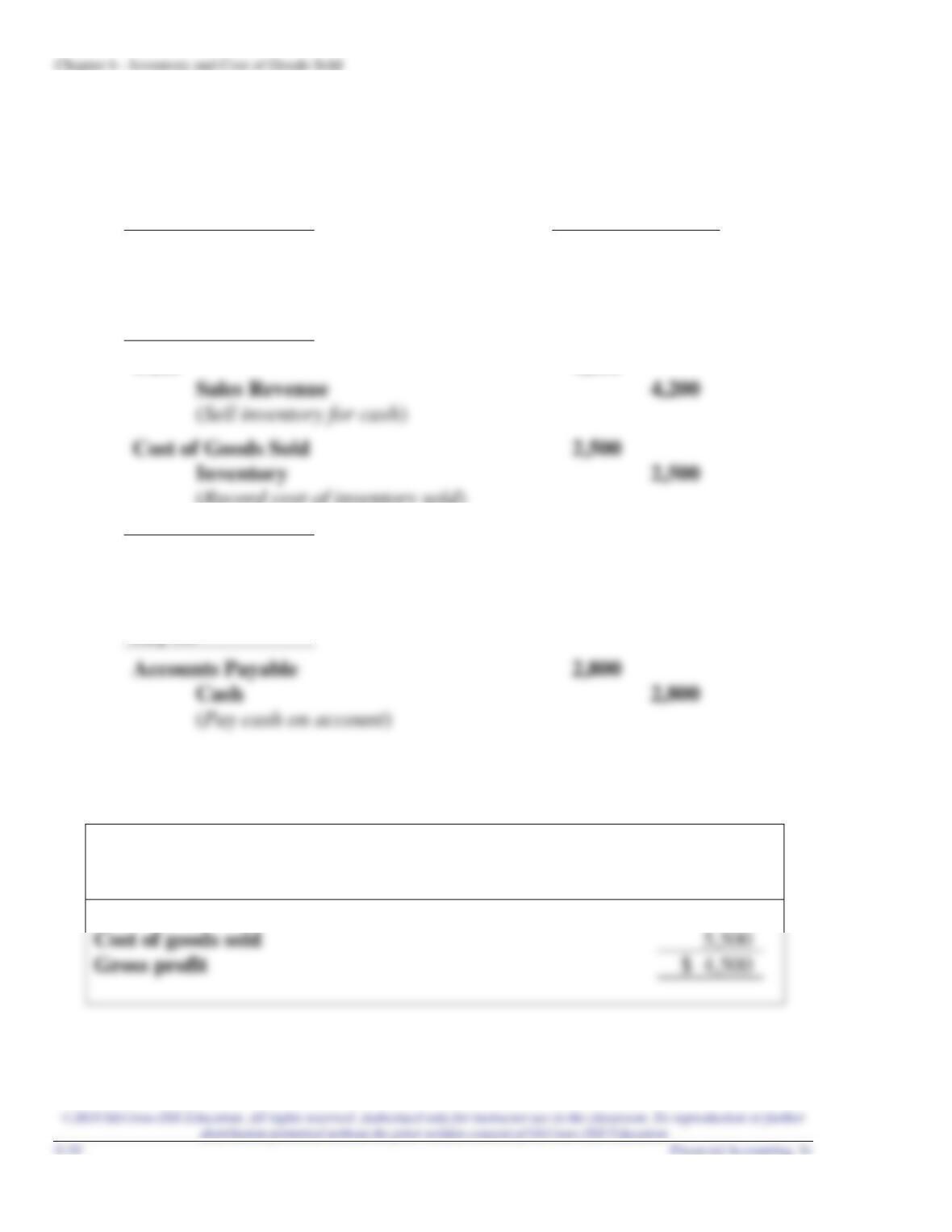
July 4
Inventory
Cash
July 9
Inventory
July 11
Accounts Payable
2,100
Inventory
21
Cash
2,079
(Pay on account less 1% discount)
($21 = $2,100 × 1%)
July 12
Accounts Receivable
5,800
Sales Revenue
5,800
Cost of Goods Sold
3,000
Inventory
July 15
Cash
5,800
Accounts Receivable
Problem 6-3A (concluded)
Requirement 1 (continued)
July 18
Debit
Credit
Inventory
3,100
Accounts Payable
3,100
(Purchase inventory on account)
July 22
Cash
4,200
Sales Revenue
Cost of Goods Sold
Inventory
(Record cost of inventory sold)
July 28
Accounts Payable
300
Inventory
300
(Return inventory on account)
July 30
Accounts Payable
Cash
Requirement 2
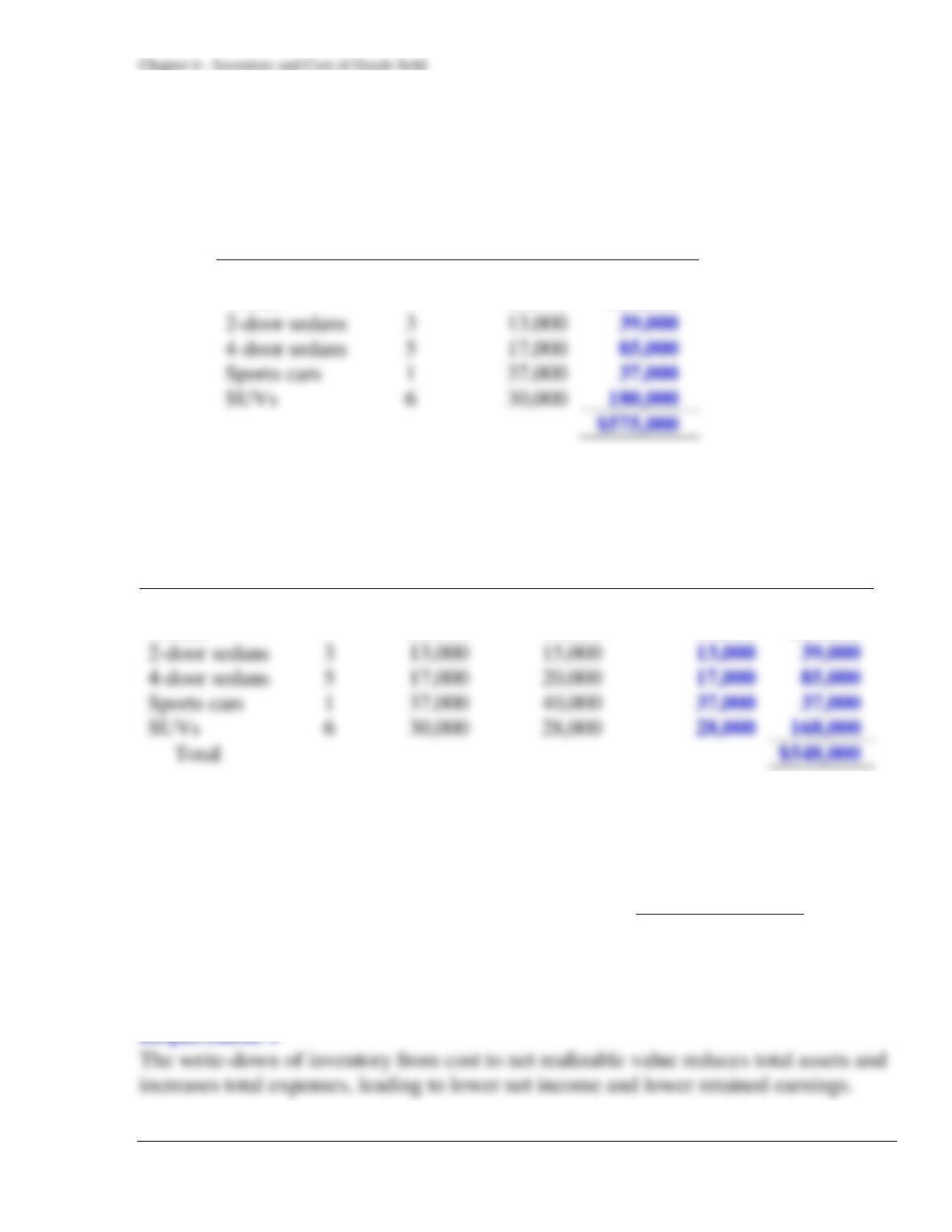
CD City
Multiple-step Income Statement (partial)
For the month of July
Net sales
$10,000
Cost of goods sold
Gross profit
©2019 McGraw-Hill Education. All rights reserved. Authorized only for instructor use in the classroom. No reproduction or further
distribution permitted without the prior written consent of McGraw-Hill Education
Solutions Manual, Chapter 6 6-57
Problem 6-4A (LO 6-6)
Requirement 1
Inventory
items
Quantity
Unit
Cost
Total
Cost
Vans
4
$27,000
$108,000
Trucks
7
18,000
126,000
4-door sedans
5
17,000
Sports cars
1
37,000
SUVs
6
180,000
Requirement 2
Inventory
items
Quantity
Unit
Cost
Unit
NRV
Lower of
Cost and
NRV
per unit
Total
Vans
4
$27,000
$25,000
$25,000
$100,000
Trucks
7
18,000
17,000
17,000
119,000
2-door sedans
3
13,000
15,000
13,000
Sports cars
1
37,000
37,000
SUVs
6
28,000
28,000
Requirement 3
Because the total of lower of cost and net realizable value ($548,000) is less than total
cost ($575,000), inventory is written down for the difference ($27,000).
Debit
Credit
Cost of Goods Sold
27,000
Inventory
27,000
(Write down inventory to net realizable value)
6-58 Financial Accounting, 5e
Problem 6-5A (LO 6-3, 6-6)
Requirement 1 FIFO
Date
Transaction
Number
of units
Unit
cost
Ending
Inventory
Mar. 12
Purchase
40
$16
$ 640
Sep. 17
Purchase
60
9
540
100
$1,180
Date
Transaction
of units
Jan. 1
Beginning inventory
$21
Mar. 12
Purchase
Requirement 2 LIFO
Date
Transaction
Number
of units
Unit
cost
Ending
Inventory
Jan. 1
Beginning inventory
100
$21
$2,100
Date
Transaction
Number
of units
Unit
cost
Jan. 1
Beginning inventory
$21
Mar. 12
Purchase
Sep. 17
Purchase
9
Chapter 6 – Inventory and Cost of Goods Sold
Problem 6-5A (concluded)
Requirement 3
Ending Inventory
FIFO
FIFO
Debit
Credit
Chapter 6 – Inventory and Cost of Goods Sold
Problem 6-6A (LO 6-2, 6-3, 6-4, 6-5, 6-6)
Requirement 1
October 4
Debit
Credit
Inventory
6,500
Accounts Payable
(Purchase inventory on account)
October 5
Inventory
Cash
(Pay freight-in)
October 9
Accounts Payable
500
Inventory
500
(Return inventory on account)
October 12
Accounts Payable
6,000
Inventory
120
Cash
5,880
(Pay on account less 2% discount)
($120 = $6,000 × 2%)
October 15
Accounts Receivable
Sales Revenue
(Sell inventory on account)
Cost of Goods Sold
Inventory
($8,440 = ($50 × 50 units) + ($54 × 110 units))
October 19
Cash
Accounts Receivable
(Receive cash on account)