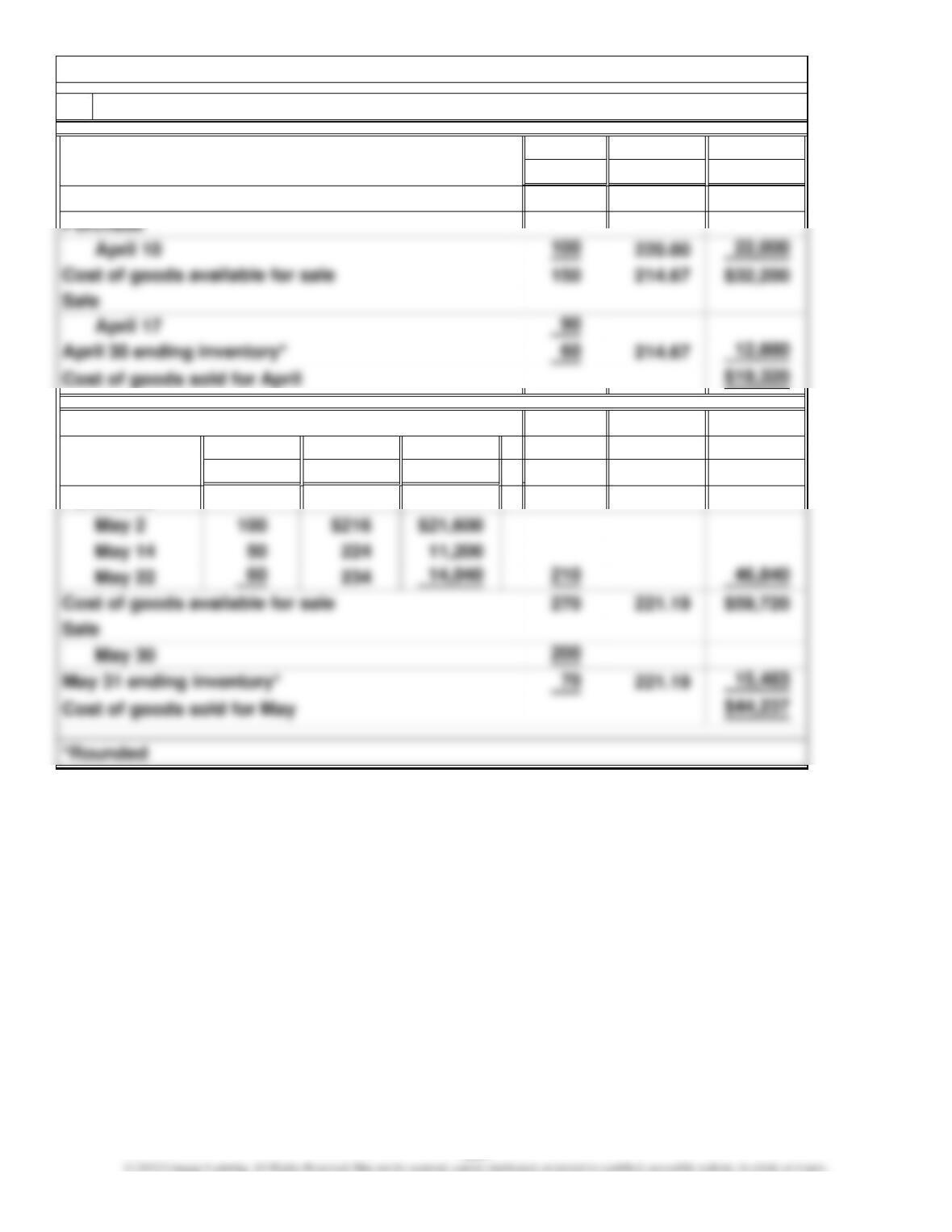
1.
Unit
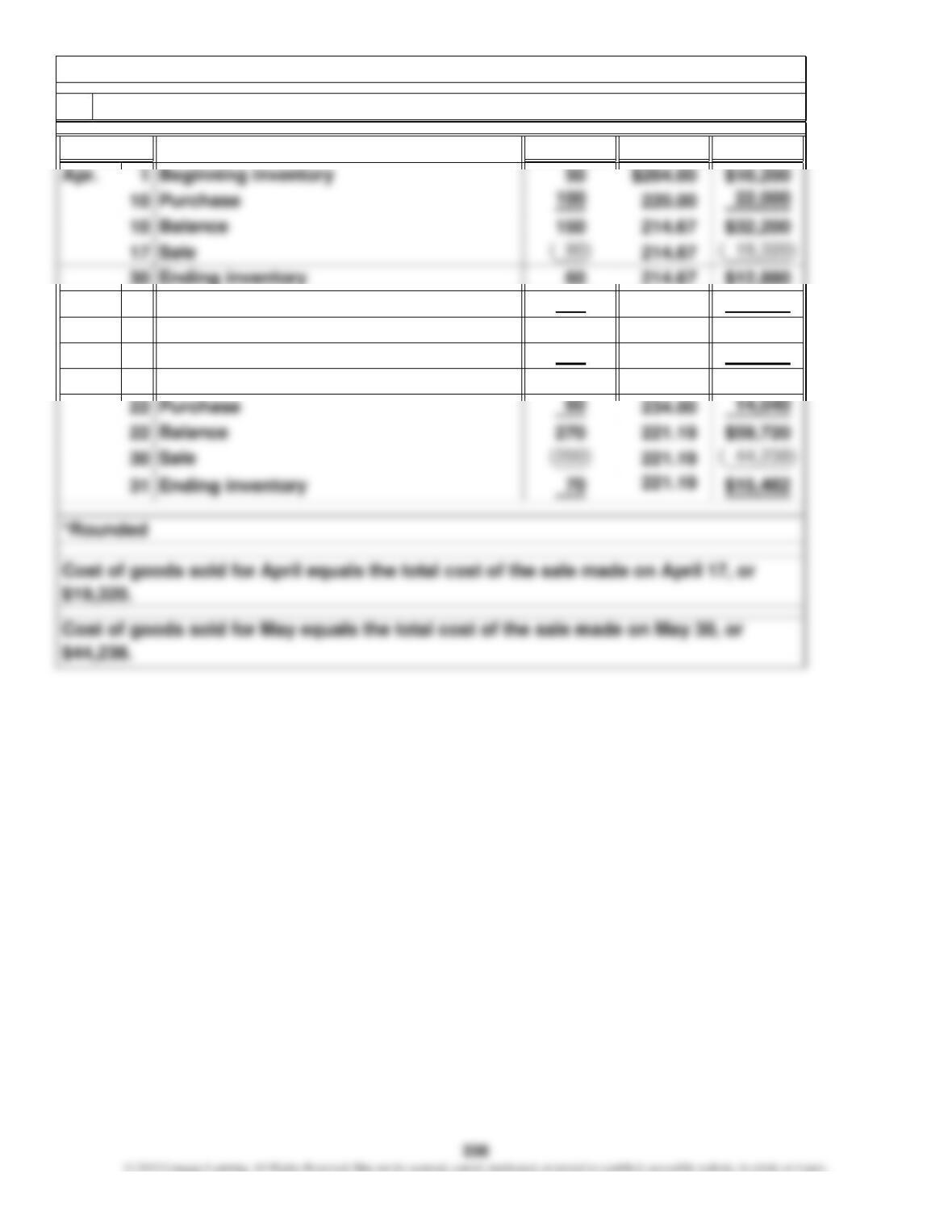
Units Price* Amount
50 $204.00 $10,200
60 $214.67 $12,880
Unit
Units Price Amount
April 1 beginning inventory
Periodic inventory system—average-cost method
Chapter 6, P 7.
May 1 beginning inventory
Purchases
334
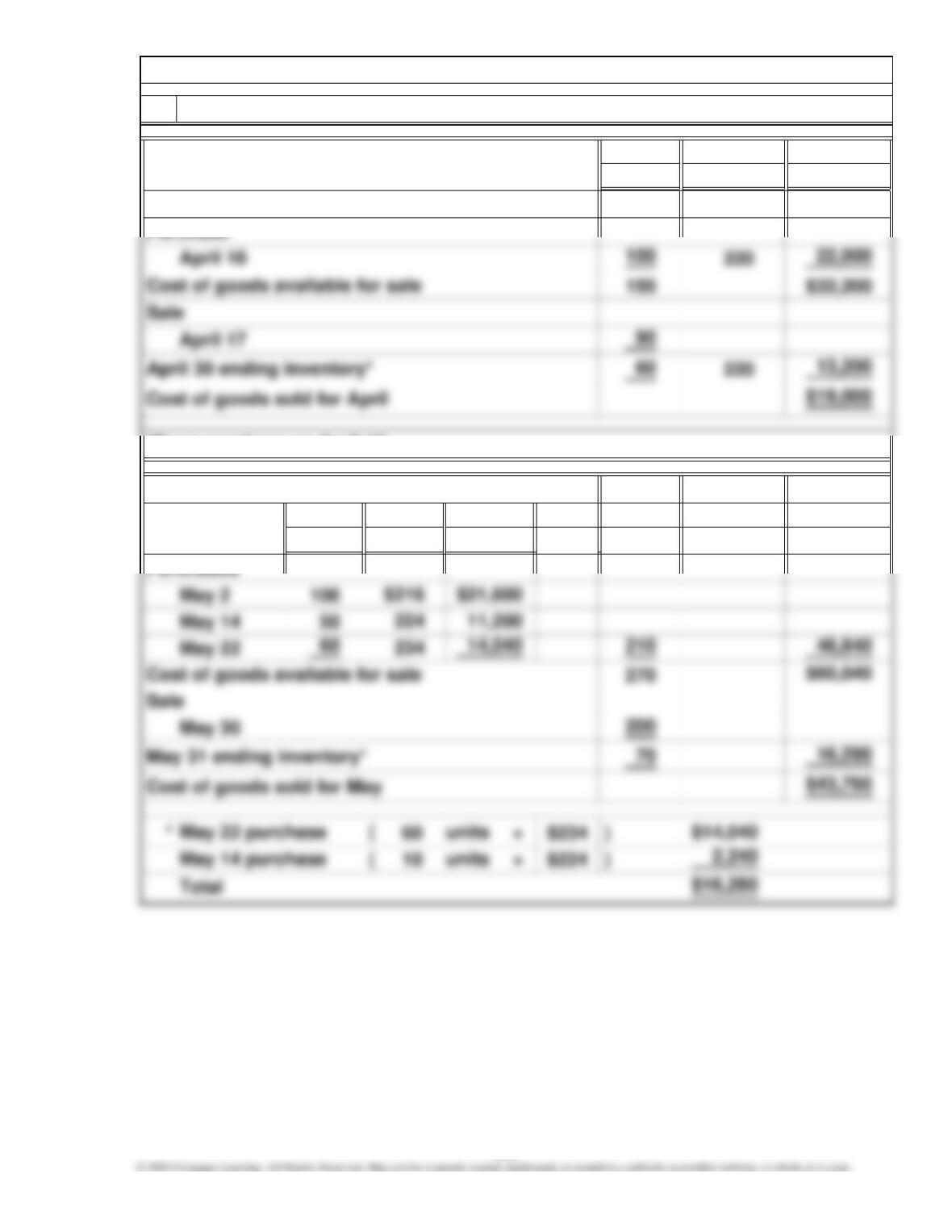
Unit
Units Price Amount
50 $204 $10,200
60 $220 $13,200
Units
Amount
*From purchase on April 10
April 1 beginning inventory
Chapter 6, P 7. (Continued)
Periodic inventory system—FIFO method2.
Unit
Price
May 1 beginning inventory
335
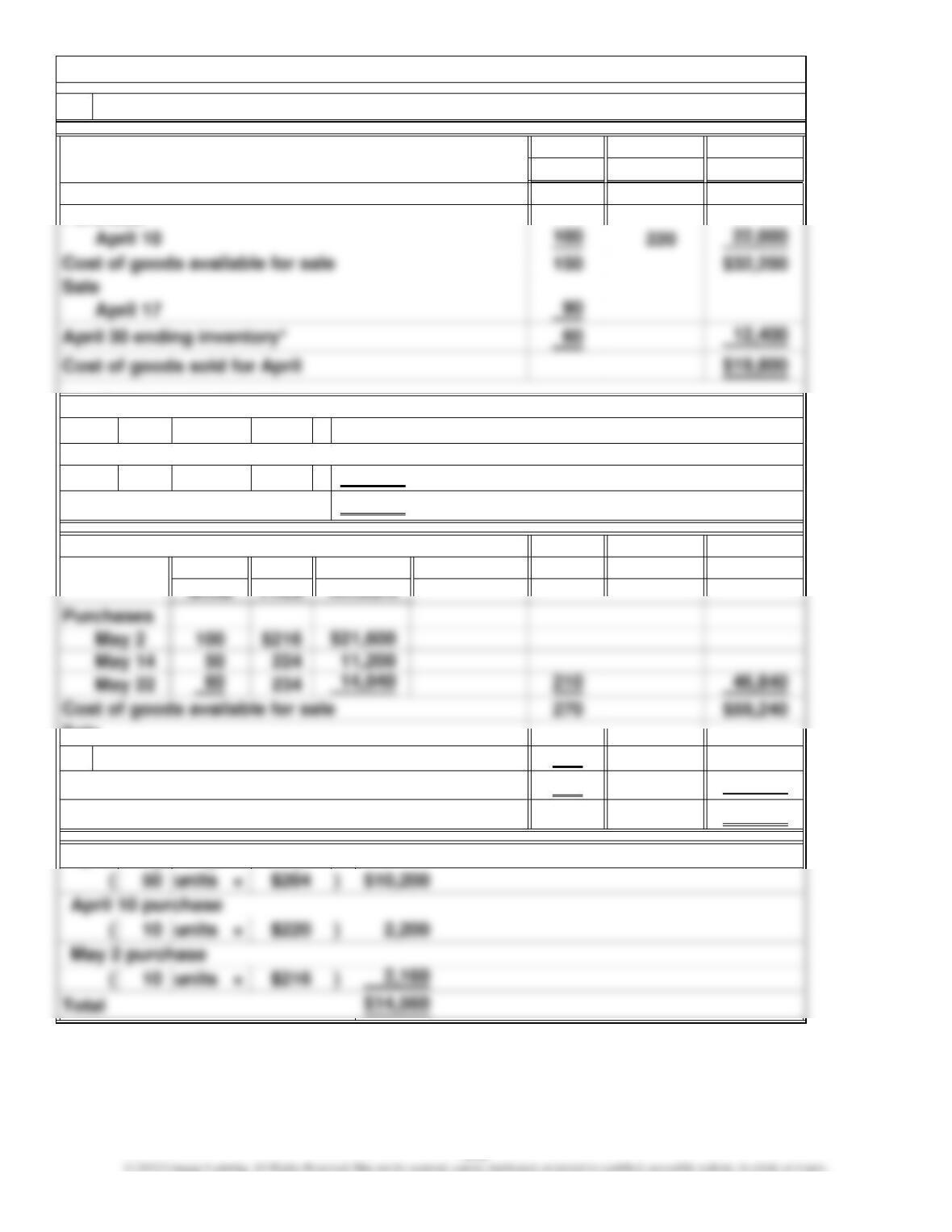
Unit
Units Price Amount
50 $204 $10,200
$204
$220
60 $12,400
Unit
200
70 14,560
$44,680
*April 1 beginning inventory
Amount
2,200
Total
May 1 beginning inventory
50 $10,200
)
Sale
units ×
10
$12,400
)
(
(
April 10 purchase
May 30
Cost of goods sold for May
May 31 ending inventory*
Chapter 6, P 7. (Continued)
*April 1 beginning inventory
Periodic inventory system—LIFO method
April 1 beginning inventory
Purchase
units ×
3.
336
4. User Insight: Effects on cash flows discussed
Chapter 6, P 7. (Continued)
The inventory costing method chosen by a company does not affect cash flows
from operations from the purchase and sale of goods because the amount actually
1.
Units Cost* Amount*
2100 216.00 21,600
2 160 215.50 $34,480
14 50 224.00 11,200
14 210 217.52 $45,680
Chapter 6, P 8.
Date
Purchase
Balance
May
Purchase
Balance
Perpetual inventory system—average-cost method
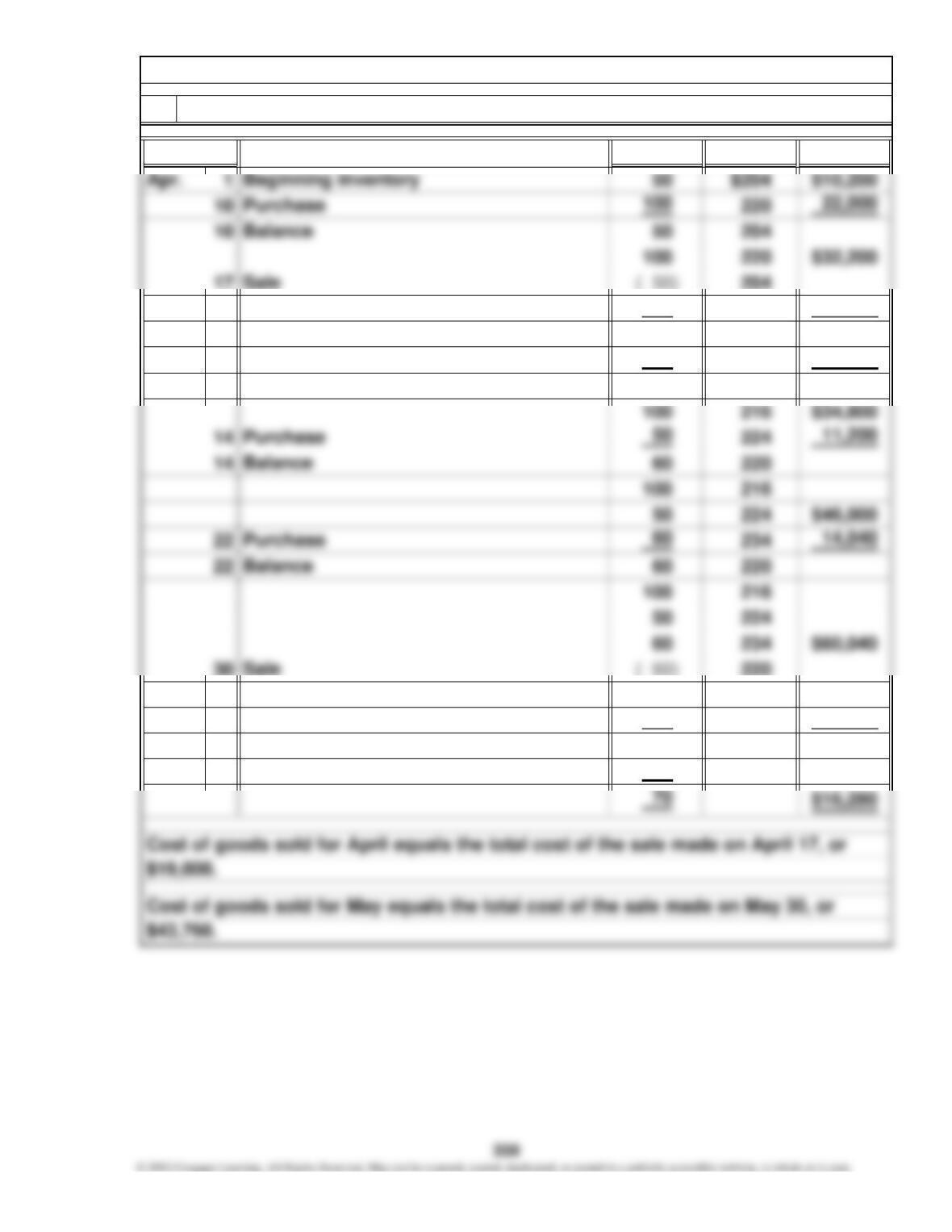
Units Cost Amount
( 40) 220 ( 19,000)
30 60 220 $13,200
2100 216 21,600
2 60 220
(100) 216
( 40) 224 ( 43,760)
31 10 224
60 234
Date
Balance
Perpetual inventory system—FIFO method
Ending inventory
Chapter 6, P 8. (Continued)
2.
May
Ending inventory
Purchase
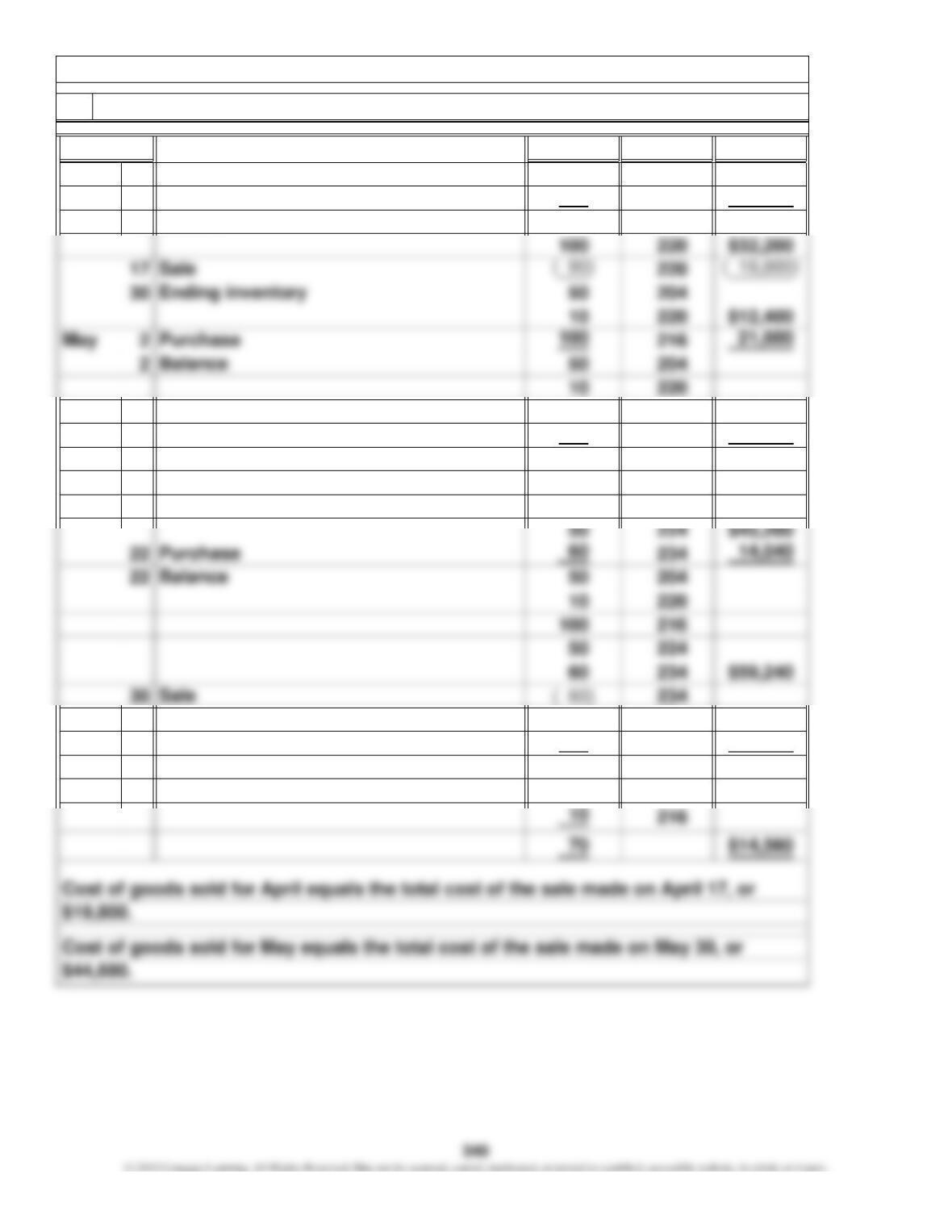
Units Cost Amount
1 50 $204 $10,200
10 100 220 22,000
10 50 204
100 216 $34,000
14 50 224 11,200
14 50 204
10 220
100 216
( 50) 224
( 90) 216 ( 44,680)
31 50 204
10 220
Chapter 6, P 8. (Continued)
Beginning inventory
3.
Date
Perpetual inventory system—LIFO method
Apr.
Ending inventory
Purchase
Balance
Purchase
Balance
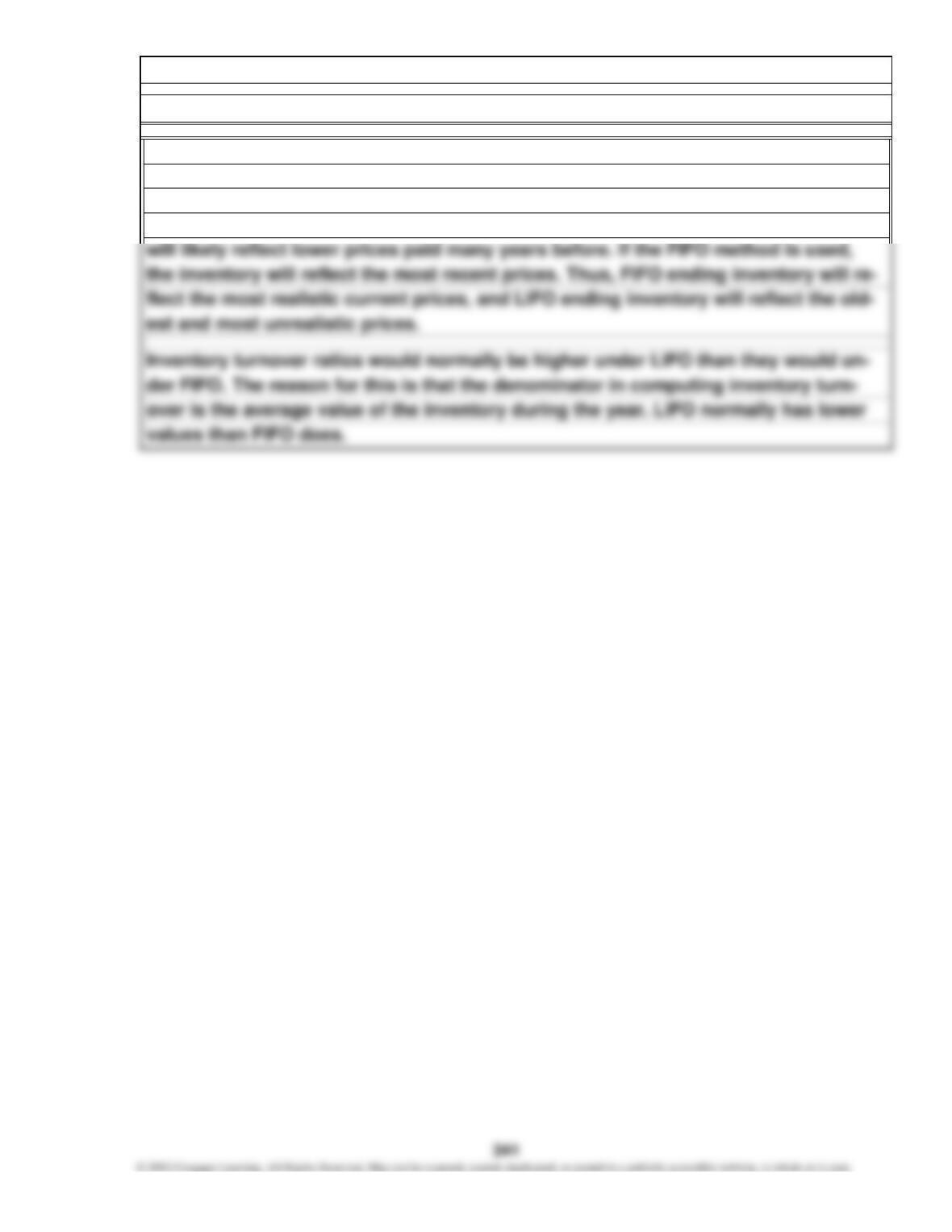
if the company uses the average-cost method, the inventory should reflect the aver-
age price paid over the past year. If the LIFO method is used, the inventory prices
Chapter 6, P 8. (Continued)
4. User Insight: Inventory valuation discussed
In a long period of rising prices, how realistic the inventory value of the balance
sheet is will depend on the inventory method used by the company. For instance,
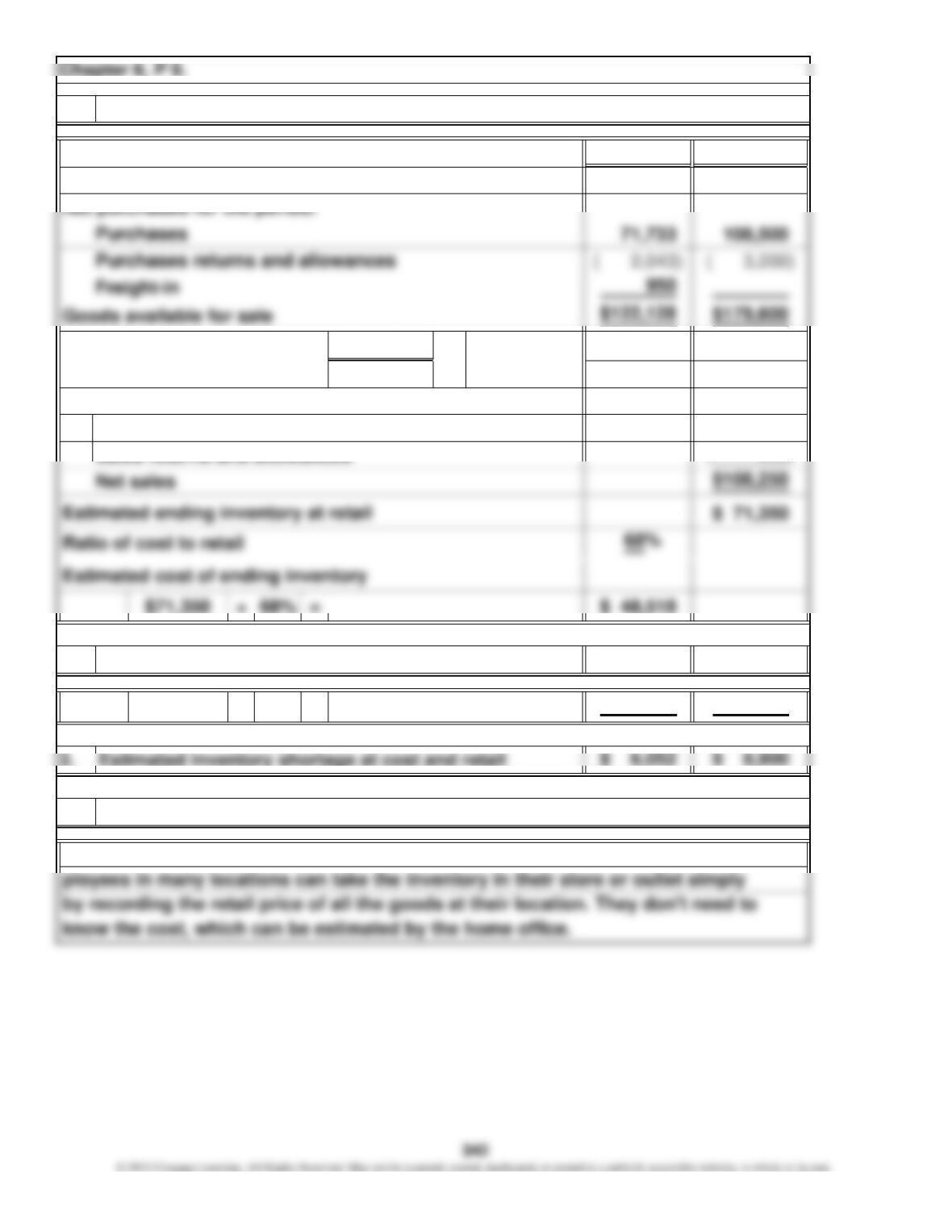
Cost Retail
$ 51,488 $ 74,300
$122,128
$179,600
$109,183
( 933)
$62,450 × 68% = 42,466 62,450
2.
User Insight: Retail method discussed
Beginning inventory
68%
The retail method is an efficient way for companies to operate because sales em-
Month-end inventory at cost estimated1.
Ratio of cost to retail price:
August 31 physical inventory
=
4.
Net sales during the period:
Sales
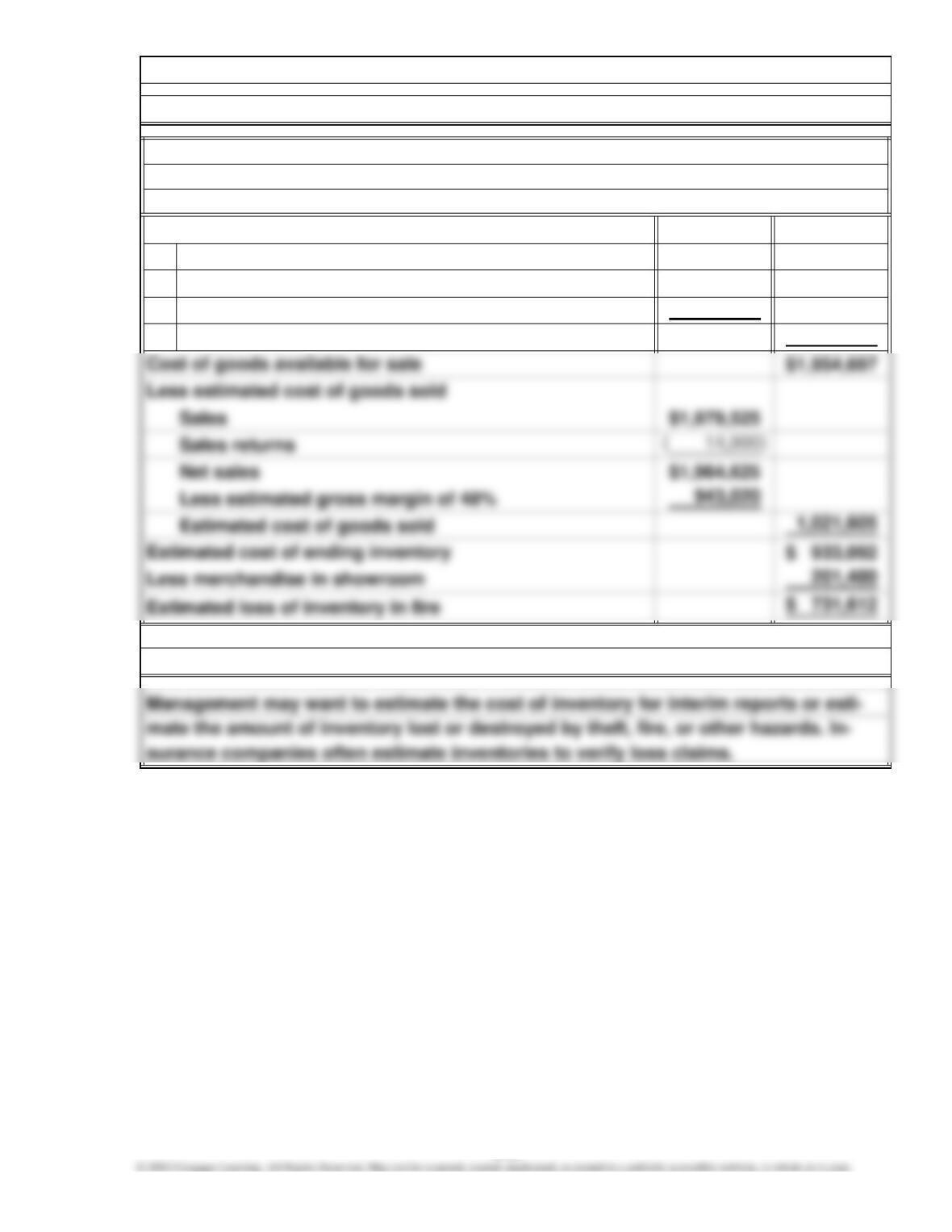
$ 727,400
Purchases at cost $1,206,100
Purchases returns ( 5,353)
Freight-in 26,550
Net purchases 1,227,297
2. User Insight: Reasons for estimating inventory
Schedule to Estimate Inventory Destroyed
May 5, 2011
Pearly Tooth Corporation
Beginning inventory at cost
Chapter 6, P 10.
1. Inventory loss estimated
343
obsolescence, or having more inventory than people want.
panies. Dell’s inventory management provides a challenge to JCPenney’s man-
agement, but it is probably not the best match because although they both sell
Chapter 6, C 1.
Comparison among companies is important because it enables the management
Sears.
of the companies to benchmark themselves against other well-managed com-
Since JCPenney’s inventory turnover is 3.4, its average inventory on hand is
to the end customer, the nature of their businesses is very different. JCPenney
must display inventory for customers to see and try on and is subject to seasonal
fashions. It would be more useful to compare JCPenney with a company like
1.
2.
counting periods by $52 million.
Chapter 6, C 2.
Yes, it would be expected in a company that is experiencing financial difficulty.
An overstatement of ending inventory is a way in which a company can cover
up disappointing results and inflate the reported net income. This is possible
because the amount of the overstatement is a cost that is carried forward to
The effect of an overstatement of ending merchandise inventory is to overstate
the reported net income (or reduce the net loss) of the business. In the case of
Crazy Eddie, the overstatement of inventory by $52 million means that income
before income taxes had been overstated (or losses understated) in prior ac-
of declining prices.
LIFO—or last-in, first-out—is an inventory pricing method that transfers the costs
Chapter 6, C 3.
the chemical and computer industries since an important motivation in both indus-
of the most recent purchases to cost of goods sold while retaining the costs of the
earliest purchases in ending inventory. It represents an assumption about cost flows
These tendencies explain the difference in the inventory costing methods used by
345
market value of the inventory was $325 million less than cost under the LIFO costing
method.
The inconsistency between the two years is that in the first year when the market
The LCM rule resulted in a write-down in the first year of $325 million because the
Chapter 6, C 4.
Chapter 6, C 5.
A company like ExxonMobil may choose LIFO because management believes that
LIFO is more closely tied to the reality that goods must be replaced when sold and
346
( $10,343 + ) ÷ 2
2009
CVS’s Days’ Inventory on Hand
Inventory Turnover
=$9,153
$78,349
Days’ Inventory on Hand
Number of Days in a Year
It is unlikely that very much of the inventory is valued at market. Market value would
CVS’s Inventory Turnover (dollar amounts in millions):
method. When there are no changes in prices, LIFO and FIFO will produce the same
Chapter 6, C 6.
Inventory Turnover = Cost of Goods Sold
CVS uses the lower-of-FIFO-cost-or-market rule as determined by the retail inventory
results. This is the case with CVS.
=
Average Inventory
Walgreens’ Inventory Turnover:
Average Inventory
Inventory Turnover
8.0
8.1
=Cost of Goods Sold
1. Inventory turnover and days’ inventory on hand calculated (dollar amounts in millions)
CVS’s Inventory Turnover (from C 6):
2009
2008 times
times
Walgreens’ Days’ Inventory on Hand:
CVS’s inventory turnover slightly decreased from 8.1 times in 2008 to 8.0 times in
2009, but Walgreens’ inventory turnover increased from 6.0 times in 2008 to 6.5
2. Inventory ratios discussed
348
Chapter 6, C 8.
Because the goods ordered by The Executive Woman have not been separated, they
will be included in the inventory count on December 31. If the auditors do not detect
this situation, the 2011 ending inventory will be overstated. This overcounting, com-
349
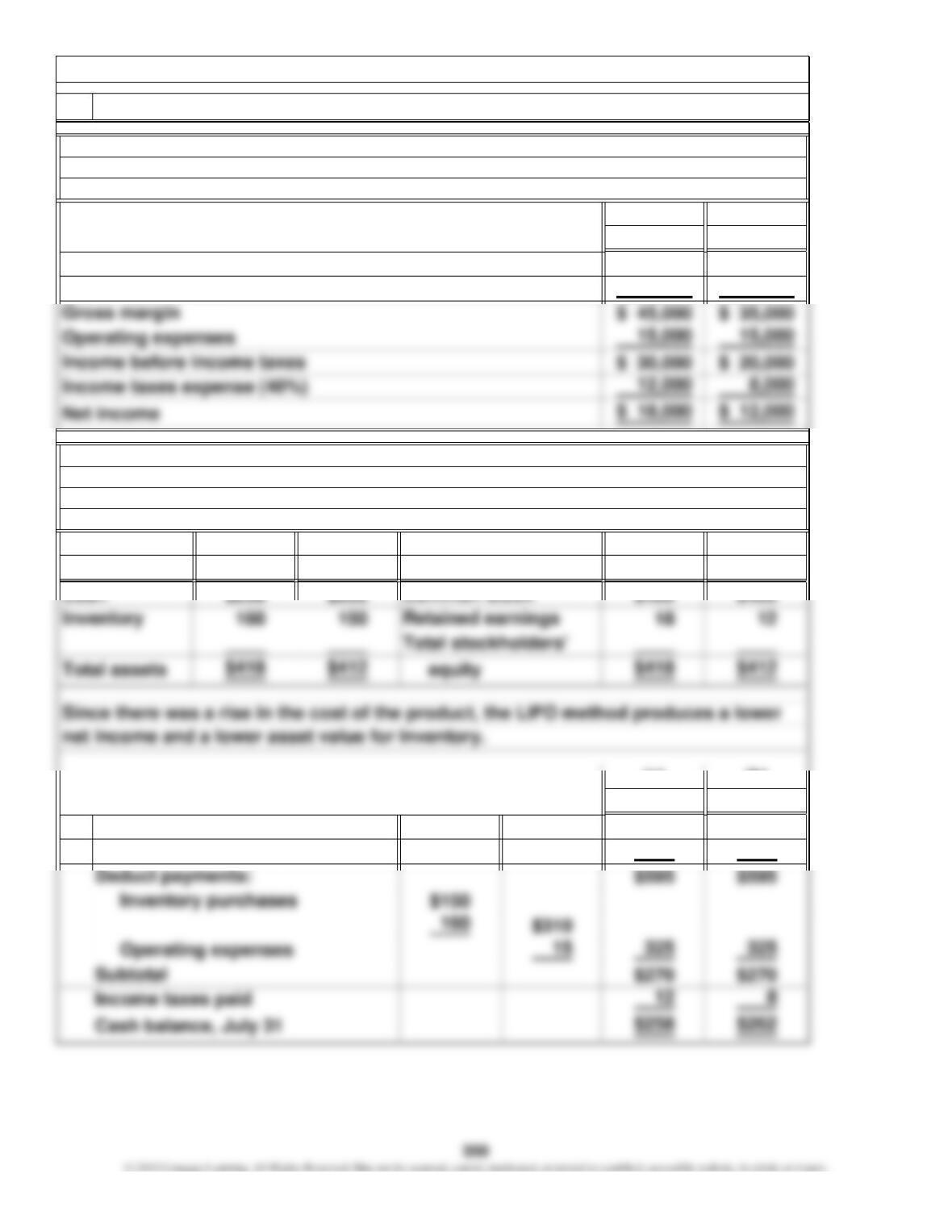
(a) (b)
FIFO LIFO
$195,000 $195,000
150,000 160,000
(a) (b) (a) (b)
FIFO LIFO FIFO LIFO
(a) (b)
FIFO LIFO
* $400 $400
195 195
Cash balance, July 1
Add receipt: sale of truck
Cost of goods sold
RT Compan
y
Balance Sheet
Assets Stockholders’ Equity
July 31, 2011
(All figures in thousands)
Sales
For the Month Ended July 31, 2011
Income statements and balance sheets prepared
Income Statemen
t
Chapter 6, C 9.
1.
RT Compan
y
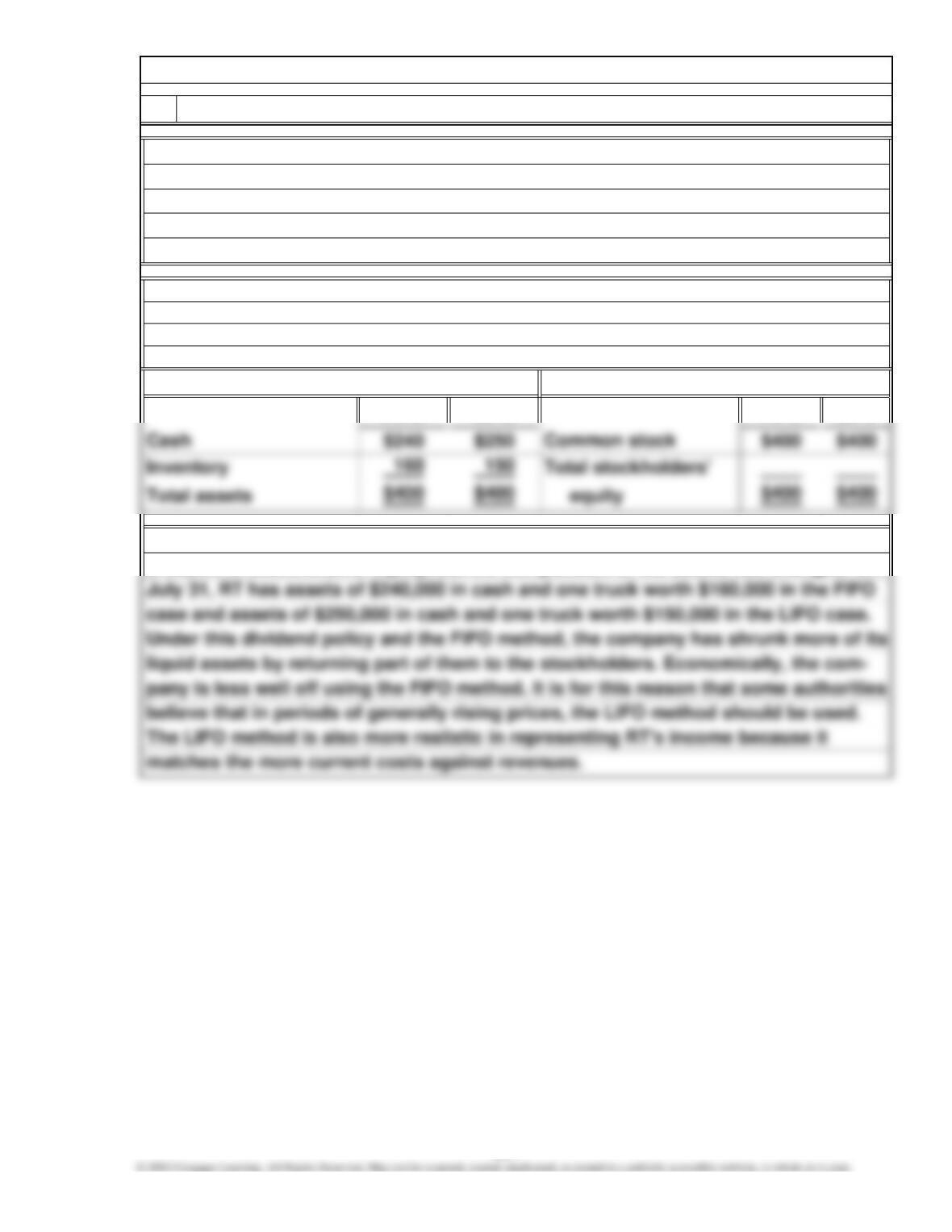
FIFO LIFO FIFO LIFO
RT Company
Balance Sheet
July 31, 2011
(All figures in thousands)
Stockholders’ EquityAssets
After payment of the dividend, the balance sheets under FIFO and LIFO would appear
In the FIFO case, a dividend of $18,000 would be declared. This transaction would
reduce cash and retained earnings by the same amount. In the LIFO case, a dividend
exactly equal to net income would reduce Cash and Retained Earnings by $12,000.
Dividend policy discussed
Chapter 6, C 9. (Continued)
2.
as follows:
$400,000 in stockholders’ equity, but the composition of the assets has changed. On
Compared with the beginning of the month, RT still has $400,000 in assets and
351
case, $170,000. The company’s board of directors should pay a dividend of only
$10,000 less income taxes (sales of $195,000 – replacement cost of goods sold of
$170,000 – expenses of $15,000 = $10,000; $10,000 – taxes of $4,000 = $6,000).
A further increase in cost compounds the problem discussed in 2. The question is
Chapter 6, C 9. (Continued)
3. Consequences of additional price increase discussed